



Dutch bank ATMs used to be free for foreign cards, and that’s no longer true
Find a yellow Geldmaat machine and you won’t pay a fee. That was reliable advice for years, and it’s still what most travellers arrive expecting.
Geldmaat, the shared network that swallowed almost every Dutch bank ATM, now charges cards issued outside the Netherlands a surcharge on every withdrawal. It helps that the Netherlands is one of the easiest countries in Europe to visit with almost no cash at all. Here’s what you’ll actually pay, and how to keep it to a single withdrawal.
| What | Details |
|---|---|
| Can a Singapore card withdraw euros? | Yes. Any Visa or Mastercard works at nearly every Dutch ATM, with an English menu |
| Are Dutch ATMs free? | No longer. Geldmaat charges foreign cards a surcharge, shown on screen before you confirm |
| What a Singapore card pays | Reported around 4.50–10 EUR (~S$7–15) per withdrawal at Geldmaat ⚠️ |
| Which to avoid | Euronet’s blue machines: roughly 2–5 EUR (~S$3–7) on top of a steep conversion markup |
| The DCC trap | Always choose euros, never SGD, when the screen offers to convert |
| How much cash you need | Very little. Cash is roughly 17–20% of Dutch payments, and cards work nearly everywhere |
| Cheapest way | YouTrip: first S$400/month in overseas ATM withdrawals free, 2% after, 0% FX, hold EUR in-app |
Table of Contents
- Can You Use a Singapore Card at Dutch ATMs?
- Are ATMs Free in the Netherlands?
- Geldmaat ATMs Explained (The Yellow Machines)
- Which ATMs to Avoid in the Netherlands
- How to Use an ATM in the Netherlands, Step by Step
- Always Decline the Conversion (DCC)
- Cash Withdrawal Limits in the Netherlands
- Is It Better to Use Cash or Card in the Netherlands?
- How Much Cash to Bring to Amsterdam for 4 Days
- The Dutch Card Quirk: Debit Yes, Credit Sometimes No
- Can I Use a YouTrip Card in the Netherlands?
- Do You Need a Dutch Bank Account as a Visitor?
- Safety Tips for Using ATMs in the Netherlands
- FAQs
Can You Use a Singapore Card at Dutch ATMs?
Yes. Any Visa or Mastercard from a Singapore bank or travel card works at virtually every ATM in the Netherlands, and English is offered on essentially every machine. Acceptance isn’t the issue here.
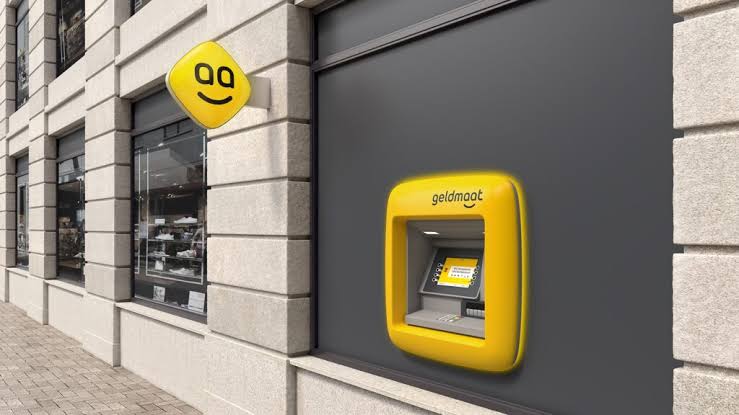
Image Credits: Betaalvereniging Nederland
Finding a machine is easy too. Dutch ATMs are called geldautomaten, and the vast majority now sit under one bright-yellow brand you’ll spot outside supermarkets, at stations and along main shopping streets.
A standard Singapore debit or credit card usually stacks a few charges on an overseas withdrawal:
- Foreign transaction fee: around 2.5–3.5% on every purchase or withdrawal
- Bank exchange rate markup: typically 1–3% above the real mid-market rate, which is the wholesale rate banks trade at between themselves
- Overseas ATM fee: charged by your Singapore bank, on top of whatever the Dutch machine adds
In the Netherlands that last layer is the one that’s changed recently, and it’s the reason this guide exists.
📖 Related Guide: Want the wholesale rate instead of a bank markup? Our guide to the best exchange rate in Singapore breaks it down.
Are ATMs Free in the Netherlands?
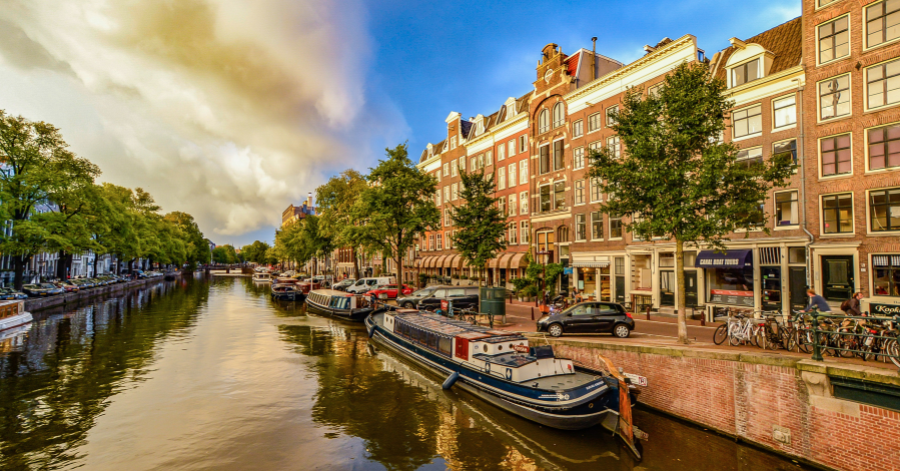
Not any more. Geldmaat, the network that runs almost every bank ATM in the country, charges a surcharge on cards issued outside the Netherlands.
What Geldmaat charges a foreign card
The Dutch Payments Association is the industry body for the Dutch payment system. It states that Geldmaat charges a service fee of 4 EUR (~S$6) per transaction on cards issued by banks in the European Economic Area. Different fees apply to cards issued outside it.
A Singapore card sits in that second group. Reported figures for non-EEA cards land at roughly 4.50–10 EUR (~S$7–15) per withdrawal, varying by machine and by the amount you take out. Sources disagree on whether the fee rises or falls with the size of the withdrawal, so treat the band as a range rather than a formula.
The practical takeaway doesn’t depend on the exact number. Geldmaat displays the surcharge on screen before you confirm, so you can always read it, cancel, and decide whether you need the cash at all.
⚠️ These figures come from the Dutch Payments Association and Dutch consumer reporting rather than a published Geldmaat tariff card for foreign cards. Read the on-screen amount before you confirm, because it’s the only number that’s definitely current.
Why the fee changed
Geldmaat’s stated reason is that processing foreign cards costs more, through extra administration and higher fees paid to the international card networks. Cards from elsewhere in Europe were pulled into the charge relatively recently, having previously been treated like Dutch ones.
For a visitor, the shift matters less than the habit it should create. In a country where you can pay by card almost everywhere, the right response to a per-withdrawal fee is to make fewer withdrawals. Hunting for a fee-free machine that no longer exists is wasted effort.
Is there a genuinely free ATM in the Netherlands?
Not reliably, and you should be sceptical of any guide that names one. The Dutch market consolidated its ATMs into a single network precisely so that individual banks stopped competing on machine access. That removed the “use Bank X, it’s free” trick that still works in Spain or Turkey.
What you can control is how often you pay the fee, and whether you also pay a conversion markup on top. Both are covered below.
📖 Related Guide: Comparing travel cards before you fly? See our best multi-currency cards in Singapore rundown.
Geldmaat ATMs Explained (The Yellow Machines)
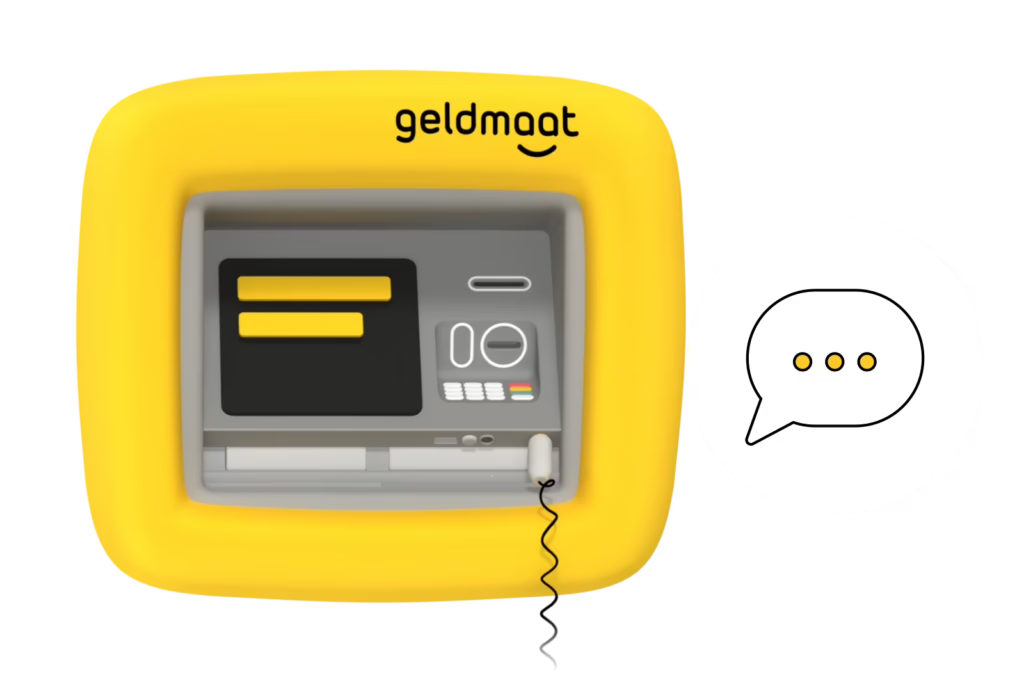
Image Credits: Geldmaat
If you’ve never been to the Netherlands, Geldmaat is the one word worth learning before you land. It’s the single most useful thing to recognise on a Dutch street.
Why almost every Dutch bank ATM is now a Geldmaat
ING, ABN AMRO and Rabobank, the three big Dutch banks, pooled their cash machines into one shared network rather than each running its own fleet. The machines were rebranded in a distinctive yellow, and there were nearly 3,900 of them across the country as of 2024.
That’s why you won’t find rows of competing bank ATMs the way you do in most European cities. If the machine is yellow and says Geldmaat, it’s the real banking network. If it’s any other colour and sits in a shop doorway, it almost certainly isn’t.
How to find a Geldmaat near you
Geldmaat runs a location finder on its own site and app. That’s the reliable way to find the nearest machine, rather than relying on a static list that ages badly.
You’ll typically find them outside and inside supermarkets, at train stations including Amsterdam Centraal, and on main shopping streets. Machines inside supermarkets tend to be the smaller units, which dispense fewer notes per transaction.
You won’t have to hunt. There are fewer cash machines in the Netherlands than there were a decade ago, but coverage is protected by agreement. Over 99% of the population lives within five kilometres of one. In a city you’ll pass several without looking.
What notes it gives you
Expect a mix of the usual euro notes, which can include 50s. The number of notes per withdrawal is capped by the machine size. Small in-store units dispense up to 15 notes at a time, while larger wall-mounted ones handle up to 40, and Geldmaat caps any single withdrawal at 5,000 EUR (~S$7,400) regardless.
That cap rarely bites a tourist, since the amounts involved are small. It’s worth knowing only if you’re trying to take out a large sum in one go to avoid paying the surcharge twice.
Which ATMs to Avoid in the Netherlands
Two categories are reliably worse than a Geldmaat, and both are placed exactly where a tired traveller will find them first.
Euronet and the blue-machine trap
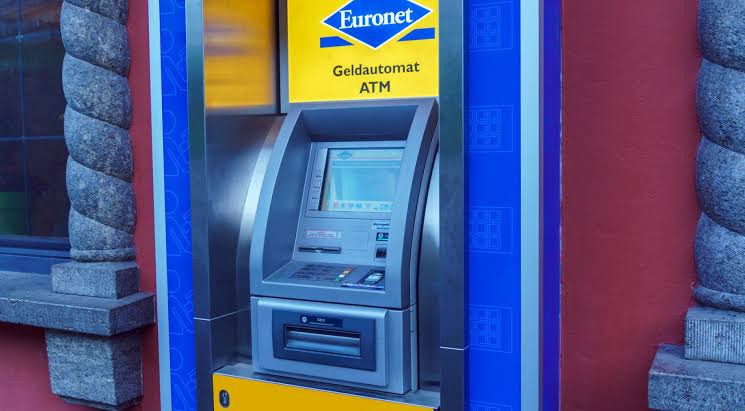
Image Credits: NL Times
Euronet operates standalone machines in shop doorways and tourist streets, and its bright-blue units cluster around Amsterdam Centraal, Dam Square and the Red Light District. They are the single most expensive way to get euros in the Netherlands.
The cost comes in two layers. First there’s a per-withdrawal surcharge, reported in the region of 2–5 EUR (~S$3–7). Then comes a conversion markup, applied if you accept the machine’s offer to charge you in Singapore dollars.
These machines also play a quieter trick. They pre-select unusually high withdrawal amounts for foreign cards, because a percentage markup earns more on a larger sum. The Honest Guide travel channel demonstrated this on camera in Prague: the same machine offered a local card amounts roughly ten times smaller than it offered a foreign one.
The fix is boring and effective. If the machine isn’t yellow, walk on. In central Amsterdam the next Geldmaat is usually a minute or two away.
Airport and station currency counters
The exchange counters in Schiphol’s arrivals area sit in the same category. Airport currency desks worldwide bake a wide margin into the rate, and they’re competing for people who have just landed and haven’t compared anything.
You don’t need them. The train from Schiphol to Amsterdam Centraal takes about 15 minutes and accepts contactless payment directly. So you can leave the airport with zero euros in your pocket and sort out cash in town, if you need any at all.
How to Use an ATM in the Netherlands, Step by Step
Dutch ATMs work much like Singapore ones, with two differences worth knowing: the surcharge screen, and the conversion screen. Neither is hard to handle once you’re expecting them.
- Insert your card into the Geldmaat. Some machines also accept contactless, so you can tap instead.
- Choose your language. English is offered on essentially every machine.
- Select Withdraw (Geld opnemen) if the machine asks what you want to do.
- Pick a preset amount, or choose “other amount” to type your own.
- Enter your 4-digit PIN and cover the keypad with your hand.
- Read the surcharge notice. The machine shows the fee for your card before you confirm, and you can cancel here at no cost.
- If the screen offers to charge you in Singapore dollars, decline it and choose euros. Then take your card, cash and receipt.
The Dutch words you might see
Most machines default to a language menu, but these are the ones worth recognising if you land on a Dutch screen:
| Dutch | English |
|---|---|
| Geld opnemen | Cash withdrawal |
| Bedrag | Amount |
| Anders / Ander bedrag | Other amount |
| Bevestigen | Confirm |
| Annuleren | Cancel |
| Bon / Kwitantie | Receipt |
| Pinnen | To pay by card |
| Alleen pinnen | Card payment only |
That last one is worth committing to memory. You’ll see alleen pinnen on shop and café doors across the country, and it’s the sign that tells you cash isn’t accepted there at all.
Always Decline the Conversion (DCC)
The most avoidable cost at a Dutch ATM has nothing to do with the machine’s surcharge. When you withdraw, the screen may offer to charge you in Singapore dollars instead of euros. It sounds like a courtesy. It isn’t.
This is Dynamic Currency Conversion, or DCC. Choosing SGD lets the ATM operator set the exchange rate and keep the markup. Choosing euros lets your own card handle the conversion, which is almost always cheaper.
How much it actually costs
European rules now require the machine to display the markup on screen, though usually in small print that’s easy to tap past. The markups are not small.
The Honest Guide channel filmed a Prague machine quoting a 12.86% markup against the European Central Bank rate on a single withdrawal. That’s a Czech koruna example rather than a Dutch one, so treat it as an illustration of the scale rather than a Netherlands figure. The mechanism is identical wherever you are in Europe.
The trick that catches careful people
Some machines are set up so that accepting conversion waives the withdrawal fee, while declining it triggers one. That makes the expensive choice look like the free choice on screen.
Take the fee. A few euros of surcharge is far cheaper than a double-digit percentage markup on the whole amount, and the maths isn’t close.
It happens at shop terminals too
The same prompt appears when you tap your card in a shop, restaurant or café. The terminal asks whether you’d like to pay in Singapore dollars, and the answer is the same every time.
The rule: always choose euros (EUR), never “charge in SGD” or “with conversion”. Look for a button that says decline, “without conversion”, or “in local currency”.
Cash Withdrawal Limits in the Netherlands
Three separate caps are in play, and the tightest one wins. For a Singapore traveller, it’s usually the one on your own card.
- Geldmaat’s own ceiling. No single withdrawal can exceed 5,000 EUR (~S$7,400), and in practice the machine’s note capacity bites first: 15 notes for small in-store units, 40 for larger wall-mounted ones.
- The Dutch bank’s limit. Dutch banks set their own per-transaction and daily caps, but those apply to their own account holders. They aren’t the limit on your card.
- Your own card’s daily overseas limit. This is the real ceiling for a Singapore traveller. Check it, and adjust it if needed, in your banking or card app before you fly.
You’ll also see Dutch banks advertise annual free-withdrawal allowances. Those are resident account benefits and have nothing to do with a foreign card, so ignore them when planning.
Honestly, none of this is likely to constrain you. The amount of cash a visitor needs in the Netherlands is small enough that per-transaction limits are academic.
Is It Better to Use Cash or Card in the Netherlands?
Card, decisively. The Netherlands is one of the most card-forward countries in Europe, and this single fact should reshape how much cash you plan to withdraw.
Cash accounts for about 20% of in-person payments in the country, with cards taking essentially all of the rest. Contactless is the norm rather than the exception, having reached 94% of card payments by the end of 2024.
Going the other way, only around 4% of Dutch shops refused cash entirely in 2023 research, so cash still works in most places. It’s simply not needed in most of them.
What that means for a Singapore visitor is straightforward. Tap for essentially everything: restaurants, cafés, museums, supermarkets, trams, trains and shops. Keep a small euro float for the handful of gaps, and pay the withdrawal surcharge once rather than four times.
The gaps worth carrying cash for:
- Street markets such as Amsterdam’s Albert Cuypmarkt, where individual stalls vary
- Small tips in cafés and for taxi drivers, where rounding up in cash is easiest
- Public toilets, which frequently charge a small coin fee
- The occasional older café or snack bar in smaller towns
How Much Cash to Bring to Amsterdam for 4 Days
For a four-day trip, somewhere between 50 and 100 EUR (~S$74–148) per person is plenty, and many travellers spend less than that.
That figure assumes you’re tapping for meals, transport, museums and shopping, which you will be. The cash is there for market stalls, toilets, tips and the rare place that surprises you.
The withdrawal fee is what makes that worth planning. One withdrawal of 100 EUR (~S$148) at a Geldmaat costs you the surcharge once, perhaps 5 EUR (~S$7). Four separate withdrawals of 25 EUR each cost you that surcharge four times, turning a modest fee into roughly 20% of the cash you took out.
So the plan is simple: withdraw once, early, and slightly more than you think you need. If you finish the trip with 20 EUR unspent, that’s a much better outcome than paying a second surcharge to avoid it.
Skip the temptation to change money in Singapore before you fly, too. Money changers and airport counters bake a markup into the rate, and you’ll generally do better withdrawing on arrival with a card that gives you the wholesale rate.
📖 Related Guide: Tracking the euro before your trip? Our SGD to EUR rate guide covers where the rate sits and how to time it.
The Dutch Card Quirk: Debit Yes, Credit Sometimes No
This is the part that catches Singapore travellers out, and it has nothing to do with ATMs. The Netherlands is card-first, but it isn’t credit-card-first.
Dutch payment culture was built around domestic debit cards, and the local verb for paying by card is pinnen. Plenty of merchants set their terminals to accept debit cards while declining credit cards, because credit cards cost them more to accept.
The most-cited example is Albert Heijn, the country’s largest supermarket chain, which has a long-standing reputation for refusing credit cards at many of its stores. Some branches do accept them, mainly in tourist areas and at train stations, so it varies store to store. Jumbo, the other big chain, is generally the safer bet if you’re holding a credit card.
Acceptance of international debit cards has widened considerably, so a Visa or Mastercard debit card fares much better here than a credit card does. Adding your card to Apple Pay or Google Pay is also worth doing before you fly, since wallet payments often go through where a physical card is fussy.
The practical setup for a Netherlands trip is a debit or prepaid travel card as your main payment method. Keep a credit card as backup, and a small euro float for the rest. That ordering is the reverse of what many Singapore travellers default to in Europe.
Can I Use a YouTrip Card in the Netherlands?
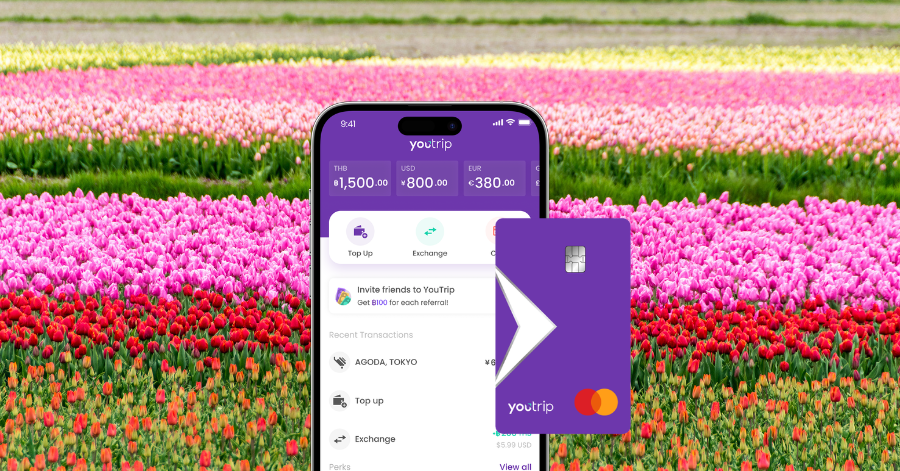
Yes. YouTrip runs on the Mastercard network, so it works at Geldmaat ATMs and anywhere Mastercard is accepted, which across the Netherlands is nearly everywhere.
Euro is one of the currencies YouTrip holds in-app. You can convert your Singapore dollars to euros ahead of the trip when the rate looks good, then spend them later. Every tap runs at the Mastercard wholesale rate with 0% foreign transaction fee, against the 2.5–3.5% a typical Singapore credit card adds overseas.
For the cash you do need, your first S$400 per calendar month in overseas ATM withdrawals is free, then a flat 2% after that. The allowance resets on the 1st of each month. To withdraw euros:
- Find a yellow Geldmaat machine and insert or tap your YouTrip card
- Select Savings if asked for an account type
- Enter your 4-digit YouTrip card PIN
- Choose your amount and, when asked, withdraw in euros, not SGD
On a real trip the gap is easy to see. Say you want 100 EUR (~S$148) in cash for four days in Amsterdam:
- The trap: a blue Euronet machine with conversion accepted. A surcharge of roughly 3 EUR plus a markup in the region of 12% works out to around 15 EUR (~S$22) lost on a 100 EUR withdrawal.
- Done right with YouTrip: one Geldmaat withdrawal with conversion declined. You pay the Geldmaat surcharge of roughly 5 EUR (~S$7), nothing to YouTrip because you’re inside the free S$400 allowance, and you get the wholesale rate.
Same cash in hand, roughly S$15 difference, on a withdrawal of only 100 EUR. On the card spending that makes up the rest of the trip, the 0% FX fee is where the larger saving sits.
One honest caveat. YouTrip removes your Singapore bank’s fees, but no card removes Geldmaat’s own surcharge. That’s the machine’s charge, and it applies whatever you’re holding, which is exactly why withdrawing once beats withdrawing often.
⚠️ YouTrip’s free overseas ATM allowance is S$400 per calendar month, with a 2% fee thereafter. Geldmaat’s own surcharge is separate and charged by the ATM operator.
Do You Need a Dutch Bank Account as a Visitor?
No. For a holiday you never need one, and as a short-term visitor you can’t easily open one anyway.
Dutch bank accounts are built for residents. Banks in the Netherlands are legally required to hold a customer’s BSN, the citizen service number, and getting one means registering with the Dutch authorities. That isn’t something you do on a holiday. The same applies to the deposit machines and annual withdrawal allowances you’ll see mentioned on Dutch bank pages.
The setup a visitor actually needs is simpler: a multi-currency travel card for spending, one Geldmaat withdrawal for the small amount of cash you want, and the conversion declined every time.
Safety Tips for Using ATMs in the Netherlands
The Netherlands is a safe country for ATM use, and the consolidated Geldmaat network helps, since there are far fewer dubious standalone machines than in most of Europe. Central Amsterdam still draws pickpockets, so the basics apply.
- Use Geldmaat machines over standalone units in shop doorways, which is both a fee tip and a safety one
- Check the card slot and keypad for anything loose or added before inserting your card
- Cover the keypad when entering your PIN, even if nobody’s nearby
- Don’t accept help from strangers at the machine, however friendly the offer
- Take your card and cash and move off before counting anything
- Keep a small reserve separate from your wallet, around 50 EUR (~S$74) tucked into your luggage, so a lost card or wallet doesn’t leave you stranded
- Turn on transaction alerts in your banking or card app before you travel
- Tell your bank you’re travelling if you’re carrying a regular Singapore bank card, so it doesn’t block your withdrawals as suspected fraud. A self-managed travel card like YouTrip needs no such heads-up
- If a machine keeps your card, contact your issuer straight away. YouTrip users can freeze the card in the app immediately
FAQs
No. Geldmaat, which runs almost every bank ATM in the country, charges a surcharge on cards issued outside the Netherlands. Cards from elsewhere in the European Economic Area are charged 4 EUR (~S$6) per transaction, and cards from outside it, including Singapore cards, are reported at roughly 4.50–10 EUR (~S$7–15). The machine shows the amount on screen before you confirm.
A yellow Geldmaat machine. It’s the shared network of the major Dutch banks, it uses the card network’s own exchange rate, and it displays its fee before you commit. Avoid the blue Euronet machines in tourist areas, which charge more and push conversion harder.
Yes. Any Visa or Mastercard from a Singapore bank or travel card works, and English is available on essentially every machine. You’ll pay Geldmaat’s surcharge plus whatever your own bank charges for an overseas withdrawal, unless you’re using a multi-currency card.
You trigger dynamic currency conversion, where the ATM operator sets the exchange rate instead of your card network. The markup can run into double-digit percentages, far more than any other fee on the withdrawal. Always choose euros.
Around 50–100 EUR (~S$74–148) per person is plenty. Cards are accepted almost everywhere, so cash is mainly for market stalls, public toilets, tips and the occasional small café. Withdraw it in one go so you pay the surcharge once.
No. Dutch banks are legally required to hold a customer’s BSN, the citizen service number, which means registering with the Dutch authorities. That puts an account out of reach on a holiday, and a multi-currency travel card covers everything a trip needs anyway.
Some Geldmaat machines take deposits as well as withdrawals, but the function is for Dutch account holders. As a visitor with a foreign card, it isn’t something you’ll be able to use.
Not quite. Dutch payment culture is built around debit cards, and some merchants, including many Albert Heijn supermarkets, decline credit cards while accepting debit. Carry a debit or prepaid travel card as your main method, with a credit card as backup.
Country ATM Guides
Heading somewhere else next? Explore our country-specific withdrawal guides:
🇲🇾 Malaysia | 🇯🇵 Japan | 🇹🇭 Thailand | 🇰🇷 South Korea | 🇹🇼 Taiwan | 🇭🇰 Hong Kong | 🇮🇩 Indonesia | 🇻🇳 Vietnam | 🇦🇺 Australia | 🇲🇴 Macau | 🇨🇳 China | 🇺🇸 US | 🇿🇦 South Africa | 🇵🇭 Philippines | 🇫🇷 France | 🇬🇧 UK | 🇳🇿 New Zealand | 🇮🇹 Italy | 🇰🇭 Cambodia | 🇨🇦 Canada | 🇨🇦 Switzerland | 🇪🇸 Spain | 🇩🇪 Germany | 🇹🇷 Turkey | 🇰🇿 Kazakhstan | 🇳🇱 Netherlands
Withdraw once, tap for everything else
The Netherlands quietly stopped being a free-ATM country, but it’s also a country where you barely need cash. Pull one modest amount from a yellow Geldmaat, always choose euros, and tap your way through the rest of the trip.
Not a YouTrooper yet? Singapore’s go-to multi-currency wallet helps you save with great FX rates and zero fees. Skip the money changer and get a free YouTrip card + S$5 YouTrip credits with code YTBLOG5.
Then, head over to our YouTrip Perks page for exclusive offers and promotions. We promise you won’t regret it. For travel tips, event invites, and more, join our Community Telegram Group @YouTripSquad! 💜
Happy travels!
The information stated above is true as of 24 Aug 2026
Related Articles:
YouTrip vs Revolut: The Singapore Comparison
YouTrip vs Wise: The Singapore Comparison
Foreign Currency Transactions: Earning Miles vs YouTrip Savings