




Turkey’s ATMs can cost foreign cards close to 10%, so the bank you pick matters
Most countries have one ATM fee to dodge. Turkey has two, and one of them is unusually steep. Since around 2022, most Turkish bank ATMs add their own charge on a foreign card, and at the worst banks it works out to a painful slice of what you withdraw.
Walk to the right bank, and you pay nothing. Walk to the wrong one, and it can cost you a big chunk of your cash. Here’s how to get lira at the real rate.
| What | Details |
|---|---|
| Can a Singapore card withdraw lira? | Yes. Any Visa or Mastercard works at nearly every Turkish ATM, with an English menu |
| Do Turkish ATMs charge foreign cards? | Most do now, usually a flat operator fee of around 30–100 TRY (~S$1–3), sometimes more. On a small withdrawal that can work out to an effective 8–10%, more at the worst banks |
| Which banks are cheapest | Halkbank, ING and PTT are reported fee-free as of mid-2026; always confirm on screen ⚠️ |
| Which to avoid | Garanti BBVA, Yapı Kredi, Akbank and QNB Finansbank tend to charge the most |
| The DCC trap | Always choose Turkish Lira, never SGD, when the screen offers to convert |
| Cheapest way | YouTrip: first S$400/month in overseas ATM withdrawals free, 2% after, 0% FX on card spend |
Table of Contents
- Can You Use a Singapore Card at Turkish ATMs?
- Which ATM Is Best for Cash Withdrawal in Turkey?
- Which ATMs to Avoid in Turkey
- How to Use a Turkish ATM (Step by Step)
- Always Decline the Conversion (DCC)
- Turkey ATM Fees and Withdrawal Limits
- Is It Better to Exchange Cash or Withdraw From an ATM?
- Do You Need Cash in Turkey, or Is a Card Enough?
- Can You Withdraw USD or EUR From a Turkish ATM?
- Can I Use a YouTrip Card in Turkey?
- Do You Need a Turkish Bank Account as a Tourist?
- Safety Tips for Using ATMs in Turkey
- FAQ
Can You Use a Singapore Card at Turkish ATMs?
Yes. Any Visa or Mastercard from a Singapore bank or travel card works at virtually every ATM in Turkey, and nearly all machines offer an English menu. Acceptance isn’t the problem here. The fee the machine adds is.

Finding a machine is easy. An ATM in Turkish is a bankamatik or ATM, and they cluster around bank branches, shopping streets, transport hubs and tourist areas in Istanbul, Antalya, Cappadocia and the coastal resorts. The catch is that the fee changes wildly depending on whose logo is on the machine, so it’s worth walking to a specific bank rather than using the first one you see.
A standard Singapore debit or credit card usually stacks a few charges on any overseas withdrawal:
- Foreign transaction fee: around 2.5–3.5% on every purchase or withdrawal
- Bank exchange rate markup: typically 1–3% above the real mid-market rate (the wholesale rate banks trade at)
- Overseas ATM fee: charged by your home bank, on top of anything the Turkish machine adds
In Turkey, the machine’s own fee is the one that bites hardest. More on which banks charge what below.
📖 Related Guide: Want the wholesale rate instead of a bank markup? Our guide to the best exchange rate in Singapore breaks it down.
Which ATM Is Best for Cash Withdrawal in Turkey?
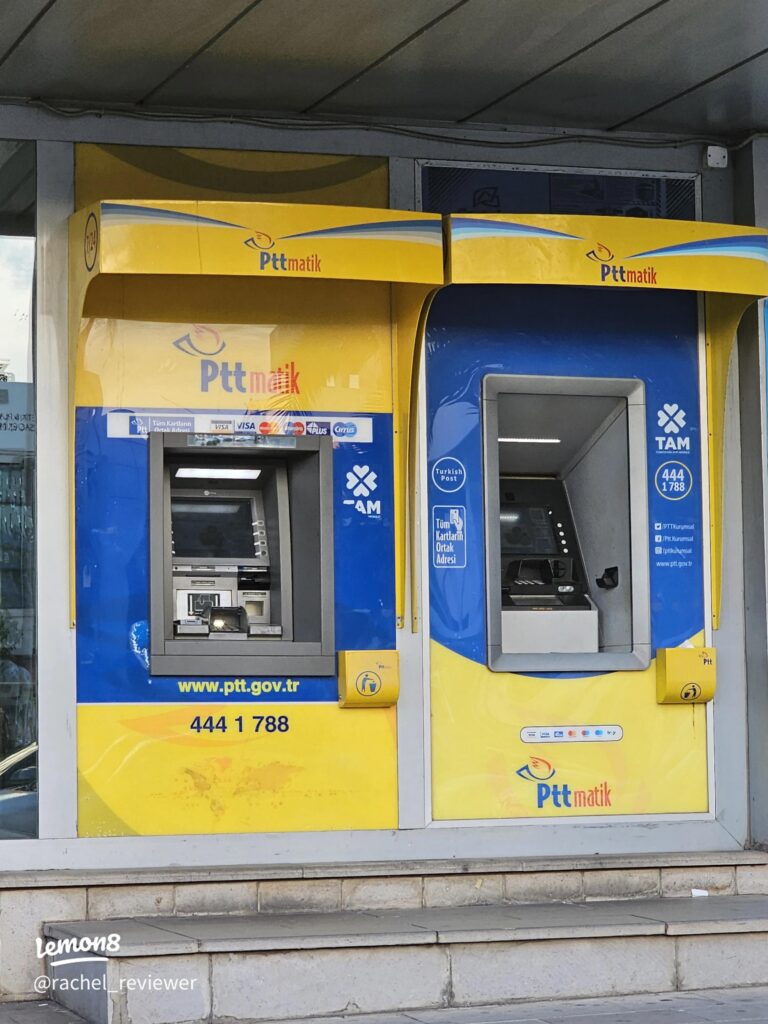
Image Credits: @rachel_reviewer on Lemon8
The best ATM in Turkey is a bank one that charges no operator fee on foreign cards, and as of mid-2026 the names that keep coming up are Halkbank, ING and PTT. Because Turkish banks change these fees often, treat any list as a starting point and always read the fee on screen before you confirm.
Turkish banks that don’t charge foreign cards
A handful of banks are widely reported to add no operator fee for foreign cardholders. Halkbank is the one travellers name most often, and it’s been demonstrated fee-free on UK cards more than once. ING and PTT (the Turkish post office, which runs ATMs as well as counters) are the other two that come up consistently.
A few others, including Ziraat Bank, VakıfBank, TEB and Kuveyt Türk, are often cheaper than the pack, but the picture shifts. Ziraat, long a fee-free favourite, has been reported charging a flat fee of around 30–100 TRY (~S$1–3) on foreign cards more recently. So even at a “good” bank, check the screen.
Turkish banks that charge the most
The banks to skip when you can are the ones whose fee takes the biggest bite. Garanti BBVA, Yapı Kredi, Akbank and QNB Finansbank are the names most often flagged for high foreign-card fees.
This is where Turkey stings. Most banks charge a flat operator fee, often around 30–100 TRY (~S$1–3) but higher at the worst ones, and because withdrawals are capped fairly low, that flat fee lands as a steep effective rate. Travellers have reported paying the equivalent of roughly 8–10% at banks like Garanti and Yapı Kredi, and some guides put the worst effective cost near 14%.
The maths adds up fast. On a 5,000 TRY (~S$137) withdrawal, an 8% effective fee is about 400 TRY (~S$11) gone in one go, before your home bank adds anything. Do that a few times across a trip and it stacks up.
How to check the fee before you insert your card
You don’t have to memorise the banks. A free app called ATM Fee Saver maps the nearest ATMs and shows the fee each one charges foreign cards, along with tips on which on-screen buttons to press. Both major Istanbul money guides on YouTube point to it as the single most useful tool for this exact problem.
Failing that, every machine must show its own fee on screen before you confirm, so you can always read it, cancel, and walk to the next one.
📖 Related Guide: Comparing travel cards for your trip? See our best multi-currency cards in Singapore rundown.
Which ATMs to Avoid in Turkey
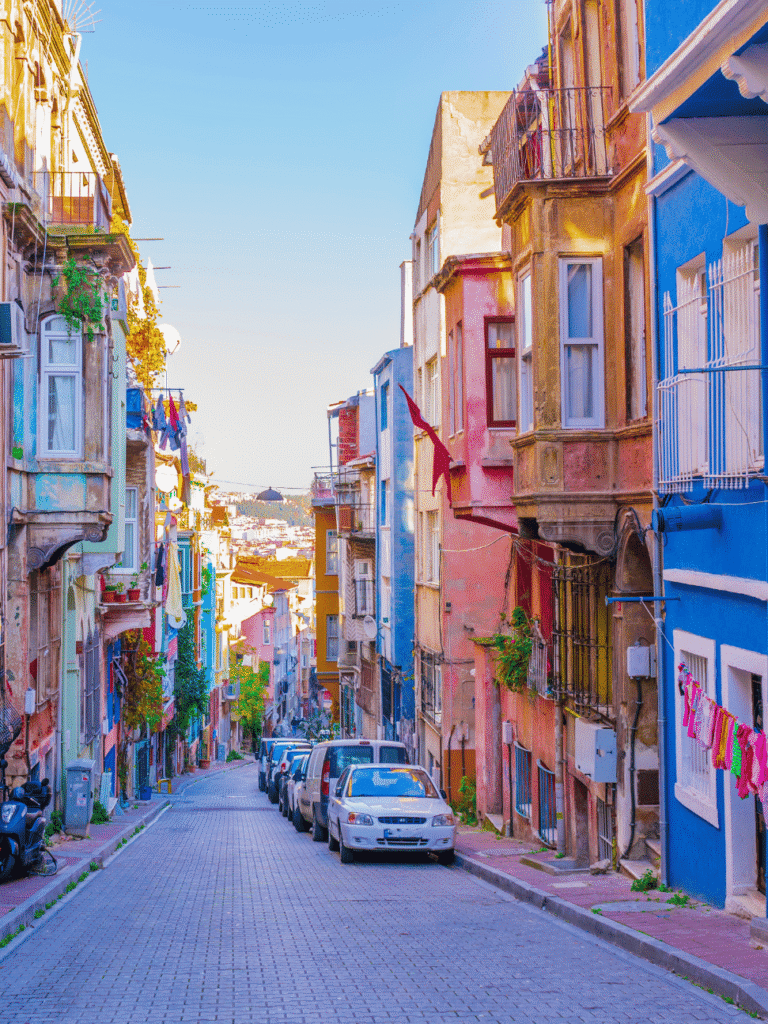
Avoid the high-fee bank machines above where you have a choice, and steer clear of two other types entirely: standalone private ATMs and the machines right at the airport arrivals hall.
Independent or unbranded machines in tourist zones, hotel lobbies and shopping centres tend to charge the most and push conversion the hardest. If a machine has no recognisable Turkish bank name on it, treat it as a trap and find a real bank ATM instead.
Airport arrivals-hall ATMs are convenient by design and expensive to match. If you need a little cash the moment you land, withdraw a small amount to tide you over, then top up properly at a Halkbank, ING or PTT machine in town. The same goes for any ATM that leads with an offer to charge you in Singapore dollars before you’ve even chosen an amount. That’s a sign it’s built to upsell conversion.
How to Use a Turkish ATM (Step by Step)
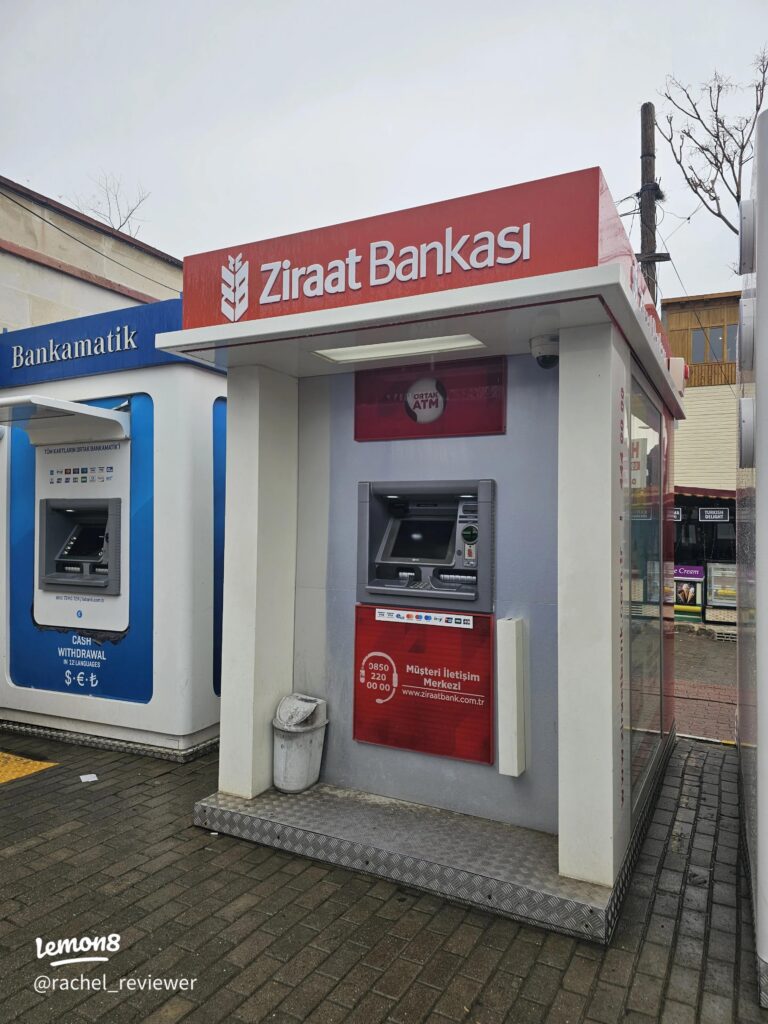
Image Credits: @rachel_reviewer on Lemon8
Withdrawing at a Turkish ATM works much like home, with two local quirks: the Turkish wording on some screens, and the order the machine returns your card and cash.
- Insert your card into the bankamatik. Most take the card fully and return it later.
- Choose your language. English is almost always offered.
- Select Withdrawal (Para Çekme) if the machine asks what you want to do.
- Pick a preset amount, or choose “other amount” to type your own.
- Enter your 4-digit PIN and cover the keypad with your hand.
- If the screen offers to charge you in SGD, decline it and choose Turkish Lira (see the DCC section below).
- Take your card when it comes out, then wait for your cash and receipt.
The Turkish words on screen
Most machines have an English option, but if you land on a Turkish screen, these are the ones that matter:
| Turkish | English |
|---|---|
| Para Çekme | Cash withdrawal |
| Para Yatırma | Deposit |
| Bakiye Sorgulama | Balance check |
| Tutar | Amount |
| Diğer | Other |
| Onayla | Confirm |
| İptal | Cancel |
| Makbuz / Fiş | Receipt |
Your card comes out before the cash
This one catches people out. Most Turkish ATMs return your card before they dispense the notes, the reverse of what many Singapore machines do. The habit of grabbing the cash and walking off means people leave their card behind. Wait for both: take the card when it pops out, then wait the extra second or two for the money.
Always Decline the Conversion (DCC)

The single most avoidable cost at a Turkish ATM has nothing to do with which bank you pick. When you withdraw, the screen may offer to charge you in Singapore dollars instead of lira. It sounds helpful. It isn’t.
This is Dynamic Currency Conversion (DCC). Choosing SGD lets the ATM operator set the exchange rate, usually with a markup of roughly 3% to 12% baked in. Choosing Turkish Lira lets your own card handle the conversion, which is almost always cheaper.
The maths is simple. On a 5,000 TRY (~S$137) withdrawal, even a 7% DCC markup quietly adds around 350 TRY (~S$10) for nothing. Stack that on top of a steep operator fee, and a single careless tap can cost you a big slice of your withdrawal.
The rule: when the screen asks, always choose Turkish Lira (TRY), never “charge in SGD” or “with conversion”. Look for a button that says decline, “without conversion”, or “charge in TRY”. The choice has to be offered to you, but it’s easy to tap straight through, so slow down for that one screen.
Turkey ATM Fees and Withdrawal Limits
Two fees can stack on one withdrawal: the Turkish machine’s operator fee, and whatever your home card adds. The Turkish half is the variable one. For a foreign Visa or Mastercard, the rough landscape looks like this:
| ATM type | Reported fee for foreign cards |
|---|---|
| Halkbank, ING, PTT | Often no operator fee (mid-2026 reports); confirm on screen ⚠️ |
| Ziraat, VakıfBank, TEB, Kuveyt Türk | Frequently lower; some now add a flat ~30–100 TRY (~S$1–3) |
| Garanti BBVA, Yapı Kredi, Akbank, QNB Finansbank | Higher; a flat fee that works out to a steep effective rate, reported around 8–10% (more at the worst) on small withdrawals |
| Standalone / unbranded private ATMs | Highest, plus aggressive conversion prompts |
Note: ATM fees are subject to change; verify on screen before withdrawal.
On top of any machine fee, a standard Singapore bank card adds its own overseas ATM fee, often a flat charge or 1–3% of the amount, plus a foreign transaction fee of up to around 3.5%. A multi-currency card like YouTrip removes most of that second layer, but it can’t remove the Turkish operator’s own fee, so choosing a no-fee bank still matters whatever card you carry.
On withdrawal limits, two caps are in play and the tighter one wins:
- The machine’s per-transaction limit. Turkish ATMs commonly cap a single withdrawal somewhere between 4,000 and 10,000 TRY (~S$110–S$274), though some machines cap lower.
- The bank’s daily limit. Many Turkish banks allow around 10,000 TRY (~S$274) per day, with a few reportedly allowing more.
- Your own card’s daily limit. This is often the real ceiling. Check and set your overseas ATM limit in your banking app before you fly.
Is It Better to Exchange Cash or Withdraw From an ATM in Turkey?
Turkey is one of the few places where this is a real question rather than a formality. Because the ATM operator fees are so high, currency exchange offices (döviz) inside Turkey are genuinely competitive, and locals will tell you they often beat the machines on rate.
That’s true if you’re already holding foreign cash. But it’s not the cleanest path for a Singapore traveller, and it isn’t the reason ATMs look bad.
ATMs look bad in Turkey specifically because of the operator fee, and you can sidestep that by using a no-fee bank machine (Halkbank, ING or PTT) with a card that gives you the wholesale rate. Do that, and you get a strong rate without carrying a wad of cash or hunting for a good counter.
So the honest answer is: you don’t need to change money at all. Spend on a zero-FX card for the vast majority of your trip, and pull a small lira float from a no-fee ATM for the cash-only spots. That beats both changing cash in Singapore before you fly, where the airport and local counters bake in a markup, and stressing over exchange-office rates once you land.
📖 Related Guide: Curious how the rate maths works? Our best miles credit cards in Singapore guide compares the real cost of overseas spend.
Do You Need Cash in Turkey, or Is a Card Enough?
A card covers most of Turkey now. In Istanbul and the main tourist areas you can pay by card almost everywhere: restaurants, cafés, museums, hotels, shops, even many market stalls and kiosks. Turkey is far less cash-dependent than its reputation suggests.
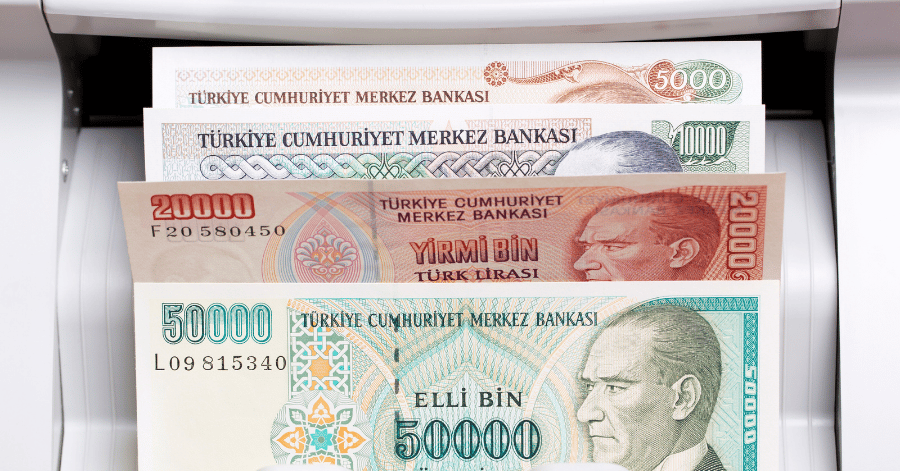
You’ll still want a little lira for the gaps:
- Street food — a simit (sesame bread ring) from a cart, street döner, roasted chestnuts
- Small kiosks and corner shops — quick water or snack stops where cards feel like a hassle
- Public toilets and small tips — a few coins and small notes are handy
- Taxis and small family spots in smaller towns and rural areas, where card acceptance thins out
A sensible float is around 30–40 USD equivalent in lira per person per day for small expenses, roughly 1,100–1,500 TRY (~S$30–S$41), with a bit more if you’re heading off the tourist track. Withdraw more only when you need it, rather than carrying a large stack of a currency that loses value quickly.
A note on tipping: the roughly 10% restaurant service charge that some places used to add has largely been dropped as of 2026, but a tip of about 10% is still expected for good service. Most places can’t add a tip to a card payment, so keep small cash notes for that.
Can You Withdraw USD or EUR From a Turkish ATM?
Some Turkish ATMs do dispense US dollars or euros as well as lira, but for a Singapore traveller it’s rarely worth it. You’d be converting your SGD into USD or EUR, then likely converting again when you spend, which is two markups instead of one.
If you actually need dollars or euros in hand, availability is limited and the fees on foreign-currency dispensing are usually higher. For everyday spending in Turkey, withdraw lira and spend lira. It keeps the conversion to a single step at the wholesale rate.
Can I Use a YouTrip Card in Turkey?
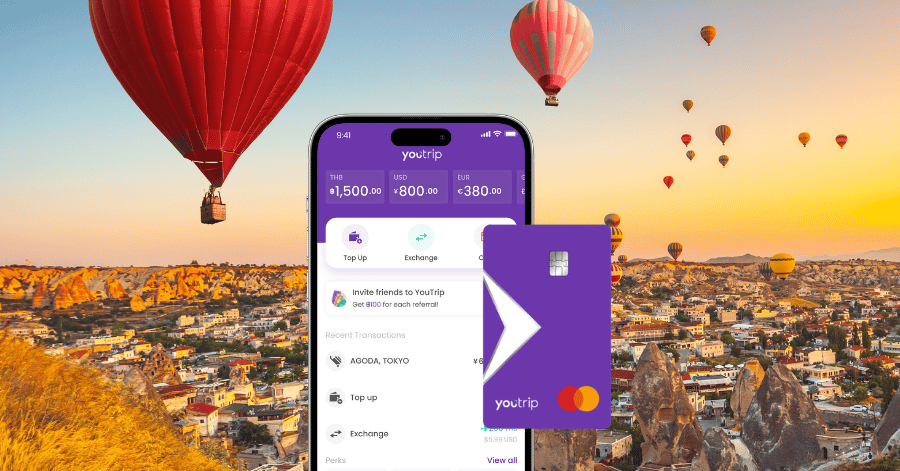
Yes. YouTrip runs on the Mastercard network, so it works at Turkish ATMs and anywhere Mastercard is accepted, which in the cities is nearly everywhere. For getting lira from Singapore, it’s about as cheap as it gets.
Tap your YouTrip card for the roughly 95% of your trip that’s card-friendly, and you pay 0% FX, with every transaction billed at the Mastercard wholesale rate. Each tap auto-converts your Singapore dollars to lira at that rate, with no foreign transaction fee. That’s far better than a typical credit card adding 3–3.5% FX on every overseas spend.
For the cash you do need, you get your first S$400 per calendar month in overseas ATM withdrawals free, with a flat 2% after that, and the allowance resets on the 1st of each month. To withdraw lira with YouTrip:
- Find a bank ATM showing the Mastercard logo, ideally Halkbank, ING or PTT for no operator fee, and insert your YouTrip card
- Select Savings if asked for an account type
- Enter your 4-digit YouTrip card PIN
- Choose your amount and, when asked, withdraw in Turkish Lira, not SGD
One honest caveat for Turkey: YouTrip removes your home bank’s fees, but it can’t remove the Turkish machine’s own operator fee. So the no-fee bank choice still matters. Pair a no-fee bank ATM with YouTrip’s wholesale rate and free monthly allowance, decline the conversion, and you’ve dodged every avoidable charge in one go.
Do You Need a Turkish Bank Account as a Tourist?

No. For a holiday, you never need a Turkish bank account, and as a short-term visitor you can’t easily open one anyway. Local accounts and apps are built for residents with a Turkish address and tax number.
The setup for a Singapore traveller is simpler: a multi-currency travel card for spending, used at no-fee bank ATMs for the small amount of cash you need, with the conversion always declined. That covers everything a trip requires without any local paperwork.
Safety Tips for Using ATMs in Turkey
Turkey is generally safe for ATM use, but busy tourist areas in Istanbul draw the usual pickpockets, and a few habits keep you out of trouble.
- Use ATMs inside or attached to a bank branch where you can, rather than standalone street machines
- Avoid unbranded private machines, which is both a fee tip and a safety one, as they’re more often tampered with
- Check the card slot and keypad for anything loose or added before inserting your card
- Cover the keypad when entering your PIN, even if nobody’s around
- Don’t accept help from strangers at the machine, however friendly
- Take your card and cash and move off before counting anything
- Turn on transaction alerts in your banking or card app before you travel
- Tell your bank you’re travelling if you carry a regular Singapore bank card, so it doesn’t block your Turkish withdrawals as suspected fraud. A self-managed travel card like YouTrip needs no such heads-up
- If a machine keeps your card, contact your issuer straight away. YouTrip users can freeze the card instantly in the app
FAQ
As of mid-2026, Halkbank, ING and PTT ATMs are the ones most often reported to charge no operator fee on foreign cards, which makes them the cheapest choice. Fees change often, though, so always read the on-screen fee before you confirm, and decline any offer to convert to SGD.
It depends on the bank. Per transaction, Turkish ATMs commonly allow somewhere between 4,000 and 10,000 TRY (~S$110–S$274). Daily limits are often around 10,000 TRY (~S$274), with a few banks reportedly higher. Your own card’s daily overseas limit may be lower, so check it before you travel.
They can be. Most Turkish bank ATMs now charge foreign cards a flat operator fee, and on a small withdrawal that can work out to a steep effective rate, reported as high as about 14% at the worst banks. That’s why picking a no-fee bank like Halkbank, ING or PTT matters more in Turkey than in most countries.
For physical cash, exchange offices inside Turkey are competitive because ATM operator fees are high. But the cleanest option is not to carry much cash at all: spend on a zero-FX card, and pull a small lira float from a no-fee bank ATM when you need it. That avoids both high machine fees and the hunt for a good counter.
Yes. Any Visa or Mastercard from a Singapore bank or travel card works at nearly every Turkish ATM, usually with an English menu. Expect your home bank’s overseas ATM and foreign transaction fees on top of the Turkish machine’s fee, unless you use a multi-currency card.
Usually not. Money changers and airport counters bake a markup into the rate, so you get fewer lira for your dollars. Withdrawing lira on arrival at a no-fee bank ATM with a wholesale-rate card almost always leaves you better off. A small emergency buffer is fine if it makes you comfortable.
Country ATM Guides
Heading somewhere else next? Explore our country-specific withdrawal guides:
🇲🇾 Malaysia | 🇯🇵 Japan | 🇹🇭 Thailand | 🇰🇷 South Korea | 🇹🇼 Taiwan | 🇭🇰 Hong Kong | 🇮🇩 Indonesia | 🇻🇳 Vietnam | 🇦🇺 Australia | 🇲🇴 Macau | 🇨🇳 China | 🇺🇸 US | 🇿🇦 South Africa | 🇵🇭 Philippines | 🇫🇷 France | 🇬🇧 UK | 🇳🇿 New Zealand | 🇮🇹 Italy | 🇰🇭 Cambodia | 🇨🇦 Canada | 🇨🇦 Switzerland | 🇪🇸 Spain | 🇩🇪 Germany | 🇹🇷 Turkey
Get more lira for your money in Turkey

Turkey will happily take your card almost everywhere, and a handful of ATMs will happily overcharge you for the cash you do need. Walk to a no-fee bank, always choose lira, and let a wholesale-rate card do the converting. Do that with YouTrip, and you get zero FX fees, the real rate, and your first S$400 in ATM withdrawals free every month, so more of your budget goes on baklava and less on machine fees.
Sign up for your complimentary YouTrip card today with promo code YTBLOG5 and get FREE S$5 in your account!
Then head over to our YouTrip Perks page for exclusive offers and promotions. We promise you won’t regret it.
For travel tips, event invites, and more, join our Community Telegram Group @YouTripSquad! 💜
Happy travels!
The information stated above is true as of 3 Aug 2026
Related Articles:
YouTrip vs Revolut: The Singapore Comparison
YouTrip vs Wise: The Singapore Comparison
Foreign Currency Transactions: Earning Miles vs YouTrip Savings