



Heads up: Germany still runs on cash, but dodging the fees is easier than you’d think
You’ve been told Europe is cashless, but looks like Germany didn’t get the memo. Cash is still used for around 45% of payments here, and plenty of bakeries, markets, kiosks, and old-school beer gardens won’t take a card at all. So you’ll need euros, and the trick is getting them without paying twice: once to a private ATM, and again by letting the machine “convert” your money. Here’s how to withdraw cash at the real rate.
| What | Details |
|---|---|
| Can a Singapore card withdraw euros? | Yes. Any Visa or Mastercard works at nearly every German ATM, usually with an English menu |
| Do German bank ATMs charge foreign cards? | Sometimes. Many add nothing, some add a surcharge of up to about 7.50 EUR (~S$11), always shown on screen before you confirm |
| Which to avoid | Euronet and other private machines in tourist zones, airports and stations: around 4–6 EUR (~S$6–9) per withdrawal, plus aggressive conversion prompts |
| The DCC trap | Always choose euros, never SGD, when the screen offers to convert |
| Your bigger costs | DCC and your home bank’s fees, not the machine surcharge. A multi-currency card removes most of them |
| How cash-heavy is it? | Cash is still close to half of all payments; bakeries, markets, kiosks and some pubs are cash-only |
| Cheapest way | YouTrip: first S$400/month in overseas ATM withdrawals free, 2% after, 0% FX, lock EUR in-app |
Table of Contents
- Can You Use a Singapore Card at German ATMs?
- Do You Still Need Cash in Germany?
- How to Withdraw Euros at a German ATM
- Which ATMs Are Free in Germany?
- Which ATMs You Should Actually Avoid
- Always Decline the Conversion (DCC)
- German ATM Fees at a Glance
- Germany ATM Withdrawal Limits
- Can I Use a YouTrip Card in Germany?
- Do You Need a German Bank Account as a Tourist?
- Other Ways to Get Cash in Germany
- Tips to Avoid Extra Fees: Use a Multi-Currency Card
- Safety Tips for Using ATMs in Germany
- FAQ
Can You Use a Singapore Card at German ATMs?
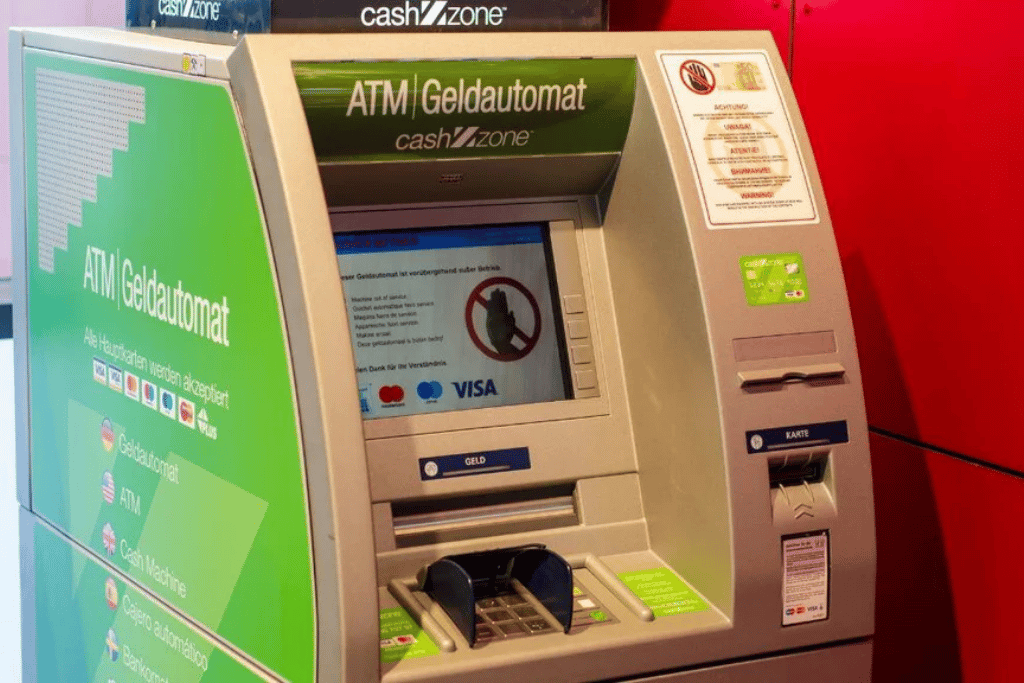
Image Credits: Crown Currency Exchange
Yes. Any Visa or Mastercard from a Singapore bank or travel card works at virtually every ATM in Germany, and nearly all machines have an English menu. Acceptance was never the issue. The fees are.
Finding one is easy too. Germany has more than 50,000 ATMs (Geldautomaten), clustered around bank branches, supermarkets, train stations and shopping streets. A quick “Geldautomat” search on Google Maps will point you to the nearest one, and it’s worth steering toward a bank-branded machine rather than the first one you see.
Pay or withdraw with a standard Singapore debit or credit card and you’re usually looking at a stack of charges:
- Foreign transaction fee: around 2.5–3.5% on every purchase
- Bank exchange rate markup: typically 1–3% above the real mid-market rate
- Overseas ATM fee: charged by your home bank on top of anything the German machine adds
One quirk worth knowing: a few regional machines run by smaller local Sparkassen or Volksbanken are reported to accept only German or European debit cards. It’s uncommon, and machines at airports, stations and city centres take international cards without fuss. If one declines your card, it’s usually that operator, not your card. Walk to the next one.
📖 Related Guide: How to Get the Best Exchange Rate in Singapore
Do You Still Need Cash in Germany?
More than you’d expect. Germany is one of the most cash-loving countries in Western Europe, and it catches Singapore travellers off guard.
Cash still accounts for around 45% of all payments nationwide. Cashless only edged ahead of it for the first time in 2025, which tells you how cash-attached the country remains. Germans grew up with the Girocard, their local debit system, and many small businesses never bothered adding Visa or Mastercard terminals. A “no cards” sign at the till is not unusual.
Where you’ll actually need euros:
- Bakeries (Bäckerei) and butchers — quick daily spots that are frequently cash-only
- Markets and food stalls — weekly markets, Christmas markets, and Imbiss döner and sausage stands
- Small cafés, bars and pubs (Kneipe) — card minimums are common, or cards aren’t taken at all
- Kiosks and vending — public transport ticket machines, lockers, and some public toilets still want coins
- Tips — rounding up in cash is the norm (more on that below)
For a city trip built around hotels, big restaurants, supermarkets and department stores, you can put most spending on a card. But keep a cash buffer. Carrying 100–150 EUR (~S$147–S$220) at a time is sensible, with a few small notes and coins always on you. Withdraw more if you’re heading to smaller towns or rural areas, where card acceptance drops off quickly.
A quick word on tipping: service isn’t added to your bill the way it is in some countries, so tipping is optional. It’s still customary to round up or add about 5–10% for good service, handed to your server directly rather than left on the table. Cash tips are appreciated in a way card tips aren’t always passed on.
How to Withdraw Euros at a German ATM
An ATM in German is a Geldautomat. The process is the same as home, with a couple of local twists worth knowing before you’re standing there with a queue behind you.
Step-by-step guide on how to withdraw Euro in Germany:
- Insert your card into the Geldautomat.
- Choose your language. English is almost always offered.
- Select the account type if asked. On a Singapore travel card like YouTrip, choose Savings.
- Pick a preset amount, or select other amount (anderer Betrag) to type your own.
- Enter your 4-digit PIN and cover the keypad with your hand.
- If the screen offers to charge you in SGD, decline it and choose euros (see the DCC section below).
- Take your card first, then your cash and receipt (Quittung) if you asked for one.
A short German ATM vocabulary
You won’t need much English-free bravery, but these words appear on screens and buttons:
| German | English |
|---|---|
| Geldautomat | ATM / cash machine |
| Bargeldauszahlung | Cash withdrawal |
| Betrag | Amount |
| Anderer Betrag | Other amount |
| Abheben | Withdraw |
| Bestätigen | Confirm |
| Abbrechen | Cancel |
| Quittung | Receipt |
Card-before-cash Note
This one catches people out: some German ATMs return your card before they dispense the cash, reversing the order you’re used to. The habit of grabbing the notes and walking off means people leave their card in the machine. Wait for both. Take the card when it pops out, then wait the extra second or two for the money.
Which ATMs Are Free in Germany?
Germany’s ATMs are organised into four big networks, and machines within a network are free for that network’s own account holders. As a foreign cardholder, you sit outside all of them, so “free” doesn’t automatically apply to you. What matters is the surcharge each operator sets for foreign cards, and it’s shown on screen before you confirm.
Still, knowing the networks helps you pick machines that tend to charge less, and spot the ones that charge a lot.
Note: ATM fees are subject to change; verify on screen before withdrawal.
The Cash Group
The Cash Group is made up of Germany’s big commercial banks: Deutsche Bank, Commerzbank, HypoVereinsbank and Postbank. These are free for each other’s customers and are widely found in city centres. For a foreign card, some Cash Group machines are fee-free and some apply a surcharge, so read the on-screen notice.
Sparkasse and the Volksbank network
Sparkasse (the red “S” logo) runs the largest ATM network in the country, with around 20,000 machines in almost every town. Volksbank and Raiffeisenbank (the Genossenschaftsbanken, or cooperative banks) run another huge network. Both are built for their own members. Many of their machines add no surcharge to a foreign card, but some do, up to around 7.50 EUR (~S$11) per withdrawal. Coverage is excellent, especially outside big cities, so they’re often your only option in smaller towns. Just check the fee on screen before you confirm.
CashPool
CashPool is a smaller alliance of banks such as Santander, Sparda-Bank and Targobank. Members withdraw free at each other’s machines. For a foreign card, the same rule applies: watch the on-screen surcharge.
What “free” actually means for a Singapore card
This reframe is worth reading twice. All that network talk is really about German residents avoiding fees between banks. As a visitor, chasing a “free” German ATM matters far less than two things you fully control:
- Your own card’s FX and withdrawal policy. A regular Singapore bank card stacks a foreign transaction fee plus an overseas ATM fee on every withdrawal, whatever the machine does. A multi-currency card like YouTrip removes most of that.
- Declining the conversion. Accepting DCC (see below) can cost more than any machine surcharge.
Get those two right and the network your ATM belongs to barely moves the needle.
Which ATMs You Should Actually Avoid
Some machines exist mainly to catch tourists. These are the ones to walk past.
Euronet: the blue machines
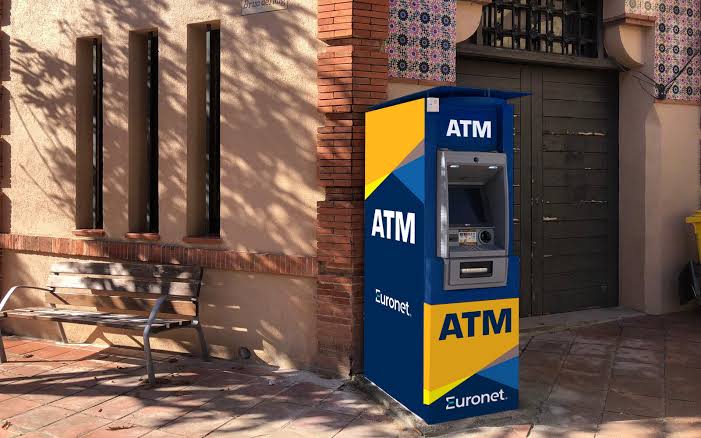
Image Credits: Euronet
Euronet ATMs are the standalone blue-and-white machines you’ll see all over tourist Berlin, Munich and Frankfurt, plus train stations and airports. They aren’t attached to any bank. They charge a per-withdrawal surcharge of around 5 EUR (~S$7) or more, and they push conversion (DCC) harder than anyone, presenting the amount in SGD at a poor rate. If the machine has no recognisable German bank logo, treat it as a Euronet-style trap and find a real bank ATM instead.
Airport and train-station ATMs
The machines right at the arrivals hall or on the station concourse are convenient by design and expensive to match. Many are private operators. If you need cash the moment you land, withdraw a small amount to tide you over, then top up properly at a bank ATM in town.
Hotel and shopping-centre standalone machines
Lobby ATMs and unbranded machines tucked into shopping centres are usually private operators with high surcharges. Use a bank-branded machine on the street or inside a bank branch instead.
Always Decline the Conversion (DCC)
This is the single most expensive mistake at a German ATM, and it has nothing to do with which machine you pick.
When you withdraw, the screen may offer to charge you in Singapore dollars instead of euros. It sounds helpful. It isn’t. This is Dynamic Currency Conversion (DCC), and choosing SGD lets the ATM operator set the exchange rate, usually with a markup of roughly 3% to 12% baked in. Choosing euros lets your own card do the conversion, which is almost always cheaper.
The maths makes it obvious. On a 200 EUR (~S$294) withdrawal, even a 7% DCC markup quietly adds around 14 EUR (~S$21) for nothing. Do that a few times across a trip and you’ve lost real money to a single button.
The rule is simple: when the screen asks, always choose euros (EUR), never “charge in SGD” or “with conversion”. The choice must be offered to you, but it’s easy to tap straight through without reading. Slow down for that one screen.
German ATM Fees at a Glance
Two fees can stack on a single withdrawal: the machine operator’s surcharge, and whatever your home card adds. For a foreign Visa or Mastercard, the rough landscape looks like this.
| ATM type | Typical fee for foreign cards |
|---|---|
| Cash Group (Deutsche Bank, Commerzbank, HypoVereinsbank, Postbank) | Often fee-free; a surcharge at some machines (check on screen) |
| Sparkasse | Frequently no operator surcharge; where charged, up to about 7.50 EUR (~S$11) |
| Volksbank / Raiffeisenbank | As above; up to about 7.50 EUR (~S$11) where charged |
| CashPool (Santander, Sparda, Targobank) | Varies; check on screen |
| Euronet and other private ATMs | Around 4–6 EUR (~S$6–9) or more, plus heavy DCC |
ATM fees are subject to change; verify on screen before withdrawal.
The reassuring part: many German bank ATMs add no operator surcharge to a foreign card at all. When the screen shows no fee, your only costs are your home bank’s and any conversion you accept.
On top of any machine surcharge, a standard Singapore bank card adds its own overseas ATM fee, often a flat charge or 1–3% of the amount, plus a foreign transaction fee of up to around 3.5%. A multi-currency card like YouTrip removes most of that second layer.
Every German ATM must display its surcharge on screen before you confirm, so you’ll always see the machine’s fee and can cancel if it’s steep. What it won’t show is your home bank’s cut, so know your card’s overseas fees before you travel.
Germany ATM Withdrawal Limits
Two limits are in play, and the tighter one wins.
- The machine’s per-transaction limit. German ATMs commonly cap a single withdrawal somewhere between 500 and 2,000 EUR (~S$735–S$2,940), depending on the bank and how much cash the machine holds. Some smaller machines cap lower, around 200–500 EUR (~S$294–S$735).
- Your own card’s daily limit. This is usually the real ceiling. Singapore bank cards and travel cards each have a daily overseas ATM limit, often lower than the machine’s cap.
| Limit | Amount |
|---|---|
| Per-transaction (machine) | ~500–2,000 EUR (~S$735–S$2,940) ⚠️ varies by bank |
| Your card’s daily cap | Varies. Check and adjust before you travel |
Most multi-currency apps let you raise or lower your ATM limit in-app, so set it to something sensible before you go. One thing that isn’t a day-to-day limit: if you’re carrying 10,000 EUR or more in cash into or out of the EU, you must declare it at customs. That’s a border rule, not an ATM one, but it’s worth knowing.
📖 Related Guide: Best Miles Credit Cards in Singapore
Can I Use a YouTrip Card in Germany?
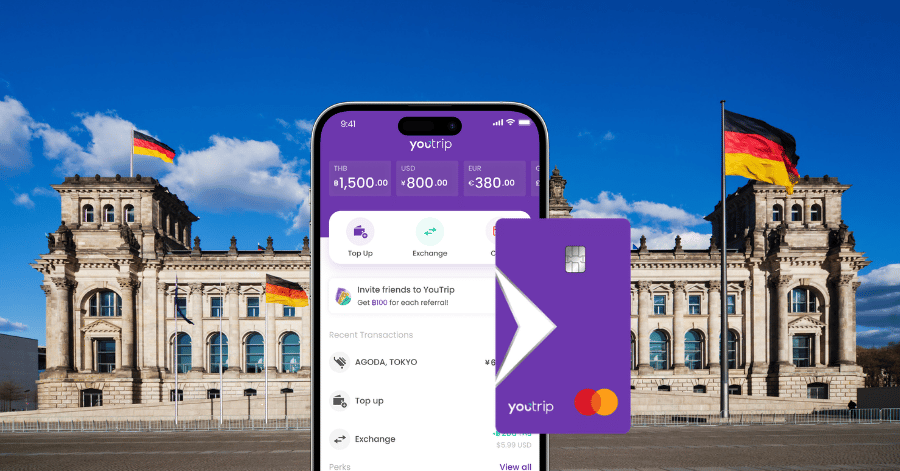
Yes. YouTrip runs on the Mastercard network, so it works at German ATMs and anywhere Mastercard is accepted. For getting euros, it’s about as cheap as it gets from Singapore.
Euro is one of the currencies you can hold in the YouTrip wallet, so you can lock in EUR at the wholesale rate before you fly, or convert on the spot with no FX fee. On withdrawals, you get your first S$400 per calendar month in overseas ATM withdrawals free, with a 2% fee after that. There’s no foreign transaction fee on card payments either.
To withdraw euros with YouTrip:
- Find an ATM showing the Visa or Mastercard logo (a bank-branded machine, not Euronet) and insert your YouTrip card
- Select Savings account
- Enter your 4-digit YouTrip card PIN
- Choose your amount and, when asked, withdraw in euros, not SGD
That last step matters as much on YouTrip as on any card: decline the conversion so you get YouTrip’s rate, not the machine’s.
This is also why an in-country ATM beats changing cash before you fly. A YouTrip withdrawal at a German bank ATM, at the wholesale rate with the first S$400 free, will almost always beat what you’d get from a money changer at Changi or a currency counter at the airport. Skip the changer, land, and withdraw what you need.
Do You Need a German Bank Account as a Tourist?

No. For a holiday, you never need a German bank account, and you can’t easily open one anyway.
You’ll see plenty of talk online about N26, DKB, ING and other German banks, plus international apps, as the way to get free withdrawals. Those are products for residents. Most require an Anmeldung (a registered German address) and are built for people living and earning there, not visitors on a two-week trip. They solve a problem you don’t have.
For a Singapore traveller, the setup is simpler: a multi-currency travel card loaded with euros before you leave, used at bank-branded ATMs, with the conversion always declined. That covers everything a holiday needs without any local paperwork.
Other Ways to Get Cash in Germany
If the nearest ATM is a pricey private one, Germany has a couple of local habits worth borrowing.
Supermarket cashback at the till
Many German supermarkets and drugstores (Rewe, Edeka, dm, Rossmann and others) let you withdraw cash at the checkout when you pay for your shopping, usually between 10 and 200 EUR (~S$15–S$294). It’s typically free or close to it.
The catch: most chains only offer it with a German Girocard, though some, including dm and Rossmann, do accept Visa and Mastercard debit. Treat it as a handy fallback rather than a guarantee for a Singapore card, and ask at the till or watch for a Bargeld sign.
App-based and barcode withdrawals
Some German banking apps generate a barcode you scan at a supermarket till to collect cash. It’s a genuinely German quirk, but it’s tied to a local account, so it’s not something a visiting traveller will usually set up. Good to recognise if a local friend offers to help.
Why the money changer at Changi is the wrong move
It’s tempting to sort out all your euros before you fly. In practice, airport money changers and currency counters bake a markup into the rate, so you get fewer euros for your dollars. Withdrawing on arrival with a multi-currency card at the wholesale rate, with your first S$400 free on YouTrip, almost always leaves you better off. Bring a small emergency buffer if it makes you comfortable, but don’t change your whole trip’s cash at a counter.
Tips to Avoid Extra Fees: Use a Multi-Currency Card
A multi-currency card gives you the real euro exchange rate with no markup, and with Germany’s Euronet machines and DCC prompts everywhere, it’s worth having one loaded before you land.
Cards like YouTrip, Wise and Revolut typically:
- Give you real-time exchange rates with no markup
- Charge zero or lower foreign transaction fees than a traditional bank card
- Offer a monthly free ATM allowance and work at bank ATMs across Germany
A quick comparison of some of the multi-currency cards available in Singapore:
| YouTrip | Revolut | Wise | Amaze | |
|---|---|---|---|---|
| FX fees | No fees | Weekdays: no fees within plan limits; 1% on weekends | Currency conversion fee from 0.26% | No explicit FX fee, but ~2% spread above the Mastercard rate; 1% domestic SGD fee |
| ATM withdrawal fees | Up to S$400 free per month; 2% after | Up to S$350 or 5 withdrawals free per month; 2% or S$1.49 after (whichever is higher) | From 1 May 2026: free up to S$100 per month; 1.75% after | 2% on all withdrawals |
| EUR exchange rate | 0.6803 EUR | 0.6802 EUR | 0.6789 EUR | 0.6802 EUR |
Rates taken as of 27 July 2026
For Germany specifically, YouTrip’s larger free ATM allowance is the one that counts, because this is a country where you’ll be pulling cash out more often than in most of Europe.
📖 Related Guide: Best Multi-Currency Cards in Singapore
Safety Tips for Using ATMs in Germany
Germany is generally safe for ATM use, but busy tourist areas in Berlin, Munich and Frankfurt draw the usual pickpockets, and a few basics keep you out of trouble.
- Use ATMs inside or attached to a bank branch rather than standalone street machines where possible
- Avoid Euronet and unbranded private machines, which is both a fee tip and a safety one, as they’re more often targeted
- Check the card slot and keypad for anything loose or added before you insert your card
- Cover the keypad when entering your PIN, even if nobody’s around
- Don’t accept help from strangers at the machine, however friendly
- Take your card and cash and move off before counting anything or sorting your wallet
- At airports and major stations, use bank ATMs inside the terminal, not the private machines nearest the exits
- Turn on transaction alerts in your banking or card app before you travel
- If a machine keeps your card, contact your issuer straight away. YouTrip users can freeze the card instantly in the app
FAQ
For a German account holder, machines within their own network (Cash Group, Sparkasse, Volksbank or CashPool) are free. For a foreign Singapore card there’s no guaranteed fee-free machine, since operators can add a surcharge, always shown on screen. The cheapest overall route is a multi-currency card that removes your home bank’s fees, used at a bank-branded ATM with the conversion declined.
Deutsche Bank ATMs are free for Deutsche Bank and Cash Group customers. A foreign card may still see a surcharge on some machines, so check the on-screen notice before confirming. “Free for Deutsche Bank customers” does not automatically mean free for you.
Use a bank-branded machine: Cash Group (Deutsche Bank, Commerzbank), Sparkasse or Volksbank. Avoid the blue Euronet machines and any unbranded private ATMs in tourist areas, stations and airports.
Around 100–150 EUR (~S$147–S$220) at a time covers a typical city day, with small notes and coins always on hand. Carry more for smaller towns and rural areas, where cards are accepted less often.
You trigger Dynamic Currency Conversion (DCC), and the machine converts at its own rate with a markup of roughly 3–12%. Always choose euros so your own card handles the conversion.
At your own bank you can check balances, deposit cash and change your PIN. As a foreign cardholder, treat German ATMs as cash-withdrawal machines only. Most other functions are limited to local account holders.
No. A small emergency buffer is fine, but changing all your cash at a money changer usually gives you a worse rate than withdrawing on arrival with a multi-currency card at the wholesale rate.
Country ATM Guides
Heading somewhere else next? Explore our country-specific withdrawal guides:
🇲🇾 Malaysia | 🇯🇵 Japan | 🇹🇭 Thailand | 🇰🇷 South Korea | 🇹🇼 Taiwan | 🇭🇰 Hong Kong | 🇮🇩 Indonesia | 🇻🇳 Vietnam | 🇦🇺 Australia | 🇲🇴 Macau | 🇨🇳 China | 🇺🇸 US | 🇿🇦 South Africa | 🇵🇭 Philippines | 🇫🇷 France | 🇬🇧 UK | 🇳🇿 New Zealand | 🇮🇹 Italy | 🇰🇭 Cambodia | 🇨🇦 Canada | 🇨🇦 Switzerland | 🇪🇸 Spain | 🇩🇪 Germany
Get more euros for your money in Germany

Germany will happily take your cash, and a few machines will happily overcharge you for it. Dodge the Euronet blue boxes, use a bank ATM, and always choose euros when the screen asks. Do that with YouTrip and you get the wholesale rate, zero FX fees, and your first S$400 in ATM withdrawals free every month, so more of your budget goes on schnitzel and less on surcharges.
Sign up for your complimentary YouTrip card today with promo code YTBLOG5 and get FREE S$5 in your account!
Then head over to our YouTrip Perks page for exclusive offers and promotions. We promise you won’t regret it. For travel tips, event invites, and more, join our Community Telegram Group @YouTripSquad! 💜
Happy travels!
The information stated above is true as of 27 Jul 2026
Related Articles:
YouTrip vs Revolut: The Singapore Comparison
YouTrip vs Wise: The Singapore Comparison
Foreign Currency Transactions: Earning Miles vs YouTrip Savings