


Heading to the Philippines? Here’s everything you need to know about withdrawing cash there.
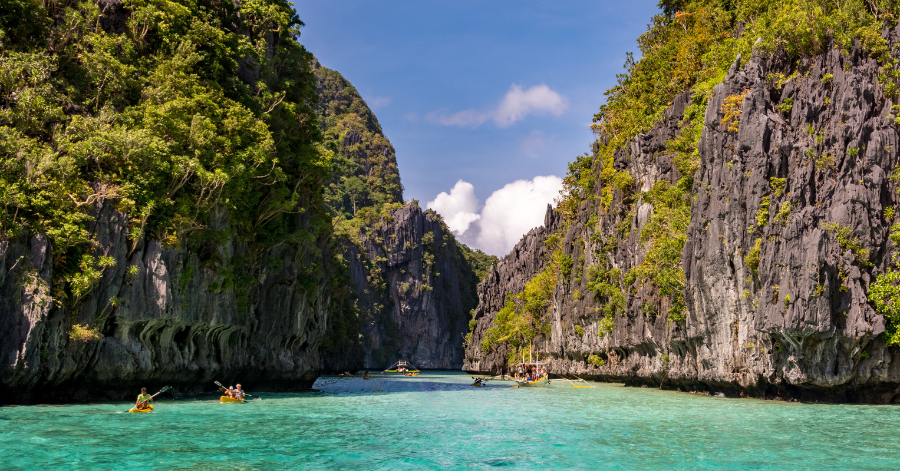
If you’re heading to the islands and wondering how to get cash on the go, we’ve got you. Whether you’re island-hopping in Palawan, exploring Manila’s historic Intramuros, or diving in Cebu, this Philippines ATM withdrawal guide covers everything you need to know in 2026 — from ATM fees and withdrawal limits to tips on avoiding extra charges.
💜 Stay Up To Date:
– Japan Budget Airlines: The Singaporean Traveller’s Guide (2026)
– Things to Do in Taipei: 15 Best Picks for 2026
– Kota Kinabalu Travel Guide (2026): Top Things To Do, Hotels & More
Summary
- Cash is essential in the Philippines for local transport (jeepneys, tricycles), tips, markets, and anything outside Metro Manila, Cebu, and Boracay.
- Visa and Mastercard work at most ATMs on the BancNet network; UnionPay has limited acceptance.
- ATM fees for foreign cards: typically 250 PHP (~S$6.00) per withdrawal at all major banks.
- Per-transaction withdrawal limit: typically 10,000–20,000 PHP (~S$240–S$480), lower than most destinations.
- DCC is common at tourist-area ATMs; always decline and pay in PHP.
- Card skimming occurs, particularly at tourist hotspots and standalone machines — use mall and bank-branch ATMs.
- YouTrip offers free S$400 in ATM withdrawals every calendar month with zero FX fees. A 2% fee is imposed thereafter. *Subject to local ATM fees.
📚 Table of Contents
- Do You Still Need Cash in the Philippines?
- Tipping in the Philippines: What You Need to Know
- Can I Use My Debit or Credit Card in the Philippines?
- Where to Find ATMs in the Philippines
- How to Withdraw PHP at Philippines ATMs
- Philippines ATM Fees
- Tips to Minimise ATM Fees in the Philippines
- Philippines ATM Cash Withdrawal Limits
- Exchange Rates & Conversion Fees in the Philippines
- Cash vs Card in the Philippines: When to Use Which
- Tips to Avoid Extra Fees: Use a Multi-Currency Card
- Safety Tips for Using ATMs in the Philippines
Do You Still Need Cash in the Philippines?
Yes — more so than most other Southeast Asian destinations.
Metro Manila, Cebu City, and major resort areas like Boracay are increasingly card-friendly, but step outside the main tourist strips, and cash becomes non-negotiable:
- Local transport — jeepneys, tricycles, habal-habal (motorbike taxis), and UV Express minivans are cash-only
- Street food and local markets — predominantly cash-only; Palengkes (wet markets), night markets, and roadside eateries rarely take cards
- Island-hopping tours and boat operators — most collect cash on the day, especially on smaller islands
- Rural areas and provincial towns — card acceptance is unreliable; many businesses have no POS terminals at all
- Tips — guides, drivers, resort staff, and hotel porters all expect cash
- Entrance fees and activity deposits — beach resorts and activity operators outside the main chains often cash-only.
Tip: Budget 2,000–3,000 PHP (~S$48–S$72) for Metro Manila and city trips; 5,000–8,000 PHP (~S$120–S$192) if heading to islands, provincial areas, or doing multi-day tours.
📖 Related Guide: How to Get the Best Exchange Rate in Singapore
Tipping in the Philippines: What You Need to Know
Tipping isn’t legally required in the Philippines, but it’s widely practised and warmly received — service workers in hospitality and tourism rely heavily on gratuities. Cash in PHP is strongly preferred.
Check your bill first: Many sit-down restaurants add a 10% service charge (SC) automatically. If it’s already on the bill, an additional tip is optional but still appreciated for good service.
| Situation | Standard tip |
|---|---|
| Sit-down restaurant (no SC) | 10% of bill |
| Sit-down restaurant (SC included) | Optional; 50–100 PHP (~S$1.20–S$2.40) extra for good service |
| Bar | 20–50 PHP (~S$0.50–S$1.20) per round, or round up the tab |
| Tour guide (full day) | 200–500 PHP (~S$4.80–S$12) per group |
| Driver (hired for the day) | 100–300 PHP (~S$2.40–S$7.20) |
| Hotel porter | 50–100 PHP (~S$1.20–S$2.40) per bag |
| Hotel housekeeping | 50–100 PHP (~S$1.20–S$2.40) per day |
| Resort / diving instructor | 200–500 PHP (~S$4.80–S$12) per session |
| Spa therapist | 100–200 PHP (~S$2.40–S$4.80) |
Island and tour tipping note: For multi-day island-hopping or adventure tours, budget 500–1,000 PHP (~S$12–S$24) per person for guides and boat crew. Bring dedicated small bills — change is often limited on smaller islands.
Can I Use My Debit or Credit Card in the Philippines?
Yes — Visa and Mastercard are widely accepted in Metro Manila (BGC, Makati, Ortigas), Cebu City, major resorts in Boracay, and tourist-facing establishments across the country. American Express has limited acceptance, mainly at international hotels and upscale chains.
If you’re using a standard Singaporean bank debit or credit card, expect:
- Foreign transaction fee: 2.5–3.5% on every purchase
- Bank exchange rate markup: typically 1–3% above the mid-market rate
- ATM withdrawal fee: charged by the local Philippine bank, on top of your home bank’s fee
That stack adds up quickly on a longer trip. A multi-currency card removes most of it.
Note on GCash and Maya: These are the Philippines’ dominant e-wallets and are accepted almost everywhere locally. GCash does offer a “GCash Overseas” product, but registration still requires a Philippine SIM card to receive OTP verification — meaning you’d need to buy a local SIM on arrival first.
For short trips, it’s rarely worth the setup. Maya has similar limitations. Most tourists are better off using a multi-currency card for merchant payments.
Where to Find ATMs in the Philippines
ATMs are easy to find in cities and major tourist areas. The Philippines operates on the BancNet interbank network, which connects all major local banks — your Visa or Mastercard will work at any BancNet ATM.
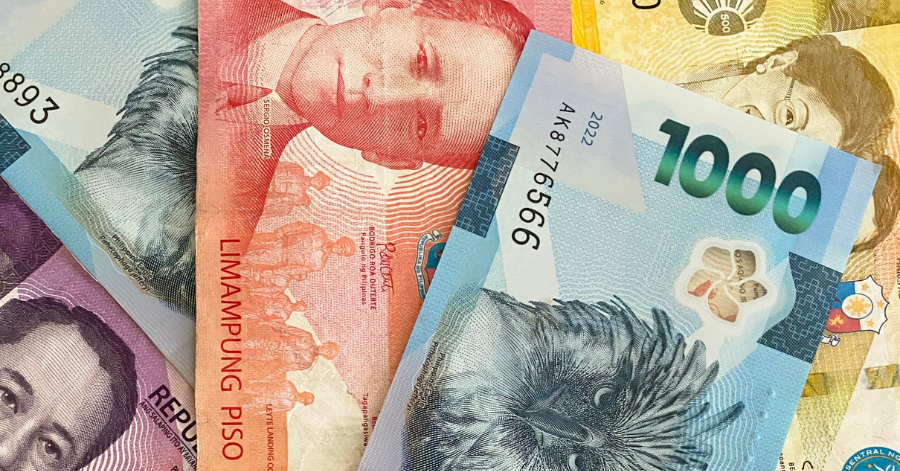
The five main banking networks are:
- BDO Unibank — Locate your ATM here
The largest bank in the Philippines by assets. Excellent coverage across cities, malls, and regional towns. Charges 250 PHP per foreign card withdrawal. - BPI (Bank of the Philippine Islands) — Locate your ATM here
Strong nationwide coverage with reliable ATMs in malls and branches. Charges 3.50 USD or 1.75% per foreign card withdrawal. - Metrobank — Locate your ATM here
Well-distributed across Metro Manila and major provincial cities. May charge a fee for foreign card withdrawal. - Security Bank — Locate your ATM here
Good coverage in Metro Manila and Cebu. Charges 250 PHP per foreign card withdrawal. - UnionBank — Locate your ATM here
Strong in Metro Manila and growing provincial coverage. Fee varies. - HSBC ATMs — Locate your ATM here
Charge no fee for foreign cards, and allow up to 40,000 PHP per transaction. However, HSBC has very few branches — mainly in Manila and Cebu. Worth using if convenient, but don’t plan your itinerary around finding one.
⚠️ Note: ATM fees are subject to change; always check the ATM screen before confirming your withdrawal.
Top ATM locations:
- Shopping malls (most reliable and safest — SM Malls, Ayala Malls, Robinsons Malls)
- Bank branches
- Airport terminals (NAIA T1–T3, Mactan-Cebu)
- Hotel lobbies
- Major supermarkets (Puregold, Robinsons Supermarket)
Pro Tip: Always use ATMs inside SM, Ayala, or Robinsons malls. Standalone ATMs in convenience stores and tourist strips carry a higher skimming risk, and you’re more exposed to distraction scams.
📖 Related Guide: Should You Exchange Money in Singapore or Overseas? (Here’s What’s Cheaper)
How to Withdraw PHP at the Philippines ATMs
Here’s how to withdraw Philippine Pesos with YouTrip in 4 easy steps:
- Locate an ATM displaying the Visa/Mastercard logo and insert your YouTrip card

- Select ‘Saving account’
- Key in your 4-digit ATM & Card PIN
- Withdraw your desired amount in PHP
- Enjoy FREE S$400 monthly withdrawals with YouTrip per calendar month, with a 2% fee imposed thereafter
*Subject to local ATM fees
📖 Related Guide: Find out more about how to withdraw with YouTrip here
Philippines ATM Fees
Unlike some destinations, there are no fee-free ATMs in the Philippines for foreign cards — every withdrawal will cost something.
1. Local bank fee (charged by the Philippines ATM)
Philippine banks charge a fee for using their ATMs with a foreign card. This typically ranges from 200–300 PHP (~S$4.80–S$7.20) per withdrawal, depending on the bank. HSBC is the exception. They charge no fee to foreign cardholders, though their ATMs are limited to a handful of locations in Manila and Cebu.
2. Your home bank’s overseas ATM fee
On top of the local fee, your home bank will add its own overseas ATM charge — typically a flat fee or 1–3% of the withdrawal amount. Check with your bank before your trip.
Tips to Minimise ATM Fees in the Philippines
- Withdraw the maximum amount each time: The 200-250 PHP fee is flat, so fewer, larger withdrawals save money over multiple smaller ones.
- Use HSBC ATMs if you can find one: The only bank in the Philippines that charges no fee for foreign cards; allows 40,000 PHP per transaction, but locations are very limited (mainly Manila and Cebu)
- Plan ahead for islands and remote areas: Many smaller islands (El Nido, Coron, Siargao) have limited ATMs or machines that run out of cash; withdraw enough in the city before heading out.
- Stick to in-mall or in-branch ATMs: Safer and standard fees.
- Use a multi-currency card like YouTrip for all card payments: Reduces how often you need to withdraw.
- Always select PHP when prompted, never SGD: Selecting SGD triggers DCC and a poor exchange rate.
- Notify your Singapore bank before departure: Philippine transactions are a common fraud trigger that can freeze your card.
- Carry small denominations: Tipping and local transport require 20, 50, and 100 PHP notes; large bills can be hard to break.
Philippines ATM Cash Withdrawal Limits
| Limit | Amount |
|---|---|
| Per-transaction maximum | 10,000–20,000 PHP (~S$240–S$480) |
| Daily cap | 20,000–50,000 PHP (~S$480–S$1,200) |
| Your Singapore bank’s daily limit | Varies — check before travel |
The per-transaction limit is notably lower in the Philippines than in most other countries. PHP 10,000 per transaction is common at many machines, meaning a single ATM visit won’t cover a longer trip’s cash needs.
Plan for 2–3 withdrawals over a multi-day itinerary, and always withdraw before leaving for remote islands.
📖 Related Guide: Best Miles Card in Singapore: Top 4 Credit Cards Compared (UOB, HSBC, Citi, DBS)
Exchange Rates & Conversion Fees in the Philippines
Two things to watch out for:
- Dynamic Currency Conversion (DCC): If an ATM offers to charge you in SGD instead of PHP, always choose PHP. Selecting SGD triggers DCC, which applies a poor exchange rate with added fees. It’s common at tourist-area ATMs, airports, and standalone kiosks across the Philippines.
- Exchange rate markups: If you’re not using a multi-currency card, your bank may mark up the exchange rate by 1–4%. Factor this in when working out your total costs.
📖 Related Guide: YouTrip Exchange Rates: Everything You Need to Know
Cash vs Card in the Philippines: When to Use Which
Use your card for:
- Hotels and resorts (better fraud protection for large charges)
- Supermarkets and chain restaurants
- Shopping malls
- Car hire
- Tourist attractions and theme parks
Use cash for:
- Tips — guides, drivers, hotel staff, resort crew
- Local transport — jeepneys, tricycles, UV Express
- Markets, street food, and local eateries
- Island-hopping and boat operators
- Any activity outside Metro Manila, Cebu, and major resort towns
A rough 60/40 card-to-cash split works for Manila-only trips. For island itineraries (Palawan, Boracay, Siargao), lean closer to 40/60 — cash runs everything outside the main resort lobby.
Withdraw 1,500–2,000 PHP (~S$36–S$48) on arrival to cover your first full day without scrambling for a machine.
Tips to Minimise Fees: Use a Multi-Currency Card
A multi-currency card gives you the real PHP exchange rate with no markup — essential in the Philippines, where both DCC and bank FX markups are common at tourist-facing merchants.
Cards like YouTrip, Wise, and Revolut are worth using. They typically:
- Give you real-time exchange rates with no markup
- Charge zero or lower foreign transaction fees vs traditional banks
- Offer free monthly ATM withdrawals and work at most ATMs in South Africa
Here’s a quick comparison between some of the best multi-currency cards in Singapore:
| YouTrip | Revolut | Wise | Amaze | |
|---|---|---|---|---|
| FX Fees | No fees | On weekdays: No fees apply if you’re within your plan’s fair usage limit On weekends: 1% fee applies regardless of your plan | Currency Conversion Fee: From 0.26% *fee varies by currency | No fees for FX ✅ 1% domestic SGD fee |
| ATM Withdrawal Fees | Up to S$400 free/month; 2% fee thereafter | Up to S$350 or 5 withdrawals free/month; 2% fee thereafter | From 1 May 2026: Free up to S$100/month; 1.75% fee thereafter | 2% on all withdrawals |
📖 Related Guide: Find out what are the Best Multi-Currency Cards In Singapore
Safety Tips for Using ATMs in the Philippines
Card skimming and ATM-related theft do occur in the Philippines, particularly at tourist hotspots and standalone machines. Standard precautions go a long way:
- Use ATMs inside SM, Ayala, or Robinsons malls and bank branches only: Avoid standalone machines on the street, in convenience stores near tourist strips, and at beach resorts with poorly lit kiosks.
- Card skimming is a known issue: Inspect the card slot and keypad before inserting your card; if anything looks loose, sticky, or out of place, don’t use it.
- Watch for distraction scams: Criminals work in pairs; one engages you in conversation while another observes your PIN or interferes with your transaction.
- Cover your PIN every time, even if no one appears to be nearby
- Don’t count cash at the ATM: Pocket it immediately and move to a secure location before checking the amount
- Go during business hours: Avoid ATM visits after dark, particularly outside malls
- Enable transaction alerts via your banking app before you travel
- If your card is lost or stolen, call your bank’s emergency line immediately; YouTrip users can freeze the card instantly in-app
Note: BancNet ATMs inside banks are generally the lowest-risk option for consistent reliability and safety
Country ATM Guides:
Need fee-free or lower-fee ATM recommendations? Explore our country-specific withdrawal guides:
🇲🇾 Malaysia | 🇯🇵 Japan | 🇹🇭 Thailand | 🇰🇷 South Korea | 🇹🇼 Taiwan | 🇭🇰 Hong Kong | 🇮🇩 Indonesia | 🇻🇳 Vietnam | 🇦🇺 Australia | 🇲🇴 Macau | 🇨🇳 China | 🇺🇸 US | 🇿🇦 South Africa | 🇵🇭 Philippines | 🇫🇷 France | 🇬🇧 UK | 🇳🇿 New Zealand | 🇮🇹 Italy | 🇰🇭 Cambodia | 🇨🇦 Canada | 🇨🇦 Switzerland
Get the Best PHP Rates with YouTrip!

Want to skip high fees and dodgy exchange rates altogether? YouTrip lets you pay with the best PHP rates — no fees, no hidden charges. You also get free monthly ATM withdrawals of up to S$400, with a 2% fee imposed thereafter. Perfect for hassle-free travel in the Philippines.
Sign up for your complimentary YouTrip card today with <YTBLOG5> and get FREE S$5 in your account!
Then, head over to our YouTrip Perks page for exclusive offers and promotions — we promise you won’t regret it.
For more great tips and articles like this, join our Telegram (@YouTripSG) and subscribe to our free weekly newsletter here or down below.
For travel tips, event invites, and more, join our Community Telegram Group @YouTripSquad! 💜
Happy travels!
Related Articles
How To Send Money To Philippines From Singapore
Things To Do In New Zealand: The Ultimate Travel Guide
13 Best Things To Do In Da Nang, Vietnam


*The information stated above is true as of 20 Apr 2026