



What withdrawing cash in Austria actually costs a Singapore card
Withdrawing euros in Austria costs more than it does in most of its neighbours. Where German, French, Italian and Spanish bank ATMs often charge a foreign card nothing at all, most Austrian ones charge between 2 and 6 EUR (~S$3–9) per withdrawal. The machine has to show you that fee before you confirm, and you can cancel at no cost if it looks steep.
Austrian ATMs are free to use for Austrian cards, and Austrian banks don’t charge their own customers to use them. Cards issued overseas, however, pay a foreign-card fee instead.
You’ll also need cash more often than you’d expect. Austria settles 70% of its in-store payments in cash, against a eurozone average of 52%, so budget for more than one trip to a machine.
| What | Details |
|---|---|
| Can a Singapore card withdraw euros? | Yes. Any Visa or Mastercard works at nearly every Austrian ATM, and English menus are standard |
| Do Austrian ATMs charge foreign cards? | Usually yes. Roughly 2–6 EUR (~S$3–9) per withdrawal, varying by bank and machine |
| Who actually pays it? | Overseas cards only. The foreign-card fee (Fremdkartenentgelt) doesn’t apply to Austrian cards, which still withdraw free |
| Will you see the fee first? | Yes. It has to show on screen before you confirm, and cancelling costs you nothing |
| Watch for | Euronet’s blue machines: 1.95 EUR (~S$3) flat, but capped at 200 EUR (~S$296) at hundreds of them since 2026 |
| The DCC trap | Always choose euros, never SGD, when the screen offers to convert. Bank ATMs and shop card terminals both ask |
| Standard withdrawal limit | 400 EUR (~S$592) per transaction at bank machines |
| Cheapest way | Fewer, larger withdrawals on a card with no FX fees. YouTrip: first S$400/month in overseas ATM withdrawals free, 2% after, 0% FX, lock EUR in-app |
Table of Contents
- Can You Use a Singapore Card at Austrian ATMs?
- Do You Still Need Cash in Austria?
- How to Withdraw Euros at an Austrian Bankomat
- Which ATMs Are Free in Austria?
- The Euronet 200-Euro Squeeze
- Always Decline the Conversion (DCC)
- Austrian ATM Fees at a Glance
- Austria ATM Withdrawal Limits
- Can I Use a YouTrip Card in Austria?
- Do You Need an Austrian Bank Account as a Tourist?
- Other Ways to Get Cash in Austria
- Tips to Avoid Extra Fees: Use a Multi-Currency Card
- Safety Tips for Using ATMs in Austria
- FAQ
Can You Use a Singapore Card at Austrian ATMs?
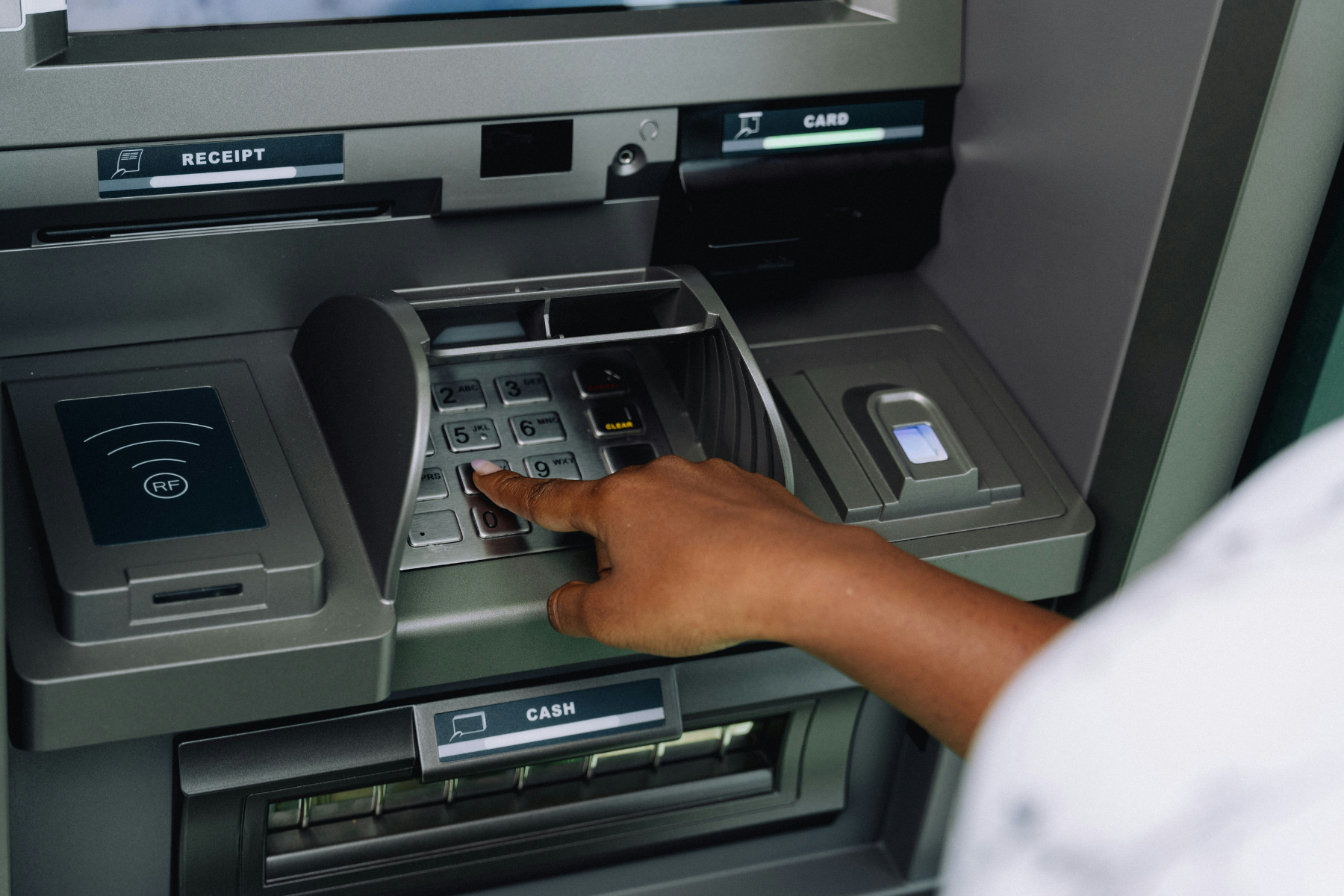
Image Credits: The International
Yes, and easily. The national Bankomat network accepts both Mastercard and Visa in all their usual forms, which covers essentially every card issued in Singapore. English menus are standard, so you won’t be guessing your way through German prompts.
Finding a machine is straightforward too. Austria has roughly 8,900 ATMs for a population of nine million, clustered around bank branches, supermarkets, train stations and main shopping streets. In German, an ATM is a Bankomat, and that’s the word you’ll see on signs and in Google Maps searches.
Acceptance was never the problem. Cost is, and it comes from two places:
- The Austrian machine’s foreign-card fee: roughly 2–6 EUR (~S$3–9), charged by the bank operating the ATM
- Your own bank’s charges: a foreign transaction fee of around 3.25–3.5%, plus an overseas ATM fee on most cards. That percentage sits on top of the card network’s exchange rate, which is already a little above the mid-market rate banks get trading with each other
On a standard Singapore bank card, both layers apply to every withdrawal. You can’t do much about the first. The second is entirely within your control, which is where most of the savings actually sit.
📖 Related Guide: How to Get the Best Exchange Rate in Singapore
Do You Still Need Cash in Austria?
Yes, more than in most of Europe. Austrian cities look modern and card-friendly, so it’s easy to arrive with no cash and get caught out.
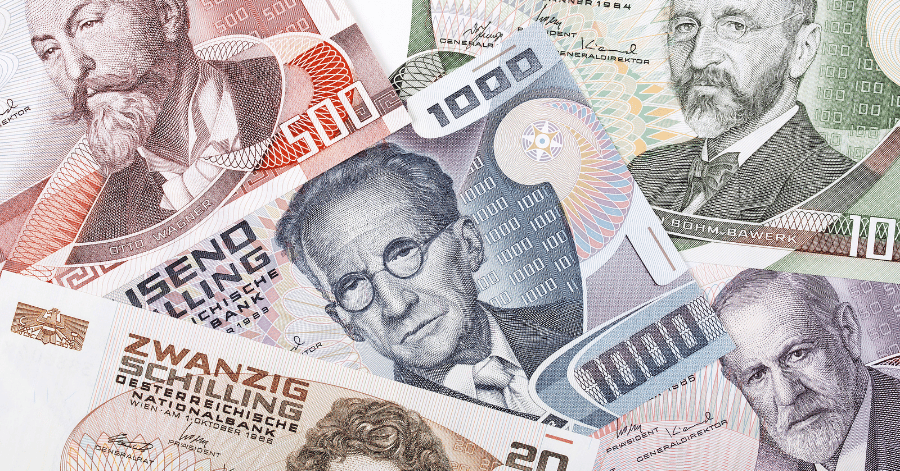
Cash covered 70% of Austria’s in-store payments by number of transactions in the European Central Bank’s most recent survey, against a eurozone average of 52%. Only Malta and Slovenia lean on cash harder. This isn’t a lag in technology. Austrians like cash, and plenty of businesses have never felt pressure to change.
Where you’ll actually need euros:
- Heurigen (wine taverns) — many of the wine taverns around Grinzing, Neustift and Stammersdorf still take cash only, and the seasonal ones out in the vineyards almost always do
- Würstelstand (sausage stands) — the late-night Vienna institution, and usually cash
- Mountain huts and ski Hütten — small huts across the Alps often take cash only, even where the lift ticket office takes cards
- Markets and small cafés — Naschmarkt’s food stalls mostly take cards now, but the Saturday flea market runs on cash, as do plenty of neighbourhood Konditorei and older coffee houses
- Small purchases everywhere — an ice cream, a street souvenir, a public toilet
Given the per-withdrawal fee, the sensible pattern here is fewer, larger withdrawals. Taking out 300–400 EUR (~S$444–S$592) once beats four separate trips to a machine that charges you each time. Carry what you’re comfortable with, top up before heading into the Alps, and use a card for hotels and larger restaurants.
A quick word on tipping: service isn’t added to your bill, and tipping around 10% is customary. The mechanics are specific here. You don’t leave money on the table. Instead, you tell your server the total you want to pay as you hand over the cash. On an 18.40 EUR bill you’d pass over 20 EUR and say “Stimmt so”, meaning “that’s right”. Cash makes this much easier than a card does.
How to Withdraw Euros at an Austrian Bankomat
Withdrawing at an Austrian Bankomat works much as it does at home, with two local differences to catch before you’re standing at the machine.
- Look for the green-blue “B” Bankomat mark or a bank’s own branding, then insert your card
- Choose your language. English is offered almost everywhere
- Select the account type if the machine asks. On a Singapore travel card, choose ‘Savings’
- Pick a preset amount, or select ‘anderer Betrag’ to type your own
- Enter your 4-digit PIN, covering the keypad with your other hand
- If the screen offers to charge you in Singapore dollars, decline and choose euros
- Read the fee notice before confirming. If the charge looks steep, cancel and try a different bank’s machine
- Take your card, then your cash, then your receipt (Beleg) if you asked for one
A short Austrian ATM vocabulary
You won’t need much German, but these words show up on screens and buttons:
| German | English |
|---|---|
| Bankomat | ATM / cash machine |
| Behebung | Withdrawal |
| Betrag | Amount |
| Anderer Betrag | Other amount |
| Beheben | Withdraw |
| Bestätigen | Confirm |
| Abbrechen | Cancel |
| Beleg | Receipt |
| Entgelt / Gebühr | Fee / charge |
Austrian machines that charge a fee have to display it on screen and let you back out before any money moves. Cancelling costs you nothing.
This matters more in Austria than in most countries, because the fee isn’t uniform. Different banks charge different amounts, and the machine two streets away may charge less. If a notice shows 5 EUR and you’re in a city centre with options, walking is worth it. If you’re in a village with one machine, pay it and move on.
Which ATMs Are Free in Austria?

For a card issued outside Austria, none of them reliably are. The fee-free reputation belongs to Austrian cardholders, not to visitors.
Austria’s machines mostly sit on a single shared network operated by Payment Services Austria, which runs ATMs on behalf of the country’s banks. Those machines carry the green-blue “B” Bankomat mark. Withdrawals on this network are free of operator charges for Austrian cardholders. Austrian banks don’t charge their own customers either. By law, any such fee would have to be agreed when the account is opened rather than simply imposed.
None of that reaches your wallet. The Fremdkartenentgelt, or foreign-card fee, is separate from all of that. The bank operating the machine sets it, and it applies only to cards issued outside Austria.
Austria ATM Fees
Reported amounts vary by bank, and they’ve been moving since around 2019. Consumer comparison sites in Austria and Germany put the current landscape roughly here:
| Operator | Reported foreign-card fee |
|---|---|
| Bank Austria | Around 2 EUR (~S$3) |
| Volksbank | Around 1.95 EUR (~S$3) |
| Oberbank | Around 2.90 EUR (~S$4) |
| Sparkasse | Around 3.90 EUR (~S$6), higher at some branches |
| Raiffeisen | Around 4 EUR (~S$6), up to 6 EUR (~S$9) |
| bank99 and Hypo | Around 4.90 EUR (~S$7) |
| Euronet | 1.95 EUR (~S$3). Austrian cardholders get it refunded by their bank; you won’t |
⚠️ These figures come from Austrian and German consumer comparison sites, not from published tourist tariffs, and the banks don’t advertise them. Amounts differ between branches of the same bank and change without notice. Treat the table as a rough sense of cheap versus expensive, and read the on-screen figure as the only number that actually binds.
Finding a machine: the official Bankomat map covers the whole national network and is the quickest way to see what’s nearby. For branch machines specifically, Erste Bank and Sparkasse run their own branch and ATM finder. If you’d rather search by card network, Visa’s Global ATM Locator works anywhere, and Mastercard runs an equivalent finder on its own site and app.
ATM fees are subject to change; verify on screen before withdrawal.
👉 Bottom line
There’s no reliable fee-free machine for a Singapore card in Austria, so stop hunting for one. Two things matter far more than which logo is on the ATM:
- Withdraw less often. A flat fee per withdrawal rewards taking out more at once. Four small withdrawals can cost four times what one large one does.
- Cut what your own bank charges. The Austrian fee is a few euros. A standard Singapore card’s foreign transaction fee and overseas ATM charges can cost more across a trip than every machine fee combined.
The Euronet 200-Euro Squeeze
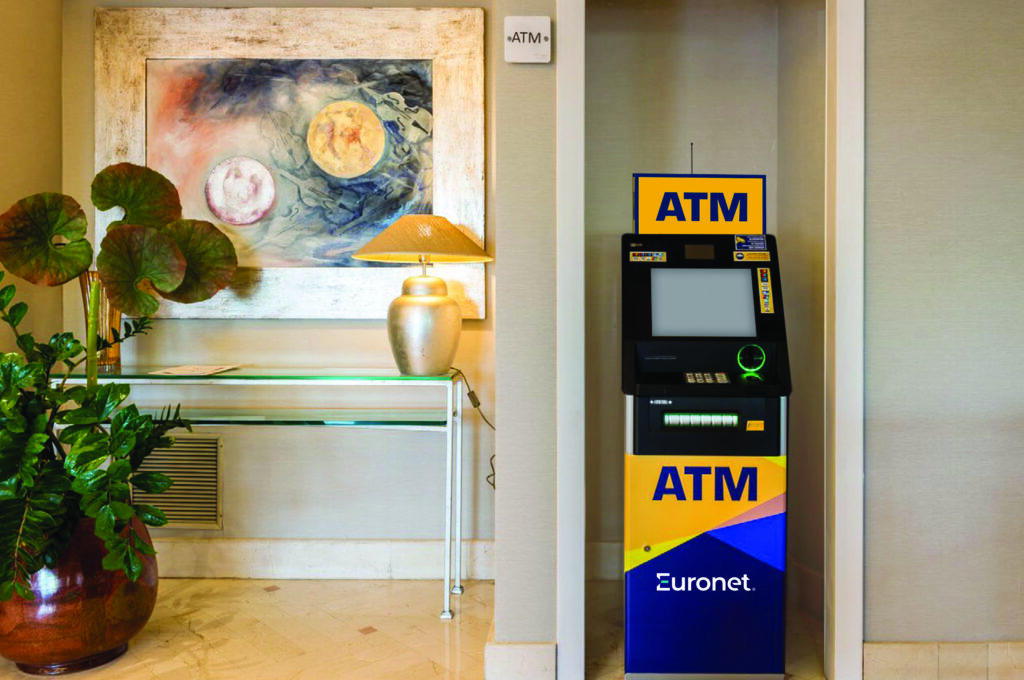
Image Credits: Euronet
Euronet runs the blue standalone machines you’ll see in tourist areas, and it’s the only Austrian operator that charges a flat fee on every withdrawal.
These are the standalone blue-and-white machines you’ll find where tourists are: Vienna’s inner city, Salzburg’s old town, the ski resort villages, plus airports and stations. They aren’t attached to any bank, and they charge 1.95 EUR (~S$3) per withdrawal.
Austrians barely register that fee, and there’s a legal reason why. Since 2018, Austrian banks have had to reimburse their own customers for charges levied by independent operators like Euronet, so a local gets the money back. Nobody reimburses a Singapore card, so the same 1.95 EUR that a local gets back is a real cost to you.
Compare that with the table above and Euronet starts to look reasonable. Its fee is lower than what several Austrian banks charge a foreign card. On the fee alone, it isn’t the worst machine on the street.
Then came 2026.
What changed this year
Since early 2026, Euronet has cut the maximum single withdrawal from 400 EUR (~S$592) to 200 EUR (~S$296) at several hundred of its Austrian machines. The change drew national coverage in July.
The logic is simple once you see it. ATM operators earn per transaction, not per euro dispensed. Halve what a machine will give you, and anyone who wanted 400 EUR has to withdraw twice. That turns a 1.95 EUR fee into 3.90 EUR (~S$6) for exactly the same cash, which lands it right back among the most expensive options.
Austria’s central bank, the Oesterreichische Nationalbank, called the move “durchaus kritisch”, or decidedly questionable. Raiffeisen and Erste Bank both said publicly that they wouldn’t follow, and their machines still dispense up to 400 EUR in one go.
⚖️ Verdict
For a small top-up of 100–200 EUR, a Euronet machine is not the disaster its reputation suggests, and the fee is stated plainly. For anything larger it’s among the worst choices in the country, because you’ll pay twice to get there. Its conversion prompts are also the most aggressive you’ll meet in Austria, which is where the real damage happens.
Airport and station machines
The machines nearest the arrivals hall are convenient by design. Many are private operators, and the airport is precisely where a tired traveller stops reading the screen. If you need euros the moment you land, take out a small amount, then withdraw properly in town.
Always Decline the Conversion (DCC)
Dynamic Currency Conversion is the most expensive mistake you can make at an Austrian ATM, and it costs far more than any machine fee.
When you withdraw, the screen may offer to charge you in Singapore dollars instead of euros. It sounds like a courtesy. It isn’t. This is Dynamic Currency Conversion, and choosing SGD hands the exchange rate to the machine’s operator. Studies of European DCC put the markup between 2.6% and 12%, averaging around 5%. Choosing euros lets your own card handle the conversion, which is almost always cheaper.
In Austria, the national network’s own software offers this conversion to foreign cardholders as standard. The prompt shows up at ordinary bank machines, not just at Euronet.
The maths settles it. On a 400 EUR (~S$592) withdrawal, a 7% markup quietly adds around 28 EUR (~S$41). That’s roughly six times the worst machine fee in this guide, for pressing one button.
The rule doesn’t change: when the screen asks, choose euros (EUR), never “charge in SGD” or “with conversion”.
You can read the markup before you accept it
Most people don’t know this, and it turns a vague warning into something you can check. EU rules require the machine to show you what the conversion actually costs, expressed as a percentage markup over the European Central Bank’s reference rate, before you confirm anything.
So the number is on the screen. It’s usually in small type next to the SGD amount, and it’s often somewhere between 3% and 12%. Look for it once, and you’ll never take the conversion offer seriously again.
💡 Pro tip: declining doesn’t make the withdrawal free
Worth setting expectations, because this catches people out. The machine’s fee and the conversion are two separate charges. Declining the conversion removes the markup, but the operator’s withdrawal fee still applies.
So you’ll decline, and a fee will still appear. That’s normal, and you haven’t done anything wrong. Even Euronet makes this argument in its own defence, pointing out that your bank does the conversion instead. That’s exactly what you want, because your bank’s rate is the cheaper one.
The same prompt appears when you pay
DCC isn’t only an ATM thing, and this is where most travellers lose money without noticing. Tap your card at a café, a shop or a restaurant, and the terminal may ask whether you’d like to be charged in Singapore dollars.
The answer is identical: always choose euros. In a country where you’ll be paying by card most days, this one habit protects more of your money than every ATM decision in this guide combined.
Austrian ATM Fee Breakdown
Three charges can stack on a single withdrawal. Only one of them is Austria’s fault.
| Charge | Typical cost for a Singapore card |
|---|---|
| Austrian machine’s foreign-card fee | Around 2–6 EUR (~S$3–9), varying by bank ⚠️ |
| Your home bank’s charges | Overseas ATM fee, often flat or 1–3%, plus a foreign transaction fee of up to ~3.5% |
| Conversion, if you accept it | Roughly 2.6–12% of the amount, averaging ~5%, on top of everything above |
Put realistic numbers on a 400 EUR (~S$592) withdrawal and the ranking becomes obvious. The machine takes maybe 4 EUR (~S$6). A standard Singapore bank card’s markup and fees can add 15–25 EUR (~S$22–S$37). Accepting the conversion could add 28 EUR (~S$41) on its own.
The machine fee is the smallest line on that list and the only one everybody talks about. A multi-currency card removes the middle layer, and reading one screen removes the largest.
ATM fees are subject to change; verify on screen before withdrawal.
Austria ATM Withdrawal Limits
Three limits are in play, and the tightest one wins.
- The standard machine limit. Austrian bank machines typically cap a single withdrawal at 400 EUR (~S$592)
- The Euronet limit. 200 EUR (~S$296) at several hundred of its machines since early 2026
- Your own card’s daily limit. Usually the real ceiling, and set by your issuer rather than the machine
| Limit | Amount |
|---|---|
| Per transaction, bank machine | 400 EUR (~S$592) |
| Per transaction, Euronet | 200 EUR (~S$296) at affected machines |
| Your card’s daily cap | Varies. Check and adjust before you travel |
Austrian machines generally don’t impose their own daily cap, so you can withdraw more than once in a day if your card allows it. Most multi-currency apps let you raise or lower your ATM limit in the app, so set yours high enough before you fly that you’re not forced into small, repeatedly charged withdrawals.
One border rule applies even though it isn’t an ATM one: carrying 10,000 EUR or more in cash into or out of the European Union means declaring it at customs.
📖 Related Guide: Best SGD to EUR Rate
Can I Use a YouTrip Card in Austria?
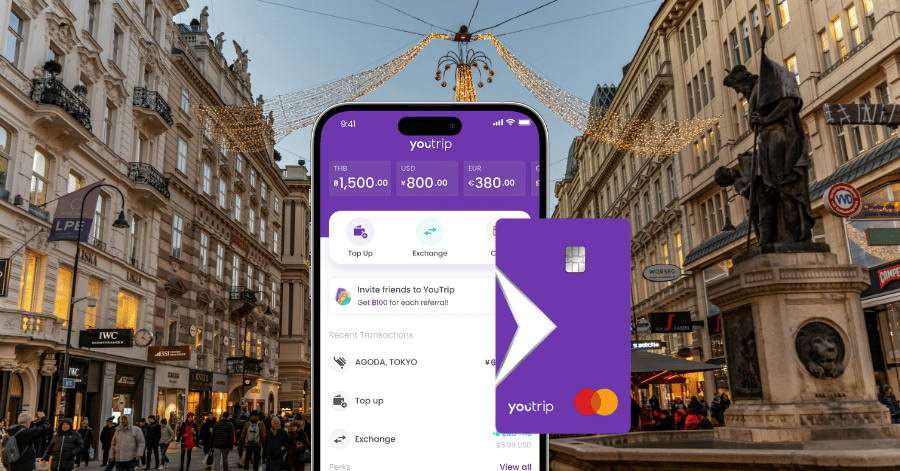
Yes. YouTrip runs on the Mastercard network, which the Austrian Bankomat network accepts, so it works at machines nationwide and anywhere Mastercard is accepted.
Euro is one of the currencies you can hold in the YouTrip wallet. You can lock in EUR before you fly, or convert on the spot with no FX fee. Either way you’re getting the wholesale rate, which is the interbank benchmark rather than a marked-up retail one.
On withdrawals, you get your first S$400 per calendar month in overseas ATM withdrawals free, with a 2% fee after that. Card payments carry no foreign transaction fee.
To be straight about it: YouTrip can’t remove the Austrian machine’s foreign-card fee. Nobody’s card can, because that charge belongs to the bank operating the ATM. What it removes is your side of the transaction, which in Austria is the larger of the two.
To withdraw euros with YouTrip:
- Find a machine with the green-blue Bankomat mark or a bank’s branding, and insert your YouTrip card
- Select Savings account
- Enter your 4-digit YouTrip card PIN
- Choose your amount and, when asked, withdraw in euros, not SGD
That last step matters as much on YouTrip as on any card. Decline the conversion so you get YouTrip’s rate rather than the machine’s.
This is also why withdrawing in Austria still beats changing money before you fly. One larger withdrawal at the wholesale rate, with the first S$400 free, comfortably beats a money changer at Changi even after the machine takes its few euros.
Do You Need an Austrian Bank Account as a Tourist?

No, and you couldn’t easily open one anyway.
Search around, and you’ll find plenty of discussion of Austrian accounts and their fee-free withdrawals. That perk is real, and it’s exactly the thing you can’t access: those products require a registered Austrian address and are built for people living and earning there. The free-ATM advantage in Austria is a residents’ benefit, not a traveller’s one.
For a Singapore traveller, the setup is simpler: a multi-currency card loaded with euros before you leave, used for fewer and larger withdrawals, with the conversion always declined.
Other Ways to Get Cash in Austria
Austrian supermarkets let you withdraw cash at the checkout, which skips the ATM fee entirely.
Cash at the supermarket till
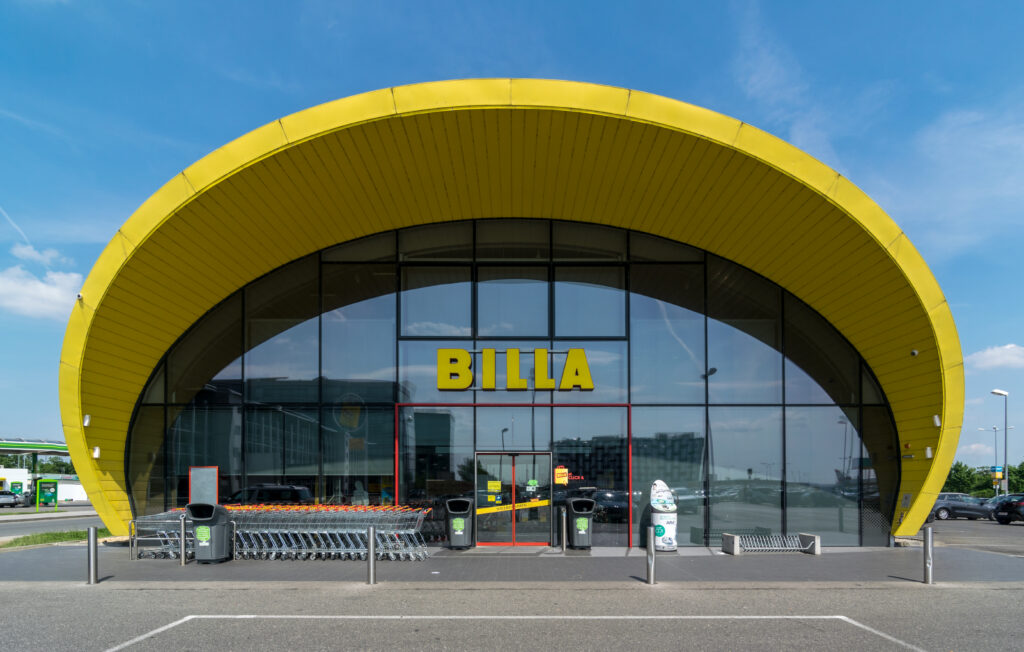
Image Credits: Wikipedia
Most major Austrian supermarket chains let you withdraw cash at the checkout when you pay for your shopping, including BILLA, BILLA PLUS, SPAR, HOFER, PENNY, Lidl and Unimarkt. BILLA runs it across all of its roughly 1,220 Austrian stores. You tell the cashier the amount before you pay, confirm with your PIN, and take the cash with your receipt. The cap is 200 EUR (~S$296) per purchase, and on a debit card there’s no fee.
⚠️ One caveat worth taking seriously: the scheme was built around Austrian debit cards, and the chains don’t publish a clear policy on foreign-issued cards. It may simply decline. Treat it as worth trying when you’re already at a till rather than a plan you rely on, and keep a Bankomat as your backup.
Why the money changer at Changi is the wrong move
It’s tempting to sort your euros out before you fly. Airport money changers and currency counters bake a markup into the rate, so you get fewer euros for your dollars.
Even with an Austrian machine fee in the mix, withdrawing on arrival at the wholesale rate usually comes out ahead. A changer’s markup applies to your whole trip’s budget, while the machine fee is a few euros per withdrawal. Bring a small emergency buffer if it helps you sleep, but don’t change everything at a counter.
Tips to Avoid Extra Fees: Use a Multi-Currency Card
A multi-currency card matters more in Austria than in most countries. You can’t avoid the machine’s foreign-card fee, so the charges you can remove are the ones your own bank adds.
Cards like YouTrip, Wise and Revolut typically:
- Give you real-time exchange rates with no markup
- Charge zero or lower foreign transaction fees than a traditional bank card
- Offer a monthly free ATM allowance and work at bank machines across Austria
A quick comparison of some of the multi-currency cards available in Singapore:
| YouTrip | Revolut | Wise | Amaze | |
|---|---|---|---|---|
| FX fees | No fees | Weekdays: no fees within plan limits; 1% on weekends | Currency conversion fee from 0.19% | No explicit FX fee, but up to ~2.1% spread above the Mastercard rate; 1% domestic SGD fee |
| ATM withdrawal fees | Up to S$400 free per month; 2% after | Up to S$350 or 5 withdrawals free per month; 2% or S$1.49 after (whichever is higher) | From 1 May 2026: free up to S$100 per month; 1.75% after | 2% on all withdrawals |
For Austria specifically, the free monthly allowance is the number to compare. This is a country where you’ll take cash out more than you expect, and YouTrip’s S$400 is the largest of the four.
📖 Related Guide: Best Multi-Currency Cards in Singapore
Safety Tips for Using ATMs in Austria
Austria is a safe country for ATM use, and problems at machines are rare. Busy tourist areas still draw pickpockets, so the basics apply.
- Use machines inside or attached to a bank branch rather than standalone street ones where you can
- Check the card slot and keypad for anything loose or added before inserting your card
- Cover the keypad when entering your PIN, even with nobody around
- Don’t accept help from strangers at the machine, however friendly the offer
- Take your card and cash and move off before counting anything or reorganising your wallet
- Be deliberate with larger withdrawals, since fewer and bigger is the cheap strategy here. Put the cash away before you step back onto the street
- Turn on transaction alerts in your banking or card app before you travel
- If a machine keeps your card, contact your issuer immediately. YouTrooper can freeze the card instantly in the app
FAQ
For foreign cards, usually yes. Most Austrian bank ATMs apply a foreign-card fee of roughly 2–6 EUR (~S$3–9) per withdrawal, and Euronet charges 1.95 EUR (~S$3) to everyone. Austrian cardholders generally withdraw free, which is why so many guides describe Austria’s ATMs as fee-free. The fee must be shown on screen before you confirm, and you can cancel at no cost.
Compare on screen rather than by logo, because the amounts differ by bank and shift over time. Bank-branded machines carrying the green-blue “B” Bankomat mark are the sensible default. Bank Austria, Volksbank and Oberbank are reported among the cheaper options at roughly 2–3 EUR (~S$3–4), but verify the figure on the machine before you confirm.
You mostly can’t avoid the Austrian fee, so reduce how often you pay it. Make fewer, larger withdrawals. Decline the on-screen conversion, which otherwise costs you 2.6–12% on the rate. And carry a multi-currency card, so your home bank isn’t adding a third layer on top.
Bank machines typically dispense up to 400 EUR (~S$592) per transaction. Euronet has cut this to 200 EUR (~S$296) at several hundred of its machines since early 2026. Your card’s own daily limit usually matters more than either.
You trigger Dynamic Currency Conversion, and the machine converts at its own rate with a markup of roughly 2.6% to 12%, averaging around 5%. Always choose euros so your own card handles the conversion. Austrian bank machines offer this conversion too, so the prompt isn’t limited to private operators.
You’ll need cash more than in most of Europe. Around 70% of in-store payments are made in cash, and wine taverns, sausage stands, mountain huts and market stalls are frequently cash-only. Plan for it rather than topping up in small amounts, since each withdrawal carries its own fee.
No. A small emergency buffer is fine. Changing your full budget at a money changer usually gives you a worse rate than withdrawing on arrival with a multi-currency card at the wholesale rate.
Country ATM Guides
Heading somewhere else next? Explore our country-specific withdrawal guides:
🇲🇾 Malaysia | 🇯🇵 Japan | 🇹🇭 Thailand | 🇰🇷 South Korea | 🇹🇼 Taiwan | 🇭🇰 Hong Kong | 🇮🇩 Indonesia | 🇻🇳 Vietnam | 🇦🇺 Australia | 🇲🇴 Macau | 🇨🇳 China | 🇺🇸 US | 🇿🇦 South Africa | 🇵🇭 Philippines | 🇫🇷 France | 🇬🇧 UK | 🇳🇿 New Zealand | 🇮🇹 Italy | 🇰🇭 Cambodia | 🇨🇦 Canada | 🇨🇦 Switzerland | 🇪🇸 Spain | 🇩🇪 Germany | 🇹🇷 Turkey | 🇰🇿 Kazakhstan | 🇳🇱 Netherlands | 🇦🇹 Austria
Get more euros for your money in Austria

Austria’s ATMs really are free, just not for you, and no card in the world changes that. What you can change is everything around it: withdraw fewer and larger amounts, read the fee screen before you confirm, and always choose euros.
Do that with YouTrip, and you get the wholesale rate, zero FX fees, and your first S$400 in ATM withdrawals free every month, so more of your budget goes on Sachertorte and less on surcharges.
Sign up for your complimentary YouTrip card today with promo code YTBLOG5 and get FREE S$5 in your account!
Then head over to our YouTrip Perks page for exclusive offers and promotions. We promise you won’t regret it.
For travel tips, event invites, and more, join our Community Telegram Group @YouTripSquad! 💜
Happy travels!
The information stated above is true as of 31 Aug 2026
Related Articles:
YouTrip vs Revolut: The Singapore Comparison
YouTrip vs Wise: The Singapore Comparison
Foreign Currency Transactions: Earning Miles vs YouTrip Savings