



Yokohama day trip: Chinatown, Cup Noodles Museum and a waterfront 30 minutes from Tokyo
Yokohama gets treated as a stopover between Tokyo and Kyoto. That undersells a port city with its own waterfront, two noodle museums and a Chinatown you can smell from the gate.
| Quick Planner | Yokohama at a Glance |
|---|---|
| ⏱️ Time needed | One full day covers the waterfront and Chinatown; add a second day for Sankeien and Sea Paradise |
| 📍 Where | Kanagawa Prefecture, on Tokyo Bay, south of Tokyo |
| 🚆 From Tokyo | About 25 to 30 minutes by JR from Tokyo Station, roughly 528 JPY (~S$4) |
| 🍜 Known for | The 1859 port, Japan’s largest Chinatown, Cup Noodles Museum, the Cosmo Clock 21 Ferris wheel |
| 📅 Best time | Late October to December for illuminations and the Christmas market; spring for cherry blossom at Sankeien |
| 💰 Rough cost | S$25 to S$45 for a day of sights, before meals |
| 💳 Pay with | Tap your YouTrip card (0% FX) or a Suica on Apple Pay; keep some yen cash for Hikawa Maru |
The shortlist:
| Spot | Area | Cost (~S$) | Best for |
|---|---|---|---|
| Cup Noodles Museum | Minatomirai | S$4 | Building your own cup of ramen |
| Cosmo World and Cosmo Clock 21 | Minatomirai | Free entry, S$8 per big ride | Evening views and a few rides |
| Yokohama Red Brick Warehouse | Waterfront | Free | Events, food stalls and the Christmas market |
| Yamashita Park and Hikawa Maru | Waterfront | Park free, ship S$2 | A flat waterfront walk and a 1930 ocean liner |
| Osanbashi Pier | Waterfront | Free | A sunset roof walk |
| Yokohama Marine Tower | Yamashita | From about S$8 | The deck that’s open late |
| Yokohama Air Cabin | Sakuragicho | S$8 one way | Cable-car views over the harbour |
| Nippon Maru and Port Museum | Minatomirai | S$7 | A tall ship you can board |
| Shin-Yokohama Ramen Museum | Shin-Yokohama | S$4 | Mini bowls from several regions |
| Sankeien Garden | Honmoku | S$7 | Kyoto-style garden without the trip |
| Yamate and Motomachi | Yamate | Free to wander | Western houses and a hilltop view |
| Hakkeijima Sea Paradise | Hakkeijima | About S$28 for the aquariums | Dolphin shows and rides on an island |
| Zoorasia | Asahi Ward | S$7 | A large zoo for families with a spare half day |
| Yokohama Stadium | Kannai | Varies by game | Baseball between spring and early autumn |
| Manyo Club | Minatomirai | Check on the day | A 24-hour onsen with a rooftop foot bath, no tattoos |
| Yokohama Chinatown | Chinatown | Free to walk | Dim sum, buns and street snacks |
Table of Contents
- The Best Things to Do in Yokohama
- Is Yokohama Worth Visiting?
- How to Get to Yokohama From Tokyo
- Is One Day in Yokohama Enough?
- Yokohama Chinatown: What to Eat and How to Do It
- What Is Yokohama’s Famous Food?
- What to Do in Yokohama at Night
- Free and Cheap Things to Do in Yokohama
- Things to Do in Yokohama With Kids, Alone or as a Couple
- Shopping in Yokohama
- Best Time to Visit Yokohama and When Spots Close
- How Much Yokohama Costs and How to Pay
- Pair Yokohama With Tokyo or Kamakura
- Where to Stay: Yokohama or Tokyo?
- FAQs
- Yokohama Is Worth a Day Trip From Tokyo
The Best Things to Do in Yokohama
The best things to do in Yokohama are the Cup Noodles Museum, the Cosmo Clock 21 Ferris wheel, the Red Brick Warehouse and the waterfront walk to Chinatown. Most of them cluster around Minatomirai, with Chinatown a short walk along the waterfront and the outer sights a train or bus ride away.
The life-size Gundam Factory closed on 31 March 2024, so ignore any older listing that still sends you there.
Cup Noodles Museum
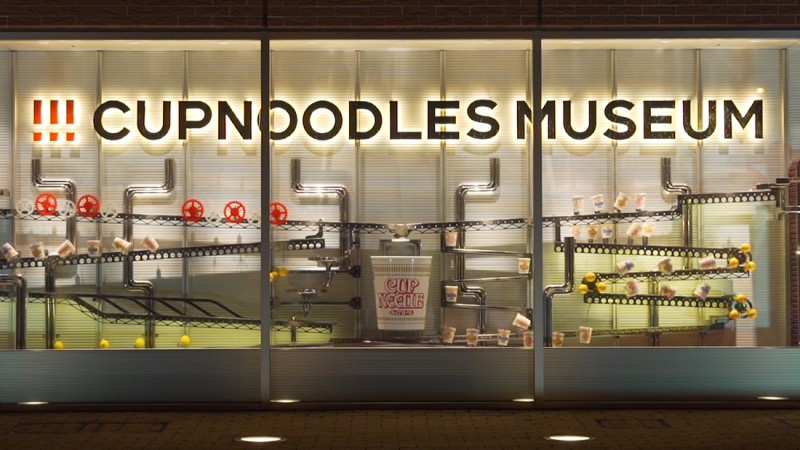
Image Credits: CUPNOODLES MUSEUM
The Cup Noodles Museum tells the story of Momofuku Ando, who invented instant ramen in a shed behind his home in 1958 and the cup version in 1971. The shed is recreated inside. Outside, the glass front has a conveyor of tiny cups circling a giant Cup Noodle, which is a lot of theatre for a bowl of noodles.
The invention happened in Ikeda, Osaka, not here, and our Cup Noodles Museum Ikeda guide compares the two sites.
The big draw is My CUPNOODLES Factory, where you design your own cup, then pick the soup and toppings. Admission is 500 JPY (~S$4). Each cup in the factory costs a further 500 JPY. You need a numbered ticket with a time slot for the factory, so go early.
Chicken Ramen Factory, where you knead and fry noodles by hand, costs 1,200 JPY (~S$10) for junior high and older. CUPNOODLES PARK, the indoor play area, charges 500 JPY (~S$4) per 30-minute session. Both have age or height limits and need booking, so check the official page for your dates.
Best for families and anyone who wants a souvenir they made themselves. Skip it if you’re short on time, because the factory alone takes the best part of an hour.
- 📍 Minatomirai, next to Cosmo World
- 🕘 10 AM to 6 PM, last entry 5 PM; closed Tuesdays and over New Year, plus a private-event closure on 23 November 2026
- 💰 500 JPY (~S$4) admission, free for high school students and younger; factory cups 500 JPY each
Cosmo World and Cosmo Clock 21
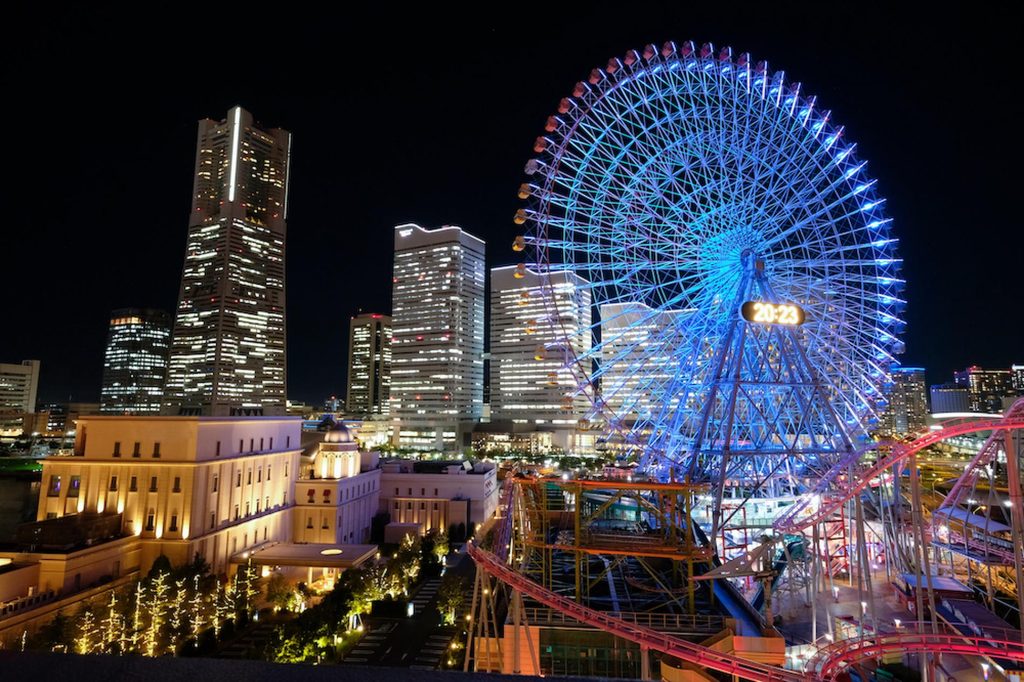
Image Credits: KKday
Cosmo World is a small amusement park with free entry, where you pay per ride with prepaid tickets. That makes it a cheap park to wander through, and a good place to be at dusk without spending anything.
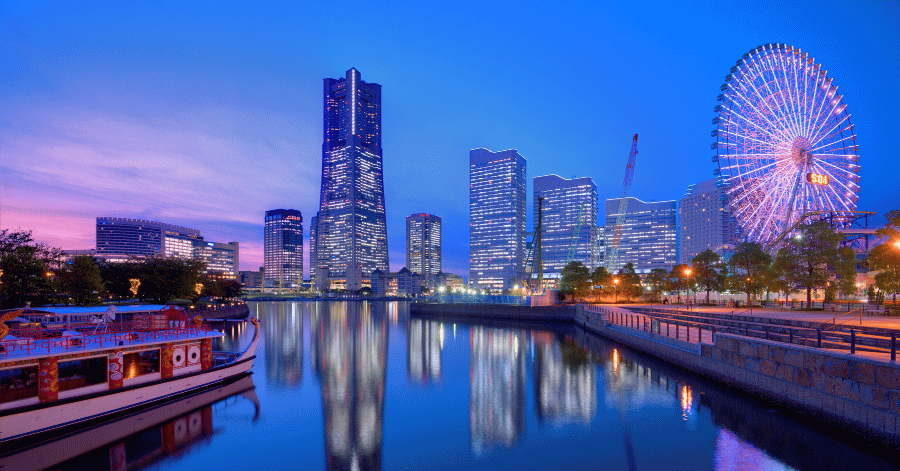
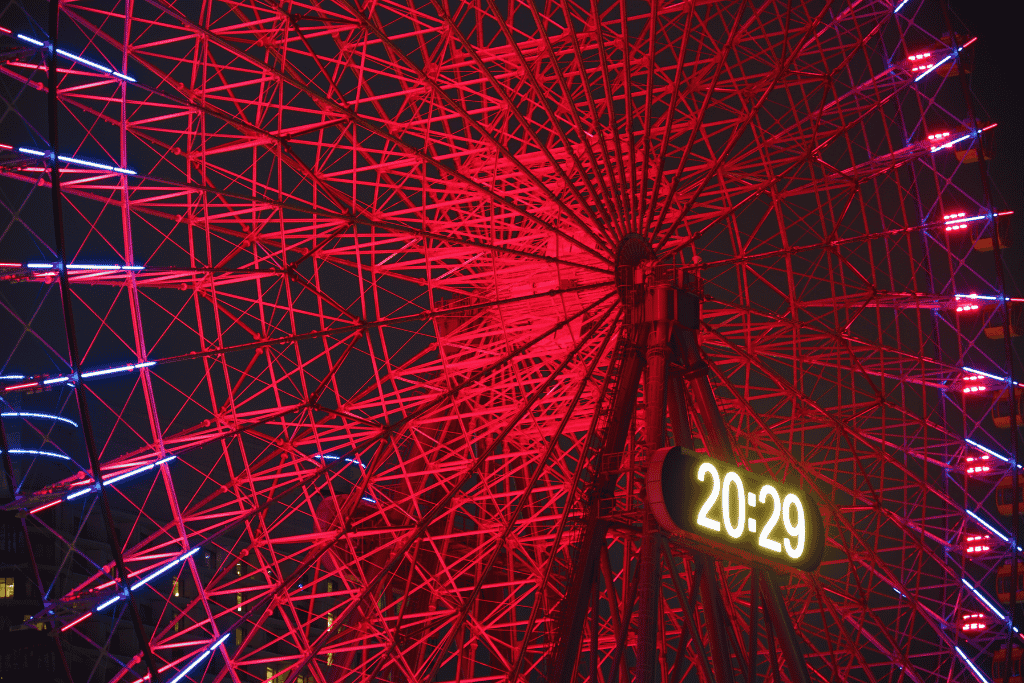
The landmark is Cosmo Clock 21, which the park’s own page describes as the world’s largest Ferris wheel with a clock function. It stands 112.5 metres high with 60 gondolas, and a ride takes about 15 minutes for 1,000 JPY (~S$8). It’s lit from sunset until about midnight.
After dark, the wheel shifts between blue, pink and red, and the clock on its hub is easy to read from across the water.
For something faster, the park’s ticket page lists the Vanish dive coaster, which ends in a plunge into water, at 1,000 JPY (~S$8). The Spinning Coaster costs 700 JPY (~S$6). It’s a date-night and family stop rather than a full day, so keep it to an hour or two.
- 📍 Minatomirai, outside Minatomirai Station
- 🕘 Mostly 11 AM to 8 PM, with later closing on busy weekends and holidays; closed on set Thursdays (5, 12, 19 and 26 November and 3, 10 and 17 December 2026)
- 💰 Free entry; Cosmo Clock 21 and Vanish 1,000 JPY (~S$8) each
Yokohama Red Brick Warehouse
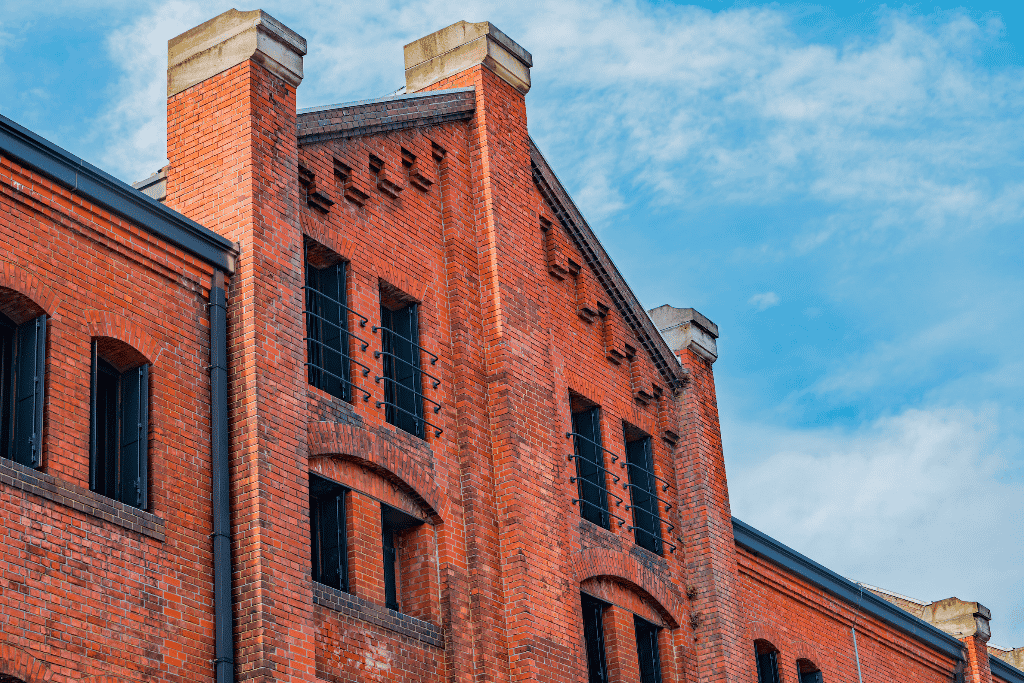
The Red Brick Warehouse is two brick buildings, completed in 1911 and 1913, that once stored goods coming off the port as customs warehouses. The brick is a warm rust-orange, and with the arched windows and stepped gables it looks more like a European railway station than a customs shed. They now hold boutique shops, restaurants and an event plaza, and the plaza is the main reason to come.
Entry is free. Building 1 runs 10 AM to 7 PM and Building 2 runs 11 AM to 8 PM. What’s on changes every week: a food festival one month, a pet parade the next, and from 20 November to 25 December 2026, a Christmas market. Check the event calendar for your dates, because a quiet weekday looks very different from a festival Saturday.
It works for an unhurried afternoon of snacking between Yamashita Park and Minatomirai, and weekdays are calmer if you’d rather not queue for the food stalls.
- 📍 Waterfront, between Minatomirai and Yamashita Park
- 🕘 Building 1: 10 AM to 7 PM; Building 2: 11 AM to 8 PM; restaurants open later
- 💰 Free to enter; events may charge their own tickets
Yamashita Park and Hikawa Maru
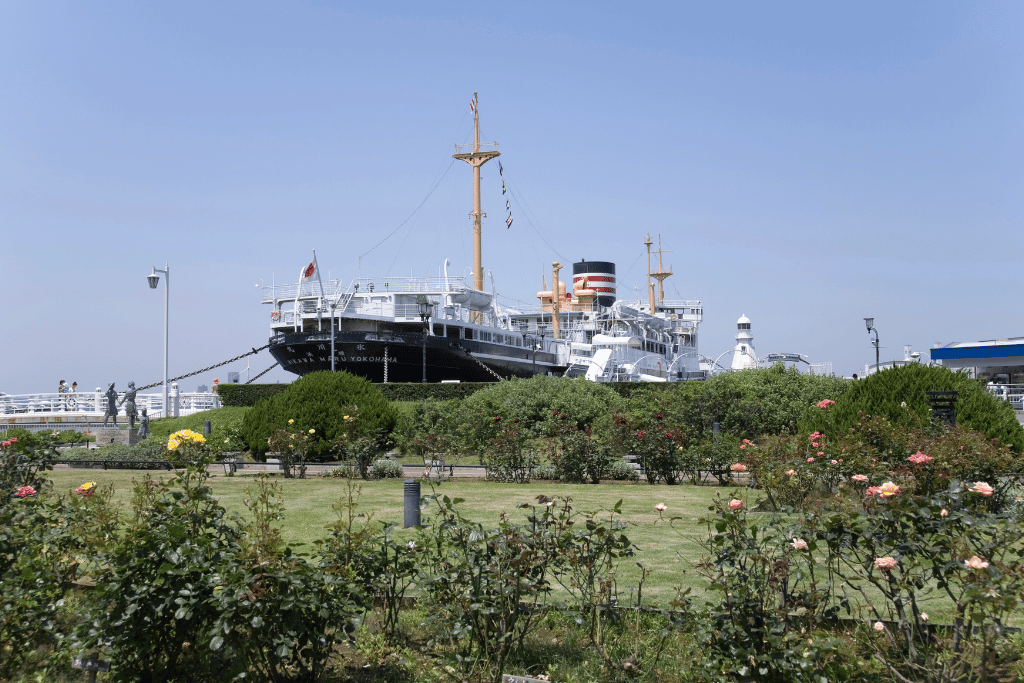
Yamashita Park is a long waterfront park built on rubble from the 1923 earthquake, and it’s the flat, easy stretch that joins Minatomirai to Chinatown. It has rose beds, grass for picnics and a convenience store at the edge, so it works as a rest stop on a walking day.
The Hikawa Maru is the ocean liner moored in front of it. NYK built it in 1930 for the Seattle route. It served as a hospital ship in the war, returned to the Seattle run in 1953 and retired in 1960.
Boarding costs 300 JPY (~S$2), cash only. It’s open 10 AM to 5 PM, with last entry at 4:30 PM and closed Mondays. A hull survey began in July 2026, and the ship says it may close at short notice depending on the work, so confirm it’s open on the day.
Come if you want to see inside a 1930s ocean liner without queueing for a museum, and carry coins, since it doesn’t take cards.
- 📍 Yamashita-cho, a three-minute walk from Motomachi-Chukagai Station
- 🕘 Hikawa Maru 10 AM to 5 PM; closed Mondays
- 💰 Park free; Hikawa Maru 300 JPY (~S$2), cash only
Osanbashi Pier
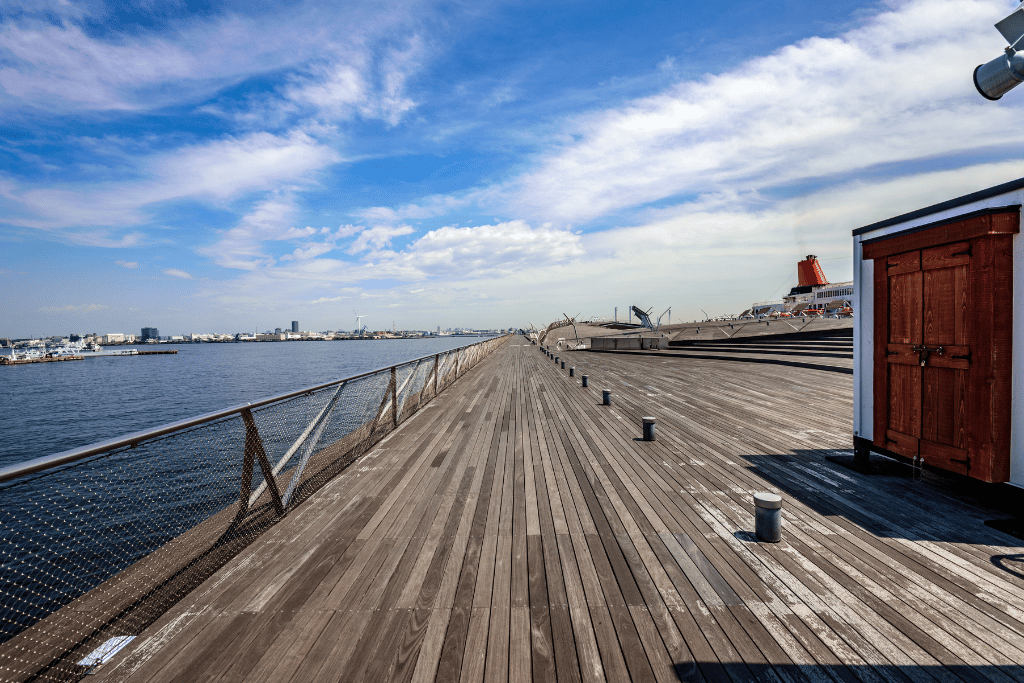
Osanbashi is Yokohama’s international cruise terminal, and its roof is a public walk. The city lists the terminal as about 430 metres long and 70 metres wide. It has a curved deck that rises and dips as you walk across it. Underfoot it’s weathered timber, with a mesh railing on the harbour side.
The rooftop is open 24 hours, which makes it a good free sunset spot. Come at golden hour for the skyline, and again after dark for the lit-up Ferris wheel across the water.
There’s little shade and no café on the roof itself, so bring a drink.
- 📍 Naka-ku, on the pier north of Yamashita Park
- 🕘 Rooftop open 24 hours; the terminal and cruise deck run 9 AM to 9:30 PM
- 💰 Free
Yokohama Marine Tower
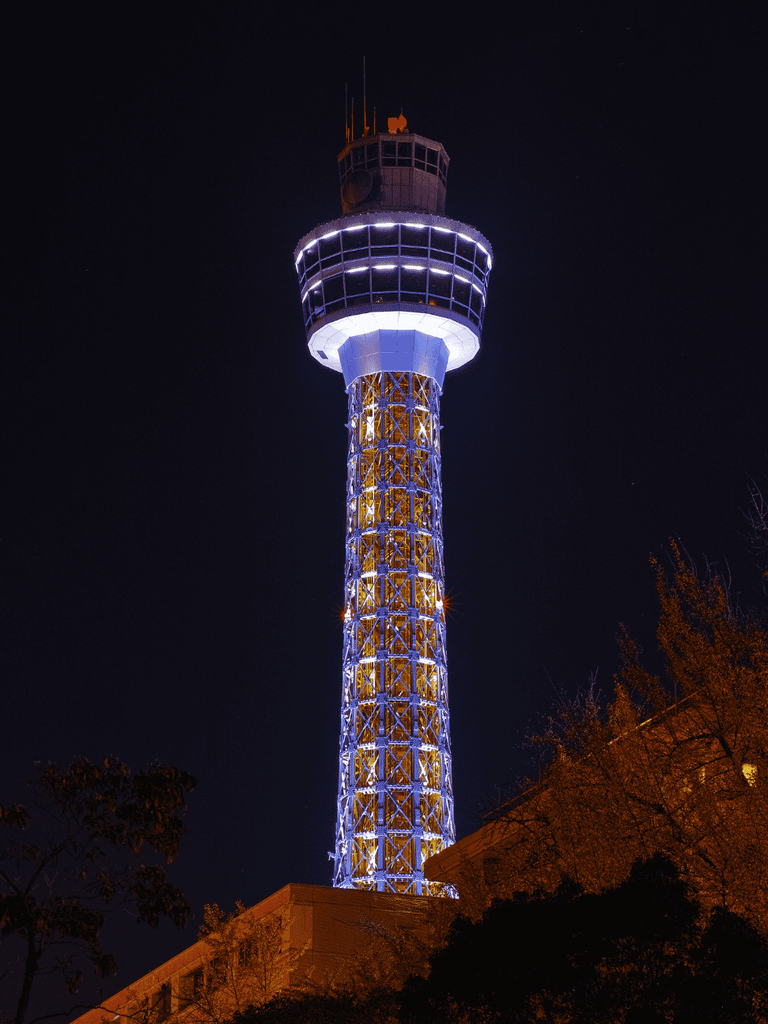
Marine Tower opened in 1961 as a working lighthouse, and its navigation light was retired in 2008. It’s now an observation deck, lit blue and white at night. It’s one of the few viewpoints still open after the Landmark Tower’s Sky Garden closed.
The tower’s own site lists the 29th and 30th floors open from 10 AM to 10 PM. One of the two lifts was stopped for maintenance in October 2026, so expect a queue. Day tickets run about 1,000 to 1,200 JPY (~S$8 to S$10), and night tickets about 1,200 to 1,400 JPY (~S$10 to S$11). The higher price applies at weekends and holidays.
It’s the late-night option, since the deck stays open when most other sights close. On a weekend with a long queue, Osanbashi’s roof gives a similar view for free.
- 📍 Yamashita, at the start of Yamashita Park
- 🕘 10 AM to 10 PM
- 💰 About 1,000 to 1,400 JPY (~S$8 to S$11), depending on day and time
Yokohama Air Cabin
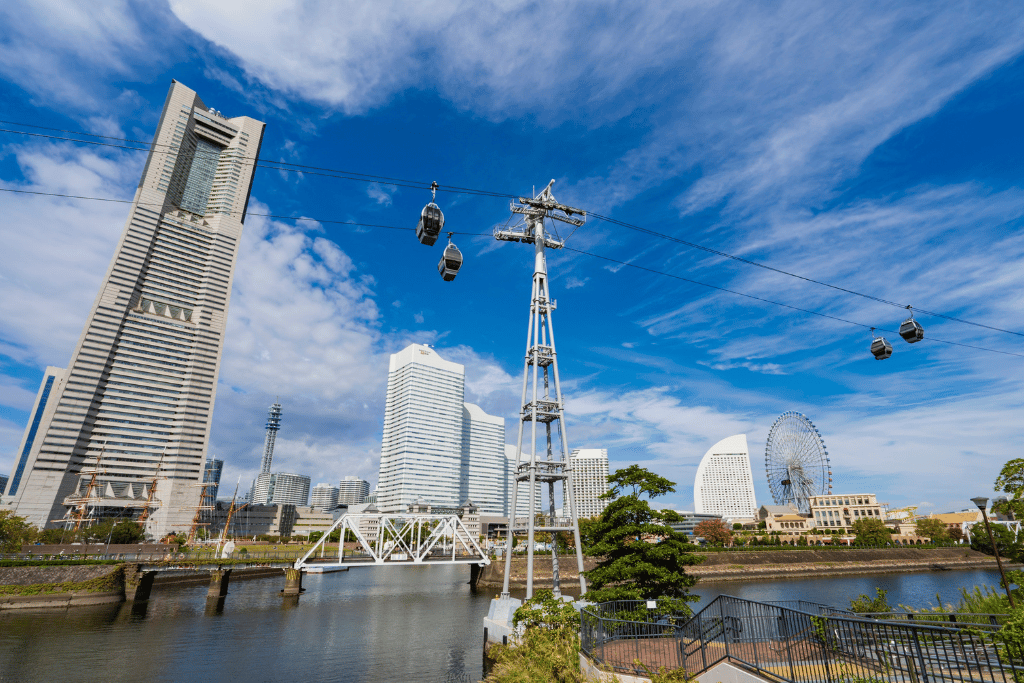
The Air Cabin is an urban cable car that runs between JR Sakuragicho Station and Canal Park in the Shinko area. The ride is about 630 metres and takes around five minutes, with gondolas for up to eight people. They hang over the canal with Landmark Tower on one side and the Ferris wheel on the other.
A one-way ticket costs 1,000 JPY (~S$8) for adults and 500 JPY for children, per Visit Kanagawa. It runs from 10 AM until about 9 or 10 PM depending on the day. It can also shut for several days at a time for inspections, so check the operator’s site on the day.
Five minutes for 1,000 JPY (~S$8) is steep, but you can’t get that view over the harbour and the Ferris wheel from the ground.
Treat it as a one-way shortcut from Sakuragicho to the waterfront rather than a round trip.
- 📍 Sakuragicho Station to Canal Park, Shinko
- 🕘 10 AM until about 9 or 10 PM depending on the day; irregular closures
- 💰 1,000 JPY (~S$8) one way
Nippon Maru and Yokohama Port Museum
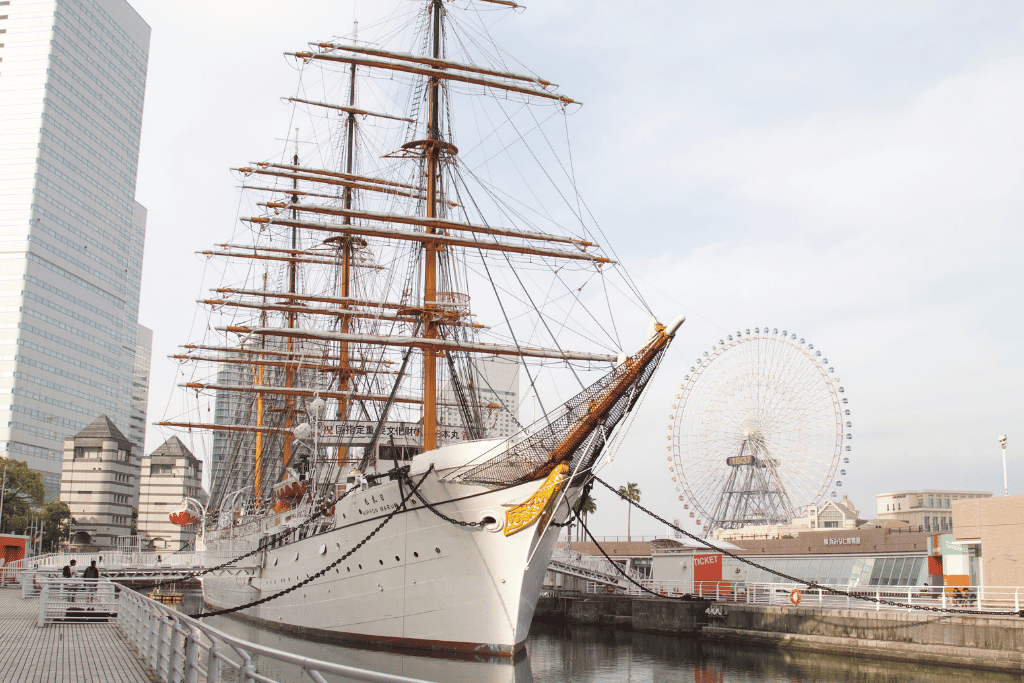
Nippon Maru is a four-masted barque built in 1930 that trained Japanese sailors until it was replaced in 1984. It’s now moored beside the Yokohama Port Museum, and you can walk its decks and look into the crew spaces. From the walkway, the masts and rigging fill the frame, and the Ferris wheel behind them looks like a bad photo edit.
A combined ticket costs 800 JPY (~S$7), with the ship alone at 400 JPY and the museum alone at 500 JPY. It’s open from 10 AM to 5 PM, with last entry at 4:30 PM and is closed on Mondays. The ship itself is shut on 28 and 29 November 2026 for sail work, with 5 and 6 December held as backup dates.
Ship fans and kids who like climbing around will enjoy it, and if you’re short on time, the exterior is free to photograph from the walkway.
- 📍 Minatomirai, near Sakuragicho Station
- 🕘 10 AM to 5 PM; closed Mondays and 28 December to 4 January
- 💰 800 JPY (~S$7) combined
Shin-Yokohama Ramen Museum
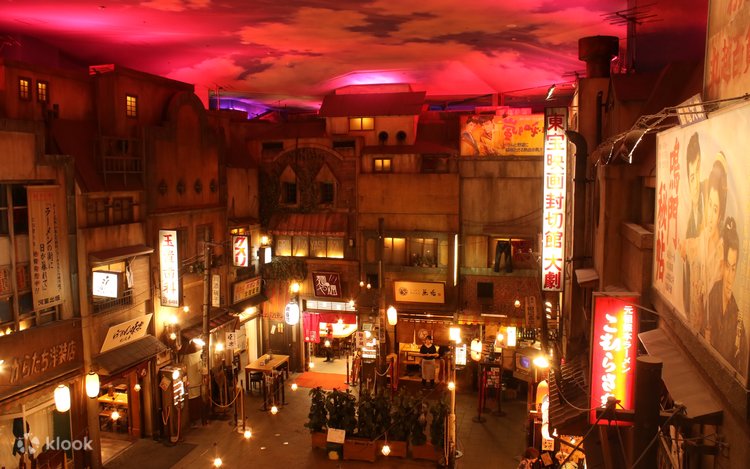
Image Credits: Klook
The Ramen Museum is a food hall built to look like a Tokyo street in 1958. It opened in 1994. Shops from several regions of Japan sit under one roof, so you can compare styles in one sitting. The ceiling is painted as a dusk sky, so it’s always about 6 PM inside, even at 11 AM.
Admission is 450 JPY (~S$4) for adults and 100 JPY for ages 6 to 18, and you buy each bowl separately at the counters. Most shops sell mini bowls so you can try more than one. It opens 11 AM to 9 PM on weekdays and 10:30 AM on holidays, and sits about five minutes’ walk from Shin-Yokohama Station.
Best for ramen fans who want to compare regional styles. Avoid weekend lunch hours, when the queues are longest.
- 📍 Shin-Yokohama, a five-minute walk from the JR station
- 🕘 11 AM to 9 PM on weekdays; 10:30 AM to 9 PM on holidays
- 💰 450 JPY (~S$4) admission; bowls extra
Sankeien Garden
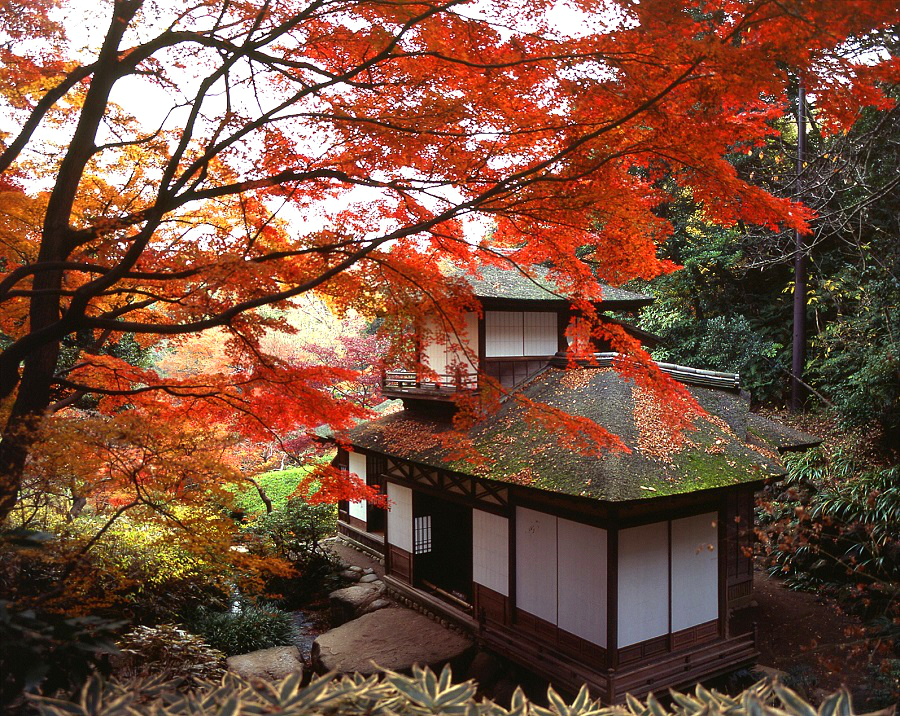
Image Credits: Yokohama Japan
Sankeien is a traditional garden built by the silk merchant Hara Sankei, and it holds several historic buildings moved here from elsewhere in Japan. The best-known is the three-storey Tomyoji pagoda, which came from a temple near Kyoto.
Admission is 900 JPY (~S$7) for adults. It’s open from 9 AM to 5 PM, with last entry at 4:30 PM, and the only listed closure is 26 to 31 December. Cherry blossom and autumn colour are the two peak seasons.
Major repair work on the pagoda starts in April 2027, and it may be screened off or closed afterwards, so autumn 2026 and early 2027 are the safe window.
It’s a bus ride from central Yokohama, roughly 35 minutes from Yokohama Station. The Minato Burari ticket covers the Sankeien area. Best for travellers who want a Kyoto-style garden without the trip to Kyoto.
- 📍 Honmoku, reached by city bus from Yokohama or Negishi
- 🕘 9 AM to 5 PM, last entry 4:30 PM; closed 26 to 31 December
- 💰 900 JPY (~S$7)
Yamate and Motomachi
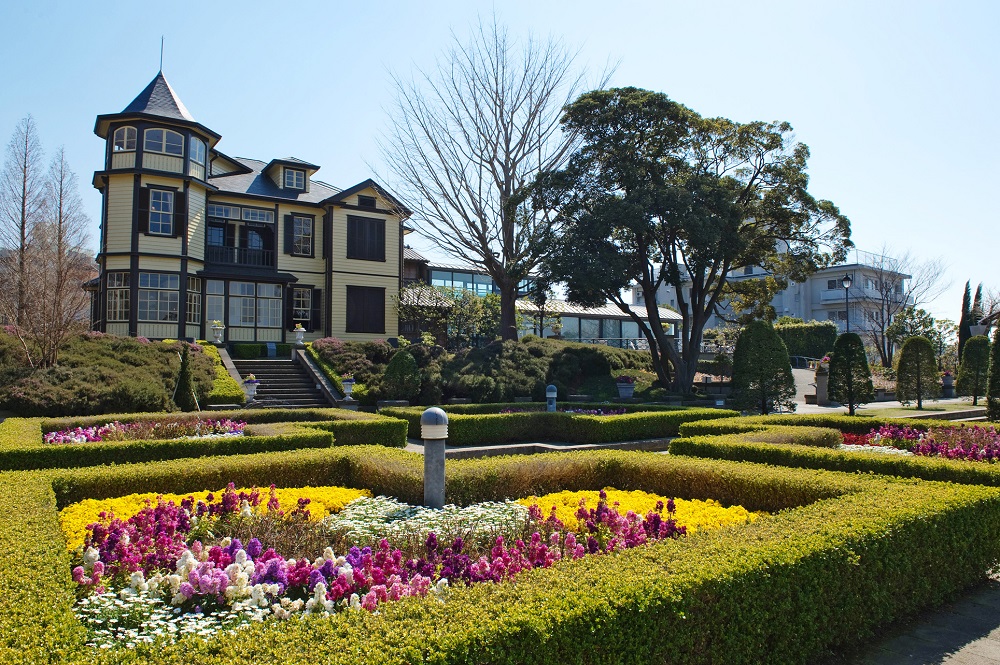
Image Credits: Yokohama Japan
Yamate is the hillside where Western merchants lived after the port opened, and the city has kept many of the houses. They have turrets and clipped hedges out front, so the street reads more like a European village than a Tokyo Bay port. Start at Harbour View Park for the view over the bay. Then walk to the British House and the Yamate Italian Garden, which both open from 9:30 AM to 5 PM.
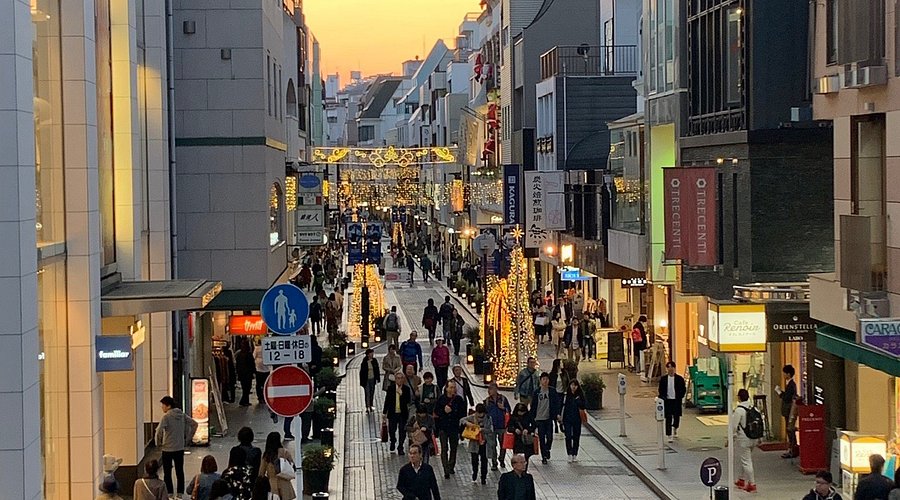
Image Credits: Tripadvisor
The British House is free and closes on the fourth Wednesday of the month. Motomachi Shopping Street runs along the base of the hill, lined with boutiques and cafés, and it’s the natural coffee stop on the way back to Chinatown.
It makes a quiet morning before the waterfront crowds arrive, and flat shoes help, since the climb from Motomachi-Chukagai is steeper than it looks.
- 📍 Yamate, a short walk from Motomachi-Chukagai Station
- 🕘 Houses 9:30 AM to 5 PM (until 6 PM in July and August)
- 💰 Free to wander; check individual houses
Hakkeijima Sea Paradise
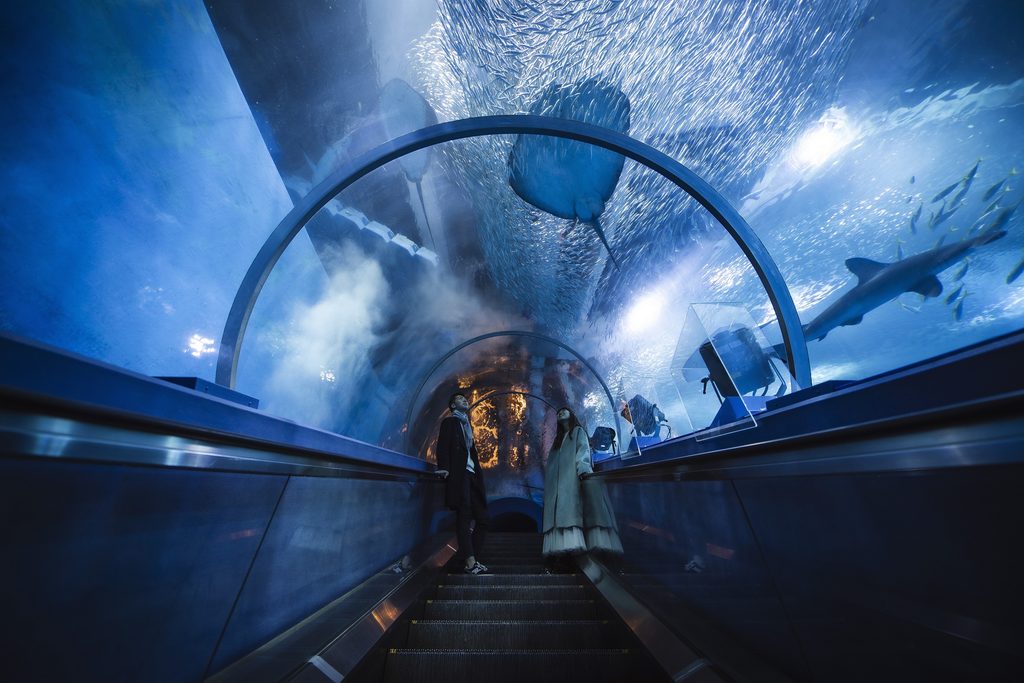
Image Credits: JNTO
Sea Paradise is an aquarium and amusement complex on an artificial island in the south of the city. It combines aquariums, dolphin shows and a Surf Coaster ride, and it’s the one stop here that’s built around a full day. An escalator runs through a glass tunnel with rays and sharks overhead.
The Aqua Resorts Pass for the aquariums costs about 3,500 JPY (~S$28) for adults, and a one-day pass with unlimited rides about 5,700 JPY (~S$46), per Japan Guide. Prices change, so confirm them on the park’s price page before you go. Best for kids and aquarium fans. It needs most of a day, so it only fits a second-day plan.
- 📍 Hakkeijima Station on the Yokohama Seaside Line, from Shin-Sugita or Kanazawa-Hakkei
- 🕘 Typically 10 AM to 5 PM, longer at weekends; check the day’s hours
- 💰 Aquarium pass about 3,500 JPY (~S$28); one-day pass about 5,700 JPY (~S$46)
Zoorasia
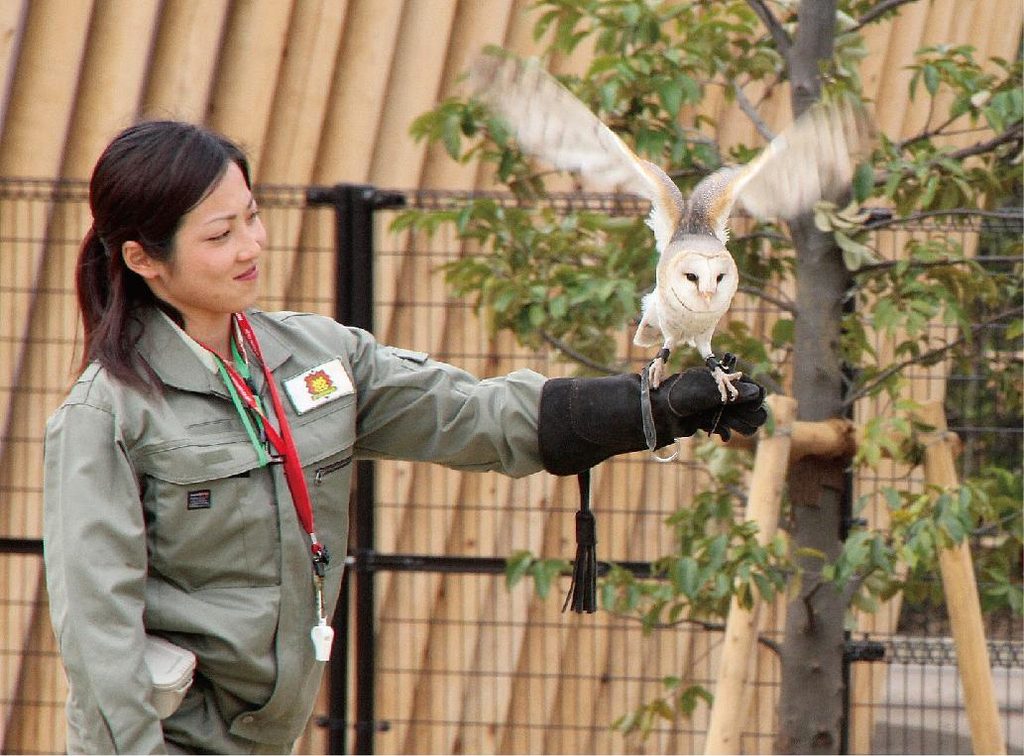
Image Credits: Yokohama Japan
Zoorasia is a large zoo in the west of the city. It’s laid out in zones by world region, including an African Rainforest, an African Savanna and an Amazon area. The operator’s site describes it as a zoo where you can “travel the world”. The name is ZOO plus EURASIA.
It’s cheap, but it’s a trip out of the centre. The nearest stations are Tsurugamine and Mitsukyo on the Sotetsu line, and each is about 15 minutes by bus from the zoo. A direct bus from Yokohama Station takes about an hour and runs only a few times a day, so the access page has the timetable.
Best for families with a spare half day. On a one-day trip, it costs you most of the afternoon, so save it for a second day.
- 📍 Bus from Tsurugamine or Mitsukyo station (about 15 minutes), or the direct bus from Yokohama Station (about 1 hour, few services)
- 🕘 9:30 AM to 4:30 PM, last entry 4 PM; closed on Tuesdays and from 29 December to 1 January
- 💰 800 JPY (~S$7) for adults, 200 JPY (~S$2) for elementary and junior high students
Yokohama Stadium
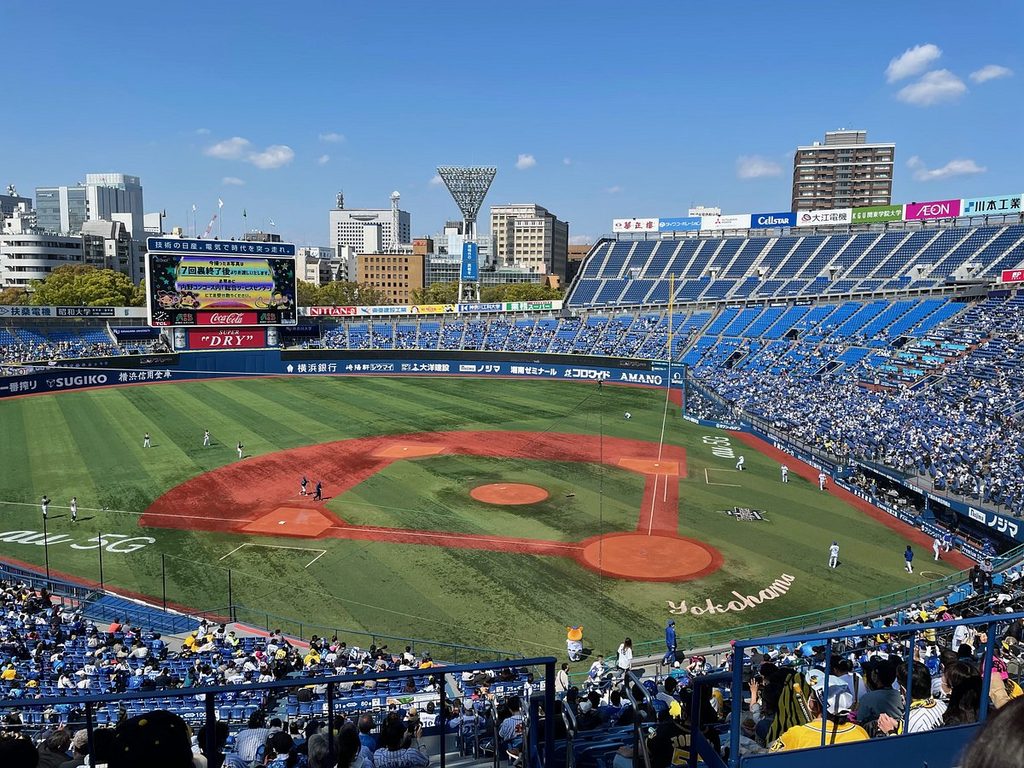
Image Credits: Tripadvisor
Yokohama Stadium, known locally as Hamasta, is the home ground of the Yokohama DeNA BayStars baseball team and sits beside Chinatown and Yamashita Park. It’s a three-minute walk or less from Kannai and Nihon-odori stations, according to the BayStars’ visitor guide.
There are no home games in November, so this is a spring-to-autumn plan. Check the schedule and buy tickets on the team’s site before you travel. Baseball fans visiting between spring and early autumn get the most out of it. In winter, the ground is just a building to walk past.
- 📍 Kannai, next to Yokohama Park
- 🕘 Game days only; no home games in November
- 💰 Varies by game and seat; check the team’s ticket site
Yokohama Minatomirai Manyo Club
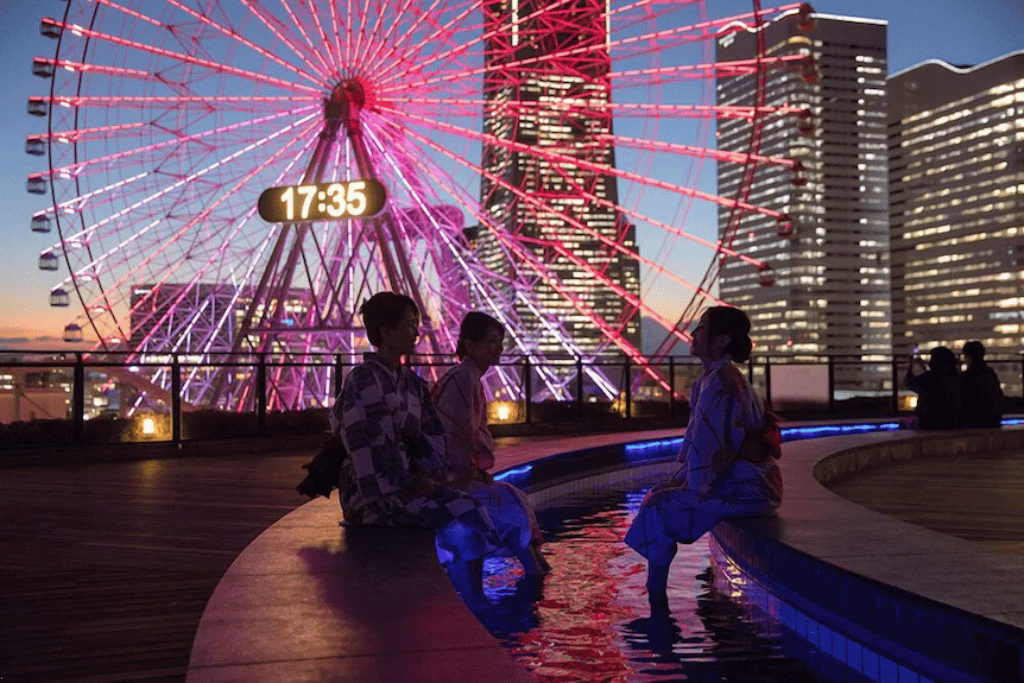
Image Credits: Expedia
Manyo Club is an onsen complex on the Minatomirai waterfront, with baths, a rooftop foot bath with a perimeter of about 50 metres and private rental rooms. At the foot bath, you sit with your feet in the water, and Cosmo Clock 21 lit up straight ahead. It reopened on 24 June 2025 after a renovation.
It’s open 24 hours, and that includes a night soak with the harbour lit up. Admission varies by time of day and plan, so check the price on the day. One thing to note: Manyo Club refuses entry to anyone with tattoos, tattoo-like stickers or body paint.
Best for a tired-legs evening after a full day of walking. Visible tattoos mean no entry.
- 📍 Minatomirai waterfront
- 🕘 Open 24 hours; individual baths close for maintenance on some November nights (2 AM to 5 AM)
- 💰 Varies by time and plan; check on the day
📖 Related Guide: Want to see what the Yokohama museum looks like before you go? Our Cup Noodles Museum Yokohama guide covers tickets and what to expect.
Is Yokohama Worth Visiting?
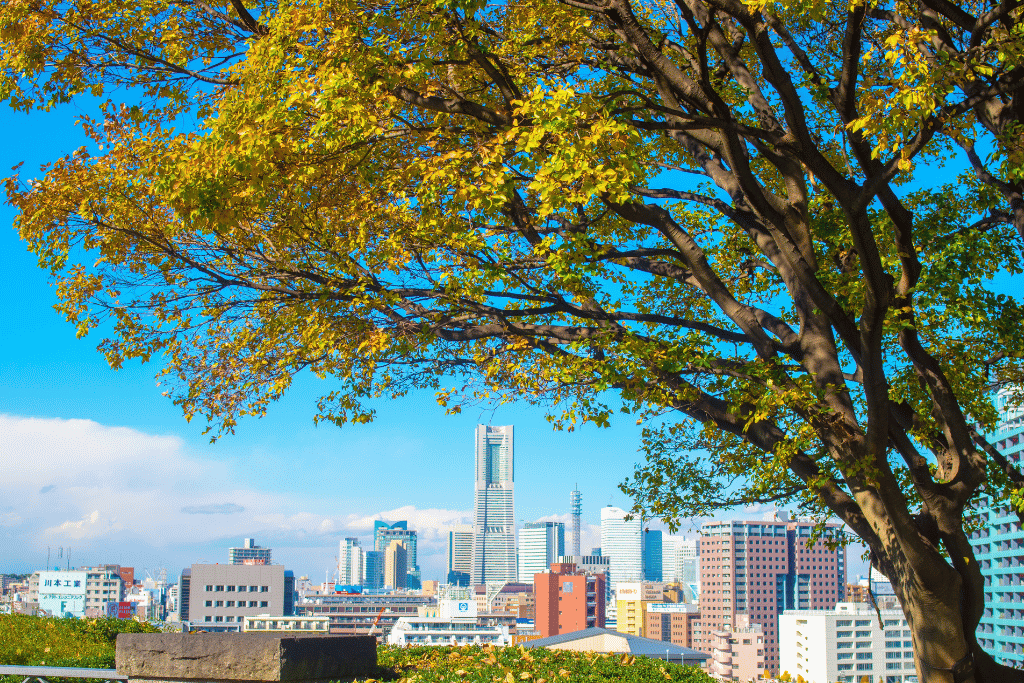
Yes, as a day trip or an evening add-on to Tokyo. The train fare is about 528 JPY (~S$4), and most of the waterfront, Chinatown and the Red Brick Warehouse cost nothing to walk through.
There’s no single must-see here. The Landmark Tower deck that used to be the obvious pick is closed until at least 2028, so Yokohama is a handful of short stops within walking distance of each other. If you want one big sight, you’ll find it underwhelming.
The waterfront from Minatomirai to Chinatown runs on elevated walkways and a flat park path, so you can walk it without a train.
Is Yokohama a Different City From Tokyo?
Yes. Yokohama is a separate city in Kanagawa Prefecture, and it’s the prefecture’s capital. The city counted 3,753,462 residents on 1 October 2026, and it’s usually described as Japan’s second-largest city, behind Tokyo.
Many residents commute into Tokyo every day, so the two are well connected by train. Yokohama is calmer and a lot less crowded than central Tokyo.
What Is Yokohama Best Known For?
Yokohama is best known for its port, which opened to foreign trade in 1859. The city’s own chronology also lists Japan’s first daily Japanese-language newspaper in 1870 and the Shinbashi to Yokohama railway in 1872.
Today that history shows up as Japan’s largest Chinatown, the Western houses of Yamate, a red-brick customs warehouse and the instant-noodle museums. The city’s skyline icon is Cosmo Clock 21, a Ferris wheel that doubles as a clock.
Is Yokohama Safe for Tourists?
Yes, Yokohama is safe for tourists. Japan’s yakuza are shrinking, and National Police Agency figures reported by Nippon.com put membership at 17,600, down 1,200 and a record low, the 21st straight annual fall. Visitors have little reason to ever notice them.
What you’re more likely to meet in Noge or Chinatown after dark is ordinary nightlife hassle, such as touts or a bar that adds a cover charge. Check the menu prices before you sit down and you’ll be fine.
📖 Related Guide: Building a longer Japan trip around this? Our best things to do in Tokyo guide covers the capital Yokohama sits next to.
How to Get to Yokohama From Tokyo
The fastest way is the JR Tokaido Line from Tokyo Station, which takes about 25 to 30 minutes and costs roughly 528 JPY (~S$4) with an IC card. Tokyo, Shinjuku, Shibuya and Haneda all have a direct or near-direct train, so there’s no wrong station to start from. Many Keikyu trains from Haneda run through to Yokohama, and others need a change at Keikyu Kamata, so check the destination board.
| From | Route | Time | Fare (~S$) |
|---|---|---|---|
| Tokyo Station | JR Tokaido Line | About 25 to 30 min | Roughly 528 JPY (~S$4) |
| Shinjuku | JR Shonan-Shinjuku Line | About 30 min | Around 616 JPY (~S$5) |
| Shibuya | Tokyu Toyoko Line (limited express) | About 30 min | Around 310 JPY (~S$3) |
| Haneda Airport | Keikyu Line | About 25 to 30 min | Around 397 JPY (~S$3) |
Fares shift when operators revise them, and JR East changed its fares in March 2026. ⚠️ Check the live fare in a route app before you travel.
Pick the Tokyu Toyoko Line from Shibuya, since it continues straight into the Minatomirai Line and drops you at the waterfront without a change. The Shinkansen also stops at Shin-Yokohama, under 20 minutes from Tokyo Station. From there it’s a 10 to 15 minute hop to Yokohama Station by JR or subway, so Shin-Yokohama suits the Ramen Museum better than the waterfront.
Getting Around Yokohama
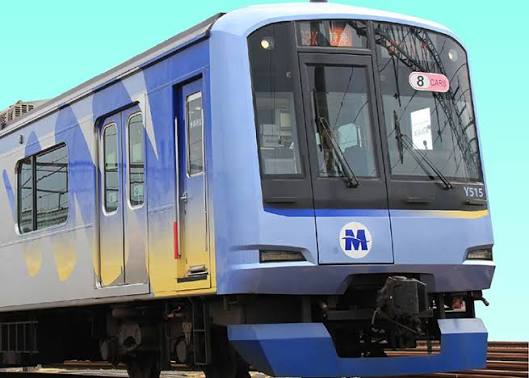
Image Credits: Live Japan
Yokohama Station is not on the waterfront, so most visitors change there. The Minatomirai Line runs from Yokohama Station to Minatomirai for 200 JPY (~S$2) by ticket and 193 JPY by IC card. Suica and PASMO both work on it. The same operator sells a one-day ticket for 460 JPY (~S$4), which pays for itself after about three rides.
Pick your station by what you’re visiting:
- Minatomirai: Cosmo World, Cup Noodles Museum, Queen’s Square and Landmark Plaza.
- Sakuragicho: the Air Cabin and the Nippon Maru.
- Motomachi-Chukagai: Chinatown, Yamashita Park and Yamate.
- Kannai and Nihon-odori: Yokohama Stadium and the Osanbashi side of the waterfront.
For Sankeien, the Minato Burari ticket costs 700 JPY (~S$6) for adults. It covers city buses and the Blue Line subway for the day, plus Kanachu buses inside the listed areas. It doesn’t cover stops between the Minato area and the Sankeien area, so read the route map first. It’s worth buying only if you’re riding the bus at least twice.
📖 Related Guide: Tapping in is easier with an IC card on your phone. Our Welcome Suica mobile app guide covers setting one up before you land.
Is One Day in Yokohama Enough?
Yes, for the highlights. A day covers Minatomirai, the waterfront and Chinatown if you start by 10 AM and skip the outer attractions.
A One-Day Route
Walk it in one direction so you never double back:
- 10 AM, Cup Noodles Museum. Go first, because the My CUPNOODLES Factory slots fill as the day goes on, and allow about two hours if you’re making a cup.
- 12:30 PM, lunch in Minatomirai. Queen’s Square and Landmark Plaza have the options, or walk on and eat later in Chinatown.
- 2 PM, Cosmo World and the Red Brick Warehouse. Cross the bridge for the rides and the free walk-through, then follow the waterfront to the warehouses.
- 4 PM, Osanbashi Pier and Yamashita Park. Aim for the last hour before sunset, when the skyline is clearest, and add Hikawa Maru if it’s open that day.
- 5:30 PM, Chinatown. Graze the side streets, then sit down for dinner.
- 8 PM, night view. Marine Tower’s deck stays open until 10 PM, and Cosmo Clock 21 is lit from sunset.
Check closing days before you lock the order, because Hikawa Maru and the Nippon Maru close on Mondays and Cosmo World closes on set Thursdays. The closing-days table lists them all.
When to Add a Second Day
Add a second day if you want Sankeien, Sea Paradise or the Ramen Museum. Sankeien and Yamate suit a quiet morning, and the Ramen Museum is a short hop from Shin-Yokohama if you’re arriving or leaving by Shinkansen anyway.
It also makes sense if you’re travelling with kids who will want the full Cup Noodles Park and Cosmo World, since those two alone can eat a day.
📖 Related Guide: Short on days? Our best day trips from Tokyo guide compares Yokohama with the other easy options.
Yokohama Chinatown: What to Eat and How to Do It
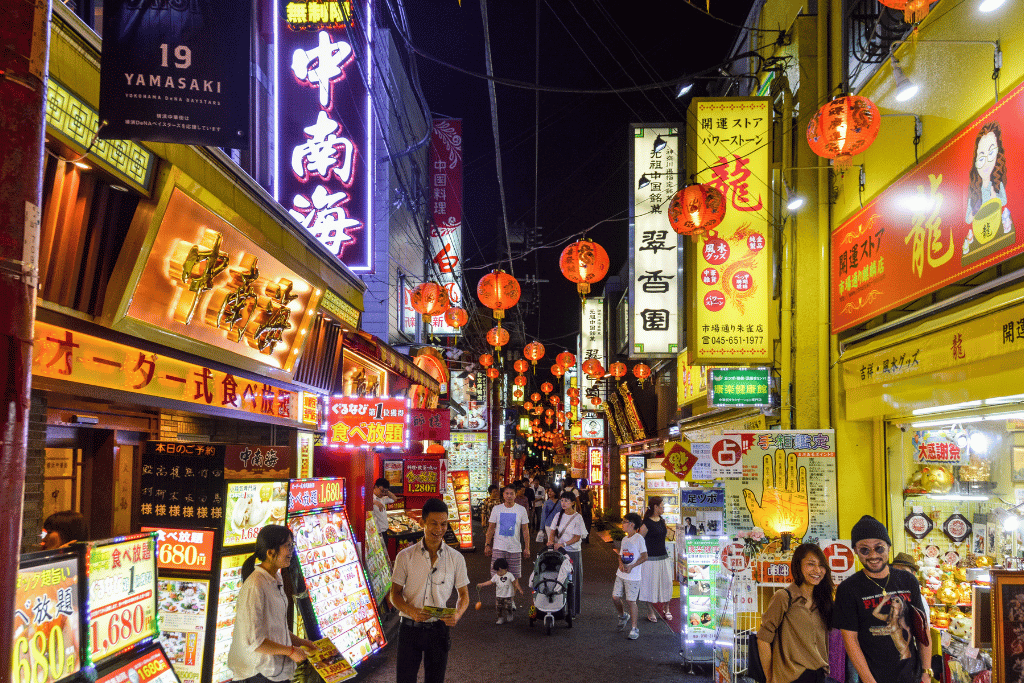
Yokohama Chinatown is Japan’s largest, and it’s a short walk from Yamashita Park. The Chinatown association counts about 630 shops, roughly 200 of them Chinese restaurants. The area is about 500 metres on each side.
The community dates to 1859, when Chinese merchants settled after the port opened, and the streets are a working neighbourhood where locals eat too. That’s why the side streets are worth a detour.
Come in the evening if you can. From 1 November 2026 to 20 February 2027, the lantern festival lights the whole district from 4 PM to 11 PM, so the gates are lit after dark.
Gates, Temples and How Long to Allow
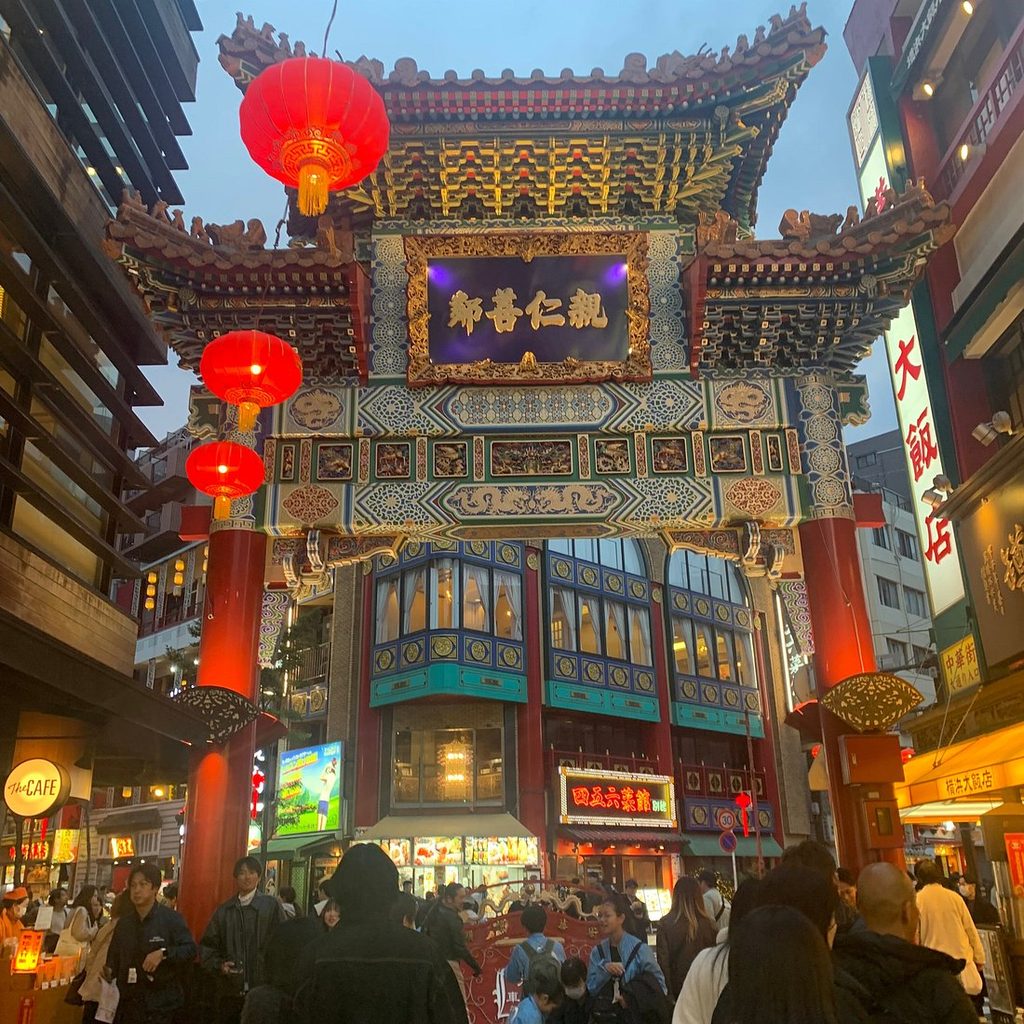
Image Credits: Tripadvisor
Chinatown has ten ornamental gates, and Zenrin-mon on the main street is the one in most photos: a stack of red pillars, green-and-gold painted beams and a gilded plaque. The east gate Chouyo-mon, which welcomes the sunrise, is the one you walk through from Motomachi-Chukagai Station.
The Kanteibyo temple, dedicated to the god of commerce, sits in the middle of the district, and Visit Kanagawa lists a Mazu temple here too. Allow 1.5 to 2 hours for a snack crawl and a look at the temples, or longer if you’re sitting down to dinner. Weekends and weeknight evenings both get packed, so a weekday lunch gives you the quietest walk.
What to Eat in Chinatown
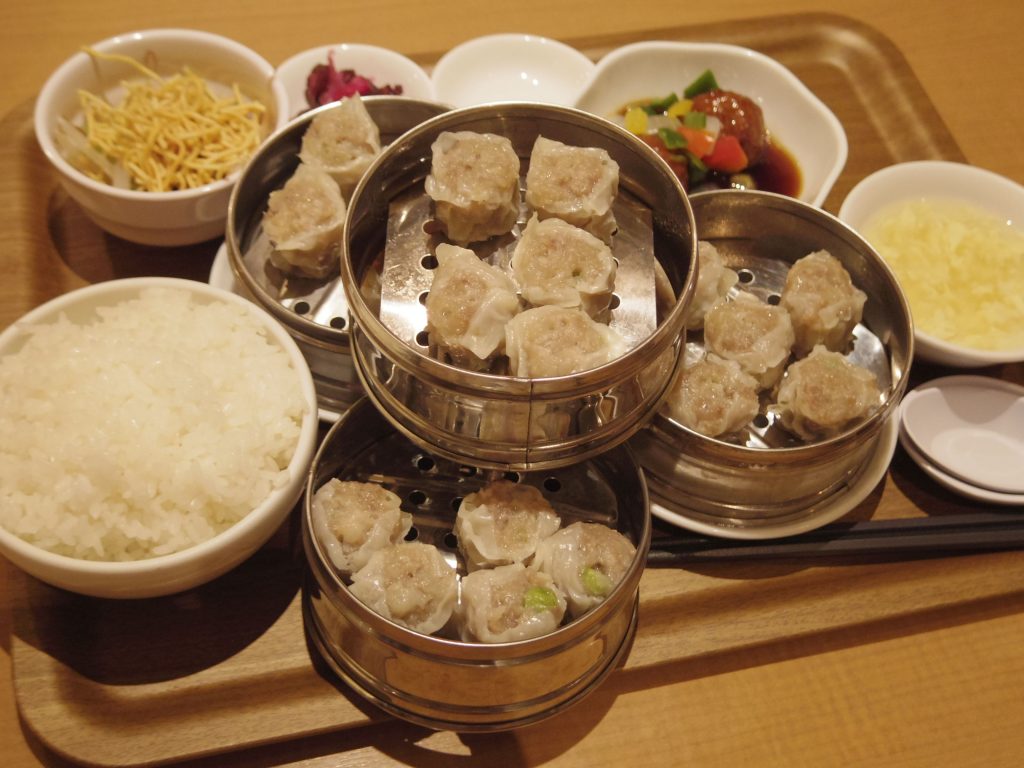
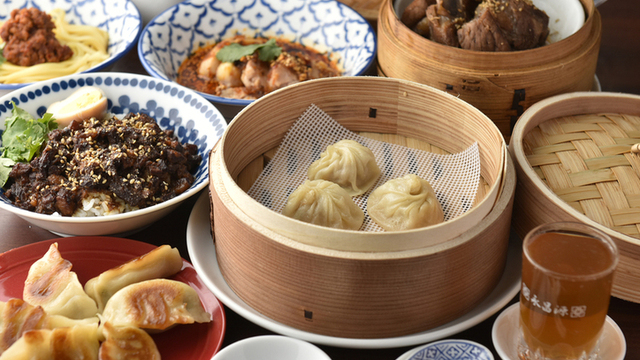
Image Credits: hoshinoresorts; 食べログ
Start with the snacks, which are what most people queue for. Shumai (steamed dumplings) and shoronpo (soup-filled buns) are the classics, and nikuman (meat buns) come in sizes from palm-sized to plate-sized. Bite a shoronpo gently, because the soup inside is hot enough to burn your tongue.
Sesame balls (gomadango) with black sesame filling are the sweet pick, and a salt-and-pepper mochi bun is a good savoury one, crisp outside with a high meat-to-bread ratio. Tanghulu, the candied fruit skewer, is everywhere, and so are egg-yolk buns with a salted yolk in the middle.
If you’d rather sit down, the area has plenty of all-you-can-eat buffets and sit-down dim sum rooms. Prices vary a lot, so read the menu board before you commit.
Side Streets and Eating-While-Walking Rules
Skip the main street for food. It’s the most crowded stretch, and the side streets have the same snacks with shorter queues. Red lanterns hang over them, and many restaurants have a picture menu on the pavement, so you can order by pointing.
One thing to note: The Chinatown association asks visitors not to eat skewered food while walking, because of the injury risk in crowds. Stop at a bench or step aside, eat, then walk on. Don’t block a shopfront you didn’t buy from.
📖 Related Guide: Curious how Japan’s other Chinatowns compare? Our things to do in Kobe guide covers Kobe’s Nankinmachi.
What Is Yokohama’s Famous Food?
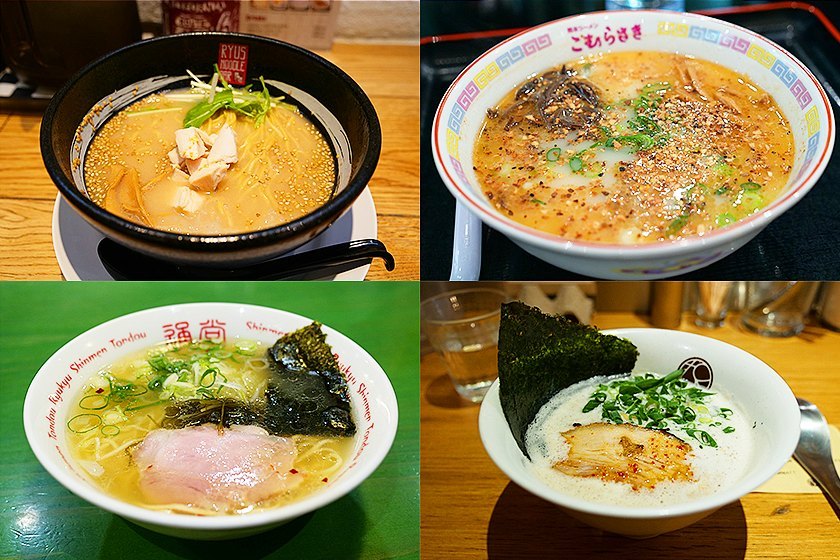
Image Credits: Japan Guide
Yokohama’s famous food is Chinatown snacks and ramen. Shumai, shoronpo and sesame balls are the Chinatown picks, and the Shin-Yokohama Ramen Museum puts regional ramen under one roof.
If you only have room for one proper meal, make it Chinatown at dinner for the variety. If you’re a ramen person, spend an hour at the Ramen Museum and order two mini bowls instead of one full one. The bowls run from clear golden broth to thick, cloudy white, so two minis show you the range.
📖 Related Guide: Travelling halal? Our Tokyo halal food guide lists where to eat in the capital, since Chinatown’s menus lean heavily on pork.
What to Do in Yokohama at Night
Yokohama at night is a lit-up waterfront, and most of it is free. Cosmo Clock 21 glows from sunset until about midnight, Osanbashi’s roof stays open all night, and Marine Tower’s deck stays open until 10 PM. The Landmark Tower Sky Garden, which used to be the obvious pick, is closed until at least 2028.
Sea Bass Illumination Cruise
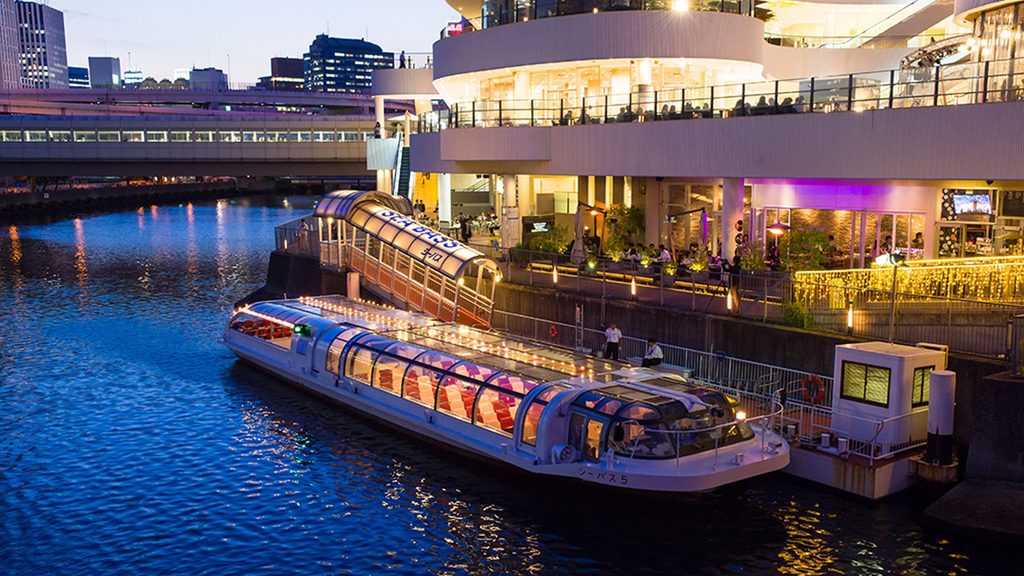
Image Credits: Visit Kanagawa
The Illumination Cruise is a 60-minute guided cruise past the lit-up waterfront for 3,000 JPY (~S$24) per adult. The boat has a glass roof strung with fairy lights, so you watch the skyline from under them. It departs at 7:30 PM on Fridays, Saturdays, Sundays and public holidays, and children pay 2,000 JPY (~S$16).
The cruise works for a first night in Yokohama, when you want the whole skyline without walking it. It boards at the Sea Bass station at Yokohama Station’s East Exit. The operator’s regular Sea Bass waterbus also stops at Hammerhead, the Red Brick Warehouse and Yamashita Park. Cruises can be cancelled for bad weather, so confirm on the day.
Sea Bass Factory Night Cruise
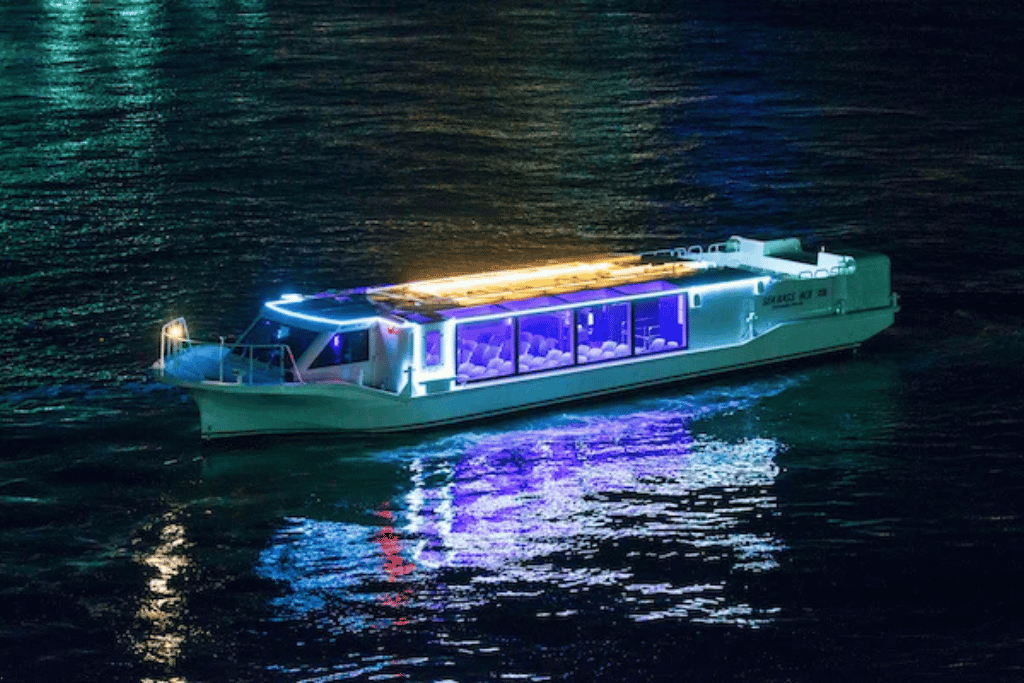
Image Credits: Rakuten Travel Experiences
The factory night cruise is a 90-minute guided trip past the industrial side of the bay for 4,500 JPY (~S$37) per adult. It departs at 7 PM from Tuesday to Sunday, with an earlier 5:10 PM sailing on weekends and holidays from October to February. Children pay 3,000 JPY (~S$24).
The boat’s windows glow purple against the dark water, and the view is smokestacks and cranes rather than a postcard skyline.
Noge Izakaya District
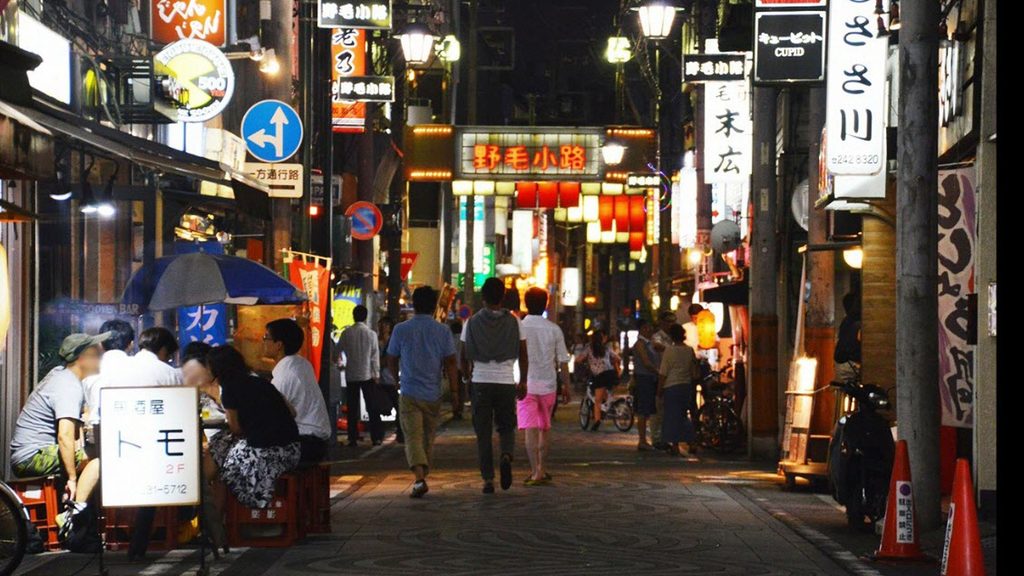
Image Credits: Visit Kanagawa
Noge is the izakaya district on the other side of Sakuragicho, where small bars and restaurants fill the back streets. It had a black market after the war and now has Spanish bars, bistros and old-style izakayas side by side. Bars spill onto the pavement, where customers sit on stacked beer crates at low tables.
Order small plates and drift between a couple of places. A typical order is mentaiko (spicy cod roe) in a cheese croquette, in tempura, and on rice with tea poured over it. An hour or two is enough for the whole area, rather than a long sit.
Red Brick Christmas Market
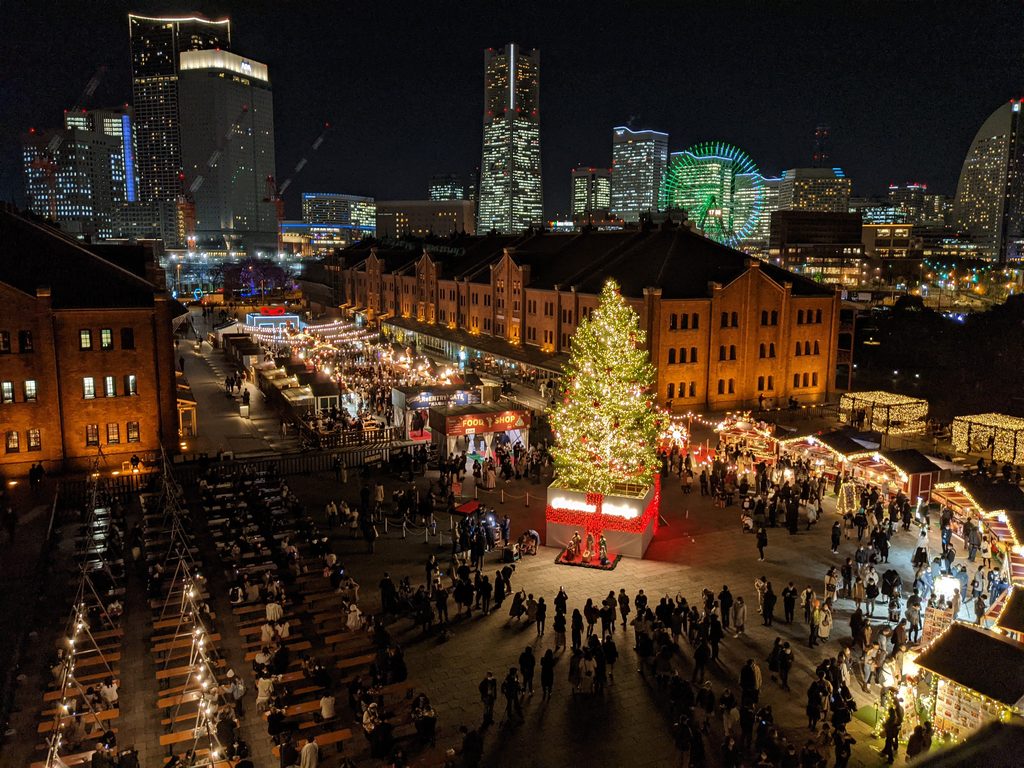
Image Credits: Tokyo Cheapo
The market runs from 20 November to 25 December 2026 at the Red Brick Warehouse, with a roughly 11-metre tree in the middle. Entry is 500 JPY (~S$4) on regular days and 1,000 JPY on peak days. It’s open 11 AM to 9 PM from 21 November and later in December.
Go after dark, when the tree and the stalls are lit.
📖 Related Guide: Want more after-dark options once you’re back in Tokyo? Our teamLab Tokyo guide compares the Planets and Borderless locations.
Free and Cheap Things to Do in Yokohama
Yokohama is easy to do cheaply, because most of the waterfront costs nothing. Cosmo World, the Red Brick Warehouse, Osanbashi’s roof, Yamashita Park and Chinatown are all free to enter or walk through. Harbour View Park and the British House are free too.
The cheapest paid stops are Hikawa Maru at 300 JPY (~S$2), the Ramen Museum at 450 JPY (~S$4) and the Cup Noodles Museum at 500 JPY (~S$4). The cost table has every price side by side.
Spend what you save on one ride, such as Cosmo Clock 21, and the rest of the day costs you food and train fares.
Things to Do in Yokohama With Kids, Alone or as a Couple
Yokohama works for families, solo travellers and couples, and the flat waterfront makes it easy to do alone.
- With kids: Cup Noodles Museum and CUPNOODLES PARK, Cosmo World, Sea Paradise and Zoorasia. All four have rides or play areas, and Cup Noodles Museum works on a rainy day. For under-sevens, Visit Kanagawa lists the Yokohama Anpanman Children’s Museum, with museum hours of 10 AM to 5 PM and last entry at 4 PM. Entry runs about 2,200 to 2,800 JPY (~S$18 to S$23) depending on the day, so check the museum’s price calendar.
- Alone: the Ramen Museum, with mini bowls so you can taste several styles solo, and the Red Brick Warehouse. The Minatomirai waterfront is easy to walk without a plan.
- On a rainy day: Cup Noodles Museum, the Ramen Museum, Landmark Plaza and Manyo Club all work indoors.
- As a couple: Cosmo Clock 21 at night, the Illumination Cruise, and the Osanbashi roof at sunset.
Shopping in Yokohama
Yokohama’s shopping is concentrated in Minatomirai, and most of it is under cover. Three clusters cover it: the malls around Minatomirai and Yokohama Station, World Porters by the Cup Noodles Museum, and the waterfront malls near the Red Brick Warehouse.
Landmark Plaza, Queen’s Square and the Station Malls
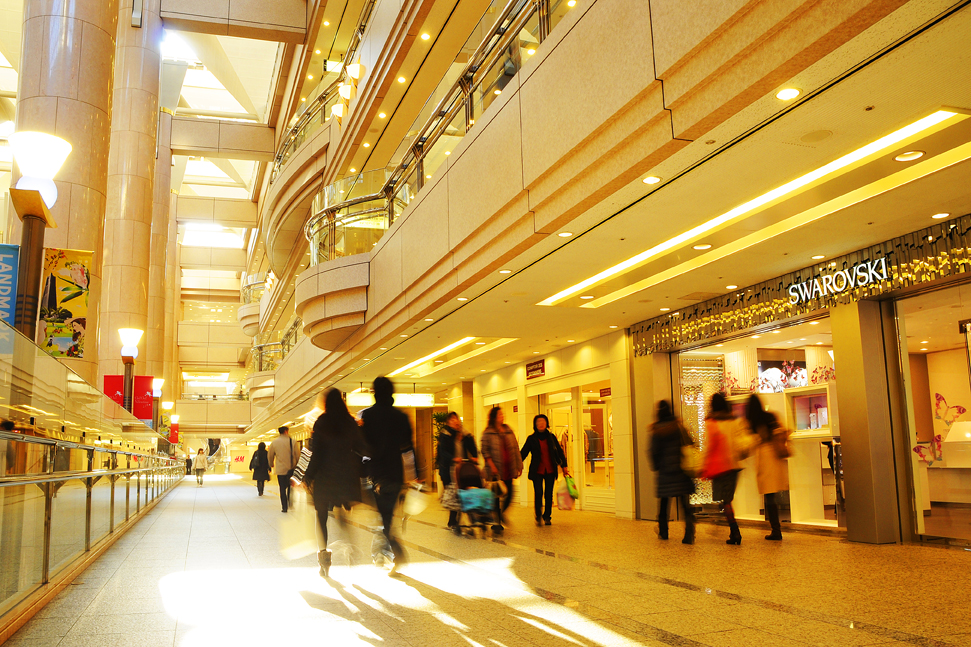
Image Credits: Yokohama Official Visitors Guide
Yokohama Station and Minatomirai together work as the shopping hub for the whole city, much as Shinjuku and Shibuya do for Tokyo. Landmark Plaza is the mall at the base of the Landmark Tower. Queen’s Square is three connected towers, and it has a Sanrio store.
Shop line-ups change, so check each mall’s directory for current shops, and allow time to get lost, since the malls connect underground.
Yokohama World Porters
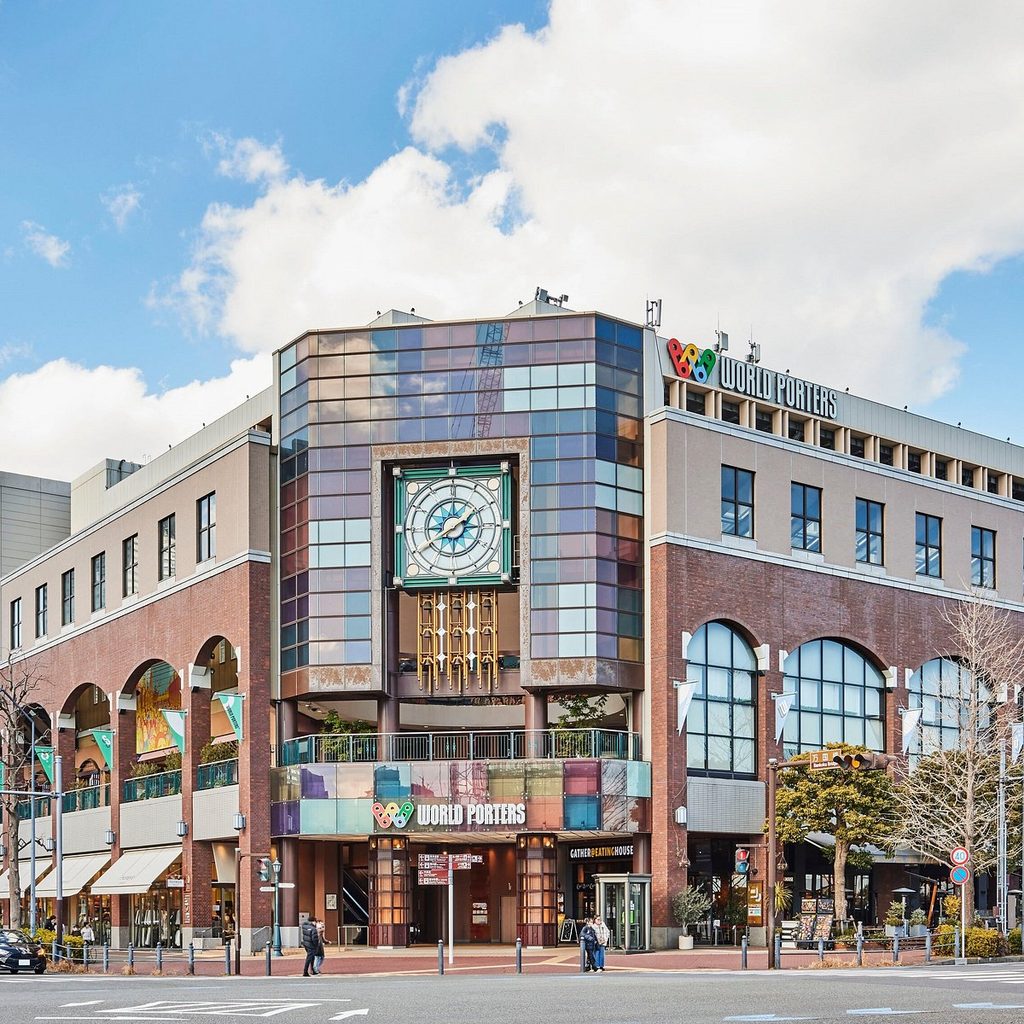
Image Credits: Tripadvisor
World Porters is a big shopping and dining mall next to Cup Noodles Museum. It’s the easy rainy-afternoon pick when you’ve had enough walking.
Marine & Walk and Hammerhead
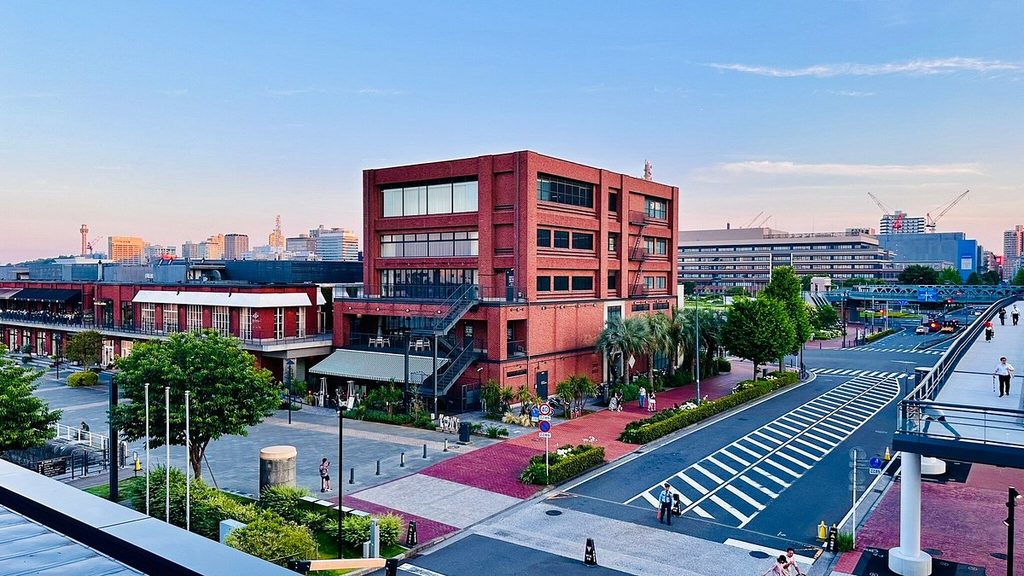
Image Credits: Tripadvisor
Marine & Walk is a small open-air mall facing the water, with cafés and clothing shops and a Southern California beach feel. Retail runs 11 AM to 8 PM and restaurants 11 AM to 10 PM. It’s about a nine-minute walk from Bashamichi Station and twelve from Minatomirai, so it works as a coffee stop between the Red Brick Warehouse and Hammerhead.
Hammerhead is the black cruise-terminal building with shops and restaurants, and its 7-Eleven is known for its craft beer range. Drinking in public is legal in Japan, so the usual move is to pick up a can and find a bench by the water. The Sea Bass waterbus also boards here.
Best Time to Visit Yokohama and When Spots Close
The best time is late October to December for illuminations and the Christmas market, and spring for cherry blossoms at Sankeien. Yokohama is mild enough to visit all year, and the waterfront walk works in any season.
Several spots close on set days, so check the table before you plan the order:
| Day | Closed |
|---|---|
| Monday | Hikawa Maru, Nippon Maru and Yokohama Port Museum |
| Tuesday | Cup Noodles Museum and Zoorasia |
| Certain Thursdays | Cosmo World (see the dates above) |
| One Wednesday a month | British House |
Seasonal highlights worth timing a trip around:
- 20 November to 25 December: the Red Brick Christmas Market.
- 1 November to 20 February: Chinatown’s lantern lights.
- Spring and autumn: cherry blossom and autumn colour at Sankeien.
📖 Related Guide: Planning around the autumn colours? Our autumn in Japan guide covers where to go and when.
How Much Yokohama Costs and How to Pay
A day of sights in Yokohama costs roughly S$25 to S$45 before meals, because most of the waterfront is free. The big spends are the Ferris wheel, a cruise and any paid museum you add.
| Item | Price |
|---|---|
| Cup Noodles Museum entry | 500 JPY (~S$4) |
| My CUPNOODLES Factory, per cup | 500 JPY (~S$4) |
| Cosmo Clock 21 ride | 1,000 JPY (~S$8) |
| Vanish coaster | 1,000 JPY (~S$8) |
| Spinning Coaster | 700 JPY (~S$6) |
| Air Cabin one way | 1,000 JPY (~S$8) |
| Hikawa Maru | 300 JPY (~S$2) |
| Nippon Maru and Port Museum | 800 JPY (~S$7) |
| Ramen Museum entry | 450 JPY (~S$4) |
| Sankeien Garden | 900 JPY (~S$7) |
| Sea Bass Illumination Cruise | 3,000 JPY (~S$24) |
| Factory night cruise | 4,500 JPY (~S$37) |
Pay by card for rides and malls, and keep some yen cash for the cash-only spots such as Hikawa Maru. Tap your YouTrip card for the rest, since YouTrip charges 0% FX and bills at the Mastercard wholesale rate. JPY is also one of the 12 currencies you can hold and lock in, so you can lock a rate before you fly.
Withdraw yen from an ATM when you land. The first S$400 of overseas ATM withdrawals each calendar month is free with YouTrip, then 2% after, and some ATM operators add their own on-screen fee. That beats a money changer, which builds a markup of a few percent into its rate. You can also load a Suica on Apple Pay, and our top-up guide walks through it.
For deeper detail, see our Japan ATM withdrawal guide and the SGD to yen rate guide.
📖 Related Guide: Not sure the card works everywhere? Our can YouTrip be used in Japan guide answers the practical questions.
Pair Yokohama With Tokyo or Kamakura
Yokohama pairs best with Kamakura, which is roughly 25 minutes further south on the JR Yokosuka Line. Together they make a full day out of Tokyo, with Yokohama in the evening and the temples earlier in the day.
Tokyo itself is the other natural pairing, since the train is only about half an hour. If you want a bigger loop, Hakone is the next stop down the coast, and our things to do in Hakone guide covers the onsen and Fuji views.
📖 Related Guide: Pairing it with the temples? Our things to do in Kamakura guide covers the Great Buddha and the beaches.
Where to Stay: Yokohama or Tokyo?
Stay in Tokyo if Yokohama is one stop on a longer trip, and in Yokohama if you want evenings on the waterfront. The trains are fast enough to make either work.
Yokohama’s own big hotel option is closed. The Yokohama Royal Park Hotel in the Landmark Tower has been shut since March 2025. It’s due to reopen in fiscal 2028, so look near Minatomirai or Yokohama Station instead.
📖 Related Guide: Comparing bases? Our best hotels in Tokyo guide covers the capital’s neighbourhoods.
FAQs
Yes, if you treat it as a day trip or evening out from Tokyo. It’s calmer than Tokyo, easy to walk, and has two noodle museums, Japan’s largest Chinatown and a lit-up waterfront. It won’t suit travellers wanting one big headline sight.
Yes, for the main sights. One day covers the Cup Noodles Museum, the Red Brick Warehouse, Yamashita Park and Chinatown if you start by 10 AM. Add a second day if you want Sankeien, Sea Paradise or the Ramen Museum.
Yokohama is about 25 to 30 minutes from Tokyo Station on the JR Tokaido Line, and roughly 30 minutes from Shinjuku or Shibuya. A one-way fare is roughly 528 JPY (~S$4) from Tokyo Station with an IC card.
Yokohama is best known for its port, which opened in 1859, along with Japan’s largest Chinatown, the Cosmo Clock 21 Ferris wheel and the Cup Noodles Museum. It’s also usually described as Japan’s second-largest city, behind Tokyo.
Yakuza exist in Japan, but membership has fallen for 21 straight years to a record low, and visitors very rarely have any contact with them. Take the usual care with nightlife touts in Noge or Chinatown after dark.
Chinatown snacks such as shumai, shoronpo and sesame balls, plus ramen, are the famous foods. The Shin-Yokohama Ramen Museum collects ramen styles from around Japan under one roof.
Yokohama Is Worth a Day Trip From Tokyo
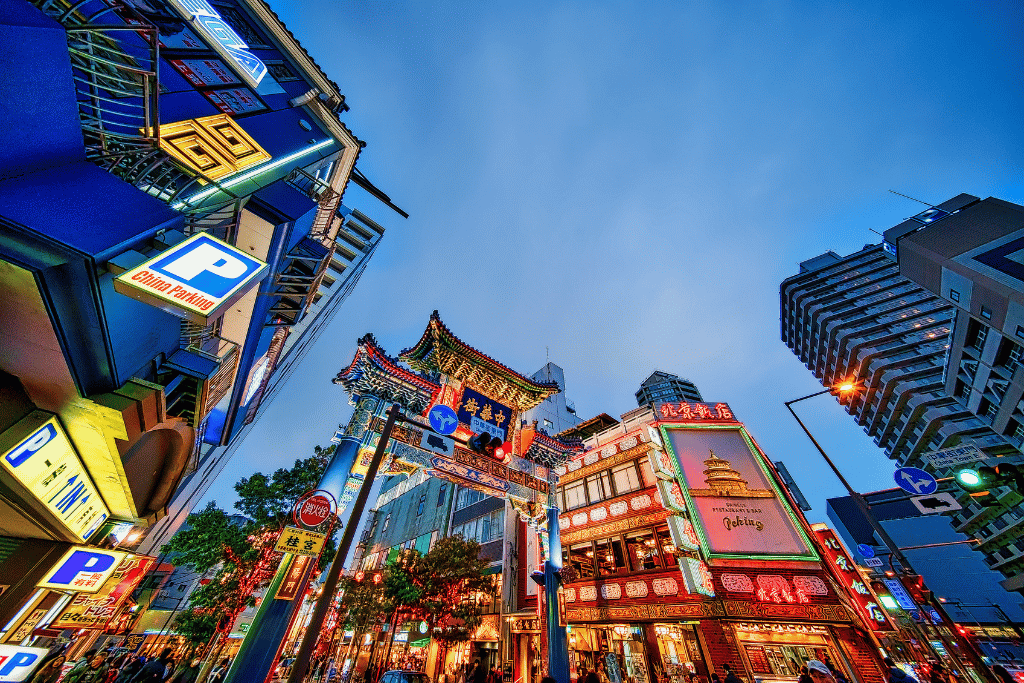
Yokohama is easy to skip on the way to Kyoto, but a day here costs little and covers the noodle museums, the waterfront and Chinatown. Start at Cup Noodles and finish at Cosmo Clock 21 after dark.
Not a YouTrooper yet? Singapore’s go-to multi-currency wallet helps you save with great FX rates and zero fees. Skip the money changer and get a free YouTrip card + S$5 YouTrip credits with code YTBLOG5.
Then, head over to our YouTrip Perks page for exclusive offers and promotions — we promise you won’t regret it. Join our Telegram (@YouTripSG) and Community Group (@YouTripSquad) for travel tips, event invites, and more!
Happy travels!
The information stated above is true as of November 2026.


This guide is written and maintained by the YouTrip content team and checked against the venues’ own pages, including the Cup Noodles Museum, Cosmo World, Sankeien, the Red Brick Warehouse and the Yokohama Chinatown association, plus Yokohama city sources, linked throughout. We revise it whenever opening hours, closures or prices change; this version reflects those sources as of November 2026.