





Two cards share the name “Citi cashback card”, and they pay out in completely different ways
Search “Citi cashback card”, and Citibank shows you two different products: the Cash Back Card and the Cash Back+ Card. One pays up to 8% but only above a monthly minimum. The other pays a flat 1.6% on everything, no minimum, no cap. Pick the wrong one for your spending pattern, and you’ll end up earning less than you expected.
⚡️ Citi Cash Back vs Cash Back+ at a Glance
| Feature | Citi Cash Back Card | Citi Cash Back+ Card |
|---|---|---|
| Rate | 8% petrol & private commute, 6% dining & groceries | Flat 1.6% on all eligible spend |
| Minimum spend | S$800 a statement month for the bonus rate | None |
| Monthly cap | S$80 combined | None |
| Annual fee | S$196.20 (incl. 9% GST), waived year 1 | S$196.20 (incl. 9% GST), waived year 1 |
| Best for | Big, predictable monthly spend in those 4 categories | Everyone else, or anyone who wants zero admin |
📚 Table of Contents
- Citi Cashback Card: Which One Do You Mean?
- Citi Cash Back Card: How the 8%, 6% and S$800 Minimum Work
- Citi Cash Back+ Card: Is 1.6% Flat Worth the Annual Fee?
- Does Citibank Charge an Annual Fee, and Can You Waive It?
- How Do You Redeem Citi Cashback?
- What Doesn’t Earn Cashback?
- Which Credit Card Gives 10% Cashback in Singapore?
- Cashback or Miles: Which Is Better?
- Using Citi Cashback Cards Overseas
- Is the Citi Cashback Card Worth It?
- FAQ
Citi Cashback Card: Which One Do You Mean?
Two: the Cash Back Card and the Cash Back+ Card. Citibank Singapore sells both under almost the same name, which is exactly why people mix them up.
- Citi Cash Back Card pays up to 8% but only on petrol, private commute, dining and groceries, and only once you spend S$800 in a statement month
- Citi Cash Back+ Card pays a flat 1.6% on everything, with no minimum spend and no cap at all
- You might also come across “Citi Dividend”, an older miles-and-cashback hybrid Citibank no longer actively markets alongside these two. If you already hold a Dividend card, it isn’t the same product as either card below, and this guide doesn’t cover it.
Neither card is better on its own; it depends on your spending pattern. The Cash Back Card rewards spending that’s high and steady. Cash Back+ rewards everything else.
📖 Related Guide: Weighing this against miles and travel cards too, not just cashback? Our Best Singapore Credit Card guide compares all three categories side by side.
Citi Cash Back Card: How the 8%, 6% and S$800 Minimum Work
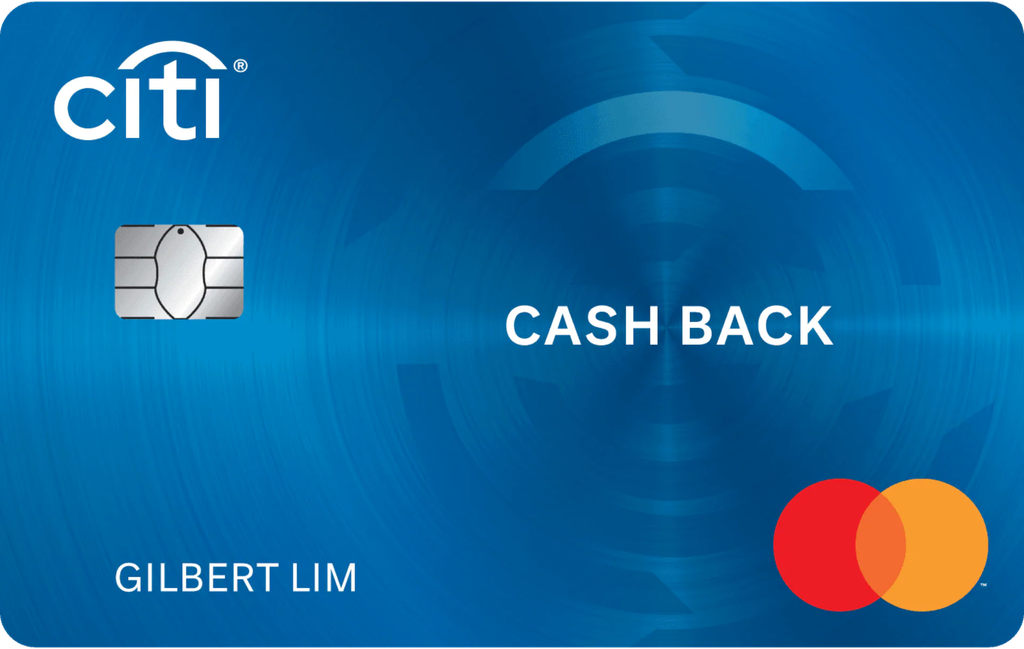
Image Credits: Citibank Singapore
The Cash Back Card pays its highest rate on the categories most households already spend on, but only above a fixed monthly threshold.
| Category | Rate |
|---|---|
| Petrol and private commute (taxis, Grab, Gojek) | 8%, worldwide |
| Dining and groceries | 6%, worldwide |
| Everything else | 0.2% |
Hit S$800 of retail spend in a statement month and the bonus rates above kick in. Miss it, and the whole month earns the 0.2% base rate instead, on every category. Either way, total cashback is capped at S$80 a statement month, combined across all four bonus categories.
The S$800 Minimum and S$80 Cap, With a Worked Example
Run the numbers on a realistic month. Spend S$1,000 split across groceries and dining at 6%, and you’d earn S$60, well under the S$80 ceiling. Push that same S$1,000 into petrol and private commute at 8% instead, and the maths lands exactly at S$80. You’d hit the cap before the month’s even halfway through, if that’s where all your spend sits.
Fall short of S$800, and the maths flips hard. S$700 of grocery spend at the 0.2% fallback rate earns S$1.40 for the month, not the S$42 you’d get at 6%. That’s why this card pays well if your spending is steady, and badly if it isn’t.
Petrol, Private Commute and Dining: What Actually Qualifies
Private commute means taxis, Grab and Gojek rides, coded under merchant category 4121. Petrol applies worldwide, and Citibank runs separate fuel-savings promotions at Esso and Shell that stack on top of the base 8% cashback. Check the current terms before you fill up, since they change on their own schedule, separate from the cashback rate.
Dining covers cafes, restaurants, bars and fast food, in Singapore and overseas. Groceries cover supermarkets and online grocers, including delivery.
📖 Related Guide: Petrol stacking is only worth chasing if you’re actually driving regularly. Our Best Cashback Credit Card Singapore roundup ranks 13 cards on the rate, cap and minimum spend that actually decide what you keep.
Citi Cash Back+ Card: Is 1.6% Flat Worth the Annual Fee?
Imag Credits: Citibank Singapore
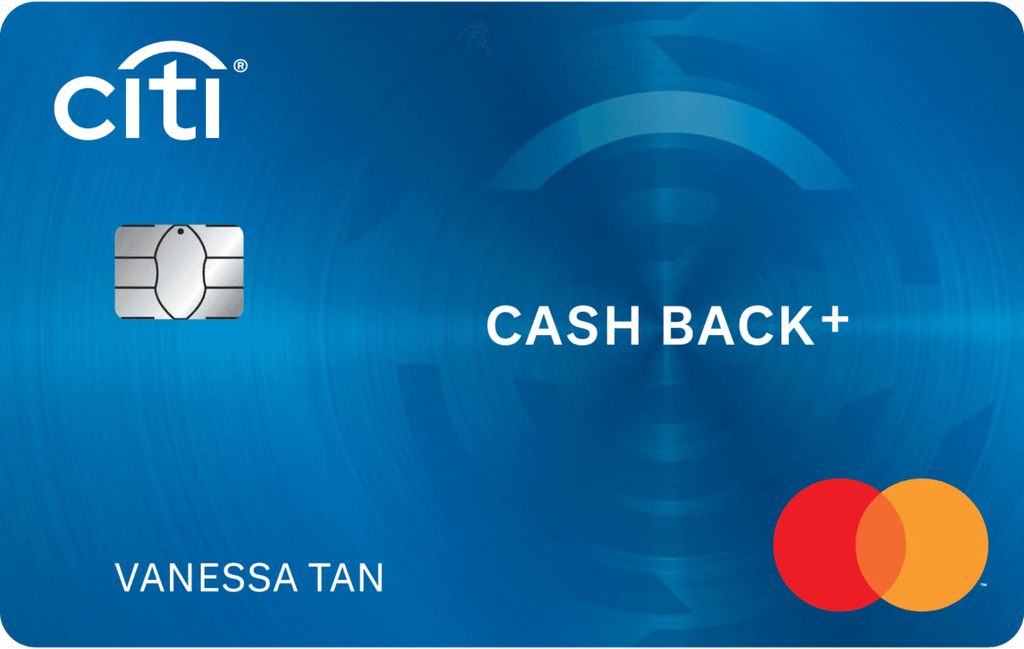
Usually, yes. Cash Back+ strips out every threshold the Cash Back Card asks you to clear: 1.6% on all eligible retail spend, no minimum, no monthly cap.
Citi Plus customers can earn a bit more. If you’re the primary account holder of a Citi Interest Booster account, you earn an additional 0.4% bonus cashback on eligible retail spend of at least S$500 in a calendar month, capped at S$2,000 of qualifying spend, so the bonus itself tops out at S$8 a month.
Stack that on the base 1.6%, and a Citi Plus primary holder effectively earns 2% on the first S$2,000 of monthly spend.
Break-Even: Does the Annual Fee Cancel the Flat Rate?
The annual fee is S$196.20 including 9% GST, waived in year one. From year two, the 1.6% rate has to earn that fee back before anything extra is yours to keep. S$196.20 divided by 1.6% is S$12,262.50, or roughly S$1,022 a month.
Below that spend level, you’re not losing money overall (the cashback still lands, just less than the fee), but you’re not getting your money’s worth from the fee either. Call Citibank or use the Citi Mobile App to ask about a fee waiver if your spend doesn’t clear that bar most years; issuers often grant one on request even without a published threshold.
📖 Related Guide: UOB Absolute Cashback pays 0.1% more at a flat 1.7%, also uncapped. Our UOB Absolute Cashback Card review breaks down whether that edge is worth switching for.
Does Citibank Charge an Annual Fee, and Can You Waive It?
Yes. Both the Cash Back Card and Cash Back+ Card charge S$196.20 a year including 9% GST, and both waive it automatically for the first year. Supplementary cards cost S$98.10 a year each.
Citibank doesn’t publish a standing spend threshold that waives the fee again from year two, the way some miles cards do. A phone call or an in-app request to Citibank is the usual route, and approval depends on your spending history rather than a fixed rule.
📖 Related Guide: AMEX True Cashback charges a lower S$174.40 fee for a lower 1.5% rate. Our AMEX True Cashback Card review weighs that trade-off against Citi’s two cards.
How Do You Redeem Citi Cashback?
Cashback on both cards sits in your rewards balance until you redeem it. You can do that two ways, and both work the same on either card:
Through the Citi Mobile App:
- Log in and tap your rewards balance at the top of the screen to open the Rewards Dashboard
- Tap Cash Rebate
- Enter an amount, or use the slider, to choose how much to redeem
- Confirm, and the rebate lands as a statement credit on your card
By SMS, for a fixed amount: Send a text to 72484 in this format: RWDS [last 4 digits of your card] [keyword]. The listed keywords are CSHBK10 (S$10), CSHBK20 (S$20) and CSHBK50 (S$50).
Either way, the credit lands on your account within 3 to 5 working days. On the Cash Back Card, cashback only auto-credits once your balance hits S$50, in multiples of S$10, so a light month can leave a small balance waiting on the next one. Cash Back+ cashback doesn’t expire while it’s sitting in your balance.
📖 Related Guide: A credit card’s redemption step is one more thing to manage. YouTrip vs credit cards compares that against a wallet where the saving happens the moment you tap, no redemption needed.
What Doesn’t Earn Cashback?
Insurance, education and government payments earn nothing on either card, and neither do cash advances, balance transfers or payment plans. The Cash Back Card also drops anything outside its four bonus categories to a 0.2% base rate.
- Insurance premiums and education fees earn no cashback on either card, under the card’s own Program Information exclusion terms
- Government payments and transactions with other banks earn nothing on either card
- On the Cash Back Card, anything outside petrol, private commute, dining and groceries earns the 0.2% base rate instead of nothing
- Cash advances, balance transfers and any instalment or preferred payment plan don’t earn cashback on either card
If you’re not sure whether a specific merchant qualifies, check the transaction’s category in the Citi Mobile App after it posts rather than assuming from the merchant’s name.
📖 Related Guide: A card with no bonus categories has nothing to exclude in the first place. Our Best Multi-Currency Card Singapore comparison looks at cards built that way.
Which Credit Card Gives 10% Cashback in Singapore?
Neither Citi card hits 10%. The Cash Back Card tops out at 8%, and Cash Back+ caps at 1.6% (2% for Citi Plus primary holders on the first S$2,000).
UOB EVOL is the Singapore card that actually reaches that number. It pays up to 10% on local online/mobile contactless spend, and on selected gym, telco and streaming spend, against an S$800 monthly minimum, with an S$80 cap split S$30/S$20/S$30 across those categories. A few other cards land close by:
| Card | Rate | Where |
|---|---|---|
| UOB EVOL | Up to 10% | Online and mobile contactless spend |
| DBS yuu | Up to 18% | Spend at four qualifying partner merchants (Cold Storage, Giant, foodpanda, Gojek and others), capped at S$144 a month |
| UOB Absolute Cashback | 1.7%, uncapped | Everything, no minimum spend |
| Mari Credit Card | 1.5%, uncapped | Everything, no annual fee at all |
None of these beat Citi Cash Back’s 8% ceiling on petrol and private commute specifically. They just win on a different category or on having no minimum at all.
Cashback or Miles: Which Is Better?
Cashback wins under roughly S$1,500 a month of discretionary spend, because it’s certain and needs no planning. S$1 of cashback is worth exactly S$1, whether you travel or not.
Above that spend level, a 4-miles-per-dollar card like Citi Rewards starts to pull ahead in value, provided you’ll actually redeem the miles for a flight rather than let them sit. It earns 4 miles per dollar on online shopping and department stores, up to the first S$1,000 of qualifying spend each statement month.
At a conservative 1.5 to 2 cents per mile, that works out to roughly 6% to 8% in flight value, more than either Citi cashback card pays.
The honest trade-off: miles need you to plan redemptions 9 to 12 months ahead for the best business-class availability, and they’re worth nothing if they expire unused. If you haven’t booked an award flight with points you’re already holding in the last two years, a cashback card is quietly paying you more.
📖 Related Guide: If you do fly often enough to make miles worth the planning, our best miles credit card Singapore ranking compares earn rates and transfer partners across 9 cards.
Using Citi Cashback Cards Overseas
Both Citi cashback cards state their bonus rates apply “worldwide”, so the rewards side of a trip looks fine on paper. The catch is the foreign transaction fee that sits underneath it: Citi, like most Singapore-issued cashback cards, applies a standard FX fee of up to 3.25% on overseas spend, on top of whatever exchange rate it applies.
Run that against the Cash Back+ rate and the maths doesn’t work in your favour. 1.6% cashback against a 3.25% FX fee leaves you roughly 1.65% worse off on every overseas tap, before any rate markup.
The Cash Back Card’s worldwide 6 to 8% petrol and dining rates look stronger on paper. They still lose the same cut to the FX fee underneath, and the S$800 minimum doesn’t get any easier to hit while you’re travelling instead of spending in Singapore.
Use YouTrip for Overseas Spend Instead
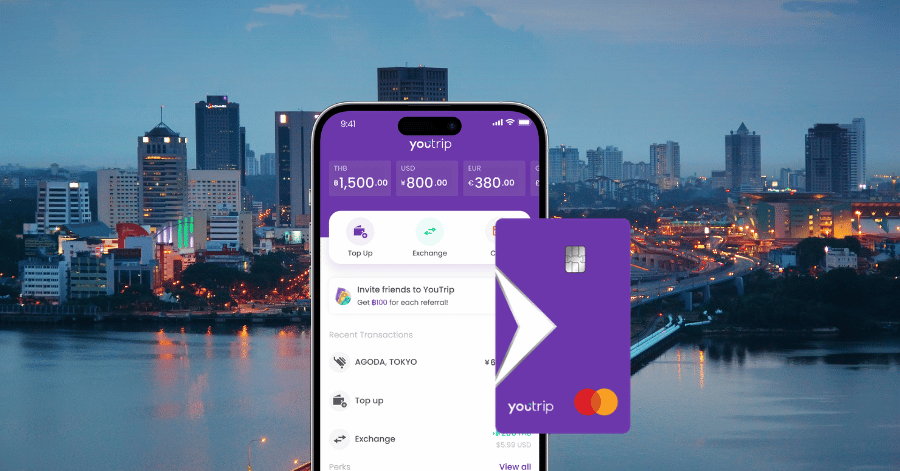
Overseas spend is a different job to the one either Citi card is built for. YouTrip charges no foreign transaction fee and converts at the Mastercard wholesale rate, the same rate banks use between themselves. You can hold and lock 12 currencies in the app (SGD, MYR, THB, JPY, NZD, USD, EUR, GBP, AUD, CHF, SEK and HKD), plus spend in 150+ more.
For cash, withdraw from an ATM once you land. Your first S$400 of overseas ATM withdrawals each calendar month is free, then it’s a flat 2% after that, resetting on the 1st. That beats a money changer every time, since a changer doesn’t show a fee on the receipt, it just bakes a markup of a few percent into the rate it quotes, wider on less common currencies.
👉 Bottom line: Keep a Citi cashback card for Singapore spend, where it’s genuinely earning. Switch to YouTrip the moment the currency changes, where a flat FX fee would otherwise erase a quarter’s worth of cashback in a single trip.
📖 Related Guide: For the full breakdown of wholesale rates versus what banks quote you, see how to get the best exchange rate in Singapore.
Is the Citi Cashback Card Worth It?
Depends on your card and your spending. The Cash Back Card rewards consistency; Cash Back+ doesn’t reward any specific spending pattern, it pays the same rate no matter what you buy.
✅ Citi Cash Back Card Makes Sense If
- You consistently spend S$800+ a month across petrol, private commute, dining and groceries, so you clear the minimum every cycle without thinking about it
- Your petrol spend is real, since the stacked Esso/Shell promotions on top of the 8% rate are where this card’s value concentrates
- You don’t mind tracking a cap. S$80 a month is easy to hit on a big spender’s dining and grocery bill alone
✅ Citi Cash Back+ Makes Sense If
- You want zero admin. There’s no minimum to clear and no cap to watch, and you don’t need to track any spending category
- Your spending is irregular month to month, where a tiered card’s minimum would strand you on the 0.2% base rate more often than not
- You’re a Citi Plus customer who can stack the 0.4% Interest Booster bonus for an effective 2% on the first S$2,000 a month
❌ Neither Card Makes Sense If
- You’re chasing the single highest flat rate on the market. UOB Absolute Cashback’s 1.7%, uncapped, beats Cash Back+’s 1.6% outright
- You spend heavily overseas. A cashback card isn’t the right tool for that job, Citi’s included, once the foreign transaction fee is in the picture
📖 Related Guide: Weighing a cashback card against a travel-first wallet instead of another credit card? Trust Card vs YouTrip compares that exact trade-off overseas.
FAQ
It depends on which one. The Cash Back Card is worth it if you consistently spend S$800 or more a month across petrol, private commute, dining and groceries, since the 6 to 8% rates then comfortably clear the S$196.20 annual fee. Cash Back+ is worth it if you want a flat 1.6% with zero tracking, though UOB Absolute Cashback’s 1.7% uncapped rate beats it on pure rate alone.
Cash Back pays up to 8% on petrol and private commute and 6% on dining and groceries, but only once you spend S$800 in a statement month, capped at S$80 total. Cash Back+ pays a flat 1.6% on everything, with no minimum spend and no cap. They’re separate cards with separate applications, not two tiers of the same product.
Neither Citi card does. UOB EVOL pays up to 10% on local online and mobile contactless spend, split across category sub-caps, against an S$800 monthly minimum.
Through the Citi Mobile App (tap your rewards balance, then Cash Rebate) or by SMS to 72484 using a keyword like CSHBK10, CSHBK20 or CSHBK50. Either way, the rebate lands as a statement credit within 3 to 5 working days.
Yes, S$196.20 a year, including 9% GST on both cards, automatically waived for the first year. There’s no published spend threshold for a repeat waiver after that; call Citibank or raise it in the app, and approval depends on your spending history.
Yes, through CitiPhone Banking or the Citi Mobile App. Redeem or spend down any outstanding cashback balance first: unused rewards are typically forfeited once an account closes, the same as on most Singapore bank cards.
Citi Cash Back vs Cash Back+: Pick by How You Spend
Citi’s two cashback cards aren’t competing with each other. They’re built for opposite spending patterns. Pick Cash Back if your petrol and dining bills already clear S$800 a month without trying. Pick Cash Back+ if they don’t, or if you’d rather never think about a minimum again.
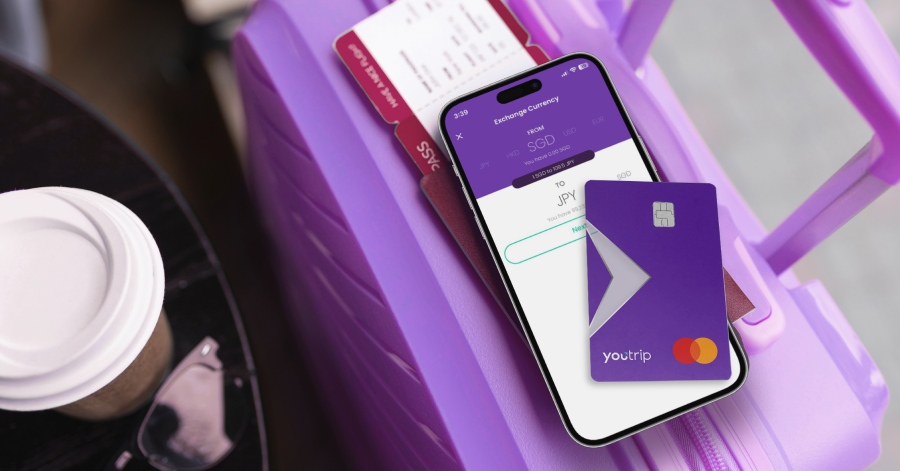
Not a YouTrooper yet? Singapore’s go-to multi-currency wallet helps you save with great FX rates and zero fees. Skip the money changer and get a free YouTrip card + S$5 YouTrip credits with code YTBLOG5.
Then, head over to our YouTrip Perks page for exclusive offers and promotions; we promise you won’t regret it. Join our Telegram (@YouTripSG) and Community Group (@YouTripSquad) for travel tips, event invites, and more!
Happy travels!
The information stated above is true as of November 2026.


This guide is written and maintained by the YouTrip content team and checked against Citibank Singapore’s own card pages, SingSaver’s published rate breakdowns, and our help centre for the YouTrip figures quoted. We revise it whenever cashback rates, minimum spend thresholds or annual fees change; this version reflects Citibank’s published terms as of November 2026.