



Onsen, Mt Fuji views and a loop that’s half the fun
Hakone is a volcanic hot-spring town in the mountains southwest of Tokyo, wrapped inside Japan’s most-visited national park. You come for the onsen, the art museums, a caldera lake with Mt Fuji behind it, and a single circular route (train, cable car, ropeway, pirate ship) that strings it all together. This guide runs that loop in order, sorts the must-dos from the photo stops, and shows you how to pay without bleeding FX fees.
| Quick Planner | Hakone at a glance |
|---|---|
| ⏱️ Time needed | A day trip works; one overnight is the sweet spot |
| 📍 Where | Fuji-Hakone-Izu National Park, ~85 min southwest of Tokyo |
| 🚉 Getting there | Odakyu Romancecar from Shinjuku to Hakone-Yumoto (~85 min) |
| 🎟️ Get the pass | Hakone Freepass, 7,100 JPY (~S$57) for 2 days from Shinjuku |
| 📅 Best time | Winter for the clearest Mt Fuji; weekdays over weekends for crowds |
| 💰 Rough cost | A full day out around S$60 to S$80 with the pass and lunch |
| 💳 Pay with | Tap your YouTrip card (0% FX); pull yen from an ATM for cash-only stalls |
Here’s the shortlist before we ride the loop:
| Spot | Loop stage | Cost (~S$) | Best for |
|---|---|---|---|
| Hakone-Yumoto shopping street | Gateway town | Free to browse | First-day snacks and souvenirs |
| Hakone Open-Air Museum | Gora | ~S$16 | Sculpture, Picasso, a foot bath |
| Gora Park | Gora | ~S$4 | A French garden and a tea house |
| Owakudani + black eggs | Ropeway peak | Free (eggs ~S$4) | Steam vents and Mt Fuji |
| Pirate-ship cruise, Lake Ashi | Lake | Free with pass | The lake crossing everyone posts |
| Hakone Shrine lake torii | Moto-Hakone | Free | The red gate standing in the water |
| Hakone Checkpoint | Moto-Hakone | ~S$4 | Edo-era history buffs |
| Amazake Chaya | Old Tokaido | Drink ~S$3 | A 400-year-old tea house |
| Day-use onsen (Hakone Yuryo) | Yumoto | ~S$14+ | A soak without staying over |
| Odawara Castle | Second-day add-on | ~S$4 | Families and history on day two |
Table of Contents
- Is Hakone Worth Visiting?
- How Many Days Do You Need in Hakone?
- When to Visit Hakone
- Getting to Hakone and Riding the Loop
- The Best Things to Do in Hakone, Stop by Stop
- Best Things to Do Around Hakone-Yumoto
- Best Things to Do in Gora
- Owakudani: The Volcanic Valley
- Lake Ashi and Moto-Hakone
- Hakone Onsen: Ryokan, Day Baths and Tattoo Rules
- Best Things to Do in Hakone With Kids
- If You Have a Second Day: Odawara
- Is Hakone a Tourist Trap?
- How to Pay in Hakone
- FAQs
Is Hakone Worth Visiting?
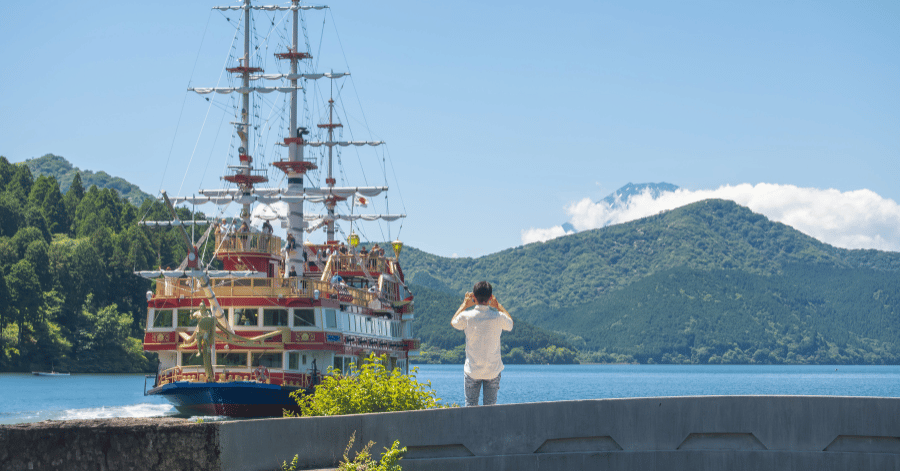
Yes, if you want onsen, mountain scenery and a shot at Mt Fuji without straying far from Tokyo. Hakone sits about 85 minutes from Shinjuku, and it packs volcanic valleys, a caldera lake, serious art museums and traditional inns into one compact loop.
What makes it distinctive is that the getting-around is itself the sightseeing. You move through the mountains by a switchback railway, a cable car, an aerial ropeway over steaming vents and a boat across the lake, all on one pass.
Hakone has been Tokyo’s go-to onsen escape since the Edo era, so it’s polished and it’s busy, especially at weekends. But it’s the rare add-on that suits temple-and-history types, art lovers and anyone who just wants to soak in a hot spring in equal measure.
Set expectations on one thing: Mt Fuji is shy. It hides behind cloud far more often than the postcards suggest, so treat a clear view as a bonus, not the reason you came. Everything else here holds up rain or shine.
📖 Related Guide: Pairing Hakone with another easy escape from the capital? Our Kamakura things-to-do guide covers the seaside temple town on Tokyo’s other side.
How Many Days Do You Need in Hakone?
One full day covers the loop; one overnight turns it from a rush into a proper trip. The single biggest factor is whether you want to sleep in an onsen ryokan, because that’s what most people remember afterwards.
Doing Hakone in one day
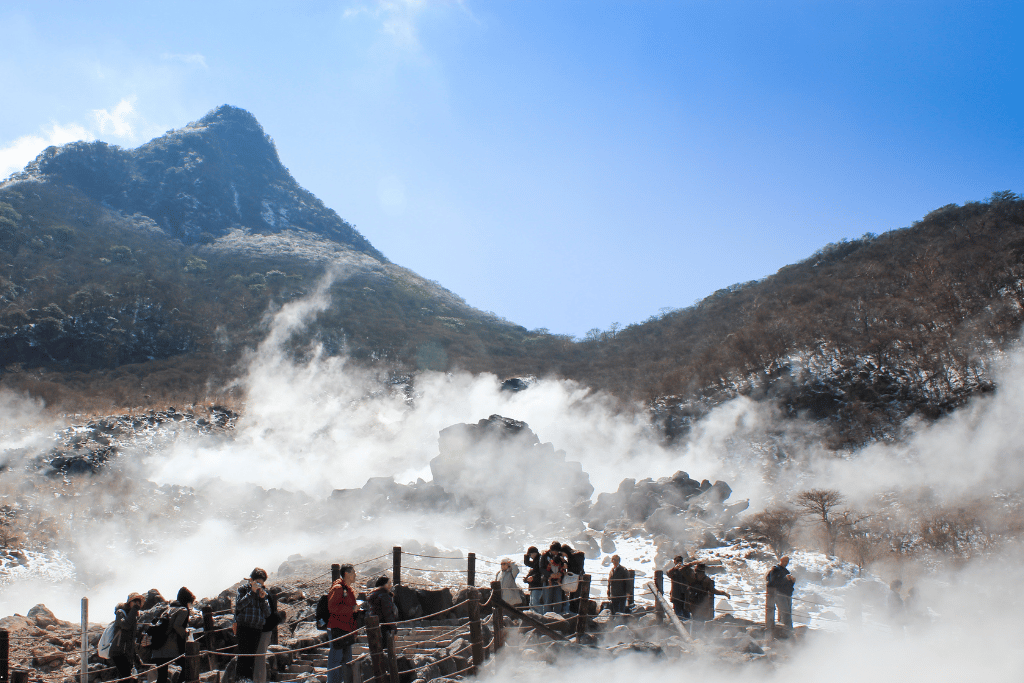
A day trip absolutely works. Ride the loop in one direction, hit Owakudani, the lake and Hakone Shrine, squeeze in the Open-Air Museum, and you’ll be back in Tokyo by evening.
The catch is pace: you’ll be moving most of the day, and you’ll skip the slow pleasures (a long soak, the old Tokaido walk, dinner at an inn). One for anyone on a tight Japan itinerary who wants the highlights and a good lunch out.
Why one night changes the trip
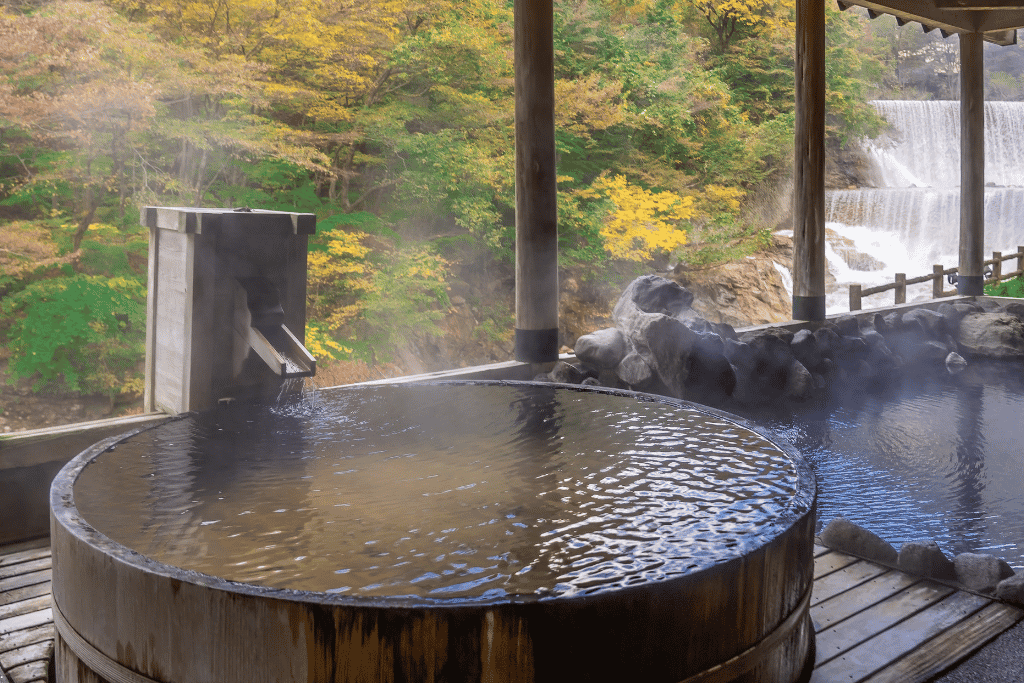
Stay over and Hakone stops being a checklist. You get an evening soak after the day-trippers leave, a multi-course kaiseki dinner, and a quiet morning before the ropeway queues build. An onsen ryokan is the whole point of the place, and one night is enough to feel it.
Is two days too much?
Two days is generous but not wasted, especially if you add Odawara (castle, fish-cake museum) or walk a stretch of the preserved Tokaido on the second morning. Any longer and you’re really there to do nothing but bathe, which, to be fair, some people plan on purpose.
For most Singaporean travellers slotting Hakone into a bigger Japan trip, one night and two light days is the ceiling.
📖 Related Guide: Stitching a few Tokyo days around the trip? Our teamLab Tokyo guide sorts the two digital-art museums so you pick the right one.
When to Visit Hakone
Hakone is a year-round destination, but the season changes what you get. If Mt Fuji is on your wishlist, aim for the colder months.
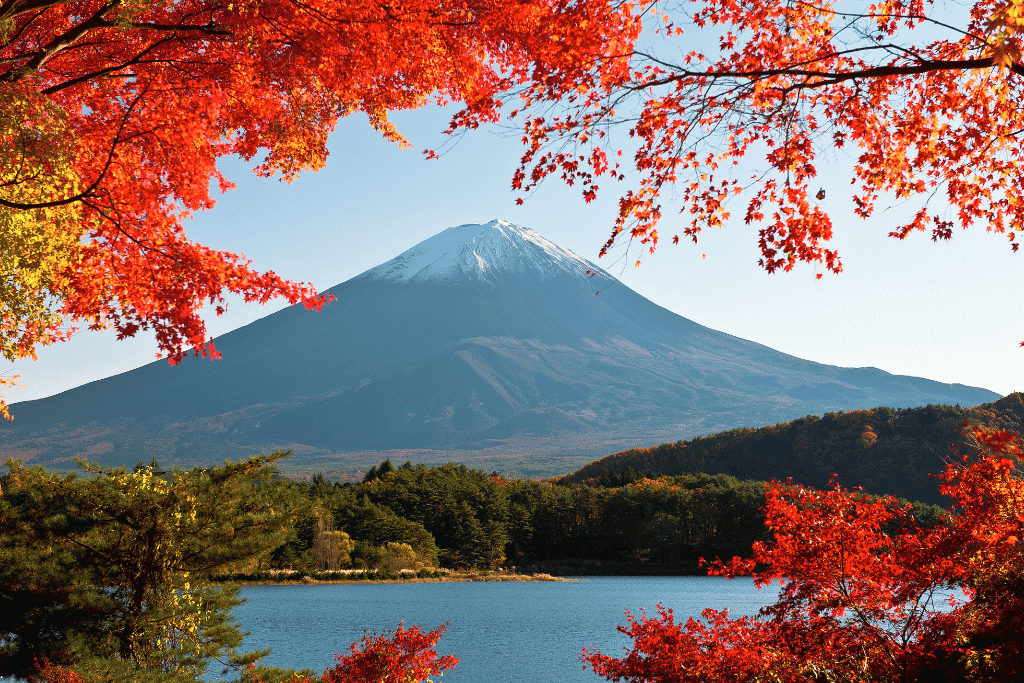
- Winter (December to February): the clearest, most reliable Mt Fuji views, crisp air and the thinnest crowds. The trade-off is cold, and the ropeway’s annual maintenance often falls now (substitute buses cover it).
- Spring (March to May): mild walking weather and blossoms, with crowds building toward Golden Week.
- Rainy season (June to mid-July): humid and wet, but the Tozan railway’s hydrangeas bloom along the tracks, with an evening light-up some nights.
- Summer (mid-July to August): green and lively but hazy, so Fuji is often hidden; also the busiest stretch.
- Autumn (November): maples turn at Gora Park and the museums, comfortable and popular.
Whatever the season, go on a weekday if you can. Hakone is Tokyo’s favourite weekend escape, so Saturdays and Sundays pile up fast at the ropeway and the torii gate.
For Singaporean travellers, the year-end and Lunar New Year windows line up neatly with the best Fuji odds. Just remember to book the ryokan early!
📖 Related Guide: Timing the wider trip around blossoms, leaves or clear skies? Our best time to visit Japan guide breaks it down season by season.
Getting to Hakone and Riding the Loop
The easy way in is the Odakyu Romancecar from Shinjuku direct to Hakone-Yumoto in about 85 minutes. From there, one circular route links every sight, and one pass covers the lot.
The Romancecar from Shinjuku
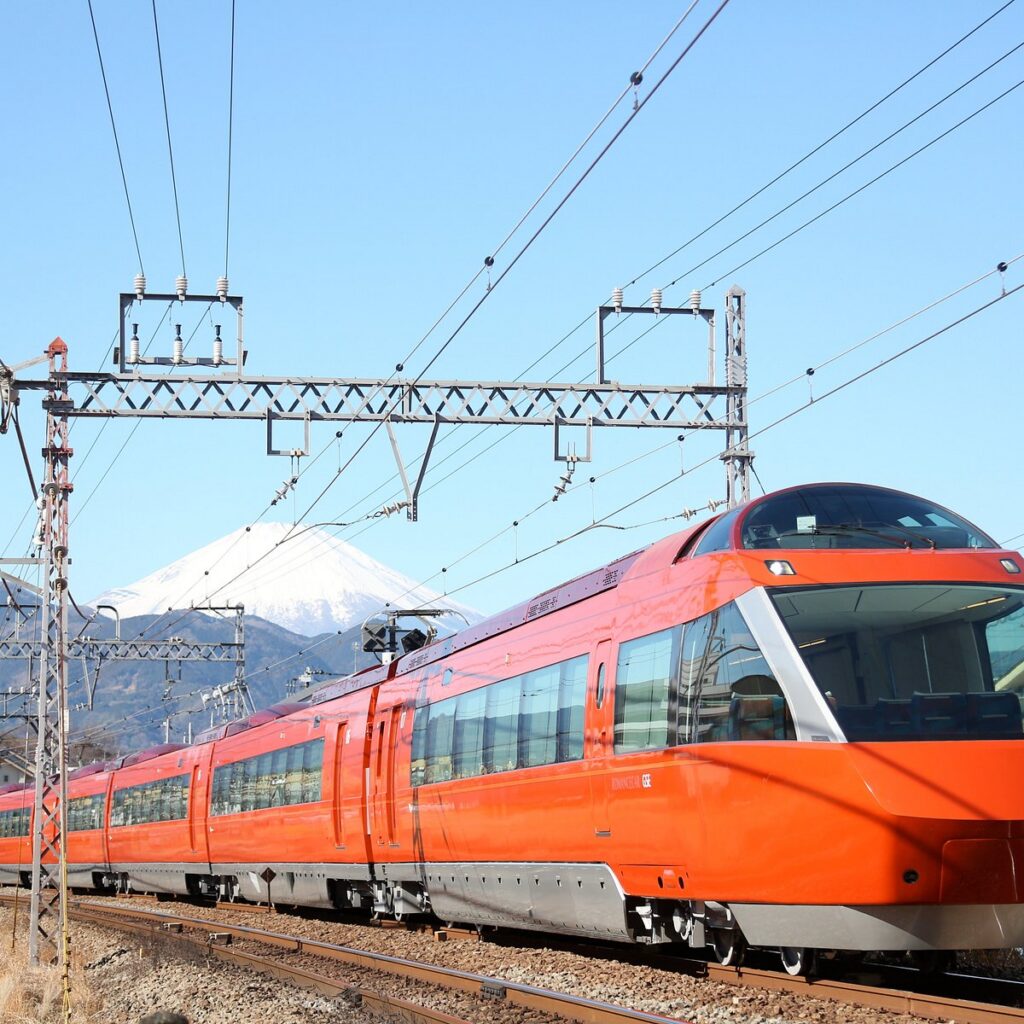
Image Credits: Tripadvisor
The Romancecar is Odakyu’s reserved-seat limited express, and it runs straight from Shinjuku to Hakone-Yumoto with no transfers. It costs a limited-express surcharge of ~1,200 JPY (~S$10) on top of the base fare, so roughly 2,500 JPY (~S$20) each way all in.
Seats are reserved and forward-facing, so book ahead online, especially at weekends. You can take slower non-reserved trains for less, but the Romancecar is the comfortable, guaranteed-seat option and it’s worth the small premium.
The Hakone Freepass, and whether it’s worth it
The Hakone Freepass is the ticket that makes the loop work. It gives you unlimited rides on all eight Odakyu-affiliated modes inside Hakone (train, buses, cable car, ropeway, sightseeing boat) plus discounts at many attractions.
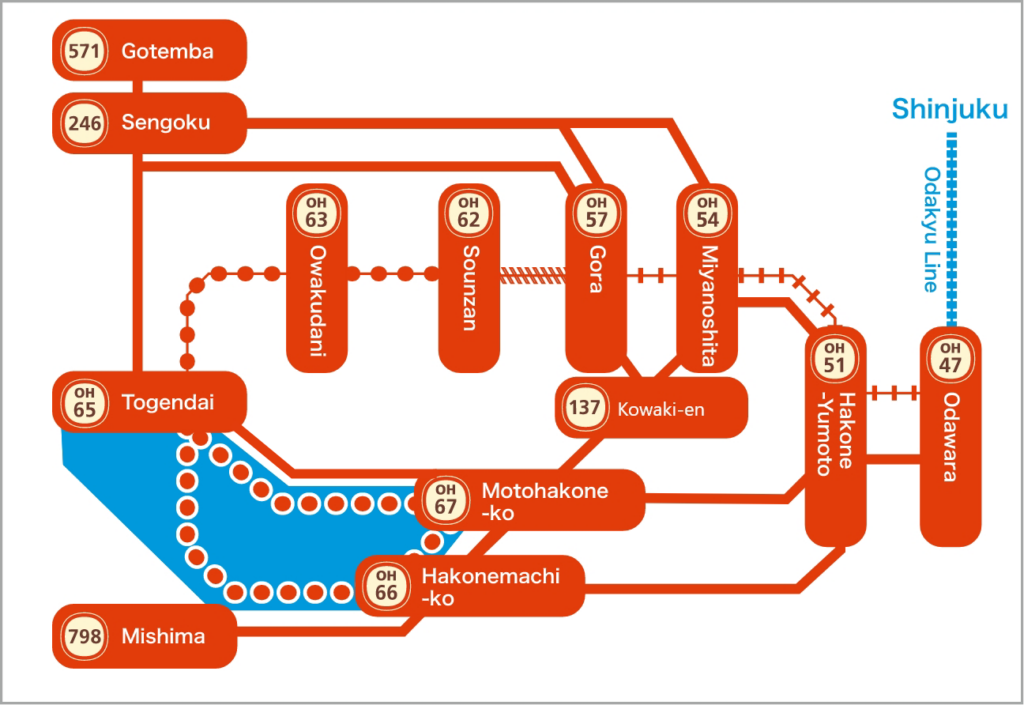
Image Credits: www.hakonenavi.jp
From Shinjuku, the 2-day pass is 7,100 JPY (~S$57); if you start from Odawara instead, the Hakone-area version is 6,000 JPY (~S$48). Buy it as a digital pass on the Odakyu site with a card and show it at the gates.
Is it worth it? For almost everyone, yes. The loop’s individual fares (ropeway, boat, cable car, buses) add up past the pass price in a single day, before you count the attraction discounts. You buy the pass online with a card, which is exactly where a fee-free card starts earning its keep. And if you’re routing a wider Japan trip by rail, sort a card that earns on the flights over first with one of the best miles credit cards in Singapore, since long-haul fares are where points stack fastest.
What is the Hakone Loop?
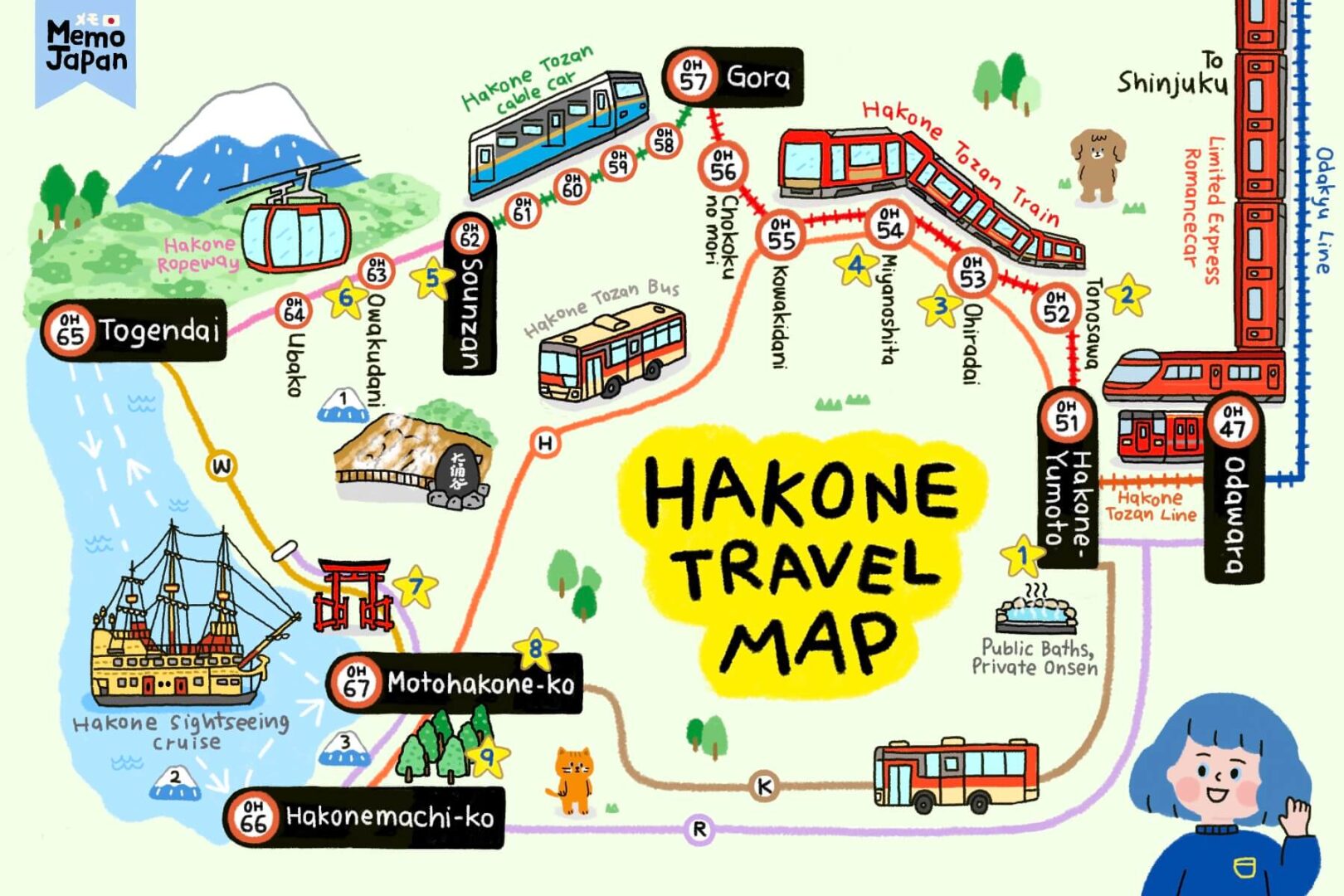
Image Credits: Odakyu Railway
The loop is the circular chain of transport that connects every stop, and doing it in order saves backtracking. The classic run from Hakone-Yumoto goes:
Tozan railway up to Gora → cable car to Sounzan → ropeway over Owakudani → down to Togendai on Lake Ashi → pirate-ship cruise to Moto-Hakone → bus back to Yumoto.
Go anti-clockwise (railway first, bus last) and you climb through the scenery rather than ending on it.
Note on planning: the ropeway over Owakudani pauses on high volcanic-gas days, in strong winds, and for an annual maintenance stretch, usually in winter. When it does, a substitute bus covers the same section (included with your Freepass or ropeway ticket), so the loop still runs, you just swap the gondola for a coach. Check the day’s status on the Hakone Navi site before you set out.
Ride the Hakone Tozan Railway
The first leg of the loop is an attraction in its own right. The Tozan Railway is Japan’s oldest mountain railway, running since 1919. It climbs the slope by zigzagging up three switchbacks where the train stops and reverses direction, so you swap ends and watch the view flip.
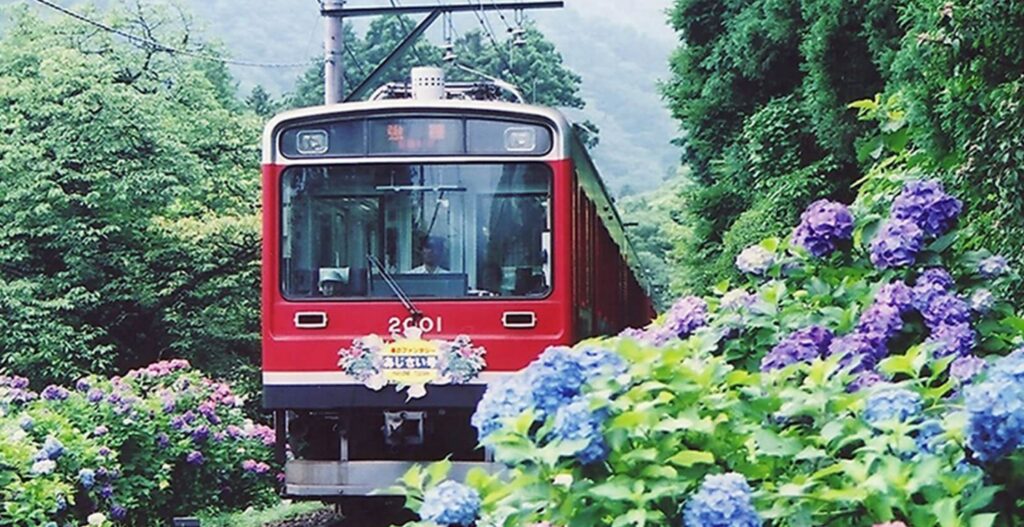
Image Credits: www.hakonenavi.jp
In the rainy season, roughly June to July, hydrangeas crowd both sides of the track, and some evenings get a night light-up as the train crawls through them. It’s a real highlight if you catch the flowers, and a treat for anyone who likes their transport to double as sightseeing.
📖 Related Guide: Building a bigger Japan loop by rail? Our JR Pass guide breaks down the 2026 prices and whether it still pays off (note: the JR Pass doesn’t cover the Odakyu line to Hakone).
The Best Things to Do in Hakone, Stop by Stop
Everything below is a stop on the loop, listed in the order you’d ride it out from Hakone-Yumoto: the gateway town first, then Gora for the museums, up and over the Owakudani valley, and down to Lake Ashi for the shrine and the lake.
You won’t fit all of it into one day, so skim each area for the spots that match your mood and build the route from there.
Best Things to Do Around Hakone-Yumoto
Hakone-Yumoto is the gateway station where most trips start and end, and the street outside it is a graze-and-browse strip worth an hour before you head up the mountain. Do it on the way in when you’re fresh, or on the way out while you wait for the Romancecar.
Hakone-Yumoto Shopping Street
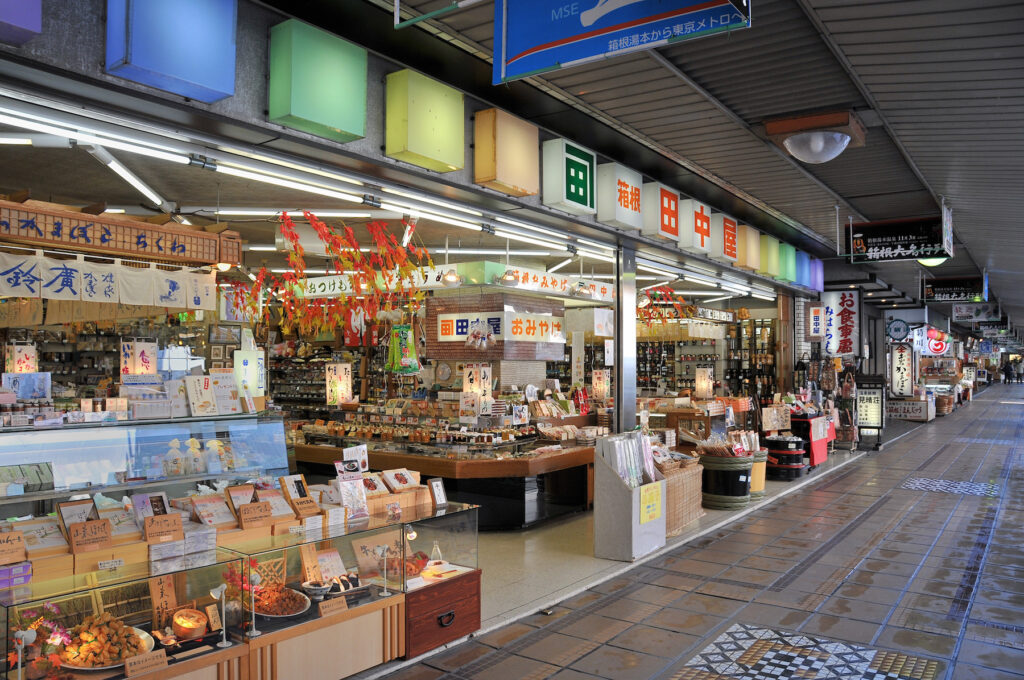
Image Credits: www.hakonenavi.jp
The lane straight out of the station is lined with onsen-manju steamers, fish-cake shops, wasabi stalls and craft stores. It’s touristy and it’s the point: this is where you snack, pick up souvenirs and get the first hit of onsen-town atmosphere. Come here to graze rather than sit down for a proper meal, and leave the heavy shopping for the way back so you’re not lugging it up the ropeway.
💡 Pro tip: Hakone-Yumoto Station has a baggage counter that forwards your bag to your hotel or holds it for the day, so you can ride the whole loop hands-free instead of hauling a suitcase up the switchbacks.
Nanohana onsen manju
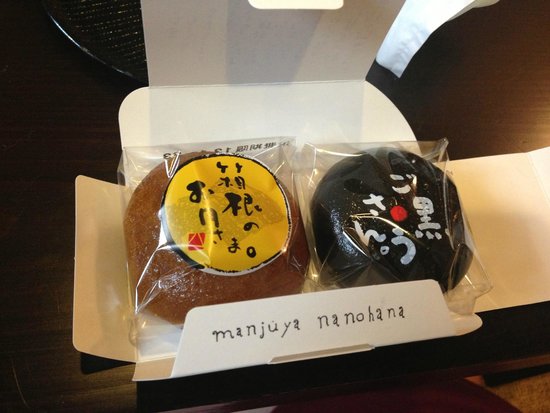
Image Credits: Tripadvisor
The steamed-bun stop to make first. Nanohana sells onsen manju (soft steamed buns with a sweet filling) hot off the steamer, in red bean and black sesame, with free hojicha tea to wash them down. They’re a few hundred yen each and best eaten on the spot while they’re warm. A cheap, easy first bite before you head up the mountain.
Chimoto yumochi
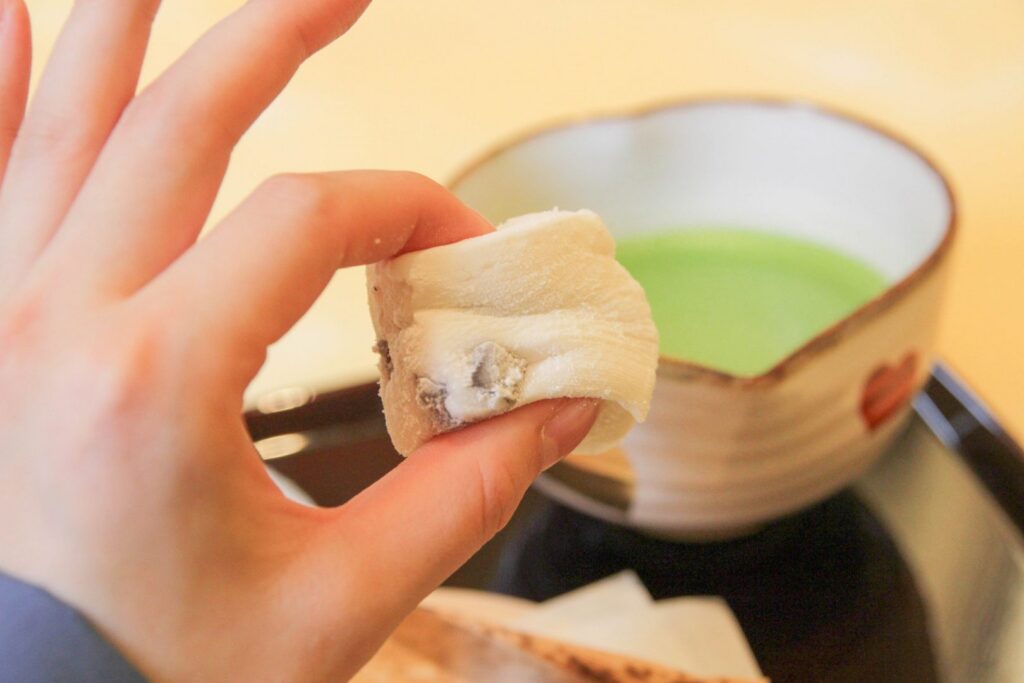
Image Credits: Odakyu Railway
Locally famous, and worth the small detour. Chimoto is an award-winning old confectioner known for yumochi, a marshmallow-soft mochi wrapped around red bean that regulars call the softest they’ve ever had. It’s a proper Hakone souvenir, the kind Japanese visitors queue for, so grab a box if you want to bring something back that isn’t a keychain.
| Where to try | Area | What makes it |
|---|---|---|
| Nanohana | Yumoto shopping street | Hot onsen manju, free hojicha |
| Chimoto | Yumoto shopping street | Award-winning ultra-soft yumochi |
| Owakudani kiosks | Ropeway peak | Black-shelled snacks (see below) |
Yosegi-zaiku marquetry
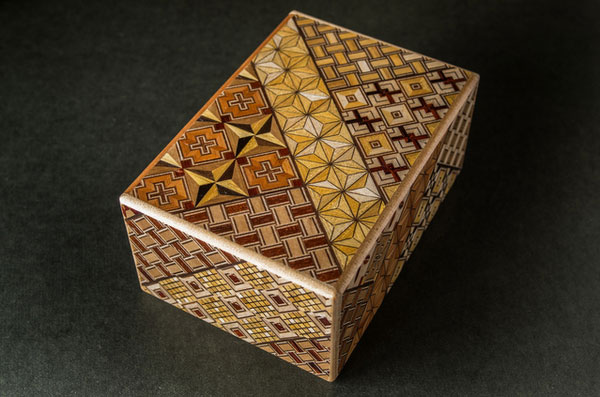
Image Credits: KOGEI JAPAN
The souvenir with real local heritage. Hakone is the home of yosegi-zaiku, a woodworking craft that builds geometric patterns from different natural wood tones. Folk-craft shops along the Yumoto street, like Fujiya, stock it as chopsticks, coasters and cups, plus the famous “puzzle boxes” that only open with a sequence of slides. Chopsticks are a cheap, packable keepsake; the puzzle boxes are the showpiece. It’s the rare souvenir that’s actually made where you buy it.
The Evangelion store under the station
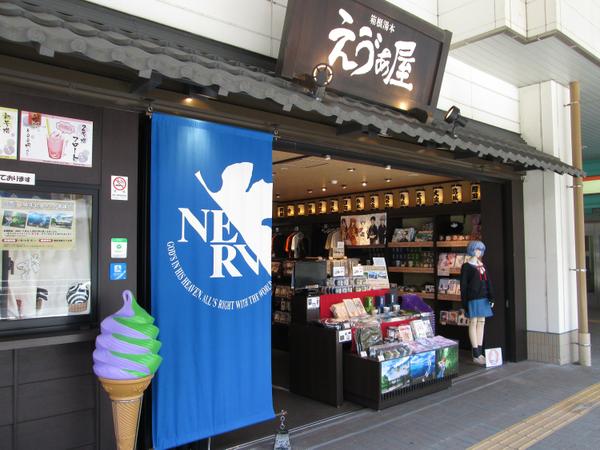
Image Credits: Japan Travel by NAVITIME
A small pilgrimage for anime fans. The city of Tokyo-3 in Neon Genesis Evangelion is modelled on Hakone, and there’s an official Evangelion shop right under Hakone-Yumoto Station selling merch you won’t find elsewhere, down to character-themed onsen goods. It’s a five-minute look if the series means nothing to you, and a genuine reason to detour if it does.
📖 Related Guide: Working out what’s actually worth bringing home? Our what to buy in Japan guide covers the souvenirs and the tax-free rules.
Best Things to Do in Gora
Gora is the mid-mountain hub where the switchback railway meets the cable car, and it’s the base for Hakone’s best art and gardens. If you only make one culture stop on the loop, make it here.
Hakone Open-Air Museum
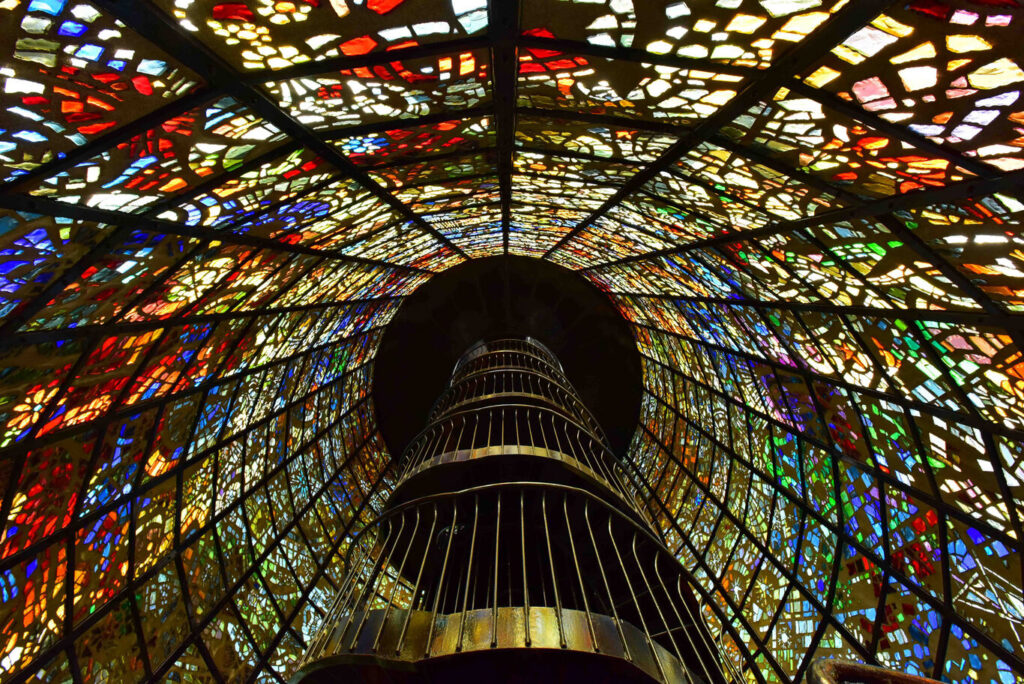
Image Credits: www.hakone-oam.or.jp
The one unmissable sight that isn’t a hot spring. Opened in 1969 as Japan’s first outdoor museum, it spreads sculptures and installations across 70,000 square metres of lawn with the mountains as a backdrop. The indoor Picasso Pavilion holds one of the world’s largest collections of his work, and the stained-glass “Symphonic Sculpture” is a tower you climb for a view over the grounds. There’s a free foot bath on site fed by hot-spring water.
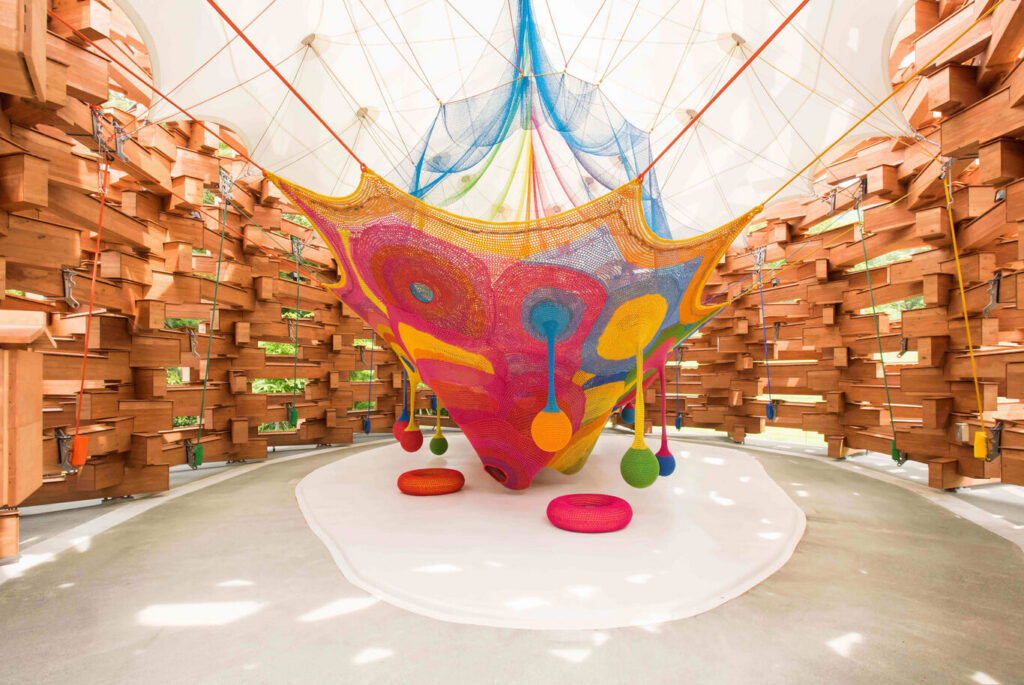
Image Credits: www.hakone-oam.or.jp
Admission is 2,000 JPY (~S$16) at the door, or 1,800 JPY (~S$14) booked online, and the Freepass shaves a little off. The ticket gates are set up for cards and IC payment, so it’s a card stop rather than a cash one. Give it a good ninety minutes to two hours. Best for anyone who likes their art walkable and outdoors rather than hushed and indoors.
- 📍 Chokoku-no-Mori Station (one stop on the Tozan railway from Gora)
- 🕘 Daily, roughly 9 AM to 5 PM
- 💰 2,000 JPY (~S$16) door, 1,800 JPY (~S$14) online; cards and IC accepted
Gora Park and the HAKUUN-DO Tea House
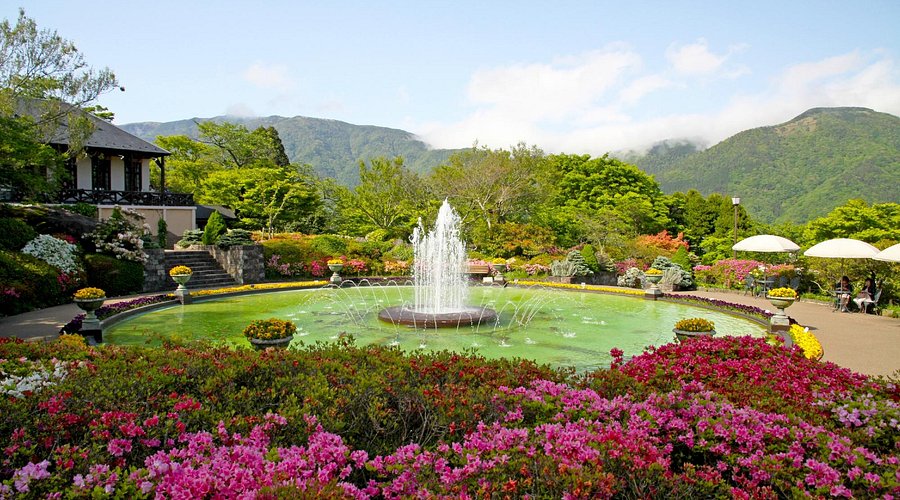
Image Credits: Tripadvisor
A tidy French landscape garden and a quiet cup of matcha. Gora Park is Japan’s first French-style garden, built in the early 1900s around the same time as the railway, with a fountain, greenhouses and seasonal flowers on a slope.
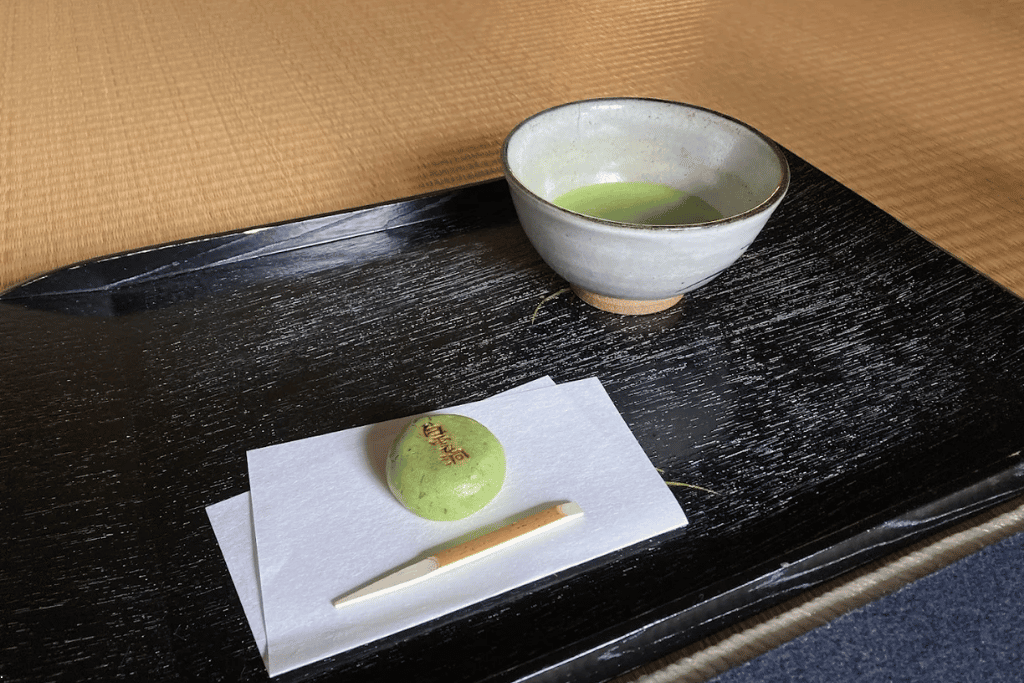
Image Credits: VIC VIPER on Google Reviews
Inside sits Hakuundo, a traditional tea house where you can sit with a whisked matcha and a sweet away from the crowds. It’s a short, pretty stop rather than a half-day. A pleasant pause between the museum and the cable car.
Hakone Crafthouse (pottery and glassblowing)
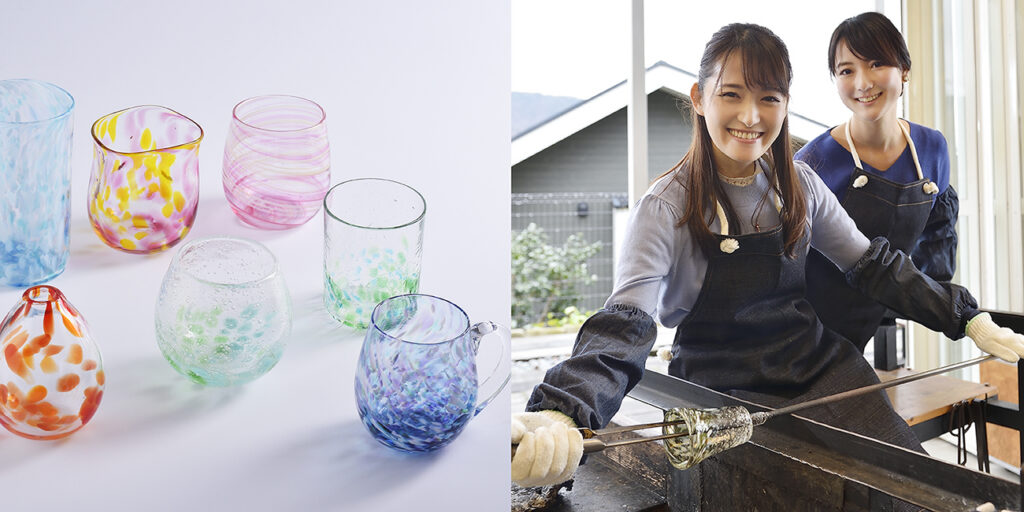
Image Credits: 箱根クラフトハウス
Hands-on, and a good rainy-day move. Within Gora Park, the Crafthouse runs short pottery, glassblowing and marquetry sessions you can book on the day, so you leave with something you made rather than bought. Sessions take under an hour and suit older kids and adults. Best if the weather’s turned and you want an indoor hour that isn’t another museum.
Hakone Museum of Art
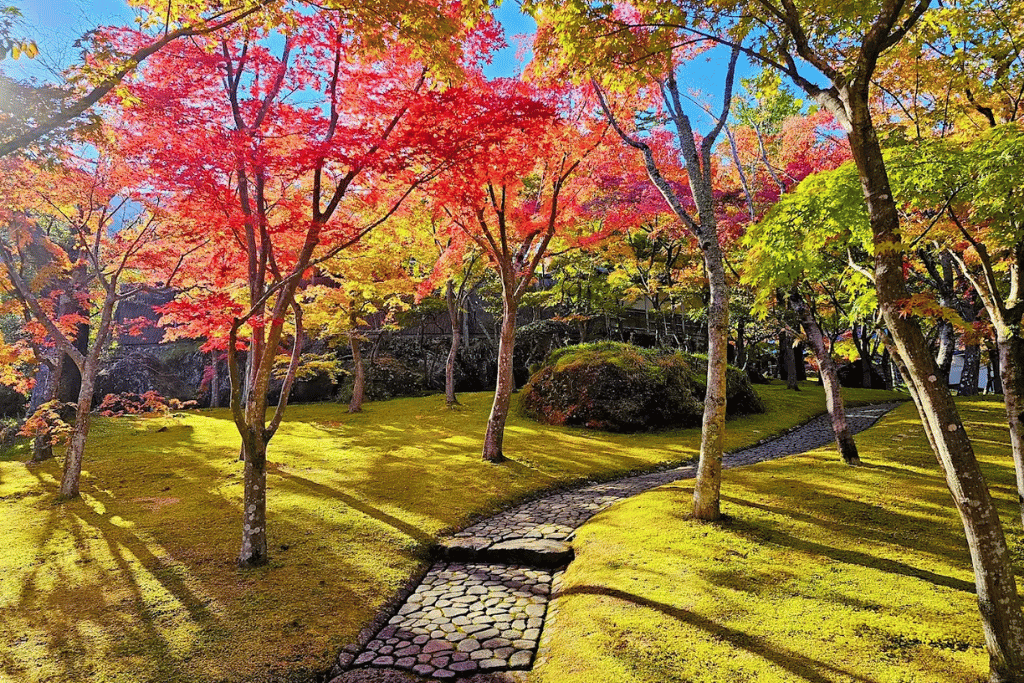
Image Credits: KEM W on Google Reviews
The older, quieter art stop. Hakone’s oldest museum pairs a collection of Japanese ceramics with a moss garden that’s at its best in autumn, when the maples turn. It’s calmer and more traditional than the Open-Air Museum, and a fine second pick if you have the time. One for ceramics fans, and worth timing for the autumn maples.
📖 Related Guide: Enjoyed the matcha and want more of it? Our Uji things-to-do guide heads to Japan’s green-tea capital near Kyoto.
Owakudani: The Volcanic Valley
Owakudani is the steaming, sulphur-scented valley at the top of the ropeway, formed by an eruption of Mt Hakone around 3,000 years ago. It’s the loop’s most dramatic stretch and the source of the area’s hot-spring water.
The ropeway and the steam vents
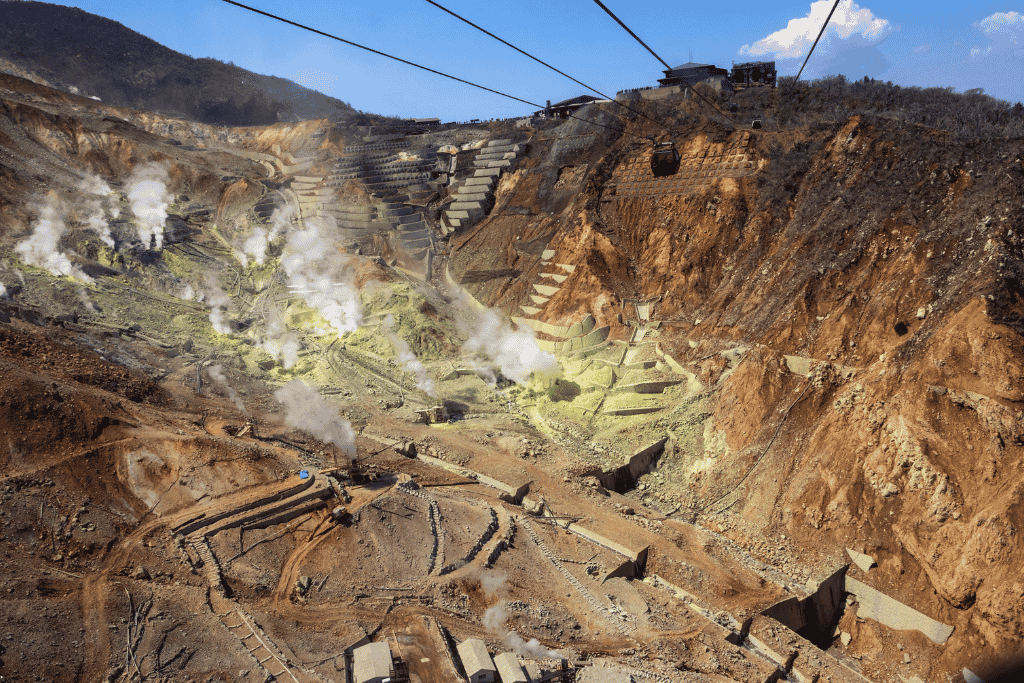
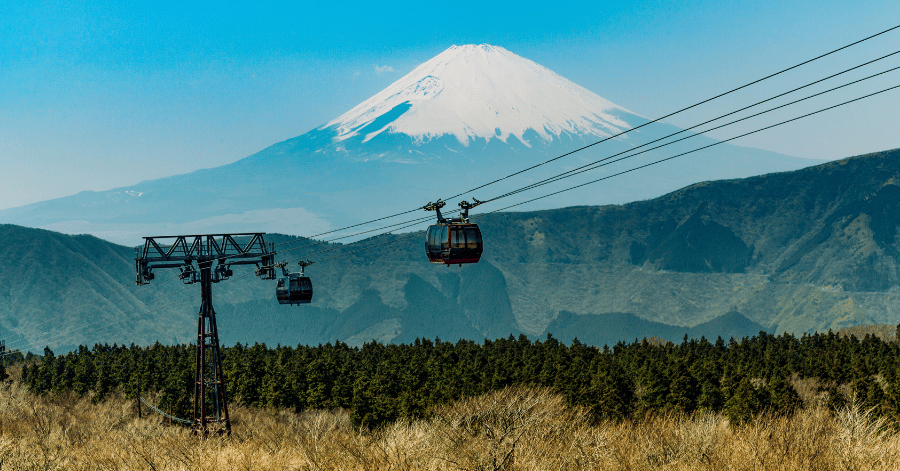
The reason the ride up is worth it in itself. As the gondola crests the ridge, the green mountainside gives way to bleached rock, bubbling mud and hissing steam vents. At the top you can walk viewing paths through the volcanic landscape, and on a clear day Mt Fuji sits framed behind it all.
The newer Chikyu-no-Tani (“Earth Valley”) observation deck is the best-designed spot for photos into the valley. Come for scenery that feels otherworldly rather than merely pretty.
Kuro-tamago black eggs
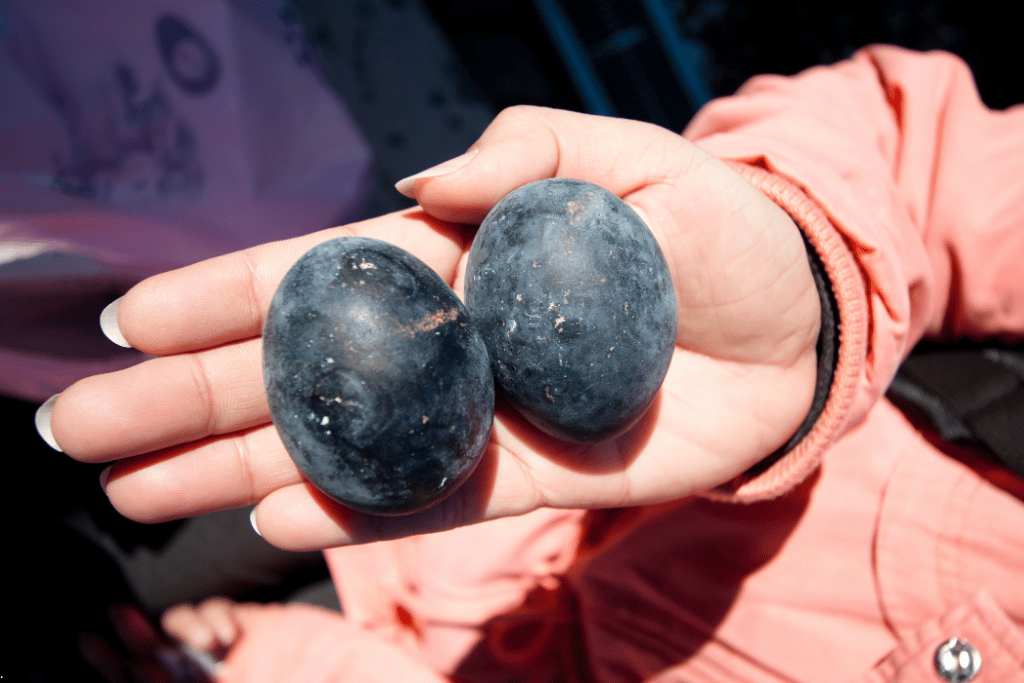
The snack you have to try once. Kuro-tamago are ordinary chicken eggs boiled in the sulphuric hot-spring pools, where the minerals turn the shells jet black. Local lore says each one adds seven years to your life. They’re sold by the pack (around 500 JPY, ~S$4 for four) at the counter up top, cash in hand, and eaten on the spot while warm.
The taste is just a boiled egg with a faint mineral note, so you’re paying for the ritual and the view, not a flavour revelation. Do it anyway.
Black soft-serve and black curry bread
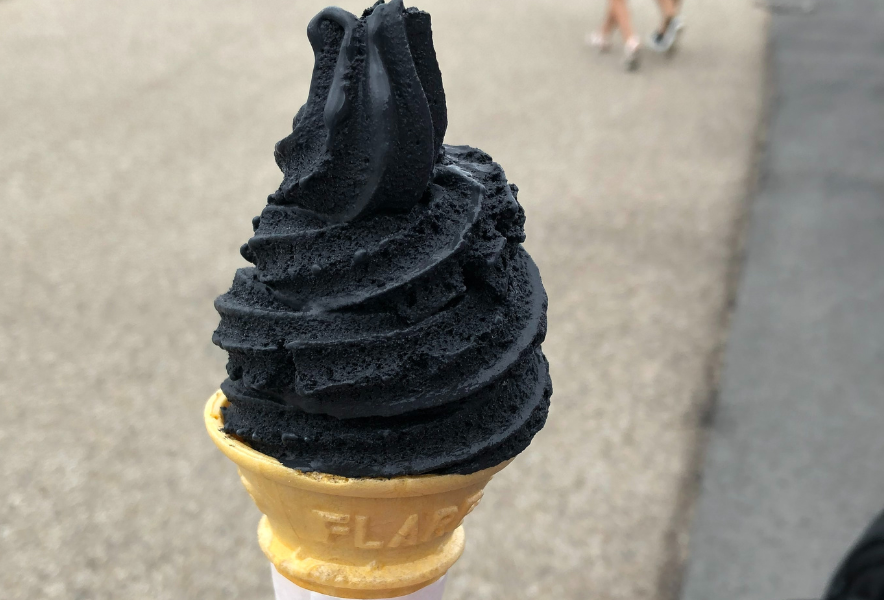
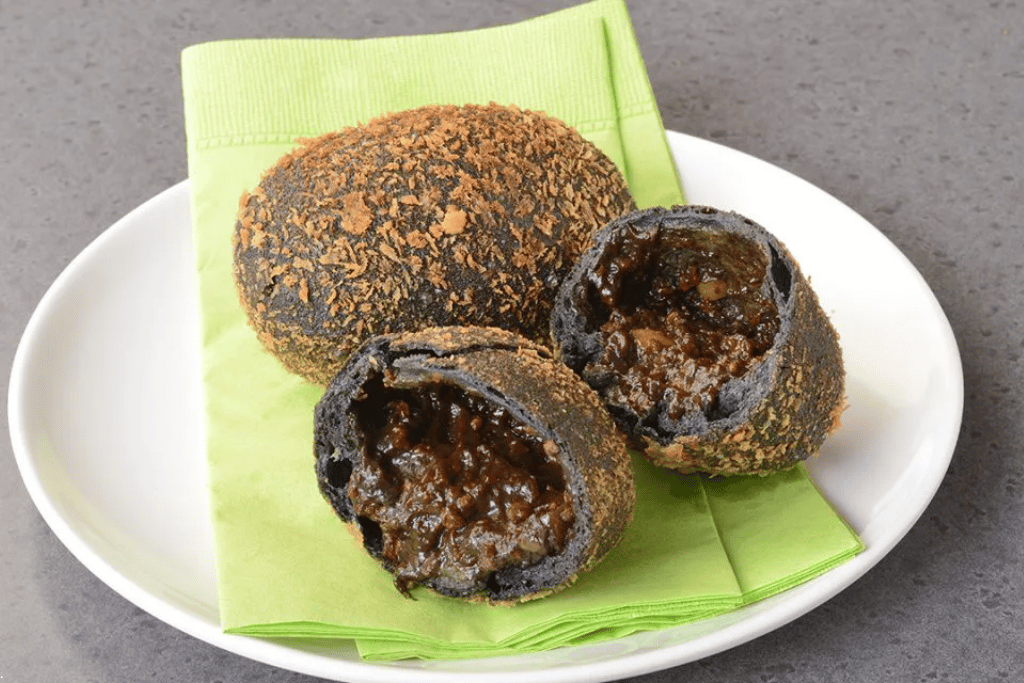
Image Credits: スナック横丁; www.tabiulala.com
Owakudani leans into the black theme, hard. The kiosks sell bamboo-charcoal black soft-serve, egg-shaped manju, black pork buns and black curry bread, plus novelty souvenirs down to egg-scented hand cream. Most of it is fun over delicious, so pick one or two rather than working through the lot. Treat it as a light graze after the eggs, not a full meal.
Hakone Geo Museum
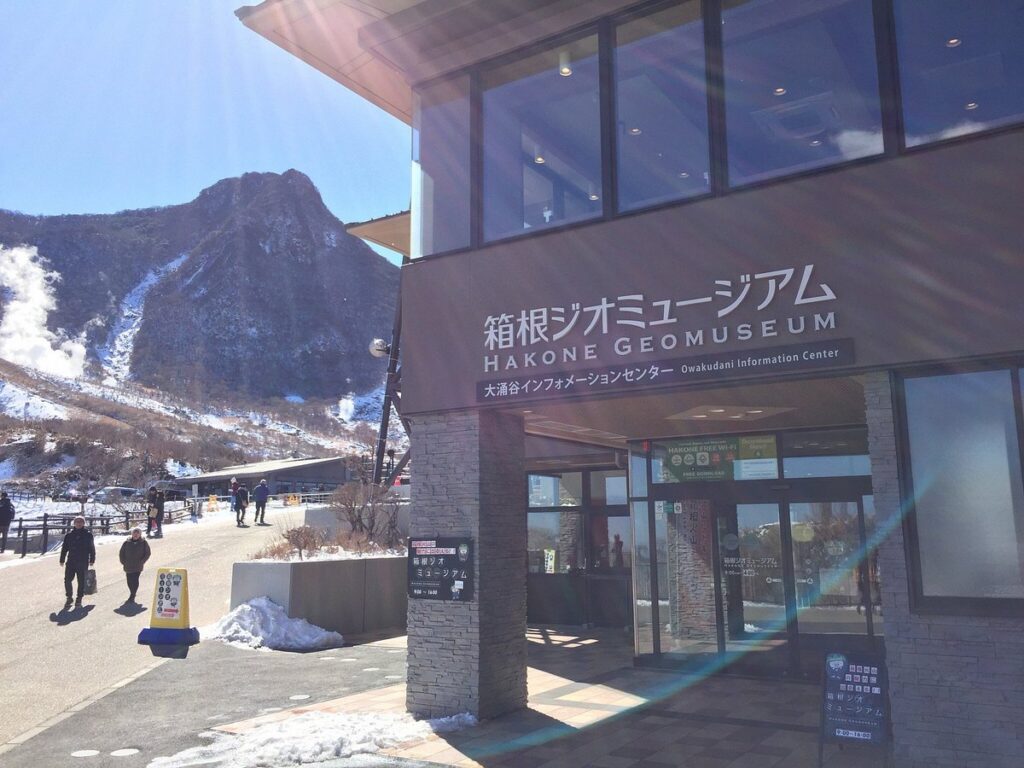
Image Credits: Tripadvisor
The small science stop for the curious. Right by the ropeway station, this compact museum explains the volcanic activity you’re standing on, why the water’s hot and why the eggs go black. It’s a quick, cheap add-on that turns the views into something you understand. Good for kids, and anyone curious how the landscape got this way.
📖 Related Guide: Want to post that Fuji shot the moment you get it? Sort connectivity before you fly with one of the best travel eSIMs.
Lake Ashi and Moto-Hakone
Lake Ashi is the caldera lake at the heart of Hakone, formed by the same ancient eruption, and its southern shore at Moto-Hakone is where the loop’s most photographed sights sit. This is where you cross the water and see the famous torii gate.
The pirate-ship cruise

Image Credits: hfal0324 on rednote
Yes, they’re pirate ships, and yes, you should take one. The Hakone Sightseeing Cruise runs galleon-styled boats across Lake Ashi, and the crossing is covered by the Freepass. On a clear day Mt Fuji floats above the far shore for much of the ride.
You can pay a small upgrade (from around 500 JPY, ~S$4, depending on the route) for the first-class deck at the bow for a better view, but it sells out fast, so decide at the pier. It’s a scenic way down the lake that doubles as a sightseeing stop.
Hakone Shrine and the lake torii
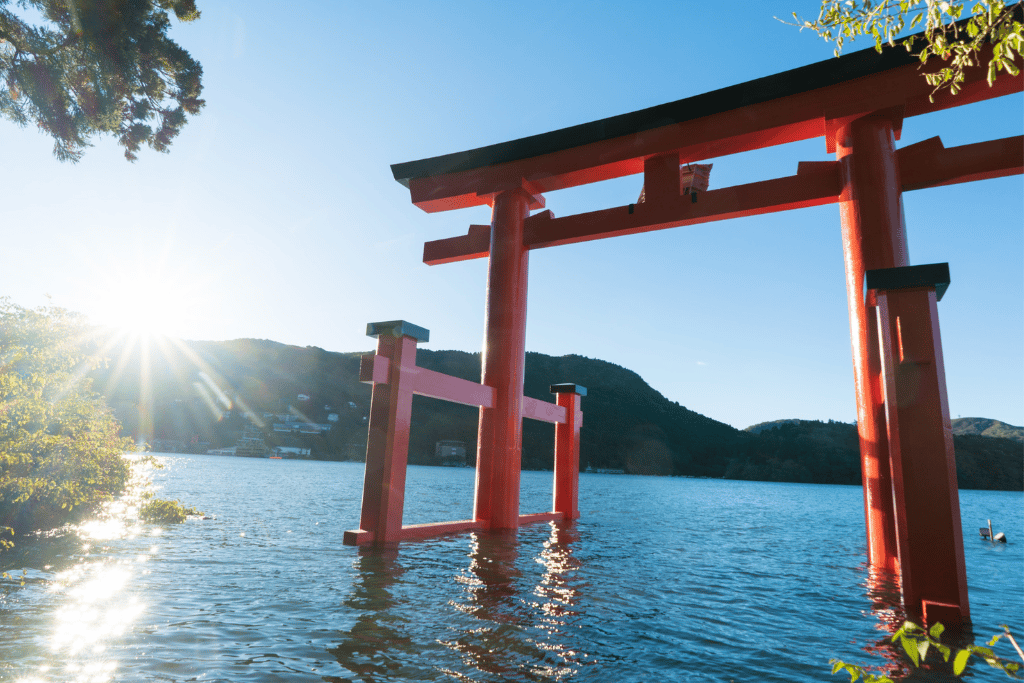
The image that sells Hakone. The vermilion “Peace Torii” of Hakone Shrine stands right in the water at the lake’s edge, with forested paths and stone lanterns leading up to the shrine buildings behind it.
Come early: the queue to photograph the gate can run long by mid-morning. The shrine grounds themselves are free and worth the walk beyond the gate. Best for the photo everyone wants, plus a quiet, atmospheric forest shrine once you’re past the line.
Kuzuryu Shrine
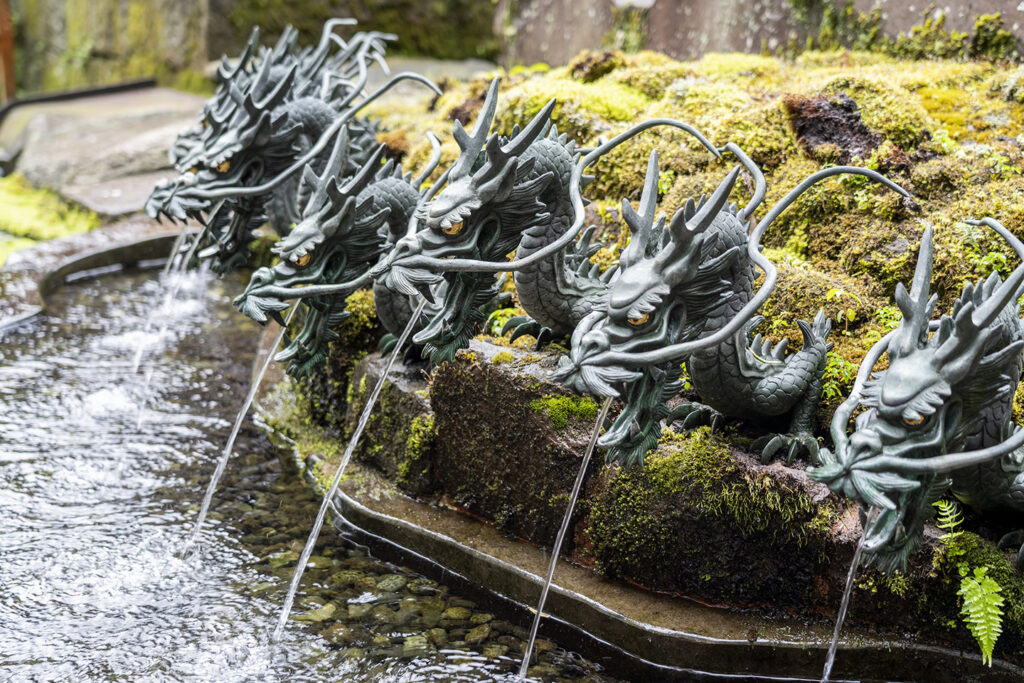
Image Credits: Japan Travel by NAVITIME
The nine-headed dragon, for a quieter moment. Tucked within the Hakone Shrine complex, Kuzuryu is dedicated to a legendary nine-headed dragon said to live in the lake, and it’s a calmer corner away from the torii crowds. It’s a two-minute add-on rather than a destination. A calm add-on for anyone who wants the shrine without the queue.
Hakone Detached Palace
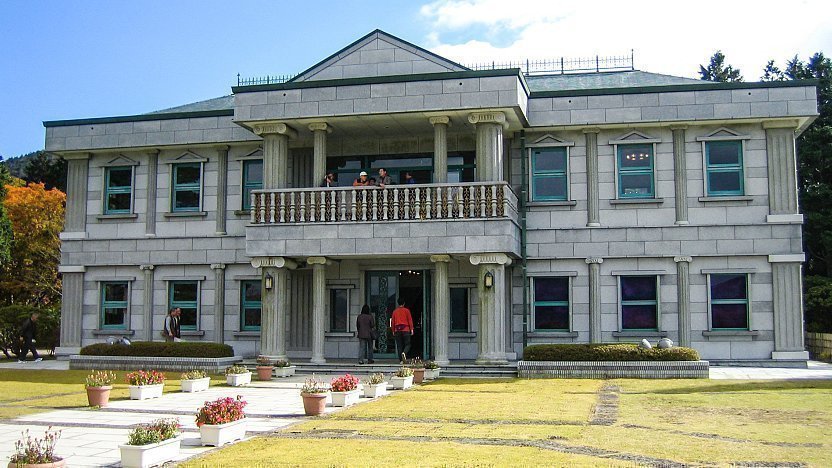
Image Credits: Japan Guide
A free lakeside walk most visitors miss. The Onshi-Hakone Park sits on a small peninsula where a former imperial summer palace once stood, and the grounds are open to the public at no charge. Manicured paths lead to viewpoints over the lake, with Mt Fuji beyond on a clear day. It’s a genuine free win right next to the checkpoint. Come here for a quiet stroll and a Fuji view that costs nothing.
Hakone Checkpoint
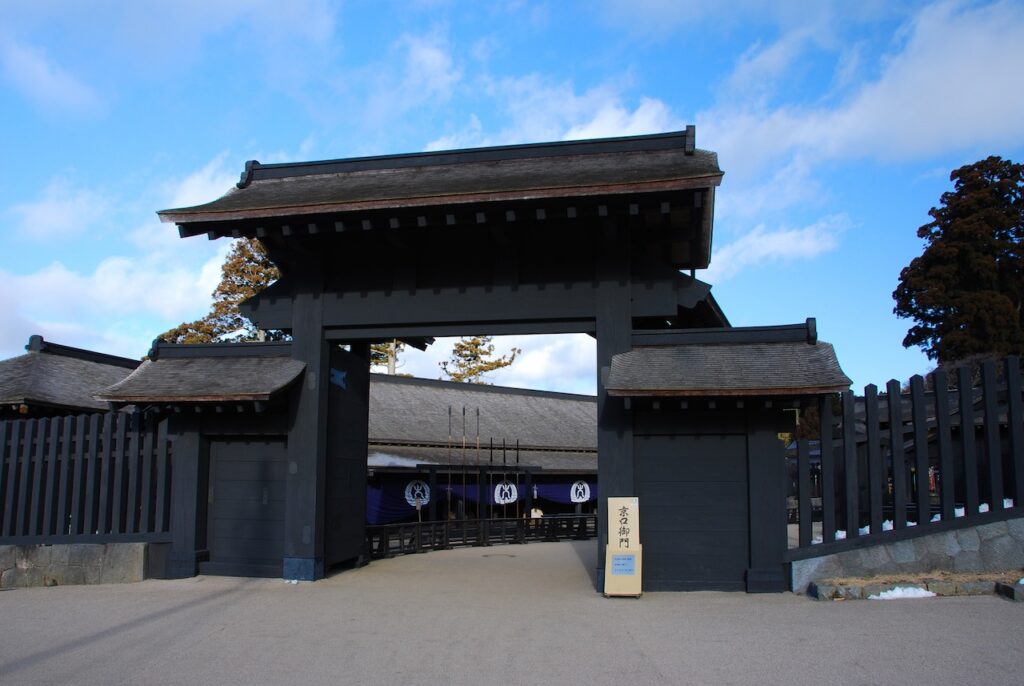
Image Credits: www.hakonenavi.jp
Edo-era history, rebuilt in full. The Hakone Checkpoint controlled traffic on the old Tokaido highway into and out of Edo (now Tokyo), mainly watching for smuggled weapons coming in and the hostage families of feudal lords slipping out.
The 2007 reconstruction rebuilt the gates, guardhouses, prison and armoury exactly, so you walk through what a traveller faced 250 years ago. Best for history buffs; a fair skip if you’re tight on time and not fussed about the Edo period.
The old Tokaido cedar avenue and stone path
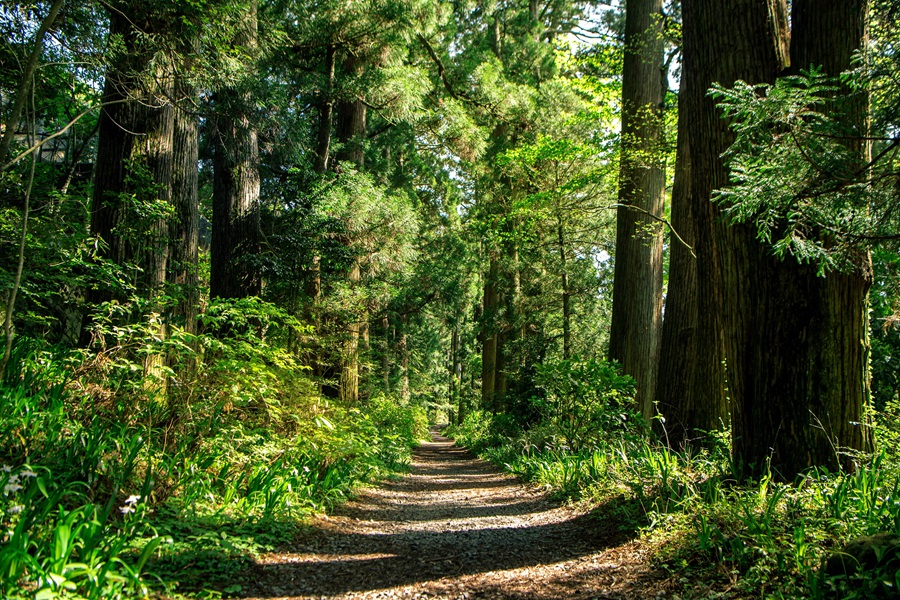
Image Credits: HAKONE TRIP
The atmospheric walk between the big sights. A shaded avenue of cedar trees, many around 400 years old, still lines part of the old Tokaido along the lake, and a preserved stone-paved stretch runs uphill toward Hatajuku. Walking the best section takes roughly 75 to 100 minutes, and it’s flat and easy along the lake before it climbs. One for walkers who’d rather earn the scenery than ride past it.
Amazake Chaya
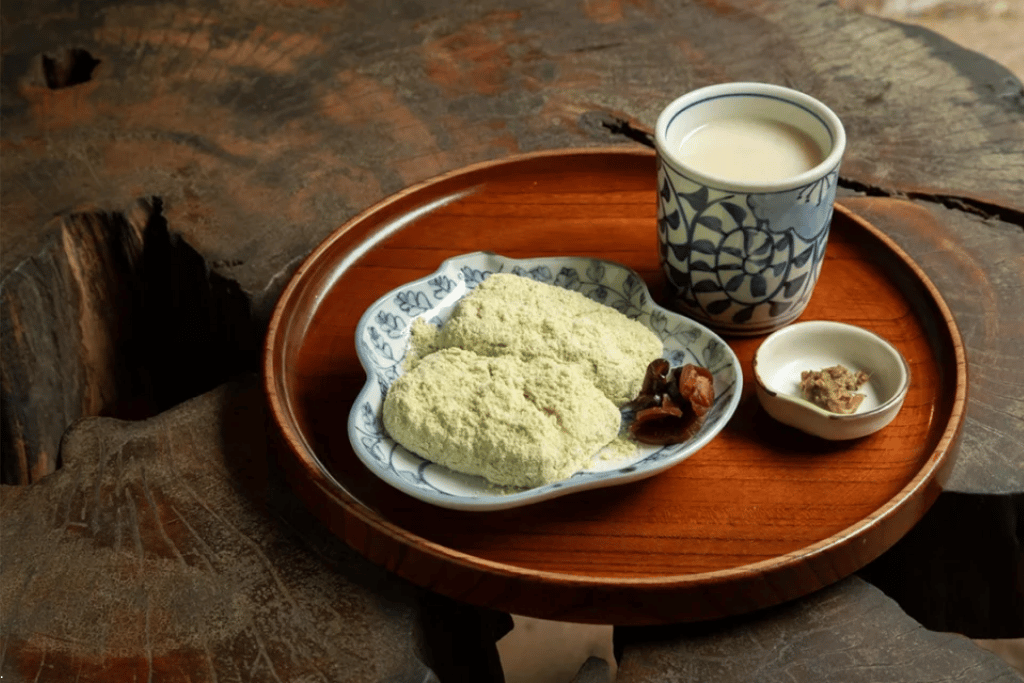
Image Credits: www.tabiulala.com
A 400-year-old tea house that still does one thing perfectly. On the old Tokaido, Amazake Chaya has been serving travellers since the Edo era, family-run across generations. The thing to order is amazake, a warm, sweet, non-alcoholic rice drink (no added sugar, around 400 JPY, ~S$3) that’s perfect after the walk. The thatched-roof room and open hearth are the real draw. A proper old-Japan pause, cash in hand.
📖 Related Guide: Chasing more old-Japan atmosphere on the same trip? Our Kyoto things-to-do guide maps out the original imperial capital.
Hakone Onsen: Ryokan, Day Baths and Tattoo Rules
Hakone is one of Japan’s premier onsen destinations, fed by 17 natural hot springs, so a soak isn’t optional here, it’s the whole idea. You can do it in an hour or make it the reason you stay the night.
Day-use baths without staying over
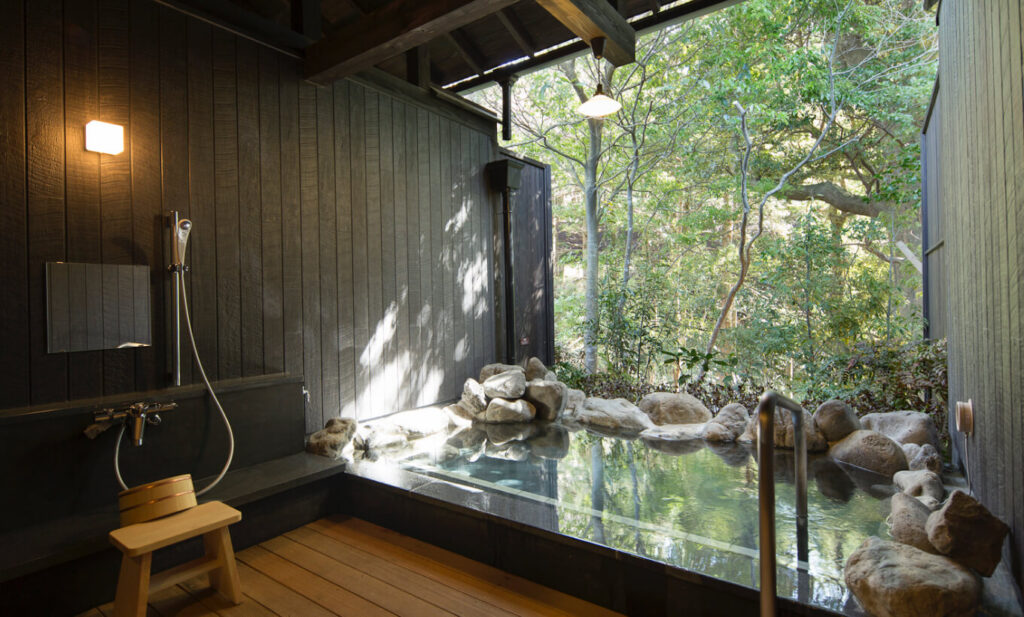
Image Credits: www.hakoneyuryo.jp
You don’t need a room to bathe. Day-use bathhouses let you soak for a few hours for an entry fee, and Hakone Yuryo near Yumoto is the easy pick: forest views, a range of pools, and a free shuttle from Hakone-Yumoto Station.
Tenzan Onsen is another well-regarded option nearby. Entry runs from around 1,700 JPY (~S$14) on weekdays, a little more at weekends.
Best for day-trippers who want the onsen experience without booking a ryokan.
Staying at a ryokan versus a modern hotel
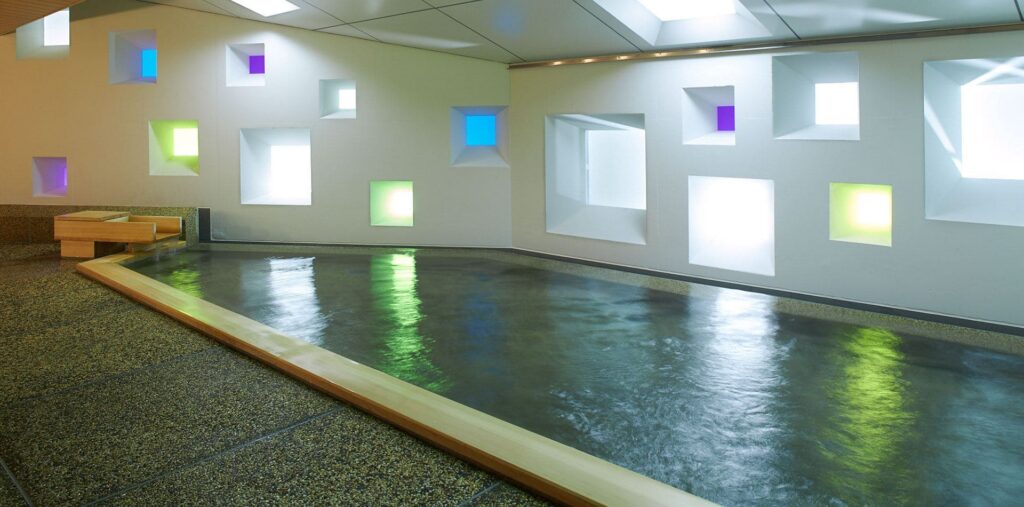
Image Credits: www.hakoneyutowa-hotel.jp
The overnight choice comes down to how traditional you want it. A classic onsen ryokan gives you tatami rooms, a yukata robe, a kaiseki multi-course dinner and often a private open-air bath, at a price.
Modern hotels like Hakone Yutowa in Gora offer the hot-spring baths with a more relaxed, buffet-style stay for less ceremony and usually less money.
Best for: pick the ryokan for a once-a-trip splurge, the modern hotel if you want the soak without the formality.
Private family baths, and the tattoo rule
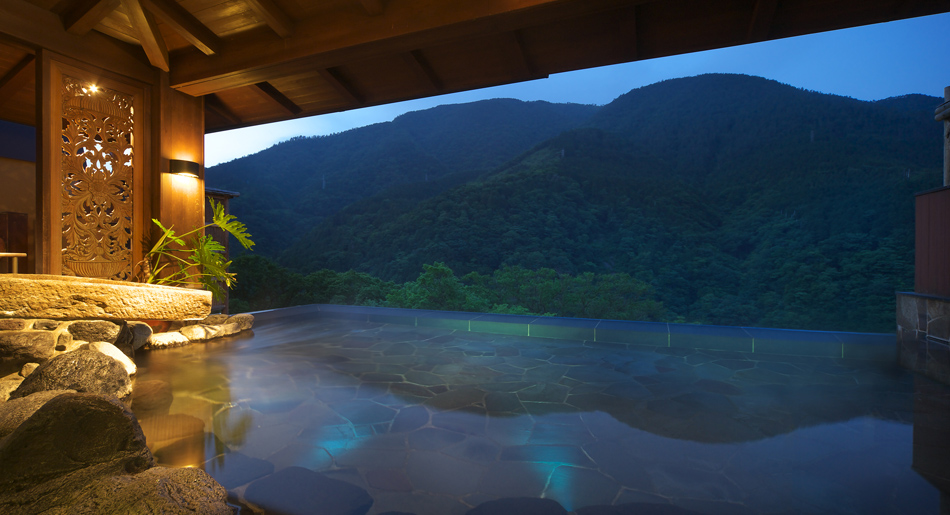
Image Credits: 温泉マイル – JAL
Two things worth knowing before you go in. Many ryokan and bathhouses offer private “kashikiri” baths you can book by the hour, which solve two problems at once: family or couples bathing together, and tattoos.
Most public onsen still refuse guests with visible tattoos, so if you have ink, look for a tattoo-friendly bath or book a private room. You bathe fully naked and wash thoroughly before getting in; that part isn’t negotiable.
Best for families, couples, and anyone a private soak suits better than a communal one.
📖 Related Guide: Rounding out the wider trip with a food city? Our Osaka things-to-do guide covers Japan’s best-value place to eat.
Best Things to Do in Hakone With Kids
Hakone is easier with kids than it looks, because the transport is the entertainment. The pirate-ship cruise, the ropeway over the steam vents and the black eggs at the top (seven extra years of life is a decent sell to a seven-year-old) are all covered above and all reliable kid-pleasers, no extra planning needed.
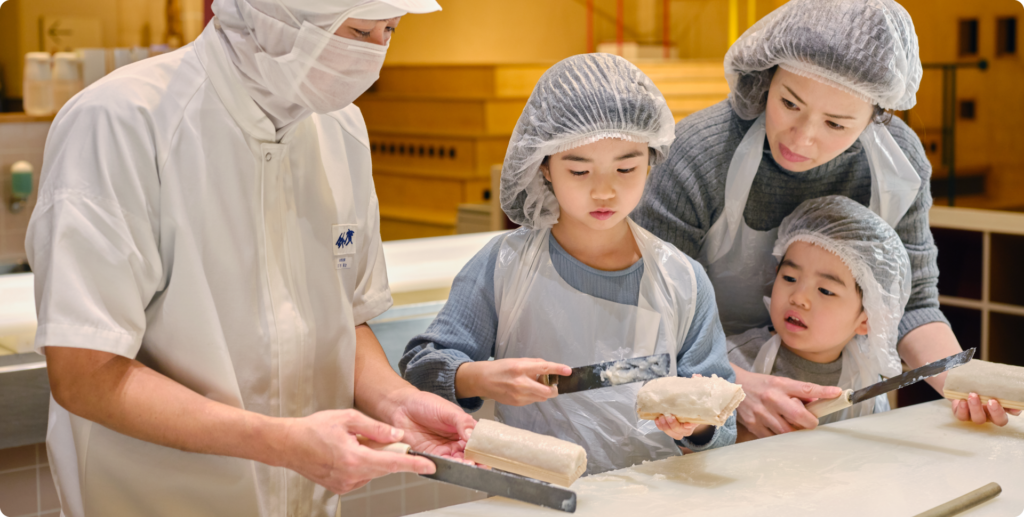
Image Credits: www.kamaboko.com
Two spots are worth singling out for families. The Open-Air Museum has a “Woods of Net” play sculpture and lawns to run off energy, so it lands nothing like a hushed gallery. And on a second day, Odawara Castle’s ninja hall and the Kamaboko Museum’s fish-cake workshop (both in the Odawara section below) are the hands-on wins that turn day two active rather than into another round of temples.
📖 Related Guide: Travelling Japan with children and after more ideas? Our Ghibli Park guide has the booking drill for the Studio Ghibli theme park near Nagoya.
If You Have a Second Day: Odawara
Odawara is the castle town at the foot of Hakone, on the way back to Tokyo, and it’s the natural second-day extension if you stayed over. The Tozan railway and mainline trains connect it in a straightforward hop.
Odawara Castle
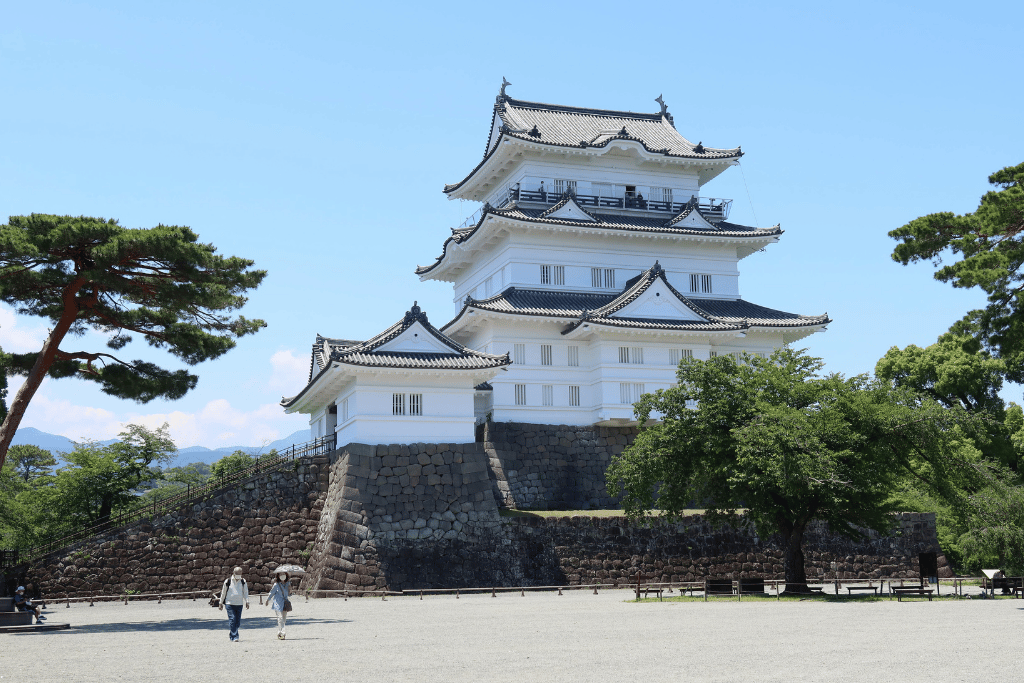
A reconstructed castle with a proper view. Odawara was once a stronghold of the powerful Hojo clan, and the rebuilt keep holds exhibits on its history, a samurai museum and a ninja hall for kids.
From the top floor, the view stretches to Sagami Bay one way and Hakone the other. It’s a modern reconstruction rather than an original, so it’s more day-out than deep history. Easy for families, and anyone who wants a castle without a long detour.
Kamaboko Museum
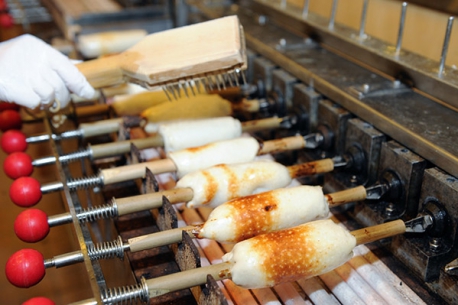
Image Credits: 神奈川県
Make your own fish cake. Odawara is famous for kamaboko (steamed fish cake), and the Kamaboko Museum near Kazamatsuri runs a hands-on workshop where you shape and grill your own chikuwa in about 50 minutes. Most exhibits are in Japanese, but the workshop is the reason to come and it needs no translation. A fun fill for a second morning, families especially.
📖 Related Guide: A packed multi-stop day is exactly what’s worth insuring. Compare cover in our best travel insurance in Singapore guide before you lock the dates.
Is Hakone a Tourist Trap?
No, but parts of it are priced and crowded like one, so it pays to know what’s genuinely worth it and what’s a quick photo stop.
What earns its keep: the ropeway over Owakudani, the Open-Air Museum, an onsen soak (day-use or overnight), and the lake crossing with the torii gate. Those are the reasons Hakone has a reputation, and they hold up. The free wins are real too: the Hakone Detached Palace grounds, the old Tokaido cedar avenue, the shrine grounds beyond the paid queue, and the foot baths dotted along the loop all cost nothing.
What’s overhyped: the black eggs are a ritual, not a great snack, so buy one pack and move on. The Yumoto shopping street is fun but it’s souvenir-standard, not a hidden foodie find. And Mt Fuji itself is a gamble, so don’t build the whole trip around a view that shows up maybe half the time.
The real trap is doing Hakone as a rushed day trip on a busy weekend, then queuing for everything. Go on a weekday, ride the loop one way, and stay a night if you can, and it reads as a highlight rather than a tourist conveyor belt. Best for travellers who plan the pace, not just the stops.
How to Pay in Hakone
Hakone is a mix: card-friendly at the big attractions, cash-only at the small stalls. The smart setup is a fee-free card for everything that takes card, plus a little yen for the rest.
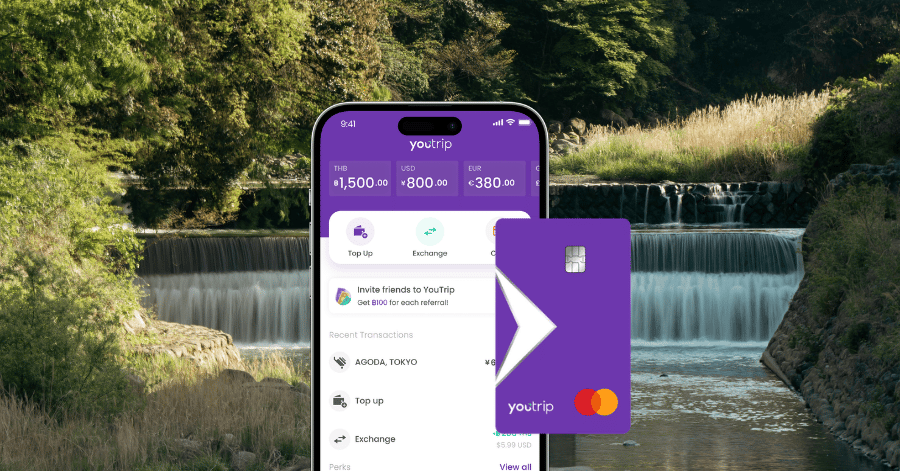
The card is the easy half. The Open-Air Museum takes cards at the gate, the trains, ropeway and Freepass all do too, and most hotels and larger restaurants follow suit. Pay on a YouTrip card and every yen transaction is charged at the Mastercard wholesale exchange rate with 0% foreign transaction fee, billed to your SGD wallet with no markup.
Since the yen is one of YouTrip’s holdable currencies, you can even lock in a rate you like before you fly and top up your JPY wallet in-app. A typical credit card quietly adds around 3% to 3.5% on every overseas swipe, which adds up fast across passes, museum tickets and dinner.
The cash half is the black-egg counter, the Amazake Chaya, the Yumoto snack stalls and the smaller day-use baths, which often take cash only. Withdraw yen from an ATM once you land rather than changing money at a counter back home. With YouTrip, the first S$400 of overseas ATM withdrawals each calendar month is free, then a flat 2% after that, and the allowance resets on the 1st. Japanese convenience-store ATMs (7-Eleven, Lawson, FamilyMart) take foreign cards and are everywhere, including around Hakone-Yumoto.
A money changer looks fee-free but bakes a markup of a few percent into the rate it quotes you, so the ATM-on-arrival route almost always comes out ahead. If you want to compare your options first, our guide to the best multi-currency cards in Singapore lays out the cards that don’t bleed you on FX.
👉 Bottom line: tap your YouTrip card for anything that takes card, pull a bit of yen from an ATM for the stalls, and skip the money changer. For deeper detail, see our Japan ATM withdrawal guide and the SGD to JPY rate guide.
FAQs
Hakone is famous for its onsen (natural hot springs), views of Mt Fuji across Lake Ashi, and the Hakone Loop, a circular route of railway, cable car, ropeway and pirate-ship cruise. It’s also known for the Owakudani volcanic valley and its black eggs, the Hakone Open-Air Museum, and traditional onsen ryokan inns.
Yes, one day is enough for the highlights. You can ride the loop, see Owakudani, Lake Ashi and Hakone Shrine, and fit in the Open-Air Museum before heading back to Tokyo. To enjoy an onsen ryokan, a kaiseki dinner and a slower pace, stay one night and make it two lighter days.
Take the Odakyu Romancecar limited express from Shinjuku direct to Hakone-Yumoto in about 85 minutes. It’s a reserved-seat train, so book ahead; the fare is roughly 2,500 JPY (~S$20) each way including the limited-express surcharge. From Hakone-Yumoto, the Hakone Freepass covers the loop.
For most visitors, yes. The 2-day pass is 7,100 JPY (~S$57) from Shinjuku, and the loop’s individual fares for the ropeway, cable car, buses and boat add up past that in a single day, before the attraction discounts. Buy it as a digital pass on the Odakyu site.
The clearest views come in the colder months, roughly December to February, and early morning or late afternoon. Fuji hides behind cloud far more often than photos suggest, so treat a clear sighting as a bonus. Summer is the haziest season and the least reliable for a view.
Yes, on a clear day. The Hakone Ropeway crosses the Owakudani valley with Mt Fuji framed behind the steam vents, and there’s a viewing platform at the first stop before Togendai. The ropeway can pause for high volcanic gas, strong winds or winter maintenance, when a substitute bus covers the route on your existing ticket.
Hakone winds down early, and that’s the appeal. Most people spend the evening at their onsen ryokan over a kaiseki dinner and a soak once the day-trippers leave. In the rainy season, roughly June to July, the Tozan Railway runs a hydrangea night light-up. Beyond that, the loop’s transport stops running by early evening, so plan to be back near your stay after dark.
Quite a few, once you’ve paid for transport. The shrine grounds and the famous lake torii are free to walk, as are the imperial Detached Palace gardens, the cedar-lined stretch of the old Tokaido, and the foot baths along the route. You’ll still need the Freepass or fares to hop between them, but the sights themselves don’t charge admission.
Hakone Earns the Overnight Stay
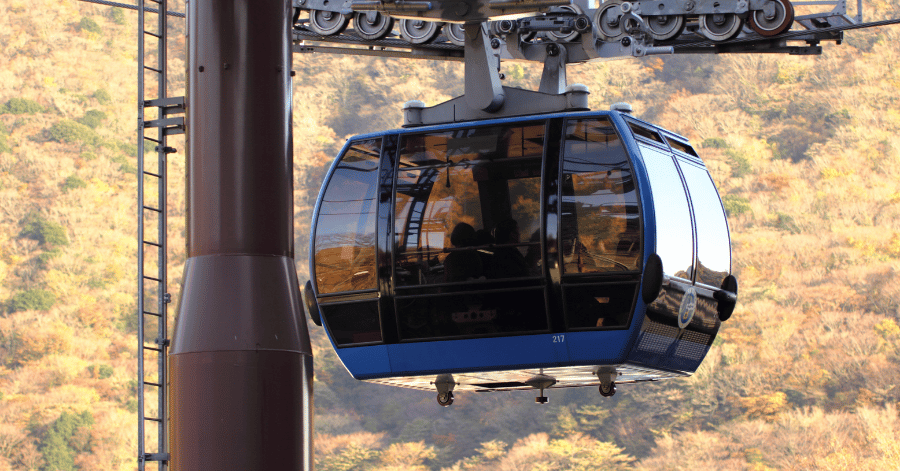
A pirate ship across a volcanic lake, black eggs at a steaming vent, a stained-glass tower you can climb, and a hot-spring soak with Mt Fuji on a good day, all 85 minutes from Tokyo. Hakone does the day trip well and the overnight even better, and once you’ve sorted the pass and the paying, the rest is just riding the loop and turning up.
Not a YouTrooper yet? Sign up with code YTBLOG5 for a free YouTrip card and S$5 in credit. Lock in your rate across 12 currencies and spend in 150+ countries with no foreign transaction fees. Check out the latest YouTrip Perks, join our Telegram for deals, and swap tips in our Community Group.