


An hour south of Tokyo, and centuries back in time
Kamakura is Japan’s medieval capital turned seaside day-trip town: a giant open-air bronze Buddha, temples tucked into wooded hills, a rattling little coastal train, and whitebait bowls eaten within sight of the sea. This guide sorts the must-sees from the skippable, prices it all in S$, and shows you how to pay without feeding the FX fees.
| Quick Planner | Kamakura at a glance |
|---|---|
| ⏱️ Time needed | A day trip, 4 to 6 hours; stretch to two days if you add Enoshima |
| 📍 Where | Kanagawa Prefecture, on the coast just south of Tokyo |
| 🚉 Getting there | JR Yokosuka Line from Tokyo Station, or the Shonan-Shinjuku Line from Shinjuku or Shibuya (~1 hour) |
| 📅 Best time | June to July for hydrangeas, spring for cherry blossoms, summer for the beach |
| 🚋 Getting around | The Enoden coastal railway plus local buses; tap a Suica or Pasmo |
| 💰 Rough cost | Temples run 300 to 500 JPY (~S$3 to S$5) each; a full day out under S$60 |
| 💳 Pay with | Tap your YouTrip card (0% FX); withdraw yen from an ATM for the cash-only stalls |
Things to do in Kamakura (Quick Picks)
| Spot | Area | Cost (~S$) | Best for |
|---|---|---|---|
| Great Buddha (Kotoku-in) | Hase | ~S$3 (+S$0.50 to go inside) | The icon, first-timers |
| Hasedera | Hase | ~S$4 | Hydrangeas, sea views, the giant Kannon |
| Tsurugaoka Hachimangu | Central | Free | Kamakura’s grand main shrine |
| Komachi-dori | Central | Free | Street food and souvenirs |
| Hokoku-ji (Bamboo Temple) | East | ~S$4 (+matcha) | A bamboo grove and a quiet tea |
| Kenchoji | Kita-Kamakura | ~S$5 | Zen temples and hill trails |
| Engaku-ji | Kita-Kamakura | ~S$5 | Quieter Zen, hydrangeas |
| Meigetsu-in | Kita-Kamakura | ~S$5 | The famous hydrangea temple |
| Zeniarai Benten | West | Free | The wash-your-money shrine |
| Slam Dunk crossing + Enoden | Coast | IC fare | Anime fans, coastal railway views |
| Yuigahama / Shichirigahama | Coast | Free | Beaches and Fuji sunsets |
| Enoshima | Coast (add-on) | Varies | Turning the trip into two days |
Table of Contents
- Is Kamakura Worth Visiting?
- How to Get to Kamakura From Tokyo
- Best Things to Do in Kamakura
- Kita-Kamakura: The Quiet Zen Temples
- The Enoden, the Beaches and the Slam Dunk Crossing
- Where to Eat in Kamakura
- Best Time to Visit Kamakura
- How Long Do You Need in Kamakura?
- Paying in Kamakura: Cash, Cards and the Yen
- Kamakura Rewards the Slow Wander
- FAQs
Is Kamakura Worth Visiting?
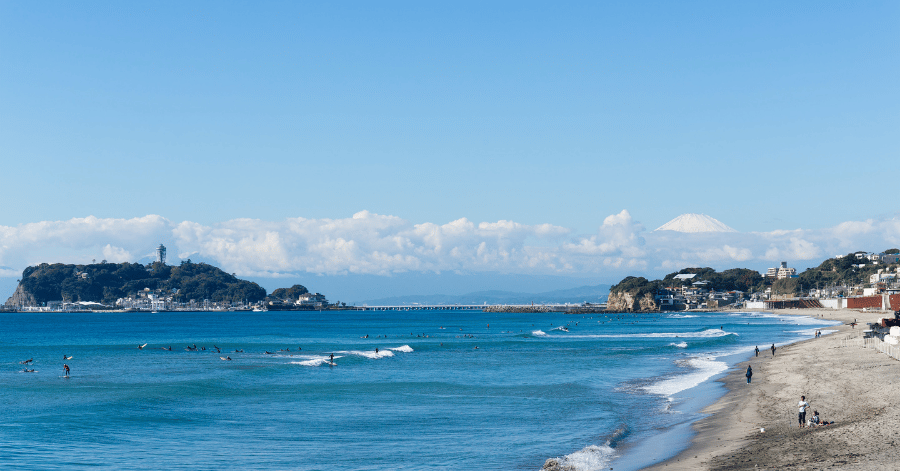
Yes, and it’s one of the easiest good decisions you’ll make out of Tokyo. Kamakura was the seat of Japan’s first shogunate from 1185 to 1333, and that history left it with dozens of temples and shrines packed into a small, walkable town that happens to sit on a surfy stretch of coast.
Think of it as the Kyoto of eastern Japan, only smaller, by the sea, and an hour from the capital rather than a bullet train away. You get the big-ticket sights (a national-treasure Buddha, an 800-year-old shrine) plus a slower coastal side: an old green train, beach cafes, and hills you can hike. It isn’t a hidden gem, so weekends get busy, but it’s the rare day trip that suits temple-hunters, beach loungers and anime fans in equal measure.
📖 Related Guide: Chasing old-Japan atmosphere on the same trip? Our Kyoto things-to-do guide maps out the original imperial capital.
How to Get to Kamakura From Tokyo
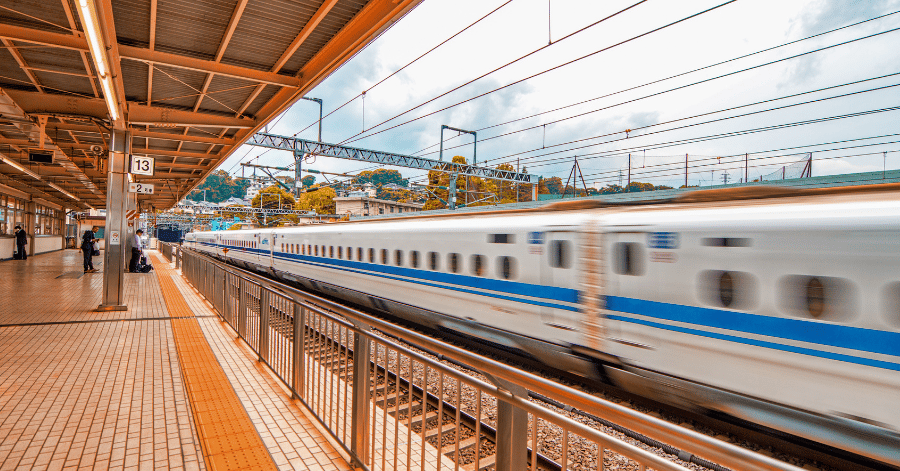
Kamakura is about an hour south of central Tokyo by train, and you don’t need a bullet train or a reservation. Two ordinary JR lines get you there for around 1,040 JPY (~S$9) each way.
- From Tokyo Station: the JR Yokosuka Line runs direct to Kamakura Station in roughly 55 minutes to 1 hour. It passes through Yokohama and Kita-Kamakura on the way.
- From Shinjuku or Shibuya: the JR Shonan-Shinjuku Line runs direct to Kamakura, also about 1 hour. Check the destination, as some services split, so board a carriage bound for Kamakura or Zushi.
Once you arrive, the layout is simple. The east exit of Kamakura Station leads to Komachi-dori and the main shrine. The west exit is where you pick up the Enoden, the century-old coastal railway that links the temples in Hase to the beaches and Enoshima. Tap in with a Suica or Pasmo IC card, and you can hop the trains and buses all day without buying paper tickets.
If you’re deciding whether a nationwide rail pass is worth it for a wider Japan trip, a Kamakura day trip on its own doesn’t justify one. Our guide below has the maths. And it’s worth sorting a card that earns on the flights over before you go, since long-haul fares are where the points add up fastest with the best miles credit cards in Singapore.
📖 Related Guide: Planning a bigger Japan loop by rail? Our JR Pass guide breaks down the 2026 prices and whether it still pays off.
Best Things to Do in Kamakura
Start with the headline temples and the main shrine, all within the central and Hase areas, then work out to the coast. These are the sights worth your time, in the rough order most first-timers do them.
Great Buddha (Kotoku-in)
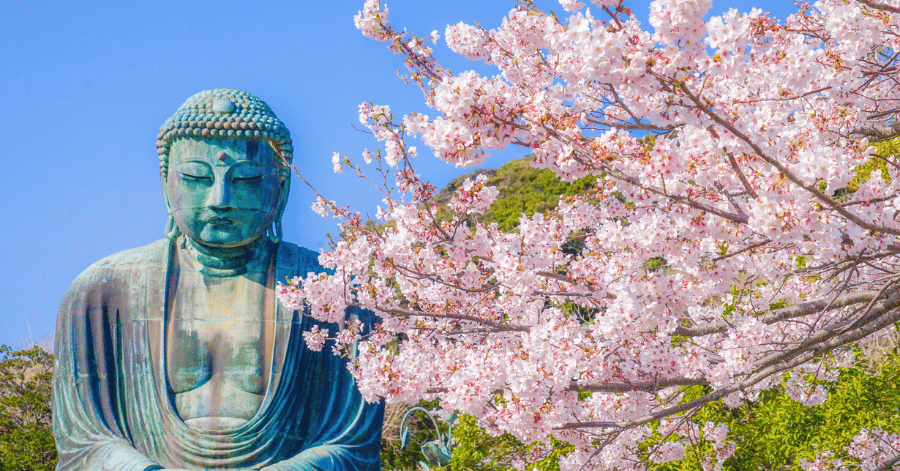
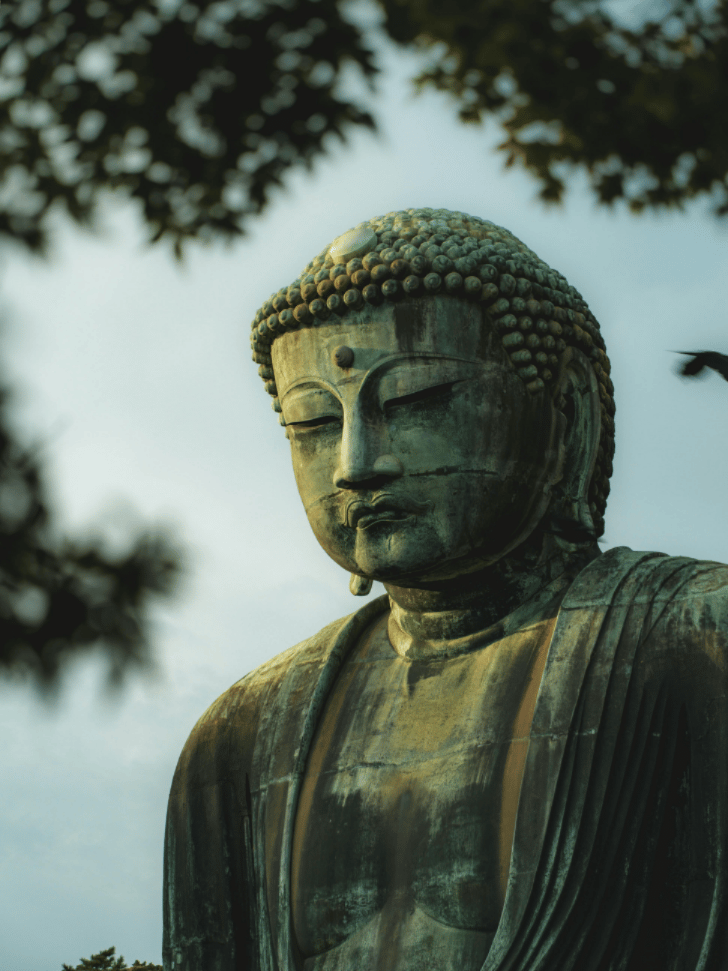
This is the one everyone comes for, and it lives up to it. The Great Buddha, or Daibutsu, is a bronze statue of Amida Buddha that has sat in the open air at Kotoku-in temple since the 1200s. It stands about 11 metres tall and is Japan’s second-largest bronze Buddha, after the one in Nara.
The hall that once sheltered it was washed away by a tsunami in the 15th century, so it has weathered the elements out in the open ever since, which is part of the appeal.
One detail worth knowing: for an extra 50 JPY (~S$0.50) on top of admission, you can step inside the hollow statue and see how it was cast. It’s a two-minute novelty, but a cheap one. Go early to beat the coach crowds.
- 📍 Kotoku-in, Hase (Hase Station on the Enoden, ~7-minute walk)
- 🕘 Daily, roughly 8 AM to 5:30 PM (shorter in winter)
- 💰 Around 300 JPY (~S$3); inside the statue another 50 JPY (~S$0.50)
- 💡 Pro tip: pair it with Hasedera five minutes downhill, so you tick both off in one Hase stop.
Hasedera (Hase Kannon)
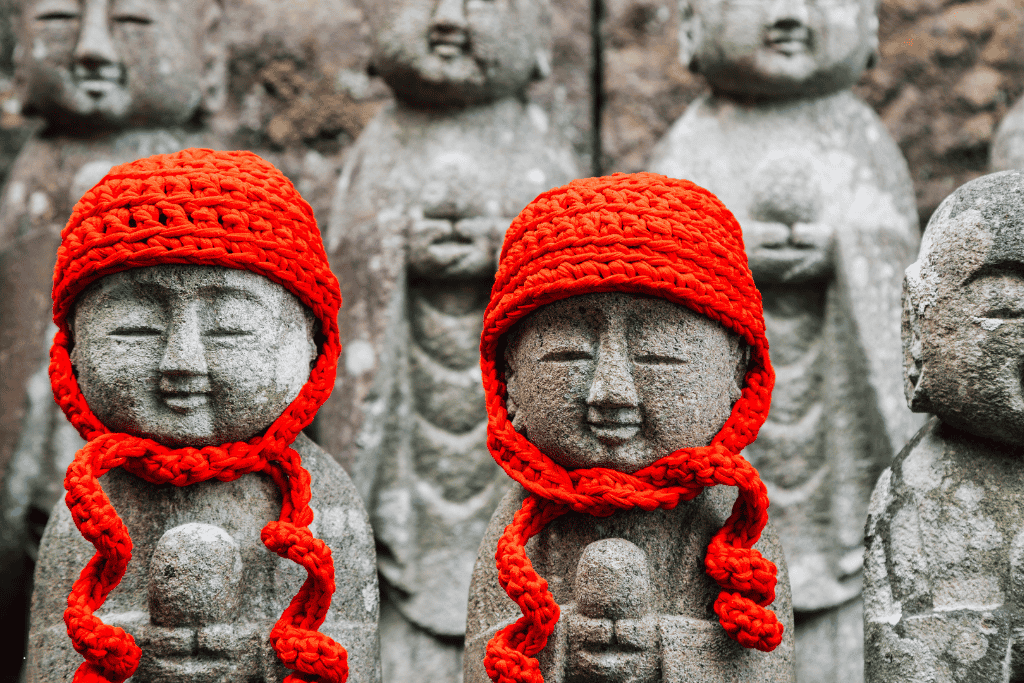
The quieter, prettier half of the Hase pairing, and arguably the better temple. Hasedera climbs a hillside garden of koi ponds and Jizo statues to its main hall. Inside sits a nine-metre gilded wooden Kannon, the goddess of mercy, one of the largest wooden statues in Japan. No photos in that hall, but the walk up is the point.
There’s a small candlelit cave, Benten-kutsu, carved with statues of the goddess Benzaiten, and a viewpoint that opens onto the whole Yuigahama coastline. In June, the hillside “Ajisai Path” fills with thousands of hydrangeas and the queues to walk it get real. Come here if you want sea views and a garden with your temple, not just a monument to tick off.
- 📍 Hasedera, Hase (~5-minute walk from Hase Station)
- 🕘 Daily, roughly 8 AM to 5 PM
- 💰 Around 400 JPY (~S$4) adults, 200 JPY (~S$2) children; cards accepted
- 💡 Pro tip: in hydrangea season, the Ajisai Path runs on a separate timed ticket (around 500 JPY, ~S$4.50, on top of admission). Grab an early slot.
Tsurugaoka Hachimangu
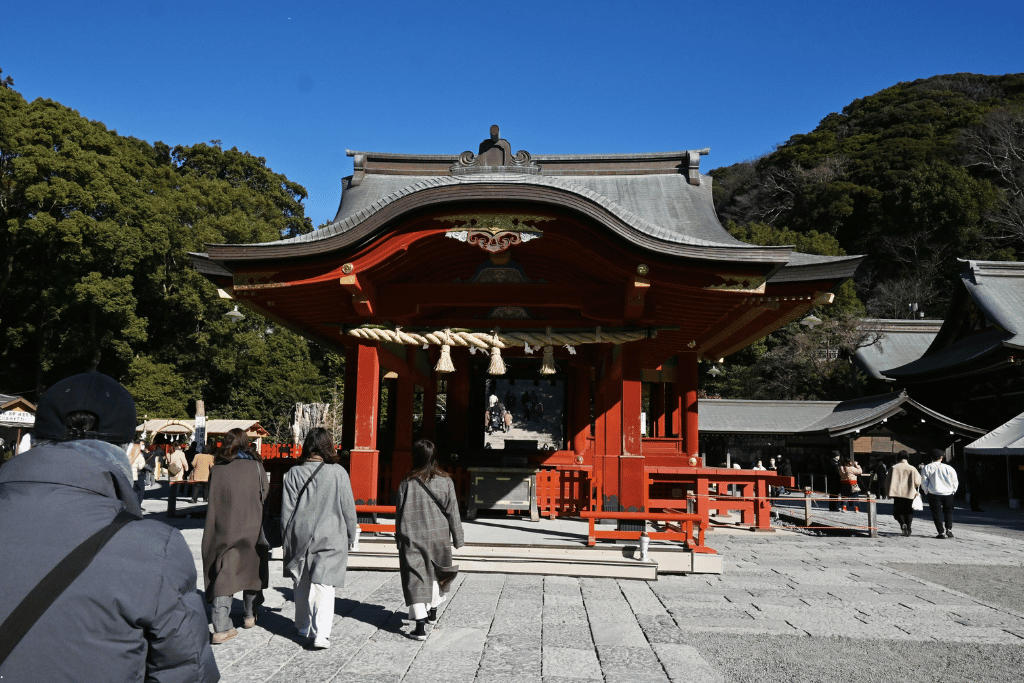
Kamakura’s grand central shrine, and the town’s historical heart. Established on its present site by the first shogun, Minamoto no Yoritomo, it’s dedicated to Hachiman, the god of war. A broad staircase climbs to the main hall, lotus ponds sit either side of the approach, and the wide path in is lined with cherry trees that bloom in spring.
It’s free, it’s central, and it’s a natural start or finish point at the top of Komachi-dori. The wooden prayer plaques here are shaped like ginkgo leaves, a nod to a 1,000-year-old ginkgo that once stood by the steps before a storm brought it down. It makes an easy first orientation, and folds neatly into the walk to or from the station.
- 📍 Top of Komachi-dori, ~10-minute walk from Kamakura Station east exit
- 🕘 Daily, grounds open roughly 6 AM to 8:30 PM
- 💰 Free (the on-site museums charge separately)
Hokoku-ji (the Bamboo Temple)
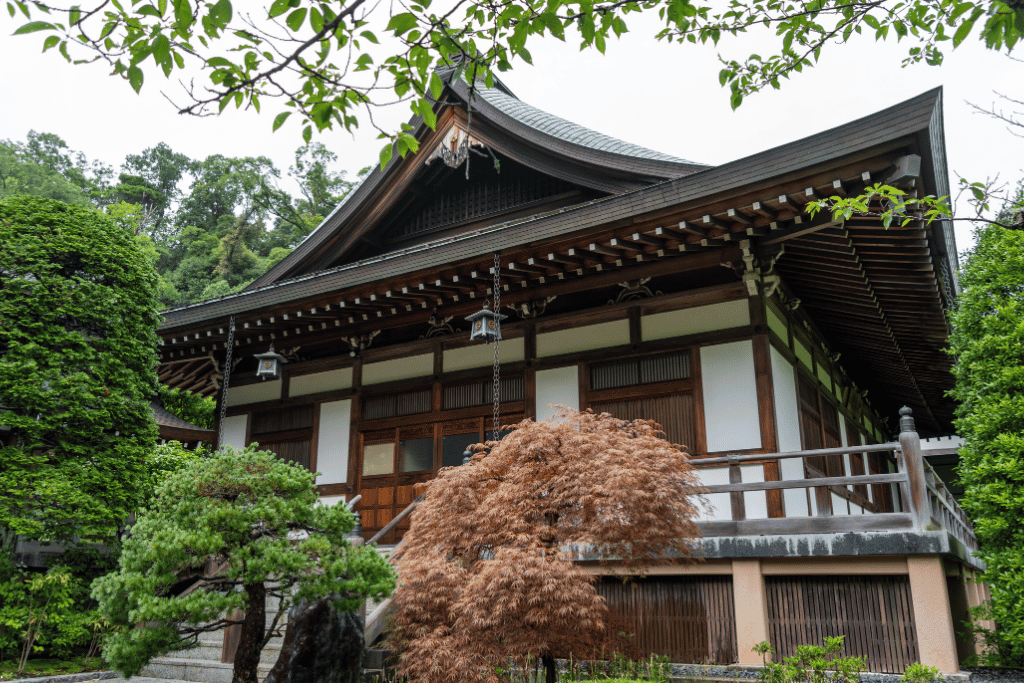
A small Zen temple east of the centre with a grove of around 2,000 bamboo stalks out the back. You can see the main hall for free, but the bamboo garden is the reason to come, and worth the small admission. Paths wind through the stalks to a teahouse where you can sit with a bowl of matcha and a sweet, looking out over the grove.
It’s calmer than the central sights, and the tea stop turns a quick temple visit into a proper pause. Come here to decompress after the Komachi-dori crush; skip it if you’re tight on time and already doing the Kita-Kamakura Zen temples.
- 📍 Jomyoji, east of the centre (~10-minute bus from Kamakura Station, then a short walk)
- 🕘 Daily, roughly 9 AM to 4 PM
- 💰 Around 400 JPY (~S$4); matcha and sweet about 600 JPY (~S$5.50) extra
Zeniarai Benten
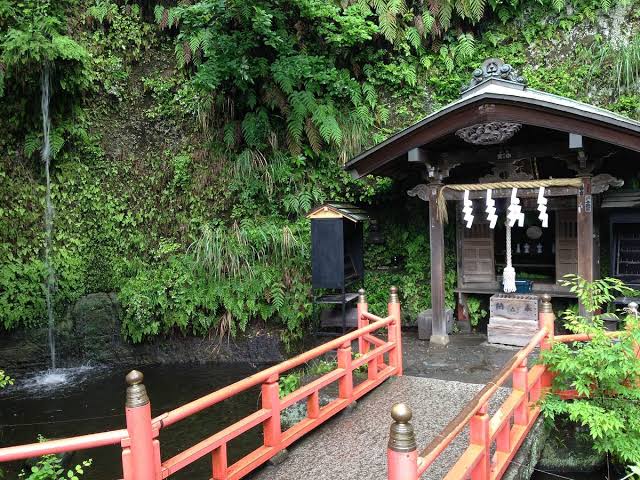
Image Credits: Tripadvisor
The one where you wash your money. You reach Zeniarai Benzaiten through a rock tunnel cut into a hillside on the west side. Inside, visitors rinse coins and notes in a cave spring, in the belief the money comes back multiplied. Whether or not it works, it’s an atmospheric spot, with a koi pond, incense and rows of torii.
There’s no train station nearby, so it’s a 20 to 25-minute uphill walk from the centre or a short taxi. Just over the hill, the vermilion fox statues and tunnels of Sasuke Inari Shrine make an easy add-on. Together they reward travellers who like a shrine with a ritual to do, rather than one to just look at.
- 📍 Sasuke, west Kamakura (~20 to 25-minute walk from the station)
- 🕘 Daily, roughly 8 AM to 4:30 PM
- 💰 Free (small change useful for the washing baskets and incense)
📖 Related Guide: Making a wider circuit of Japan’s cities? Our Osaka things-to-do guide covers the country’s best-value food city.
Kita-Kamakura: The Quiet Zen Temples
Get off one stop early at Kita-Kamakura Station, and you land in the town’s Zen heartland, where the big meditation temples sit among the hills. It’s calmer than the Great Buddha side, and it’s the better starting point if you want to walk south into town rather than fight the crowds coming the other way.
Kenchoji
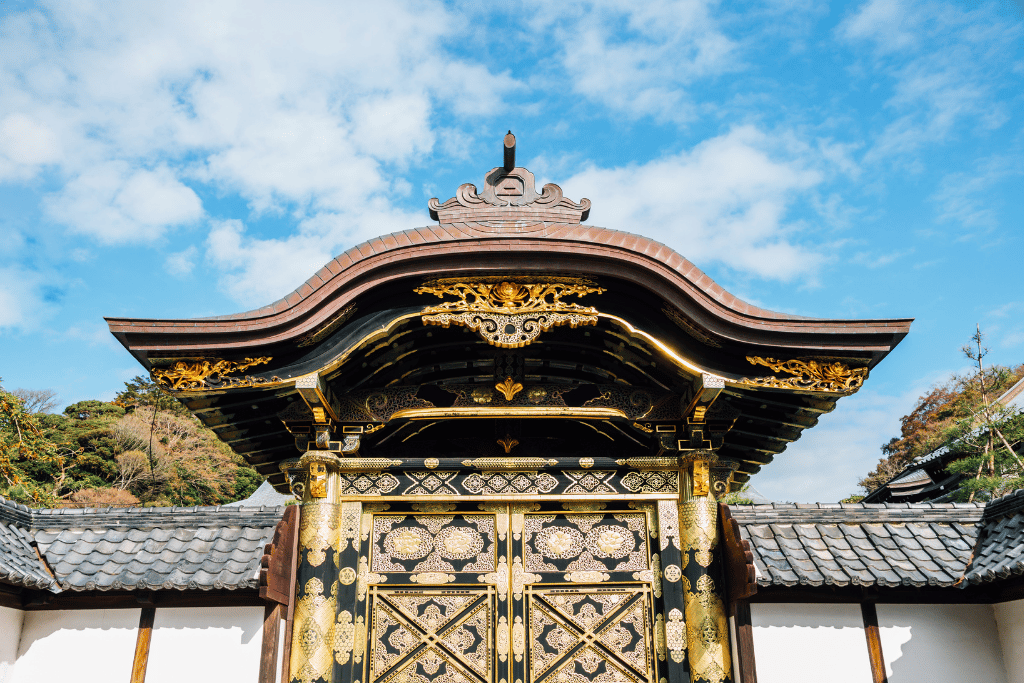
Japan’s oldest Zen training monastery, founded in 1253 and ranked first of Kamakura’s five great Zen temples. Kenchoji is a long, dignified complex of gates, halls and juniper trees planted from seed by its founding priest. Behind the main buildings, a stone path climbs to a shrine and the start of a ridge trail with views back over the town.
It’s grand rather than flashy, and the hike out the back is a bonus most day-trippers miss. Best for anyone who wants their temples with a side of forest walk.
- 📍 Yamanouchi, Kita-Kamakura (~15-minute walk from Kita-Kamakura Station)
- 🕘 Daily, roughly 8:30 AM to 4:30 PM
- 💰 Around 500 JPY (~S$5)
Engaku-ji
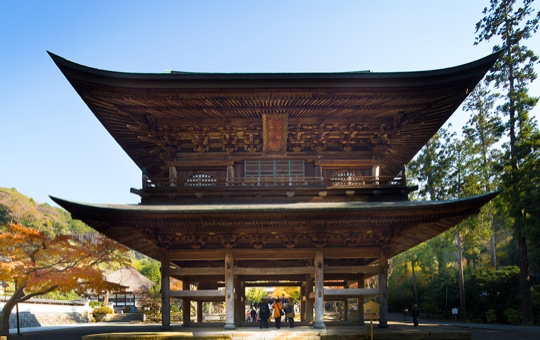
Image Credits: 臨済宗大本山 円覚寺
The second of the five great Zen temples, and the first thing you see stepping off at Kita-Kamakura, its gate rising straight from the platform. Engaku-ji spreads up a wooded valley, with a giant temple bell, a relic hall, and maples that turn in autumn and hydrangeas that bloom in June.
It’s serene and less trafficked than the marquee sights, an easy first or last stop by the station. Give it an hour if you want something slower and more contemplative than the Great Buddha allows.
- 📍 Directly outside Kita-Kamakura Station
- 🕘 Daily, roughly 8:30 AM to 4:30 PM (earlier close in winter)
- 💰 Around 500 JPY (~S$5)
Meigetsu-in
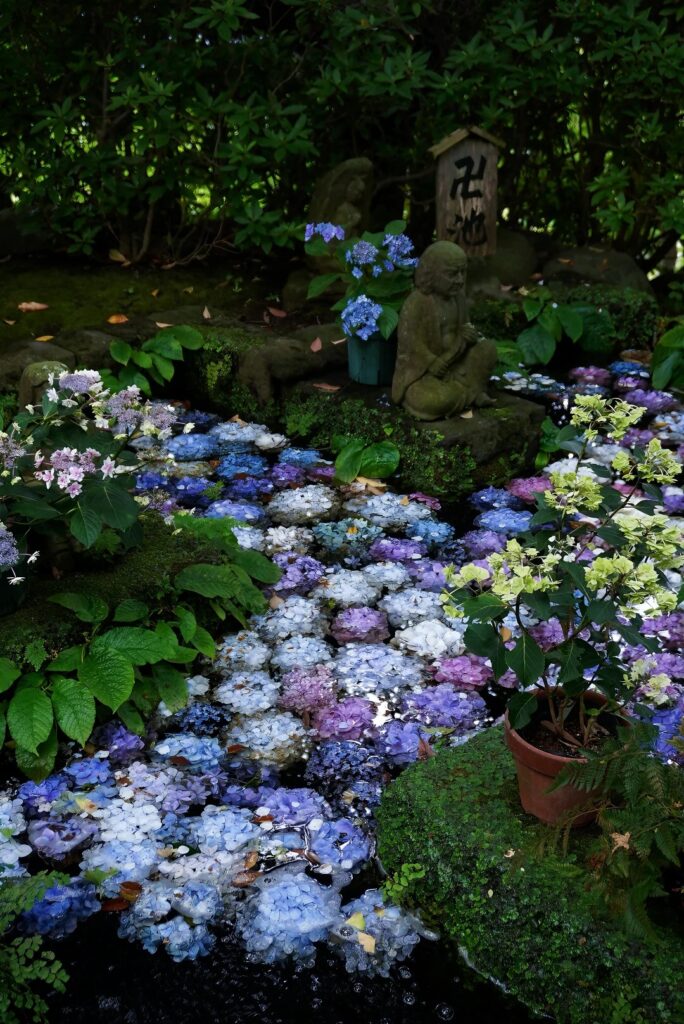
Image Credits: 171233970 on rednote
Known simply as the “hydrangea temple”, Meigetsu-in is small and, for most of the year, quietly pretty. Come in June, and it’s transformed: thousands of predominantly blue hydrangeas line the stone approach, and the round “Window of Enlightenment” frames the rear garden like a living painting.
The flip side is that June is when everyone else comes too, so go at opening or expect a queue. Outside hydrangea season, it’s a pleasant, minor stop rather than a must, so time your visit for the flowers if you can.
- 📍 Yamanouchi, Kita-Kamakura (~10-minute walk from the station)
- 🕘 Daily, roughly 9 AM to 4 PM (extended in June)
- 💰 Around 500 JPY (~S$5); rear garden extra in season
Walk the Daibutsu Hiking Trail
Not a temple, but the best way to link the two sides of town on foot. A forest trail runs from near Jochi-ji in Kita-Kamakura over the hills to the Great Buddha, about 3.5km and an hour or so at a gentle pace. You pass small caves and a couple of quiet shrines, with the odd gap in the trees opening onto a distant Mt Fuji.
It’s laid-back and genuinely off the tourist track, but the path turns to mud after rain, so save it for a dry day and wear proper shoes. One for walkers who’d rather earn the Buddha than bus to it.
📖 Related Guide: Like an easy day trip built around temples and matcha? Our Uji things-to-do guide does the same, just outside Kyoto.
The Enoden, the Beaches and the Slam Dunk Crossing
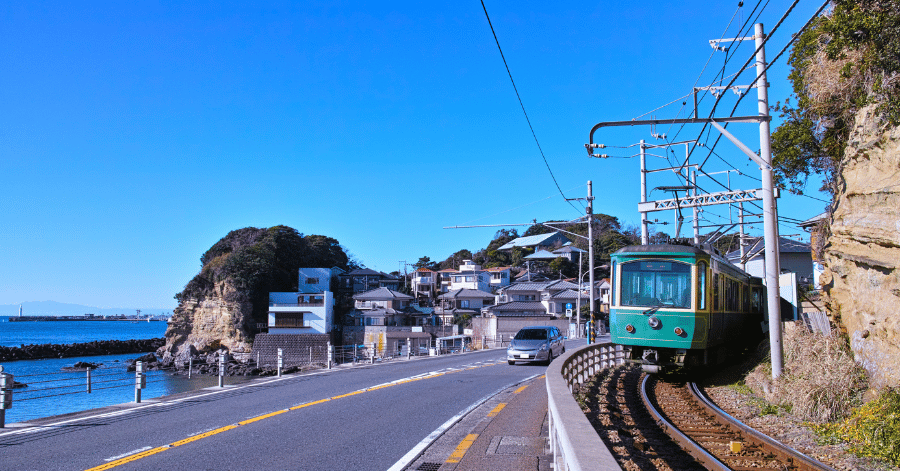
Kamakura’s other half is the coast, and the way to see it is the Enoden. This century-old single-track railway trundles from Kamakura through back gardens and along the shoreline to Enoshima and Fujisawa, and the ride itself is half the fun.
Ride the Enoden

Image Credits: 3892916323 on rednote
The Enoshima Electric Railway, everyone calls it the Enoden, is a small green train that’s been running since 1902. It threads so close to houses you could almost touch the laundry, then bursts out along the sea. Tap a Suica or Pasmo to ride, or grab the Enoden one-day pass (around 800 JPY, ~S$7) if you plan to hop on and off between the temples, the crossing and the beaches.
It’s the way to do Hase, the coast and Enoshima in one go, and the pass pays off once you make three or four hops.
- 📍 Board at Kamakura Station (west exit)
- 💰 IC fare per ride, or a day pass around 800 JPY (~S$7)
The Slam Dunk Crossing (Kamakurakoko-mae)
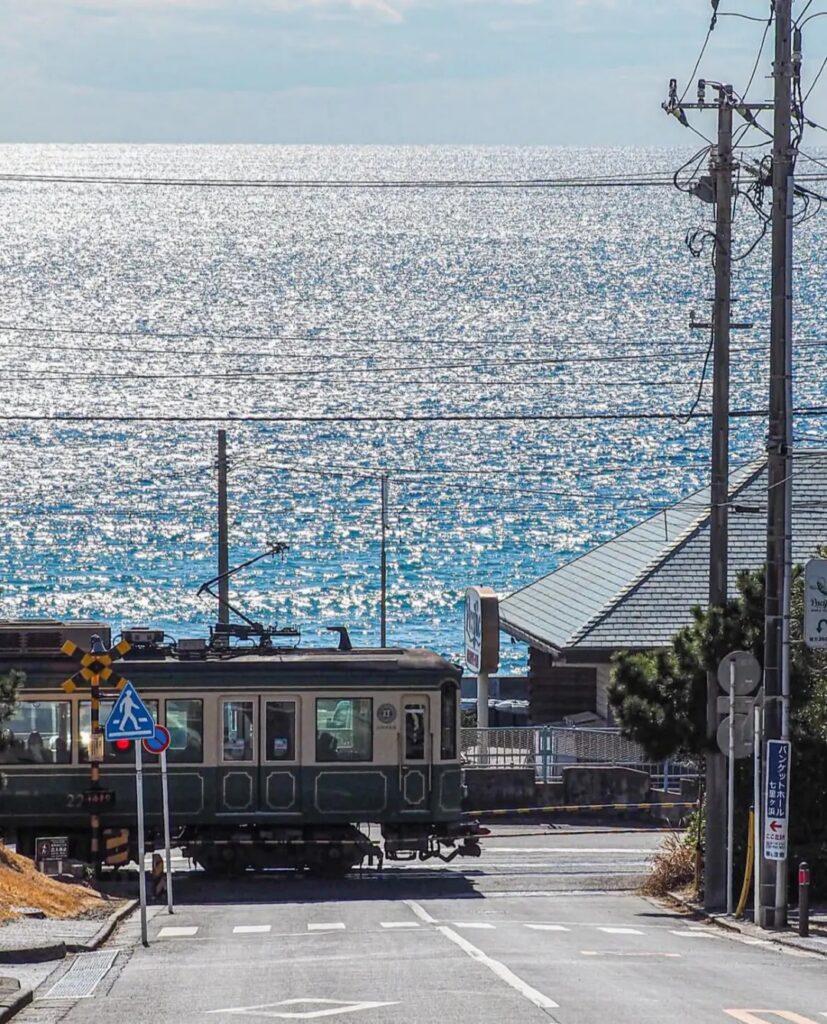
Image Credits: 636852600 on rednote
The railway crossing outside Kamakurakoko-mae Station is the real-life backdrop from the opening of the Slam Dunk anime, and on any given day you’ll find fans lined up to photograph a green train rolling past the sea. The view is better from slightly up the road, where Enoshima floats on the horizon behind the tracks.
It’s a five-minute stop and pure pilgrimage. Skip it if anime means nothing to you, though the sea view earns the hop for anyone chasing that one coastal-railway shot.
- 📍 Kamakurakoko-mae Station (Enoden)
- 💰 Free (Enoden fare to get there)
Yuigahama and Shichirigahama Beaches
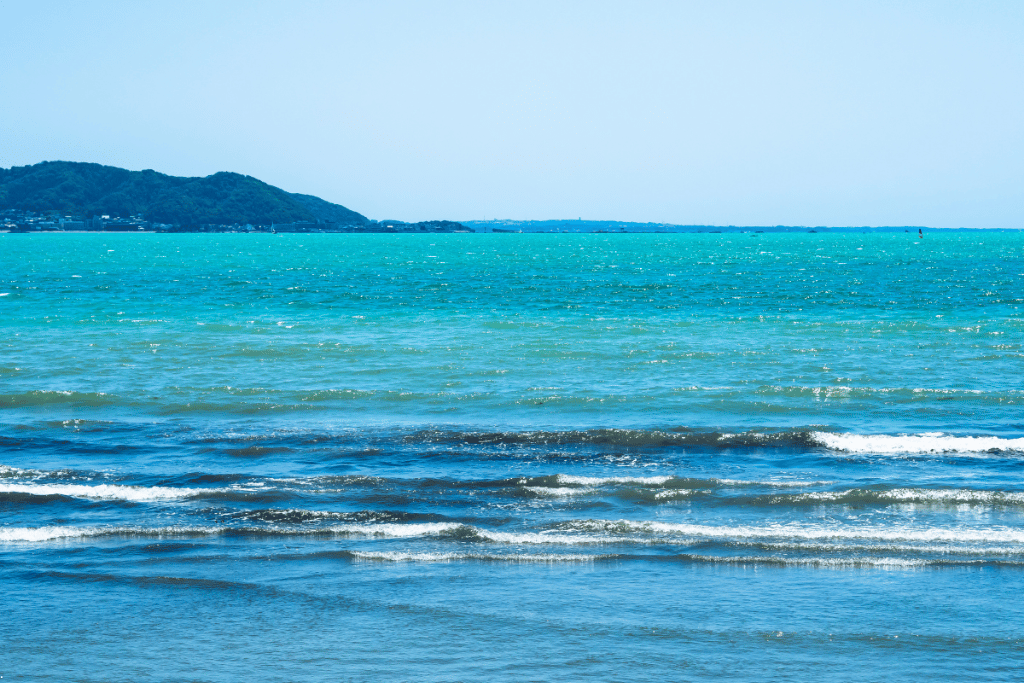
Kamakura has a proper beach scene, not just a view of the water. Yuigahama is the main town beach, a wide arc that fills with beach huts, windsurfers and food stalls through summer. Shichirigahama, a couple of Enoden stops west, is more about the view: a line of cafes looking out to Mt Fuji, best at sunset when the mountain sits black against the sky.
Neither is a tropical swimming beach, and the water is busy in peak summer, but as a place to end the day with a drink they’re hard to beat. Save them for a late-afternoon wind-down after the temples.
Enoshima
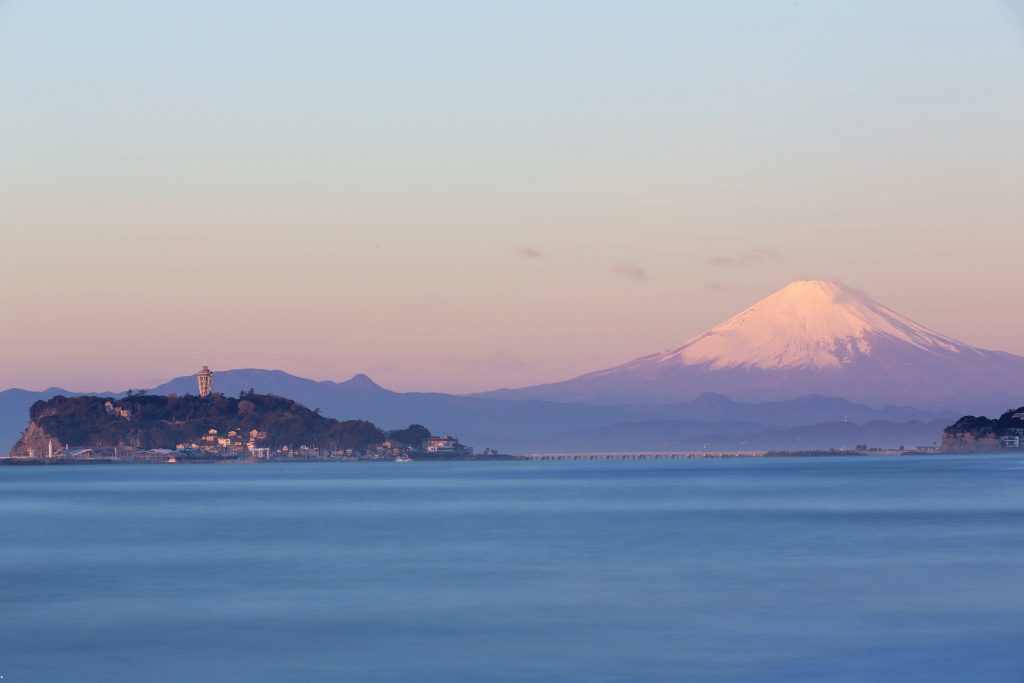
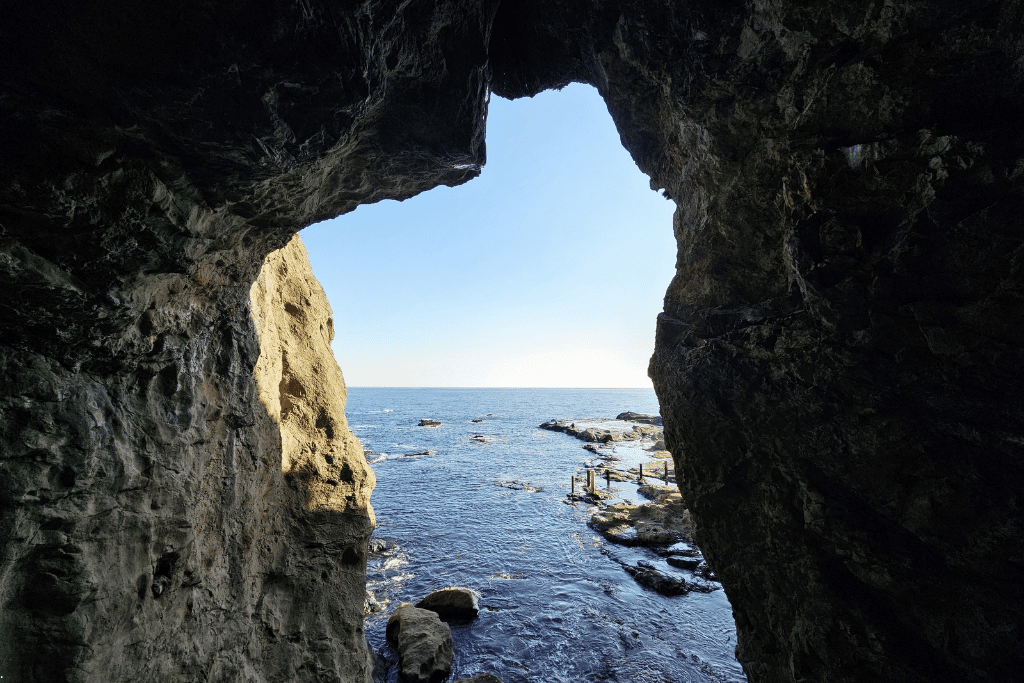
If a single day feels rushed, Enoshima is the reason to stay over. The small island off the coast, a walk across a bridge from Enoshima Station, packs in a shrine to Benzaiten, sea-eroded caves you explore by candlelight (the Iwaya Caves), an observation tower with a full coastal panorama, and a shopping street known for its cats and its grilled seafood.
It’s touristy and hilly, with a fair bit of climbing, but it rounds out the coast beautifully. This is the one to add if you’re turning Kamakura into a relaxed two-day trip rather than a dash. If you want to post the Fuji sunset in real time, sort connectivity before you fly with one of the best travel eSIMs.
📖 Related Guide: More anime pilgrimage on the itinerary? Our Ghibli Park guide has the booking drill for the Studio Ghibli theme park near Nagoya.
Where to Eat in Kamakura
Kamakura eats far better than a day-trip town needs to. There’s the local whitebait, a street built for grazing, and a handful of cafés and restaurants people ride the Enoden out for.
Shirasu (whitebait) rice bowls

Image Credits: 497381855 on rednote
The dish to seek out. Shirasu are tiny whitebait caught off the Shonan coast, served two ways: boiled and soft, or raw as nama-shirasu, silvery and delicate over rice.
Raw shirasu only appears when the boats go out and land a catch, and not at all during the winter fishing ban, so if a shop is serving it fresh, order it. A shirasu-don with a raw egg yolk and a splash of yuzu-pepper soy is the classic Kamakura lunch.
Komachi-dori street food

Image Credits: 11687203174 on rednote
The main shopping street off the station east exit is a grazing run: matcha soft serve dusted in extra powder, purple sweet-potato ice cream, fresh strawberry mochi that squirts when you bite it, senbei crackers grilled on the spot, and Buddha-shaped dorayaki filled with sweet potato. Snacks mostly run 200 to 400 JPY (~S$2 to S$4) each. It’s touristy and heaving on weekends, but the food earns the crowds.
bills Shichirigahama
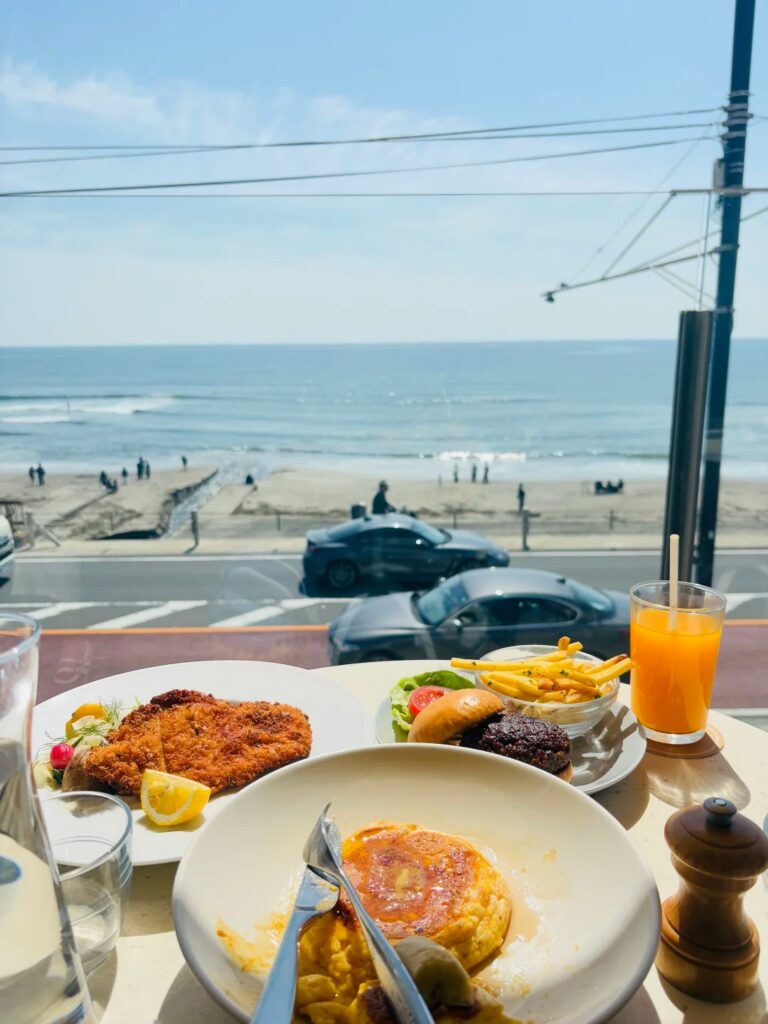
Image Credits: 629309443 on rednote
The oceanfront brunch that put Kamakura on the food map. bills is the original Japan branch of the Sydney café once crowned “the world’s best breakfast”, and its ricotta pancakes still pull a queue, eaten over a wide beach view from the balcony. A few doors down, the open-air Pacific DRIVE-IN does a more casual take on the same idea: açaí bowls, loco moco and Kona coffee facing the sea. Go mid-morning on a weekday to beat the wait.
- 📍 Shichirigahama, ~2-minute walk from Shichirigahama Station (Enoden)
- 💰 Mains and pancakes around 2,000 to 2,800 JPY (~S$18 to S$25)
GARDEN HOUSE Kamakura
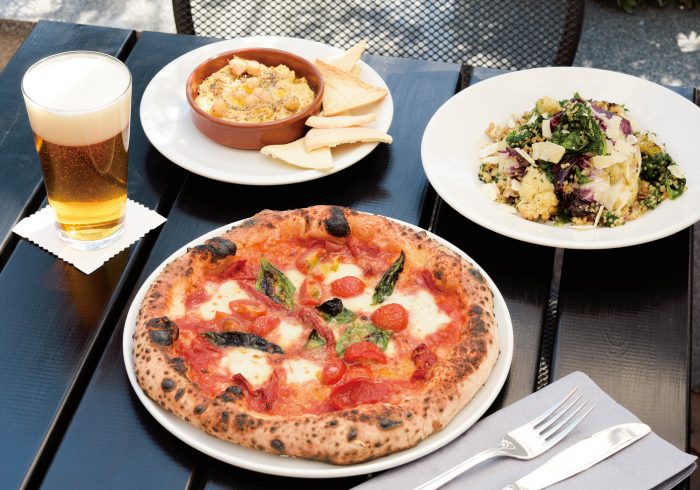
Image Credits: マガジンハウス
A leafy garden-terrace bistro a few minutes west of the station in Onari-cho, set in a 60-year-old former atelier. The kitchen leans California-casual: buttermilk pancakes, wood-fired pizza, house-made Kamakura ham and local craft beer, all eaten out under the trees. It’s the calm, green counterpoint to the Komachi-dori crush, and an easy first or last stop by the station.
- 📍 Onari-cho, a few minutes west of Kamakura Station
- 💰 Brunch and mains around 1,800 to 3,000 JPY (~S$16 to S$27)
Café Yoridokoro
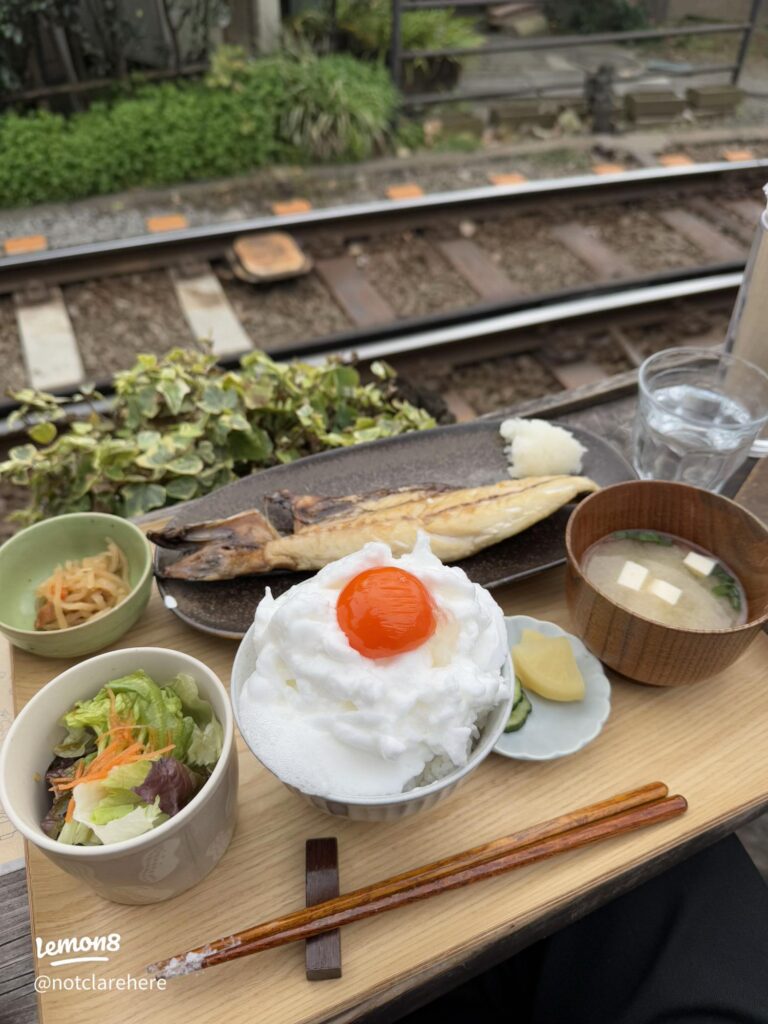
Image Credits: @notclarehere on Lemon8
The best-value, most local pick. Yoridokoro serves home-style grilled-fish set meals, with rice, miso and pickles, in a converted old house right against the Enoden line, so trains rattle past the window while you eat. Add the shirasu topping for the Shonan speciality. Expect a morning queue; it’s earned its place on Kamakura food itineraries.
- 📍 Beside Gokurakuji Station (Enoden)
- 💰 Set meals around 1,000 to 1,800 JPY (~S$9 to S$16)
ATELIER MATCHA
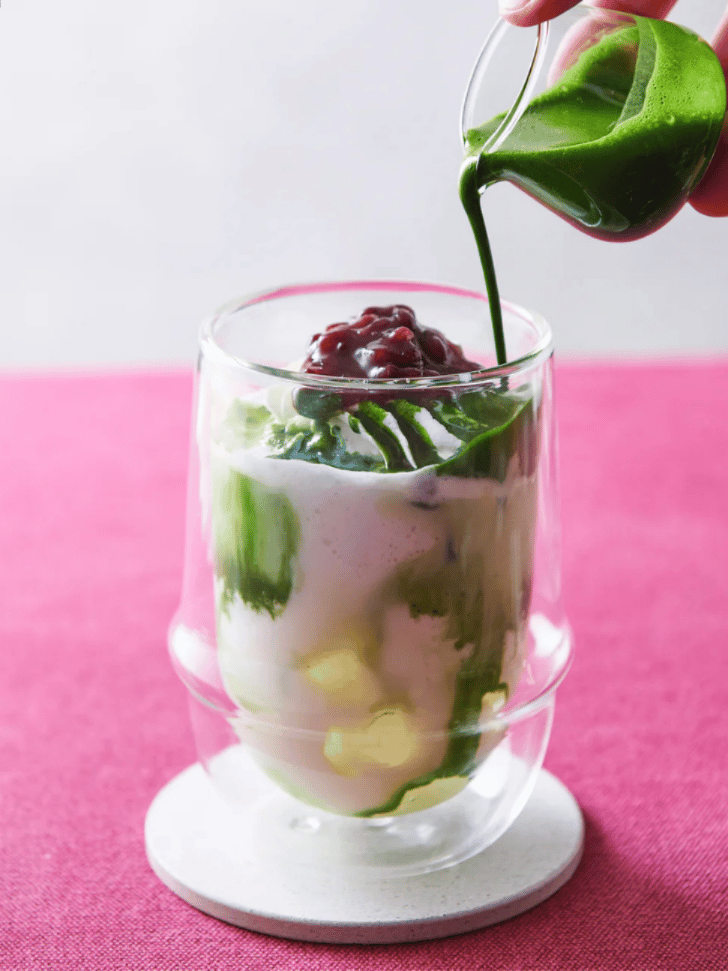
Image Credits: ATELIER MATCHA
The trending matcha stand right by the station. Opened at the end of 2024 by a long-standing Uji tea house, it pours proper stone-milled matcha lattes (dairy or plant-milk) and does Kamakura-only rice-flour sweets. It’s a two-minute walk from the west exit, so it’s an easy grab on the way in or out rather than a sit-down meal.
- 📍 Kamakura Station, west exit
- 💰 Lattes and sweets under around 1,000 JPY (~S$9)
Verve Coffee and a hidden yakitori alley
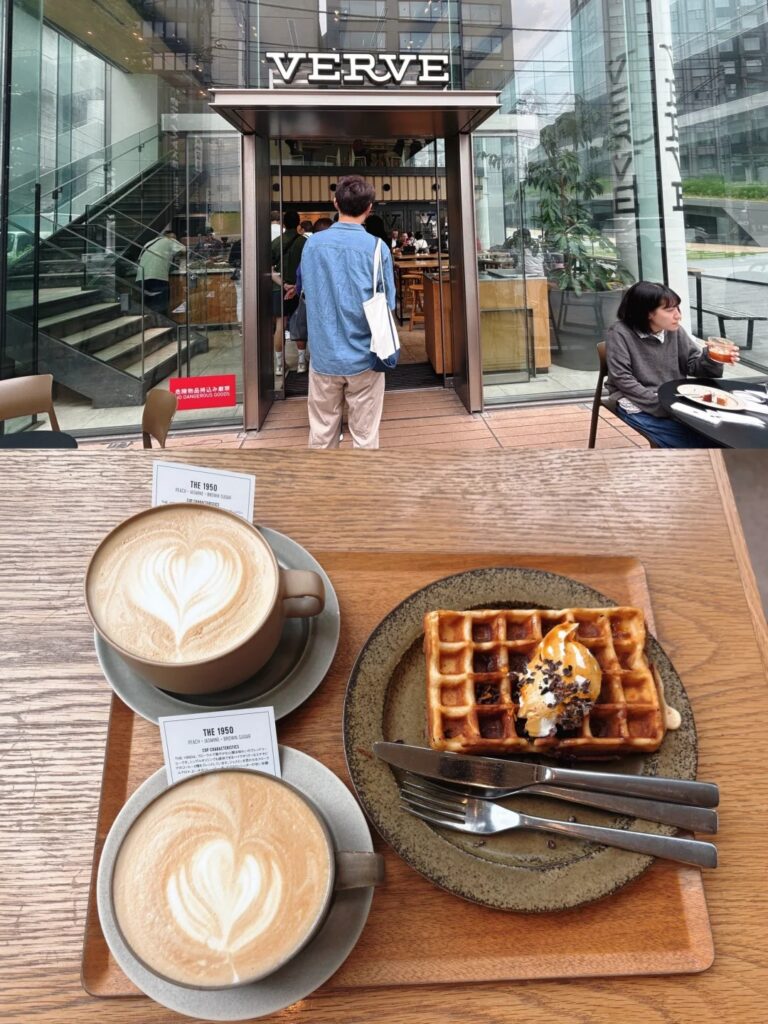
Image Credits: 129969832 on rednote
Two for the caffeine and the evening. Near Kita-Kamakura, Verve Coffee Roasters does proper speciality pour-overs if temple-hopping calls for a reset. And a few minutes south of the station, a 70-year-old back alley of tiny bars and yakitori counters serves grilled skewers to a mostly local crowd, no English menu, all the better for it.
📖 Related Guide: Bringing home more than a full stomach? Our what to buy in Japan guide covers the edible souvenirs and the tax-free rules.
Best Time to Visit Kamakura
Kamakura is a year-round day trip, but two windows stand out. June to mid-July is hydrangea season, when Hasedera, Meigetsu-in and Engaku-ji turn blue and pink, and the town is at its most photogenic and its most crowded. Spring brings cherry blossoms along the approach to Tsurugaoka Hachimangu.
- Spring (March to May): cherry blossoms, mild weather, building crowds.
- Early summer (June to mid-July): peak hydrangeas, humid, rainy-season showers.
- Summer (mid-July to August): beach season at Yuigahama, hot and busy.
- Autumn (November): maples turn at the temples, comfortable walking weather.
- Winter (December to February): cold but clear, the best odds of a sharp Mt Fuji from the coast, and the thinnest crowds.
Whatever the season, go early. Kamakura is close enough to Tokyo that it fills up by late morning, especially on weekends, so a first train in buys you the quiet version of every sight.
📖 Related Guide: Timing the wider trip around blossoms or autumn leaves? Our best time to visit Japan guide breaks it down season by season.
How Long Do You Need in Kamakura?
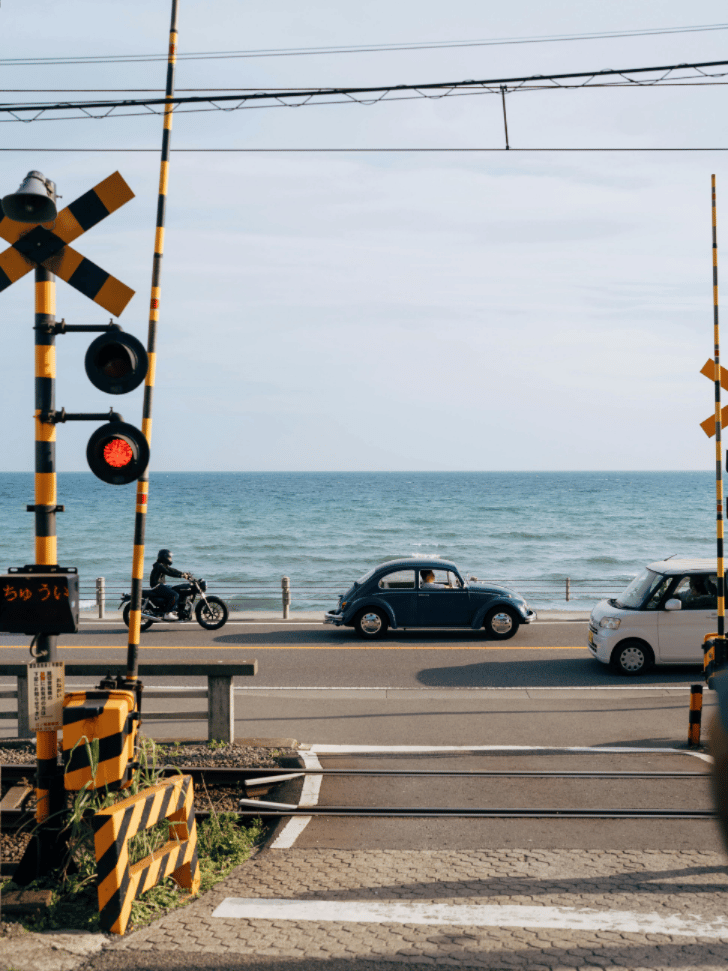
One full day covers Kamakura comfortably. Four to six hours is enough for the greatest hits; a whole day lets you slow down and add the coast.
- Half a day: the Great Buddha, Hasedera and a graze down Komachi-dori. Rushed but doable if you’re back on a Tokyo train by mid-afternoon.
- One full day: add Tsurugaoka Hachimangu, the Kita-Kamakura Zen temples or Hokoku-ji, and finish with a sunset on the coast.
- Two days: fold in Enoshima and stay over, taking the Enoden slowly and doing the beaches properly.
A classic full-day loop, morning to sunset, runs like this:
- Morning: start at Kita-Kamakura for Engaku-ji and Kenchoji (or Meigetsu-in in June), then walk south into town.
- Midday: Tsurugaoka Hachimangu, then graze lunch down Komachi-dori. This is also where to grab a kimono for the day if you fancy one (rentals from around 2,500 JPY, ~S$23).
- Afternoon: ride the Enoden to Hase for the Great Buddha and Hasedera.
- Evening: hop to the Kamakurakoko-mae crossing and finish with sunset at Shichirigahama, or push on to Enoshima.
The single biggest time-saver is not backtracking. Start at Kita-Kamakura, work south through the temples into town, then ride the Enoden out to the coast, so you’re always moving in one direction. And resist over-planning: some of the best of Kamakura is the meandering backstreets between the big sights, full of little shrines, bakeries and streams.
A day mixing hill trails, temple steps and a beach is also exactly the kind of trip worth having cover for, so it’s worth comparing options in our best travel insurance in Singapore guide before you lock in the dates.
📖 Related Guide: Tacking a few Tokyo days onto the trip? Our teamLab Tokyo guide sorts the two digital-art museums so you pick the right one.
Paying in Kamakura: Cash, Cards and the Yen
Japan is more card-friendly than it used to be, but Kamakura still leans cash for the small stuff. Temples, big restaurants and the Enoden pass take cards or IC; street stalls, tiny cafes and the yakitori counters often don’t. The smart setup is a fee-free card for everything that takes plastic, plus a little cash for the rest.
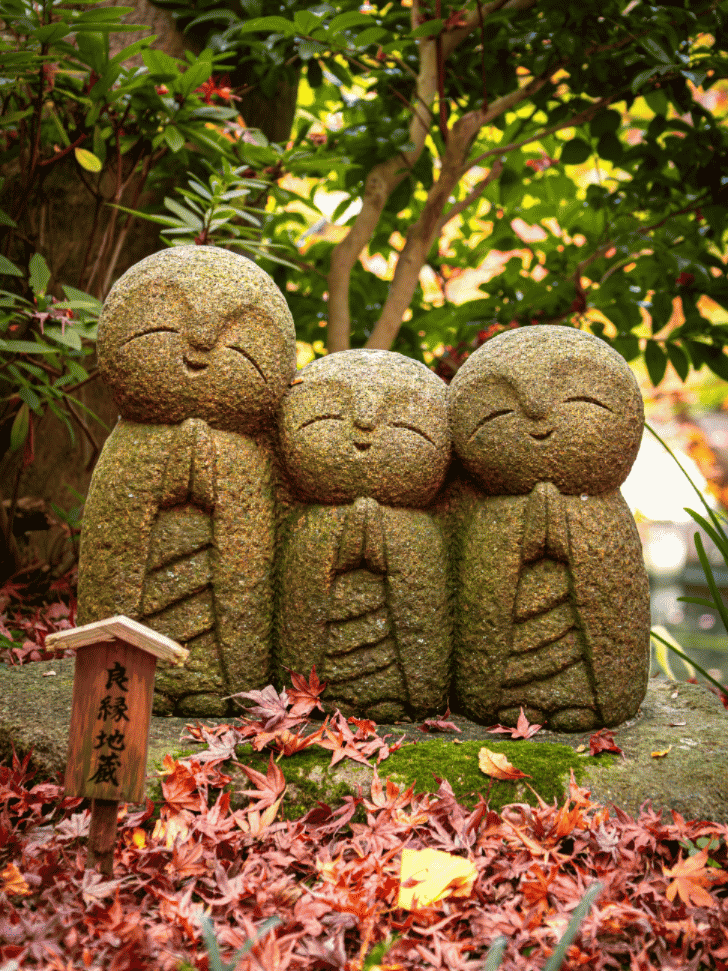
This is where the card matters. Pay on a YouTrip card and every yen transaction is charged at the Mastercard wholesale exchange rate with 0% foreign transaction fee, billed to your SGD wallet with no markup.
Since the yen is one of YouTrip’s holdable currencies, you can even lock in a rate you like before you fly and top up your JPY wallet in-app. A typical credit card quietly adds around 3% to 3.5% on every overseas swipe, which adds up fast across temples, trains and lunch.
For cash, withdraw yen from an ATM once you land rather than changing money at a counter back home. With YouTrip, the first S$400 of overseas ATM withdrawals each calendar month is free, then a flat 2% after that, and the allowance resets on the 1st. Japanese convenience-store ATMs (7-Eleven, Lawson, FamilyMart) take foreign cards and are everywhere.
A money changer looks fee-free but bakes a markup of a few percent into the rate it quotes you, so the ATM-on-arrival route almost always comes out ahead. If you want to compare your options first, our guide to the best multi-currency cards in Singapore lays out the cards that don’t bleed you on FX.
👉 Bottom line: tap your YouTrip card for anything that takes plastic, pull a bit of yen from an ATM for the stalls, and skip the money changer. For deeper detail, see our Japan ATM withdrawal guide and the SGD to JPY rate guide.
FAQs
Kamakura is near Tokyo. It sits on the coast in Kanagawa Prefecture, about an hour south of central Tokyo by train, and is one of the capital’s most popular day trips. Kyoto, the other famous old capital, is far to the west, a couple of hours away by bullet train, so the two aren’t combined on the same day.
Take the JR Yokosuka Line from Tokyo Station direct to Kamakura Station in about 55 minutes to an hour, or the JR Shonan-Shinjuku Line from Shinjuku or Shibuya, also around an hour. Both cost roughly 1,040 JPY (~S$9) each way, and neither needs a seat reservation. Tap in with a Suica or Pasmo IC card.
Kamakura is famous for the Great Buddha at Kotoku-in, its many temples and shrines, and its beaches. The don’t-miss shortlist is the Great Buddha, Hasedera (especially in hydrangea season), the main shrine Tsurugaoka Hachimangu, and a ride on the Enoden coastal railway. Foodies should track down a shirasu (whitebait) rice bowl.
Yes, one day is enough for the highlights. Four to six hours covers the Great Buddha, Hasedera and the main shrine with a graze down Komachi-dori. If you want to add Enoshima and do the beaches slowly, stay overnight and make it two days.
Yes. Yuigahama is the main town beach, busy with beach huts and food stalls in summer, and Shichirigahama nearby is known for its cafes and Mt Fuji sunset views. They’re better for lounging, surfing and sundowners than for tropical-style swimming.
Not really. Temple admissions run 300 to 500 JPY (~S$3 to S$5) each, street snacks are 200 to 400 JPY (~S$2 to S$4), and the train from Tokyo is about 1,040 JPY (~S$9) each way. A full day trip, sights and food included, comes in under S$60 before you add souvenirs.
Kamakura Rewards the Slow Wanderer
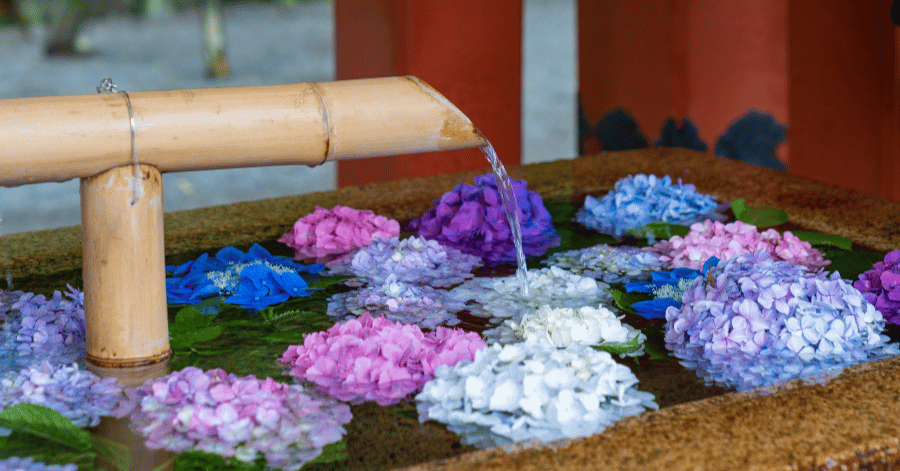
A giant Buddha you can climb inside, hydrangea steps, a rickety coastal train and a bowl of whitebait by the sea, all an hour from Tokyo. Kamakura gives you old Japan and the beach in a single day, and the more you slow down and wander its backstreets, the better it gets. Sort the paying once, and the rest is just turning up.
Not a YouTrooper yet? Sign up with code YTBLOG5 for a free YouTrip card and S$5 in credit. Lock in your rate across 12 currencies and spend in 150+ countries with no foreign transaction fees.
Check out the latest YouTrip Perks, join our Telegram for deals, and swap tips in our Community Group.