


Planning a trip to London? 🇬🇧
London’s Oyster card is a prepaid travel card for the city’s public transport network. Before you queue up to buy one at Heathrow, there’s something worth knowing: a contactless bank card pays the exact same fares. Whether you actually need an Oyster card depends entirely on which card you’re travelling with.
This guide covers everything — what an Oyster card costs, where it works, how fares and top-ups work, and how to decide whether to bother getting one for your trip.
💜 Here’s another must-have: Your YouTrip card. Spend with the best GBP rates at zero fees! Not on YouTrip yet? Use code <YTBLOG5> for free S$5 YouTrip credits!
💜 Stay Up To Date:
– Alipay For Foreigners: How To Use Alipay In China (2026)
– Citi Rewards Card 2026: Guide to Fees, Miles & Benefits
– SGD To Korean Won Exchange Rate: Best Rates, Forecast, Conversion Tips
⚡ TL;DR: Oyster Card for Tourists at a Glance
| Highlights | Details |
|---|---|
| What it is | Prepaid travel card for TfL (tube, buses, DLR, Overground, Elizabeth line) |
| Card fee | 10.50 GBP (~S$18) — non-refundable |
| Same fares as contactless? | Yes — identical fares and daily caps |
| Daily cap (Zone 1–2) | 8.90 GBP (~S$15) |
| Best for tourists? | Only if staying 7+ days or you don’t have a contactless card |
📌 Table of Contents:
- What is an Oyster Card?
- Where Can You Use It in London?
- How Much Does an Oyster Card Cost?
- How Do You Get an Oyster Card?
- Fares and Daily Cap
- How to Top Up
- Oyster card App
- Oyster Card vs Contactless: Which is Cheaper?
- Can You Use a Bank Bard Instead of Oyster?
- Is it Worth Getting an Oyster Card as a Tourist?
- How Much Should I Put on My Oyster Card For a Day?
- Should I Get an Oyster Card for 3 Days in London?
- How Much Cash to Take to London for 3 days
- Is it Better to Carry Cash or Card in London?
- Cheapest Month to Visit London
- FAQ
What is an Oyster Card?
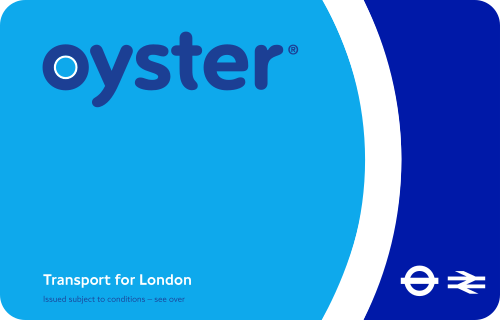
Image credits: Wikipedia
An Oyster card is a blue prepaid smartcard issued by Transport for London (TfL). Load credit onto it, tap in and out at station gates or on buses, and fares are automatically deducted.
It launched in 2003 as the way to pay cheaper-than-cash tube fares. Today, contactless bank cards and mobile wallets work on the same system, at the same fares, so the Oyster card isn’t the only option it once was.
📖 Related Guide: UK Power Plug & Plug Socket Guide: Types, Adapters & Tips
Where Can You Use an Oyster Card in London?
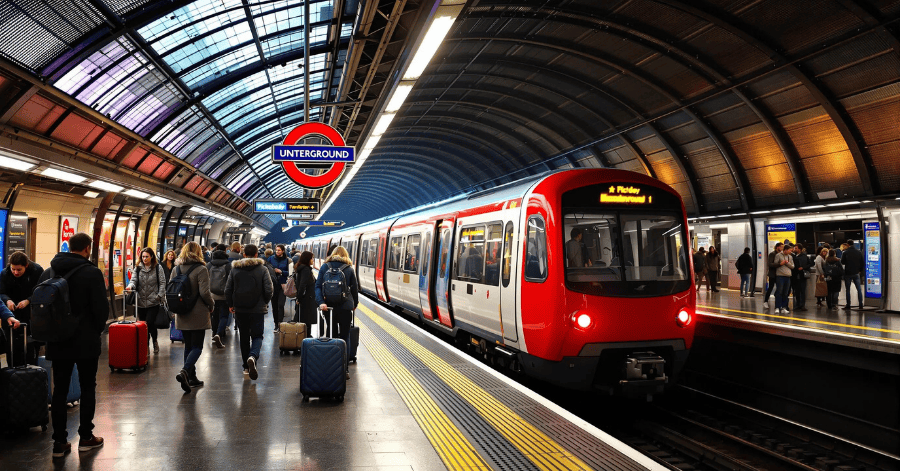
Anywhere on the TfL network:
- London Underground — all 272 tube stations
- London buses — the entire network (buses are cashless; no cash accepted)
- Elizabeth line (Crossrail)
- DLR (Docklands Light Railway)
- London Overground
- National Rail services within London fare zones
- Thames Clippers river buses (selected services)
It doesn’t work outside the TfL zone system. For day trips to Windsor, Bath, or Oxford, you’ll need a separate National Rail ticket.
📖 Related Guide: Brands That Are Cheaper In The UK Than Back Home
How Much Does an Oyster Card Cost?
A new Oyster card costs 10.50 GBP (~S$18) — non-refundable. This is a one-time card fee with no annual charge or subscription.
The Visitor Oyster card (pre-loaded, designed for tourists) has the same 10.50 GBP (~S$18) non-refundable fee built into the purchase price. A 20.50 GBP (~S$35) Visitor Oyster card gives you 10 GBP (~S$17) of travel credit; a 60.50 GBP (~S$103) card gives you 50 GBP (~S$86).
Note: TfL previously charged a 7 GBP (~S$12) refundable deposit on standard Oyster cards, but this has since been replaced with the 10.50 GBP (~S$18) non-refundable card fee. There is no deposit to reclaim.
📖 Related Guide: Best SGD to GBP Rate in Singapore
How Do You Get an Oyster Card?
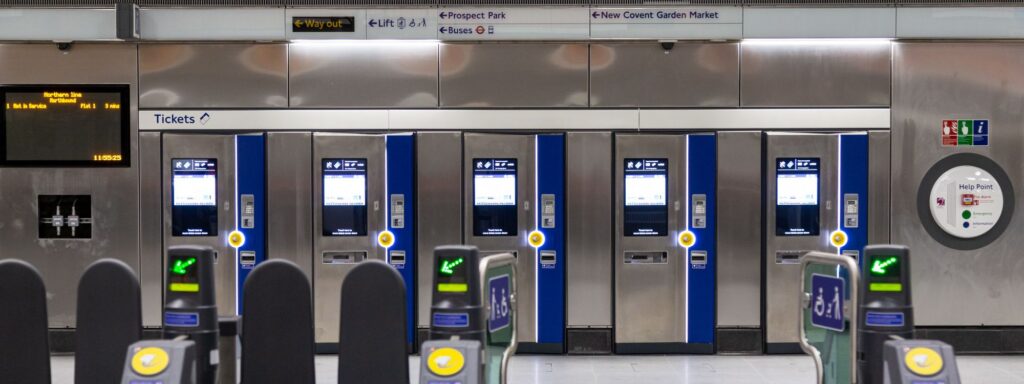
Image Credits: Delmatic lighting control
Four ways:
- London Underground ticket machines — at every tube station, including all Heathrow terminals. Accepts contactless, chip-and-PIN, and cash.
- Oyster ticket stops — newsagents and convenience stores across London displaying the Oyster logo.
- Online via tfl.gov.uk — order before you travel and have it delivered to your Singapore address (allow sufficient lead time).
- Visitor Oyster card — a pre-loaded version designed for tourists, available to order online before arrival. The 10.50 GBP (~S$18) card fee is included in the purchase price.
For most travellers flying into Heathrow: the ticket machine at the airport station is the most convenient option and takes under two minutes.
📖 Related Guide: How to Get the Best Exchange Rate in Singapore
Oyster Card Fares and Daily Cap
There are five easy ways tTfL fares are zone-based. London has 9 fare zones — most tourist attractions sit in Zones 1–2.
All figures below are effective from 1 March 2026.
| Journey | Oyster / Contactless Fare |
|---|---|
| Single, Zone 1 (peak) | 3.10 GBP (~S$5.30) |
| Single, Zone 1 (off-peak) | 3.00 GBP (~S$5.15) |
| Bus, any distance (flat fare) | 1.75 GBP (~S$3) |
| Daily cap, Zone 1 or Zones 1–2 | 8.90 GBP (~S$15) |
| Daily cap, Zones 1–3 | 10.50 GBP (~S$18) |
| Daily cap, Zones 1–6 (inc. Heathrow) | 16.30 GBP (~S$28) |
| Daily bus cap | 5.25 GBP (~S$9) |
| Weekly cap, Zones 1–2 | 44.70 GBP (~S$76) |
| Cash tube ticket (any single journey) | 7.00 GBP (~S$12) |
Peak hours: Mon–Fri (excl. public holidays) 06:30–09:30 AM and 4–7 PM.
The daily cap is the most important concept for tourists: once your spending hits the cap, all further TfL journeys that day are free. Zones 1 and 1–2 share the same 8.90 GBP (~S$15) daily cap — if you’re staying central, you’ll never pay more than that per day regardless of how many trips you make.
Buses also have a Hopper fare: unlimited bus journeys within one hour of first tapping in, for the price of one journey (1.75 GBP / ~S$3).
📖 Related Guide: Money Changer Near Me: 14 Best Money Changers In Singapore
How to Top Up Your Oyster Card
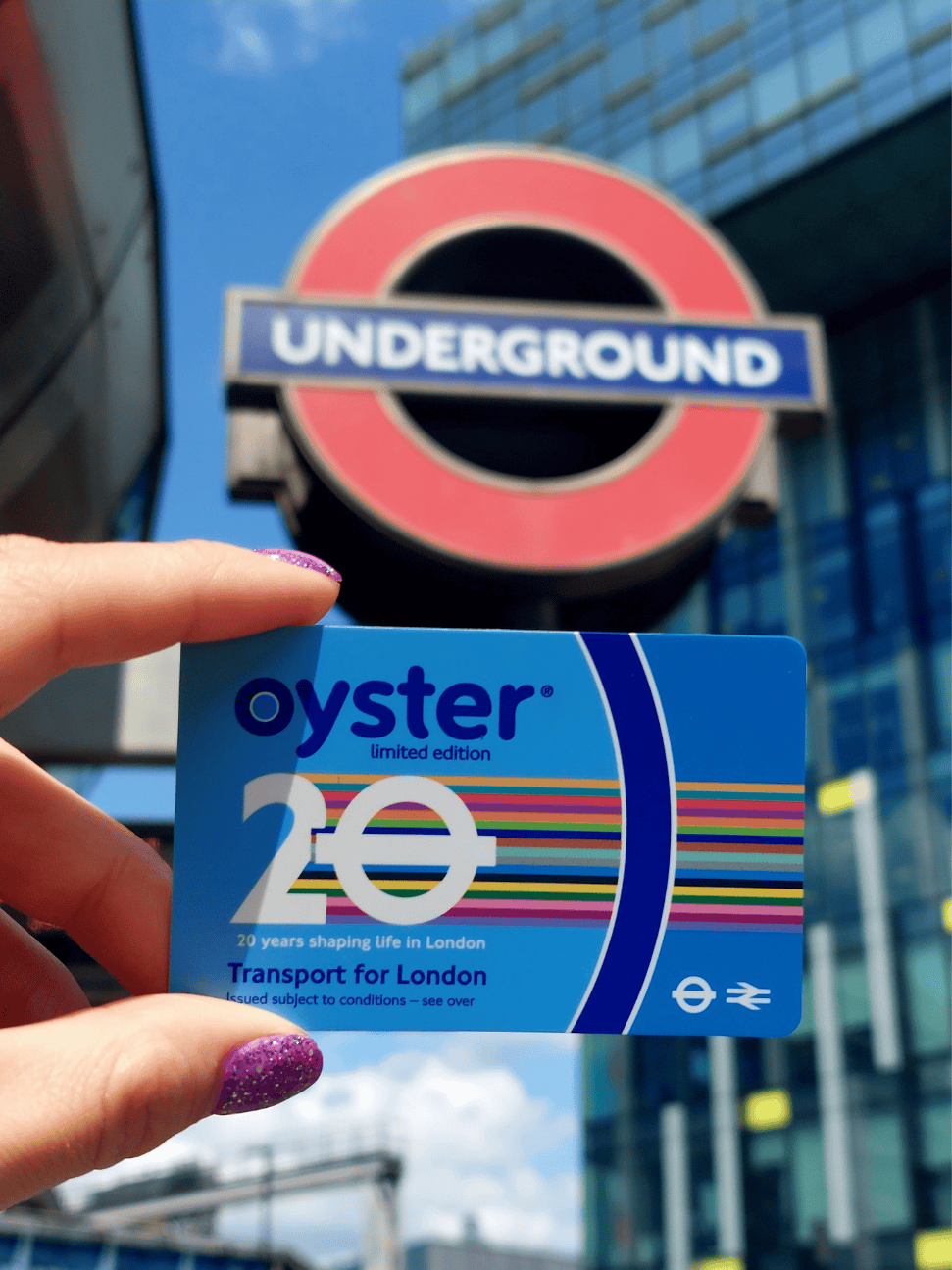
Image Credits: Transport for London
Four ways to add credit:
- Tube station ticket machines — accepts contactless, chip-and-PIN, or cash. Fastest option.
- Online via the TfL website or app — credit loads the next time you tap in at a station.
- Auto top-up — register your card and set a threshold; credit is added automatically when your balance drops below it.
- Oyster ticket stops — corner shops and newsagents with the Oyster logo.
If you’re using YouTrip, your card is accepted as a standard Visa contactless at tube station machines — so you can top up a physical Oyster card at the wholesale GBP rate with no transaction fees. That said, tapping YouTrip directly on TfL readers is simpler for most tourists (same fares, no top-up needed).
📖 Related Guide: Best Singapore Credit Card: Miles, Cashback & Travel Compared
Oyster Card App
TfL has its own TfL Oyster and contactless app (iOS and Android). It lets you:
- Check your balance
- View journey history
- Set up or manage auto top-up
- Add credit remotely (applied next time you tap in)
- Request refunds for incomplete journeys
Everything in the app is also available on the TfL website — useful if you don’t want another app taking up storage.
Note: this is separate from Citymapper and Google Maps, which many tourists use for route planning. You don’t need the TfL app to travel — it’s a balance management tool.
📖 Related Guide: Top 15 London Hotels From S$246/Night
Oyster Card vs Contactless: Which Is Cheaper?
The fares are identical. Oyster and contactless pay the same per-journey rates and are capped at the same daily and weekly limits.
The only difference is the card itself:
| Oyster Card | Contactless Card / Phone | |
|---|---|---|
| Upfront cost | 10.50 GBP (~S$18) — non-refundable | None |
| Per-journey fare | Same | Same |
| Daily cap | Yes — 8.90 GBP (~S$15) for Zones 1–2 | Yes (same cap) |
| Weekly cap | Yes — 44.70 GBP (~S$76) for Zones 1–2 | Yes (same cap) |
| Auto top-up | Yes | N/A |
| Balance tracking | TfL app or website | Via your bank |
| Works on buses | Yes | Yes |
| Works on tube | Yes | Yes |
The verdict: contactless pays the same fares with no upfront cost. The Oyster card’s main advantage is auto top-up and the weekly cap — useful for longer stays, less relevant for a 2–5 day tourist trip.
📖 Related Guide: Best Miles Card in Singapore: Top 4 Credit Cards Compared (UOB, HSBC, Citi, DBS)
Can You Use a Bank Card Instead of Oyster?
Yes — any Visa, Mastercard, or Amex contactless card works on all TfL services, at the same fares as Oyster.
The catch for Singaporean travellers: most local bank cards charge 2.5–3.5% in foreign transaction fees on overseas purchases. Every tube tap, every bus ride — that fee gets added.
A better approach is to use a card with no foreign transaction fees. YouTrip processes GBP at the wholesale exchange rate with zero transaction fees, so you pay exactly what TfL charges — nothing more. No 10.50 GBP (~S$18) Oyster card fee, no top-up queues, the same daily cap protections, and a better GBP rate on everything else you spend in London too.
For Singaporeans visiting London, tapping YouTrip directly on TfL readers is the cleaner option: Oyster-equivalent fares, no card fee, and better forex across your whole trip.
📖 Related Guide: Paris Travel Guide: Things To Do, Weather, Tips
Is It Worth Getting an Oyster Card as a Tourist?
For most tourists, no — especially if you have a no-fee travel card.
Get an Oyster card if:
- You’re staying 7+ days (the weekly cap is worth having for longer stays)
- You want auto top-up and not to think about your balance
- You’re travelling with kids — children under 11 travel free on TfL with a registered Oyster card
- You don’t have a contactless card
Skip Oyster if:
- You’re visiting for 1–5 days
- You already carry a no-fee travel card (contactless pays the same fares)
- You want to avoid the 10.50 GBP (~S$18) non-refundable card fee
📖 Related Guide: 15 Best Things To Do In Naples, Italy
How Much Should I Put on My Oyster Card for a Day?
Load enough to cover the daily cap for your zones.
For Zone 1–2 (central London, covering most tourist areas): the daily cap is 8.90 GBP (~S$15). Once you hit that, all further journeys in those zones are free for the rest of the day.
If you’re heading further out — Kew Gardens (Zone 4), Heathrow Airport (Zone 6), Greenwich (Zone 2–3) — the cap will be higher. Check tfl.gov.uk for the exact cap for your zone combination.
A practical starting point: load 20 GBP (~S$34) on arrival. It covers the first day or two without needing to top up mid-trip.
📖 Related Guide: The Ultimate UK Bucket List
Should I Get an Oyster Card for 3 Days in London?
The math doesn’t strongly favour it.
Three days at the Zone 1–2 daily cap is 26.70 GBP (~S$46) in total transport costs. Add the 10.50 GBP (~S$18) Oyster card fee and you’re at 37.20 GBP (~S$64) with nothing to reclaim.
With a contactless no-fee travel card, you pay the same 26.70 GBP (~S$46), start immediately, and have nothing to track or return.
The Oyster card is worth considering for 3 days if you’re making lots of short bus trips daily (the Hopper fare stacks quickly), or if you want a dedicated physical card separate from your bank card. For most tourists, contactless wins.
📖 Related Guide: UK Food Guide: What To Eat In England
How Much Cash to Take to London for 3 Days
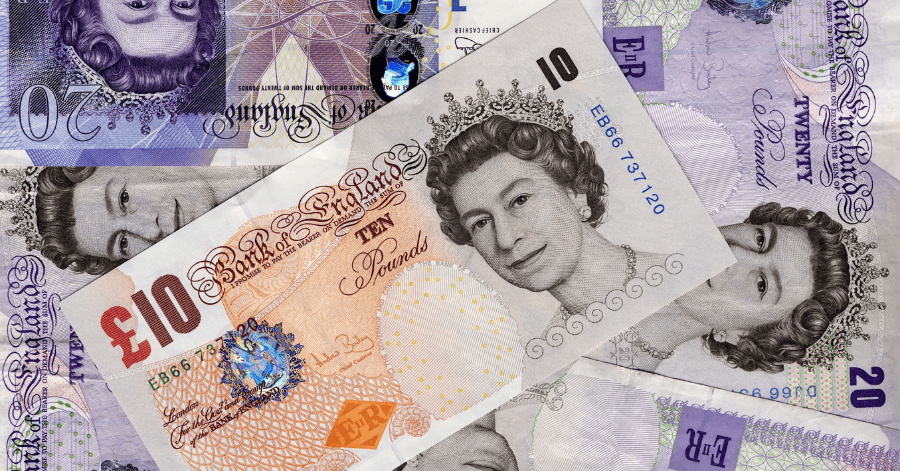
Less than you’d expect. London is one of the most card-friendly cities in the world — street food stalls, cafés, market vendors, and small independents routinely accept contactless.
A rough 3-day mid-range budget:
| Category | Daily Estimate | 3-Day Total |
|---|---|---|
| Meals | 30–60 GBP (~S$51–S$103) | 90–180 GBP (~S$154–S$308) |
| Transport (at daily cap) | 8.90 GBP (~S$15) | 26.70 GBP (~S$46) |
| Attractions | 20–40 GBP (~S$34–S$68) | 60–120 GBP (~S$103–S$205) |
| Incidentals | 15–25 GBP (~S$26–S$43) | 45–75 GBP (~S$77–S$128) |
For actual cash: 50–100 GBP (~S$86–S$171) covers most situations where card isn’t accepted — older pubs, some street markets, tips. You can withdraw from ATMs on arrival using a no-fee card like YouTrip to avoid conversion charges.
📖 Related Guide: Tax Refund Europe: Ultimate Guide to VAT Refunds for Tourists
Is It Better to Carry Cash or Card in London?
Card. You can get through an entire 3-day London trip without cash for anything except tips and the occasional street market.
Bring 50–100 GBP (~S$86–S$171) as a backup — some older establishments and smaller vendors still prefer it, and it’s useful for tipping where card isn’t offered.
For card payments: avoid your standard Singapore bank card if it charges foreign transaction fees. Most SG cards add 2.5–3.5% on GBP purchases. Over a 3-day trip with moderate spending, that adds up to an unnecessary 20–50 GBP (~S$34–S$86) in fees. A no-fee card like YouTrip eliminates this entirely.
📖 Related Guide: How To Send Money To Europe From Singapore
Cheapest Month to Visit London

- January and February are consistently the cheapest months. Post-Christmas demand drops sharply, flights from Singapore fall in price, and hotels cut rates to fill rooms.
- November is also good value — crowds thin out before the Christmas premium kicks in, and the weather is manageable.
- Avoid July–August (peak summer, highest prices) and December (Christmas premium on flights, hotels, and everything else).
From Singapore, mid-week departures in January–February typically offer the best flight rates. Most routes connect via the Middle East — allow 13–15 hours total travel time.
FAQ:
The same price. Oyster and contactless pay identical TfL fares, with the same daily and weekly caps. The only difference is the 10.50 GBP (~S$18) non-refundable card fee for Oyster.
Yes, if it has Visa or Mastercard contactless. Be aware that most SG bank cards charge 2.5–3.5% in foreign transaction fees on every tap. A travel card with no forex fees (like YouTrip) avoids this on every journey.
Yes — both work on all TfL contactless readers. The same daily cap applies. Your phone or watch acts exactly like a contactless card.
It’s a travel budgeting heuristic: spend roughly 50% of your trip budget on accommodation and transport, 30% on food and experiences, and 20% on shopping, extras, and an emergency buffer.
Not an official London tourism guideline — just a useful starting framework for trip planning.
The 10.50 GBP (~S$18) card fee is non-refundable. Any unused travel credit on a standard Oyster card can be refunded via tfl.gov.uk or at a tube station (conditions apply for amounts under 10 GBP / ~S$17).
Yes. TfL’s contactless readers use standard EMV encryption — the same security as any card terminal. It’s how millions of Londoners pay every day.
Ready to Travel Fuss-Free in London?
London’s Oyster card does its job well — but for most Singaporean tourists on a short trip, a no-fee contactless card like YouTrip gets you the same fares without the 10.50 GBP (~S$18) upfront cost. Tap in, tap out, and let the daily cap do the rest.
Not a YouTrooper yet? Singapore’s go-to multi-currency wallet helps you save with great FX rates and zero fees. Skip the money changer and get a free YouTrip card + S$5 YouTrip credits with code <YTBLOG5>.
Then, head over to our YouTrip Perks page for exclusive offers and promotions — we promise you won’t regret it. Join our Telegram (@YouTripSG) and Community Group (@YouTripSquad) for travel tips, event invites, and more!
Happy travels!
Related Articles
Bangkok Rabbit Card Guide for Tourists
EasyCard Taiwan Guide for Tourists
ICOCA Card Japan Guide for Tourists
Suica Card Japan Guide for Tourists
T-Money Card Korea Guide For Tourists