



The world’s biggest ice city, planned from a place that never sees snow
Harbin turns a frozen river into a glowing city of ice towers every winter, and it’s the one trip where a Singaporean has to plan for -25°C from scratch. This guide covers the 2026-2027 dates, what tickets really cost in SGD, how to dress when you own no winter kit, and how to pay in a city that’s gone almost fully cashless.
| Quick Planner | Harbin Ice Festival at a glance |
|---|---|
| 📅 When | Late December 2026 to late February 2027 (peak: January) |
| 📍 Where | Harbin, Heilongjiang, northeast China, on the frozen Songhua River |
| 🎟️ Main venue | Harbin Ice and Snow World, roughly 330 CNY (~S$60) peak |
| 🌡️ Temperature | Regularly below -20°C in January, colder at night |
| ✈️ From Singapore | ~10-12h with one stop in mainland China (no reliable direct) |
| 🛂 Visa | Not needed for Singapore passports (30-day visa-free) |
| 💳 Pay with | YouTrip for cards and ATMs; Alipay or WeChat for everything small |
The big-ticket costs at a glance:
| What | Price (CNY) | ~S$ | Notes |
|---|---|---|---|
| Ice and Snow World (peak adult) | ~330 CNY | ~S$60 | The flagship venue; night is the main event |
| Ice and Snow World (VIP) | ~988 CNY | ~S$180 | Skip-the-line for ice slides and shows |
| Sun Island Snow Expo | ~198 CNY | ~S$36 | ⚠️ Verify at booking |
| Zhaolin Park ice lanterns | Free to ~150 CNY | up to ~S$27 | ⚠️ Verify at booking |
| Rough daily budget | 700-1,000 CNY | ~S$130-180 | One venue, meals, transport, gear |
Table of Contents
- Harbin Ice Festival 2026-2027 Dates
- Where the Harbin Ice Festival Is Held
- How Much the Harbin Ice Festival Costs
- How to Pay in Harbin
- Is the Harbin Ice Festival Worth It?
- What to Do at the Harbin Ice Festival
- What Else to Do in Harbin in Winter
- Day Trips: Snow Town and the Far North
- How to Dress for -25°C When You Live in Singapore
- Getting to Harbin From Singapore
- Where to Stay for the Festival
- A 5-Day Harbin Itinerary
- FAQs
- Go Cold, Come Back Glowing
Harbin Ice Festival 2026-2027 Dates
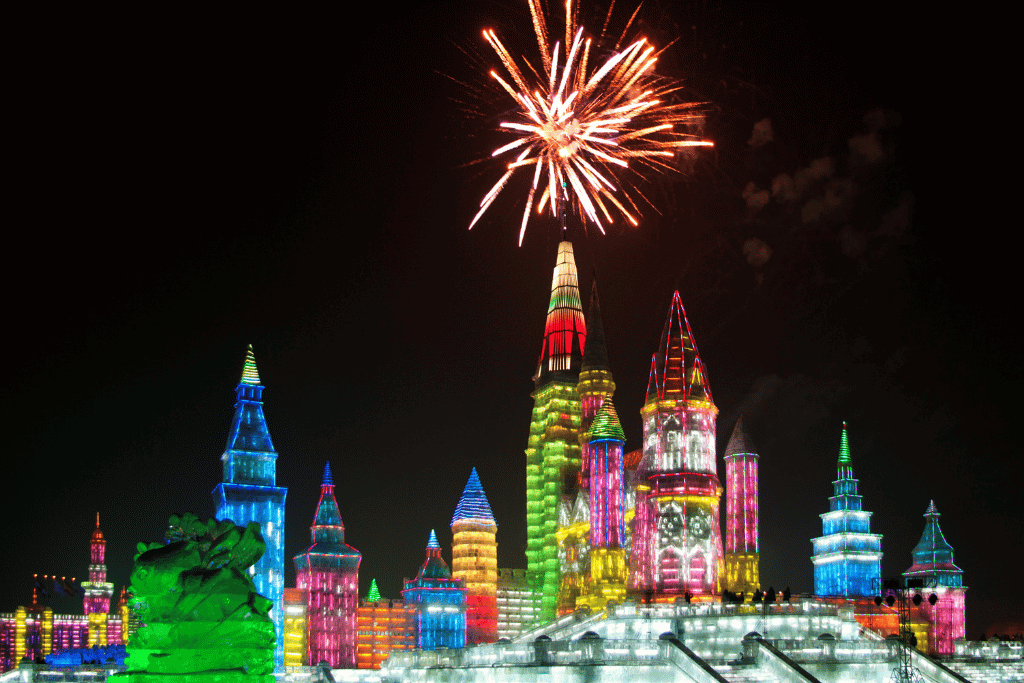
The 2026-2027 festival is expected to run from late December 2026 to late February 2027, with the main Ice and Snow World venue opening first, around 20-24 December 2026. ⚠️ These dates aren’t official yet, so treat them as expected until Harbin confirms them (usually a month or two out).
For context, the previous edition, the 42nd, opened officially on 5 January 2026, and the Ice and Snow World stayed open until 21 February 2026. The pattern repeats most years: the flagship park lights up in late December, the festival’s ceremonial opening lands on 5 January, and everything winds down through February as the sculptures start to soften.
Why you’ll see both “2026” and “2027” for the same trip end
It’s one winter that straddles the New Year, so guides label it differently. A festival that opens in December 2026 and closes in February 2027 gets called both the “2026” and the “2027” edition depending on who’s writing. If you’re planning a December-to-February trip this coming winter, that’s the season, whatever year is stuck on the end.
The best weeks to go
Early-to-mid January is the sweet spot. The sculptures are at full height and crisp detail, the cold is reliable enough that nothing’s melting, and you’re clear of the biggest crowd surge.
Chinese New Year (mid-February 2027) packs the venues and pushes hotel prices to their peak. Go too late in February and you risk arriving as sculptures start to slump: the 2025-2026 season was cut short by an unseasonably warm spell, a reminder that the ice is at the mercy of the weather.
📖 Related Guide: Weighing up when to go somewhere colder in Europe instead? Our best time to visit Switzerland guide breaks the seasons down month by month.
Where the Harbin Ice Festival Is Held
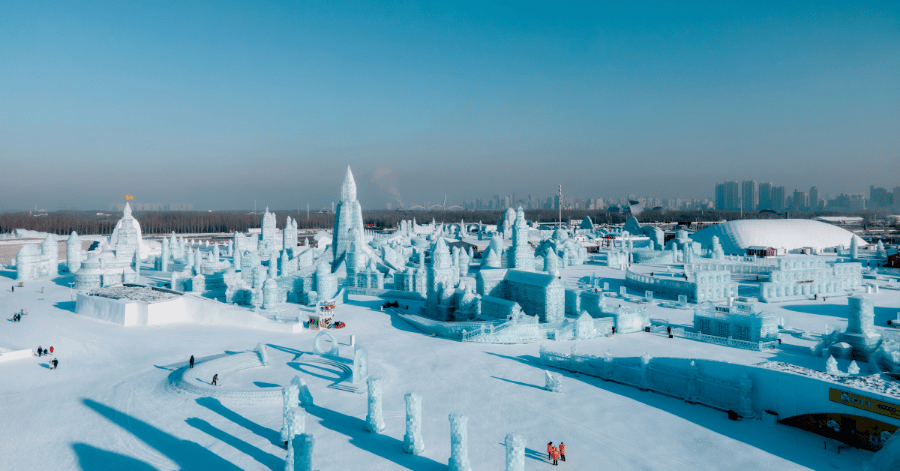
The Harbin Ice Festival isn’t one park. It’s spread across the city of Harbin in Heilongjiang, northeast China, on both banks of the frozen Songhua River, with three main ticketed venues plus dozens of smaller free displays. Getting your head around the three-venue setup is the single biggest planning gap for first-timers.
Harbin Ice and Snow World
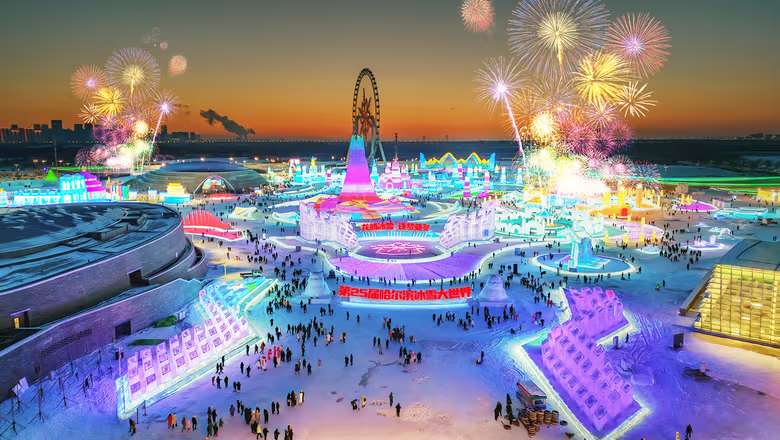
Image Credits: Travel Weekly Asia
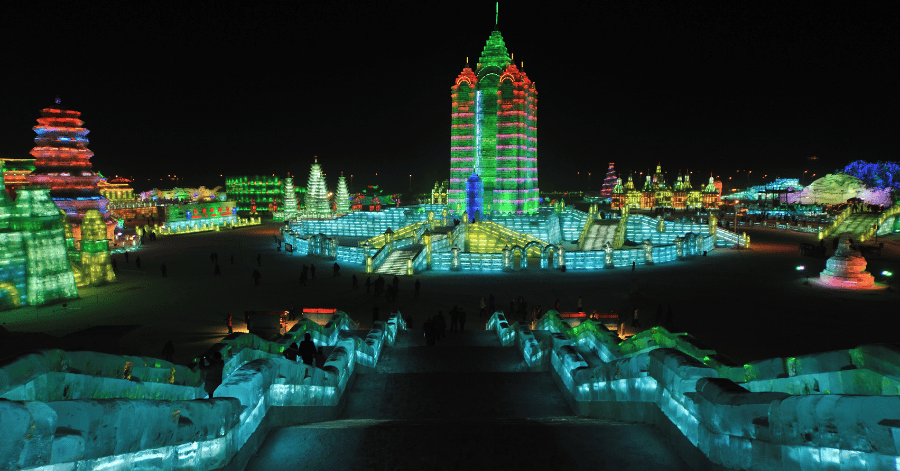
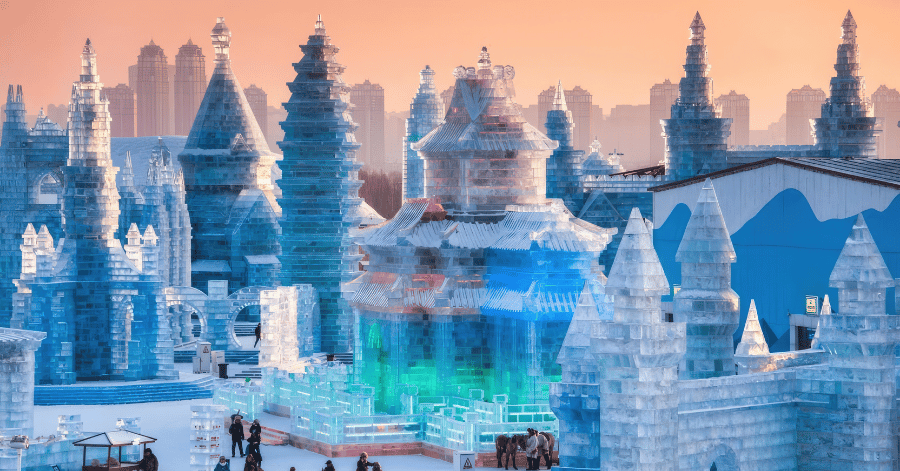
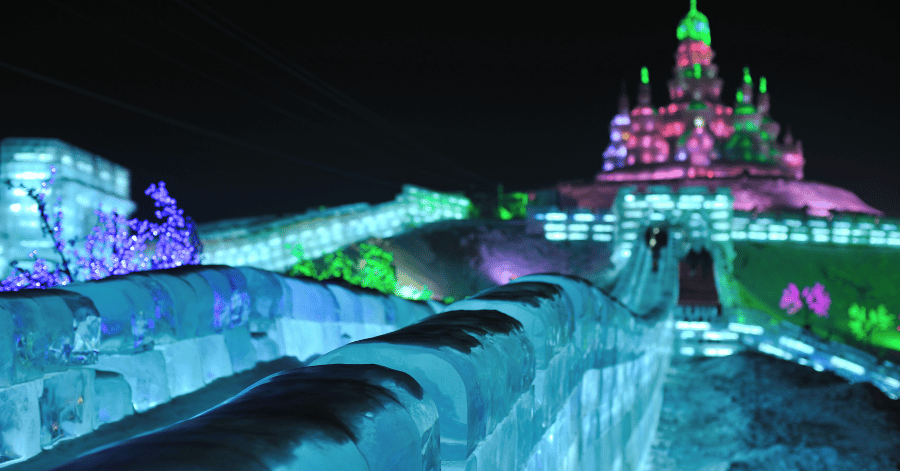
Ice and Snow World is the flagship and the one you’ve seen in photos: the world’s largest ice-and-snow theme park, built fresh each winter from blocks cut out of the Songhua River. Think full-size palaces, towers and slides carved from ice, all lit from within after dark in deep blues, pinks and greens. It’s the most expensive venue and the one to save for night, when the illumination turns it into something genuinely otherworldly.
Best for the headline experience. If you only do one venue, do this one, and do it after sunset.
Sun Island Snow Sculpture Expo
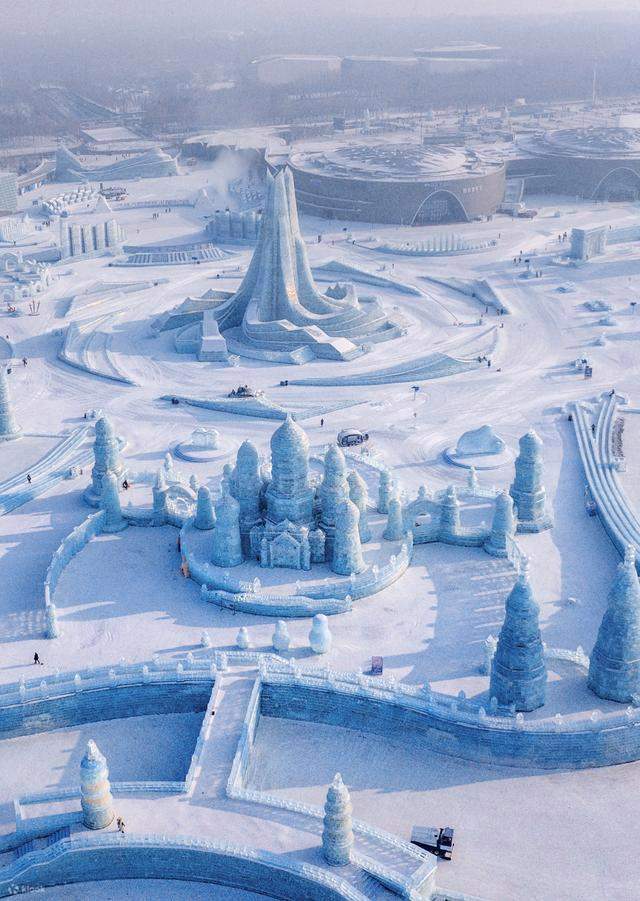
Image Credits: Klook
Sun Island is the snow counterpart, sitting across the river. Where Ice and Snow World is carved ice, Sun Island is monumental packed-snow sculpture, some pieces the size of buildings, alongside snow slides and winter play areas. It’s a daytime venue, gentler and more family-friendly, and it pairs naturally with a morning before an evening at Ice and Snow World.
Zhaolin Park Ice Lantern Fair
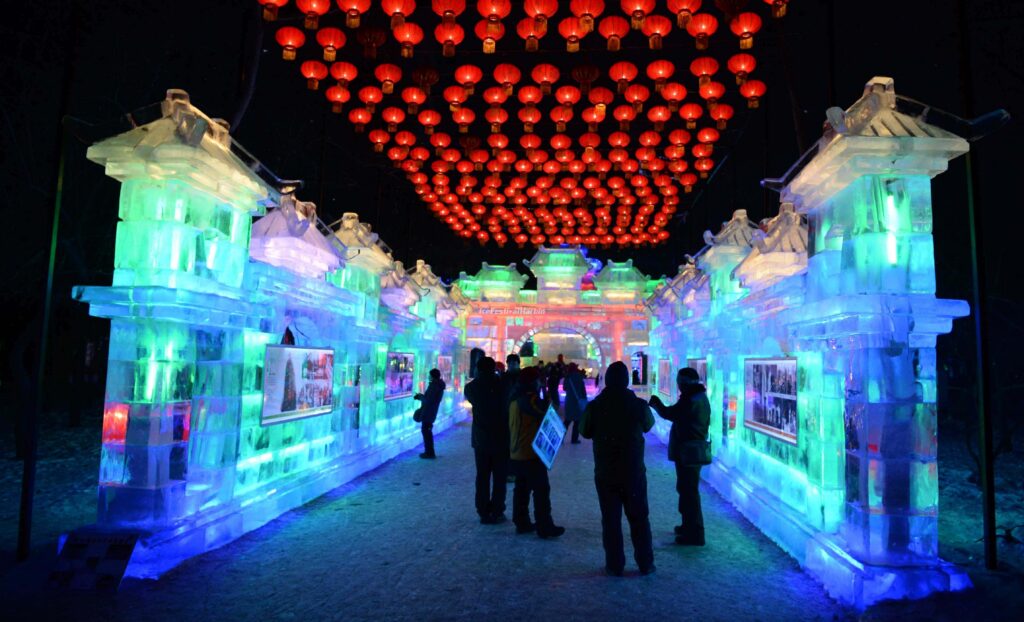
Image Credits: Harbin Ice Festival
Zhaolin Park is the old-school, intimate one: the traditional ice lantern show that the whole festival grew out of, with smaller Chinese-themed carvings glowing under coloured light. It’s central, cheaper, and a good low-commitment first evening to ease into the cold before the big venues.
Getting between the venues
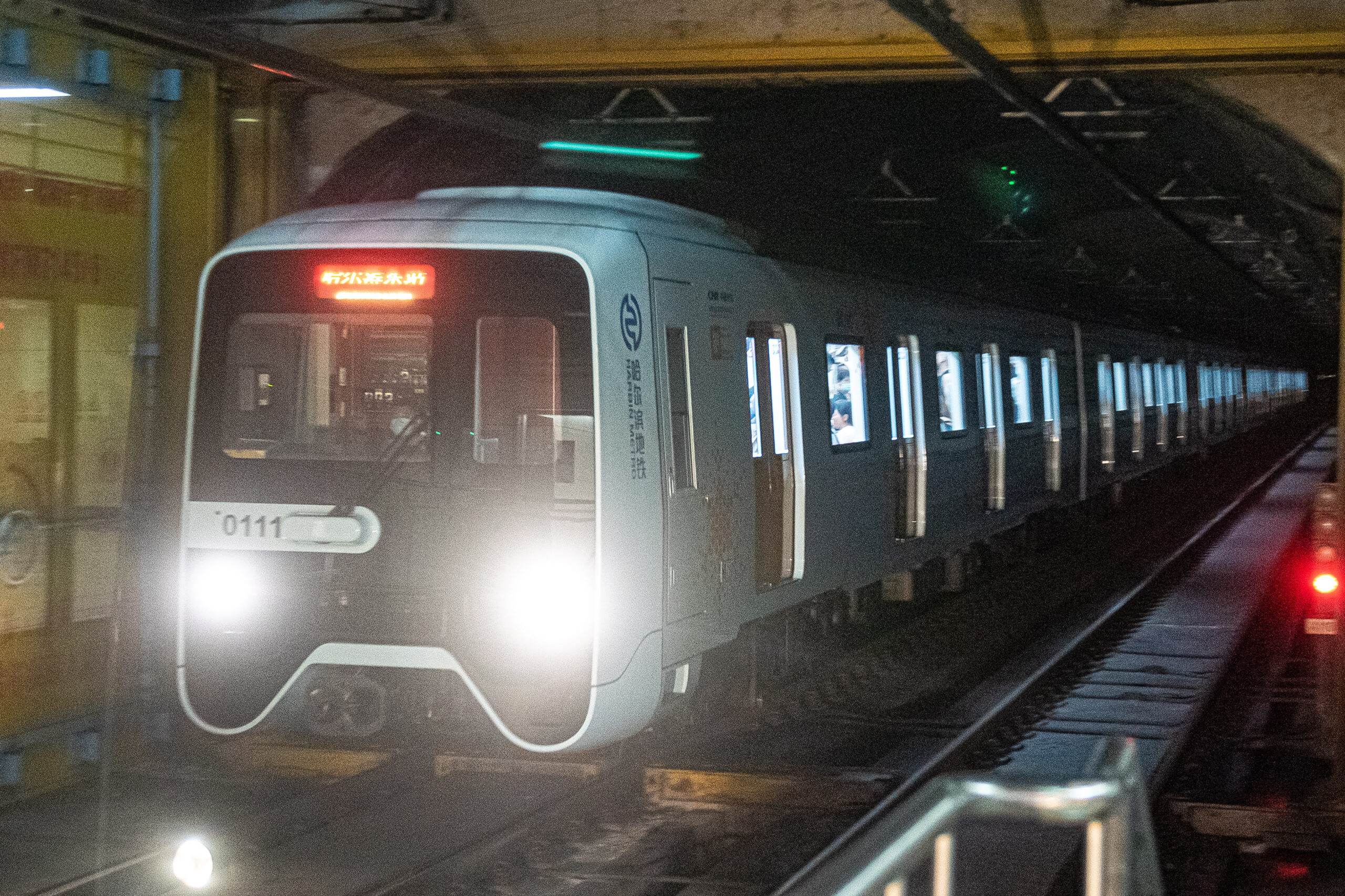
Image Credits: Wikipedia
The three sites are spread across the city on both sides of the river, so budget travel time and don’t try to cram all three into one day.
Harbin’s metro reaches Ice and Snow World, and ride-hailing through the local apps is the cheapest, easiest way around otherwise. Standing outside for a taxi in -25°C is exactly the situation you want to avoid. ⚠️ Confirm the current metro line and stop when you go, as the network keeps expanding.
📖 Related Guide: Adding another China city to the trip? Our Guangzhou travel guide covers the warm-weather south if you want to thaw out afterwards.
How Much the Harbin Ice Festival Costs
A peak adult ticket to Ice and Snow World runs around 330 CNY (~S$60), with VIP fast-track tickets up to about 988 CNY (~S$180). The other two main venues are cheaper and ticketed separately. Prices shift by date and haven’t been confirmed for 2026-2027, so check before you book. ⚠️
Ticket prices
Ice and Snow World is the big spend. Standard adult entry sits in the region of 300-330 CNY (~S$55-60) at peak, sometimes lower early in the season, and the VIP ticket near 988 CNY (~S$180) buys you skip-the-line access to the popular ice slides, the Ferris wheel and the shows.
Sun Island Snow Expo runs around 198 CNY (~S$36), and Zhaolin Park’s ice lanterns are cheaper still, sometimes free. ⚠️ Verify all three at the point of booking, as 2026-2027 prices weren’t published at the time of writing.
Book Ice and Snow World ahead in peak season, through the official ticketing channel or an established booking platform rather than a tout at the gate. Entry is a single full-day ticket, so the move is to time your visit for late afternoon into the evening, when the after-dark illumination is the part most people are really there for.
A realistic daily budget
Plan for roughly 700-1,000 CNY (~S$130-180) a day once you add one venue, meals, ride-hailing and the odd bit of gear or a hand-warmer. That’s before flights and hotels. Harbin isn’t a shoestring destination in winter, but it isn’t Europe-expensive either, and food in particular is a bargain: a hearty local meal can run well under 50 CNY (~S$9) a head.
Budget for the Cold, Not Just the Tickets
The cost that catches Singaporeans out isn’t tickets, it’s kit. If you’re buying a proper down jacket, thermals, snow boots and gloves from scratch, that can easily run more than a venue ticket. We cover how to keep that down in the dressing section below, including buying budget gear locally.
📖 Related Guide: Want the card maths behind these numbers? Our best multi-currency card in Singapore comparison shows which cards actually save you money on overseas spend.
How to Pay in Harbin
China runs on Alipay and WeChat Pay, not cash or cards, so the smart setup is a phone app for everyday spending plus a card that converts at wholesale rates for everything else. Physical cards work in hotels and larger shops, but street stalls, small restaurants and ride-hailing are mobile-pay first.
Alipay and WeChat come first

Image Credits: Mobile Transactions
Set up at least one of the two apps before you fly. As a tourist in 2026, you can verify your passport in the app and link an international card, no Chinese bank account or local SIM needed, and Alipay tends to be the smoother one for first-timers.
Link your YouTrip Card to Alipay
The easiest way to cover everyday spending is to link your YouTrip card straight to Alipay. Once it’s linked, your Alipay QR payments run on YouTrip, converting your Singapore dollars to Chinese yuan at the wholesale exchange rate with no foreign transaction fees. That gets you a competitive rate on everything from noodle stalls to taxis, the exact places a foreign card won’t work.
For anything you can tap directly, YouTrip has it covered too. Hotels, bigger restaurants and department stores take card, and YouTrip converts at the same wholesale rate with no FX fee.
⚠️ One heads-up: YouTrip is currently having issues linking YouTrip to WeChat Pay and is working to resolve it. For now, link your card to Alipay instead, which covers the vast majority of places you’ll pay in Harbin.
Keep cash as backup, from an ATM
Harbin still has cash-only corners, especially small vendors and some transport, so carry a little yuan. Pull it from a local ATM rather than changing money at home: with YouTrip, your first S$400 of overseas ATM withdrawals each month is free, then a flat 2% after that, which beats airport and money-changer rates on yuan. Skip the money changers.
📖 Related Guide: Going deeper on cash in China? Our China ATM withdrawal guide covers fees, which machines to use and how to dodge the on-screen conversion trap.
Is the Harbin Ice Festival Worth It?
Yes, if you want a genuine spectacle and you go in clear-eyed about the cold. There’s nothing else at this scale on Earth: an entire illuminated city built from river ice, rebuilt from nothing every year. But it asks something of you in return, and it’s fair to know what before you commit the airfare.
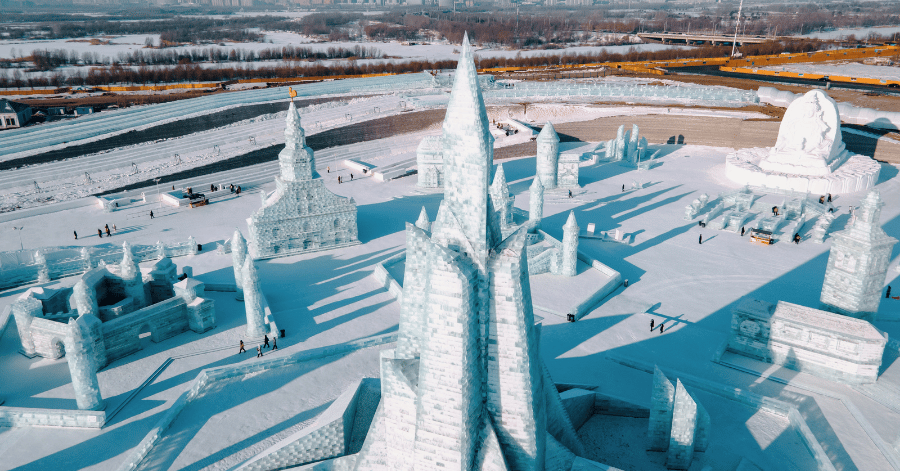
What lands is the night at Ice and Snow World. The scale doesn’t translate to photos, and the moment the lights come on inside the ice is the thing people fly for. The food is cheap and good, the locals treat -20°C as a normal Tuesday, and the whole city leans into winter rather than hiding from it.
What tests you is the cold, honestly. -25°C is a different category of experience for a tropical body, and phones die, fingers stop working and queues for the big ice slides are long and freezing. The festival is also weather-dependent: an early thaw shortened the 2025-2026 season, so there’s always a small gamble on timing.
Best for travellers who want a bucket-list winter spectacle and will prepare properly for the cold. If your idea of a good holiday is warm and low-effort, this isn’t it, and there’s no shame in admitting the deep freeze isn’t your thing.
📖 Related Guide: Prefer your China trip without the deep freeze? Our best time to visit Macau guide maps out a milder city break month by month.
What to Do at the Harbin Ice Festival
Beyond wandering the lit-up sculptures, the festival is packed with things to actually do, from ice slides to sledding. Here are the experiences worth building your evenings around.
Ride the giant ice slides
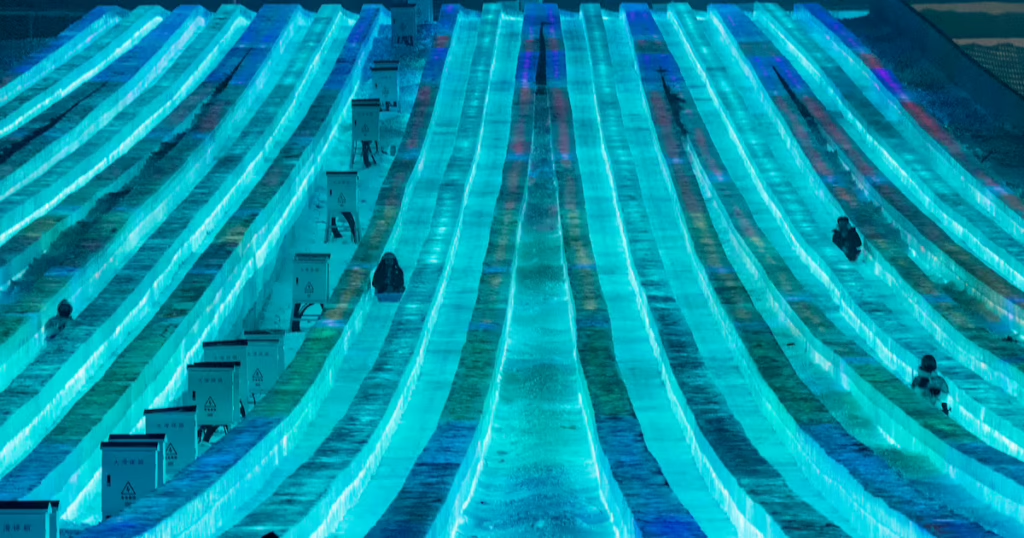
Image Credits: The National News
The long ice slides at Ice and Snow World are the festival’s signature thrill: multi-lane chutes carved straight into the ice structures, included with your entry (the VIP ticket just skips the queue). They’re properly fast and brutally cold, and the queues at peak are long, so hit them early in your visit before your hands stop cooperating.
See the sculptures light up after dark
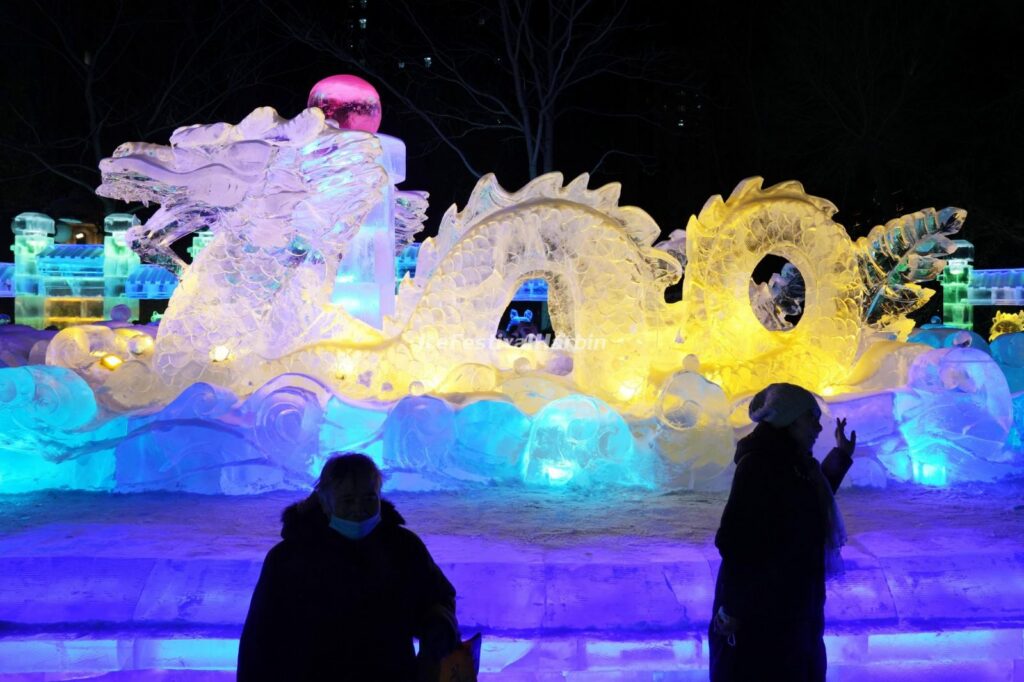
Image Credits: Harbin Ice Festival
The single best thing to do is simply be inside Ice and Snow World when the internal lighting switches on at dusk. Palaces, towers and full-scale replicas glow from within, and the temperature drop after sunset is the trade-off for the best views of the night. A common local trick is to arrive in the late afternoon, so you catch daylight, dusk and full illumination on one ticket without queuing again. Save this for a clear evening.
Try sledding and snow play
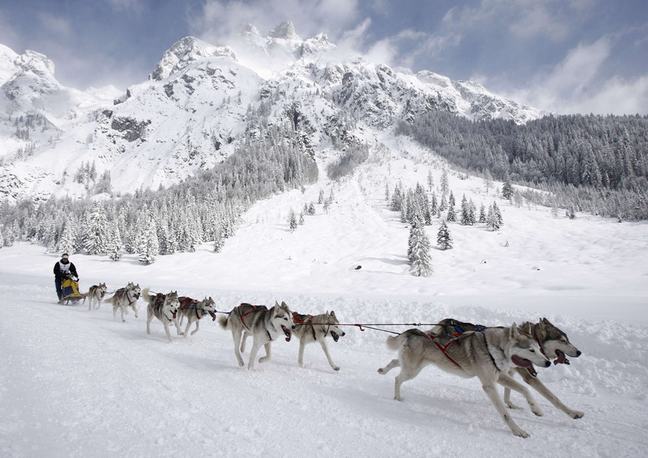
Image Credits: Harbin Ice Festival
Dog-sled and horse-drawn sleigh rides run at the venues and around the city, a quick husky-pulled dash or a slower sleigh amble depending on your appetite. Sun Island adds snow slides and open play areas, which is where the daytime energy is if you’re travelling with kids.
Watch the ice-carving up close
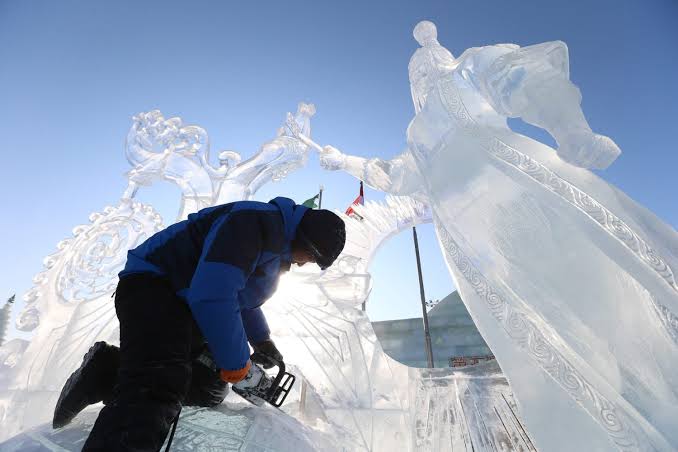
Image Credits: NBC News
The sculptures don’t appear by magic: carvers work through the season, and watching blocks hauled from the Songhua River turned into detail work is a spectacle in itself. It’s also the free layer of the festival, visible around the city well beyond the ticketed venues.
📖 Related Guide: Chasing dramatic winter landscapes in China? Our things to do in Zhangjiajie guide covers the misty peaks that inspired Avatar.
What Else to Do in Harbin in Winter
Harbin the city is worth a day on its own, quite apart from the ice. Its Russian past gives it an architecture and food scene you won’t find anywhere else in China, and it’s all walkable and warm-ish between stops.
Walk Central Street (Zhongyang Dajie)
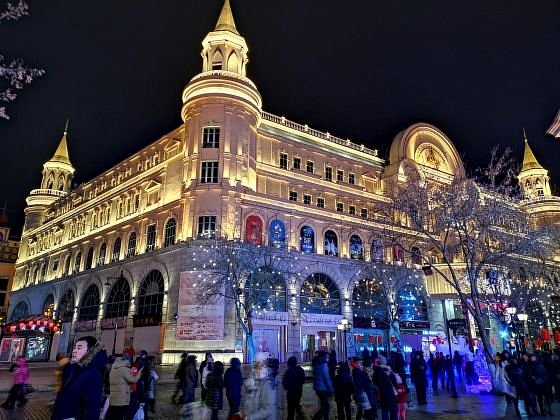
Image Credits: Tripadvisor
Central Street is Harbin’s cobblestone showpiece, a kilometre-plus pedestrian avenue of Russian and European buildings dating to 1898, said to be the longest of its kind in Asia. In winter it’s strung with lights and dotted with small ice sculptures, and it’s the easiest place to warm up between food stops. Come at dusk when the facades light up.
See Saint Sophia Cathedral

The former Russian Orthodox cathedral is Harbin’s most photographed landmark, a green-domed Byzantine building that looks almost unreal under snow. It’s a few minutes from Central Street, so the two pair naturally into one afternoon.
Eat Modern ice cream in the freezing cold
_1_跑跑_来自小红书网页版-768x1024.jpg)
Image Credits: 782656388 on rednote
Yes, ice cream, in winter, on purpose. The Modern (Madie’er) ice cream bar has been a Central Street institution since 1906, and eating one outdoors at -20°C is a proper local rite of passage. It barely melts, which is the joke and the point.
Warm up on Russian-Harbin food

Image Credits: 270115032 rednote
Harbin’s Russian heritage shows up on the plate: red sausage (a smoked local classic), borscht and Kiev cutlet sit alongside northeastern Chinese stews built for the cold. It’s hearty, cheap and exactly what you want after a night out in the ice.
Best for a rest day between festival venues, when you want the cold in smaller doses and a lot more food.
📖 Related Guide: Building a China shopping list too? Our what to buy in Japan guide is the go-to if you’re pairing Harbin with a stop in Japan on the way.
Day Trips: Snow Town and the Far North
If you’ve come this far for snow, two extensions are worth the extra nights, though neither is a comfortable day trip. Both need planning and warm gear, and both reward it.
China Snow Town (Xuexiang)
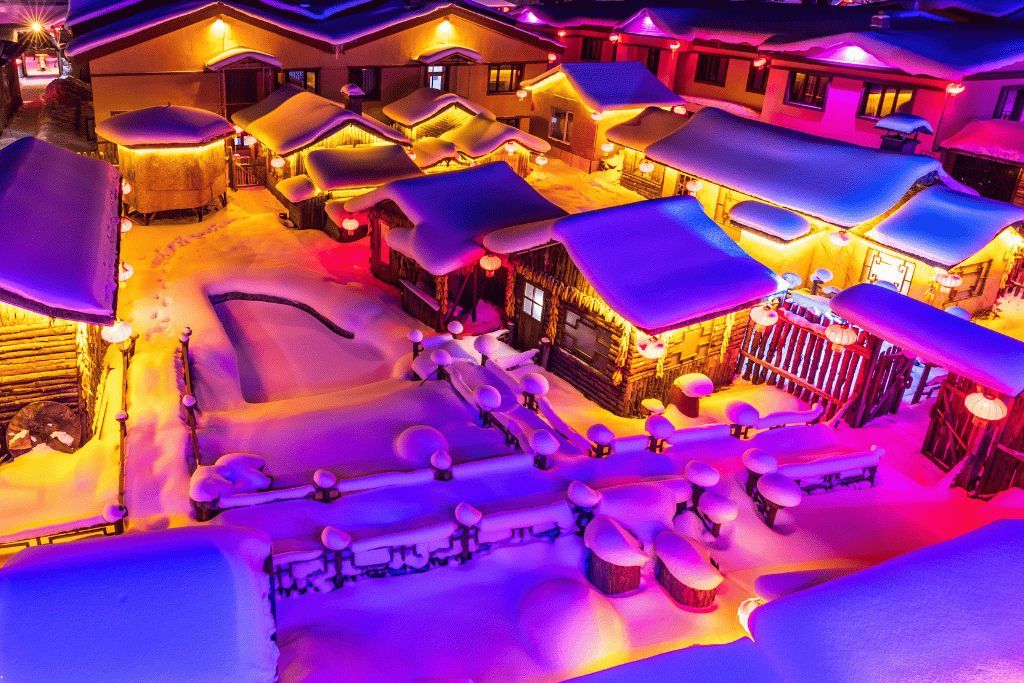
China Snow Town is the postcard snow village, all thick “snow curtains” draping the rooftops, about 280 km from Harbin. It’s a 5-to-6-hour drive over icy roads, so it isn’t a realistic day trip; most people stay a night to catch the lantern-lit evening, which is the whole point. The official Long Yun tourist shuttle is the easiest way in, and you’ll need to book accommodation two to three months ahead for a January or February visit.
Going further north to Mohe
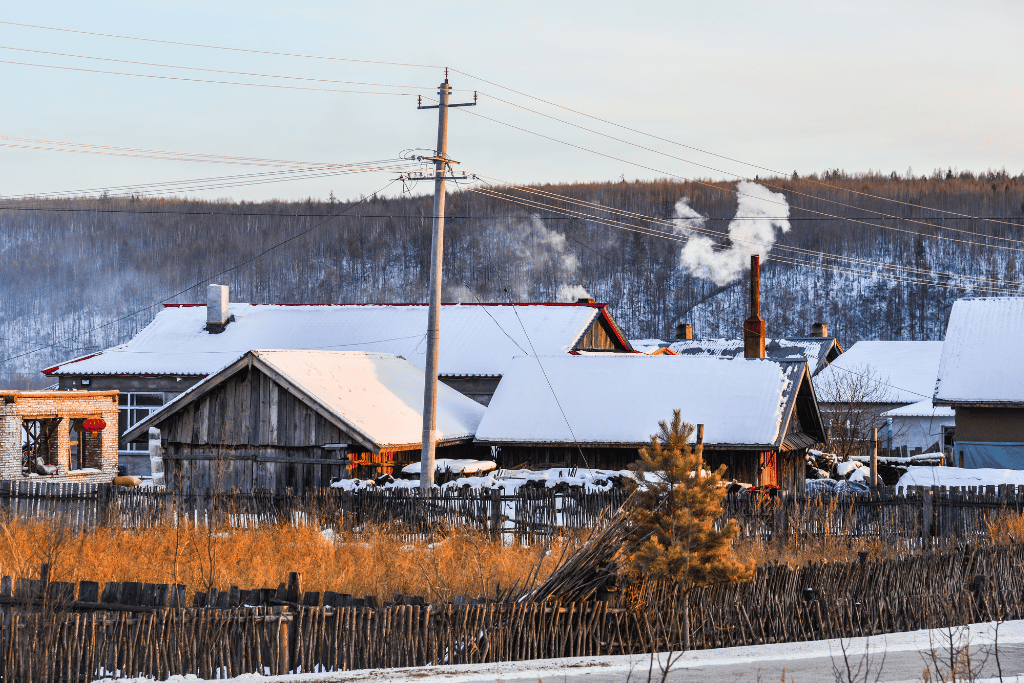
Mohe is China’s northernmost town, near the Russian border, where travellers chase -40°C bragging rights and, occasionally, the northern lights. It’s a serious add-on for cold-weather completists rather than a casual side trip, and it demands genuine winter preparation.
Best for travellers with a week or more who want the snow-village experience, not just the ice sculptures. On a short trip, skip both and go deeper on Harbin itself.
📖 Related Guide: Short on leave for a big trip? Our short trips from Singapore guide has 18 closer getaways sorted by how many days off you’ll need.
How to Dress for -25°C When You Live in Singapore
Layer properly and the cold is manageable; get it wrong and you’ll cut your evening short. The rule is three layers: a thermal base, an insulating middle and a windproof shell, plus serious attention to hands, feet and face. This is the section no guide written for a generic audience bothers with, and it’s the one that makes or breaks a tropical traveller’s trip.
What to buy in Singapore versus in Harbin
Buy your base and mid layers before you fly, and consider buying the bulky outer gear in Harbin. Thermals (merino or synthetic, never cotton) and a fleece or light down mid-layer are easy to find in Singapore.
A heavy windproof down coat and snow boots are cheaper and more plentiful in Harbin itself, where cheap snow boots at local markets can go for roughly 100 CNY (~S$18), though prices vary. Rental gear is widely available if you’d rather not own a parka you’ll use once, and winter-wear rental services in Singapore are another way to skip the sunk cost.
The kit that actually matters
- Base layer: merino or synthetic thermal top and bottoms. No cotton, it traps sweat and chills you.
- Mid layer: fleece or a light down jacket for insulation.
- Outer layer: a long, windproof down coat past the waist. This is the one that stops the wind.
- Feet: insulated, waterproof snow boots with grip, plus thermal socks. Icy pavements are a real fall risk.
- Extremities: insulated gloves that cover the wrist, a hat that covers the ears, and a scarf or balaclava for your face.
- Hand and body warmers: the stick-on heat packs last 10-12 hours and are the cheapest comfort you’ll buy.
What the cold does to your gear
Two things surprise first-timers. Phone batteries drain fast and can shut off in the cold, so keep your phone in an inside pocket against your body and carry a power bank. And the sudden jump from -25°C outdoors to a heated 25°C indoors fogs and freezes camera lenses and glasses, so give them a few minutes to adjust rather than wiping them.
📖 Related Guide: Another cold-weather trip on the cards? Our things to do in Hakone guide covers Japan’s onsen country, where the whole point is warming back up.
Getting to Harbin From Singapore

There’s no reliable year-round direct flight, so most Singapore travellers connect once through a mainland Chinese hub. Total journey time runs roughly 10 to 12 hours depending on the layover. You’ll land at Harbin Taiping International Airport (HRB).
Routing and flight time
Common one-stop routes connect through Shanghai, Guangzhou or Beijing on carriers like China Eastern and China Southern, with total travel time around 10-11 hours. It’s worth checking for any seasonal direct options when you book, since winter schedules change year to year, but plan around a single connection as the norm.
Visa for Singapore passport holders
Singapore passport holders don’t need a visa. Under a mutual visa-exemption arrangement between Singapore and China, in place since February 2024, you can enter mainland China visa-free for up to 30 days, which comfortably covers a festival trip. It’s an ongoing bilateral arrangement with no set end date, though it’s always worth a quick check before you fly. Carry a passport valid well beyond your trip; six months is the usual travel advice.
📖 Related Guide: Comparing how to reach a destination? Our Seoul to Jeju guide shows how we weigh up flights against the slower routes.
Where to Stay for the Festival
Base yourself near Central Street. It puts you within walking distance of the cathedral, the food and the riverfront, with easy ride-hailing to all three festival venues. It’s the warm, well-connected heart of the city, which matters a lot when the alternative is waiting for transport in the deep cold.
Book early. Rooms fill and prices climb from December through Chinese New Year, so lock accommodation in two to three months ahead for a January or February trip, the same lead time you’ll want for a Snow Town night if you’re adding one.
📖 Related Guide: Lining up another Asian city break for the cooler months? Our things to do in Kanazawa guide covers Japan’s little Kyoto.
A 5-Day Harbin Itinerary
Five days is the sweet spot. It’s enough for both big festival venues, a full day in the city, and an overnight at Snow Town, without rushing anything in the cold. Treat this as a skeleton and flex it to your pace.
Day 1: Ease into the cold. Land, drop your bags near Central Street, and keep the first evening low-key. Walk Zhongyang Dajie as the facades light up, see Saint Sophia Cathedral, and warm up on Russian-Harbin food. If you’re still game, Zhaolin Park’s ice lanterns are a gentle first taste of the festival.
Day 2: The big festival day. Spend the daylight hours at Sun Island Snow Sculpture Expo for the giant snow pieces, then cross the river to Ice and Snow World in the late afternoon, so you catch it in daylight, dusk and full illumination on one ticket. This is the night you flew for.
Day 3: Harbin the city. Take a slower day to recover: the ice sculptors at work, more of Central Street, a Modern ice cream in the freezing air, and the city’s Russian side. Book your Snow Town beds tonight if you haven’t already.
Day 4: Out to China Snow Town. Make the five-to-six-hour trip out to Xuexiang and stay the night, since the lantern-lit village after dark is the whole reason to come. Don’t try to round-trip it in a day.
Day 5: Snow Town morning, then out. Catch the village in the morning light and head back to Harbin for your flight home. If Snow Town isn’t your thing, swap this for a second festival evening or a further-north add-on.
FAQs
The Harbin Ice Festival runs through the depths of winter, from late December to late February, with January the peak month. The main Ice and Snow World venue opens around 20-24 December, and the festival’s official opening date is 5 January. Everything winds down through February as the sculptures begin to soften.
The 2026-2027 edition is expected to run from around 20-24 December 2026 to late February 2027, with the ceremonial opening on 5 January 2027. These dates follow the usual pattern but aren’t officially confirmed yet, so verify them closer to your trip. It’s one winter season, which is why some guides label it “2026” and others “2027”.
A peak adult ticket to the flagship Ice and Snow World is around 330 CNY (~S$60), with VIP tickets near 988 CNY (~S$180). Sun Island and Zhaolin Park are ticketed separately and cheaper. Budget roughly 700-1,000 CNY (~S$130-180) a day with a venue, meals and transport, before flights and hotels.
Yes, if you want a genuine bucket-list spectacle and you prepare for the cold. Nothing else on Earth matches an entire illuminated city built from river ice. The trade-offs are real, though: -25°C is punishing for a tropical traveller, and the festival depends on the weather holding, so go in prepared.
Mobile pay rules. Set up Alipay or WeChat Pay and link an international card before you fly, as street stalls and small restaurants are app-first. Use YouTrip for card payments at hotels and larger shops, where it converts at the wholesale rate with no FX fee, and withdraw a little yuan cash from an ATM as backup.
No. Singapore passport holders can enter mainland China visa-free for up to 30 days under the ongoing mutual visa-exemption arrangement, which covers a festival trip easily. Carry a passport valid well beyond your trip (six months is the usual travel advice) and do a quick check before you fly, as entry rules can change.
Go Cold, Come Back Glowing
Harbin is a lot of trip, and it’s worth every layer. Get the dates right, pack for the cold like you mean it, and it’s a winter spectacle nowhere else can touch.
Sort your travel money before you go so the cold is the only thing you’re battling. Tap your YouTrip card for hotels and shops at wholesale exchange rates with no foreign transaction fees, pull yuan from an ATM with your first S$400 each month free, and link the card to Alipay for everything small.
Not a YouTrooper yet? Sign up with code YTBLOG5 for a free YouTrip card and S$5 in credit. Lock in your rate across 12 currencies and spend in 150+ countries with no foreign transaction fees. Check out the latest YouTrip Perks, join our Telegram for deals, and swap tips in our Community Group.