



Uzbekistan is having a moment on TikTok, here’s how to actually plan the trip
Uzbekistan’s been all over ‘TravelTok’ this year. Turquoise-tiled madrasas, plov cauldrons the size of bathtubs, a Genghis Khan legend at every other minaret — the footage isn’t exaggerating. This guide sorts the four must-see cities into a real itinerary and prices it all in SGD.
| Quick Planner | Uzbekistan at a glance |
|---|---|
| ⏱️ Time needed | 7 to 10 days for the full Tashkent-Samarkand-Bukhara-Khiva loop |
| 📅 Best time to go | April to June or September to November (shoulder seasons) |
| 🚄 Getting around | Afrosiyob high-speed train between the four main cities |
| 🛂 Visa | Visa-free for Singapore passport holders, up to 30 days |
| 💰 Rough daily cost | S$40 to S$70 a day, mid-range, excluding flights |
| 💳 Pay with | Tap your YouTrip card where cards work; withdraw som from an ATM for cash-only stalls |
Here’s the shortlist before the deep dive:
| City | Signature Stop | Cost (~S$) | Best for |
|---|---|---|---|
| Tashkent | Chorsu Bazaar + the Metro | Free to ~S$20 | Arrival base, food, transit art |
| Samarkand | Registan Square | ~S$10 | The single most-photographed site in the country |
| Bukhara | Poi Kalyan complex | Free to enter square | Walkable old city, best evenings |
| Khiva | Itchan Kala walled city | ~S$27 | The most complete medieval town |
| Chimgan/Amirsoy | Cable car + mountain air | ~S$15 | Day trip out of Tashkent |
Table of Contents
- Is Uzbekistan Worth Visiting?
- How Many Days Do You Need in Uzbekistan?
- Best Time to Visit Uzbekistan
- Tashkent: Things to Do in the Capital
- Samarkand: Silk Road Icons
- Bukhara: The Living Old City
- Khiva: The Walled Museum City
- Day Trips Into Nature
- What to Eat in Uzbekistan
- What to Buy: Souvenirs and Local Crafts
- Uzbekistan With Kids
- Dress Code and Cultural Etiquette
- Getting Around Uzbekistan
- Paying in Uzbekistan: Cash, Cards and the Som
- Uzbekistan FAQs
Is Uzbekistan Worth Visiting?
Yes, it’s cheaper to visit than most people expect, and less complicated to plan than it looks. Uzbekistan holds the Silk Roads: Zarafshan-Karakum Corridor, a UNESCO World Heritage listing spanning 31 sites across the region. Its four headline cities each look and feel distinct from each other rather than repeating the same checklist.
Tashkent is a green, Soviet-modern capital with subway stations that double as art museums. Samarkand is the Silk Road postcard, turquoise domes and the Registan. Bukhara is a living old town you can walk end to end in an afternoon, and Khiva is a walled city so intact it feels staged, except nobody’s staging it.
Add plov (a traditional Uzbek rice dish), strangers who’ll invite you for tea, and a currency that makes everything feel affordable. The “underrated” label going around social media is fair.
The trade-off: English is limited outside tour circles, and roads between cities are patchy. The standard Registan-Bukhara-Khiva checklist can also feel repetitive on its own, so build in variety: a day trip into the mountains, a food crawl through Chorsu Bazaar.
📖 Related Guide: Weighing Uzbekistan against its bigger Central Asian neighbour? Our Kazakhstan things-to-do guide covers Almaty, Astana and the Silk Road city of Turkistan.
How Many Days Do You Need in Uzbekistan?
Seven to ten days covers the full loop comfortably. Anything shorter means picking two cities instead of four; anything longer lets you add a slower pace or a second day trip.
- 4 to 5 days: Tashkent (1 to 2 days) plus Samarkand (2 to 3 days) by high-speed train. The most time-efficient version if you’re short on leave.
- 7 days: Add Bukhara, connected to Samarkand by a short Afrosiyob hop. This is the version most first-timers land on.
- 9 to 10 days: Add Khiva, which sits furthest west and needs either a domestic flight back to Tashkent or a long desert drive. Build in a rest day; the distances add up.
Most Uzbekistan itineraries run in a loop: fly into Tashkent, train to Samarkand, train to Bukhara, then either fly Urgench-Tashkent to bookend Khiva or backtrack the way you came. First-timers unsure of the logistics often book a guided small-group tour for the intercity legs and DIY the city days.
📖 Related Guide: Not keen on planning every train transfer yourself? Our best travel agencies in Singapore guide rounds up agencies that package multi-city Central Asia routes.
Best Time to Visit Uzbekistan
April to June or September to November, the shoulder seasons, give you the best weather without the summer heat. Uzbekistan has a continental climate: brutal 40°C summers and cold, sometimes snowy winters, so the shoulder months are when most travellers go.
- Spring (April to June): Mild days, green landscapes, and the desert cities haven’t hit their summer peak yet. The most popular window.
- Autumn (September to November): Similar mild conditions plus harvest season, good for food and market visits.
- Summer (July to August): Punishingly hot in Bukhara and Khiva, often past 40°C. Doable if you front-load sightseeing to early morning, but not the comfortable choice.
- Winter (December to February): Cold, sometimes below freezing in Tashkent and the mountains, but the fewest crowds and cheapest hotel rates. Chimgan and Amirsoy switch to ski season.
📖 Related Guide: Comparing shoulder-season logic against a similarly extreme-climate destination? Our best time to visit Switzerland guide breaks down the same avoid-the-extremes approach month by month.
Tashkent: Things to Do in the Capital
Most trips start and end here, and the capital deserves more than a layover. It’s a green, wide-avenued city rebuilt after a 1966 earthquake into a showcase of Soviet modernism. A brand-new landmark has just joined the mix, too.
Chorsu Bazaar
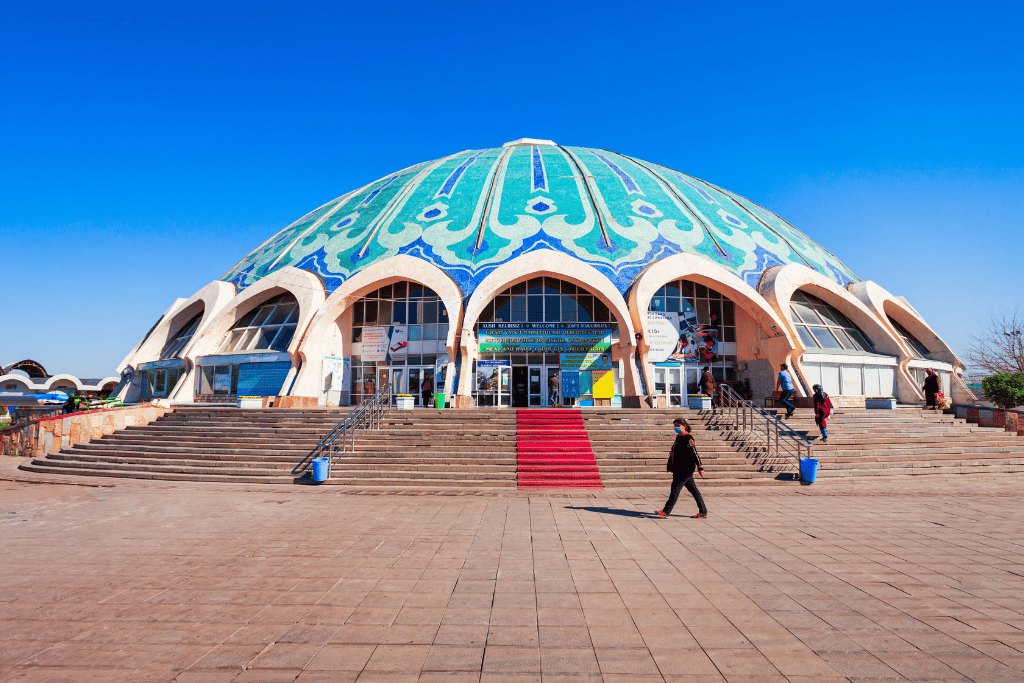
A 2,000-year-old market trading spot under one unmissable blue dome. Chorsu Bazaar’s name comes from the Persian for “four streams”, or crossroads, marking its old position at the junction of Silk Road trade routes. Inside the domed hall it’s meat, dairy and spices; step outside and it’s fresh produce, dried fruit, nuts, and a street-food section thick with the smoke of grilled shashlik.
- 📍 Chorsu Square, Tashkent
- 🕘 Daily, roughly 8 AM to 7 PM
- 💰 Free to enter, pay per item
- 💡 Go hungry. The upstairs level (nuts, dried fruit) skews more tourist-friendly, the ground floor is where locals actually shop.
Tashkent Metro
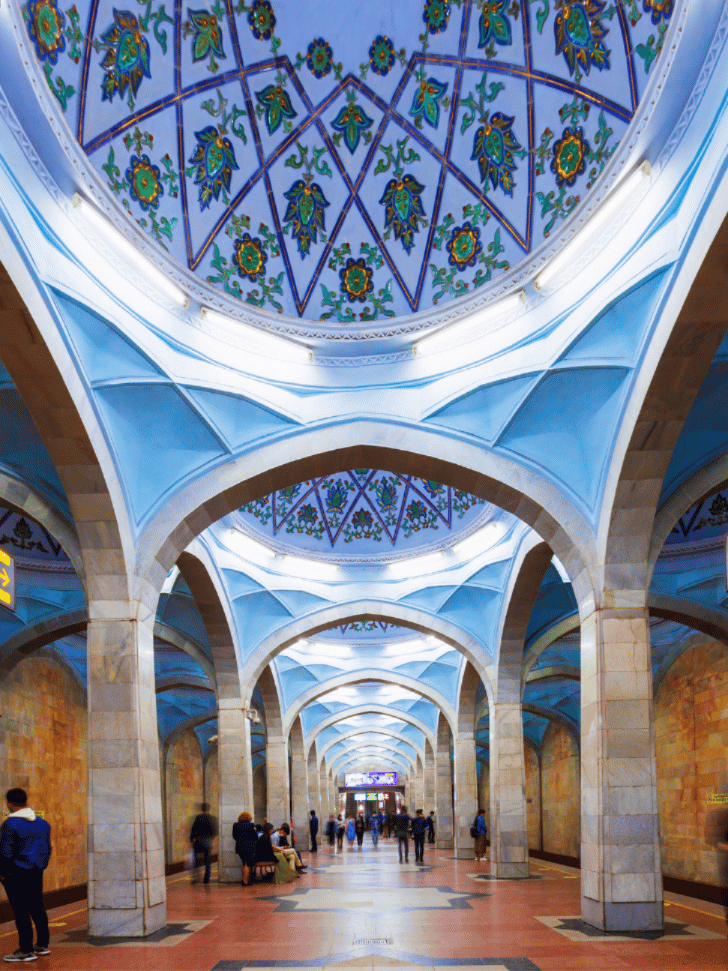
The Tashkent Metro is a working subway, but several stations are decorated like museums. Opened in 1977, it has four lines and dozens of stations, several lavish enough to be mistaken for a mosque or museum lobby.
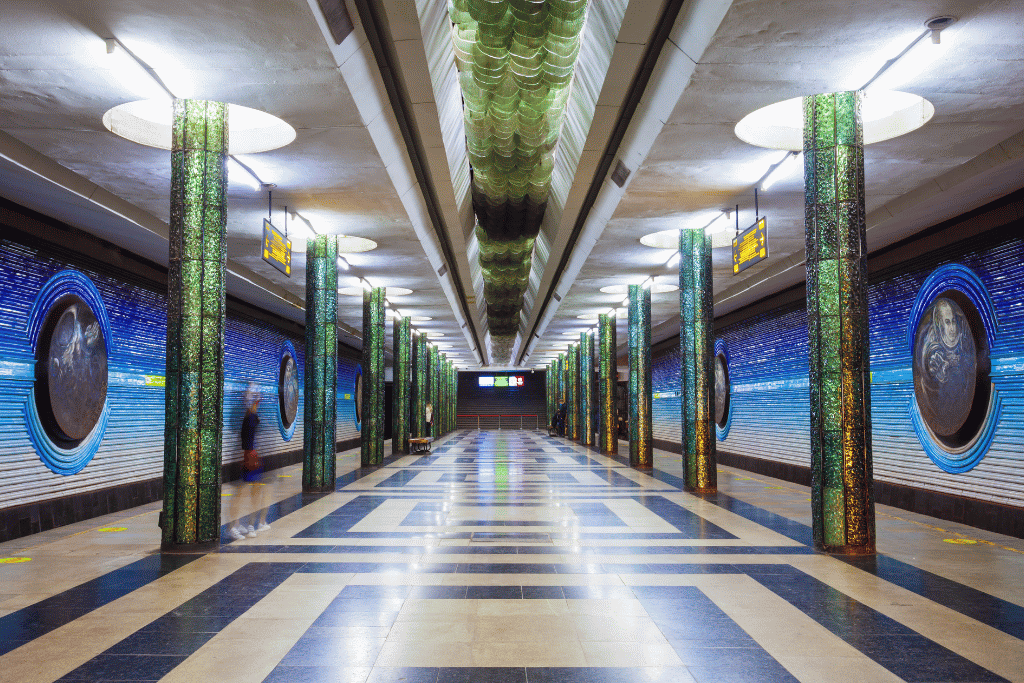
Kosmonavtlar (Cosmonaut) Station is decorated with portraits of Soviet-era astronauts. Alisher Navoi Station is capped with blue domes that wouldn’t look out of place on a Timurid monument. Photography inside the network was only permitted from 2018, since the metro also functions as a bomb shelter.
- 💰 1,700 UZS (~S$0.20) per ride by tap card; slightly more for a paper QR ticket
- 💡 Ride two or three stops just to see the stations, this is one of the cheapest sightseeing activities in the city.
Hazrati Imam Complex and the Islamic Civilization Center
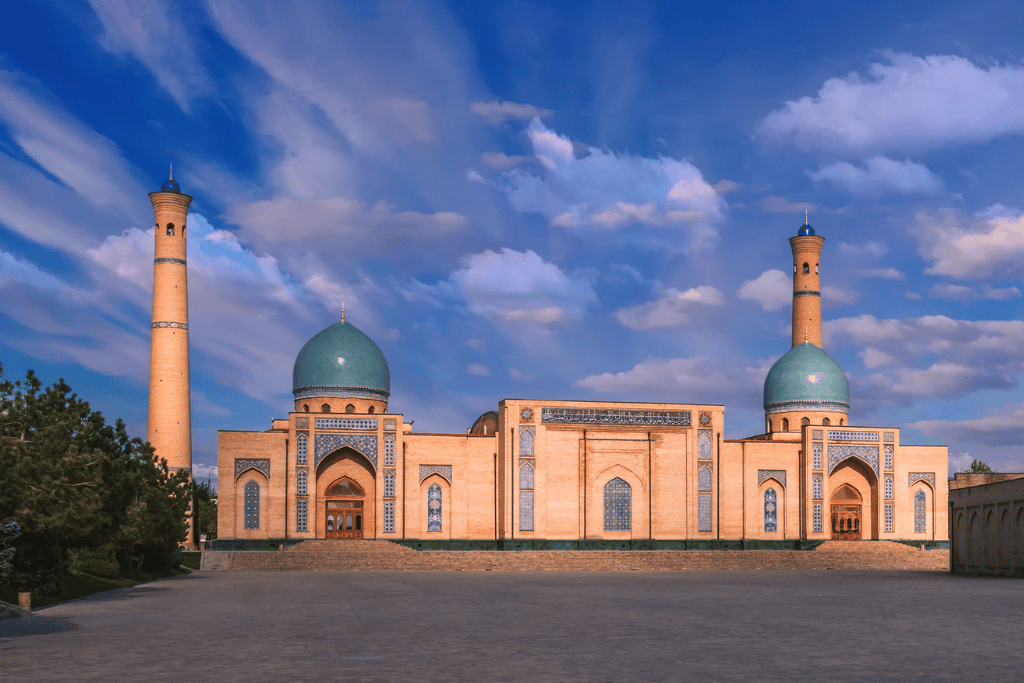
A historic religious square with a brand-new museum next door. The Hazrati Imam Complex is home to the Barak Khan Madrasah and Hazrati Imam Mosque, along with a library housing one of the world’s oldest surviving Qurans.
Right next door, the Islamic Civilization Center opened to the public in March 2026. It’s a purpose-built museum on Uzbekistan’s pre-Islamic and Islamic history, with English-language guided tours and a nightly light show inside its central dome.
- 📍 Hast Imam Square, Tashkent
- 🕘 Daily, roughly 9 AM to 10 PM (Islamic Civilization Center)
- 💰 Islamic Civilization Center: guided tour from around US$15 to 25 (~S$19 to S$32) depending on package
- 💡 No photos allowed of the ancient Quran itself, budget a separate small entrance fee for that room.
Besh Qozon Central Asian Plov Centre
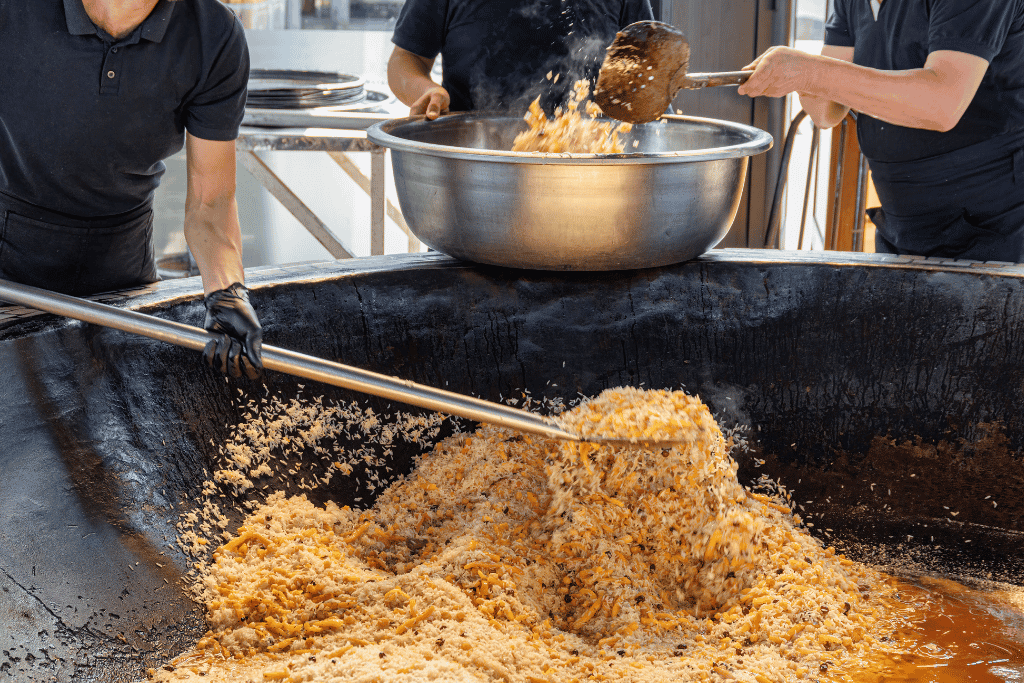
Cooks stir giant cauldrons (qozon) of plov over wood fire in full view of diners at Besh Qozon. It’s as much a show as a meal, plating out rice, carrots, chickpeas and lamb or beef by the hundreds of servings an hour. That’s why it’s one of the most-filmed food stops in the country.
- 📍 Near the TV Tower, Tashkent
- 🕘 Daily, roughly 8 AM until the day’s plov runs out (usually mid-afternoon)
- 💰 A plate runs around 50,000 to 60,000 UZS (~S$5.50 to S$6.50), more for the premium Devzira Fergana Valley version
Magic City
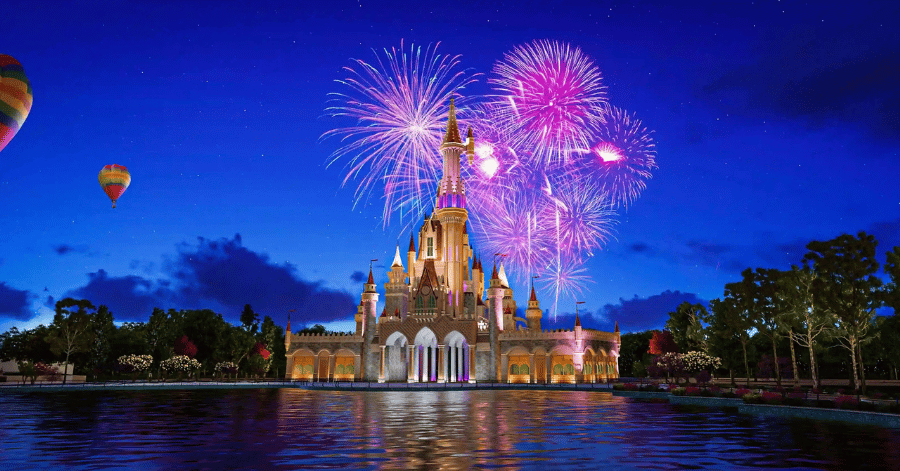
Image Credits: magiccity.uz
A 21-hectare theme park nicknamed the “Disneyland of Central Asia.” Magic City has a castle centrepiece, an aquarium, and a Ferris wheel with a zip line. It’s enough rides and fountain shows to fill a half-day with kids in tow.
- 🕘 Daily, 10 AM to 10 PM
- 💰 Free to enter; rides and attractions charged separately (children’s rides from around 30,000 UZS / ~S$3.50, the aquarium around 100,000 UZS / ~S$11 for adults)
Amir Timur Square
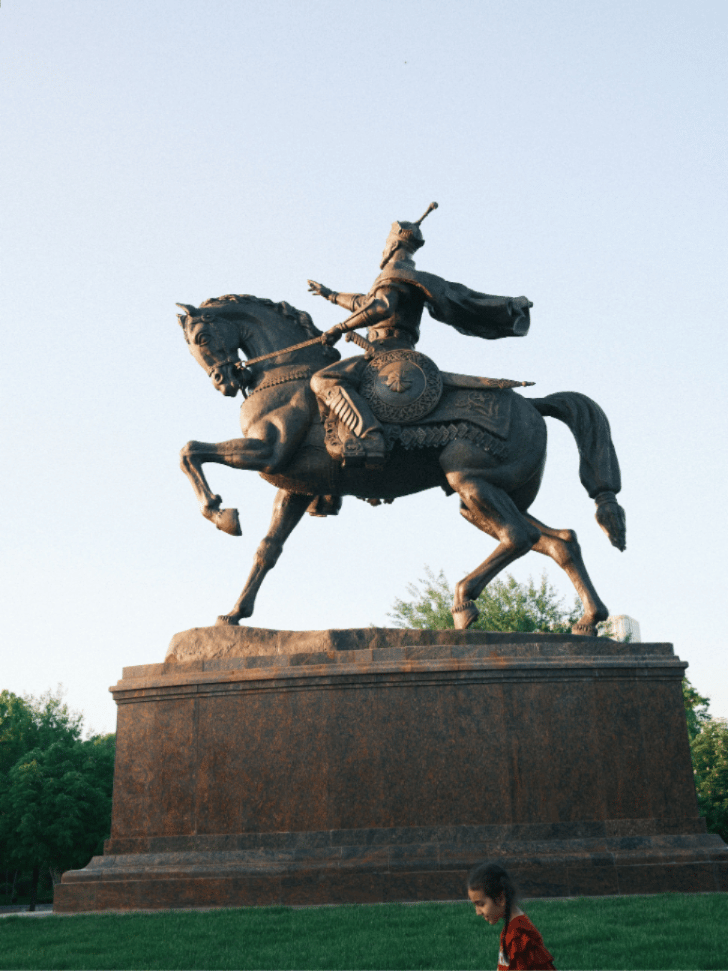
The city’s central landmark. A statue of 14th-century conqueror Amir Timur stands at the centre of this square, ringed by fountains and plane trees, and it’s the spot most Tashkent walking routes are built around.
- 💡 Come around sunset, when the fountains are running and the square fills with locals rather than tour groups.
Sayilgoh Street
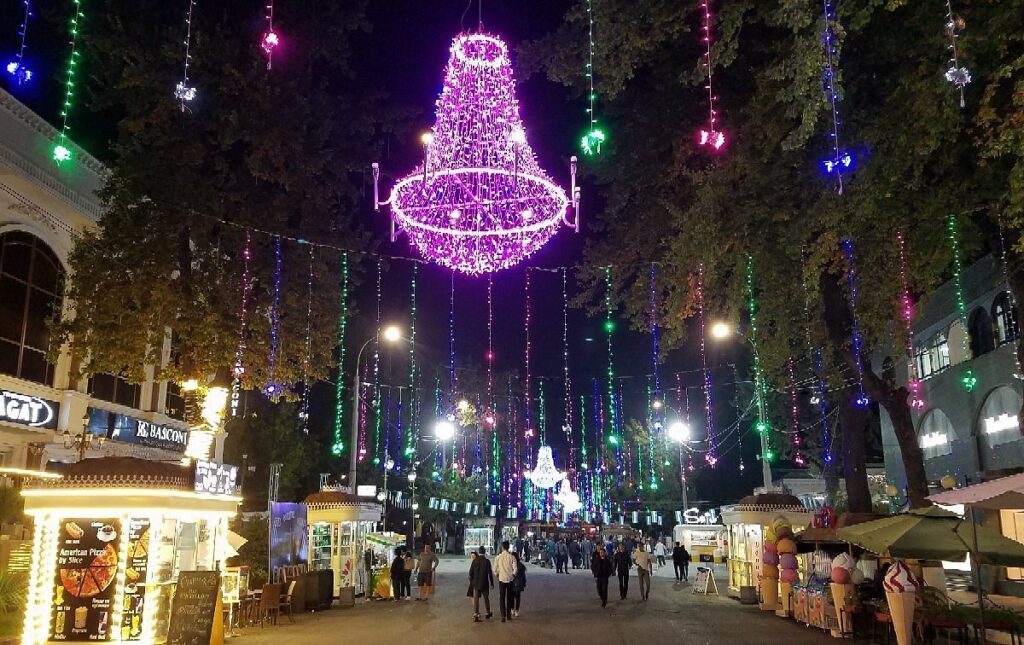
Image Credits: TripAdvisor
Tashkent’s liveliest evening walk, nicknamed “Tashkent’s Broadway.” The pedestrian street running off Amir Timur Square fills with street performers, cafés and shisha bars after dark.
- 💡 This is also where scooter and bike rentals cluster, an easy way to cover more ground once the day’s heat breaks.
📖 Related Guide: Landing and want data working the moment you touch down? Our best travel eSIMs guide compares eSIMs that cover Central Asia.
Samarkand: Silk Road Icons
Samarkand is the reason most people book this trip in the first place. It’s two hours from Tashkent on the Afrosiyob high-speed train (from around 260,000 UZS / ~S$28 in economy), and every ranking guide agrees it’s the country’s marquee stop.
Registan Square
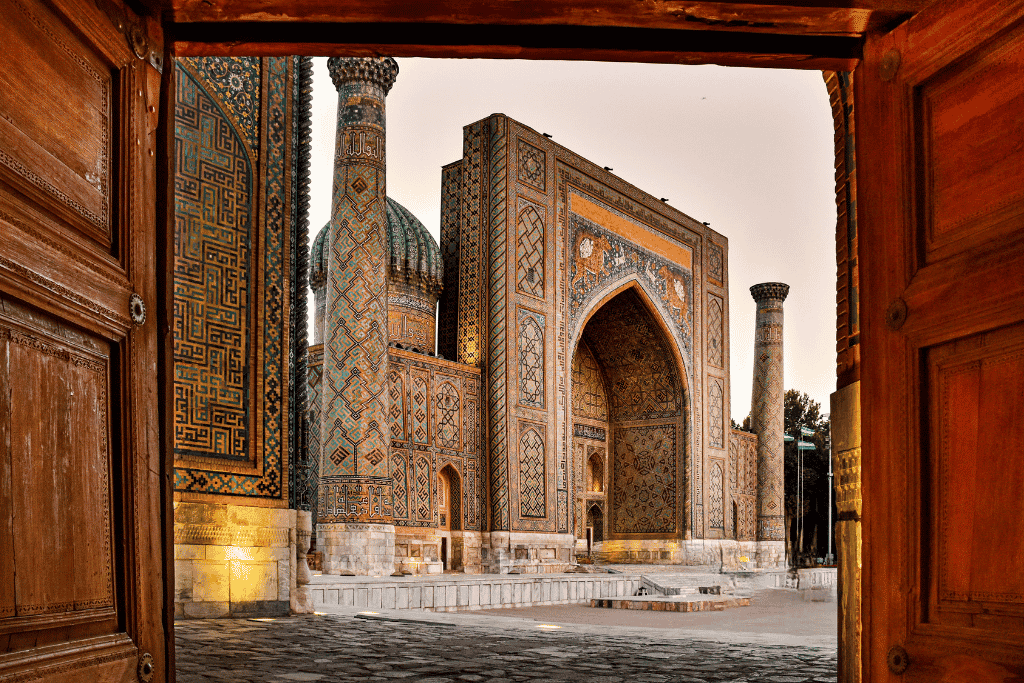
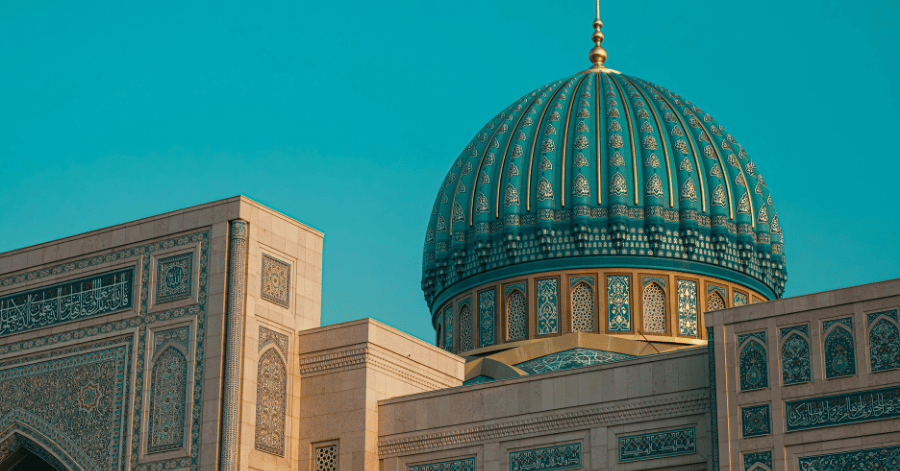
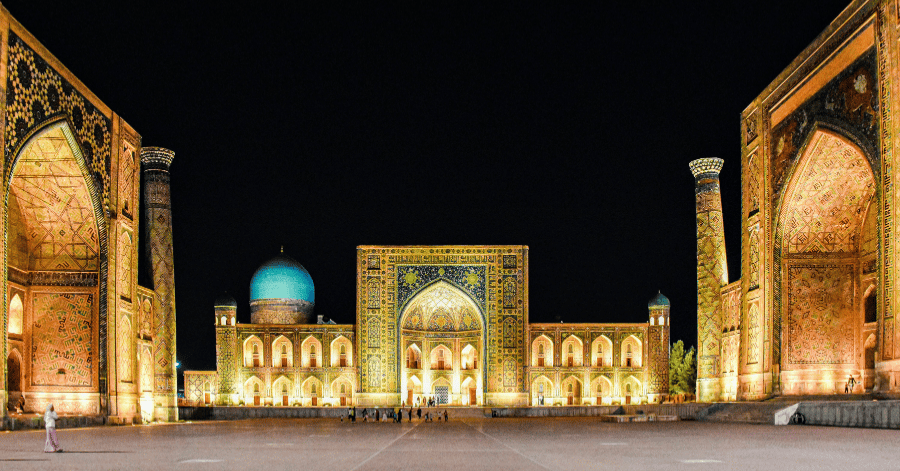
Registan Square is the single most photographed site in Central Asia. Three madrasas built between the 15th and 17th centuries face each other across a plaza of turquoise tilework, the Ulugh Beg, Sher-Dor and Tilya-Kori madrasas. Entry covers all three buildings plus their small museums, and evening light shows run seasonally.
- 📍 Registan Square, Samarkand
- 🕘 Daily, roughly 8 AM to 8 PM
- 💰 Around 100,000 UZS (~S$11) for foreign adults
- 💡 Visit at opening or just before sunset to avoid both the heat and the tour-bus crowds.
Gur-e-Amir Mausoleum
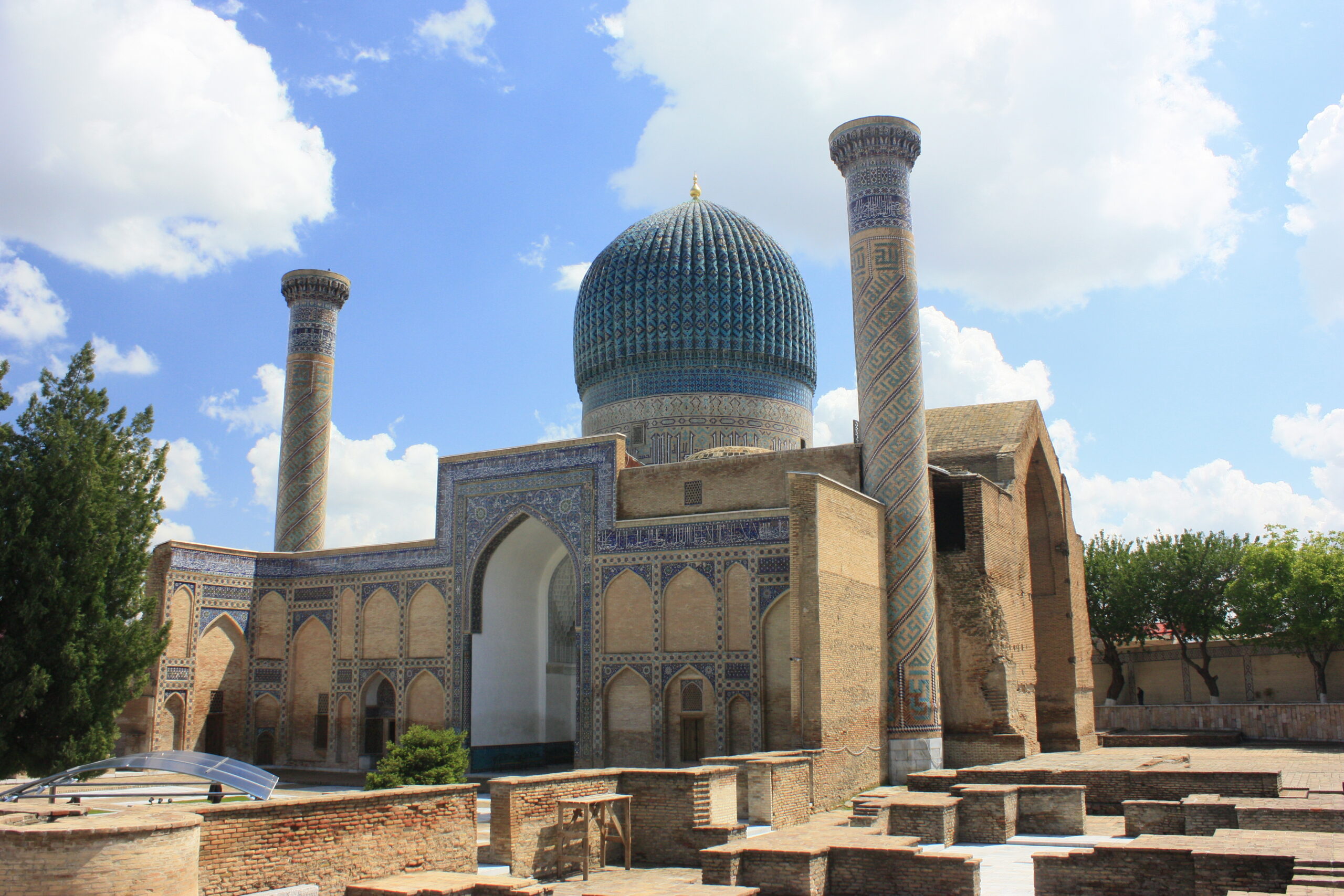
The resting place of the empire-builder whose name is on half the country’s monuments. Gur-e-Amir holds the tomb of Timur (Tamerlane) along with several sons and grandsons, under a ribbed azure dome that later architects cite as a direct influence on India’s Taj Mahal.
- 📍 Central Samarkand, a short walk from Registan
- 💰 Around 75,000 UZS (~S$8)
Shah-i-Zinda Necropolis
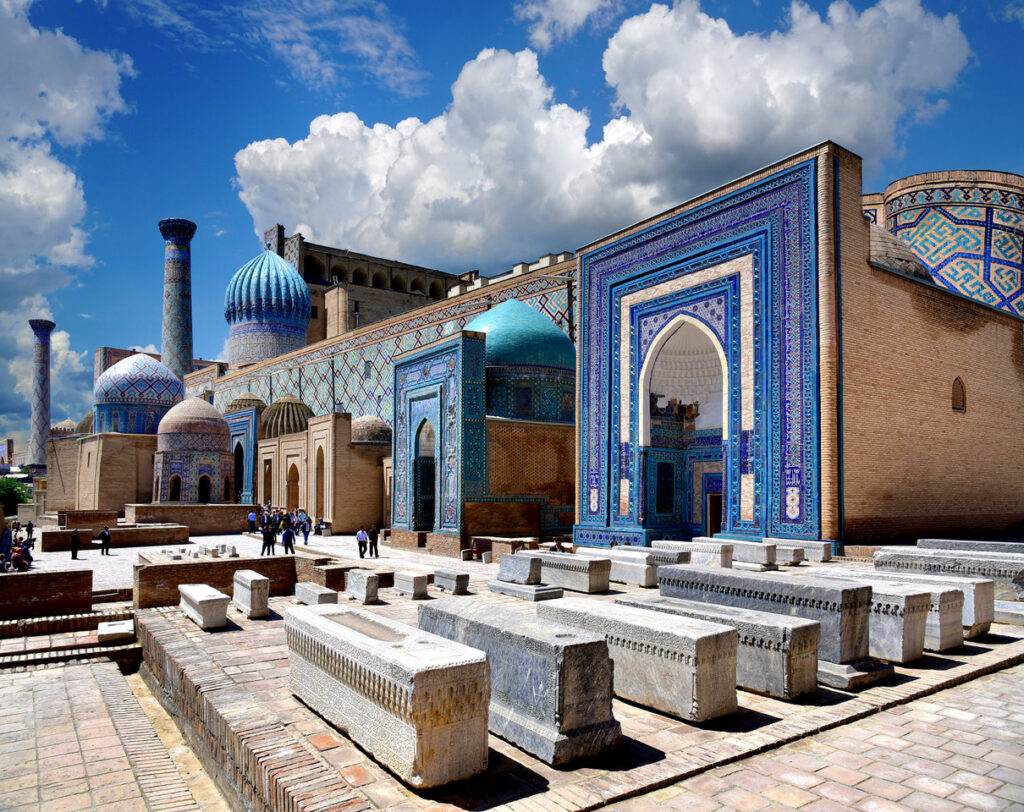
Image Credits: dwc.kg
A single narrow lane of blue-tiled tombs, and one of the most atmospheric walks in the country. Shah-i-Zinda (“the living king”) is a corridor of mausoleums built between the 11th and 15th centuries, each wall a different pattern of glazed tile. Its far end is believed to hold the grave of a cousin of the Prophet Muhammad.
- 💰 Entry fees here have risen recently and sources disagree, budget roughly 50,000 to 80,000 UZS (~S$5.50 to S$9) and confirm the price at the gate
- 💡 Go early morning; the narrow lane gets packed with midday tour groups.
Bibi-Khanym Mosque
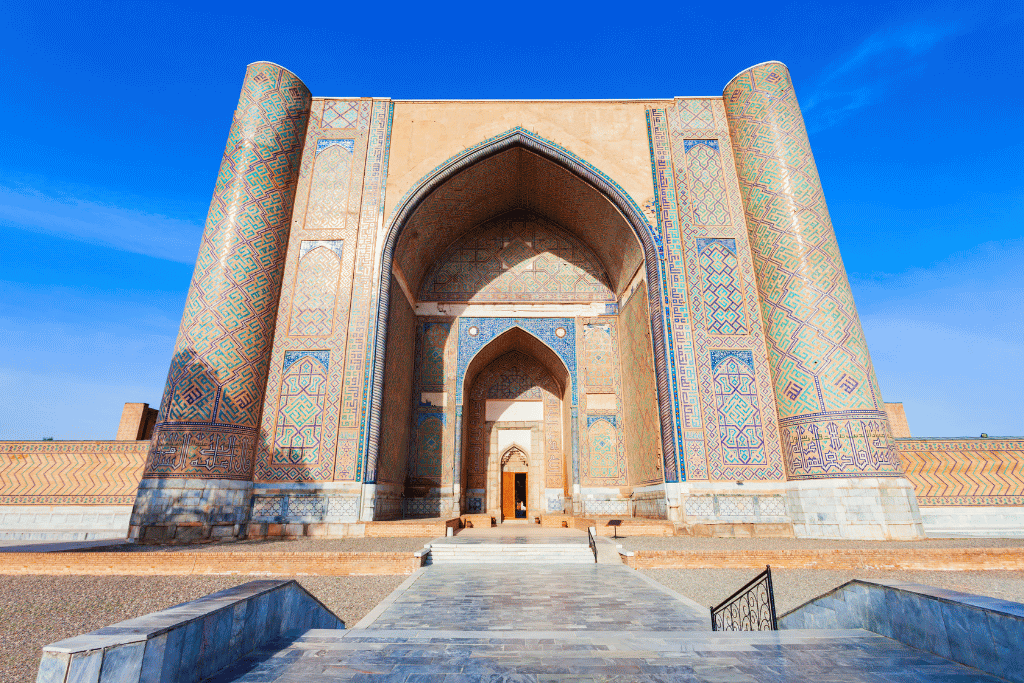
Once one of the largest mosques in the Islamic world, now a partially restored ruin you can still wander through. Built under Timur’s orders in under five years using elephants shipped in from India to haul stone, Bibi-Khanym Mosque’s scale is still obvious even in its current, patchwork-restored state.
- 💰 Around 75,000 UZS (~S$8) for foreign visitors (locals pay less)
📖 Related Guide: Booking the long-haul leg out to Central Asia? Our best miles credit cards in Singapore guide ranks which cards earn the most on international flights.
Bukhara: The Living Old City
Bukhara feels lived-in rather than roped-off. It’s a walkable old town where the madrasas share a street with working teahouses and carpet shops. Another Afrosiyob leg (around 1.5 hours from Samarkand) gets you there.
Poi Kalyan Complex
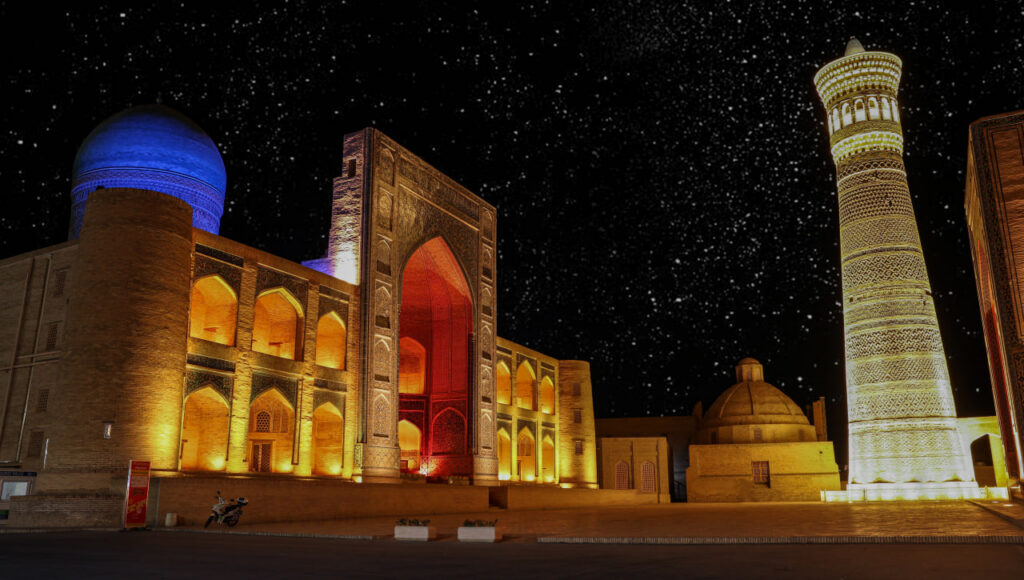
Image Credits: Orient Expeditions
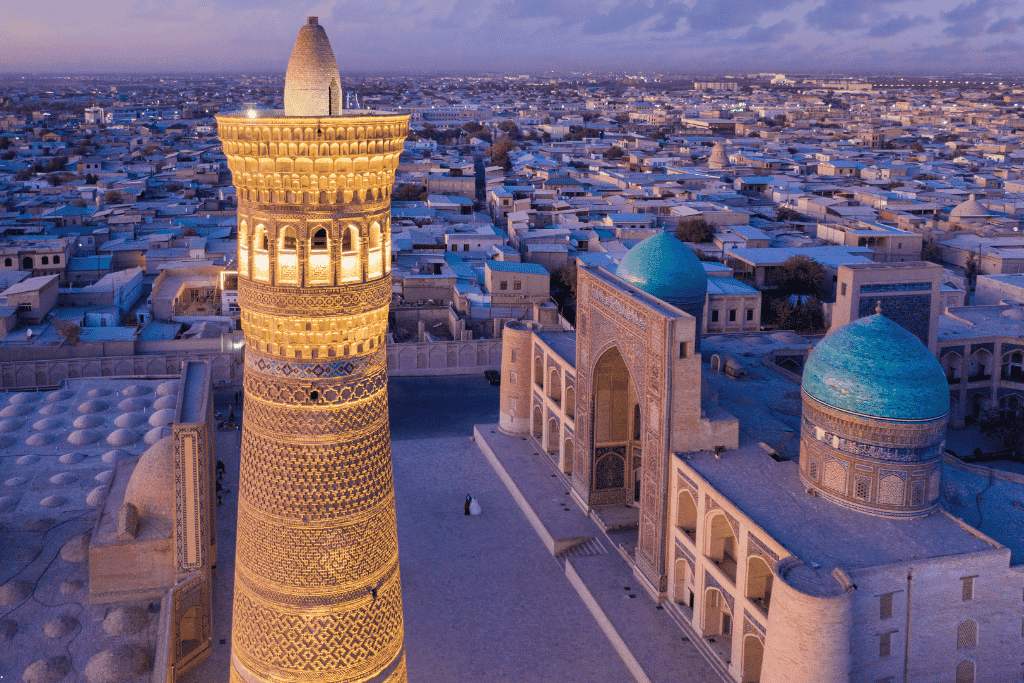
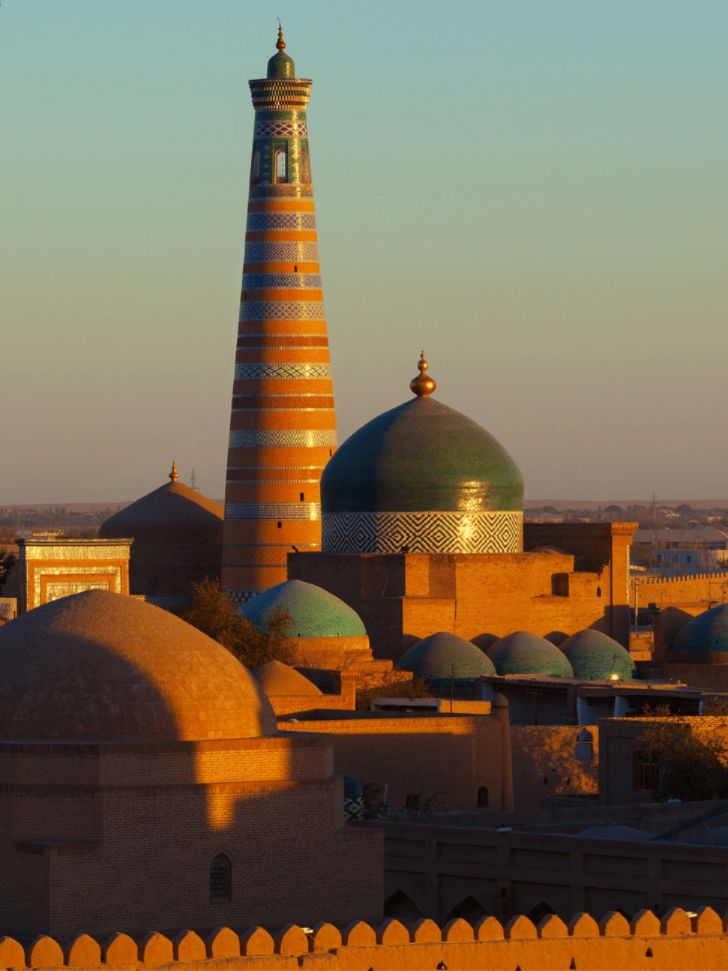
The Poi Kalyan complex pairs three landmark structures around one square, Bukhara’s most complete Silk Road set piece. It combines the 12th-century Kalyan Minaret, said to be the only structure Genghis Khan spared when he sacked the city, with the Kalyan Mosque and the still-active Miri Arab Madrasah opposite.
Local legend has it Genghis Khan’s hat fell off as he craned his neck to see the minaret’s full 45-metre height. He took that as a sign to leave it standing.
- 📍 Central Bukhara
- 💰 Mosque entry around 20,000 UZS (~S$2.20); minaret climb currently closed to visitors
- 💡 Come back after dark, the square is lit and far quieter once the day-tour groups clear out.
Ark of Bukhara
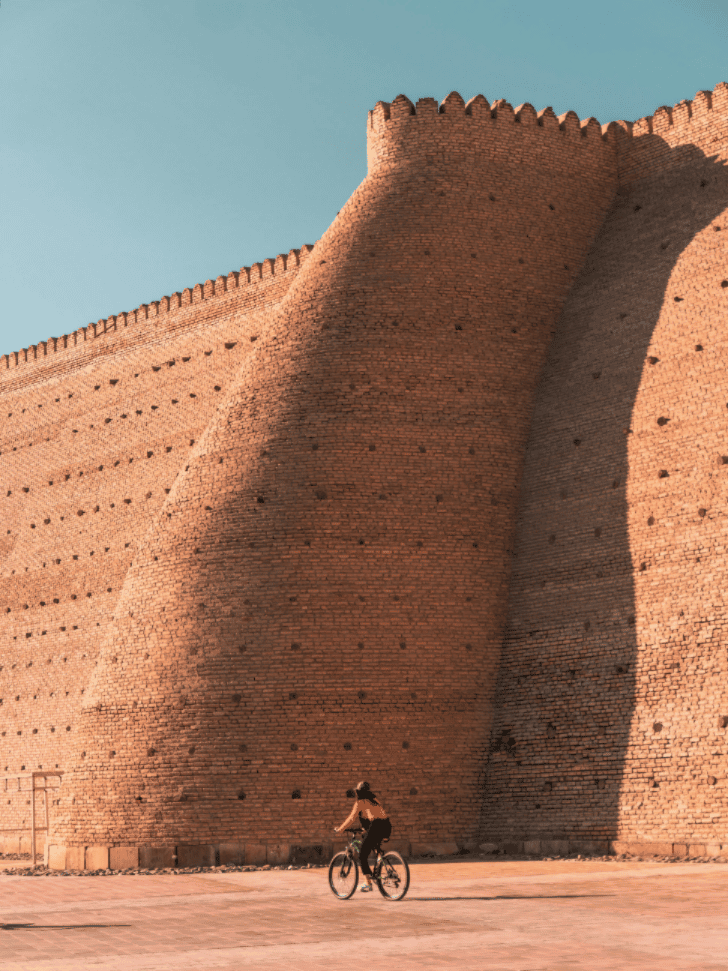
A fortress that housed the city’s rulers for over a thousand years, right up until 1920. The Ark of Bukhara is a walled citadel with a handful of museums inside its surviving structures: textiles, coins, and the throne room where the last Emir once received visitors. He was overthrown by the Red Army in 1920.
- 💰 Sources disagree here, budget roughly 40,000 to 60,000 UZS (~S$4.50 to S$6.50)
Lyab-i Hauz
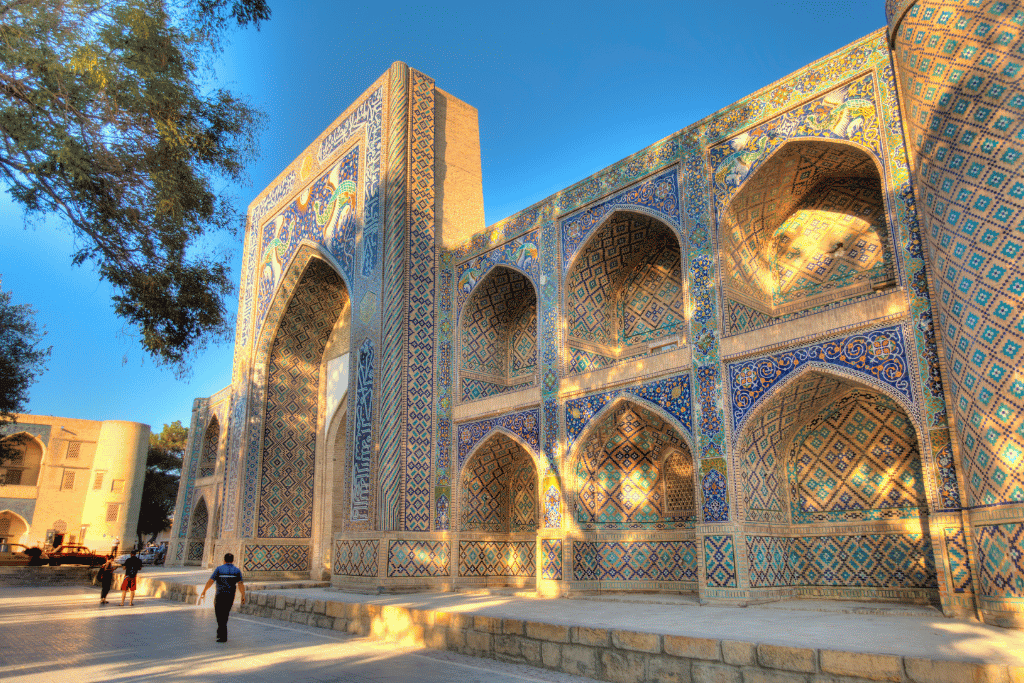
A 17th-century pool ringed by mulberry trees, teahouses and carpet stalls, best visited after sunset. Lyab-i Hauz has been Bukhara’s social hub since it was dug in 1620, and today it’s where locals and tourists alike sit out with tea or a beer as the surrounding madrasas light up.
- 💰 Free to sit; tea and food priced per venue
- 💡 This is also where the city’s better dinner-and-performance restaurants cluster, worth booking ahead in peak season.
📖 Related Guide: Wondering what else in the region uses a card-tap fare like Tashkent’s metro? Our Kazakhstan ATM withdrawal guide covers cash logistics next door if you’re combining both countries.
Khiva: The Walled Museum City
Khiva is the furthest city on the standard route and the most complete. Its entire old town sits inside one continuous wall. That’s why it can feel like the tidiest, most complete stop on the trip.
Itchan Kala
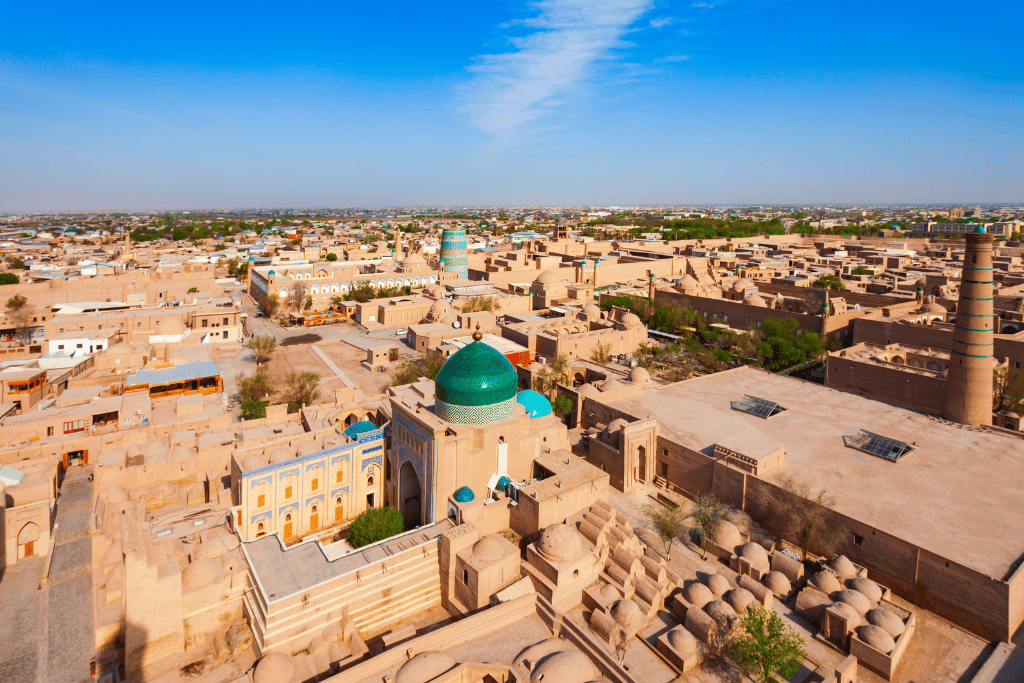
Itchan Kala is an entire walled inner city, and the first place in Central Asia added to the UNESCO World Heritage list. Its mud-brick walls enclose dozens of mausoleums, madrasas and minarets within a few hundred metres, dense enough that you can cover most of it on foot in a day.
- 💰 A combined ticket covering around 16 sites inside the walls runs about 250,000 UZS (~S$27), valid across two days
- 💡 Stay inside the walls overnight if you can, most day-trippers leave by evening and the old town empties out into something close to silent.
Kalta Minor Minaret
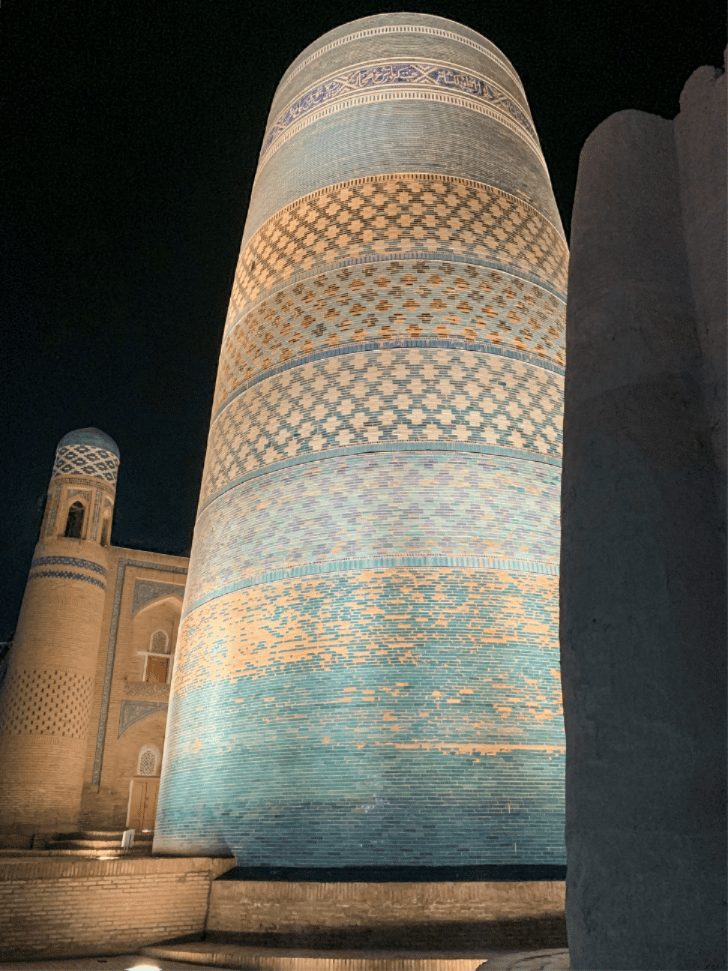
An unfinished minaret that was meant to be the tallest in the Muslim world. Construction on the Kalta Minor Minaret began in 1852, but the ruler who commissioned it died before it was finished. What’s left is a squat, wide, brilliantly tiled tower that never got its intended height, hence the name, “short minaret.”
- 💰 Free to view from outside, included in the Itchan Kala combined ticket
- 💡 It’s one of the first things you’ll see coming through the West Gate, worth pausing at before the crowds build up.
Kunya-Ark and Sunset
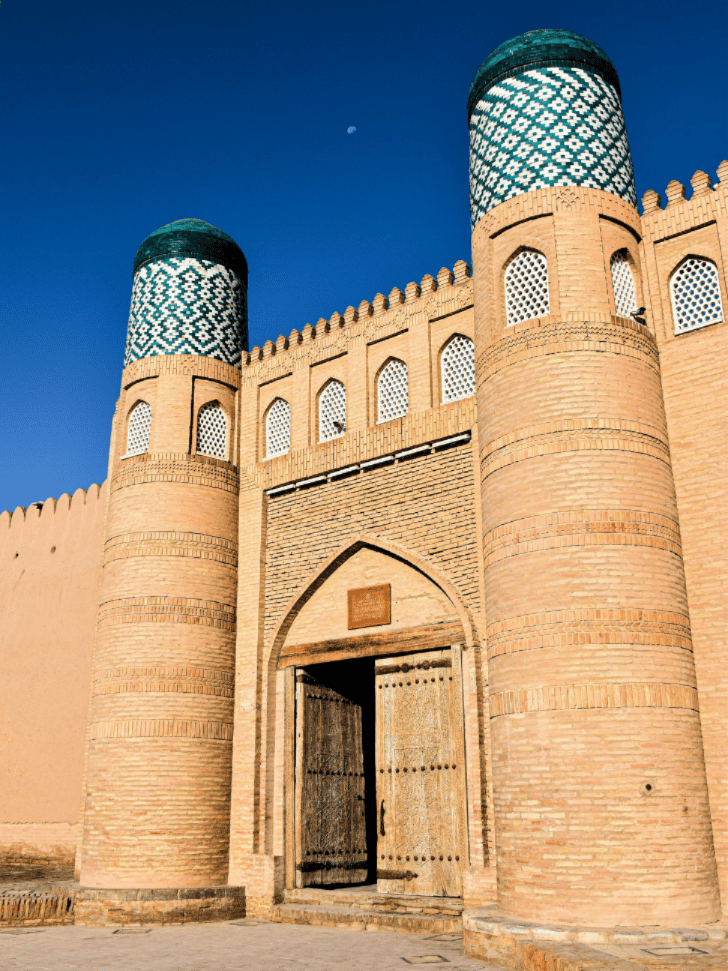
Kunya-Ark was the old citadel and seat of Khiva’s rulers, and its highest surviving point is the single best sunset spot in the city. It looks out over the entire walled town, worth timing your visit for late afternoon.
- 💰 Included in the Itchan Kala combined ticket
📖 Related Guide: Flying home via a connection and need travel cover sorted before you go? Our best travel insurance Singapore guide compares 8 plans side by side.
Day Trips Into Nature
Not everything worth seeing is a madrasa. Uzbekistan’s mountains and deserts are an easy contrast to the city-hopping, especially if you’ve built in the extra day.
Chimgan Mountains and Amirsoy Resort
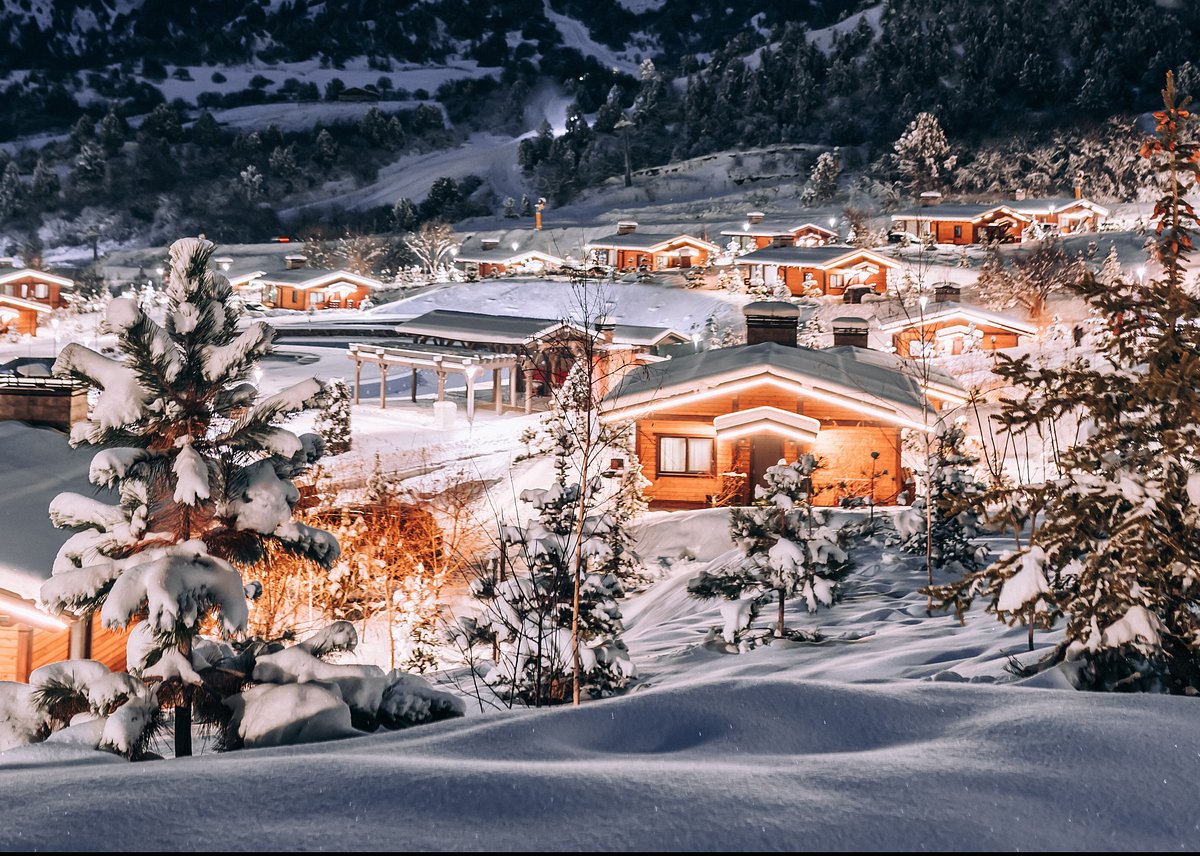
Image Credits: Tripadvisor
A genuine mountain escape barely an hour from the capital. Around 65 to 90km from Tashkent, the Chimgan Mountains hold the Amirsoy ski resort, a cable car running up to over 2,200m, hiking trails in summer and skiing from around November to March. Locals nickname the range “the Uzbek Switzerland,” and a handful of operators now run guided heli-skiing trips into the backcountry above the resort.
- 💰 Lift tickets from around 8 USD (~S$10), more for a return or multi-ride day pass
- 💡 Altitude can bring on a headache if you go straight up without acclimatising, pace yourself on the higher trails.
Charvak Reservoir
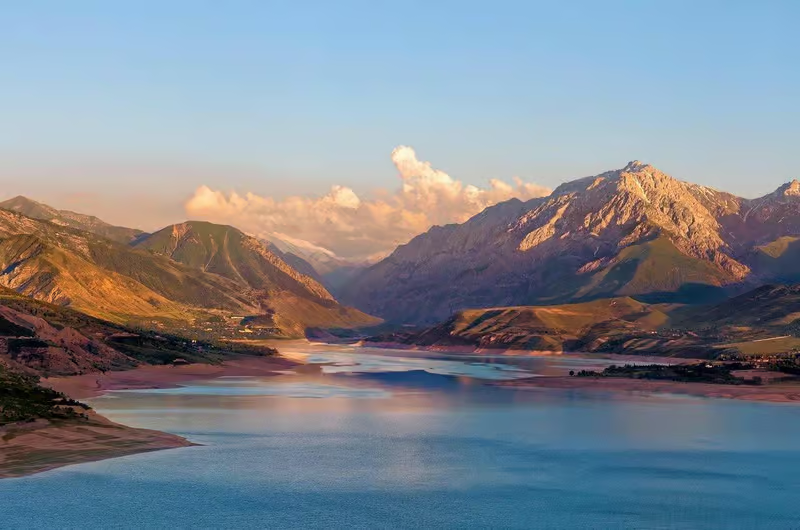
Image Credits: GetYourGuide
A turquoise mountain lake popular for a day out on the water. Charvak Reservoir sits at the base of the same mountain range, formed where the Pskem, Koksu and Chatkal rivers converge, with paragliding, boat rides and lakeside guesthouses if you’d rather stay overnight than day-trip.
- 💰 Boat rides and tandem paragliding (roughly late March to mid-October) are priced per operator and paid on-site in cash, a shared boat ride runs upwards of 400,000 UZS (~S$44)
- 💡 Combine it with Chimgan or Amirsoy on the same day trip, they’re a short drive apart.
Aral Sea (Moynaq Ship Graveyard)
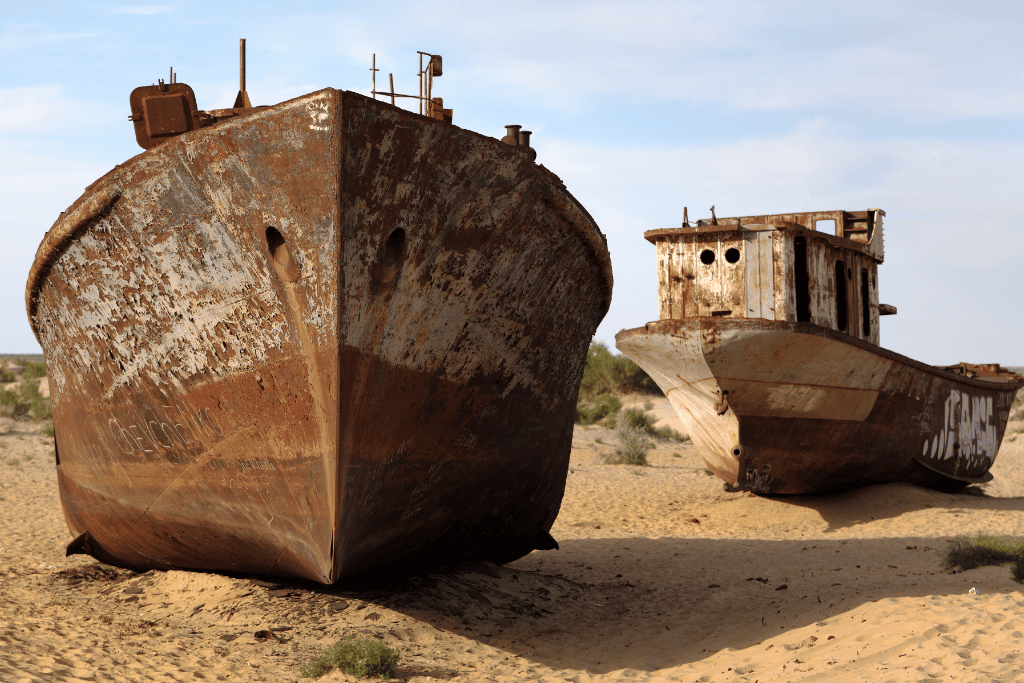
A grim, memorable stop that’s nothing like the rest of the trip. Once the world’s fourth-largest lake, the Aral Sea shrank drastically after Soviet-era irrigation diverted its feeder rivers for cotton farming, leaving rusted fishing boats stranded on dry seabed near the town of Moynaq. It’s a long trip out (typically bundled into a multi-day western Uzbekistan tour rather than a single day trip from Tashkent), but nothing else on the route looks like it.
📖 Related Guide: Renting a car to explore beyond the train line? Our international driving licence Singapore guide covers what you need before driving overseas.
What to Eat in Uzbekistan
Food is arguably as strong a reason to visit as the architecture. Expect heavy use of lamb, rice, dumplings and fresh bread, portions are generous and prices are low even by regional standards.
Plov (Osh)
| Dish | Where to try | Cost (~S$) |
|---|---|---|
| Plov | Besh Qozon Plov Centre, Tashkent | S$3.50 to S$5 |
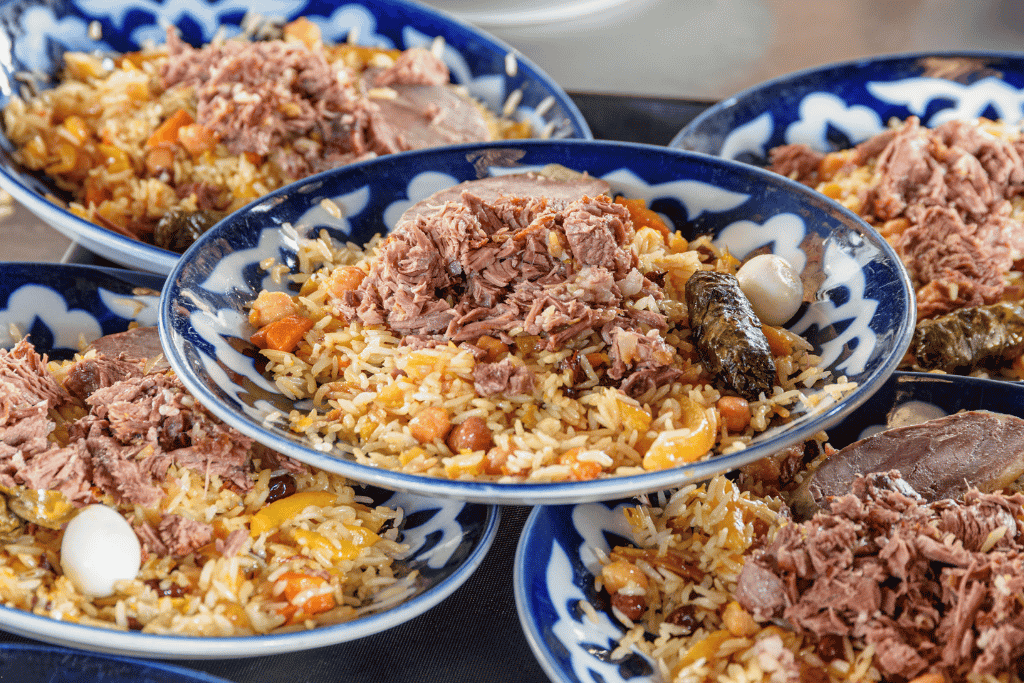
The national dish, and worth having at least once from a proper cauldron. Plov is rice slow-cooked with carrots, onions and lamb or beef, often topped with a boiled egg or a slice of qazi (horse-meat sausage). Every region has its own version; Tashkent’s tends toward yellow carrots and a lighter hand on spice.
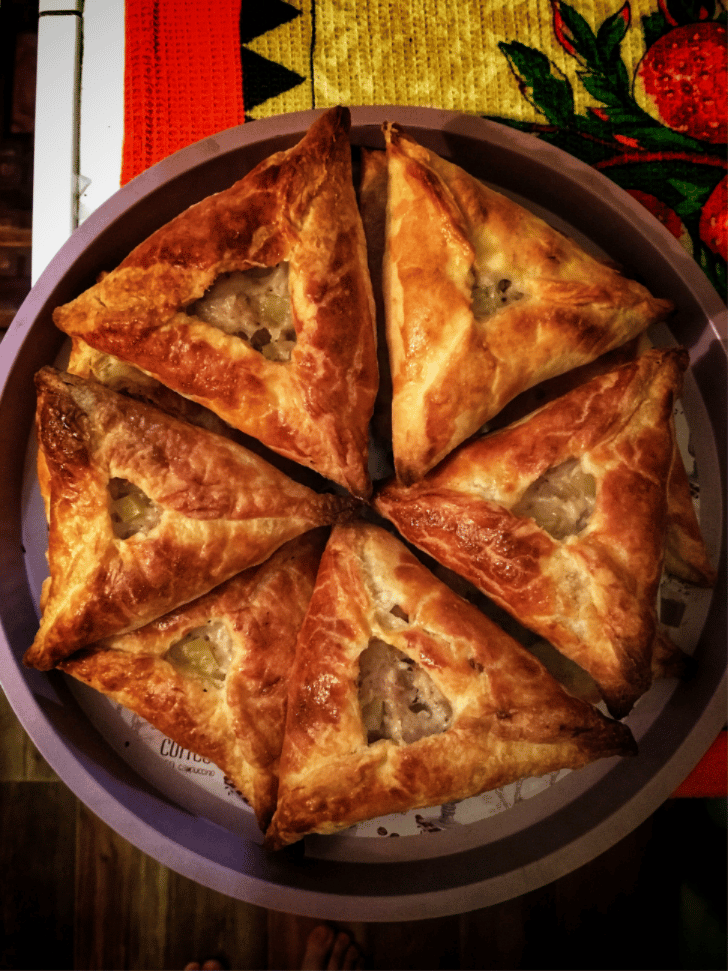
Samsa
| Dish | Where to try | Cost (~S$) |
|---|---|---|
| Samsa | Any bazaar stall, nationwide | S$0.50 to S$1 |
A flaky, oven-baked pastry parcel, Uzbekistan’s answer to the samosa. Samsa is usually filled with minced meat and onion, baked in a tandoor-style oven until the pastry crisps, best eaten within minutes of coming out.
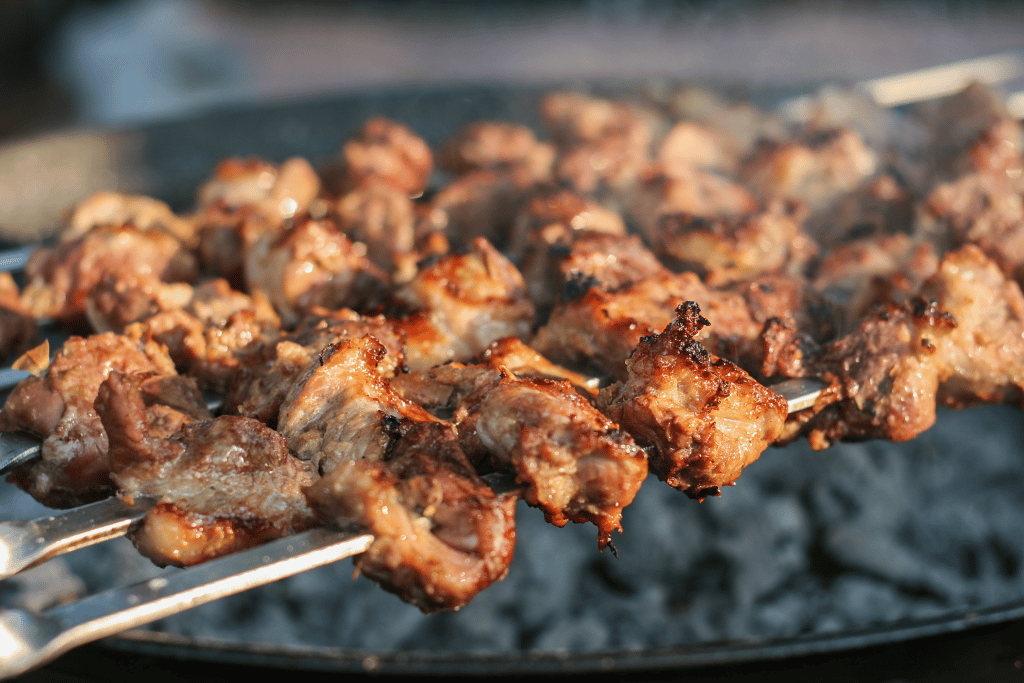
Shashlik
| Dish | Where to try | Cost (~S$) |
|---|---|---|
| Shashlik | Chorsu Bazaar street-food stalls | S$1.50 to S$3 per skewer |
Shashlik is skewered, grilled meat, usually lamb or beef, cooked over open coals and topped with raw onion. It’s a street-food staple, and the smoke drifting off the grills is often how you’ll find the stall before you see it.
Non (Bread)
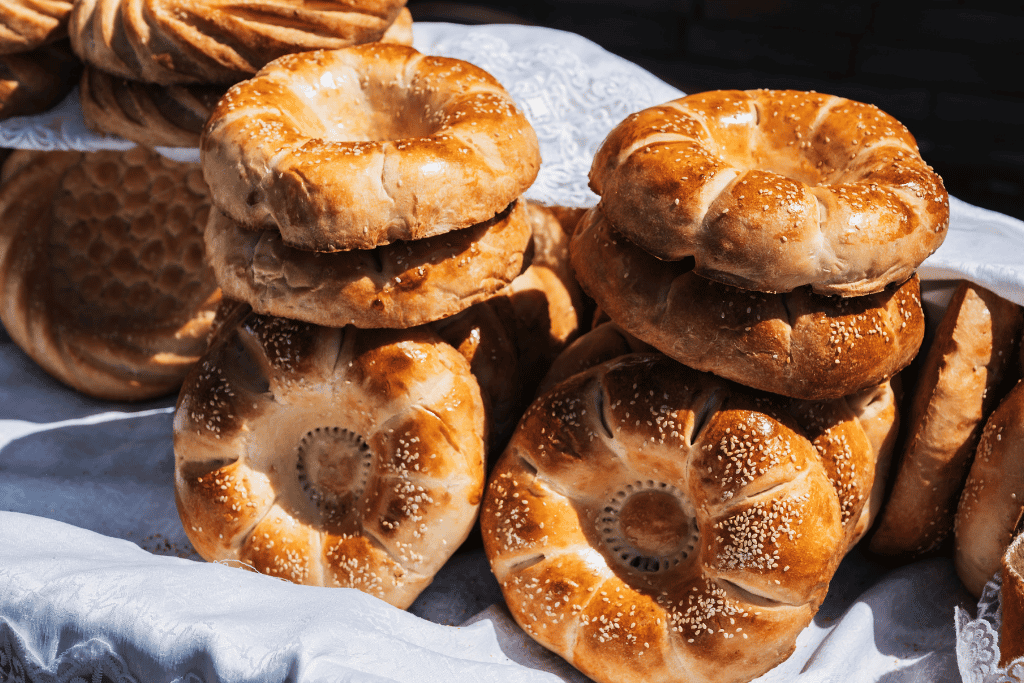
Uzbekistan’s tandoor-baked round bread, dense and stamped with a decorative pattern in the centre. Non is treated with genuine reverence here, tradition holds it should never be placed upside down or thrown away, and it’s on every table at every meal.
📖 Related Guide: Getting your money’s worth on every meal without a foreign transaction fee eating into it? Our best multi-currency cards in Singapore guide compares the cards built for exactly this.
What to Buy: Souvenirs and Local Crafts
Uzbekistan’s craft traditions run deep, and Bukhara in particular is a genuine shopping destination, not just a photo backdrop.
Suzani Textiles
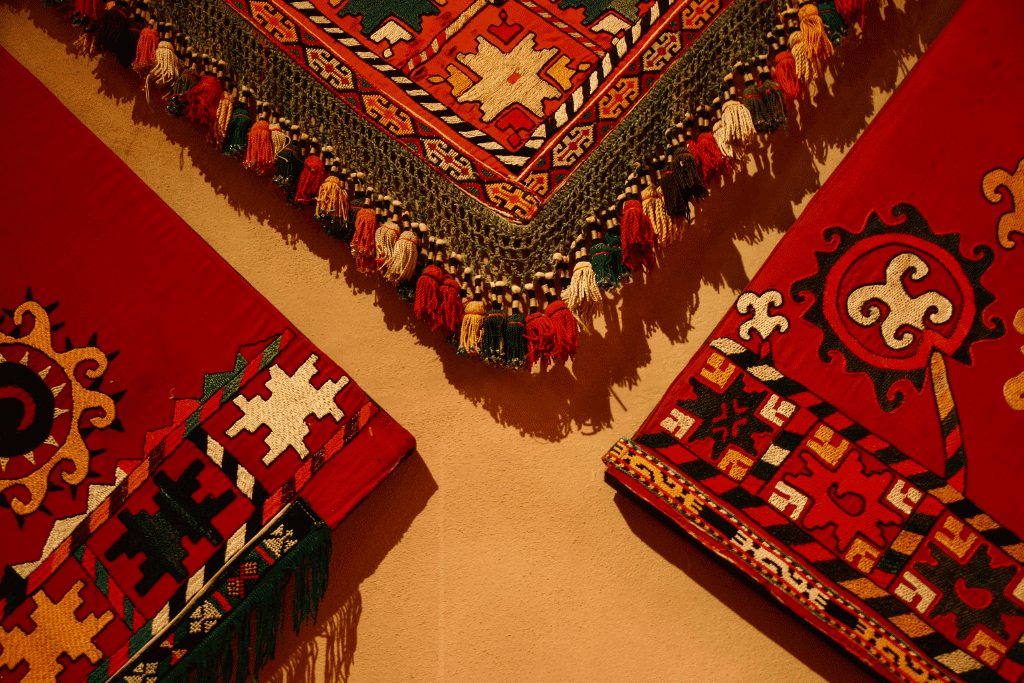
Hand-embroidered wall hangings and tablecloths in bold floral patterns, traditionally stitched as part of a bride’s dowry. Suzani pieces range from small cushion covers to large wall panels, and prices vary hugely by size, age and hand-stitched versus machine-made, ask before you buy.
Ceramics
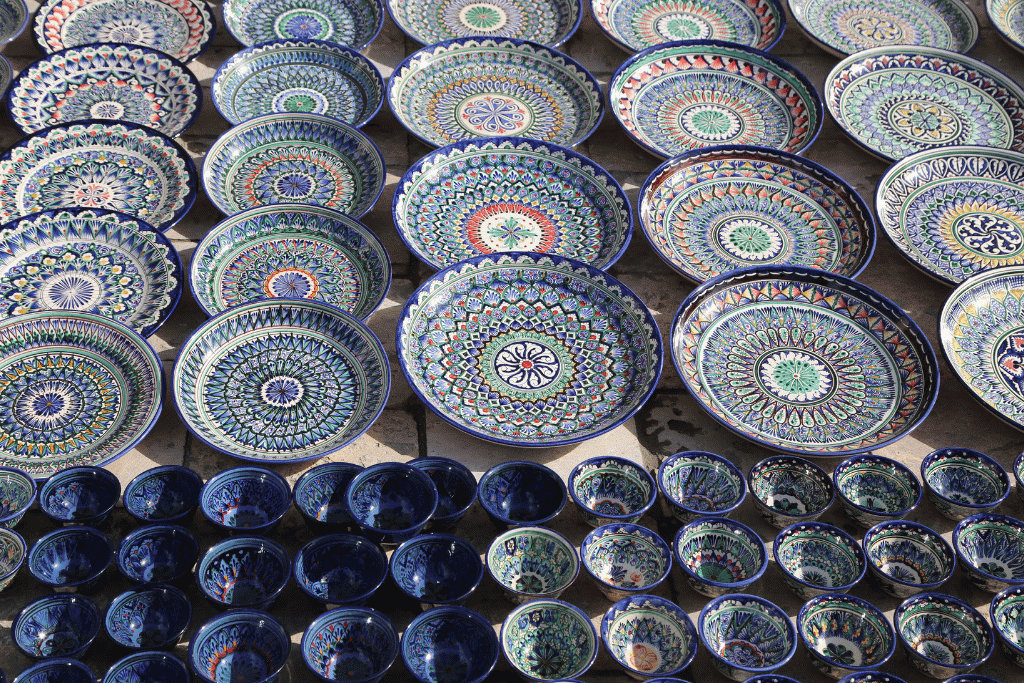
Blue-and-white pottery from Rishtan and Gijduvan, recognisable by the same turquoise glaze that covers the country’s monuments. Ceramic plates and bowls make a lighter, more packable souvenir than carpets if you’re worried about luggage space.
Carpets and Rugs
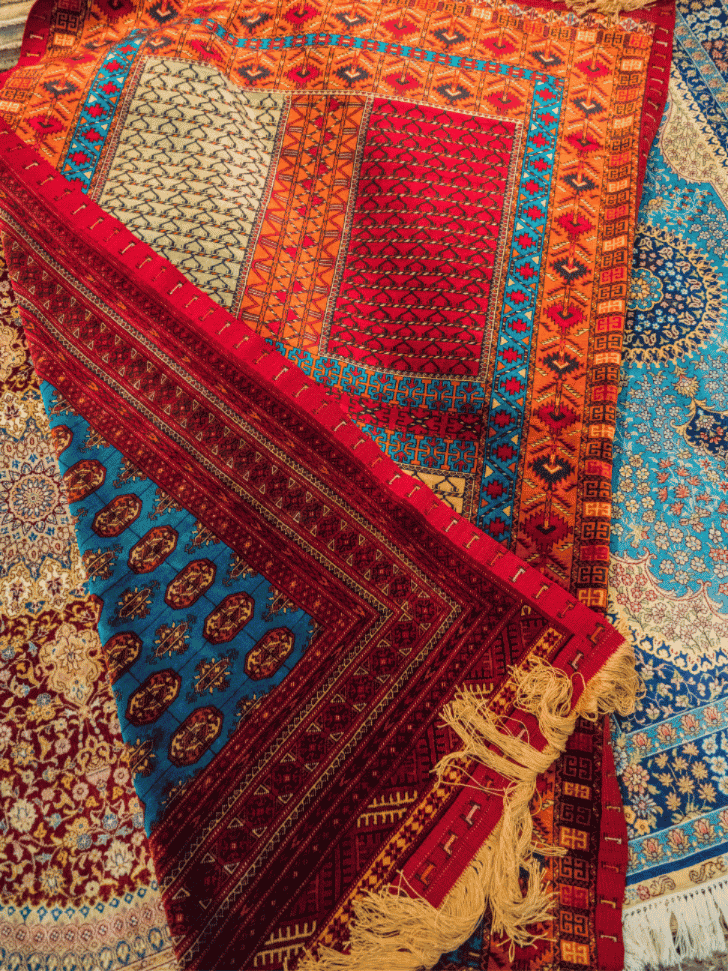
Hand-knotted wool and silk carpets, sold in dedicated shops inside Bukhara’s old madrasas. Carpets are the splurge item, prices run into the hundreds of dollars for a genuine hand-knotted piece, and haggling is expected everywhere except fixed-price government shops.
📖 Related Guide: Not sure what your card actually charges when you tap overseas? Our best Singapore credit card guide breaks down what banks quietly add on.
Uzbekistan With Kids
Uzbekistan is more family-friendly than its history-heavy reputation suggests, especially in Tashkent, where the modern attractions balance out the museum-heavy days.
- Magic City: The obvious pick for younger kids. See the Tashkent section above, rides, an aquarium and a Ferris wheel make this an easy half-day.
- Tashkent Metro: A ride kids will remember for the stations, not just the transport. The Kosmonavtlar and Alisher Navoi stations in particular play like a free museum visit that happens to also get you somewhere.
- Islamic Civilization Center: More engaging than a typical museum for older kids, thanks to the nightly light show inside its dome and the hands-on elements of the pre-Islamic history exhibits.
💡 Save Registan, Shah-i-Zinda and the other deep-history stops for kids old enough to sit through a guided walk, they land better with context.
Dress Code and Cultural Etiquette
Uzbekistan is one of the more relaxed Muslim-majority countries to dress in, and Tashkent and the main tourist cities are noticeably looser than rural areas.
In Tashkent, Samarkand, Bukhara and Khiva, ordinary tourist wear, T-shirts, knee-length shorts or skirts, is fine on the street. It’s mosques and madrasas where the dress code tightens.
Cover shoulders and knees, and bring a scarf for your head if you’re a woman planning to go inside an active mosque rather than just the courtyard. Outside the four main tourist cities, dress more conservatively. Longer skirts or trousers and covered shoulders read as respectful in villages and rural areas.
A few other norms worth knowing before you land: always haggle at bazaars (the first price quoted is rarely the real one), remove your shoes when entering a home, and never place a piece of non bread upside down on the table. Hospitality runs deep here, and being invited for tea by a stranger is common and generally genuine, not a scam setup.
Getting Around Uzbekistan
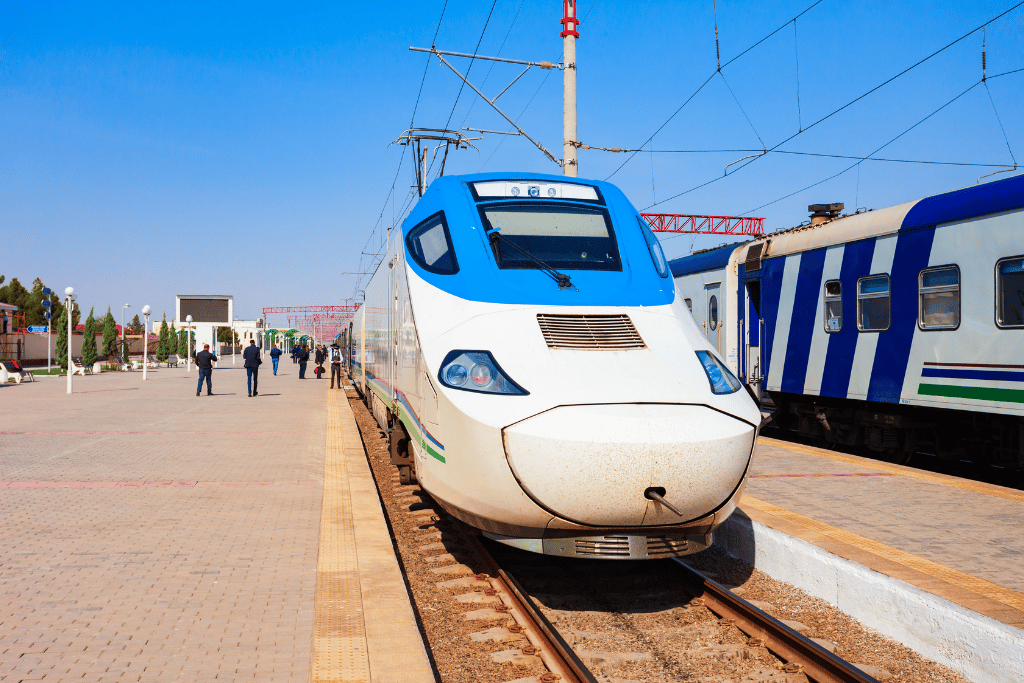
The Afrosiyob high-speed train is the backbone of any multi-city trip, and it’s genuinely good: modern, on time, and reasonably priced.
- Afrosiyob high-speed train: Connects Tashkent, Samarkand and Bukhara, covering Tashkent-Samarkand in around 2 hours 15 minutes. Tickets go on sale 45 days ahead and sell out fast in peak season, book online as soon as your dates are firm rather than turning up and hoping.
- Domestic flights: The practical way to reach Khiva without backtracking, Tashkent-Urgench flights run around 1.5 hours and are the standard way in and out of the far west.
- Yandex Go: The regional ride-hailing app, works across Tashkent and the other major cities, cash or card, and takes the haggling out of taxis.
- Tashkent Metro: Tap your bank card directly on the barriers for the cheapest fare, no separate transit card needed.
- Within the old cities: Samarkand, Bukhara and Khiva’s historic cores are compact enough to walk. A car and driver is worth it only for day trips out to the mountains or the Aral Sea.
Paying in Uzbekistan: Cash, Cards and the Som
Uzbekistan runs more on cash than a lot of Southeast Asia does, but cards are increasingly accepted in hotels, restaurants and the bigger shops in all four main cities. Bazaars, street food, small guesthouses and day-trip extras are still cash-only.
Tap your YouTrip card wherever cards are accepted, and every som transaction is charged at the Mastercard wholesale exchange rate with 0% foreign transaction fee, auto-converted straight from your SGD balance. Compare that to a standard credit card, which typically adds around 3% to 3.5% in FX fees on every overseas swipe.
For the cash you’ll still need, Ywithdraw som from an ATM after you land rather than changing money at a counter beforehand. With YouTrip, the first S$400 of overseas ATM withdrawals each calendar month is free, then a flat 2% after that, and the allowance resets on the 1st.
A money changer looks fee-free but bakes a markup of a few percent into the rate it quotes, often wider on a less-common currency like the som. Withdrawing on arrival tends to beat changing cash in Singapore beforehand. Stick to bank-branded ATMs (major state banks) over unbranded machines, which tend to charge steeper local fees.
👉 Bottom line: tap YouTrip for hotels, restaurants and bigger shops, pull som from an ATM for bazaars and street food, and skip the money changer entirely.
FAQs
Yes. It’s one of the best-value Silk Road trips available from Singapore, with four distinct cities, UNESCO-listed architecture, and food that’s a draw in its own right. Its growing popularity on social media hasn’t yet translated into overcrowding at most sites.
Seven to ten days covers Tashkent, Samarkand, Bukhara and Khiva at a comfortable pace. Four to five days works if you drop Khiva and focus on Tashkent and Samarkand instead.
Knee-length shorts and skirts are fine in Tashkent, Samarkand, Bukhara and Khiva. Cover shoulders and knees inside active mosques and madrasas, and dress more conservatively in rural villages outside the main tourist circuit.
Generally yes. Violent crime against tourists is rare, and the main practical risks are the usual bazaar overcharging and occasional taxi haggling rather than anything more serious. Standard precautions (keep valuables secure in crowded markets, use Yandex Go over unmarked taxis) cover most of it.
No. Singapore passport holders can enter visa-free for up to 30 days, a policy in place since 2018.
The Afrosiyob high-speed train covers Tashkent, Samarkand and Bukhara in a few hours each leg, book online 45 days ahead where possible. Khiva is best reached by a short domestic flight to or from Urgench rather than the long desert drive.
Uzbekistan rewards the traveller who books the whole loop, not just Samarkand
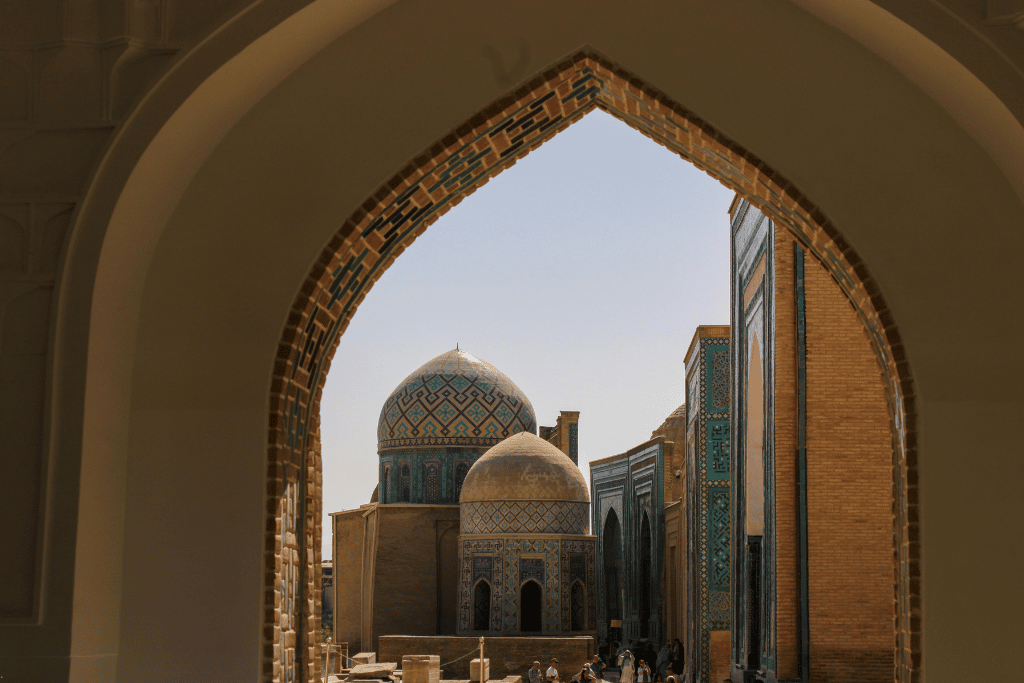
Four cities, four completely different moods, and prices low enough that even the splurges feel cheap. Uzbekistan earns its current moment on TikTok, just budget the full week if you can, because Samarkand alone is only half the story.
Not a YouTrooper yet? Sign up with code YTBLOG5 for a free YouTrip card and S$5 in credit. Lock in your rate across 12 currencies and spend in 150+ countries with no foreign transaction fees.
Check out the latest YouTrip Perks, join our Telegram for deals, and swap tips in our Community Group.