




The Kyushu city most Singapore travellers skip, and shouldn’t
Nagasaki isn’t the city most Kyushu itineraries lead with. It’s the one squeezed onto the last day, or dropped entirely for a second night in Fukuoka. That’s a mistake.
An abandoned mining island, one of Japan’s three official night views, and a food culture found nowhere else in the country all sit within a single tram ride of each other. Below: how many days it actually needs, whether to base yourself here or in Fukuoka, and what to do once you land.
| Quick Planner | Nagasaki at a Glance |
|---|---|
| ⏱️ Time needed | One full day covers the city; two to three days if Gunkanjima and a slower pace are the goal |
| 📍 Where | Western Kyushu, on a narrow harbour facing the East China Sea |
| 🚄 Getting there | Relay Kamome + Nishikyushu Shinkansen from Fukuoka’s Hakata Station, about 1h 40min, from 3,850 JPY (~S$31) |
| 🎌 Famous for | Gunkanjima, the Mount Inasa night view, its 1945 atomic bombing, and 400 years of Chinese and Dutch trading history |
| 📅 Best time | March to May, and October to early December |
| 💰 Rough cost | A full day of sights runs roughly S$25 to S$40, before meals |
| 💳 Pay with | Tap your YouTrip card (0% FX); withdraw yen at an ATM for the cash-only food stalls |
Shortlist of Things to Do in Nagasaki
| Spot | Area | Cost (~S$) | Best for |
|---|---|---|---|
| Gunkanjima (Battleship Island) | 20km offshore, boat from Nagasaki Port | S$39–57 (cruise + landing fee) | The abandoned mining island everyone’s actually here for |
| Mount Inasa Observatory | Ropeway from Fuchimachi, near Nagasaki Station | S$10 return | One of Japan’s three official night views |
| Nagasaki Peace Park & Atomic Bomb Museum | Urakami district | Free (park) + S$2 (museum) | The city’s defining day, handled briefly and factually |
| Glover Garden | Minamiyamate hillside | S$10 | Western merchant houses with a harbour view |
| Dejima | Central Nagasaki, reclaimed island | S$9 | The old Dutch trading post, rebuilt |
| Oura Cathedral | Next to Glover Garden | S$8 | Japan’s oldest standing church (an honest skip if you’re short on time) |
| Shinchi Chinatown | Central, walkable from Hamanomachi | Free to wander | Photos and lantern-lit lanes, not the best champon |
| Meganebashi & Nakashima River | Central, near Chinatown | Free | Japan’s oldest stone bridge and a riverside stroll |
Table of Contents
- Is Nagasaki Worth Visiting?
- What Is Nagasaki Famous For?
- How Many Days Do You Need in Nagasaki?
- Fukuoka vs Nagasaki: Which Should You Base Yourself In?
- The Best Things to Do in Nagasaki
- What to Eat in Nagasaki
- What to Do in Nagasaki at Night
- Is Nagasaki Cheap? A Singapore Traveller’s Cost Breakdown
- Where to Stay in Nagasaki
- FAQs
- Give Nagasaki Its Own Day
Is Nagasaki Worth Visiting?
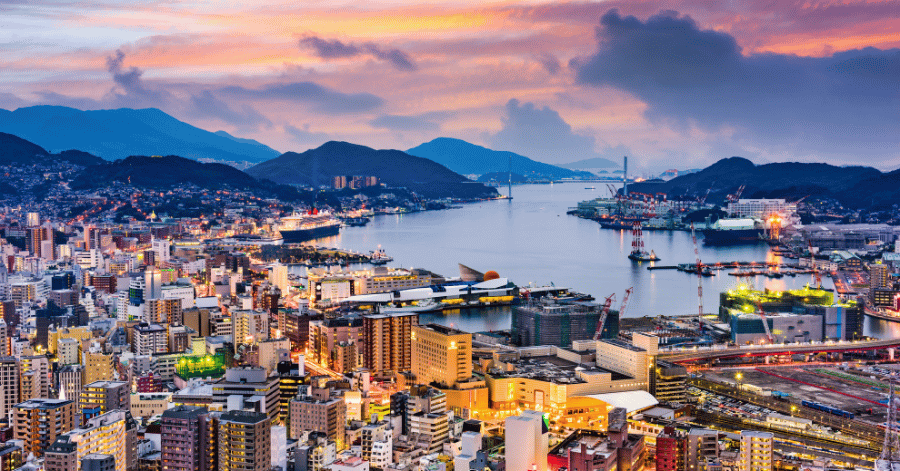
Yes, and you don’t need one big landmark to justify the trip. Nagasaki gives you an abandoned island most travellers only know from a Bond film, a night view locals will argue beats Kobe’s or Hakodate’s, and a food and trading history unlike anywhere else in Japan.
What it won’t give you is a compact, walk-everywhere old town. Nagasaki is stretched thin along a harbour and hemmed in by hills, so the sights split into three separate trips. The waterfront gets you the boat to Gunkanjima, the hillside south of the centre gets you Glover Garden and the churches, and the mountain gets you the night view. Budget for tram fares and a slightly more spread-out day than Kyoto or Osaka.
Spend the extra time on the trams. Few Japanese cities compress this much into one day: a UNESCO-listed church, a working Chinatown, a mountain view, and a museum that handles the single hardest day in the city’s history without turning the whole trip into a history lesson.
📖 Related Guide: Building the wider Kyushu leg around it? Our Fukuoka things-to-do guide covers the city most travellers use as their base.
What Is Nagasaki Famous For?
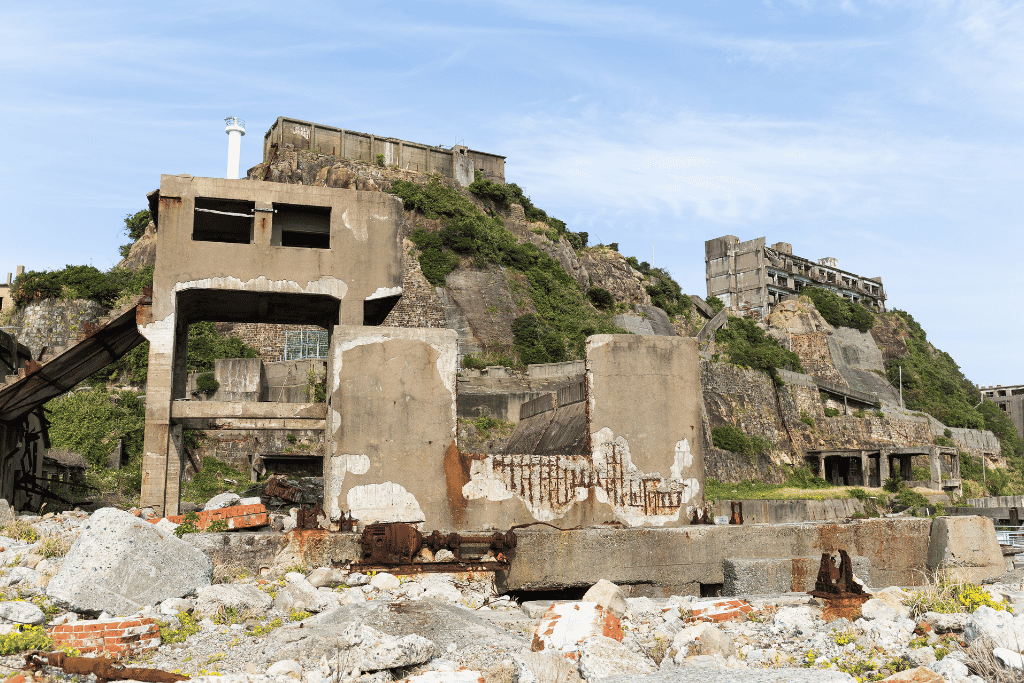
Nagasaki is famous for four things: Gunkanjima, the Mount Inasa night view, and the atomic bomb dropped on the city on 9 August 1945. The bombing happened during that same 200-year period: two centuries as the only Japanese port open to the outside world.
That trading history explains the food and the churches too. From 1637, Nagasaki was the sole port allowed to trade with foreigners, Chinese merchants confined to what’s now Shinchi Chinatown and Dutch traders to the artificial island of Dejima. Portuguese missionaries had already converted a sizeable local population to Christianity before the religion was banned, driving believers underground for over two centuries.
The same history shaped both the churches and the food. Champon and castella cake are Nagasaki’s own, born from Chinese and Portuguese kitchens, not imported from elsewhere in Japan.
The 1945 bombing is part of that history, not separate from it. An estimated 74,000 people had died by the end of 1945, and the museum and peace park built around the epicentre remain a genuine part of any visit, covered in more detail below.
📖 Related Guide: Timing the trip around a festival or the cooler months? Our best time to visit Japan guide breaks the whole country down season by season, Nagasaki Kunchi included.
How Many Days Do You Need in Nagasaki?
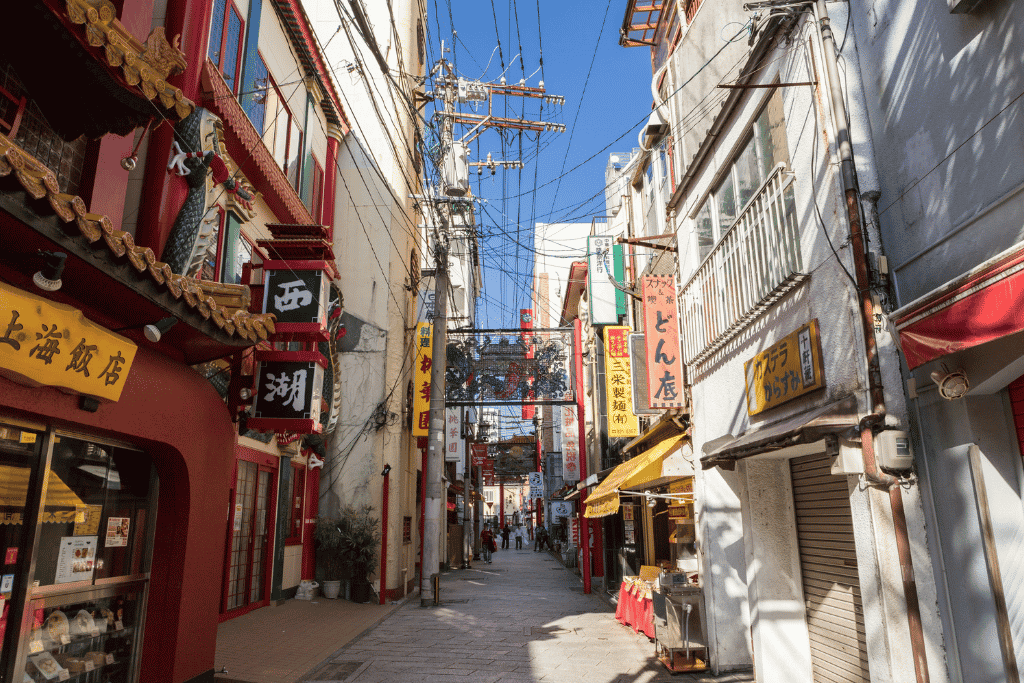
One full day covers the city’s core sights. Two to three days let you add Gunkanjima properly, sleep over, and slow the pace down instead of chasing a checklist.
One Day in Nagasaki
A single day works as a side trip from Fukuoka, tight but doable. Start at Glover Garden and Dejima in the morning, eat champon for lunch near Chinatown, then take the ropeway up Mount Inasa before dinner. Gunkanjima is the one thing you’ll likely have to drop. The boat tour alone eats three to four hours, including transfer and landing time.
Two to Three Days in Nagasaki
Two days works best if Gunkanjima matters to you, and for most first-time visitors it does. Day one covers the boat tour, the Peace Park and the museum, since both sit near the harbour and the Urakami district. Day two takes the hillside churches, Dejima, Chinatown, and the night view at a pace that doesn’t feel rushed.
A third day is worth adding only if the plan includes a proper hike or a side trip to Unzen or Shimabara.
📖 Related Guide: Extending the Japan leg into the Kansai cities? Our Osaka things-to-do guide covers the other end of a longer Kyushu-to-Kansai route.
Fukuoka vs Nagasaki: Which Should You Base Yourself In?
Base yourself in Fukuoka if Nagasaki is one stop among several Kyushu cities. Base in Nagasaki only if it’s the actual destination. Most Singapore travellers fly into Fukuoka anyway, and it offers better flight options, more hotel choice, and a shorter hop to Nagasaki than the reverse commute would cost in time.
Nagasaki is cheaper to eat and sleep in than Fukuoka, so a base there pays off if you’re staying three nights or more. If it’s a one or two-night add-on to a longer Kyushu trip, staying in Fukuoka and day-tripping in stays simpler, even with the train time.
Getting From Fukuoka to Nagasaki
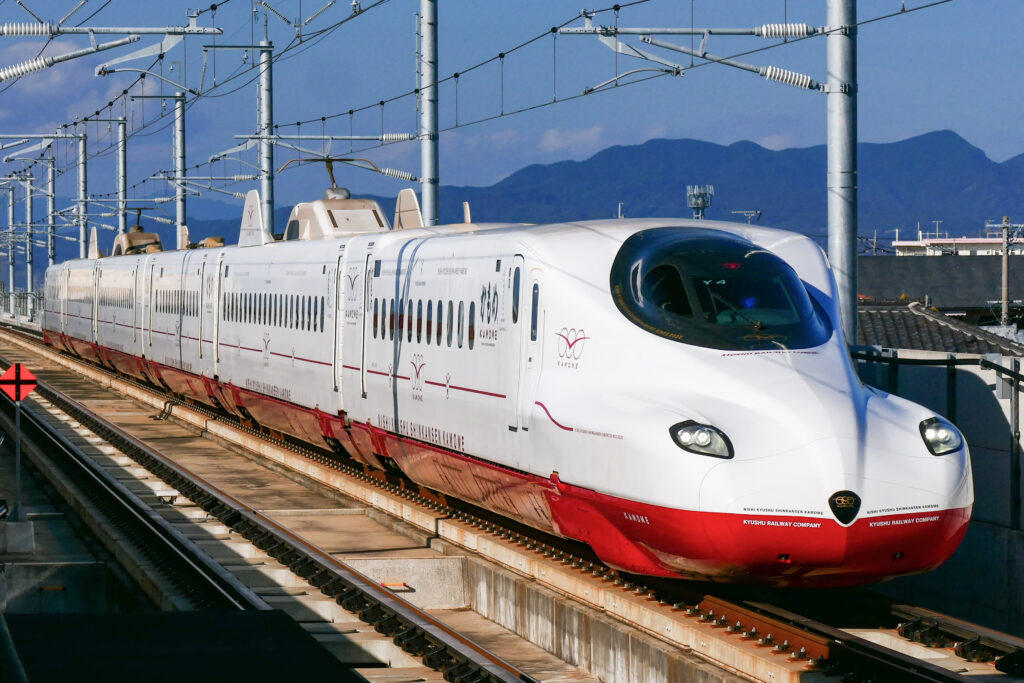
Image Credits: Wikipedia
The Nishikyushu Shinkansen cut the Fukuoka–Nagasaki journey down to two short legs. From Hakata Station, the Relay Kamome limited express covers the first leg to Takeo-Onsen in about an hour, then changes onto the Nishikyushu Shinkansen for the final 25 minutes into Nagasaki, roughly 1h 40min door to door, whichever fare you book. Both legs are covered by the Japan Rail Pass and the Kyushu Rail Pass.
| Fare option | Fare (~S$) | Notes |
|---|---|---|
| Standard reserved seat | 5,960–6,490 JPY (~S$48–52) | Book any time, full flexibility |
| Kamome Net Kippu | ~4,500 JPY (~S$36) | Online discount fare, booked in advance |
| Hayatoku advance fare | ~3,850 JPY (~S$31) | Cheapest reserved-seat option, book ahead |
The highway bus is the cheapest way between the two cities: around 2,900 JPY (~S$23) one way, taking roughly 2h 30min from Hakata’s bus terminal, direct with no transfer. Nagasaki also has its own small airport, connected to Fukuoka Airport by the same bus network, though almost nobody flies this short a hop.
Arriving from Kumamoto instead? The ferry via Shimabara is the scenic long way round. A roughly 30-minute fast ferry crosses to Shimabara Port, then a local train carries you into Nagasaki, adding up to around three to four hours door to door depending on connections, but running mostly alongside the sea. It’s slower than the direct Kyushu Shinkansen route from Kumamoto, worth it once if train transfers don’t bother you.
📖 Related Guide: Comparing flights into Kyushu? Our Japan budget airlines guide covers which low-cost carriers actually fly from Singapore, and what the baggage rules cost you.
The Best Things to Do in Nagasaki
The sights split into three bands: the harbour, the hillside south of the centre around Oura and Minamiyamate, and Urakami to the north. The harbour gets you the boat to Gunkanjima, the hillside covers the churches and Glover Garden, and Urakami holds the Peace Park. None of them sit more than a 20-minute tram ride apart, so pick one band per half-day rather than criss-crossing the city.
A one-day tram pass costs 600 JPY (~S$5) for unlimited rides between roughly 6 AM and 11:40 PM. It breaks even after five rides, and it’s the easiest way to string these three bands together without thinking about fares.
Gunkanjima (Battleship Island)
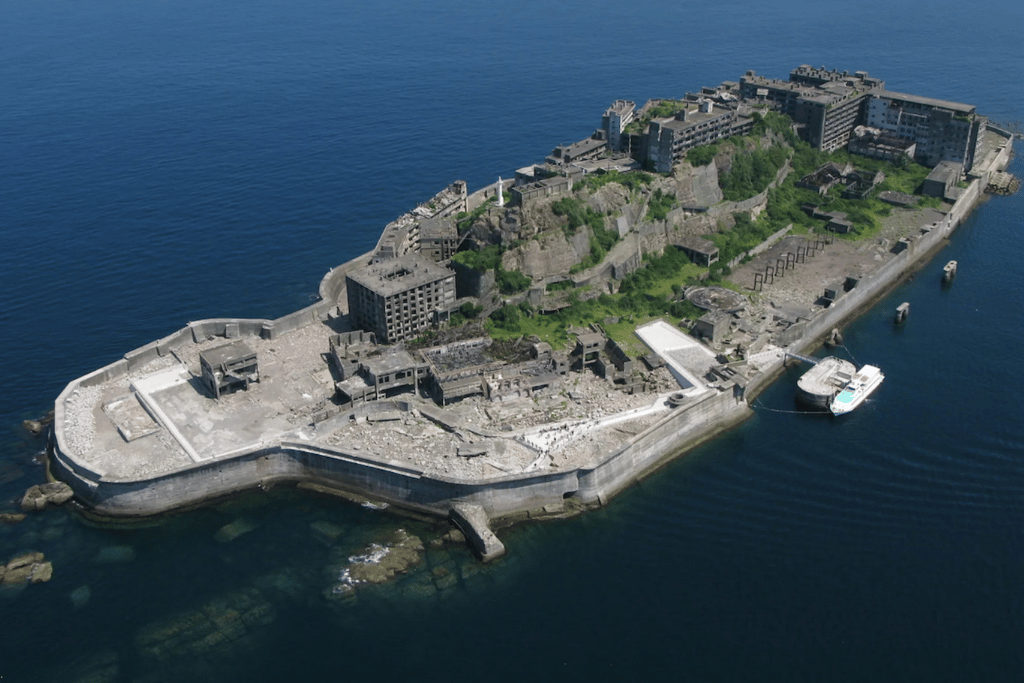
Image Credits: Japan Guide
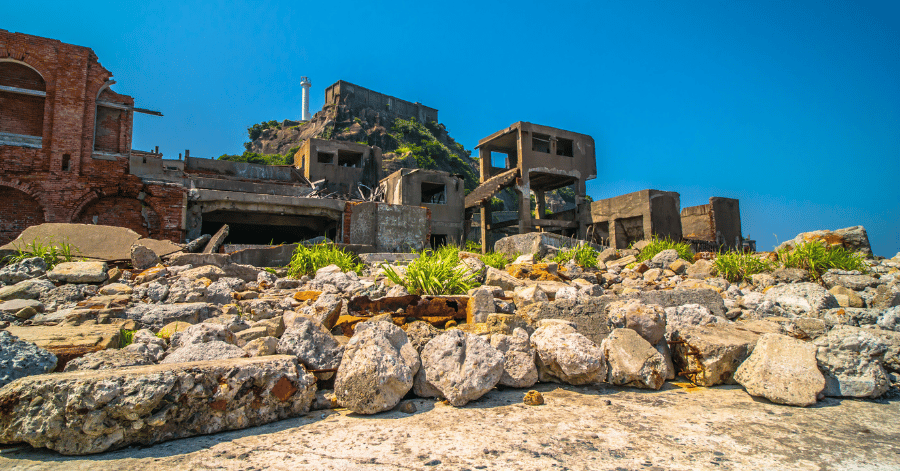
A concrete ghost town, 20 kilometres out to sea. Gunkanjima, officially Hashima Island, was once one of the most densely populated places on Earth. Its entire coastline was sealed behind a sea wall built to survive typhoons, while some 5,200 coal miners and their families lived stacked on 480 by 150 metres of reclaimed rock.
Mitsubishi shut the mine in 1974, and the island sat abandoned and sealed off for over three decades before landing tours began in 2009.
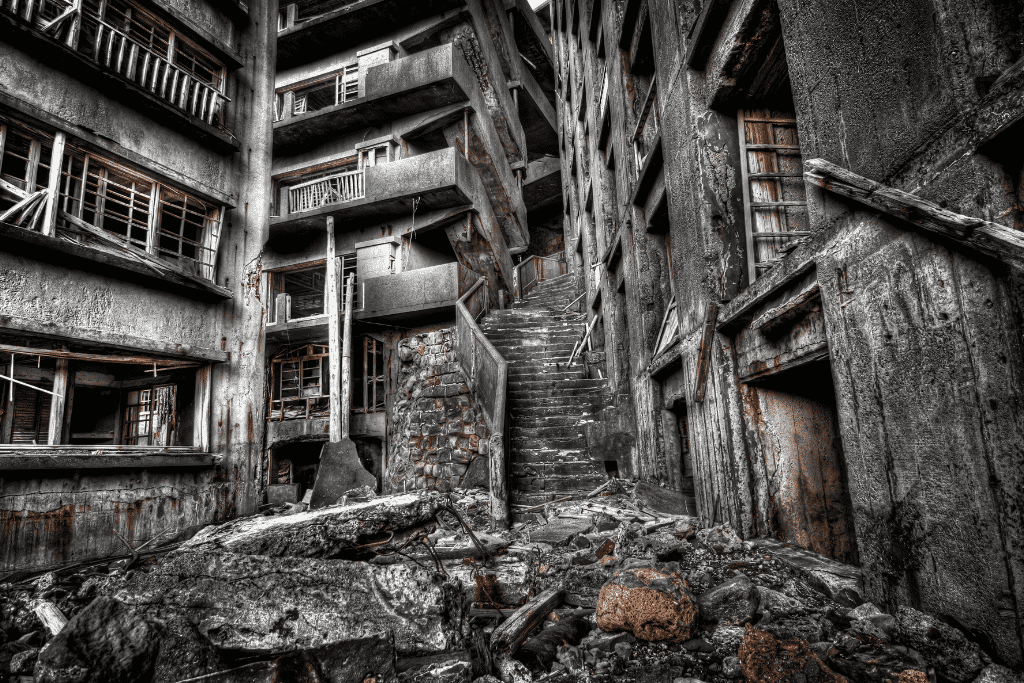
Licensed operators run the only way in: a roughly 2.5-hour round trip departing Nagasaki Port, with about an hour actually spent ashore on a fixed walking route past the old apartment blocks and the communal bathhouse. Cruise fares run 4,200 to 6,500 JPY (~S$34 to S$52) depending on the operator and class, plus a separate landing admission of 650 JPY (~S$5) for adults.
Rough seas cancel landings without much notice. Build in a spare afternoon if you can, rather than treating this as a fixed appointment.
Best for anyone who wants the one Nagasaki sight that looks like nowhere else in Japan. Skip it only if you’re on a tight half-day and the seas are already forecast rough.
Mount Inasa Observatory
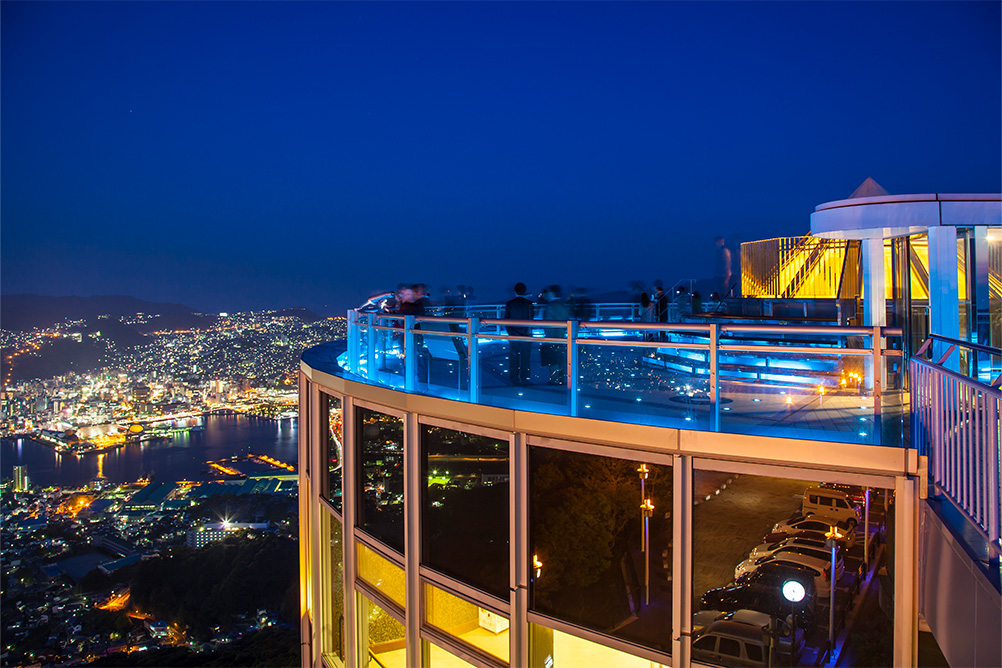
Image Credits: nagasaki-yakei.com
Nagasaki’s night view is the reason locals call this one of Japan’s three “ten-million-dollar” views, alongside Mount Hakodate and Mount Rokko. At 333 metres, Mount Inasa looks straight down onto the harbour, the hillside houses stacked on the slopes below fanning out in a way flat-city views can’t match.
The ropeway runs from Fuchimachi station, a short bus or taxi ride from Nagasaki Station, with gondolas departing every 15 to 20 minutes. A round trip costs 1,250 JPY (~S$10) for adults; the observation deck itself is free once you’re up. Go for sunset and stay past dark, when the harbour lights switch on in stages rather than all at once.
Best for the one evening you’re willing to plan the whole day around. Miss the last gondola down, and you’re looking at a considerably pricier taxi off the mountain.
Nagasaki Peace Park and the Atomic Bomb Museum
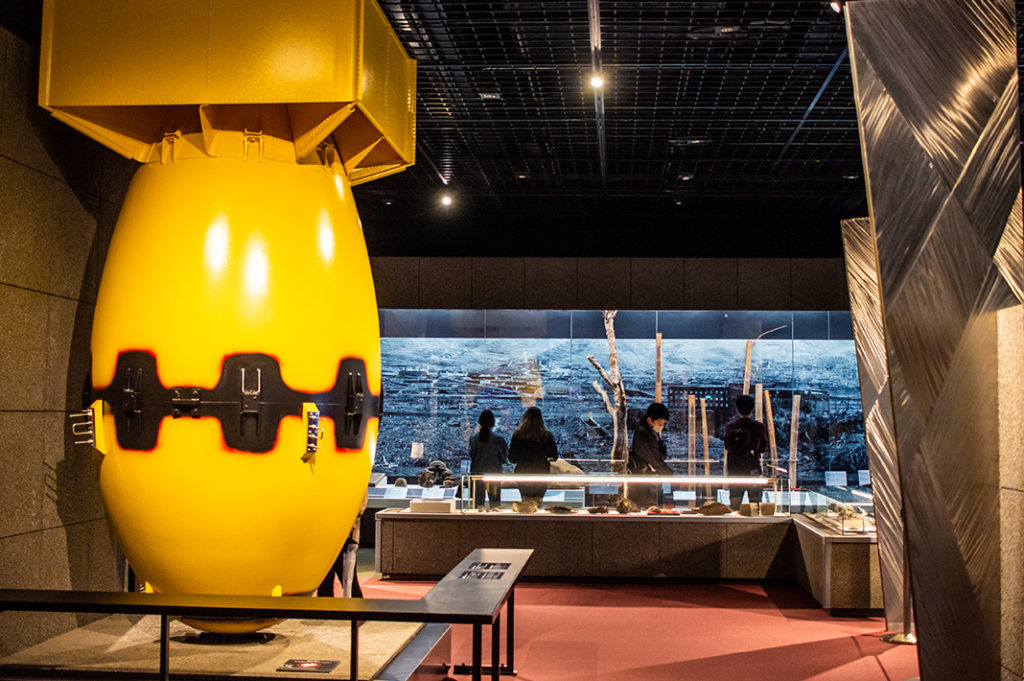
Image Credits: Japan Journeys
Nagasaki Peace Park and the Atomic Bomb Museum are sober, not scenic, and the city keeps them that way on purpose. The bomb detonated over the Urakami district on 9 August 1945.
The complex built around the hypocentre now runs across three linked sites: Hypocenter Park, marking the point of detonation with a simple black column; the Atomic Bomb Museum, which documents the blast and its aftermath through recovered artefacts; and Peace Park itself, home to the outstretched Peace Statue and the annual memorial ceremony.
The museum charges a nominal 200 JPY (~S$2) for adults, and most visitors spend 45 minutes to an hour inside. Nearby, Sanno Shrine’s two camphor trees survived the blast, their trunks charred black, and slowly regrew over the following two years. The shrine’s surviving one-legged torii gate stands as one of the few structures left standing this close to the epicentre.
Urakami Cathedral, rebuilt after the war, still displays the scorched statues salvaged from the original building. There’s no need to dwell on casualty figures beyond the basic fact: by the end of 1945, the bombing had killed an estimated 74,000 people in Nagasaki. The park exists so that number isn’t abstract.
An hour here is enough to take that in without turning the rest of the day sombre, and it belongs on every itinerary regardless of how the rest of the trip is shaped: the park is free, and the museum’s fee is nominal enough that cost is never a reason to skip it.
Glover Garden
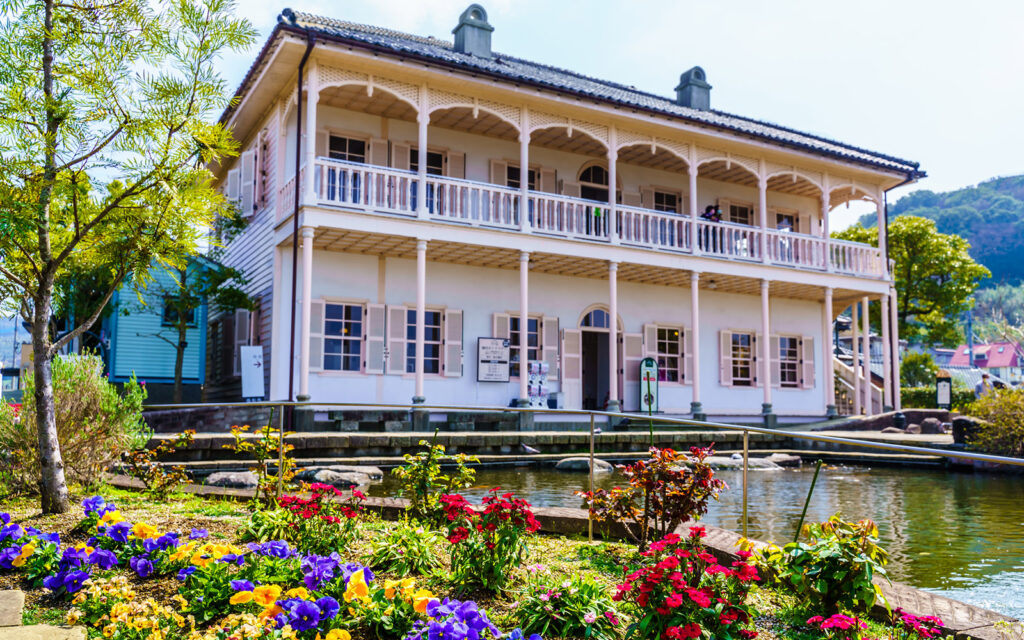
Image Credits: GajinPot Travel
A hillside of Western merchant houses, with the best harbour view in the city thrown in for free. Glover Garden preserves around a dozen residences built by foreign traders after Nagasaki’s 1859 opening, with escalators carrying visitors up through the terraces so the walk down is the easy direction.
The centrepiece is the old Glover Residence, one of the oldest surviving wooden Western-style buildings in Japan. Its exterior roof tiles read distinctly Japanese even as the interior curtains and windows read entirely European.
Entry costs 1,300 JPY (~S$10) for adults. The former Orth Residence and Jiyutei tea room are closed for preservation work as of 2026, so check the official site before planning around either. A free photo booth at the old Glover Residence prints a small souvenir card on the spot.
Best for a slow hour or two rather than a quick pass-through, especially if the garden’s own views are part of the draw. Budget the extra time; rushing it defeats the point of paying for a garden.
Dejima
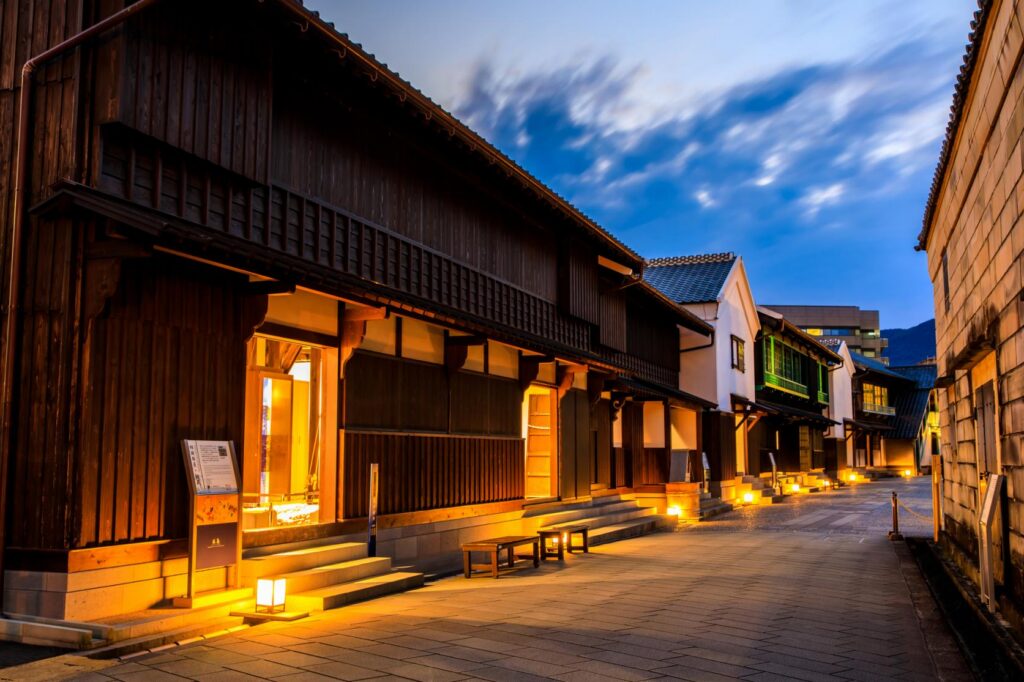
Image Credits: Discover Nagasaki
The rebuilt island that was once Japan’s only trading link with Europe. Dejima was a fan-shaped artificial island built in the harbour to house Dutch traders during the two centuries Japan sealed itself off from the world, the sole foreign settlement permitted in the country. Reconstruction over the past two decades has recreated the trading post’s warehouses and residences on their original footprint, now surrounded by the modern city rather than open water.
Adult admission rose to 1,100 JPY (~S$9) from April 2026, roughly double the previous fee. Budget for the new price rather than an older figure you might see quoted elsewhere. Give it 45 minutes to an hour; it rewards reading the exhibit labels more than a fast walk-through.
It suits travellers who want the trading-post history without the crowds of Glover Garden, and the two pair naturally on the same afternoon since they sit a short walk apart.
Oura Cathedral
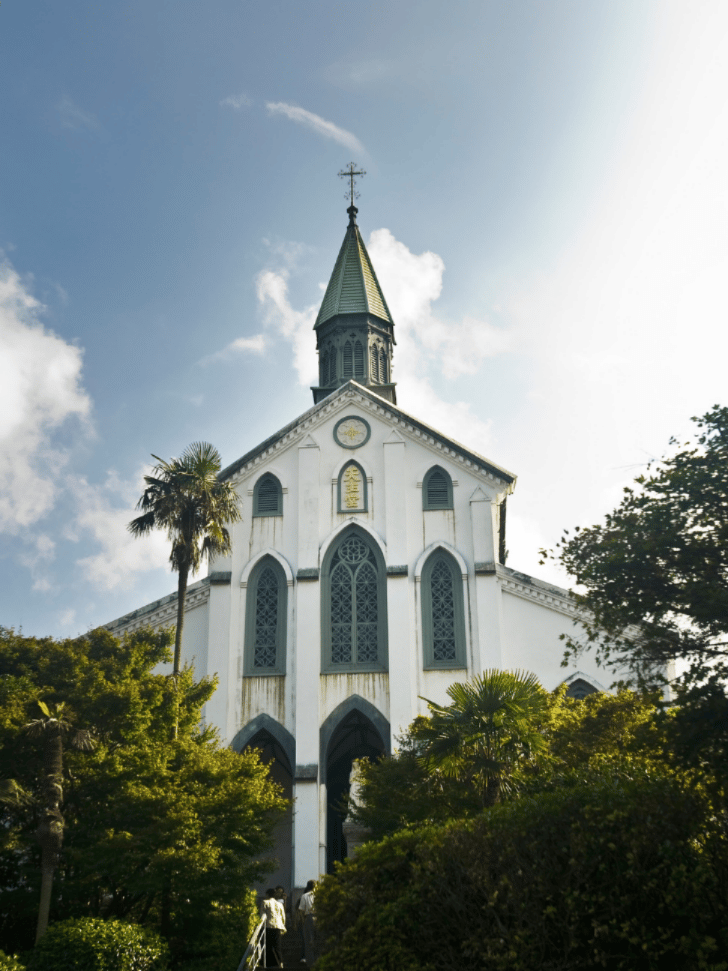
Japan’s oldest standing Christian church, and the one travellers argue about most. Oura Cathedral was completed in 1864 to honour 26 Christians executed in Nagasaki in 1597. Its UNESCO World Heritage listing recognises the building’s role for the Hidden Christians who practised in secret for over two centuries before the ban on the religion was lifted.
Adult entry is 1,000 JPY (~S$8), which includes the adjoining Christian Museum. Opinions on the visit are split: some travellers online call it not worth the price for a fairly brief visit, others rate it as the most moving stop on the hill. The fee itself checks out against the church’s own pricing, so the disagreement is about value, not an inflated number.
Best for history and architecture fans with time to spare. If you’re already tight on the day and have to cut something on the Glover Garden hill, this is the more defensible one to skip.
Shinchi Chinatown and the Old Trading Streets
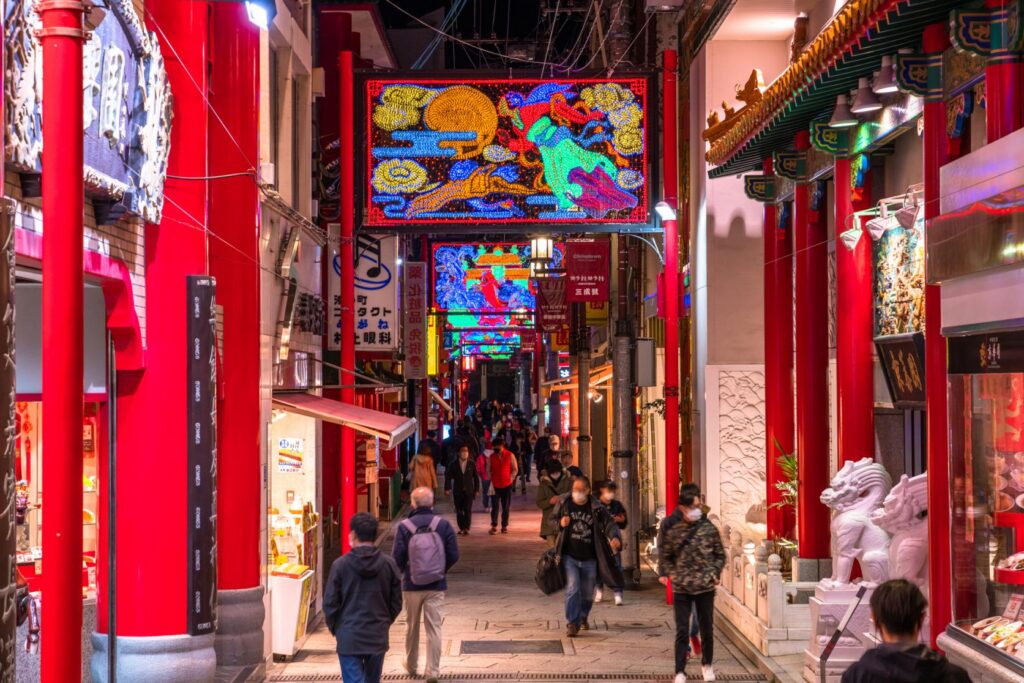
Image Credits: Discover Nagasaki
One of Japan’s three great Chinatowns, best treated as a photo stop rather than a dinner reservation. Shinchi grew out of the reclaimed land where Chinese traders were confined during Nagasaki’s isolation period, and its lantern-strung lanes still cross at a small central plaza. Champon and sara udon, Nagasaki’s two signature noodle dishes, both originated here.
The honest local take: eat elsewhere. Locals and longtime visitors tend to say the food here runs touristy and overpriced, compared to the same dishes served at ordinary restaurants a few minutes’ walk away. Treat Chinatown as the atmosphere stop, and save the actual meal for the food section below.
Best for an evening stroll and photos rather than a planned meal.
Meganebashi and the Nakashima River
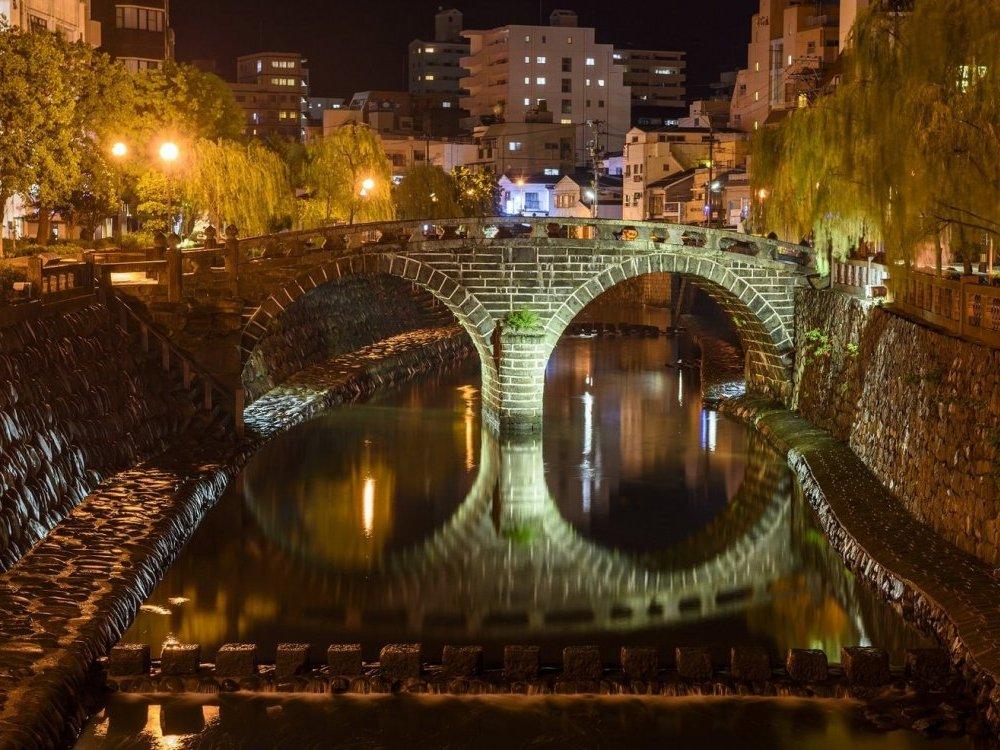
Image Credits: Discover Nagasaki
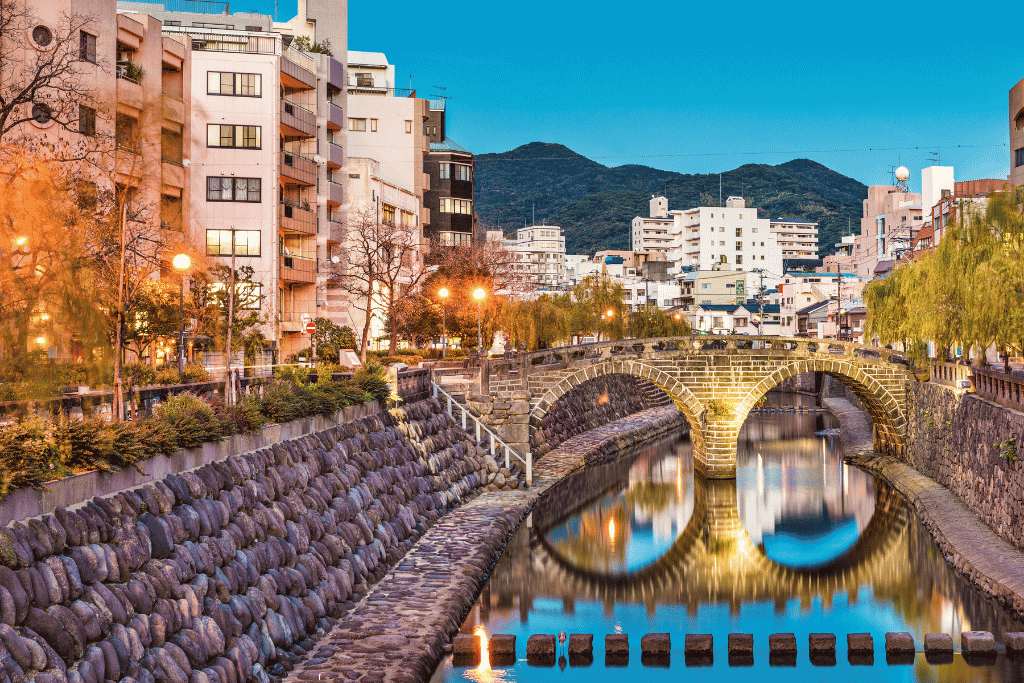
Japan’s oldest stone bridge, and it’s free to look at. Meganebashi, or “Glasses Bridge,” dates to 1634 and takes its nickname from the way its double stone arches reflect in the Nakashima River below, forming two circles like a pair of glasses on a still day. A scatter of stepping stones lets you cross the shallow river directly rather than only via the bridges.
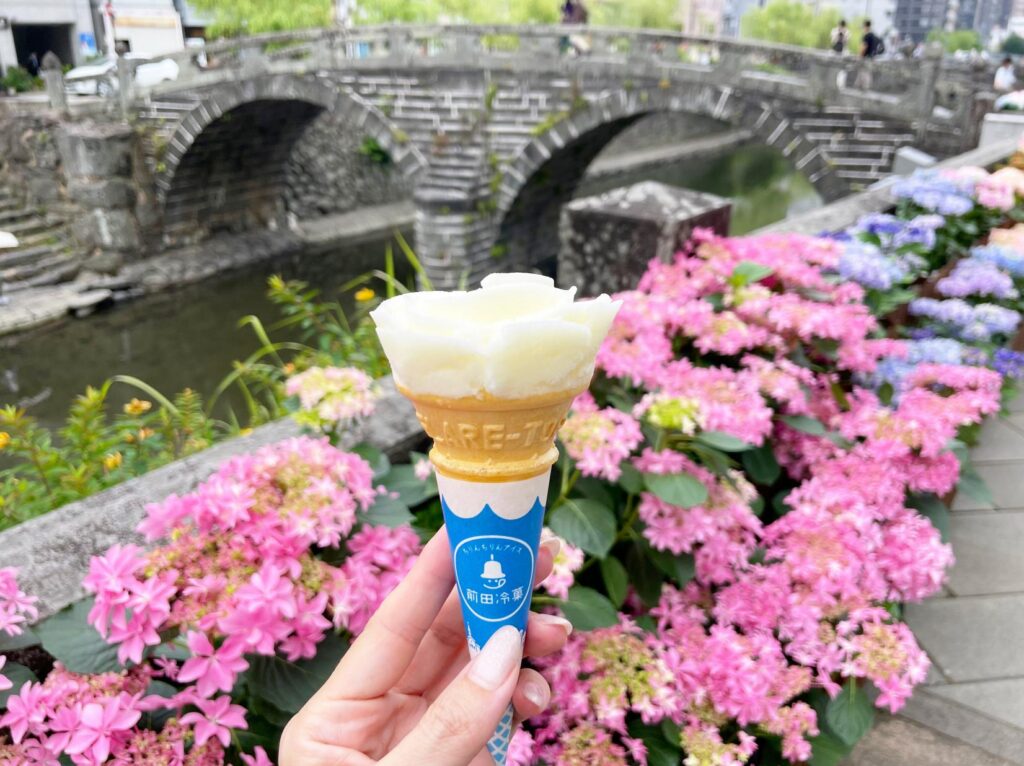
Image Credits: ながさき旅ネット
Come for the Chirin ice cream sold from a stall near the water, shaped like a rose and closer to a milk sorbet than ice cream proper. It’s a local favourite with the students who queue for it after school, and the whole stop is a five-minute break between the Peace Park and Chinatown rather than a destination on its own.
Nagasaki Biopark
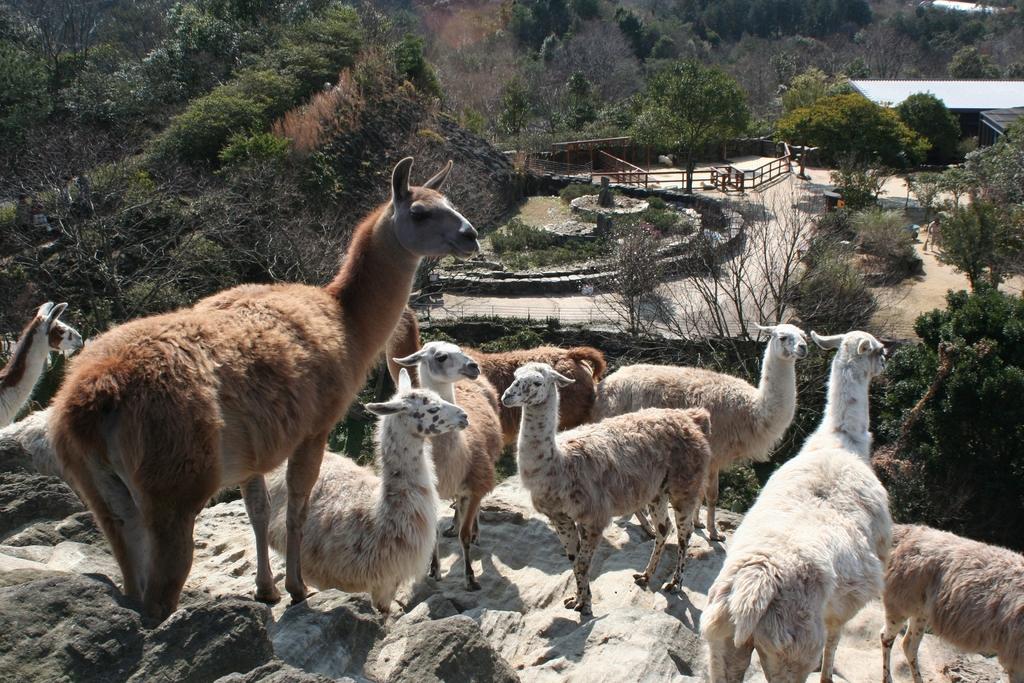
Image Credits: Discover Nagasaki
A rain-or-shine half-day away from the sightseeing checklist, built around getting close to the animals rather than watching them behind glass. Nagasaki Biopark, west of the city, lets you hand-feed capybaras roaming loose around a pond and wander among free-range kangaroos on an open hillside, with more caged species like meerkats and goats kept to their own enclosures elsewhere in the park.
Best for travelling with kids, or anyone who wants a lower-key stop than another museum or shrine. It sits well outside the main sightseeing bands, so budget the extra transit time.
Suwa Shrine
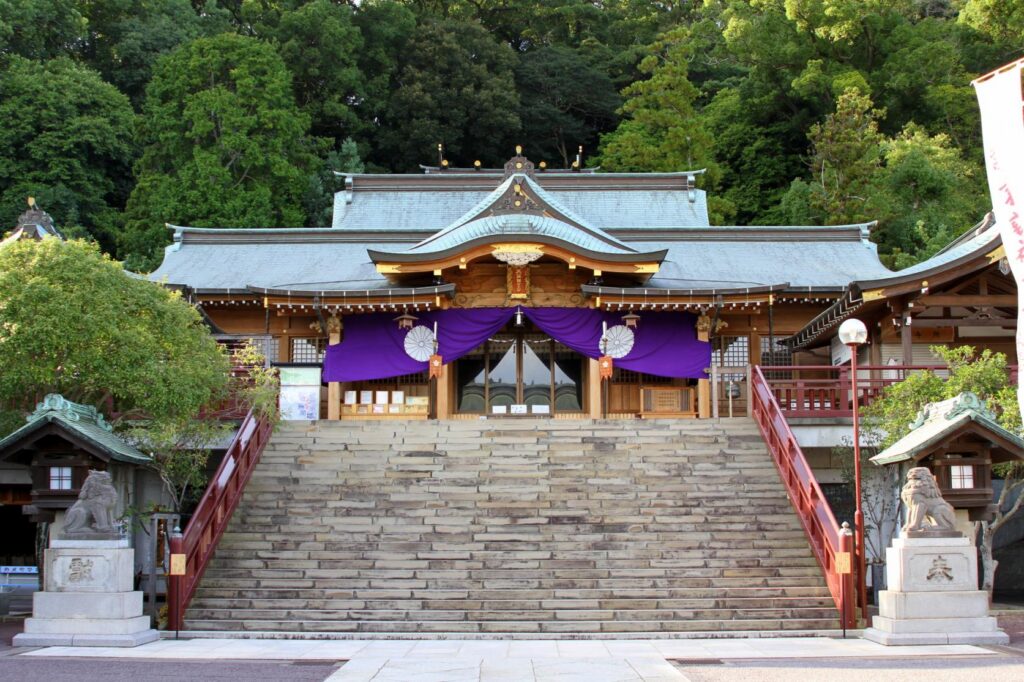
Image Credits: Discover Nagasaki
A 200-plus-step staircase that ends in one of the better views over the city, and one of the few sites in the area that survived the 1945 blast. Suwa Shrine sits high enough, sheltered by the hills around it, that the bombing left it largely untouched while flatter parts of the city were levelled.
Best for a spare hour and legs that don’t mind stairs. Skip it if Mount Inasa already covers your view quota for the day.
📖 Related Guide: Souvenir shopping before you fly home? Our what to buy in Japan guide covers the tax-free rules and what’s actually worth the suitcase space.
What to Eat in Nagasaki
Nagasaki’s food is its own thing, not a regional variation on Tokyo or Osaka staples. Two centuries of Chinese and Portuguese trade left the city with dishes you won’t find named the same way anywhere else in Japan.
Champon and Sara Udon
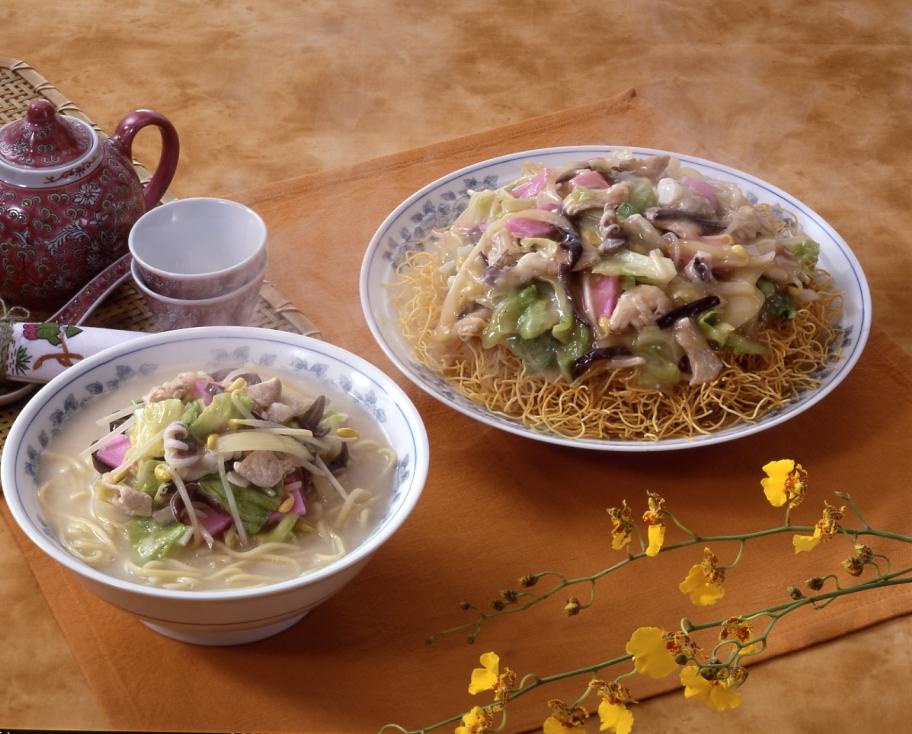
Image Credits: Discover Nagasaki
Champon is the dish to eat here, and it’s not a bowl of ramen with a local name slapped on. Chinese traders in Shinchi created it as a filling, cheap meal for dock workers and students. The broth runs closer to tonkotsu ramen than a clear soup, the noodles cooked in the same pot rather than assembled afterwards, topped with cabbage, shrimp, fish cake and wood-ear mushroom.
A bowl typically runs 700 to 1,000 JPY (~S$6 to S$8) at an ordinary noodle shop. Sara udon is champon’s drier sibling from the same kitchens: crispy fried noodles under the same toppings, a thickened sauce poured over at the table rather than a broth to slurp.
Order both if you’re eating with someone else, since they share a menu at almost every Nagasaki noodle counter and split easily. Make it lunch on your first day, ideally at a shop outside Chinatown proper, where locals say the same bowl costs less and tastes better.
Kakuni Manju
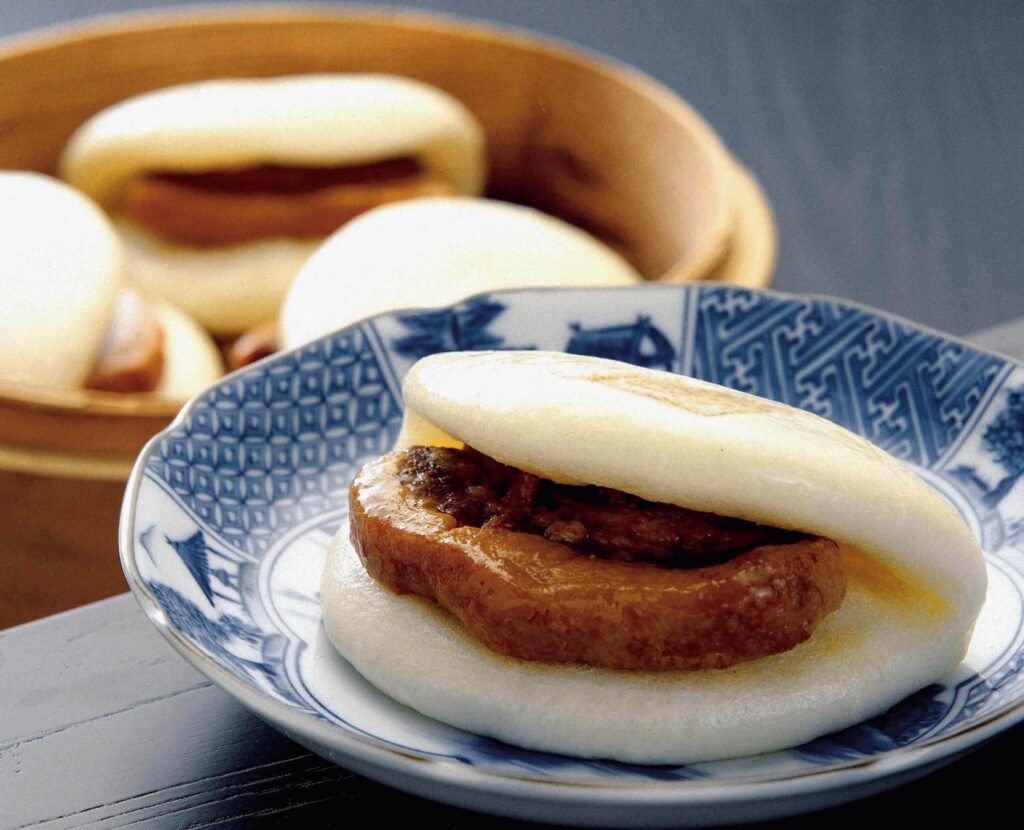
Image Credits: Discover Nagasaki
A steamed bun stuffed with slow-braised pork belly, sold hot from street stalls for around 500 JPY (~S$4). Kakuni manju is Nagasaki’s answer to a Chinese-style braised pork bun. The pork cooks down until it falls apart at the first bite, tucked into a soft, slightly sweet flour-and-rice bun that some stalls add a slice of cheese to. Eat it standing; it’s built to be a snack, not a sit-down meal.
Chirin Ice Cream and Tomato Ramen
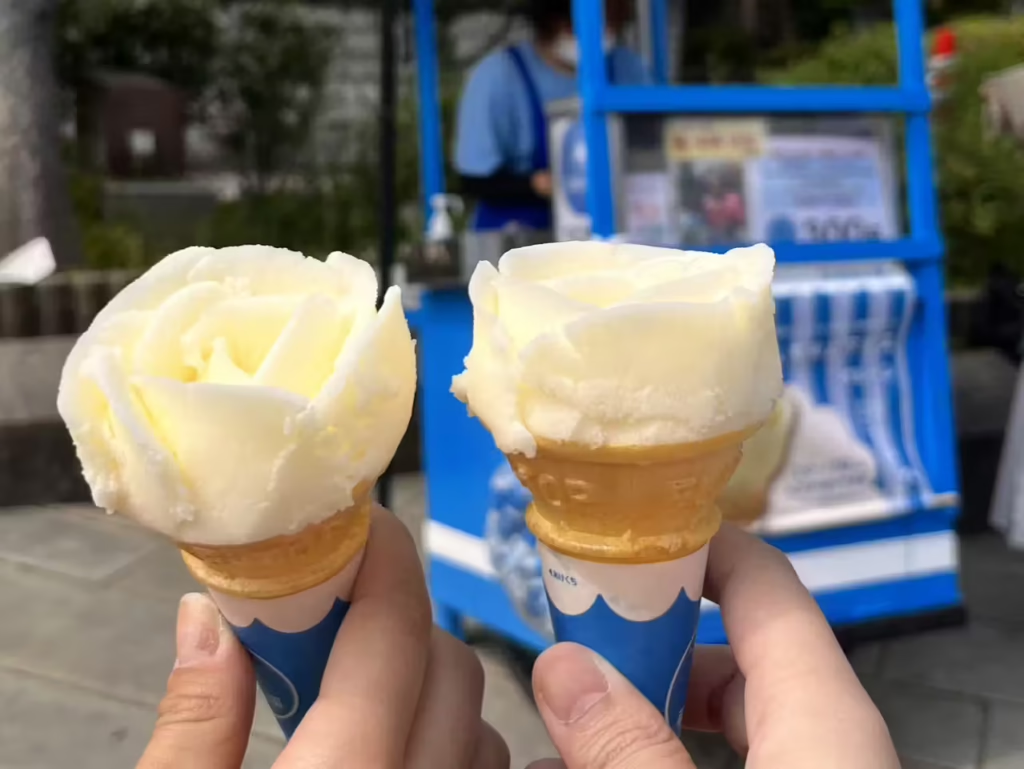
Image Credits: Trip.com
Chirin ice cream is the photogenic one: piped into a rose shape and sold from a handful of riverside stalls near Meganebashi, at roughly 60 calories a scoop and a texture closer to sorbet than dairy ice cream. It’s a summer stop rather than a meal, best eaten while it’s still cold enough to hold its shape.
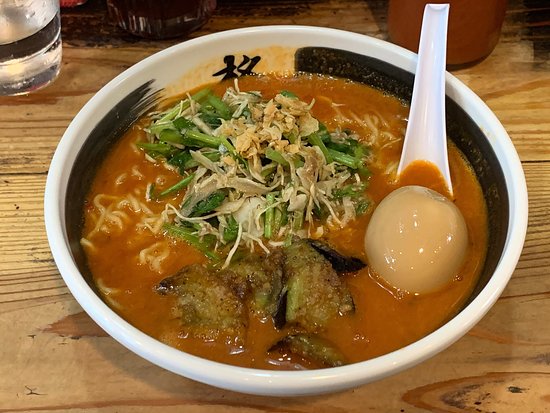
Image Credits: Tripadvisor
A speciality shop in the Hamamachi shopping arcade (Ramen Hiiragi) runs a rich tomato broth over ramen noodles, topped with sautéed eggplant rather than the usual chashu pork. Black pepper and garlic give it more bite than the name suggests. Order a side of clam rice and pour the leftover broth over it once the noodles are gone; it’s the shop’s own recommendation, and it works.
Castella Cake
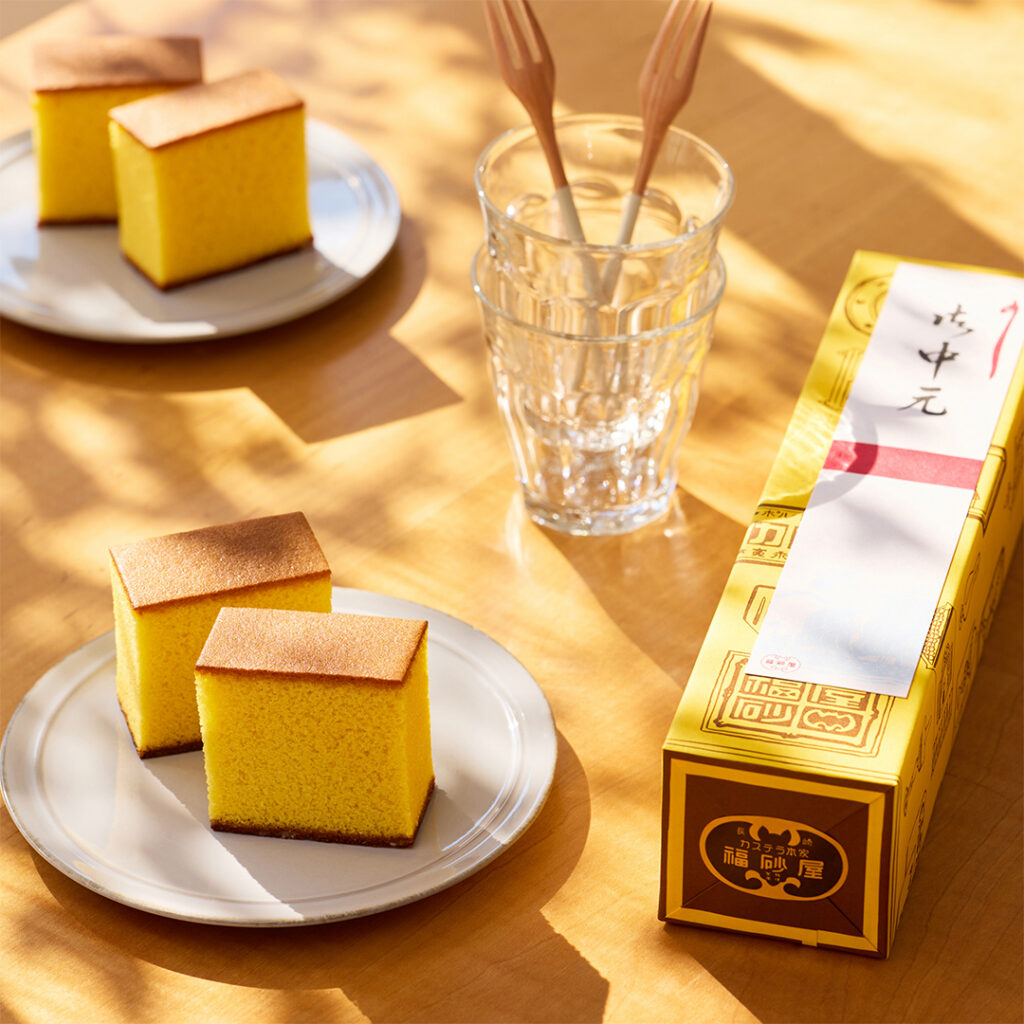
Image Credits: Fukusaya Castella
Nagasaki’s souvenir cake, and there’s a real hierarchy among the shops that sell it. Castella arrived with Portuguese traders and stuck as a local speciality: a soft, not-too-sweet sponge cake, dense rather than airy, sold in a long block and sliced to order.
Three shops are known locally as Nagasaki’s “big three.” Fukusaya, founded in 1624, is the most widely available outside the prefecture. Bunmeido, founded in 1900, is the most famous name to casual visitors, with a flagship near Dejima. Shooken, founded in 1681, is the connoisseur’s pick, sold in only two shops and rarely advertised.
Most castella shops let you sample a slice before buying, worth doing since the sweetness and density vary more between shops than the packaging suggests.
What to Do in Nagasaki at Night
Mount Inasa is the main night activity, but there’s a solid backup if the ropeway queue or the weather doesn’t cooperate.
The Mount Inasa Night View
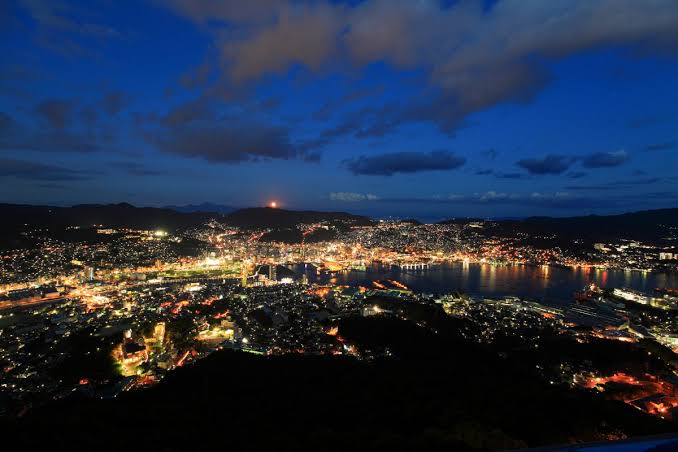
Image Credits: Japan RAIL & TRAVEL
Already covered in full above, and still the one to plan the evening around if you do only one thing after dark. Book dinner around it rather than the other way round. The last gondola down sets a hard stop on the evening.
Nabekanmuri Observatory
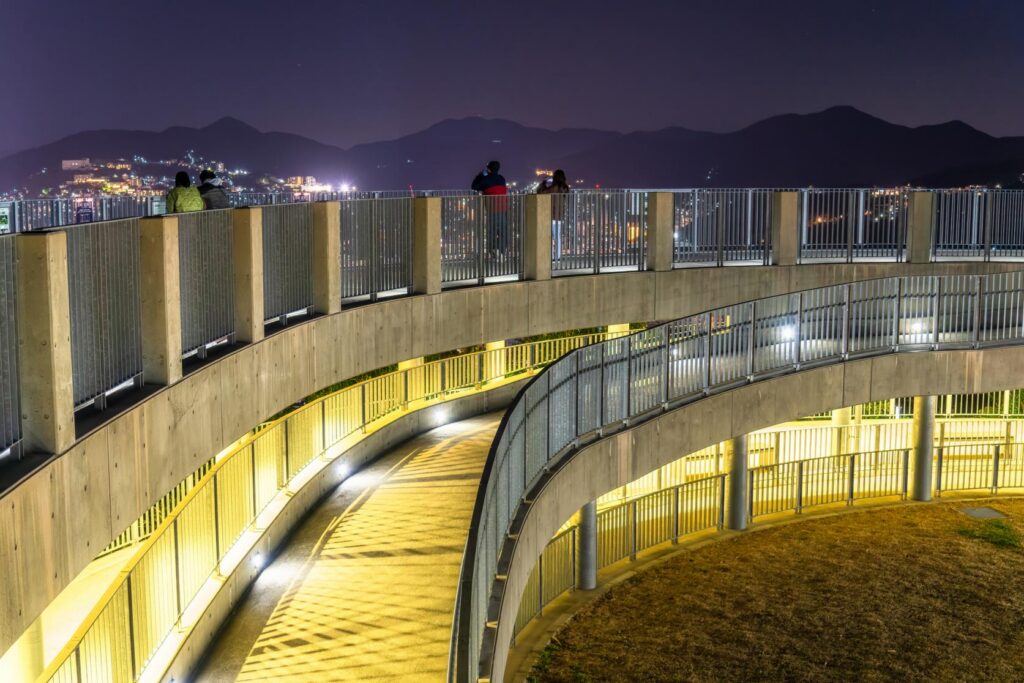
Image Credits: Discover Nagasaki
The quieter alternative, quiet because most people don’t bother with the climb. Nabekanmuri sits on a different hillside from Mount Inasa, reached by a steep climb rather than a ropeway. The reward is a similar sweep of the harbour with a fraction of the visitors. Go only if you’re comfortable with a proper uphill walk in the dark on the way back down.
Nagasaki Seaside Park and the Harbour
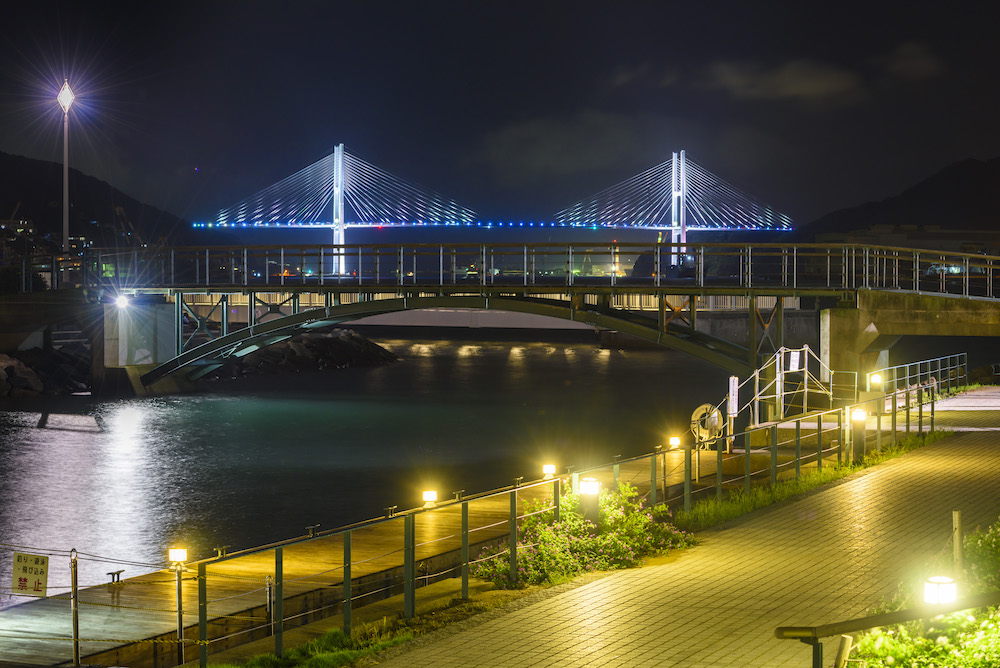
Image Credits: nagasaki-yakei.com
The free, low-effort option. Nagasaki Seaside Park runs along the water near the port, and it’s where locals go to watch the sunset rather than pay for a viewing deck. Combine it with a slow walk back through Chinatown, lit and busy well after the shops have closed, for the cheapest possible evening in the city.
Is Nagasaki Cheap? A Singapore Traveller’s Cost Breakdown
Yes, noticeably. Nagasaki costs less than Tokyo and a shade less than Fukuoka too, mostly because it sees fewer international visitors and hotel rates haven’t caught up with the rest of Japan’s post-reopening surge.
A realistic day of sightseeing, food and transport for one person lands around S$40 to S$60. Figure S$10 for the tram pass and ropeway, S$15 to S$20 on a couple of proper meals, S$5 to S$10 on snacks and castella, and the rest on whichever paid attraction you slot in that day. Gunkanjima is the one line item that changes the maths, adding S$39 to S$57 on the day you do it.
Shopping runs cheap too. A branch of Don Quijote sits on the Hamanomachi shopping arcade for late-night snacks, skincare and souvenirs. Tax-free counters are standard here if you carry your passport, and it’s the easiest stop to fill a spare hour between sights.
The smart way to cover all of it: skip the money changer and withdraw yen from an ATM once you land. A money changer doesn’t charge a visible fee. It bakes a markup of a few percent into the rate it quotes, worse still at airport counters.
With YouTrip, your first S$400 of overseas ATM withdrawals each calendar month is free, then a flat 2% after that, resetting on the 1st. Pull yen from a convenience-store ATM on arrival and the cash side is sorted at a fair rate.
For everything else, tap the YouTrip card and pay no foreign transaction fee, each spend converting from SGD to yen at the Mastercard wholesale rate, well ahead of the 3% to 3.5% a typical credit card adds on every overseas swipe. Yen is one of YouTrip’s 12 hold-able wallet currencies too, so lock the rate in the app before you fly if it’s looking favourable.
Bottom line: carry a little cash for the Chinatown food stalls and the smaller shrines, withdraw it fee-free on arrival, and tap the card for everything else. For more, see our Japan ATM withdrawal guide and the SGD to yen rate guide.
Where to Stay in Nagasaki
Stay near Nagasaki Station or Hamanomachi if this is your first visit. Both sit on the tram network and put Chinatown, Dejima and the Mount Inasa ropeway within easy reach, without needing a taxi after a late dinner.
The hillside around Kazagashira, close to Glover Garden, suits a slower second visit better. It trades a short uphill walk for a quieter base with harbour views from some rooms. If Gunkanjima and the boat tour are the priority, staying anywhere near the port itself shaves a few minutes off an early departure.
Hotel rates here run noticeably below Fukuoka’s, so a mid-range business hotel a short walk from Hamanomachi is usually the easiest, cheapest option. It puts you close enough to walk to dinner rather than tram back for it.
📖 Related Guide: Working out whether a rail pass covers this whole Kyushu loop? Our JR Pass guide has a calculator and the routes where it stops paying for itself.
FAQs
Yes. Gunkanjima, the Mount Inasa night view, and a food and trading history unique to this one city are enough reason on their own, even without a single blockbuster landmark to anchor the day.
Yes, as safe as anywhere else in Japan, which is to say very. Standard travel precautions apply. The only real hazard worth noting is rough seas occasionally cancelling the Gunkanjima boat tour at short notice.
There’s no direct flight, so fly into Fukuoka and take the train or highway bus onward, or connect through Nagasaki’s own small airport. The Nishikyushu Shinkansen route from Fukuoka’s Hakata Station is the fastest, at about 1h 40min.
Nagasaki is on the western coast of Kyushu, Japan’s southernmost main island, about 1h 40min by train or a short flight from Fukuoka.
Glover Garden and Dejima in the morning, champon for lunch near Chinatown, then the Mount Inasa ropeway before dinner. Gunkanjima is the one thing a single day usually can’t fit in alongside everything else.
They do different jobs rather than compete directly. Fukuoka is the better base for a multi-city Kyushu trip with more flights and hotel choice. Nagasaki is worth basing in only if it’s the actual destination rather than a stop along the way.
Give Nagasaki Its Own Day
Nagasaki has no single headline sight, and it doesn’t need one. The island, the mountain view and a plate of champon that tastes like nowhere else in Japan are reason enough, and a single rushed afternoon sells all three short.
Wherever the rest of the Kyushu trip goes, spend smart while you’re there. Tap the YouTrip card for zero foreign transaction fees at the Mastercard wholesale rate, and withdraw yen fee-free on your first S$400 each month for the cash-only stalls.
Not a YouTrooper yet? Sign up with code YTBLOG5 for a free YouTrip card and S$5 in credit. Lock in your rate across 12 currencies and spend in 150+ countries with no foreign transaction fees. Check out the latest YouTrip Perks, join our Telegram for deals, and swap tips in our Community Group.