



The underrated Kyushu city that runs on ramen and day trips
Fukuoka is the Japan trip you take when you’ve already done Tokyo and Kyoto. It’s Kyushu’s biggest city, a six-hour direct flight from Changi, and small enough to walk. What you come for: the best tonkotsu ramen in the country and a ring of hot-spring towns an hour away. Here’s how to spend two or three days there.
| Quick trip planner | Details |
|---|---|
| How long to stay | 2 days for the city, 3 to add a day trip |
| Getting there | Direct from Changi, around 6 hours |
| Best time to visit | Spring and autumn for weather; winter for cheaper flights and illuminations |
| Must-eat | Hakata tonkotsu ramen at a yatai (street stall) |
| Top day trip | Yufuin, a hot-spring village just over 2 hours away |
| Pay with | YouTrip — lock in the yen rate, no FX fees, free ATM withdrawals |
Fukuoka at a Glance: Top Sights
| Spot | Best for | Area | Entry |
|---|---|---|---|
| Ohori Park | Easy first morning | Chuo (central) | Free |
| Canal City Hakata | Shopping + food in one stop | Hakata | Free |
| Fukuoka Tower & Momochi | Sunset over the bay | Seaside | ~1,000 JPY (~S$8) |
| Kushida Shrine | Hakata’s spiritual heart | Hakata | Free |
| Nanzoin Temple | Giant reclining Buddha | Sasaguri (20 min out) | ~500 JPY (~S$4) |
| Yatai street stalls | Ramen after dark | Nakasu / Tenjin | From 800 JPY (~S$6) |
| Dazaifu Tenmangu | Half-day culture trip | 30 min out | Free |
| Yufuin | Hot springs + Ghibli-esque village | Just over 2 hours out | Trains from ~5,690 JPY (~S$46) |
Table of Contents
- What Is Fukuoka Famous For? (And Is It Worth Visiting?)
- How To Get To Fukuoka
- Best Things To Do In Fukuoka
- Unique Things To Do In Fukuoka
- Eat Your Way Through Fukuoka: Ramen, Yatai & More
- Fukuoka At Night
- Best Day Trips From Fukuoka
- Things To Do In Fukuoka With Kids
- Best Time To Visit Fukuoka (Season By Season)
- Where To Stay In Fukuoka
- Fukuoka Itinerary: Is 2 Or 3 Days Enough?
- Paying In Fukuoka: Cash, Cards & The Best JPY Rate
- Fukuoka FAQs
What Is Fukuoka Famous For? (And Is It Worth Visiting?)
Fukuoka is famous for tonkotsu ramen, open-air food stalls called yatai, and being Japan’s easiest big city to actually relax in. It’s the capital of Kyushu, the southern island, and it does the rare thing of packing beaches, shrines, shopping and hot springs into one compact, walkable place.
Is it worth visiting? Yes, especially on a second or third trip to Japan, or if the crowds in Kyoto have put you off. Fukuoka moves slower. The airport is a five-minute subway ride from the city centre, the food is cheaper than Tokyo, and you’re never more than an hour or two from a proper day trip.
What it isn’t: a headline-sights city. There’s no Fushimi Inari, no Shibuya Crossing. The appeal is the pace, the food and the day trips. If you need a marquee bucket-list photo every hour, Fukuoka will feel quiet. If you want to eat well and move slowly, it’s close to perfect.
Best for food-led travellers, repeat Japan visitors, and anyone using Fukuoka as a base to explore Kyushu.
📖 Related Guide: Wondering how Fukuoka fits the wider island? Our Kyushu travel guide maps the whole region, from Nagasaki to the Kumamoto volcanoes.
How To Get To Fukuoka
Fukuoka is a direct flight from Singapore, around six hours, landing at an airport that’s right inside the city. If you’re already in Japan, the Shinkansen and budget flights both connect Fukuoka to Tokyo and Osaka.
From Singapore: Singapore Airlines flies Changi to Fukuoka direct, taking around six hours. Fukuoka Airport sits two subway stops from Hakata Station, so you’re checked into your hotel faster than most airport transfers back home.
Tokyo to Fukuoka
| Mode | Duration | From | Notes |
|---|---|---|---|
| Plane | ~2 hours | From ~S$60 | Fastest; several daily flights to Fukuoka Airport |
| Shinkansen | ~5 hours | From 22,220 JPY (~S$178) | Nozomi on the Tokaido–Sanyo line; scenic but long |
| Night bus | ~14 hours | From 9,000 JPY (~S$72) | Cheapest; overnight coach, book via Willer |
Osaka to Fukuoka
| Mode | Duration | From | Notes |
|---|---|---|---|
| Shinkansen | ~2h 30min | From 10,900 JPY (~S$87) | Nozomi/Mizuho; 10,900 is a JR West discount ticket, walk-up ~15,700 JPY (~S$126) |
| Plane | ~1h 15min | From ~S$55 | Quick, but add airport time both ends |
| Bus | ~10 hours | From 5,000 JPY (~S$40) | Overnight option from Umeda |
From Osaka, the Shinkansen usually wins once you count airport time. From Tokyo, fly. Five hours on a train is a lot when the flight is two.
You may also see mentions of a Busan–Fukuoka ferry from South Korea. The old high-speed hydrofoil was discontinued in late 2024, but the overnight Camellia Line ferry still runs the route if you’re island-hopping between the two countries.
📖 Related Guide: Chasing a cheap fare? Our Japan budget airlines guide breaks down which low-cost carriers actually save you money once bags are added.
Best Things To Do In Fukuoka
Fukuoka’s best sights are spread across three easy zones: the central Chuo and Tenjin area, the Hakata side around the station, and the Momochi seaside. None are more than 20 minutes apart by subway, which is why two days here goes a long way.
Ohori Park
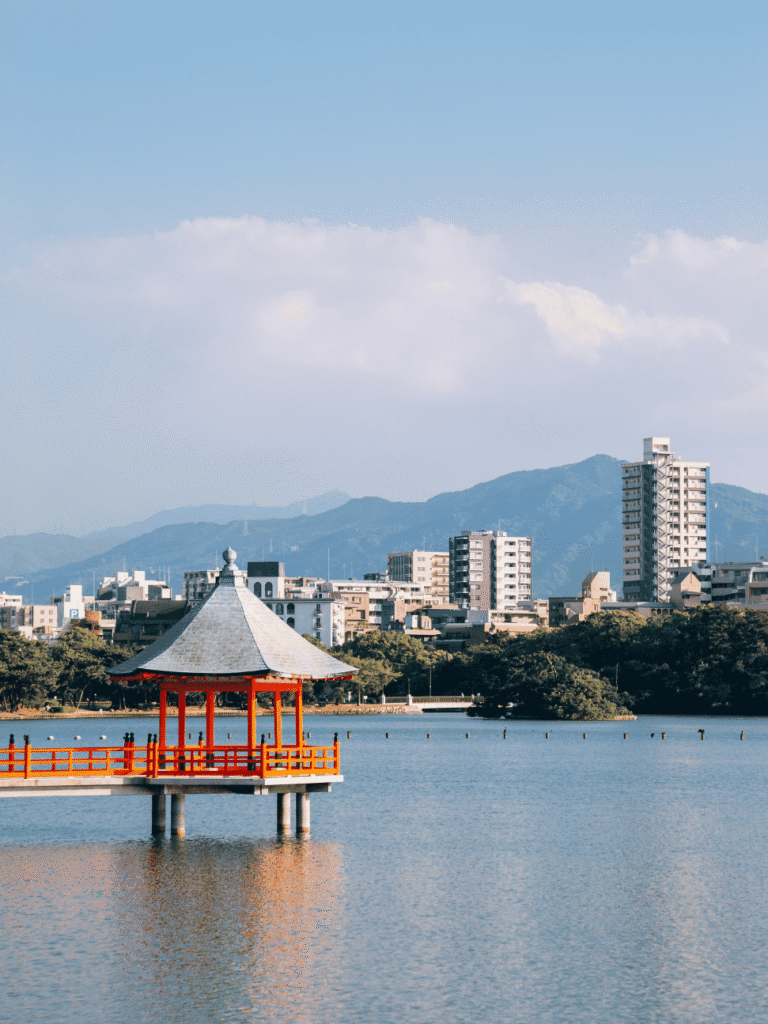
Ohori Park is a lake ringed by a walking path, built around the moat of the old Fukuoka Castle. Locals jog it, families rent the swan paddleboats, and there’s a small, beautifully kept Japanese Garden in one corner. It’s the city’s easy morning: green, calm and free.
Next door, Maizuru Park holds the Fukuoka Castle ruins and around a thousand cherry trees, which makes it one of the city’s best hanami (blossom-viewing) spots in early April. Grab a coffee from the waterfront Starbucks on the pond’s edge and walk the loop at golden hour.
- 📍 1 Ohorikoen, Chuo Ward
- 🕘 Park open 24 hours; Japanese Garden 9 AM–5 PM, closed Monday
- 💰 Park free; Japanese Garden 250 JPY (~S$2)
Fukuoka Art Museum
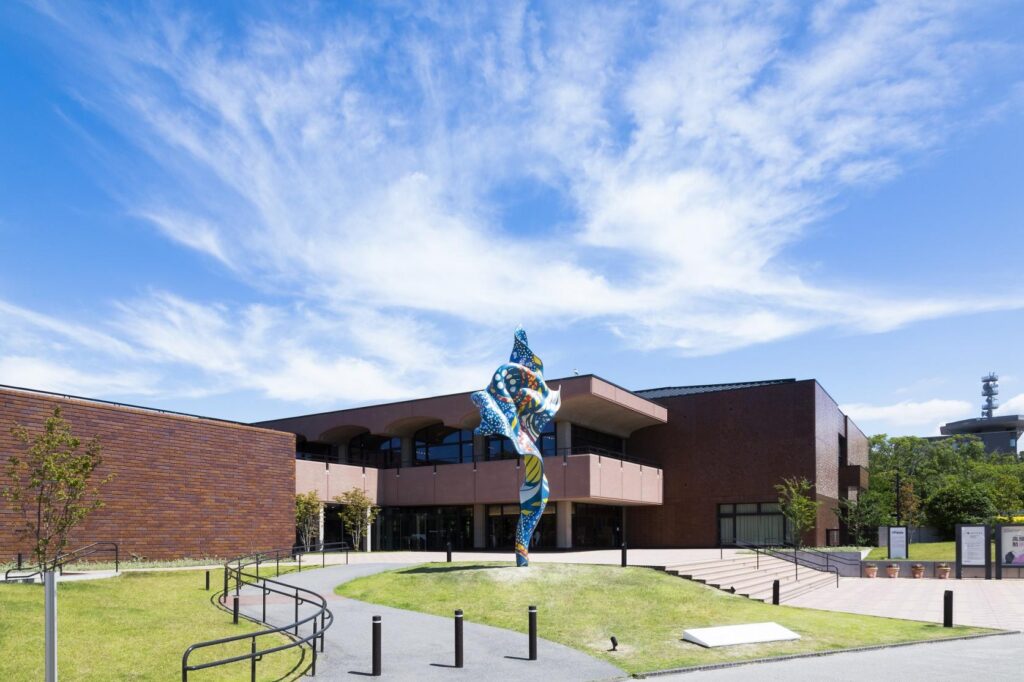
Image Credits: クロスロードふくおか
Sitting inside Ohori Park, this museum pairs Buddhist statues and classical Japanese works with a strong modern wing: Yayoi Kusama’s spotted pumpkins, a Dalí or two. It’s compact enough to do in an hour, which makes it an easy add-on to an Ohori morning rather than a whole afternoon.
- 📍 1-6 Ohorikoen, Chuo Ward
- 🕘 9:30 AM–5:30 PM (until 8 PM Friday and Saturday), closed Monday
- 💰 200 JPY (~S$1.60) for the permanent collection
Fukuoka Tower and Momochi Seaside Park
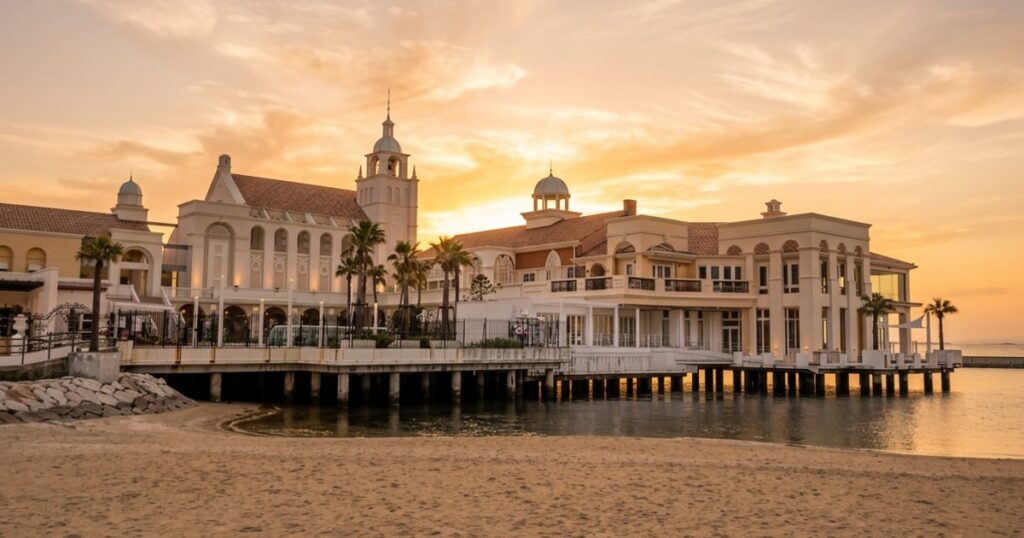
Image Credits: Klook
Fukuoka Tower is a 234-metre mirrored spire on the bay, Japan’s tallest seaside tower, with a 123-metre observation deck that gives you a 360-degree sweep over Hakata Bay. It’s best at dusk, when the city lights come on and the tower’s own LED illuminations shift with the season: hearts for Valentine’s, a lit-up tree at Christmas. Below it, Momochi Seaside Park runs a kilometre of artificial beach, with the little Marizon island of restaurants and a seaside wedding chapel at its tip.
It’s a bit out from the centre, so pair it with dinner on the seaside rather than a special trip. The ferry to Uminonakamichi Park leaves from Marizon if you’re combining the two. Best for golden-hour photos and a slower evening away from the crowds.
- 📍 2-3-26 Momochihama, Sawara Ward
- 🕘 9:30 AM–10 PM (last entry 9:30 PM)
- 💰 1,000 JPY (~S$8) for the observation deck, or about 720 JPY (~S$6) with your passport
Canal City Hakata
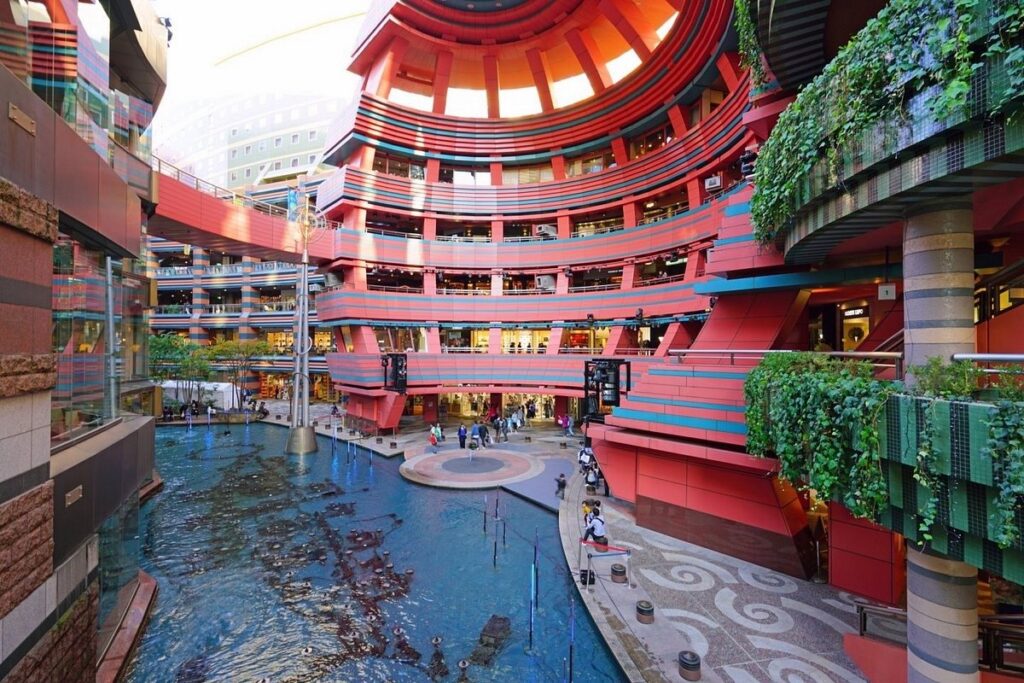
Image Credits: Tripadvisor
Canal City is a huge shopping-and-entertainment complex curved around a real canal, where a fountain show runs every half-hour and lights up with projection-mapping after dark. Its fifth-floor Ramen Stadium gathers eight famous ramen shops from around Japan under one roof, and there’s a 13-screen cinema, a theatre and around 250 shops besides.
It’s touristy and busy, but very useful when the weather turns. Time your visit for an evening fountain show, then eat your way through Ramen Stadium. Best for a wet-weather backup or a one-stop shopping-and-ramen hit.
- 📍 1-2 Sumiyoshi, Hakata Ward
- 🕘 Shops 10 AM–9 PM; restaurants until 11 PM
- 💰 Free to enter
Tenjin
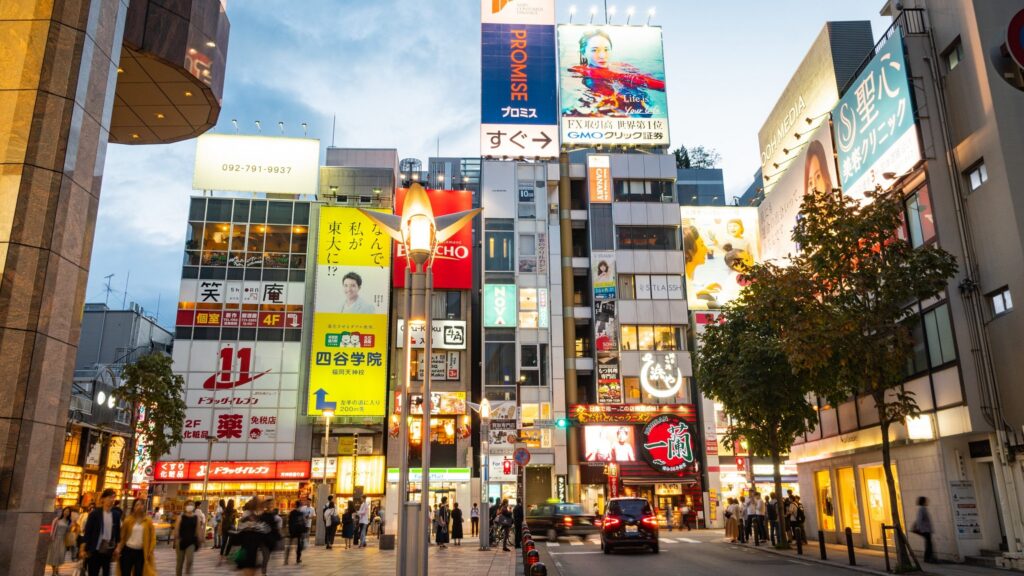
Image Credits: Expedia
Tenjin is Fukuoka’s downtown: department stores and boutiques above ground, and Tenjin Chikagai, a 590-metre underground arcade of around 150 shops, below. The underground stretch is styled like a 19th-century European street, with flagstone floors and arabesque ceilings, and it’s a real lifesaver on a rainy or too-hot day.
Just west, the Daimyo backstreets trade the big brands for indie boutiques, vintage stores and coffee shops. Best for shopping, people-watching and ducking the weather; it’s the most reliable place to end up without a plan.
- 📍 Chuo Ward
- 🕘 Most shops 10 AM–8 PM
- 💰 Free
Kushida Shrine
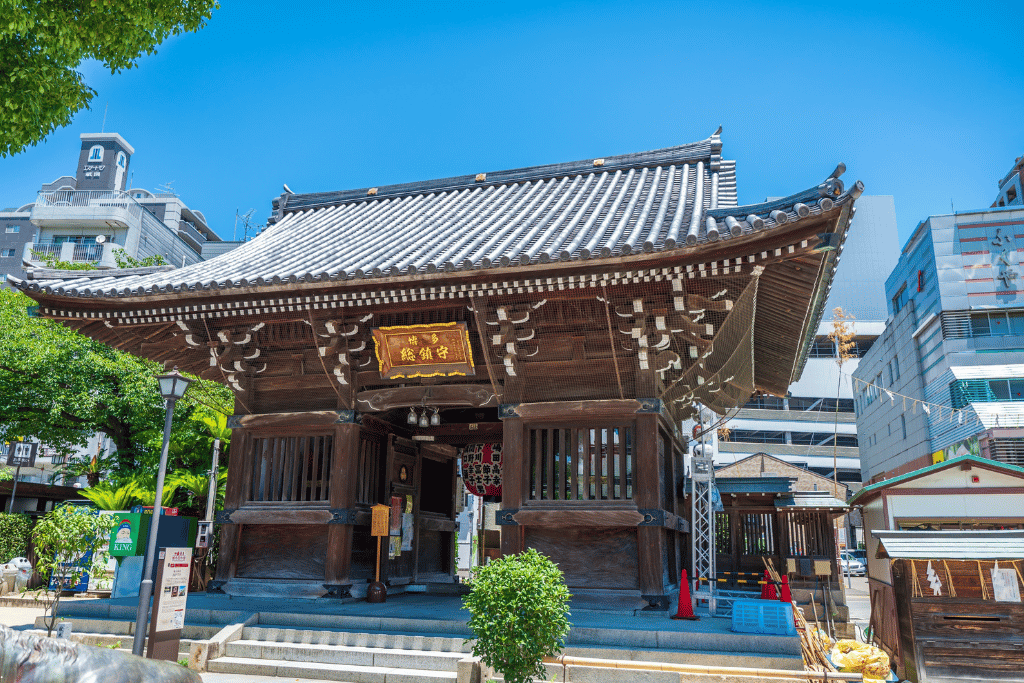
Kushida is Hakata’s guardian shrine, and the spiritual home of the city’s biggest festival, Hakata Gion Yamakasa. Even outside July, you can see one of the towering, elaborately decorated festival floats parked on the grounds. Standing next to one is genuinely impressive.
It’s small, central and free, and slots neatly between Canal City and the Nakasu food stalls. Best for a quick, meaningful stop rather than a long visit.
- 📍 1-41 Kamikawabatamachi, Hakata Ward
- 🕘 4 AM–10 PM
- 💰 Free (adjacent Hakata history museum ~300 JPY / ~S$2.40)
Shōfukuji Temple
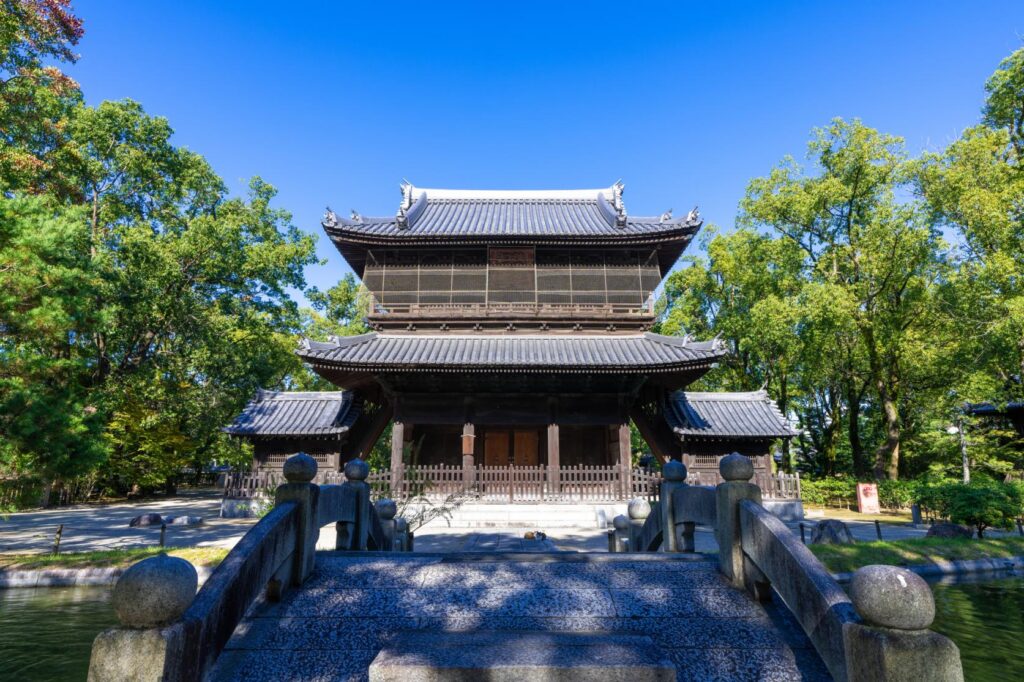
Image Credits: クロスロードふくおか
Founded in 1195, Shōfukuji is Japan’s first Zen temple, built by the monk Eisai, who brought both Zen and the custom of drinking tea back from China. It sits a few minutes’ walk from Kushida Shrine in old Hakata, with a raked-gravel approach, an old bell tower and quiet, mossy grounds that rarely draw a crowd.
It’s still a working monastery, so the halls are closed to visitors, but you’re free to wander the grounds and take them in from outside. Best for history buffs and anyone who wants a calm, crowd-free pause between the busier Hakata sights.
- 📍 6-1 Gokushomachi, Hakata Ward
- 🕘 Grounds open daily
- 💰 Free
Nanzoin Temple
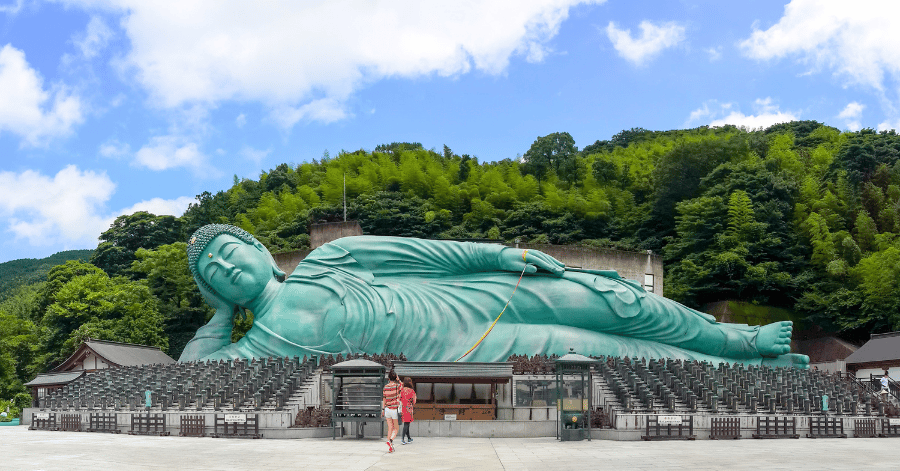
Twenty minutes from Hakata Station in the forested town of Sasaguri, Nanzoin is home to the world’s largest bronze statue. The reclining Buddha is 41 metres long, 11 metres high and cast from some 300 tonnes of bronze. The path to it winds past rows of small rakan (disciple) statues through the trees, so it feels like a proper little pilgrimage rather than a photo stop. It’s also known as a lucky temple, visited for money fortune ever since the head priest reportedly won a big lottery prize soon after the Buddha was finished.
It’s an easy half-day by local train. Individual travellers are welcome, though organised foreign tour groups aren’t. Best for anyone who wants one big, memorable sight without leaving the city for long.
- 📍 1035 Sasaguri, Kasuya District
- 🕘 9 AM–4:30 PM
- 💰 Around 500 JPY (~S$4) for overseas visitors (from March 2026)
Uminonakamichi Seaside Park
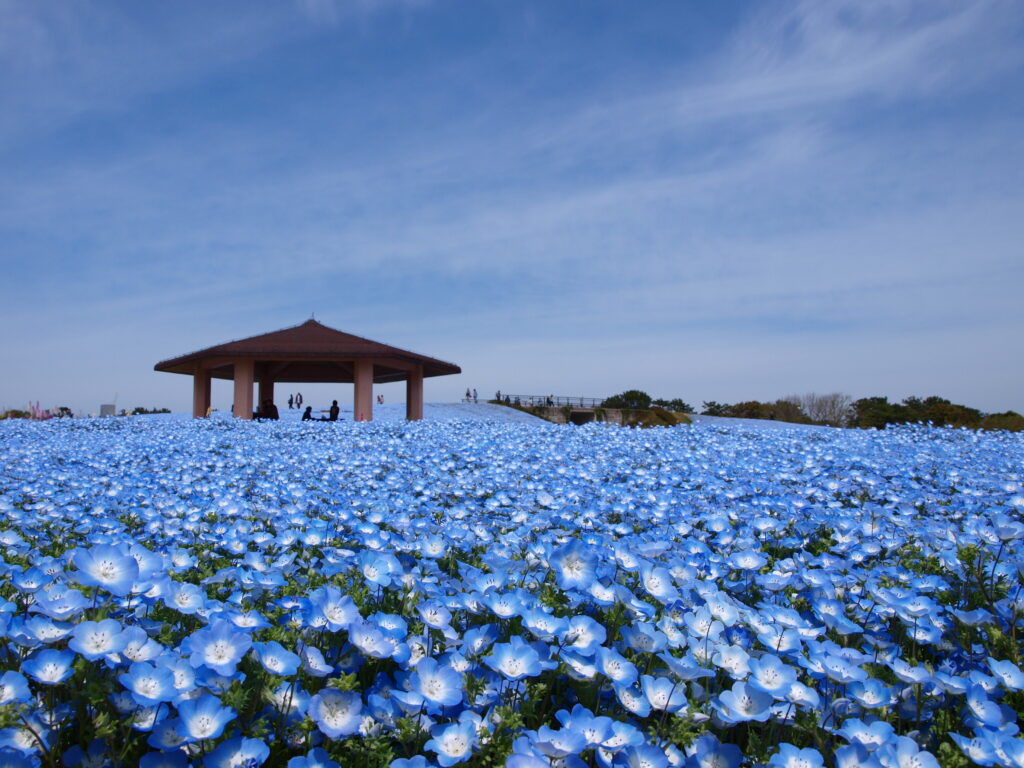
Image Credits: FUKUOKA CITY Official Tourist Guide
On a peninsula across Hakata Bay, this sprawling park runs on seasonal flowers: around a million blue nemophila carpet the Flower Hill in April, and the kochia turn deep red in autumn. Beyond the blooms there’s a Ferris wheel, a small zoo, playgrounds and a 12km cycling course with bike rentals, so it fills a full, easy family day. Come by JR, or make an afternoon of it and take the ferry across the bay from Momochi.
- 📍 18-25 Saitozaki, Higashi Ward
- 🕘 9:30 AM–5:30 PM, closed Tuesday
- 💰 450 JPY (~S$3.60) adults, 210 JPY (~S$1.70) children
Marine World Uminonakamichi
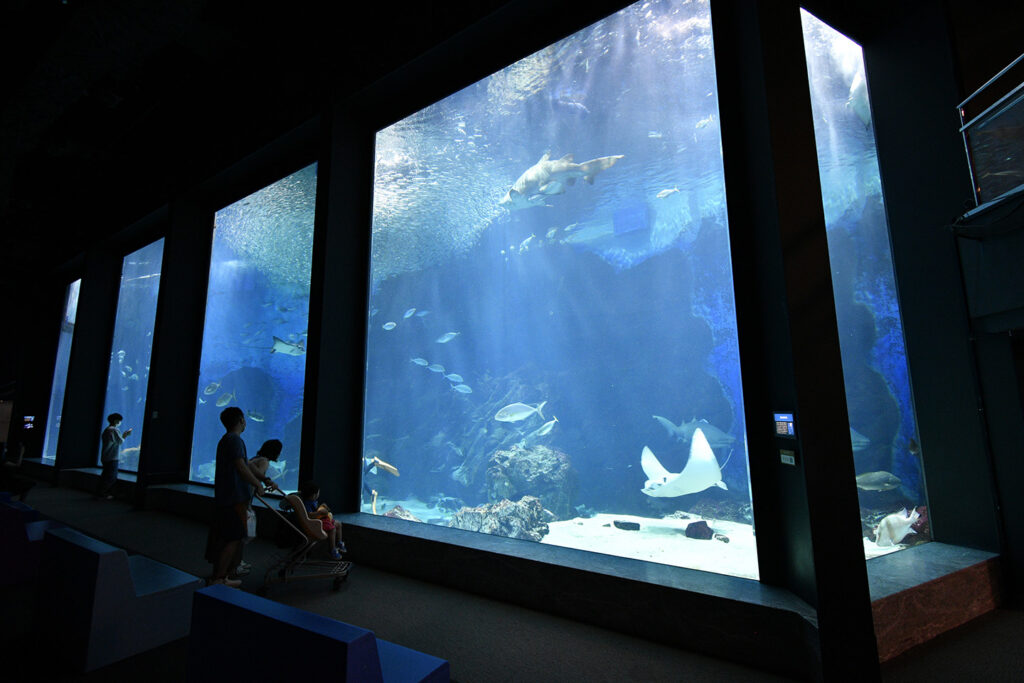
Image Credits: Japan Travel by NAVITIME
Right next to the seaside park, this aquarium is built around a huge “Kyushu Sea” tank, home to more than 120 sharks across 20 species. It’s part of a collection of some 350 species in all. The outdoor dolphin and sea-lion show plays out against Hakata Bay, with central Fukuoka on the horizon behind the pool. It pairs perfectly with the park for a family day on the peninsula.
- 📍 18-28 Saitozaki, Higashi Ward
- 🕘 9:30 AM–5:30 PM (later on summer nights)
- 💰 2,700 JPY (~S$22) adults, 1,400 JPY (~S$11) children
Fukuoka City Science Museum

Image Credits: クロスロードふくおか
A hands-on museum of physics, space and technology, anchored by a large dome planetarium. Kids get interactive exhibits they can actually touch, and the planetarium show is a good reset on a hot afternoon.
- 📍 4-2-1 Ropponmatsu, Chuo Ward
- 🕘 9:30 AM–9:30 PM, closed Tuesday
- 💰 410 JPY (~S$3.30) adults, 200 JPY (~S$1.60) children; planetarium +510 JPY (~S$4.10)
📖 Related Guide: Adding Tokyo to the same trip? Our best things to do in Tokyo guide covers the big-city half of the itinerary.
Unique Things To Do In Fukuoka
Beyond the parks and shrines, Fukuoka has a handful of oddball experiences you won’t find on a standard Japan list. These are the ones that make the city feel different from Tokyo or Osaka.
teamLab Forest at BOSS E・ZO Fukuoka
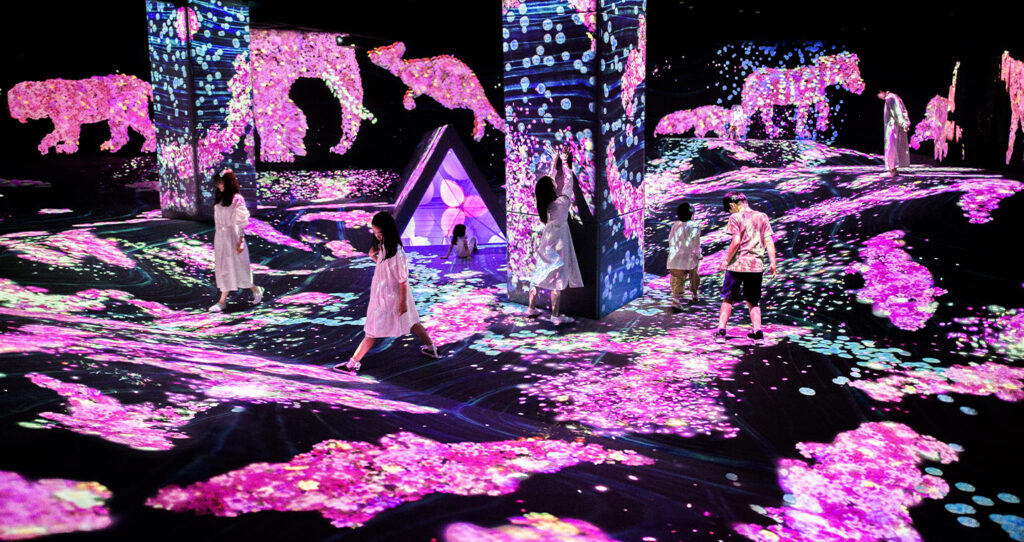
Image Credits: BOSS E・ZO FUKUOKA
teamLab Forest is a permanent digital-art space where projected animals roam across the walls and floors and react as you move. It sits inside BOSS E・ZO Fukuoka, an entertainment tower next to the baseball dome that also has rooftop abseiling, a food hall and VR rides.
It’s smaller than the famous Tokyo installations, but far less crowded. Best for families and anyone who missed teamLab in Tokyo.
- 📍 2-2-6 Jigyohama, Chuo Ward
- 🕘 10 AM–7 PM (from 11 AM on weekdays); book timed tickets ahead
- 💰 From around 2,400 JPY (~S$19)
Ichiran no Mori
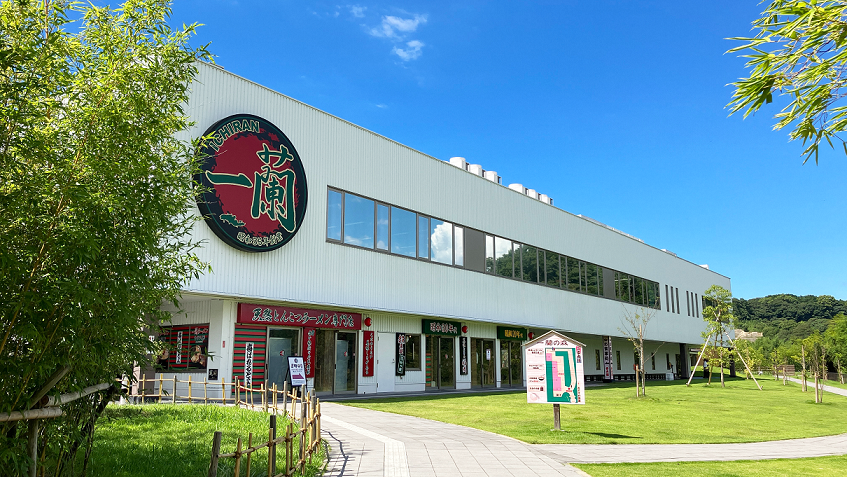
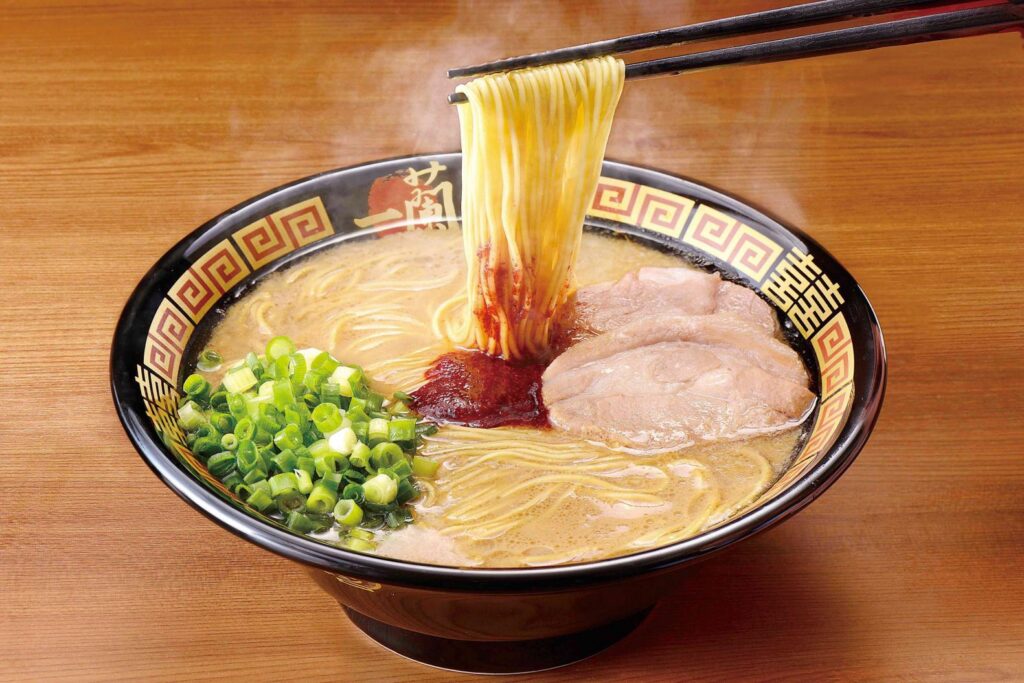
Image Credits: クロスロードふくおか
Out in Itoshima, this is the “birth-house” factory of Ichiran, the tonkotsu ramen chain you’ve probably queued for. You can tour the origin site and try a limited-edition bowl not sold anywhere else. It’s a real pilgrimage for ramen obsessives, though it’s a fair way out of the city.
- 📍 256-10 Matsuguma, Itoshima
- 🕘 10 AM–9 PM (factory viewing until 5 PM)
- 💰 Free to enter; ramen around 980 JPY (~S$8)
Takayama Pawn Shop
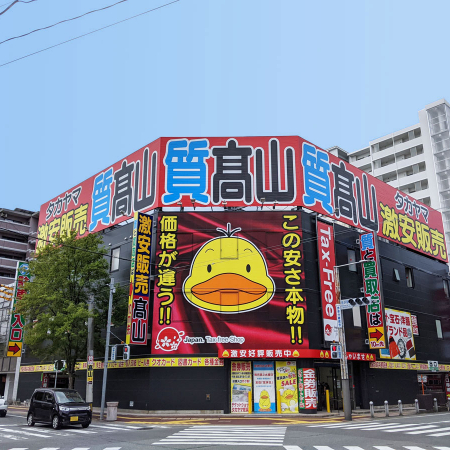
Image Credits: 高山質店
A famous second-hand luxury store in Koga stocked with pre-loved designer handbags, watches and jewellery at prices that draw shoppers from across Asia. Even if you’re not buying, it’s a fascinating browse: a whole shop of Chanel and Rolex on consignment.
- 📍 3-17-10 Imanosho, Koga
- 🕘 10:30 AM–8 PM
- 💰 Free to browse
Sakurai Futamigaura Couple Stones
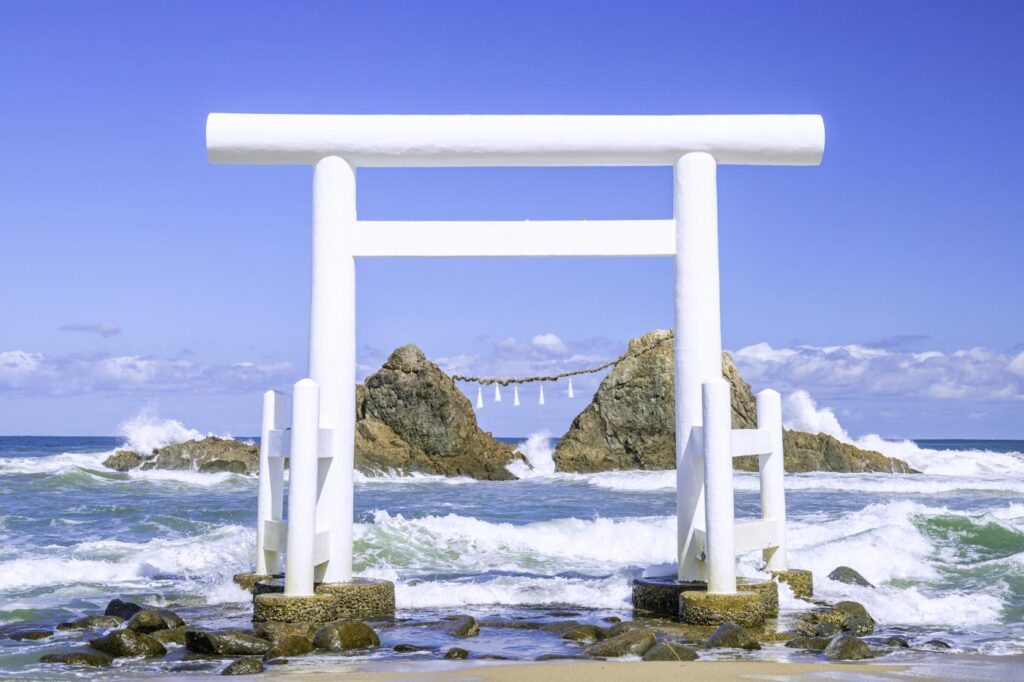
Image Credits: クロスロードふくおか
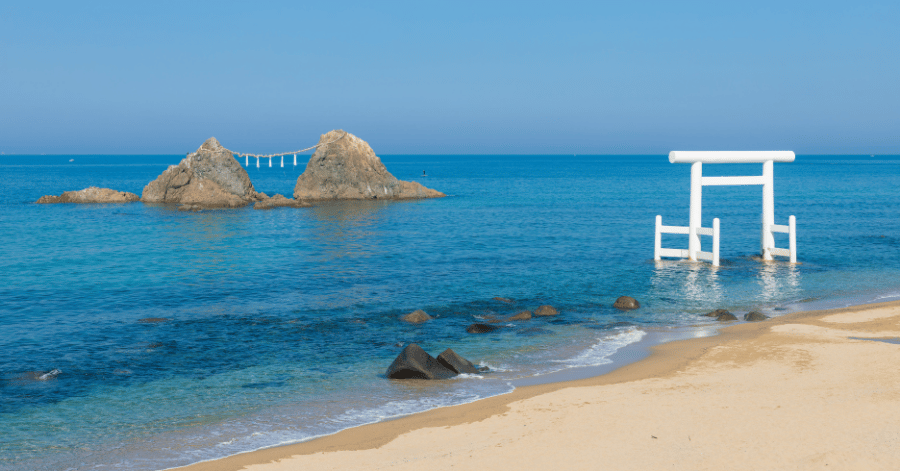
On the Itoshima coast, two rocks stand joined by a thick sacred rope, framed by a white torii gate out in the water. It’s a classic sunset spot and a favourite for couples, and the wider Itoshima coastline has become Fukuoka’s laid-back café-and-beach escape.
- 📍 Shimasakurai, Itoshima
- 🕘 Open 24 hours
- 💰 Free
Coto Coto Train
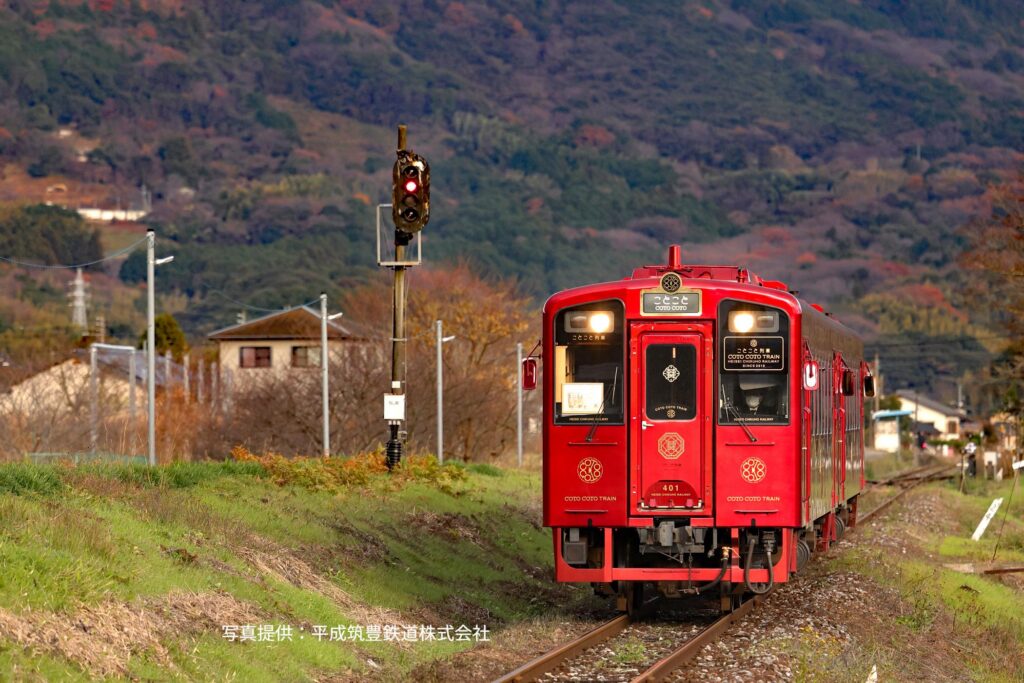
Image Credits: KKday
A slow, scenic sightseeing train that winds through the Fukuoka countryside with a multi-course lunch served on board. It runs mainly on weekends and needs booking well ahead, and it isn’t cheap. But for a special occasion, it’s a memorable way to see rural Kyushu.
- 📍 Departs Nogata, Fukuoka Prefecture
- 🕘 Weekends and holidays; reservation only
- 💰 From around 14,800 JPY (~S$118), lunch included
📖 Related Guide: More of an Osaka person? Our things to do in Osaka guide has the same mix of food and quirk in Kansai.
Eat Your Way Through Fukuoka: Ramen, Yatai & More
Food is the real reason to come to Fukuoka. This is the birthplace of Hakata tonkotsu ramen, the home of the yatai street-stall scene, and the source of local specialities like motsunabe and mentaiko that Singaporeans quietly obsess over. Budget your appetite accordingly.
Hakata Tonkotsu Ramen
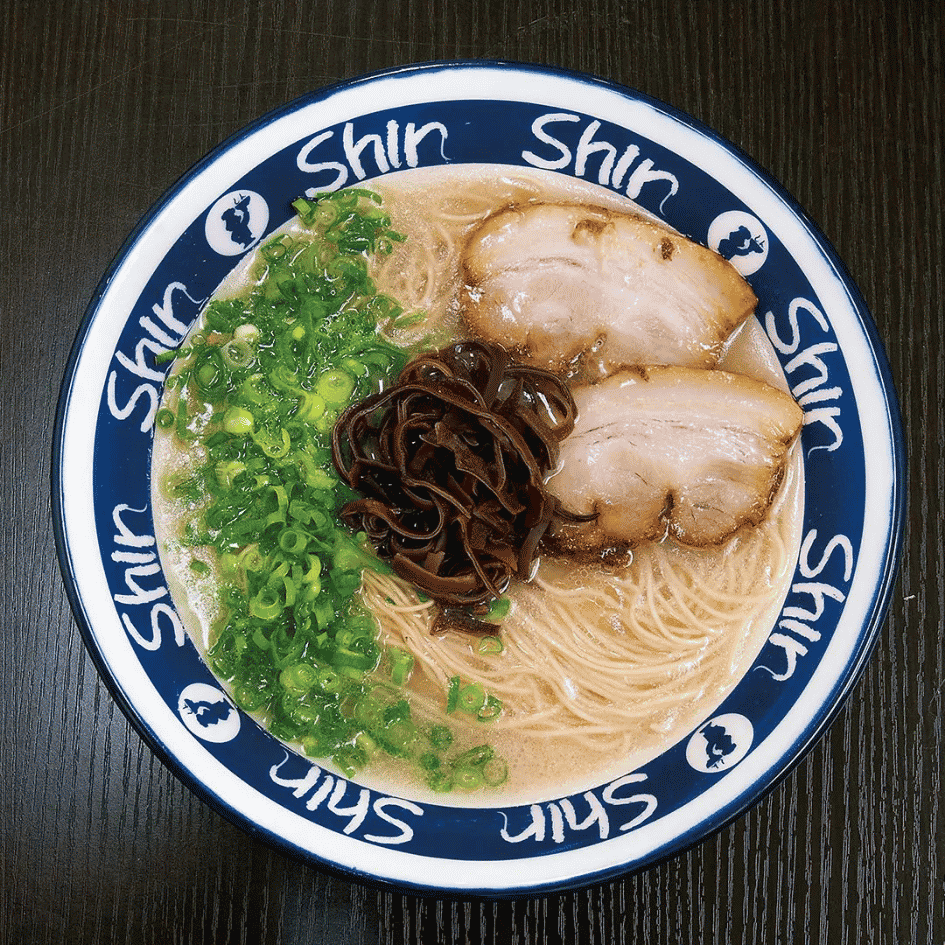
Image Credits: www.gltjp.com
Hakata ramen is the rich, milky, pork-bone-broth style that launched a thousand imitators. Bowls come with thin, firm noodles, and you order kaedama (an extra portion of noodles) when the first runs out. Reckon on around 760–1,000 JPY (~S$6–8) a bowl.
| Where to slurp it | Area | What makes it |
|---|---|---|
| Shin-Shin | Tenjin | Easy, creamy crowd-pleaser |
| Ippudo Daimyo Honten | Daimyo | The original Ippudo; its Shiromaru and Akamaru bowls |
| Hakata Issou | Hakata Station | Frothy, collagen-rich “cappuccino” broth; expect a queue |
| Ichiran | Nakasu | 24-hour solo-booth tourist icon; fun once |
Best for your first meal off the plane, since there’s an Ichiran branch right inside the airport.
Yatai street stalls
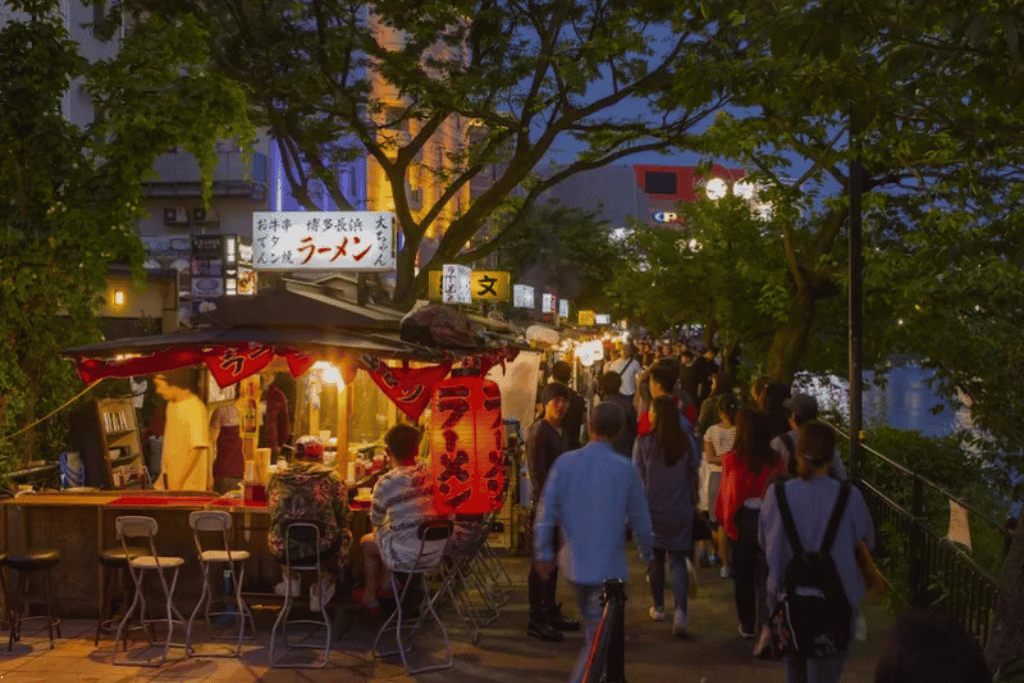
Image Credits: Japan National Tourism Organisation
The yatai are open-air stalls that fold out along the streets and riverbanks at dusk, serving ramen, oden, yakitori and cold beer to a dozen stools. Fukuoka has the largest yatai scene in Japan, with around 100 licensed stalls spread across three districts.
| District | What to expect |
|---|---|
| Nakasu | The neon-lit riverside postcard row; most atmospheric, priciest |
| Tenjin | Scattered along the pavements; calmer and cheaper for a sit-down |
| Nagahama | The ramen-roots district |
Sitting elbow-to-elbow with locals over a steaming bowl is the single most Fukuoka thing you can do. Dishes run 500–1,000 JPY (~S$4–8) each, and most stalls are cash-only.
Motsunabe, mizutaki and mentaiko
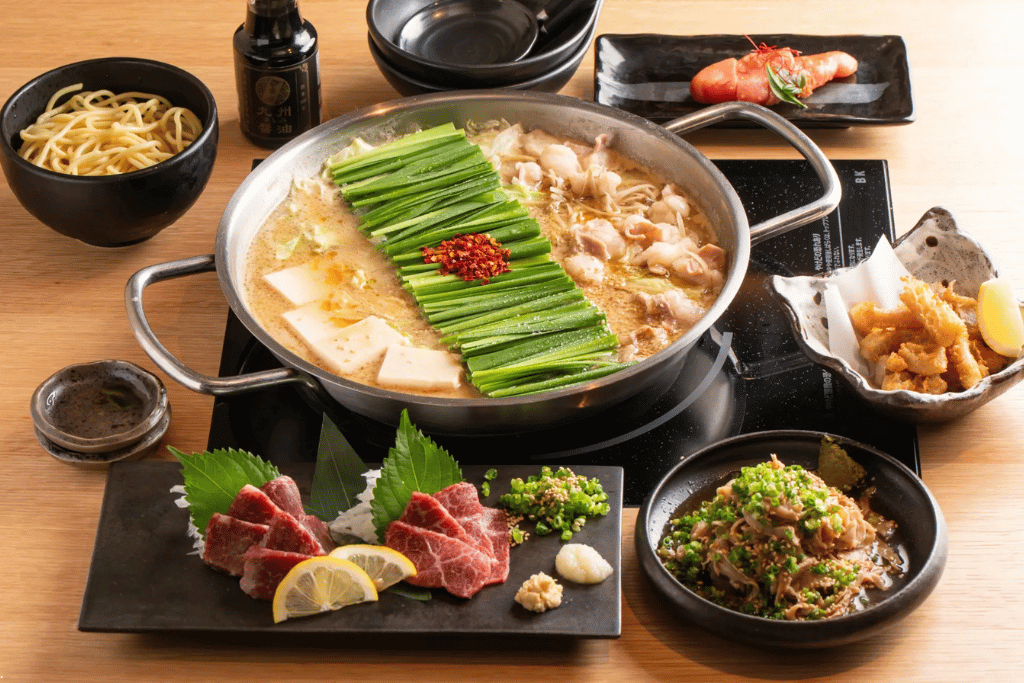
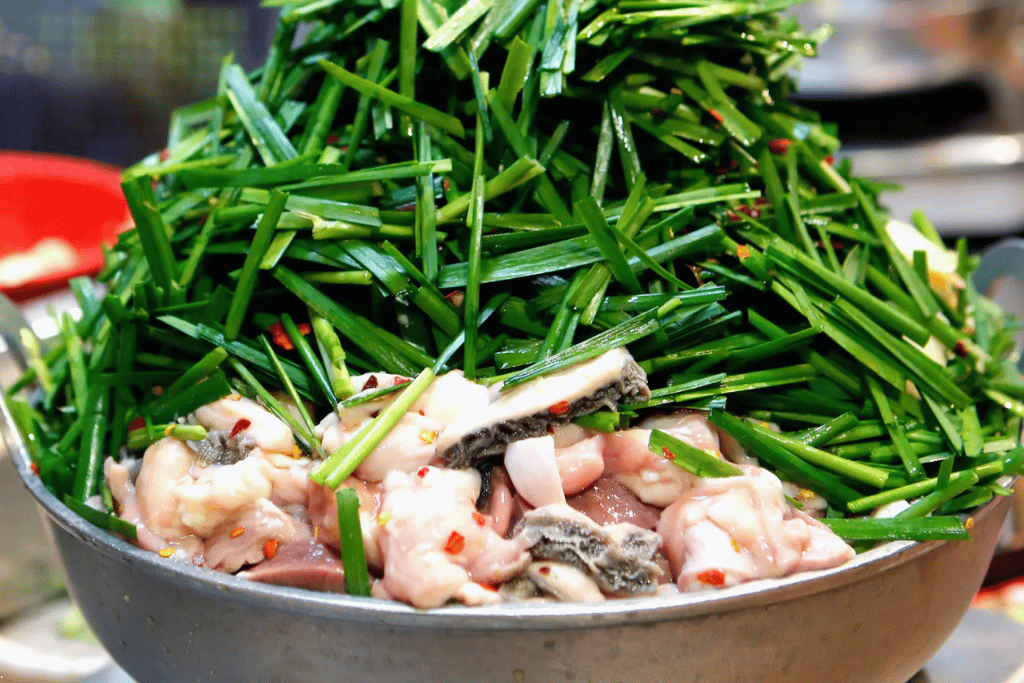
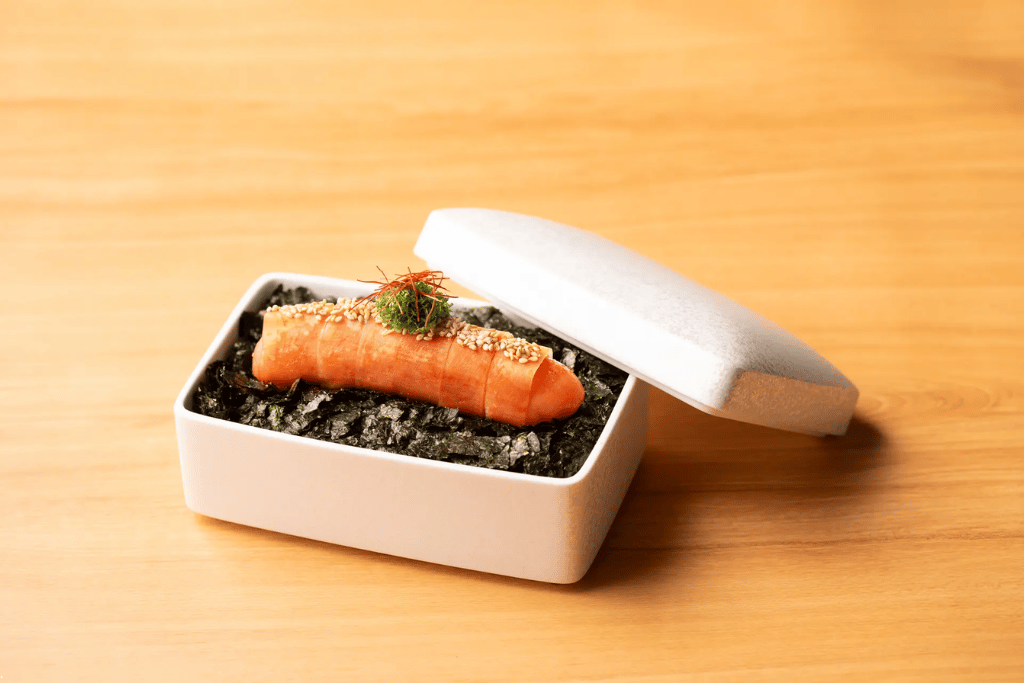
Image Credits: gltjp.com
Fukuoka’s food goes well beyond ramen. Motsunabe is a hotpot of beef or pork offal with cabbage and garlic chives in a light broth, heartier and more warming than it sounds, and a local staple in cooler months. Mizutaki, a delicate chicken hotpot simmered for hours, is its gentler cousin, and tetsunabe gyoza arrive sizzling in a small cast-iron pan.
| Dish | Where to try | Area | Note |
|---|---|---|---|
| Motsunabe | Motsunabe Ooyama | Hakata (KITTE) | Miso broth; easy to find at the station |
| Motsunabe | Rakutenchi | Tenjin | Soy broth, mountains of garlic chives |
| Mizutaki | Toriden | Kawabata | Silky 6-hour chicken broth; ~2,800 JPY (~S$22) per person, book ahead |
| Tetsunabe gyoza | Tetsunabe | Nakasu | Bite-sized iron-pan gyoza; closed Tuesdays |
| Mentaiko (dine in) | Ganso Hakata Mentaiju | Nishinakasu | Signature mentaiju rice bowl |
| Mentaiko (to buy) | Fukuya | Nakasu | The shop that invented mentaiko in 1949 |
Save room for mentaiko, spicy marinated cod roe that turns up on everything from rice to pasta. Eat it as a rice bowl, or take a well-sealed box home as a souvenir.
📖 Related Guide: Stocking up before you fly home? Our what to buy in Japan guide covers the snacks and souvenirs worth the luggage space.
Fukuoka At Night
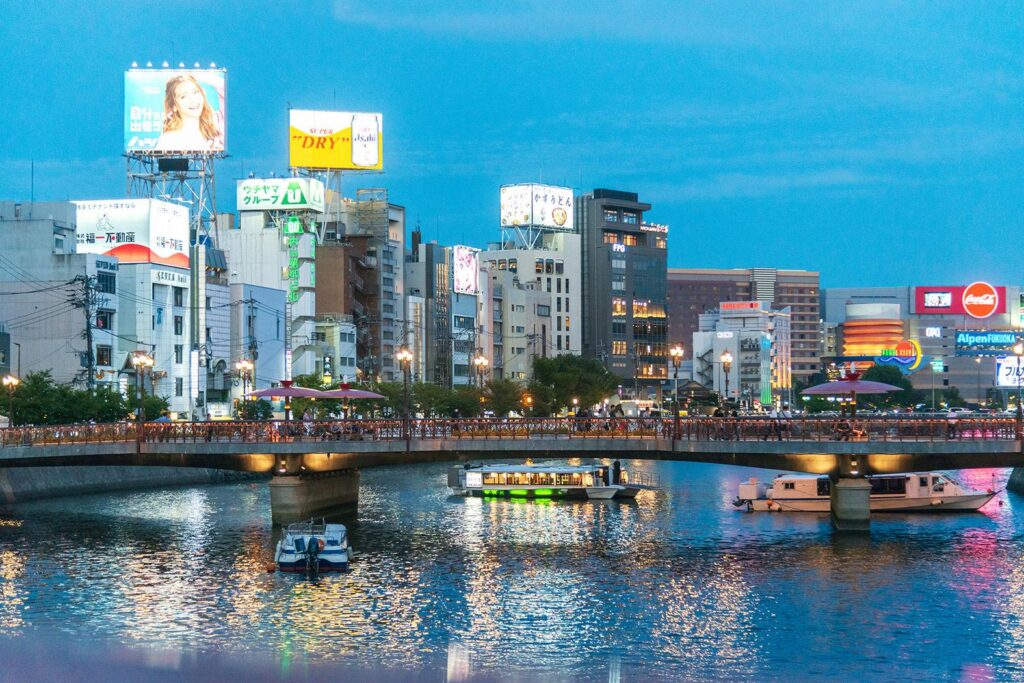
Image Credits: Tripadvisor
Fukuoka after dark is mostly about the yatai and the river. The city doesn’t do late-night neon on Tokyo’s scale, but the low-key riverside food scene is arguably better.
- The Nakasu sandbank, wedged between two rivers, lights up with rows of yatai and is the most atmospheric place to eat late.
- For bars, Oyafuko-dori in Tenjin is the compact nightlife strip.
- And the department-store basements (“depachika”) sell discounted bento and sushi in the last hour before closing, a cheap and delicious late dinner if you’re on a budget.
Best for a relaxed evening of eating and one or two drinks, rather than a heavy night out.
📖 Related Guide: Want the classic Kansai contrast? Our things to do in Kyoto guide covers the temples-and-tradition side of a Japan trip.
Best Day Trips From Fukuoka
Fukuoka’s real superpower is what’s around it. Hot springs, historic shrines and a cat island are all within a couple of hours, which is exactly why a third day here is worth adding.
Dazaifu
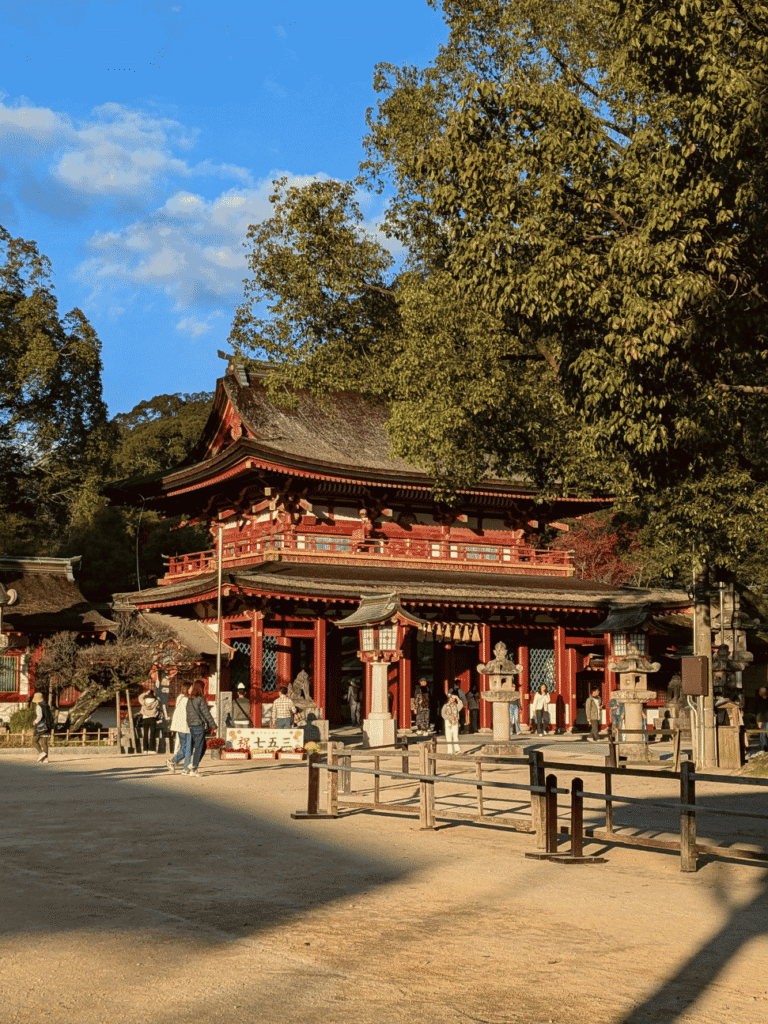
About 30 minutes out by Nishitetsu train, Dazaifu Tenmangu is one of Japan’s most important shrines, dedicated to the god of learning, so students come to pray before exams. The approach street is lined with shops selling umegae mochi (grilled red-bean cakes), and the striking modern Starbucks designed by Kengo Kuma is a photo stop in itself.
It’s the easiest half-day trip from the city. Best for a low-effort culture hit if you only have a spare morning.
- 📍 Dazaifu
- 🕘 Shrine roughly 6 AM–7 PM
- 💰 Free
Yufuin
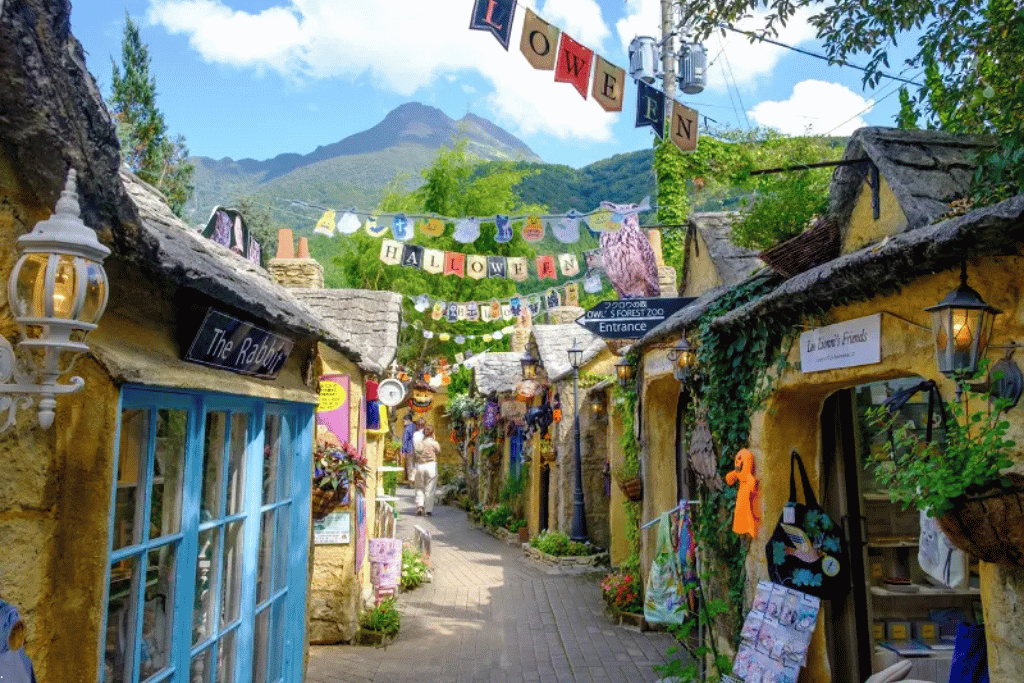
Image Credits: Japan National Tourism Organisation
Yufuin is a hot-spring village in the hills, a little over two hours by train, with a dreamy main street of craft shops and cafés under Mount Yufu. There’s a small “Floral Village” modelled on a European storybook town, a quiet lake, and dozens of ryokan where you can soak in an open-air onsen. It’s touristy but lovely all the same.
- 📍 Yufu, Oita
- 🕘 About 2h 15min each way; shops roughly 9 AM–5:30 PM
- 💰 Scenic-express trains from around 5,690 JPY (~S$46) each way
Beppu
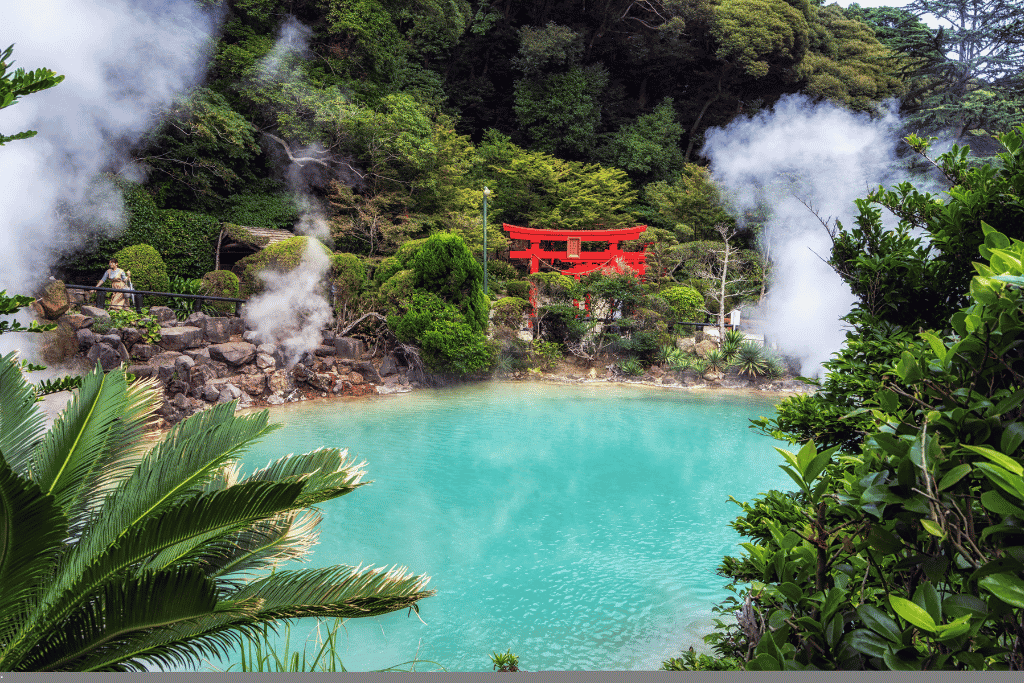
Beppu, around two hours away, is Japan’s onsen capital, famous for the “hells”: a set of dramatically coloured, steaming hot springs you look at rather than bathe in. You can also try a hot sand bath, buried up to your neck on the beach. It pairs naturally with Yufuin if you’re staying a night.
- 📍 Beppu, Oita
- 🕘 Hells 8 AM–5 PM
- 💰 Day-use baths 800–1,500 JPY (~S$6–12)
Yanagawa
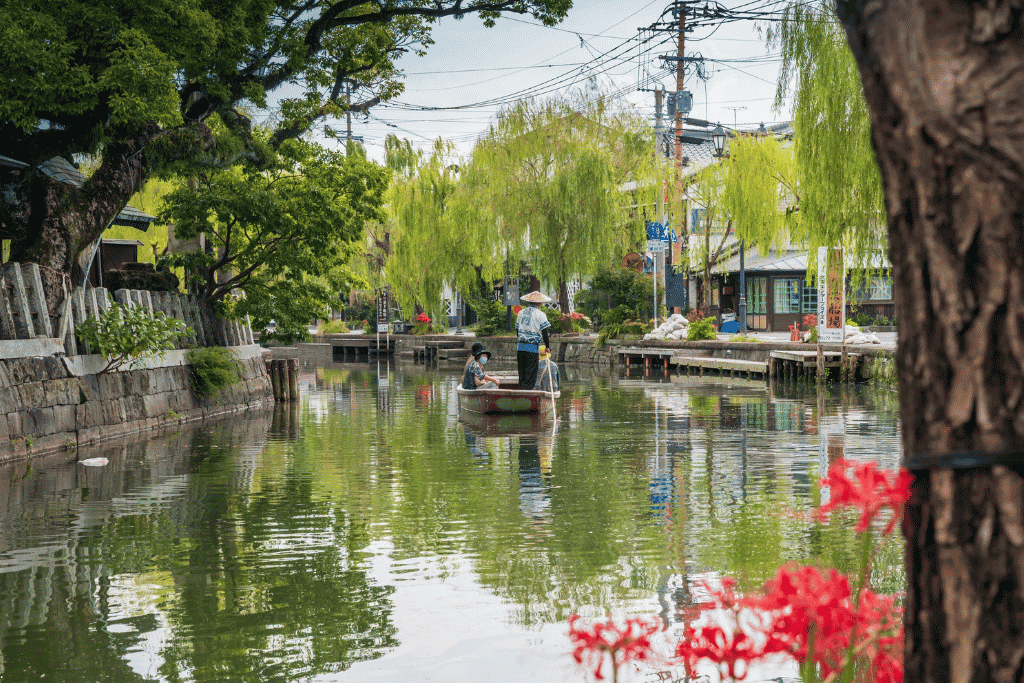
An hour south, Yanagawa is the “Venice of Kyushu”, a canal town where boatmen pole flat-bottomed donkobune down the waterways, singing folk songs as they go. It’s slow, scenic and pairs well with the town’s grilled eel (unagi) speciality for lunch.
- 📍 Yanagawa
- 🕘 Cruises roughly 9 AM–5 PM
- 💰 Around 1,500 JPY (~S$12) adults, 800 JPY (~S$6) children
Kawachi Fuji Garden
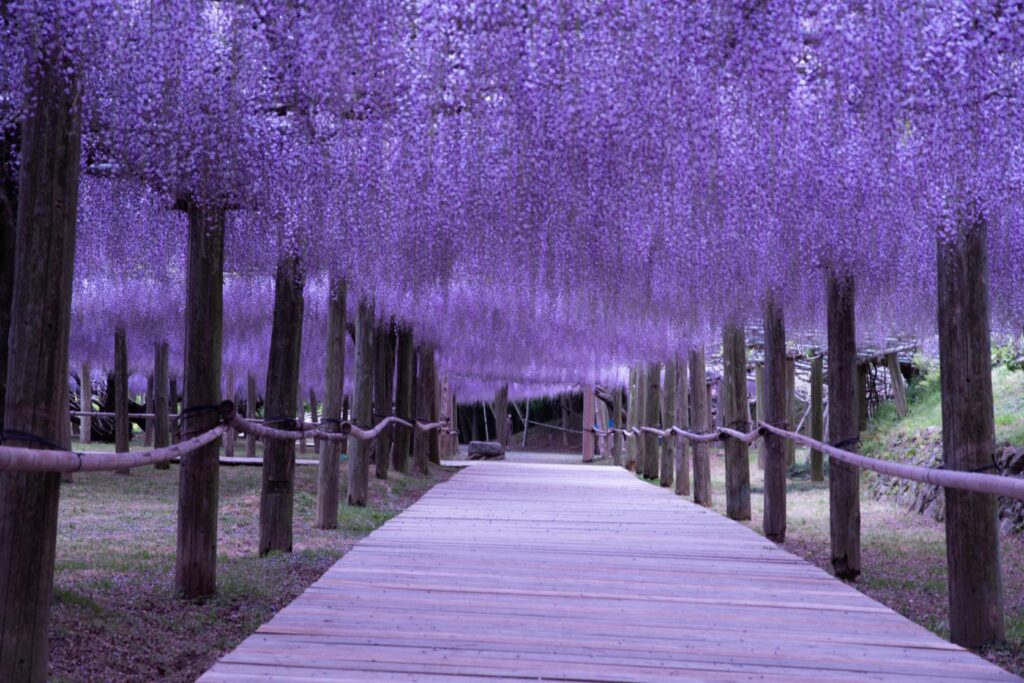
Image Credits: クロスロードふくおか
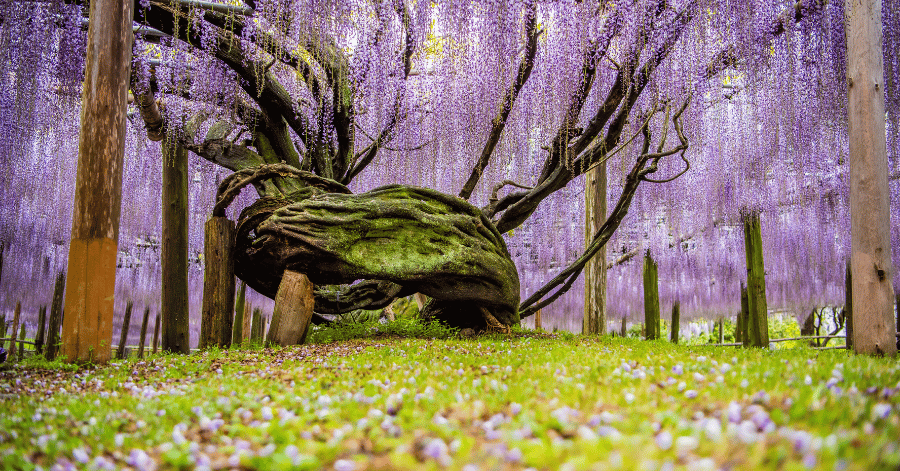
This private garden in Kitakyushu is famous for its wisteria tunnels of cascading purple, pink and white blooms you walk beneath. The blooms are the whole reason to come, but they’re strictly seasonal: in 2026 the wisteria ran roughly 18 April to 6 May, and entry is timed-ticket only at peak. It’s about 1h 15min from the city, easiest by car.
- 📍 Kitakyushu
- 🕘 Seasonal (late April–early May, and autumn for maples)
- 💰 Up to 1,600 JPY (~S$13) at peak bloom
Ainoshima Cat Island
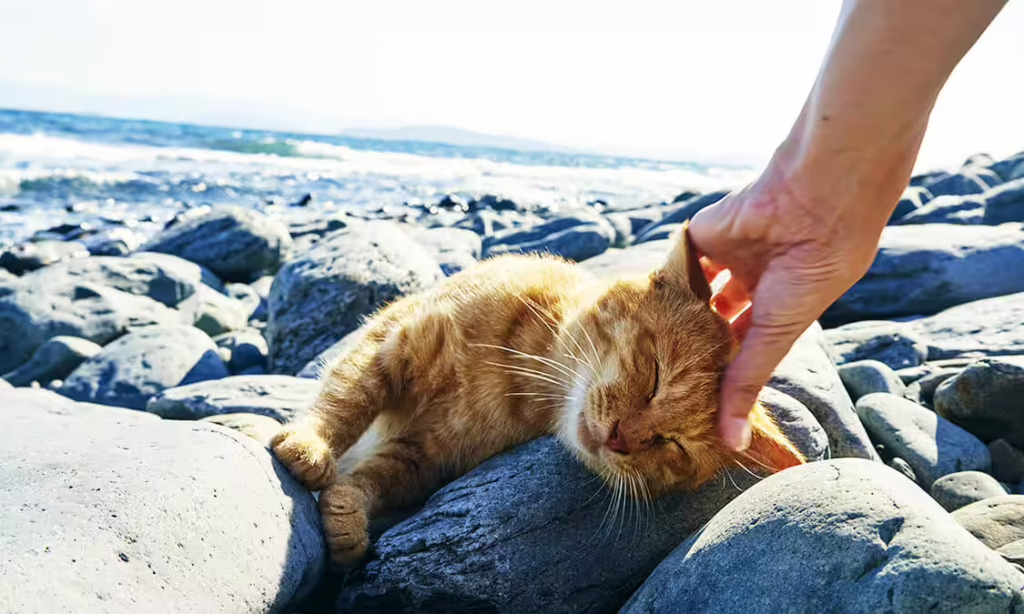
Image Credits: ANA
A short ferry from the coast north of the city, Ainoshima is a tiny fishing island where semi-wild cats outnumber residents. There’s not much to “do” beyond wandering, but for cat lovers it’s a charming, offbeat half-day. Bring your own food and water, as facilities are minimal.
- 📍 Ainoshima, Shingu
- 🕘 Ferry runs several times daily (about 20 minutes)
- 💰 Ferry around 460 JPY (~S$4) each way
Miyajidake Shrine
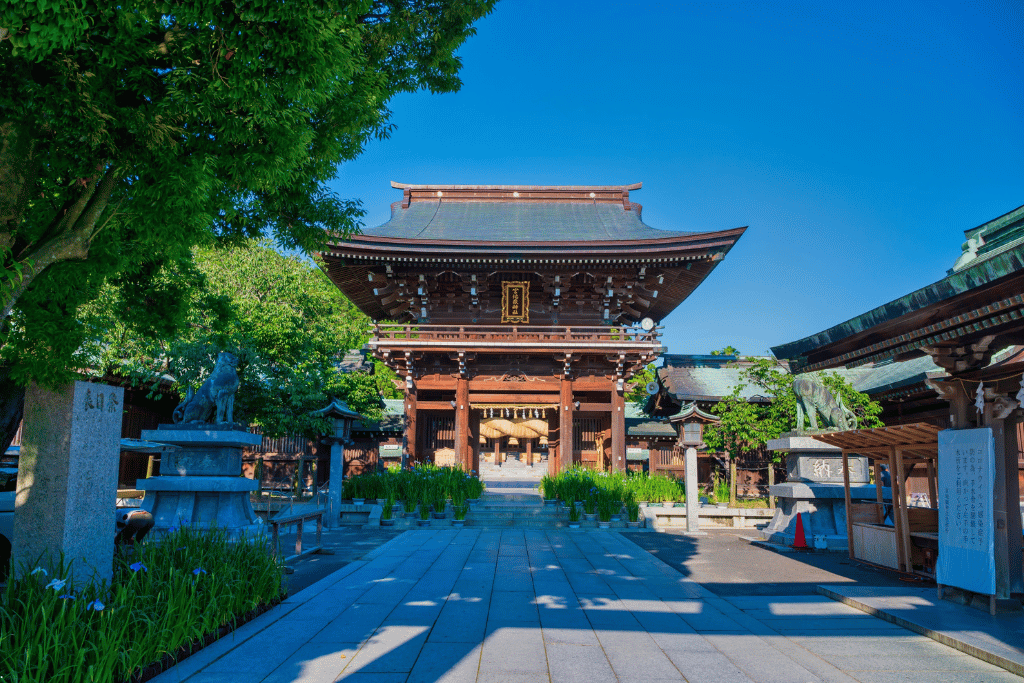
In Fukutsu, this shrine is famous for its enormous rope decoration and its “Path of Light”. Twice a year, in February and October, the setting sun aligns perfectly with the shrine’s long approach road down to the sea. Outside those windows, it’s a peaceful, uncrowded stop.
- 📍 7-1 Miyajimotomachi, Fukutsu
- 🕘 Open 24 hours
- 💰 Free
📖 Related Guide: Working out rail costs across all these trips? Our JR Pass guide explains when a rail pass actually pays off in Japan.
Things To Do In Fukuoka With Kids
Fukuoka is an easy city with children: short distances, lots of green space and several attractions built for families. The best picks are already above:
- Marine World and Uminonakamichi Seaside Park make a full day on the peninsula
- The Science Museum planetarium is a good hot-afternoon reset
- teamLab Forest at BOSS E・ZO is a hit with kids of all ages
For a rainy day, Canal City’s fountain show and ramen floor keep everyone happy under one roof. And the swan paddleboats at Ohori Park are a cheap, reliable win.
📖 Related Guide: Digital-art fans planning both cities? Our teamLab Tokyo guide covers the bigger, original installations up north.
Best Time To Visit Fukuoka (Season By Season)
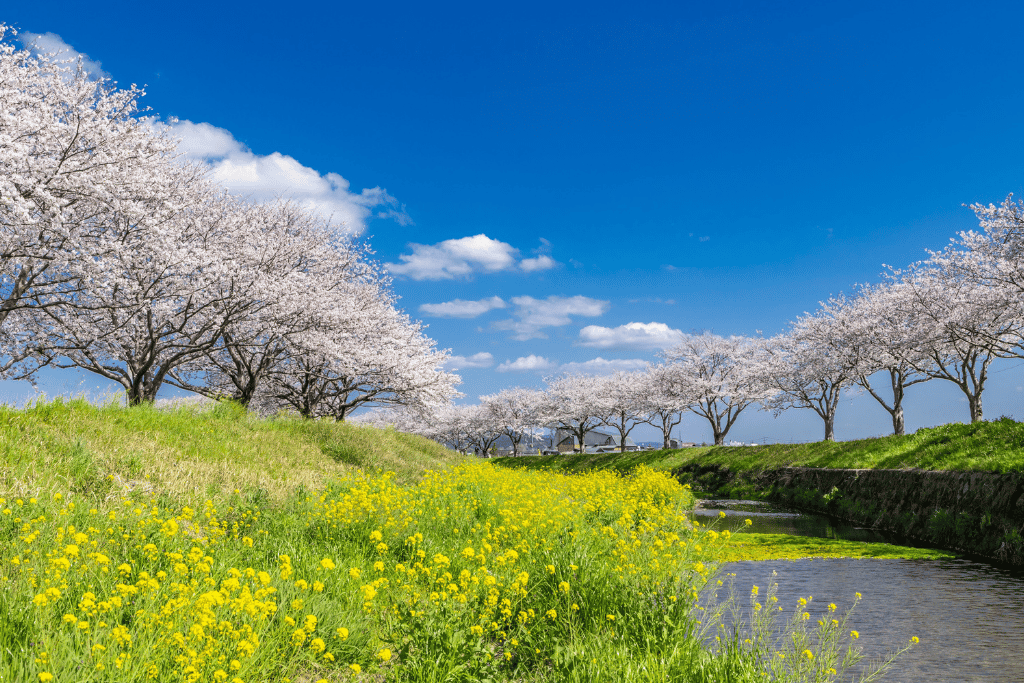
The best times to visit Fukuoka are spring (March to May) and autumn (September to November), when the weather is mild and the city is at its prettiest. But each season has its own draw, and winter is quietly the best value.
- Spring (March–May) brings cherry blossoms to Ohori Park and Maizuru Park, then the wisteria at Kawachi Fuji Garden in late April. It’s peak season for a reason.
- Summer (June–August) is hot and humid, and includes rainy season in June. But it’s also festival time: Hakata Dontaku in May and the Hakata Gion Yamakasa float race in mid-July.
- Autumn (September–November) is arguably the best all-round: comfortable temperatures, autumn leaves, and thinner crowds than spring.
- Winter (December–February) is cool rather than freezing, with the cheapest flights of the year and the city’s illuminations lighting up Canal City, Hakata Station and Tenjin’s Kego Park from November into January. Fewer tourists, warmer ramen, lower prices.
📖 Related Guide: Timing the wider trip? Our best time to visit Japan guide compares the seasons across the whole country.
Where To Stay In Fukuoka
For a first visit, stay in Hakata or Tenjin, the two central hubs, 10 minutes apart by subway.
Hakata is built around the main station, so it’s the best base for day trips and airport runs, with plenty of hotels at every price. Tenjin is the shopping-and-nightlife heart, better if you want restaurants and bars on your doorstep. Either way you’re central; the city is small enough that it barely matters which you pick.
📖 Related Guide: Planning a spring visit? Hotels fill up fast, so check our Japan cherry blossom forecast for the 2026 bloom dates (Kyushu included) before you book.
Fukuoka Itinerary: Is 2 Or 3 Days Enough?
Two days is enough for Fukuoka city; three lets you add a day trip without rushing. The shape below works as a starting point.
Is 2 Days Enough In Fukuoka?
Yes, two days comfortably covers the city itself. Spend day one central: Ohori Park and the art museum in the morning, Tenjin and Canal City in the afternoon, then yatai in Nakasu at night. Day two, go bigger: Nanzoin’s reclining Buddha and Kushida Shrine, then Fukuoka Tower and Momochi for sunset.
Is 3 Days Enough In Fukuoka (Or Too Much)?
Three days is the sweet spot, not too much at all. Keep the two-day city plan and add a full day trip on day three: Yufuin for hot springs, Dazaifu for culture, or Yanagawa for the canal cruise. If you’d rather go slow, three days lets you build in a lazy café morning in Itoshima, which the two-day version doesn’t allow.
More than three days and you’d start using Fukuoka as a base for overnight trips deeper into Kyushu, to Nagasaki, Kumamoto or Kagoshima, rather than day trips.
📖 Related Guide: Not sure Fukuoka earns a spot? Our things to do in Uji, Japan guide is another easy add-on for a slower, second-trip Japan itinerary.
Paying In Fukuoka: Cash, Cards & The Best JPY Rate
Japan is still a cash-friendly country, and Fukuoka’s best food, the yatai and the small ramen shops, is often cash-only. So you’ll want both a little yen in your pocket and a card that doesn’t punish you for spending abroad.
The smart way to handle it: pay by card wherever it’s accepted, and get your cash from an ATM once you land rather than a money changer back home. Money changers don’t charge an obvious fee. They bake a markup of a few percent into the rate they quote you, and airport counters are the worst offenders.
With a YouTrip card, you skip that. Yen is one of YouTrip’s holdable currencies, so you can lock in the rate in the app before you go, then spend at the Mastercard wholesale rate with no foreign transaction fee.
When you need cash, withdraw it at any Japanese ATM. The first S$400 of overseas withdrawals each month is free, then a flat 2% after that. Some ATM operators add their own on-screen fee, so take out a bit more at once.
👉 Bottom line: bring a little yen for the stalls, tap your YouTrip card everywhere else, and don’t lose 2–3% to a money changer on the way out.
📖 Related Guide: Landing soon? Our Japan ATM withdrawal guide shows exactly which machines take foreign cards and how to withdraw yen fee-free.
FAQs
Yes, especially on a second or third trip to Japan or if you want a slower pace than Tokyo and Kyoto. Fukuoka has the country’s best tonkotsu ramen, a compact walkable centre, and a ring of hot-spring and shrine day trips within two hours. It’s less about headline sights and more about eating well and travelling easy.
Fukuoka is best known for Hakata tonkotsu ramen and its yatai, the open-air street food stalls that set up along the rivers at night. It’s also known as the gateway to Kyushu, and for festivals like the Hakata Gion Yamakasa float race each July.
Two days is enough to see the city itself: the parks, shrines, Tenjin shopping and the yatai food scene. Add a third day if you want a day trip to Yufuin, Dazaifu or Yanagawa without rushing.
Not at all. Three days is the ideal length: two for the city and one for a day trip. Only past three days would you start using Fukuoka as a base for overnight trips deeper into Kyushu instead.
First-timers should hit Ohori Park, Canal City Hakata, Kushida Shrine and Nanzoin Temple’s giant reclining Buddha, eat ramen at a yatai in Nakasu, and take one day trip. Yufuin for hot springs is the classic choice.
Fukuoka is one of Japan’s more affordable big cities. Food, hotels and transport all cost less than Tokyo or Kyoto, and much of the best eating, like yatai bowls at 800–1,000 JPY (~S$6–8), is cheap by design.
Come Hungry, Leave Planning Your Next Kyushu Trip
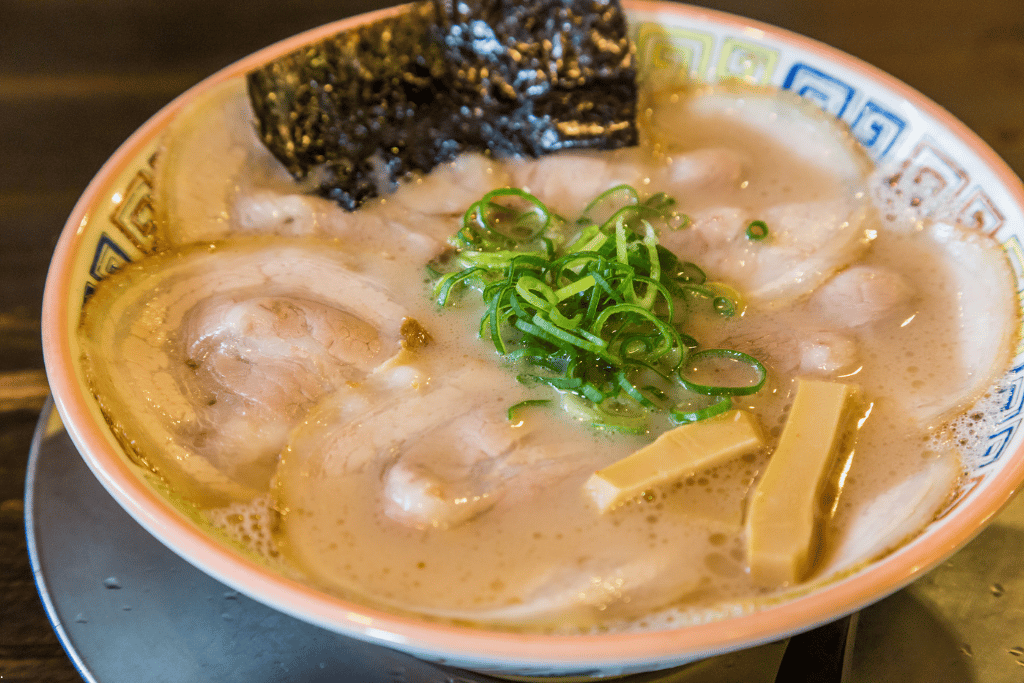
Fukuoka won’t overwhelm you with must-see sights, and that’s the point. It’s a city to eat your way through slowly, with hot springs and old shrines a train ride away for whenever you want more. Give it two days, three if you can, and you’ll leave already plotting a return through the rest of Kyushu.
Wherever you land next, pack your YouTrip card. Lock in your yen rate before you fly, spend with no foreign transaction fees across 150+ countries, and pull cash fee-free when the yatai only take notes.
Not a YouTrooper yet? Sign up here and use code YTBLOG5 for S$5 in credits to start — plus access to YouTrip Perks, our Telegram deals channel, and the wider community.
For deeper detail, see our SGD to Yen rate guide and whether YouTrip can be used in Japan.