



Heading to Canada? Here’s your complete Canada ATM withdrawal guide for 2026.
Canada is one of the most contactless-friendly countries you’ll visit. Tapping your card works almost everywhere, and you can comfortably go days without touching cash. But the moment you do need a few Canadian dollars, the fees stack up fast:
Big 5 bank ATMs typically charge foreign cards a 3–4 CAD surcharge, your Singapore bank piles on a flat overseas ATM fee plus a 2.5–3.5% FX markup, and every machine asks if you’d like to “pay in SGD” (a trap that costs another 3–8%).
The short version: there are no “free” ATMs in Canada for a standard SG bank card. There’s just the one that costs you the least.
| Highlights | Details |
|---|---|
| ATM machine fee | Big 5 banks (RBC, TD, Scotiabank, BMO, CIBC): typically 3–4 CAD (~S$2.80–S$3.70) for foreign cards; private/white-label ATMs: 3–6+ CAD, check the screen |
| Foreign transaction fee | 2.5–3.5% from your Singapore bank |
| Withdrawal limits | Set per cardholder; check your home bank’s daily ATM limit before you go |
| YouTrip ATM allowance | Free up to S$400/month, then 2% fee (resets monthly) |
| Cash to carry | 100–200 CAD (~S$93–S$186) for markets, tips, and rural areas |
| DCC trap | Always choose CAD at ATMs and terminals, never SGD |
Table of Contents
- Do You Still Need Cash in Canada?
- Can I Use My Singapore Debit or Credit Card in Canada?
- Where to Find ATMs in Canada
- How to Withdraw CAD at Canadian ATMs (Step-by-Step)
- Do Canadian ATMs Charge Fees for Foreign Cards?
- How to Avoid ATM Fees in Canada
- How Much Can You Withdraw From a Canadian ATM?
- Card Surcharges at Canadian Merchants
- Exchange Rates & Dynamic Currency Conversion
- Should You Exchange Money Before Travelling to Canada?
- Cash vs Card in Canada: When to Use Which
- Best Card for Canada: Multi-Currency Comparison
- Safety Tips for Using ATMs in Canada
- FAQ
- Country ATM Withdrawal Guide
Do You Still Need Cash in Canada?
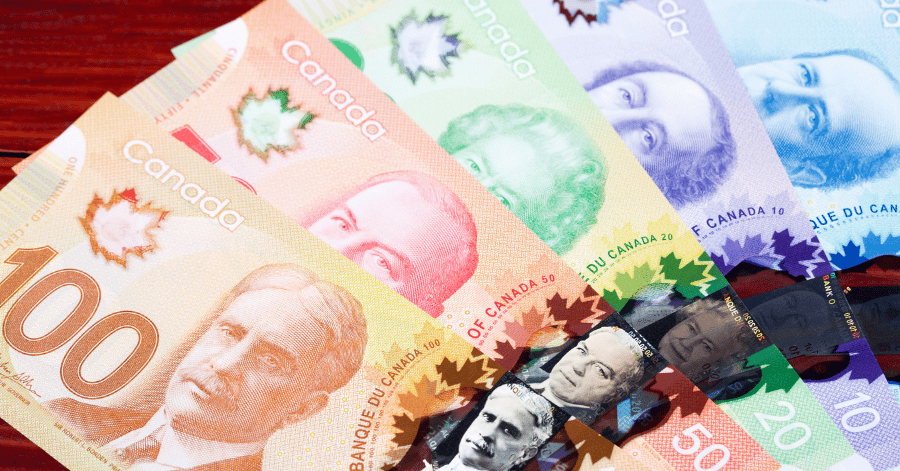
Less than you’d think, but don’t skip it entirely.
Canada is one of the most cashless countries in the world. Contactless tap-and-pay runs on almost every terminal: supermarkets, restaurants, taxis, parking meters, and transit. In Toronto, Montreal, Vancouver, Halifax, and Calgary, you can manage almost entirely on card.
That said, a small float of cash still earns its keep:
- Tips — restaurants, taxis, hotel housekeeping; 15–20% is standard in Canada, and cash is appreciated
- Farmers markets and weekend markets — some stallholders are cash-only
- Food trucks and small cafes in smaller towns
- Tour guides and outdoor outfitters — cash tips are the norm
- Small B&Bs and rural homestays — some older operators still prefer cash
- Coin-operated parking and laundromats in older neighbourhoods
Budget around 100–200 CAD (~S$93–S$186) for a typical trip and top up at a bank ATM if you run low.
📖 Related Guide: Best eSIM Singapore: Guide to Travel eSIMs, Cheap Options & Tips
Can I Use My Singapore Debit or Credit Card in Canada?
Yes. Visa and Mastercard are accepted virtually everywhere in Canada. American Express has solid coverage at chains and larger venues, less so at small independent businesses.
If you’re using a standard Singapore bank debit or credit card, expect:
- Foreign transaction fee: 2.5–3.5% on every CAD purchase
- Bank exchange rate markup: typically 1–3% worse than the “mid-market rate” (the live wholesale rate banks use between themselves; the closest thing to a fair price)
- Overseas ATM fee: charged by your home bank on top of any local machine fee
A multi-currency card (YouTrip, Wise, Revolut) removes or significantly reduces all three.
You’ll often see “Interac” on Canadian payment terminals. That’s Canada’s local debit system, used by locals with their Canadian bank cards, and your Singapore card can’t use it. The same terminals also accept Visa and Mastercard contactless though, so you just tap with the Visa or Mastercard option instead.
You’ll only hit a wall at the rare merchant that’s set up “Interac only”, which is uncommon enough that it’s not worth stressing about.
Where to Find ATMs in Canada

Canada’s Big 5 banks have nationwide coverage, and you’ll spot one in every airport, mall, downtown core, and most strip plazas. Branded bank ATMs are always your safer bet over private/white-label ones.
Major bank ATMs at a glance:
- RBC (Royal Bank of Canada) — Canada’s largest bank, strongest ATM coverage coast to coast.
- TD (TD Canada Trust) — Heavy presence in Ontario, Quebec, and the Atlantic provinces. Long branch hours.
- Scotiabank (Bank of Nova Scotia) — Strong coverage nationally; Scotiabank is part of the Global ATM Alliance (more on this below).
- BMO (Bank of Montreal) — Solid network across all provinces.
- CIBC (Canadian Imperial Bank of Commerce) — Wide branch and ATM coverage, especially in Ontario.
Note: Canadians often say “ABM” (automated banking machine) instead of “ATM”. They mean the same thing. We’ll stick with “ATM” in this guide.
All five typically charge foreign cardholders a 3–4 CAD (~S$2.80–S$3.70) ATM access fee per withdrawal. The exact amount shows on screen before you confirm, so always check it.
ATM fees are subject to change; verify on screen before withdrawal.
Private and white-label ATMs: skip them if you can
You’ll see standalone ATMs in convenience stores, bars, gas stations, and tourist spots. They typically charge 3–6 CAD or more on top of any other fees, with sketchier exchange-rate options thrown in. Bank-branded ATMs at branches are reliably cheaper.
Where to reliably find bank ATMs:
- Bank branch facades and lobbies
- Inside grocery chains like Loblaws, Sobeys, and Metro
- Airport arrivals halls. Look for Big 5 bank-branded machines, not the standalone kiosks parked next to baggage claim
- Shopping malls and downtown cores
- Transit hubs and major train stations
City-level notes:
- Toronto, Vancouver, Montreal: Big 5 ATMs everywhere; you’ll never be more than a couple of blocks from one
- Halifax, Quebec City, Ottawa: Branch coverage is solid; less density than the big three
- Banff, Whistler, Tofino, Jasper: Tourist hubs have at least one or two bank ATMs each, so plan a withdrawal before heading deeper into the parks
📖 Related Guide: Curious which Mastercard rate beats which money changer? Our best way to get the best exchange rate in Singapore lays it out.
How to Withdraw CAD at Canadian ATMs (Step-by-Step)
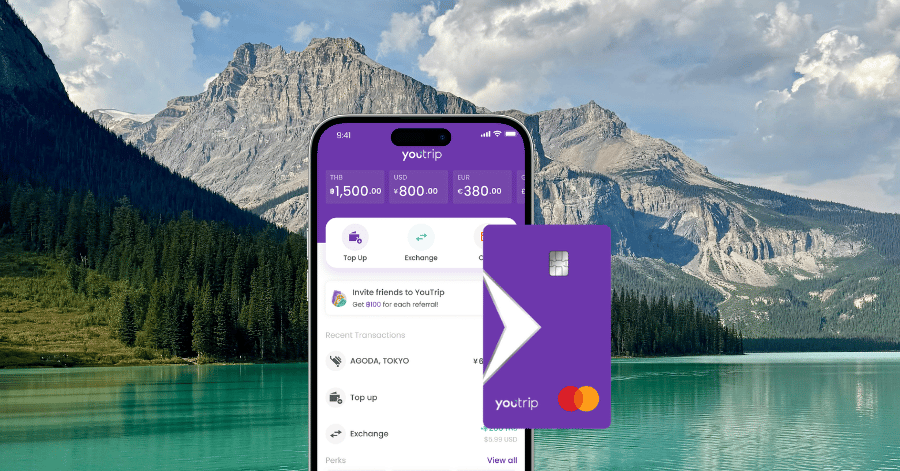
Here’s how to withdraw Canadian dollars with YouTrip in 4 easy steps:
- Find an ATM displaying the Mastercard logo and insert your YouTrip card
- Select ‘Savings’ when prompted for account type
- Key in your 4-digit ATM & Card PIN
- Withdraw your desired amount in CAD, and decline the DCC “convert to SGD?” prompt if it appears
- Enjoy FREE S$400 monthly withdrawals with YouTrip per calendar month, with a 2% fee on the amount withdrawn after that.
The allowance resets on the 1st of each month.
📖 Related Guide: Wondering how YouTrip’s withdrawal allowance works across destinations? Our YouTrip ATM withdrawal guide has the full breakdown.
Do Canadian ATMs Charge Fees for Foreign Cards?

Yes, and the real damage isn’t the ATM operator’s fee. It’s the two-fee stack from your Singapore bank.
What Canadian ATMs charge:
Big 5 bank ATMs typically charge foreign cardholders a 3–4 CAD ATM access fee per withdrawal. Private and white-label ATMs charge more, often 3–6 CAD on top of any other fees, sometimes higher in tourist areas. The fee is disclosed on screen before you confirm.
What your Singapore bank charges:
This is where most of the bleeding happens. Standard Singapore bank debit cards typically stack:
- An overseas ATM fee: a flat charge per withdrawal (DBS S$7; OCBC 3% with min S$5, max S$20; UOB S$5)
- A foreign transaction or admin fee: typically 2.5–3.5% of the CAD amount converted to SGD (DBS 3.25%, OCBC 3.25%, UOB 2.5%)
On a 500 CAD (~S$465) withdrawal with a DBS card, that’s roughly S$7 + S$15 (3.25% FX) = around S$22 in fees, plus the 3–4 CAD (~S$2.80–S$3.70) machine fee at the ATM. None of that gets broken out as a line item on your statement.
| Fee | Who charges it | Typical amount |
|---|---|---|
| Big 5 bank ATM access fee | RBC, TD, Scotiabank, BMO, CIBC | 3–4 CAD (~S$2.80–S$3.70) |
| Private/white-label ATM fee | Independent operators | 3–6+ CAD (~S$2.80–S$5.60+), ⚠️ verify on screen |
| Overseas ATM fee | Your Singapore bank | DBS S$7; OCBC 3% (min S$5, max S$20); UOB S$5 |
| Foreign transaction fee | Your Singapore bank | DBS 3.25%, OCBC 3.25%, UOB 2.5% |
| DCC markup | ATM operator (if you accept) | 3–8% on top of the rate |
ATM fees are subject to change; verify on screen before withdrawal.
The fix: Use a multi-currency travel card. YouTrip charges zero FX fees on CAD spending and gives you free S$400 in ATM withdrawals each calendar month, so the two SG-bank-side charges disappear. The 3–4 CAD machine fee still applies (that’s the ATM operator’s, and Canada doesn’t have a fee-free bank network for foreign cards).
What about the Global ATM Alliance?
- Scotiabank is a member of the Global ATM Alliance, alongside Bank of America, Barclays, BNP Paribas, Deutsche Bank, and Westpac (Australia/NZ).
- The Alliance waives partner-network surcharges for outbound Scotiabank customers withdrawing abroad.
- For SG travellers, it’s a moot point either way: DBS, OCBC, UOB, and Citibank SG are not Alliance members, so this network doesn’t reduce ATM costs.
A no-FX-fee travel card is still the smarter play.
How to Avoid ATM Fees in Canada

- Use Big 5 bank ATMs, not private ones. RBC, TD, Scotiabank, BMO, and CIBC machines disclose fees on screen and are typically cheaper than the standalone kiosks in convenience stores
- Use a multi-currency travel card. This eliminates your home bank’s foreign transaction fee and overseas ATM fee, which is where most of the cost sits
- Withdraw S$400 free/month with YouTrip. Use it as your primary ATM card for Canada, then tap for day-to-day spending
- Always choose CAD when prompted. DCC adds 3–8% on top of the rate and is never worth it
- Withdraw larger amounts less often. Fewer ATM visits means fewer flat machine fees stacking up
- Notify your Singapore bank before departure if you’re using a home bank card. Canadian transactions can trigger fraud holds, especially out West and in smaller towns
- Tap for almost everything else. Canada’s contactless coverage is near-universal, so cash is just for the few cash-only spots
How Much Can You Withdraw From a Canadian ATM?
Per-transaction and daily ATM limits in Canada are set per cardholder via online or mobile banking; there’s no single number that applies to every Canadian ATM. Your own bank or card sets the hard cap.
| Limit | Amount |
|---|---|
| Per-transaction at Canadian bank ATMs | Set by your own bank; check your banking app before withdrawal |
| Your home bank’s daily ATM limit | Varies; check before travel |
| YouTrip free monthly ATM allowance | S$400 equivalent |
Most Canadian ATMs dispense 20 CAD as the smallest note. Some dispense 50 CAD notes too, handy if you’re hitting the daily cap and want fewer bills in your wallet.
And no, you cannot withdraw 20,000 CAD from a Canadian ATM in one shot. Even with a high home-bank daily limit, the ATM’s per-transaction cash cap and physical cassette capacity stop you well before that. Multiple withdrawals in quick succession would trigger fraud holds. For larger sums, go to a branch in person with your passport.
Card Surcharges at Canadian Merchants
Since October 2022, Canadian merchants have been allowed to add a surcharge on credit card transactions (the Visa and Mastercard rules changed at the same time, settling a long-running class action). It’s not yet universal, but it’s worth knowing about.
Current status (May 2026):
- Merchants can surcharge credit cards up to 2.4%, per the Visa and Mastercard merchant rules
- The surcharge must be disclosed at the point of sale (signage, terminal screen, or receipt)
- Most Canadian merchants don’t surcharge debit (Interac and contactless debit); network rules generally don’t permit it
- Quebec is the exception: the province’s Consumer Protection Act prohibits surcharging credit cards there
What this means for travellers:
In practice, most chains and larger restaurants absorb the cost; the surcharges turn up at smaller independents, some hotels, and certain travel agencies. Always glance at the receipt or terminal screen before you tap.
The surcharge avoided is still smaller than the 2.5–3.5% FX fee a standard SG bank card would otherwise sting you for, so a no-FX-fee travel card still wins on total cost.
Exchange Rates & Dynamic Currency Conversion
- Dynamic Currency Conversion (DCC): When an ATM or terminal asks if you want to pay in SGD instead of CAD, always pick CAD. DCC uses the operator’s own exchange rate, usually 3–8% above the mid-market rate, packaged as a “convenience”. It never is. Always read the screen and confirm in local currency.
- Exchange rate markups: Without a multi-currency card, your Singapore bank quietly marks up the CAD/SGD rate by 1–4% on every transaction. On a 3,000 CAD (~S$2,790) trip, that’s roughly S$28–112 gone without a single fee line to show for it.
YouTrip uses the Mastercard wholesale rate with zero markup on every CAD transaction, consistently close to the mid-market rate.
📖 Related Guide: YouTrip Exchange Rates: Everything You Need to Know
Should You Exchange Money Before Travelling to Canada?

No need to. Canadian bank ATMs are everywhere, card acceptance is near-universal, and you’ll use less cash than you’d expect. Pre-exchanging CAD in Singapore adds a step and usually a worse rate than withdrawing on arrival.
At the airport: Walk past the Travelex and ICE counters in arrivals. The margins are poor. There’s always a Big 5 bank ATM in the arrivals hall; use that, or just tap your YouTrip card for ground transport into the city and worry about cash later.
Cash vs Card in Canada: When to Use Which
Use your card for:
- Hotels and accommodation
- Supermarkets and chain restaurants
- Transport: Ubers, taxis, rental car deposits, domestic flights, transit fares
- Tourist attractions, museums, and tour bookings
- Shopping malls and retail chains
- Gas stations and parking apps
Use cash for:
- Tips at restaurants, taxis, and tour guides (15–20% is standard)
- Farmers markets and weekend markets (some stalls are cash-only)
- Small food trucks and pop-up vendors
- Coin-operated parking and laundromats in older neighbourhoods
- Very small rural accommodation or local operators
Realistically, card covers the vast majority of what you’ll spend. Pull out 100–200 CAD (~S$93–S$186) on arrival and top up at a bank ATM if you run low.
Best Card for Canada: Multi-Currency Comparison
A multi-currency card removes the main costs of overseas spending in Canada: foreign transaction fees, rate markups, and your home bank’s overseas ATM charges.
| YouTrip | Revolut | Wise | Amaze | |
|---|---|---|---|---|
| FX Fees | No fees | No fees within plan limits on weekdays; 1% on weekends | Currency conversion fee from 0.26% ⚠️ fee varies by currency | Wallet mode 0% FX; linked-card mode up to 2.1% spread above Mastercard rate + 1% domestic SGD fee |
| ATM Withdrawal Fees | Free up to S$400/month; 2% fee thereafter | Free up to S$350 or 5 withdrawals/month; 2% or S$1.49 thereafter (whichever is higher) | Free up to S$100/month; 1.75% fee thereafter | 2% on all withdrawals |
Canada’s contactless coverage is so good that you can tap for nearly everything. ATMs are really just for the occasional cash top-up.
YouTrip charges 0% FX on every CAD tap, billed at the Mastercard wholesale rate. Every transaction auto-converts your SGD with no foreign transaction fee, no markup, and no surprises on the statement.
📖 Related Guide: Comparing travel cards for your Canada trip? Our best multi-currency cards in Singapore ranks them side by side.
Safety Tips for Using ATMs in Canada
Canada is genuinely safe and ATM crime is rare. Still worth doing the basics:
- Use ATMs attached to bank branches or inside grocery stores. Better lighting, more foot traffic, lower risk
- Inspect the card slot and keypad for anything loose or out of place; skimming is rare but not impossible, especially at standalone ATMs in tourist hotspots
- Cover the keypad when entering your PIN, even at a trusted bank machine
- Don’t accept help from strangers near an ATM
- Pocket your cash immediately. Don’t count it at the machine
- Enable transaction alerts in your banking app before you travel
- If your card is retained, call your issuer immediately. YouTrip users can freeze the card instantly in-app
FAQ
Big 5 bank ATMs (RBC, TD, Scotiabank, BMO, CIBC) typically charge foreign cardholders a 3–4 CAD (~S$2.80–S$3.70) ATM access fee per withdrawal. Private and white-label ATMs in convenience stores and tourist areas charge more, often 3–6 CAD or higher.
On top of that, your Singapore bank usually charges its own overseas ATM fee (DBS S$7; OCBC 3% min S$5; UOB S$5) plus a 2.5–3.5% foreign transaction fee on the converted amount. Always check the on-screen fee before confirming.
Use a multi-currency travel card like YouTrip to eliminate the two biggest costs: your home bank’s overseas ATM fee and the 2.5–3.5% foreign transaction fee.
Withdraw at Big 5 bank ATMs rather than private kiosks, always choose CAD over SGD at the DCC prompt, and take out larger amounts less often so the flat machine fee bites less.
YouTrip gives you free S$400 in ATM withdrawals per calendar month before the 2% fee kicks in.
Per-transaction and daily ATM limits are set per cardholder via your own bank’s app or online banking, so check your limits before you travel. And no, the headline “can I withdraw 20,000 CAD at once?” answer is no: ATM per-transaction caps and physical cash dispensing limits stop you well before that.
For larger sums, visit a branch in person with your passport.
Card wins for the vast majority of spending. Canada is one of the most contactless-friendly countries on earth. Tap works at virtually every supermarket, restaurant, taxi, and transit terminal. Carry 100–200 CAD (~S$93–S$186) for tips, farmers markets, food trucks, and rural cash-only spots.
A no-FX-fee multi-currency card like YouTrip handles the rest at the Mastercard wholesale rate with zero markup.
There isn’t really a “no-fee for foreign cards” network in Canada the way there is in some other countries.
The Big 5 banks (RBC, TD, Scotiabank, BMO, CIBC) all typically charge a 3–4 CAD access fee to non-customers. Scotiabank waives this for customers of Global ATM Alliance partner banks (Bank of America, Barclays, BNP Paribas, Deutsche Bank, Westpac), but no Singapore bank is in the Alliance, so for SG travellers this doesn’t help.
The smarter play is a no-FX-fee travel card to kill the Singapore-side charges, where most of the bleeding happens.
Yes, but think twice. Credit card cash advances in Canada attract a cash advance fee plus interest charged from the day of withdrawal at the card’s cash advance rate, which is typically higher than the purchase rate. There’s no interest-free grace period.
A debit card or multi-currency card is almost always cheaper for ATM withdrawals.
ountry ATM Guides:
Need fee-free or lower-fee ATM recommendations? Explore our country-specific withdrawal guides:
🇲🇾 Malaysia | 🇯🇵 Japan | 🇹🇭 Thailand | 🇰🇷 South Korea | 🇹🇼 Taiwan | 🇭🇰 Hong Kong | 🇮🇩 Indonesia | 🇻🇳 Vietnam | 🇦🇺 Australia | 🇲🇴 Macau | 🇨🇳 China | 🇺🇸 US | 🇿🇦 South Africa | 🇵🇭 Philippines | 🇫🇷 France | 🇬🇧 UK | 🇳🇿 New Zealand | 🇮🇹 Italy | 🇰🇭 Cambodia | 🇨🇦 Canada
Skip the Fee Stack, Spend on the Good Stuff

Not a YouTrooper yet? Sign up for your complimentary YouTrip card today with promo code YTBLOG5 and get FREE S$5 in your account!
Then, head over to our YouTrip Perks page for exclusive offers and promotions — we promise you won’t regret it. For more great tips and articles like this, join our Telegram @YouTripSG and subscribe to our free weekly newsletter. For travel tips, event invites, and more, join our Community Telegram Group @YouTripSquad!
Happy travels!
The information stated above is true as of 29 May 2026
Related Guides:
Best Miles Credit Card in Singapore: 9 Cards Ranked
Best Singapore Credit Card: Miles, Cashback & Travel Compared
Vancouver Travel Guide: 20 Best Things to Do, Weather & Local Tips