




Looking for mind-bending architecture and mind-numbing cuisine? Chongqing answers the call.
China has been on every traveller’s radar lately, and one city quietly stealing the spotlight is Chongqing, often dubbed China’s “8D city”. It’s built on steep hills rather than flat land, so roads, railways and whole neighbourhoods stack on top of each other in ways that feel borderline unreal. Best part for Singapore passports: you get in visa-free for up to 30 days.
Best Things to Do in Chongqing (Quick Picks)
Short on time? These are the highlights worth building a trip around:
| Chongqing Highlight | Best For | Cost |
|---|---|---|
| Hongyadong at night | The iconic stilt-house skyline | Free |
| Yangtze River Cableway | Crossing the river the local way | 30 CNY (~S$6) |
| Liziba Monorail Station | The train-through-a-building shot | Free to watch |
| Wulong Karst Three Natural Bridges | UNESCO cliffs and stone arches | 125–155 CNY (~S$24–30) |
| Dazu Rock Carvings | 800-year-old cliff sculptures | From 110 CNY (~S$21) |
| Chongqing hotpot | Mala broth in a WWII bunker | 80–120 CNY (~S$15–23) per person |
Table of Contents
- What Is Chongqing, China Known For?
- Is Chongqing Worth Visiting for Tourists?
- Is Chongqing the Biggest City in the World?
- Chongqing Weather and Best Time to Visit
- How Many Days Do You Need in Chongqing?
- Top Attractions and Icons
- Culture, History and Temples
- Nature and Karst Escapes
- Chongqing After Dark
- Unique and Offbeat Chongqing
- Things to Do in Chongqing With Kids
- What to Eat in Chongqing
- Chongqing to Chengdu Day Trip: Is It Worth It?
- FAQs About Visiting Chongqing
What Is Chongqing, China Known For?
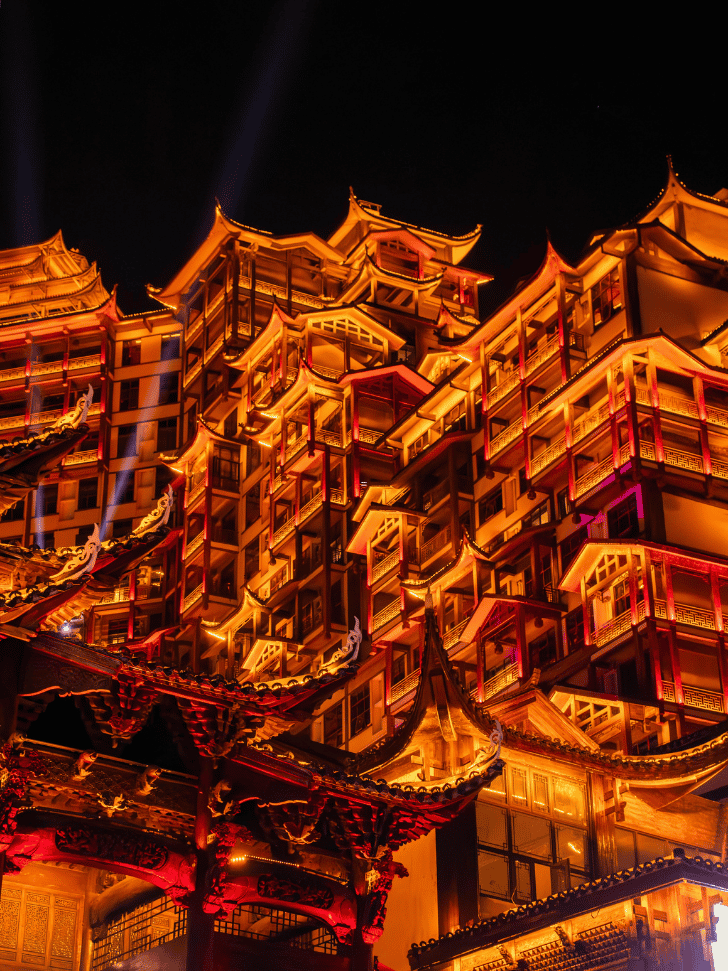
Chongqing is best known for three things:
- Chongqing hotpot: fiery, numbing and unapologetically intense
- Mountain-city geography: steep stairs, layered highways, vertical living
- Mind-bending urban design: buildings that double as bridges and train stations
It’s one of the few megacities on earth built almost entirely on mountains, which earned it the nickname “Mountain City” (山城). Add its role as China’s wartime capital during World War II, complete with air-raid shelters and tunnels, and you get a city with real depth beneath the chaos.
📖 Related Guide: Wondering how you’ll actually pay for anything here? Our WeChat Pay guide for foreigners in China walks through setup step by step.
Is Chongqing Worth Visiting for Tourists?
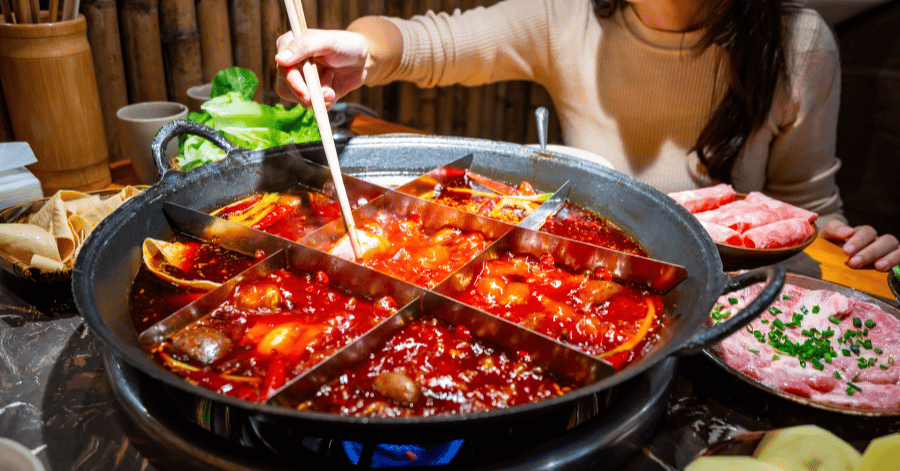
Absolutely, especially if you enjoy cities that feel alive rather than curated, food-first travel and a bit of urban exploration.
Chongqing isn’t conventionally pretty. It’s immersive and constantly shifting depending on which level of the city you’re standing on. You’ll find headline sights sitting right next to very local, everyday life, often within the same block. It’s also less touristy than Shanghai or Beijing, which makes the whole place feel more authentic and refreshingly local.
📖 Related Guide: Setting up mobile pay before you fly? Our Alipay guide for foreigners in China covers linking a foreign card.
Is Chongqing the Biggest City in the World?
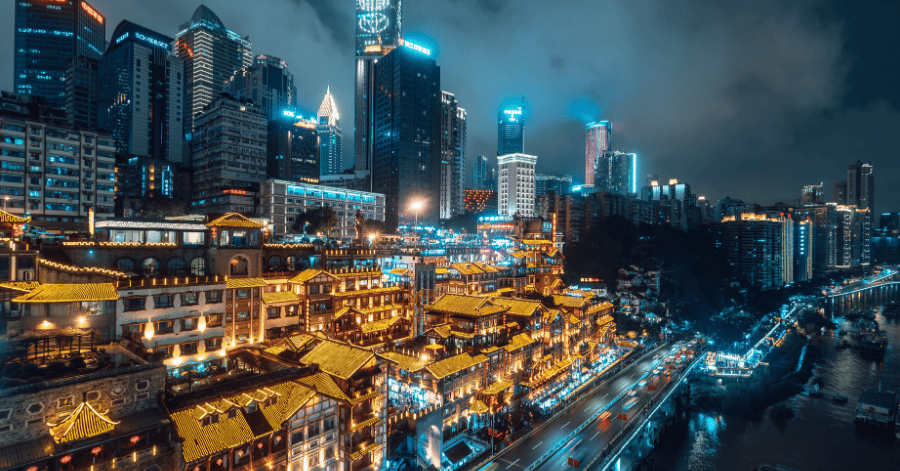
Technically, yes, depending on how you define it. Chongqing’s municipality has over 30 million residents, which makes it one of the largest anywhere by population.
That figure includes rural counties and mountainous regions far beyond the urban core, though. The dense, walkable heart of the city, where the Yangtze and Jialing rivers meet, is home to closer to 9 to 11 million. For travellers, that’s the good news: central Chongqing is very manageable, with most attractions clustered around the rivers and downtown districts.
📖 Related Guide: Packing for the trip? Our China power plug and socket guide sorts out adapters and voltage before you go.
Chongqing Weather and Best Time to Visit
Chongqing’s climate can be summed up in three words: foggy, humid, hot. Timing your trip well makes all the difference.
- Best time to visit: March to May and September to November, for mild temperatures, fewer crowds and clearer views.
- Summer (June to August): Hot and humid, often above 35°C. This is where the “furnace city” reputation comes from.
- Winter (December to February): Cool, misty and rarely freezing, but damp. Expect fewer tourists, atmospheric river fog, and the perfect excuse for hotpot.
📖 Related Guide: Getting around town? Our guide to using DiDi in China makes ride-hailing painless for non-Mandarin speakers.
How Many Days Do You Need in Chongqing?
Three days is enough for a solid introduction. In that time you can explore the downtown landmarks, ride the monorail and cableway, catch the city at night, eat aggressively (recommended), and fit in at least one nearby attraction.
For deeper exploration or bigger day trips like Dazu or Wulong, give yourself five to seven days. Chongqing rewards the slow burn.
📖 Related Guide: Building a wider China trip? Our 10 best things to do in Beijing helps you plan the capital leg.
Top Attractions and Icons
The greatest hits: the sights that define Chongqing and belong on any first-timer’s list.
Hongyadong (洪崖洞)
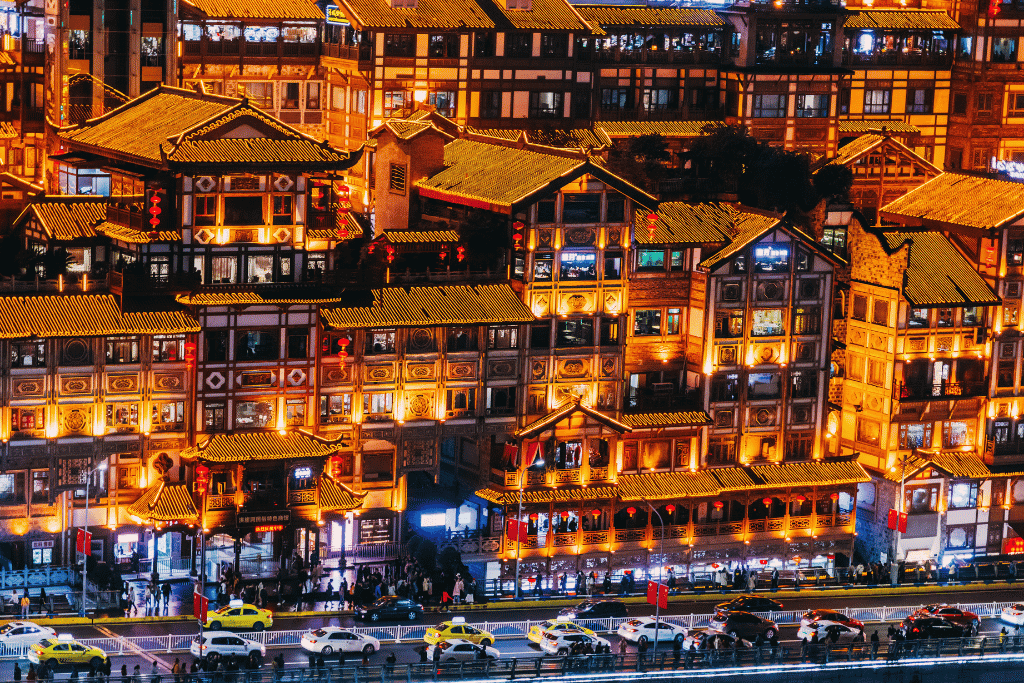
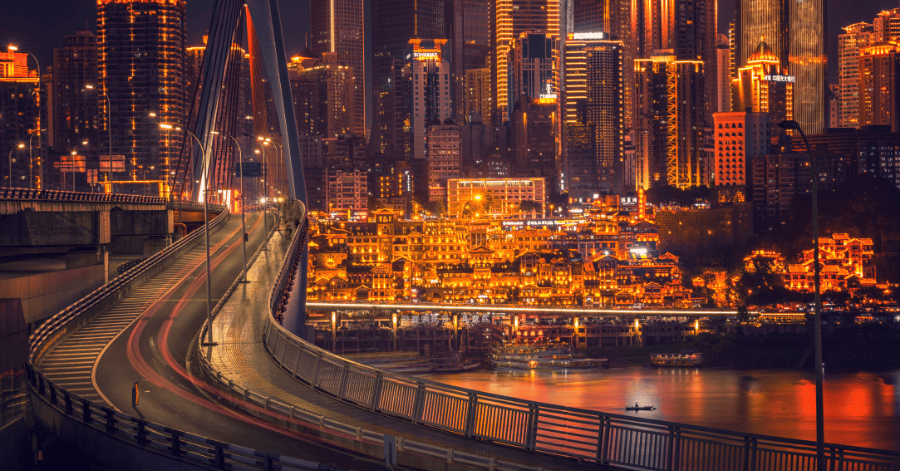
If Chongqing had a single postcard moment, this would be it. Hongyadong is a stacked, stilt-house complex built into the cliff by the Jialing River. It’s dramatic by day, but genuinely magical once the lights switch on around 6 PM and the whole thing glows warm gold, looking straight out of a Hayao Miyazaki film.
Yes, it gets crowded. It’s still worth it, especially paired with a walk across Qiansimen Bridge for one of the best night views in the city. Go on a weeknight if you can, and arrive before dusk to beat the worst of the queues.
- Address: Yuzhong District, Chongqing
- Opening Hours: 10 AM – 11 PM (lights from ~6 PM)
- Admission: Free
Liziba Monorail Station (李子坝站)
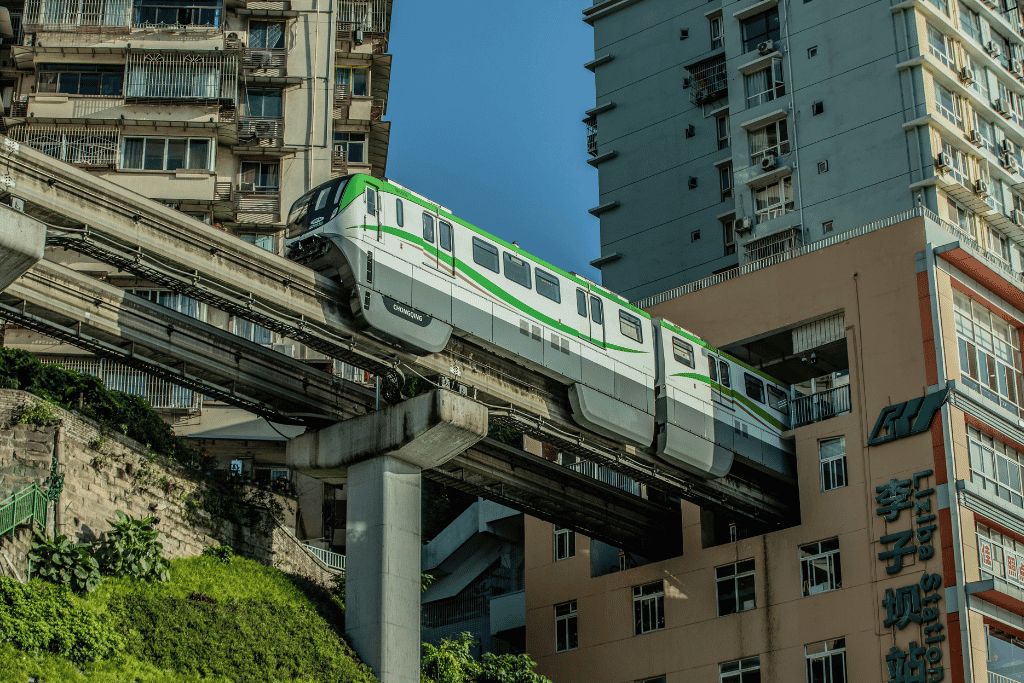
The train really does go through the building, and no, it’s not a gimmick. At Liziba, the Line 2 monorail passes clean through a residential tower, slicing between floors.
It was built out of necessity rather than spectacle, a clever fix for space constraints in a dense, mountainous city. Today there’s a dedicated viewing platform where visitors gather to watch and film the train glide through. Sit near the front of the cabin for the best ride-through view.
- Address: Yuzhong District, Chongqing
- Station Hours: 6:30 AM – 11 PM
- Admission: Viewing platform free; Line 2 metro fare from 2 CNY (distance-based)
Yangtze River Cableway (长江索道)
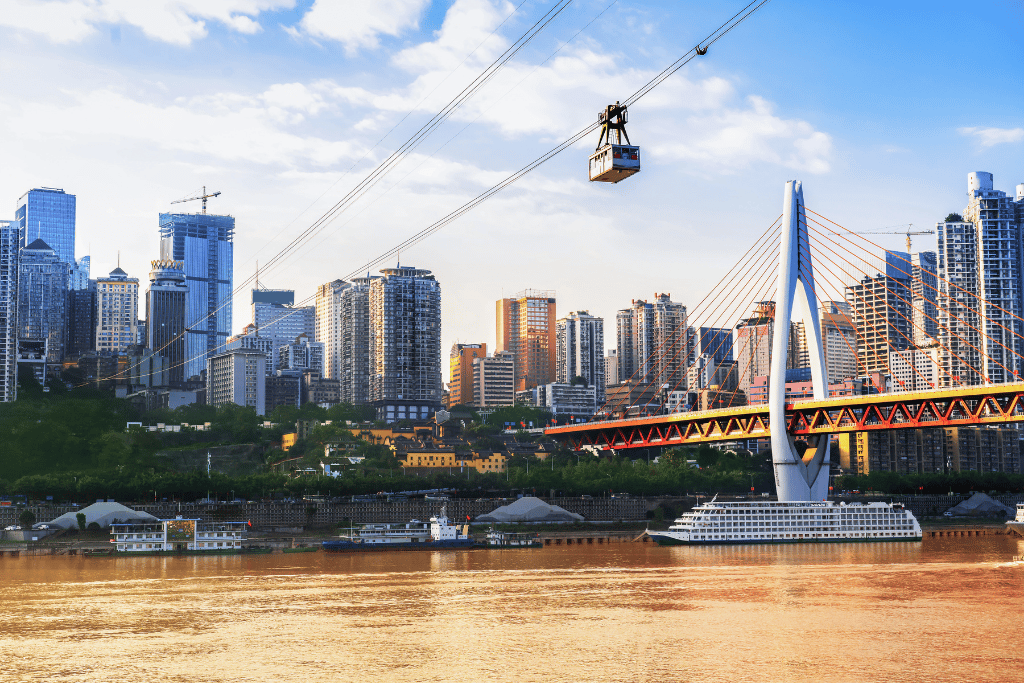
Once a daily commute for locals, now the most scenic way to cross the Yangtze. The cableway strings you across the river in a glass gondola, with the mountain-city skyline rising on both banks. It’s short, about five minutes each way, but the views are the whole point.
Tickets sell fast and often run out hours ahead, so book through the official “Chongqing Cableway” WeChat mini-program rather than a reseller. Go at dusk if you can, when the towers start to light up mid-crossing.
- Address: No. 151 Xinhua Road, Yuzhong District
- Opening Hours: 8 AM – 10 PM (Mar–Nov); 8 AM – 9 PM (Dec–Feb)
- Admission: 30 CNY (~S$6) one way
Jiefangbei and the People’s Liberation Monument (解放碑)
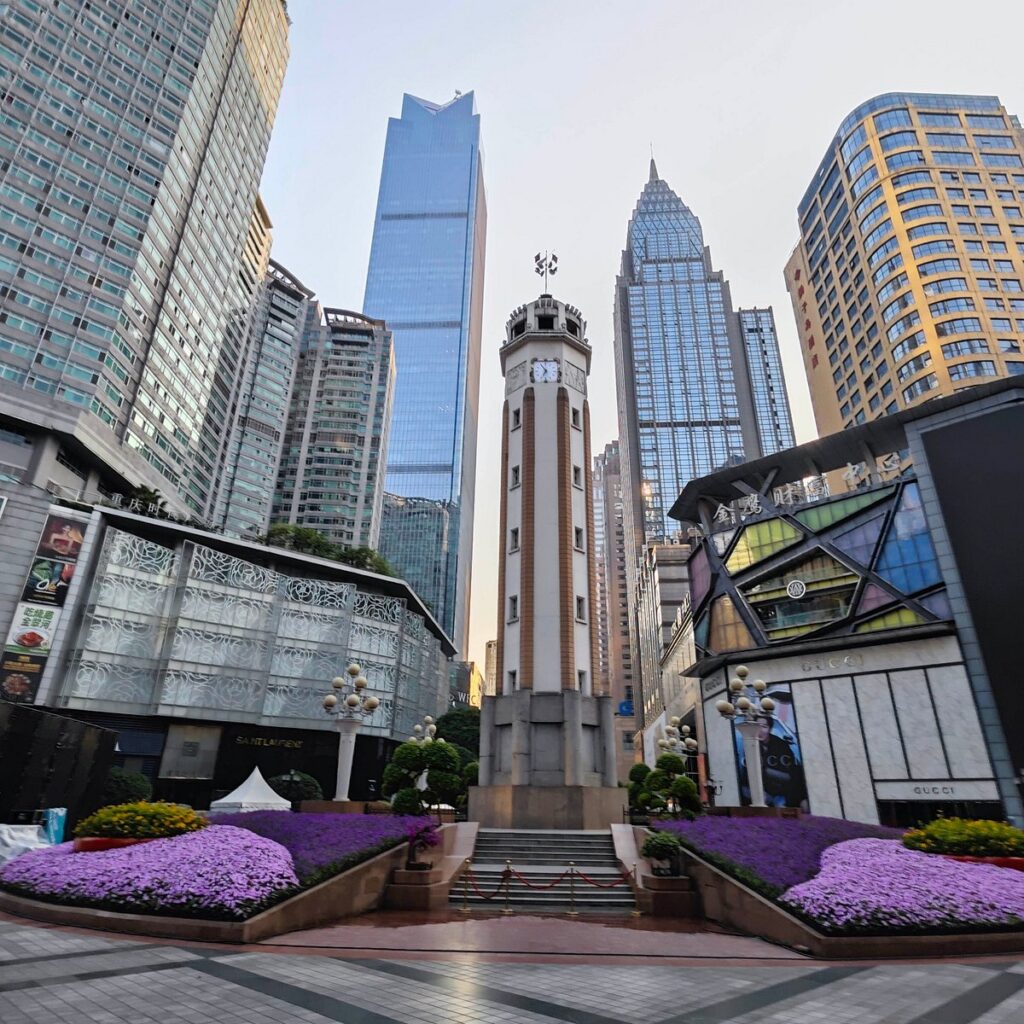
Image Credits: Tripadvisor
Jiefangbei is Chongqing’s downtown heart, built around the People’s Liberation Monument, a 24-metre clock tower inaugurated in 1947 to mark victory in the War of Resistance and renamed in 1949. It’s the one monument in China deliberately left standing in the middle of a shopping district.
And what a district. The pedestrian streets radiating out from it form the city’s busiest commercial zone, packed with malls, neon, street food and crowds well into the night. Come to people-watch, snack and feel the pulse of modern Chongqing, then use it as your base for the surrounding sights.
- Address: Yuzhong District, Chongqing
- Opening Hours: Open 24 hours (public square)
- Admission: Free
Kuixing Building (魁星楼)
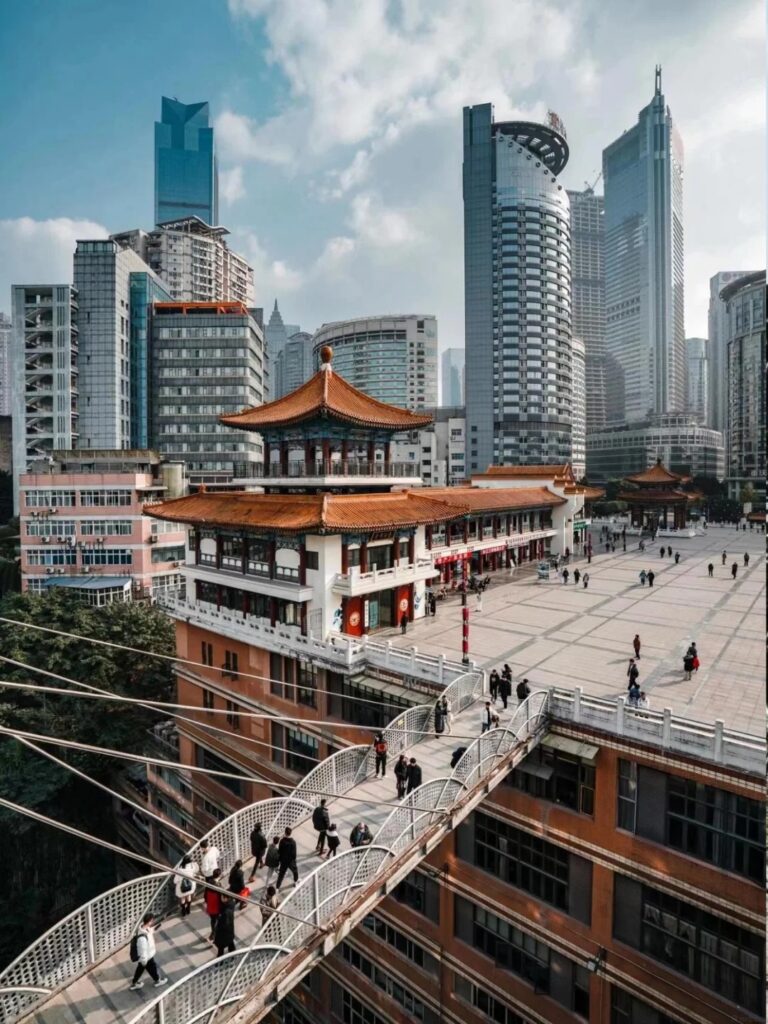
Image credit: 751782511 on rednote
The TikTok-famous building that messes with your sense of perspective. Kuixing Building looks completely normal until it absolutely isn’t. Step into the ground-floor entrance, take the lift up, walk out, and you’re standing on what feels like street level, except you’re actually on the 22nd floor.
You won’t linger long, but it perfectly captures Chongqing’s vertical logic and why the city keeps scrambling visitors’ sense of direction.
- Address: Yuzhong District, Chongqing
- Opening Hours: 24 hours
- Admission: Free
📖 Related Guide: Chasing skylines across China? Our 31 things to do in Shanghai covers the country’s other great river-city views.
Culture, History and Temples
Beyond the neon, Chongqing has layers of history: ancient towns, quiet temples and one of the most important cliff-carving sites in the world.
Ciqikou Ancient Town (磁器口)
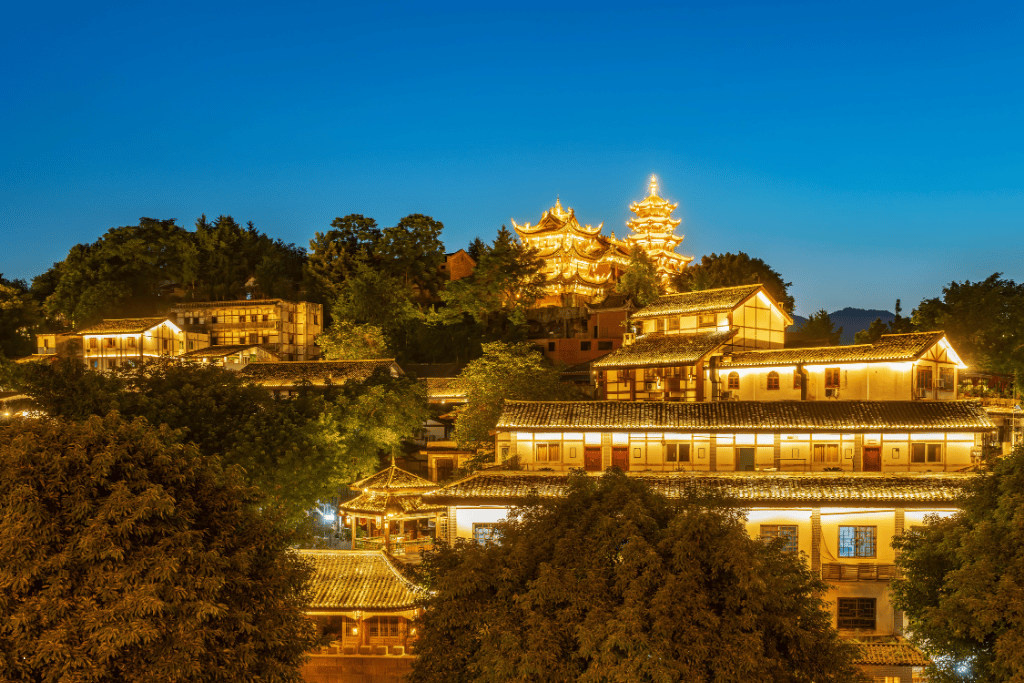
History, snacks and slow wandering, all in one spot. Ciqikou is a well-preserved ancient town on the Jialing River, once a busy porcelain-trading port, now one of Chongqing’s most famous old quarters. Expect narrow stone lanes, traditional wooden buildings, teahouses, street performances and an endless run of local snacks.
It’s touristy, and it knows it. But it’s still absolutely worth a morning, especially on a first trip, before the afternoon crowds thicken.
- Address: Shapingba District, Chongqing
- Opening Hours: 9 AM – 10 PM (individual shops vary)
- Admission: Free
Luohan Temple (罗汉寺)
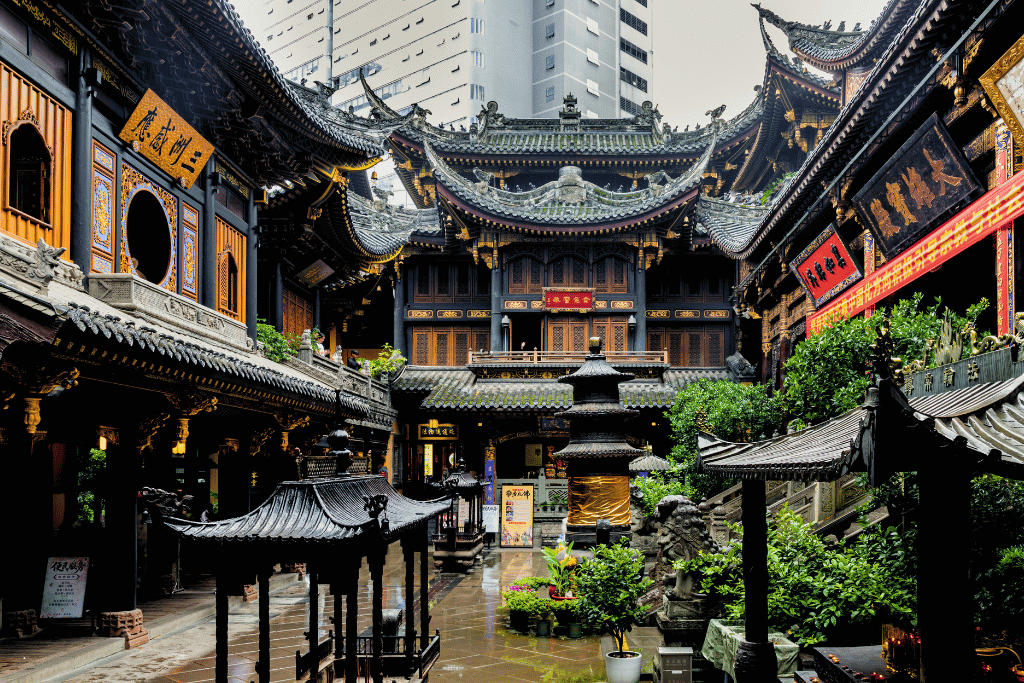
Luohan Temple feels like a hidden sanctuary despite being ringed by busy commercial streets. Step inside and the energy shifts instantly. The complex is known for its detailed hall of arhat statues and its calm, incense-heavy atmosphere.
It’s a quick, grounding stop between the downtown sights, and one of the few truly quiet corners in the city centre.
- Address: Yuzhong District, Chongqing
- Opening Hours: 8 AM – 5 PM
- Admission: 10 CNY (~S$2)
Three Gorges Museum (三峡博物馆)
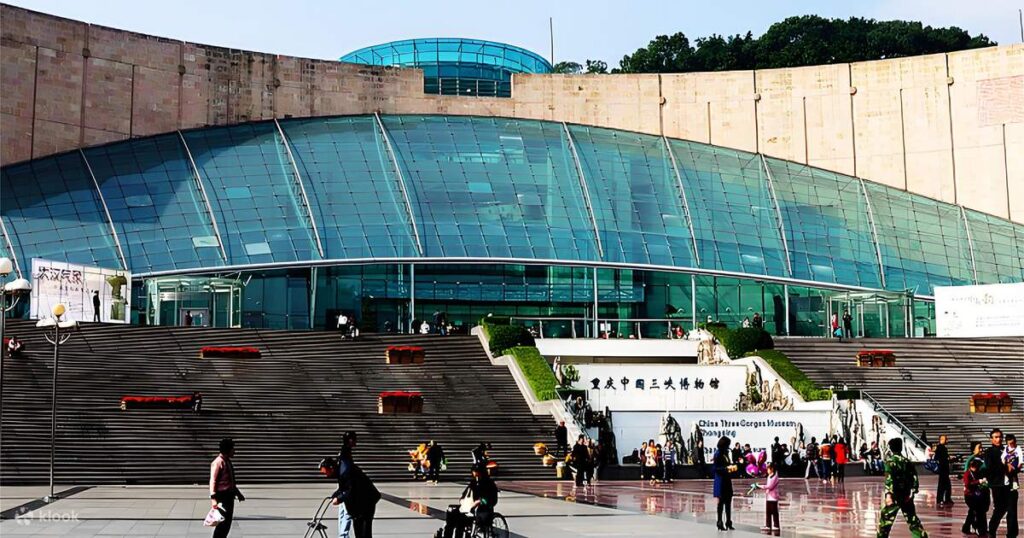
Image Credits: Klook
Facing the grand People’s Square and the domed Great Hall of the People, the Chongqing China Three Gorges Museum is the best primer on the region you’ll find. Its exhibits trace the Yangtze, the Three Gorges before and after the dam, wartime Chongqing and local Ba-Yu culture, all well laid out and refreshingly easy to follow.
It’s free, but you’ll need a real-name reservation through the museum’s official channel a day or two ahead. Worth an hour or two, and a good air-conditioned reset on a hot afternoon.
- Address: Zhengjie, Yuzhong District (opposite People’s Square)
- Opening Hours: 9 AM – 5 PM, Tue–Sun (closed Mondays; last entry 4:30 PM)
- Admission: Free (reservation required)
Dazu Rock Carvings (大足石刻)
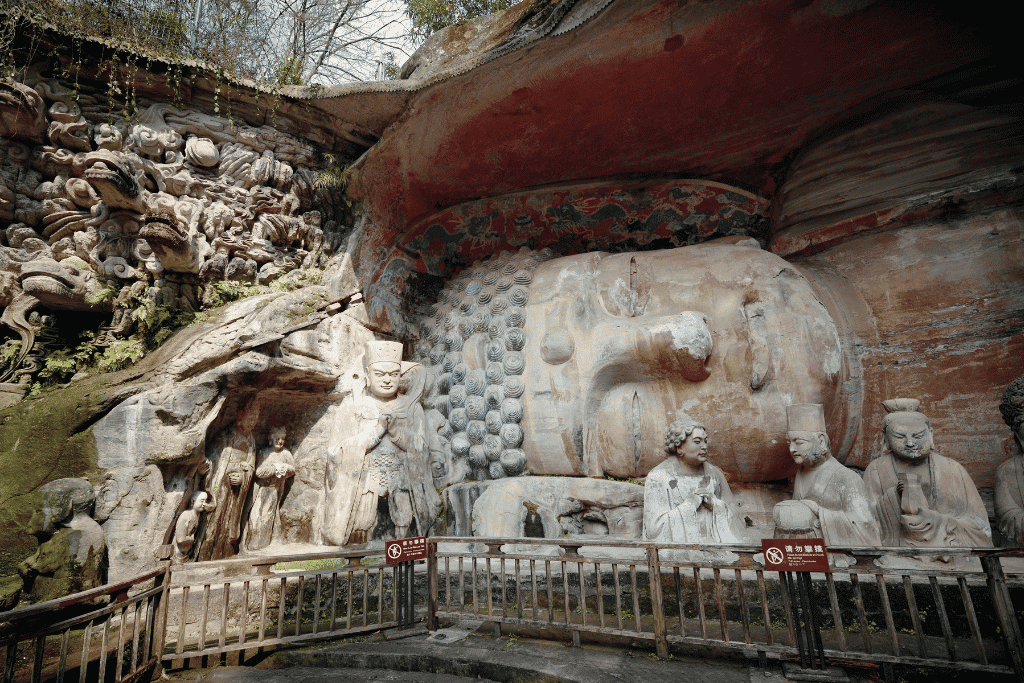
The most rewarding day trip out of the city, and a proper bucket-list sight. The Dazu Rock Carvings are a sprawling set of cliff-face sculptures, mostly carved between the 9th and 13th centuries, and a UNESCO World Heritage Site since 1999. Baodingshan, the main grotto, is the show-stopper: a curved cliff densely packed with painted Buddhist, Taoist and Confucian figures, including a giant reclining Buddha.
They sit about 100 to 105km northwest of the city, roughly 1.5 to 2 hours by car or tour bus. Give it a full half-day. It’s the kind of place that makes the effort obvious the moment you arrive.
- Address: Dazu District, ~100km northwest of central Chongqing
- Opening Hours: ~8:30 AM – 6 PM (last entry varies by season)
- Admission: Baodingshan from 110–115 CNY (~S$21–22); combo ticket ~150 CNY (~S$29)
📖 Related Guide: If ancient China is your thing, our 18 best things to do in Xi’an is the natural next stop after Chongqing.
Nature and Karst Escapes
When the city gets to be too much, the countryside around Chongqing delivers some of the most dramatic karst scenery in China.
Wulong Karst Three Natural Bridges
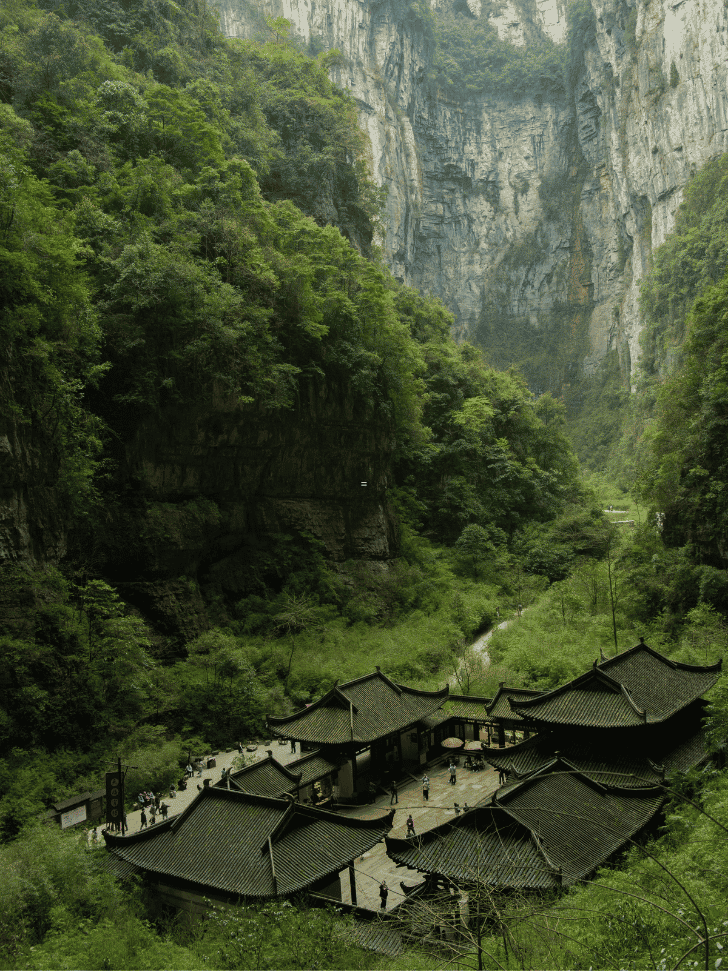
If epic landscapes are your love language, this belongs near the very top of your list. About three hours from the city, the Three Natural Bridges are enormous limestone arches soaring over a lush valley, connected by walkways that let you take them in from above, below and in between.
Despite the scale, it’s surprisingly accessible. Well-maintained paths, shuttle buses and viewing platforms mean you don’t need to be a hardcore hiker to enjoy it. Along the way you’ll pass waterfalls, caves and surreal rock formations that make its UNESCO World Heritage listing obvious. Film buffs may recognise it from a certain blockbuster or two.
- Address: Wulong District, Chongqing
- Opening Hours: ~8:30 AM – 4:30 PM (seasonal)
- Admission: 125–155 CNY (~S$24–30), depending on season
Fairy Mountain National Forest Park
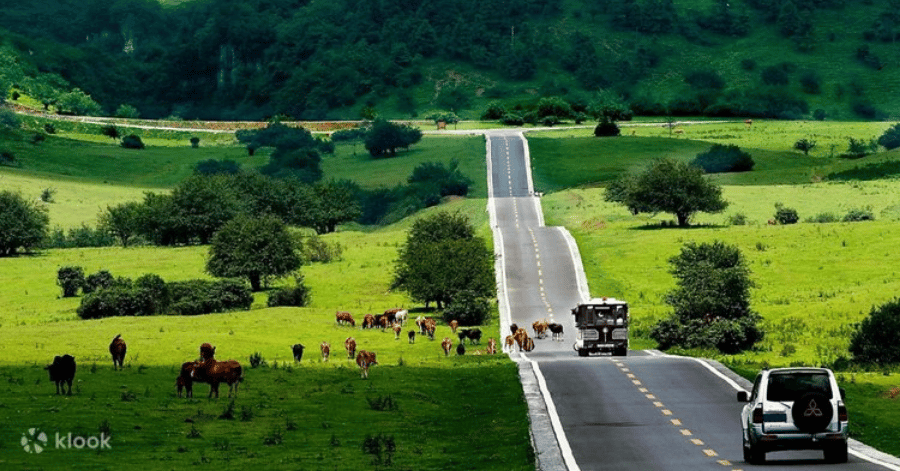
Image credit: Klook
In the same Wulong region as the Three Natural Bridges, Fairy Mountain is often nicknamed the “Switzerland of Chongqing”. Think rolling grasslands, cool mountain air and wide open spaces, a real change of pace from the vertical downtown.
If you’re already heading to Wulong Karst, pairing the two makes perfect sense. It’s especially good for families and anyone who wants to slow the trip right down.
- Address: Wulong District, Chongqing
- Opening Hours: ~8:30 AM – 4:30 PM (seasonal)
- Admission: 85–105 CNY (~S$16–20), depending on season
📖 Related Guide: For more mountain-and-village scenery, our 12 best things to do in Yunnan maps out southwest China’s most beautiful region.
Chongqing After Dark
Chongqing is arguably China’s best night-view city. When the towers light up and the fog rolls in off the rivers, it earns its “Little Hong Kong” nickname.
Two Rivers Night Cruise (两江游)
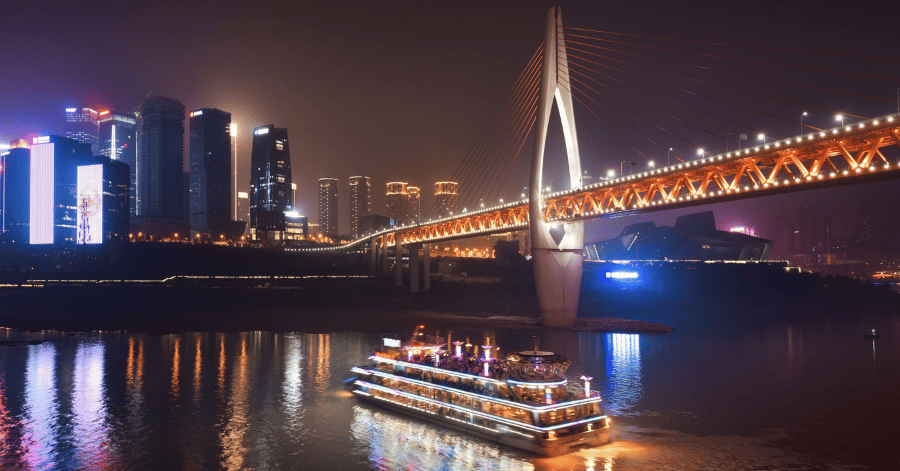
The single best way to take in the skyline is from the water. The Two Rivers Night Cruise loops out from Chaotianmen, where the muddy Yangtze meets the greener Jialing, and floats you past Hongyadong, Qiansimen Bridge, Raffles City and the neon-lit banks.
The full loop runs about 45 to 60 minutes, with rolling departures through the evening. Board at Chaotianmen Wharf or Hongyadong Wharf. It’s touristy in the best way, and everyone’s there for the same glittering reason.
- Address: Chaotianmen / Hongyadong Wharf, Yuzhong District
- Opening Hours: ~7:30 PM – 10 PM (evening departures)
- Admission: 138–198 CNY (~S$27–38)
Yikeshu Observation Deck, Nanshan (一棵树观景台)
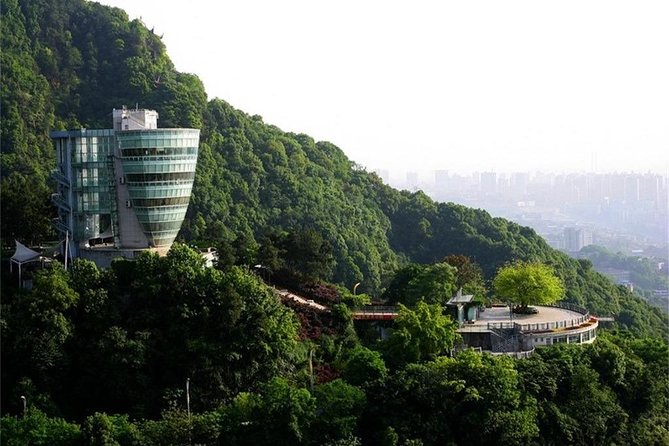
Image Credits: Tripadvisor
If you’d rather see the skyline than be in it, head up Nanshan (Southern Mountain) to the Yikeshu, or “One Tree”, Observation Deck. Perched around 437 metres up and directly opposite the Yuzhong Peninsula, it serves the classic postcard view of Chongqing at night, the reason locals call the panorama “Little Hong Kong”.
Time it for sunset into the evening, when the sky shifts colour behind the towers and the lights come on across the water. A taxi or DiDi up is easiest, as public transport thins out near the top.
- Address: Nanshan, Nan’an District, Chongqing
- Opening Hours: 9 AM – 10 PM
- Admission: From ~30 CNY (~S$6); premium deck tiers cost more
Raffles City Chongqing and the Crystal Skybridge
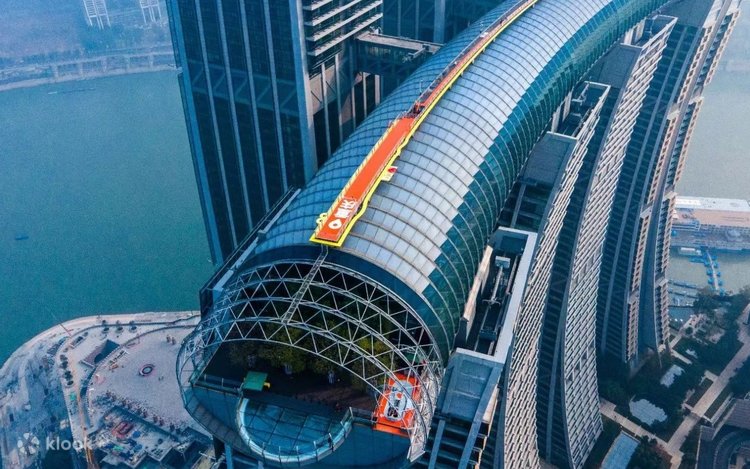
Image Credits: Klook
Chongqing’s boldest modern landmark has a Singapore connection: Raffles City Chongqing was developed by CapitaLand, and its 250-metre-high horizontal skyscraper, “The Crystal”, opened in 2020.
The Crystal links the tops of four towers into a single glass-and-steel skybridge, billed as the world’s highest bridging the most towers, with a glass-bottomed Exploration Deck looking straight down over the Yangtze-Jialing confluence at Chaotianmen. Tickets are capped at a few thousand a day, so book ahead if you want the view without the wait.
- Address: Chaotianmen, Yuzhong District, Chongqing
- Opening Hours: Exploration Deck, ~10 AM – 10 PM
- Admission: Exploration Deck ~180 CNY (~S$35)
📖 Related Guide: For another skyline city after dark, our ultimate Shenzhen travel guide covers where to go once the sun sets.
Unique and Offbeat Chongqing
The weird, wonderful and very-Chongqing side of the city.
Fengdu Ghost City (丰都鬼城)
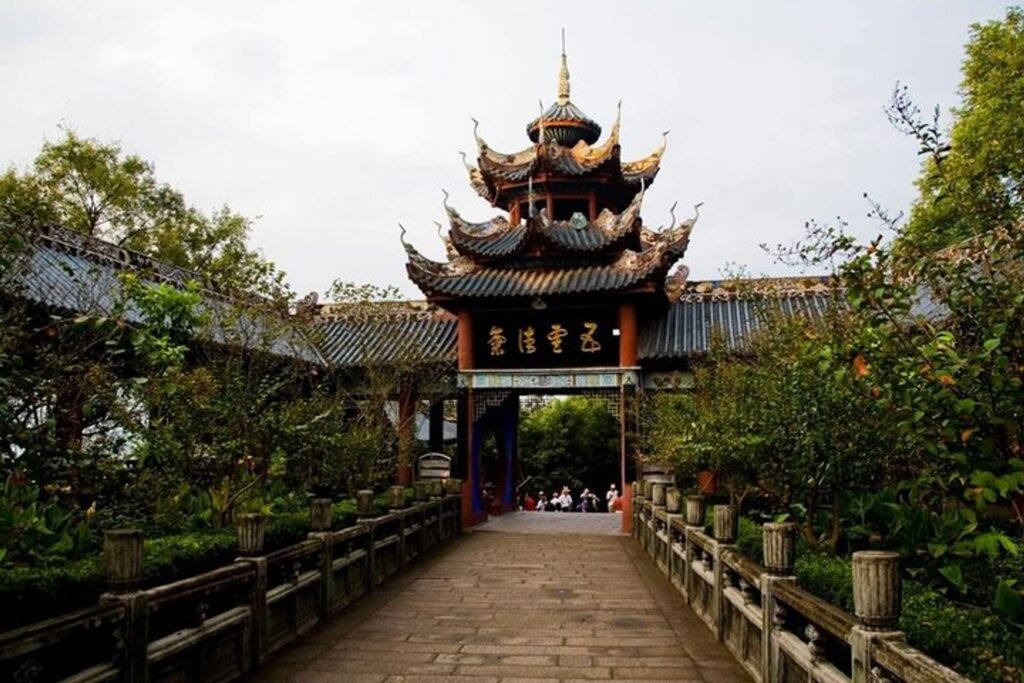
Image credit: Pelago
Often compared to Singapore’s Haw Par Villa, Fengdu Ghost City is a hillside temple complex themed around the Chinese afterlife, with roots in nearly two thousand years of underworld folklore: all demon statues, judgment gates and trials of the damned. It’s eerie, fascinating and completely unlike anything else.
It sits about 170km downstream on the Yangtze, roughly 1.5 hours by high-speed train, so it works best as its own half-day or as a stop on a river cruise. Best for travellers who like their sightseeing a little offbeat.
- Address: Fengdu County, ~170km east of central Chongqing
- Opening Hours: 8:30 AM – 5 PM
- Admission: From ~90 CNY (~S$17)
Testbed 2, Erchang Cultural and Creative Park


Image credit: 107451573 on rednote
Testbed 2 is Chongqing’s creative playground. A former printing factory has been reworked into cafés, art studios, bookstores and independent boutiques, with a lot of the old industrial bones left intact.
It’s popular with younger locals, creatives and photographers, and it’s a good place to slow down and see the city’s more alternative side.
- Address: Yuzhong District, Chongqing
- Opening Hours: Most shops 11 AM – 9 PM
- Admission: Free
Jiaotong Teahouse (交通茶馆)
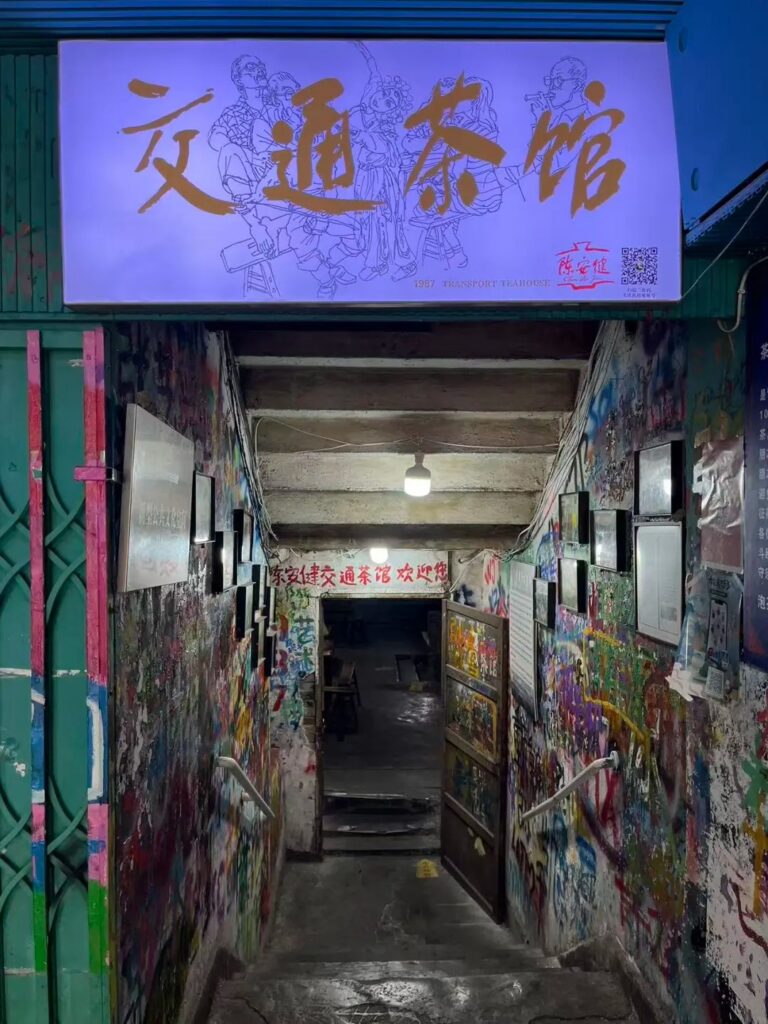
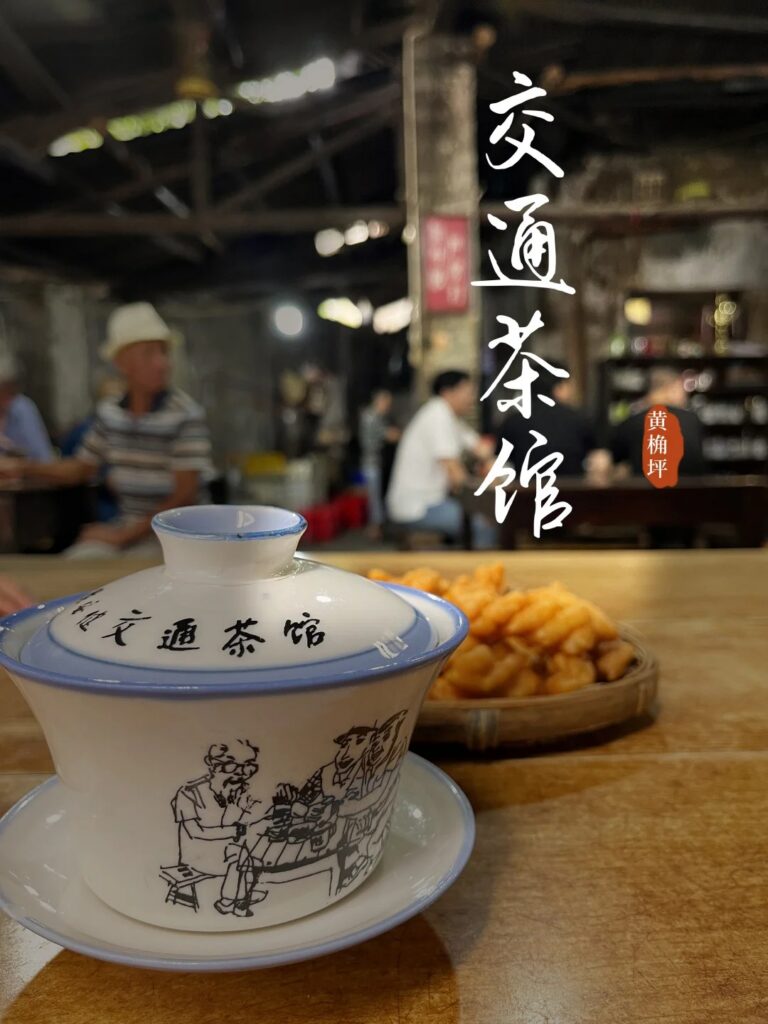
Image credit: 606354057 on rednote
This old-school teahouse hasn’t changed much in decades, and that’s exactly the appeal. Expect worn wooden stools, chipped tables, steam rising off cheap tea and locals playing cards and chatting for hours.
Order a simple cup, grab a seat and stay longer than you planned. It’s one of the most honest ways to experience everyday life in Chongqing.
- Address: Huangjueping, Jiulongpo District
- Opening Hours: 7 AM – 7 PM, daily
- Admission: Tea from ~8 CNY (~S$2)
Xiahaoli
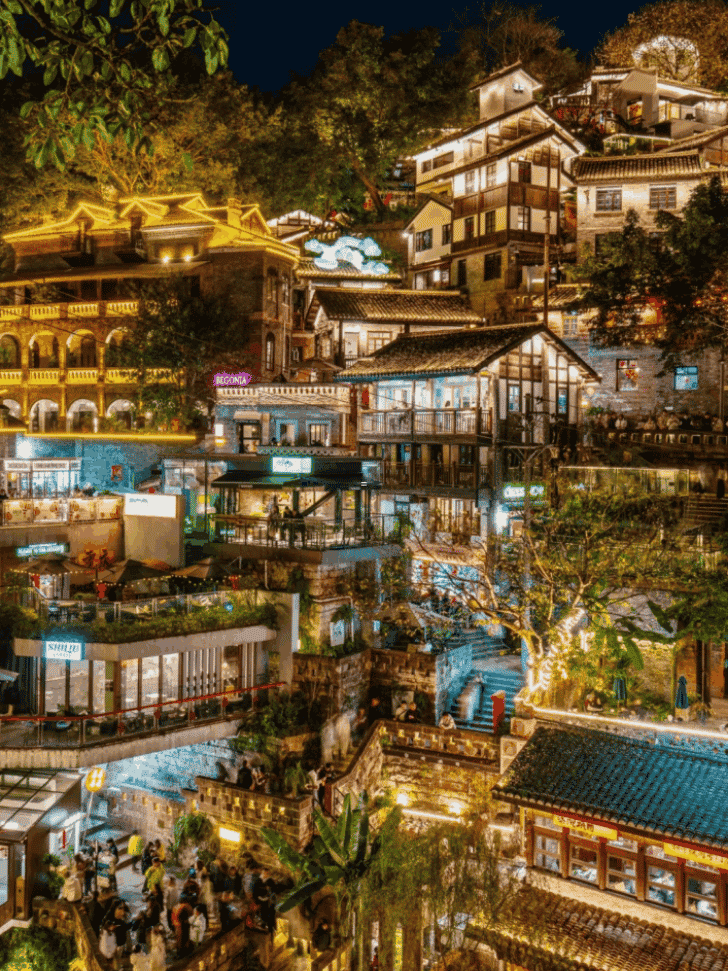
Image credit: @Wonderful-Boat1437 on Reddit
If you like neighbourhoods that feel truly lived-in, Xiahaoli is a lovely afternoon. This pedestrian-friendly pocket is where the city slows down: cosy cafés, casual eateries, small boutiques and locals on every corner.
Wander with no plan. Grab a coffee, browse a few shops, find a shaded bench and people-watch. By evening it feels like a shared living room for the whole neighbourhood.
- Address: Yuzhong District, Chongqing
- Opening Hours: Always open (shops vary)
- Admission: Free
📖 Related Guide: Chasing more local-first neighbourhoods? Our ultimate Guangzhou travel guide does the same for the Canton capital.
Things to Do in Chongqing With Kids
Travelling with little ones? These stops keep everyone happy without the endless stairs.
Chongqing Zoo (重庆动物园)

Image Credits: 827579648 on rednote
The easiest panda fix in the city. Chongqing Zoo is home to more than 20 giant pandas, one of the largest groups in any Chinese zoo, plus rare South China tigers and the usual crowd-pleasers. Go early: pandas are most active in the morning, roughly 8:30 to 11 AM, before they slope off for their afternoon nap.
It’s a proper half-day for families, and far cheaper than a trek out to a breeding base.
- Address: Jiulongpo District, Chongqing
- Opening Hours: 8 AM – 6 PM, daily
- Admission: ~25 CNY (~S$5); under-1.2m free
Chongqing Science and Technology Museum
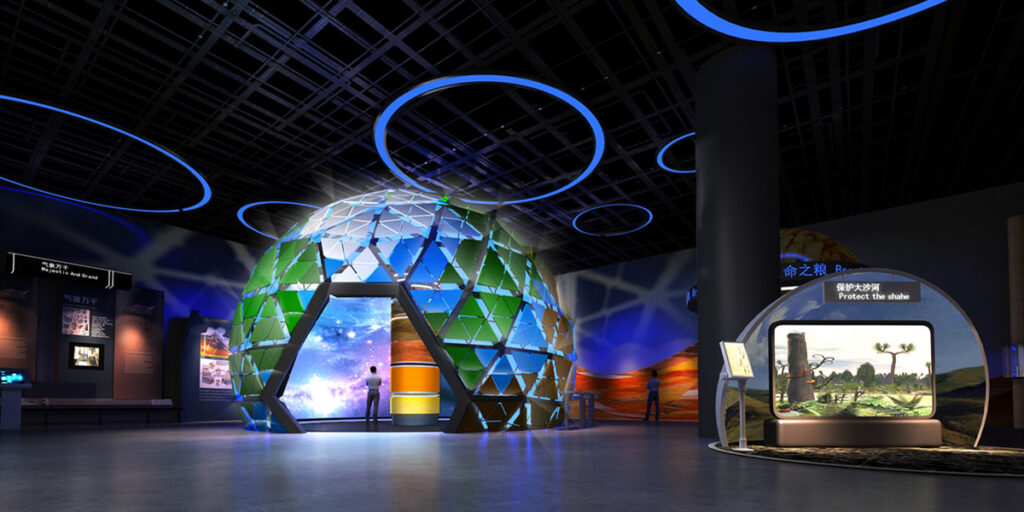
Image credit: iChongqing
Big, interactive and good fun. Sitting on the riverfront in central Chongqing, this museum runs hands-on exhibits on space, physics, robotics and everyday science. Kids get to press buttons and experiment freely; adults get air-conditioning and some surprisingly thoughtful displays.
- Address: Jiangbei District, Chongqing
- Opening Hours: 9 AM – 5 PM, Tue–Sun (closed Mondays)
- Admission: Free (reservation often required)
Halo Shopping Centre
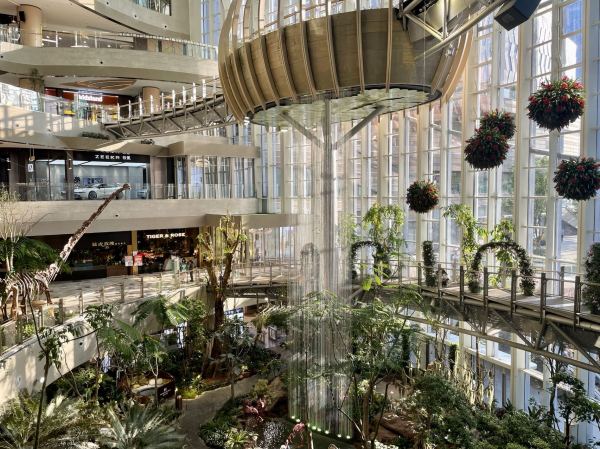
Image credit: iChongqing
Halo isn’t just another mall. It’s one of Chongqing’s newer lifestyle centres, with wide open spaces, family-friendly restaurants and an indoor botanical garden built for a “shopping-in-the-park” feel.
For families, there’s plenty on: a large kids’ play zone, interactive photo spots and enrichment activities across ages. Easy to lose half a day here without noticing.
- Address: Yubei District, Chongqing
- Opening Hours: 10 AM – 10 PM (individual shops vary)
- Admission: Free
📖 Related Guide: Bigger day out with the kids? Our ultimate Shanghai Disneyland guide has everything for the family theme-park leg.
What to Eat in Chongqing
Chongqing is a food-first city, and the food is loud. This is the home of mala, that tongue-numbing mix of chilli heat and Sichuan peppercorn, and it turns up in almost everything.
Chongqing Hotpot (火锅)

Image credit: 9502702519 on rednote
The main event. Chongqing hotpot is a rolling cauldron of chilli-oil broth, Sichuan peppercorn and dried spices, and you cook everything in it yourself: tripe, beef, potato, lotus root, whatever you’re brave enough for. For the full story, the Underground Zhicheng Old Hot Pot serves classic mala broth inside a repurposed WWII air-raid shelter. It sounds gimmicky until you taste it.
Ask for wei la (mild) if you’re not a chilli veteran, though leaning in at least once is half the fun.
- Where: Underground Zhicheng Old Hot Pot and countless local spots
- Price: 80–120 CNY (~S$15–23) per person
Chongqing Xiao Mian (小面)

Image Credits: 178690075 on rednote
The city’s breakfast of champions. Xiao mian is a bowl of springy wheat noodles drowned in chilli oil, peppercorn, garlic and spring onion. Cheap, fast and everywhere. Order it “dry” or in soup, add a topping of braised beef or pea if you like, and eat it standing at a roadside stall like the locals do.
Price: From ~10 CNY (~S$2)
Suan La Fen (酸辣粉)

Image Credits: 49982425362 on rednote
Hot-and-sour sweet potato noodles: slippery, chewy and swimming in a tangy, spicy broth topped with peanuts and pickles. The sourness comes from black vinegar, the heat from chilli oil, and the two somehow cancel each other into something addictive. It’s a street-snack staple you’ll smell before you see, and one of the best cheap eats in the city.
Price: From ~10 CNY (~S$2)
La Zi Ji (辣子鸡)

Image Credits: 615893479 on rednote
A deep dive into Chongqing’s love of chilli: bite-sized fried chicken buried under a mountain of dried red chillies and peppercorns. Half the fun is fishing the crispy pieces out of the pile. Great to share, and a good gauge of your actual spice tolerance.
Price: From ~40 CNY (~S$8) to share
Guanyinqiao Food Street
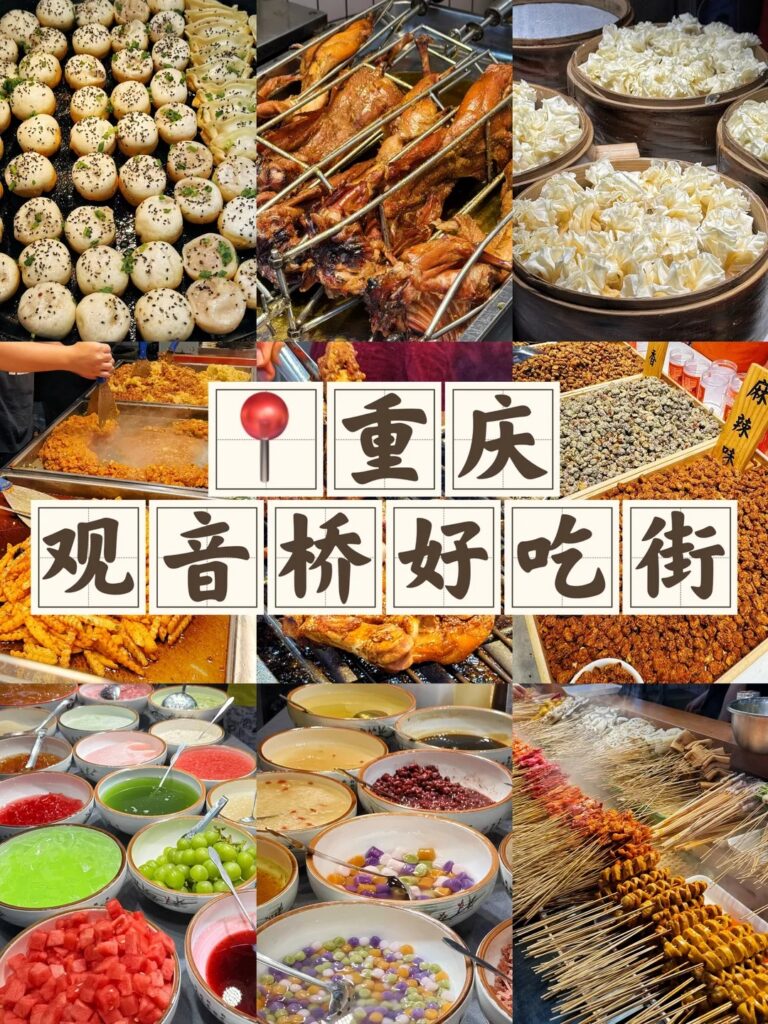
Image credit: 188635492 on rednote
Across the river in Jiangbei, Guanyinqiao is Chongqing’s rowdiest night-snack district, built around a buzzing pedestrian plaza. Come hungry after dark and graze your way through grilled skewers, chuan chuan xiang (skewers cooked in bubbling mala), crispy-bottomed shengjian soup dumplings and bowls of ice jelly with cold shrimp.
Around 50 CNY (~S$10) buys a proper tasting run, and 100 CNY (~S$19) leaves you stuffed. It peaks late, so arrive after 7 PM.
- Address: Guanyinqiao Pedestrian Street, Jiangbei District (Metro Line 3, Guanyinqiao Station)
- Admission: Free (pay as you snack)
📖 Related Guide: More Sichuan-style flavour just next door? Our 23 best things to do in Chengdu covers the region’s other food capital.
Chongqing to Chengdu Day Trip: Is It Worth It?
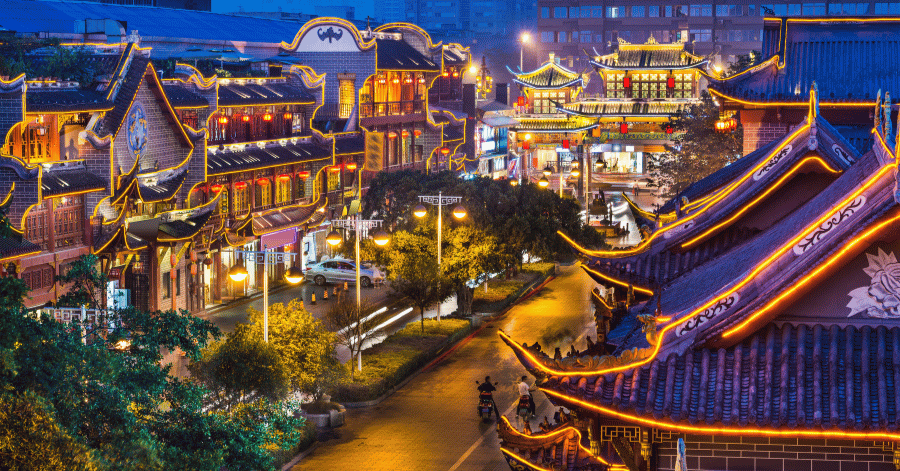
Yes, especially if you have more than three days. Chongqing and Chengdu are one of western China’s best city pairings. Chongqing brings vertical chaos and fiery spice; Chengdu offers flatter streets, greener spaces and a slower pace. The food is just as iconic, but far gentler on the heat. Together they balance each other out.
How to Travel from Chongqing to Chengdu
The high-speed train is by far the fastest and easiest way to go.
- Travel time: as little as ~1 hour; typically 1 to 1.5 hours
- Frequency: 140+ departures a day, roughly one every 15 minutes
- Stations: Chongqing North / Chongqing West → Chengdu East / Chengdu South
- Fare: second class from ~56 CNY (~S$11)
Tickets are easy to book online, including via English-friendly platforms, so the trip is painless even without Mandarin.
Day Trip or Overnight Stay?
A day trip works if you focus on the highlights. An overnight stay is better if you want to slow down for the food, parks and evening shows. If time is tight, go and come back in a day; if you want to actually feel Chengdu’s relaxed vibe, stay a night.
Best Things to Do in Chengdu
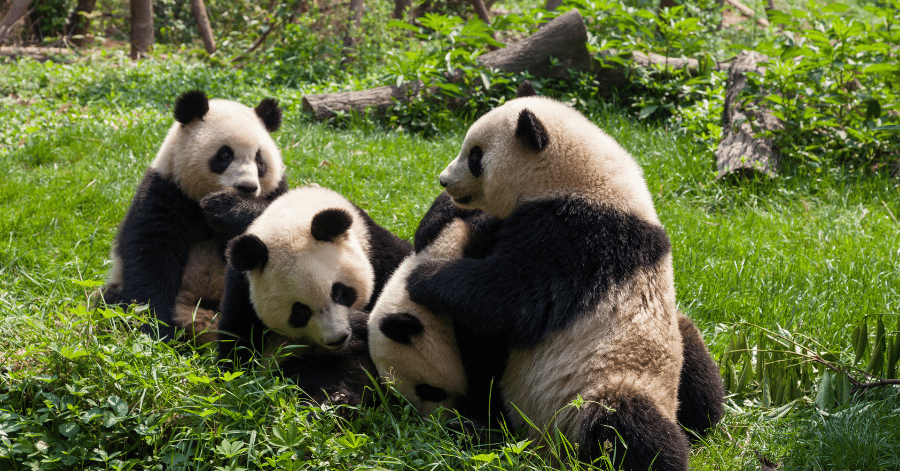
If you’re short on time, prioritise these:
- Chengdu Research Base of Giant Panda Breeding: go early, when the pandas are most active. Yes, they’re as cute in person as you’d hope.
- Jinli Ancient Street: a lively stretch for snacks, souvenirs and Sichuan street food.
- People’s Park: teahouses, ear-cleaning services and locals living life slowly.
- Wuhou Shrine and Kuanzhai Alley: history and restored old lanes in one walkable pocket.
- Sichuan Opera face-changing show: a short, fast, uniquely Sichuan performance.
FAQs
No. Under the mutual visa-exemption arrangement in force since February 2024, Singapore ordinary passport holders can enter mainland China visa-free for up to 30 days, and Chongqing is included. Just make sure your passport has at least six months’ validity.
Yes. Chongqing is generally very safe, even at night. Stay aware in crowded areas as you would in any big city, and keep an eye on your belongings around the busiest sights.
It helps, but it’s not essential. Translation apps go a long way, ride-hailing removes most of the language friction, and transport signage is increasingly tourist-friendly.
Yes, but you can always ask for wei la (mild). That said, part of the fun is leaning into the mala heat at least once.
China runs largely on mobile payments, so the smoothest setup is adding your card to a wallet like Alipay or WeChat Pay before you go. Add a YouTrip card and every tap or QR scan auto-converts your SGD at the wholesale rate with no foreign transaction fee.
Keep a little cash for the occasional cash-only stall, and withdraw it from an ATM when you land: free on your first S$400 each month with YouTrip, then a flat 2% after.
Need a Sign? Let Chongqing Be Your Next Adventure
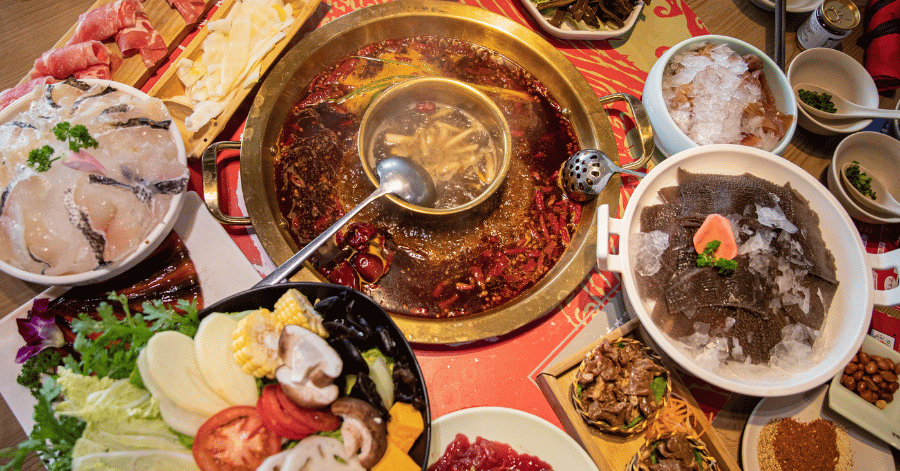
If you’re ready for a China trip that feels nothing like the usual checklist cities, Chongqing delivers: boldly, unapologetically and with a whole lot of spice.
And as always, bring your YouTrip card. Between transport, food and spontaneous day trips, every cent adds up, which is exactly why the wholesale exchange rate matters, leaving more room in the budget for extra hotpot.
Not a YouTrooper yet? Get a free YouTrip card + S$5 YouTrip credits with code YTBLOG5.
Then head over to our YouTrip Perks page for exclusive offers and promotions. Join our Telegram (@YouTripSG) and Community Group (@YouTripSquad) for travel tips, event invites and more.
For deeper detail before you fly, see our guides on whether you can use YouTrip in China and where to get the best SGD to CNY rate in Singapore.
Happy travels!