




If you’ve been shopping at FairPrice or comparing digital banks in Singapore, you’ve probably come across Trust Bank.
Launched in 2022 as a joint venture between Standard Chartered Bank and FairPrice Group, Trust built its following on no-annual-fee cards and everyday cashback.
That card just changed. On 13 August 2026, Trust renamed the Trust Cashback Card the Trust Freedom Card and rebuilt how it pays you. Instead of earning cashback by default, you now choose one of three reward modes each quarter, one of which pays you in US shares rather than cash.
This guide covers what the Freedom Card actually gives you, and how the Link card and debit card sitting alongside it differ. It also runs through Trust’s interest rates and fees, who qualifies, and where a Trust card helps or hurts when you spend overseas.
💜 Stay Up To Date:
- Touch ‘n Go Guide In Malaysia: Everything You Need To Know (2026)
- Sapa Vietnam Travel Guide (2026): Weather, Hanoi to Sapa, Best Things To Do
- Best Breakfast in JB (2026): 28 Must-Try Spots For Every Craving
⚠️ August 2026 Update: The Trust Cashback Card is now the Trust Freedom Card. Same card in your wallet, new rewards menu. Local unlimited cashback rose from 1% to up to 1.5%, and a third mode called Stockback pays 3% on both local and overseas spend until 31 December 2026.
TL;DR – Quick Takeaways
- Trust Bank is a digital bank formed by Standard Chartered and FairPrice Group, launched in 2022.
- The Trust Cashback Card became the Trust Freedom Card on 13 August 2026. You now pick one of three reward modes per quarter. Switching is free at the start of the next one.
- Unlimited cashback: up to 1.5% on local eligible spend, 0.5% on foreign, no minimum spend and no cap.
- Bonus cashback: up to 15% on one chosen category, capped at S$250 a quarter, plus up to 1% on everything else local and 0.5% foreign.
- Stockback: 3% on both local and foreign eligible spend until 31 December 2026, capped at S$500 a quarter. It pays in fractional US shares, not cash. From 1 January 2027 it drops to 2% local and 0.5% foreign.
- No annual fee on either Trust credit card. Trust charges no foreign transaction fee and converts at the Visa rate.
- Trust savings: up to 2.40% p.a. on the first S$1.2 million, conditions apply.
- Overseas cash is the weak spot. An ATM withdrawal on the Trust credit card is a cash advance with an 8% fee. YouTrip remains the better card for spending and withdrawing abroad.
📌 Table of Contents:
- What Is Trust Bank Singapore?
- Trust Card Benefits: What Each Card Gives You
- Trust Freedom Card: Review & Key Details
- What Changed on 13 August 2026
- The Three Reward Modes
- What Is Stockback?
- Bonus Cashback: How the 15% Actually Works
- Trust Freedom Card Exclusions
- Trust Freedom Card Verdict
- Is Trust Card a Credit Card or a Debit Card?
- Trust Bank Interest Rates & Credit Card Fees
- Savings Account Interest Rate
- Trust Credit Card Interest Rate
- Trust Credit Card Fees at a Glance
- Trust Card Eligibility & Requirements
- Using Your Trust Card Overseas
- How Trust Converts Your Foreign Spend
- Withdrawing Cash Overseas
- The Overseas Numbers, Side by Side
- Which Trust Card Should You Get?
- FAQs
What Is Trust Bank Singapore?
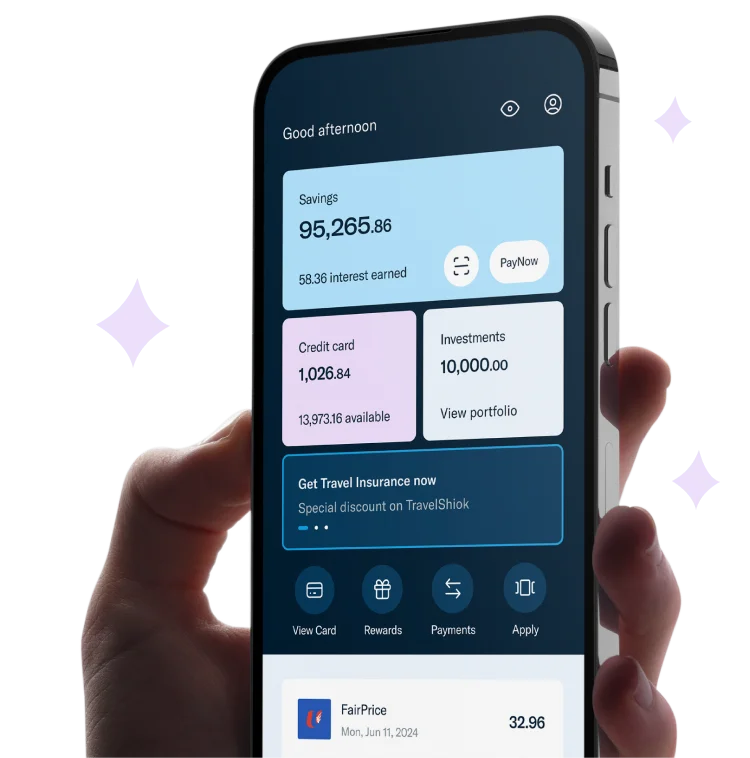
Image Credits: Trust Bank
Trust Bank is a digital-first bank in Singapore, launched in 2022 as a joint venture between Standard Chartered Bank and FairPrice Group. Standard Chartered holds the majority stake.
It runs out of the app rather than a branch network. You open an account, manage your cards and pick your rewards entirely in the Trust app, and the whole thing is wired into the FairPrice ecosystem through Linkpoints.
It has grown fast. Trust reached one million customers in February 2025, which made it Singapore’s fourth-largest retail bank by customer numbers less than three years after launch.
📖 Check out this guide to Revolut Singapore: The Ultimate Guide To The Revolut Card, Account & Fees
Trust Card Benefits: What Each Card Gives You
Trust lists two credit cards and issues a debit card with every savings account. They do different jobs, and people often mix them up.
| Card | What it’s for | Headline rewards | Annual fee |
|---|---|---|---|
| Trust Freedom Credit Card | Everyday spending, your main rewards card | Pick one per quarter: up to 1.5% unlimited cashback, up to 15% bonus cashback, or 3% Stockback | None |
| Trust Link Credit Card | NTUC members and heavy FairPrice shoppers | Up to 21% savings in Linkpoints at FairPrice Group, up to 20% at Caltex | None |
| Trust debit card | Comes free with the savings account | 0.22% Linkpoints on local eligible spend, 0.05% on foreign, both uncapped | None |
A few things worth knowing before you choose.
The Freedom Card is the one that changed in August 2026, and it’s the card most people mean when they say “Trust card”. It’s a Visa credit card with no annual fee.
The Link Card pays in Linkpoints rather than cash, and Trust pitches it at NTUC Union Members. If your grocery run is FairPrice and you fill up at Caltex, it’s the better fit.
The debit card draws straight from your savings account, so there’s no credit check and no interest to worry about. The trade-off is that the rewards are a rounding error next to the Freedom Card’s.
Both credit cards carry no foreign transaction fee.
📖 Discover the Best Miles Credit Card in Singapore: The Ultimate Guide
Trust Freedom Card: Review & Key Details
The Trust Freedom Card is Trust’s flagship rewards card and, until August 2026, it was called the Trust Cashback Card.
What Changed on 13 August 2026
1. New name. The Trust Cashback Card is now the Trust Freedom Card. It’s the same account and the same card number, so nothing in your wallet stops working, and there’s nothing you need to do.
2. Rewards are now a choice, not a default. You select one of three modes at the start of each membership quarter. Switching is free and there’s no penalty, but a change only takes effect when the next quarter begins.
3. Local cashback went up. The unlimited rate on local eligible spend rose from 1% to up to 1.5%, with no minimum spend and no cap.
4. Stockback arrived. A third mode pays your rewards as fractional US shares instead of cash, at 3% on both local and foreign eligible spend until 31 December 2026.
5. Miles are coming. Trust has said it will add miles as a fourth mode. No rates or dates have been published.
Everything Trust has changed in 2026:
| Date | What changed |
|---|---|
| 1 Feb 2026 | Cash advances started costing 8% on any amount over S$5. They were free before this. |
| 1 Mar 2026 | The S$1,000-a-month bonus tier was scrapped, and foreign cashback outside your bonus category fell from 1% to 0.5%. |
| 9 Apr 2026 | The late payment charge was set at S$100, or S$200 if your statement includes a loan instalment. |
| 1 Jul 2026 | The flat 27.9% p.a. interest rate was replaced by a personalised 18.9% to 29.9% p.a., reviewed every six months. |
| 13 Aug 2026 | The Cashback Card became the Freedom Card, with three selectable reward modes and local unlimited cashback up from 1% to up to 1.5%. |
That’s five changes in seven months, three of which cost you money. Worth a look at your mode and your statement rather than assuming the card still works the way it did when you signed up.
The Three Reward Modes
You run one mode at a time, and each pays differently:
| Reward mode | Local eligible spend | Foreign eligible spend | Cap |
|---|---|---|---|
| Unlimited cashback | Up to 1.5% | 0.5% | No cap, no minimum spend |
| Bonus cashback | Up to 15% on one chosen category, plus up to 1% on everything else | 0.5% | S$250 per quarter on the bonus category |
| Stockback | 3% until 31 Dec 2026, then 2% from 1 Jan 2027 | 3% until 31 Dec 2026, then 0.5% from 1 Jan 2027 | S$500 per quarter |
The six bonus categories you can choose from are dining, shopping, travel, wellness, transport and entertainment.
Rewards are only awarded on eligible spend over S$1. And when Trust checks whether you’ve hit a spending tier, it counts by transaction date. What matters is the day you were charged, not the day it lands on your statement.
The catch is the one-mode rule. Optimise for your 15% local dining bonus and your overseas spend earns 0.5%. Switch to Stockback for a holiday quarter and you hand back the bonus category. There’s no way to run both.
What Is Stockback?
Stockback pays your rewards as fractional shares in a US stock or ETF instead of cash.
You pick one investment from a curated list of 50 US stocks and ETFs in the Trust app. Your stockback accumulates until it’s worth S$10, at which point Trust converts it to US dollars and buys the shares automatically. You can change your pick any time before the next purchase goes through, and Trust charges no commission when you sell.
Until 31 December 2026 it earns 3% on local and foreign eligible spend alike, capped at S$500 a quarter. That’s the highest rate on the card right now, and six times what the cashback modes pay on overseas spend.
Two things to weigh before you switch to it.
The first is that a share isn’t a discount. Cashback is worth what it says on the day it lands. Shares move after you earn them, up or down, and you can’t spend them on your next flight.
The second is the date. From 1 January 2027 the rate falls to 2% on local spend and 0.5% on foreign, which puts overseas Stockback back in line with the cashback modes. The 3% is a promotional rate with about four months left on it.
Bonus Cashback: How the 15% Actually Works
The 15% headline is real. The cap is what decides what you actually get.
Two rules govern this mode. You have to hit a spending tier for three consecutive months, and the bonus stops at S$250 per quarter on your chosen category. Everything past the cap reverts to the base rate of up to 1% on local spend and 0.5% on foreign.
⚠️ Trust’s own page says only “hit spending tiers” without publishing the amounts. The figures circulating in card blogs are S$500 a month for the 5% tier and S$2,000 a month for 15%. Those match the pre-rebrand structure, but Trust hasn’t confirmed them for the Freedom Card. Check the tier in your Trust app before you plan around it.
What the cap means in practice. The S$250 quarterly cap is the number that matters, because it’s the one Trust publishes and it holds whichever tier you’re on.
At 15%, S$250 is everything you earn on the first S$1,667 of bonus-category spend in a quarter. Spend more than that in the category and the extra earns up to 1%, not 15%.
So a quarter with S$6,000 of bonus-category spend works out like this:
- S$1,667 at 15% = S$250, cap reached
- S$4,333 at up to 1% = S$43.33
- Total: S$293.33 on S$6,000, or roughly 4.9%
Still a strong return, and better than the old structure, because spend beyond the cap keeps earning instead of dropping to nothing. But 4.9% is the honest number, not 15%.
⚠️ Note: If a chunk of that spend is foreign, it earns 0.5% rather than 1%, which pulls the effective rate down further.
Trust Freedom Card Exclusions
Like most cashback cards, some spend earns nothing:
- Insurance payments
- AXS, SAM and ATM transactions
- Loan instalments
- Late fees and interest charges
Trust Freedom Card Verdict
The rebrand made this card better for local spending. Up to 1.5% uncapped with no minimum spend is a genuinely competitive everyday rate, and the 15% bonus still works if your spending is concentrated and predictable.
Overseas is where it stays middling. Outside the Stockback promo, foreign spend earns 0.5%, and the promo expires at the end of 2026.
✅ Best for:
- Everyday local spending, especially on the unlimited 1.5% mode
- Concentrated spenders who can keep one category topped up for three months straight and want the 15% bonus
- Anyone comfortable taking rewards as US shares while the 3% Stockback rate lasts
❌ Less ideal for:
- Frequent travellers, where 0.5% on foreign spend is the default once the promo ends
- Anyone withdrawing cash overseas, which is treated as a cash advance
- People who’d rather not think about reward modes every quarter
🟣 If you travel often, pair it with something built for overseas spend. YouTrip gives you wholesale exchange rates, meaning the rate the banks trade at rather than a marked-up retail one. No fees, no categories, and no quarterly decisions to make.
📌 There’s a sign-up offer running until 31 October 2026. New Freedom cardholders get a sure-win scratch card, paid as either cashback or a stock gift depending on the mode you pick.
Is Trust Card a Credit Card or a Debit Card?
Both. Trust issues credit cards and a debit card, and the word “Trust card” gets used for all of them.
The Trust Freedom Card and Trust Link Card are credit cards. You’re borrowing, you get a statement, and unpaid balances accrue interest.
The Trust debit card comes with the savings account. It pulls money you already have, so there’s no credit check, no statement and no interest. You get one automatically when you open an account, and the age bar is lower than the credit cards’ 21.
Which you want depends on what you’re after. The credit cards carry the real rewards. The debit card is the low-friction option if you don’t want a credit line or don’t yet qualify for one.
Trust Bank Interest Rates & Credit Card Fees
Savings Account Interest Rate
Trust offers three savings plans, and the headline rate belongs to only one of them:
- Flex Plan: up to 2.40% p.a. on the first S$1.2 million. You build it from a base rate of 0.05% p.a. plus up to three bonus categories you select yourself.
- Signature Plan: up to 1.00% p.a., with bonus interest tied to salary credit, card spend and your average balance.
- Zen Plan: a flat 0.40% p.a. with no conditions to meet.
Balances above S$1.2 million earn 0.05% p.a.
📖 Compare it against the rest of the market in our guide to the Best Savings Accounts in Singapore
Trust Credit Card Interest Rate
Trust moved off a flat rate in mid-2026.
Transactions posted up to 30 June 2026 carried an effective interest rate of 27.9% p.a. From 1 July 2026, Trust assigns you a personalised rate between 18.9% and 29.9% p.a., reviewed every six months.
Interest is calculated daily from the date a transaction posts. Pay your statement in full each month and none of it applies.
Trust Credit Card Fees at a Glance
| Fee | What Trust charges |
|---|---|
| Annual fee | None, for main and supplementary cardholders |
| Foreign transaction fee | None. Converted at the rate provided by Visa |
| Cash advance | 8% on any amount drawn over S$5, with interest from the posting date |
| Late payment | S$100, or S$200 if your statement includes a loan instalment |
| Minimum payment | The greater of S$50 or 1% of principal, plus fees and interest |
The cash advance line is the one that catches travellers. Withdrawing cash at an overseas ATM on the credit card is a cash advance, so you pay 8% and interest starts running immediately.
Trust Card Eligibility & Requirements
Trust debit card (comes with the savings account):
The debit card arrives automatically when you open a Trust savings account, so there’s no separate application and no income requirement. Trust doesn’t publish the age and residency criteria on a page we can quote, and third-party write-ups disagree on the minimum age. Check the current requirement in the Trust app before you apply.
Trust credit cards (minimum annual income):
Aged 21 to 55:
- ✅ Singapore citizens and PRs: S$30,000
- ✅ Foreigners with a valid work pass: S$60,000
Aged 56 and above:
- ✅ Singapore citizens and PRs: S$15,000
- ✅ Foreigners with a valid work pass: S$60,000
Singaporeans and PRs can apply through Myinfo in a few minutes. Foreigners need to upload income documents and a passport copy.
📖 Find a Money Changer Near Me: 14 Best Money Changers In Singapore
Using Your Trust Card Overseas
Trust charges no foreign transaction fee, which is the headline most people remember. The detail underneath is worth reading.
How Trust Converts Your Foreign Spend
Trust’s own terms describe foreign spend as being converted “from US dollars into Singapore dollars at the foreign exchange rate provided by Visa with no fee from Trust.”
So a purchase in yen or baht routes through US dollars before it reaches your statement. Trust adds nothing on top. You’re just taking whatever Visa’s rate gives you on the day, with no way to fix it in advance.
You have to dodge dynamic currency conversion yourself. DCC is when an overseas terminal offers to bill you in Singapore dollars rather than the local currency. The rate is usually worse.
Neither Trust nor YouTrip blocks it. Trust’s terms are explicit that if a merchant uses DCC, the rate comes from the DCC provider “and not by us”. The fix is the same on any card: always choose to pay in the local currency.
Withdrawing Cash Overseas
Cash is the expensive part. An overseas ATM withdrawal on a Trust credit card is a cash advance, which means the 8% fee plus interest from the posting date.
Trust’s debit card is the better route if you’re set on using Trust for cash. You turn the function on in the app, and Trust charges nothing, though the ATM operator may charge its own fee.
The Overseas Numbers, Side by Side
YouTrip is a multi-currency wallet and prepaid Mastercard built for travellers. It works in over 150 countries with zero foreign transaction fees, and lets you hold and lock in rates across 12 currencies.
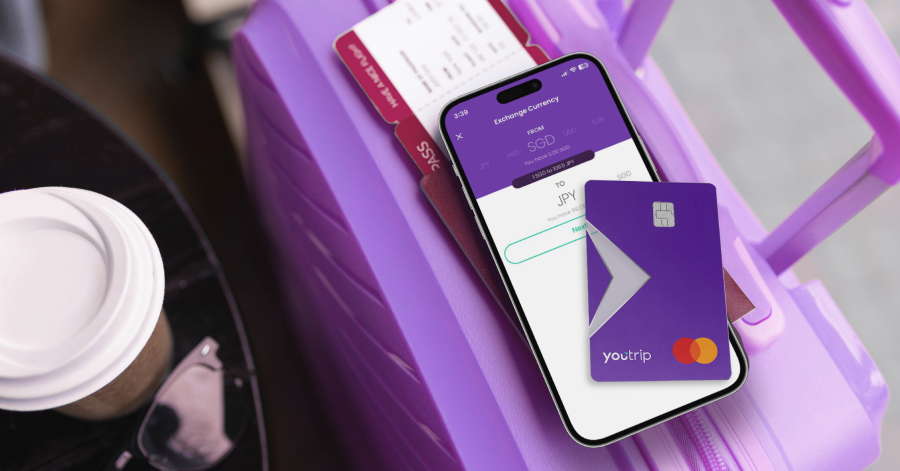
Here’s how the two line up abroad:
| Feature | YouTrip | Trust card |
|---|---|---|
| Card type | Prepaid Mastercard, multi-currency wallet | Visa credit card, plus a separate debit card |
| Annual fee | None | None |
| FX fees | Zero FX fees across 150+ countries | No fee from Trust, converted at the Visa rate |
| Currencies you can hold and lock in | ✅ 12 wallet currencies: SGD, MYR, JPY, THB, USD, EUR, AUD, NZD, GBP, HKD, CHF, SEK | ❌ Not supported |
| Exchange rates | Real-time wholesale rates | Visa rates, routed via US dollars |
| Dynamic currency conversion | Choose local currency at the terminal | Choose local currency at the terminal |
| Overseas ATM withdrawals | First S$400 per month free, 2% after | Credit card: 8% cash advance fee. Debit card: no Trust fee, operator fees may apply |
| Rewards overseas | YouTrip Perks partner offers and overseas deals | 0.5% cashback, or 3% Stockback until 31 Dec 2026 |
| Send money overseas | ✅ Remittance to 40+ countries | ❌ Not available |
⚖️ The honest read. While the Stockback promo runs, Trust pays more on overseas spend than most cards in Singapore. That’s worth saying plainly.
The conditions are the catch. You’re paid in shares rather than cash, and you give up your local bonus category to get it. The rate reverts to 0.5% on 1 January 2027.
YouTrip’s advantage isn’t a promotional rate. You lock in wholesale rates yourself across 12 currencies and pay nothing on top, every quarter, with no mode to choose.
A simple split that works:
- Trust for local spending → up to 1.5% unlimited, or the 15% bonus on your biggest category
- YouTrip for overseas → wholesale rates, zero fees, and the first S$400 a month at overseas ATMs free
📖 Read Trust Card Vs YouTrip for the full head-to-head comparison
📖 Weighing up the other digital banks? See GXS Bank Vs Trust Bank Singapore
How to Use YouTrip Overseas
- Top up your wallet in SGD using PayNow, a linked bank account, or a credit or debit card.
- Lock in rates in the app before you travel, across 12 supported currencies.
- Spend on the YouTrip Mastercard abroad. It draws from the matching currency wallet, or converts SGD at wholesale rates.
- Withdraw cash overseas, with the first S$400 a month free and 2% after that.
- Always choose the local currency at the terminal so you don’t get hit by DCC.
📖 Find out what’s up with the SGD To MYR Rate Today: Best Exchange Rates, Forecast & Where to Change Money
Which Trust Card Should You Get?
- Get the Trust Freedom Card if you want one rewards card for everyday spending. Run it on unlimited cashback for up to 1.5% with nothing to track, or on bonus cashback if your spending reliably concentrates in one category. Take Stockback if you’re happy holding US shares and want to make the most of the 3% before it drops in January 2027.
- Get the Trust Link Card if you’re an NTUC member and your spending clusters at FairPrice, Unity, Warehouse Club and Caltex. Linkpoints beat cashback there.
- Get the Trust debit card if you’d rather not carry a credit line, or you don’t meet the credit cards’ income and age requirements yet.
- Use YouTrip for anything overseas. Lock in wholesale rates across 12 currencies before you fly and pay nothing in FX fees. Your first S$400 a month at overseas ATMs is free.
🧠 Best strategy: run a Trust card for local spending and YouTrip for travel.
📖 Read all about the Best Multi-Currency Cards In Singapore: A Full Comparison Guide
FAQs
It was renamed the Trust Freedom Card on 13 August 2026. Your account, card number and credit limit stay the same. What changed is the rewards: instead of earning cashback automatically, you now pick one of three modes each quarter.
Stockback pays your rewards as fractional shares in a US stock or ETF instead of cash. You choose one investment from a list of 50 in the Trust app, and once your rewards reach S$10 Trust buys it for you automatically.
It earns 3% on local and foreign eligible spend until 31 December 2026, capped at S$500 a quarter. From 1 January 2027 that becomes 2% local and 0.5% foreign.
Up to 1.5% on local eligible spend and 0.5% on foreign if you run the unlimited cashback mode, with no cap or minimum spend. On bonus cashback mode it’s up to 15% on one chosen category, capped at S$250 a quarter, plus up to 1% local and 0.5% foreign on everything else.
Yes, once per membership quarter. Switching is free with no penalty, but the change only takes effect when your next quarter starts.
Trust issues both. The Freedom Card and Link Card are Visa credit cards. The debit card comes free with a Trust savings account and draws from your own balance, with no credit check.
The Freedom Card for most people, because the rewards are larger and more flexible. The Link Card wins if you’re an NTUC member whose spending is concentrated at FairPrice Group stores and Caltex.
Trust Bank Singapore is a joint venture between Standard Chartered Bank and FairPrice Group. It is not part of UOB.
From 1 July 2026 it’s a personalised rate between 18.9% and 29.9% p.a., reviewed every six months. Transactions posted before that carried a flat 27.9% p.a. Pay in full each month and you’re not charged interest.
For local spending, yes. Up to 1.5% unlimited cashback or a 15% bonus category beats anything a travel card pays at home.
For overseas spending, YouTrip is the better card. You get wholesale exchange rates across 12 currencies, zero FX fees, and the first S$400 a month at overseas ATMs free. Trust gives you 0.5% cashback and an 8% cash advance fee on cash. Use both.
On the credit card, an overseas ATM withdrawal is treated as a cash advance, which means an 8% fee on anything over S$5 plus interest from the posting date. The Trust debit card can withdraw overseas once you enable it in the app, with no fee from Trust, though the ATM operator may charge its own.
Up to 2.40% p.a. on the first S$1.2 million on the Flex plan, if you meet the bonus conditions. The Signature plan pays up to 1.00% p.a. and the Zen plan a flat 0.40% p.a. with no conditions.
· Bank name: Trust Bank Singapore Limited
· Bank code: 9733
· SWIFT/BIC code: TRBUSGSG
· Branch code: 001
📖 Chasing the best rate at home instead? Compare CashChanger.co Vs YouTrip
Ready to Try YouTrip?
Not a YouTrooper yet? Singapore’s go-to multi-currency wallet helps you save with great FX rates and zero fees. Skip the money changer and get a free YouTrip card + S$5 YouTrip credits with code YTBLOG5.
Then head over to our YouTrip Perks page for exclusive offers and promotions. Join our Telegram (@YouTripSG) and Community Group (@YouTripSquad) for travel tips, event invites, and more!
Happy travels!
Related Articles:
Best Singapore Credit Card: Miles, Cashback & Travel Compared
Japan ATM Withdrawal Guide: Fees, Locations, Exchange Rates
DBS Multi-Currency Account (MCA) Guide: Features, Exchange Rates, Fees
YouTrip Vs Wise Card Comparison Guide