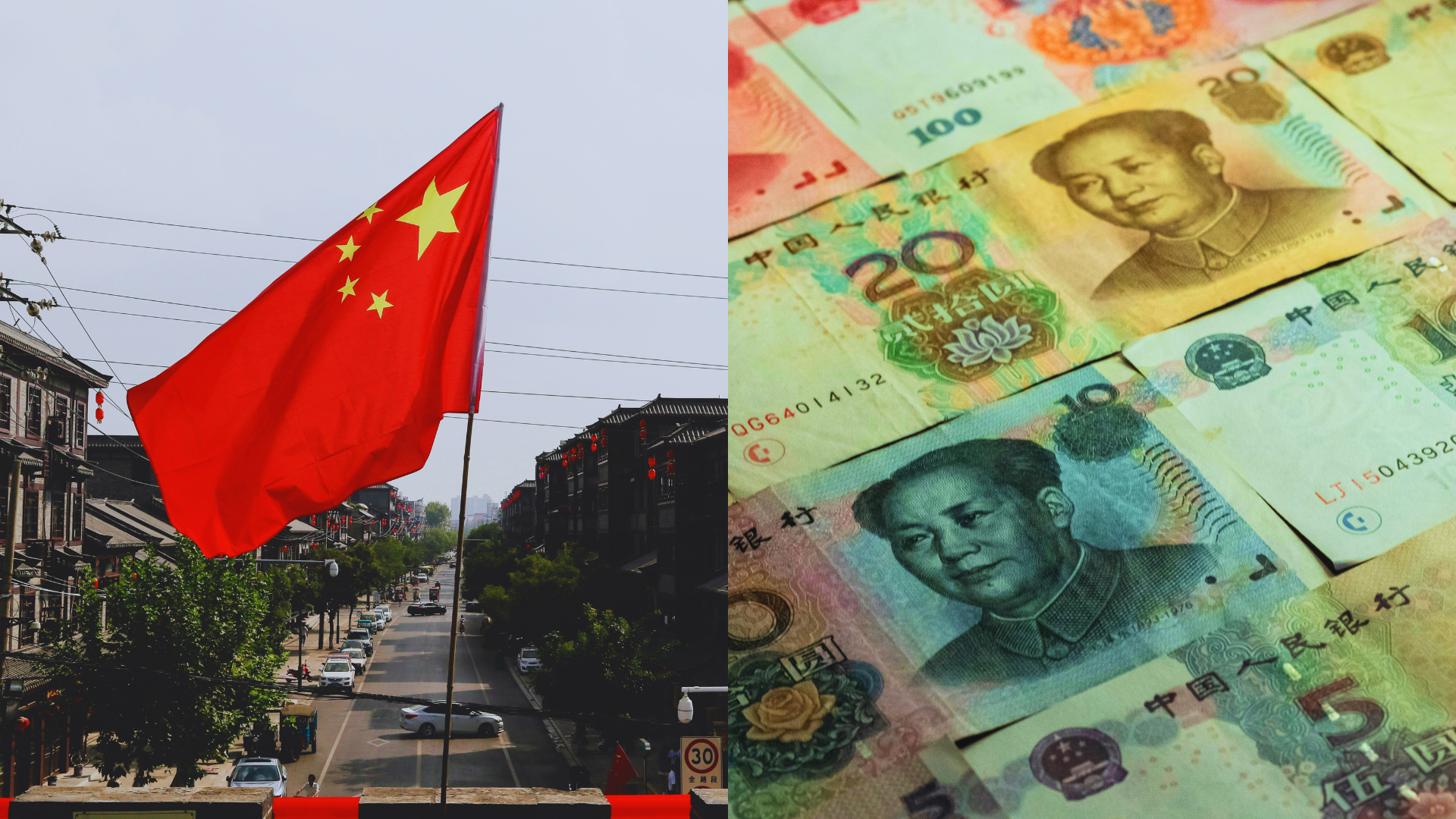


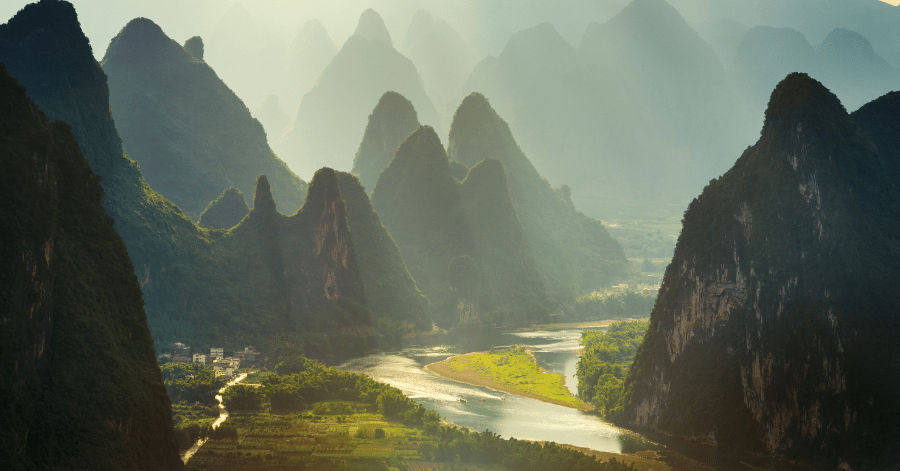

The landscape on the back of the 20-yuan note, and the four ways to reach it
Guilin is the ink-painting version of China: limestone peaks standing in flooded fields, a river the colour of jade, water buffalo in the shallows. Most of what you came for isn’t in Guilin city at all. It’s spread across Yangshuo county and the Longji mountains, and sorting that out first saves you a day.
TL;DR — Guilin At A Glance
| Quick Answer | |
|---|---|
| Top 3 must-dos | The Li River cruise to Yangshuo, the Longji rice terraces, and cycling the Ten-Mile Gallery |
| How many days? | 4 days cover all three areas. 3 is the honest minimum |
| Best time to visit | Late September to early November for clear skies and the golden rice harvest. April to May for mirrored terraces and mist |
| Visa for SG passports | 30 days visa-free, under the mutual arrangement in force since 9 February 2024 |
| Li River cruise | 215 CNY (~S$41) on a 3-star boat, from 360 CNY (~S$68) on a 4-star. One-way, 4 to 5 hours, doubles as your transfer to Yangshuo |
| Getting there | No direct flight from Singapore. Connect through Guangzhou, Shenzhen or Kuala Lumpur |
| How to pay | Link your YouTrip Mastercard to Alipay or WeChat Pay. Every scan converts at the Mastercard wholesale rate with no foreign transaction fee. Cash backup: any local ATM, first S$400 each calendar month free |
📖 Related Guide: Deciding between China’s two great landscape destinations? Our 22 best things to do in Zhangjiajie covers the sandstone pillars that make the harder, more vertical trip.
Table of Contents
- What Is Guilin Known For?
- How Many Days Do You Need in Guilin?
- Best Time to Visit Guilin
- How to Get to Guilin From Singapore
- Best Things to Do in Guilin City
- Longji Rice Terraces: The Best Day Trip From Guilin
- Best Things to Do in Yangshuo
- Things to Do in Guilin at Night
- What to Eat in Guilin and Yangshuo
- Where to Stay in Guilin and Yangshuo
- Getting Around Guilin and Yangshuo
- Paying in Guilin
- FAQs
What Is Guilin Known For?
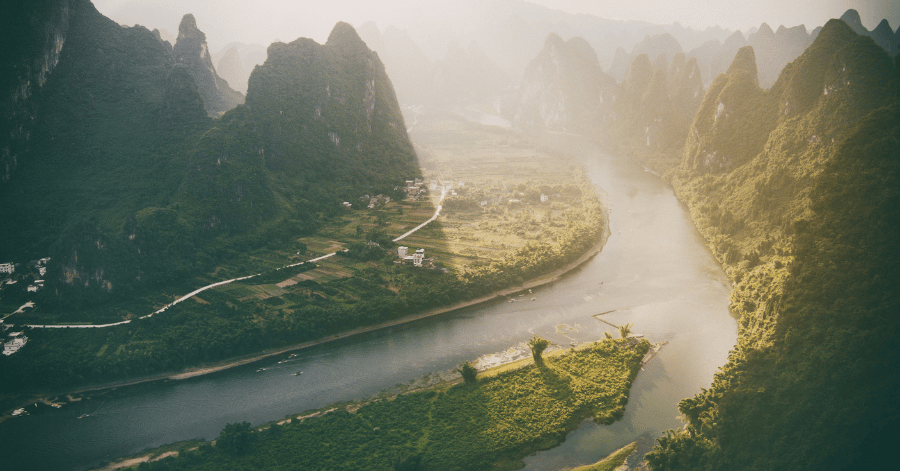
Guilin is known for karst scenery: thousands of limestone hills that rise straight out of flat farmland along the Li River, in northeast Guangxi province in southern China. The 20-yuan note carries a stretch of that river on its back, which makes it the most-circulated landscape photo in the country.
The limestone explains the shape of everything. This was a shallow sea around 300 million years ago, and the rock that settled has been dissolving in rain ever since. What’s left standing are the harder cores, packed close together like a crowd rather than strung along a ridge.
An old Chinese line calls Guilin’s scenery the finest under heaven. Locals will then tell you the second half of the couplet, which gives the crown to Yangshuo. They have a point.
Guilin means three different places, and they sit hours apart:
- Guilin city is the prefecture capital and your arrival point. It has the airport, the train stations and a handful of sights worth your time.
- Yangshuo is a county about 65km downriver, and it holds most of the scenery people picture when they say Guilin. Yangshuo town is the base.
- Longji sits in Longsheng County, roughly two hours north into the mountains. Different landscape entirely: 650-year-old rice terraces carved up the slopes.
Those three sit at the corners of a wide triangle, and you can’t day-trip between all of them from one hotel without spending your holiday in a car.
📖 Related Guide: Building a wider southwest China trip? Our 23 best things to do in Chengdu covers the panda city that pairs neatly with Guilin on a high-speed-rail loop.
How Many Days Do You Need in Guilin?
Four days is enough for Guilin. Three works if you cut Longji. Anything under three means a long journey to look at one river.
The trip splits naturally into three bases, and the cruise doubles as your transfer between two of them. That’s what makes a short itinerary work.
| Days | What you’ll fit |
|---|---|
| 3 days | One day in Guilin city, cruise down to Yangshuo on day two, then a full day of Yangshuo countryside |
| 4 days | The above, plus a full day out at the Longji rice terraces before you cruise |
| 5–6 days | Add a night up at Longji for the sunrise, and a slower second day in Yangshuo for Xianggong Mountain or Ruyi Peak |
Ticket prices shape the plan more than distances do, because the headline sights are priced very differently:
| Sight | Where | Ticket | Time needed |
|---|---|---|---|
| Li River cruise | Guilin to Yangshuo | 215 CNY (~S$41) 3-star, from 360 CNY (~S$68) 4-star | Half a day, one way |
| Longji rice terraces | 2 hours north | 100 CNY (~S$19), valid 3 days, covers all three villages | A full day |
| Elephant Trunk Hill | Guilin city | Free since 2022, real-name reservation, daily quota | 1 hour |
| Reed Flute Cave | Guilin city | Around 90 CNY (~S$17) | 1 to 2 hours |
| Jingjiang Princes’ City | Guilin city | 100 to 130 CNY (~S$19 to S$25) | 2 hours |
| Xianggong Mountain | Near Xingping | 60 CNY (~S$11) | Half a morning |
| Yulong River bamboo raft | Yangshuo | 200 to 320 CNY (~S$38 to S$61) per raft | 40 to 80 minutes |
| Impression Liu Sanjie | Yangshuo | 200 to 680 CNY (~S$38 to S$129) | An evening |
The order matters more than the length. Do Guilin city and Longji first, then take the cruise one way to Yangshuo and stay there. Cruising down and busing back the same day costs you four hours on a coach for no reason.
Travelling with kids? Yangshuo is the easier half: bike paths, bamboo rafts and short walks. Longji and Xianggong Mountain both involve real climbing on uneven steps, and the Li River cruise is four hours with nowhere to run around.
📖 Related Guide: Adding another river city to the route? Our 21 best things to do in Chongqing covers the vertical, neon counterpoint to Guilin’s quiet water.
Best Time to Visit Guilin
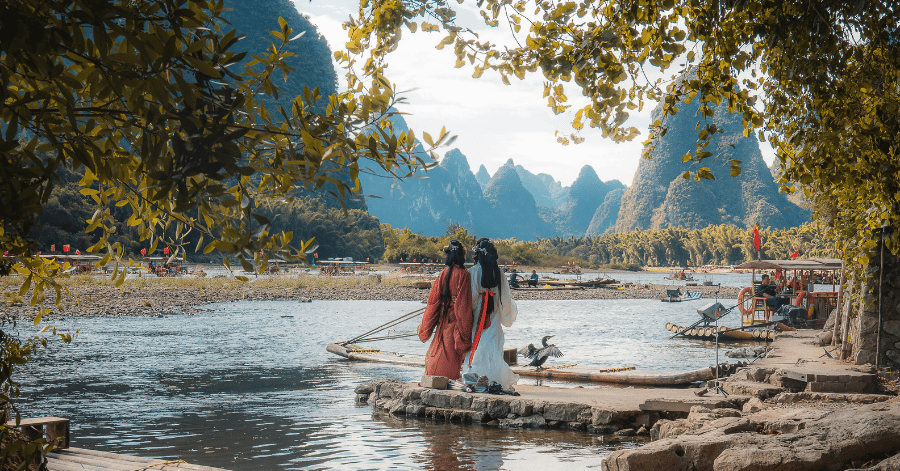
Late September to early November is the best window, with the clearest skies of the year and the Longji Terraces turning gold. Guilin’s dry season sets in around September and runs through to December, so autumn gives you the steadiest run of usable days.
April and May are the other strong option, for a completely different picture. That’s when the terraces are flooded for planting and turn into mirrors, and when the mist sits low between the peaks. The trade-off is rain: spring is the wet season here, and a grey week will flatten your photos and cloud the river.
| Season | Months | What to expect |
|---|---|---|
| Spring | Mar–May | Mirrored terraces, heavy mist, and the most rain of the year. Beautiful when it breaks, frustrating when it doesn’t |
| Summer | Jun–Aug | Hot, humid and busy, but the river runs high, so rafting and cruising are at their best |
| Autumn | Sep–Nov | Clear, dry and comfortable. Golden rice at Longji from mid-September. The best all-round window |
| Winter | Dec–Feb | Mean temperatures roughly 5 to 15°C, with January the coldest at about 8°C. Quiet and cheap, but low water can shorten or cancel river trips |
One date to plan around: National Day Golden Week, 1 to 7 October. It lands right on the Longji harvest, and the terraces are the single most crowded place in the region that week. Go in the last fortnight of September instead, and you get the same gold with a fraction of the crowd.
📖 Related Guide: Sorting your spending money before you fly? Our guide to the best SGD to CNY rate covers how to get the most yuan for your dollar without a money-changer run.
How to Get to Guilin From Singapore
No airline flies non-stop from Singapore to Guilin, so every route needs a connection. Guilin Liangjiang International Airport (KWL) handles only four international routes, and three of them are seasonal.

Three routings actually work:
- Via Guangzhou. Fly Singapore to Guangzhou, then take the high-speed train to Guilin North or Guilin West. The rail leg runs about 2.5 to 3 hours on the fast services, with roughly 80 train pairs a day, and a second-class seat costs around 164 to 318 CNY (~S$31 to S$60). This is the most reliable option.
- Via Shenzhen. Same idea, slightly quicker on the rail leg. The fastest service does Shenzhen North to Guilin North in about 2 hours 40 minutes.
- Via Kuala Lumpur. AirAsia flies KL to Guilin year-round, and it’s the only non-stop route into KWL from this side of the region.
Book the rail leg on Railway 12306, China Railway’s official app, which has an English version. Register with your passport as the ID type, and pay with Visa, Mastercard, JCB or Diners (American Express isn’t accepted). Seats open 15 days ahead at 8 AM Beijing time. The ticket is an e-ticket tied to your passport, so you tap through the station gates with the passport itself and never handle a paper ticket.
Watch which station you book. Guilin has three, and they’re not interchangeable:
| Station | Distance to city centre | Worth knowing |
|---|---|---|
| Guilin Station | Central | The most convenient, but fewer high-speed services stop here |
| Guilin North | About 30 minutes by taxi | The main high-speed hub, and where most Guangzhou and Shenzhen trains arrive |
| Guilin West | Furthest out | Poorly served by public transport. Avoid unless the timing is much better |
You don’t need a visa. Singapore passport holders get 30 days visa-free entry to mainland China under the mutual arrangement that took effect on 9 February 2024. It covers tourism, business and family visits; it’s per entry rather than per year, and it has no announced end date, which is what separates it from China’s broader unilateral scheme.
The pre-trip admin that actually matters is connectivity. Google Maps, WhatsApp and Instagram are all blocked without a VPN or a travel eSIM, and outside tourist restaurants, English menus are the exception rather than the rule.
📖 Related Guide: Sorting connectivity before you fly? Our best travel eSIM guide covers staying online in China without wrestling the Great Firewall.
Best Things to Do in Guilin City
Guilin city gets written off as a transit stop, and it deserves a full day. The lakes in the centre are genuinely lovely after dark, the karst hills sit inside the city rather than outside it, and it’s where you’ll eat best.
Almost everything below sits within a walkable core around the Two Rivers and Four Lakes waterway. You can do the lot on foot, with one taxi at either end.
The Li River Cruise to Yangshuo
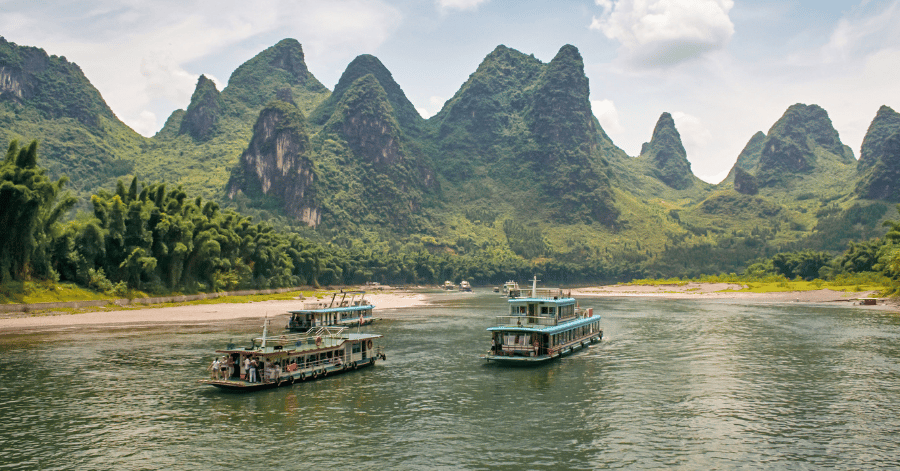
The Li River cruise is the one unmissable thing in Guilin, and it’s also your transfer south. Boats run one way only, taking four to five hours to reach Yangshuo, past the stretch of peaks printed on the 20-yuan note.
You have two classes:
- Three-star boats leave from Mopanshan Pier at 215 CNY (~S$41).
- Four-star boats leave from Zhujiang Pier for 360 CNY (~S$68), rising to about 480 CNY (~S$91) on the better vessels, with fewer seats and a proper lunch.
Everything sails mid-morning, roughly between 9 AM and noon, and the published timetables shift with season and water level. Confirm your sailing time when you book, not on the day.
Those are the official gate prices. Agencies and hotels resell both at a markup, so expect quotes of 240 to 270 CNY (~S$45 to S$51) and 370 to 450 CNY (~S$70 to S$85).
Both piers sit about 40 minutes to an hour outside the city, so a package that includes the transfer is usually worth it. Lunch on board is served mid-journey, which is exactly when the best scenery passes, so eat fast or eat later.
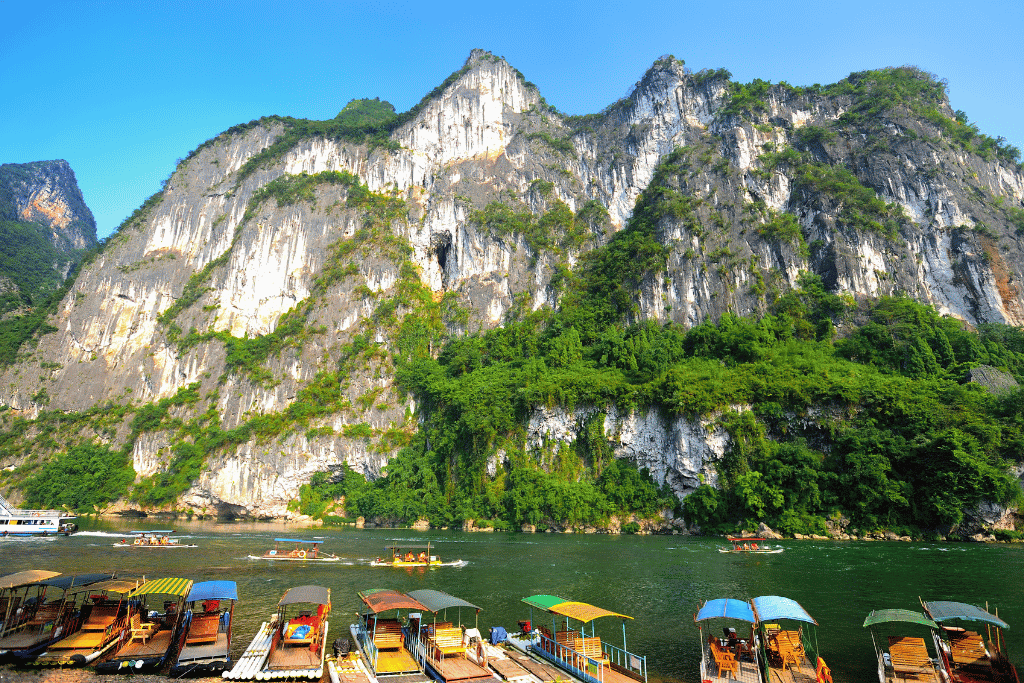
Two sights on the route have names worth knowing. Nine Horses Fresco Hill is a cliff face streaked with mineral staining that locals read as horses in different poses. The running joke is that how many you can pick out says something about you. Yellow Cloth Shoal, about 30 minutes further on, is the bend printed on the 20-yuan note.
Stand on the open upper deck for both. The glass-panelled seating rows are comfortable and photograph badly. Note: the boat docks at Longtoushan Pier in Yangshuo, not in the town centre.
Best for first-timers, and non-negotiable on a first trip. Skip it only if you’re short on time and would rather raft the Yulong River instead.
Elephant Trunk Hill
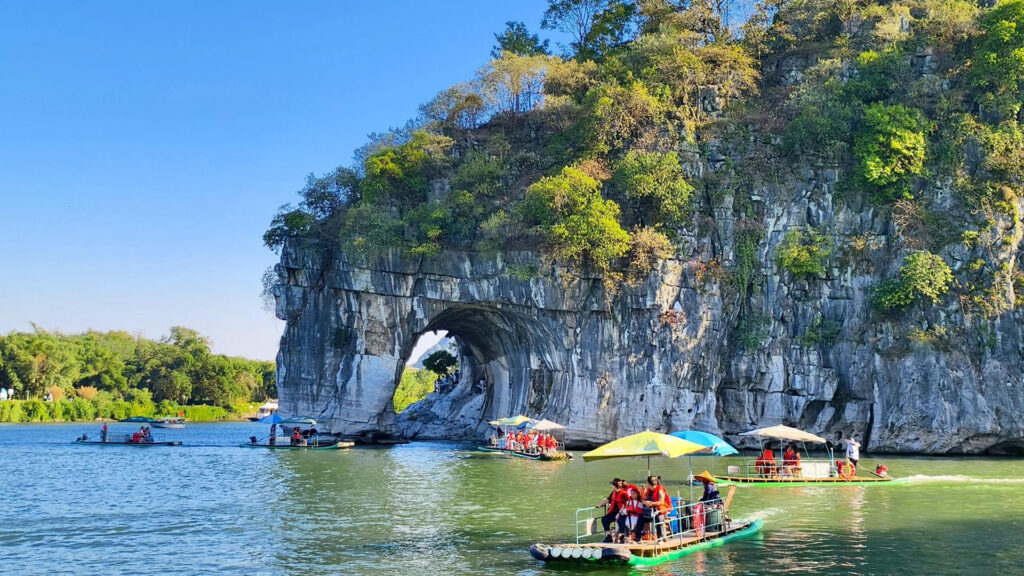
Image Credits: WestChinaGo
Elephant Trunk Hill is Guilin’s civic symbol, a limestone outcrop with a water-worn arch that reads unmistakably as an elephant dipping its trunk in the river. It sits where the Li River meets the Peach Blossom River, and it takes about an hour to walk properly.
Entry is free. The park dropped its 55 CNY (~S$10) gate ticket back in January 2022 and moved to free timed entry: you reserve a slot under your own name, then scan a QR code to get in. Plenty of English guides still print the old price.
Beyond the arch, there’s Water Moon Cave through the base and Elephant Eye Rock higher up. On the summit sits the small Ming-era Puxian Pagoda, which from the right angle looks like a howdah on the elephant’s back.
You will queue for the photo. Slots are capped every day, not just at peak, and the booking is real-name, so carry the passport you reserved with. Book a day ahead over Golden Week and Chinese New Year.
It makes the best first-morning walk in the city, and now that it’s free, it’s the best-value hour you’ll spend here.
Sun and Moon Pagodas
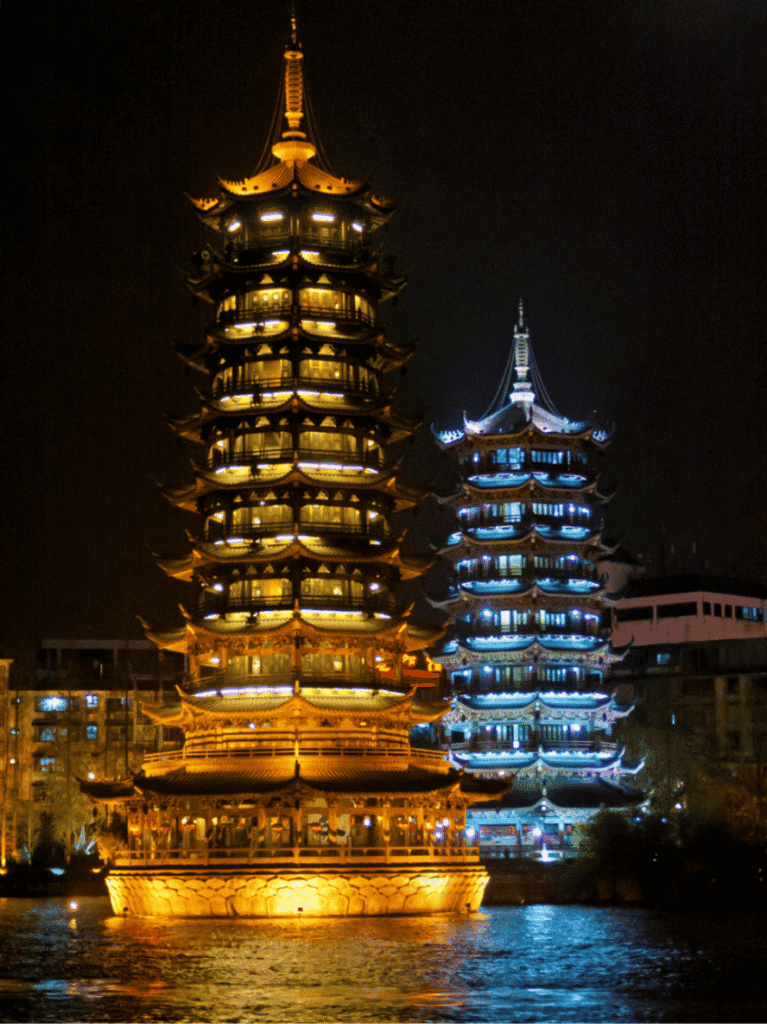
The Sun and Moon Pagodas are the image Guilin puts on its own postcards: twin towers standing in Shan Lake, one gold, one silver, floodlit after dark. The Sun Pagoda is bronze, 41 metres and nine storeys. It’s billed as the tallest bronze pagoda in the world.
Walking the lakeside and photographing them costs nothing, and that’s what most visitors do. Going inside costs a separate 27 to 55 CNY (~S$5 to S$10) depending on season. That buys an underwater corridor linking the two towers, a display of Tang-dynasty relics, and a lift to a viewing floor.
Come at dusk rather than midday. In flat daylight they’re unremarkable. Once the lights come up on the water, they’re the best photo in the city.
Best for an after-dinner stroll. Pay to go inside only if the underwater tunnel appeals; the view from the bank is the real draw.
Two Rivers and Four Lakes

Image Credits: Klook
Two Rivers and Four Lakes is the waterway loop through the middle of Guilin. It links the Li and Peach Blossom rivers with Rong, Shan, Gui, and Mulong lakes. Reconnected in the late 1990s so boats could circle the centre again, it’s the reason downtown Guilin feels green rather than concrete.
You can walk the whole ring in an evening, crossing a run of ornamental bridges modelled on famous ones elsewhere in the world. A guided boat cruise covers the same loop in about 1.5 hours, day or night. Walking is free, and you set your own pace.
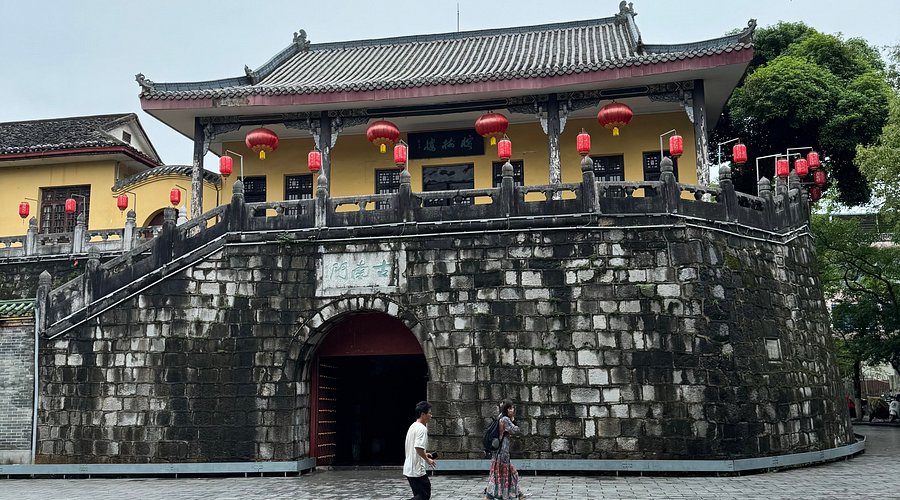
Image Credits: Tripadvisor
Stop at the Ancient South Gate on the north shore of Rong Lake. The gate is the last surviving stretch of Guilin’s old city wall, dating to 621 AD, the same Tang-era push that first raised Xiaoyao Tower. What’s left runs 39.4 metres long and 5.3 metres thick. A banyan reckoned at around 800 years old grows beside it, which is what gives Rong Lake its other name, Banyan Lake.
It costs nothing and takes ten minutes. Most visitors walk straight past it on the way to the pagodas. Do it at night. The bridges and pagodas are floodlit, and the daytime version is pleasant rather than memorable.
If you have one evening in Guilin and no plan for it, this is the walk to take.
Reed Flute Cave
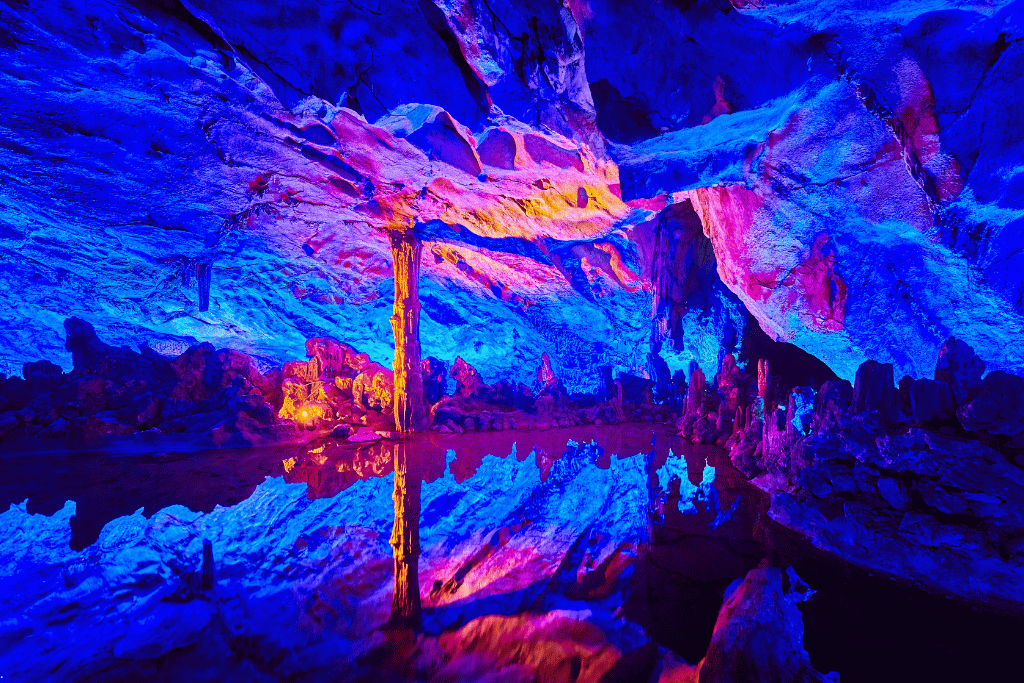
Reed Flute Cave is a 240-metre limestone cave northwest of the centre. Coloured LEDs light it end to end, turning the stalactites into something closer to a stage set than a geological site. Entry is around 90 CNY (~S$17), free for under-6s and children below 1.2 metres.
The formations are real. The lighting is not subtle. Whether that’s a problem depends on you, and it’s worth knowing before you pay 90 CNY.
The interesting part is on the walls. More than 70 ink inscriptions survive inside, the oldest dating to 792 AD in the Tang dynasty, left by visitors who came with lamps and brushes.
Best for a rainy afternoon or travellers who like caves. If you’ve done Silver Cave in Yangshuo, one is plenty.
Jingjiang Princes’ City and Solitary Beauty Peak
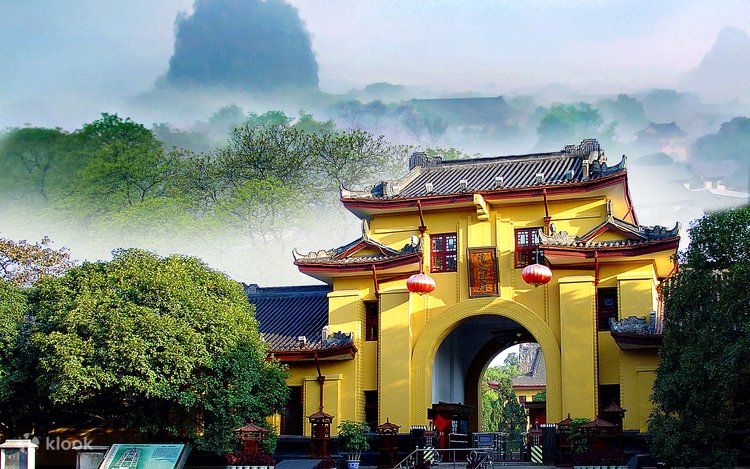
Image Credits: Klook
Jingjiang Princes’ City is the best-preserved Ming-dynasty princely residence in China, and it was built in 1372, thirty-four years before the Forbidden City. Fourteen princes across twelve generations lived here over 257 years, inside a walled compound built around a single limestone tower.
That tower is Solitary Beauty Peak, a 216-metre limestone outcrop, and climbing it is the reason to buy the ticket. A steep staircase leads to a summit pavilion with the best all-round view of central Guilin, the city’s karst hills laid out below you.
Admission runs around 100 to 130 CNY (~S$19 to S$25), which is the steepest ticket in the city. The site now sits inside a university campus, so the grounds are quieter and more studenty than the “royal palace” billing suggests.
Best for anyone who wants the city view and a bit of history with it. If you’re only after the panorama, Fubo Hill is cheaper and quicker.
Dongxi Alley and Xiaoyao Tower

Image Credits: Visit Our China
Dongxi Alley, or East-West Lane, is the only surviving Ming and Qing street in Guilin, running right in front of the Princes’ City gate. It’s been restored into a lane of teahouses, snack stalls and courtyard shops, and it’s more atmospheric than that description usually promises.
At one end stands Xiaoyao Tower, rebuilt in 2016 on a site with a documented history back to 621 AD, destroyed and raised again many times over. Climb it for a view along the Li River towards the Seven Star area.
Come back after dark. The lane and the tower are both lit, and that’s the version people photograph.
Zhengyang Pedestrian Street
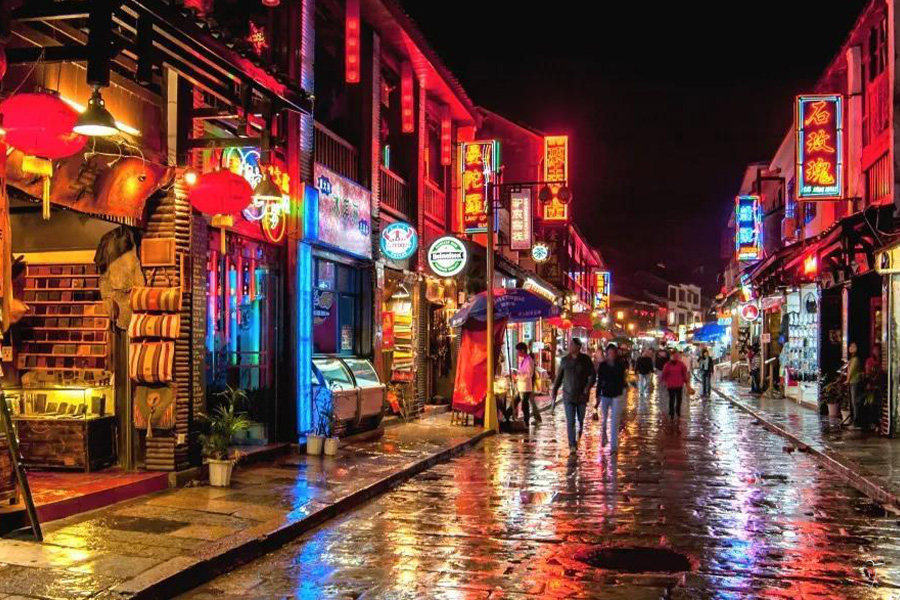
Image Credits:
Zhengyang Pedestrian Street is Guilin’s main food and shopping strip, on a thoroughfare with more than a thousand years of history behind it. In practice, it’s a busy modern pedestrian street with stalls down the middle, and it’s where you’ll end up most evenings.
Come hungry rather than curious. The draw is the street food, not the architecture: osmanthus cakes, grilled skewers, sticky rice and stall after stall of Guilin rice noodles.
One thing to note: the steamed osmanthus rice cakes sold around the tourist sights tend to be dry. Buy from a stall with a local queue instead.
Fubo Hill
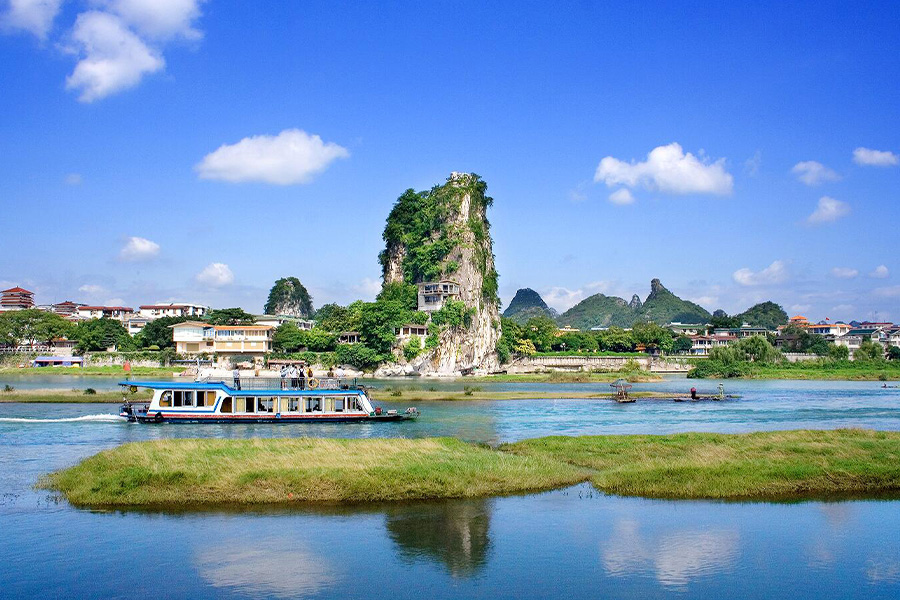
Image Credits: Visit Our China
Fubo Hill rises straight out of the Li River at the edge of the old town. A short climb up its stone steps gives you a river-level panorama that’s better framed than the view from Solitary Beauty Peak. A fraction of the height, a fraction of the effort.
Inside the base are caves cut with around 300 Buddhist carvings from the Tang and Song dynasties, including a Thousand-Buddha Cave holding 239 figures. The Pearl-Returning Cave holds the Sword-Testing Rock, a stone pillar hanging to within a few centimetres of the floor.
Best for travellers who want one city viewpoint and don’t want to pay Princes’ City prices for it.
Seven Star Park
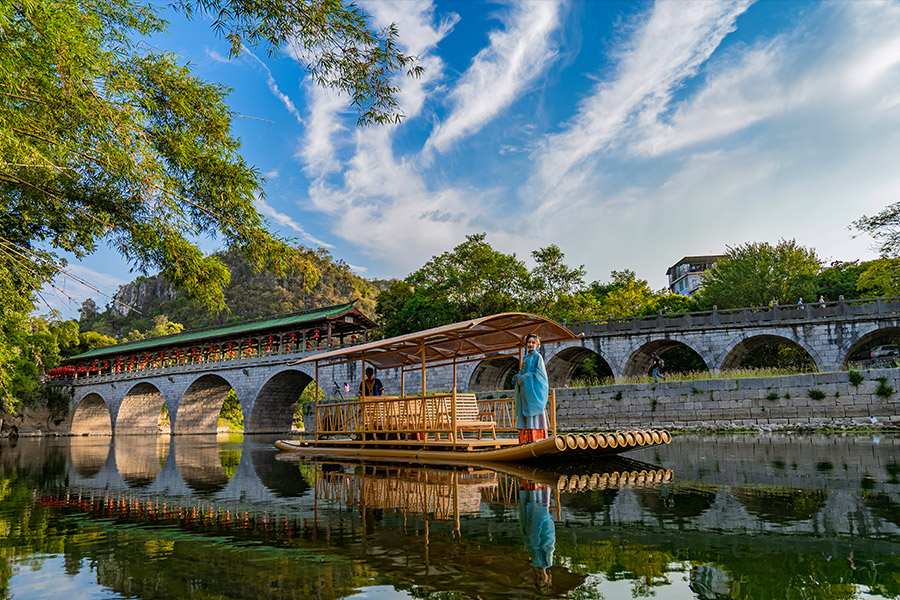
Image Credits: Visit Our China
Seven Star Park is Guilin’s biggest park, named for seven peaks arranged roughly like the Big Dipper. It holds a large karst cave, a Song-dynasty bridge, calligraphy carved into the rock, walking paths and a small zoo.
It’s a local park first and a tourist sight second, which is exactly its charm. Mornings bring tai chi groups, dancers and card games under the trees. Come before 9 AM, and you’ll be the only foreigner in it.
The zoo is dated and the pandas there are a low point, so give that corner a miss. Save it for a slow morning, especially if you’re travelling with kids who need somewhere to run.
Daxu Ancient Town
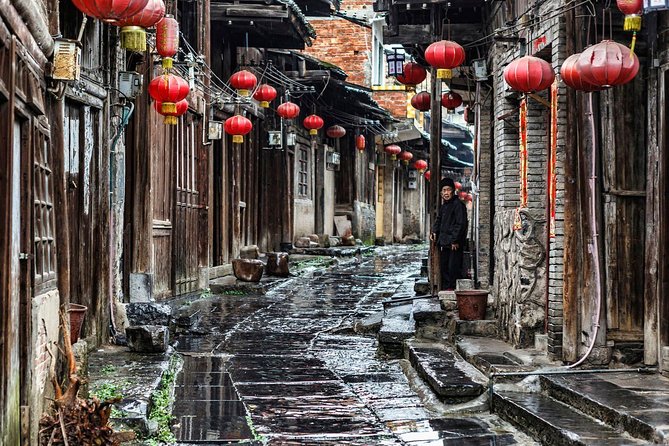
Image Credits: Tripadvisor
Daxu Ancient Town sits on the Li River about 23km south of Guilin, and it’s the region’s least commercialised old town by some distance. A bluestone street runs about 2.5km beside the water, lined with Ming and Qing timber shophouses that people still live in. It was founded in the Northern Song dynasty and traded as a river port for a thousand years.
Entry is free; there are no ticket gates and very few souvenir shops. What you get instead is laundry on the balconies, old men playing cards, and a working village that happens to be 1,000 years old.
Getting there takes a local bus or a DiDi and about 40 minutes. Half a day is plenty.
Best for travellers who found Xingping too busy and want the unpolished version. Skip it if your days are tight.
📖 Related Guide: Routing through Guangdong on the way in? Our ultimate Guangzhou travel guide makes the case for a couple of days of dim sum before the karst.
Longji Rice Terraces: The Best Day Trip From Guilin
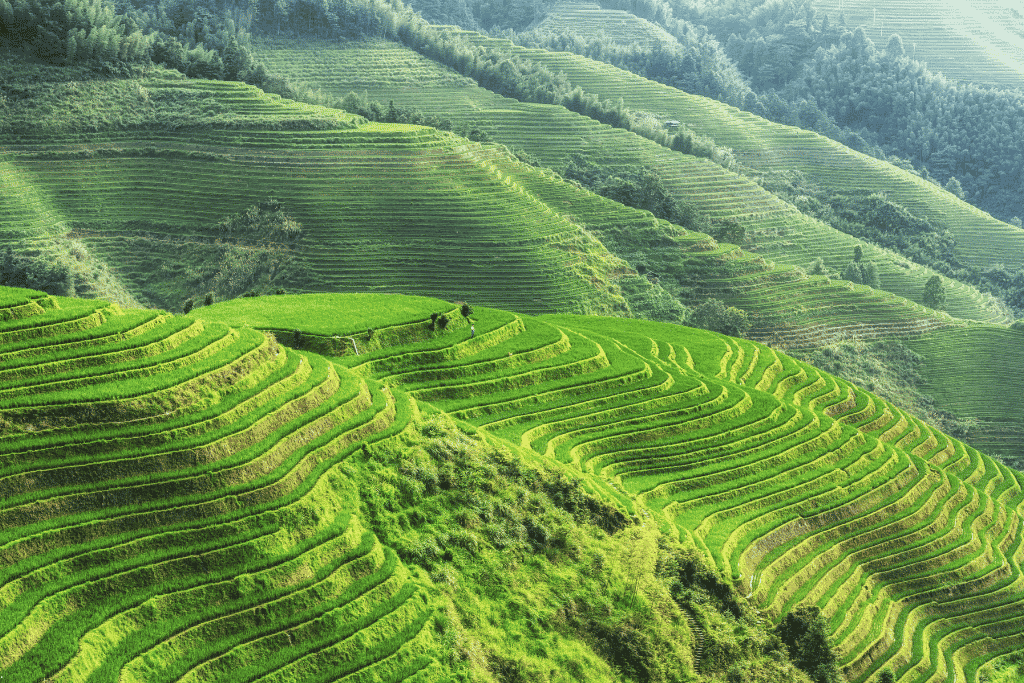
The Longji rice terraces are the best day trip from Guilin, and the one most three-day itineraries drop. Farmers of the Zhuang and Yao communities began carving these slopes around 650 years ago. The result climbs from riverbed to ridgeline in thousands of narrow steps.
The name means dragon’s backbone, which is what the ridgelines look like from a distance. One ticket of 100 CNY (~S$19) covers all three areas below and stays valid for three days.
Getting there takes about two hours each way from Guilin by bus or private car. Organised day trips run around 160 CNY (~S$30) per person, including transport and entry, which is usually cheaper than doing it independently.
Timing decides everything here. Mid-September to early October is the golden harvest. April to June gives you the flooded mirror terraces. Mid-summer is solid green.
Ping’an Village
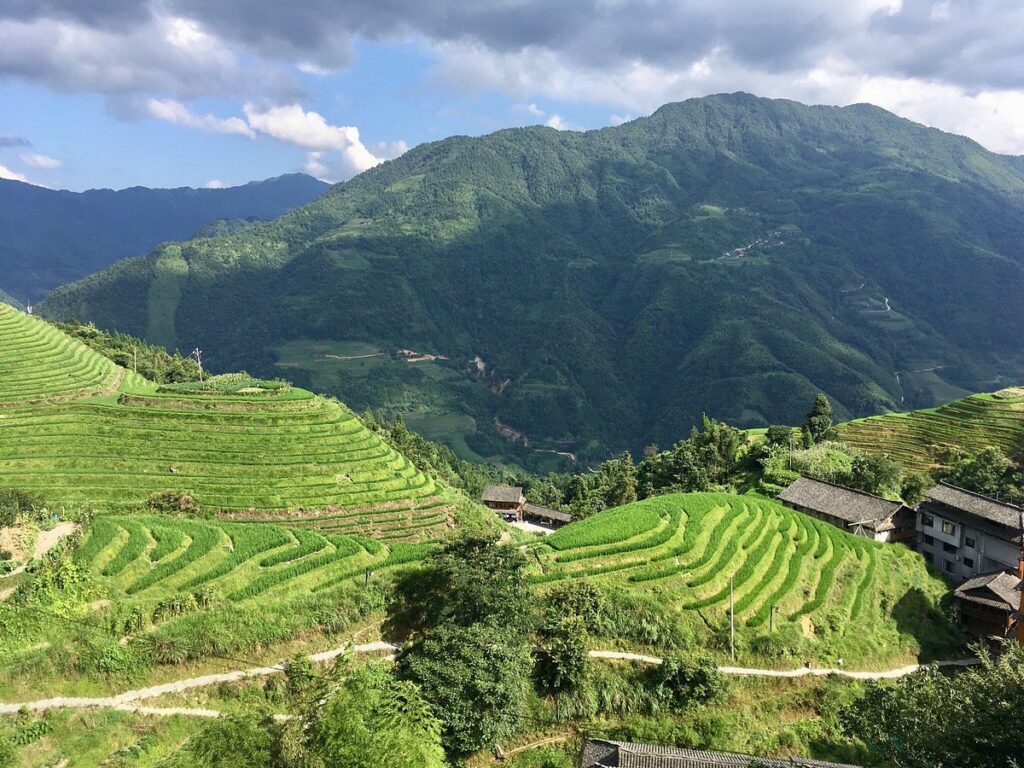
Image Credits: Tripadvisor
Ping’an is the accessible half of Longji, a Zhuang village with a paved path up to two named viewpoints. The first, Nine Dragons and Five Tigers, is a 20-minute walk or a short ride on a green shuttle cart. The second, Seven Stars Around the Moon, is another 30 minutes on foot. That route is the prettier of the two, past bamboo irrigation pipes and tea shacks.
Don’t strain to see the dragons, tigers, stars or moon. The names are older than the viewpoints and the views don’t need them.
Ping’an is smaller, closer to the road and quicker to do. But it’s also busier.
It’s the side to pick if you’re doing Longji as a single-day trip from Guilin.
Dazhai and the Jinkeng Terraces
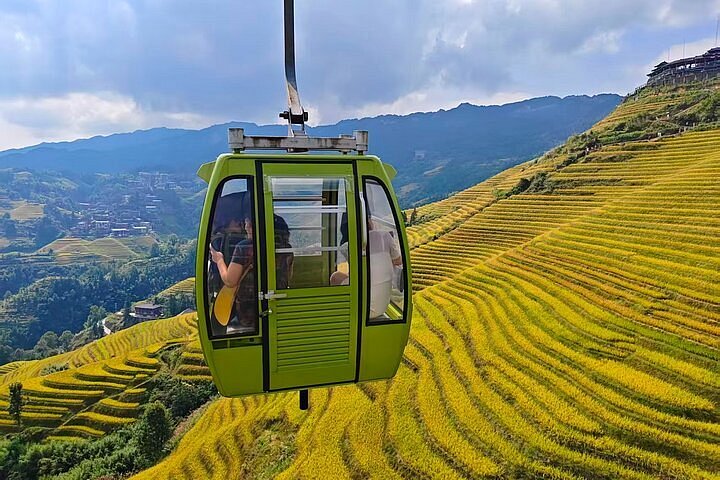
Image Credits: Guilin Private Tours
Dazhai is the bigger, steeper, higher half, and the one worth staying overnight for. The terraces run further up the mountain and hold their shape better in photographs. A cable car lifts you to the top viewpoint, and it’s worth taking. Published fares run anywhere from 50 to 100 CNY (~S$9 to S$19). Sources disagree on whether that’s one way or return, so check at the ticket window.
Staying a night in a village guesthouse is the single best upgrade to a Guilin trip. Mist sits in the valley at dawn, the day-trip coaches haven’t arrived, and the terraces do the thing they’re famous for with nobody else watching.
Rooms with a terrace view sell out early in harvest season, so book well ahead for late September.
Best for photographers and anyone with a fifth day. It’s a lot of stairs if you skip the cable car.
Huangluo Yao Village
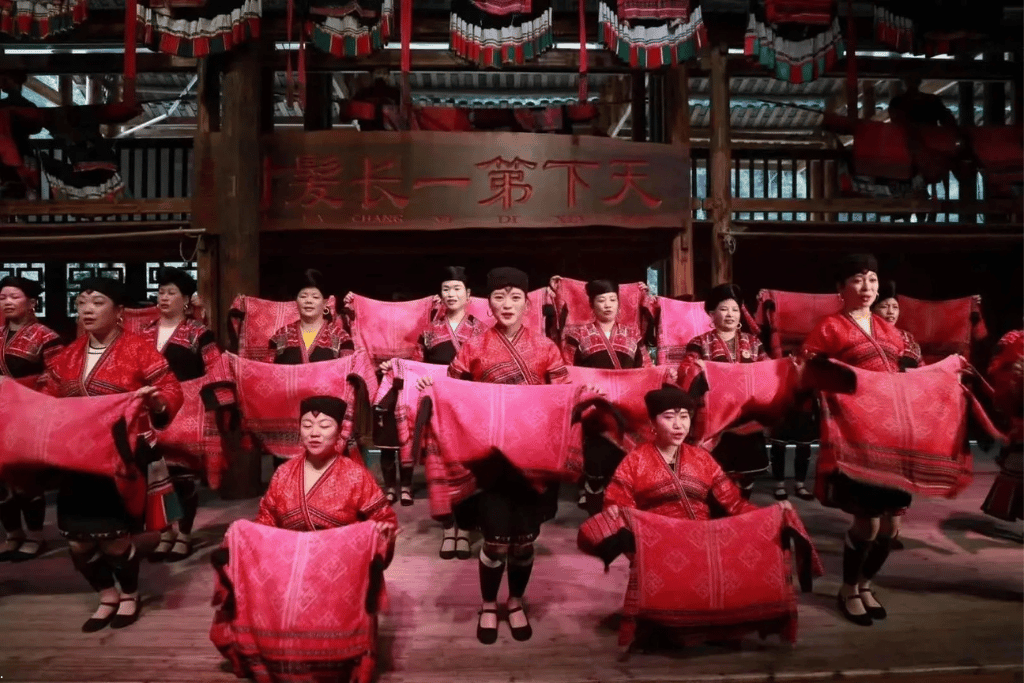
Image Credits: ChinaGoTrip
Huangluo is a Red Yao village on the way up to the terraces, and it holds a Guinness World Record as the world’s longest-haired village. Women here cut their hair twice in a lifetime, once at 100 days old and once at their coming-of-age ceremony at 18. More than 80 women in the village keep it past 1.4 metres, and the longest on record runs to 1.8.
Twice-daily performances explain the coming-of-age and marriage customs behind it, and they’re more informative than a straight tourist show. They run entirely in Mandarin. Handicrafts are sold afterwards.
Be wary of cheap silver jewellery sold at the handicraft stalls. If the price looks too good for the weight of metal, it usually is.
Best for a 45-minute stop built into a Longji day trip. It’s not worth a separate journey.
📖 Related Guide: Chasing terraced landscapes and ethnic-minority culture further west? Our 14 best things to do in Yunnan covers the Yuanyang terraces and the old towns around them.
Best Things to Do in Yangshuo
Yangshuo is where the Guilin scenery you’ve seen actually is. It’s a county rather than a town, roughly 65km downriver. Guilin’s city lakes give way to karst peaks rising straight out of rice fields, bike paths along the Yulong River, and a bar street that goes late.
Give it two days minimum. Most people who allow only one end up wishing they’d stayed.
Xingping Ancient Town and the 20-Yuan Note View
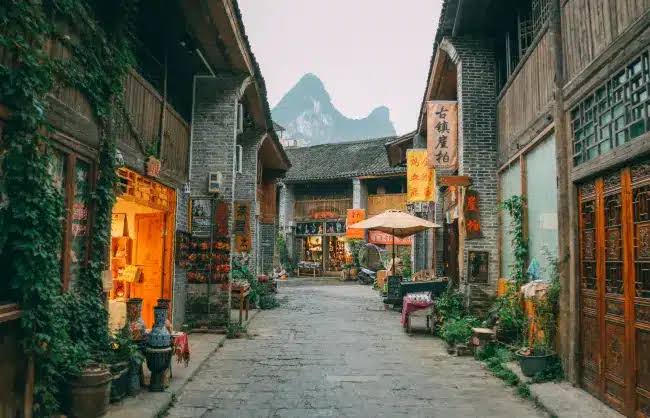
Image Credits: China Xian Tour
Xingping is a riverside town with more than 1,300 years of history, about 45 minutes upriver from Yangshuo town. It’s also the closest thing Guilin has to a single required photograph. From the pier, the bend of the Li River with Yellow Cloth Shoal behind it is the exact scene printed on the back of the 20-yuan note.
Bring a 20-yuan note and hold it up against the view. Everyone does it, and it still doesn’t get old.
Photographers with printers work the pier and will hand you a printed shot for around 50 CNY (~S$9). Behind the waterfront, the stone streets and Ming-era buildings are worth a slow half hour once you’ve got the picture. Very few visitors bother.
Best for everyone. Go early or late; the middle of the day is a scrum at the viewpoint.
Xianggong Mountain
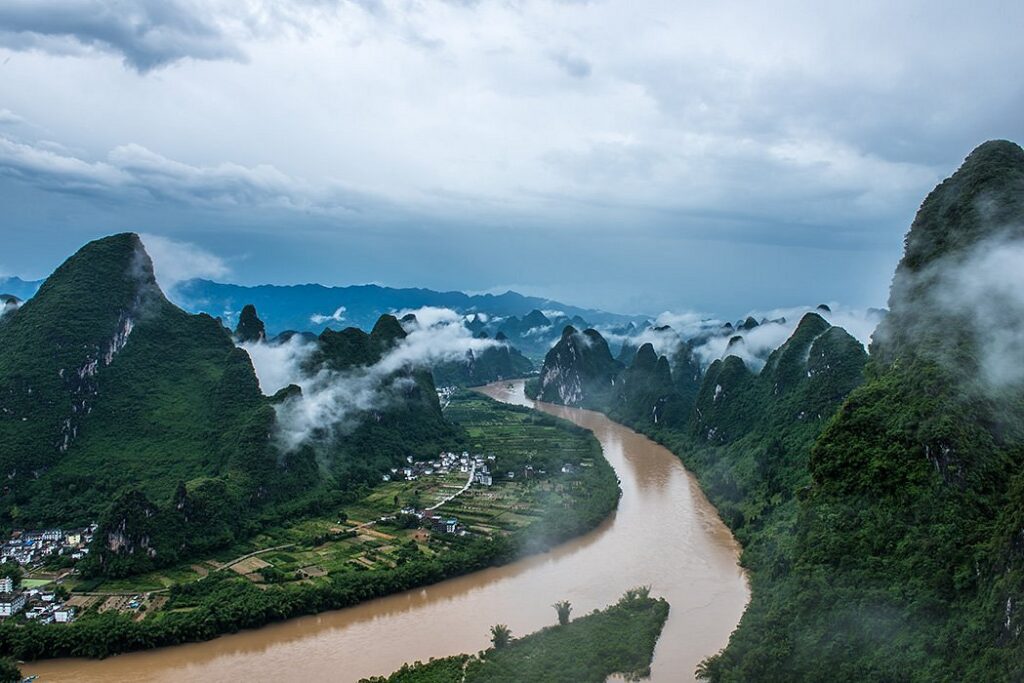
Image Credits: Tripadvisor
Xianggong Mountain gives you the single best aerial view of the Li River, and it’s the sunrise spot serious photographers build a whole morning around. From the platform, you look down on a wide bend of the river with peaks receding into haze in every direction.
Entry is 60 CNY (~S$11), with a half-price student rate. The climb is 15 to 20 minutes up steep stone steps with handrails, and it opens 30 minutes before sunrise.
It’s about an hour’s drive from Yangshuo town, near Xingping, so pair the two. For sunrise, you’ll want a driver or a tour, because public transport won’t get you there in the dark.
Best for photographers and early risers. If stairs are an issue or you’re not going at dawn, the view from the Xingping pier is the gentler version of the same landscape.
Yulong River Bamboo Rafting
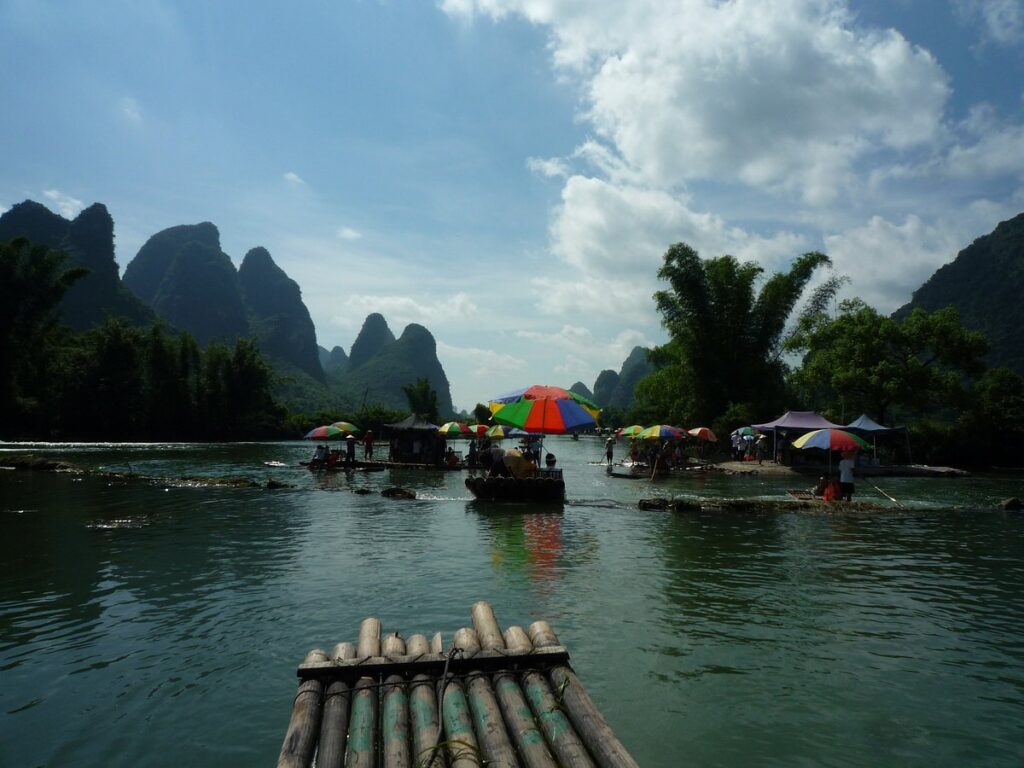
Image Credits: Tripadvisor
Yulong River rafting is the quieter, prettier alternative to the big Li River cruise, and plenty of people rate it above the cruise itself. Two-person rafts drift down a narrow river between bamboo groves and peaks, punted by a boatman, past a run of low weirs that each give you a small splash.
The main route from Jima Dock to Gongnong Bridge takes about 80 minutes and costs around 320 CNY (~S$61) per raft. A shorter run from Shuiniwo takes 40 minutes at roughly 200 CNY (~S$38).
The rafts aren’t really bamboo any more; they’re PVC pipe made to look the part, which nobody minds once you’re on the water. You will get wet at the weirs, so bag your phone.
Book the raft rather than a seat on one, and it’s the most relaxed hour of the trip. Best with two of you.
The Ten-Mile Gallery by Bike
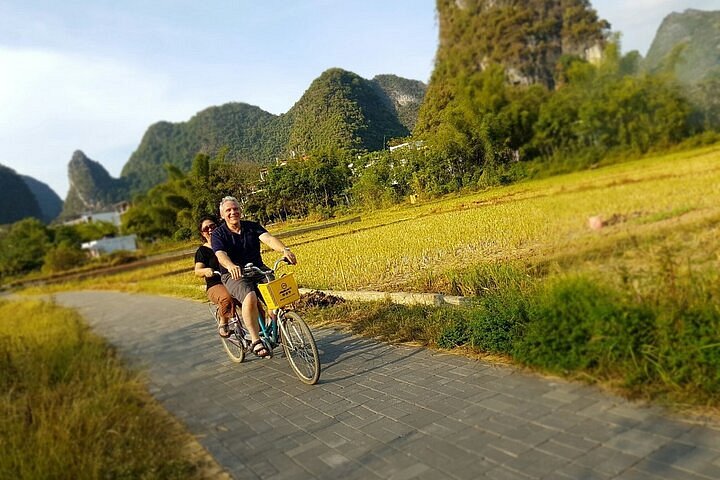
Image Credits: Tripadvisor
The Ten-Mile Gallery is a scenic road running from Yangshuo town out towards Moon Hill, and cycling it is the best half-day in the county. Peaks line both sides, the road is flat, and you can stop wherever the view earns it.
Bikes are rented from a kiosk near the North Gate of the scenic area, and it’s about 50 minutes of easy pedalling to Moon Hill. Most local visitors take electric scooters instead, which is faster and much less fun.
Along the way, you pass the Big Banyan Tree, reckoned to be around 1,400 years old, Butterfly Spring Park with its Nantianmen viewing terrace, and the Assembling Dragon Cave. Detour to the Gongnong Bridge for the Yulong River view.
Anyone reasonably mobile can do it, and it’s the stretch of Yangshuo people remember longest. It costs almost nothing.
Moon Hill
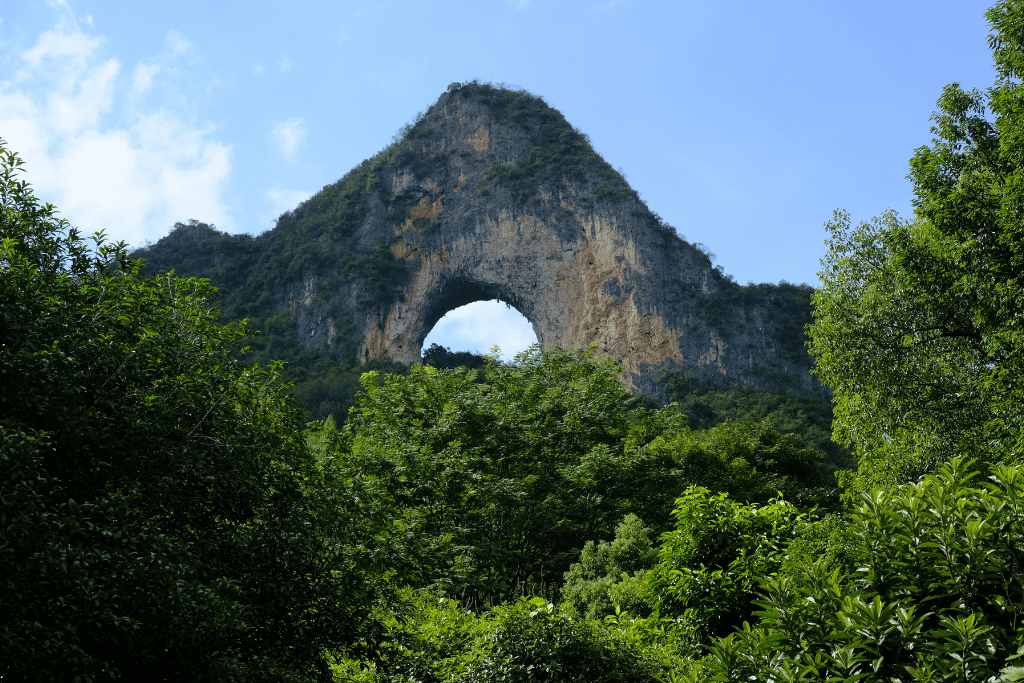
Moon Hill is a karst peak with a wide semicircular hole punched clean through it, which reads as a crescent moon from the road below. It sits at the far end of the Ten-Mile Gallery and marks the natural turnaround point of the cycle.
Most visitors stop at the roadside, take the photo and move on. It’s a checklist sight, and it’s fine.
Climbing to the arch takes about 20 to 30 minutes of steep steps and gives you a proper view down the valley. It’s also one of Asia’s best-known sport-climbing crags, bolted by the American climber Todd Skinner in 1990, so you may well see climbers working the overhang.
Best for the photo on a bike ride. Climb it only if you actively want the workout.
Ruyi Peak
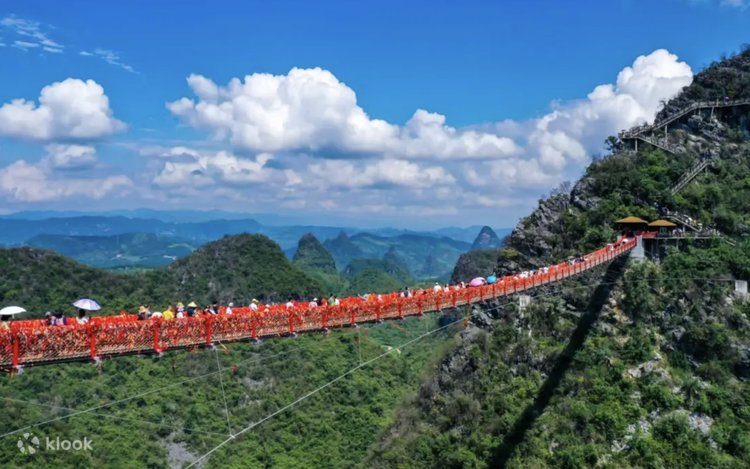
Image Credits: Klook
Ruyi Peak is the newest of Yangshuo’s big-ticket attractions, and it puts you above the whole landscape without a hike. A 2.3km gondola climbs 242 metres to a ridge fitted out with a glass-bottomed skywalk, a suspension bridge and a run of viewing platforms.
The summit walk crosses a suspension bridge strung with red wish ribbons, and there’s a drone photographer at the top doing brisk business. It’s built for photos, and the photos are worth it.
The catch is the last stretch: the way up from the cable-car station is short but steep, which is worth knowing if anyone in your group struggles with stairs.
Best for views without a climb, and for anyone who found Xianggong Mountain’s 4 AM start unappealing.
Silver Cave
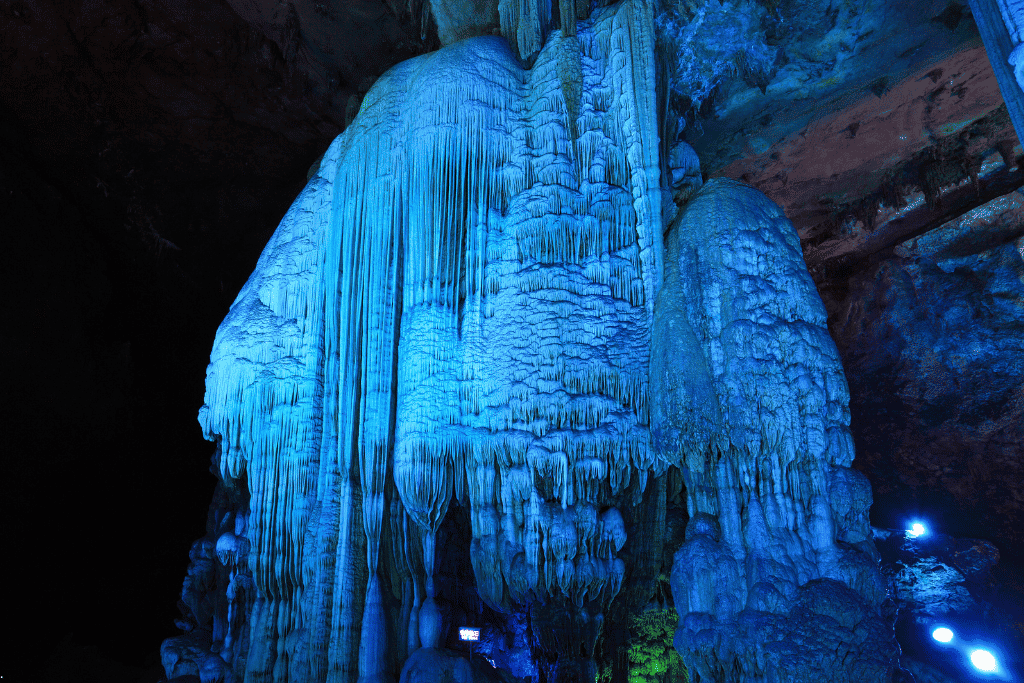
Silver Cave is a large limestone cave system south of Yangshuo, running under 12 separate hills. The walkway covers nearly 2km through three distinct sections, with stalactites lit in colour throughout. It’s the Yangshuo counterpart to Reed Flute Cave in Guilin.
Honest answer: if you’ve already done Reed Flute Cave, this is more of the same. It also gets very crowded, and a slow queue in a warm cave is nobody’s afternoon.
A sedan-chair service carries visitors who can’t manage the walkways. It costs several times the entry ticket, and for some people it’s the difference between seeing the cave and skipping it.
Best for first-time cave visitors and wet afternoons. Otherwise, one cave per trip is plenty.
📖 Related Guide: Want another China landscape city that rewards slow days? Our 15 best things to do in Hangzhou covers West Lake and the tea hills, a softer, greener counterpoint to Guilin’s peaks.
Things to Do in Guilin at Night
Nights split cleanly between the two bases, and they’re not interchangeable. Guilin city does lit-up water, floodlit pagodas and pedestrian streets full of food stalls, which suits a slow evening walk. Yangshuo has bars, live music and two big outdoor shows, and it goes late.
If you only have one night in each, spend Guilin’s on the lakes and Yangshuo’s on a show followed by West Street.
West Street, Yangshuo
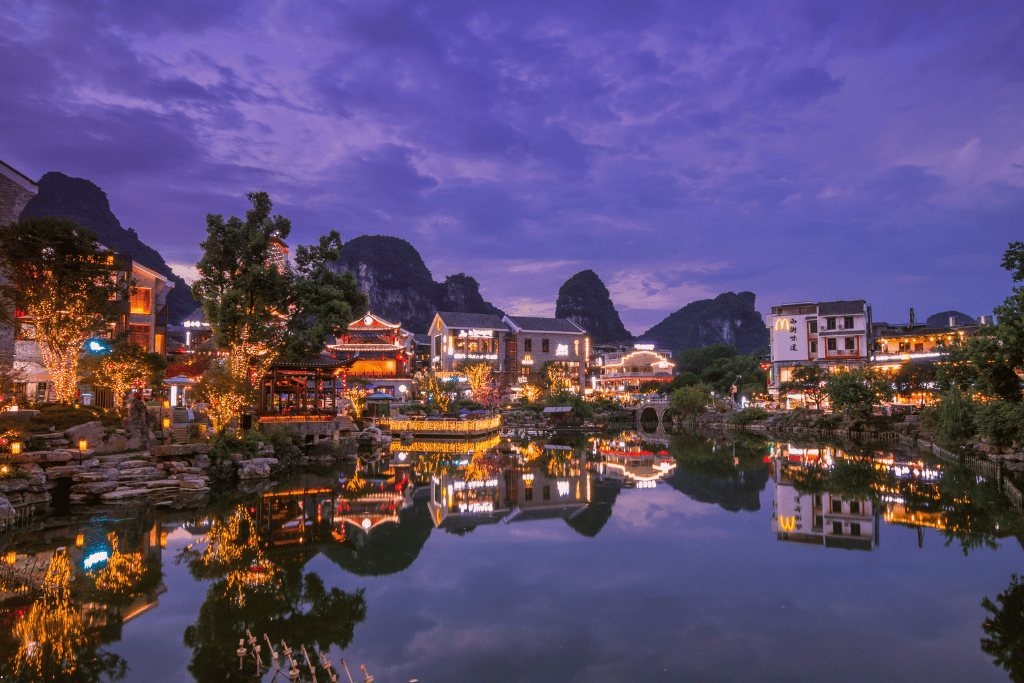
West Street is Yangshuo’s oldest street and its nightlife centre, running about 500 metres from the river into town. By day it’s souvenir shops; by night it’s live music, bars, street performers and a crowd that spills into the road.
It’s loud and thoroughly commercial, and it’s still the best fun in the county after dark. Every beer fish restaurant, tour desk and bike shop you need sits within two minutes of it. That convenience is half the reason people base themselves here.
Best for travellers who want a night out. Light sleepers should book a hotel a few streets back.
Impression Liu Sanjie
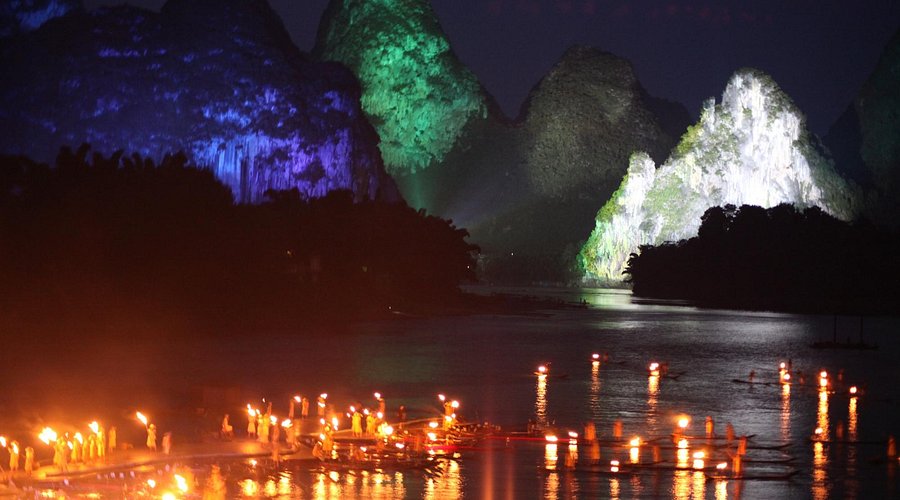
Image Credits: Tripadvisor
Impression Liu Sanjie is the original outdoor night show, directed by Zhang Yimou, staged on the Li River itself with 12 karst peaks lit up as the backdrop. More than 600 performers, many of them local farmers and fishermen, work the water in a 70-minute production built around a Guangxi folk heroine. The stage is the river itself, with twelve peaks lit as the backdrop.
Tickets run from 200 CNY (~S$38) for an ordinary seat up to 680 CNY (~S$129) at the front. Shows start at 8 PM year-round, with a second at 9:20 PM in peak season.
You’re going for the scale and the setting. The story is thin if you don’t already know the 1961 musical film it draws on, and it’s entirely in Mandarin, so some visitors come away underwhelmed. Go for the spectacle, not the plot.
Best for first-timers who want one big night out. If you’re on a budget, the Butterfly Spring Park night show covers similar ethnic-culture ground for much less.
Guilin Romance Park
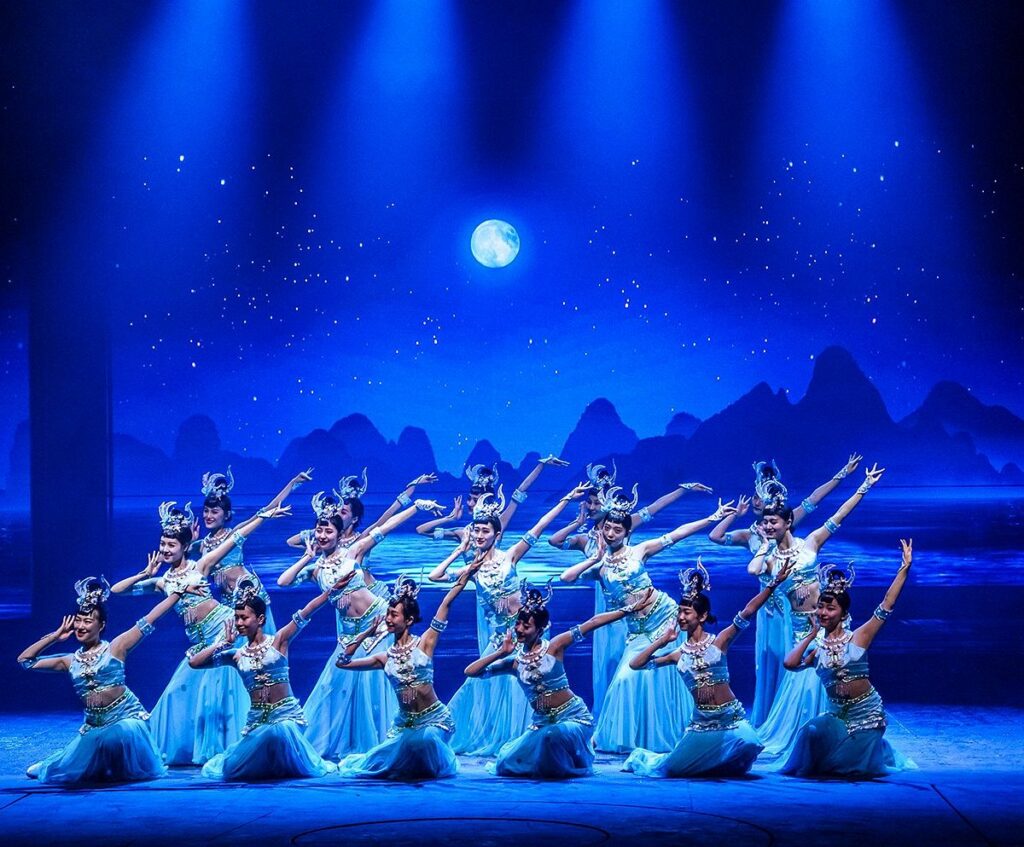
Image Credits: Tripadvisor
Guilin Romance Park is the indoor alternative, a cultural theme park in Yangshuo. Its hour-long headline show uses acrobatics, stage machinery and heavy projection to tell the same regional legends. Tickets bought through a hotel run around 180 CNY (~S$34) for a VIP seat, with performances at 4 PM and 7:30 PM.
It’s less atmospheric than a show on an actual river, and it tells the story more clearly. Families and anyone who found Impression Liu Sanjie hard to follow tend to prefer it.
The rest of the park, with costumed performers and interactive games, is aimed squarely at a younger crowd. Arrive an hour early if you want to see it.
The Lijiang Waterfall Hotel
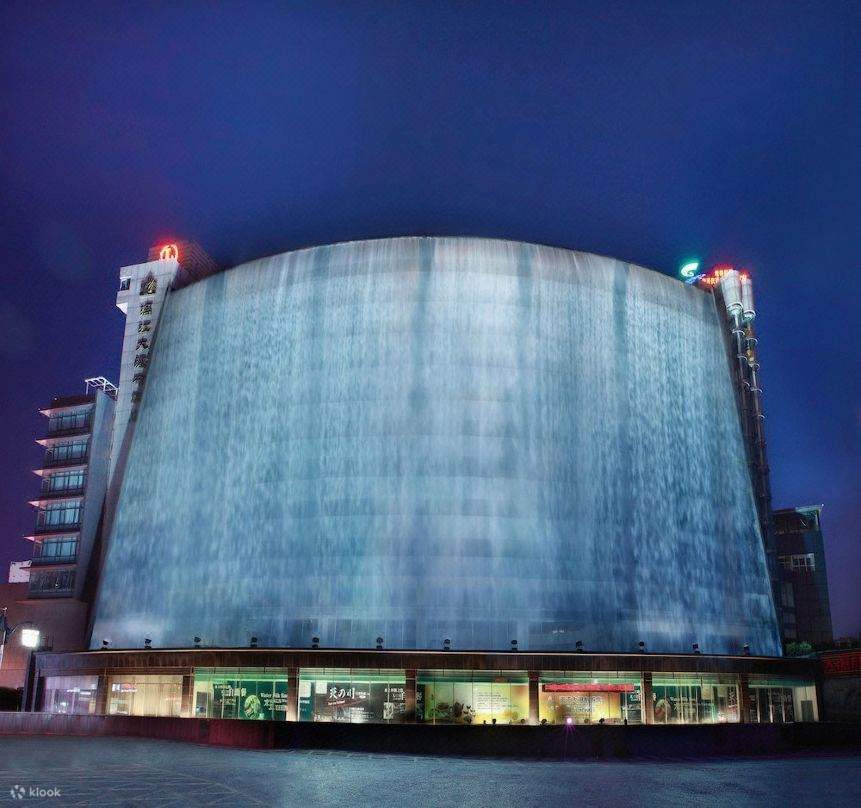
Image Credits: Klook
The Lijiang Waterfall Hotel is exactly what it sounds like. At around 8 PM most nights, a curtain of water pours down the front of the building from the top floor into a pool at street level. It’s free, it lasts a few minutes, and the crowd on Binjiang Road treats it as an event.
It’s a piece of civic showing-off rather than a sight, and it’s a fun 10 minutes if you’re already walking the lakes.
📖 Related Guide: Scanning to pay at night stalls and small bars? Our guide to using Alipay in China covers linking your card and paying by QR even at the smallest vendors.
What to Eat in Guilin and Yangshuo
Guangxi food sits between Cantonese and Hunanese: lighter than Sichuan, sourer than Guangdong, and built on river fish, rice noodles and pickles. The best eating in the region is in Guilin city, not Yangshuo, where prices run tourist-high.
One habit worth copying: locals eat rice noodles for breakfast, standing up, before 9 AM. Join them.
Guilin Rice Noodles (桂林米粉)
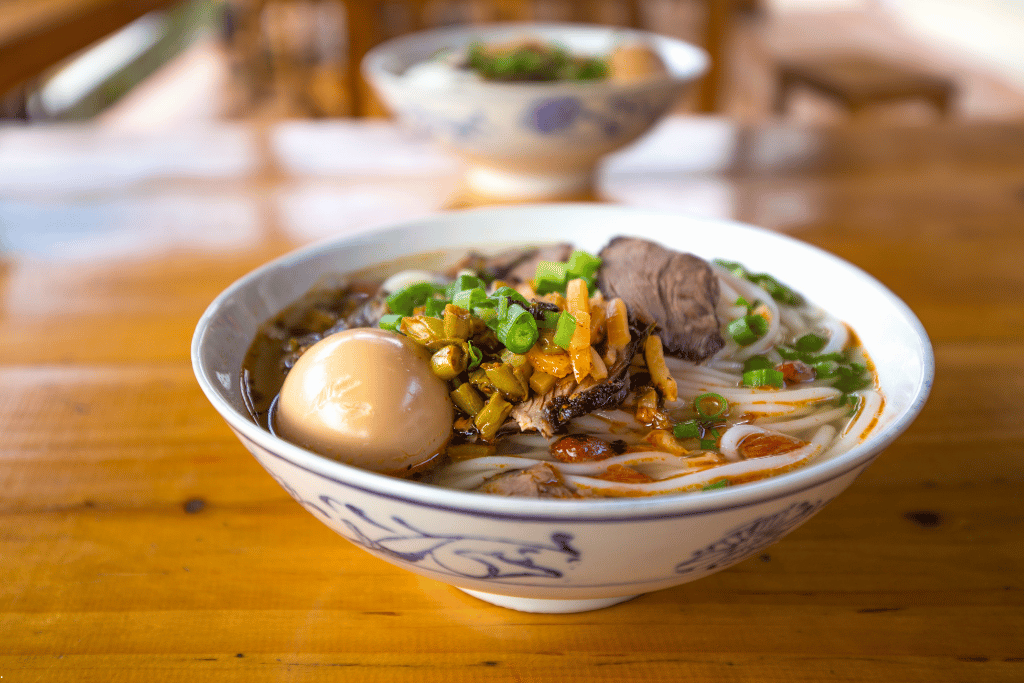
Guilin rice noodles are the dish the city runs on, and you’ll eat them more than once. Round rice noodles arrive in a light broth or barely dressed, topped with braised beef or crisp pork. You add your own pickled long beans, chilli, peanuts and fried soybeans from the counter at the table.
The gravy is what separates a great bowl from an ordinary one. It’s a dark stock of pork and spices, simmered for hours, and the good shops guard the recipe.
A bowl costs single-digit to low-teens yuan, which makes it the cheapest good meal in China.
| Where to try | Area | What makes it |
|---|---|---|
| 老东江米粉 (Laodongjiang) | Guilin city, flagship on Shijiayuan Road | Trading for over 30 years, known for crisp pork skin and a heavy gravy; many branches, but the flagship is the one |
| 石记米粉 (Shiji) | Guilin city, several branches | Old-brand favourite and one of the cheapest bowls in town, around 9 CNY (~S$1.70) |
| 崇善米粉 (Chong Shan) | Guilin city, main shop on Yiren Road pedestrian street | The busiest tourist-friendly option, around 13 CNY (~S$2.50) a head |
Yangshuo Beer Fish (啤酒鱼)

Image Credits: 275957852 on rednote
Beer fish is Yangshuo’s signature, and it’s on every menu in town for a reason. A whole Li River carp is fried skin-side down, then braised in beer with tomato, garlic, ginger and chilli until the sauce thickens around it.
It’s cooked scales-on, which surprises first-timers. The scales crisp up and are part of the texture rather than something to work around. It’s a sharing dish, priced by the weight of the fish, so confirm the fish and the price before it goes in the pan.
| Where to try | Area | What makes it |
|---|---|---|
| 大师傅啤酒鱼 (Da Shifu) | Yangshuo, West Street entrance plus a dozen more branches | The best-known name in town and the easiest to find; consistently the top-reviewed beer fish restaurant in Yangshuo |
| 刘姐啤酒鱼 (Liujie) | Yangshuo, near West Street | Quieter than Da Shifu and takes its sauce recipe seriously |
Stuffed River Snails (酿田螺)
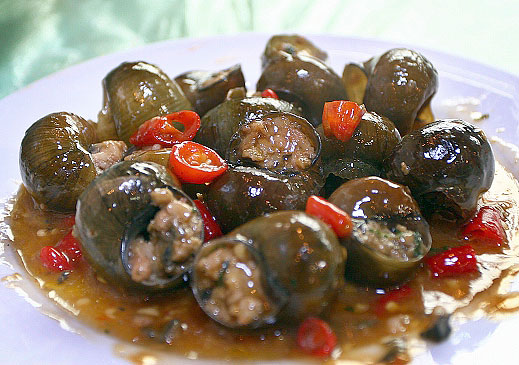
Image Credits: Guilin Holiday
Stuffed river snails are the local drinking snack and the dish most worth being brave about. The snail meat is dug out, minced with pork, mint and spices, then packed back into the shell and simmered in a spiced broth.
You eat them by sucking the broth out first, then digging the filling with a toothpick. It’s messy, savoury and much less alarming than it sounds. Order them at any beer fish restaurant as a side, or find them at the Zhengyang Street stalls in Guilin.
Don’t confuse them with luosifen, the snail-broth noodles you’ll also see everywhere. Those come from Liuzhou up the road; they’re fiercely pungent, and the broth is spicier than most visitors expect.
Gongcheng Oil Tea (恭城油茶)
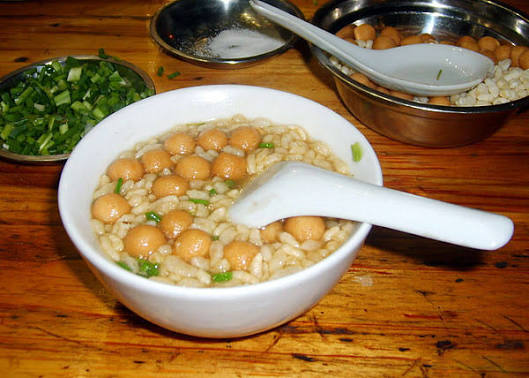
Image Credits: Guilin Holiday
Oil tea is the regional obsession that almost no visitor tries. Tea leaves are fried in oil, pounded in a pot, then boiled into a savoury, slightly bitter broth. That gets poured over your choice of toppings: puffed rice, fried peanuts, spring onion, salted crackers.
It tastes like nothing else, and the first cup usually loses people. The locals say that the third cup is when you understand it.
Hotel breakfast buffets in Guilin often have an oil tea station, which is the low-risk way to try it before committing to a proper Gongcheng-style sitting.
Bamboo Chicken and Bamboo Rice (竹筒鸡 / 竹筒饭)
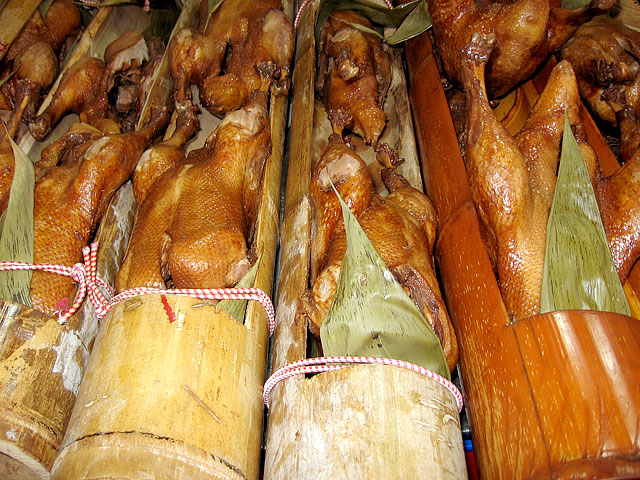
Image Credits: Guilin Holiday
Bamboo chicken is the dish to eat on a Longji day trip, and it’s cooked in the mountains rather than the city. Chicken and rice are packed into a fresh bamboo tube with sausage and mushrooms, sealed, and roasted over a fire until the bamboo scents the lot.
The bamboo isn’t decoration. It steams the contents from inside and leaves a faint sweetness you can’t get any other way. Village restaurants around Ping’an, Dazhai and Huangluo all serve it, usually as part of a set lunch.
Guilin Roast Goose (烧鹅)
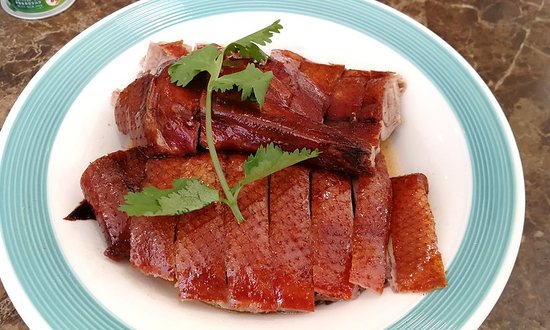
Image Credits: Tripadvisor
Roast goose is the Guilin dish nobody warns you about, and it’s the one locals order for a proper sit-down meal. The bird is lacquered and roasted until the skin shatters, and the meat underneath stays juicy without the grease you’d expect.
It’s sold by weight, usually chopped over rice or served as a platter to share. Order half a goose between two, and you’ll have leftovers.
| Where to try | Area | What makes it |
|---|---|---|
| 椿记烧鹅 (Chunji) | Guilin city, two branches on Zhongshan Road | The city’s best-known roast goose chain, named among Guangxi cuisine’s top ten brands |
| Zhengyang Street stalls | Guilin city, Zhengyang Pedestrian Street | Chopped goose over rice from the street vendors, cheaper and quicker |
Sour Snacks (酸嘢)

Image Credits: 1556495357 on rednote
Sour snacks are what every local eats between meals and almost no visitor orders. Seasonal fruit and veg get pickled in vinegar with chilli powder, salt, sugar and ginger, then sold by the cup from a glass cabinet.
Mango, pineapple, plum, radish and cucumber are the usual line-up. The result is sour, spicy and cold, and in warm months it’s better than any drink at cutting through a heavy lunch.
Find them at street stalls and night markets rather than in restaurants. Dongxi Alley and the Shanhu food market both have them, and a cup costs a few yuan.
Osmanthus Snacks (桂花)

Image Credits: 27765552204 on rednote
The gui in Guilin means osmanthus, and the city is named for the trees. They flower in autumn, and the whole city smells faintly of apricot for a few weeks.
That flavour turns up everywhere: osmanthus cakes, osmanthus wine, osmanthus honey, osmanthus jelly. September and October are peak season, which is another argument for an autumn trip.
Buy from a specialist shop or a stall with a local queue rather than the steamed cakes sold around Elephant Trunk Hill, which are reliably dry.
📖 Related Guide: Booking cars and rides in the app once you land? Our full guide to using DiDi in China covers set-up, English support and what to do when a driver calls.
Where to Stay in Guilin and Yangshuo
Guilin is a two-base trip. Book one hotel for the whole thing, and you’ll lose hours commuting between Guilin city and Yangshuo. Sleep in Guilin city for the first stretch, then move to Yangshuo after the cruise and stay put.
- In Guilin city, base yourself in the Two Rivers and Four Lakes core, around Shan Lake and Elephant Trunk Hill. You’ll be within walking distance of most sights, the best noodle shops and the night scenery. Rooms along the main roads a few blocks out are noticeably cheaper for a 10-minute walk.
- In Yangshuo, you’re choosing between two moods. Near West Street means restaurants, bars and bike hire on your doorstep, plus the noise that comes with it. Out along the Yulong River means rice fields, peaks from your window and quiet mornings, at the cost of a ride into town each time.
- At Longji, a night in Ping’an or Dazhai buys you dawn mist over the terraces before the coaches arrive. It’s the best-value upgrade on the whole trip, and view rooms sell out months ahead for the September harvest.
📖 Related Guide: Adding a big-city stop to bookend the trip? Our 31 things to do in Shanghai covers the Bund, the old lanes and where to eat between them.
Getting Around Guilin and Yangshuo
Guilin has no metro, so you’ll move by DiDi (China’s Grab), local buses and, in Yangshuo, a bike. All three are cheap.
Between the two bases, there are four options, and they suit different trips:
| Option | Time | Rough cost | Worth knowing |
|---|---|---|---|
| Li River cruise | 4 to 5 hours | 215–480 CNY (~S$41–S$91) | Scenery and transfer in one. One-way only, and the best choice on a first visit |
| High-speed train | 20–30 minutes | 26–40 CNY (~S$5–S$8) | Fastest by far, but Yangshuo Station is in Xingping, about 22km from town. Add an hour and 20 CNY (~S$4) on the connecting bus |
| Bus or coach | About 1.5 hours | Low | Frequent, straightforward, drops you in Yangshuo town itself |
| Private car | About 1.5 hours | 200–300 CNY (~S$38–S$57) | Door-to-door, and the sensible pick with luggage or a family |
Inside Yangshuo, rent a bike or an electric scooter, and you won’t need anything else. Bikes go for a few yuan an hour near the North Gate of the Ten-Mile Gallery.
For Xianggong Mountain, Longji and the outlying villages, book a driver or a day tour. Public transport technically reaches them and will cost you the day.
📖 Related Guide: Need yuan for the Longji village restaurants and the raft boatmen? Our China ATM withdrawal guide covers getting cash out locally, first S$400 a month free with YouTrip.
Paying in Guilin
Guilin runs on Alipay and WeChat Pay QR codes, like everywhere else in China. Noodle shops, raft operators, bike kiosks and ticket gates all expect a scan, and foreign cards are rarely accepted directly at the counter.
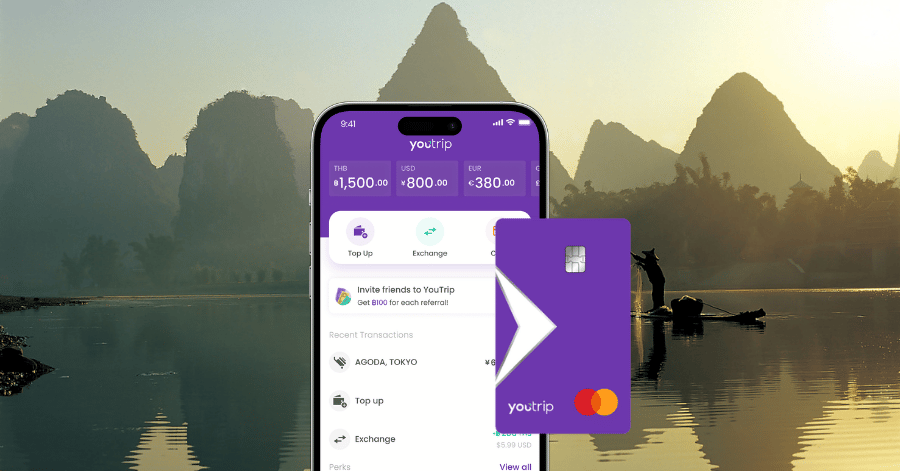
Link your YouTrip Mastercard inside either app on day one. Every scan converts your Singapore dollars to yuan at the Mastercard wholesale rate with no foreign transaction fee.
That beats a credit card quietly adding a foreign transaction fee of 3.25%, and up to about 3.5% on some cards, to every overseas spend. It also beats a money changer, which bakes a markup of a few percent into the rate before you’ve spent a cent.
Carry a couple of hundred yuan for the holdouts: village restaurants at Longji, the odd rural driver, and the raft boatmen who prefer cash. Withdraw it from an ATM when you land rather than changing money at home. Your first S$400 of overseas ATM withdrawals each calendar month is free with YouTrip, then a flat 2%, resetting on the 1st.
For the full picture, see our complete guide to using YouTrip in China and our comparison of the best multi-currency cards in Singapore.
FAQs
Yes, and it holds up against the photos better than most places do. The karst landscape along the Li River and around Yangshuo looks like nowhere in Southeast Asia, and it’s still affordable. The caveats are real: it’s busy at the headline sights, the weather decides a lot, and you need three days minimum to make the journey worth it.
Four days covers all three areas: one in Guilin city, one at the Longji rice terraces, then the cruise down to Yangshuo and a full day there. Three days works if you drop Longji. Five or six lets you sleep up at the terraces and take Yangshuo slowly.
Worth a day, not a trip. The Two Rivers and Four Lakes waterway is lovely after dark, Elephant Trunk Hill is now free, and the rice noodles are better and cheaper than anything in Yangshuo. But the scenery that draws people to Guilin is mostly downriver.
Late September to early November, for the clearest skies and the golden rice harvest at Longji. The dry season runs from about September to December. April and May are the alternative if you want mirrored terraces and mist, accepting more rain. Avoid National Day Golden Week, 1 to 7 October.
Cold, dry and quiet. Daytime highs sit around 13 to 21°C, with nights dropping to 2 or 3°C. It’s one of the driest months of the year, with roughly 6 to 9 rainy days, and up at Longji it can fall below freezing.
The catch is the Li River. December is low-water season, so cruises can run short or get cancelled, and the terraces are bare rather than green or gold. Hotels and flights are at their cheapest and the city sights are yours.
They’re different trips. Guilin’s karst peaks are softer, greener and best seen from a river or a bike, and the days are gentler. Zhangjiajie’s sandstone pillars are sheer and vertical, seen from clifftop walkways, and it’s far more physically demanding with four separate tickets to juggle. Pick Guilin for a relaxed landscape trip, Zhangjiajie for drama.
Chengdu is a city trip with pandas, hotpot and day trips to Leshan and Mount Qingcheng. Guilin is a landscape trip with almost no urban draw. If you want food, culture and a big city, take Chengdu. If you want rivers, peaks and countryside, take Guilin. They’re about three hours apart by high-speed rail, so a longer trip can take both.
Four ways. The Li River cruise takes four to five hours and doubles as sightseeing, at 215 to 480 CNY (~S$41 to S$91). The high-speed train takes 20 to 30 minutes but arrives at Xingping, about an hour from Yangshuo town. A coach takes about 1.5 hours and drops you in town. A private car costs roughly 200 to 300 CNY (~S$38 to S$57).
A little. Alipay and WeChat Pay linked to your YouTrip card cover almost everything, but Longji village restaurants, raft boatmen and some rural drivers still want yuan. Withdraw it from a local ATM rather than changing money before you fly.
More than you’d expect. Elephant Trunk Hill has been free since 2022, and the Two Rivers and Four Lakes walk costs nothing. Photographing the Sun and Moon Pagodas from the lakeside is free, even though going inside isn’t. Zhengyang Pedestrian Street, Dongxi Alley, Daxu Ancient Town and the Lijiang Waterfall Hotel show are all free, and cycling the Ten-Mile Gallery costs only the bike hire.
Go Stand in the Painting
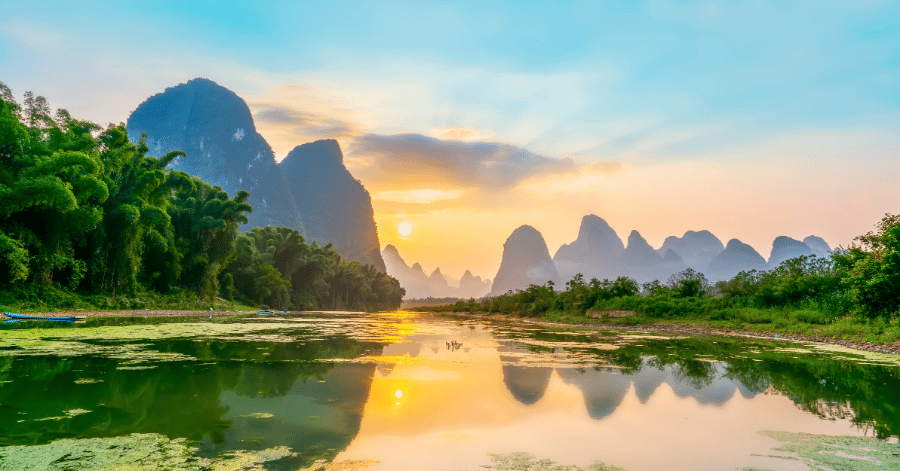
Guilin has been China’s shorthand for beautiful scenery for well over a thousand years, and the odd thing is how little the reality argues with it. Give it four days, go in late September or October, take the cruise one way and cycle the rest.
Not a YouTrooper yet? Sign up for YouTrip and travel smarter across 150+ currencies with no foreign transaction fees, plus exclusive perks. Join our Telegram channel for the latest travel deals, and our YouTrip Community Group to swap tips with fellow travellers. Use code YTBLOG5 to get S$5 in your account when you sign up.