



Central Asia’s biggest country is its most underrated trip
Kazakhstan packs turquoise mountain lakes, a Grand Canyon lookalike, a spaceport, and a food scene built on horse meat and fermented milk into one visa-friendly trip. Here are the 23 experiences worth building a Kazakhstan itinerary around, plus how to get there and pay once you land.
Kazakhstan 2026 At A Glance
| Quick Answers | |
|---|---|
| Top experience | Charyn Canyon, Central Asia’s answer to the Grand Canyon, around 3 hours from Almaty |
| Base yourself in | Almaty for nature and cafés, Astana for futuristic architecture |
| Best time to go | June to September for lakes and canyons, December to February for skiing |
| Getting there | No direct Singapore flights, 1 stop via Air Astana, Turkish or others (roughly 11 to 14 hours) |
| Paying | Cities are tap-friendly, carry cash once you leave them |
A quick look at the headline spots:
| Spot | Region | Why go | Best for |
|---|---|---|---|
| Charyn Canyon | Almaty region | 90km gorge of red sandstone castles | Day-trippers, photographers |
| Kolsai Lakes | Almaty region | Emerald alpine lakes, horse riding | Hikers, slow travel |
| Kaindy Lake | Almaty region | Sunken forest of drowned spruce trees | Off-beat scenery |
| Kok-Tobe Hill | Almaty | Cable car, city views, best sunset | First-timers, families |
| Big Almaty Lake | Almaty | Bright turquoise reservoir at 2,511m | Half-day nature escape |
| Bayterek Tower | Astana | The capital’s Tree-of-Life landmark | City sightseeing |
| Khan Shatyr | Astana | World’s tallest tent, indoor beach | Rainy days, families |
| Turkistan | South Kazakhstan | UNESCO Silk Road mausoleum | History and culture |
Table of Contents
- Is Kazakhstan Worth Visiting?
- Best Things to Do in Almaty
- Best Day Trips from Almaty
- Best Things to Do in Astana
- Beyond the Cities: Kazakhstan’s Bucket-List Trips
- Live Like a Nomad: Kazakh Experiences
- What to Eat in Kazakhstan
- Best Time to Visit Kazakhstan
- How to Get to Kazakhstan from Singapore
- Getting Around and Paying in Kazakhstan
- FAQs
Is Kazakhstan Worth Visiting?
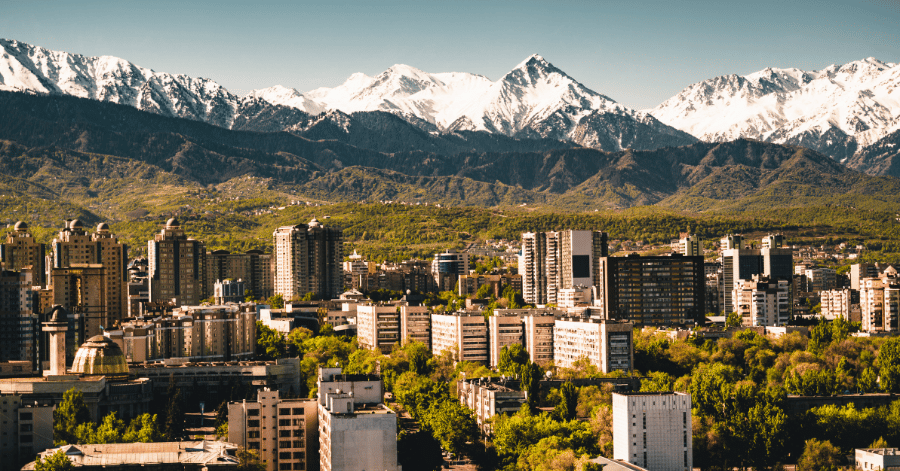
Yes, and it’s still early enough that you’ll have most of it to yourself. Kazakhstan is the world’s largest landlocked country and the ninth largest overall, and while foreign arrivals are rising fast, the overwhelming majority are regional visitors from neighbouring countries. That means long-haul leisure travellers stay rare, and the crowds you’d fight in Bali or Switzerland simply aren’t here.
The appeal is range. In a single week out of Almaty you can ski a mountain in the morning, stand inside a 12-million-year-old canyon by afternoon, and eat at a slick café that wouldn’t look out of place in Melbourne. Add a genuinely warm welcome (travellers consistently rate Kazakhs among the most hospitable people they meet) and prices that undercut most of Asia, and the case makes itself.
The trade-off is friction. English is thin outside the big cities, distances are enormous, and once you leave Almaty or Astana the roads, signage and ATMs thin out fast. None of it is a dealbreaker, but Kazakhstan rewards a bit of planning more than a plug-and-play beach holiday does.
📖 Related Guide: Chasing under-touristed mountain scenery? Our Dolomites beginner’s guide maps another region that trades crowds for alpine drama.
Best Things to Do in Almaty
Almaty is where most Kazakhstan trips begin, and many never need to leave. The country’s biggest city sits right at the foot of the Trans-Ili Alatau mountains, so a snow-capped skyline follows you around leafy, walkable streets full of cafés, markets and Soviet-era history.
Ride the Cable Car up Kok-Tobe Hill
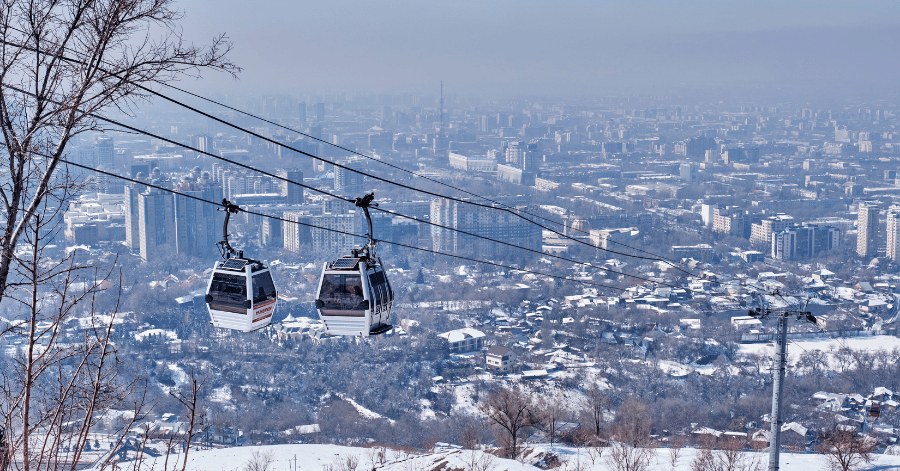
Kok-Tobe is the classic first afternoon in Almaty, a green hill on the city’s edge reached by a gentle cable-car glide over the rooftops. At the top you’ll find an amusement park, souvenir stalls, cafés and a quirky bronze statue of The Beatles, plus the Almaty TV Tower rising above it all.
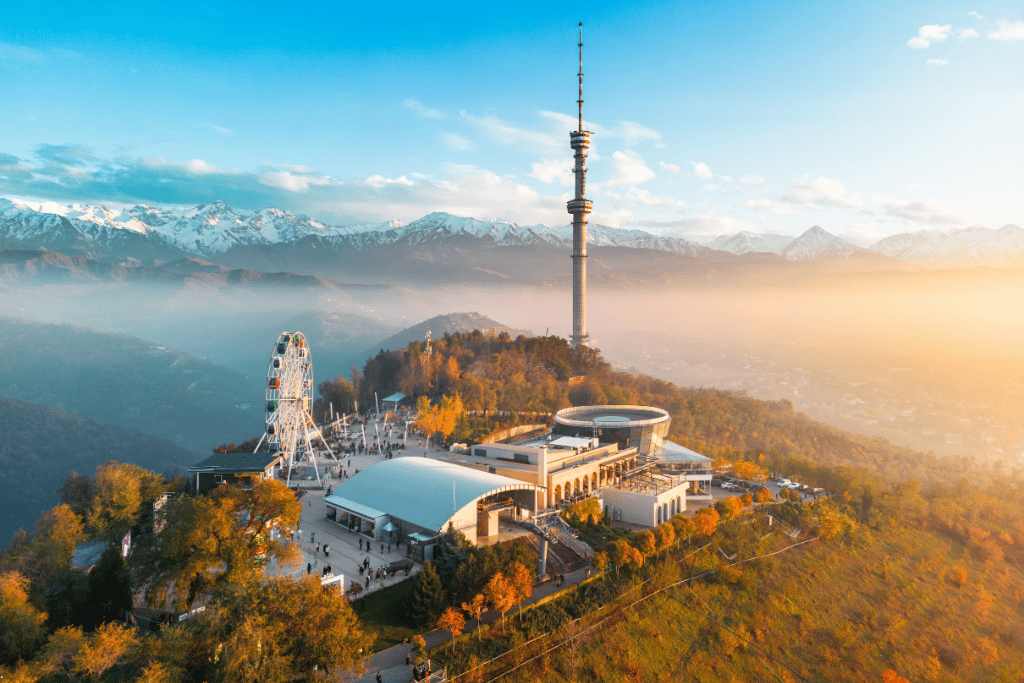
The real draw is the view. Kok-Tobe catches the best sunset in the city, with the whole of Almaty spread below and the mountains behind you. It’s the ideal first afternoon for families and first-timers, giving you the lay of the land before you head further afield.
Get Lost in the Green Bazaar
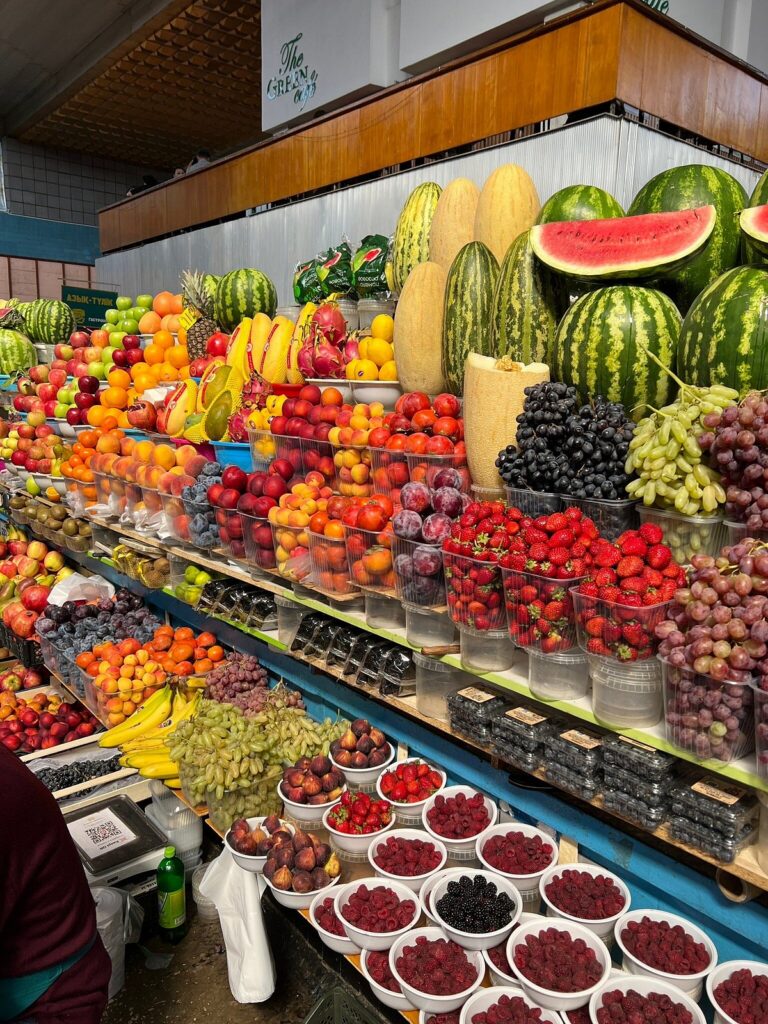
Image Credits: Tripadvisor
The Green Bazaar, also known locally as Zelyony Bazaar, is Almaty’s oldest and liveliest market, a sprawling food hall where the Silk Road trading past still feels alive. Stalls pile up strawberries, spices, nuts, dried fruit and honey, and the meat section (horse meat included) is a spectacle in itself.
Head upstairs and to the back, where small restaurants and food counters let you try Kazakh and Central Asian dishes cheaply. It’s chaotic and the prices aren’t always marked, so come hungry and happy to point, smile and taste something you can’t name.
Wander Panfilov Park and Ascension Cathedral
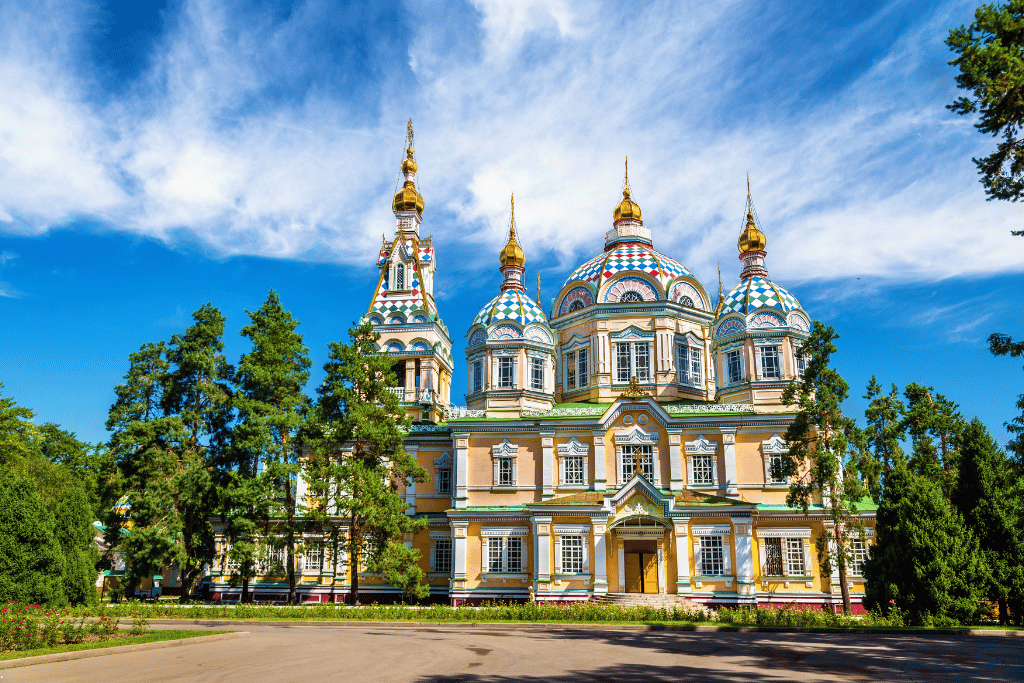
Panfilov Park is Almaty’s calm green heart, named after 28 World War II soldiers and shaded by tall trees and quiet walkways. At its centre stands Ascension (Zenkov) Cathedral, a candy-coloured wooden church built in 1907, famously without a single nail.
The cathedral survived the devastating 1911 earthquake that levelled much of the city, and remains one of the tallest wooden buildings in the world. It’s a five-minute stroll to the Green Bazaar, so the two pair naturally into one easy morning.
Stroll the Arbat and Almaty’s Café Scene

Image Credits: 495940576 on rednote
Almaty is one of the most walkable cities in Central Asia, and its pedestrianised Arbat (Zhibek Zholy) is the best place to feel its pulse. The wide boulevard is lined with street performers, buskers and stalls by day, and it shifts into a livelier, buzzier scene after dark.

Image Credits: 417517014 on rednote
The café culture here is the real surprise. Leafy streets hide slick coffee spots and dessert bars that would hold their own in any European capital, and locals treat lingering over coffee as a proper pastime. It’s the place for slow mornings and people-watching between the bigger sights.
Skate at Medeu, Ski at Shymbulak
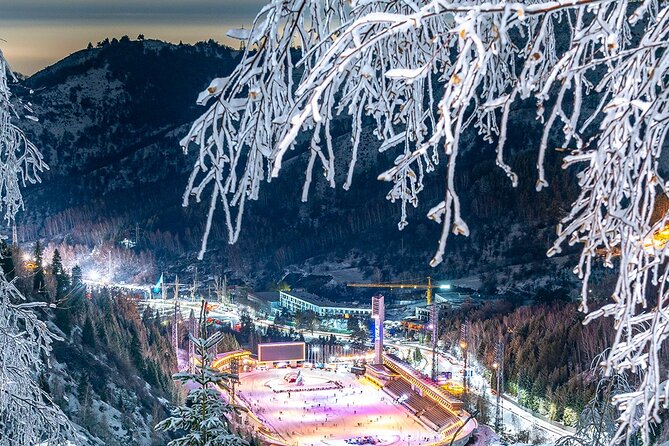
Image Credits: Tripadvisor
Just above the city sits Medeu, the world’s highest outdoor skating rink at around 1,691m, ringed by mountains. In winter you can lace up for a skate with an alpine backdrop that few rinks anywhere can match.
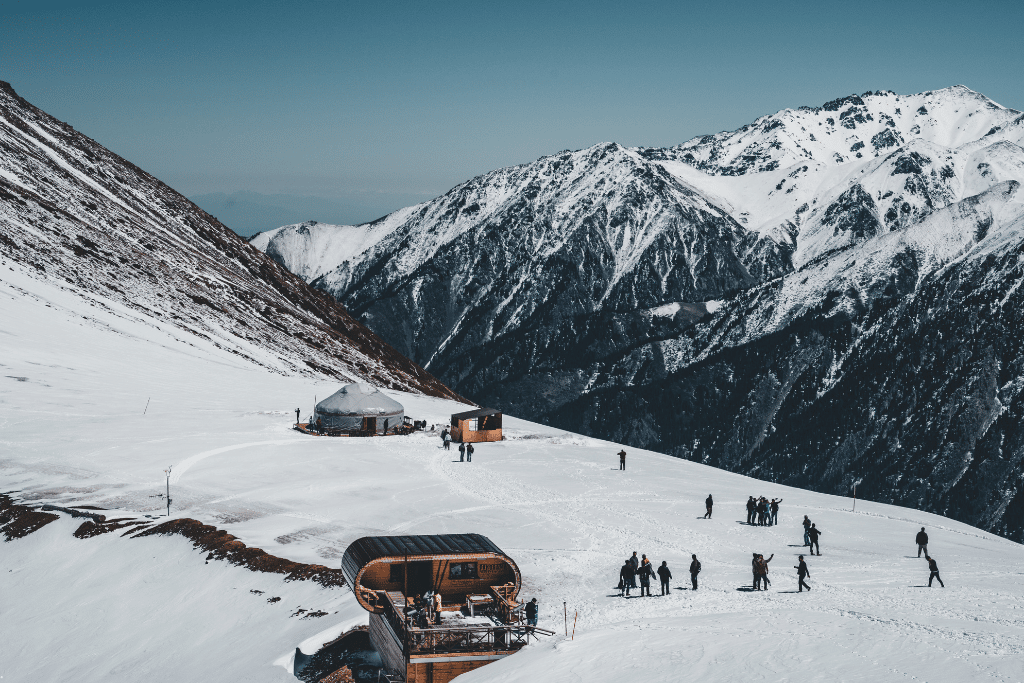
From Medeu, a gondola carries you higher to Shymbulak, Kazakhstan’s best-known ski resort, with runs for all levels and restaurants at the top. In summer, the same lifts turn the area into a hiking and viewpoint playground. Best for anyone visiting December to February who wants snow without flying to Europe.
Escape to Big Almaty Lake
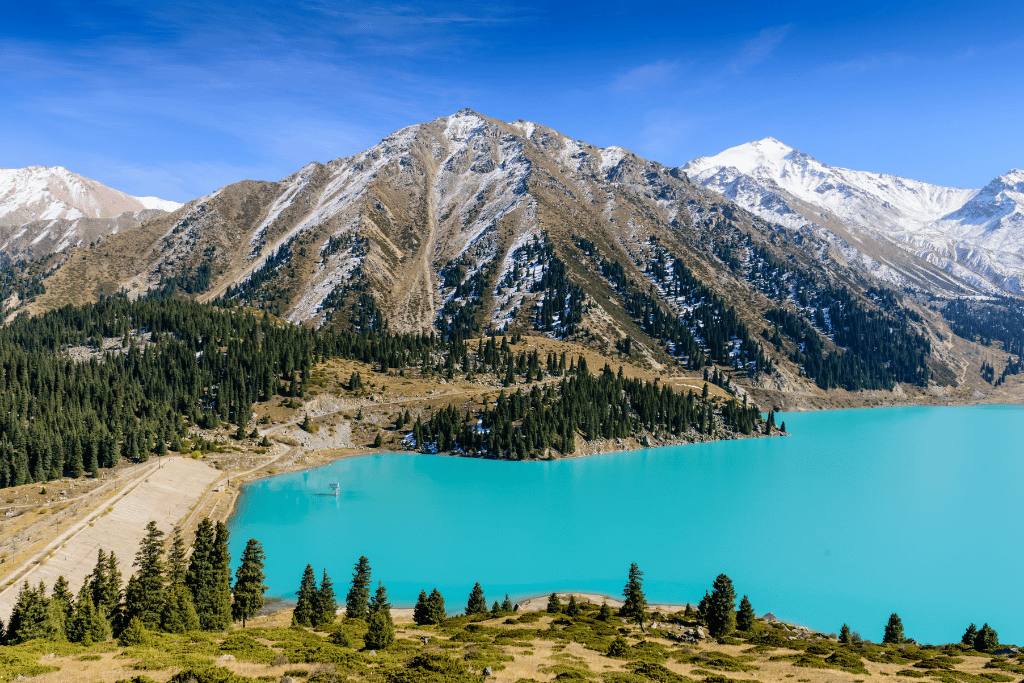
Big Almaty Lake is a startlingly bright turquoise reservoir sitting at 2,511m, ringed by rugged peaks just 15km from the city centre. The colour shifts with the season, vivid blue in summer and softer shades in the cold months, and the peaks nearby are named after Soviet space missions.
It’s the easiest big-nature hit near Almaty, though access can change. In recent years, the final stretch of road has been closed to limit over-tourism, so you may need to hike a shortcut or arrange a local ride for the last leg. Check current access before you set off.
📖 Related Guide: Building a mountains-and-lakes itinerary? Our things to do in New Zealand guide is full of the same alpine-lake energy.
Best Day Trips from Almaty
Almaty’s real magic is what’s within a few hours’ drive. The classic move is to rent a car or hire a driver and string these together over two to four days, staying in small villages like Saty along the way.
Stand Inside Charyn Canyon
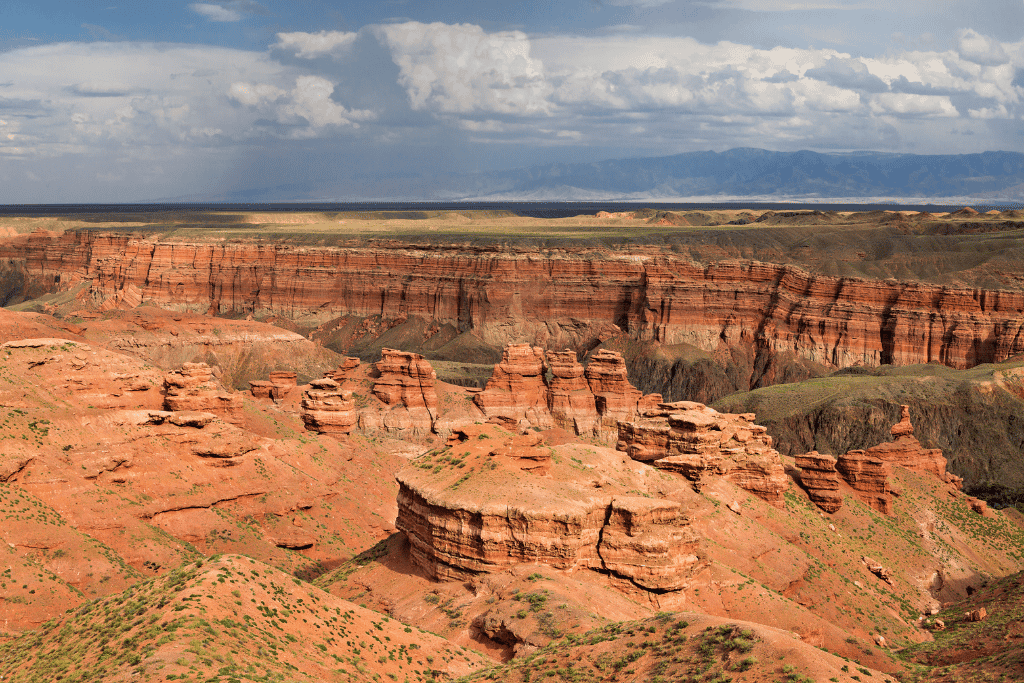
Charyn Canyon is the headline day trip, a roughly 90km gorge often called the Grand Canyon of Central Asia and reached in about 3 hours from Almaty. Its most famous stretch, the Valley of Castles, is a run of red sandstone towers shaped over 12 million years into what really do look like ruined fortresses.
A short trail drops from the visitor centre down into the canyon floor, where you can walk between the walls to the Charyn River. Entry is cheap (around 750 to 1,500 KZT, roughly S$2 to S$4), and a shuttle back up the canyon costs around 500 KZT (~S$1.35) each way if the heat gets much. Best for travellers with just one day trip to spare, this is the one to pick.
Ride a Horse to the Kolsai Lakes
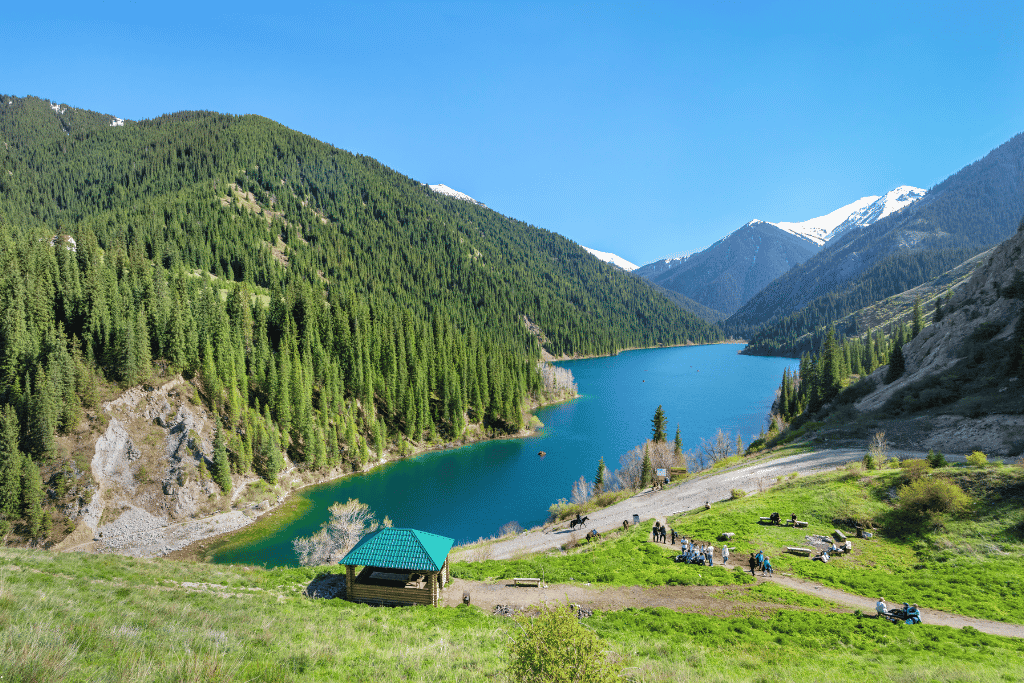
The Kolsai Lakes are a chain of three emerald alpine lakes deep in the Tian Shan mountains, nicknamed the “Pearls of the Tian Shan”. The lower lake is the most accessible and the most photographed, with rowboats and water bikes for hire and forested slopes dropping straight to the water.
You can hike the shoreline or do as the locals do and hire a horse (from around 8,000 KZT, ~S$22, often with a guide) to reach the caves and viewpoints further along. Most people base themselves overnight in the village of Saty rather than attempt the long round trip from Almaty in a day.
See the Sunken Forest at Kaindy Lake
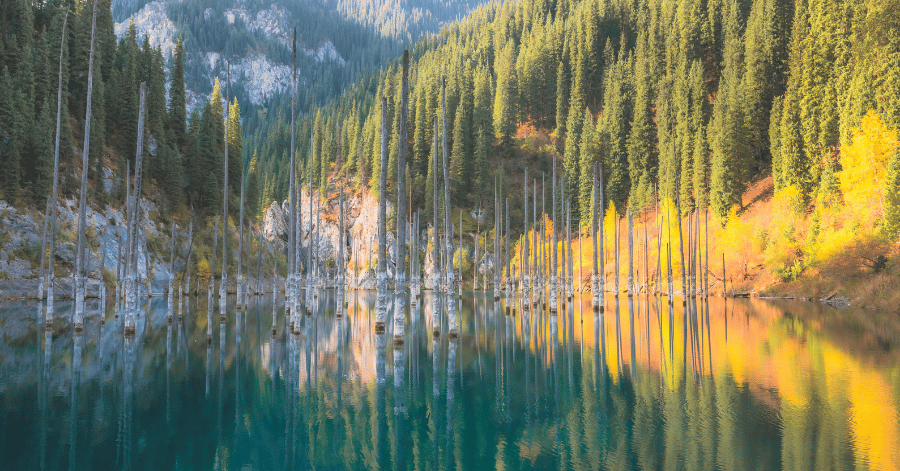
Kaindy Lake is the eerie, haunting one. Formed by a 1911 earthquake that dammed the valley, its bright turquoise water hides a submerged forest, with the bare silver trunks of drowned spruce trees still spearing up through the surface.
Getting there is half the adventure. The road is rough enough that you’ll usually swap into a sturdy Soviet-era van in Saty for the final bumpy stretch, then walk the last kilometre or so. That effort keeps the crowds thin, so you often get the whole surreal scene almost to yourself.
Hear the Singing Dunes at Altyn-Emel
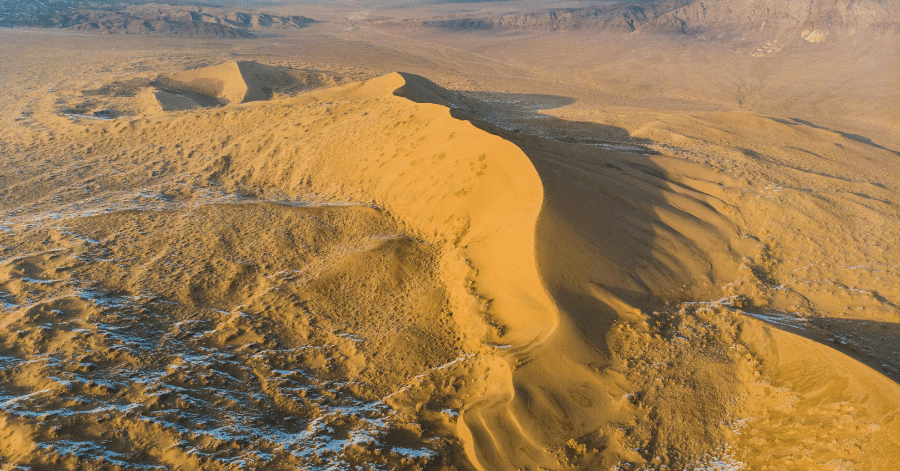
Altyn-Emel National Park is a vast, wild landscape around four hours’ drive from Almaty, and home to one of Kazakhstan’s strangest natural wonders. The Singing Dunes are sand mountains about 120m high that hum a deep, resonant note when the wind moves the sand.
The park also holds the Aktau “White Mountains”, chalky ridges banded in white, red and pink from an ancient seabed, with fossils tucked into the layers. It’s a bigger commitment than Charyn, usually spread over two days with a guesthouse stay, but it feels like driving onto another planet. Best for travellers with time who want the landscapes almost nobody photographs.
📖 Related Guide: You’ll want mobile data for maps and translation out here. Our best travel eSIM guide covers staying connected from S$1.
Best Things to Do in Astana
Astana, the capital since 1997, is Almaty’s complete opposite: a planned, futuristic city that rises straight out of the flat steppe in a skyline of glass towers and bold architecture. You can see the headline sights in a day or two, ideally as a domestic-flight side trip.
Ride to the Top of Bayterek Tower
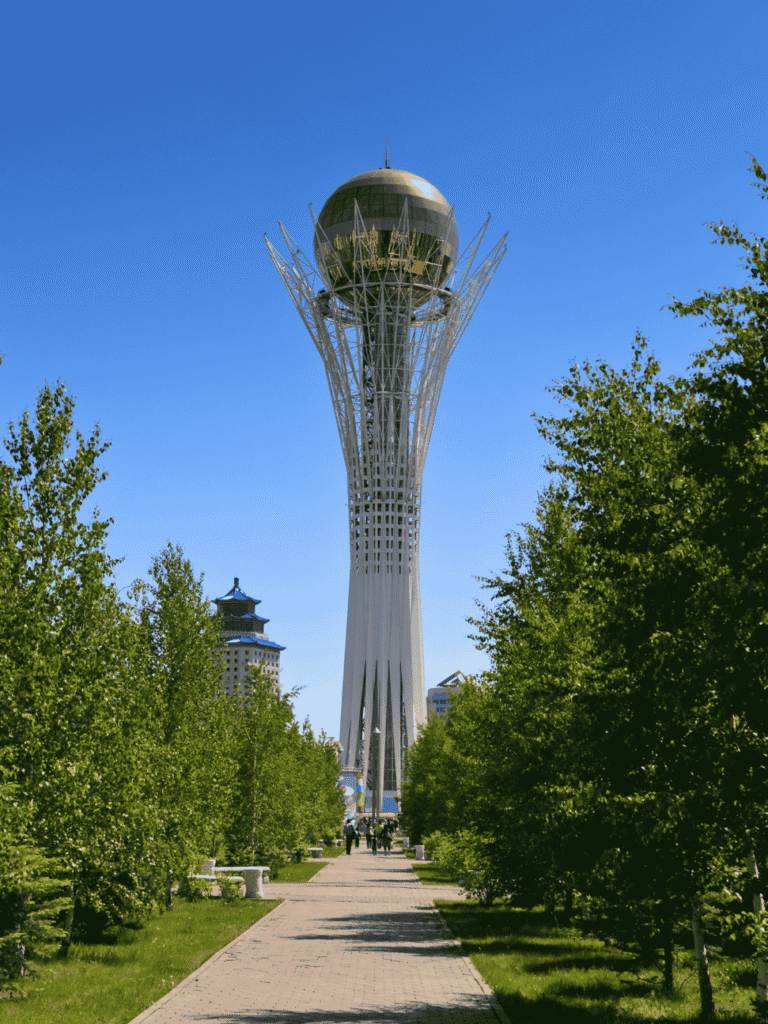
Bayterek is Astana’s signature landmark, a 97m tower topped with a golden glass sphere. It’s built around a Kazakh folk tale about the mythical bird Samruk laying its golden egg in the Tree of Life, and the height nods to 1997, the year the capital moved here.
Ride the lift to the observation deck for a full sweep of the planned city laid out below. It anchors a wide ceremonial boulevard, so it’s the natural place to start piecing Astana together.
Cool Off Inside Khan Shatyr
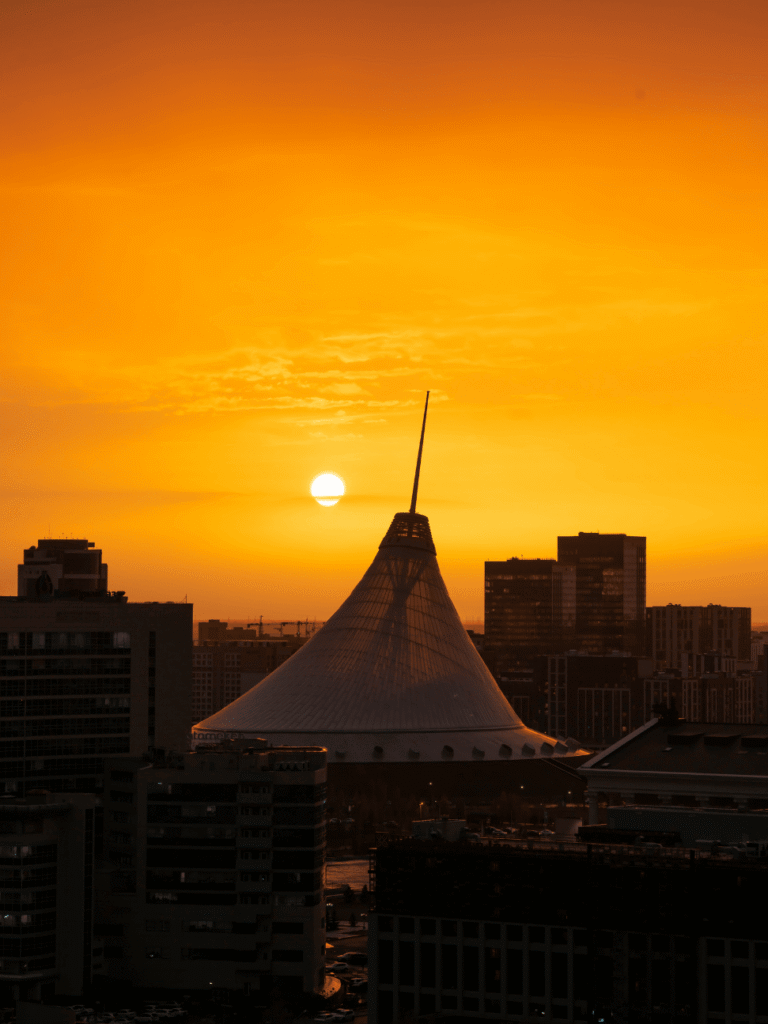
Khan Shatyr is a giant translucent tent, once billed as the tallest tent in the world, designed to hold a slice of summer whatever the steppe weather is doing outside. Inside is a full entertainment complex of shops, cafés and rides.
The showstopper is the indoor beach on the top level, with sand shipped in and a wave pool, a surreal thing to find in a country of brutal winters. It’s a lifesaver for families, or anyone caught out by Astana’s famously extreme cold.
Step Inside the Palace of Peace and Reconciliation
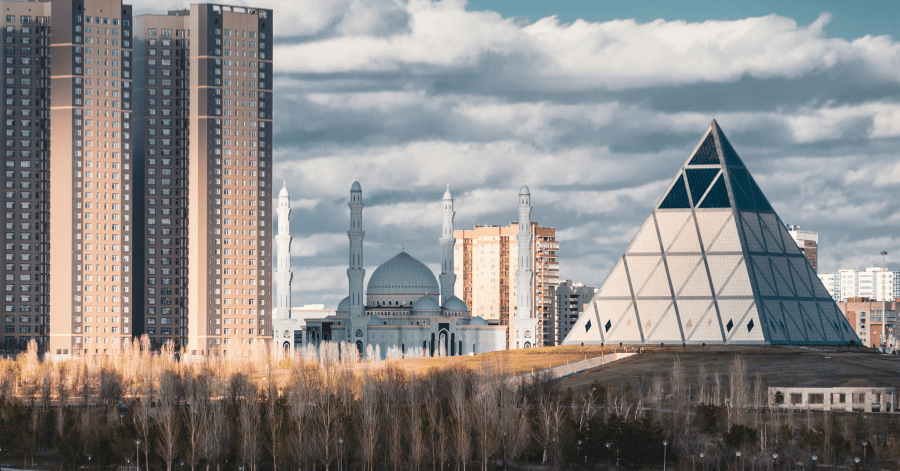
The Palace of Peace and Reconciliation is a striking glass-and-steel pyramid built to host a summit of world religions. The design is deliberate, with each level dedicated to a different aspect of culture and faith and a bright, stained-glass apex at the top.
It’s as much a symbol as a sight, reflecting Kazakhstan’s pitch as a meeting point of cultures. Guided visits take you from the opera hall at the base up to the dove-filled apex.
Admire the Hazrat Sultan Mosque
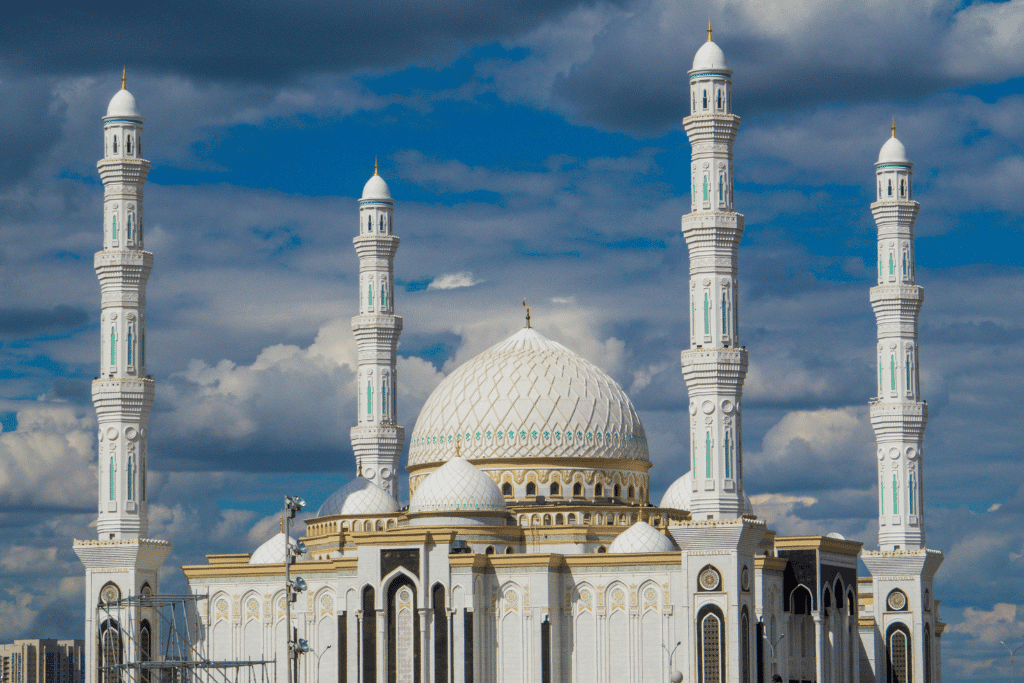
Hazrat Sultan is one of the largest mosques in Central Asia, a vast white building topped with blue-and-gold domes and slender minarets. The scale is the point, with intricately patterned prayer halls and classical Islamic detailing throughout.
Visitors are welcome outside prayer times, and it’s especially photogenic at dusk when the domes light up against the sky. Dress modestly and you’ll be warmly received.
Explore the Nur-Alem Sphere and Expo City
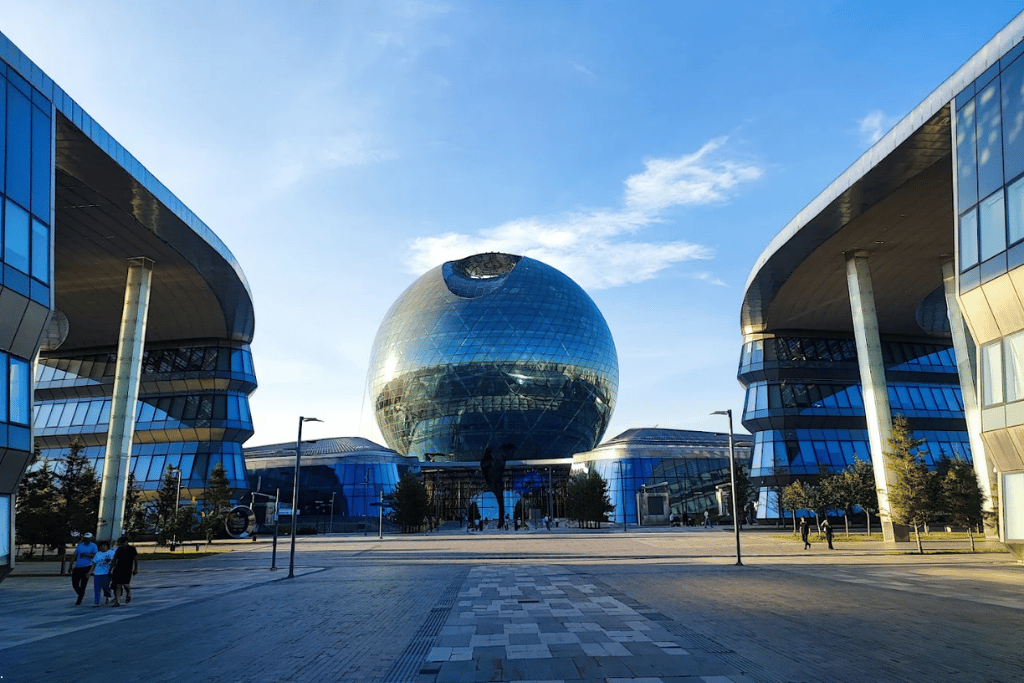
Image Credits: Artur Olszanski on Google Reviews
Nur-Alem is a giant glass sphere left over from Expo 2017, and now a museum of future energy spread across its curved floors. It’s the anchor of a whole district of contemporary architecture built for the world fair.
The exhibits run through renewable energy and technology, with city views from the upper levels. It rounds out Astana’s whole thesis nicely: this is a capital that would rather show you the future than the past.
📖 Related Guide: Like a modern, walkable city break? Our Melbourne travel guide is another city built for wandering between coffee and culture.
Beyond the Cities: Kazakhstan’s Bucket-List Trips
Kazakhstan is the size of Western Europe, so the further you roam, the wilder and more rewarding it gets. These take real time and planning, but they’re the trips serious travellers fly in for.
Make a Pilgrimage to Turkistan
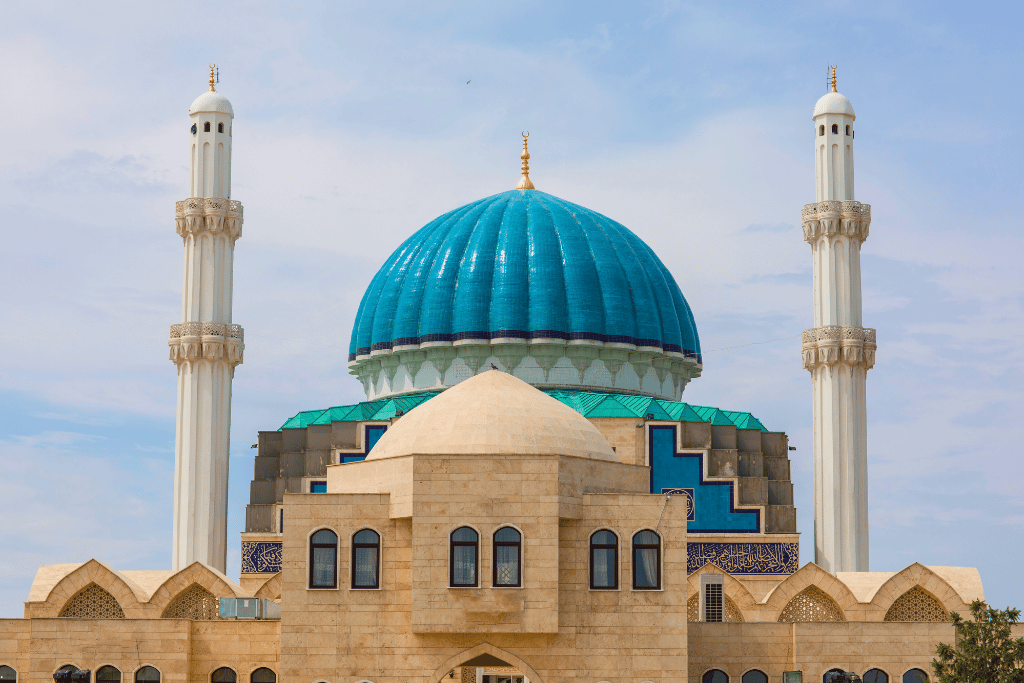
Turkistan is Kazakhstan’s spiritual heart, built around the Mausoleum of Khoja Ahmed Yasawi, a UNESCO World Heritage Site and one of Central Asia’s great buildings. Commissioned by Timur in the 14th century, its huge turquoise dome and intricate tilework still stop visitors in their tracks.
Fascinatingly, it was left unfinished when Timur died in 1405, and the bare scaffolding pockets on the facade remain. As a former Silk Road crossroads sometimes called the “second Mecca of the East”, Turkistan still draws pilgrims today.
Roam the Rock Formations of Mangystau
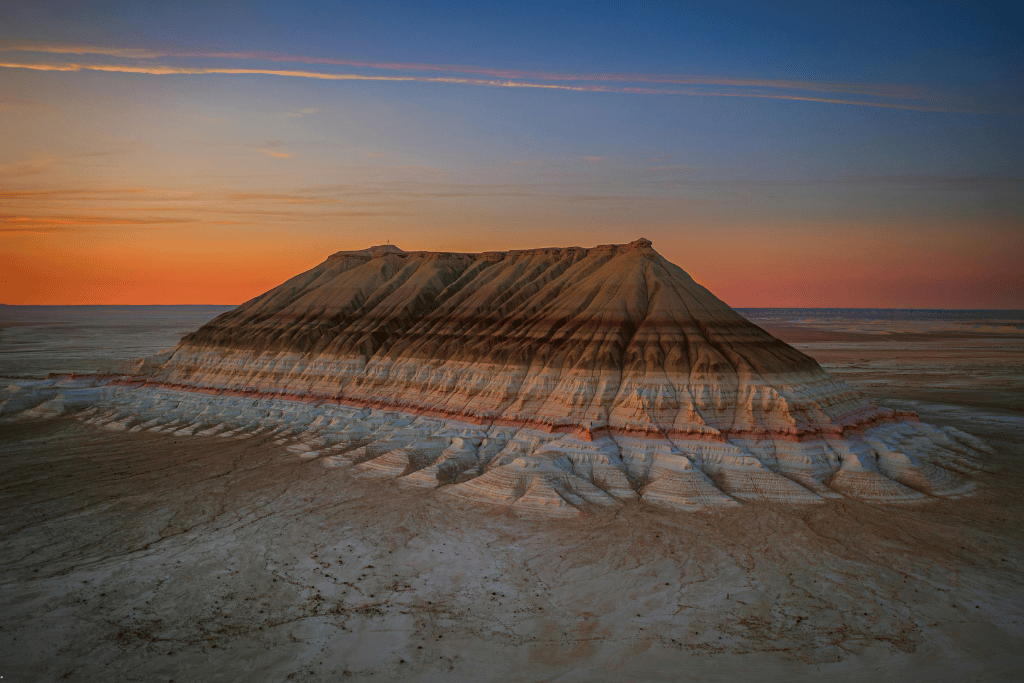
The Mangystau region, out west near the Caspian Sea, is Kazakhstan’s most otherworldly frontier: a desert of chalk cliffs, lone flat-topped mountains and surreal rock fields. The Valley of Balls (Torysh) scatters the steppe with near-perfect stone spheres, while Sherkala Mountain rises like a stranded ship.
It’s remote, barely developed for tourism and best explored with a local guide and a 4×4. That inaccessibility is exactly why it stays pristine. Best for adventurous travellers who treat the journey as the point.
Wander Burabay National Park
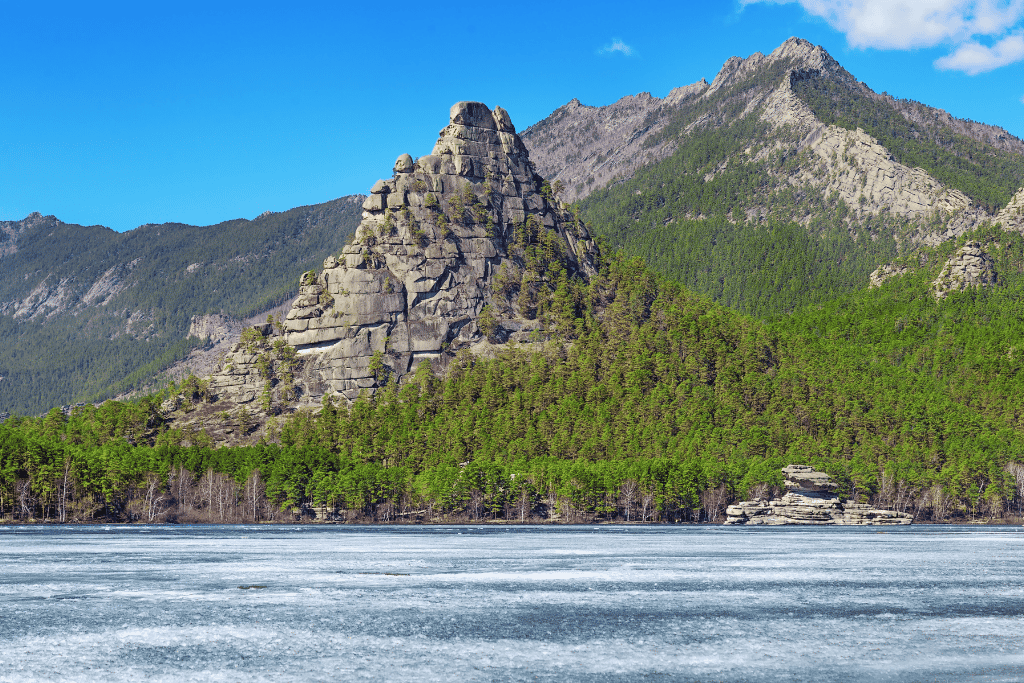
Burabay (Borovoe) is often called the “Kazakh Switzerland”, a gentler landscape of clear lakes, pine forest and granite outcrops in the country’s north. Lake Borovoe sits at its heart, ringed by cliffs and dotted with rock formations that locals have wrapped in legend, like the veiled-woman shape of Zhumbaktas.
It’s a favourite domestic getaway, with boating and hiking in summer and cross-country skiing in winter. Easy trails and lake views make it the most relaxed entry on this list.
Decode the Tamgaly Petroglyphs
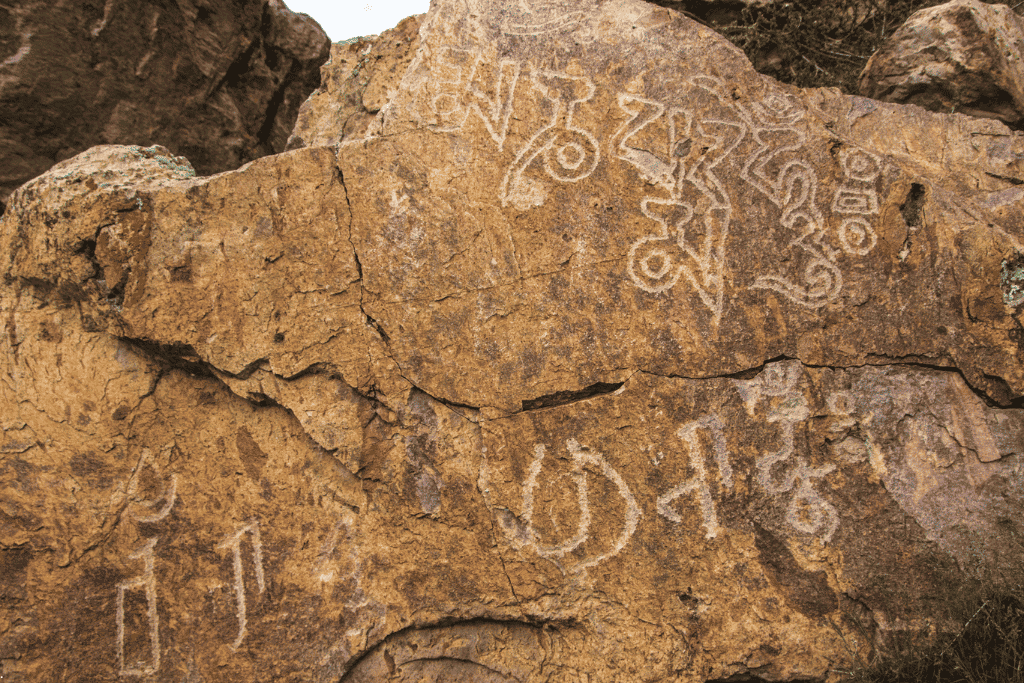
Tamgaly is an open-air gallery of over 5,000 ancient rock carvings etched into a canyon, a UNESCO-listed site within day-trip range of Almaty. The oldest date back to the Bronze Age, and the panels layer up hunting scenes, sun-headed deities and animals across thousands of years.
It’s a quieter, more contemplative stop than the big canyons, and it rewards a slow wander with a guide who can read the stories in the stone.
Witness a Launch at Baikonur Cosmodrome
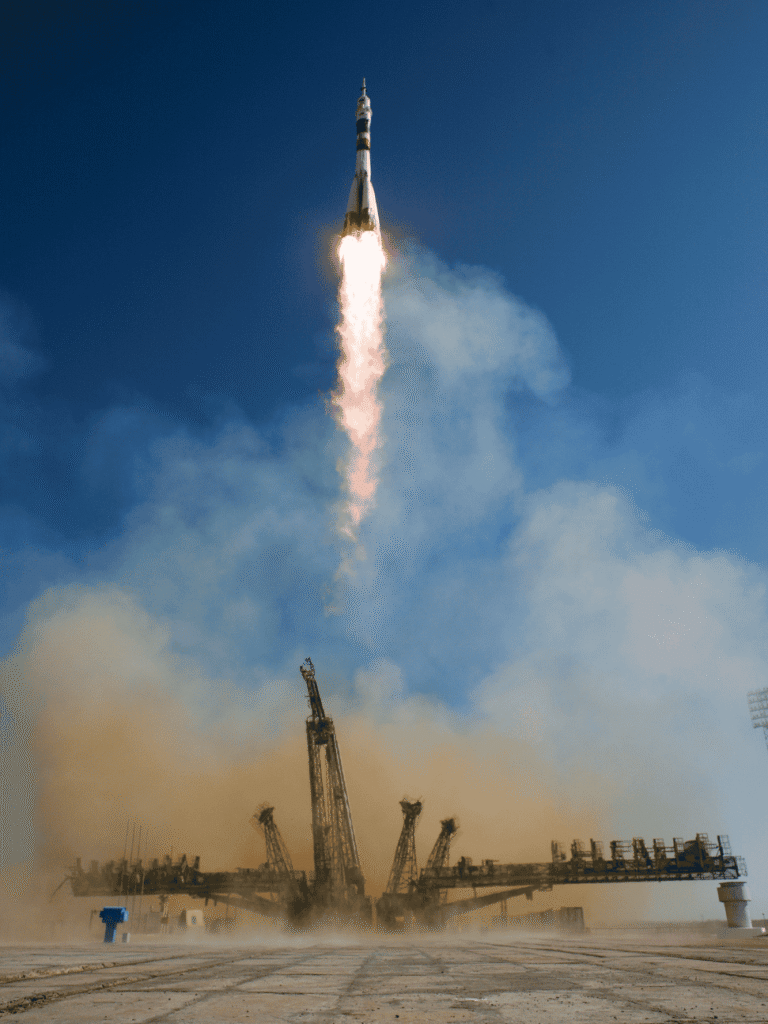
Baikonur is the world’s first and largest space launch facility, the pad that sent the first satellite and the first human into orbit. Leased to Russia and still operational, it can be visited on organised tours, sometimes timed to an actual rocket launch.
Access is tightly controlled and needs to be arranged well in advance through authorised operators. Best for space obsessives who’ll happily plan a trip around a launch window.
📖 Related Guide: Drawn to ancient Silk Road cities? Our things to do in Xi’an guide covers the eastern end of the same old trade route.
Live Like a Nomad: Kazakh Experiences
Kazakhstan’s landscapes are the draw, but its living nomadic culture is what you’ll remember. These experiences turn a sightseeing trip into something more hands-on, and none of them cost much.
Sleep in a Yurt
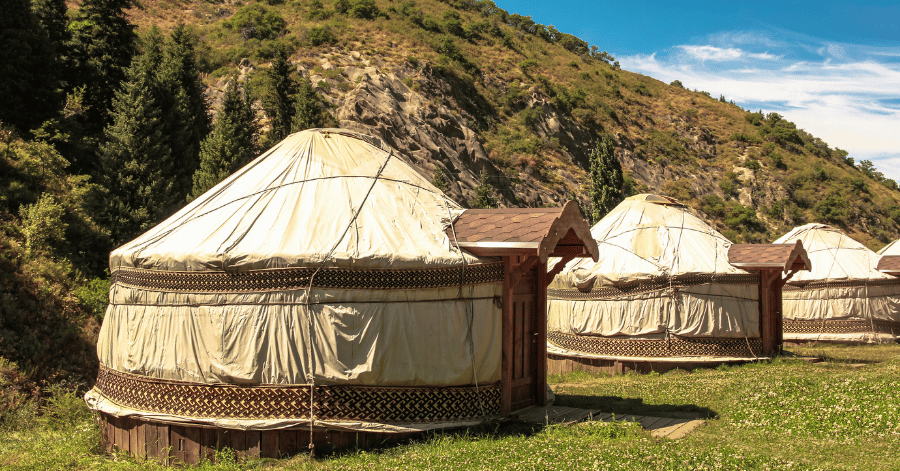
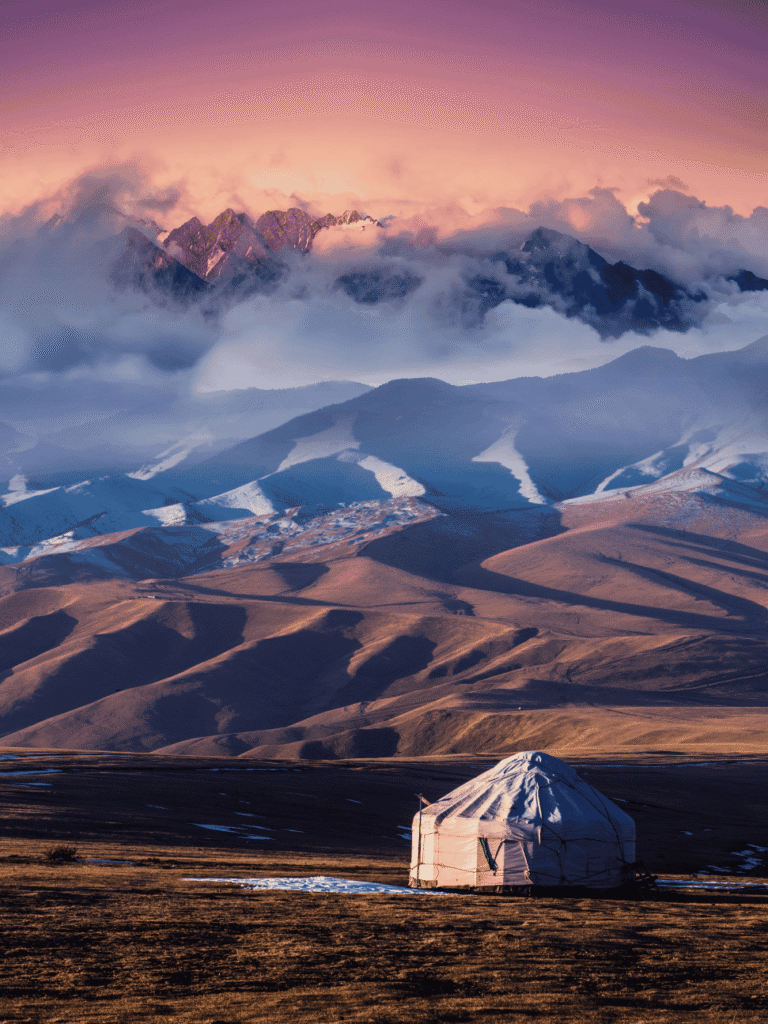
Spending a night in a yurt, the round felt tent that has housed Central Asian nomads for centuries, is the most atmospheric way to stay in the countryside. You’ll find them at homestays around the Kolsai Lakes, Charyn Canyon and the Altyn-Emel steppe, often with dinner, breakfast and endless tea thrown in.
It’s basic (expect a shared washroom and a mattress on the floor), but the hospitality is warm and the stargazing is unreal once the light pollution disappears. It’s for travellers happy to swap a hotel for a real slice of nomad life.
Watch a Golden Eagle Hunter
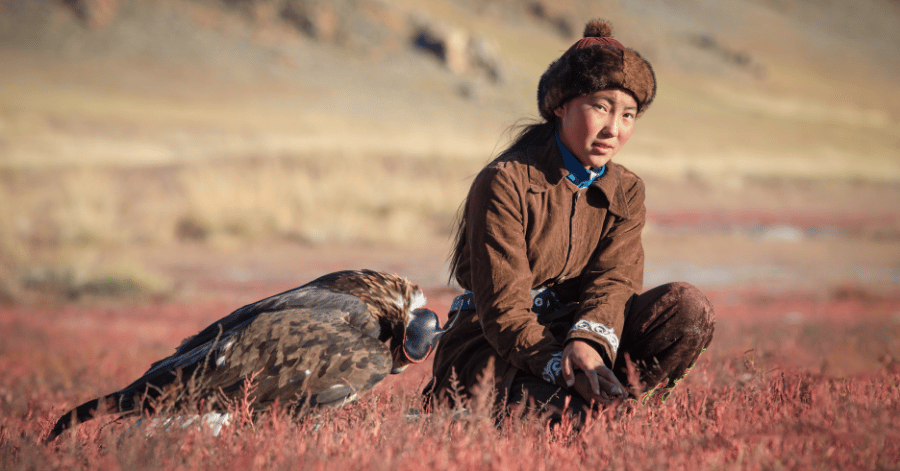
Eagle hunting is one of Kazakhstan’s most striking traditions, a UNESCO-recognised art where trained golden eagles hunt across the steppe. Once a skill passed down through generations, it’s now kept alive at demonstrations, cultural shows and festivals rather than as everyday practice.
You can usually arrange to see a berkutchi (eagle hunter) at work near Almaty or at seasonal nomad festivals, often alongside horseback games. For culture-seekers, it’s a rare, photogenic window into the country’s nomadic past, and the one experience nowhere else in the region does quite like this.
Sweat It Out at a Banya
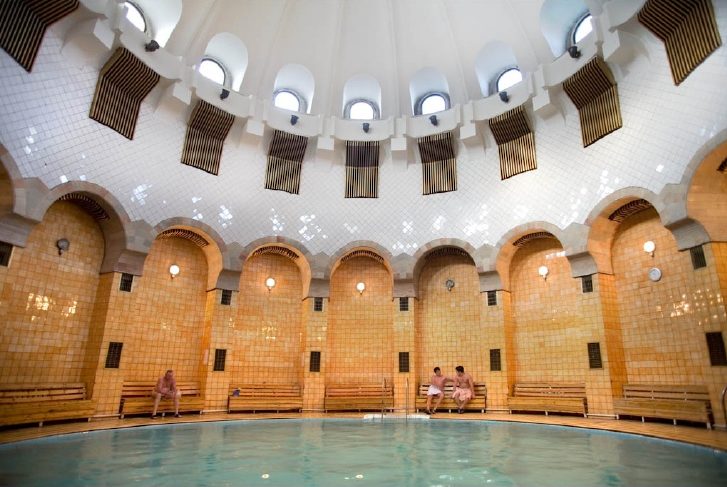
Image Credits: Caravanistan
A banya is the Central Asian take on the bathhouse, a hot, steamy, sociable ritual of sauna rounds, cold plunges and a good-natured birch-branch beating. Almaty’s grand Arasan Baths are the classic place to try it, a Soviet-era complex offering Russian, Finnish and Turkish rooms under one roof.
It’s cheap, deeply local, and the fastest way to warm up after a cold day in the mountains. Go with an open mind, follow the locals’ lead, and you’ll see how Kazakhs actually unwind.
📖 Related Guide: Prefer islands and hands-on days out? Our Phu Quoc travel guide is another spot built around doing, not just seeing.
What to Eat in Kazakhstan
Kazakh food is hearty, meat-forward nomad cooking, built for cold winters and long distances. It leans on horse, mutton and beef, wheat noodles and dairy in forms you’ve probably never tried. Almaty is the easiest place to sample it, with polished Kazakh restaurants like Auyl, Navat and Yurta alongside the street food of the Green Bazaar.
Beshbarmak
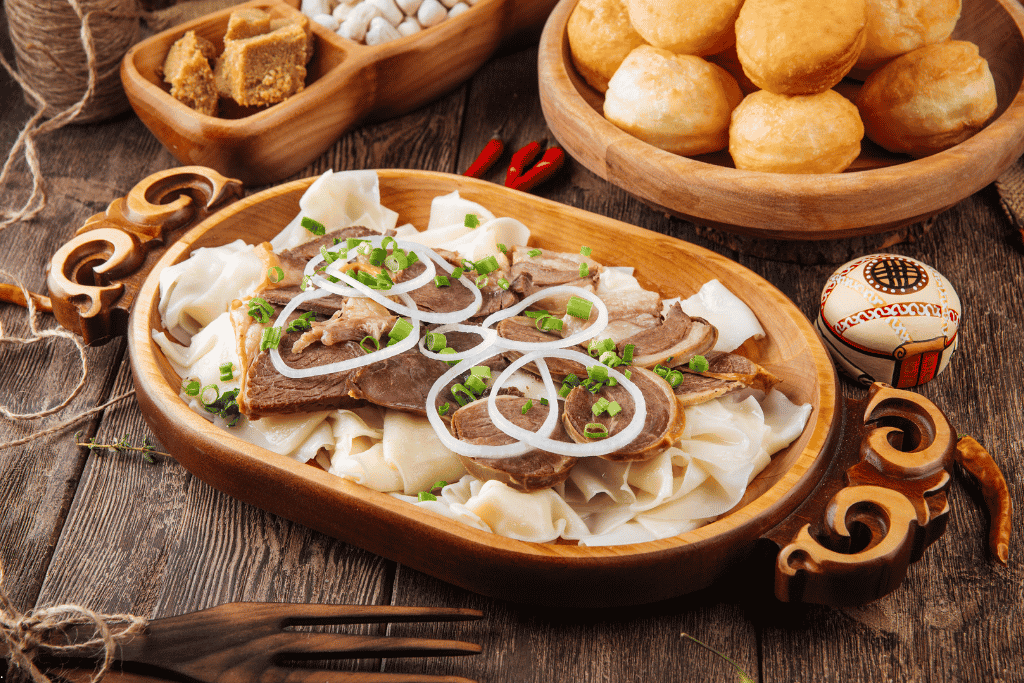
Beshbarmak is the national dish and the one to try first: boiled meat (beef and often horse) served over wide, flat sheets of noodle, with an onion broth. The name means “five fingers”, a nod to the traditional way of eating it by hand.
| Where to try | Area | Notes |
|---|---|---|
| Auyl | Almaty | Upscale, modern take on Kazakh classics |
| Navat | Almaty | Relaxed setting, generous portions |
| Green Bazaar food stalls | Almaty | Cheapest, most local version |
Manti

Image Credits: 6930421941 on rednote
Manti are Central Asia’s take on the steamed dumpling, plump parcels of dough filled with spiced minced meat (often lamb or beef) and onion, sometimes pumpkin. They arrive glossy and juicy, usually with a dollop of sour cream or a splash of vinegar.
| Where to try | Area | Notes |
|---|---|---|
| Navat | Almaty | Reliable, tourist-friendly menu |
| Local cafés (“stolovaya”) | Nationwide | Cheap canteen-style spots |
Lagman
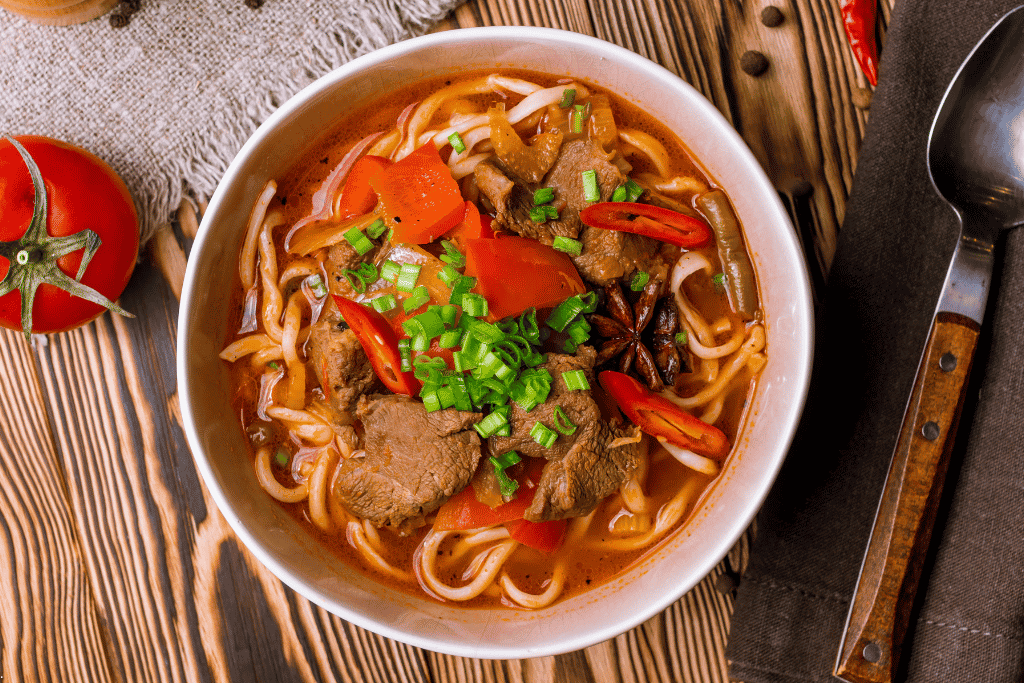
Lagman is a warming bowl of long, hand-pulled noodles in a spiced broth with meat and vegetables, often nudged toward the spicy end. It shows the Uyghur and wider Central Asian influence on Kazakh cooking. The best versions come from Uyghur-run kitchens, where the noodles are pulled to order and arrive still springy in the broth.
| Where to try | Area | Notes |
|---|---|---|
| Uyghur restaurants | Almaty | Best versions, freshly pulled noodles |
| Yurta | Almaty | Sit-down Kazakh dining |
Kazy
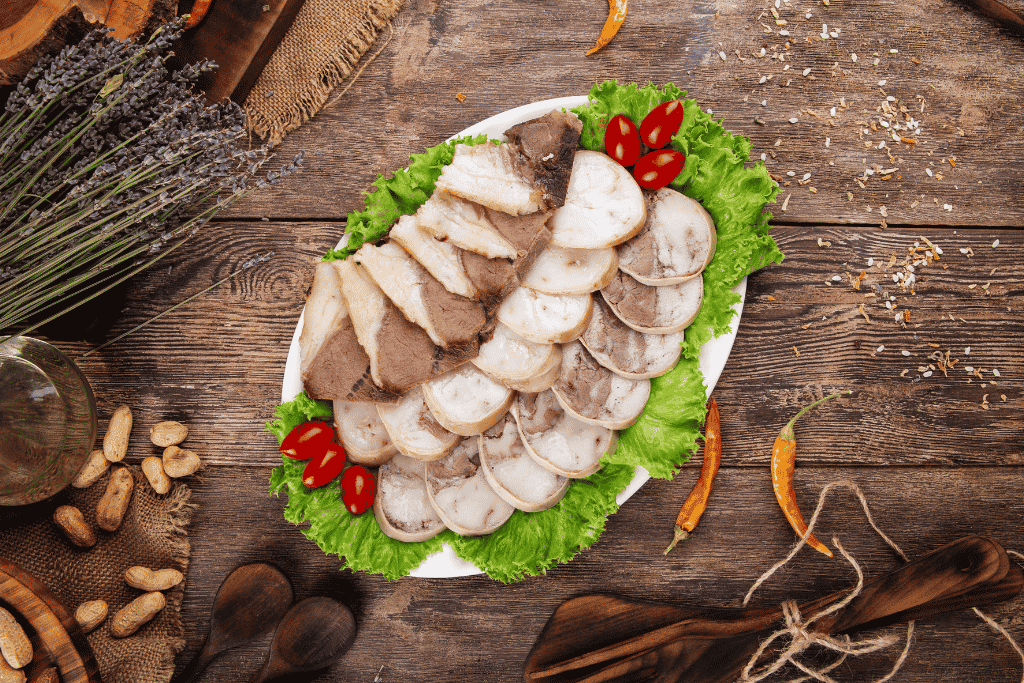
Kazy is a traditional horse-meat sausage and a nomadic staple, prepared raw, smoked or dried to keep through the long winters. It’s often eaten alongside beshbarmak, and if you’re going to try horse anywhere, this is the classic way to do it. The taste is rich and faintly gamey, closer to a cured beef than you’d expect, and it’s a genuine point of pride on any Kazakh table.
| Where to try | Area | Notes |
|---|---|---|
| Green Bazaar | Almaty | Whole horse-meat section to browse |
| Auyl | Almaty | Refined plating of traditional cuts |
Kumis and Shubat
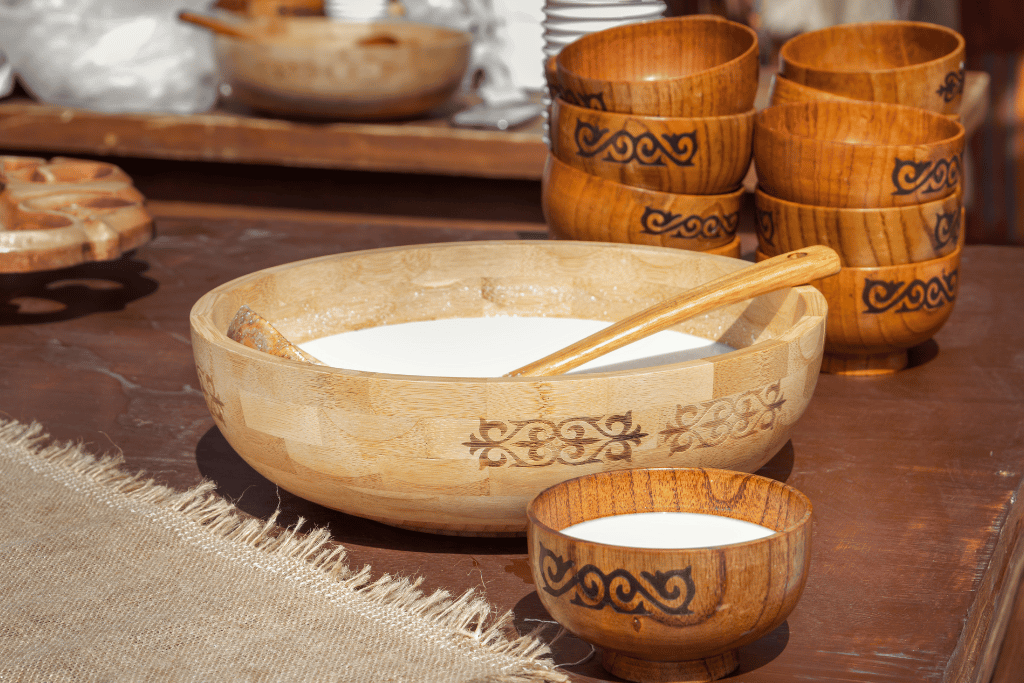
Kumis (fermented mare’s milk) and shubat (fermented camel’s milk) are the drinks that define the nomadic table. Both are tangy, fizzy and sour, an acquired taste, and both are woven deep into Kazakh culture as prized, restorative drinks. Locals swear by their health benefits, and you may well be offered a bowl as a gesture of hospitality, so it’s worth at least one polite sip.
| Where to try | Area | Notes |
|---|---|---|
| Green Bazaar | Almaty | Sold by local vendors |
| Kazakh restaurants | Nationwide | Often on the traditional-drinks menu |
Kurt
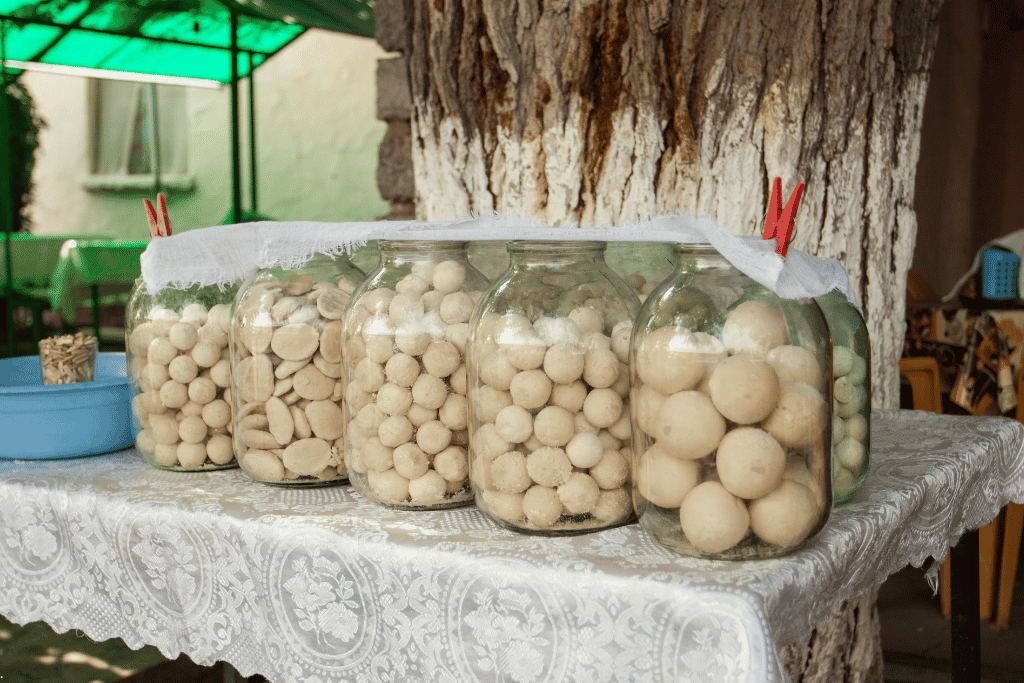
Kurt is dried, salted balls of fermented milk, hard as a pebble and easy to mistake for a sweet cookie until you bite in. Nomads carried it for months on horseback as a lightweight protein, and it still turns up at every market and roadside stop.
| Where to try | Area | Notes |
|---|---|---|
| Any market or roadside stall | Nationwide | Cheap, sold by weight |
| Charyn/Kolsai road stops | Almaty region | Perfect long-drive snack |
📖 Related Guide: If a place’s food is your compass, our 15 best things to do in Naples guide is built around eating your way through a city.
Best Time to Visit Kazakhstan
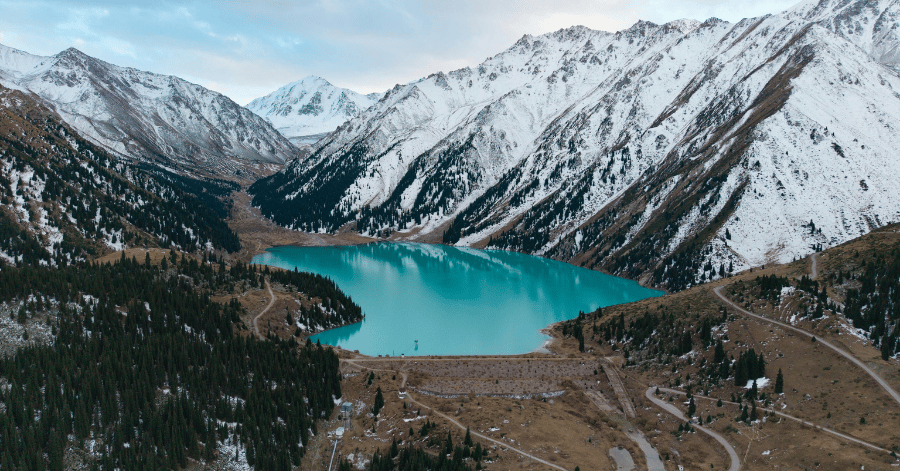
The best time to visit Kazakhstan for most travellers is June to September, when the lakes, canyons and mountain roads are all open and the weather is warm. This is peak season for Charyn Canyon, the Kolsai and Kaindy lakes, and Altyn-Emel, and the only reliable window for the higher trails.
Winter (December to February) flips the trip on its head. It’s brutally cold, especially in Astana, but it’s prime time for skiing and skating at Shymbulak and Medeu, and the snow-covered scenery has its own appeal. Spring and autumn are quieter shoulder seasons with unpredictable weather and thinner tourist infrastructure.
If your heart is set on the turquoise lakes and the canyon floor, come in summer. If you want snow sports and don’t mind the cold, aim for deep winter.
📖 Related Guide: Timing a trip around the weather? Our Santorini travel guide breaks down the shoulder-season sweet spots the same way.
How to Get to Kazakhstan from Singapore
There are no direct flights between Singapore and Kazakhstan, so you’ll connect once, typically through a Middle Eastern, Turkish or Central Asian hub. Total journey time usually runs from around 11 hours upward depending on the layover, with most itineraries landing in Almaty or Astana.
Air Astana is the national carrier and often the most convenient option, alongside airlines like Turkish Airlines, flydubai and others via their hubs. Almaty is the better arrival point for the mountains, lakes and canyons, while Astana suits a capital-first or business trip.
The visa side is easy. Singapore passport holders can enter Kazakhstan visa-free for up to 30 days for tourism, per the Singapore Ministry of Foreign Affairs. Just make sure your passport has at least six months’ validity and a blank page, and keep proof of onward travel handy, as immigration can ask for it. Entry rules do change, so it’s worth a final check before you fly.
📖 Related Guide: Sorting the pre-trip admin? Our best travel insurance in Singapore guide compares plans for longer, further-flung trips.
Getting Around and Paying in Kazakhstan
Getting around Kazakhstan splits neatly in two: easy in the cities, do-it-yourself everywhere else. In Almaty and Astana, the Yandex Go app is your best friend for cheap, metered taxis and even public-transport routing, and you can tap a card straight onto city buses.
For the big nature sights, you’ll want a rental car or a hired driver, since the canyons, lakes and parks are hours apart with little in between. The highways are surprisingly good, but avoid driving rural roads at night, and budget for a sturdier vehicle on the rough final approaches to spots like Kaindy Lake.
Cash in the Countryside, Cards in the City
The split catches a lot of travellers out. Almaty and Astana are largely cashless, and you can tap a card for almost everything, but the moment you leave the big cities, cash is king. ATMs and even petrol stations thin out dramatically on the road, so the golden rule is to withdraw enough tenge before you head into the countryside.
Skip the airport exchange counters too, which reliably offer the worst rates you’ll see all trip. The smarter play is to withdraw local currency from an ATM once you land.
The YouTrip Way to Pay
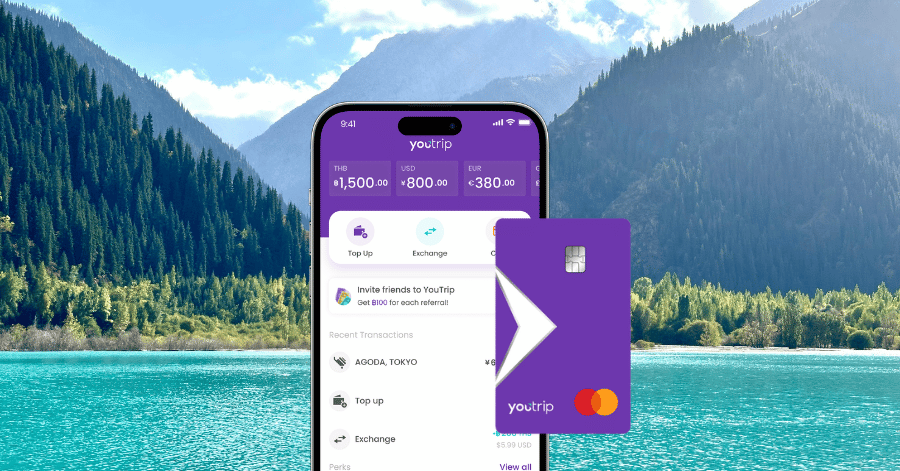
This is where a travel card earns its keep. In the cities, tap your YouTrip card for cafés, restaurants, taxis and shops with no foreign transaction fee. Every spend is billed at the Mastercard wholesale rate, auto-converting your SGD to tenge with no hidden markup. Compare that to a typical credit card quietly adding 3% to 3.5% in FX fees on every overseas tap.
For the cash-is-king countryside, withdraw your tenge from a city ATM with YouTrip before you leave. Your first S$400 of overseas ATM withdrawals each calendar month is free, then it’s a flat 2% after that. Some ATM operators add their own on-screen fee, so take out a sensible lump sum in one go.
That beats a money changer, which bakes a markup of a few percent into the rate it quotes you, wider still on a less-common currency like the tenge.
Bottom line: tap the card in Almaty and Astana, pull a cash buffer from an ATM before any road trip, and skip the exchange counters entirely. For more, see our best multi-currency card in Singapore guide and our explainer on how YouTrip’s exchange rates work.
📖 Related Guide: Curious why wholesale rates beat the counter? Our wholesale exchange rates explained breaks down the rate banks actually use.
FAQs
Kazakhstan is generally considered safe and welcoming for tourists, and travellers routinely describe locals as friendly and helpful. The usual sensible precautions apply, and the main day-to-day friction is the language barrier rather than any safety concern. Use a ride-hailing app like Yandex Go rather than unofficial airport taxis to avoid being overcharged.
Seven days is a solid amount of time for a first trip, enough to cover Almaty and its headline day trips like Charyn Canyon and the Kolsai and Kaindy lakes at a comfortable pace. Add two to three days if you want to fly north for Astana, and more still for far-flung regions like Mangystau or Turkistan.
Kazakhstan is best known for being the world’s largest landlocked country, its vast steppe and mountain landscapes, its nomadic heritage (including eagle hunting and horse culture), and the Baikonur Cosmodrome, the world’s first spaceport. It’s also increasingly known as an underrated, affordable adventure-travel destination.
Yes, but mainly outside the cities. Almaty and Astana are largely cashless and you can tap a card almost everywhere, but ATMs become scarce once you leave for the canyons, lakes and parks, so withdraw enough tenge in the city first. Withdrawing from an ATM on arrival beats changing money at the airport.
Almaty is the better base for most first-time visitors, thanks to its proximity to the mountains, lakes and canyons plus its café and market culture. Astana is worth a short add-on for its futuristic architecture and landmarks like Bayterek Tower and Khan Shatyr, but it’s more of a city break than a nature trip.
Kazakhstan Won’t Stay a Secret For Long
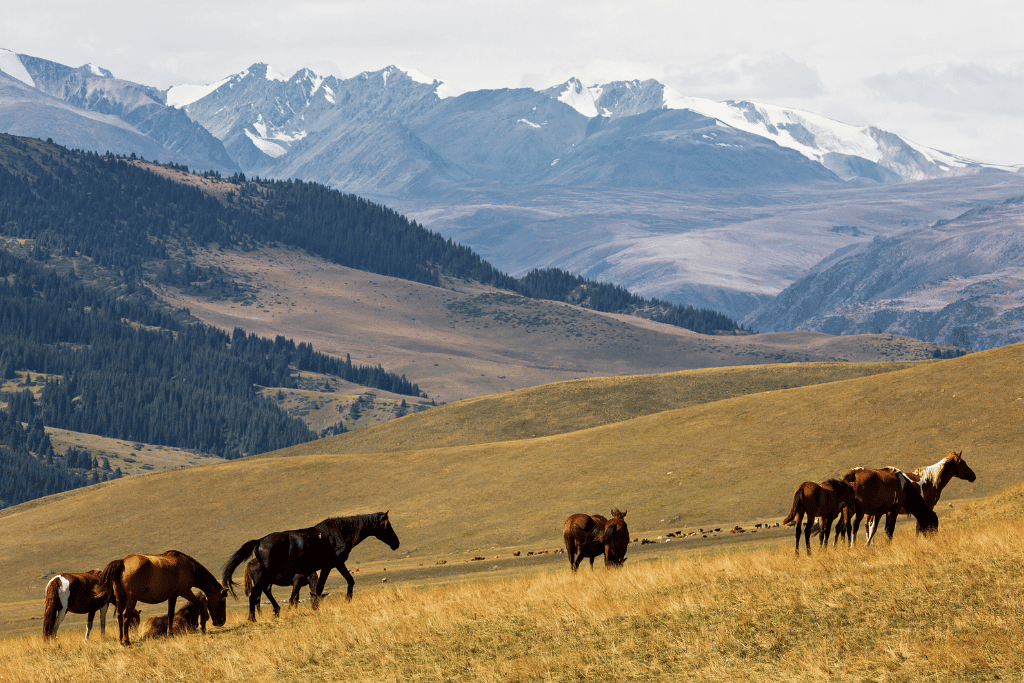
Go before everyone else does. Kazakhstan offers Grand-Canyon scenery, turquoise lakes, a space-age capital and a warm welcome for a fraction of what a comparable trip costs elsewhere, and without the crowds. Plan a little for the distances and the language, and it repays you with some of the most surprising landscapes in Asia.
Not a YouTrooper yet? Download YouTrip to spend in 150+ countries with no foreign transaction fees, wholesale exchange rates, and fee-free overseas ATM withdrawals up to S$400 a month. Use code YTBLOG5 to get S$5 in your account when you sign up. Plus, unlock exclusive deals with YouTrip Perks, and join our Telegram and Community Group for the latest travel tips and promos.