



A 250-year-old farming village that looks straight out of a Ghibli film
Shirakawago is a mountain village in Gifu Prefecture, famous for its gassho-zukuri farmhouses: steep thatched roofs pitched like two hands pressed in prayer, built to shrug off metres of winter snow. The main village, Ogimachi, is a UNESCO World Heritage Site, and the wider Shirakawa-go area is still home to around 1,600 people who live and farm here. Come for the rooftops, the rice paddies and the mountain quiet.
| Quick facts | Details |
|---|---|
| Where | Ogimachi, Shirakawa Village, Gifu Prefecture, central Japan |
| How to get there | Bus from Takayama (~50 min), Kanazawa (~1h 15min), or Nagoya (~3h). No train reaches the village |
| Time needed | Half a day covers the highlights; one night to see it empty after the tour buses leave |
| Best time to go | Year-round; snowiest and busiest December to February, greenest in summer |
| Top draws | The Ogimachi observation deck, the gassho farmhouses, local Hida beef and pudding |
| Pay with | Bring yen cash (village is cash-heavy); tap your YouTrip card where cards are taken |
Shirakawago at a glance
| Highlight | Good for | Cost (adult) | Time |
|---|---|---|---|
| Ogimachi observation deck | The postcard rooftop view | Free (shuttle 200 JPY / ~S$2) | 30–45 min |
| Wada / Kanda / Nagase House | Stepping inside a gassho home | 300–400 JPY (~S$2.40–3.20) each | 30 min each |
| Myozenji Temple and Museum | A thatched-roof temple | 300 JPY (~S$2.40) | 30–45 min |
| Shirakawa-go no Yu onsen | A soak after walking | 700 JPY (~S$5.50) | 1 hr |
| Gassho farmhouse stay | Seeing the village empty | From ~8,000 JPY (~S$63) per person | Overnight |
| Winter light-up (Jan–Feb) | The snowy glow | Free to view (reservation needed) | Evening |
Table of Contents
- Is Shirakawago Worth Visiting?
- What Makes the Gassho-zukuri Houses Special?
- How Long Do You Need in Shirakawago?
- Best Time to Visit Shirakawago
- How to Get to Shirakawago
- Best Things to Do in Shirakawago
- What to Eat in Shirakawago
- Best Day Trips from Shirakawago
- Where to Stay in Shirakawago
- Getting Around Shirakawago
- Paying in Shirakawago: Cash, Cards and Yen
- FAQ
Is Shirakawago Worth Visiting?
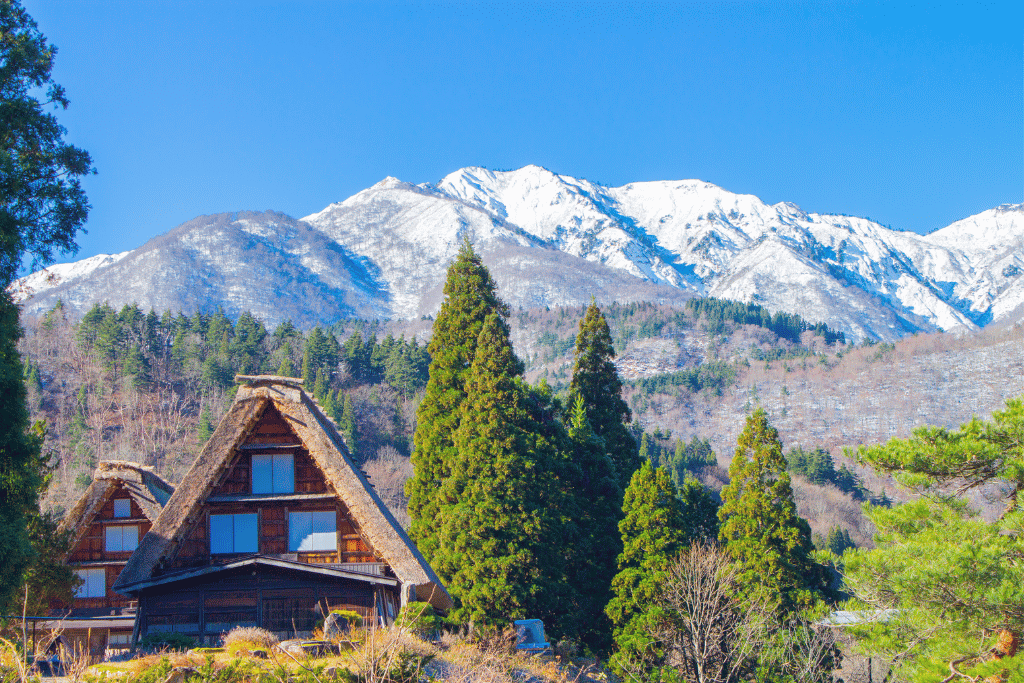
Yes, if you want a slow half-day in rural Japan rather than another big-city sight. Shirakawago is small, and there isn’t a long list of attractions. The draw is the setting: thatched farmhouses set against mountains, canals full of koi, and rice paddies that turn green in summer and white in winter.
Set your expectations right, and it delivers. This is a working village, not a theme park, so some houses are chained off because people live in them, and the main street gets busy with day-trippers from late morning to about 4 PM. The magic is in the edges of the day, early morning and after the tour buses leave.
It pairs naturally with Takayama or Kanazawa, which is how most people do it. On its own, it’s a couple of hours. Strung together with a nearby city, it becomes one of the best two or three days you can have in central Japan.
📖 Related Guide: Building a wider trip? Our things to do in Japan guide covers the big hitters to slot around the countryside.
What Makes the Gassho-zukuri Houses Special?
The gassho-zukuri farmhouses are the whole reason Shirakawago exists as a destination. The name means “hands in prayer”, after the steep triangular roofs that look like two palms pressed together. That shape isn’t for looks: it sheds the heavy mountain snow so the roof doesn’t collapse under the weight.
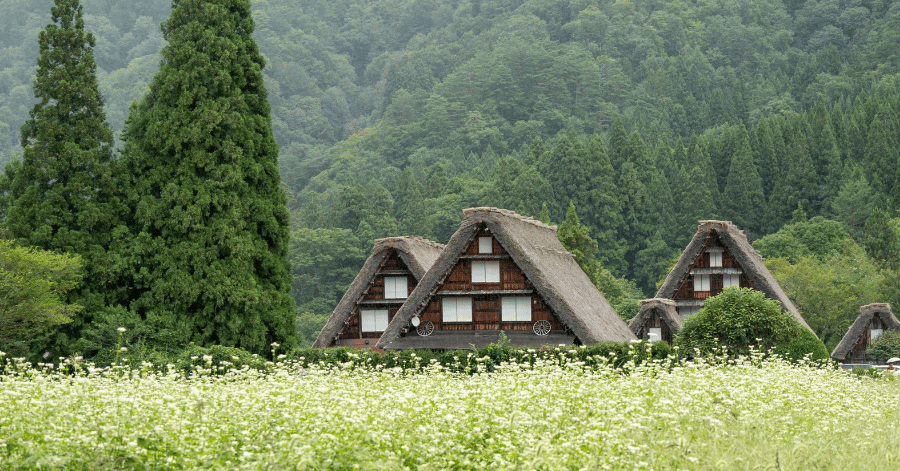
The clever part is how they’re built. The great roof frames are lashed together with rope and no nails at all, which lets them flex rather than snap. A thatched roof lasts about 20 to 30 years before it needs replacing, and re-thatching one is a village-wide effort called yui, where neighbours turn out to rebuild a roof together over a few days.
Inside, the tall attics were working space. The warm, smoky air rising from the ground-floor irori hearth made the roof space ideal for raising silkworms, which was a major source of income for the villagers. Some of the biggest houses have three or four floors of it. That mix of steep engineering and self-reliant village life is exactly what earned Ogimachi its UNESCO listing in 1995.
📖 Related Guide: Fitting Shirakawago into a longer trip? Our 14-day Japan itinerary maps Tokyo, Kyoto and Osaka around the countryside.
How Long Do You Need in Shirakawago?
Half a day is enough to walk the village, climb to the viewpoint and eat well. Most people visit as a day trip from Takayama or Kanazawa, arrive mid-morning, and leave on a late-afternoon bus. You can cover Ogimachi on foot without rushing in three to four hours.
Stay one night if you can. The last tour buses pull out around 4 to 5 PM, and the village empties into something genuinely quiet: mist over the paddies, lit windows in the farmhouses, almost no one on the lanes. Guesthouses book out months ahead, so plan early.
Two nights only makes sense if you’re also visiting Gokayama or want deep snow time in winter. For most trips, a half-day or one overnight hits the sweet spot without padding the itinerary.
A half-day (the classic day trip) usually flows like this:
- 10 AM: arrive by bus, drop bags in a coin locker, walk in over the Deai Bridge
- 10:30 AM: head up to the observation deck for the rooftop view before the crowds build
- 11:30 AM: walk back down and eat early (soba, Hida beef skewers, gohei mochi) before the restaurants fill
- 1 PM: go inside one gassho house (Wada or Kanda) and the Myozenji museum
- 2:30 PM: pudding at Shirakawago Purin no Ie, then souvenir shopping along the main street
- 4 PM: last browse as the tour buses leave, then catch an afternoon bus out
📖 Related Guide: Basing yourself nearby? Our Nagano travel guide covers the alpine region next door, snow monkeys and all.
Best Time to Visit Shirakawago
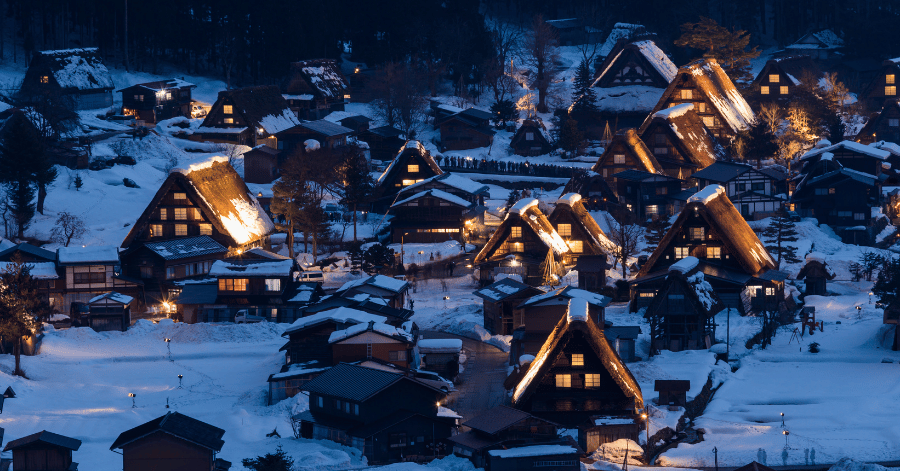
Shirakawago is worth visiting year-round, and each season changes the village completely. Winter (December to February) is popular: snow piles on the rooftops and the village looks like a postcard. It’s also the coldest and most crowded, and snowfall has grown less reliable in recent years.
If you’re chasing the snow, check conditions before you commit on the village’s official live webcam, which streams the Ogimachi rooftops from the observation deck through the day.
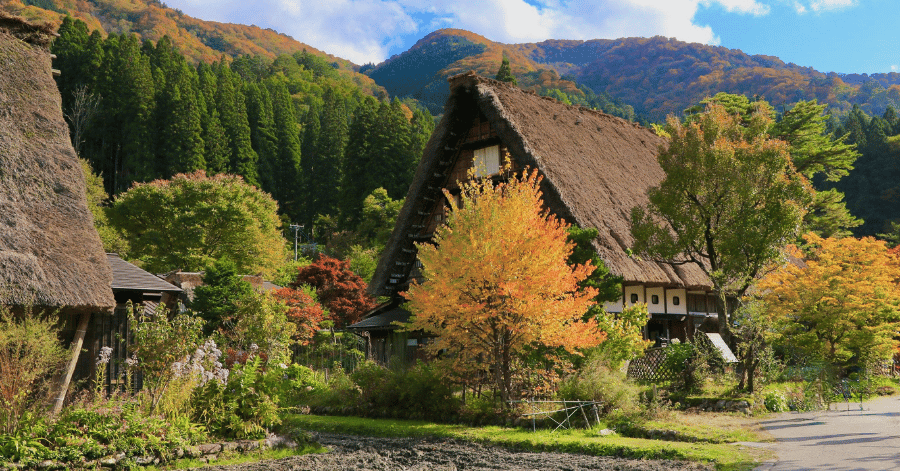
Spring brings cherry blossoms and flooded paddies that mirror the sky. Summer is lush and green with long daylight, and autumn (late October to early November) turns the surrounding hills red and gold. Any of these is a lovely, far quieter time to go than peak winter.
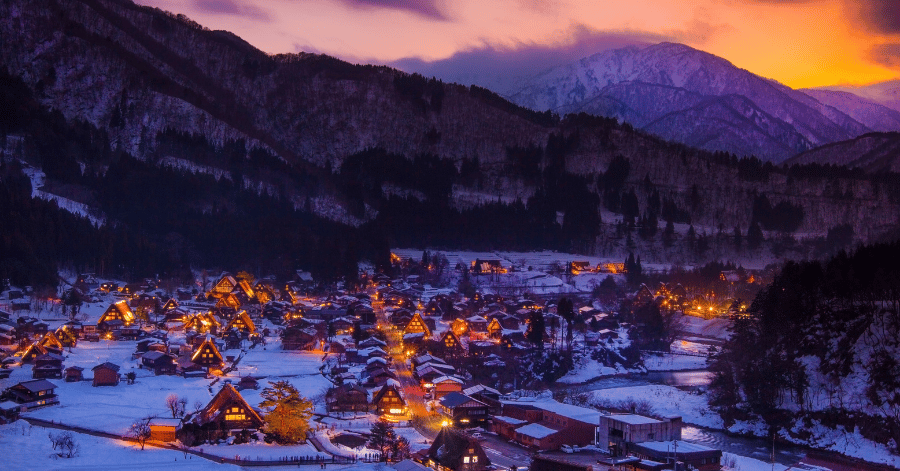
The winter light-up is the headline event, when the snow-covered village is lit after dark. For 2026 it runs on just four evenings (12, 18 and 25 January, and 1 February), from 5:30 to 7:30 PM. Demand is huge, so overnight stays and parking are allocated by advance reservation through the Shirakawa-go Tourist Association months ahead. Don’t turn up on spec expecting to get in.
📖 Related Guide: Timing the whole trip? Our best time to visit Japan guide breaks down the seasons region by region.
How to Get to Shirakawago
There’s no train to Shirakawago. The village sits deep in the mountains, so the last leg is always by bus from a nearby city, and the three main gateways are Takayama, Kanazawa and Nagoya.
- From Takayama: the easiest route. The Nohi bus takes about 50 minutes and costs 2,600 JPY (~S$20) one way. About half the services need a seat reservation, so book ahead in peak season.
- From Kanazawa: roughly 1 hour 15 minutes by highway bus, around 2,000–3,000 JPY (~S$16–24) one way. Handy if you’re combining Shirakawago with Kanazawa’s gardens and geisha districts.
- From Nagoya: about 3 hours direct by bus, roughly 3,500–4,700 JPY (~S$28–37) one way. The usual choice from Osaka or Kyoto is to shinkansen to Nagoya or Kanazawa first, then bus in.
Reserve peak-season and light-up buses well ahead; they sell out. Buy tickets on the operator’s site or at the bus centre, and note that the Shirakawago bus terminal is a small stop with vending machines and toilets, but no convenience store.
If you’re travelling with bags, the terminal has coin lockers (8 AM to 5 PM, 500 JPY (~S$4) for small or medium, 1,000 JPY (~S$8) for large), plus a staffed luggage-storage counter right beside it. Neither holds bags overnight, so it’s day-trippers only.
📖 Related Guide: Working out the rail legs? Our JR Pass 101 explains whether the pass is worth it for your route.
Best Things to Do in Shirakawago
Most of what you do here is on foot: climb for the view, step inside a few farmhouses, eat along the main street, and let the pace drop. Here are the spots worth your time.
Ogimachi Castle Observation Deck
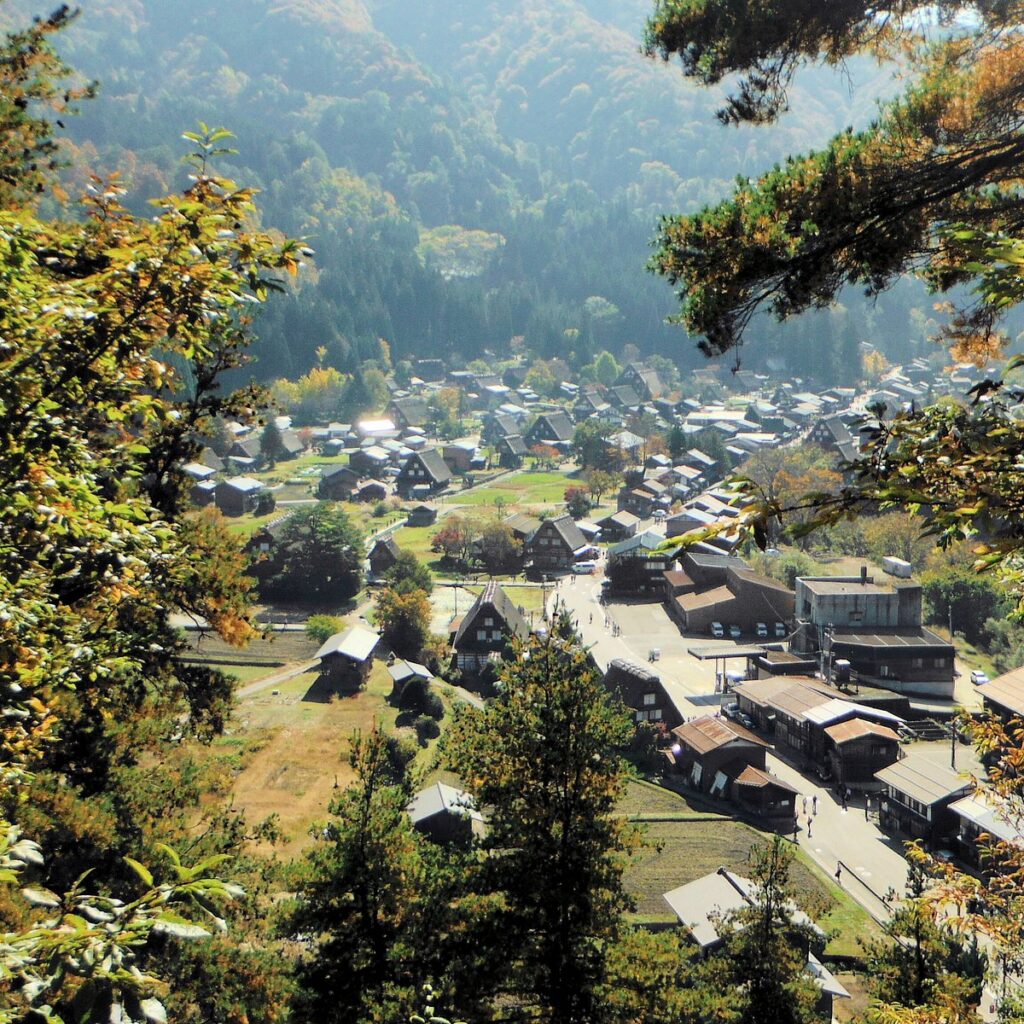
Image Credits: Tripadvisor
This is the view you came for. From a low ridge at the north end of the village, the Ogimachi Castle Ruins Observation Deck (the Shiroyama Tenshukaku viewpoint) looks out over the whole of Ogimachi: dozens of thatched roofs lined up between the river and the mountains, paddies stitched in between. It’s the shot on every postcard, and it earns it.
Admission is free. Walk up in about 15 to 20 minutes, or take the shuttle bus for 200 JPY (~S$1.60) each way (cash, roughly every 20 minutes). Go early or late to dodge the midday crowd at the railing. Best for first-timers and photographers; skip the walk up if you’re short on time and just ride the shuttle.
The Gassho-zukuri Triplets
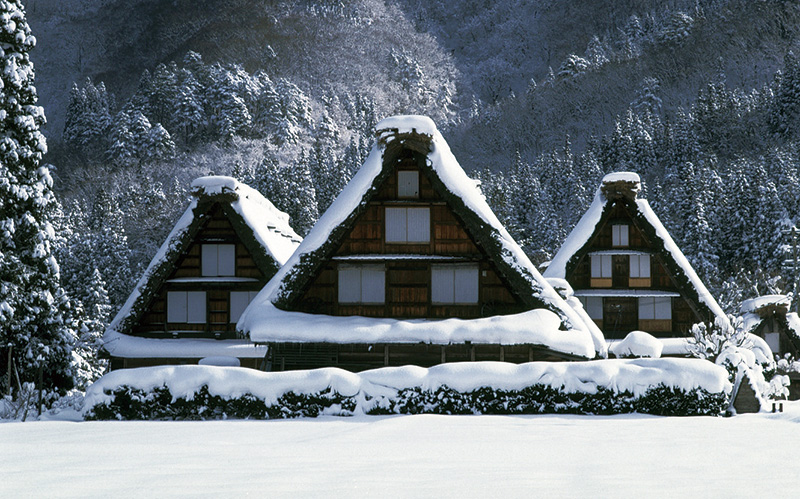
Image Credits: westjr.co.jp
Three farmhouses standing in a neat row, framed by paddies, make up the most photographed cluster in the village after the viewpoint. They’re private homes, so you admire them from the path rather than going in, but the line-up of three identical praying-hands roofs is the image most people picture when they think of Shirakawago. A two-minute stop on the way through, best paired with the walk to the observation deck.
Wada House
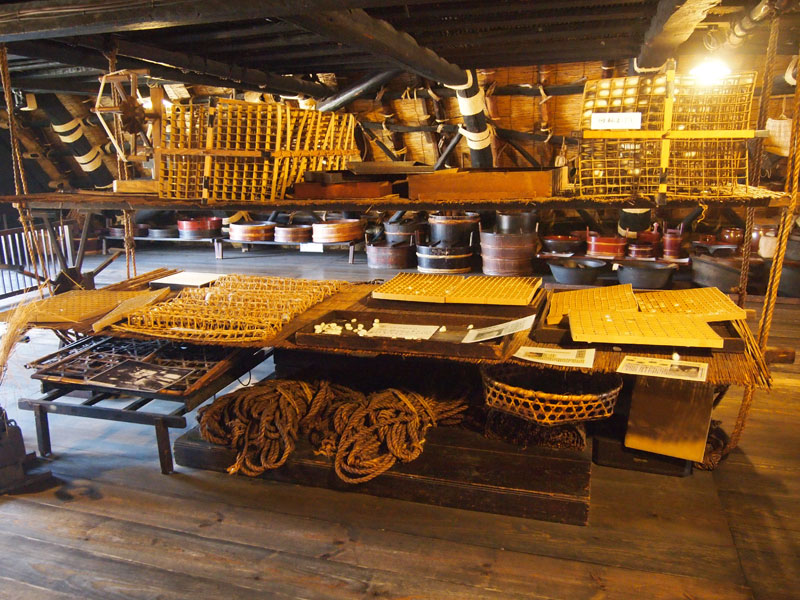
Image Credits: vill.shirakawa.lg.jp
The largest and oldest farmhouse open to the public, and the one to pick if you only enter one. The Wada family grew wealthy from silk and saltpetre, and the house shows it: a cavernous ground floor with a sunken irori hearth, and steep stairs to attic floors where silkworms were once raised under the great timber roof. Entry is 400 JPY (~S$3.20), open 9 AM to 5 PM. Best for a first real look inside a gassho home.
Kanda House
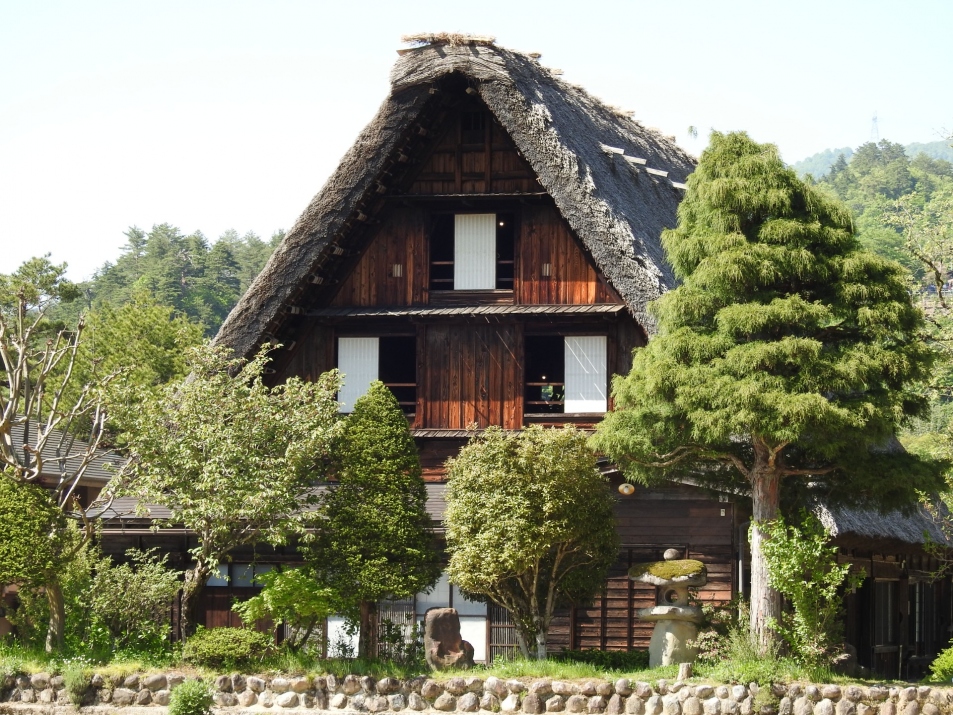
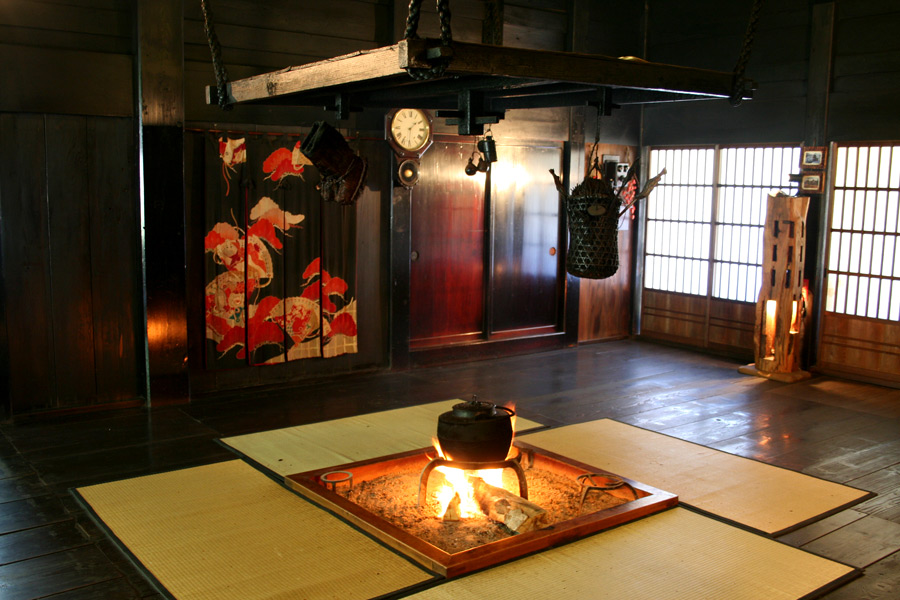
Image Credits: shirakawa-go.gr.jp; vill.shirakawa.lg.jp
A short walk from Wada House, Kanda House is smaller but arguably the better visit for the roof itself. You can climb right up through three or four low attic floors to see the lashed-beam structure up close, built without a single nail. Near the top there’s a little viewpoint over the village. There’s often a hearth smoking below, which is what gives these houses their dark timber and woody smell. Entry 400 JPY (~S$3.20). Best for anyone curious how the roofs actually hold together.
Nagase House
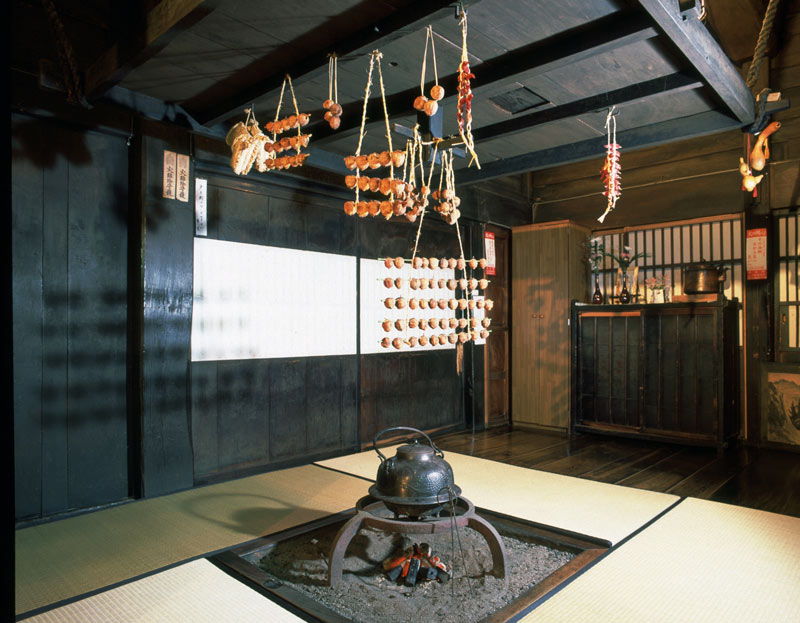
Image Credits: vill.shirakawa.lg.jp
Once home to a family of doctors, Nagase House leans into daily life: displays of medical tools, lacquerware, and farming implements across five floors. It’s the quieter, more lived-in of the three show houses, and rarely has a queue. Entry 300 JPY (~S$2.40). Best for history buffs who want detail without crowds; skip it if you’ve already done Wada and Kanda and are running short on time.
Myozenji Temple and Museum
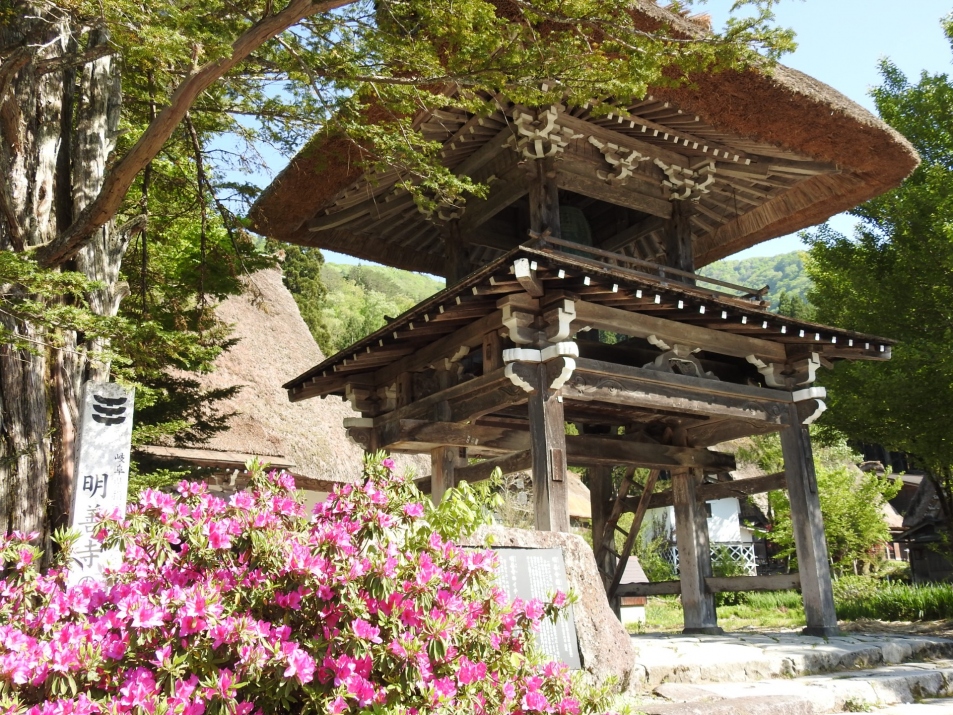
Image Credits: shirakawa-go.gr.jp
A Buddhist temple with a rare thatched main hall and a matching gassho-style bell tower, right in the middle of the village. The adjoining farmhouse museum shows how a temple family lived, with the same sunken hearth and attic floors as the houses. Admission 300 JPY (~S$2.40). Best for a calm ten minutes off the main street, especially when the crowds thicken.
Shirakawa Hachiman Shrine
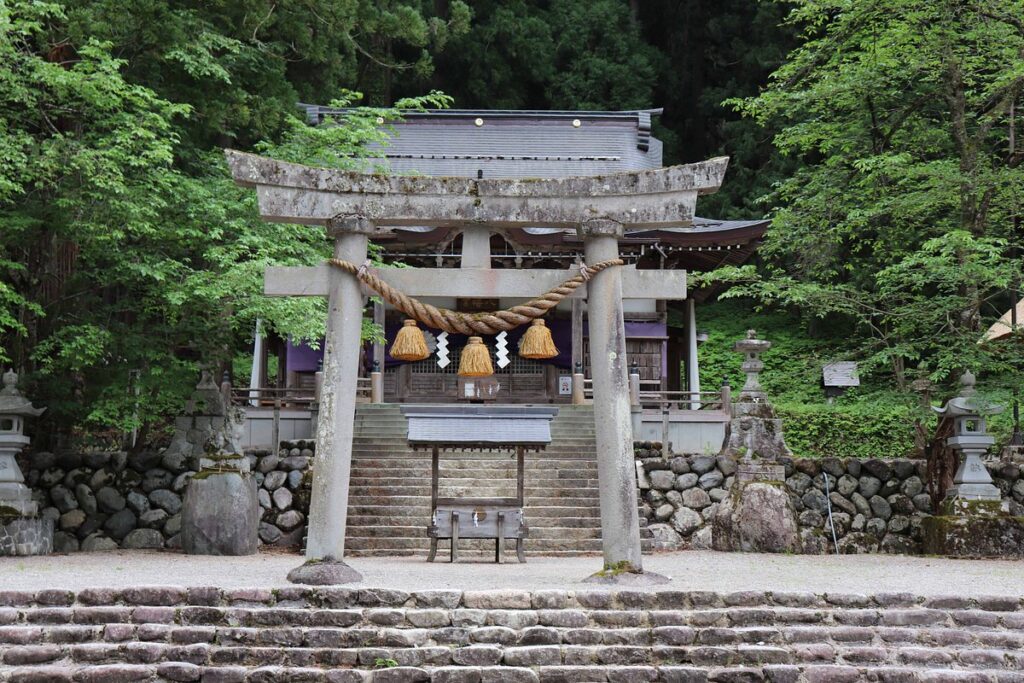
Image Credits: Tripadvisor
A small Shinto shrine set among tall cedars, and one of the older sites in the valley. It’s peaceful and free, and it’s the setting for the village’s biggest annual event, the Doburoku Festival (more on that below). Outside festival days, it’s a calm, shady spot a minute off the main street. Best for a quiet wander between the busier houses.
Gassho-zukuri Minkaen Open-Air Museum
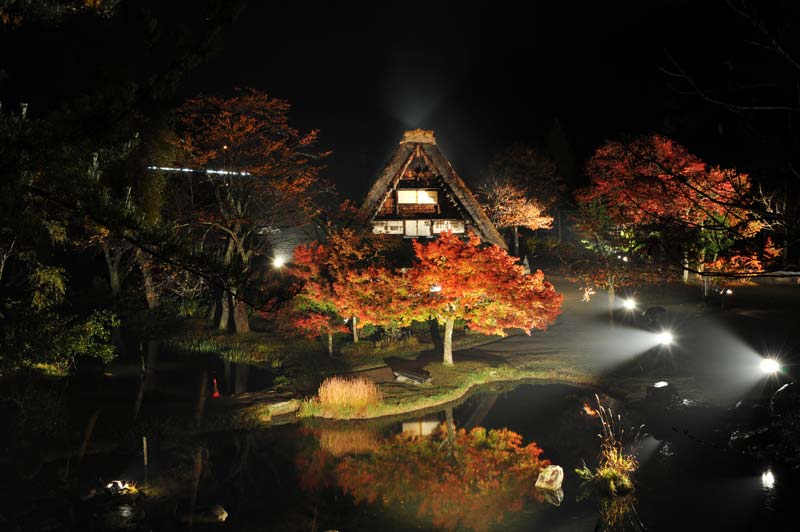
Image Credits: vill.shirakawa.lg.jp
Across the river from the main village, this open-air museum gathers around 25 gassho farmhouses relocated and preserved on one site. You can walk inside far more of them than in the village proper, watch demonstrations of thatching and old crafts, and see how silk and washi were made. It’s the best single place to understand how the buildings worked. Entry is around 600 JPY (~S$4.70). Best for anyone who wants the full story; skip it on a rushed half-day when the village itself comes first.
Deai Bridge
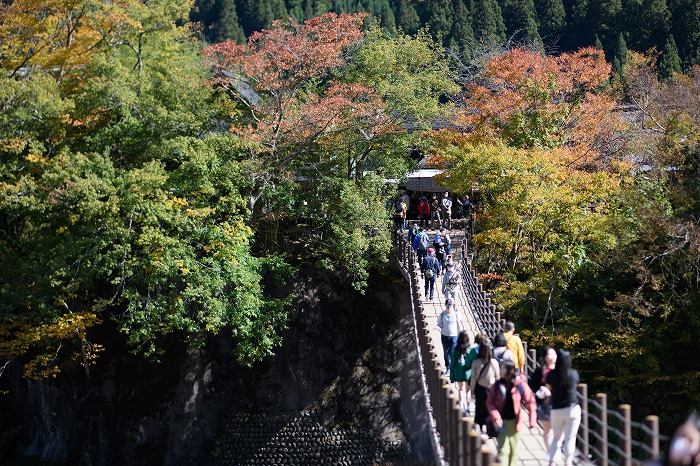
Image Credits: vill.shirakawa.lg.jp
The wooden suspension bridge over the Shogawa River is how most people first walk into Ogimachi from the bus terminal. It sways gently underfoot, with the river running clear below and the thatched roofs rising ahead. It’s a small thing, but it’s a lovely first and last view of the village. Free, and unavoidable, so slow down and take it in rather than rushing across.
The Canal-Lined Lanes
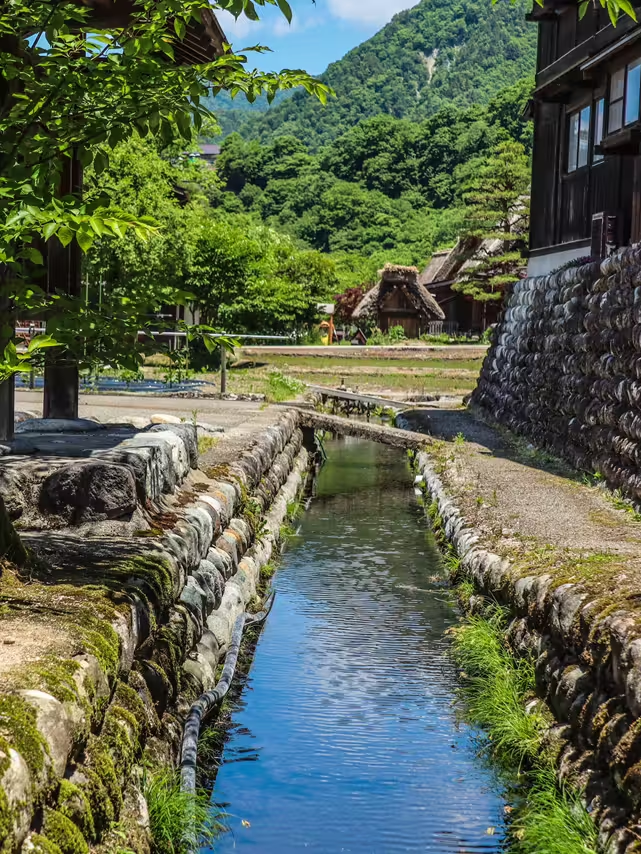
Image Credits: Trip.com
Some of the best time here is spent just walking. Narrow lanes run between the farmhouses, edged by clear stone canals full of fat koi. The village uses the canals to move water, and once a year they feed dozens of rooftop sprinklers in a fire drill. Rice paddies sit right up against the houses, worked by locals on tractors. Free, and the whole point of Shirakawago. Best for slow mornings before the day-trippers arrive.
Shirakawa-go no Yu
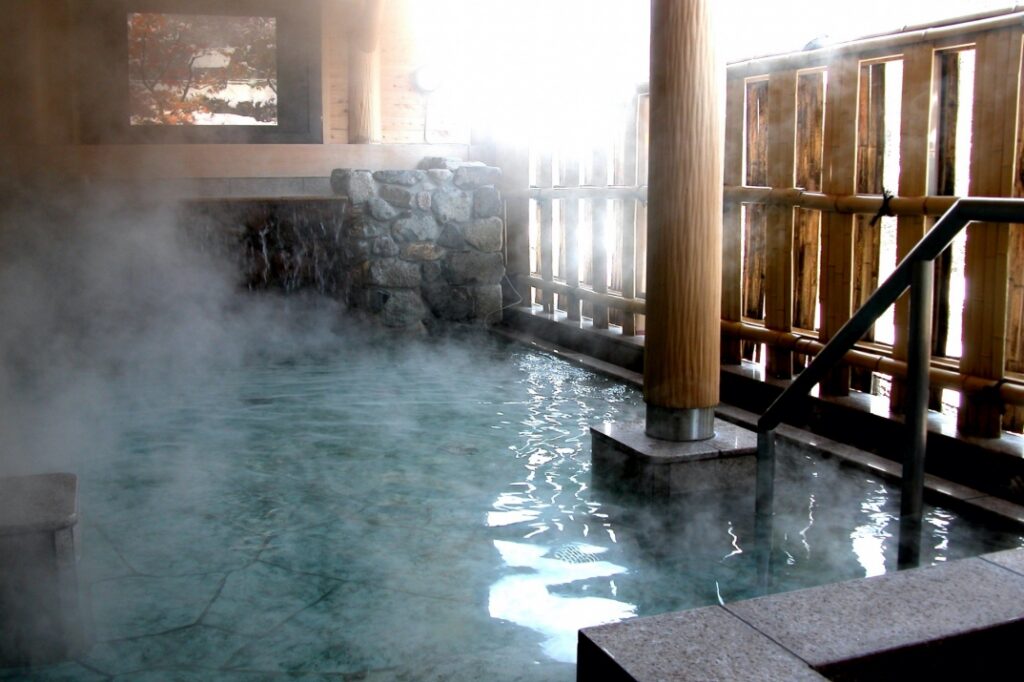
Image Credits: shirakawa-go.gr.jp
The village’s day-use onsen sits right by the river, an easy walk from the centre. After a few hours on your feet, it’s the obvious reward: an indoor bath and an open-air one looking out at the mountains, especially good on a cold or rainy day. Day entry is 700 JPY (~S$5.50). Best for anyone doing an overnight; day-trippers can squeeze it in before a late bus.
Time It for the Doburoku Festival
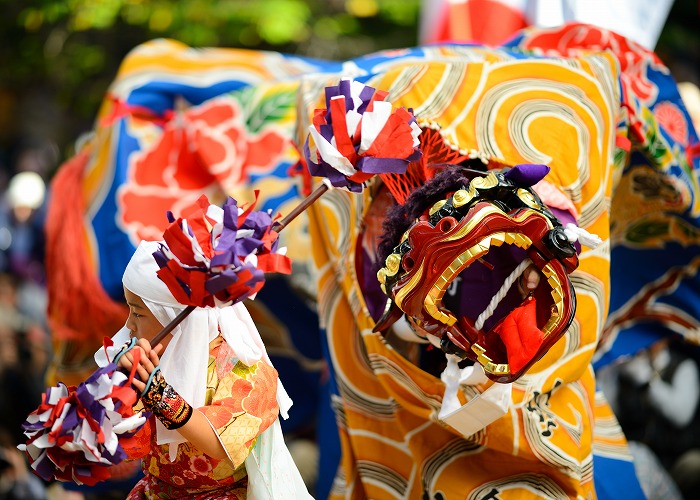
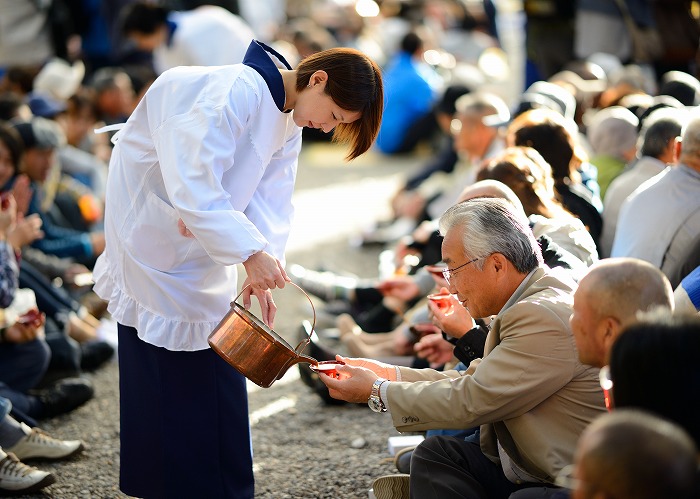
Image Credits: vill.shirakawa.lg.jp
If your trip lands in mid-October, this is the village at its liveliest. Held on 14 and 15 October at Hachiman Shrine, the Doburoku Festival gives thanks for the harvest with lion dances, folk music and processions, and hands out cups of doburoku, the milky, home-brewed unfiltered sake unique to the village. It’s a rare chance to see Shirakawago as a working community rather than a photo stop. Best for anyone who can time it; the village gets busy, so book a room early.
Stay in a Gassho Farmhouse
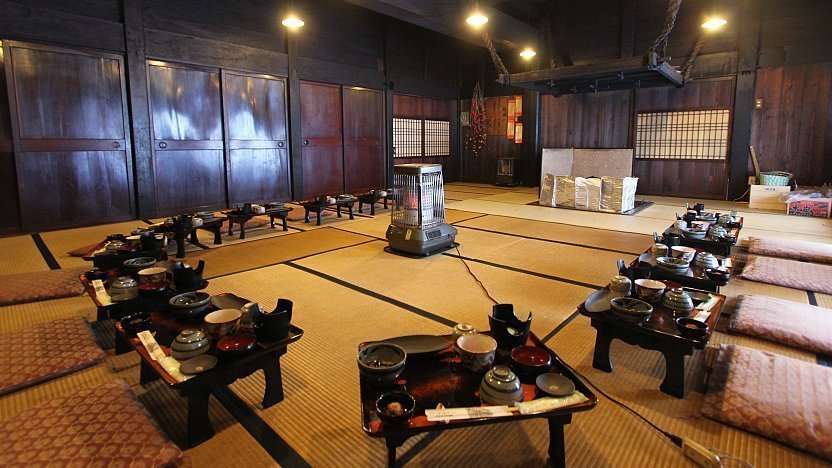
Image Credits: Japan Guide
The village’s signature experience isn’t a sight, it’s a sleepover. A handful of the farmhouses are run as minshuku (family guesthouses). You sleep on tatami, eat a home-cooked dinner around the irori hearth with the owners, and wake to the village at its quietest. Rooms start around 8,000 JPY (~S$63) per person with dinner and breakfast and climb well past 25,000 JPY (~S$197) for the best-known inns. Best for anyone who can plan months ahead; the rooms are few and sell out fast.
The Winter Light-Up
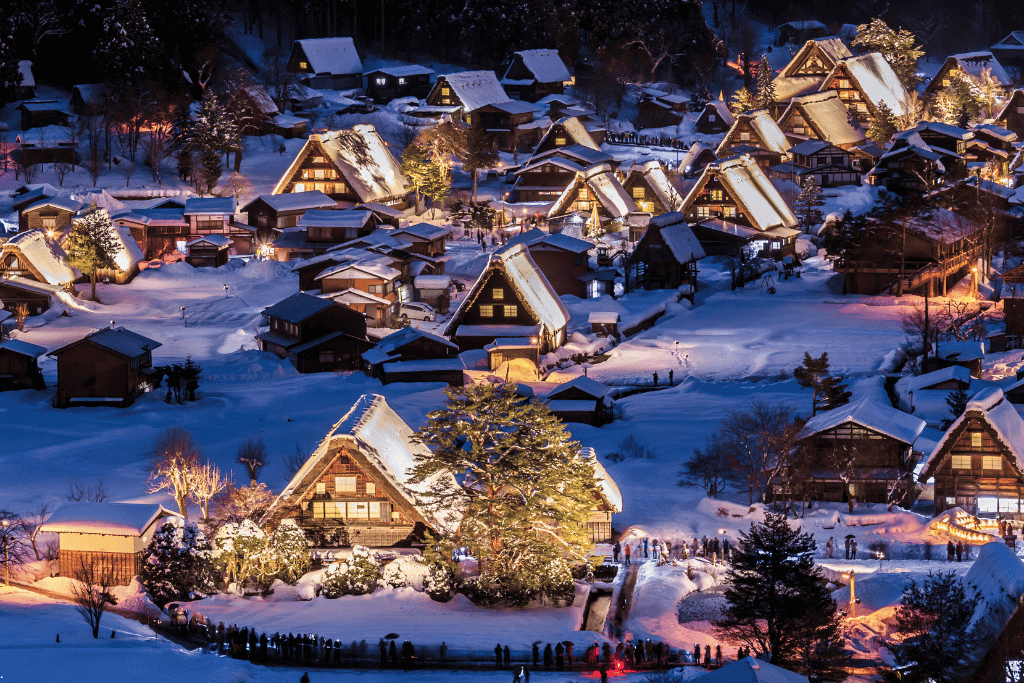
On a handful of January and February evenings, the snow-covered village is lit up after dark, and the rooftops glow against the black mountains. It’s the most magical Shirakawago gets, and the hardest to see: only a few thousand people are let in each night, by advance reservation. If it’s a bucket-list shot, plan the whole trip around securing a slot months ahead through the tourist association.
Shop the Main Street
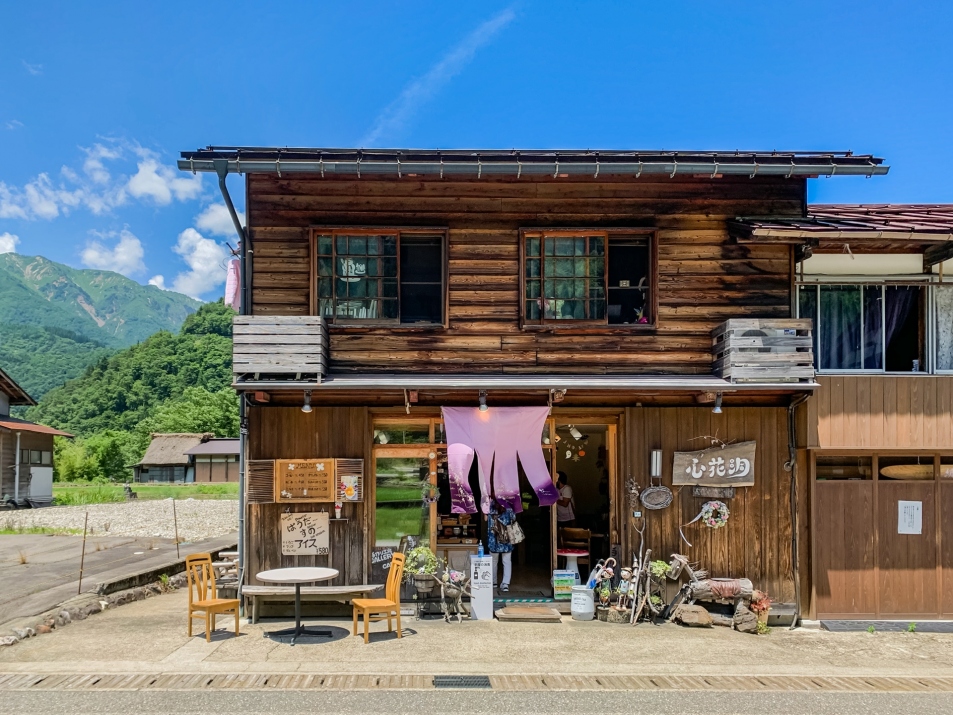
Image Credits: shirakawa-go.gr.jp
The lane running through Ogimachi is lined with small shops selling things you’ll only find in this corner of Gifu. Look for the Sarubobo, a faceless red good-luck doll that’s the region’s mascot, plus Hida beef crisps, doburoku-flavoured treats, gassho-house-shaped snacks and bags of the local rice grown in the paddies around you. Prices are modest and it’s all easy to pack. Best for last-hour browsing before your bus, when the day-trip crowds thin out.
📖 Related Guide: More temples and old-town lanes? Our things to do in Kyoto guide covers the classic cultural stops.
What to Eat in Shirakawago
Shirakawago punches above its size on food. The region shares the Hida larder with Takayama, so you get prized beef, buckwheat soba and hearty miso dishes, plus a few things you’ll only find here. Most of it is grab-and-go from stalls along the main street through Ogimachi.
Hida Beef
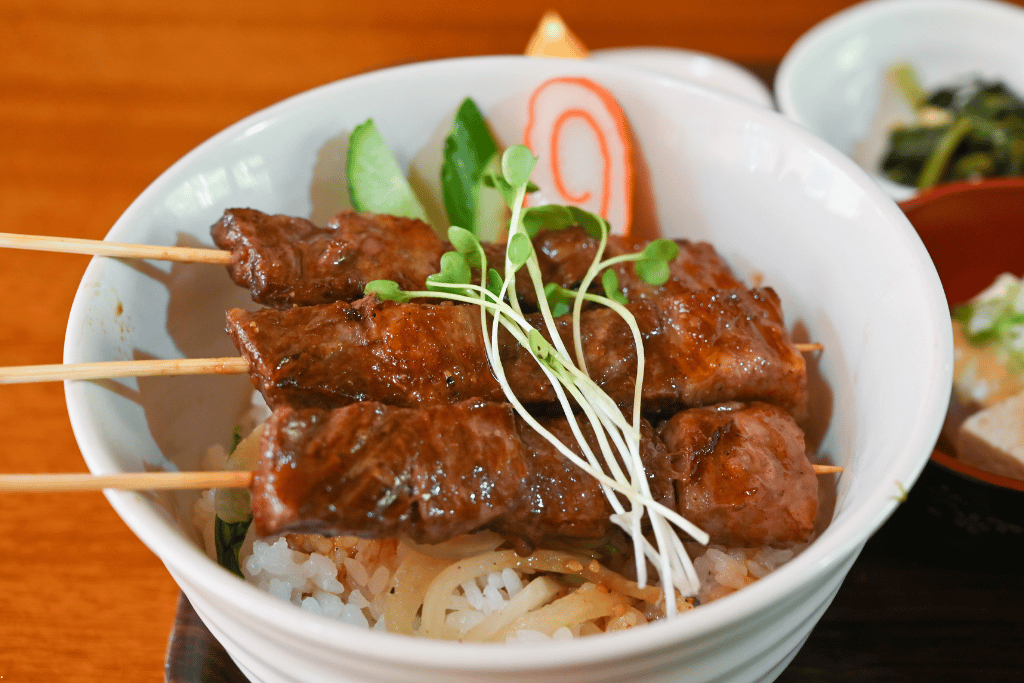
Hida beef is Gifu’s answer to Kobe: richly marbled A5 wagyu from the mountains, and the region’s headline dish. You don’t need a big sit-down meal to try it. Stalls sell grilled skewers and Hida beef croquettes (a deep-fried potato patty with beef inside) for takeaway, and a couple of restaurants do it as a rice bowl.
| Where to try | Area | What makes it |
|---|---|---|
| Kondou Shoten (今藤商店) | Main street, ~5 min from the bus terminal | A5 Hida beef skewers and croquettes, fried to order at a standing counter |
| Irori (いろり) | Central Ogimachi | Sit-down Hida beef, served in a tatami gassho house |
It’s the easiest way to try the local wagyu without a restaurant bill, and the croquette from Kondou Shoten is the cheap, no-fuss win.
Gohei Mochi
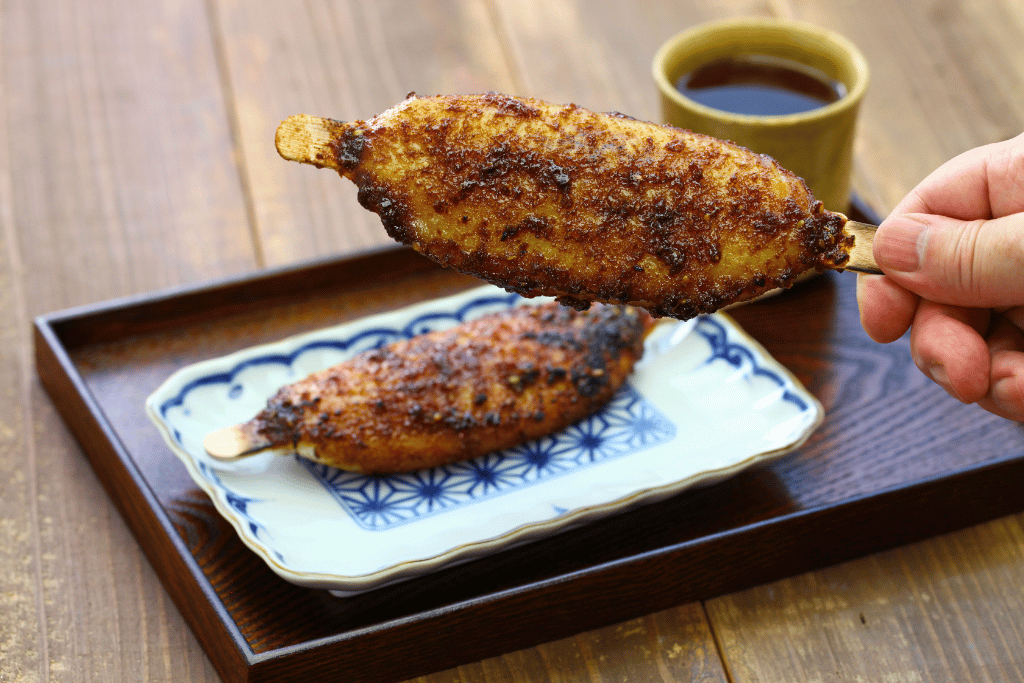
A traditional Gifu snack and the one to try if you only eat one thing. Pounded rice is shaped onto a flat skewer, coated in a sweet-savoury miso, soy and walnut paste, and grilled over open flame until the edges char. It’s warm, sticky and nutty, and it costs just a few hundred yen.
| Where to try | Area | What makes it |
|---|---|---|
| Shiraogi (しらおぎ) | Main street | Charcoal-grilled walnut-miso gohei mochi, at lunch |
Best for a cheap walking snack between houses.
Hoba Miso
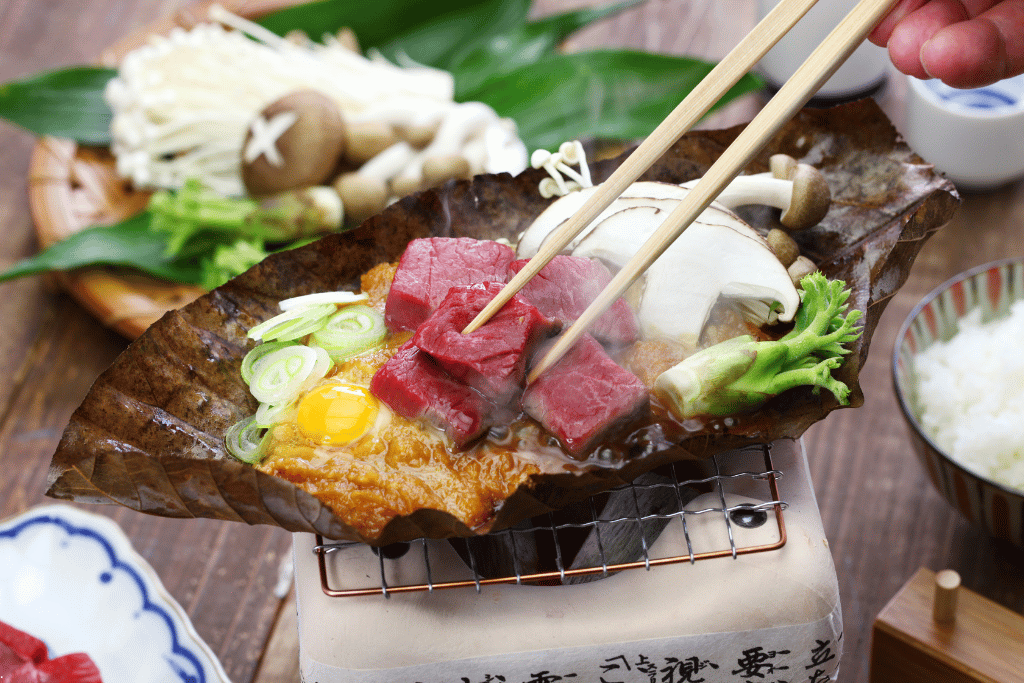
A Hida classic: miso mixed with mushrooms, spring onion and sometimes Hida beef, cooked on a dried magnolia leaf over a small burner at your table. The leaf perfumes the miso as it bubbles, and you spoon it over rice. It’s a proper warming dish and a good sit-down option when it’s cold out.
| Where to try | Area | What makes it |
|---|---|---|
| Hakusuien (白水園) | ~2 min from the bus terminal | Hoba-miso set with Hida beef and local red-turnip pickles |
Best for a hot lunch in winter; skip it in high summer when you’ll want something lighter.
Soba
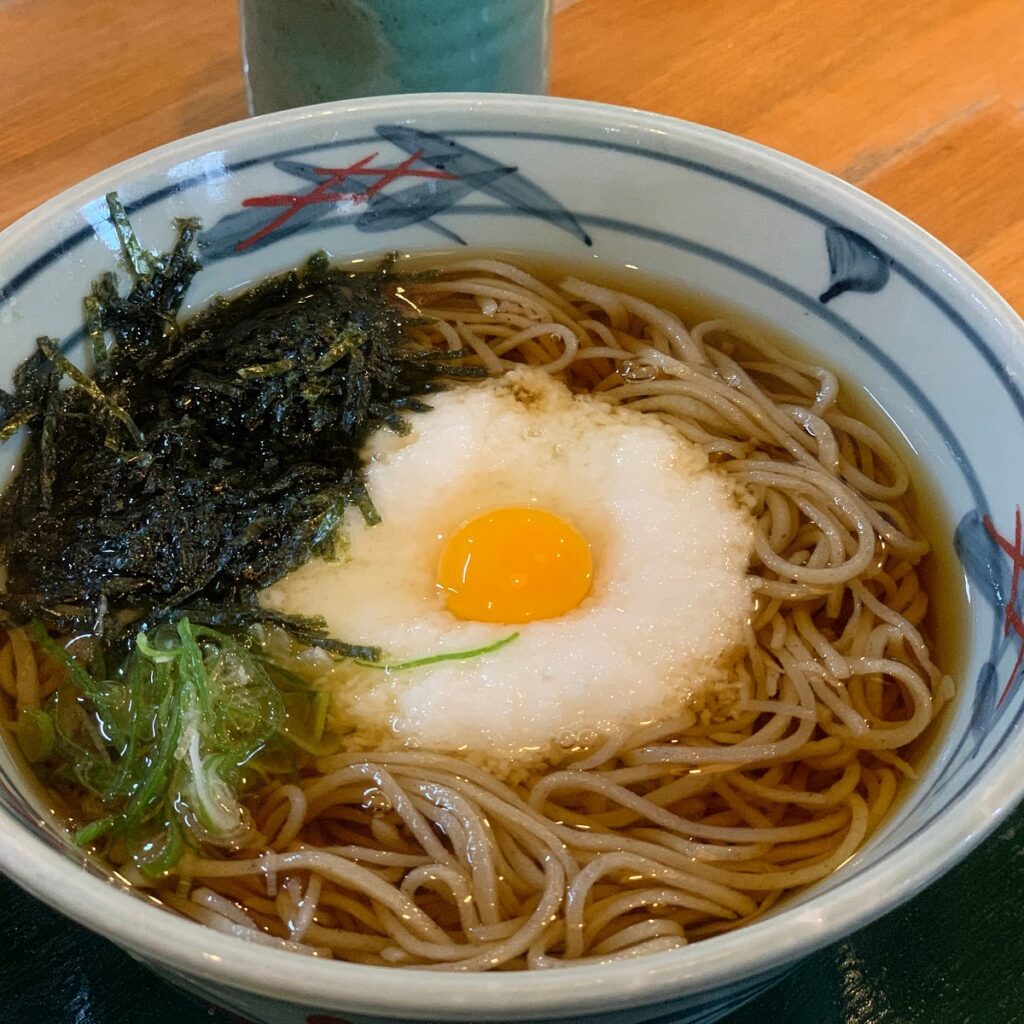
Image Credits: Tripadvisor
Shirakawago’s cool mountain climate is ideal for buckwheat, so soba here is fresh and worth ordering. You’ll find it served cold with a dipping sauce or hot in broth, often with a side of local vegetable tempura. Note that the village has only a handful of restaurants and they close early, so eat lunch by around 1 PM.
| Where to try | Area | What makes it |
|---|---|---|
| Teuchi Sobadokoro Nomura (乃むら) | Central Ogimachi | Handmade, morning-milled buckwheat, roughly 950–1,300 JPY (~S$7–10); expect a short queue |
Best for a light, quick lunch before the shops shut.
Doburoku Sake and Ice Cream
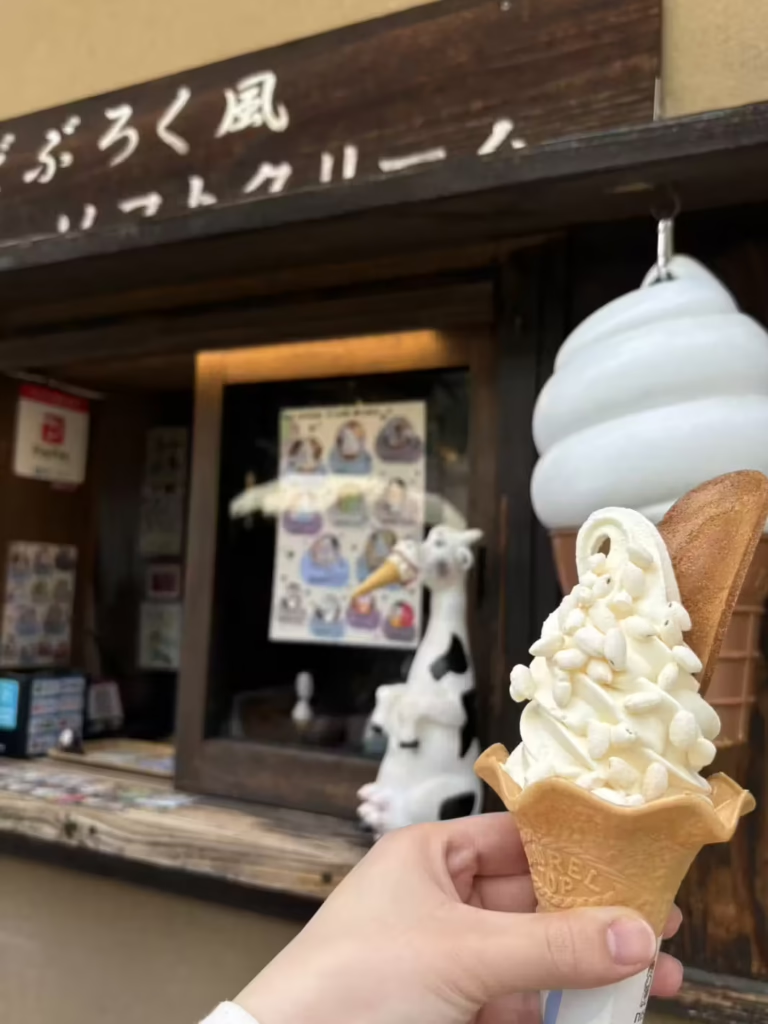
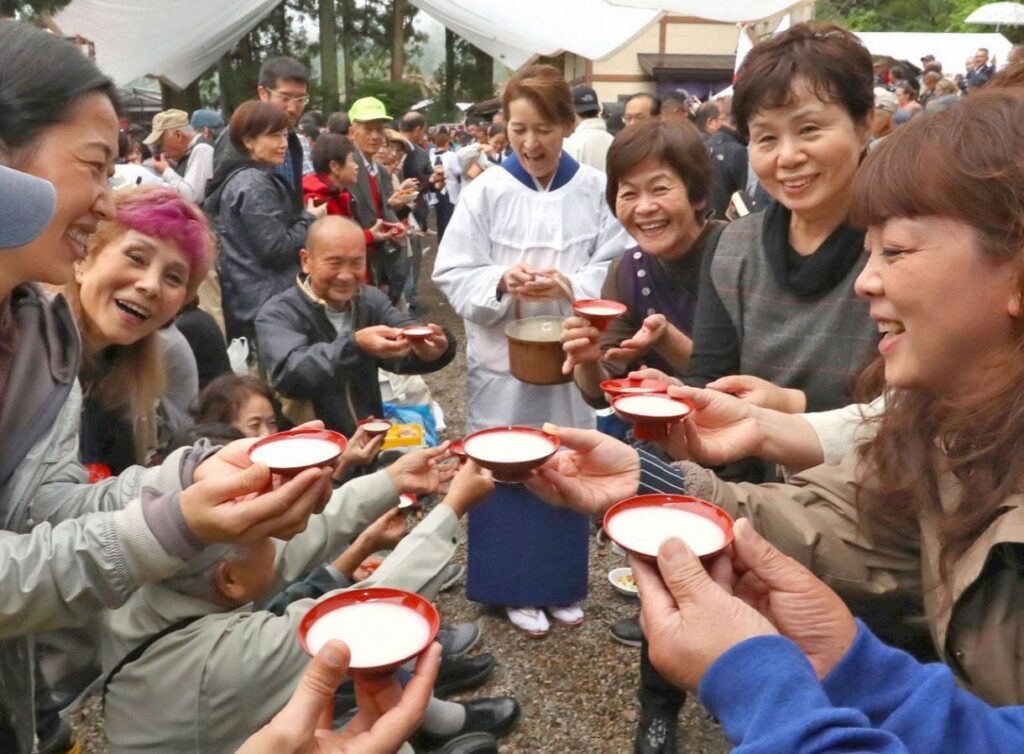
Image Credits: Trip.com; 中日新聞
Doburoku is a cloudy, unfiltered home-brewed sake unique to the area, tied to the autumn festival of the same name. You can’t legally buy the festival brew to take away, but shops sell doburoku-flavoured soft-serve ice cream year-round: creamy, milky and faintly boozy in taste. It’s a fun, only-here treat.
| Where to try | Area | What makes it |
|---|---|---|
| Kondou Shoten (今藤商店) | Main street | Doburoku soft-serve in a masu sake cup, topped with puffed rice (under 1% alcohol) |
Best for a novelty stop; the ice cream is family-friendly even if the sake isn’t.
Coffee in a Gassho House
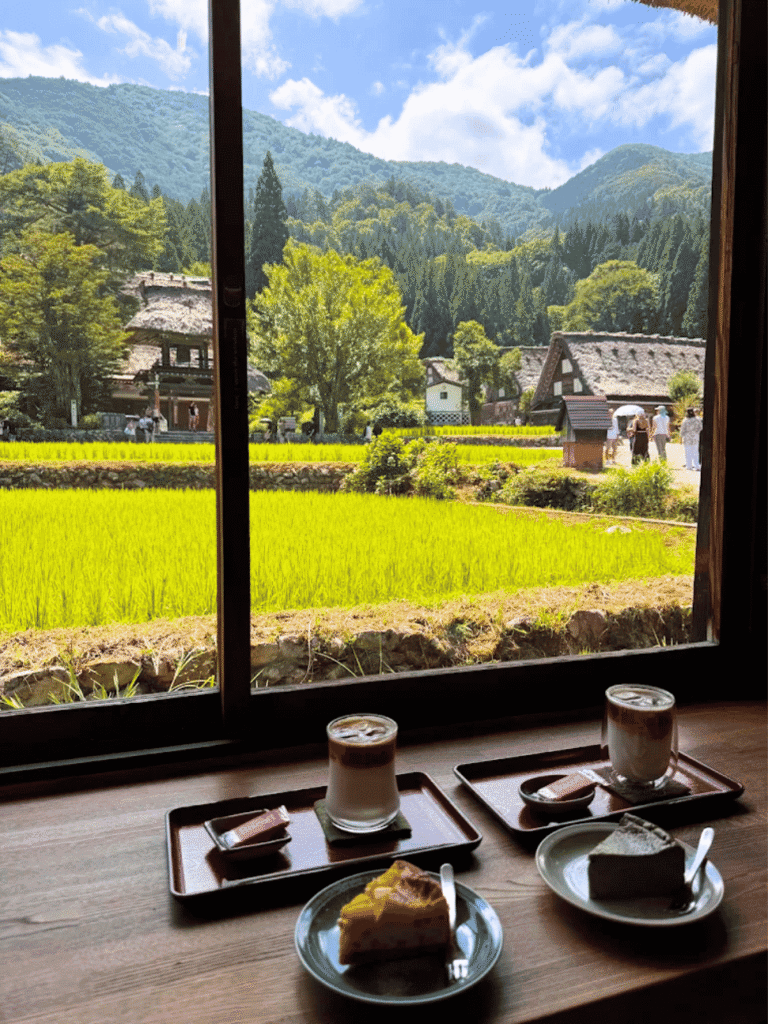
Image Credits: Wer Matniszewska on Google Reviews
One of the nicest things to do here is stop for coffee inside a farmhouse. Several of the old gassho buildings have been turned into cafés, some over a century old, where you sit on tatami by a low window with the rooftops and paddies laid out in front of you. Gassho-house cafés like Konjaku (今昔) serve coffee and matcha with a village view, and a couple close mid-afternoon, so it’s a daytime treat rather than an evening one.
| Where to try | Area | What makes it |
|---|---|---|
| Konjaku (今昔) and gassho-house cafés | Central Ogimachi | Tatami seating, farmhouse views, coffee and matcha |
Best for a rest with the best view in town; skip it if you’re racing a late bus.
Award-Winning Pudding
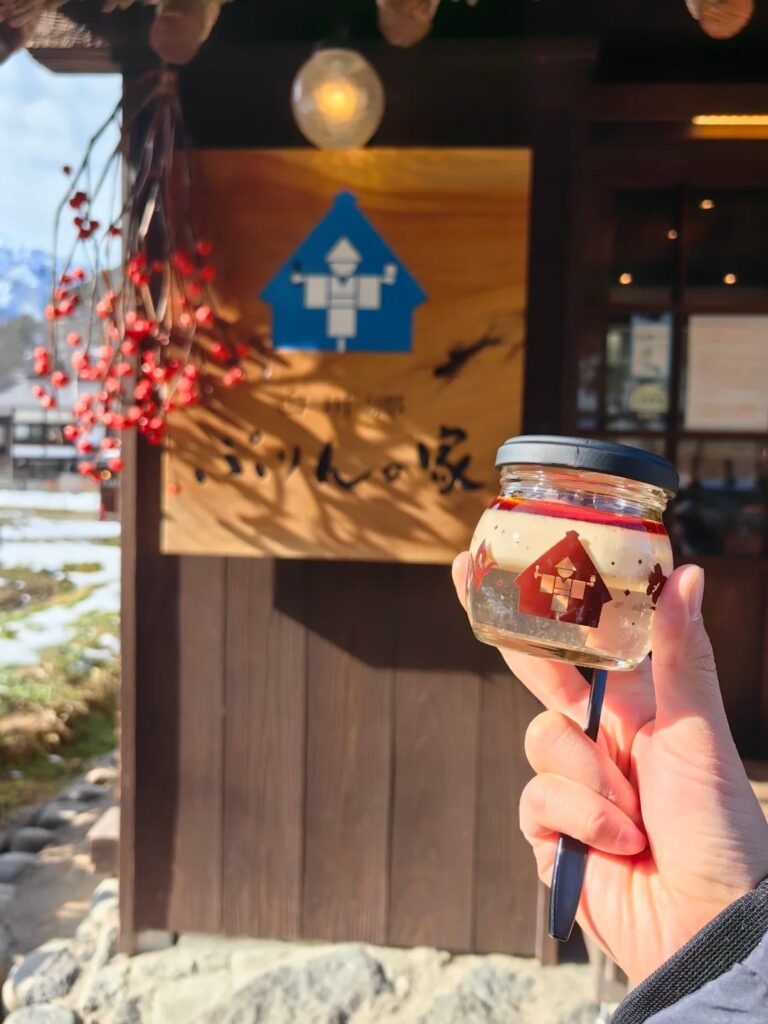
Image Credits: 957139020 on rednote
The village’s sweet-tooth hit is Shirakawago Purin no Ie (Pudding House), housed in its own mini gassho-style building. Its Mizu Purin took top prize at the 2022 Japan Pudding Awards: a soft custard set over a clear jelly made from local spring water, so it looks like it’s floating in the jar. Expect a fast-moving queue.
| Where to try | Area | What makes it |
|---|---|---|
| Shirakawago Purin no Ie | Central Ogimachi | Award-winning Mizu Purin; keep the jar as a souvenir |
It’s the sweet stop to end on, and the jars are pretty enough to take home.
📖 Related Guide: Want the edible souvenirs too? Our what to buy in Japan guide covers the snacks and specialties worth packing.
Best Day Trips from Shirakawago
Shirakawago sits on the bus line between two of central Japan’s best bases, so it’s easy to tack on more without backtracking.
Gokayama (Ainokura and Suganuma)
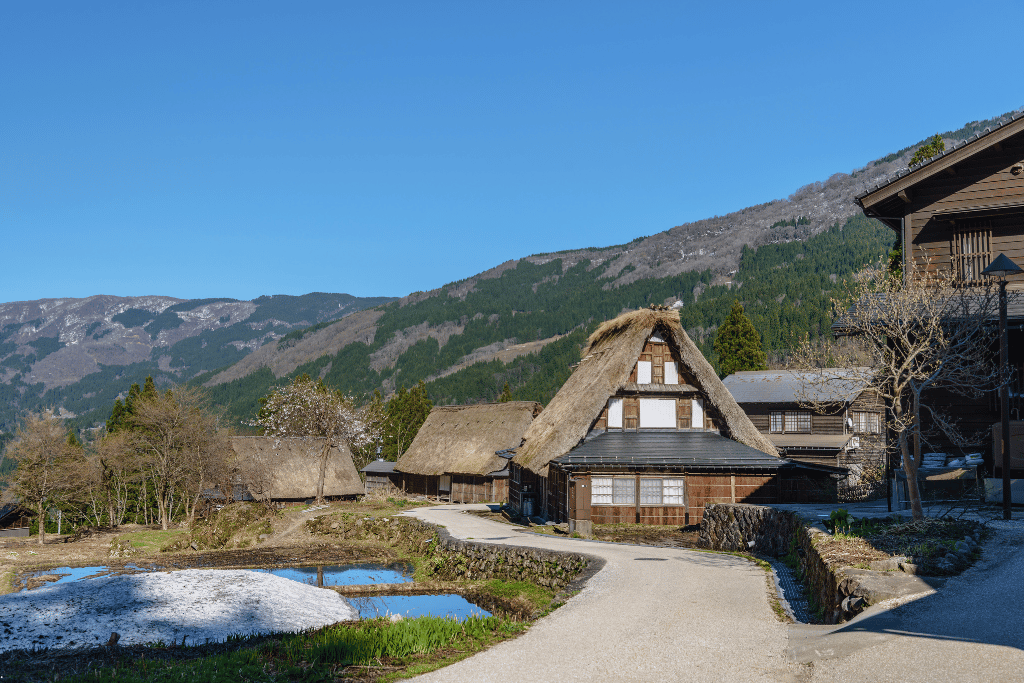
If you loved the gassho houses but not the crowds, Gokayama is the answer. Just north in Toyama Prefecture, these two smaller villages, Ainokura and Suganuma, share the same UNESCO listing but see a fraction of the visitors. Ainokura has around 20 thatched houses and hilltop viewpoints; Suganuma is tiny and postcard-pretty by the river. You can try washi paper-making, eat local tofu, and often have a viewpoint to yourself.
Buses run from Shirakawago in about 30 to 45 minutes (around 1,300 JPY / ~S$10 one way), and a World Heritage 1-Day pass (2,600 JPY / ~S$20) covers the hops if you’re visiting both. Best for travellers who want the quiet version of Shirakawago; skip it if you’re only in the area for a few hours.
Takayama
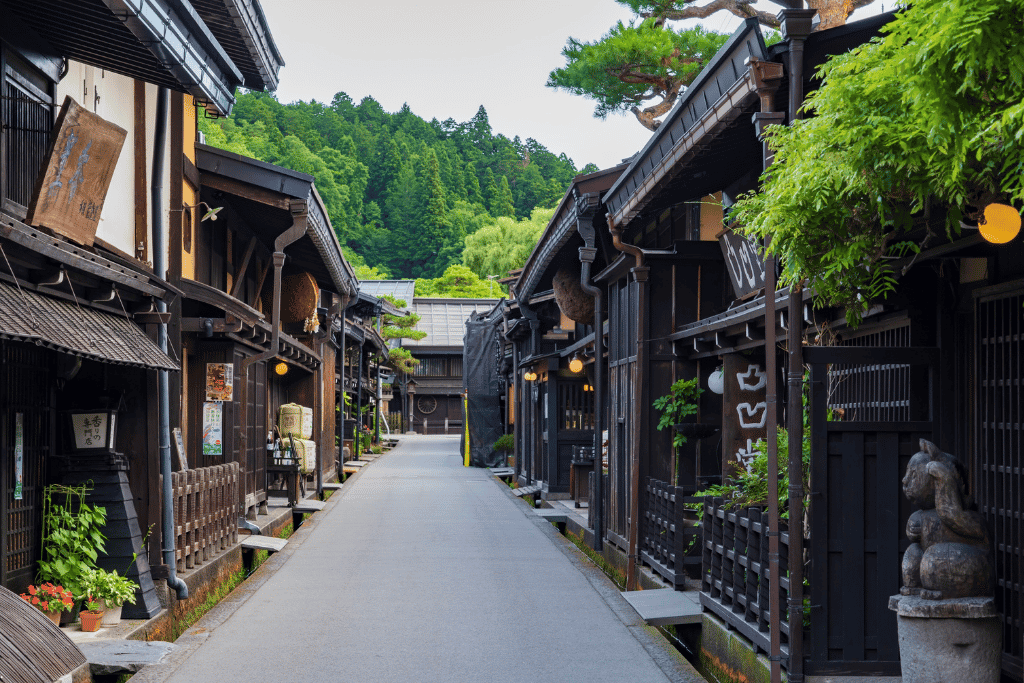
Fifty minutes back down the bus route, Takayama is a beautifully preserved castle town with Edo-era merchant streets, morning riverside markets and sake breweries you can tour. It’s the natural base for Shirakawago and deserves a full day of its own: old-town lanes in Sanmachi Suji, koi-filled canals at nearby Hida-Furukawa, and more Hida beef than you can eat. Best for pairing culture and food with the village’s scenery.
📖 Related Guide: Doing the classic loop? Our Takayama road trip guide maps the route through the Japanese Alps.
Where to Stay in Shirakawago
Staying overnight is the best way to see Shirakawago at its quietest, but rooms are limited and go fast. There are three broad options.
- Gassho-zukuri minshuku: the signature stay, in a real thatched farmhouse with dinner and breakfast around the hearth. Only a handful exist and they book out months ahead, so plan early and be ready to pay cash on checkout, as many don’t take cards.
- Regular guesthouses and hotels: about 20 minutes north of the main village there’s a cluster of more ordinary inns at friendlier prices. Not as atmospheric, but far easier to book.
- Nearby towns: if the village is full, Takayama and Kanazawa both have plenty of hotels and are an easy bus ride away.
Book the minshuku first if that’s your dream; everything else has more availability. Prices for a farmhouse stay start around 8,000 JPY (~S$63) per person with two meals.
📖 Related Guide: Sorting the rest of the trip? Our how to get ready for your Japan trip checklist covers bookings, pocket Wi-Fi and more.
Getting Around Shirakawago
You get around Ogimachi on foot, full stop. The village is compact and flat, and you can walk end to end in about 20 minutes. Wear decent shoes in winter, when the lanes get icy and snow-packed.
The only ride you’ll take is the shuttle bus to the observation deck (200 JPY / ~S$1.60 each way), if you’d rather not walk the hill. For Gokayama or Takayama, it’s the intercity buses covered above. There are no trains and no need for a car unless you’re driving the wider region.
📖 Related Guide: Using trains elsewhere in Japan? Our Welcome Suica mobile guide sets up tap-and-go on your phone.
Paying in Shirakawago: Cash, Cards and Yen
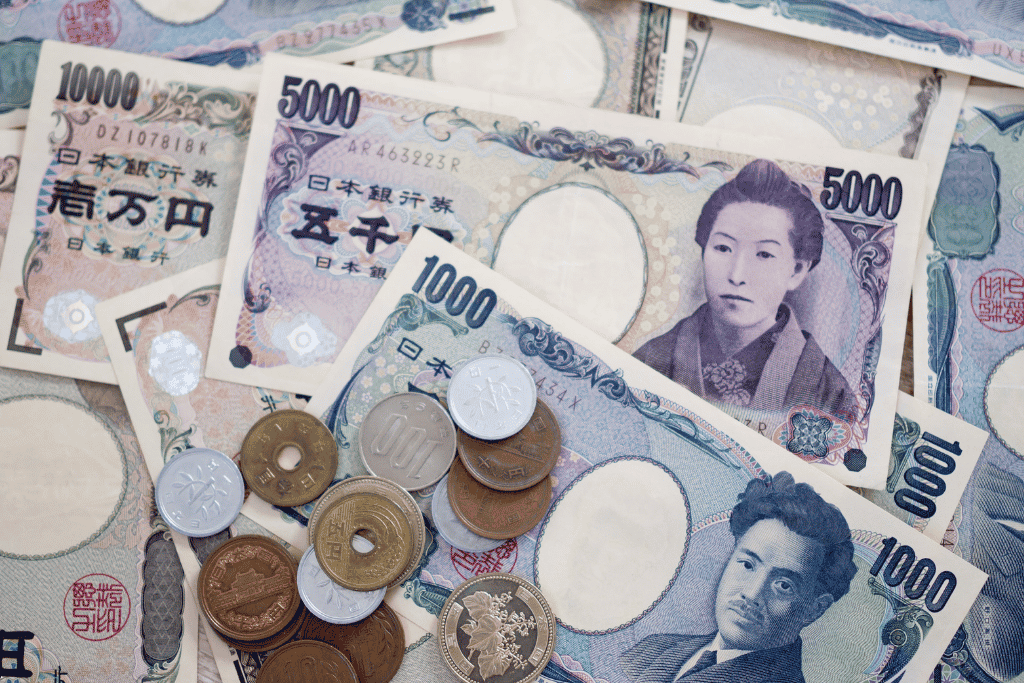
Shirakawago is a cash-heavy village. Many stalls, small restaurants and farmhouse inns take cash only, and the bus terminal has no convenience store, so don’t roll in with an empty wallet. Bigger shops and some restaurants take cards, but cash is king here more than in most of Japan.
The smart way to handle yen is to skip the money changer at home. Money changers don’t charge a visible fee; they quietly bake a markup of a few percent into the rate. Instead, withdraw yen from an ATM when you land (7-Eleven and Japan Post ATMs are everywhere and take foreign cards) and tap your card for anything cashless.

With a YouTrip card, your first S$400 of overseas ATM withdrawals each calendar month is free, then it’s a flat 2% after that. Because JPY is one of YouTrip’s hold-able wallet currencies, you can also lock in your yen in the app when the rate looks good, then spend it with no foreign transaction fee.
That beats a credit card quietly adding 3 to 3.5% FX on every tap. Check whether YouTrip works for your trip in our can you use YouTrip in Japan guide.
Bottom line: bring enough cash for the village, and let the card handle the rest. For deeper detail, see our Japan ATM withdrawal guide and the SGD to yen rate guide.
FAQ
Yes, if you enjoy scenery and slow travel over a packed sightseeing list. Shirakawago is a small UNESCO village of thatched farmhouses set against mountains and rice paddies. It’s best paired with Takayama or Kanazawa, and most rewarding early morning or overnight, once the day-trippers have gone.
A day trip of three to four hours covers the village on foot: the observation deck, a farmhouse or two, and lunch. Staying overnight in a gassho farmhouse is the standout experience, though, letting you see the village empty and quiet after the tour buses leave around 4 to 5 PM. Book months ahead.
There’s no direct train. From Tokyo, Osaka or Kyoto, take the shinkansen to Kanazawa or Nagoya, then a highway bus into the village. Door to door it’s roughly 4 to 5 hours each way, which is why many people base themselves in Takayama (50 minutes away by bus) instead.
For 2026 the light-up runs on four evenings only: 12, 18 and 25 January, and 1 February, from 5:30 to 7:30 PM. Numbers are strictly capped, so overnight stays and parking must be reserved in advance through the Shirakawa-go Tourist Association, with applications opening months ahead.
Watch the village’s official live webcam. Shirakawa Village runs a live camera (linked in the Best Time section above) that streams the Ogimachi rooftops from the observation deck through the day, so you can see the current snow and weather before you plan a winter trip. Snowfall has grown less reliable in recent years, so it’s worth a look rather than assuming a white village in December.
Yes. Shirakawago is more cash-reliant than Japan’s cities. Many stalls, small eateries and farmhouse inns take cash only, and some inns want cash on checkout. Withdraw yen from an ATM when you arrive in Japan (free on your first S$400 each month with YouTrip), and carry enough for the day.
Hida beef (as skewers or croquettes), gohei mochi (grilled miso-glazed rice on a skewer), hoba miso cooked on a magnolia leaf, fresh soba, doburoku sake and its ice cream, and the award-winning Mizu Purin pudding at Shirakawago Purin no Ie. Most of it is cheap street food along the main street.
The Village That Rewards Slowing Down
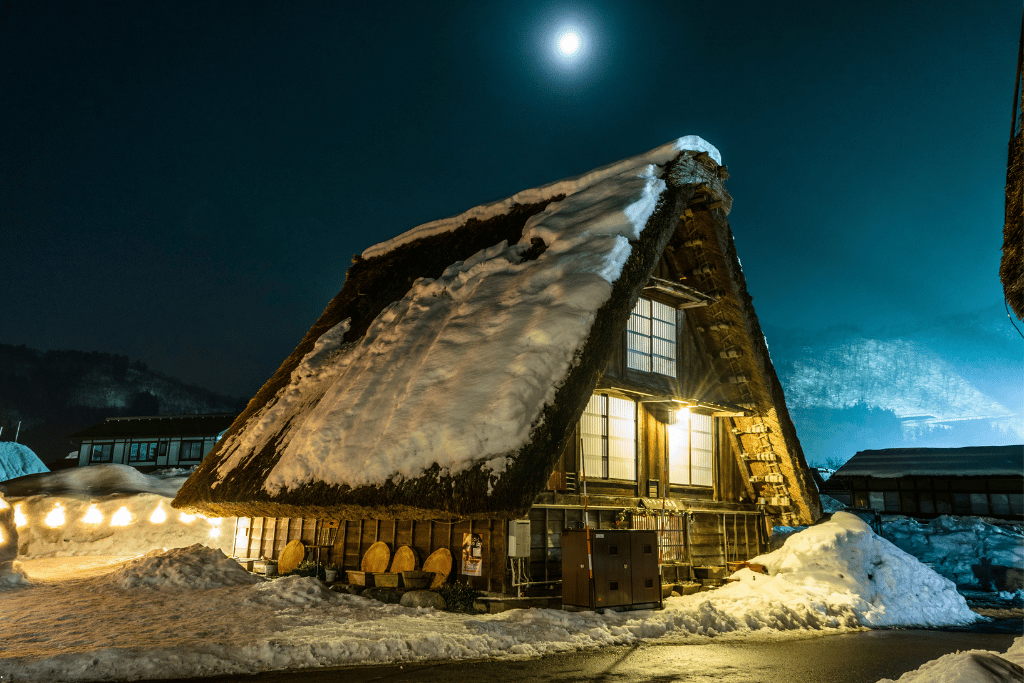
Shirakawago isn’t about ticking off attractions. It’s about a viewpoint at golden hour, a hot skewer of gohei mochi, a soak with a mountain view, and rooftops that have stood for centuries. Give it a half-day, and it charms you; give it a night and it stays with you.
Whenever you go, sort the money side before you fly. Withdraw yen from an ATM when you land, lock in your rate in the app, and tap your YouTrip card with zero foreign transaction fees wherever cards are taken.
Not a YouTrooper yet? Singapore’s go-to multi-currency wallet helps you save with great FX rates and zero fees. Skip the money changer and get a free YouTrip card + S$5 YouTrip credits with code YTBLOG5.
Then, head over to our YouTrip Perks page for exclusive offers and promotions — we promise you won’t regret it. Join our Telegram (@YouTripSG) and Community Group (@YouTripSquad) for travel tips, event invites, and more!
Happy travels!