



Nikko is two trips in one: gold-leaf shrines downhill, waterfalls and onsen up the mountain
Most day-trippers only do half of Nikko. They walk the UNESCO shrine complex past gold leaf dulled by two centuries of incense smoke, eat a plate of yuba, and catch the train back to Tokyo.
They never get on the bus up the mountain. The other half, Oku-Nikko’s waterfalls, lake and hot-spring town, is what makes the extra hour of travel worth it.
| Quick Planner | Nikko at a Glance |
|---|---|
| ⏱️ Time needed | One rushed day for the shrines; two days to add Oku-Nikko properly |
| 📍 Where | Nikko City, Tochigi Prefecture, about 100km north of Tokyo |
| 🚆 From Tokyo (Asakusa) | About 1h50m to 2h on the limited express, or around 2.5h on a cheaper regular train |
| ⛩️ Known for | Toshogu Shrine, Kegon Falls, yuba (tofu skin), autumn foliage |
| 📅 Best time | Late October to mid-November for autumn colour; expect snow and some closures in winter |
| 💰 Rough cost | S$20 to S$45 for a day of shrine and waterfall tickets, before meals |
| 💳 Pay with | Tap your YouTrip card (0% FX) at shops and restaurants; keep some yen cash for shrine entry counters and local buses |
The shortlist:
| Spot | Area | Cost (~S$) | Best for |
|---|---|---|---|
| Shinkyo Bridge | Town centre | S$2 to cross | The classic Nikko photo |
| Toshogu Shrine | World Heritage Area | S$13 | The reason most people come |
| Nikko Toshogu Museum | World Heritage Area | Included in S$20 combo | Edo-period treasures up close |
| Rinnoji Temple & Shoyoen Garden | World Heritage Area | S$3 to S$7, by ticket | The oldest site in Nikko |
| Futarasan Shrine | World Heritage Area | S$2 (garden) | A quieter shrine after the crowds |
| Taiyuinreien | World Heritage Area | S$4 to S$7, by ticket | A smaller, less crowded mausoleum |
| Kegon Falls | Oku-Nikko | S$5 (lower deck) | A 97m drop you can stand level with |
| Lake Chuzenji | Oku-Nikko | Free to free, cruise optional | Mountain views and lakeside cafés |
| Senjogahara Marshland hike | Oku-Nikko | Free | An easy 2 to 3-hour walk, no technical skill needed |
| Ryuzu Falls | Oku-Nikko | Free | A twin waterfall shaped like a dragon’s head |
| Yudaki Falls | Oku-Nikko | Free | A 70m hot-river waterfall mid-trail |
| Yumoto Onsen | Oku-Nikko | Varies by ryokan | The hot-spring town at the end of the hike |
| Tamozawa Imperial Villa | Town centre | S$5 | 106 rooms of imperial history |
| Kanmangafuchi Abyss | Town centre | Free | 70-odd stone Jizo statues by a gorge |
| Yuba (tofu skin) | Town centre | From S$3 a plate | Nikko’s actual local speciality |
| Agemanju | Town centre | From S$2 | A warm, fried bean-paste snack |
Table of Contents
- The Best Things to Do in Nikko’s World Heritage Area
- Is Nikko Worth Visiting?
- How to Get to Nikko From Tokyo
- Oku-Nikko: Lake Chuzenji, Kegon Falls and the Mountains
- Beyond the Shrines: Tamozawa Imperial Villa and Kanmangafuchi Abyss
- What to Eat in Nikko
- Getting Around Nikko
- Where to Stay: Nikko Town or Up at the Lake
- Best Time to Visit Nikko
- How Much Nikko Costs and How to Pay
- 1-Day and 2-Day Nikko Itinerary
- FAQs
- Nikko Rewards the Trip Up the Mountain
The Best Things to Do in Nikko’s World Heritage Area
The best things to do in Nikko’s World Heritage Area are Toshogu Shrine, Rinnoji Temple, Futarasan Shrine and Taiyuinreien, plus Shinkyo Bridge at the entrance to all of them. All five sit within a 20-minute walk of each other on the hillside above Nikko Station, and most visitors cover the lot in a single morning.
Shinkyo Bridge
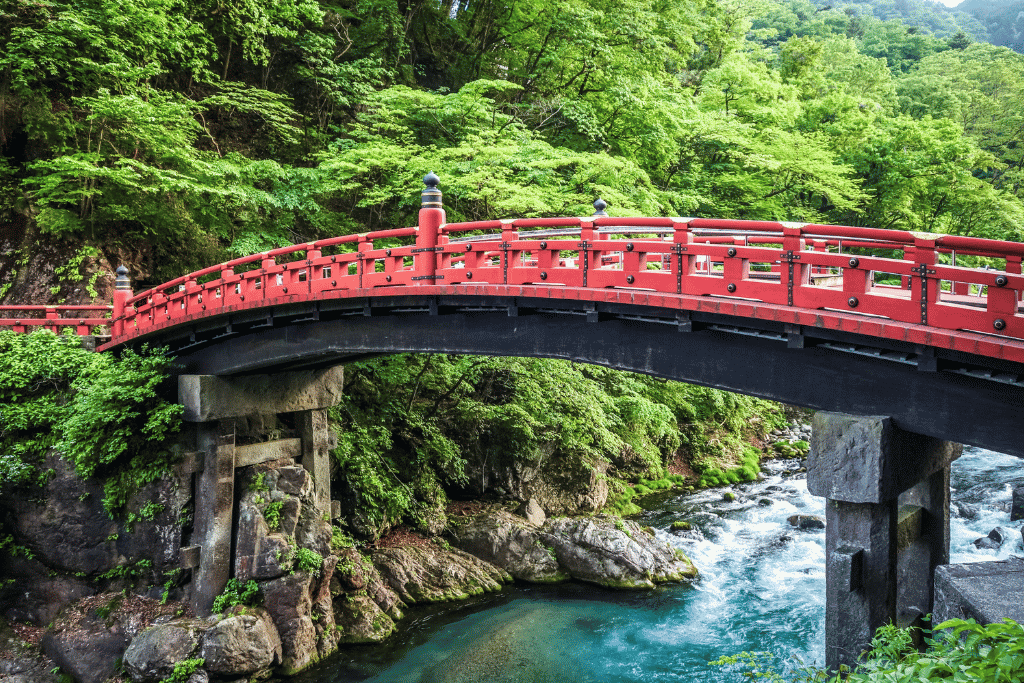
Shinkyo Bridge is the vermilion footbridge marking the start of Nikko’s World Heritage Area, arched over the Daiya River below the shrine hill. For centuries, it was reserved for the shogun and imperial messengers; ordinary travellers had to cross further downstream.
Crossing the bridge itself costs 300 JPY (~S$2), paid in cash at a small counter beside it. Most people skip the paid crossing and just photograph it from the roadside, which is where the classic shot gets taken anyway.
Autumn turns the riverbanks on either side of the bridge a deep red and orange, which is when most of Nikko’s postcard shots of it get taken.
Most people just shoot it from the roadside and move on, and that’s a fine way to handle it if you’re short on time.
- 📍 Town centre, at the base of the shrine hill
- 🕘 Roughly 8:30 AM to 4:30 PM, shorter in winter
- 💰 300 JPY (~S$2) to cross
Toshogu Shrine
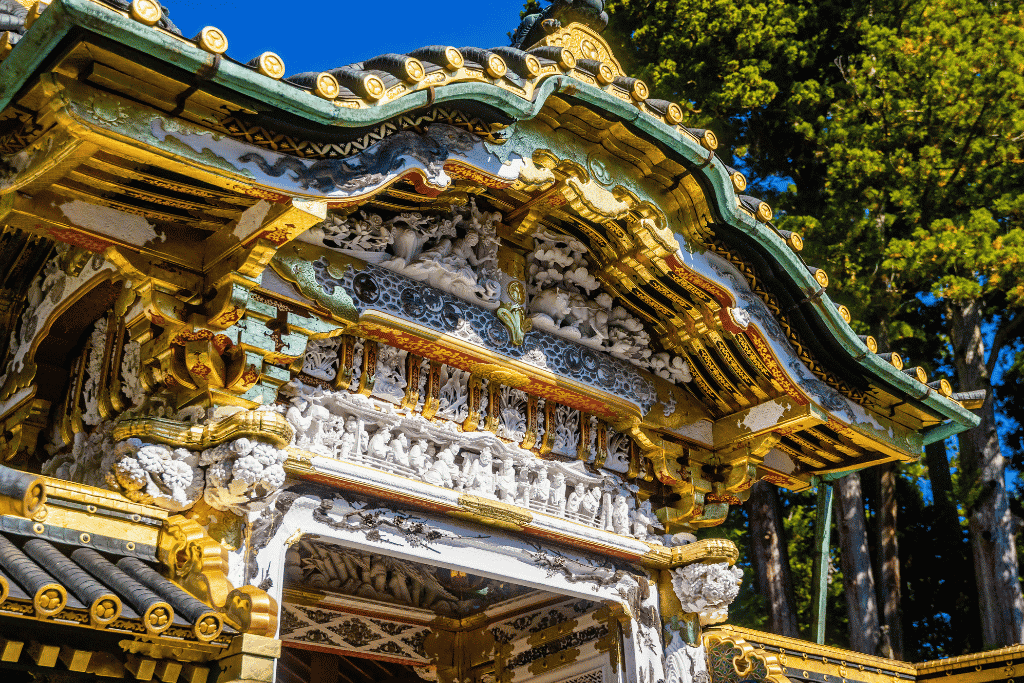
Toshogu Shrine is the mausoleum of Tokugawa Ieyasu, the shogun who unified Japan in the early 1600s and founded the dynasty that ruled for the next 250 years. Where most Shinto shrines are plain, Toshogu is covered end to end in gold leaf and coloured carvings, including over 500 of them on the Yomeimon Gate alone.
Walk past the three wise monkeys over the sacred stable, then the sleeping cat carving, and keep climbing. It’s around 200 stairs, legs burning a little by the top, to Ieyasu’s actual grave.
Shrine-only admission runs 1,600 JPY (~S$13), with a 1,000 JPY add-on for the on-site treasure museum (2,400 JPY combined). Confirm the current price at the ticket counter, since fees here do get revised.
Expect this to be the busiest single stop in Nikko. Give it at least 90 minutes, longer if you want to see the Crying Dragon Hall’s acoustic trick, where a priest claps two blocks under a dragon painting to produce a ringing echo.
Best for the one site in Nikko you shouldn’t skip, however tight your schedule. Go early in the morning if you want photos without a crowd of tour groups in them.
- 📍 World Heritage Area, a 10-minute uphill walk from Shinkyo Bridge
- 🕘 Roughly 8 AM to 5 PM, April to October; shorter in winter
- 💰 1,600 JPY (~S$13) adults shrine only; 2,400 JPY (~S$20) with the treasure museum
📖 Related Guide: Comparing Toshogu to Japan’s other famous gates and shrines? Our things to do in Kyoto guide covers Fushimi Inari’s own torii tunnel.
Nikko Toshogu Museum
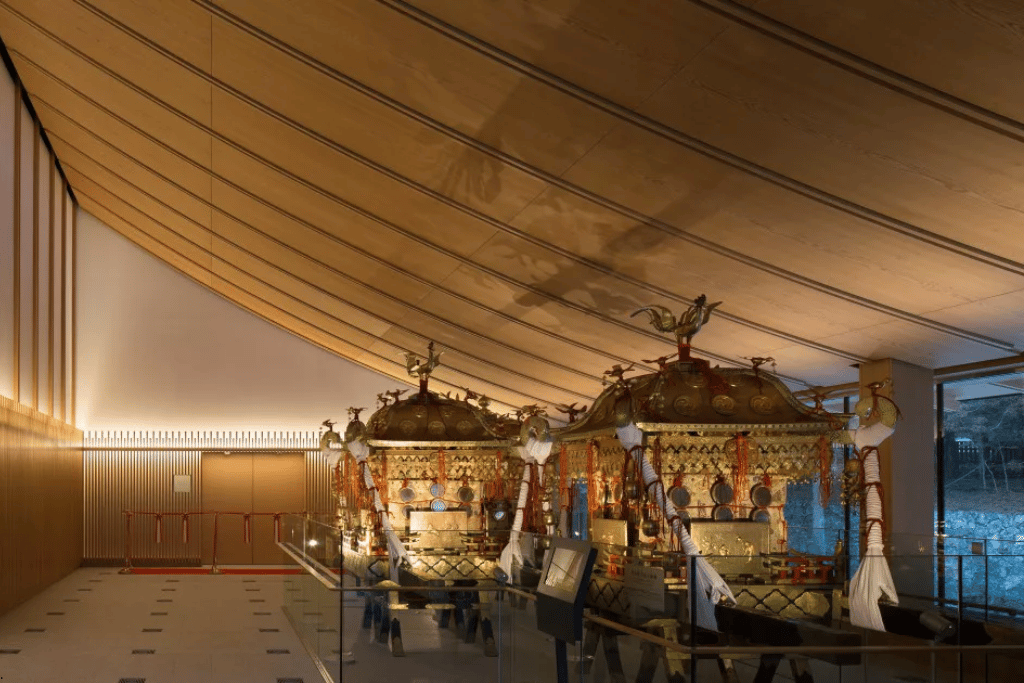
Image Credits: www.mhs.co.jp
The treasure museum sits inside the Toshogu complex. It holds a collection of Edo-period armour, clothing and weaponry tied to the Tokugawa shogunate, the kind of close-up detail the shrine’s own carvings only hint at.
It’s an add-on, not a separate ticket counter. Ask for the 2,400 JPY combination ticket when you buy your Toshogu admission rather than paying for the shrine first and the museum later.
Go in if Edo-period history is a real interest, not just a box to tick; the exhibits reward slowing down, which a packed one-day itinerary doesn’t always allow.
- 📍 Inside the Toshogu Shrine grounds
- 🕘 Same hours as Toshogu Shrine
- 💰 Included in the 2,400 JPY (~S$20) combination ticket; not sold separately
Rinnoji Temple and Shoyoen Garden
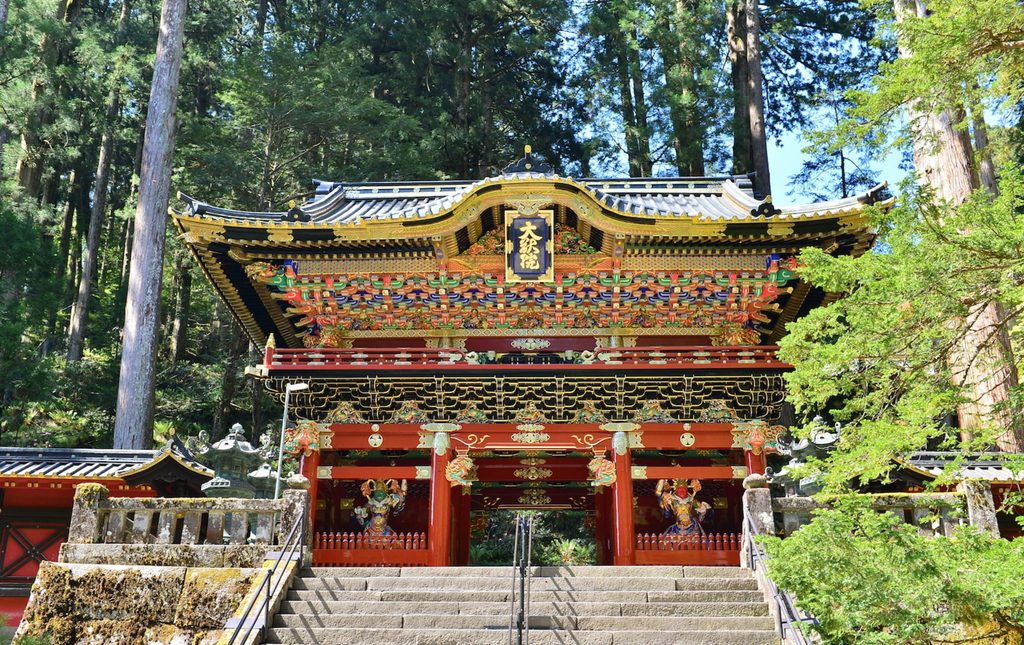
Image Credits: JNTO
Rinnoji is Nikko’s oldest temple, founded in 766 by the Buddhist monk Shodo, decades before Toshogu existed. Its main hall, the Sanbutsudo, holds three gold-lacquered wooden statues representing the area’s three sacred mountains. Each one is tall enough to fill the hall; no photo of that room quite gets the scale across.
Sanbutsudo entry alone runs about 400 JPY (~S$3), or 900 JPY (~S$7) combined with Taiyuinreien’s mausoleum. A separate 300 JPY (~S$3) ticket covers the Treasure House and Shoyoen Garden, a pond garden across from the main hall known for its maple trees.
A combined Sanbutsudo-and-Taiyuinreien ticket at 900 JPY beats paying 400 JPY and 550 JPY separately, if you’re doing both.
⚠️ Some resellers advertise a further all-areas combination ticket. This couldn’t be confirmed on Rinnoji’s own listing, so check at the counter before assuming it exists.
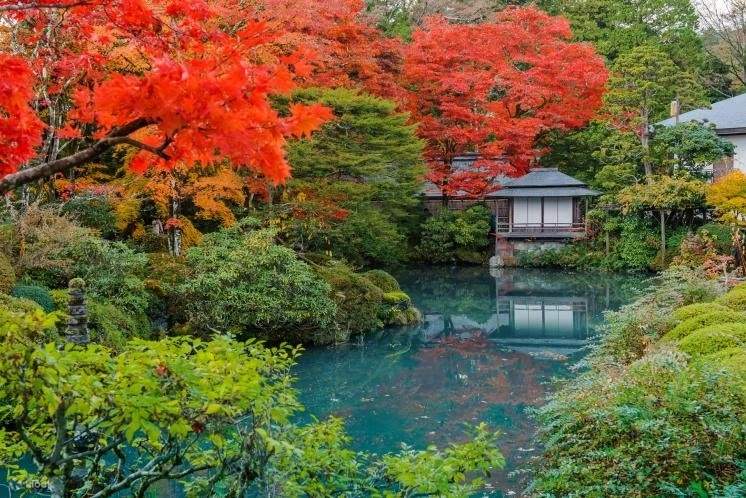
Image Credits: Klook
Everything else in the World Heritage Area came after this. The Shoyoen Garden earns a slow 15-minute loop too, if you’re visiting in late October or early November when its maples turn.
- 📍 World Heritage Area, beside Toshogu’s approach path
- 🕘 Roughly 8 AM to 5 PM April to October, shorter in winter
- 💰 400 JPY (~S$3) Sanbutsudo only; 900 JPY (~S$7) combined with Taiyuinreien; 300 JPY (~S$3) Treasure House and Shoyoen Garden
Futarasan Shrine
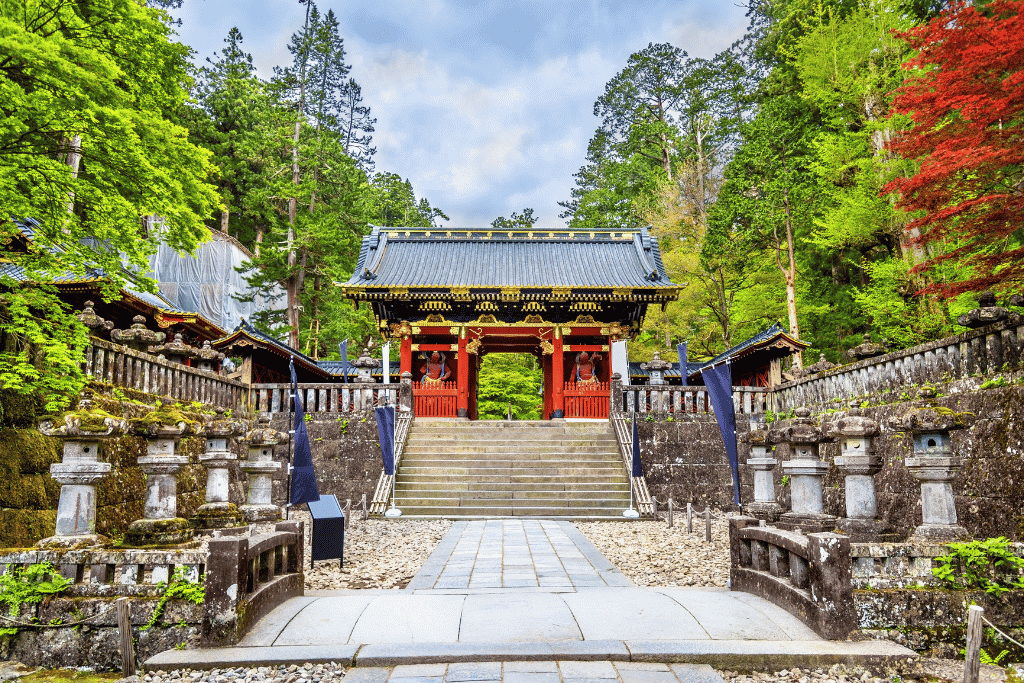
Futarasan is Nikko’s actual founding shrine, older than Toshogu and dedicated to the three mountain deities of Mount Nantai, Mount Nyoho and Mount Taro. It gets a fraction of Toshogu’s crowds despite sitting right next to it.
Most of the grounds are free to enter. The shrine’s small paid inner garden costs 300 JPY (~S$2).
Inside sits a bronze lantern cast in 1292. Locals once nicknamed it the “bake-doro,” or ghost lantern, for the way its shadows flicker at night.
Best for a breather if Toshogu’s crowds have worn you down. The garden fee is worth it mainly for the centuries-old lantern, and for how fast the crowd noise drops away once you’re through the gate.
- 📍 World Heritage Area, adjacent to Toshogu
- 🕘 Roughly 8 AM to 5 PM, shorter in winter
- 💰 Free grounds; 300 JPY (~S$2) for the inner garden
Taiyuin Reien
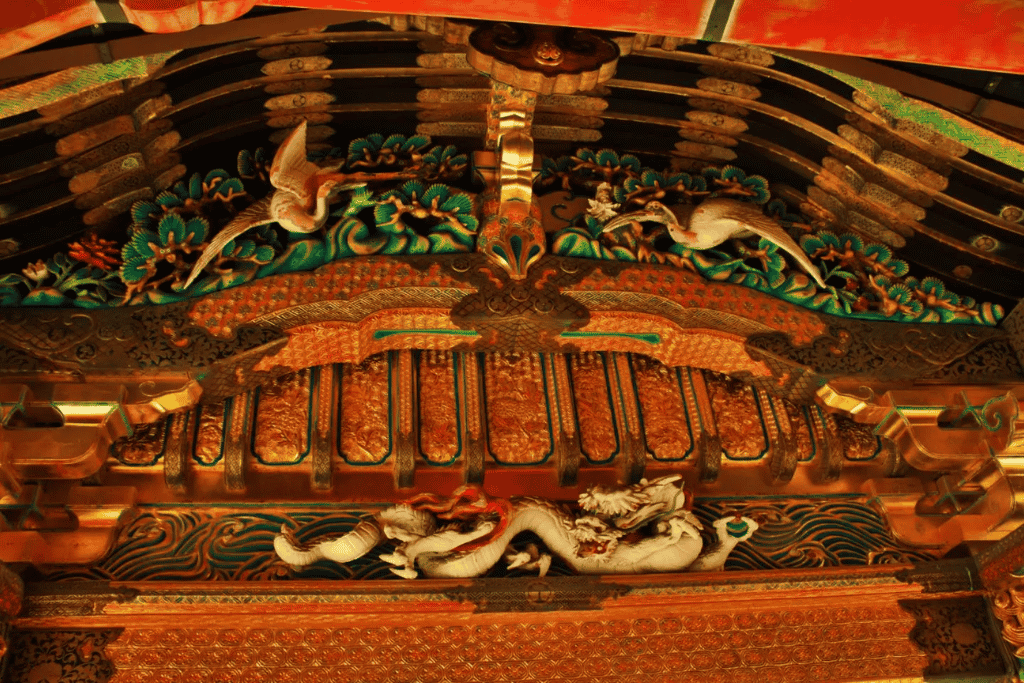
Image Credits: Japan Travel
Taiyuin Reien is the mausoleum of Tokugawa Iemitsu, Ieyasu’s grandson and the shogun who built most of Toshogu in its current, elaborate form. He’s buried here instead of inside his own grandfather’s shrine, in a complex built deliberately less grand than Toshogu out of respect.
Admission runs about 550 JPY (~S$4) alone, or 900 JPY (~S$7) combined with Rinnoji’s Sanbutsudo. The carvings here use the same craftsmanship as Toshogu’s, on a smaller scale. A canopy of cedars mutes the crowd noise before it even reaches you.
It suits anyone who found Toshogu beautiful but overwhelming. Taiyuinreien gives you the same carving style and history with room to actually look at it.
- 📍 World Heritage Area, a short walk from Toshogu
- 🕘 Roughly 8 AM to 5 PM, shorter in winter
- 💰 Around 550 JPY (~S$4) alone; 900 JPY (~S$7) combined with Rinnoji’s Sanbutsudo
📖 Related Guide: Want a World Heritage shrine complex with even fewer crowds? Our things to do in Kanazawa guide covers a castle town the war never touched.
Is Nikko Worth Visiting?
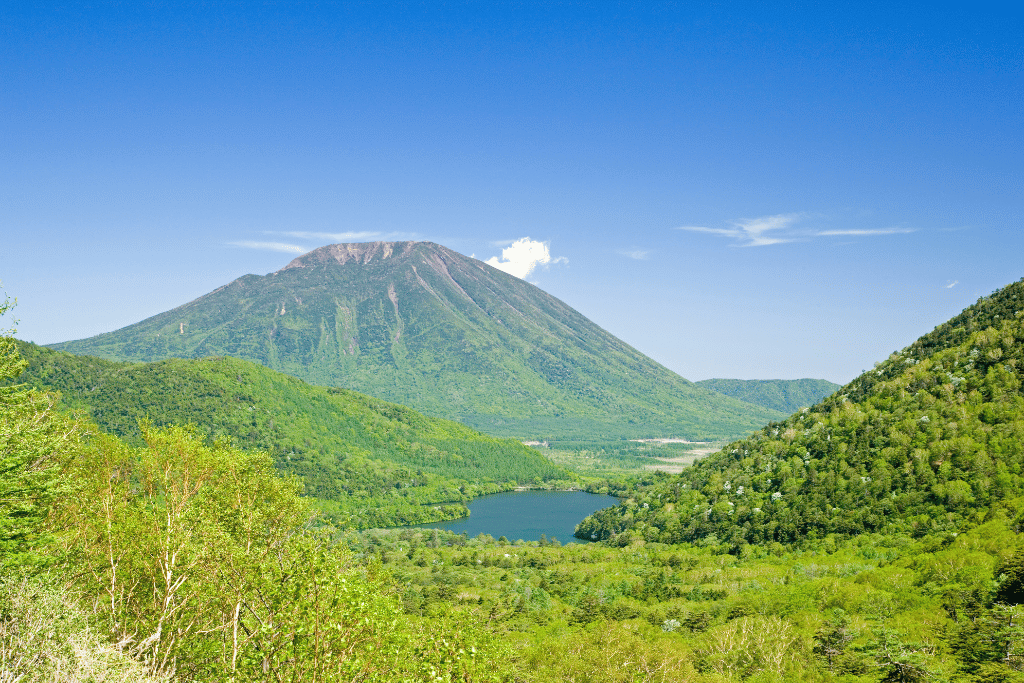
Yes. Nikko packs a UNESCO shrine complex, a top-three Japanese waterfall and a mountain hot-spring town into one day trip from Tokyo.
That’s three completely different kinds of day out crammed into one small town. The shrines alone justify the trip, but Oku-Nikko, the mountain half most day-trippers skip, is what turns it from a quick temple stop into a proper two-day escape.
Is One Day Enough in Nikko?
Barely, and only if you pick one half. A single day covers the World Heritage Area shrines comfortably, or Oku-Nikko’s waterfalls and lake on their own. Rush both into one day and you’ll spend more time on buses than actually looking at anything.
Travellers who try to do it in one day end up splitting it in two. A morning at the shrines, then a 40-minute bus ride up to Oku-Nikko in the afternoon.
Stay one night if you can, so Oku-Nikko gets a proper half-day instead of a rushed few hours.
How to Get to Nikko From Tokyo
Nikko sits about 100km north of Tokyo, and the easiest route is the direct Tobu line from Tobu Asakusa Station to Tobu-Nikko Station.
The limited express service (branded Spacia X, Kegon or Revaty Kegon) takes about 1h50m to 2h, with a reserved-seat fare around 3,340 JPY (~S$27).
A cheaper, slower option runs on regular trains, often with a transfer at Shimo-Imaichi. It costs 1,400 JPY (~S$11) one way and needs no reservation. It does take at least half an hour longer than the express, though, so budget closer to 2.5 hours.
If you’re coming via JR instead, the Shinkansen to Utsunomiya followed by a local JR line to Nikko Station also works. Take this route if you’re already holding a Japan Rail Pass, since the Tobu line isn’t covered by it.
📖 Related Guide: Working out whether a rail pass is worth it for your whole trip? Our JR Pass guide walks through the calculator.
Oku-Nikko: Lake Chuzenji, Kegon Falls and the Mountains
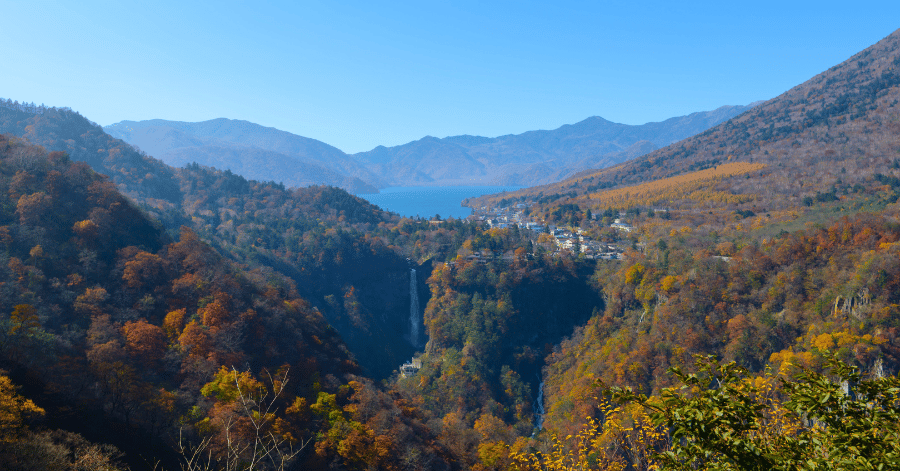
Oku-Nikko is the mountain half of Nikko, reached by a roughly 40-minute bus ride up a switchback road from the town centre. It’s where the lakes, waterfalls and hot springs are, and it’s the part most day-trippers never see because the shrines eat the whole day first.
⚠️ One planning note before you go: the Akechidaira Ropeway, the observation deck that normally overlooks Kegon Falls from above, has been closed for construction since 16 January 2026 and isn’t expected to reopen until September 2027. Build your Oku-Nikko plan around the lower-deck viewpoints below instead.
Kegon Falls
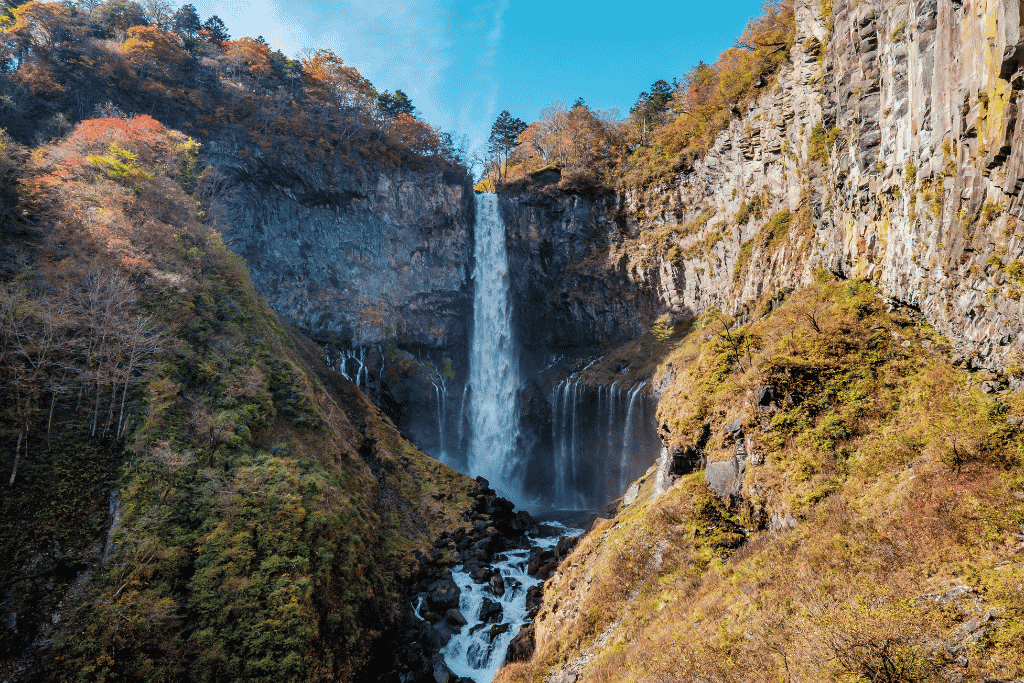
Kegon Falls drops about 97 metres in a single sheet, ranked among Japan’s three most famous waterfalls alongside Nachi Falls and Fukuroda Falls. The free upper observation deck gives you the classic view from the top. A paid elevator takes you down to a lower platform instead, level with the base of the falls.
Down at the base, the roar drowns out conversation entirely, close enough that you feel small standing next to it.
The lower-deck elevator runs around 600 JPY (~S$5) round trip. It’s the only way to see the waterfall from below without the ropeway, which is currently closed.
In winter, the falls sometimes freeze solid, drawing a different crowd entirely from the summer hikers.
Best for the single most photographed sight in Oku-Nikko. Pay for the lower deck if you only do one paid thing here; the upper view is free but less dramatic.
- 📍 Oku-Nikko, about 40 minutes by bus from Tobu-Nikko Station
- 🕘 Elevator roughly 8 AM to 5 PM, shorter in winter
- 💰 Free upper deck; around 600 JPY (~S$5) round trip for the lower-deck elevator
Lake Chuzenji
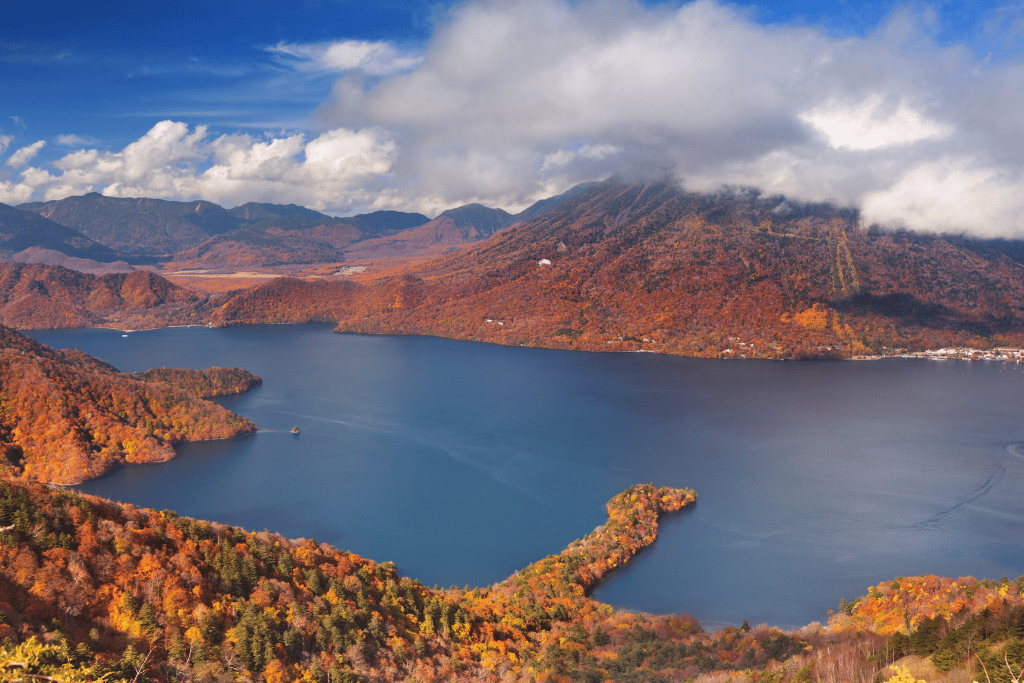
Lake Chuzenji was formed by an eruption of Mount Nantai roughly 20,000 years ago, and it sits right at the top of the waterfall you just saw. The lakeside town has a handful of cafés, a pebbly shoreline and hotel options from a luxury lakeview property down to simpler guesthouses.
A sightseeing cruise loops the lake in around 55 minutes. Fares vary noticeably by source and by which section you board at, roughly 1,250 to 2,200 JPY (~S$10 to S$18). The cruise only runs seasonally too, from around mid-April to late November.
Autumn turns the hillsides around the lake red and gold. Locals will tell you it’s the better of Nikko’s two autumn-colour spots, since the shrine-hill crowds have thinned out by the time you’re this far up the mountain.
Best for a slower lunch stop between the falls and the hiking trail. Skip the cruise if you’re short on time; the lakeside walk alone covers most of the same view for free.
- 📍 Oku-Nikko, directly above Kegon Falls
- 🕘 Lakeside open all day; cruise runs roughly mid-April to late November
- 💰 Free to walk; cruise roughly 1,250 to 2,200 JPY (~S$10 to S$18), confirm current fare and season
Senjogahara Marshland Hike
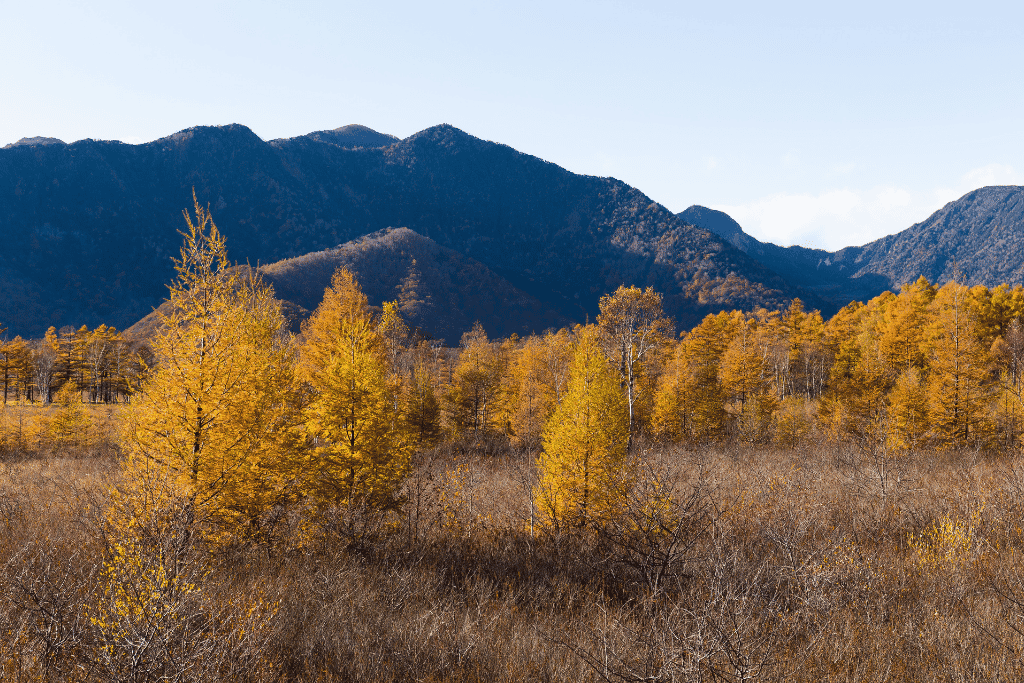
Senjogahara is a flat marshland hiking course connecting Ryuzu Falls near the lake to Yumoto Onsen at the far end. A raised wooden boardwalk carries you across the open marsh, reeds moving in the wind on either side and the surrounding mountains in view the whole way.
The full walk runs about 6km and takes roughly two and a half to three hours. No climbing and no technical hiking skill required.
Buses run along the road beside the trail, so you can walk one section and bus the rest if the full distance doesn’t fit your day. In winter, the marsh is sometimes open to snowshoes, with rental gear available at rest houses along the route.
Best for travellers who want a proper nature walk without committing to a mountain hike. It’s flat enough for ordinary trainers, but bring layers since the marsh sits exposed to the wind.
- 📍 Oku-Nikko, between Lake Chuzenji and Yumoto Onsen
- 🕘 Daylight hours; closes effectively with the last bus back
- 💰 Free
Ryuzu Falls
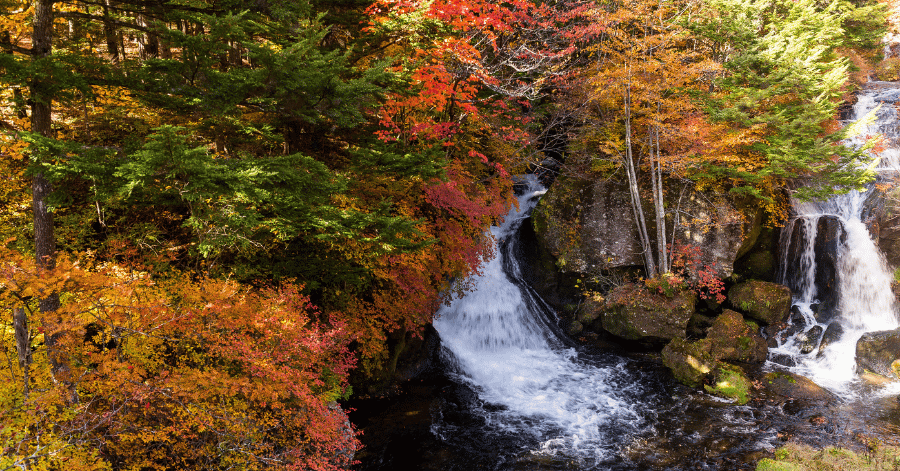
Ryuzu Falls splits into two channels on its way down the slope, spray catching the light where the maples lean in close. That split is how it earned its name, “dragon’s head,” for the shape the water is said to resemble.
It marks one end of the Senjogahara trail, with a small cluster of rest cafés right beside it.
It’s especially popular in autumn, when the falls run through a wall of red maples. It’s also close enough to the road that you don’t need the full hike to see it.
It makes a quick, scenic stop if you’re short on time. Pair it with a coffee at the cafés right at the trailhead.
- 📍 Oku-Nikko, lakeshore end of the Senjogahara trail
- 🕘 Daylight hours
- 💰 Free
Yudaki Falls
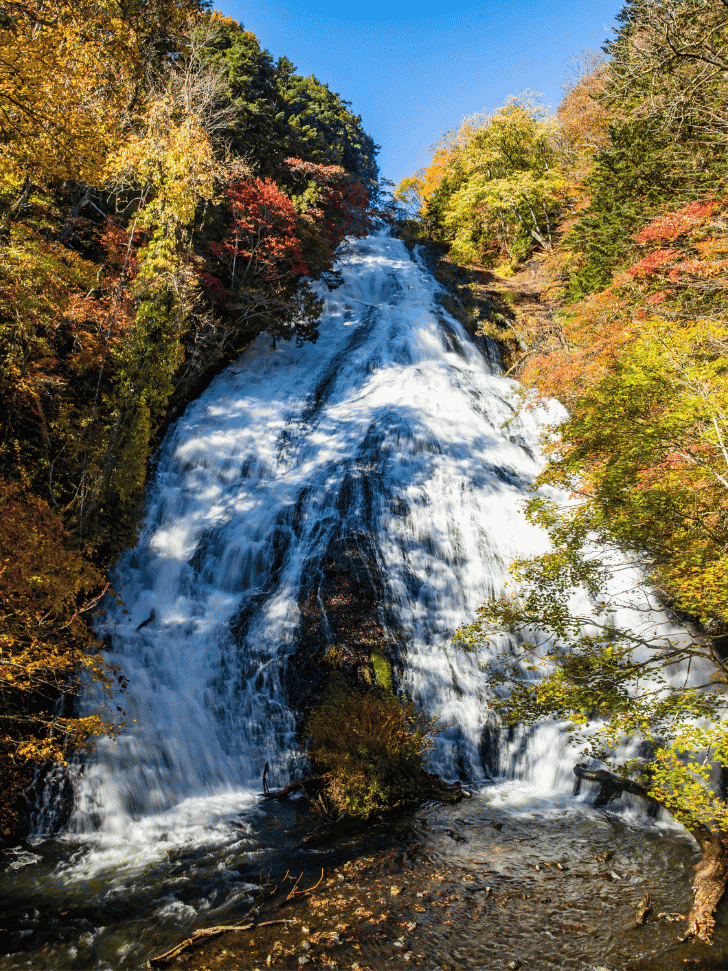
Yudaki drops about 70 metres in a steep, noisy rush partway along the Senjogahara trail, right after the Yukawa river flows out of Lake Yunoko. It’s a spray-cooled stop that revives you mid-hike. The name translates to “hot water waterfall,” though the water itself isn’t actually hot; the name comes from the hot-spring lake it flows from further upstream.
Several tired hikers end up here right before the trail spits them out at Yumoto Onsen, where the genuinely hot water is waiting.
It sits roughly halfway along the Senjogahara trail, a welcome sight if you’re flagging partway through.
- 📍 Oku-Nikko, midway along the Senjogahara trail
- 🕘 Daylight hours
- 💰 Free
Yumoto Onsen
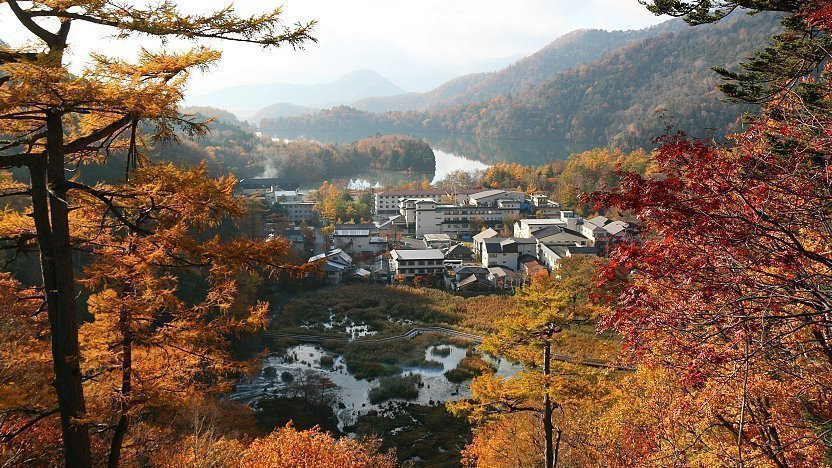
Image Credits: Japan Guide
Yumoto Onsen is the small hot-spring town at the far end of the Senjogahara trail, dating back to the 8th century. The sulfur smell hits before the town itself comes into view, and ryokans with their own onsen baths ring the whole place.
Stay the night if you can; rushing it on a day-trip bus schedule wastes the one thing the town’s actually for.
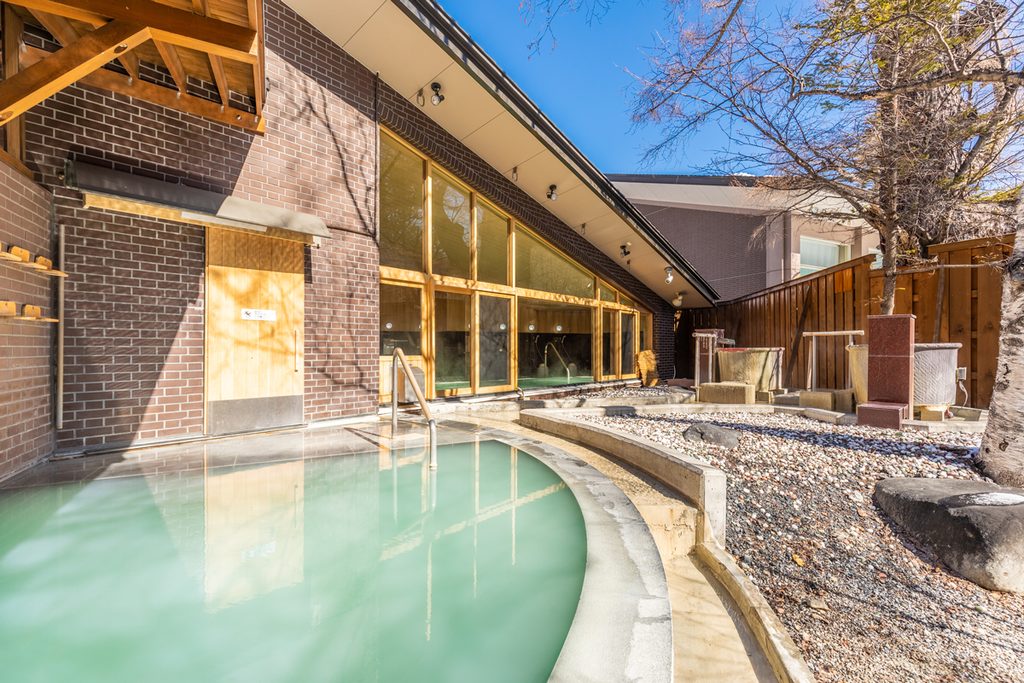
Image Credits: 休暇村
Ryokan rates and onsen access vary by property. Some offer a public bath for day visitors at a separate fee; others reserve their baths for overnight guests only, so check directly with whichever ryokan you’re considering.
Best for finishing a long hiking day with an actual soak, or as the base for a second night if you want Oku-Nikko without the bus-schedule rush. Skip it on a tight day-trip itinerary; there simply isn’t time to get in a bath.
- 📍 Oku-Nikko, far end of the Senjogahara trail
- 🕘 Ryokan check-in times vary; day-use onsen access depends on the property
- 💰 Varies by ryokan
📖 Related Guide: Already sold on a proper onsen night? Our things to do in Hakone guide covers Tokyo’s other big mountain hot-spring escape.
Beyond the Shrines: Tamozawa Imperial Villa and Kanmangafuchi Abyss
Two more sights sit in Nikko’s town centre, away from the shrine complex and the Oku-Nikko bus route. Both are easy to add to either half of the trip.
Tamozawa Imperial Villa
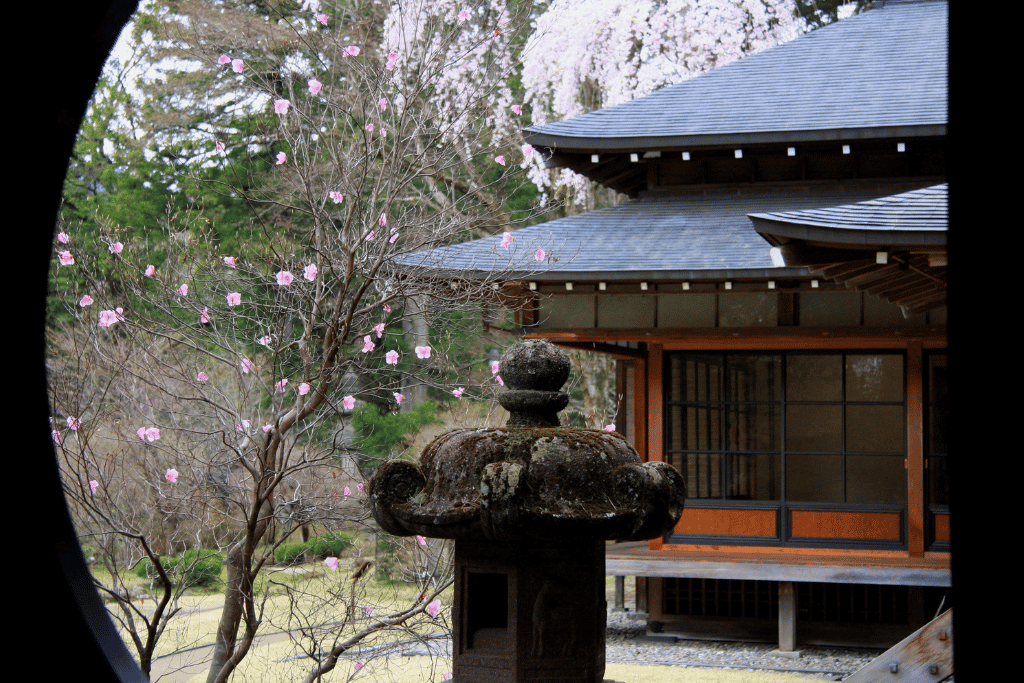
Tamozawa Imperial Villa was built in 1899 as a summer retreat for the imperial family. It’s one of the largest wooden villas left in Japan, blending traditional Japanese rooms with Western-style additions across 106 rooms.
Adult admission runs around 600 JPY (~S$5). The grounds include a Japanese garden with a weeping cherry tree, around 400 years old, that blossoms anywhere from mid to late April depending on the year.
Come here for imperial-household history rather than more shogunate shrines, though skip it on a rushed itinerary; it adds a genuine hour, not a quick five-minute look.
- 📍 Town centre, a short walk from the World Heritage Area
- 🕘 Roughly 9 AM to 4:30 PM, closed on select days; check before visiting
- 💰 Around 600 JPY (~S$5) adults
Kanmangafuchi Abyss
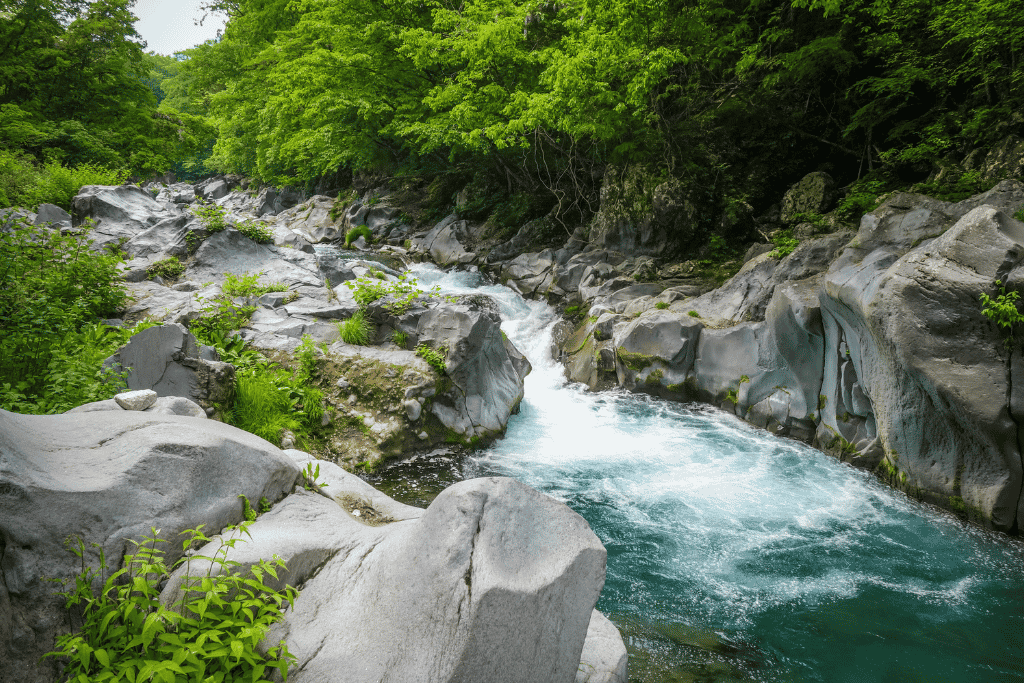
Kanmangafuchi is a narrow river gorge carved by an eruption of Mount Nantai. Roughly 70 stone Jizo statues line the path, known locally as “Bake-Jizo,” or ghost Jizo, because no two visitors ever count the same number on the walk back.
Jizo statues traditionally guard travellers and children. This row has stood for centuries, weathered and moss-covered.
It’s free, a short walk along the gorge, and one of the quietest spots in Nikko, a genuine escape even from the town’s own modest crowds.
Skip the ticket counters for half an hour and just walk. It’s only a short taxi ride or a 20-minute walk from the World Heritage Area.
- 📍 Town centre, a short walk or taxi from the World Heritage Area
- 🕘 Daylight hours
- 💰 Free
What to Eat in Nikko
Nikko’s food is built around yuba, and almost every restaurant in town serves some version of it.
Yuba
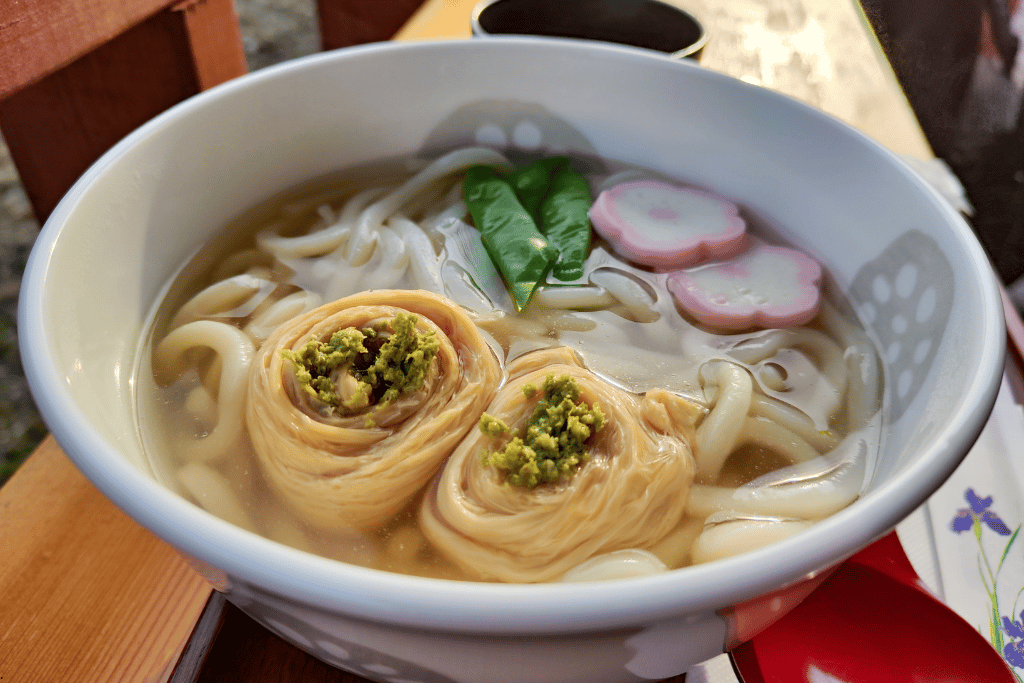
Yuba is tofu skin, the thin layer that forms when soy milk is boiled. It’s been a staple of Nikko’s monks for centuries, since it stores well through long mountain winters.
You’ll find it raw, fried, in soup, or wrapped around rice as yuba-don. Restaurants throughout the town centre serve their own take.
Prices vary widely by restaurant. Simple yuba sweets or snacks run under 1,000 JPY (~S$8), while a full yuba kaiseki lunch can run 2,600 JPY (~S$21) or more.
It’s the one dish worth seeking out in Nikko, whichever form you try it in.
Agemanju
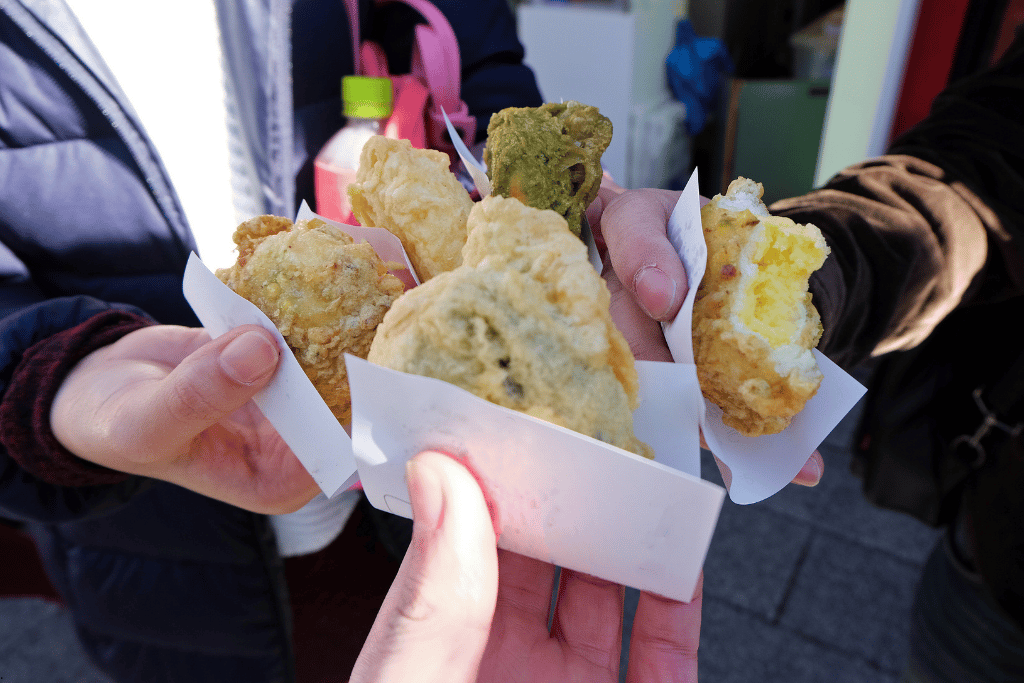
Agemanju is a deep-fried version of manju, a bun filled with sweet red bean paste, sold hot from stalls near Tobu-Nikko Station. The outside turns crisp and salty from the fryer while the bean paste inside stays soft and only mildly sweet.
It typically costs around 200 JPY (~S$2) a piece, or 1,000 JPY (~S$8) for a set of five. Grab one from the stalls right outside Tobu-Nikko Station before you start the walk up to the shrines.
📖 Related Guide: Chasing more of Japan’s regional tofu-skin and noodle specialities? Our things to do in Yokohama guide covers a completely different side of the country’s food scene.
Getting Around Nikko
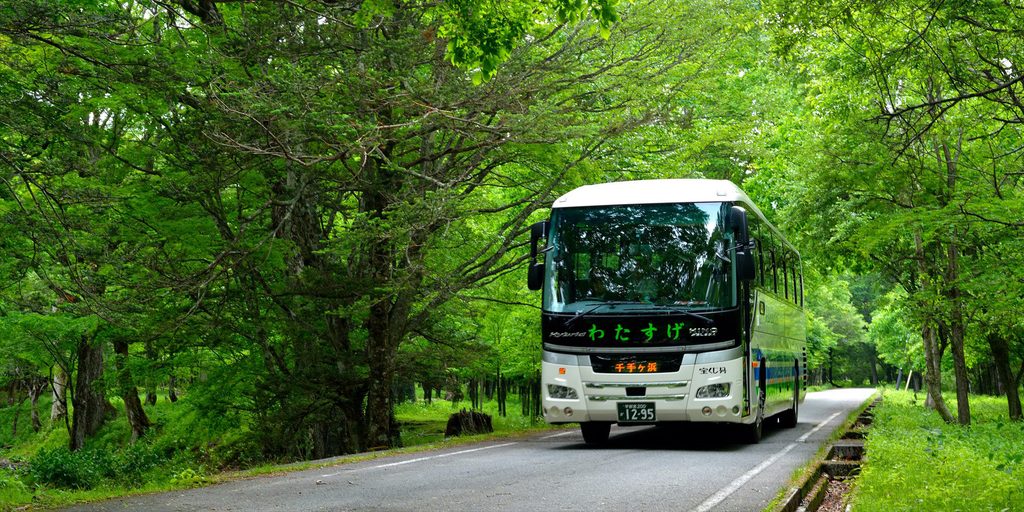
Image Credits: nikko-nsm.co.jp
Nikko’s town centre and World Heritage Area are walkable, but Oku-Nikko needs a bus.
The Nikko Pass World Heritage Area bundles the round-trip Asakusa–Nikko train with unlimited local buses for around 3,000 JPY (~S$24), valid two consecutive days. That’s only a little more than a plain return train ticket alone, though it covers town-centre buses only, not the longer ride up to Oku-Nikko.
For Oku-Nikko, the Nikko Pass All Area adds unlimited buses up to Lake Chuzenji and Yumoto Onsen for around 8,000 JPY (~S$65), valid four consecutive days. It’s worth it mainly if you’re spending at least one full day up the mountain.
Shrine and temple entry fees are never included in either pass.
Where to Stay: Nikko Town or Up at the Lake
Stay in Nikko’s town centre if the shrines are your main reason for coming. Hotels and guesthouses here run from simple business stays to traditional ryokan, all within walking distance of Shinkyo Bridge and the World Heritage Area.
Base yourself at Lake Chuzenji or Yumoto Onsen instead if Oku-Nikko is getting a full day or two of its own. Staying up the mountain means an early start on the Senjogahara trail. It also means an evening soak, instead of a late bus back down after the day’s last shuttle.
📖 Related Guide: Weighing up a day trip versus an overnight stay elsewhere in Japan? Our things to do in Hiroshima guide covers the same call for a trip that pairs a city with its own mountain-and-island day trip.
Best Time to Visit Nikko
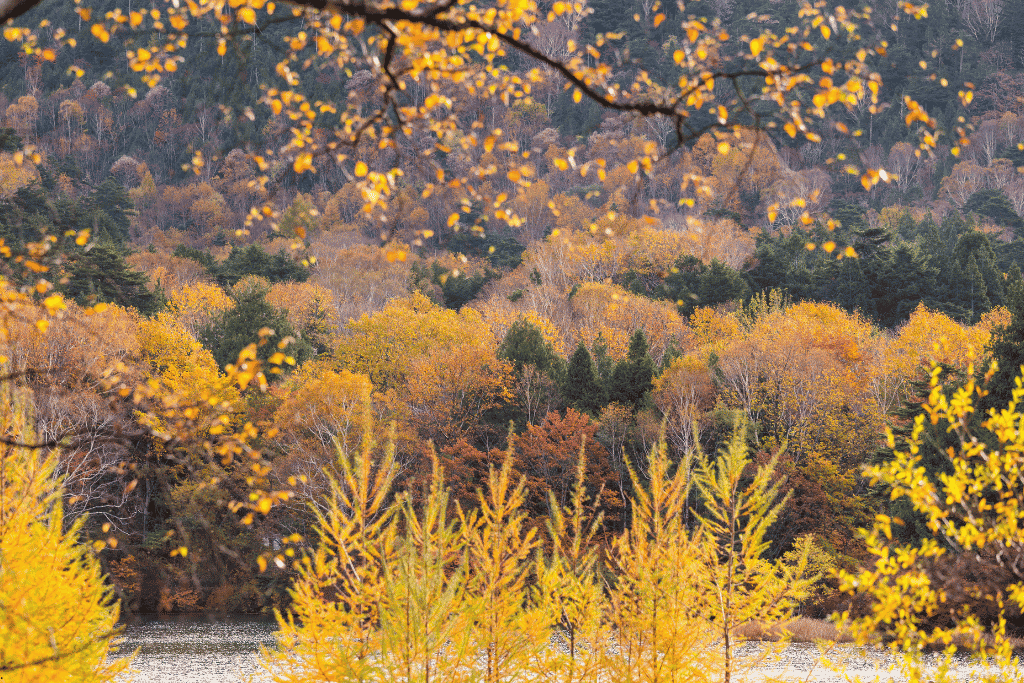
Late October into mid-November is Nikko’s best window, when the maples around Toshogu, Shoyoen Garden and Lake Chuzenji all turn within a few weeks of each other.
Winter brings snow and genuine cold, especially up in Oku-Nikko, and Kegon Falls sometimes freezes solid, which draws a smaller but dedicated crowd of its own. Spring and summer are quieter at the shrines and warmer for the Senjogahara hike. The Lake Chuzenji cruise only runs from around mid-April to late November, so check the season before building a trip around it.
If Nikko is one stop on a longer Japan itinerary, our best time to visit Japan guide breaks down what each month looks like elsewhere on your route.
📖 Related Guide: Planning around Japan’s wider foliage calendar rather than just Nikko’s? Our autumn in Japan guide tracks the colour front as it moves south.
How Much Nikko Costs and How to Pay
A full day of shrine tickets plus a trip up to Oku-Nikko runs roughly S$20 to S$45 before meals. Several of the best spots, including Futarasan’s grounds, Kanmangafuchi and the Oku-Nikko trails, cost nothing to enter.
| Item | Price |
|---|---|
| Shinkyo Bridge crossing | 300 JPY (~S$2) |
| Toshogu Shrine (shrine only) | 1,600 JPY (~S$13) |
| Rinnoji Sanbutsudo + Taiyuinreien combo | 900 JPY (~S$7) |
| Futarasan inner garden | 300 JPY (~S$2) |
| Taiyuinreien (alone) | 550 JPY (~S$4) |
| Kegon Falls lower-deck elevator | 600 JPY (~S$5) |
| Lake Chuzenji cruise | 1,250 to 2,200 JPY (~S$10 to S$18) |
| Tamozawa Imperial Villa | 600 JPY (~S$5) |
| Nikko Pass World Heritage Area (2 days) | 3,000 JPY (~S$24) |
| Nikko Pass All Area (4 days) | 8,000 JPY (~S$65) |
Verify rate before booking, and confirm current ticket prices on arrival since several sources quote slightly different figures.
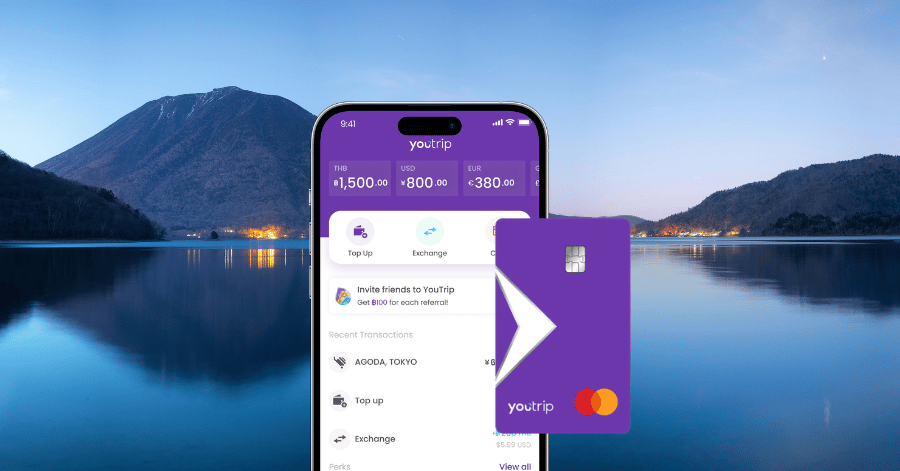
Tap your YouTrip card for restaurants, cafés and most shops in town, since it charges 0% FX and bills at the Mastercard wholesale rate. JPY is one of the 12 currencies you can hold and lock in through the app, so you can lock a rate before the yen moves against you.
Withdraw cash from an ATM once you land for shrine entry counters and ticket machines, several of which are cash-only. The first S$400 of overseas ATM withdrawals each calendar month is free with YouTrip, then 2% after, and some machines add their own on-screen fee on top. That beats a money changer, which bakes a markup of a few percent into the rate it quotes you instead of showing it as a separate fee.
For deeper detail, see our Japan ATM withdrawal guide and the SGD to JPY rate guide.
📖 Related Guide: Not sure the card works everywhere in Japan? Our can YouTrip be used in Japan guide answers the practical questions.
1-Day and 2-Day Nikko Itinerary
If you’ve only got one day: pick a side rather than splitting the day. For the shrines, start at Shinkyo Bridge, spend the morning at Toshogu, Rinnoji and Futarasan, then close with Taiyuinreien before the midday crowds build. For Oku-Nikko instead, catch the early bus up, do Kegon Falls and Lake Chuzenji, then walk whichever section of the Senjogahara trail your time allows.
With a second day: do the shrines on day one, including Tamozawa Imperial Villa and Kanmangafuchi Abyss in the afternoon, then dedicate the full second day to Oku-Nikko. Catch the early bus up, walk the Senjogahara trail from Ryuzu Falls to Yumoto Onsen, and finish with a soak before heading back down.
FAQs
Yes. It packs a UNESCO shrine complex, one of Japan’s three most famous waterfalls and a mountain hot-spring town into one day trip from Tokyo. That’s unusually dense for somewhere this close to the city.
Barely, and only for half of it. One day comfortably covers either the World Heritage Area shrines or Oku-Nikko’s waterfalls and lake, but doing both properly in a single day means rushing. Stay one night if you can.
About 100km. The limited express train takes roughly 1h50m to 2h from Tobu Asakusa Station to Tobu-Nikko Station, or around 2.5 hours on a cheaper regular train with a transfer.
Toshogu Shrine is the headline sight, followed by Rinnoji Temple, Futarasan Shrine and Taiyuinreien in the World Heritage Area. Then come Kegon Falls, Lake Chuzenji and the Senjogahara Marshland hike up in Oku-Nikko.
No. It’s been closed for construction since 16 January 2026, with reopening expected around September 2027. Use Kegon Falls’ lower-deck elevator for a below-the-falls view in the meantime.
Yuba, Nikko’s tofu-skin speciality, is the dish to try, served raw, fried, in soup or over rice. Agemanju, a fried red-bean bun sold near the station, makes a good snack between sights.
Nikko Rewards the Trip Up the Mountain
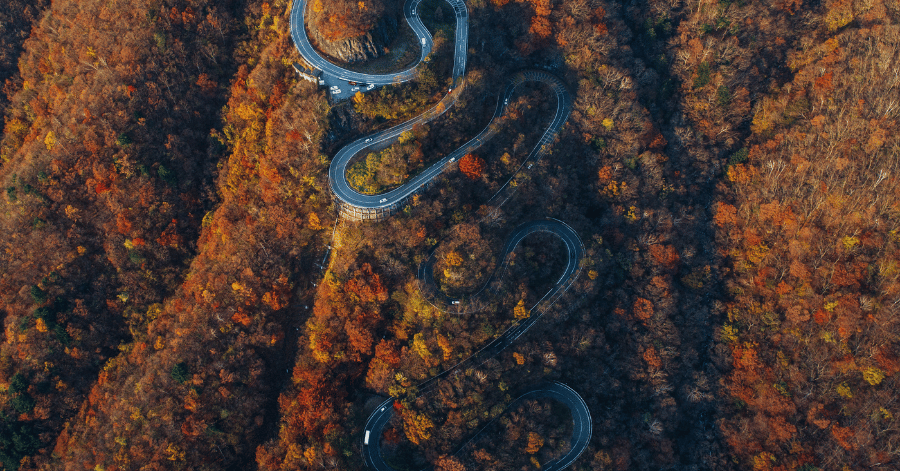
Nikko’s shrines are worth the trip on their own, but Oku-Nikko is what separates a rushed afternoon from a trip you’d actually recommend. Give the World Heritage Area a morning, and if you can spare a second day, give the mountain the extra day it needs.
Not a YouTrooper yet? Singapore’s go-to multi-currency wallet helps you save with great FX rates and zero fees. Skip the money changer and get a free YouTrip card + S$5 YouTrip credits with code <YTBLOG5>.
Then, head over to our YouTrip Perks page for exclusive offers and promotions, we promise you won’t regret it. Join our Telegram (@YouTripSG) and Community Group (@YouTripSquad) for travel tips, event invites, and more!
Happy travels!
The information stated above is true as of November 2026.


This guide is written and maintained by the YouTrip content team and checked against the shrines’ and villa’s own ticketing pages, Tobu Railway’s official Nikko Pass and train pages, and independent travel-guide sources for figures the official sites didn’t publish directly, all linked throughout. We revise it whenever admission fees, transport fares or the Akechidaira Ropeway’s reopening date change; this version reflects those sources as of November 2026.