


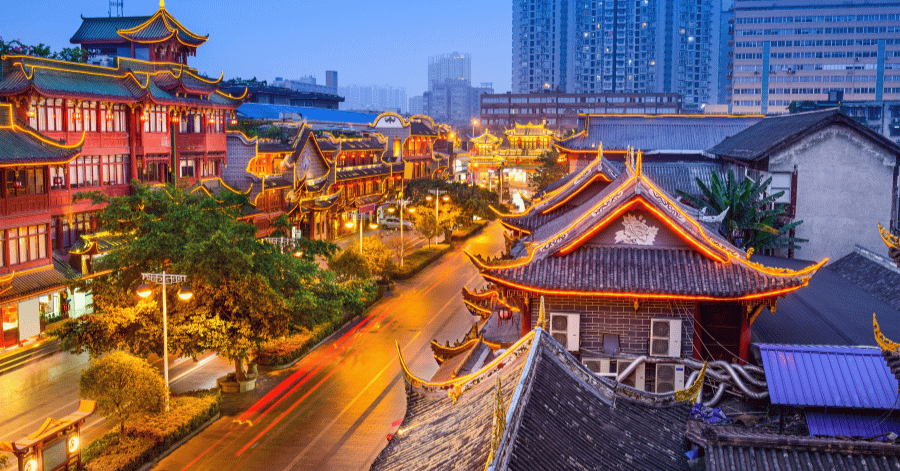

Pandas, numbing mala hotpot and a slower pace of life: here’s what’s actually worth your time in Chengdu.
Chengdu is the China trip people book after Beijing and Shanghai, then wish they’d done first. It’s the panda capital, the home of Sichuan food, and the one big Chinese city that runs at teahouse speed. Flights from Changi take under five hours, and SG passport holders get in visa-free.
Here are 23 things to do in Chengdu, with SGD prices and the payment setup that stretches your money furthest.
Chengdu at a Glance
| Quick Answer | Details |
|---|---|
| Top 3 must-dos | Giant Panda Research Base, a mala hotpot dinner, and Kuanzhai Alley + Jinli for old Chengdu |
| How many days? | 3 days for the city core; 5–6 days if you want Leshan, Mount Emei or Dujiangyan as day trips |
| Best time to visit | March–April for cherry blossoms, or September–November for cool, dry days. Skip the humid July–August |
| Visa for SG passports | 30 days visa-free, extended through 31 December 2026. A passport with 6+ months’ validity is all you need |
| Daily budget (mid-range) | ~S$100–150/day excluding flights |
| Getting from airport | Tianfu International (TFU) is ~60km out: ~35–50 min to Chengdu South on Metro Line 18 (Airport Express), then transfer, or a DiDi. Shuangliu (CTU) is much closer to the city |
| How to pay | Link your YouTrip Mastercard to Alipay or WeChat Pay. Taps go through at the wholesale CNY rate with no foreign transaction fee. Cash backup: any Chengdu ATM, first S$400/calendar month free with YouTrip |
📖 Related Guide: Doing a multi-city China trip? Our 31 things to do in Shanghai pairs perfectly with Chengdu on a high-speed-rail loop, one half slow and spicy, one half fast and futuristic.
Table of Contents
- What Is Chengdu Famous For?
- How Many Days Do You Need in Chengdu?
- When to Visit Chengdu
- Top Things to Do (Must-Sees)
- Temples, History & Culture
- Tea Houses & Local Life
- Things to Do at Night
- Shopping & Modern Chengdu
- Day Trips & Nature Escapes
- What to Eat in Chengdu
- Visa, Payment & Getting Around in Chengdu
- FAQs About Visiting Chengdu
What Is Chengdu Famous For?
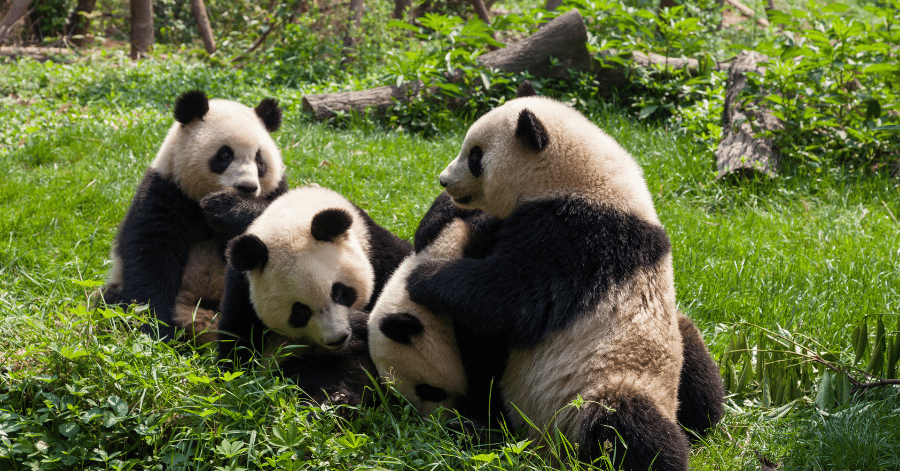
Chengdu is famous for giant pandas, Sichuan food, and a famously laid-back pace of life. It’s the capital of Sichuan province, home to the world’s best-known panda breeding base, and one of only a handful of UNESCO Cities of Gastronomy. That’s the reason mapo tofu, hotpot and the mouth-numbing mala peppercorn all trace back here.
It’s also an easy first taste of China. The city is flat, walkable in parts, big on parks and teahouses, and less frantic than Beijing or Shanghai. Think old temples and alleys on one side, glass-and-neon megamalls on the other, and pandas holding the whole thing together.
📖 Related Guide: Torn between Sichuan’s two spicy giants? Our guide to things to do in Chongqing covers Chengdu’s louder, hillier neighbour, an easy high-speed-rail add-on and the other half of the great hotpot debate.
How Many Days Do You Need in Chengdu?
Three days covers the city core comfortably; five to six lets you add the big day trips. Chengdu rewards a slower schedule, so don’t cram it.
| Days | What you’ll fit |
|---|---|
| 3 days | Panda base, Kuanzhai Alley, Jinli + Wuhou Shrine, People’s Park teahouse, one hotpot dinner |
| 4–5 days | The above, plus Leshan Giant Buddha or Dujiangyan, Chunxi Road shopping, a night at Anshun Bridge |
| 6+ days | Add Mount Emei or Mount Qingcheng, Sanxingdui Museum, and a slow food day around Wenshu Monastery |
A common SG itinerary: two or three days in Chengdu, one day trip to Leshan, then a high-speed train onward to Chongqing or Xi’an.
📖 Related Guide: Extending the trip north? Our 10 best things to do in Beijing rounds out a classic China loop, and the imperial capital pairs naturally with laid-back Chengdu.
When to Visit Chengdu
The sweet spots are March–April and September–November. Spring brings cherry blossoms across the parks and day-trip towns; autumn is cool and dry. Chengdu is famously cloudy year-round, so don’t expect big blue skies whenever you come.
| Season | Months | What to expect |
|---|---|---|
| Spring | Mar–May | Cherry and plum blossoms, mild temperatures, the best all-round window |
| Summer | Jun–Aug | Hot, humid and rainy. Hotpot feels heavier and day-trip mountains get misty |
| Autumn | Sep–Nov | Cool, dry and comfortable, second-best window |
| Winter | Dec–Feb | Cold, grey and damp, but quiet crowds and cheaper flights |
📖 Related Guide: Sorting your spending money before you fly? Our guide to the best SGD to CNY rate breaks down how to get the most yuan for your dollar without a money-changer run.
Top Things to Do in Chengdu
Start here. These are the three sights no first-time visitor should skip.
Chengdu Research Base of Giant Panda Breeding
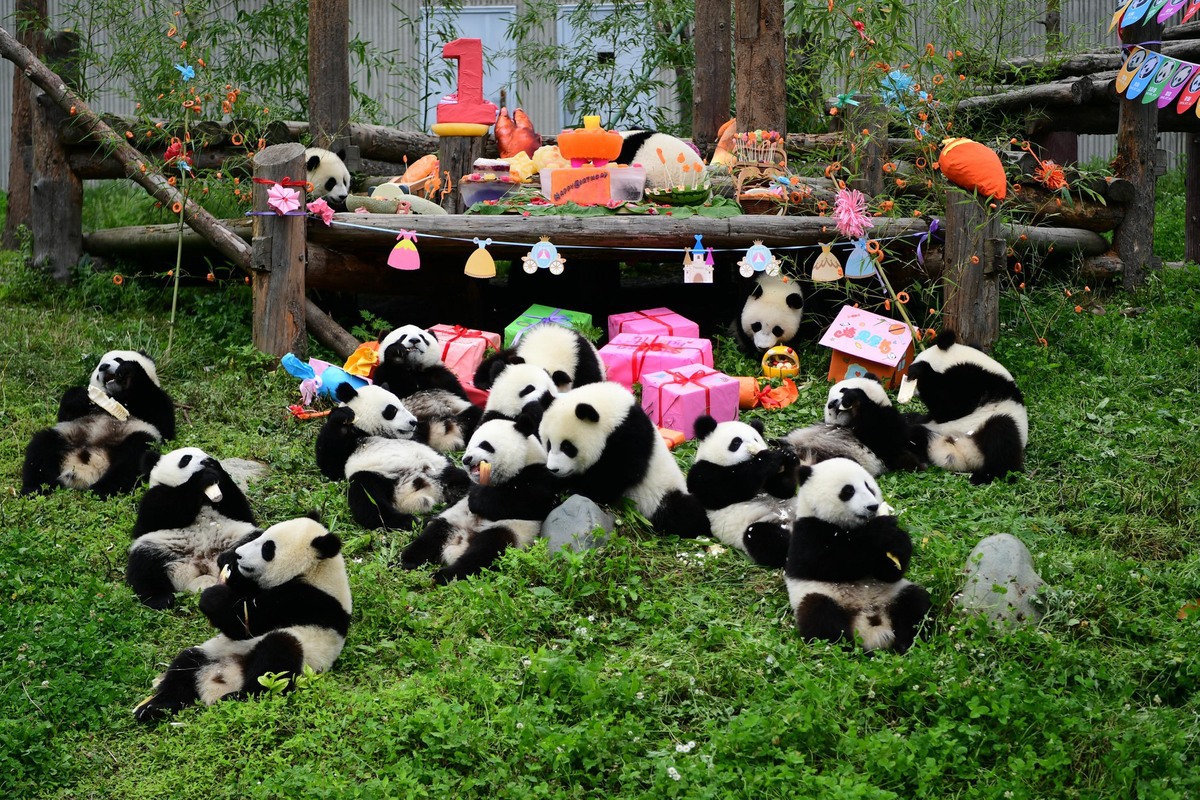
Image Credits: China Daily
This is the one non-negotiable in Chengdu, and it lives up to it. The Research Base is one of the world’s foremost giant panda breeding and conservation centres, an open, zoo-style park of leafy enclosures where you’ll see adult pandas, playful cubs in the nursery, and the raccoon-like red pandas that most visitors don’t expect to love as much as they do.
Timing is everything. Pandas are most active in the cool of the morning, so get there for opening (around 7:30–8 AM). By early afternoon they’ve usually eaten and flopped over to sleep. The base is big, and there’s an internal shuttle (~30 CNY (~S$6) for the day) that saves a lot of walking between the far enclosures and the panoramic canteen. Entry runs around 55 CNY (~S$10).
Getting there is easiest via the direct tourist shuttle from Chunxi Road (about 10 CNY (~S$2) one way, roughly an hour), or a DiDi. Buy your entry and shuttle tickets before you go if you can, because foreign cards sometimes fail on the in-park WeChat mini-program, and you don’t want to lose active-panda time queuing.
Best for anyone, honestly, but especially early risers. Skip a lie-in for this one; the difference between 8 AM pandas and 2 PM pandas is the difference between a wildlife documentary and a nap.
Kuanzhai Alley (Wide and Narrow Alley)
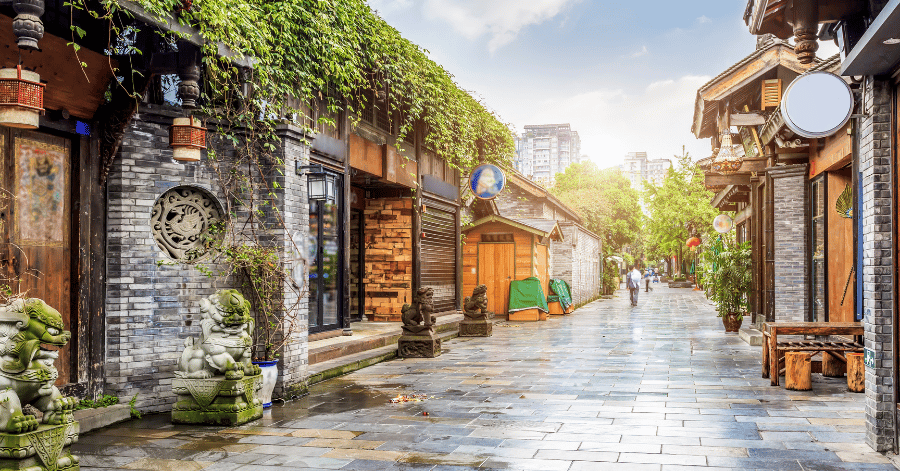
Kuanzhai Alley is Chengdu’s most famous old district and the easiest place to feel “old Chengdu” in an afternoon. It’s actually three parallel lanes: Wide Alley (grand courtyard houses and teahouses), Narrow Alley (food, souvenirs and the biggest crowds), and the quieter Jing Alley. Restored Qing-era architecture, snack stalls and street performers fill the gaps.
It gets seriously packed, since this is the busiest tourist spot most visitors hit, so go earlier in the day or on a weekday if crowds bother you. Try the san da pao (“three cannons”), a glutinous rice snack tossed into peanut shavings right in front of you.
Best for first-timers who want the postcard version of old Chengdu, and don’t mind sharing it with a crowd.
Jinli Ancient Street and Wuhou Shrine
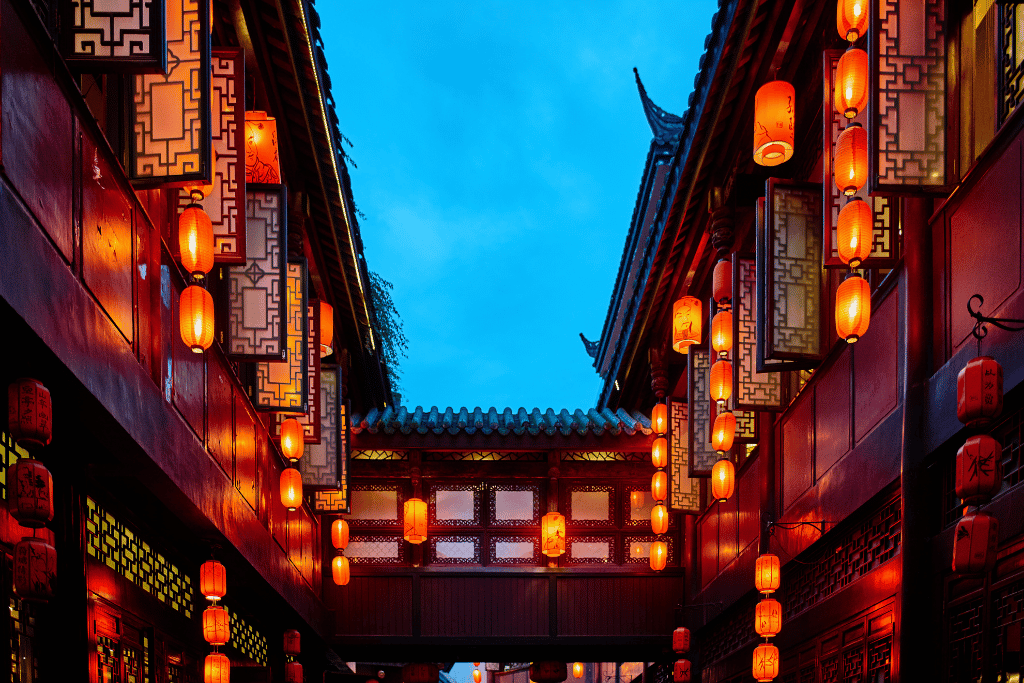
Jinli is a beautifully restored pedestrian street of grey-brick shops, lantern-lit at night, packed with Sichuan street snacks, tea and the occasional opera performance. Its lineage runs back roughly 2,000 years (Jin for brocade, li for lane, so “Brocade Lane”), though what you walk today is a polished, commercial reconstruction. Come hungry and graze your way down it.
It sits right beside the Wuhou Shrine, a leafy temple-and-museum complex honouring the Three Kingdoms strategist Zhuge Liang and housing the tomb of Liu Bei. It’s the only site in China where an emperor and his minister are honoured together. The red-walled bamboo corridor here is one of the city’s most photographed spots.
Do the two together as an easy half-day: history in the shrine, then snacks and atmosphere next door on Jinli. Expect crowds even on weekdays.
📖 Related Guide: Chasing pandas across China? Our best things to do in Guangzhou covers Chimelong Safari Park, the other big southern spot to see pandas up close.
Temples, History & Culture
Chengdu wears its 2,000-odd years lightly. These are the spots where the history and Sichuan culture come alive.
Wenshu Monastery and Its Old District
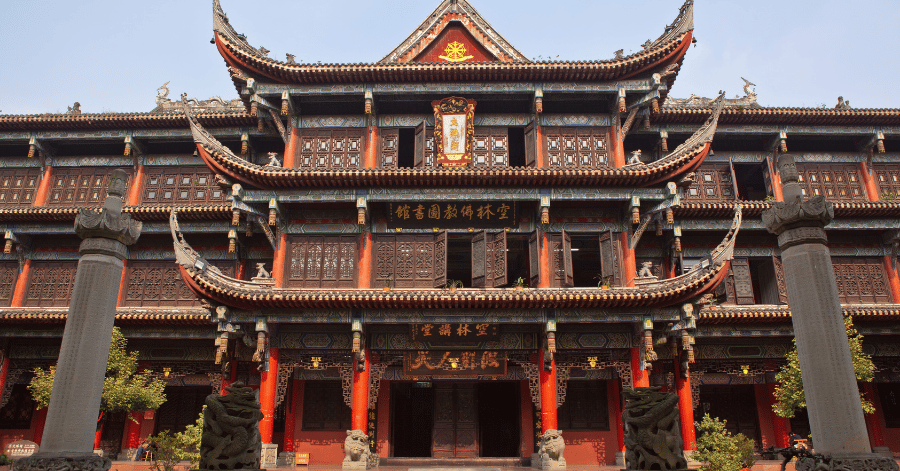
Wenshu Monastery is Chengdu’s largest and best-preserved Buddhist temple, and the calmest of the historic sites. It’s an active place of worship, all incense smoke, chanting and monks, set in a big, walkable complex, with an old-feeling traditional neighbourhood of teahouses and eateries wrapped around it.
If you only have time for one temple, this is the pick over the more central Daci Temple (entry ~30 CNY | ~S$6), though some sources still list it as free, so check before you go; bring your passport). The surrounding lanes are half the appeal, so leave time to wander and eat.
It’s the one to pick if you want a quieter, more local half-day away from the Jinli crowds.
Du Fu Thatched Cottage
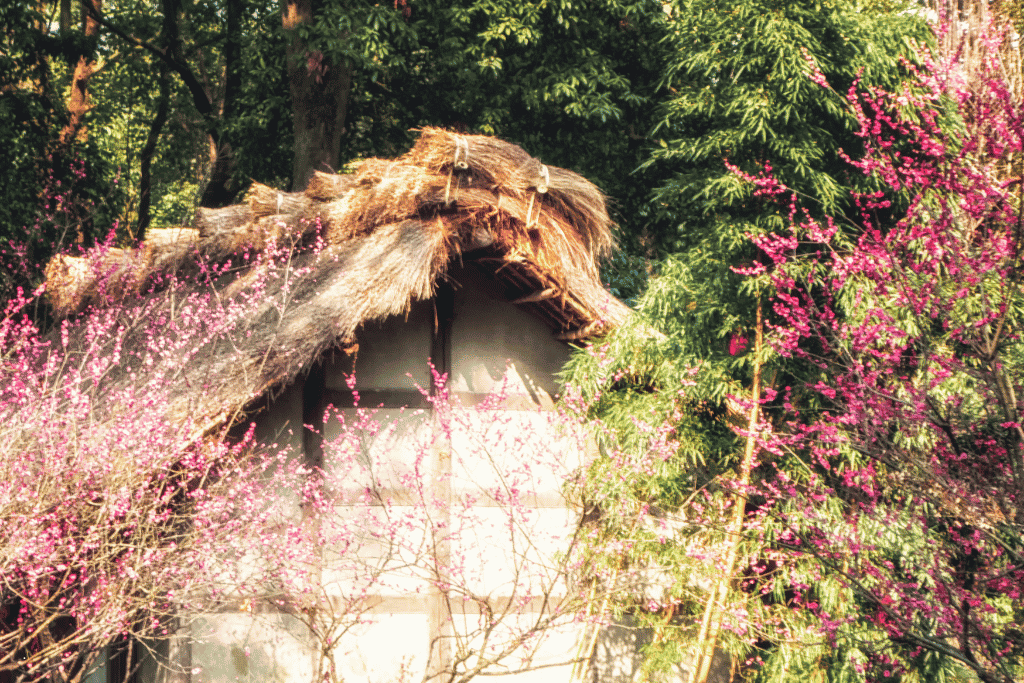
The Du Fu Thatched Cottage is a serene garden park built around the reconstructed home of Tang-dynasty poet Du Fu, who wrote some of his best-known work here. Expect winding bamboo paths, ponds, ornamental halls and the red walls Chinese visitors love to photograph, rather than a single dramatic sight.
It’s a calm, green break from the crowds (entry ~50 CNY | ~S$9). You don’t need to know the poetry to enjoy the walk, though a little context makes the halls mean more.
Best for a peaceful hour or two, and most rewarding if you like gardens and don’t need a headline attraction.
Sanxingdui Museum
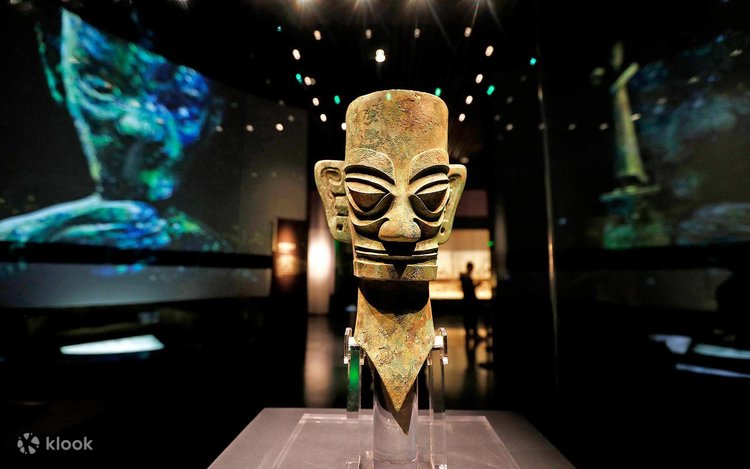
Image Credits: Klook
Sanxingdui is where Chengdu gets properly strange, in the best way. The museum displays relics from a mysterious 3,000-year-old civilisation: striking bronze masks with protruding eyes and towering figures unlike anything else in Chinese archaeology. It’s about 40km out of the city, so treat it as a half-day.
Best for history and archaeology lovers. It’s one of the most memorable museums in China if that’s your thing, skippable if it isn’t.
Sichuan Opera and Face-Changing (Bian Lian)
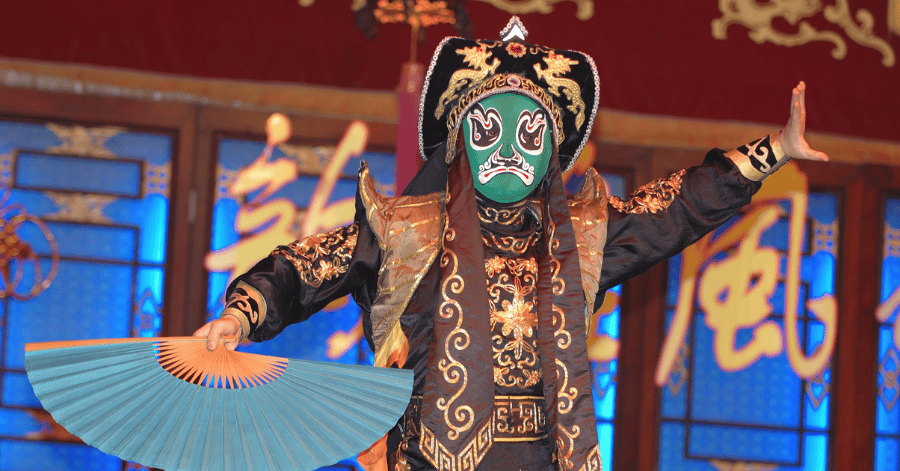
A Sichuan opera night is the city’s classic cultural show, and bian lian (face-changing) is the reason to go: performers whip through brightly painted masks in a split second, with a flick of a fan or a turn of the head, and nobody’s ever quite worked out how. The origin of the art is Sichuan itself, and a typical evening also throws in shadow play, hand puppetry, fire-spitting and a pot of tea.
You’ll find shows at the Shufeng Yayun teahouse, around Kuanzhai Alley, and in Culture Park, usually running 30–40 minutes, with tickets from ~100–150 CNY (~S$19–28) including tea.
It’s an easy, entertaining evening of traditional culture, and a guaranteed crowd-pleaser if you’re travelling with kids or parents.
📖 Related Guide: Paying for tickets and snacks at temples and old streets? Our guide to using WeChat Pay in China covers setup, top-ups and linking a foreign card so the QR codes actually work.
Tea Houses & Local Life
The slowest, most local side of the city, and some of its best free hours.
People’s Park and the Marriage Market
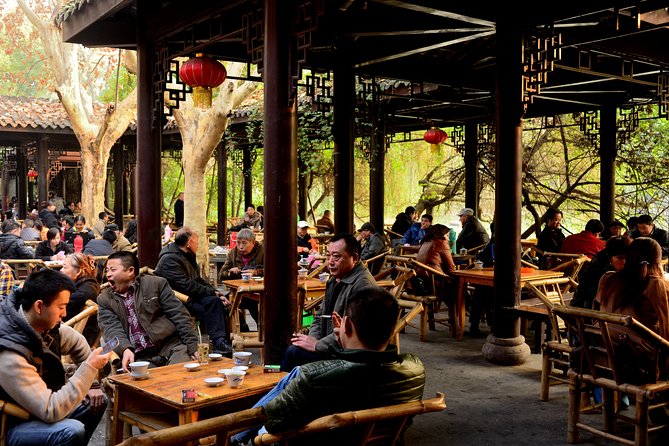
Image Credits: Tripadvisor
People’s Park is the window into everyday Chengdu life, and the best free thing to do in the city. Locals fill it with tai chi, mahjong, card games, ballroom dancing and paddle boats on the lake. On weekends it’s busy and brilliant for people-watching.
The park’s most surprising corner is the marriage market: rows of blue sheets (for the men) and pink sheets (for the women), each an advertisement listing a single person’s age, height, income and what they’re after, placed there by their parents, no photos. It’s part heartfelt, part hilarious, and completely Chengdu.
It’s a relaxed morning between temples; pair it with a teahouse sit-down next door.
Heming Tea House
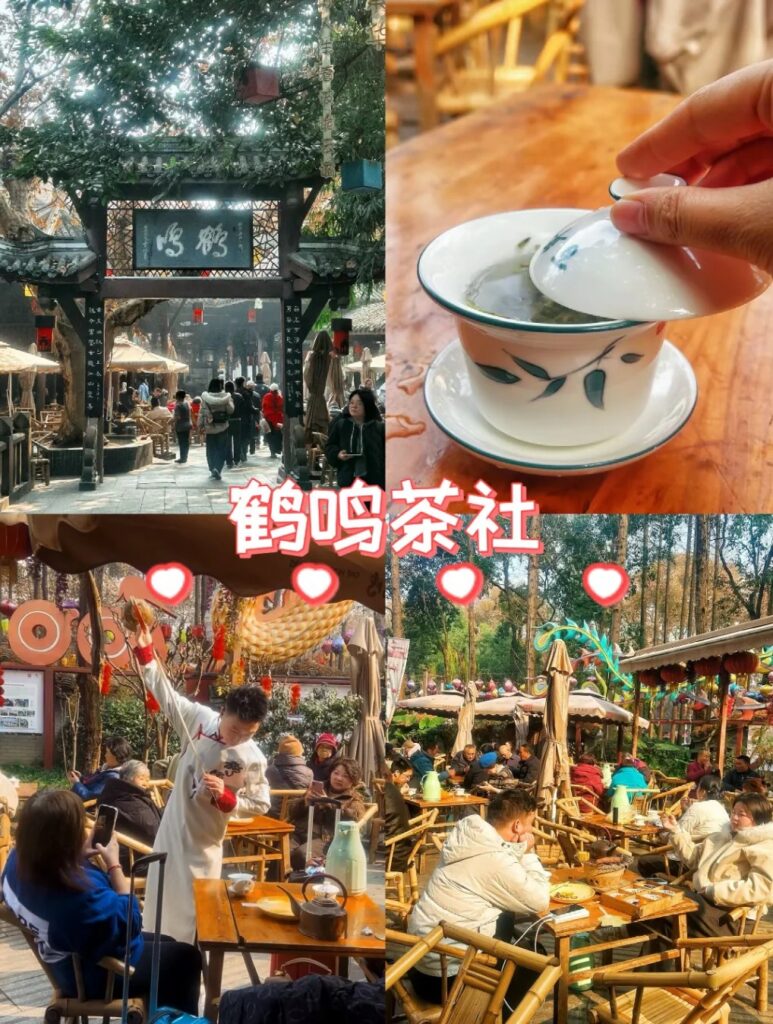
Image Credits: 791865124 on rednote
Tucked inside People’s Park, Heming Tea House has been the city’s living room since 1923, and it’s the classic Chengdu experience: a bamboo chair by the lake, a lidded cup of mao feng green tea, and a flask of hot water you keep topping up for hours. Nobody rushes you.
Two things make it worth lingering. Order one of the pricier teas, and you may get a long-spout tea-pouring performance, the server arcing boiling water into your cup from a metre away. And roving masters offer the local ear-cleaning ritual: a soft ting of a tuning fork, then a surprisingly relaxing (and very photographed) clean. Watch, or be brave.
Give it an afternoon: it’s the single best place to understand why Chengdu feels different from the rest of China.
📖 Related Guide: Hopping between parks and teahouses? Our guide to using DiDi in China shows how to book China’s Grab in English and pay with a linked YouTrip card.
Things to Do at Night
After dark, Chengdu is mostly about lit-up bridges, rivers and towers, and most of it costs nothing.
Anshun Bridge and the Jiuyanqiao Riverside
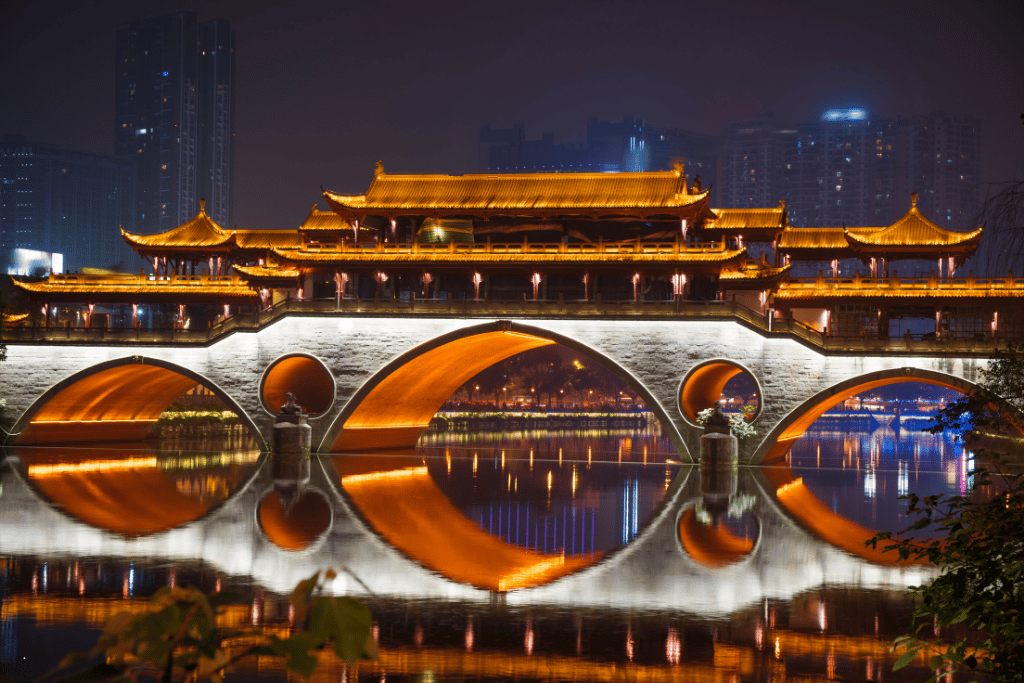
The Anshun Bridge is Chengdu’s postcard night shot: a covered wooden bridge in traditional palace style, lit up gold and mirrored in the river below. There’s a restaurant inside, but the point is the view from the banks after sunset.
It anchors the Jiuyanqiao area, the city’s main riverside nightlife strip, all bars, live music and busy pavements that come alive in the evening. Walk the river, grab a drink, watch the bridge glow.
It makes an ideal first night in Chengdu: central, free to enjoy, and it sets the tone.
Financial City Twin Towers
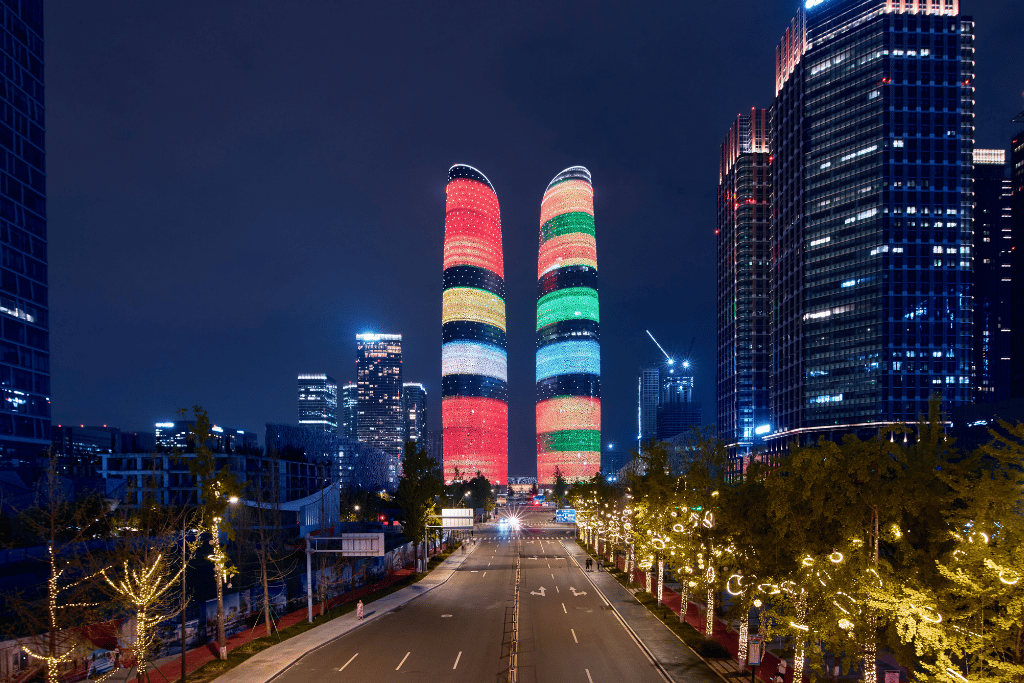
Over in the modern financial district, the Twin Towers put on a free light show after dark, their entire façades turning into a slow, revolving canvas of colour. By day they’re ordinary office towers; by night they’re one of the city’s better free spectacles.
It’s a bit out from the historic core, so pair it with a DiDi ride and maybe dinner nearby. Give it 15–20 minutes to watch the sequence cycle.
It’s worth the trip out for architecture and night-photography fans, or anyone already staying in the financial district.
The Glowing Bamboo Towers (Tower of Life)

Image Credits: XjjAlisa on rednote
Out in the southern financial district, the plaza of the luxury SKP mall is crowned by the Tower of Life: a cluster of tall, bamboo-shaped fountain towers that light up after dark in shifting colour, half sculpture and half water show. It’s the “glowing bamboo” spot all over TikTok, and more a striking photo stop than a long visit.
Go for the photos if you’re chasing night views, but don’t plan a whole evening around it.
📖 Related Guide: If neon nightscapes are your thing, our guide to things to do in Shenzhen covers China’s most futuristic after-dark skyline, an easy pairing on a wider China trip.
Shopping & Modern Chengdu
The glass-and-neon flipside to the old alleys, from designer malls to one of the largest buildings on earth.
Chunxi Road and the IFS Panda
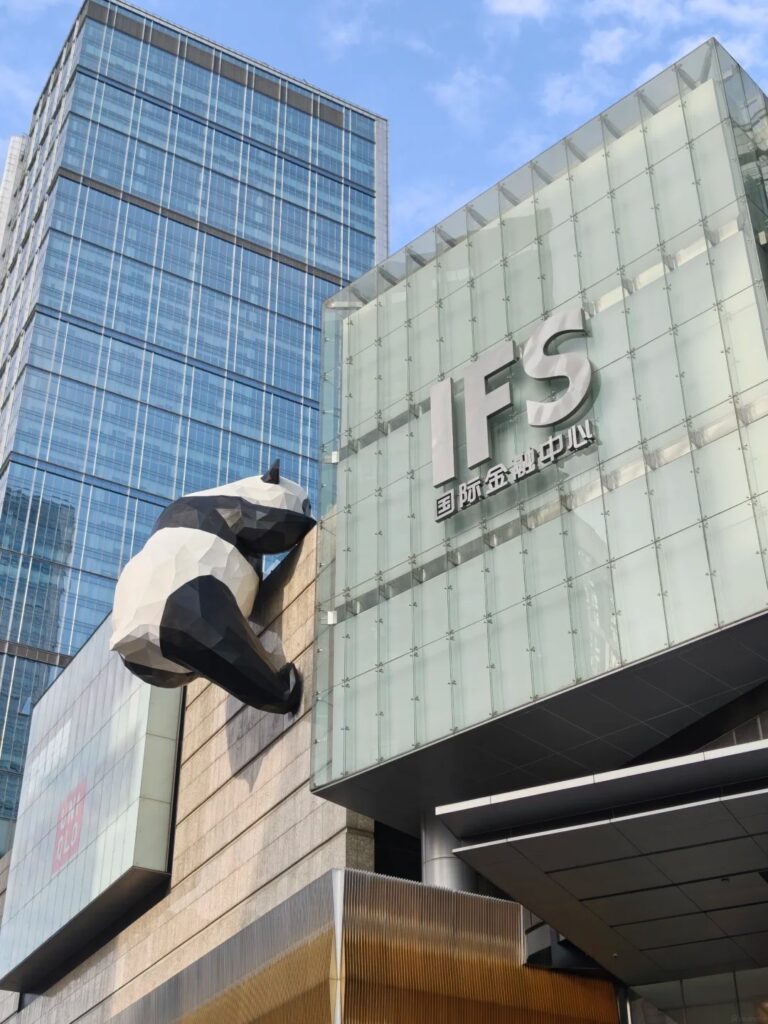
Image Credits: 5528591147 on rednote
Chunxi Road is the “Times Square of Chengdu”, a neon-lit pedestrian shopping district with international-brand malls, street performers and food vendors, best after dark. The star photo op is the giant panda climbing the IFS building, a 13-tonne art installation that’s become a symbol of the city.
Here’s the local trick: from the ground you can only shoot the panda’s backside. For the face-on photo, head up to the 7th-floor terrace behind it. There’s usually a queue, but that’s the shot everyone comes for.
Come in the evening for the stroll, the shopping and that one photo you’ll actually post.
Taikoo Li and IFS
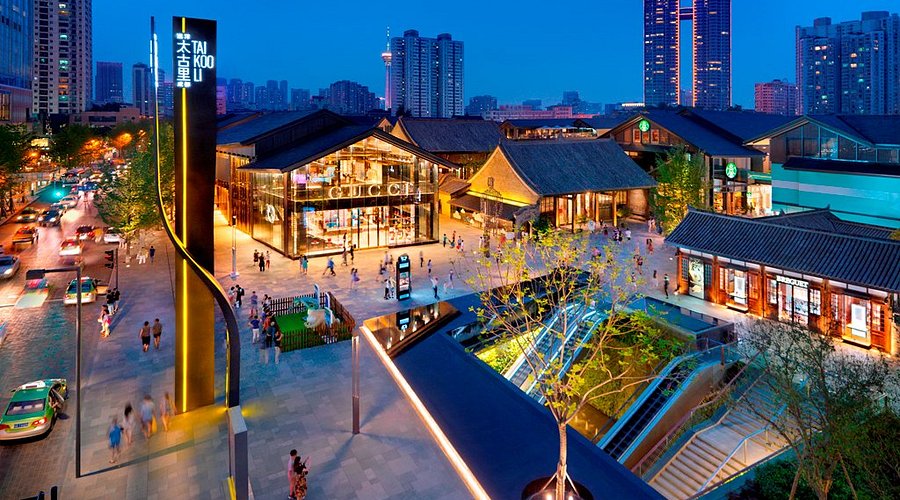
Image Credits: Tripadvisor
Sino-Ocean Taikoo Li and the neighbouring IFS mall are Chengdu’s designer-shopping heart, low-rise lanes of luxury boutiques wrapped around the historic Daci Temple, with the famous climbing panda next door. Even if you’re not buying, it’s a pleasant, walkable district and a good rainy-afternoon fallback.
It’s for shoppers, and anyone who wants the polished, modern flipside to the old alleys.
SKP and Its Sunken Garden
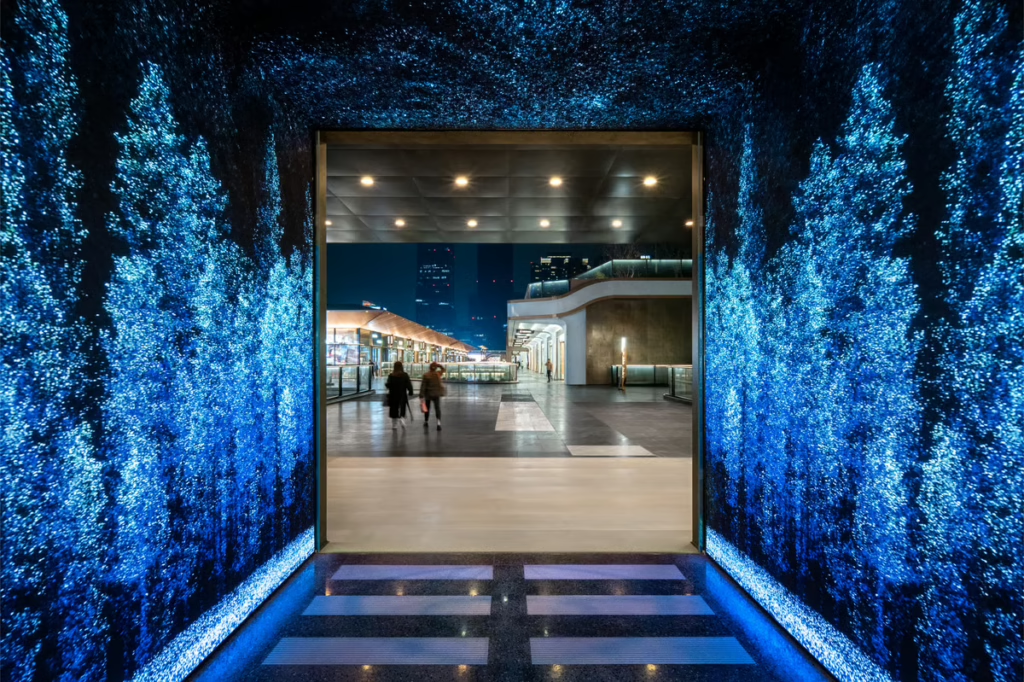
Image Credits: Sybarite
SKP is Chengdu’s showpiece luxury mall, and the design is the real draw even if the price tags aren’t for you. It’s billed as Asia’s largest sunken shopping centre, built mostly below ground beneath a landscaped rooftop park, so you head down into it rather than up. Opened in late 2022, it’s all sweeping curves, greenery and art.
By day it’s for the architecture and the browsing; after dark, the bamboo-shaped Tower of Life fountains on its plaza put on the glowing-bamboo light show that’s made it a TikTok fixture.
Best for design lovers and luxury browsers, and anyone after that underground-garden photo.
New Century Global Center
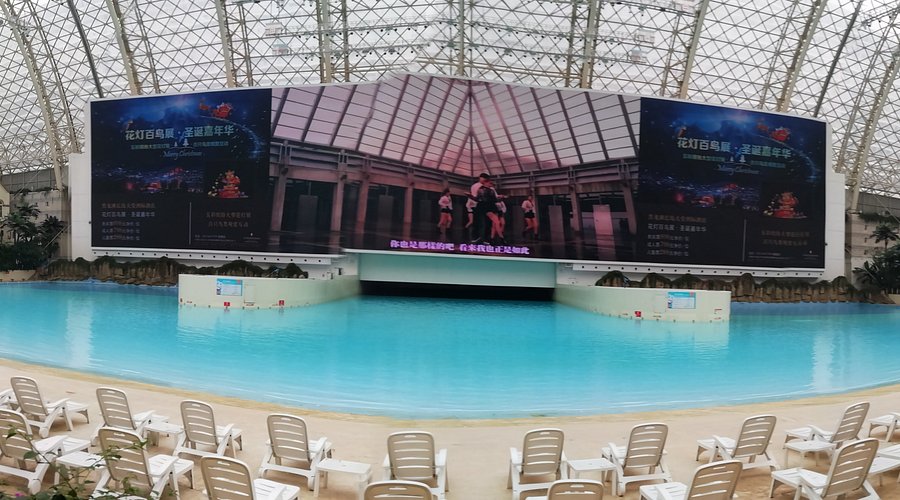
Image Credits: Tripadvisor
One of the largest buildings in the world by floor area, the New Century Global Center is a spectacle in itself. Inside, it packs an indoor beach and water park (with a giant LED “sky”), a shopping mall, an ice rink, an IMAX and a hotel. The shops are ordinary, but the sheer scale is the draw.
Honestly, an hour is enough unless you’re doing the water park with kids. Go to gawp at the size, not to shop.
Best for families with kids, and architecture buffs curious about a record-breaking building.
Eastern Suburb Memory (Dong Jiao Ji Yi)
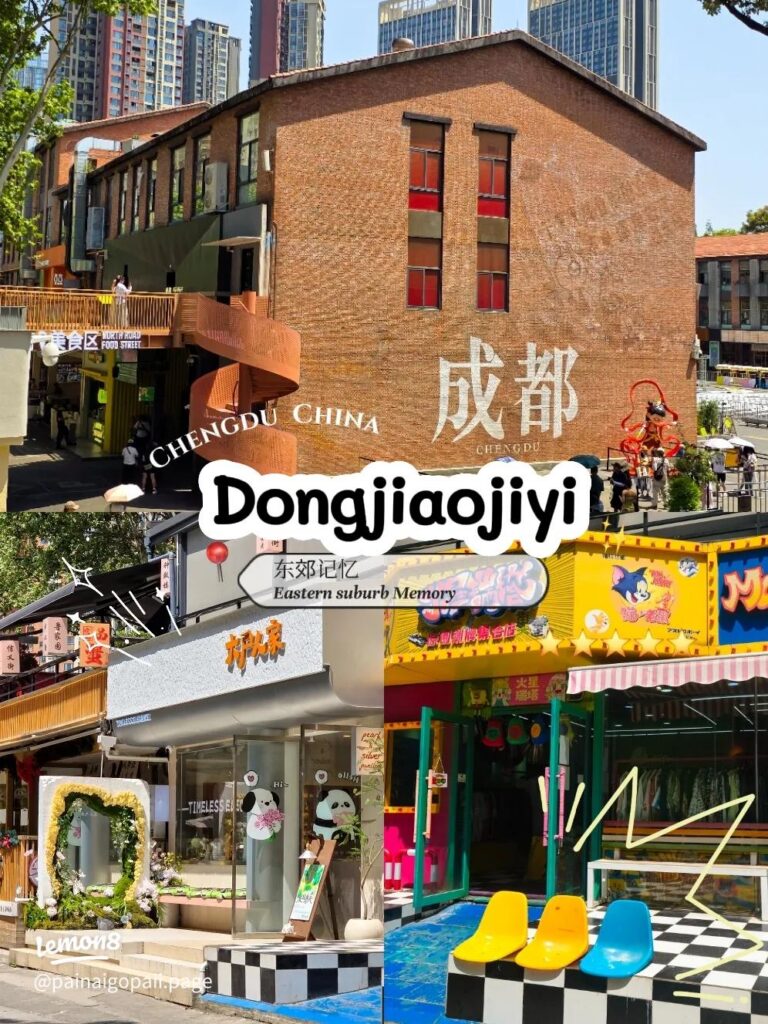
Image Credits: @painaigopall.page on Lemon8
Eastern Suburb Memory is often likened to Beijing’s 798 Art District: a former state-owned electronics factory reborn as an arts and music district. Red-brick warehouses and old rail lines now hold galleries, indie cafés, live-music venues, street art and vintage shops, and the industrial bones make it one of the city’s best spots for photos.
It’s low-key by day and livelier in the evening, and easy to pair with a meal. Don’t expect a single headline sight; the appeal is wandering and stumbling on things.
Best for younger travellers, creatives and photographers who want a change of pace from temples and malls.
Tianfu Square
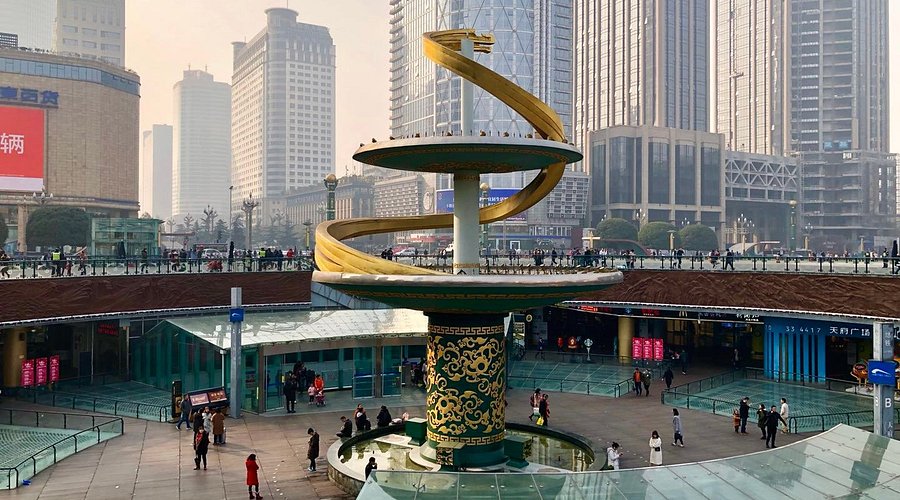
Image Credits: Tripadvisor
Tianfu Square is the geographic and cultural heart of Chengdu, a large central plaza with a Mao Zedong statue, a musical fountain, and metro interchanges that make it a handy orientation point. It’s more a landmark to pass through than a destination, but the fountain show is a nice pause.
Treat it as a quick stop while changing metro lines, or a first-evening sense of the city centre.
📖 Related Guide: Getting around a giant Chinese metro system for the first time? Our Beijing subway guide explains the QR-ticket system that works much the same way in Chengdu.
Day Trips & Nature Escapes
Chengdu makes a great base. The four classic day trips are about an hour out by high-speed or intercity train; the nature escapes are a longer haul.
Leshan Giant Buddha
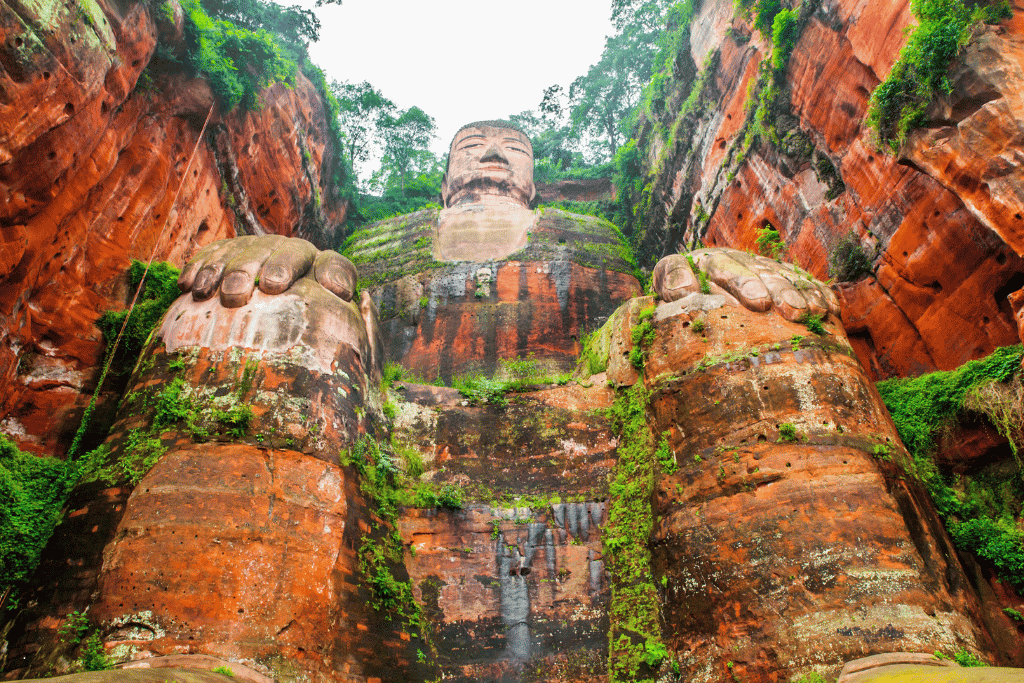
The Leshan Giant Buddha is the standout day trip: a 71-metre statue carved straight into a riverside cliff over 1,200 years ago, the largest stone Buddha in the world. It sits at the meeting of three rivers, and the scale only lands in person, when you realise a single toenail is bigger than a person.
You’ve got two ways to see it. A river ferry gives you the classic head-to-toe view from the water in a few minutes. Walking the Nine-Bend Plank Road down the cliff to the Buddha’s feet is far more immersive but a steep, crowded climb, so wear proper shoes and bring water. It’s about an hour from Chengdu by high-speed train.
Best for almost everyone. Choose the ferry if you’re short on time or energy, the plank road if you want the full experience.
Mount Emei (Emeishan)
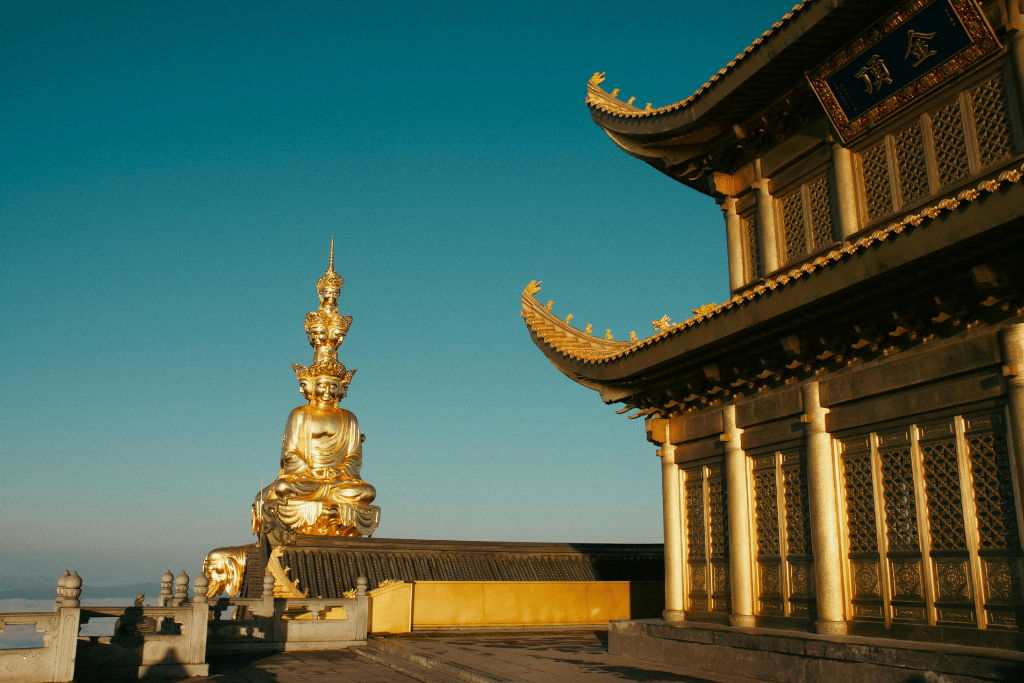
Mount Emei is one of China’s four sacred Buddhist mountains, with misty peaks, ancient monasteries, cheeky wild monkeys and pilgrim trails. You can go big (cable cars and a summit sunrise) or keep it light with the lower-mountain temple area, which skips the main summit fee. It’s a little over an hour from Chengdu by train, and pairs naturally with Leshan.
It’s one for hikers and temple-seekers: plan a full day, and a night nearby if you want the summit sunrise.
Dujiangyan Irrigation System
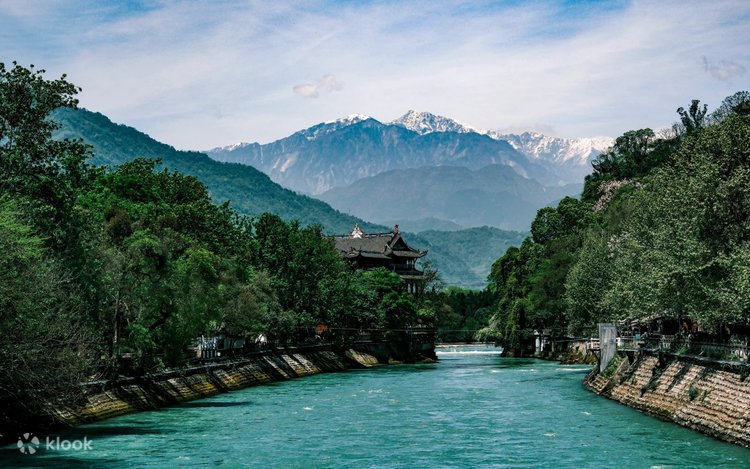
Image Credits: Klook
Dujiangyan is a 2,250-year-old irrigation system (built around 256 BC), a UNESCO World Heritage feat of engineering that has kept the Chengdu plain flood-free for over two millennia. It’s genuinely impressive, though it’s an outdoor site, so it’s a wash-out in heavy rain, as more than one visitor has found.
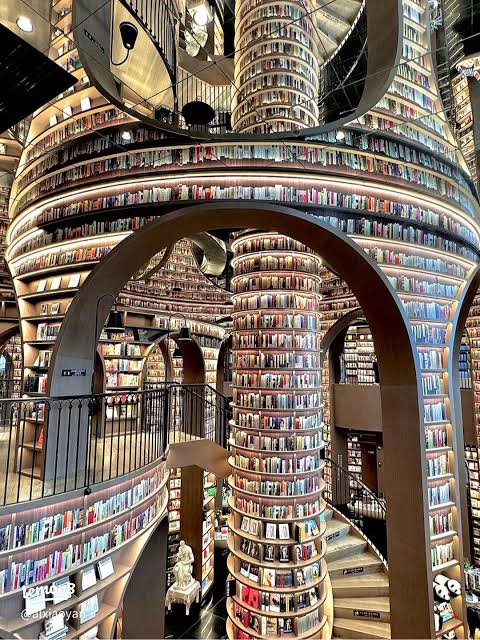
Image Credits: @alxiaoyan on Lemon8
In spring the approach road blooms with cherry blossoms, and there’s a much-photographed “selfie panda” sculpture (lying on its back) at nearby Yangtianwo Square. While you’re out here, the Zhongshuge bookstore in the Sunac mall is a wildly photogenic, mirror-ceilinged library that’s become its own social-media pilgrimage.
Best for history buffs and blossom-season visitors. Check the forecast, since almost all of it is open-air.
Mount Qingcheng (Qingchengshan)
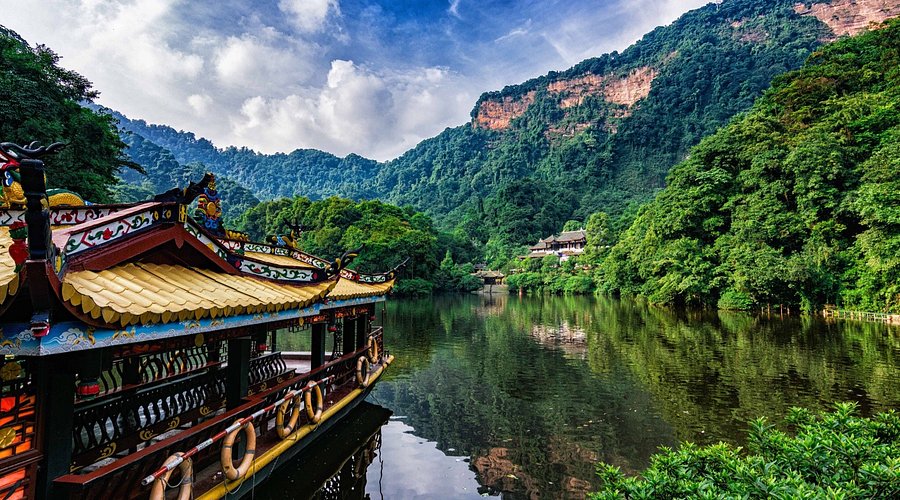
Image Credits: Tripadvisor
Mount Qingcheng is the birthplace of Taoism in China and a UNESCO site: greener, calmer and more forested than Emei, laced with quiet temples and pavilions. A short boat ride and a cable car cut out the hardest climbing, though reaching the top pavilion is still a proper half-day hike. It’s often combined with Dujiangyan in a single trip.
Best for anyone wanting mountain scenery and temples without Emei’s full commitment. It’s the easier, leafier sacred mountain.
Further Afield: Sichuan’s Nature Escapes

Image Credits: Tripadvisor
If you’ve got extra days or you’re back for a second trip, Sichuan’s wild side sits a few hours beyond the city. Bipenggou Valley is an alpine reserve of turquoise lakes and forested trails that turns gold in autumn and snowy in winter, roughly three to four hours out.
Closer in, the West Sichuan Bamboo Sea near Qionglai (by Pingle Ancient Town) is a cooling day of misty green bamboo groves, about two hours away.
These are longer hauls than the big four, and usually easier by car or tour than by train, so they suit travellers with time rather than a tight first-timer schedule.
Best for return visitors and nature lovers who’ve already ticked off the pandas, food and old streets.
📖 Related Guide: Heading out to smaller towns and mountain villages? Our China ATM withdrawal guide covers getting cash for the spots where the QR codes thin out, first S$400 a month free with YouTrip.
What to Eat in Chengdu
Chengdu is a UNESCO City of Gastronomy, and eating here is a headline activity, not a footnote. The through-line is mala, the tingly, numbing heat of Sichuan peppercorns.
One local tip worth taking: order dishes at least mildly spicy. The non-spicy versions are often bland, because the whole cuisine is built around that peppercorn.
Sichuan Hotpot
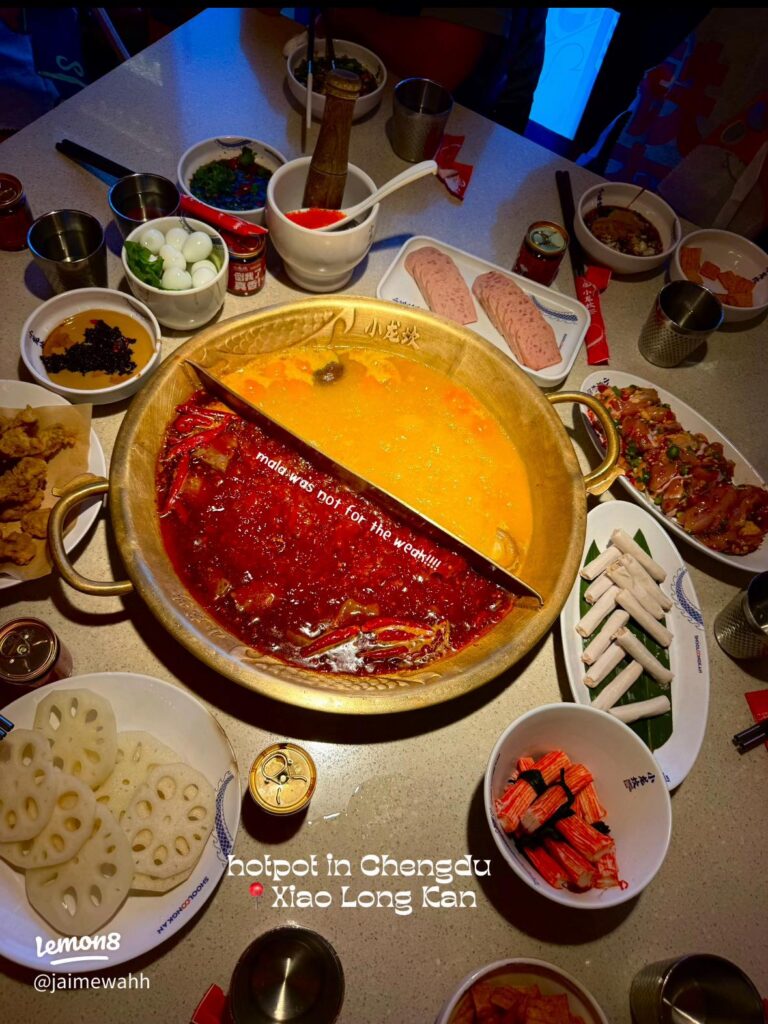
Image Credits: @jaimewahh on Lemon8
Hotpot is the meal to have at least once. It’s a bubbling pot of chilli-and-peppercorn broth (get a split pot if you want a mild side), into which you dip meat, tofu, vegetables and more. Sichuan-born chains like Haidilao and Xiaolongkan are reliable, busy and used to tourists. Numbing, communal, and exactly what you came for.
Mapo Tofu at Chen Mapo Tofu
_1_赵葫芦画瓢🤪_来自小红书网页版-768x1024.jpg)
Image Credits: 1133148640 on rednote
Chen Mapo Tofu is the Michelin-recognised home of the dish, all silky tofu in a fiery, numbing bean-paste sauce that’s been made here for over a century. The same restaurants also do excellent dan dan noodles and kung pao chicken, and you’ll sometimes catch a face-changing opera performance over lunch.
Guo Kui (Stuffed Crispy Flatbread)
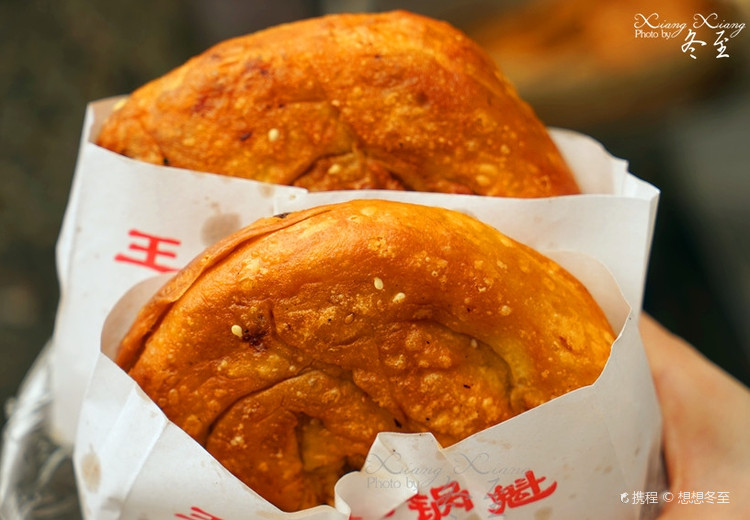
Image Credits: Trip.com
Guo kui is Chengdu’s great street snack: dough stuffed with spiced beef, pork or rabbit, fried then baked until shatteringly crisp. It’s the local answer to a savoury pastry, best eaten hot off the griddle from a hole-in-the-wall stall.
Blanket Noodle (Bei Gai Mian)
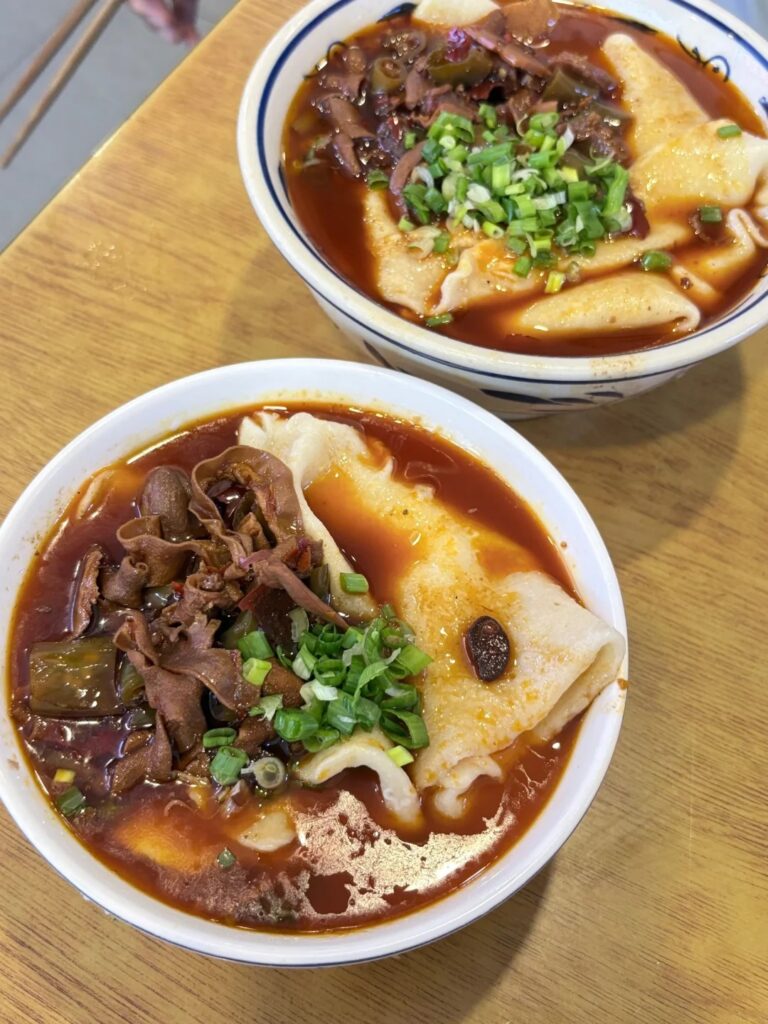
Image Credits: 1156081553 on rednote
The “blanket noodle” is a single, enormous hand-pulled noodle stretched into a sheet the size of a small blanket, served in a smoky, mildly spicy broth. It’s a Michelin-recommended one-bowl spectacle you won’t find outside Sichuan, and as much fun to watch being made as to eat.
Bo Bo Chicken (Bo Bo Ji)
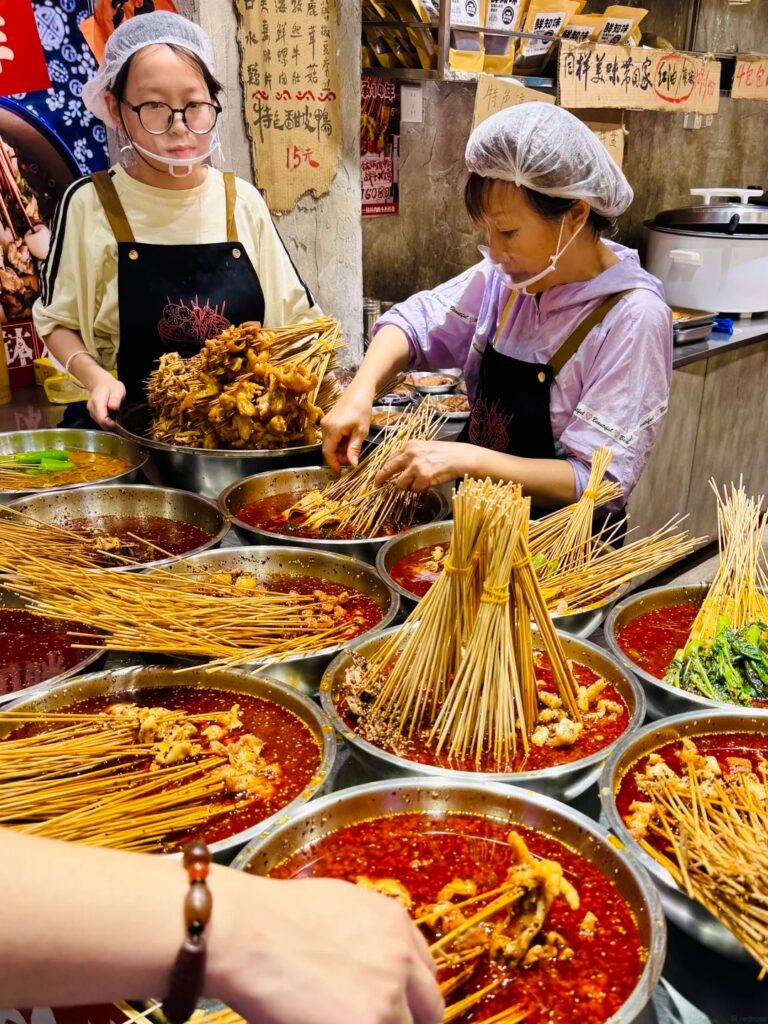
Image Credits: 1250125HAN on rednote
Bo bo ji is cold-cooked skewers of meat and vegetables, steeped in a spicy, numbing broth, a speciality from nearby Leshan. You pick your sticks (from ~1 CNY | ~S$0.20 each), and they’re marinated for you. Order the mild or mala version; the plain one is a let-down.
Rabbit, Chengdu-Style

Image Credits: 27760405452 on rednote
Chengdu is rabbit country, and the dish to know is tu tou: spicy braised rabbit head, pulled apart by hand over beer at night stalls. It’s a genuine local ritual more than a tourist gimmick, cheap, messy and moreish. Squeamish? Diced rabbit with chilli and peanuts is the gentler way in.
Street Snacks and Night Markets
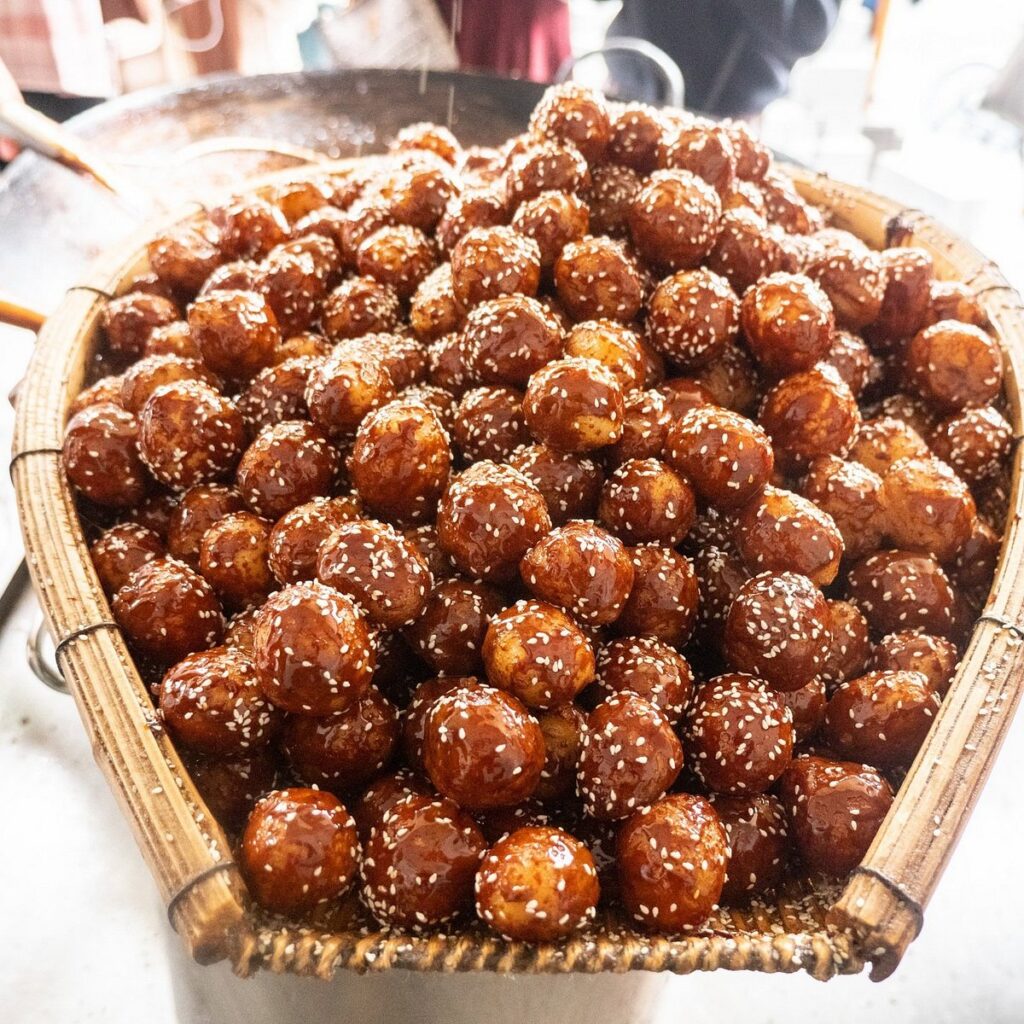
Image Credits: Tripadvisor
Save room for the sweet stuff: tang you guo zi (hollow, brown-sugar-glazed sesame rice balls on a stick) and ding ding candy (a maltose sweet chipped off a block by roaming vendors who tap out a ding-ding rhythm to draw you over). For the full spread in one place, Jianshe Road food street is a local-favourite street-food strip that runs late into the night. Allow an hour and go hungry.
📖 Related Guide: Paying at food stalls and markets that only take QR? Our guide to using Alipay in China covers linking your card and scanning to pay, even at the smallest vendors.
Visa, Payment & Getting Around in Chengdu
The practical basics, sorted before you fly.
Visa: SG passport holders get 30 days visa-free, in place since February 2024 and extended through 31 December 2026. Bring a passport with at least 6 months’ validity, and that’s it: no transit-visa workarounds, no fee, no paperwork.
Getting around: Chengdu Metro is one of the biggest systems in China and covers most of where you’ll want to go, with DiDi (China’s Grab) handling the rest for a fraction of Singapore taxi prices. Buy metro tickets through the Alipay transport QR rather than fumbling for cash at the gate.
From the airport, Tianfu (TFU) is the far one (~60km, about 35–50 min to Chengdu South on Metro Line 18, then a transfer), while Shuangliu (CTU) is much closer to the city.
Paying: Chengdu is effectively cashless, and a bit of prep saves you real money. Almost everything (restaurants, temples, taxis, street stalls) runs on Alipay or WeChat Pay QR codes.
- Link your YouTrip Mastercard inside either app on day one, and every QR tap auto-converts your SGD to Chinese yuan at the Mastercard wholesale rate with no foreign transaction fee. That beats a credit card quietly adding around 3–3.5% FX on every overseas spend, and a money changer that bakes a markup of a few percent into its rate.
- For the cash-only holdouts (a temple donation box, a rural day-trip stall), skip the money changer and withdraw yuan from a Chengdu ATM when you land. Your first S$400 of overseas ATM withdrawals each calendar month is free with YouTrip, then a flat 2%, resetting on the 1st. Bring a little cash as backup, pay by QR for everything else, and you’re covered.
One more thing for China first-timers: many overseas apps (Google Maps, WhatsApp, Instagram) are blocked without a VPN or a travel eSIM, and foreign-card payments occasionally fail on smaller in-app mini-programs. Keep that ATM backup handy.
📖 Related Guide: New to spending in China? Our complete guide to using YouTrip in China walks through Alipay, WeChat Pay, ATMs and what to do if a tap gets declined.
FAQs About Visiting Chengdu
Yes. Chengdu is one of the most rewarding first-time China destinations. You get the world’s best panda base, a UNESCO food scene, walkable old streets and a truly relaxed pace, all for less than a comparable trip to Tokyo or Seoul. Nearly every traveller says it exceeds expectations, largely because it’s less hectic than Beijing or Shanghai.
They’re different moods. Chengdu is flatter, slower and more about pandas, teahouses and old streets; Chongqing is hillier, denser and more dramatic, famous for its cyberpunk cityscape and its own fierier hotpot.
On a first trip, Chengdu is the easier base and has the pandas, but the two are barely over an hour apart by high-speed train, so many travellers do both.
With one day, prioritise the Panda Base first thing in the morning (when the pandas are active), then spend the afternoon at Kuanzhai Alley or Jinli, and finish with a hotpot dinner. It’s a full but very doable day, and it hits the three things Chengdu is best known for.
Very. The Panda Base is a guaranteed hit, the New Century Global Center has an indoor water park and ice rink, and People’s Park has boats and open space to run around. Food can be adjusted, since plenty of non-spicy dishes exist, and split hotpots let everyone choose their heat.
Barely. Alipay and WeChat Pay (linked to your YouTrip card) cover almost everything. Carry a small amount of yuan as backup for the rare cash-only vendor or rural day-trip stall, and withdraw it from a local ATM rather than a money changer.
The Verdict on Chengdu
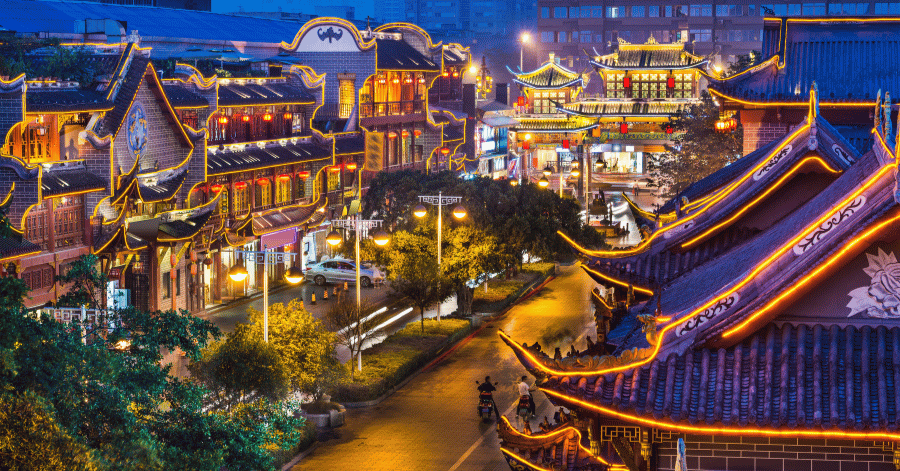
Come for the pandas, stay for the mala, and don’t rush any of it. Chengdu is the rare big Chinese city that wants you to slow down, and the travellers who give it three or four unhurried days always leave planning a return.
Not a YouTrooper yet? Sign up for YouTrip and travel smarter across 150+ currencies with no foreign transaction fees, plus exclusive perks. Use code YTBLOG5 to get S$5 in your account when you sign up!
Join our Telegram channel for the latest travel deals, and our YouTrip Community Group to swap tips with fellow travellers.
Related Guides:
14 Best Things to Do in Yunnan, China
15 Best Things To Do In Hangzhou, China
China Cherry Blossom: Forecast, Best Spots, Festivals