



Every roundup shows you the headline rate. Almost none show you the cap that decides what you actually keep.
An 18% card that pays out a maximum of S$144 a month is not better than a 1.7% card with no cap. It depends entirely on where and how much you spend. So this guide ranks Singapore’s cashback cards on three numbers the banks bury: the rate, the monthly cap, and what you drop to if you miss the minimum spend.
| Best For | Card | Cashback Rate | Monthly Cap |
|---|---|---|---|
| Highest flat rate, nothing to track | UOB Absolute Cashback | 1.7% | None |
| Everyday spend across categories | UOB One | 3.33% base | S$200 per quarter |
| Dining and petrol | OCBC 365 | 5% dining, 6% petrol | S$160 |
| Supermarket and delivery runs | DBS yuu | 18% at yuu merchants | S$144 |
| No annual fee, ever | Mari Credit Card | 1.5% | None |
| Overseas spending | YouTrip | 0% FX fee, wholesale rate | First S$400 ATM free |
Table of Contents
- How Cashback Cards Actually Work in Singapore
- Which Credit Card Gives the Most Cashback in Singapore?
- Best Cashback Card by Spending Category
- Best Cashback Cards With No Minimum Spend
- What Happens If You Miss the Minimum Spend
- How to Actually Keep the Cashback You Earn
- Cashback or Miles: Which Is Better for You?
- What Happens to Cashback When You Spend Overseas
- Is It Better to Use Cash or Card in Singapore?
- The Verdict
- FAQs
How Cashback Cards Actually Work in Singapore
Singapore cashback cards come in two types. Flat-rate cards pay the same on everything. Tiered cards pay a high rate on a few categories and almost nothing on the rest.
Flat-rate cards are simple. You spend, you get 1.5% to 1.7% back, there’s no minimum and no cap. Tiered cards are where the headline numbers live, and where the fine print does the real work.
A tiered card gives you a big rate on dining or groceries, but only if you spend a minimum each month. Miss it and you fall to a base rate that’s usually under 0.5%. Hit it, and a monthly cap stops your earnings dead at a fixed dollar figure.
That cap is the number that matters. For example, a card advertising 8% with an S$80 monthly ceiling can never pay you more than S$960 a year, no matter how much you spend.
📖 Related Guide: Wondering what else your card quietly charges you? Our guide to credit card fees in Singapore breaks down annual fees, late charges and the ones you can get waived.
Which Credit Card Gives the Most Cashback in Singapore?
For general spending with no strings, UOB Absolute Cashback pays the most at a flat 1.7%. For category spending, DBS yuu goes highest at up to 18%, but only at its partner merchants and only up to S$144 a month.
Here’s every major card side by side. The last column matters most: what you actually earn in a month when you don’t hit the minimum spend.
| Card | Headline Rate | Min Spend / Month | Max Cashback | If You Miss the Minimum |
|---|---|---|---|---|
| UOB Absolute Cashback | 1.7% | None | Uncapped | 1.7% (no minimum to miss) |
| OCBC INFINITY Cashback | 1.6% | None | Uncapped | 1.6% (no minimum to miss) |
| Citi Cash Back+ | 1.6% | None | Uncapped | 1.6% (no minimum to miss) |
| Amex True Cashback | 1.5% | None | Uncapped | 1.5% (no minimum to miss) |
| SC Simply Cash | 1.5% | None | Uncapped | 1.5% (no minimum to miss) |
| Mari Credit Card | 1.5% | None | Uncapped | 1.5% (no minimum to miss) |
| UOB One | 3.33% | S$600 (10 transactions) | S$200 per quarter | No cashback |
| DBS yuu | 18% | S$800 + 4 partner merchants | S$144 | 0.5% at yuu merchants |
| Citi Cash Back | 8% | S$800 | S$80 | 0.2% |
| OCBC 365 | 6% | S$800 | S$80 | 0.25% |
| HSBC Live+ | 8% (5% after 2 quarters) | S$600 (S$1,000 in quarter 1) | S$250 per quarter | 0.3% |
| UOB EVOL | 10% | S$800 | S$80 | 0.3% |
| DBS Live Fresh | 6% | S$800 | S$70 | 0.3% |
Rates, caps and minimum spends verified against each issuer’s own page in August 2026. ⚠️ Banks revise these regularly — check the issuer’s site before you apply.
Five of the cards above pay between 0.2% and 0.3% in any month you fall short. That’s no more than a fifth of what the simplest flat-rate card pays, and the flat-rate card asks nothing of you at all.
📖 Related Guide: Not sure a cashback card is the right shape for you at all? Our best credit cards in Singapore roundup covers miles, rewards and cashback side by side.
Best Cashback Card by Spending Category
The right card depends on where your money actually goes each month. Pull up your last three statements before you read this section, because the answer is usually obvious once you see your own numbers.
Best for a One-Card Strategy: Mari Credit Card
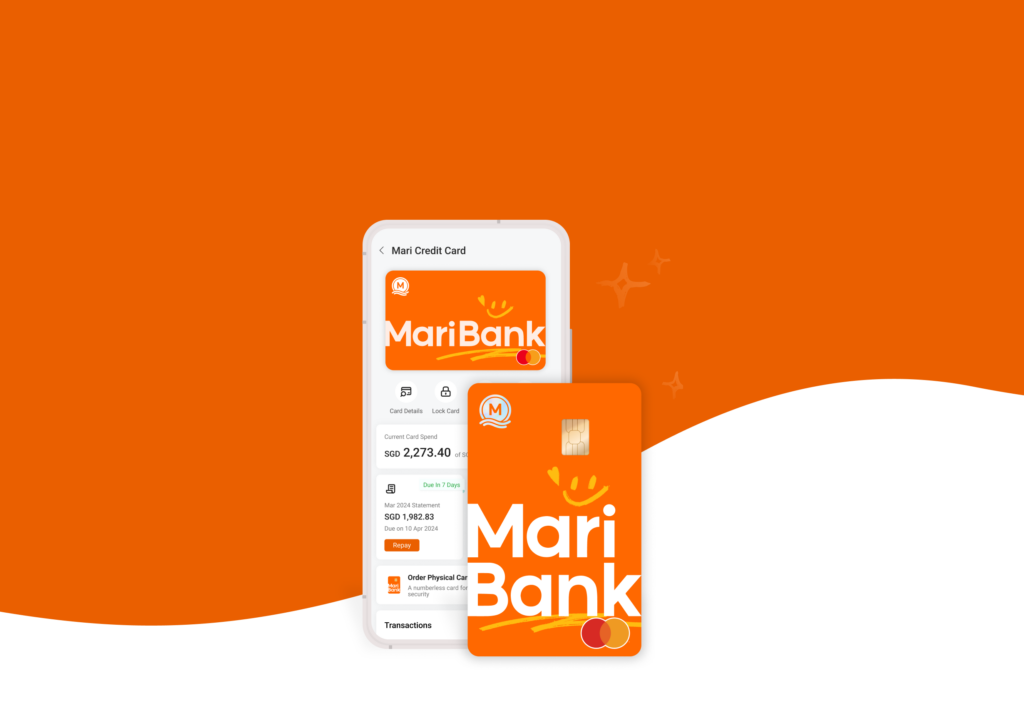
Image Credits: Maribank
If you want one card that handles everything without a spreadsheet, Mari Credit Card is the cleanest option in Singapore. It pays a flat 1.5% on local spend with no minimum, no cap and no annual fee, and 1.5% on overseas spend too.
The one-card case rests on what you avoid rather than what you earn. There’s no threshold to miss, no category to track, no statement cycle to time and no fee to claw back. The rate you see is the rate you get, in every month of the year.
Mari has also waived its foreign transaction fee from 1 January 2026 through 31 December 2026, which makes it unusually capable abroad for a bank card. Note that end date, because it’s a promotion rather than a permanent feature.
Best for anyone who has tried optimising and quietly stopped. It won’t beat a well-worked tiered card in a strong month, but it beats a badly-worked one in every month.
💡 Pro tip: There are two things no cashback credit card can do abroad, however good its FX deal. It can’t let you lock a rate before you travel, and it can’t hand you cash without triggering a cash advance fee. A YouTrip card covers both: 12 currencies you can hold and lock, and the first S$400 of ATM withdrawals free each month.
Best for Unlimited Flat-Rate Cashback: UOB Absolute Cashback
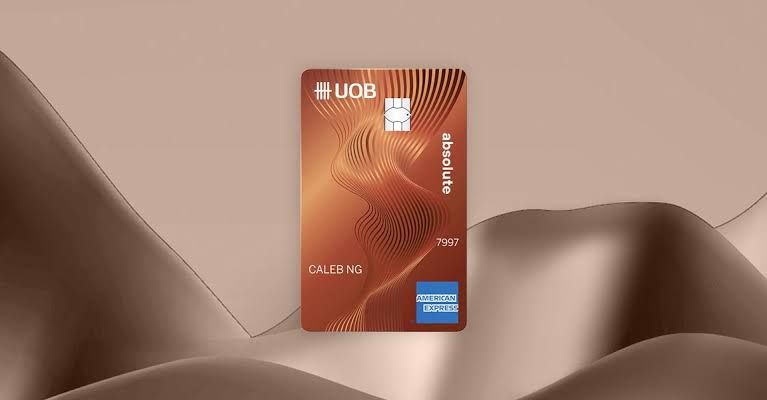
Image Credits: UOB Singapore
UOB Absolute Cashback pays 1.7% on everything, which UOB calls the highest limitless cashback rate in Singapore. There’s no minimum spend, no cap, and no categories to track.
The annual fee is S$196.20 including GST, waived for the first year. Cashback doesn’t apply to NETS, instalment plans, balance transfers, or cash advances.
Best for people who don’t want to think about it. If tracking categories and minimums sounds like admin you’ll forget by week two, this is the card that still pays you.
Best for Everyday Spend Across Categories: UOB One
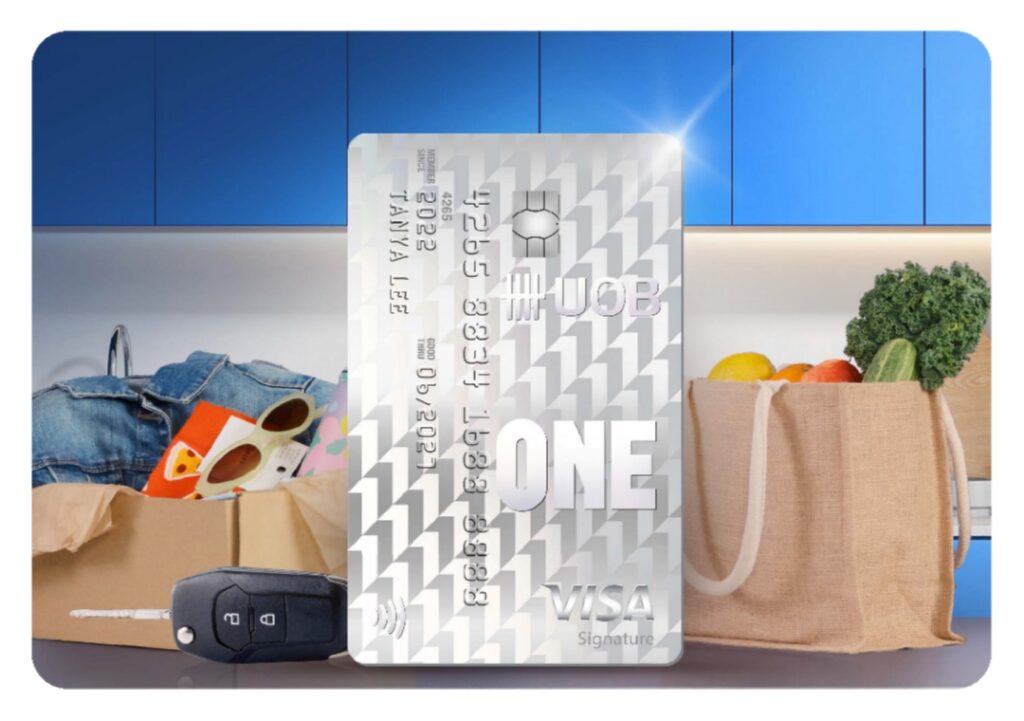
Image Credits: UOB Singapore
UOB One works on a quarterly structure. Spend at least S$600, S$1,000 or S$2,000 a month with a minimum of 10 purchases, and you get S$60, S$100, or S$200 respectively per quarter.
Do the division and every tier lands at the same 3.33% base rate. UOB advertises up to 20%, and up to 18% on groceries, but those numbers come from stacked merchant bonuses. Those bonuses sit at McDonald’s, Grab, Shopee, and SimplyGo, and they’re capped at S$120 per statement month on top.
The annual fee is S$196.20 including GST, waived for the first year. The catch is that the minimum applies every month of the quarter. One quiet month and the whole quarter’s cashback is gone.
Best for households with steady, predictable spending above S$2,000 a month. It’s the best base rate of any tiered card here, but it punishes an irregular month harder than anything else on this list.
Best for Dining and Petrol: OCBC 365
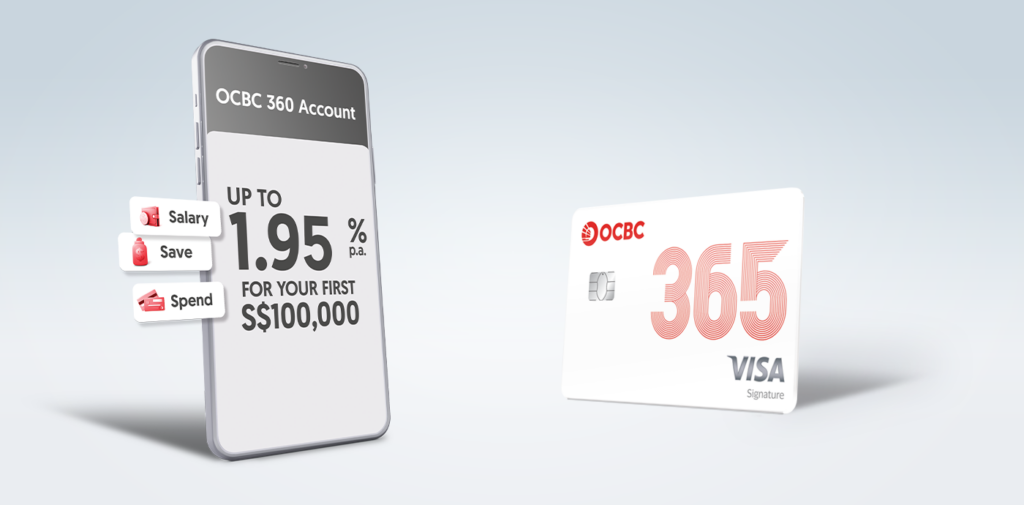
Image Credits: OCBC
OCBC 365 pays 6% on petrol, 5% on dining including food delivery, and 3% on groceries, land transport, streaming, utilities and Watsons.
Spend S$800 a month and your cashback caps at S$80. Spend S$1,600 and the cap doubles to S$160. The annual fee is S$196.20 including GST, waived for the first two years, then waived automatically if you spend S$10,000 in a year.
Best for drivers. The petrol rate stacks with pump discounts, and OCBC quotes up to 22.1% total savings at Caltex once you combine the 18% upfront discount with cashback.
Best for Supermarket and Delivery Runs: DBS yuu
Image Credits: yuu Rewards Club
DBS yuu advertises up to 18% cash rebates, and the maths does add up. It’s 0.5% base, plus 4.5% bonus with no minimum, plus 13% more once you qualify.
Qualifying means spending at least S$800 a month and transacting at four different participating merchants. The list covers Cold Storage, Giant, Guardian, 7-Eleven, foodpanda, Gojek, Singtel, CHAGEE, Charge+ and SimplyGo.
Bonus rewards cap at S$144 a month. Everything outside those merchants earns 0.25%. The annual fee is S$196.20 including GST, with supplementary cards at S$98.10.
Best for anyone whose weekly shop already runs through Cold Storage, Giant or foodpanda. If it doesn’t, the 18% is unreachable and you’re holding a 0.25% card.
Best for Dining, Shopping and Entertainment: HSBC Live+
Image Credits: HSBC Singapore
HSBC Live+ pays up to 8% on dining, shopping and entertainment, made up of a 5% base rate plus 3% extra for your first two calendar quarters. Petrol earns 5% and everything else earns 0.3%.
The minimum is S$1,000 across your first calendar quarter, then S$600 a month from the second quarter onwards. Cashback caps at S$250 per calendar quarter. The annual fee is waived in year one, then waived if you spend more than S$12,500 a year.
Best for big social spenders. The cap pools across the quarter rather than resetting monthly, so one heavy month isn’t truncated the way an S$80 monthly ceiling would truncate it.
Best for Online Shopping and Transport: UOB EVOL
Image Credits: UOB
UOB EVOL pays up to 10% on local online and mobile contactless spend, and the same on selected gym, telco and streaming subscriptions. Everything else earns 0.3%.
The minimum is S$800 a statement month. The S$80 monthly cap is then split three ways: S$30 for online and mobile contactless, S$20 for gym, telco and streaming, and S$30 on all other spend.
Two things make it unusual. UOB waives the annual fee on principal and supplementary cards from 1 July 2026, and the card charges 0% FX fees worldwide with no minimum spend and no cap.
Best for people who pay by phone and shop online. If your spending is mostly taps and checkouts rather than restaurant bills, the sub-caps still limit you to S$30 a month in that category, so treat it as a steady earner rather than a big one.
Best for Shopping and Daily Rides: DBS Live Fresh
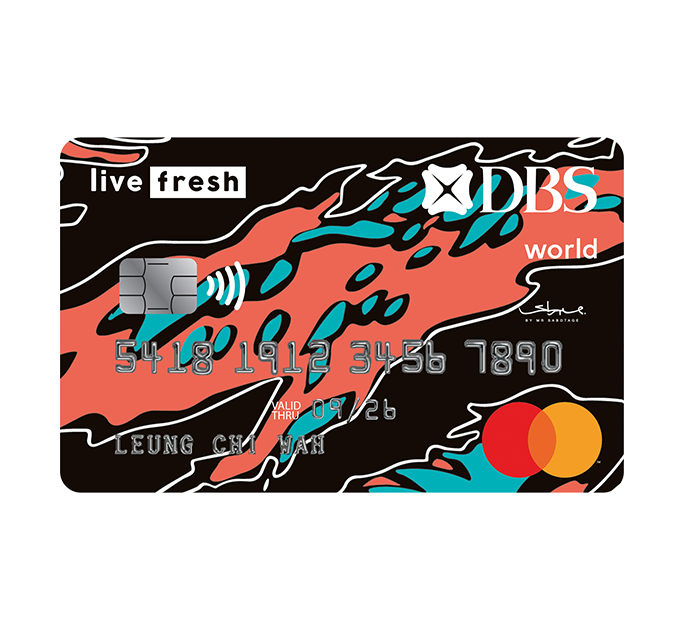
Image Credits: DBS
DBS Live Fresh pays up to 6% on shopping and transport, built as 0.3% base plus an extra 5.7% once you spend S$800 in a calendar month. That bonus applies from the first dollar, not just the spend above the threshold.
Caps are per category: S$50 a month on shopping and S$20 on transport, so S$70 in total. It counts in-store, contactless and online spend both in Singapore and overseas. The annual fee is S$196.20 including GST.
Best for commuters who also shop. The S$20 transport cap is small, so this earns most for people whose shopping does the heavy lifting and whose rides top it up.
📖 Related Guide: If your spending leans towards rewards points instead, the HSBC Revolution card review covers the sibling card built for online and contactless spend.
Best Cashback Cards With No Minimum Spend
Six cards in Singapore pay cashback from the first dollar with no minimum spend and no cap. UOB Absolute leads at 1.7%, followed by OCBC INFINITY and Citi Cash Back+ at 1.6%. Amex True Cashback, SC Simply Cash and Mari all sit at 1.5%.
The trade is straightforward. You give up the headline rate and you get certainty in return.
- OCBC INFINITY Cashback pays its 1.6% on everything in store or online, locally or overseas, and credits it automatically with no redemption step.
- Mari Credit Card is the outlier because it charges no annual fee at all, where the others range from S$171.20 to S$196.20 including GST after the first-year waiver. Amex True Cashback opens with 3% on up to S$5,000 of spend in your first six months, worth S$150 before it settles to 1.5%.
- Trust sits in between. It pays 1% on local spend and 0.5% on foreign spend with no cap, plus up to 15% on one preferred category you choose, capped at S$250 per quarter.
What “Minimum Spend” Actually Counts
The minimum is rarely your full statement. Banks exclude a long list of transactions from both the cashback and the spend that qualifies you for it.
DBS yuu excludes cash advances, balance transfers, instalment plans, bill payments through internet banking, and all fees and charges. UOB One excludes GrabPay and ShopeePay top-ups entirely, along with insurance under MCC 6300.
So a month where you paid an insurance premium and topped up a wallet can look like S$900 of spending and still count as S$400.
If This Is Your First Credit Card
Start with a flat-rate card. Most issuers set the bar at S$30,000 a year for citizens and permanent residents, which is where a first salary usually lands. A no-minimum card also can’t punish you for a light month while you’re still learning your own spending.
The annual fee matters more than the rate at this stage, and by a wider margin than most people assume. The gap between a 1.7% card and a 1.5% card is 0.2%. Covering a S$196.20 annual fee out of that gap takes S$98,100 of spending a year, or roughly S$8,175 a month.
Below that, the fee-free card wins outright. Someone spending S$1,000 a month earns S$180 on a no-fee 1.5% card, against S$7.80 on a 1.7% card once the fee comes out.
📖 Related Guide: Curious what else the digital banks offer? Our MariBank Singapore guide covers the savings account and card together.
What Happens If You Miss the Minimum Spend
You drop to the base rate, which on most tiered cards is between 0.2% and 0.5%. On UOB One you get nothing at all for that quarter.
Put real numbers on it. Someone spending S$700 a month on OCBC 365 earns 0.25%, or S$1.75. The same S$700 on UOB Absolute earns 1.7%, or S$11.90.
Over a year that’s S$21 against S$142.80. The “worse” card pays nearly seven times more, purely because the reader never hit a threshold they were S$100 short of.
This is the single most common way people lose cashback in Singapore. It’s why the honest answer to “which card gives the most” starts with a question about your monthly spend, not a card name.
💡 Pro tip: If your spending swings month to month, a flat-rate card beats a tiered one even when the tiered card’s headline rate is five times higher. Consistency is worth more than a ceiling you reach twice a year.
Which Cards to Skip
- Skip the high-headline tiered cards if you spend under about S$800 a month. Citi Cash Back, OCBC 365, UOB EVOL and DBS Live Fresh all sit behind that threshold. Below it they pay 0.2% to 0.3%, worse than every flat-rate card on this list.
- Skip DBS yuu if you don’t already shop at Cold Storage, Giant, Guardian, 7-Eleven or foodpanda. The 18% is real, but it’s unreachable outside those merchants and everything else on the card earns 0.25%.
- Skip UOB One and HSBC Live+ if your income is irregular or you travel for long stretches. Both are all-or-nothing on the quarter: UOB One needs its minimum in every month to pay anything, and HSBC Live+ drops the whole quarter to 0.3% if you miss S$600 in any single month.
📖 Related Guide: A high-interest savings account can pay more than cashback on the same money. Our best savings accounts in Singapore guide compares the current rates.
How to Actually Keep the Cashback You Earn
Earning cashback and receiving it are two different things. Several cards add a redemption step that quietly strands small balances, and most calculate your spend on a cycle that doesn’t match the calendar. Four habits protect the money you’ve already earned.
1. Watch the Redemption Threshold
Citi Cash Back requires S$50 of accumulated cashback before it credits, and it credits in S$10 increments. Anything under S$50 rolls to the next month, so a light spender can wait a quarter to see money they earned in January.
2. Check if the Cashback Expires
Sometimes, and the fine print here surprises people. Cashback on most cards arrives as a statement rebate, so there’s no redemption step to forget. That doesn’t mean it sits there indefinitely.
UOB is the clearest case. On both the One Card and EVOL, unused cashback is forfeited two calendar years after it’s awarded. It also goes the moment UOB receives a request to close the card, whichever comes first.
UOB Absolute carries a similar rule. Close the account before earned cashback is credited and it’s forfeited without notice.
That second trigger is the one worth remembering. Cancelling a card to dodge the annual fee can also bin the cashback you’ve built up, so redeem or spend it down before you call.
The other two shapes: DBS yuu pays rebates as yuu Points into a linked yuu Account, and those expire within 90 days of issuance if the card is unlinked. Citi simply holds your cashback until it reaches S$50.
💡 Pro tip: Check your balance before you cancel any card, not after. Cashback is almost always forfeited on closure rather than paid out.
3. Track the Statement Month, Not the Calendar Month
UOB calculates your monthly spend on the statement period, not the calendar. If your statement generates on the 15th, your January spend runs from 16 December to 15 January.
Plan a big purchase around the wrong date and it lands in the month you’d already qualified for, instead of rescuing the month you didn’t.
4. Don’t Chase a Second Card Too Early
A second card only pays if your spending really does split across two category sets. Two tiered cards mean two minimum spends, and splitting S$1,200 across two S$800 minimums means you hit neither.
The safer pairing is one tiered card for the category you reliably spend in, plus one flat-rate card catching everything else. Two tiered cards competing for the same wallet is how people end up earning 0.2% on both.
5. Get the Annual Fee Waived
Most issuers waive the first year automatically. After that, call and ask. OCBC 365 waives from year three at S$10,000 annual spend and HSBC Live+ waives above S$12,500, but a phone request often works even when you’re short.
📖 Related Guide: Holding several cards for different jobs? Our DBS Multi-Currency Card review looks at where a bank multi-currency card fits alongside a cashback card.
Cashback or Miles: Which Is Better for You?
Cashback is better for most people. It’s certain, it needs no planning, and S$1 of cashback is worth exactly S$1 whether you travel or not.
Miles win in one specific case: you fly often enough to redeem premium cabins, and you’re willing to manage transfer partners, expiry dates and award availability. Redeemed well, a mile can be worth several cents. Left unredeemed, it’s worth nothing.
The practical test is whether you’ve actually booked an award flight in the last two years. If you haven’t, the miles card in your wallet is paying you less than a 1.7% cashback card would.
📖 Related Guide: If you do fly enough to justify it, our best miles credit cards in Singapore ranking compares earn rates and transfer partners across nine cards.
What Happens to Cashback When You Spend Overseas
Most Singapore cashback cards charge 3.25% on foreign currency transactions, which is more than double what any of them pay back in cashback. Overseas, a cashback card costs you money.
DBS publishes the breakdown: 1% goes to the card network and 2.25% is the bank’s own administrative fee. OCBC uses the identical split, and Citi quotes up to 3.25% depending on the card.
It also applies to online purchases from overseas merchants, not just trips. Buying from an overseas website in a foreign currency triggers the same fee as tapping your card in Bangkok.
Run the numbers on a S$3,000 holiday spend using a 1.5% flat-rate cashback card:
| Cashback Card | YouTrip | |
|---|---|---|
| Foreign transaction fee | S$97.50 (3.25%) | S$0 |
| Cashback earned | S$45.00 (1.5%) | S$0 |
| Net position | −S$52.50 | S$0 |
The cashback doesn’t cover the fee. It never does at these rates, which is why the sensible setup is one card for home and a different one for abroad.
Which Cashback Cards Have No Foreign Transaction Fee
UOB EVOL, Trust and Mari are the three exceptions. UOB EVOL charges 0% FX fees worldwide with no minimum spend and no cap, plus up to 1% cashback on overseas spend until 31 December 2026.
Trust charges no foreign transaction fee, though it pays 0.5% on foreign spend against 1% local. Mari has waived its FX fee from 1 January 2026 through 31 December 2026.
Two caveats apply. Two of the three waivers carry an end date, so they’re promotions rather than permanent features. And UOB still applies a 1% international processing fee to anything billed in Singapore dollars but processed outside Singapore. That’s exactly what happens when a terminal abroad offers to charge you in SGD.
That last one is worth a rule of its own: always pay in the local currency, never in Singapore dollars, whatever card you’re holding. Letting the merchant convert for you is where the worst rates hide.
Where YouTrip Fits
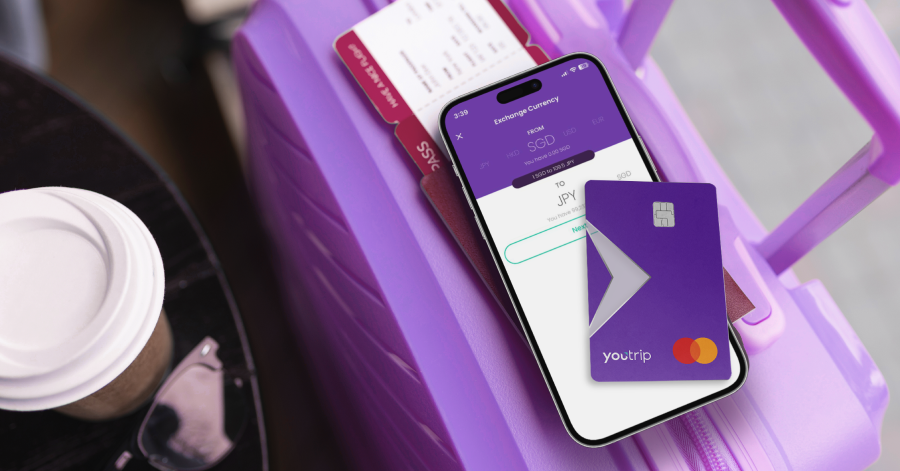
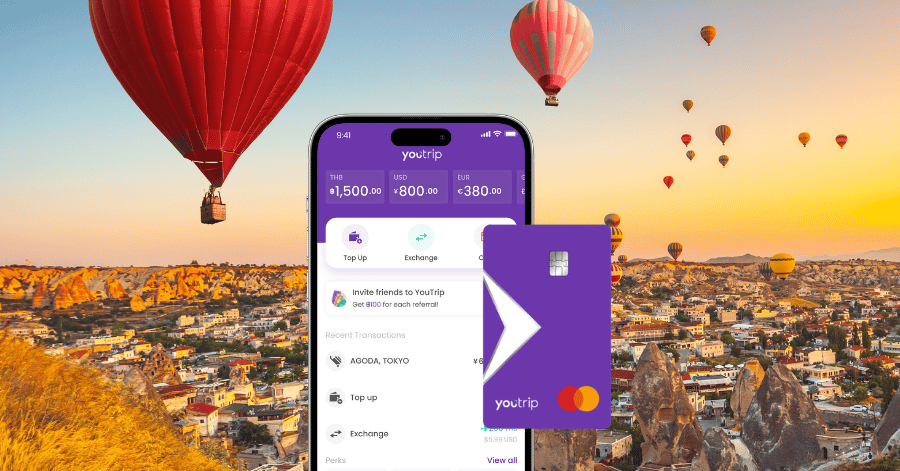
YouTrip charges no foreign transaction fee and converts at the Mastercard wholesale rate, the same rate banks use between themselves rather than a marked-up retail one. You hold and lock 12 currencies in the app, including USD, EUR, GBP, JPY, MYR, THB, AUD and HKD, and spend in 150+ more.
For cash, withdraw it from an ATM once you land. Your first S$400 of overseas ATM withdrawals each calendar month is free, then it’s 2% on the amount withdrawn, and the allowance resets on the 1st. Some ATM operators add their own on-screen fee, so check the screen before you confirm.
This is the gap a fee-free credit card doesn’t close. Pulling cash from a credit card is a cash advance, not a purchase. DBS charges 8% of the amount withdrawn with a S$15 minimum. Interest then runs at 28.5% a year, charged daily from the withdrawal date until you pay it back in full.
A S$200 withdrawal costs S$15 before the interest even starts. The same withdrawal on YouTrip costs nothing.
That beats a money changer. A changer doesn’t charge a visible fee, but it bakes a markup of a few percent into the rate it quotes you. The markup runs wider on less common currencies, and worse at airport counters.
👉 Bottom line: Keep your cashback card for Singapore spending, where it’s actually earning. Use YouTrip the moment the currency changes, where the 3.25% would otherwise wipe out a year of cashback in a single trip.
📖 Related Guide: For the full picture on what cards cost abroad, see our guide to using a credit card overseas and the best multi-currency cards in Singapore comparison.
Is It Better to Use Cash or Card in Singapore?
Card almost everywhere, cash at hawker centres and wet markets. Singapore is close to cashless, but the places worth eating at are often the ones still asking for coins.
Most hawker stalls now take PayNow QR, which settles instantly from your bank account and costs nothing. Keep S$20 to S$30 in notes for the stalls that haven’t moved over, and put everything else on the cashback card so it counts towards your minimum spend.
📖 Related Guide: Getting the best rate matters more than most people think. Our guide to the best exchange rates in Singapore covers how to read a rate before you commit to it.
The Verdict
- Best overall for most people: Mari Credit Card. A flat 1.5% with no minimum, no cap and no annual fee ever. It’s not the highest rate on this list, but it’s the one that never charges you for a quiet month, and no fee means every dollar of cashback is yours.
- Best flat rate if you spend heavily: UOB Absolute Cashback. The 1.7% is the highest uncapped rate in Singapore and year one is free. Just note that the extra 0.2% only covers its S$196.20 fee above roughly S$8,175 of monthly spend, so below that the no-fee cards come out ahead from year two.
- Best if you spend over S$2,000 a month reliably: UOB One. The 3.33% base rate is the strongest on this list, and the merchant bonuses stack on top. Only take it if a quiet month is unlikely.
- Best for drivers: OCBC 365. The 6% petrol rate combined with pump discounts is the highest fuel saving available on a Singapore card.
- Best for online and mobile spending: UOB EVOL. Up to 10% on local online and mobile contactless spend, no annual fee from 1 July 2026, and 0% FX fees worldwide. Just watch the S$30 sub-cap on that category.
- Best for supermarket regulars: DBS yuu. If Cold Storage, Giant and foodpanda already dominate your statement, 18% up to S$144 a month is real money.
- Best for dining, shopping and nights out: HSBC Live+. The S$250 cap pools across a whole quarter instead of resetting monthly, so a heavy month isn’t cut off at S$80.
- Best for spending overseas: YouTrip. No foreign transaction fee, the Mastercard wholesale rate, and the first S$400 of ATM withdrawals free each month. Pair it with whichever cashback card above suits your local spending, rather than choosing between them.
📖 Related Guide: Wondering whether you need a credit card at all for travel? Our YouTrip vs credit cards comparison puts the two side by side on fees, rates and convenience.
FAQs
DBS yuu goes highest at up to 18%, but only at partner merchants like Cold Storage and foodpanda, and only up to S$144 a month. For unrestricted spending, UOB Absolute Cashback pays the most at a flat 1.7% with no cap.
Six do. UOB Absolute Cashback pays 1.7%, OCBC INFINITY and Citi Cash Back+ pay 1.6%, and Amex True Cashback, SC Simply Cash and Mari Credit Card pay 1.5%. All six earn from the first dollar, with no minimum spend and no cap.
On payout mechanics rather than rate, the flat-rate cards win. OCBC INFINITY and Mari credit cashback automatically with no threshold. Citi holds yours until it reaches S$50, DBS yuu pays in yuu Points, and UOB forfeits unused cashback after two years or when you close the card.
Most do, but the usual 3.25% foreign transaction fee cancels it out and then some. A 1.5% card leaves you 1.75% worse off on every overseas purchase. UOB EVOL, Trust and Mari are the exceptions that waive the FX fee, though two of those waivers carry 2026 end dates.
Most issuers require S$30,000 a year for citizens and permanent residents. Foreigners face higher bars, from S$42,000 at Citi to S$90,000 at Standard Chartered. Mari Credit Card is issued by a digital bank with its own criteria.
They do different jobs. Cashback rewards money you’re already spending, while a high-interest savings account rewards money you keep. Most people benefit from running both rather than choosing.
Yes, and it works when your spending genuinely splits across different category sets. It backfires when both cards carry minimum spends, because splitting your spending can mean missing both thresholds and dropping to base rates on everything.
📖 Related Guide: Weighing a bank card against a travel card directly? Our Trust card vs YouTrip comparison looks at how a fee-free bank card holds up against a dedicated travel wallet.
Pick the Card Your Spending Already Fits
Chase the headline rate and you’ll end up with a card that pays 0.25% in every month life gets in the way. Pick for your real spending pattern, check the cap before the rate, and keep the overseas spending off it entirely.
Not a YouTrooper yet? Singapore’s go-to multi-currency wallet helps you save with great FX rates and zero fees. Skip the money changer and get a free YouTrip card + S$5 YouTrip credits with code YTBLOG5.
Then, head over to our YouTrip Perks page for exclusive offers and promotions — we promise you won’t regret it. Join our Telegram (@YouTripSG) and Community Group (@YouTripSquad) for travel tips, event invites, and more!
Happy travels!