


Volcanoes, ancient temples and the best food in Java, all in one city
Yogyakarta, or Jogja as everyone calls it, is Indonesia’s cultural heart. It’s a sultan’s city in Central Java where two of the world’s great temples sit within an hour of each other, an active volcano smoulders on the skyline, and the street food might just be the best reason to visit.
This guide covers the best things to do in Yogyakarta for a first trip: the temples worth waking up at dawn for, the caves and beaches beyond them, what to eat, and how to pay in a city that still runs largely on cash. Prices are in rupiah with a rough SGD equivalent, so you can plan the spend before you fly.
Best Things to Do in Yogyakarta (Quick Picks)
Short on time? These are the ones worth building a trip around:
| Yogyakarta Highlight | Best For | Cost |
|---|---|---|
| Borobudur | The world’s largest Buddhist temple | Climb-up from 455,000 IDR (~S$33) |
| Prambanan | Indonesia’s grandest Hindu temple | 400,000 IDR (~S$29) |
| Merapi Lava Jeep Tour | An active volcano up close | From ~450,000 IDR (~S$32) per jeep |
| Jomblang Cave | The “light from heaven” beam | From ~500,000 IDR (~S$36) |
| Kraton & Taman Sari | The sultan’s palace and water castle | From 15,000 IDR (~S$1) |
| Malioboro Street | Shopping, street food and buzz | Free to wander |
| Timang Beach | A gondola ride to a cliff island | From ~200,000 IDR (~S$14) |
Table of Contents
- What Is Yogyakarta Known For?
- Best Time to Visit Yogyakarta
- How Many Days Do You Need in Yogyakarta?
- 17 Best Things to Do in Yogyakarta
- What to Eat in Yogyakarta
- Where to Stay in Yogyakarta
- Getting To and Around Yogyakarta
- Paying in Yogyakarta: Cash, Cards and YouTrip
- FAQs
What Is Yogyakarta Known For?
Yogyakarta is the guardian of classical Javanese culture, and the only region in Indonesia still ruled by a sultan. That heritage shapes everything: the batik, the gamelan music, the shadow-puppet theatre and the courtly manners.
The short list of what draws people here:
- Ancient temples: Borobudur and Prambanan, two eighth-century UNESCO World Heritage sites, sit just outside the city.
- Royal culture: the Kraton (the sultan’s palace) and Taman Sari water castle anchor a living court that’s over 250 years old.
- Volcanoes and nature: Mount Merapi looms to the north, while caves, waterfalls and wild beaches spread across the Gunungkidul region to the south.
- Food: Jogja is the home of gudeg, a sweet jackfruit stew, and a street-food scene that leans sweet, smoky and cheap.
- Crafts: batik, silverwork in Kotagede, and art galleries that made Jogja Indonesia’s creative capital.
It’s also refreshingly affordable and walkable in the centre, which makes it one of the easiest big cultural trips to do from Singapore.
Best Time to Visit Yogyakarta
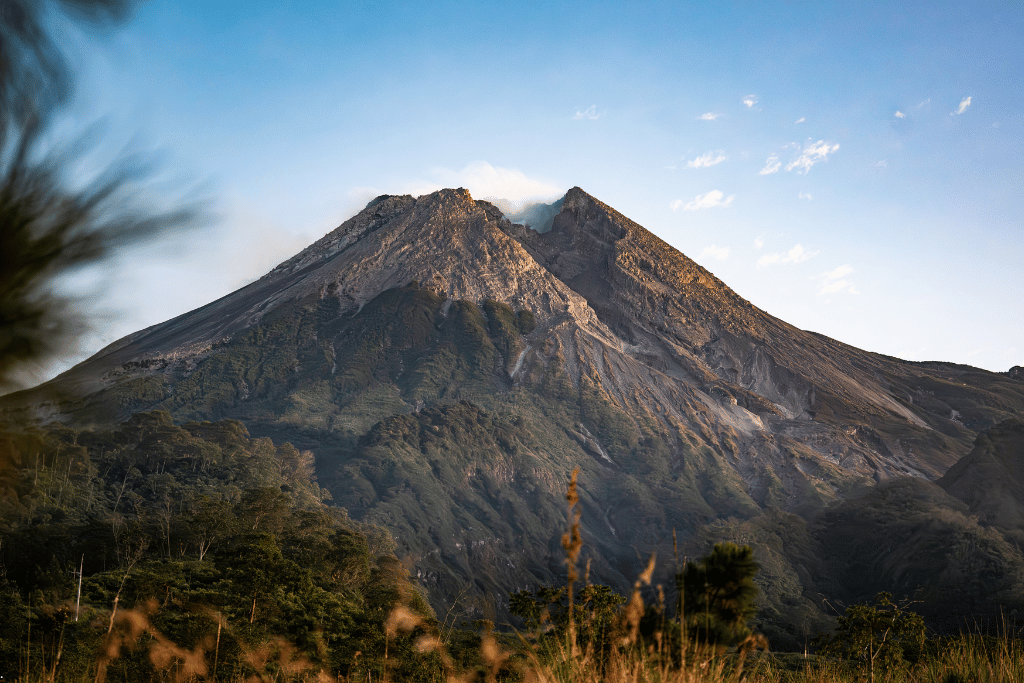
Yogyakarta has two seasons, and the dry one is the one you want.
- Dry season (May to September): the best window. Clear skies for temple sunrises, jeep tours and open-air shows, with July and August the busiest months.
- Shoulder months (April and October): a good balance of decent weather and thinner crowds.
- Wet season (November to March): hot, humid and prone to heavy afternoon downpours. Caves can close after rain and volcano views often vanish behind cloud, though the landscape is at its greenest.
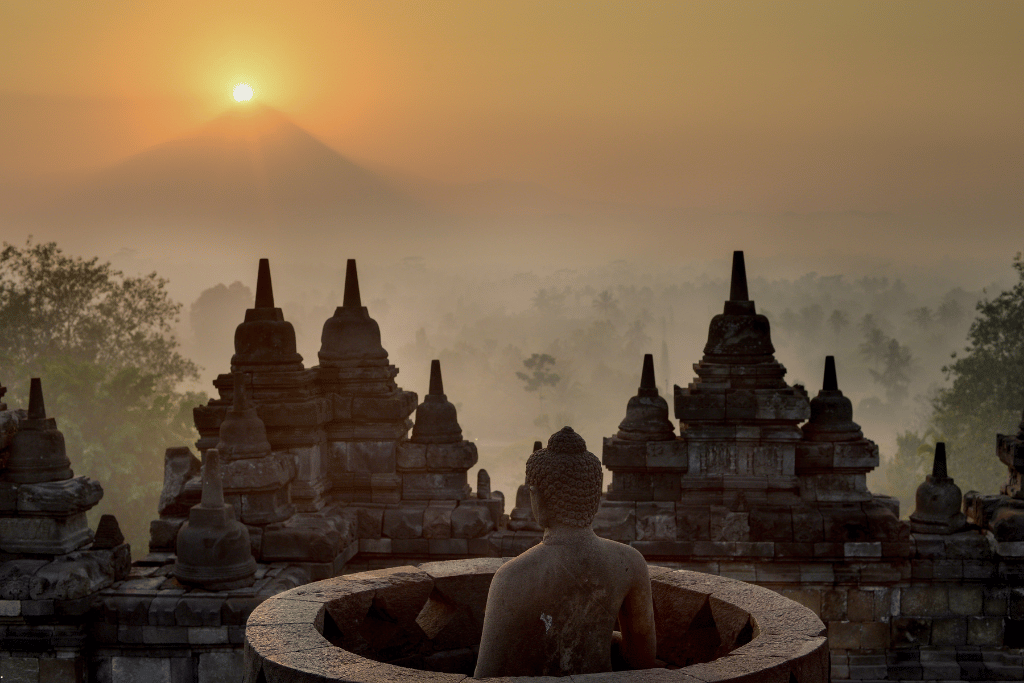
Whenever you go, start early. Yogyakarta’s headline sights are best at dawn, before the heat and the crowds arrive, and the light on Borobudur at sunrise is worth the alarm.
How Many Days Do You Need in Yogyakarta?
- 2 to 3 days: enough for the essentials. Borobudur and Prambanan, the Kraton and Taman Sari, Malioboro Street and a proper gudeg dinner.
- 4 to 5 days: the comfortable version. Add a Merapi jeep tour, a cave adventure and a day on the Gunungkidul beaches.
- A week: room to slow down, take a Javanese cooking or batik class, and add a longer trip out to the Dieng Plateau.
Most first-timers find three to four days about right. The temples are day trips out of the city, so build in travel time and don’t try to pack two of them into one day.
17 Best Things to Do in Yogyakarta
From world-famous temples to underground rivers, here are the stops that define a first trip. A quick note before you start: many of these sit outside the city, so hiring a car with a driver for a day (around 600,000 IDR / ~S$43) is the easiest way to string the further-flung ones together.
1. Borobudur
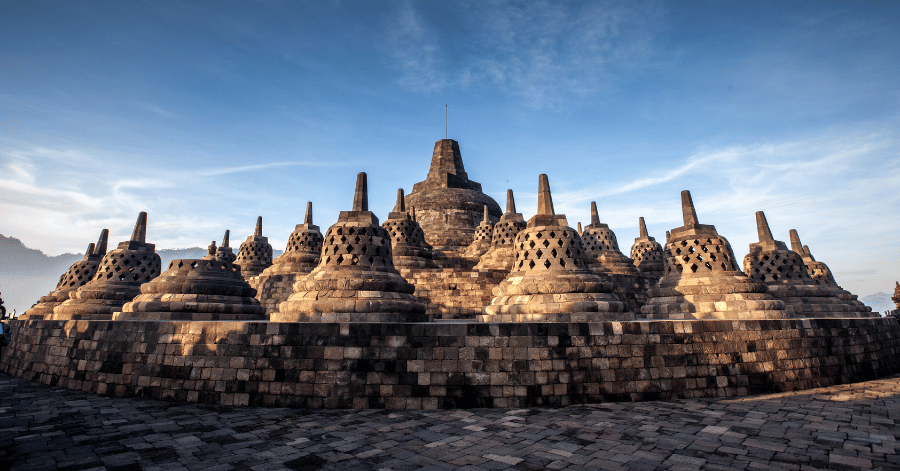
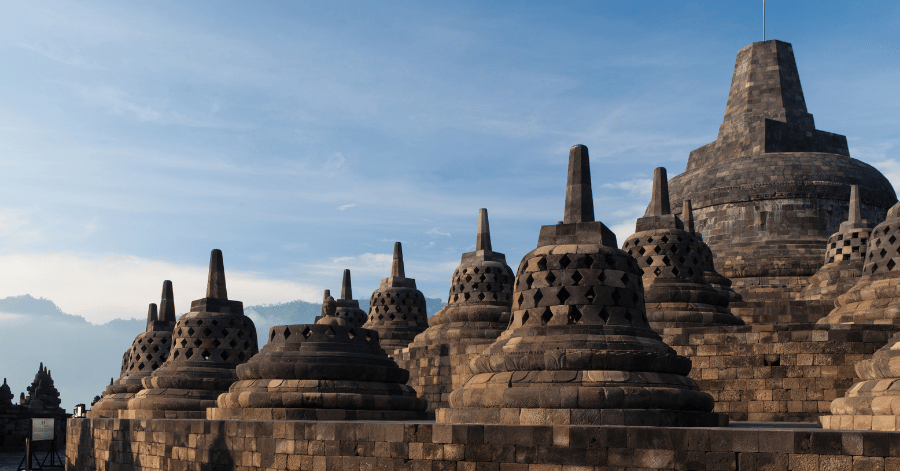
The single biggest reason to come to Jogja. Borobudur is the largest Buddhist temple on earth, a ninth-century stone mountain of 504 Buddha statues and 2,672 relief panels, crowned with the bell-shaped stupas you’ve seen on every postcard. Seeing it in person lives up to the hype.
Two things changed recently, so plan ahead. To actually climb the temple, you now need a timed climb-up ticket, which includes a compulsory local guide and a pair of soft Upanat sandals to protect the ancient stone. Slots are capped at 1,200 people a day and sell out, so book online in advance. A cheaper grounds-only ticket lets you admire it from the park if you’d rather not climb.
- Address: Borobudur, Magelang (about 1 hour northwest of the city)
- Opening Hours: 6:30 AM to 4:30 PM daily
- Admission: Climb-up from 455,000 IDR (~S$33); grounds-only 412,500 IDR (~S$29); sunrise packages from around 1,000,000 IDR (~S$71), subject to availability
2. Prambanan
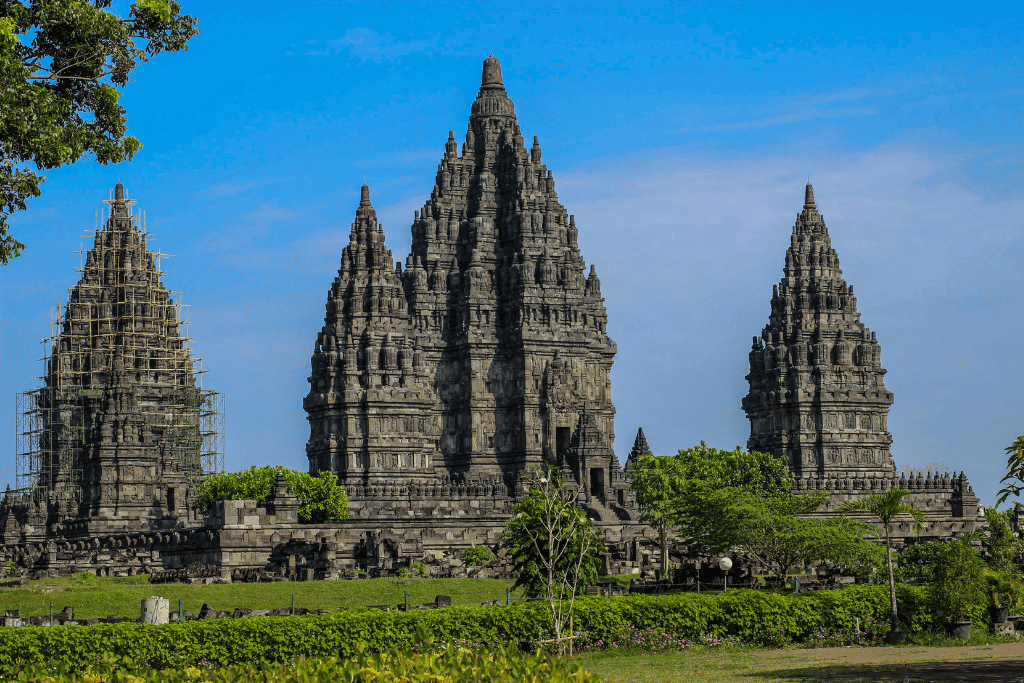
If Borobudur is for sunrise, Prambanan is for sunset. This ninth-century Hindu complex is the largest in Indonesia, a cluster of soaring, spiky towers dedicated to Shiva, Vishnu and Brahma, their walls carved with the Ramayana epic. It’s about half an hour east of the city and every bit the equal of its Buddhist rival.
Come late afternoon, when the crowds thin and the stone glows gold. A combo ticket that pairs Prambanan with nearby Ratu Boko can save a little if you’re temple-hopping hard.
- Address: Prambanan, Sleman (about 30 minutes northeast of the city)
- Opening Hours: 6:30 AM to 5 PM daily
- Admission: 400,000 IDR (~S$29) for foreign visitors
3. Ramayana Ballet at Prambanan
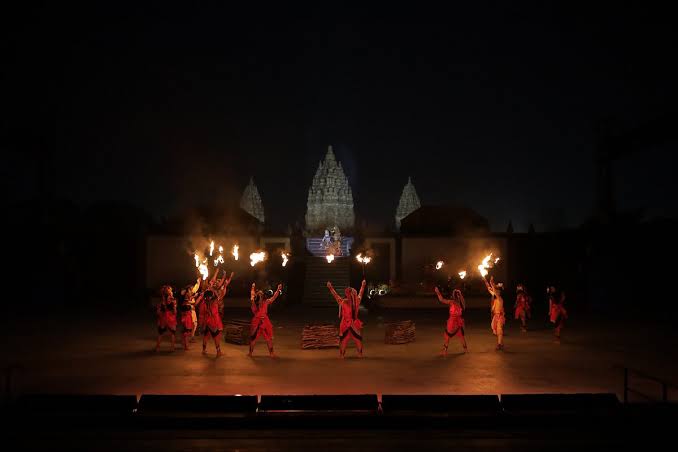
Image Credits: Tripadvisor
For one night, watch the Ramayana come to life. This open-air dance-drama stages the epic love story of Rama and Sinta through Javanese dance, live gamelan and elaborate costumes, with the floodlit Prambanan towers as the backdrop. It’s the kind of cultural set-piece that sounds touristy and turns out to be genuinely spectacular.
Performances run on the open-air stage in the dry season (roughly May to October) and move to a covered theatre otherwise. Book ahead and pay a little more for the better seats.
- Address: Prambanan Open Air Theatre (dry season) or the covered Trimurti Theatre, Prambanan
- Opening Hours: Show nights, typically from 7:30 PM
- Admission: From around 150,000 IDR (~S$11)
4. Kraton (Sultan’s Palace)
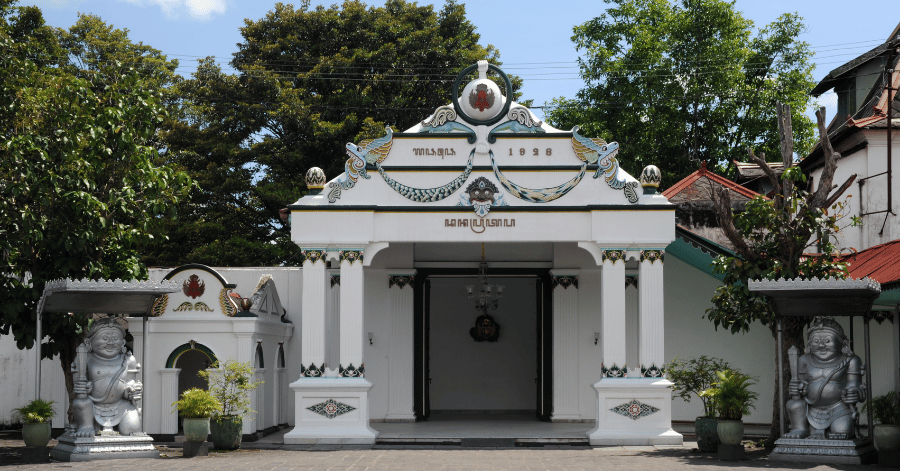
The soul of the city. Completed in 1755, the Kraton is still the working home of Yogyakarta’s sultan, and its ceremonial courtyards, pavilions and museums are open to visitors. Come mid-morning to catch the gamelan orchestra or a shadow-puppet demonstration, and take in the golden ceilings, guardian statues and centuries of Javanese court life.
It’s cheap, central and a gentle introduction to the culture that shapes the whole region. Dress respectfully, since it remains a royal residence.
- Address: Jalan Rotowijayan Blok No. 1, Kraton
- Opening Hours: 8:30 AM to 3 PM (ticket sales close 2 PM); closed Monday
- Admission: Around 15,000 IDR to 25,000 (~S$1 to S$2), depending on the section, plus a small camera fee
5. Taman Sari (Water Castle)
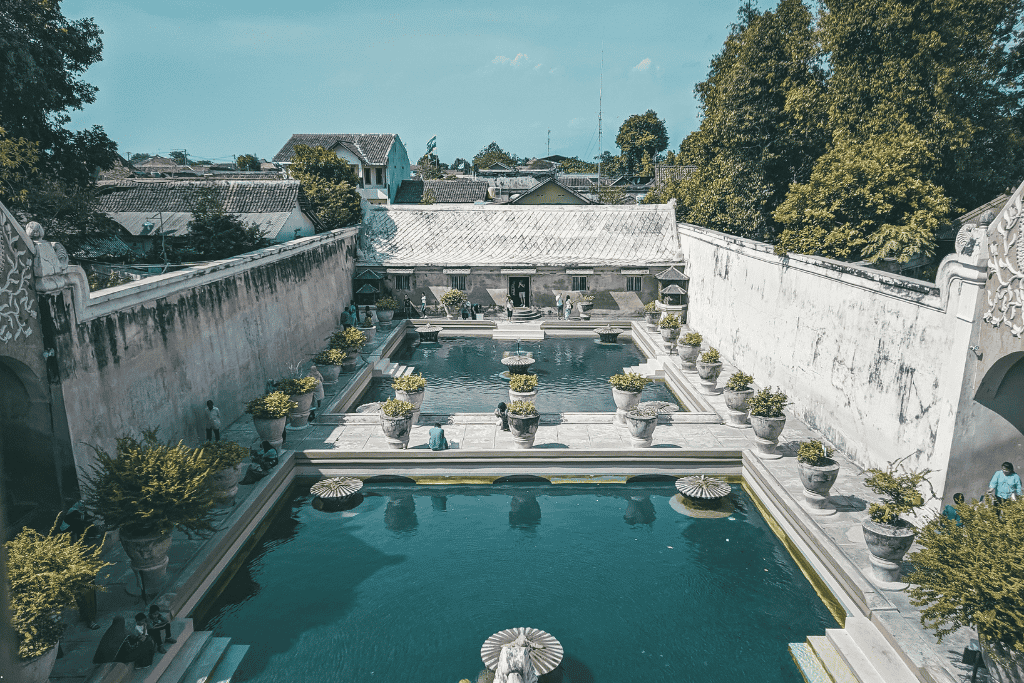
A short walk from the Kraton, Taman Sari was the sultan’s pleasure garden: a complex of bathing pools, underground tunnels and a striking sunken mosque. The Instagram-famous circular staircase and the crumbling, atmospheric passages make it one of the most photogenic corners of the city.
A local guide is worth the small fee to make sense of the layout and the maze of alleys around it. Pair it with the Kraton in a single morning, since they’re neighbours.
- Address: Jalan Tamanan, Patehan, Kraton
- Opening Hours: 9 AM to 3 PM daily
- Admission: Around 25,000 IDR (~S$2)
6. Malioboro Street
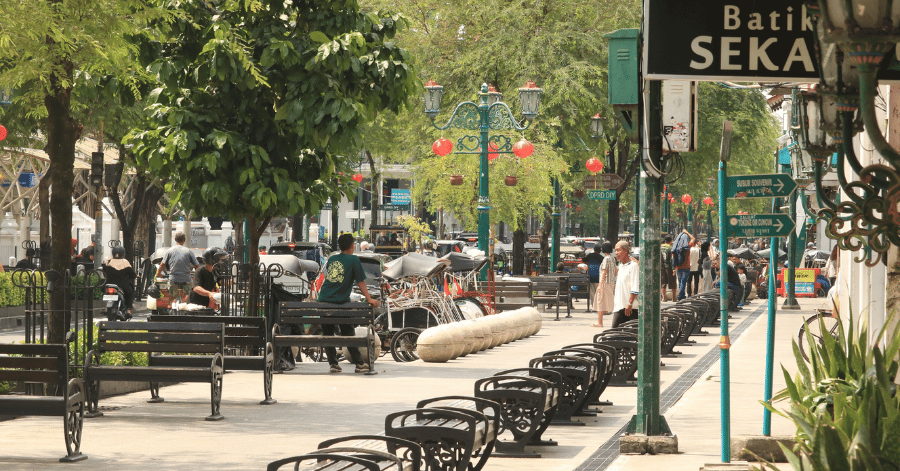
Jogja’s most famous street is a 2-kilometre run of shops, stalls, buskers and becak (trishaw) drivers, and the best place to feel the city’s pulse. Come to shop for batik, leather and souvenirs, snack your way through the food carts, and browse the sprawling Beringharjo Market at its southern end.
It’s busiest and best in the early evening, when the street performers set up and the whole strip lights up. Haggle gently at the stalls, and keep an eye on your bag in the crowds.
- Address: Jalan Malioboro, city centre
- Opening Hours: Always open; shops roughly 9 AM to 9 PM
- Admission: Free to wander
7. Alun-Alun Kidul (South Square)
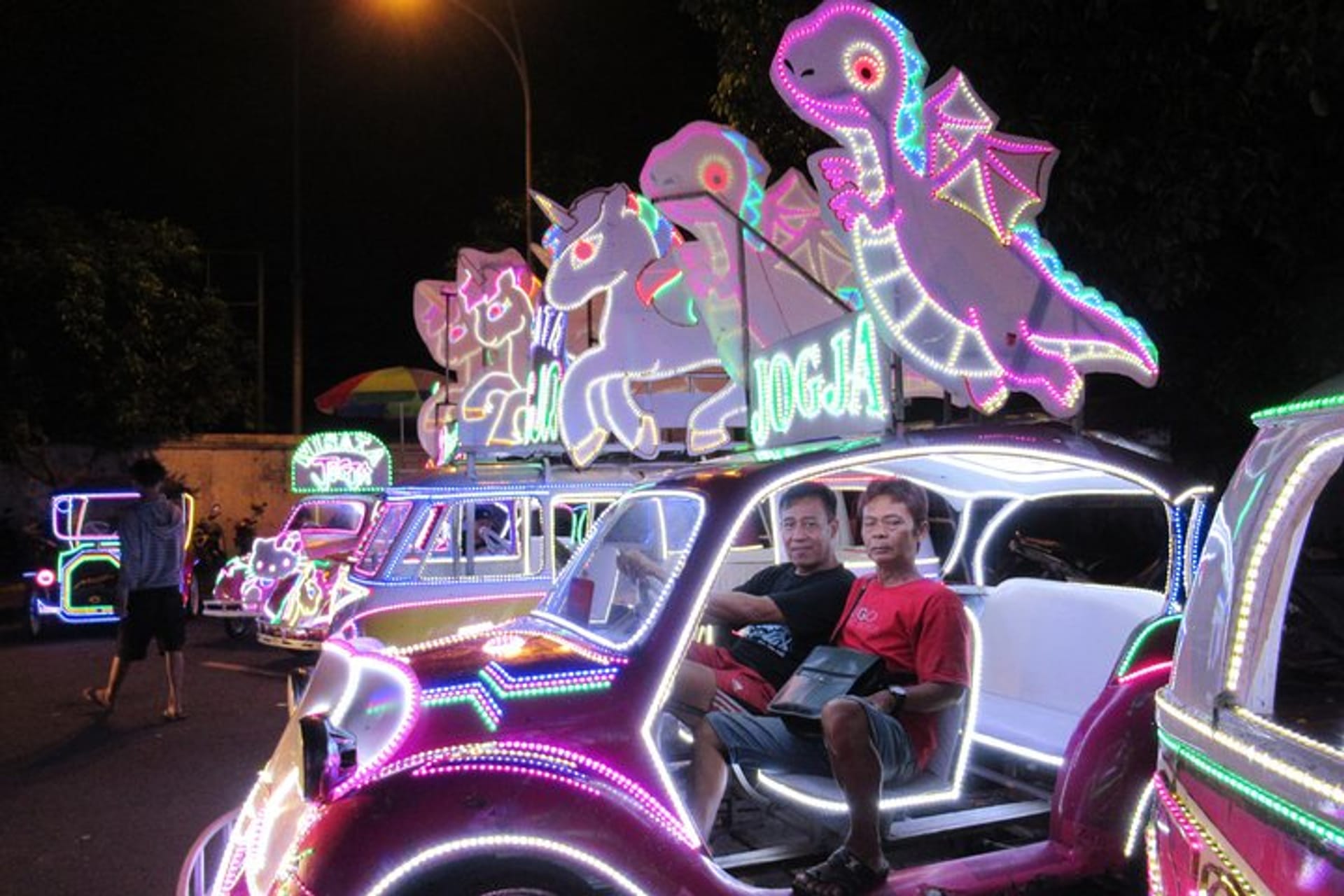
Image Credits: Pelago
The best thing to do in Jogja after dark is gloriously silly. At the South Square, locals gather to pedal neon-lit “cars” around the field and attempt the masangin challenge: walking blindfolded between two giant banyan trees, which is far harder than it looks. Street snacks and warm drinks round it out.
It’s free, lively and full of families, and about as local a night out as you’ll find. Turn up after 7 PM once the lights come on.
- Address: Alun-Alun Kidul, Kraton
- Opening Hours: Best in the evening
- Admission: Free; lit-up pedal cars from around 50,000 IDR (~S$4)
8. Mount Merapi Lava Jeep Tour
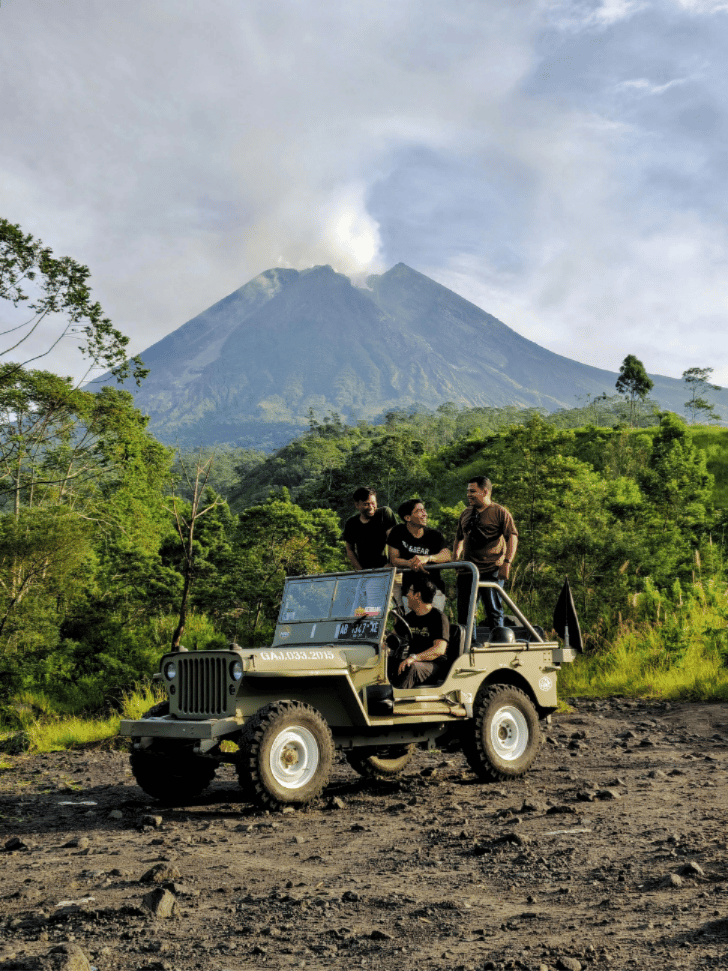
Indonesia’s most active volcano looms over the city, and the safe way to get close is a jeep lava tour through the villages on its southern slopes. You’ll bounce across the terrain left by the deadly 2010 eruption, visit a bunker and a small museum of belongings buried in the ash, and take in the smouldering summit from a safe distance.
Sunrise tours leave in the dark for the best light. This replaces the old summit trek, which has been off-limits to climbers since 2018 given how active the mountain is, so leave the climbing to the volcanologists.
- Address: Tours depart from Kaliurang / Kaliadem, north of the city
- Opening Hours: Sunrise departures from around 4:30 AM
- Admission: From around 450,000 IDR (~S$32) per jeep (foreign rates can run higher), seating up to four
9. Jomblang Cave
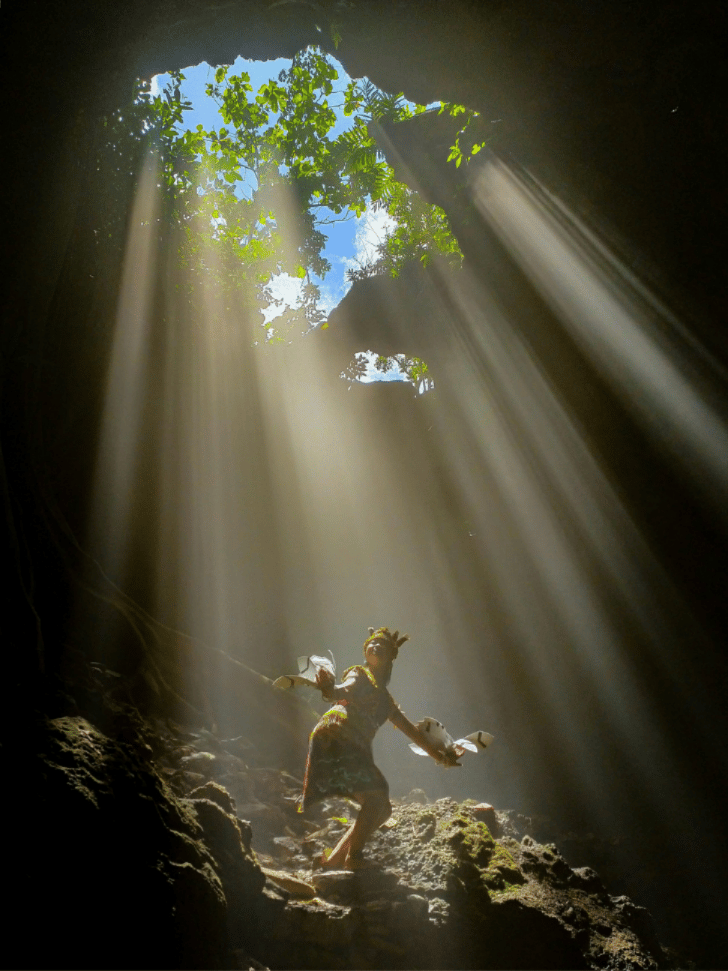
One of Jogja’s great adventures. At Jomblang, you’re harnessed up and lowered 60 metres down into an ancient collapsed sinkhole, then walk through the damp cavern to the spot where a single shaft of sunlight pierces the darkness. Locals call it cahaya surga, the “light from heaven”, and it’s as otherworldly as it sounds.
The beam is at its best on a bright late morning, roughly 10 AM to noon. Numbers are limited, and it books out, so reserve ahead, wear shoes you don’t mind ruining, and skip it after heavy rain.
- Address: Jetis Wetan, Semanu, Gunungkidul (about 1.5 hours southeast)
- Opening Hours: Morning sessions, roughly 8 AM to 1 PM
- Admission: From around 500,000 IDR (~S$36), including equipment and a guide
10. Pindul Cave (Cave Tubing)
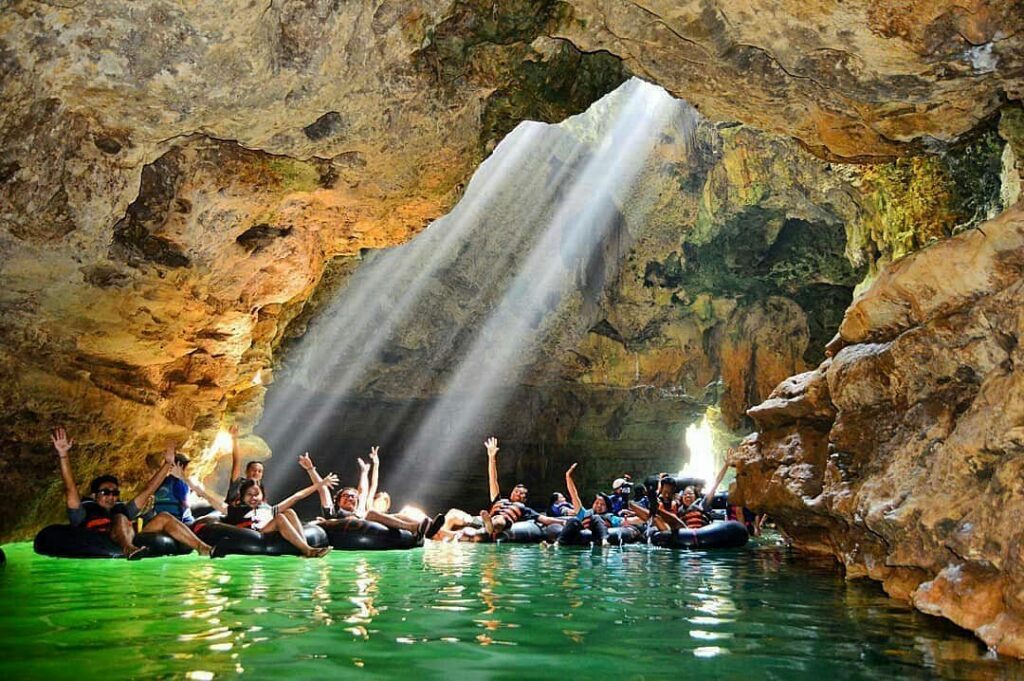
Image Credits: Tripadvisor
Gentler than Jomblang but just as fun, Pindul is where you float through a cave on a rubber ring. The slow underground river carries you past stalactites, stalagmites and a colony of bats, with a few shafts of daylight breaking through the roof along the way.
It’s family-friendly, cheap and takes under an hour, which makes it an easy add-on to a Gunungkidul day. Bring a waterproof pouch for your phone.
- Address: Bejiharjo, Karangmojo, Gunungkidul (about 1.5 hours southeast)
- Opening Hours: 8 AM to 4 PM daily
- Admission: From around 40,000 IDR (~S$3) for cave tubing (packages with transport cost more)
11. Timang Beach
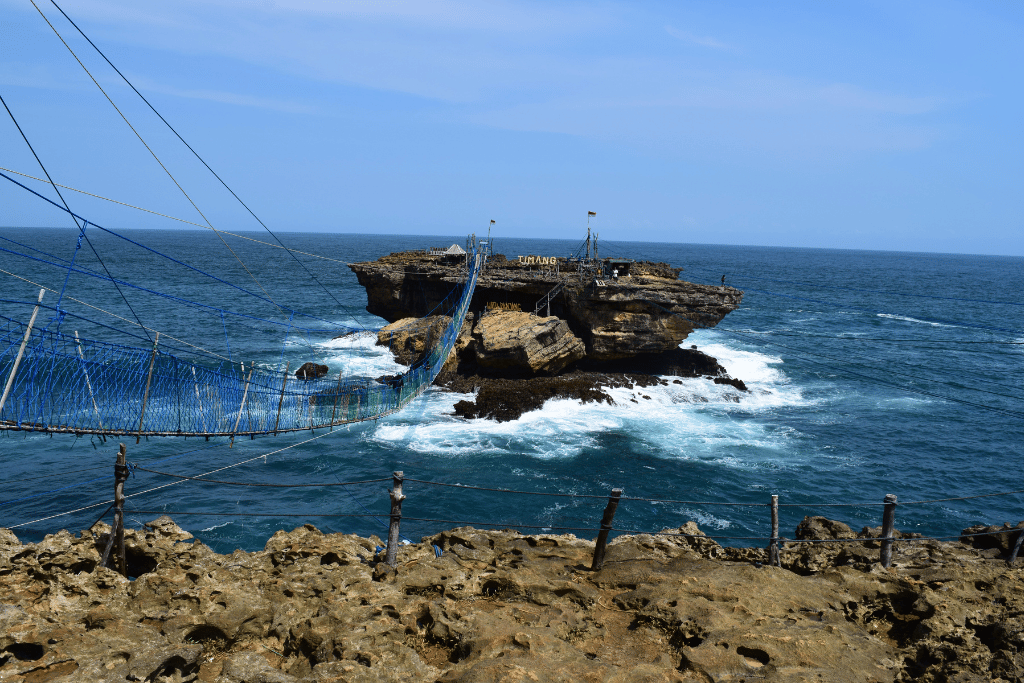
The south coast’s biggest thrill. At Timang, a rickety wooden gondola hauled by hand across a churning channel (or a wobbling suspension bridge, if you’d rather walk) takes you to a rocky islet where locals once fished for lobster. The views back to the limestone cliffs are the whole reason to brave it, and the crossing is a proper adrenaline hit.
The white-sand beach itself is worth the drive even if you skip the crossing. Go on a clear day, since both the gondola and bridge pause in rough seas.
- Address: Purwodadi, Tepus, Gunungkidul (about 2.5 to 3 hours southeast)
- Opening Hours: Roughly 8 AM to 5 PM
- Admission: Beach entry small; gondola round trip from around 200,000 IDR (~S$14), suspension bridge from 150,000 IDR (~S$11)
12. Ratu Boko
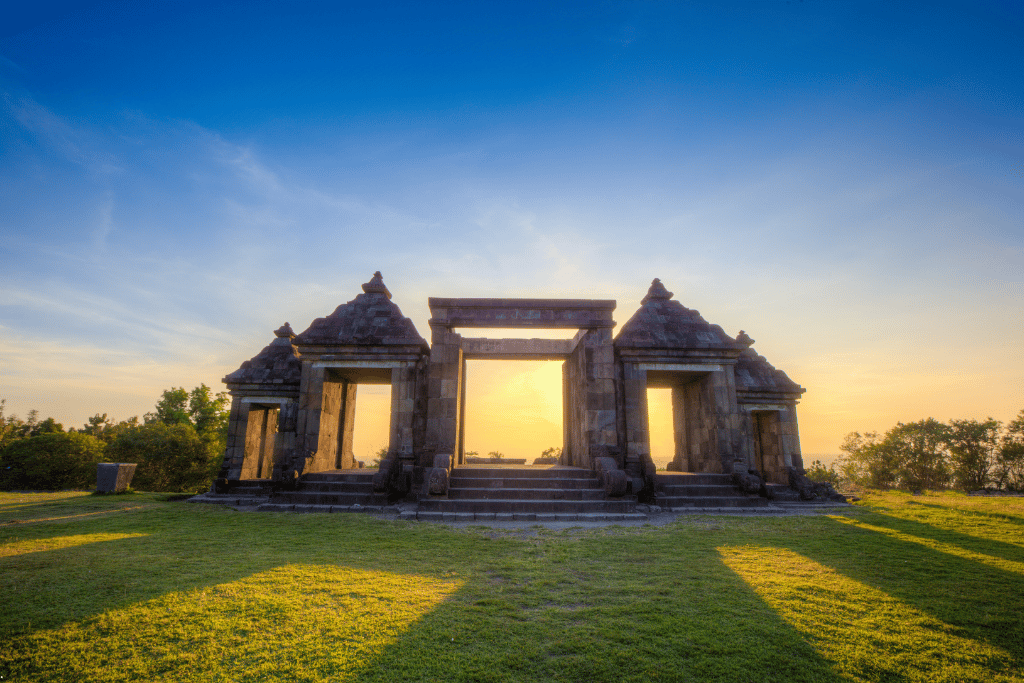
Perched on a hill just south of Prambanan, Ratu Boko is a set of palace ruins with the best sunset view in the region: the stone gateways frame the sky as Prambanan and Mount Merapi fade into the dusk. It’s calmer and far less crowded than the big temples.
Time your visit for late afternoon and stay for the sunset. It’s easy to pair with Prambanan, and combo tickets between the two exist.
- Address: Dawung, Bokoharjo (about 30 minutes east, near Prambanan)
- Opening Hours: 8 AM to 5 PM daily
- Admission: 275,000 IDR (~S$20) for foreign visitors; combo with Prambanan around 675,000 IDR (~S$48)
13. Gunungkidul Beaches
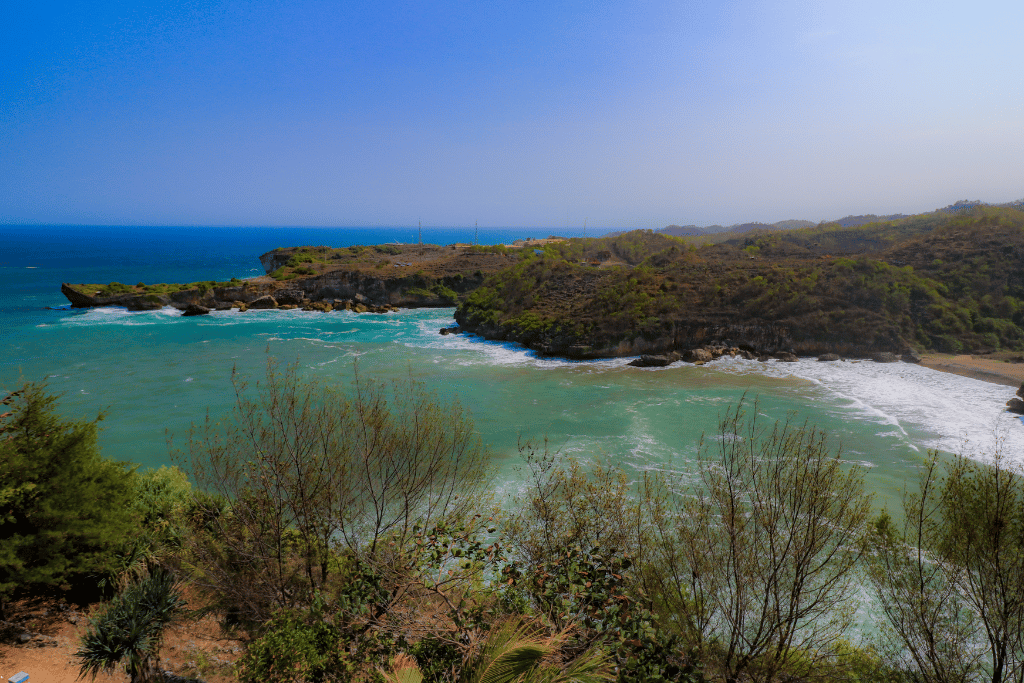
Jogja’s southern coast is a string of dramatic white-sand bays backed by limestone cliffs and pounding Indian Ocean surf. Beyond Timang, spots like Wediombo, Nglambor and Indrayanti reward the drive with turquoise lagoons, snorkelling and clifftop seafood warungs.
The water can be rough, so swim only where it’s marked safe and treat the ocean with respect. Wediombo in particular is a favourite with surfers and sunset-chasers.
- Address: Gunungkidul Regency (roughly 1.5 to 2 hours south)
- Opening Hours: Daytime; each beach charges a small entry fee
- Admission: Beach entry from around 10,000 IDR (~S$1)
14. HeHa Sky View
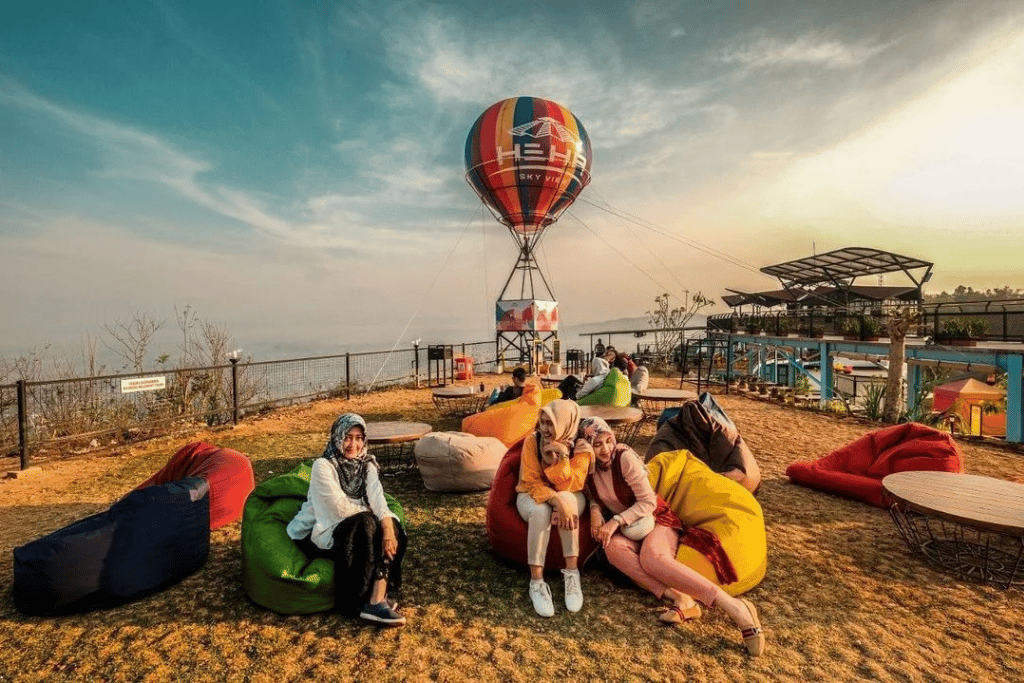
Image Credits: Yogyakarta Tours
For a modern, no-effort viewpoint, HeHa Sky View is a hilltop complex of cafés, photo spots and glass decks looking out over the city lights. It’s polished, popular and made for sunset, when Jogja spreads out below, and the sky turns pink.
It’s touristy and built for the camera, but the view really delivers. Come for golden hour and stay for dinner with the lights on.
- Address: Patuk, Gunungkidul (about 30 to 45 minutes southeast)
- Opening Hours: 10 AM to 9 PM on weekdays, from 8 AM on weekends
- Admission: 30,000 IDR on weekdays, 35,000 IDR on weekends (~S$2 to S$3)
15. Kotagede Silver Village

Image Credits: Kotagede Silver
Jogja’s old silver-smithing quarter is a quieter, more soulful stop. Wander the narrow lanes of Kotagede past traditional Javanese houses and family workshops where artisans have been hand-crafting fine silver filigree for generations. Many studios welcome visitors, and some run short classes.
It’s the place to buy a truly handmade souvenir and see a centuries-old craft up close. Combine it with the nearby royal cemetery for a slow, atmospheric half-day.
- Address: Kotagede, southeast of the city centre
- Opening Hours: Workshops roughly 9 AM to 5 PM
- Admission: Free to wander; classes vary
16. Make Your Own Batik
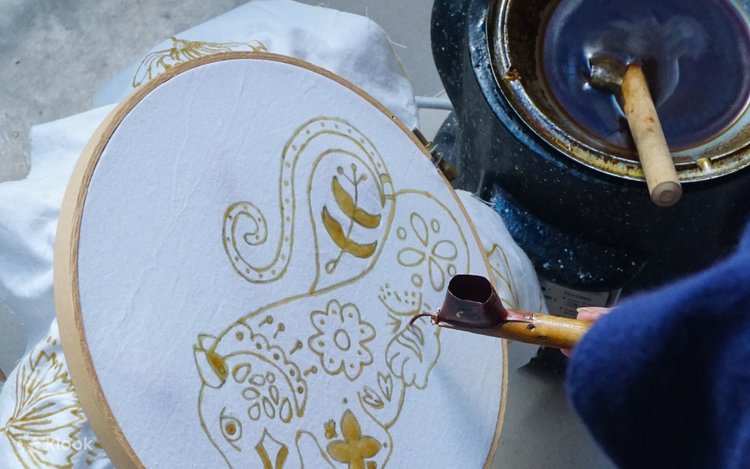
Image Credits: Klook
Yogyakarta is a UNESCO-recognised home of batik, and the best way to appreciate it is to try it. At a village workshop like the community-run one in Tembi, you’ll learn to draw with hot wax and dye your own cloth to take home, guided by local artisans over a few hours.
It’s hands-on, meditative and a real window into the craft that defines Javanese textiles. Many include your materials and the finished cloth to take home, so check what’s bundled when you book.
- Address: Tembi Village and others around the city
- Opening Hours: By booking, typically 3-hour sessions
- Admission: Around 150,000 IDR to 350,000, depending on the studio and inclusions
17. Fort Vredeburg
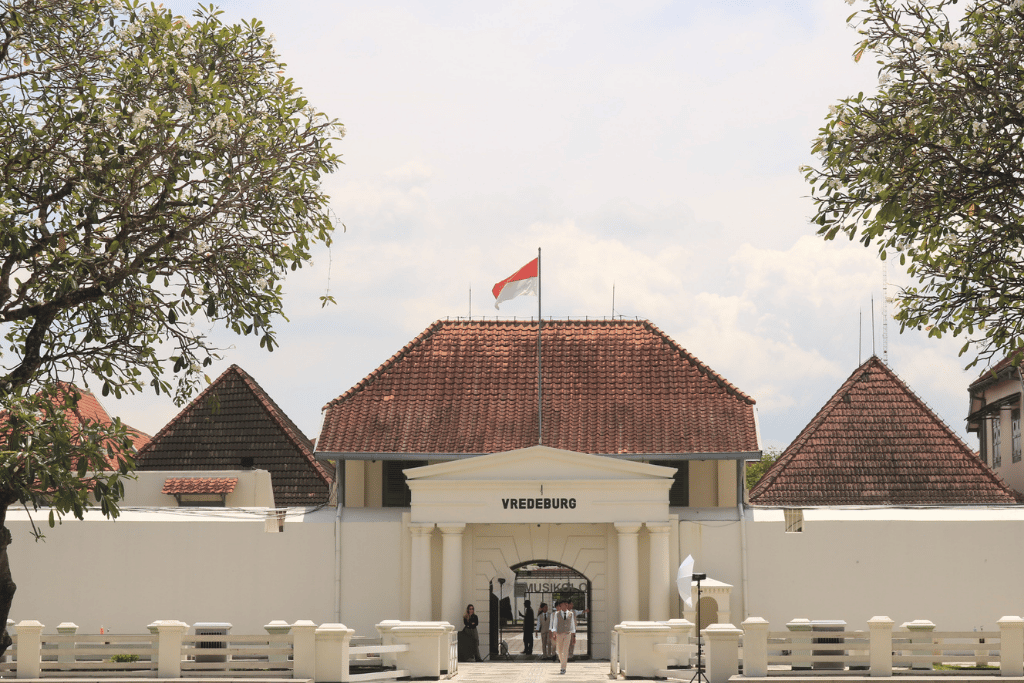
At the southern end of Malioboro sits a whitewashed Dutch colonial fortress that now tells the story of Indonesia’s fight for independence. Inside the ring of ramparts, a series of dioramas and galleries walk you through the struggle, from colonial rule to the 1945 revolution, with Yogyakarta at the centre of it.
Reopened in 2024 after a full revitalisation, it now runs interactive digital dioramas and evening hours, and makes an easy, air-conditioned break from the Malioboro crowds. Best for history buffs and anyone who wants the context behind all the culture they’ve been walking through.
- Address: Jalan Margo Mulyo No. 6, south end of Malioboro
- Opening Hours: Tuesday to Sunday, 8 AM to 8 PM (until 9 PM Friday to Sunday); closed Monday
- Admission: 100,000 IDR (~S$7) for foreign visitors; 25,000 IDR (~S$2) with a local stay permit
What to Eat in Yogyakarta
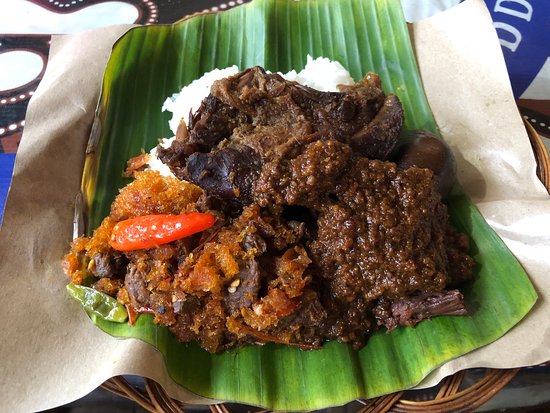
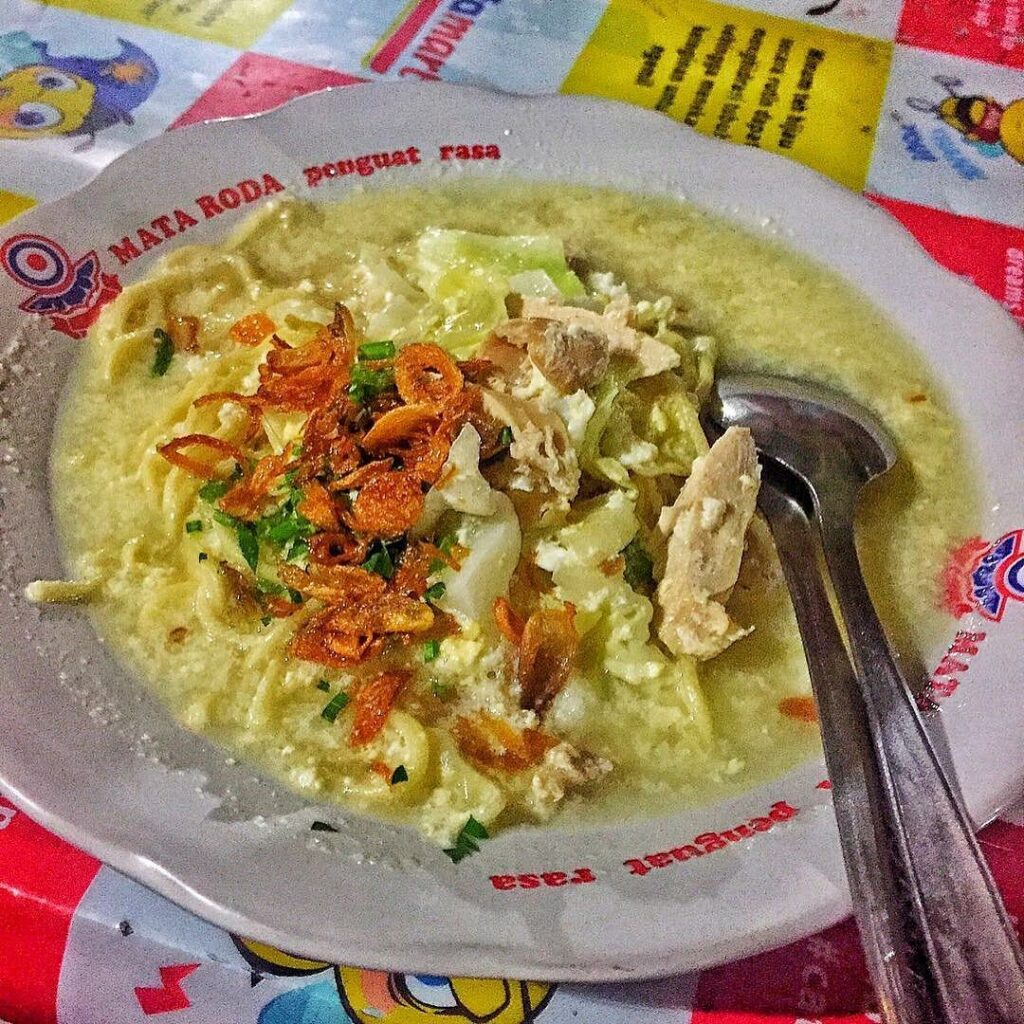
Image Credits: Tripadvisor
Jogja’s food is sweet, smoky and cheap, and half the fun of the trip. A few things you have to try:
- Gudeg. The city’s signature dish: young jackfruit slow-cooked for hours in palm sugar and coconut milk, served with rice, egg and chicken. It’s rich and unusually sweet. Gudeg Yu Djum and Gudeg Pawon (which opens late at night) are the classics.
- Bakmi Jawa. Javanese noodles and fried rice cooked to order over a charcoal flame, smoky and comforting. Bakmi Mbah Mo in Bantul is worth the drive, with plates from around 20,000 IDR (~S$1.50).
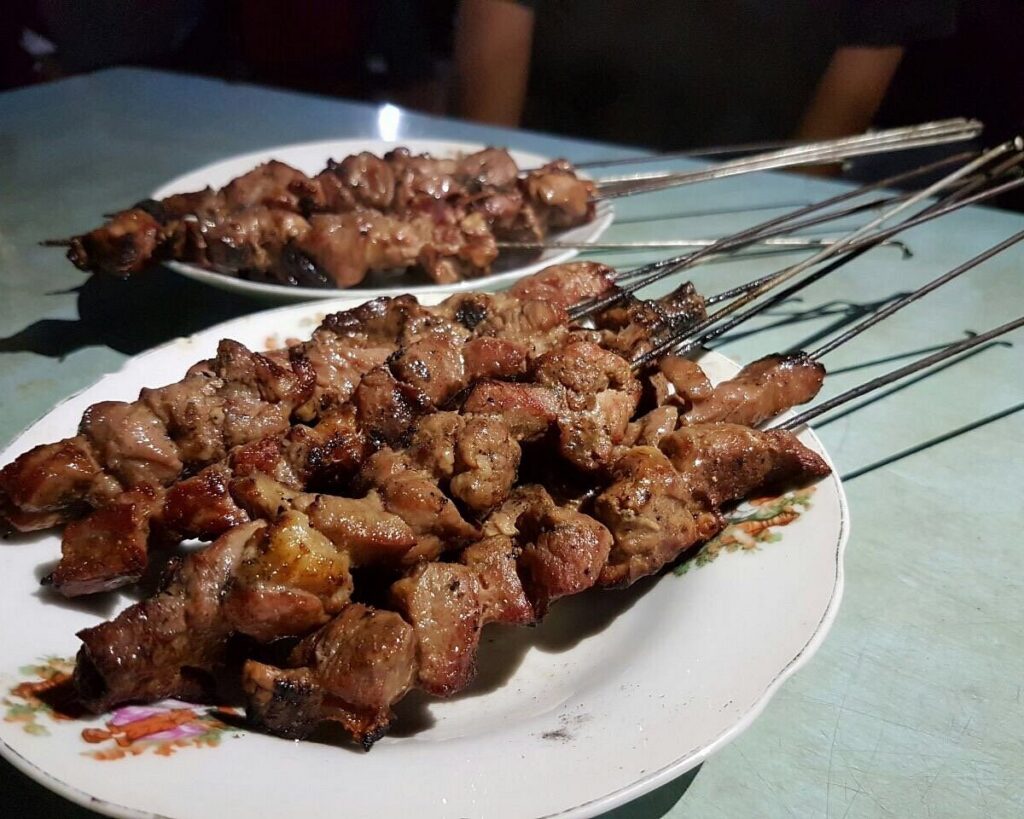
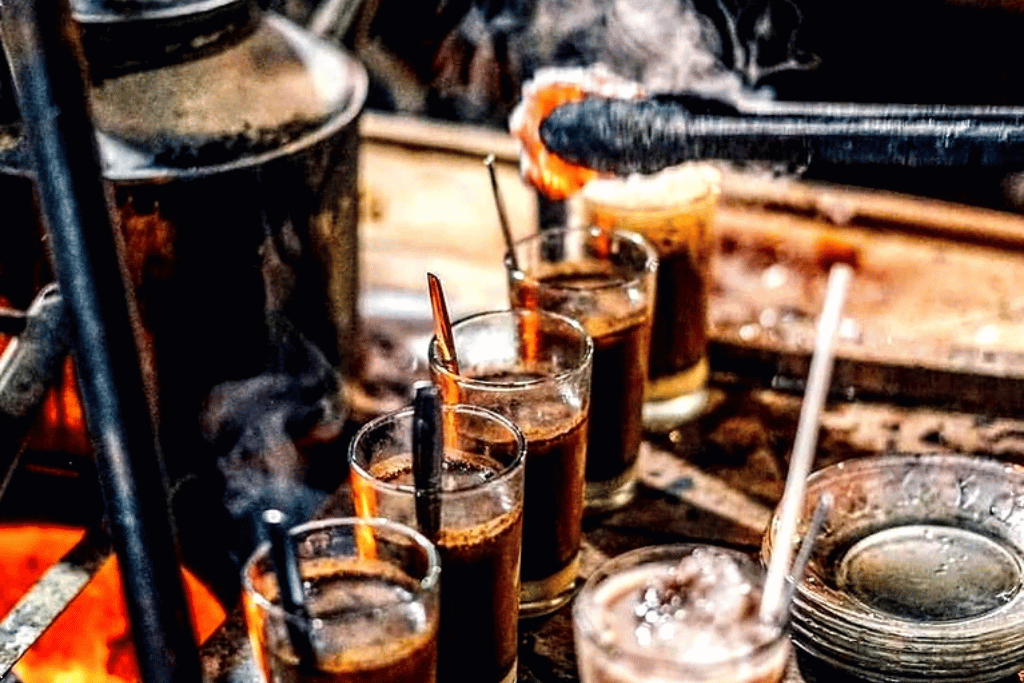
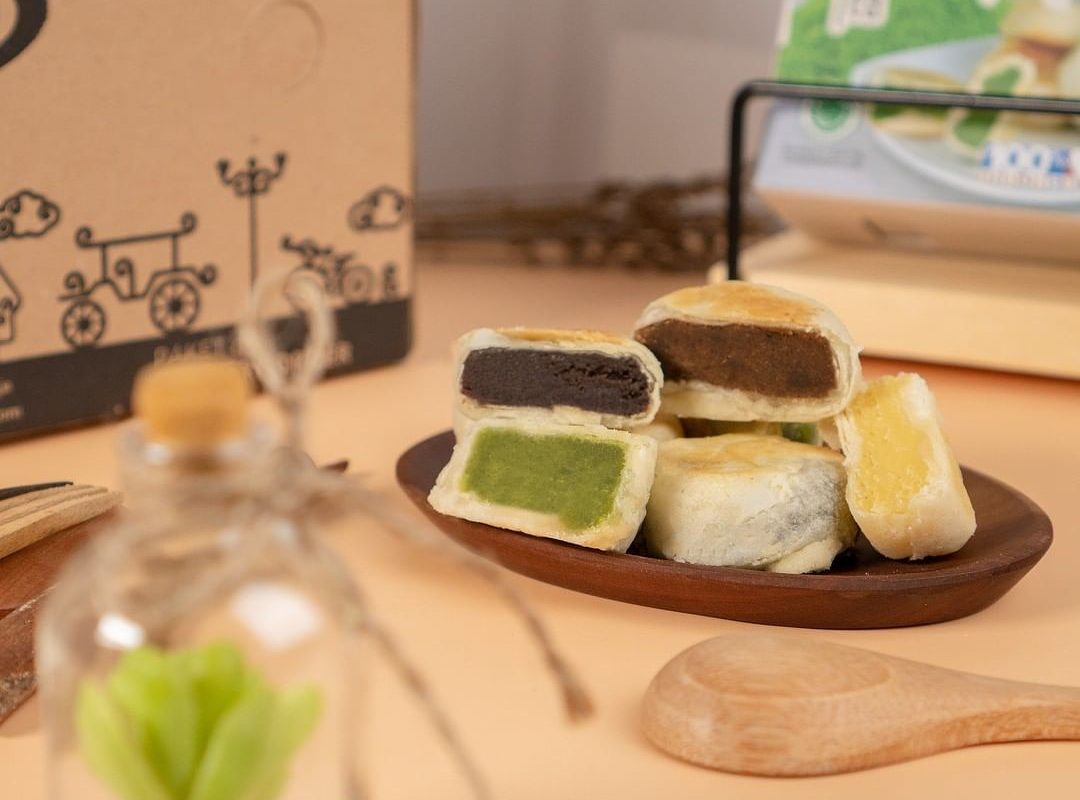
Image Credits: Tripadvisor; Nibble.id; Bakpia Mutiara Jogja
- Sate Klathak. Goat or mutton skewered on bicycle spokes and grilled over coals, served simple with a light broth. A Bantul speciality.
- Angkringan and kopi joss. Pull up a mat at a street-side angkringan cart for cheap snacks and kopi joss, coffee served with a lump of glowing charcoal dropped straight into the glass.
- Bakpia. The sweet mung-bean pastries everyone takes home. Buy them fresh near Malioboro, since they only keep a few days.
For a real local moment, do what Jogja does and eat late and streetside. This section is for travellers who’d rather queue at a food cart than book a fancy restaurant.
Where to Stay in Yogyakarta
Most first-timers base themselves in or near the centre, then day-trip out to the temples. A quick guide by traveller:
- Malioboro and city centre: the most convenient base, walking distance to the palace, markets and street food, and well-connected for tours. Best for first-timers who want everything close.
- Prawirotaman: the leafy “tourist village” of boutique hotels, cafés and co-working spots south of the centre. Best for younger travellers and longer stays.
- Near Tugu / the train station: handy if you’re arriving by rail or catching an early temple tour, with easy access to Malioboro.
- Out by the coast or Borobudur: a growing crop of scenic resorts and cabins for anyone wanting sunrise on their doorstep, though you’ll trade central convenience for the view.
Wherever you stay, the centre is compact and ride-hailing is cheap, so you’re never far from the action.
Getting To and Around Yogyakarta
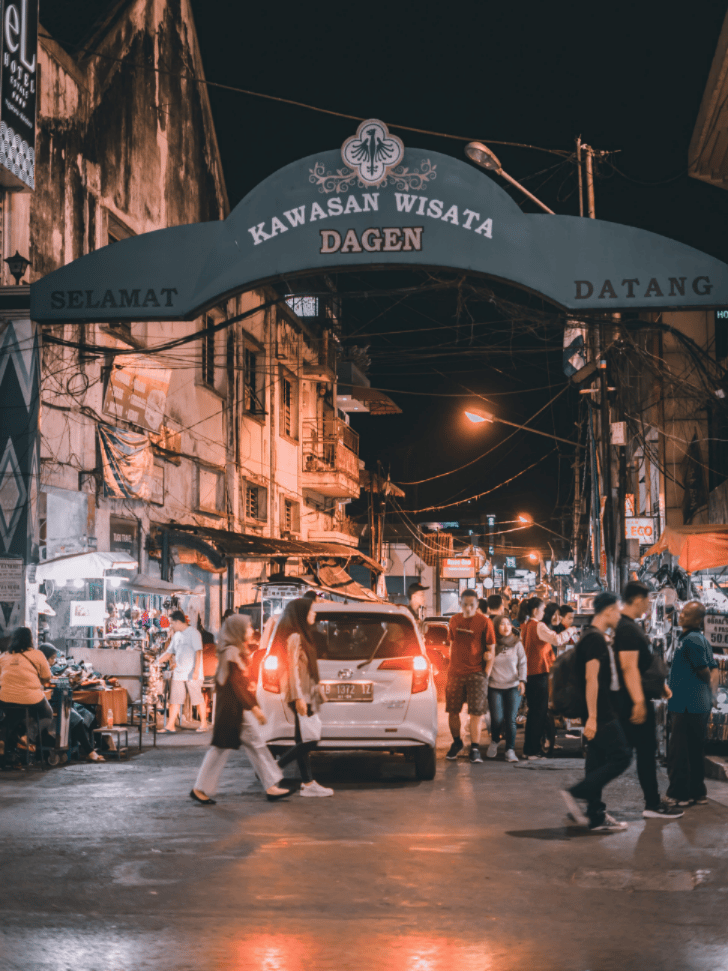
Getting there:
- Yogyakarta International Airport (YIA) in Kulon Progo handles international flights, with a direct Scoot route from Singapore of about 2.5 hours.
- Alternatively, fly into Jakarta or Bali and take a domestic hop, or ride one of Indonesia’s scenic executive trains from Jakarta (around 6 to 7 hours) for a slower, more memorable arrival.
- YIA sits about 40 kilometres southwest of the city, connected by the airport rail link and shuttle buses.
Getting around:
- The city centre is walkable, and everything else is easy with ride-hailing apps like Gojek and Grab, which are cheap and save a lot of haggling.
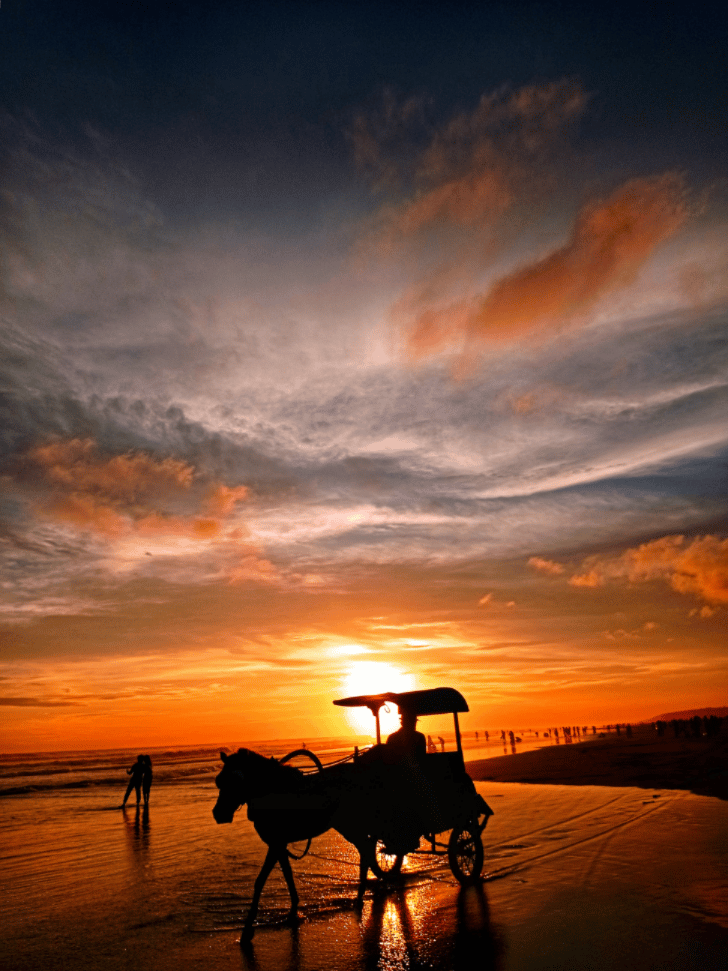
- Trans Jogja buses cover the main routes, becak and horse-drawn andong handle short hops around the palace, and for the temples and caves, hiring a car with a driver for the day is the most efficient option.
📖 Related Guide: Sorting your paperwork? Our entry requirements for Indonesia guide covers the digital arrival card you’ll need before you arrive.
Paying in Yogyakarta: Cash, Cards and YouTrip
Yogyakarta still runs largely on cash. Warungs, street food, markets, becak drivers, temple entries and small guesthouses are cash-only, so you’ll want a healthy stack of rupiah on hand. Cards and QR payments are creeping in at malls, chain cafés and bigger hotels, but they’re the exception, not the rule.
That makes how you get your rupiah the thing that matters. The worst rates are at airport money changers and hotel counters, so skip those. The smart move is to withdraw from a bank ATM when you land and tap your card where it’s accepted.
This is where a YouTrip card helps on both fronts. Withdraw rupiah from any local ATM and your first S$400 each month is free, then a flat 2% after, which beats airport-changer rates comfortably. And where cards are accepted, YouTrip converts your spend from Singapore dollars to rupiah at the wholesale exchange rate with no foreign transaction fee.
One tip that always applies: if a card machine offers to charge you in Singapore dollars instead of rupiah, always choose rupiah. Saying yes to SGD triggers a marked-up “dynamic currency conversion” rate.
📖 Related Guide: Running low on cash? Our Indonesia ATM Withdrawal Guide covers the best banks to use and the fees to dodge.
📖 Related Guide: Want to track the rate before you fly? See the best SGD to IDR rate today and how to get a good one.
FAQs
Absolutely. Few places pack in as much as Jogja: two of the world’s great temples, an active volcano, dramatic caves and beaches, a living royal court, and some of the best and cheapest food in Indonesia. It’s also easy on the wallet and manageable in a long weekend, which makes it one of the best-value cultural trips from Singapore.
Three days covers the temples, the palace and the city. Four to five lets you add a Merapi jeep tour, a cave adventure and a beach day. A week gives you room for classes and a trip further out to the Dieng Plateau.
Yes. Yogyakarta is generally very safe and welcoming, even at night. Take the usual precautions in crowds like Malioboro, watch your belongings, agree becak fares before you ride, and respect the ocean on the southern beaches, where currents can be strong.
Yes, with a bit of planning. Families do well with the gentler sights: cave tubing at Pindul, the pools and tunnels of Taman Sari, the Ramayana Ballet, sunset at HeHa Sky View, and a hands-on batik class. Skip the ones built for thrill-seekers, like Jomblang’s 60-metre rope descent, and take care on the Gunungkidul beaches, where the surf is strong. Most temples and museums are cheap or free for children.
No. Singapore passport holders can enter Indonesia visa-free for up to 30 days for tourism. You will need at least six months’ passport validity, a return ticket, and to complete Indonesia’s free digital arrival card online (via the All Indonesia app or website) within 72 hours before you arrive.
The dry season, from May to September, for clear temple sunrises, jeep tours and open-air performances. The wet season (November to March) brings heavy afternoon rain that can close caves and hide the volcano.
Mostly cash. Withdraw rupiah from a bank ATM rather than an airport money changer, and use a no-foreign-fee travel card like YouTrip to keep the rate wholesale. Keep plenty of small notes for street food, temples and becak rides.
Selamat Jalan: Jogja Is a Trip You’ll Want to Repeat
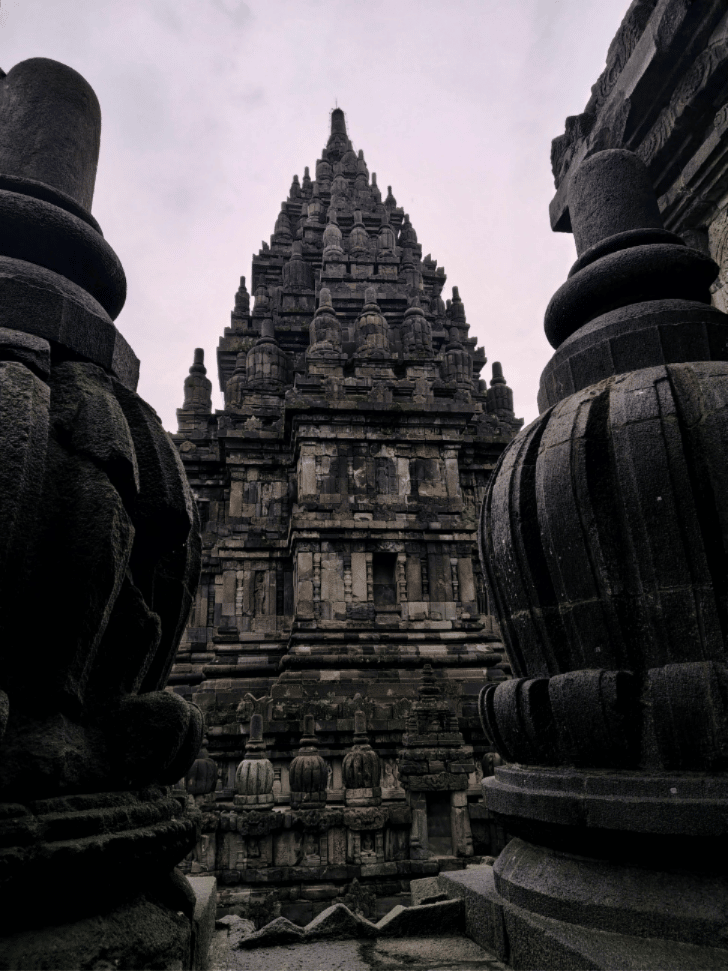
Yogyakarta is that rare city that delivers on culture, adventure and food in equal measure, and does it all on a budget. Between sunrise at Borobudur, a jeep on Merapi’s slopes and a late-night plate of gudeg, it packs a lifetime of Java into a few days.
And wherever you tap or withdraw, do it smart. Between temple tickets, tours and endless street snacks, the rupiah adds up fast, which is exactly why the wholesale exchange rate matters, leaving more in the budget for one more skewer of sate.
Not a YouTrooper yet? Get a free YouTrip card + S$5 YouTrip credits with code YTBLOG5.
Then head over to our YouTrip Perks page for exclusive offers and promotions. Join our Telegram (@YouTripSG) and Community Group (@YouTripSquad) for travel tips, event invites and more.
For more before you fly, see our guides on the best multi-currency cards in Singapore and how to apply for a YouTrip card.
Selamat jalan!