


Here’s why Suzhou earns a spot on your China itinerary 🇨🇳
Most Singaporeans land in Shanghai and never look past it. Suzhou sits 25 minutes away by bullet train, and it’s the soft, slow counterpoint to Shanghai’s skyline: UNESCO gardens, lantern-lit canals, and a Singapore connection most visitors never realise is there. Here’s what to do, how long to stay, and how to actually pay once you arrive.
| Quick answer | Detail |
|---|---|
| Worth visiting? | Yes — China’s best classical gardens, canal towns and 2,500 years of history, all walkable |
| How long | 1 day as a Shanghai day trip; 2–3 days to do it properly |
| Getting there | No airport in Suzhou — fly to Shanghai, then ~25-min high-speed train |
| Famous for | UNESCO classical gardens, silk, water-town canals, Suzhou Museum |
| Best time | March–May and September–November (spring and autumn) |
| Paying | QR (Alipay/WeChat) rules; link a YouTrip card, keep a little cash |
SGD equivalents below are based on ~5.4 CNY = S$1 and ~1.35 USD = S$1.
Table of Contents
- Is Suzhou worth visiting?
- What is Suzhou famous for?
- How to get to Suzhou from Singapore
- How many days do you need in Suzhou?
- The 15 best things to do in Suzhou
- Things to do in Suzhou at night
- Water towns near Suzhou worth a day trip
- What to eat in Suzhou
- What to buy and where to shop in Suzhou
- When to visit and where to stay
- Paying in Suzhou: cards, cash, Alipay and WeChat
- FAQ
Is Suzhou Worth Visiting?
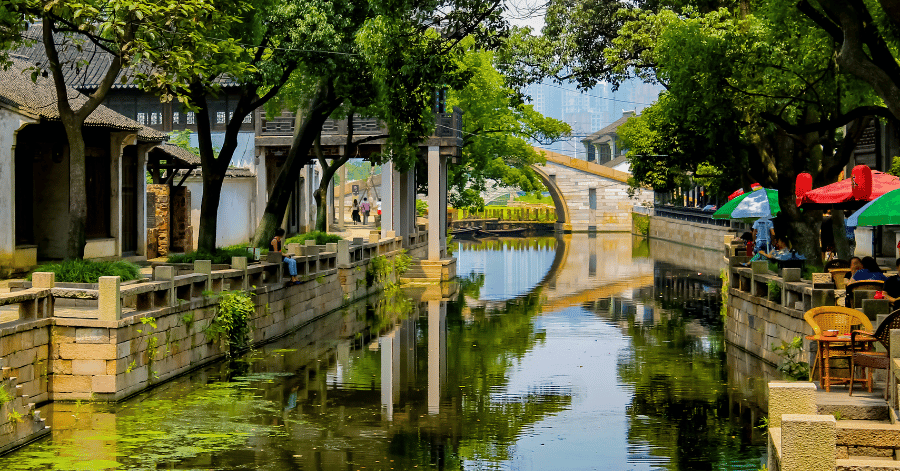
Yes, Suzhou is one of the most rewarding short trips in eastern China, and it’s the easiest cultural break to bolt onto a Shanghai itinerary. You get classical gardens that inspired emperors, canal towns older than most European capitals, and a walkable old town, all an easy train ride away.
Singaporeans have a quiet stake in the place, too. The Suzhou Industrial Park, the modern district on the city’s east side, was launched in February 1994 as a government-to-government joint venture between Singapore and China, modelled on Singapore’s own industrial estates. Walk the Jinji Lake waterfront and you’re looking at a slice of China that Singapore helped design.
The old line still holds: 上有天堂,下有苏杭, or “above there is heaven, below there are Suzhou and Hangzhou.” Two cities, named together, as the most beautiful places on earth.
📖 Related Guide: Doing the Shanghai half of the trip too? Our 31 things to do in Shanghai maps the must-dos, food streets and Bund timing, and pairs perfectly with a Suzhou day trip.
What Is Suzhou Famous For?
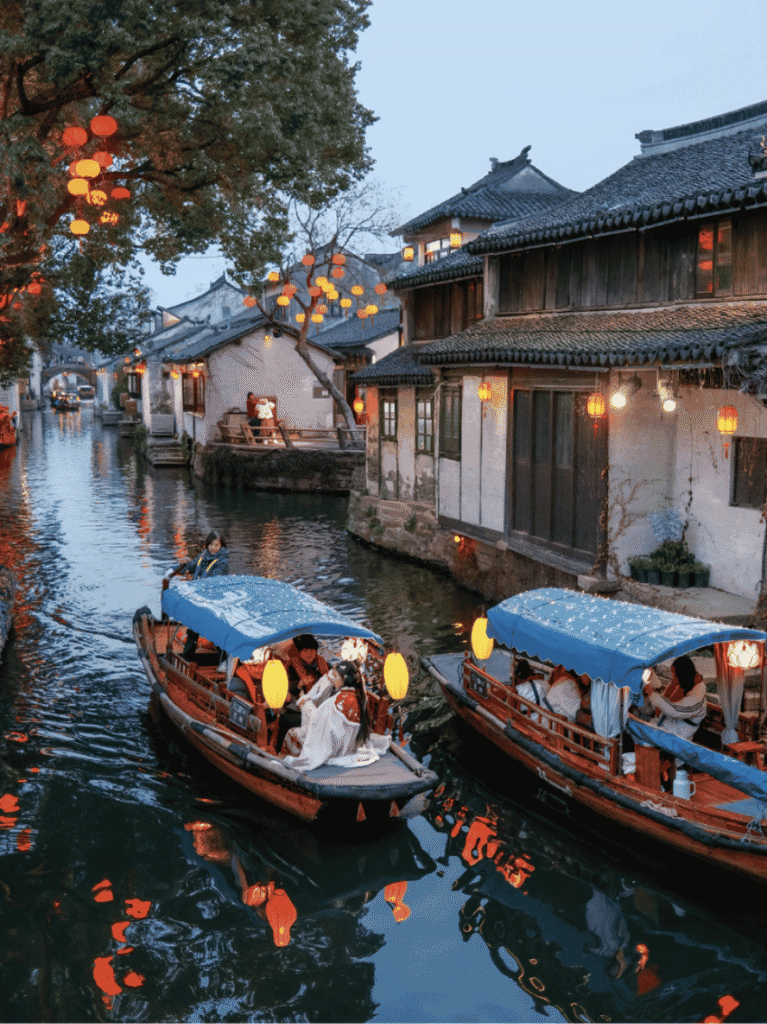
Suzhou is famous for its UNESCO-listed classical gardens, its network of canals, and silk, earning it the nickname “the Venice of the East.” More than a third of the city is covered by water, and nine of its gardens are jointly listed as a UNESCO World Heritage site.
The city has 2,500 years of history, and it shows. Whitewashed houses with black-tiled roofs line the canals, arched stone bridges cross the waterways, and the gardens recreate entire mountain-and-water landscapes inside a single city block. Suzhou was also a centre of scholar-artist culture, which is why so many gardens were built as private retreats for retired officials and poets.
It’s still a silk capital, too. Suzhou and neighbouring Hangzhou have produced silk for centuries, and Su embroidery is recognised as one of China’s finest needlework traditions.
📖 Related Guide: Suzhou’s sister city in that old proverb is just as worth your time. Our best things to do in Hangzhou covers West Lake, tea villages and the easiest way to pair the two.
How to Get to Suzhou from Singapore
Suzhou has no civil airport of its own, so you fly into Shanghai first, then hop on a high-speed train. From Shanghai, the bullet train takes about 25 to 30 minutes, with the fastest services doing it in around 21. Trains run from early morning to late night, several an hour, so you rarely wait long.
Singapore passport holders enter China visa-free for up to 30 days under the mutual exemption in place since February 2024. No visa run, no application fee, just book and go.
A few things that catch Singaporeans out:
- Book the train through Trip.com if you want it in English. The official Railway 12306 app is cheaper (no booking fee) but needs passport verification and a live photo, and usually wants Alipay or WeChat to pay. Trip.com is in English, takes your own card, and charges a small booking fee per ticket (a few dollars), which is worth it for the convenience.
- Watch the station names. Shanghai has Hongqiao and others; Suzhou has Suzhou, Suzhou North and Suzhou South. The most central is plain “Suzhou Station.” Pick the wrong one and you’ll add 40 minutes of taxi to your day.
- Sunan Shuofang (WUX) near Wuxi is technically the closest airport (~35–40 km), but it’s domestic-focused. For Singapore flights, Shanghai is your gateway.
Once you’re moving around the city, taxis via DiDi are cheap and easy, and the metro reaches most major sights.
📖 Related Guide: Sorting your data so you can book trains and hail a DiDi from minute one? Our best travel eSIMs for Singapore guide covers the cheapest providers that actually work in China.
How Many Days Do You Need in Suzhou?
One full day is enough for a taste; two to three days lets you do it justice. Most Singaporeans visit Suzhou as a day trip from Shanghai, which works for the headline sights, but the gardens reward a slower pace.
The rough split:
| Time you have | What to prioritise |
|---|---|
| 1 day (day trip) | Humble Administrator’s Garden, Suzhou Museum, Pingjiang Road + canal boat |
| 2 days | Add Tiger Hill, Lion Grove Garden, Shantang Street, a night show |
| 3–4 days | Add a water town (Tongli), Jinji Lake, Panmen, and a slower garden or two |
The gardens get crowded fast, especially Humble Administrator’s Garden. Arriving early, before the tour groups, makes a real difference to how peaceful they feel.
📖 Related Guide: Stitching Suzhou into a bigger China loop? Our best things to do in Beijing pairs naturally for a north-south trip: one weekend imperial, one weekend lakeside.
The 15 Best Things to Do in Suzhou
From UNESCO gardens to a 1,000-year-old leaning pagoda, here are the 15 sights worth your time in Suzhou, roughly in the order a first-timer should tackle them. Most gardens charge a modest entry fee. Humble Administrator’s Garden is the priciest at around 90 CNY (~S$17) in peak season, while the smaller ones run cheaper.
⚠️ Ticket prices change seasonally; confirm on each venue’s site before you go.
Humble Administrator’s Garden
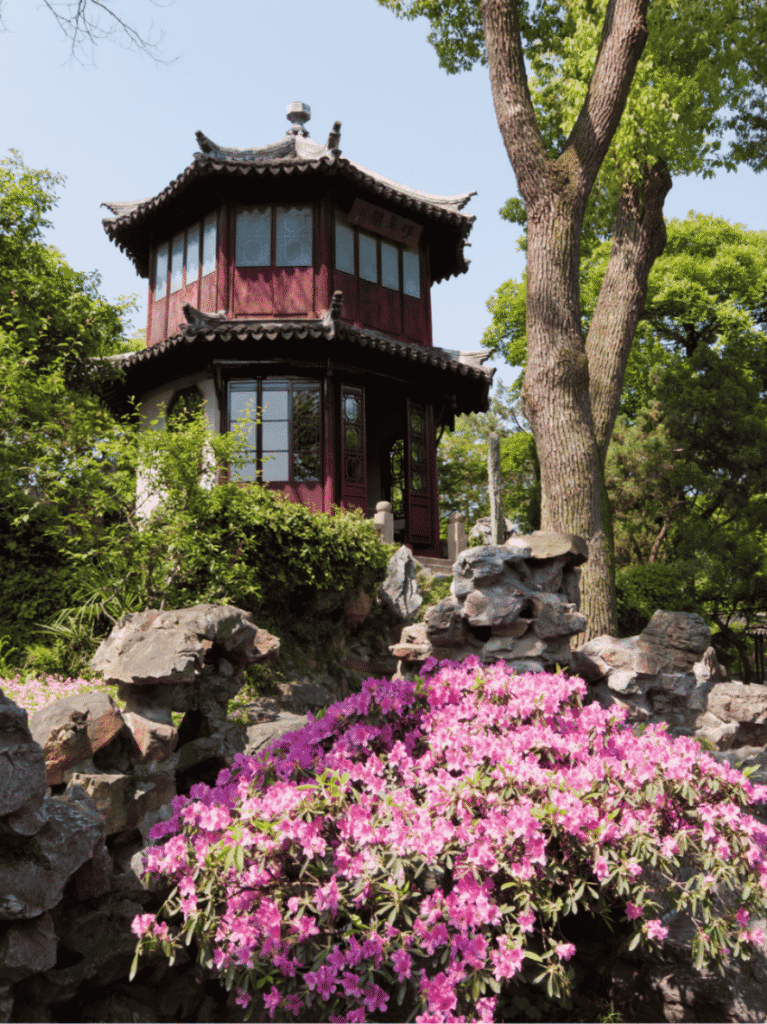
The largest and most famous classical garden in Suzhou, and the one to see if you only see one. Built in the early 1500s by a retired Ming official, it’s a masterclass in creating the illusion of endless space inside a city block: ponds, pavilions, rockeries and winding paths that open onto new views at every turn.
Come early, because the queue builds fast. You can usually hire a guide for around 100 CNY (~S$19) per couple (prices vary by guide and group size), which gets you in quicker and brings the history to life.
Best for anyone seeing just one garden in Suzhou. Go right at opening or in the last hour to dodge the tour groups.
Lion Grove Garden
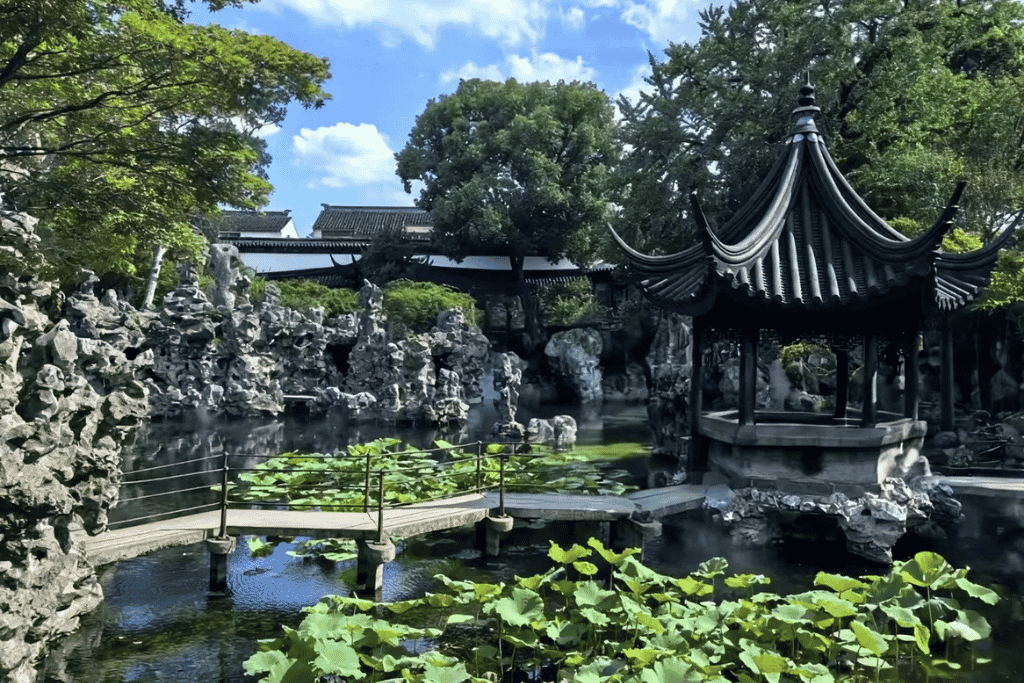
Image Credits: Klook
A short walk from Humble Administrator’s Garden, Lion Grove is the playful one: a maze of limestone rockeries shaped by erosion to resemble lions in different poses. Built in 1342 as part of a Buddhist temple, it’s all winding paths, hidden caves and dead ends, and kids love getting lost in it. Emperor Qianlong liked it so much he had a copy built in Beijing.
Lingering Garden
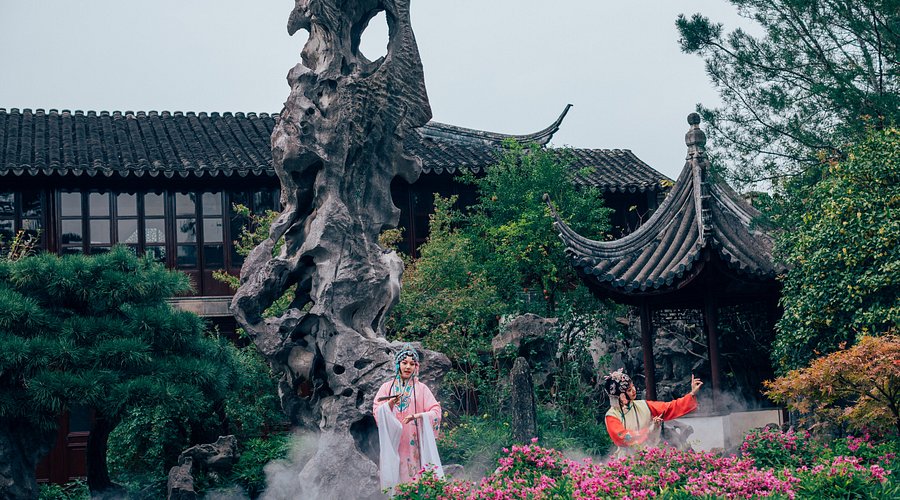
Image Credits: Tripadvisor
One of the four great classical gardens of China, Lingering Garden dates to 1593 and is known for how cleverly it frames views, using corridors, windows and doorways that turn the landscape into a series of living paintings. It’s a little quieter than the Humble Administrator’s Garden, and the covered walkways make it a good rainy-day option.
Garden of Cultivation (Yi Pu)
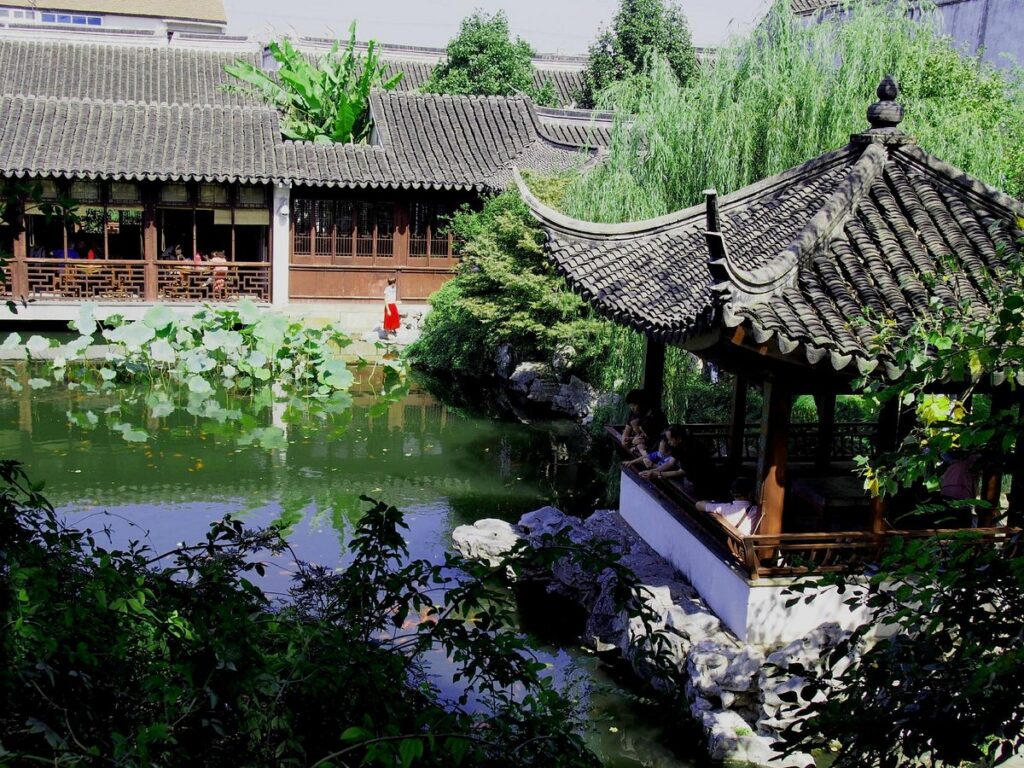
Image Credits: Tripadvisor
The one most tour groups skip, which is exactly why it’s worth your time. Yi Pu is small, Ming-era and refreshingly uncrowded, built as a scholar’s private retreat around a central pond. There’s a teahouse inside where you can sit with a cup and the kind of quiet the bigger gardens lost years ago.
Tiger Hill and the Leaning Pagoda
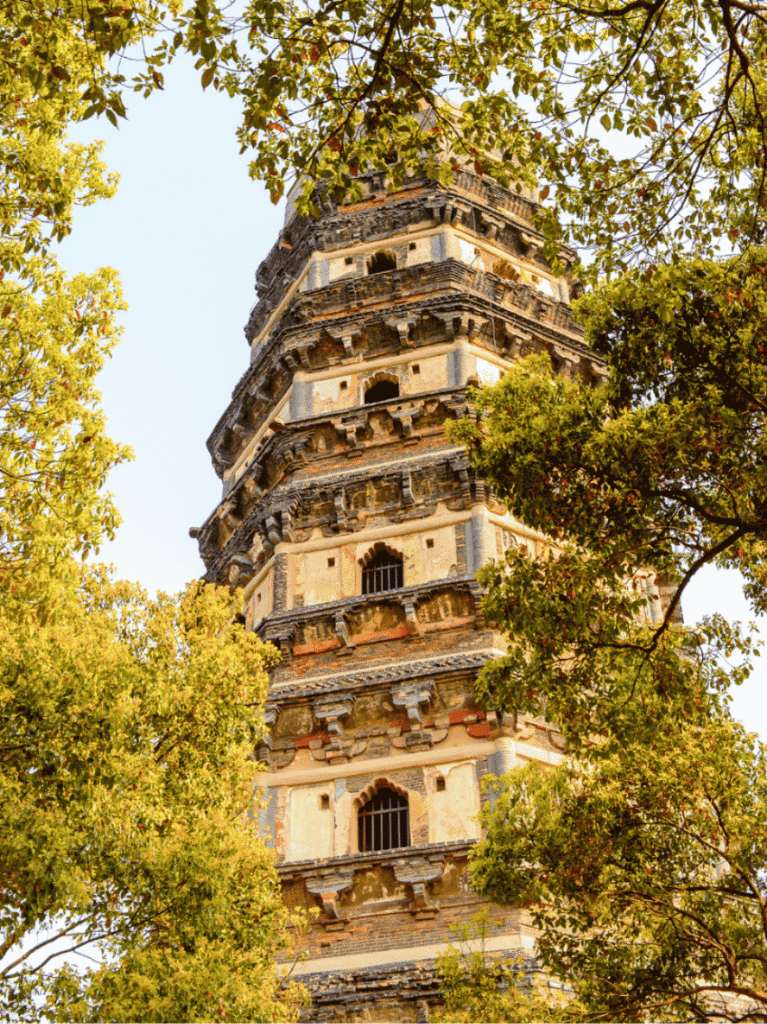
Tiger Hill is a park-like scenic area crowned by the 47-metre Yunyan Pagoda, built over 1,000 years ago and tilting about 3.6 degrees, China’s own leaning tower. At the base are the Sword-Testing Stone and Sword Pool, tied to the legend of a Wu-kingdom king buried here with thousands of swords.
A canal boat from the entrance links it to Shantang Street, so it slots neatly into a half-day pairing the two, good for anyone who likes a bit of legend with the view.
Suzhou Museum
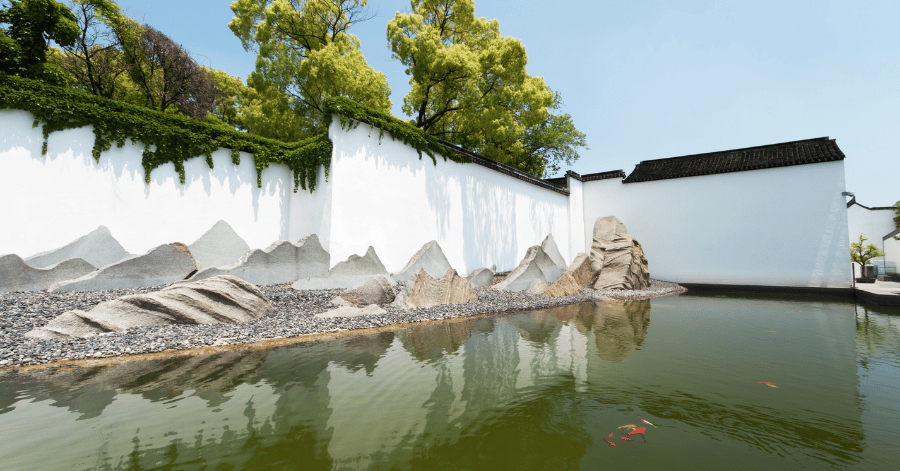
Designed by the late I.M. Pei, the architect behind the Louvre’s glass pyramid whose ancestral home was Suzhou, the Suzhou Museum is a destination in itself. White walls, dark rooflines, geometric windows and reflective ponds echo the city’s garden style, and inside are over 30,000 relics spanning ceramics, jade, calligraphy and Wu-kingdom archaeology.
Entry is free, but you must reserve online in advance. Walk-ins are nearly impossible, and weekends book out early.
Best for anyone who likes design as much as history. The building itself is worth the visit even if you usually walk straight past museums, but book a weekday slot to skip the worst of the crowds.
Pingjiang Road and a Canal Boat Ride
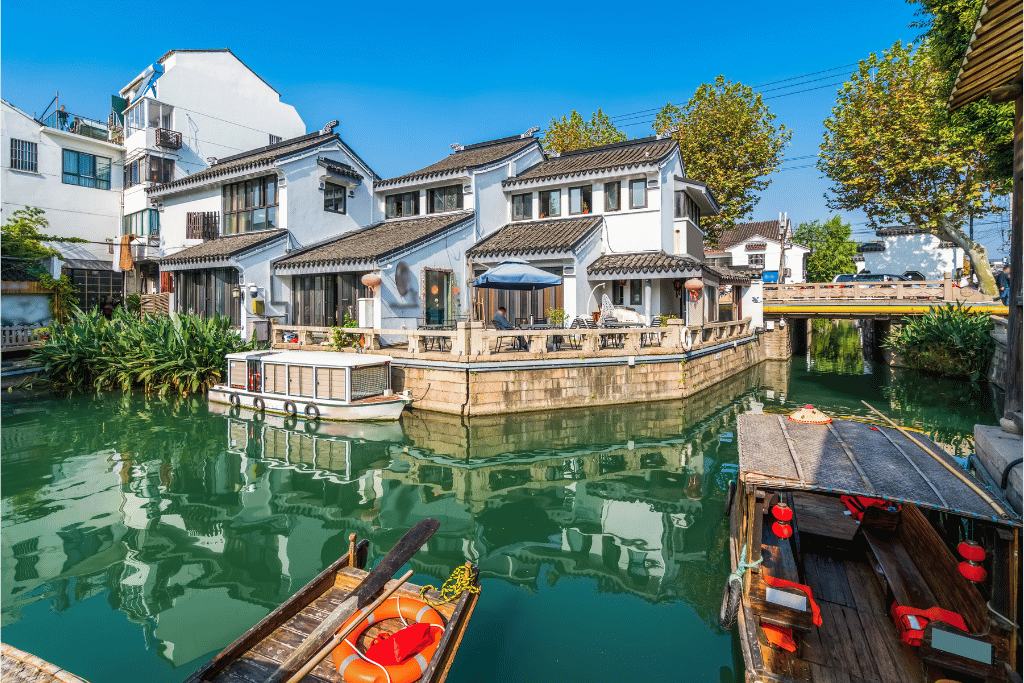
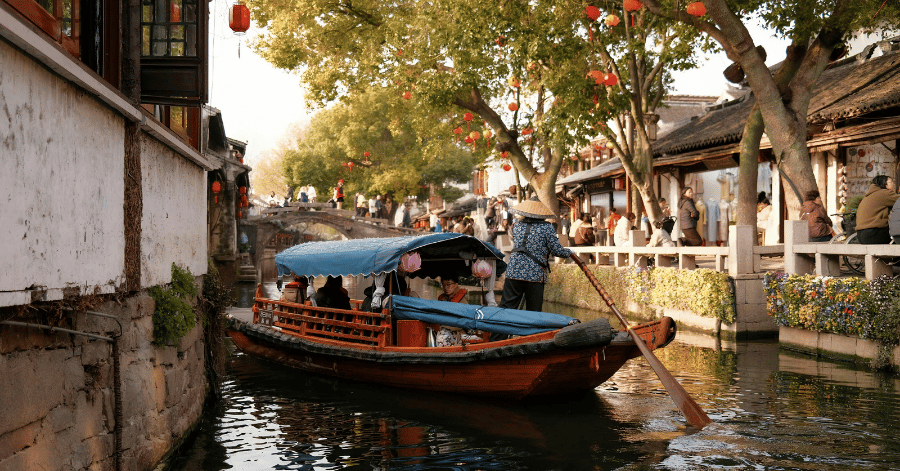
Pingjiang Road is Suzhou’s best-preserved historic street, running 800 years’ worth of whitewashed houses and stone bridges alongside a narrow canal. Walk it, then take a wooden boat through the waterways: about 40 minutes of gliding under ancient bridges, sometimes with the boatwoman singing Pingtan, the soft local storytelling-song. It’s touristy and completely worth it.
Shantang Street
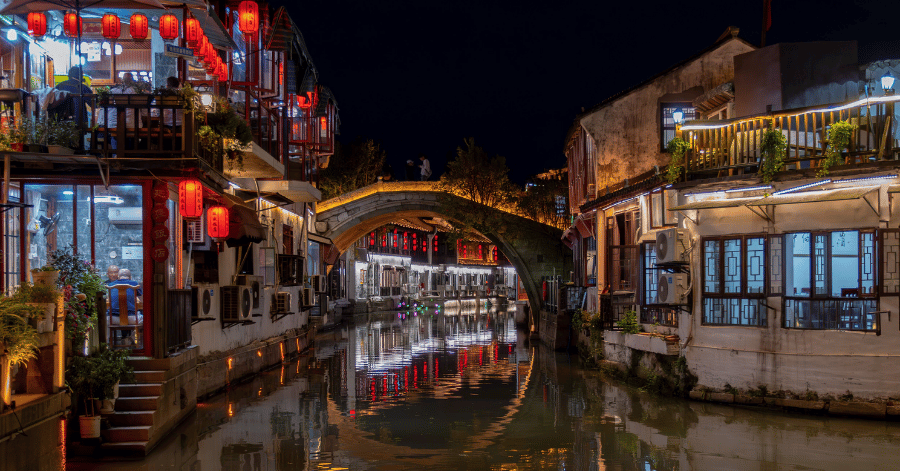
Built from 825 AD on the orders of the poet-governor Bai Juyi, Shantang Street (“Seven-Li Shantang”) is a canal-side strip of shops, snack stalls, silk sellers and restaurants. It’s pleasant by day and gorgeous after dark, when the lanterns reflect off the water, arguably the best evening stroll in the old town.
Guanqian Road and Xuanmiao Temple
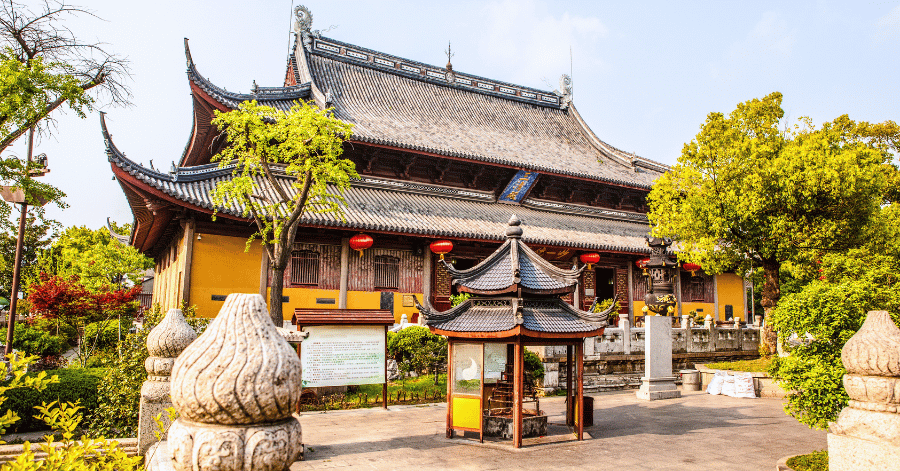
Suzhou’s busiest shopping street, anchored by the Taoist Xuanmiao Temple, first built over 1,700 years ago. Guanqian (“in front of the temple”) is where locals come for snacks, cheongsam and silk shops, and modern stores like Wow Colour and Miniso. Good for a rainy afternoon or a souvenir run between gardens.
Panmen Scenic Area
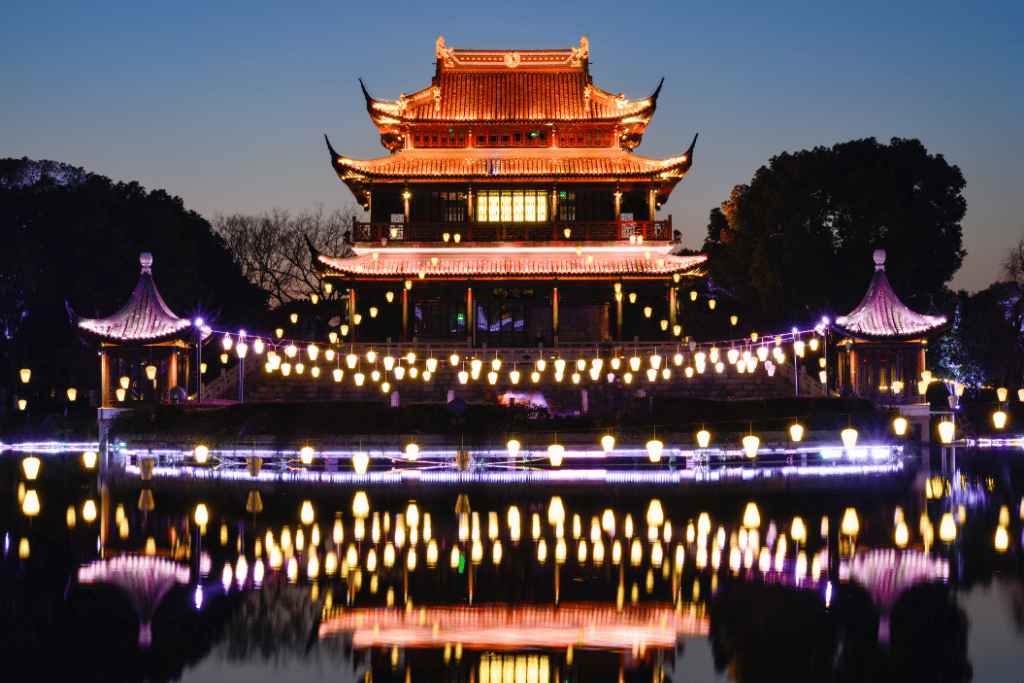
Panmen is home to Pan Gate, the only surviving water-and-land gate from Suzhou’s ancient city walls, built over 2,500 years ago with passages for both road and canal. The area also holds the Ruiguang Pagoda and the elegant Wumen Bridge, the highest old stone arch bridge in the city. If you’re staying near here, it’s a quiet, history-rich corner away from the crowds.
North Temple Pagoda (Beisi Ta)
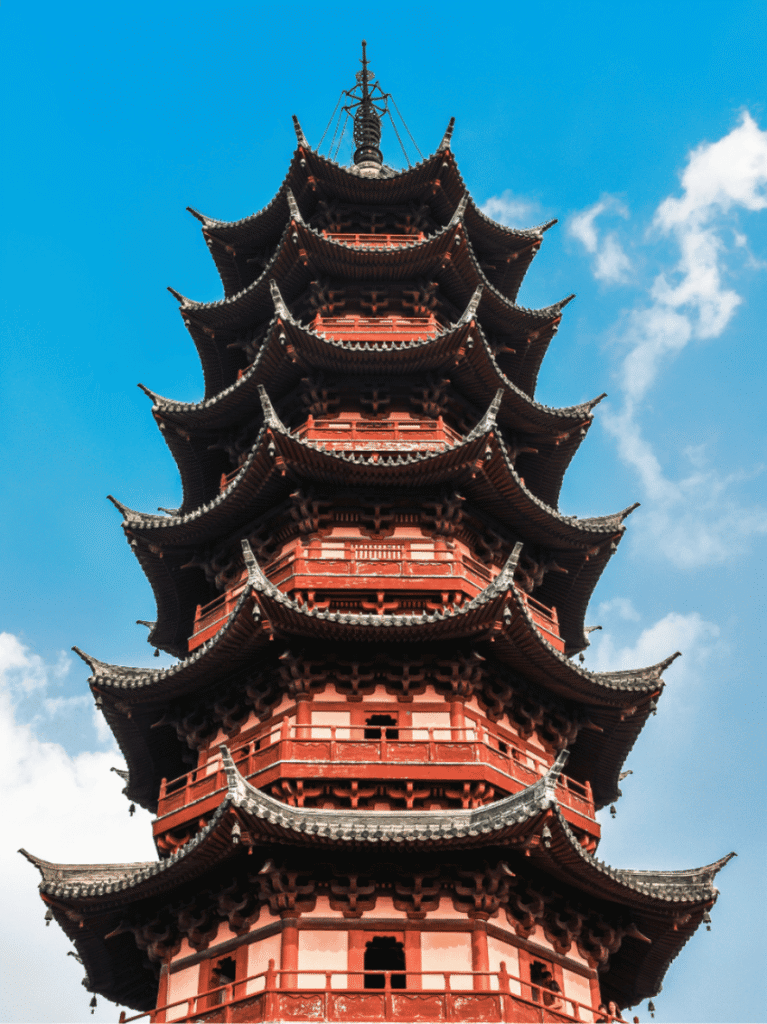
Rising about 76 metres over nine octagonal storeys, the North Temple Pagoda is one of the tallest ancient pagodas in the Jiangnan region south of the Yangtze, and sits within the grounds of Bao’en Temple. Climb it on a clear day for a rooftop view across the old town’s grey-tiled roofs to the modern skyline beyond.
It’s a quick stop rather than a headline sight, best folded in if you’re already exploring the old town nearby.
Hanshan Temple
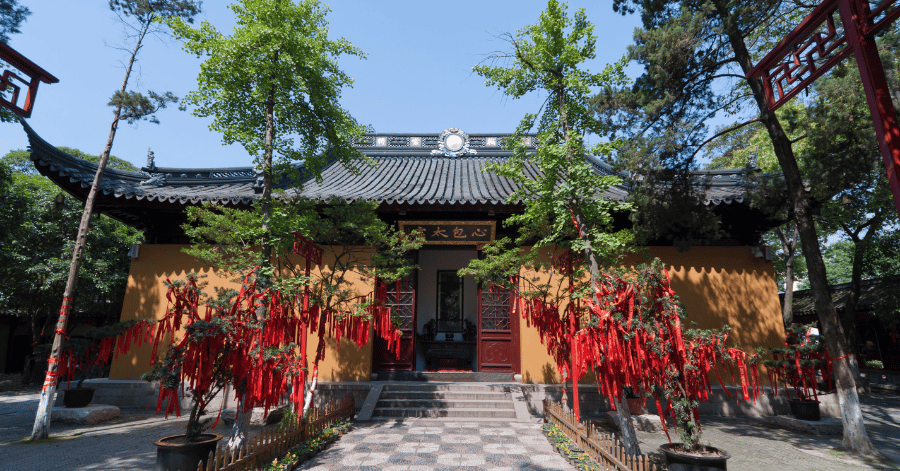
A 1,400-year-old Buddhist temple made famous by a Tang-dynasty poem about its midnight bell, which is still rung today. It’s a peaceful, working temple a little west of the centre, best paired with a morning at the nearby Suzhou Silk Museum before the day’s gardens.
Suzhou Silk Museum
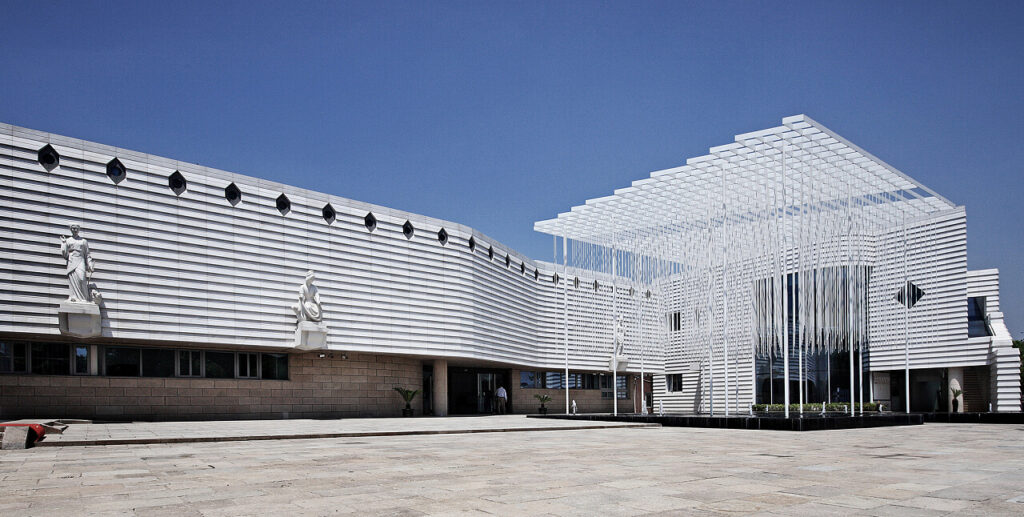
Image Credits: www.szsilkmuseum.com
Suzhou’s silk story, told well and for free. The museum walks you through silkworm rearing, ancient looms and centuries of Su embroidery, and it’s a genuinely useful primer before you go shopping for the real thing. Compact enough for an hour, and a good rainy-day backup.
Jinji Lake and Ligongdi
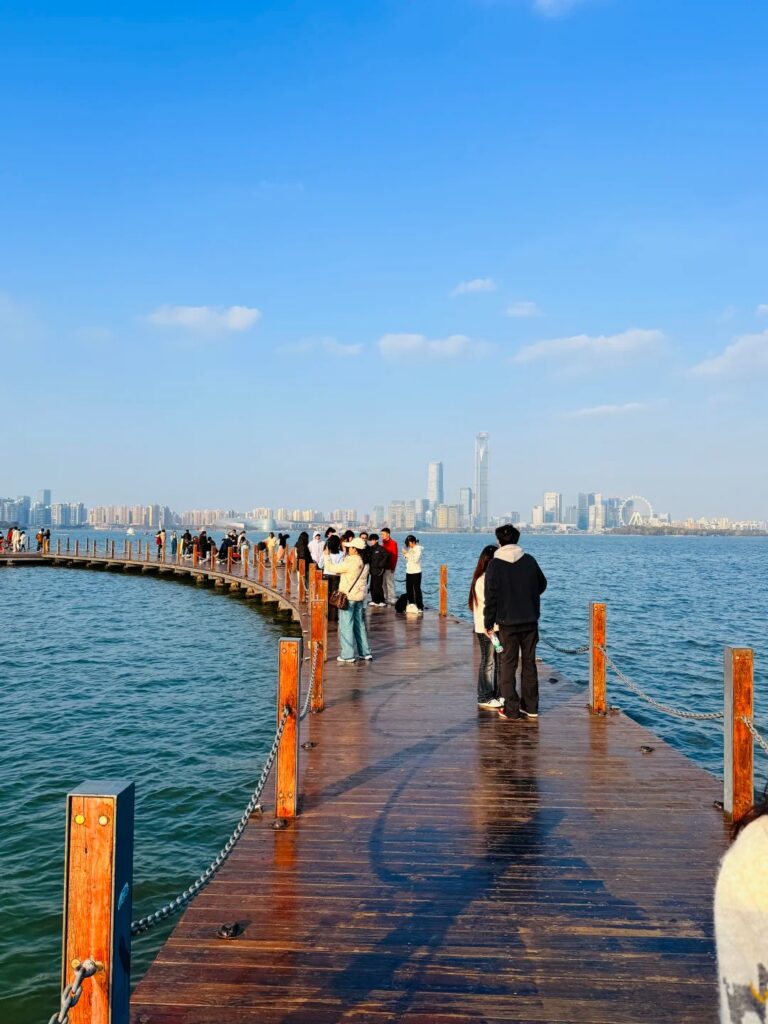
Image Credits: 你好帅 on rednote
This is modern Suzhou: a huge city-lake ringed by parks, with the Ligongdi causeway lined with restaurants, cafés and boutiques. Walk or cycle the lakeside avenue, or come at dusk for the light show across the water. It’s the easiest place to see how the Singapore-built Industrial Park reshaped this side of the city.
Gate of the Orient (also known as Gate to the East)

Locals call it “the pants”: a 300-metre arch-shaped skyscraper on the edge of Jinji Lake, made of two towers joined at the top. Completed in 2016, it’s Suzhou’s boldest modern landmark, with a mall at the base and an observation level up top. Worth a photo, and a useful contrast to all those gardens.
📖 Related Guide: Getting between gardens without the metro learning curve? Our full guide to using DiDi in China covers the English-mode setup and what every screen actually means.
Things to Do in Suzhou at Night
Suzhou after dark is quieter and more atmospheric than most Chinese cities. Think lantern-lit canals and intimate garden performances rather than neon and nightclubs.
Master of the Nets Garden night show
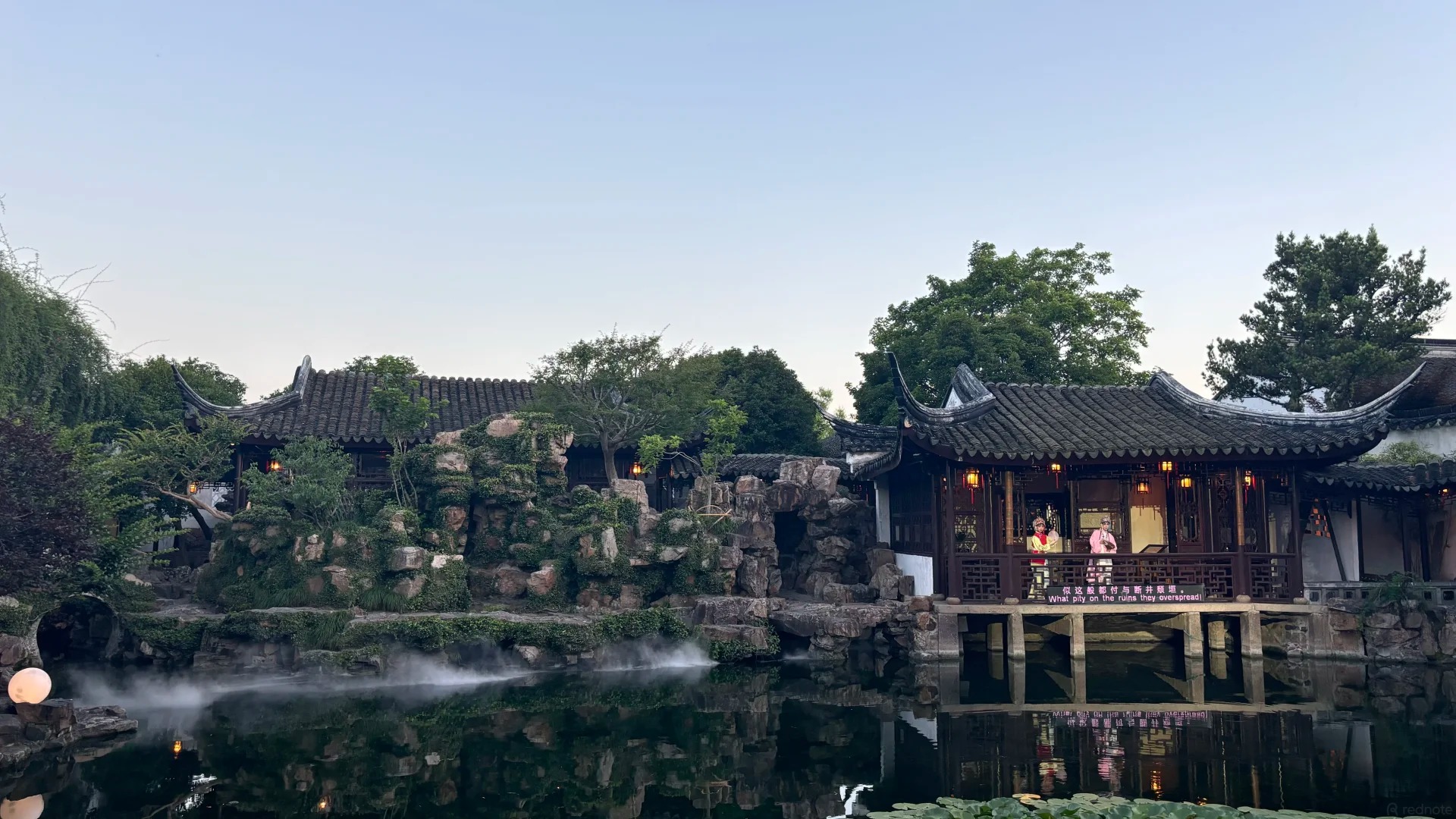
Image Credits: 芝心披萨人🍖 on rednote
The standout. By day it’s a classical garden; by night it transforms into a series of small performance spaces, and visitors move from courtyard to courtyard catching short scenes of Kunqu opera, Pingtan storytelling and traditional music against the lamplit pavilions. It recreates how Suzhou’s scholars once hosted private performances, and it’s the kind of thing you remember long after the gardens blur together.
A Pingtan performance in a teahouse
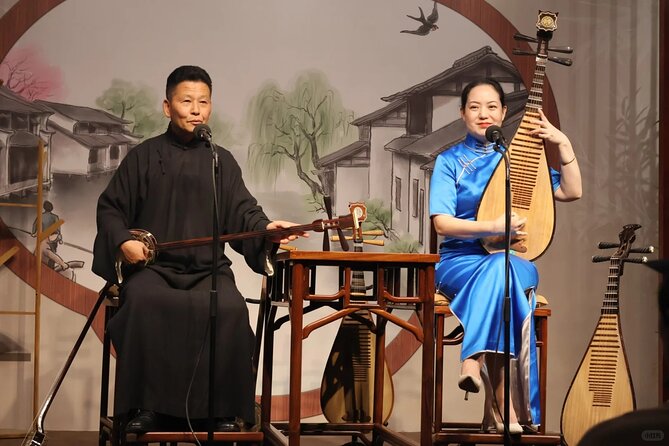
Image Credits: Tripadvisor
Pingtan is Suzhou’s 400-year-old art of storytelling set to the pipa and sanxian, sung in the soft local dialect. Catch a set in a small Pingjiang Road teahouse with a cup of tea; seats fill fast, so arrive early. You won’t follow the words, but the melody carries it.
📖 Related Guide: Suzhou’s food turns up the volume after dark, but for proper night-market heat, our 15 things to do in Chongqing dives into hotpot, hill-stairs views and the heart of Sichuan night culture.
Water Towns Near Suzhou Worth a Day Trip
Suzhou is ringed by ancient water towns: canal villages with stone bridges, old residences and slow boats. If you have a spare day, one of these is the loveliest way to spend it.
Tongli
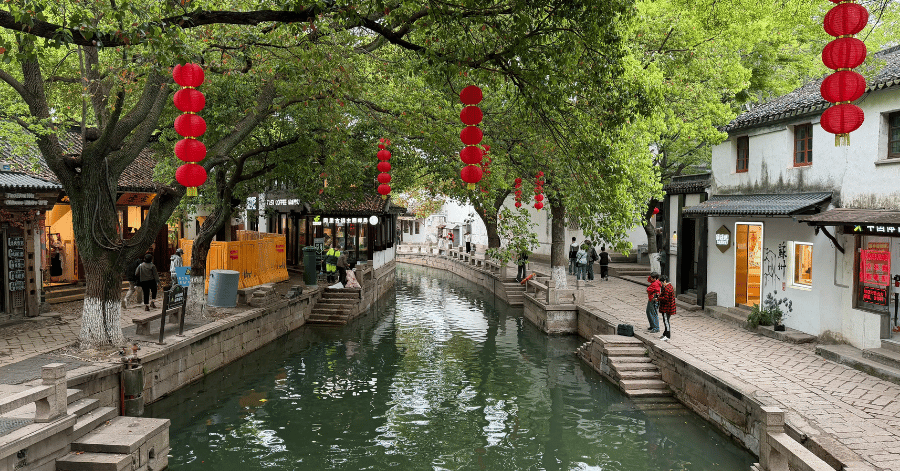
The quiet, lived-in one. Tongli still has real residents alongside the tourists, and it’s reachable by metro (Line 4 to Tongli Station, then a shuttle bus from the station exit), which makes it the easiest authentic water town from central Suzhou.
A combo ticket (around 100 CNY (~S$19)) covers the main sights, including the Tuisi Garden, the Pearl Tower and Jiayin Hall.
Zhujiajiao
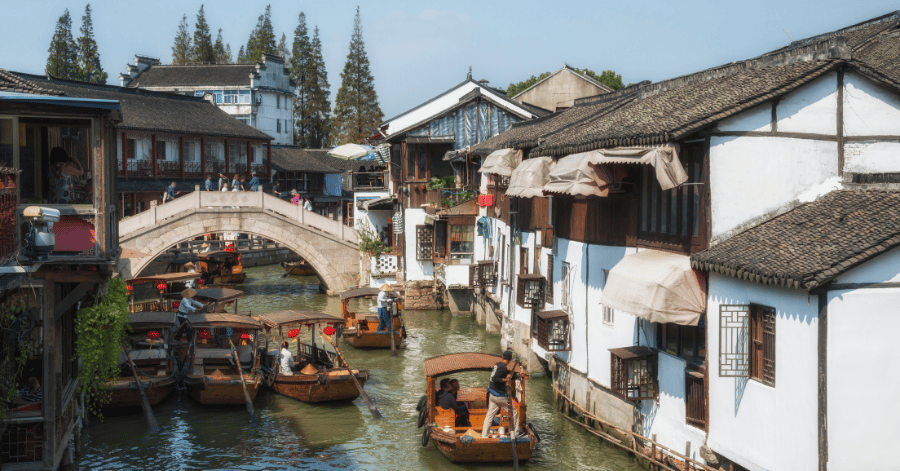
Technically closer to Shanghai than Suzhou, Zhujiajiao is busier and more polished, with stone bridges, canal boats and a buzzy main street of snacks and souvenirs. Good if you’re combining the trip with Shanghai, less so if you want quiet.
Zhouzhuang
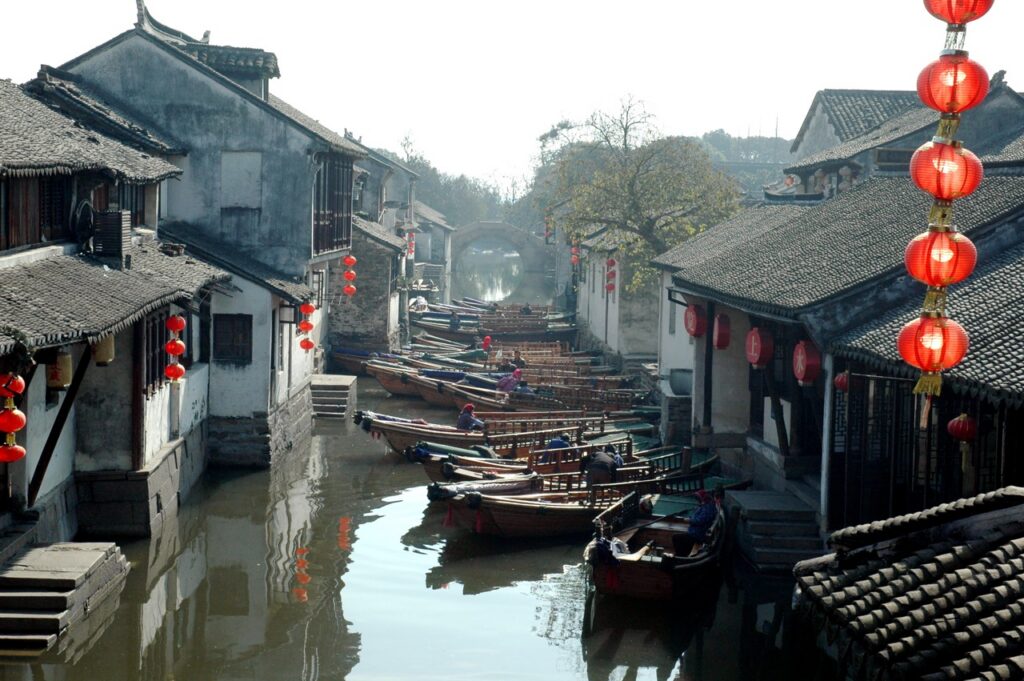
Image Credits: Wikipedia
The most famous (and most crowded) of the lot, often called the best water town in China. Expect classic canal scenes, double bridges and plenty of company. Go early or stay overnight to catch it before the day-trippers arrive.
📖 Related Guide: Want the slow-travel version of China beyond the canals? Our 20 things to do in Chengdu is the natural next stop, with tea houses, pandas and a gentler pace.
What to Eat in Suzhou
Suzhou cuisine is delicate and a little sweet: light sauces, freshwater fish, and some of the best noodles in eastern China. Skip the chain restaurants and eat where the dishes are local.
Suzhou-style noodles at Songhelou

Image Credits: Queen.Lam👑 on rednote
Songhelou is one of Suzhou’s oldest restaurants, and the place to try classic Suzhou noodles: thin noodles in a clear, refined broth, topped with braised pork, fish or eel. Order the signature squirrel-shaped mandarin fish if you want the full old-Suzhou experience.
Crab and canal-side eats on Pingjiang Road
_1_是静静呀_来自小红书网页版-768x1024.jpg)
Image Credits: 是静静呀 on rednote
Pingjiang Road is lined with small spots doing local specialities: hairy crab in season (autumn), sweet osmanthus desserts, and rice balls. It’s the easiest place to graze your way through a lunch between gardens without booking anything.
Caixiang Wet Market
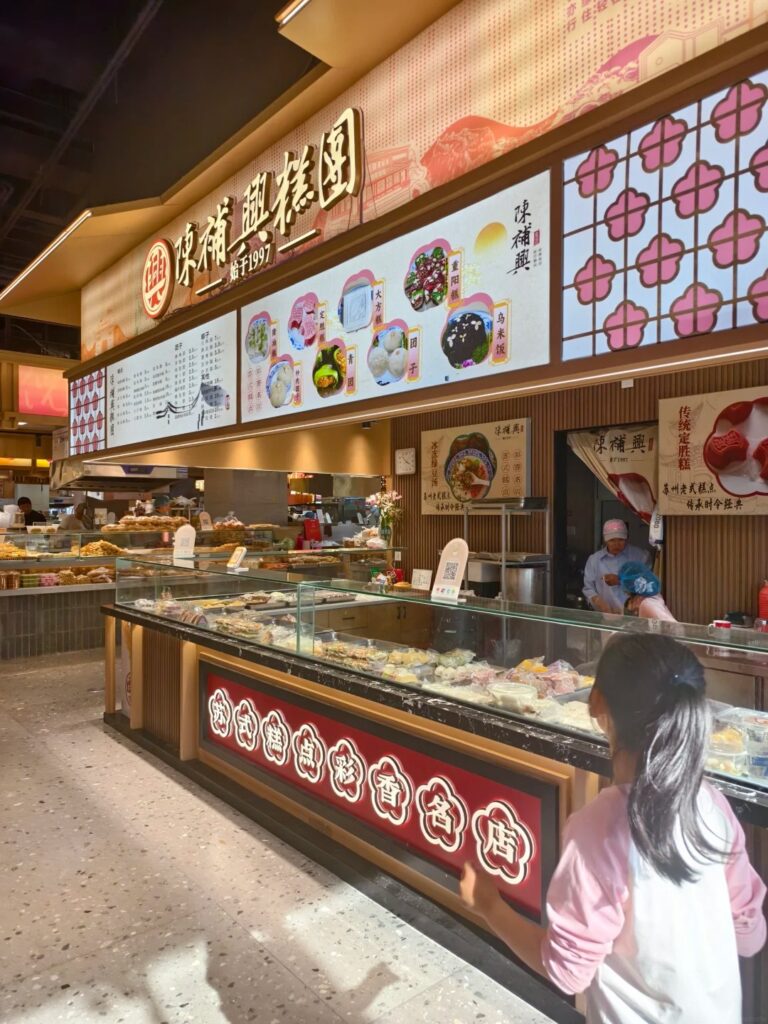
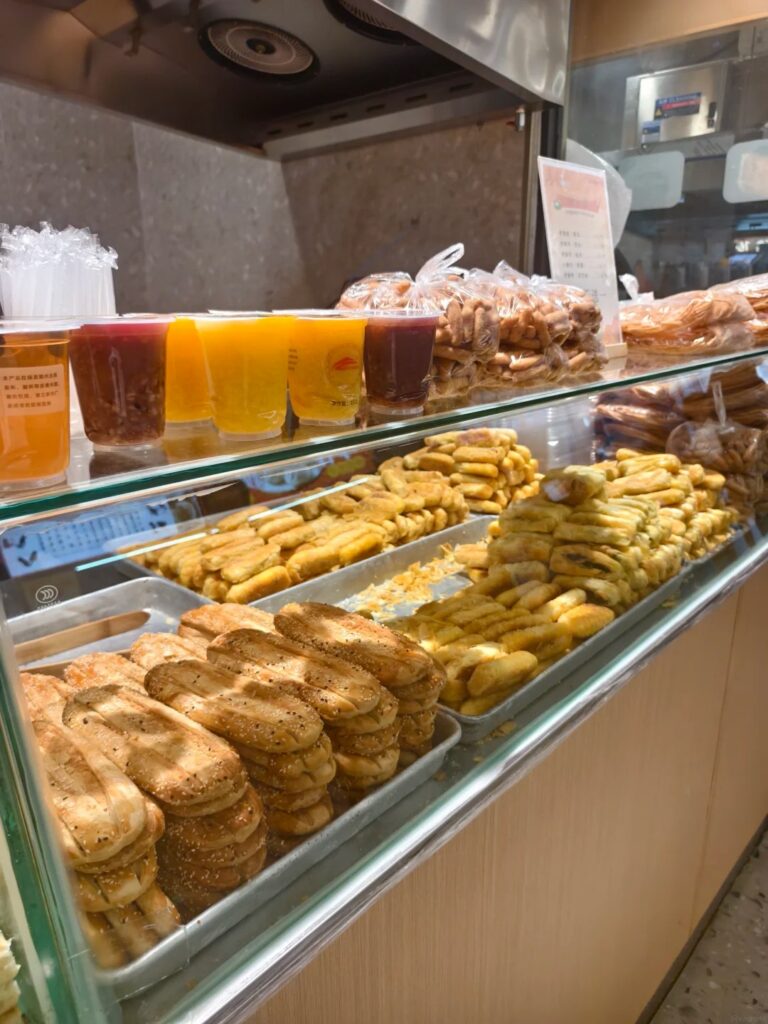
Image Credits: 安妮日记 on rednote
For the local version of Suzhou, head to a neighbourhood wet market like Caixiang Yicun. The ground floor is a food court of small stalls cooking fresh local dishes; upstairs is the market proper. It’s where everyday Suzhou eats, and a cheap, authentic break from tourist-street prices.
📖 Related Guide: If southern-Chinese food is more your speed, our Guangzhou travel guide covers dim sum, Pearl River cruises and the food capital of the south.
What to Buy and Where to Shop in Suzhou
Silk is the obvious buy. Suzhou has produced it for centuries, and you’ll find scarves, robes and bedding along Shantang Street and Guanqian Road. For the real thing, visit the Silk Museum first, so you know what good silk feels like before you pay for it.
Su embroidery makes a lighter, packable souvenir, and the snack streets are full of osmanthus cakes and dried fruits to bring home. One activity worth the spend: rent a Hanfu or cheongsam for an afternoon and have photos taken in the gardens or along the canals. Rental shops cluster around Pingjiang Road, and it’s become the signature Suzhou Instagram moment.
Knowing the live exchange rate stops you overpaying, especially when a silk seller quotes a “tourist price.”
📖 Related Guide: Working out what you’re actually spending as you bargain? Our SGD to CNY rate guide breaks down the best ways to convert, and what to skip.
When to Visit and Where to Stay
The best times to visit Suzhou are spring (March–May) and autumn (September–November), when the weather is mild, and the gardens are at their most photogenic. Summers are hot and humid, winters are cold and grey; both are visitable but less comfortable for long walks.
A few seasonal notes:
- Spring brings cherry and plum blossom to the gardens. Gorgeous, but expect crowds.
- Autumn is hairy-crab season and arguably the prettiest light for canal photos.
- Avoid the national holidays (early October’s Golden Week, early May) when domestic tourism peaks and every garden is packed.
For where to stay, the old town near Pingjiang Road puts you walking distance from most gardens. The Panmen area is quieter and more scenic, and the Jinji Lake / Industrial Park side suits anyone wanting modern hotels and lakeside dining.
📖 Related Guide: Timing the trip around peak bloom? Our China cherry blossom 2026 forecast maps where and when blossoms hit across the country, Suzhou included.
Paying in Suzhou: Cards, Cash, Alipay and WeChat
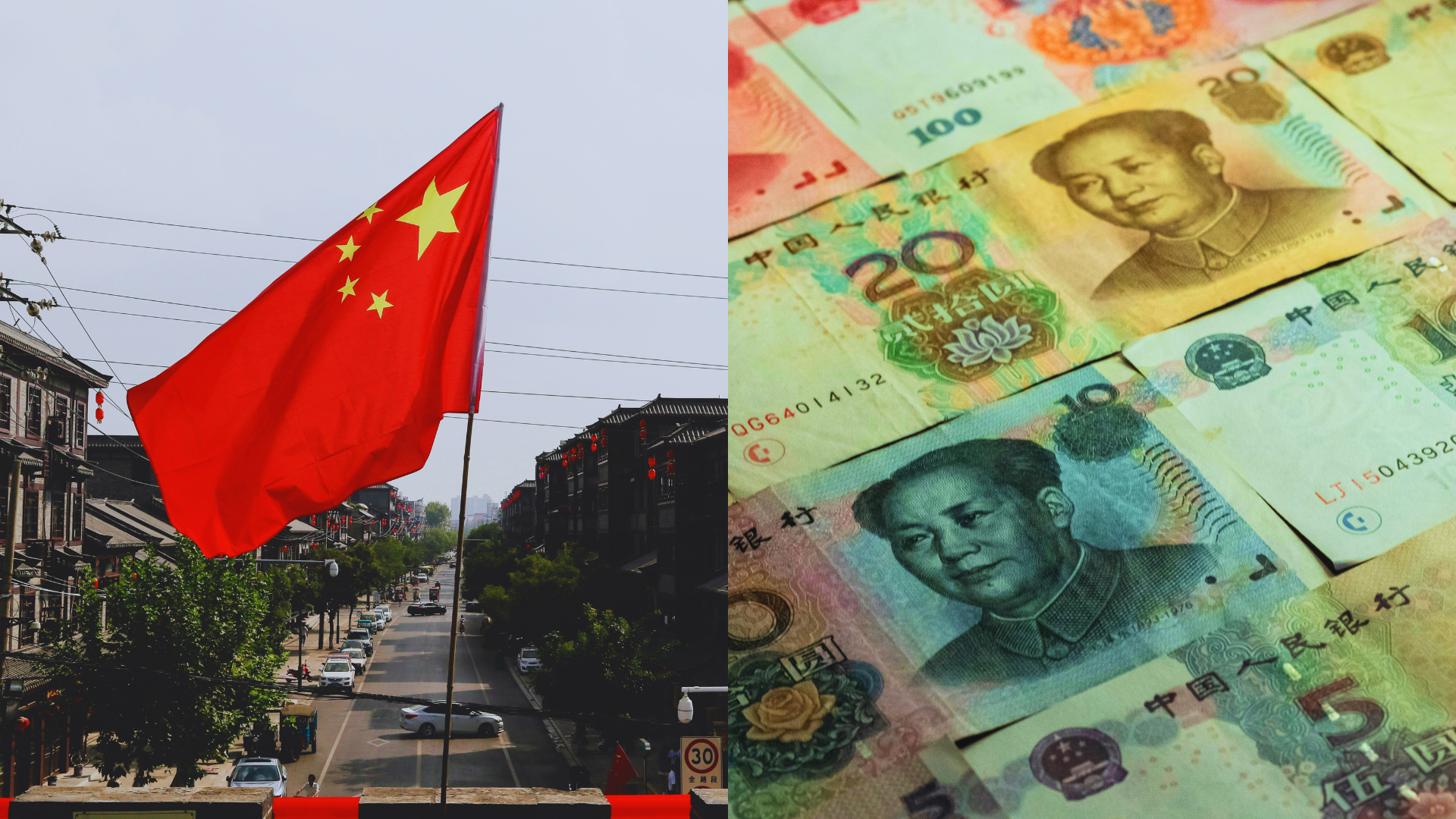
China runs on QR codes, not plastic. Alipay and WeChat Pay are how almost everyone pays, from garden tickets to noodle stalls. You can link a YouTrip card to both before you fly, so every tap converts your spend at the Mastercard wholesale rate with no foreign transaction fee. That beats a credit card quietly adding 3–3.5% FX on every overseas spend.
The practical setup for a Suzhou trip:
- Link your YouTrip card to Alipay and WeChat Pay before you leave Singapore. Most vendors prefer one or the other, so set up both. Every QR payment then runs through at wholesale, no FX markup.
- Carry a little cash for the cash-only corners, like some wet-market stalls, small temples and older shops. Withdraw from an ATM when you land. Your first S$400 of overseas ATM withdrawals each calendar month is free with YouTrip, then a flat 2% after (some ATM operators add their own on-screen fee).
- Use your YouTrip card directly at hotels, malls and bigger restaurants that take Mastercard.
Top up your YouTrip wallet before you fly from Changi, link it to your QR apps, and you’re sorted for the whole trip.
📖 Related Guide: Want the full setup walkthrough before you go? Our complete guide to using YouTrip in China covers Alipay, WeChat Pay, ATMs and what to do if a tap gets declined.
🇨🇳 For the step-by-step on each app, see our Alipay for foreigners walkthrough and the WeChat Pay for foreigners guide; both cover linking YouTrip in about five minutes.
FAQ
One day is enough to see the highlights (Humble Administrator’s Garden, the Suzhou Museum and a canal boat on Pingjiang Road) as a day trip from Shanghai. But two to three days lets you slow down for the smaller gardens, a night show and a water town, which is where Suzhou really shines.
Take the high-speed train. It runs from Shanghai’s main stations to Suzhou in about 25 to 30 minutes, several times an hour, from early morning to late night. Book through Trip.com if you want an English-language site that accepts your own card, or the cheaper Railway 12306 app if you’re set up with Alipay or WeChat.
No. Suzhou has no civil airport of its own (a first one is under construction). Singapore travellers fly into Shanghai, then take the bullet train. Sunan Shuofang Airport near Wuxi is the closest, but it’s domestic-focused, so Shanghai is your practical gateway.
Yes. Link your YouTrip card to Alipay and WeChat Pay for QR payments, the way most of China pays, and use it directly anywhere that takes Mastercard. Every transaction converts at the wholesale rate with no foreign transaction fee, and your first S$400 of overseas ATM withdrawals each month is free.
Its UNESCO-listed classical gardens, its canals (it’s called “the Venice of the East”), and silk. The city has 2,500 years of history, and nine of its gardens are jointly recognised as a World Heritage site.
They’re different rather than better or worse. Suzhou is gardens, canals and old-town charm; Hangzhou is West Lake, tea hills and bigger natural scenery. Many Singaporeans do both in one trip, and the old proverb pairs them for a reason.
Suzhou rewards the traveller who slows down
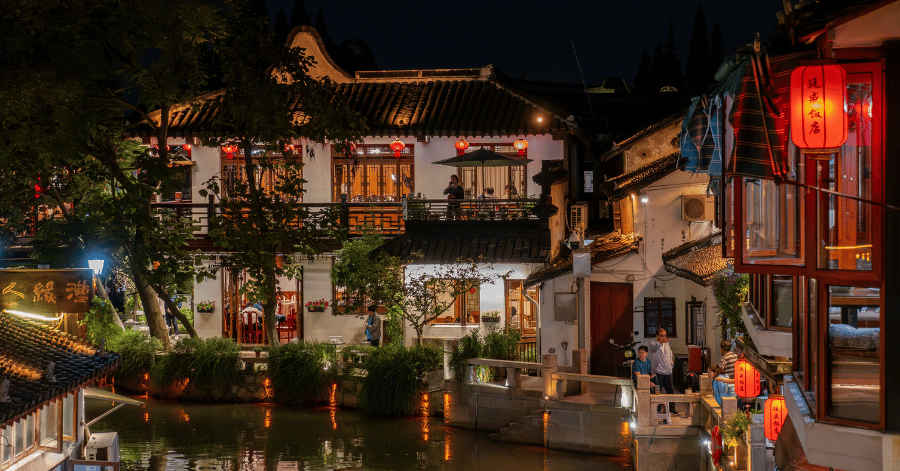
Suzhou isn’t a city you conquer; it’s one you wander. Give it more than a rushed afternoon, link your cards before you fly, and let the gardens do their slow work.
Not a YouTrooper yet? Download YouTrip and start saving on every overseas trip, no foreign transaction fees, wholesale exchange rates across 150+ currencies, and ATM withdrawals overseas (first S$400/month free). Link it to Alipay and WeChat Pay before you fly for seamless QR payments across China. Use code YTBLOG5 to top up and get S$5 free on first sign-up.
🎁 More perks for YouTroopers:
- YouTrip Perks, current partner deals on dining, travel and shopping
- Telegram (@YouTripSG), flash promos and rate alerts
- Community Group (@YouTripSquad), travel tips and trip reports from other YouTroopers