



Japan’s first capital, upstaged by its own deer for 1,300 years
Nara gets treated as Kyoto’s warm-up act, a place you squeeze in between the bullet train and dinner. That undersells it. This is where Japan’s first permanent capital stood, and where Buddhism took root hard enough to worry the government into moving the capital away.
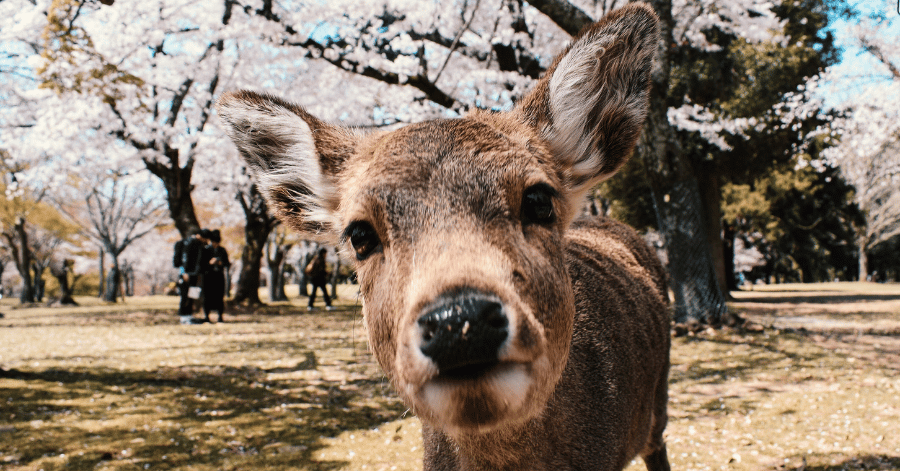
More than 1,600 wild deer wander the streets here like they own the place, because for over a thousand years, they basically did.
| Quick Planner | Nara at a glance |
|---|---|
| ⏱️ Time needed | A day trip covers the highlights; one overnight lets you see it before the crowds |
| 📍 Where | Nara Prefecture, ~35–50 min from Kyoto, ~35–45 min from Osaka |
| 🚉 Getting there | Kintetsu Nara Line (fastest) or JR Yamatoji/Nara Line |
| 🦌 Main attraction | Nara Park’s 1,600+ sacred, bowing deer |
| 📅 Best time | Spring (early April) for cherry blossoms, autumn (mid-to-late November) for foliage |
| 💰 Rough cost | A full day out around S$25 to S$45 with temple entries and lunch |
| 💳 Pay with | Tap your YouTrip card where cards work; pull yen from an ATM for the cash-only temples |
Here’s the shortlist before the full stop-by-stop guide:
| Spot | Type | Cost (~S$) | Best for |
|---|---|---|---|
| Todai-ji Temple | Temple + Great Buddha | ~S$6.40 | Nara’s biggest sight |
| Nara Park deer | Wildlife | Free (crackers ~S$1.60) | The deer |
| Kasuga Taisha | Shrine | Free outer, ~S$4 inner | Thousands of lanterns |
| Kofuku-ji Temple | Temple + museum | Free grounds, ~S$5.60 museum | The five-storey pagoda |
| Isuien Garden | Garden | ~S$9.60 | The prettiest formal garden |
| Yoshikien Garden | Garden | Free for foreign visitors | A quieter, free alternative |
| Mount Wakakusa | Hilltop viewpoint | ~S$1.20 | Sunset views over the city |
| Nakatanidou | Mochi shop | ~S$1.60 | Nara’s most famous snack |
| Mount Yoshino | Day trip | Train fare only | Japan’s best cherry blossoms |
Table of Contents
- Is Nara Worth Visiting?
- Nara vs Kyoto: Which Should You Choose?
- How to Get to Nara from Osaka and Kyoto
- How Many Hours (or Days) Do You Need in Nara?
- 16 Best Things to Do in Nara
- Day Trip to Mount Yoshino
- What to Eat in Nara
- Deer Etiquette: How to Not Get Bitten
- Is Nara Cheap? Entry Fees and Daily Budget
- How to Pay in Nara
- FAQs
- Nara Earns More Than a Layover
Is Nara Worth Visiting?
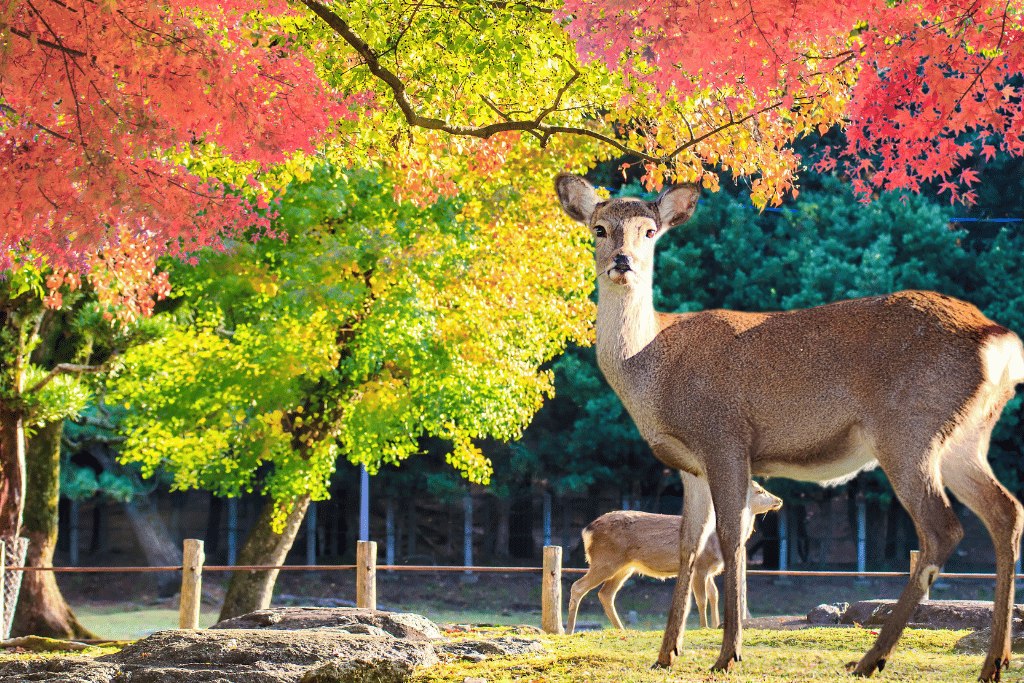
Yes, and not just for the deer. Nara was Japan’s first permanent capital from 710, home to the temples that made Buddhism a national force, and today it holds eight UNESCO World Heritage sites inside a single walkable park.
What makes it distinctive is the scale packed into a short visit. You can stand in front of one of the world’s largest bronze Buddha statues, walk a path lined with 2,000 stone lanterns, and get bowed at by a wild deer, all within about 2km of each other.
The catch is that most visitors treat Nara as a rushed afternoon between Kyoto and Osaka, so the crowds bunch up around Todai-ji and the deer from mid-morning onward. Go early, or stay the night, and the same sights feel completely different.
📖 Related Guide: Weighing Nara against the wider Kansai trip? Our Kyoto things-to-do guide covers the city Nara’s capital eventually moved to.
Nara vs Kyoto: Which Should You Choose?
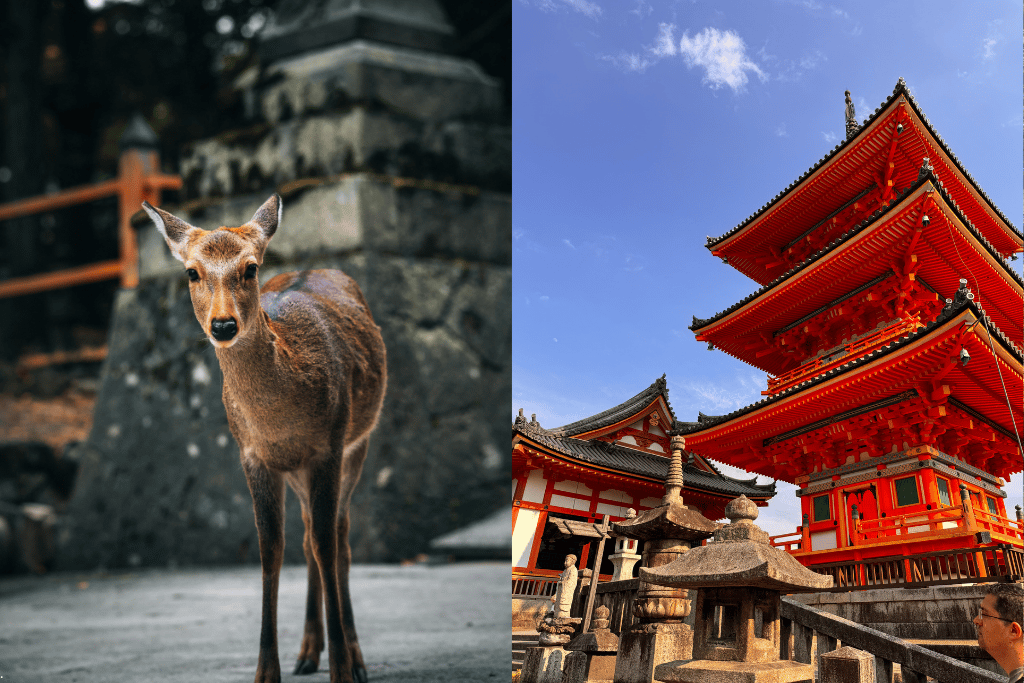
Pick Nara for ancient temples and wild deer in one compact park. Pick Kyoto for geisha districts, bamboo groves and a far wider spread of sights that need days, not hours.
Nara was Japan’s capital from 710 to 784, before the government moved it to Kyoto, worried that the temples it had built were gaining too much power. That history shows: Nara’s sights lean Buddhist and 8th-century, concentrated mostly around one park, while Kyoto’s span over a thousand years of shrines, gardens, and imperial history spread across a much bigger city.
In practice, this isn’t really an either-or question. Nara sits close enough to both Kyoto and Osaka that most travellers do it as a half-day or full-day add-on rather than a standalone destination, so the real question is how much time you have, not which city is better. Kyoto rewards two or three full days. Nara rewards one focused day, or an overnight if you want to see Todai-ji before the tour buses arrive.
📖 Related Guide: Planning the season around blossoms or leaves? Our best time to visit Japan guide breaks it down month by month.
How to Get to Nara from Osaka and Kyoto
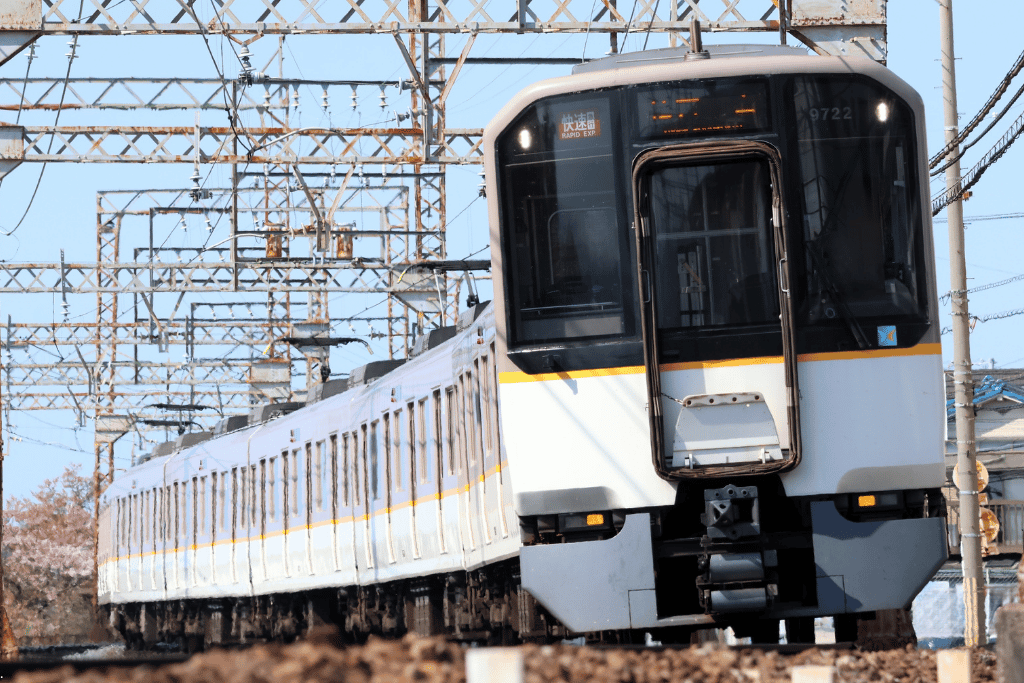
Nara has two train companies running to two separate stations, and picking the right one saves a confusing extra walk. Both Osaka and Kyoto connect directly, with no transfers needed on the fastest services.
From Osaka: the Kintetsu line
The Kintetsu Nara Line runs directly from Osaka-Namba to Kintetsu-Nara Station. The Limited Express takes about 34 minutes and needs a reserved-seat surcharge of around 1,200 JPY (~S$10) on top of the base fare. Regular rapid express trains cover the same route without the surcharge in around 39 minutes, running every few minutes, so there’s rarely a long wait.
JR also connects Osaka to Nara. The Yamatoji Rapid Service runs direct from JR Osaka Station in about 45 minutes for 840 JPY (~S$7), or from Tennoji Station in about 30 minutes for 510 JPY (~S$4). From Namba specifically, Kintetsu is the more direct option.
From Kyoto: Kintetsu vs JR
Kintetsu’s Limited Express from Kyoto Station takes around 34 minutes; the JR Nara Line’s Miyakoji Rapid service takes about 45 minutes for 720 JPY (~S$6) and runs roughly every 30 minutes. If speed matters more than saving a few dollars, Kintetsu wins. If you’re already holding a JR pass covering the route, the Miyakoji Rapid is the free option.
Which Nara station to use: Kintetsu Nara vs JR Nara
Kintetsu Nara Station sits just a few minutes’ walk from Nara Park and Kofuku-ji, while JR Nara Station is about 15 to 20 minutes further out on foot. Arrive via Kintetsu and leave from JR (or the other way round), so you see both stations’ shopping streets without doubling back. Both stations have coin lockers for luggage.
📖 Related Guide: Building a longer Kansai rail itinerary? Our JR Pass guide breaks down 2026 pricing and whether it still pays off for your route.
How Many Hours (or Days) Do You Need in Nara?
A focused day trip covers Nara’s headline sights comfortably in six to eight hours. One overnight turns it from a checklist into a different trip entirely, because the deer park empties out once the last coach leaves.
The one-day itinerary
Arrive before 10 AM, and you can cover Todai-ji, the deer park, Kasuga Taisha, Kofuku-ji, and one of the gardens with time for lunch, all on foot.
This is the loop that works: temples first while it’s quiet, deer and lunch through the middle of the day, gardens and a coffee stop in the afternoon. Aim to be at Todai-ji by opening time. The difference between an empty Great Buddha Hall and a queue snaking out the gate is about 90 minutes.
Why staying overnight is worth it
Stay the night, and you get the deer park at dawn, when it’s closer to the animals wandering freely than the crowded feeding frenzy most photos show. Evenings in Naramachi’s old streets also get quieter and more atmospheric once the day-trippers head back to Osaka or Kyoto. Nara only accounts for a small share of foreign overnight stays in Japan, which is exactly why the early mornings feel so different from the daytime crush.
Is two days too much?
Two days isn’t wasted if you want to add a day trip to Mount Yoshino for cherry blossoms, or push further out to Horyu-ji and other UNESCO sites in Nara Prefecture. For most Singaporean travellers slotting Nara into a wider Kansai trip, one focused day (or one overnight plus a morning) is the practical ceiling.
📖 Related Guide: Rounding out the Kansai leg with Japan’s food capital? Our Osaka things-to-do guide covers where to eat between train rides.
16 Best Things to Do in Nara
Nara Park is where most of the city’s sights are. It spreads over 500 hectares, around one and a half times the size of New York’s Central Park. Below is the full walkable loop, roughly in the order you’d hit it from Kintetsu Nara Station.
Todai-ji Temple and the Great Buddha
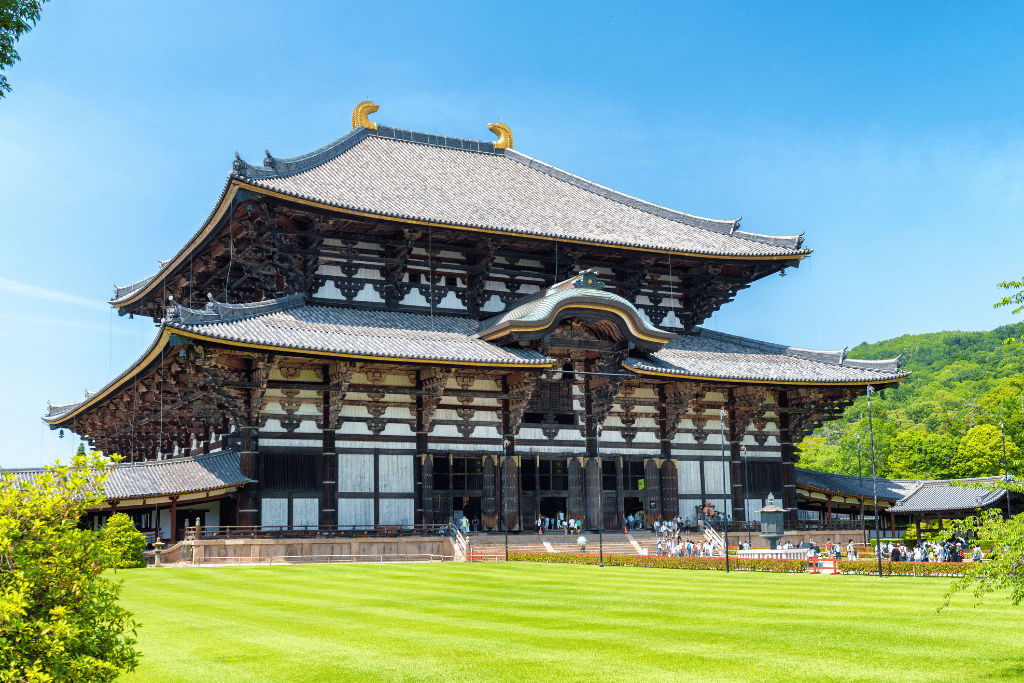
The reason most people come to Nara in the first place. Built in 752 to house a giant bronze Buddha, Todai-ji’s Great Buddha Hall (Daibutsuden) is one of the largest wooden buildings in the world. The statue inside is a 15m bronze Buddha Vairocana that photos consistently undersell. Look for the pillar with a hole the exact size of the statue’s nostril; squeezing through it is said to grant enlightenment in your next life.
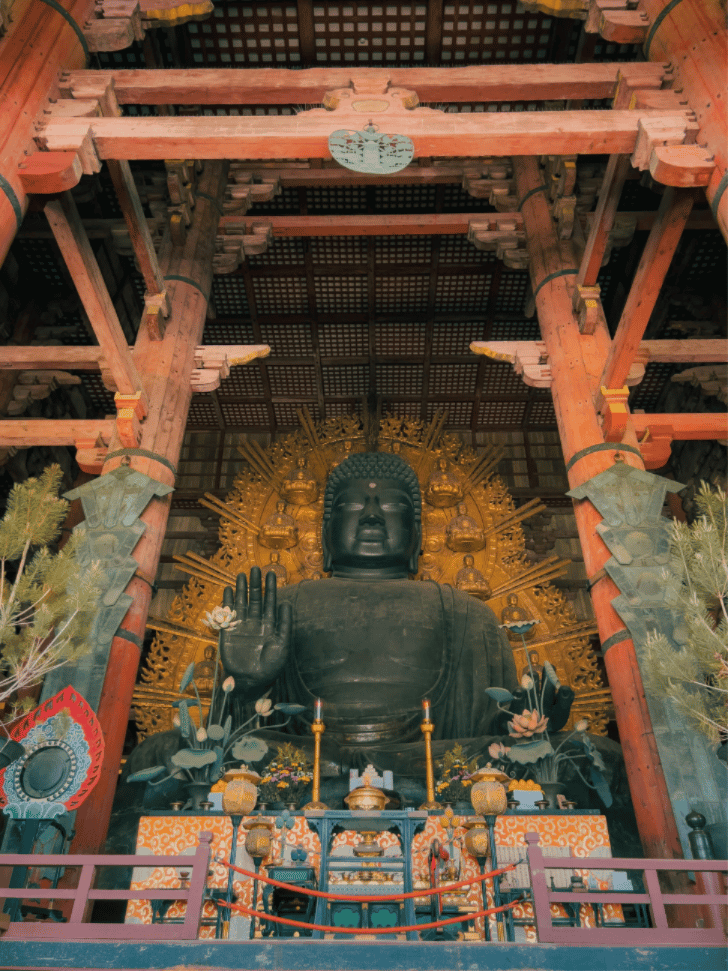
Admission is 800 JPY (~S$6.40) for anyone 13 and over. The Great Buddha Hall is open 7:30 AM to 5:30 PM between April and October, and 8 AM to 5 PM from November to March, cash-only at the ticket counter. Get there right at opening if you want the hall to yourself; by mid-morning, tour buses from Osaka and Kyoto fill it fast.
Nara Park and the sacred deer
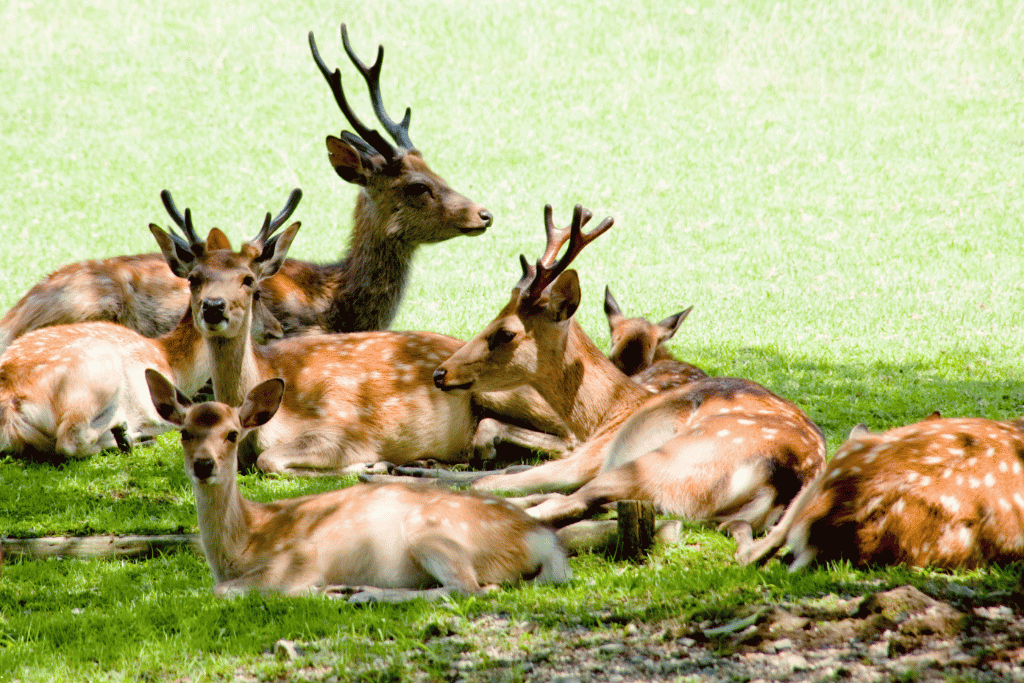
More than 1,600 wild deer roam freely through the park and spill onto the surrounding streets, and they’re considered messengers of the gods under old Shinto belief, protected as national treasures. Being this used to people, many have learned to bow in exchange for shika senbei (deer crackers), sold at stalls throughout the park for around 200 JPY (~S$1.60) a pack.
They’re wild animals, not pets, and a growing number of visitors get nipped or head-butted each year, mostly when someone waves a cracker around without handing it over. Show an empty palm if you don’t want their attention; they clock it fast. Kids can join in safely with an adult nearby to manage the crowding around the cracker stalls.
Kasuga Taisha
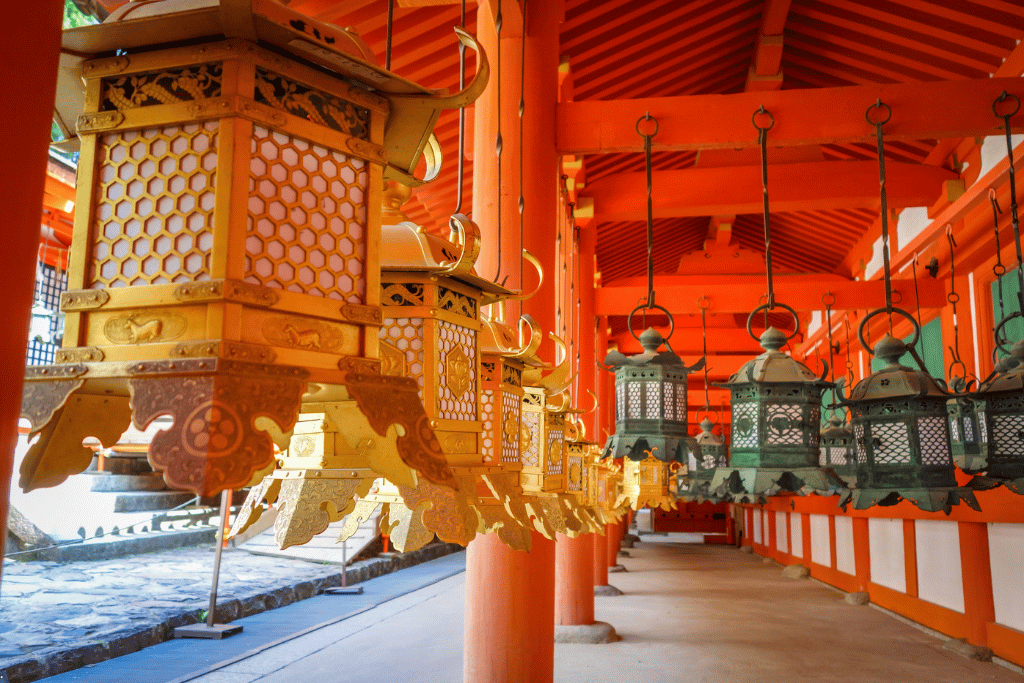
A shrine walk unlike anything else in the park. Established in 768 as the family shrine of the powerful Fujiwara clan, Kasuga Taisha is famous for its roughly 2,000 stone lanterns lining its forest paths. Add in over a thousand bronze lanterns hanging from the shrine buildings, all donated by worshippers across the centuries.
The outer grounds and lantern paths are free to walk. The inner sanctuary costs around 500 JPY (~S$4) and opens 6:30 AM to 5:30 PM (March to October) or 7 AM to 5 PM (November to February). It’s worth paying for, since it’s the only way to see the hanging lanterns lit in a dark room year-round. All the lanterns are lit together just twice a year, in February and August, for the Lantern Festival.
Kofuku-ji Temple
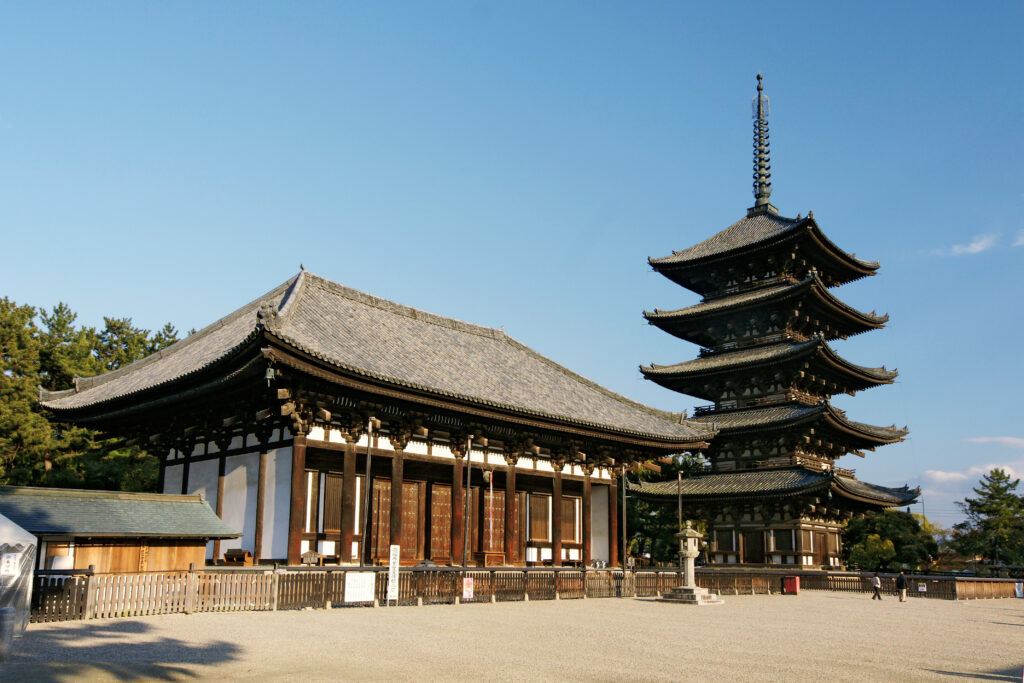
Image Credits: Wikipedia
Nara’s skyline landmark. Founded in 669 and moved to Nara in 710 by the Fujiwara clan, Kofuku-ji’s five-storey pagoda is the second-tallest in Japan and one of the city’s most recognisable sights. The temple grounds are free to wander; the Central Golden Hall, Eastern Golden Hall and National Treasure Museum each charge separately.
If you only pay for one, make it the National Treasure Museum. It’s 700 JPY (~S$5.60) for adults and holds one of the country’s most important Buddhist art collections, including striking multi-armed statues, open daily 9 AM to 5 PM with last entry at 4:45 PM. No photography inside, which is part of why it stays quiet and easy to actually look at things.
Nigatsu-do Hall
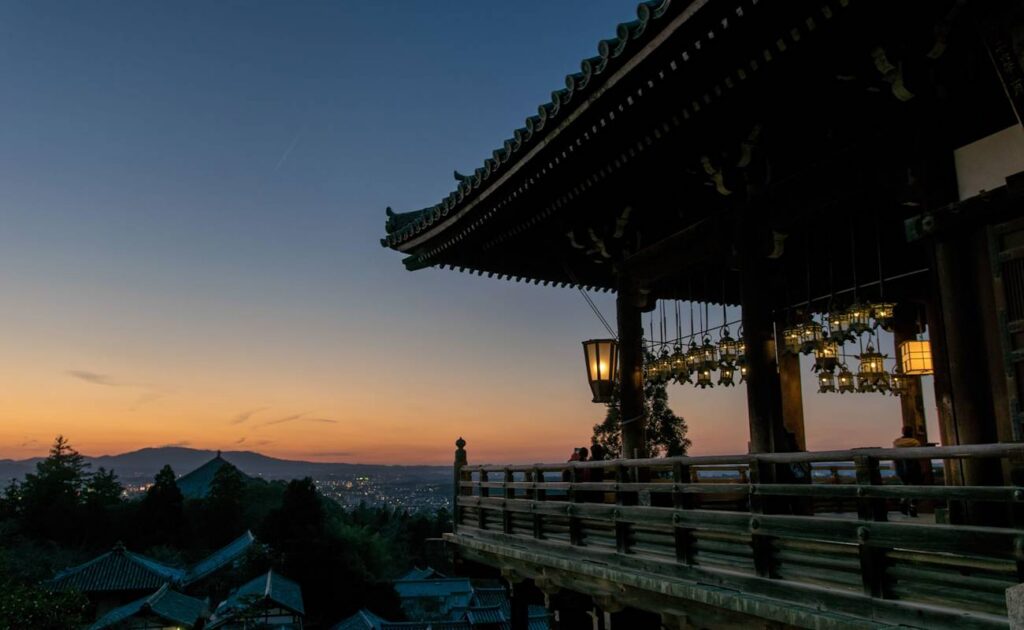
Image Credits: Visit Nara
The free viewpoint most day-trippers skip. Part of Todai-ji, Nigatsu-do sits on the hillside behind the Great Buddha Hall and offers a wide view over Nara’s rooftops, without the crowds at the main temple. It’s named for a water-drawing ritual held here since 752, the Omizutori ceremony, which now runs each March.
It’s a five-minute uphill walk from Todai-ji and free to visit. Best for late afternoon, when the light over the city is at its warmest.
Isuien Garden
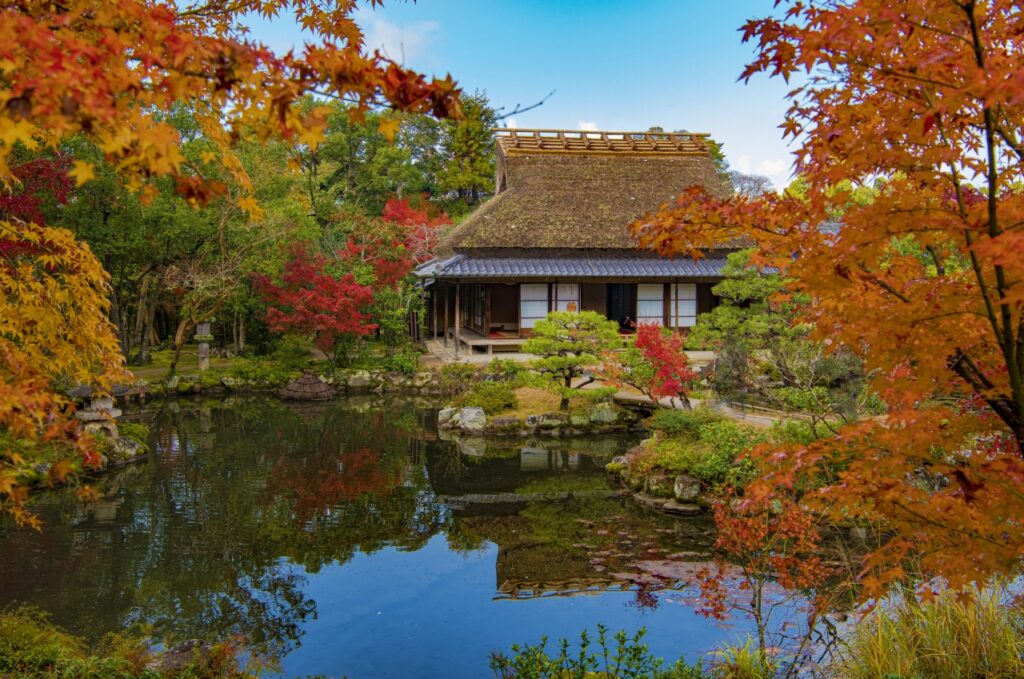
Image Credits: narashikanko.or.jp
Nara’s prettiest formal garden, and a genuine oasis after the temple crowds. Isuien pairs a 17th-century front garden built around a teahouse with a larger rear pond garden added in 1899. It borrows the view of Todai-ji and Mount Wakakusa in the background, so the scenery looks bigger than the plot actually is.
Admission is around 1,200 JPY (~S$9.60), open 9:30 AM to 4:30 PM (last entry 4 PM), extended to 5 PM in April and May. It’s closed on Tuesdays and for maintenance periods at the end of December and late September. The ticket includes the small Neiraku Museum next door, which displays ancient Chinese and Korean artefacts.
Yoshikien Garden
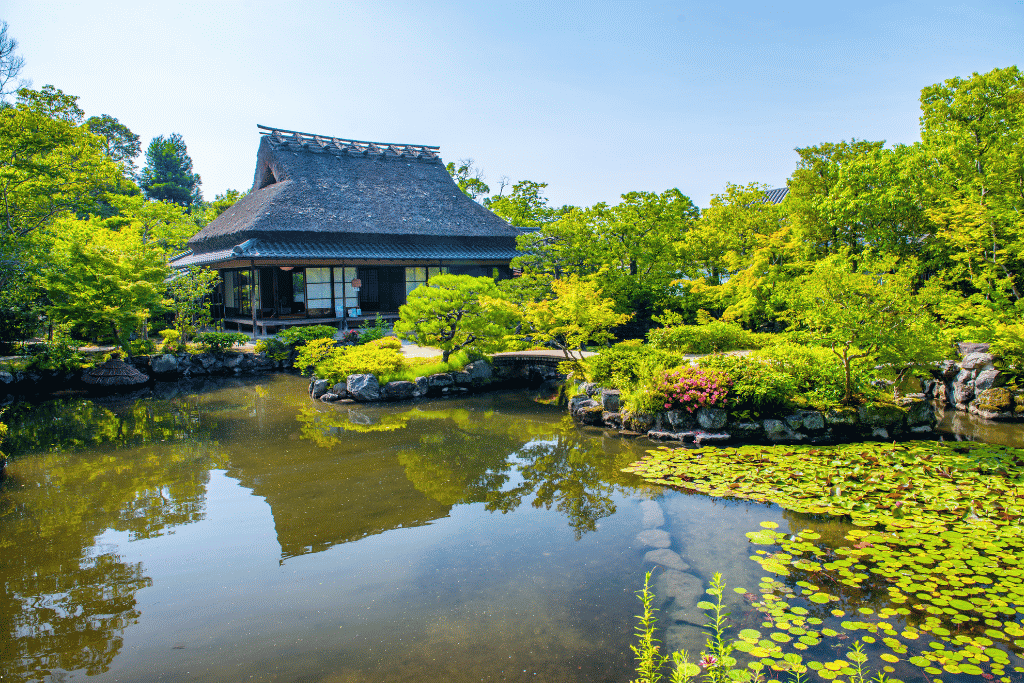
The free alternative right next door, and honestly just as pretty. Yoshikien combines a pond garden, a moss garden and a tea-ceremony garden across three distinct sections, built on the site of a former temple in 1919. Foreign visitors get in free with a passport shown at reception; locals pay a small fee.
It’s open daily 9 AM to 5 PM (last entry 4:30 PM), closed on Tuesdays from December through February only. If you’re choosing between the two gardens on a tight schedule, Yoshikien is the better value; Isuien is the prettier photo.
Mount Wakakusa
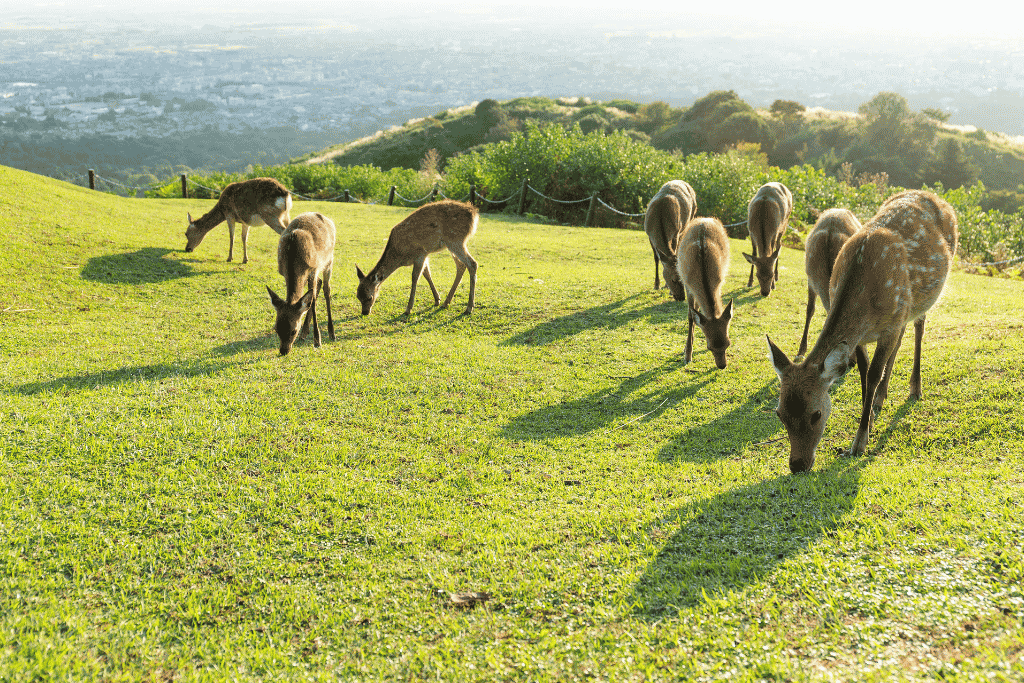
A grassy hill with the best sunset view in Nara. Behind Todai-ji, Mount Wakakusa is a short, steep climb (about 15 minutes to the midway point, another 20 to the 342m summit) that opens onto sweeping views over the whole city. Deer graze on the slope, and it’s one of the few spots in Nara where you can watch them without a feeding queue.
It’s open the third Saturday of March through the second Sunday of December, 9 AM to 5 PM, admission 150 JPY (~S$1.20). It’s closed through winter, so this one’s a spring-to-autumn entry only. In January, a mountain-burning ceremony sets the whole hillside alight after dark, a striking event if your dates line up.
Sarusawa Pond
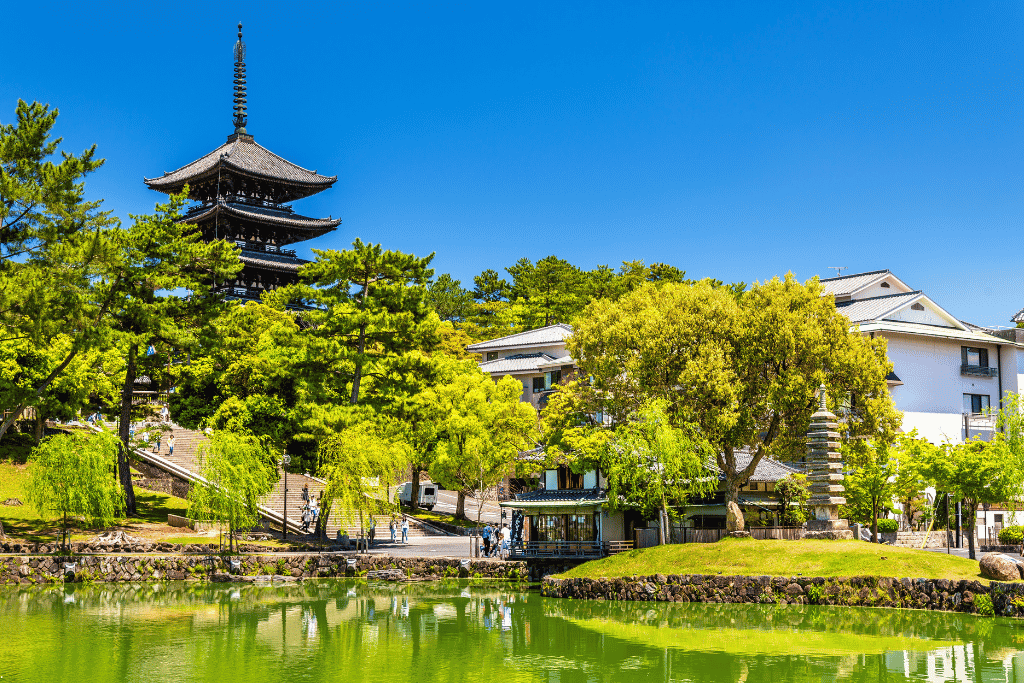
A small pond with one of Nara’s classic photo lines. Sarusawa-ike sits at the base of Kofuku-ji’s pagoda, and on a still day, the reflection of the pagoda in the water is one of the city’s most photographed shots. The pagoda itself was under renovation through the mid-2020s, so check ahead if the reflection shot is the main reason you’re stopping by.
It’s free, always open, and takes about five minutes to walk around. Best for a quick stop on the way between Kintetsu Nara Station and the main park.
Ukimido Pavilion
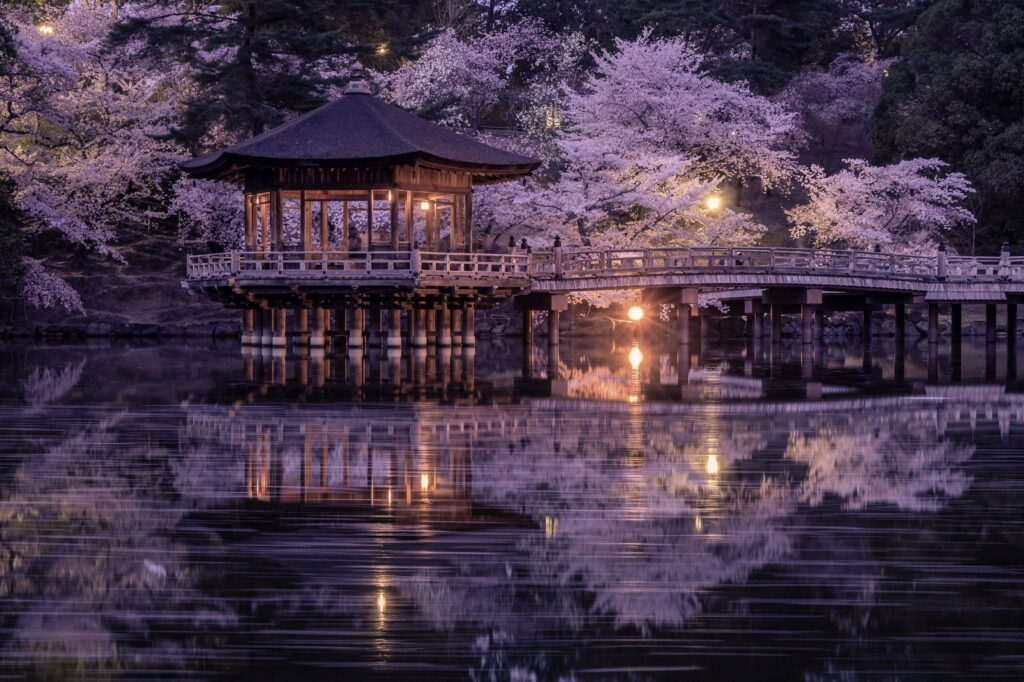
Image Credits: naraiko.pref.nara.jp
A floating pavilion that photographs best in autumn. Ukimido sits out over the water within Nara Park, and the wooden pavilion is framed by cherry blossoms in late March to eary April, and red maple leaves in November. It’s one of the quieter, less-crowded shots in the whole park compared with the deer and temple queues.
It’s free to view from the surrounding paths. Best for an early-morning or late-afternoon walk when the park empties out, and the light softens.
Shikayose: the deer-calling ceremony
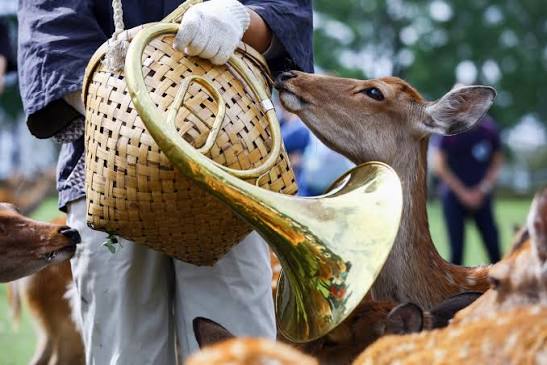
Image Credits: narashikanko.or.jp
A genuine local ritual most visitors never hear about. On select dates, a member of the Nara Deer Preservation Foundation plays a horn passage from Beethoven’s Pastoral Symphony at around 9 or 10 AM. Deer stream out of the surrounding forest toward the sound, a tradition that’s run since 1892. Once gathered, they’re fed acorns and disperse again.
It’s held in a public part of the park, so anyone can watch if the dates line up with your trip; check the schedule on the official Nara Deer Preservation Foundation website before you go. Best for early risers who want something the deer-cracker crowd doesn’t get to see.
Nara National Museum
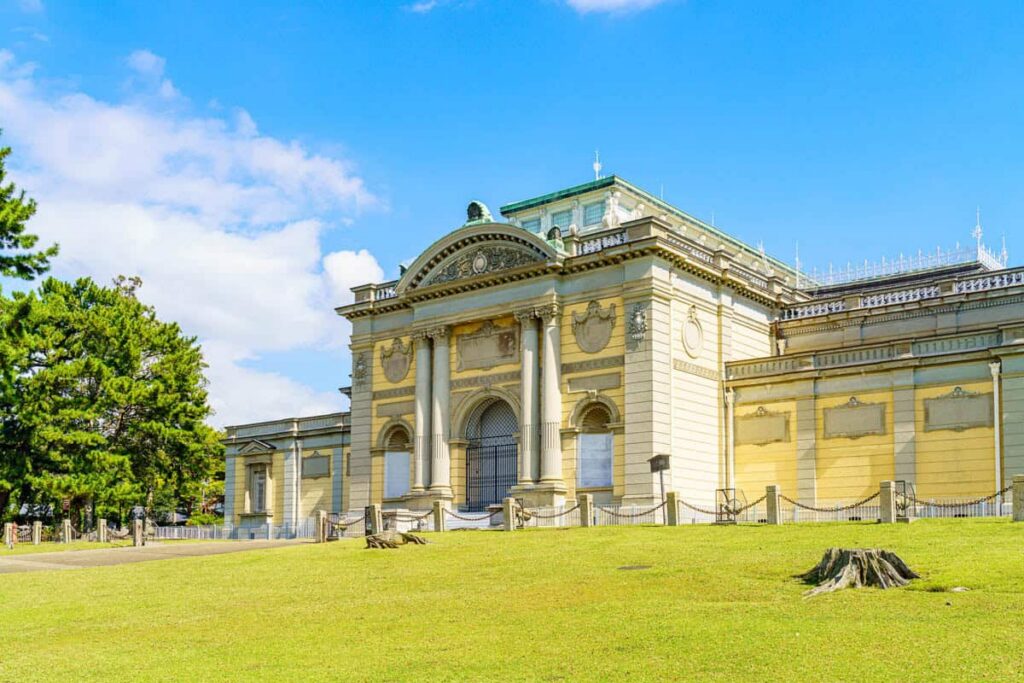
Image Credits: Nara Park
The museum that explains what all these temples actually mean. Near the park entrance, Nara National Museum holds one of the country’s largest collections of Buddhist art and statuary, with English-language explanations that make the iconography far easier to follow.
Admission is 700 JPY (~S$5.60) for the permanent collection, open 9:30 AM to 5 PM (last entry 4:30 PM), closed Mondays. Give it an hour if you’ve already seen Todai-ji and Kofuku-ji and want the context to click into place; skip it if you’re tight on time, since the temples themselves carry the bigger visual payoff.
Naramachi old town
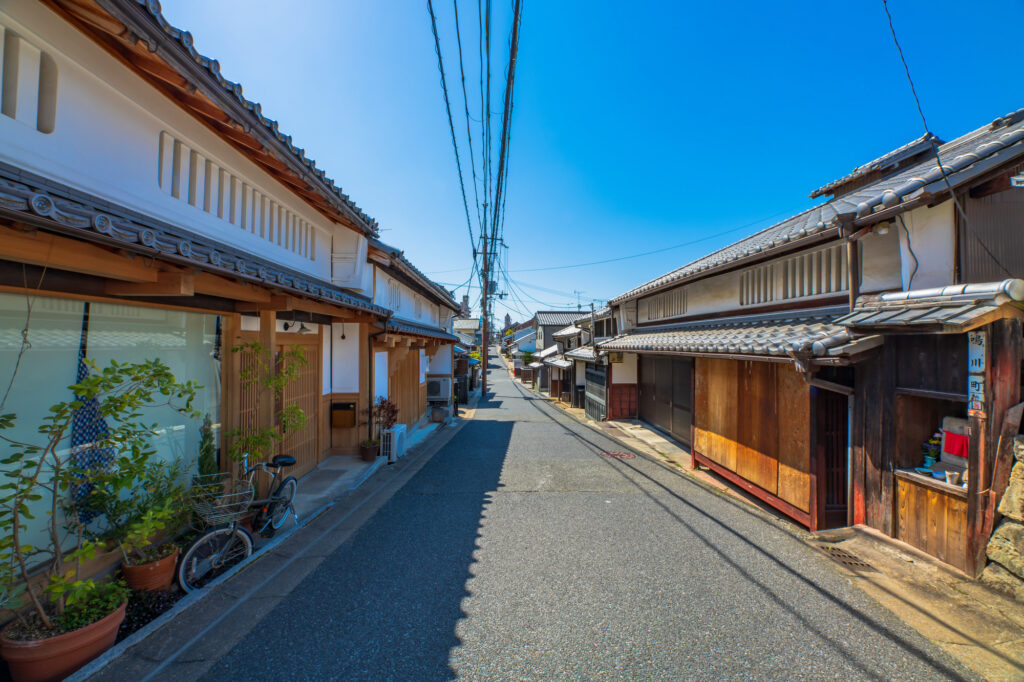
Image Credits: narashikanko.or.jp
The district most day-trippers never reach. South of the main park, Naramachi is Nara’s old merchant quarter, narrow lanes lined with wooden machiya townhouses, boutique shops, cafes and small museums, a much quieter, more residential feel than the temple crowds a ten-minute walk away.
It’s free to wander and open at all hours as a neighbourhood, with individual shops keeping their own timings. Best for an unhurried afternoon or early evening once the main sights are done, especially if you’re staying overnight.
Naramachi Nigiwai no Ie
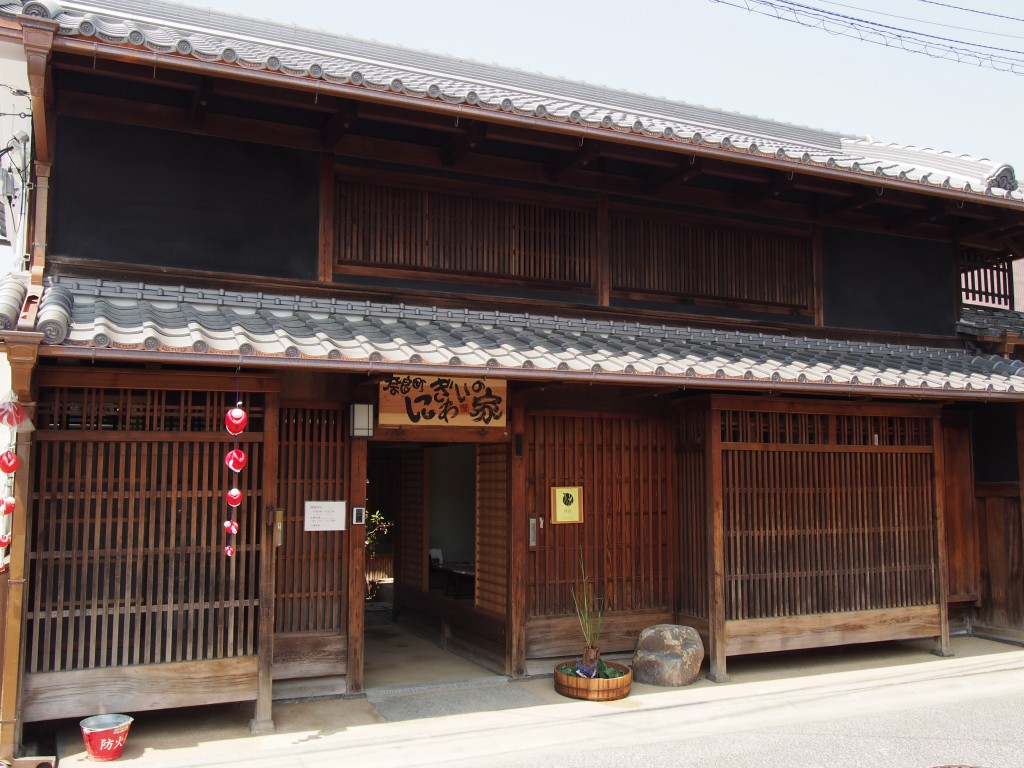
Image Credits: naramachi-nigiwainoie.jp
A century-old townhouse you can actually walk through. This reformed machiya inside Naramachi gives a hands-on look at how a merchant family lived here a hundred years ago, complete with a tea room and steep, narrow stairs. Entry is free, open 9 AM to 5 PM, closed Wednesdays.
Best for a 20-minute detour that adds texture to the old-town wander, especially with kids curious about a real historic house rather than a museum case.
Shiga Naoya’s former residence
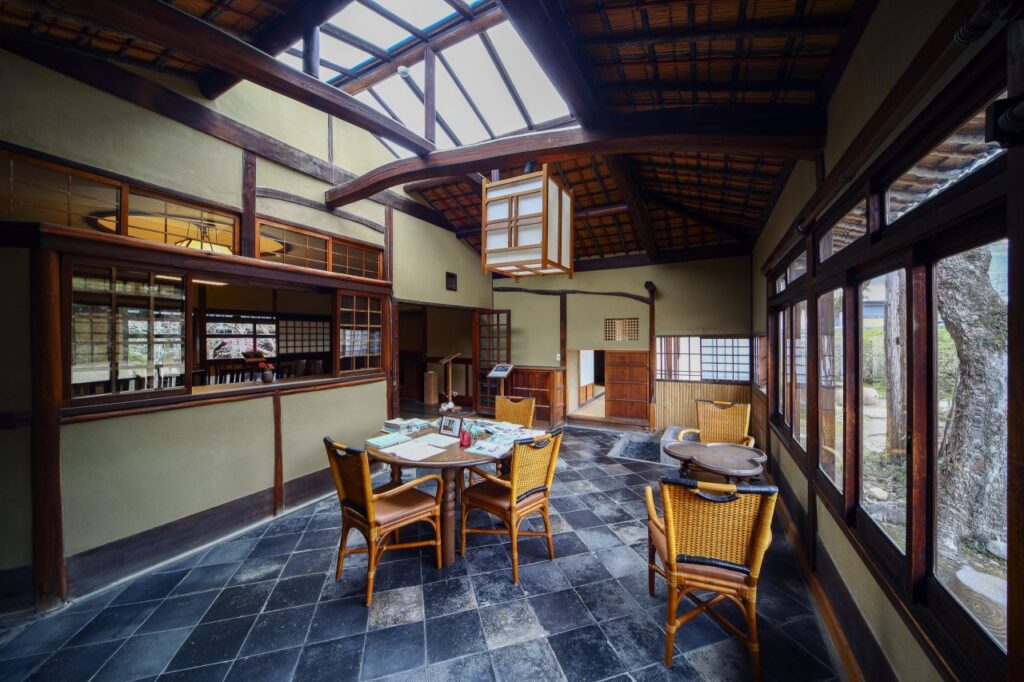
Image Credits: narashikanko.or.jp
A small-fee house for literature fans. One of Japan’s most celebrated 20th-century writers, Shiga Naoya, lived in this self-designed residence in Nara from 1929 to 1938, and it’s open to visitors for 500 JPY (~S$4). Look for the hints of Western influence in the architecture, unusual for a traditional Japanese house of its era, and the quiet garden out back.
Best for a short, peaceful stop if the name means something to you; a fair skip otherwise, since the appeal is fairly niche.
Kasugayama Primeval Forest
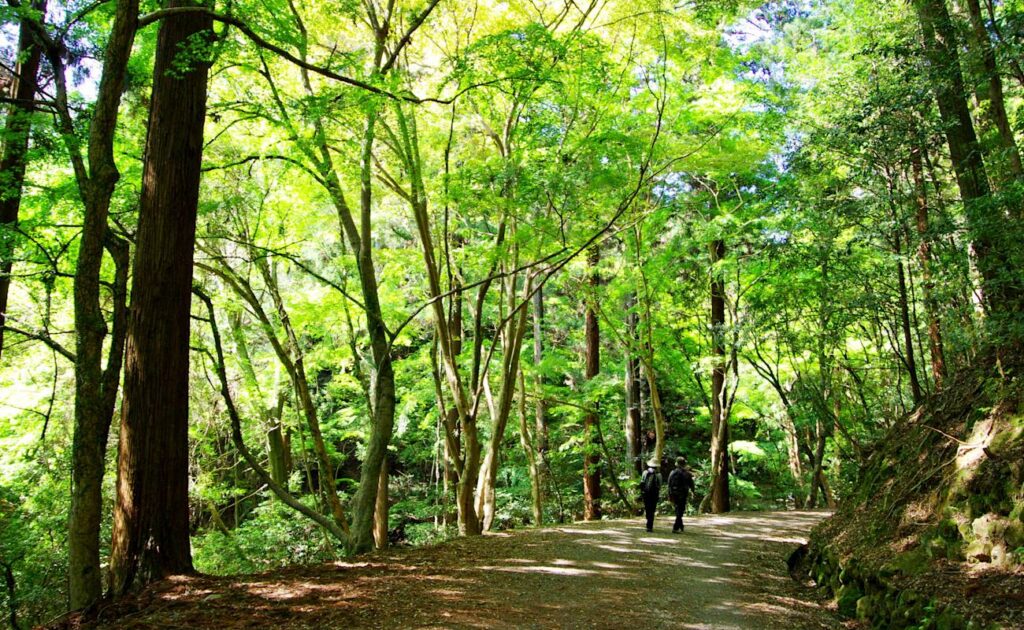
Image Credits: Visit Nara
The ancient backdrop behind Kasuga Taisha. Protected for over a thousand years without a single tree cut, this primeval forest climbs the mountain behind the shrine and gives Kasuga Taisha its dense, sacred-feeling atmosphere. Most visitors only see its edge from the lantern paths, but it’s a real, UNESCO-recognised forest, not landscaping.
Best appreciated as the setting for Kasuga Taisha rather than a separate stop; there’s no formal public trail through the protected core.
📖 Related Guide: Working out what’s actually worth bringing home? Our what to buy in Japan guide covers the souvenirs and the tax-free rules.
Day Trip to Mount Yoshino
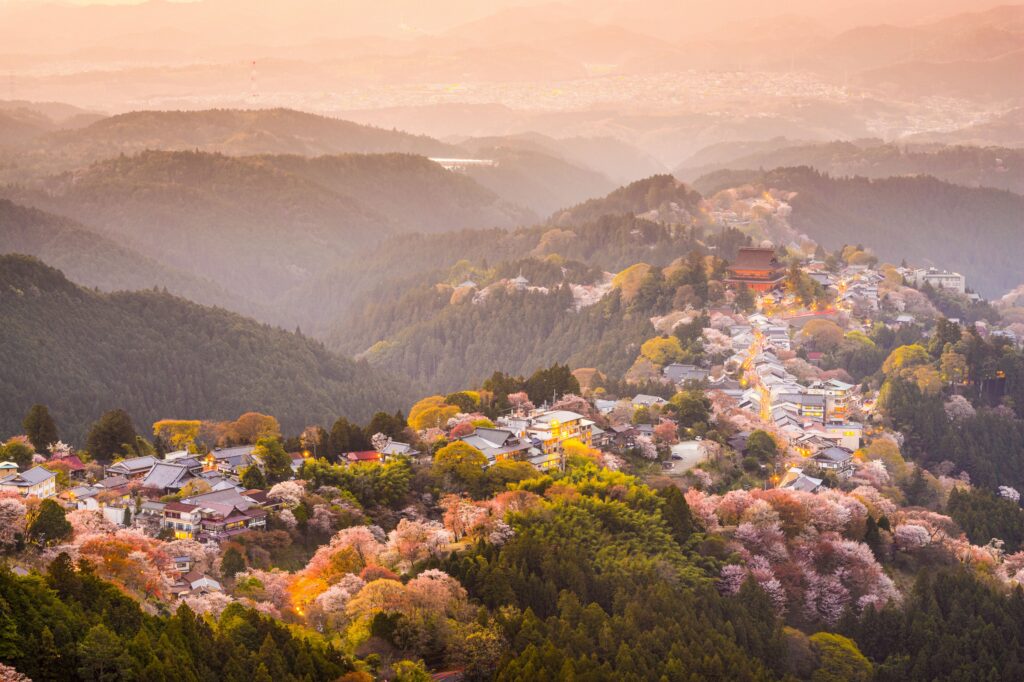
Image Credits: Expedia
If cherry blossoms are the reason you’re in Japan, Mount Yoshino is the reason to give Nara Prefecture more than a day. It’s around 40 minutes to an hour from Nara City by car, or up to 1.5 hours by train with a transfer, and it’s widely considered one of the country’s best cherry-blossom spots.
Roughly 30,000 trees grow across the mountain in staggered sections that bloom at different times, so the pink spreads gradually up the slope over a couple of weeks rather than all at once.
Get there as early as you can in peak season; car parks fill fast, and a ropeway covering the steepest section opens at 8:30 AM with long queues once the day gets going. A famous lookout point called Hanayagura is the classic photo spot, but the mountain rewards wandering off the main road too, since some of the prettiest viewpoints sit down side trails most visitors never find.
Bring cash. Small stalls along the mountain sell local specialties like kuzu-based sweets and kuzuyu, a sweet hot kudzu-starch drink worth trying after the climb. The blooming calendar shifts every year, so check the official forecast maps before locking in your dates.
📖 Related Guide: Timing the wider trip around peak bloom? Our Japan cherry blossom forecast maps viewing spots and bloom dates region by region.
What to Eat in Nara
Nara’s food scene sits in the shadow of Kyoto and Osaka, but the city has a few genuine specialities worth building lunch around.
Nakatanidou
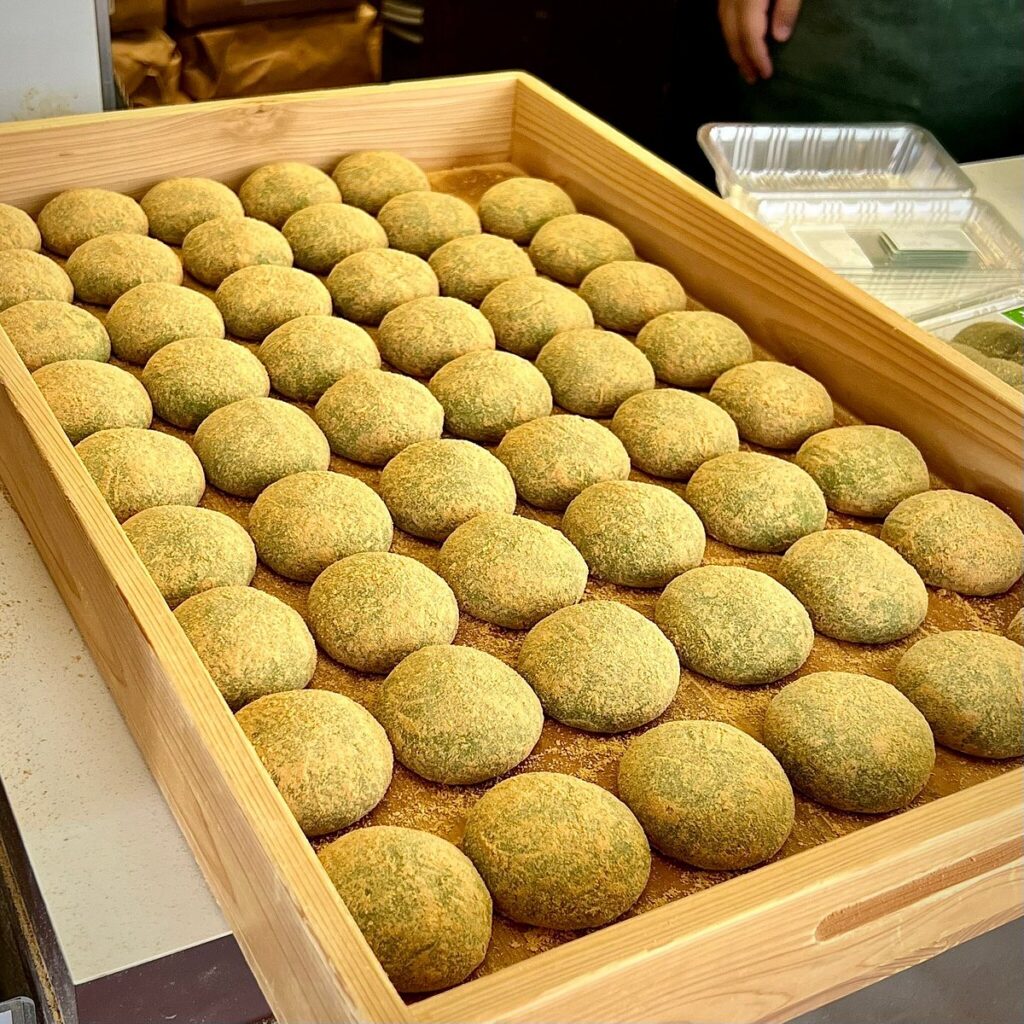
Image Credits: Tripadvisor
Nara’s most famous mochi shop, and worth the queue. Nakatanidou is known nationwide for its rapid-fire mochi-pounding demonstrations, performed several times a day at unpredictable intervals, where two staff hammer a batch of mochi at speed while a third flips it between strikes. The crowds gather for the demo, but the actual mochi, soft, warm and dusted with kinako (roasted soybean powder) around a red bean centre, only takes a couple of minutes to buy.
It’s located at the end of Higashimuki Shopping Street, the covered arcade running from Kintetsu Nara Station toward the park, priced around 200 JPY (~S$1.60) per piece. Best for a quick, cheap bite on the way into or out of the park; don’t plan your whole schedule around catching the demo, since timing isn’t fixed.
Kakinoha-zushi
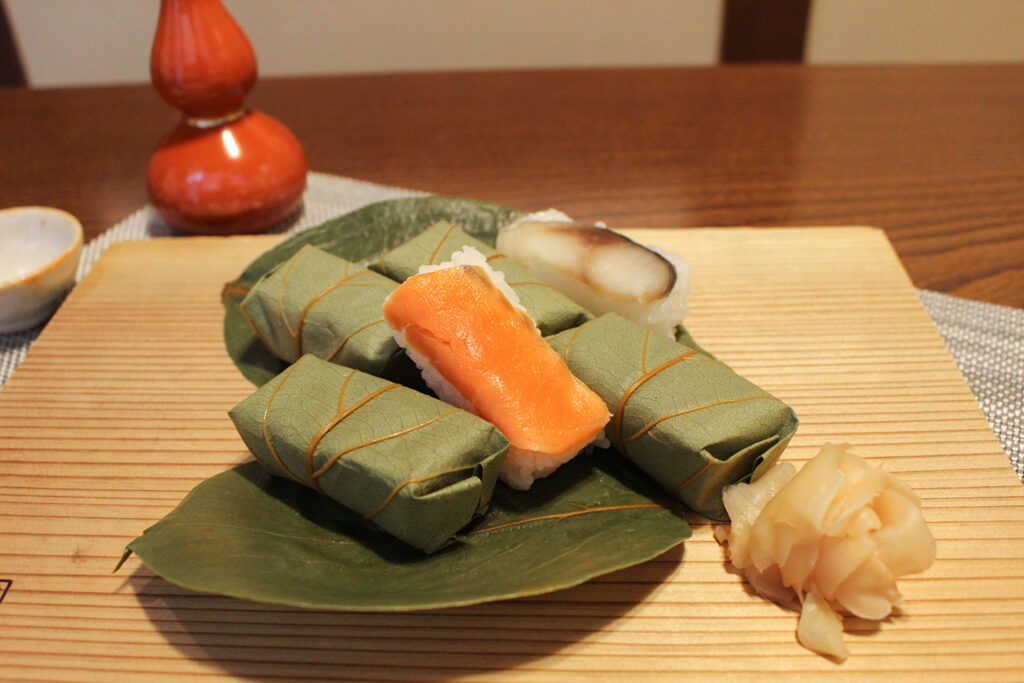
Image Credits: Japan Travel by NAVITIME
Nara’s signature dish, and an unusual one. Persimmon-leaf sushi wraps vinegared rice and a slice of cured fish (usually salmon or mackerel) inside a whole persimmon leaf, a preservation method that dates back centuries before refrigeration existed. You don’t eat the leaf; it’s there for flavour and to keep the rice moist.
It’s sold at dedicated sushi restaurants around Nara Park and in supermarkets and train-station shops as takeaway boxes. Best for trying once as a genuine local speciality. The flavour is distinct, more vinegary and denser than typical nigiri, and not for everyone, but it’s worth the one try.
Wakakusa Curry
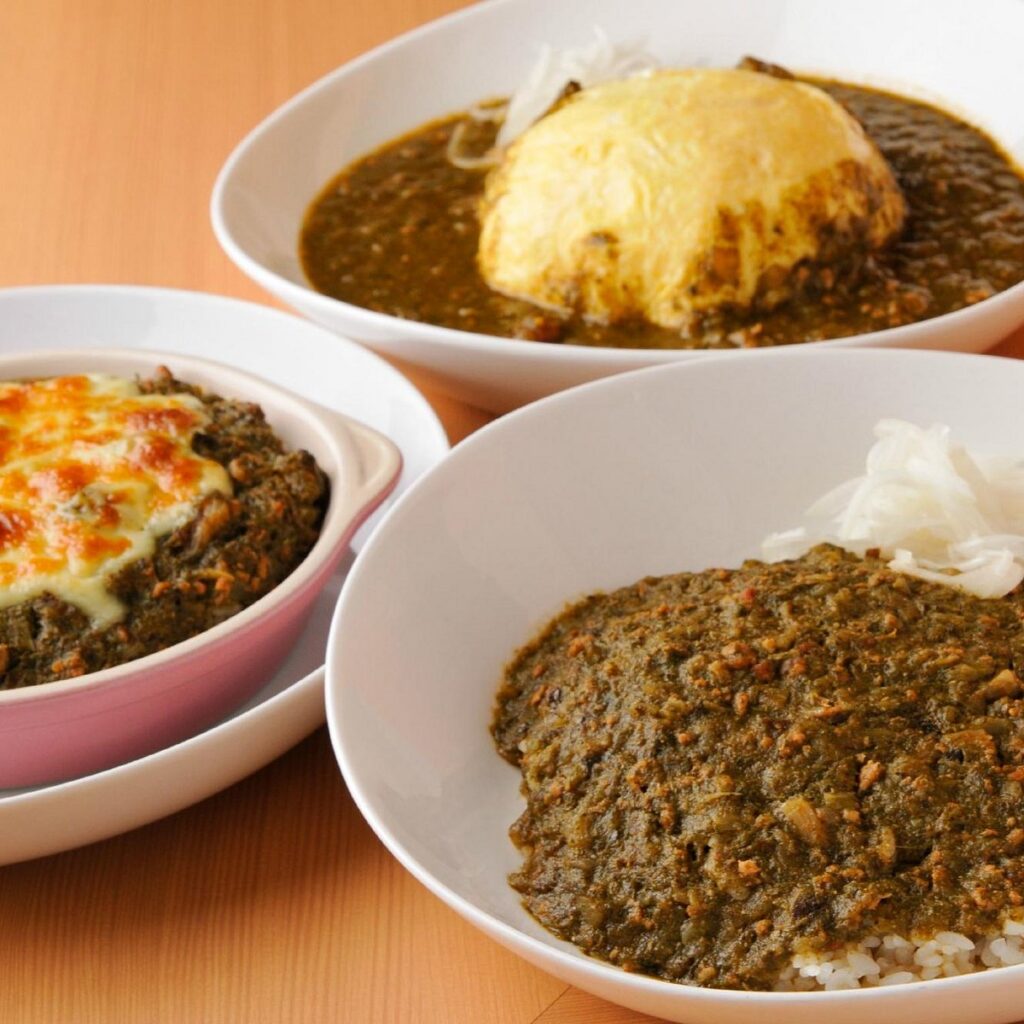
Image Credits: Tripadvisor
An English-friendly curry shop with real range. Located in the shopping arcade south of Nakatanidou, Wakakusa Curry serves a rotating list of different curry styles, including a signature four-in-one sampler plate, with vegetarian and vegan options and full allergen labelling in English.
It’s open from 11:30 AM most days, closing around 8 PM, with shorter hours midweek and a weekly closed day; check the current schedule before you go, since it shifts. Best for travellers with dietary restrictions who want a sit-down meal without the usual menu-translation guesswork.
Kamaiki
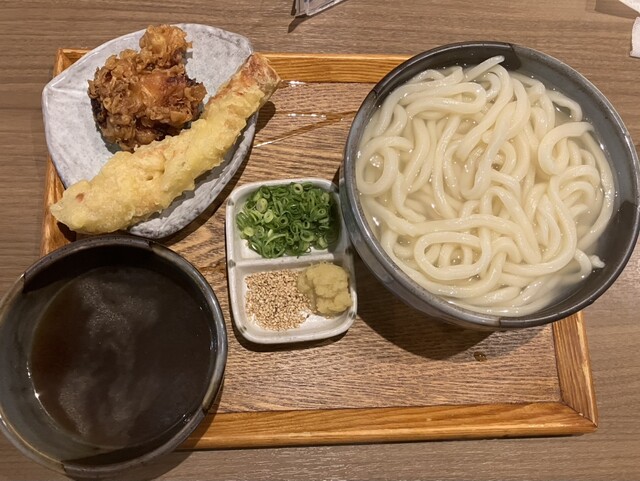
Image Credits: 食べログ
A communal-table udon spot that always has a queue at lunch. Near the deer park, Kamaiki serves fresh, handmade udon noodles daily, served hot or cold and topped with tempura or fried chicken depending on what you’re after. Seating is at long shared tables, so expect to sit close to strangers during peak lunch hours.
Best for a filling, affordable lunch between temple stops; go slightly before or after the 12 to 1 PM rush if queueing isn’t your thing.
Mizuya Chaya
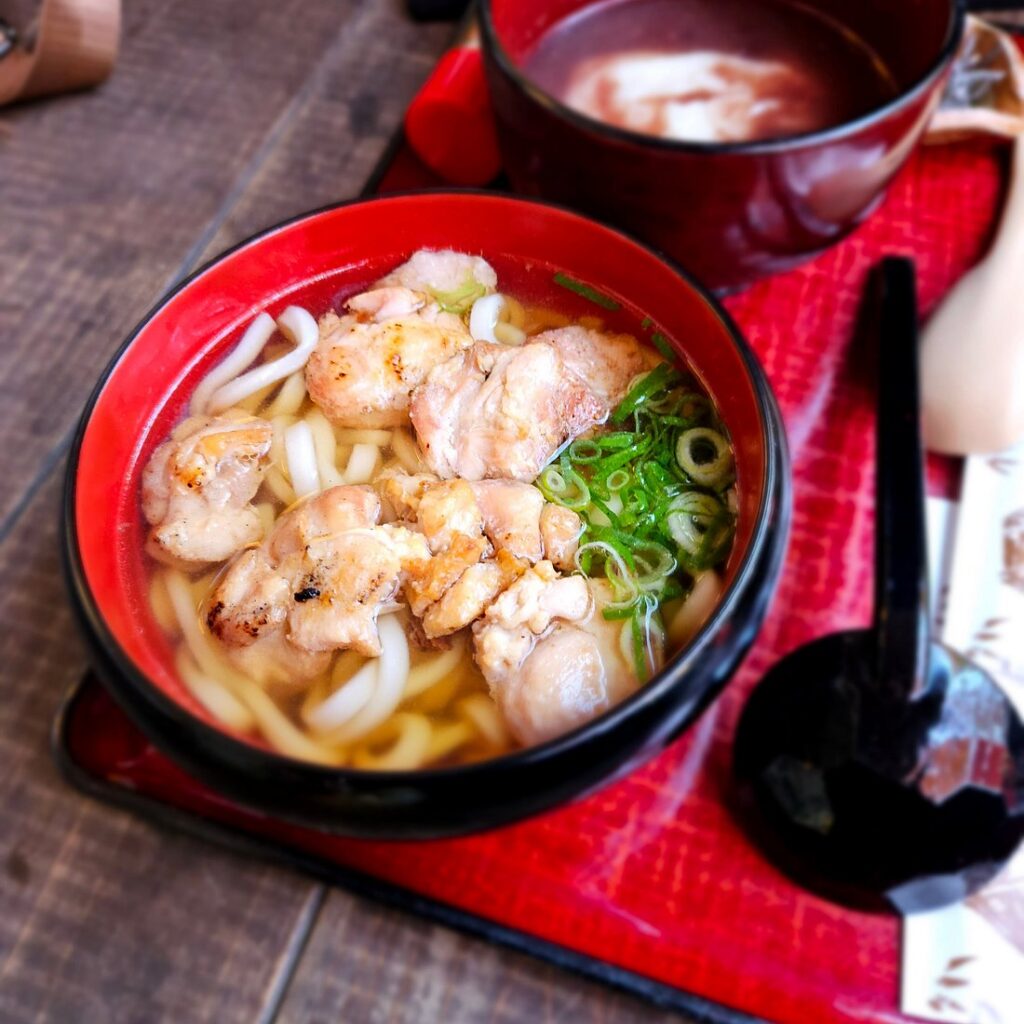
Image Credits: Tripadvisor
A thatched-roof teahouse tucked into the forest near Kasuga Taisha. Mizuya Chaya specialises in udon served in a rustic, open-air setting with forest views, a proper atmospheric lunch stop on the walk between Todai-ji and the shrine. Keep an eye on your food; the deer here have learned exactly where lunch happens and will try to steal it off the table.
Opening days and hours run limited and can shift by season, so check current timings before building your route around it. Best for pairing lunch with the Kasuga Taisha walk rather than as a standalone destination.
Rokumei Coffee

Image Credits: rokumei.coffee
A local roaster near both Nara train stations. Rokumei serves flaky croissants and coffee roasted on-site, a solid pick if you want caffeine before starting the day’s walking rather than settling for a convenience-store can.
Best for an early start, before you head into the park.
📖 Related Guide: Craving more of Japan’s regional specialities? Our Kanazawa things-to-do guide covers gold-leaf ice cream and Omicho Market fresh seafood.
Deer Etiquette: How to Not Get Bitten
Nara’s deer are genuinely tame around food, but they’re still wild animals, and visitor injuries have been rising as the deer population grows.
- Show an empty palm if you don’t want their attention. The deer recognise the gesture and generally move on once they know you have nothing.
- Buy crackers from a quieter stall, not the first one you see. Everyone stops at the nearest vendor, which concentrates the pushiest deer right there; walk a little further for a calmer feeding experience.
- Feed from an open palm, held flat. Deer that don’t get their cracker fast enough may nip at clothing, bags, or fingers holding it too long.
- Avoid touching fawns in May and June, and stay a little more cautious around males from July to November, when rutting season makes some deer more aggressive.
- Keep paper, plastic bags, and food wrappers out of reach. The deer will eat almost anything, and there are few public bins in the park to discourage exactly that.
- Skip your best shoes. With over 1,600 deer roaming freely, droppings are everywhere.
📖 Related Guide: Travelling with kids and after more ideas beyond Nara? Our teamLab Tokyo guide sorts the two digital-art museums so you pick the right one.
Is Nara Cheap? Entry Fees and Daily Budget
Nara is cheaper than Kyoto or Osaka for a day out. Nara Park itself and its walking paths cost nothing; you’re only paying for the temples, museums and gardens you choose to go inside.
A realistic day covering Todai-ji (800 JPY), Kasuga Taisha’s inner sanctuary (500 JPY), a garden (1,200 JPY for Isuien, or free at Yoshikien with a passport), deer crackers, and lunch runs somewhere between 3,000 and 5,500 JPY per person (~S$24 to S$44), before transport from Osaka or Kyoto.
Skip the paid garden and museum stops and it drops considerably. Nara Park, Kofuku-ji’s grounds, Nigatsu-do, Sarusawa Pond, Ukimido Pavilion, Naramachi and Naramachi Nigiwai no Ie are all free.
Most of the ticket counters at Nara’s temples and gardens are cash-only or card-limited, so carrying yen matters more here than in central Osaka or Kyoto.
📖 Related Guide: Comparing cards before the wider Japan trip? Our best multi-currency cards in Singapore guide lays out the cards that don’t bleed you on FX.
How to Pay in Nara
Nara splits sharply between card-friendly and cash-only, and knowing which is which before you set out saves an awkward moment at the ticket counter.
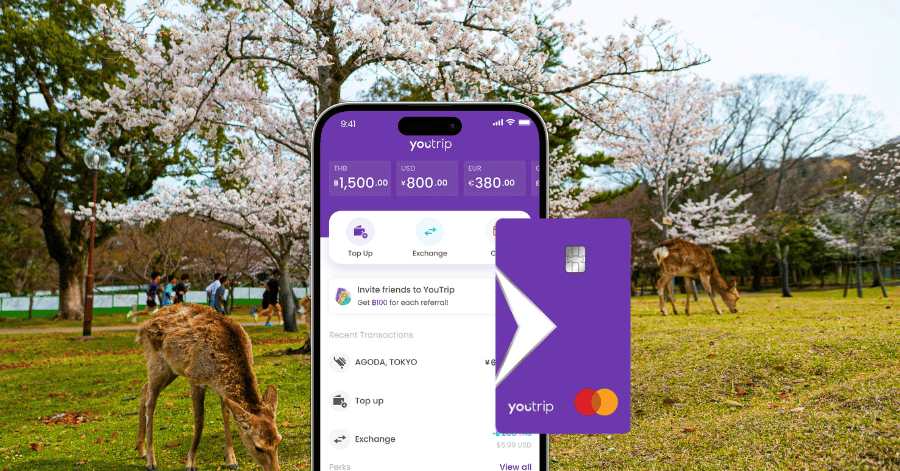
Bigger stops take cards. Kofuku-ji’s National Treasure Museum and Nara National Museum generally accept cards and IC payment at the gate, and most hotels and larger restaurants in the city follow suit. Pay on a YouTrip card and every yen transaction runs at the Mastercard wholesale exchange rate with 0% foreign transaction fee, billed straight to your SGD wallet with no markup added.
Since the yen sits among YouTrip’s holdable currencies, you can lock in a rate before you fly and top up a JPY wallet in-app ahead of the trip. A typical credit card adds roughly 3% to 3.5% on every overseas swipe, which stacks up fast across temple tickets, museum entries and lunch.
The cash half is bigger than you’d expect for a Japanese city this size: Todai-ji’s ticket counter, Kasuga Taisha’s inner sanctuary, Isuien Garden, Mount Wakakusa’s entry gate, and most of the mochi and udon stalls along Higashimuki Shopping Street all run on cash.
Withdraw yen from an ATM once you land, rather than changing money at a counter beforehand. With YouTrip, the first S$400 of overseas ATM withdrawals each calendar month is free, then a flat 2% after that, resetting on the 1st. Convenience-store ATMs (7-Eleven, Lawson, FamilyMart) take foreign cards and are common around both Nara train stations.
A money changer looks fee-free but bakes a markup of a few percent into the rate it quotes. Pulling cash from an ATM on arrival almost always comes out ahead.
👉 Bottom line: tap your YouTrip card wherever cards work, carry a few thousand yen in cash for the temples and gardens, and skip the money changer. For more, see our Japan ATM withdrawal guide and the SGD to JPY rate guide.
FAQs
Nara is famous for being Japan’s first permanent capital (710 to 784), Todai-ji Temple and its 15m bronze Great Buddha, and more than 1,600 wild deer that roam freely through Nara Park and have learned to bow for crackers. It also holds eight UNESCO World Heritage sites, including Kasuga Taisha and its thousands of stone and bronze lanterns.
Yes. Nara packs one of Japan’s largest bronze Buddha statues, a shrine lined with 2,000 lanterns, and a park full of sacred deer into a compact, walkable area. It’s easily done as a day trip from Kyoto or Osaka, and it’s less crowded than either city if you go early.
Both are roughly the same distance, though travel time depends on the route. Kintetsu’s Limited Express takes about 34 minutes from either Osaka-Namba or Kyoto Station; JR trains take closer to 45 minutes from either city.
They’re not really substitutes for each other. Nara suits a focused half-day or full day of ancient temples and deer; Kyoto rewards two or three days across geisha districts, gardens and a much wider spread of sights. Most travellers do both, with Nara as the shorter add-on.
Six to eight hours covers the highlights: Todai-ji, the deer park, Kasuga Taisha, Kofuku-ji, and one garden, with time for lunch. Staying overnight lets you see the deer park at dawn before the day-trip crowds arrive, which is a different experience entirely.
About 35 to 50 minutes by train, depending on whether you take Kintetsu’s Limited Express (around 34 minutes) or JR’s Miyakoji Rapid service (around 45 minutes).
Todai-ji’s Great Buddha Hall, the deer in Nara Park, and Kasuga Taisha’s lantern-lined paths are the three sights nearly every visitor names. If you have extra time, Isuien or Yoshikien Garden and Nigatsu-do’s free viewpoint are the next tier worth adding.
Nara Earns More Than a Layover
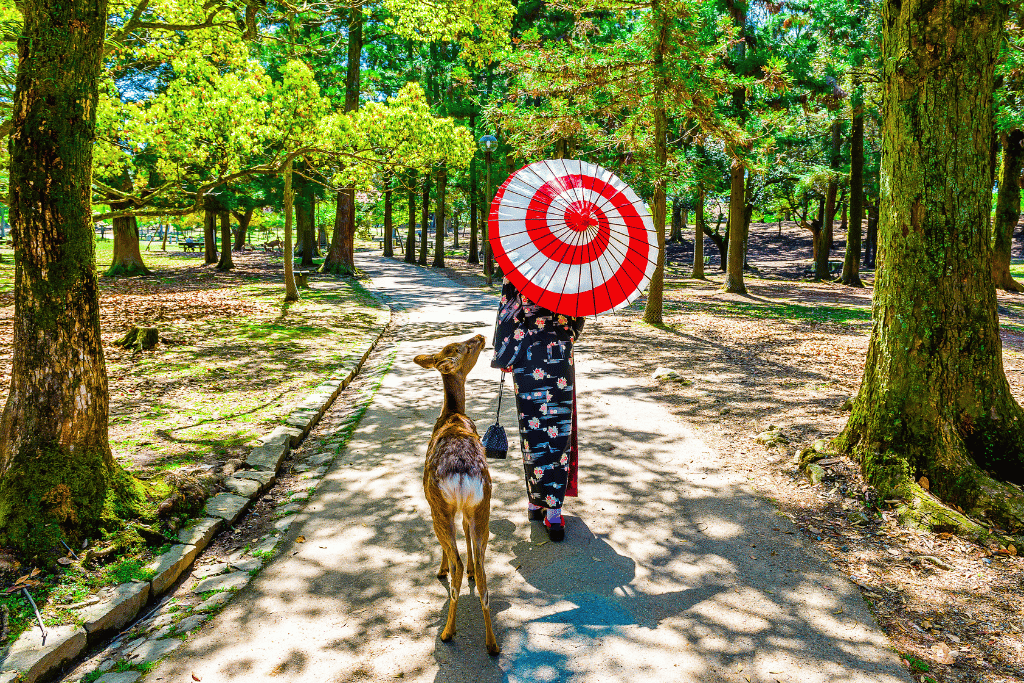
A 15m bronze Buddha, a lantern-lined forest shrine, and over 1,600 deer that bow for crackers, all within a walk of each other, and most visitors still give it half an afternoon. Nara rewards whoever slows down for it, whether that’s an early start before the tour buses arrive or a full overnight to catch the park at dawn.
Not a YouTrooper yet? Sign up with code YTBLOG5 for a free YouTrip card and S$5 in credit. Lock in your rate across 12 currencies and spend in 150+ countries with no foreign transaction fees. Check out the latest YouTrip Perks, join our Telegram for deals, and swap tips in our Community Group.