


Borneo’s easiest city, and it’s 90 minutes away from Singapore.
Kuching is the capital of Sarawak, on the Malaysian side of Borneo, and it’s the rare city where wild orangutans and a good flat white sit half an hour apart. The old town is walkable, the river runs through the middle of it, and the food is the best argument for going.
It’s about a 1h 30min flight from Singapore. Come for the wildlife and the noodles, not for nightlife, and you’ll have a very good time.
| Quick facts | Details |
|---|---|
| Where | Sarawak, Malaysian Borneo, on the Sarawak River |
| How to get there | Direct flight from Singapore (~1h 30min) on Scoot or AirAsia |
| Time needed | 3 days and 2 nights covers the highlights; 4 days lets you slow down |
| Best time to go | Drier and sunnier from roughly June to September; wettest November to February |
| Top draws | Bako National Park, Semenggoh orangutans, the old town and the food |
| Pay with | Tap your YouTrip card in MYR (0% FX); withdraw MYR from a local ATM |
Best Things to Do in Kuching at a Glance
| Attraction | Good for | Cost (foreigner adult) | Time |
|---|---|---|---|
| Bako National Park | Proboscis monkeys, jungle trails | 20 MYR (~S$6) entry + boat | Full day |
| Semenggoh Wildlife Centre | Wild-living orangutans | 10 MYR (~S$3) | Half a day |
| Borneo Cultures Museum | Sarawak’s tribes, done properly | 50 MYR (~S$16) | 2–3 hrs |
| Sarawak Cultural Village | Longhouses and live performance | 135 MYR (~S$42) | Half a day |
| Kuching Waterfront | A free sunset and a light show | Free | As you like |
| Fairy Cave and Wind Cave | A cathedral-sized cave, then a dark one | Free / 3 MYR (~S$1) | Half a day |
Table of Contents
- Is Kuching Worth Visiting?
- How Many Days Do You Need in Kuching?
- Best Time to Visit Kuching
- How to Get to Kuching from Singapore
- Best Things to Do in Kuching
- What to Do in Kuching at Night
- Where to Eat in Kuching
- Best Day Trips From Kuching
- A Sample 3-Day Kuching Itinerary
- Things to Do in Kuching With Kids
- Free and Cheap Things to Do
- Getting Around Kuching
- Where to Stay in Kuching
- Paying in Kuching: Cards, Cash and Ringgit
- FAQ
Is Kuching Worth Visiting?
Yes, and it’s an easy yes if you like wildlife and good food.
Kuching is the wildlife access point most Singaporeans overlook. Semi-wild orangutans are 40 minutes from your hotel, proboscis monkeys are an hour away, and neither requires a multi-day expedition to reach. That’s unusual. Most places that offer this ask for a lot more travel.
The city itself is small and low-rise, built along one river, with a 19th-century old town you can cross on foot in twenty minutes. Nobody hurries. After a few days of Kuala Lumpur or Bangkok, the pace is a relief.
One honest limitation: there’s very little nightlife, and the marquee sights are spread out, so you’ll be in a Grab or a rental car most days. If your idea of a holiday is a rooftop bar and a shopping mall, go somewhere else. It suits first-time Borneo visitors, families and food-led travellers, and anyone who wants nature without the trek.
📖 Related Guide: Doing the other side of Borneo too? Our Kota Kinabalu travel guide covers Sabah’s islands and Mount Kinabalu.
How Many Days Do You Need in Kuching?
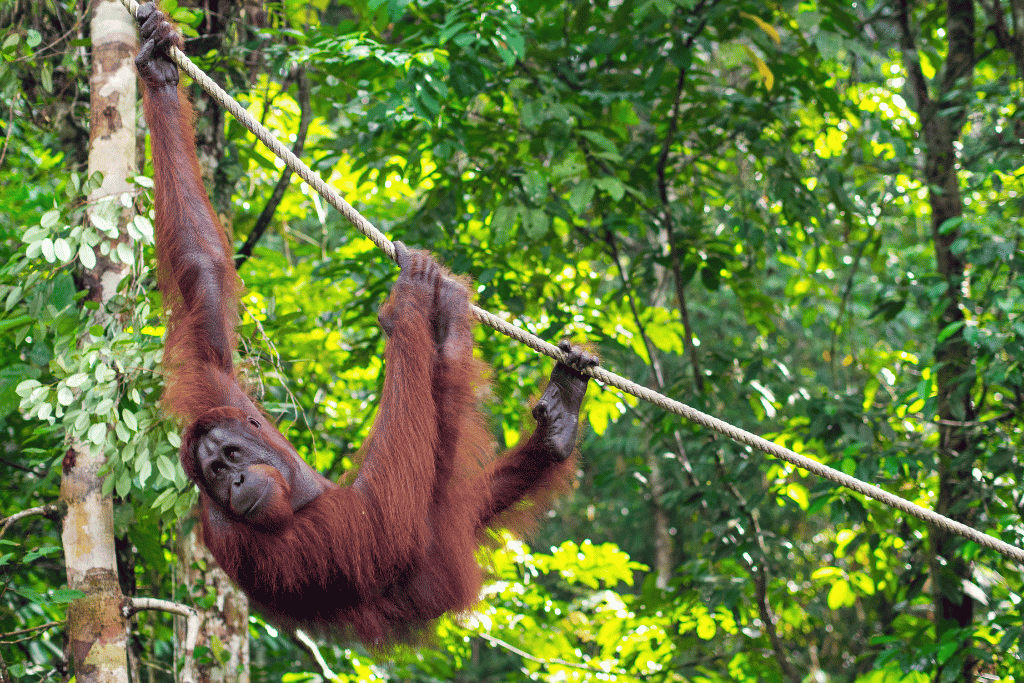
Three days and two nights is the sweet spot. That’s enough for one full day at Bako National Park, one morning at Semenggoh, and a day and a half for the old town, the museum and the eating.
Two days works if you’re ruthless. You’d pick either Bako or Semenggoh, not both, and keep the rest to the waterfront and the food.
Four days is the same trip at a comfortable pace. It buys you the Bau caves, a Sarawak Cultural Village afternoon, or a slow morning doing nothing on the waterfront with a kopi.
Longer than five days and you’d want to head deeper into Sarawak, to Mulu or Bario, rather than stay in the city.
Best Time to Visit Kuching
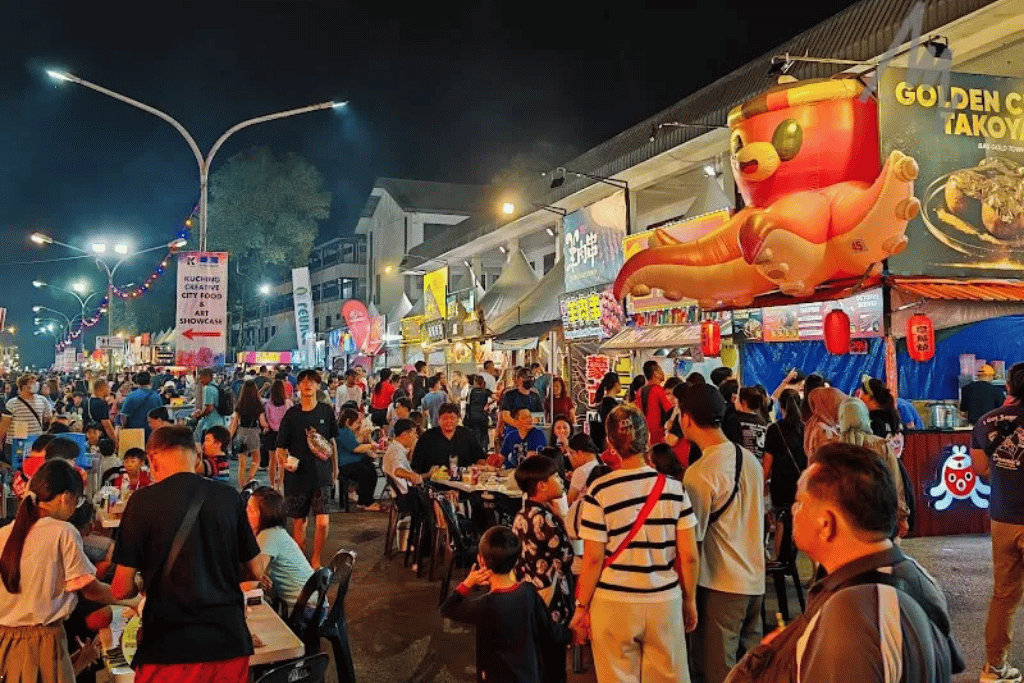
Image Credits: kuchingborneo
Kuching is hot and humid year-round, sitting a couple of degrees off the equator. Expect low thirties by day and a shower most afternoons whenever you go.
The drier, sunnier stretch runs roughly June to September. This is when the jungle trails at Bako are least likely to be a mud slide, and when boat crossings are most reliable.
November to February is the northeast monsoon and the wettest window. It rarely rains all day, but downpours are heavier and boat trips get cancelled more often. Trips still work, they just need more slack in the plan.
Three dates worth building around. The Rainforest World Music Festival takes over Sarawak Cultural Village for three days in late June each year, and tickets and accommodation go early.
The Kuching Festival Food Fair is the bigger deal for most visitors. It runs through late July and into mid-August, opening early evening until late, with more than 300 food and commercial stalls. If you’re picking dates on food alone, go then. Both festivals shift by a week or two year to year, so check the current dates before booking flights.
Durian season peaks around December to February, with a smaller crop around June.
If you can only pick one month, make it July or August.
How to Get to Kuching from Singapore

Fly direct
Scoot and AirAsia both fly Singapore to Kuching non-stop, and the hop takes about 1h 30min. There are roughly four flights a day between them, so you can leave after breakfast and be eating laksa by lunch.
Scoot goes from Changi Terminal 1 and AirAsia from Terminal 4. Kuching International Airport sits about 11km south of the city centre, which is a 15 to 20 minute drive and one of the shortest airport runs in the region.
Fly via Kuala Lumpur
Malaysia Airlines and AirAsia both run Kuala Lumpur to Kuching frequently, so a connection works if the direct fares spike. It adds a few hours and a terminal change for no real saving most of the time.
Entry requirements
Sarawak runs its own immigration, separate from peninsular Malaysia. You’ll clear a passport check on arrival even if you’ve flown in from Kuala Lumpur, and Singapore passport holders get a visa-free stay for a normal holiday.
Your passport needs at least six months’ validity from the date you enter Malaysia, so check it before you book. Entry rules can change without much notice, so it’s worth a quick look at the current requirements before you fly.
Best Things to Do in Kuching
The wildlife is the headline and the old town is the daily pleasure. These are the spots worth your time, from the two you’d fly here for to a river crossing that costs less than a kopi.
Bako National Park
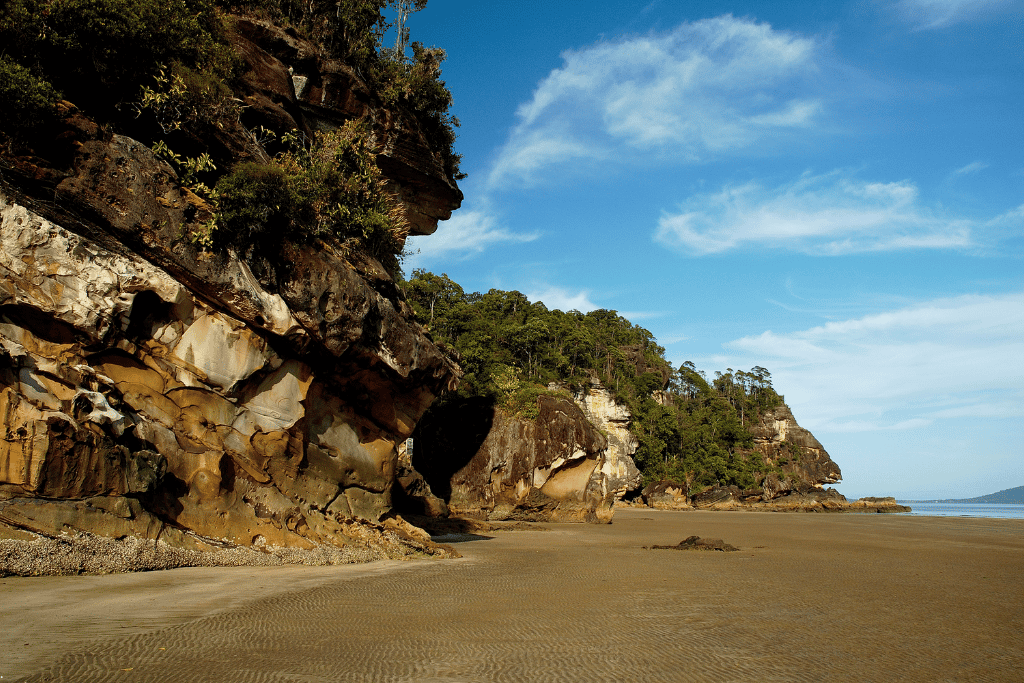
Bako is the reason to come and the best day you’ll have here. Sarawak’s oldest national park, gazetted in 1957, sits on a peninsula about 37km from the city, reachable only by boat from Kampung Bako jetty. The 20-minute ride past sandstone sea stacks is part of the experience.
Once you land, 18 colour-coded trails fan out through mangrove, rainforest and cliff-top scrub. The wildlife shows up without much effort: bearded pigs rooting around the park headquarters, silvered langurs in the trees above the canteen, macaques who will absolutely go through your bag.
The prize is the proboscis monkey, with its improbable nose and pot belly, best spotted in the mangroves at low tide or near the lodges in the late afternoon.
Entry is 20 MYR (~S$6) for foreign adults. Boats are chartered per boat rather than per head, at roughly 100 MYR (~S$31) each way for up to five people, so joining another group splits it down nicely. Bring cash. There’s no ATM at the jetty and no card machine in the park.
Best for anyone who came to Borneo for wildlife. Go early, and if you can spare the night, the rustic park lodges give you the trails at dawn with nobody on them.
Semenggoh Wildlife Centre
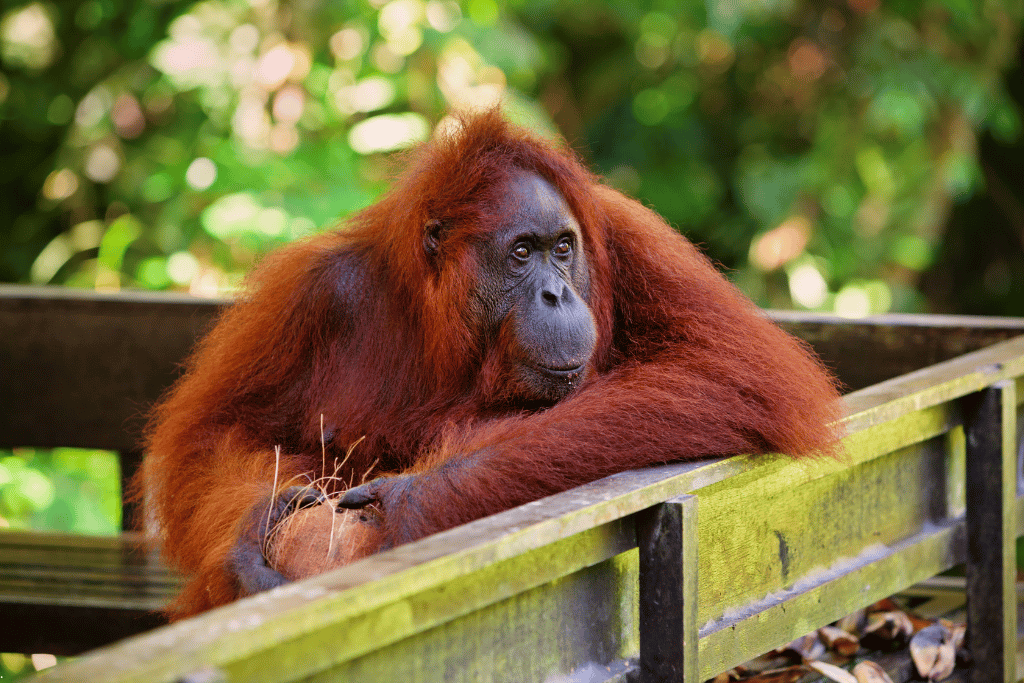
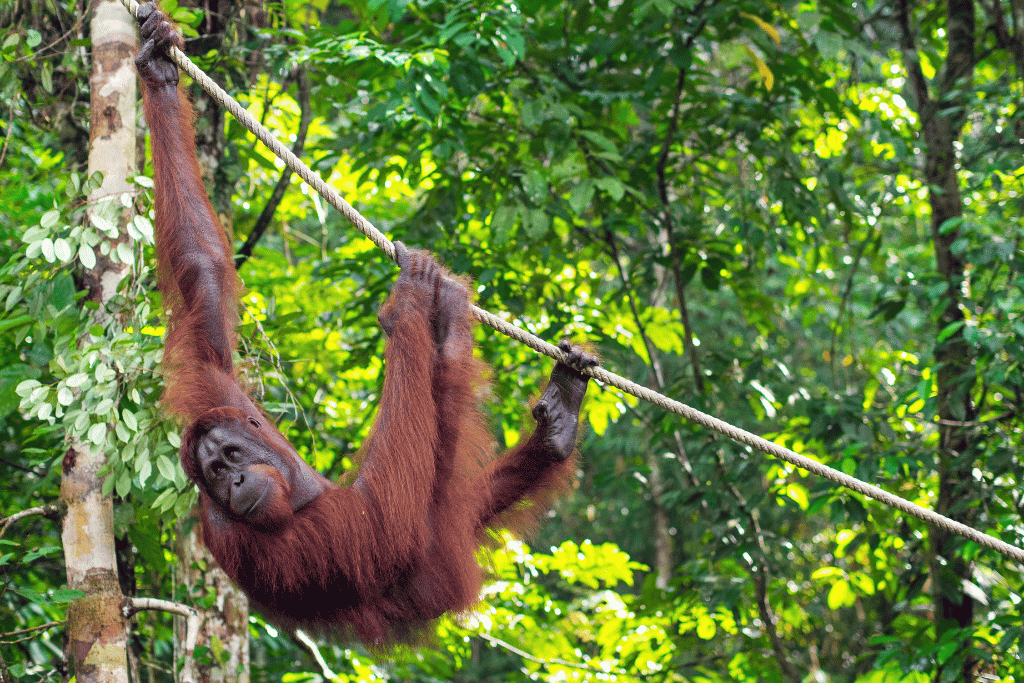
Semenggoh is where you meet the orangutans, and it’s a 20km drive from the city. The reserve rehabilitates rescued and orphaned Bornean orangutans, and the ones here are semi-wild: they live in the forest and come in for food only when they feel like it.
Feeding sessions run at 9 AM and 3 PM, with the reserve open 8 AM to 10 AM and 2 PM to 4 PM around them. Staff put fruit out on platforms, then everyone waits. When a big male comes swinging down the rope line, the crowd goes completely silent. It’s genuinely one of the better wildlife encounters in Southeast Asia.
Sightings aren’t guaranteed, and that’s the point. Between roughly February and April the forest fruits heavily and the orangutans stay out, which is good news for them and disappointing for you. Your odds are best in the leaner months from April to November.
Entry is 10 MYR (~S$3) for foreign adults and 5 MYR (~S$1.60) for children aged 6 to 17. An electric buggy to the feeding platform costs about 15 MYR (~S$5) return if you’d rather not walk it in the heat.
Best for everyone, with one caveat: manage expectations with kids, because a no-show morning is a real possibility.
Kuching Waterfront
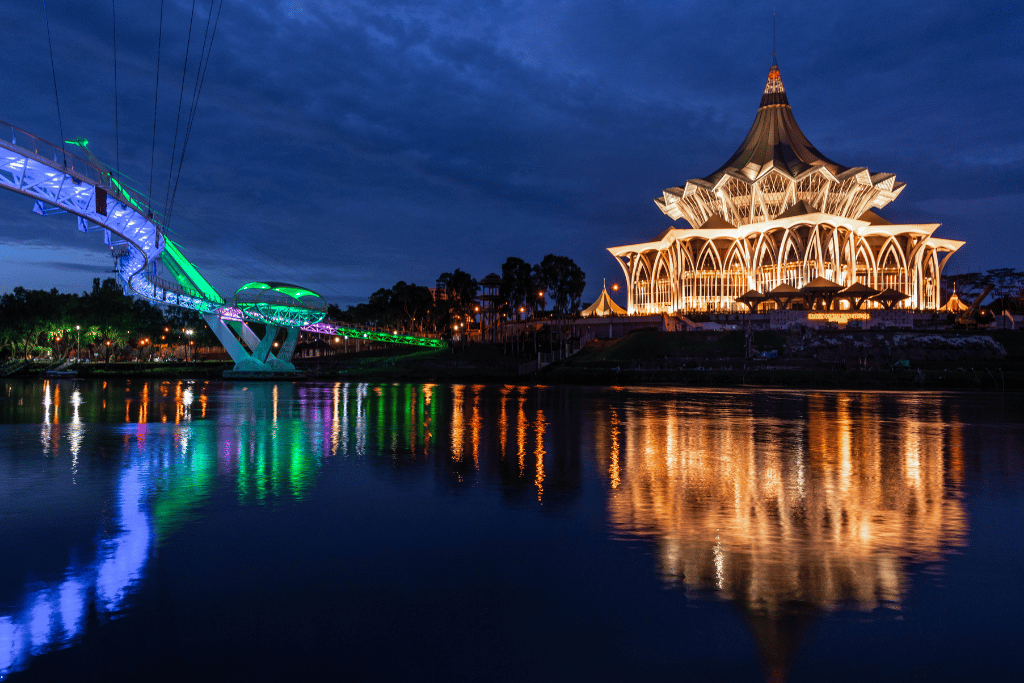
The waterfront is the city’s living room and the thing you’ll end up doing every evening. A long promenade runs about a kilometre along the south bank of the Sarawak River, lined with food stalls, benches, buskers and a lot of families out walking off dinner.
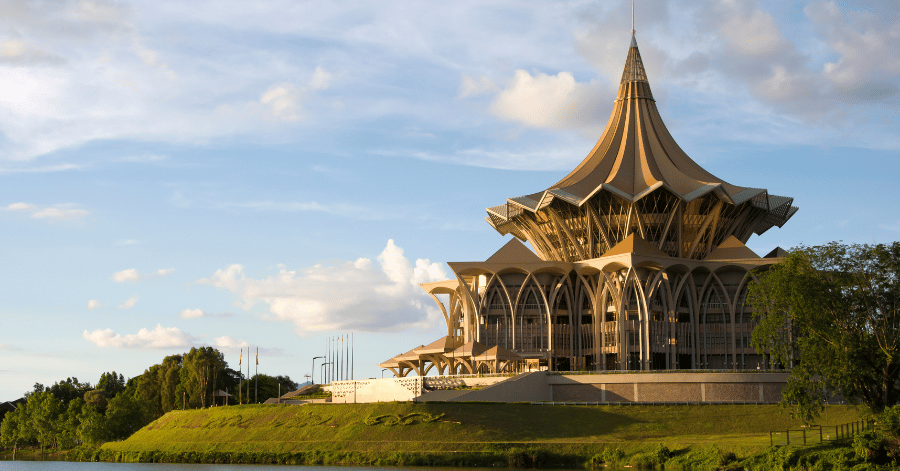
The view does the work. Across the water sits the golden umbrella roof of the State Legislative Assembly, the white 19th-century Astana, and the tree line behind them. As the light drops, the whole thing turns orange and the stalls start firing up satay grills.
It’s free, it’s central, and it’s the easiest way to feel the pace of the place. Come around 6 PM and stay through sunset. It’s the best free thing in the city and you’ll end up here every evening.
Darul Hana Bridge
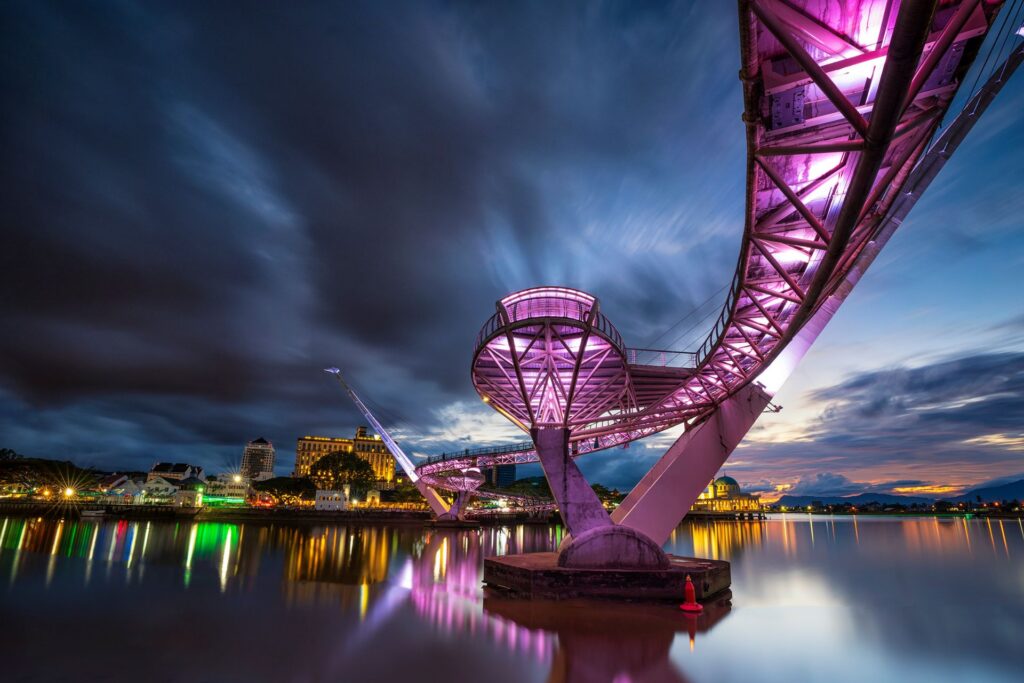
Image Credits: Sarawak Tourism Board
The Darul Hana Bridge is the S-shaped pedestrian bridge that curves across the Sarawak River, and it’s a five-minute walk from the waterfront. It links the old town on the south bank to the state government buildings and Fort Margherita on the north.
Walk it at dusk. The deck lights shift through colours after dark, the golden Assembly roof sits right in your sightline, and the middle of the span is the postcard shot everyone comes for. The climb up either end is gentle enough for grandparents and prams. Come for the sunset photos, or just to reach Fort Margherita on foot instead of by boat.
Borneo Cultures Museum
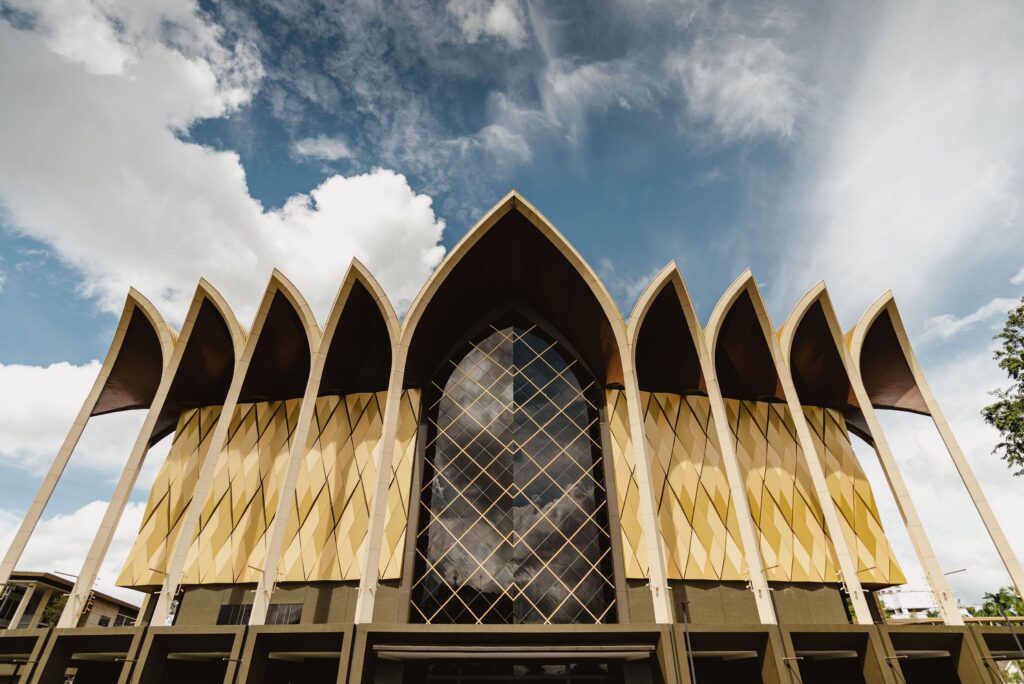
Image Credits: Sarawak Tourism Board
This is the surprise of the trip for most people, and the single best rainy-afternoon plan in Kuching. It’s the largest museum in Malaysia and the second largest in Southeast Asia, five floors of it, opened in 2022. The presentation is a long way from the dusty-cabinet standard the region is known for.
Level three covers how Sarawak’s peoples live with the land, split into coastal, rainforest and highland zones, with fishing tools, hunting kit and medicinal plants. Level four walks through Borneo’s history and includes human remains found in the Niah Caves dating back more than 40,000 years. Level five is the craft floor: pua kumbu weaving, ceremonial gold crowns, carved masks.
Interactive panels light up and play audio when you slide them, and the legend of Princess Santubong is told properly.
Entry is 50 MYR (~S$16) for foreign adults. It opens 9 AM to 4:45 PM on weekdays and 9:30 AM to 4:30 PM at weekends, with the ticket desk closing about 45 minutes before the building does. One practical catch caught out more than one visitor: the counter takes cash or e-wallet only, so don’t turn up card-only.
Best for a hot afternoon or a wet one. Give it two to three hours, not the 45 minutes people try to squeeze it into.
Fort Margherita and the Brooke Gallery
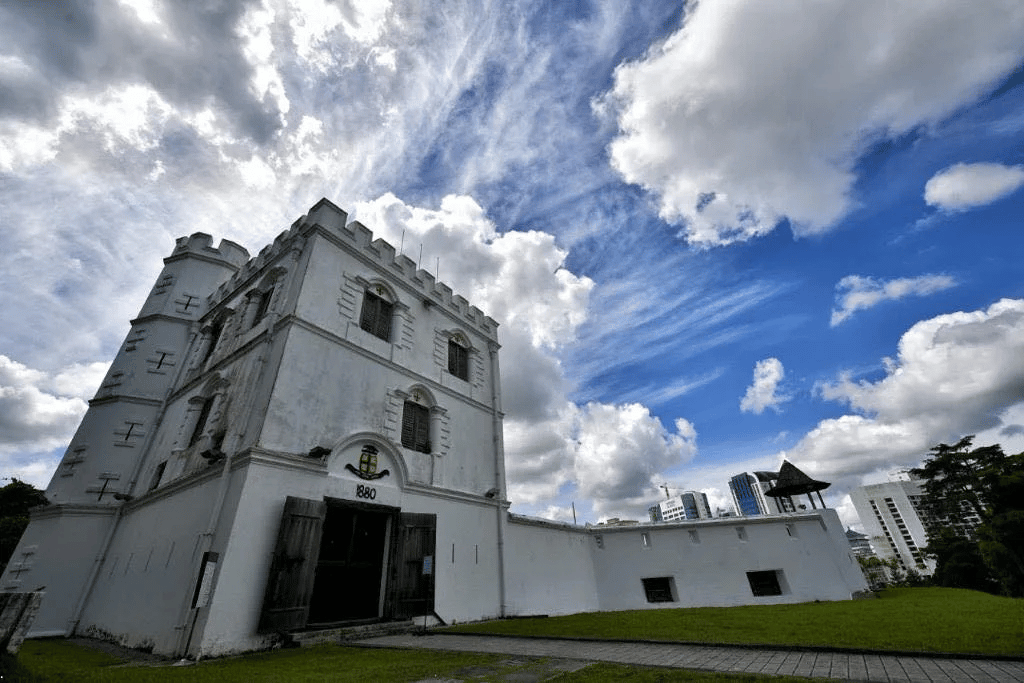
Image Credits: kuchingborneo
Charles Brooke built this white fort in 1879 to watch the river for pirates, and named it after his wife. It sits on the north bank, up a short slope from the Darul Hana Bridge, with cannons still pointing downriver.
Inside is the Brooke Gallery, a small museum on the century of English rule that shaped Sarawak. It’s an odd, specific history: an English adventurer talked his way into a kingdom and his family kept it for three generations. The gallery leans a little admiring of the Brookes, which is worth knowing as you read it, but the artefacts and the story are strong.
Entry is 20 MYR (~S$6) for foreigners, and it’s open 9 AM to 4:30 PM. An hour covers it. History readers get the most from it, and it pairs naturally with a bridge walk and a tambang ride back.
A Tambang Ride Across the Sarawak River
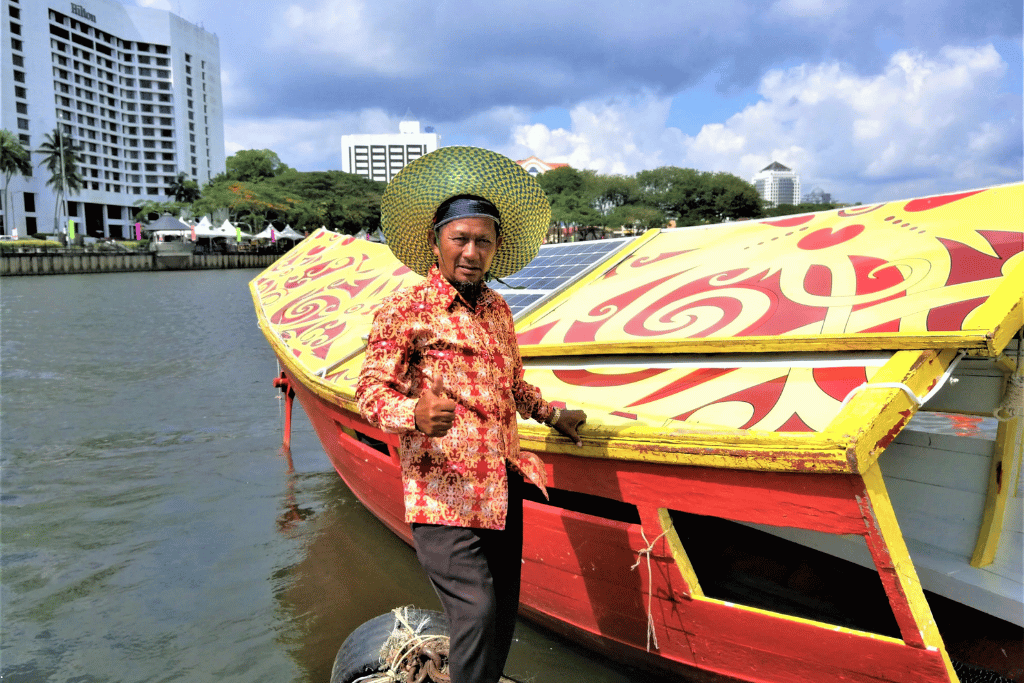
Image Credits: Sarawak Tribune
The tambang is the small wooden boat that has ferried people across this river for generations, long before there was a bridge. It’s also the most charming two ringgit you’ll spend in Malaysia.
You wait at one of the little jetties along the waterfront, step down into a low wooden hull, and a boatman poles and motors you across in about five minutes. Some are strung with fairy lights or potted plants. Many of the boatmen have worked this crossing for decades and will happily point out what you’re looking at.
It’s a transport link, not a tour, which is exactly why it’s good. You get the city from the water at eye level, with the bridge above you and the Assembly building sliding past. Take it back from Fort Margherita, especially if you prefer a working boat to a tour boat.
Main Bazaar
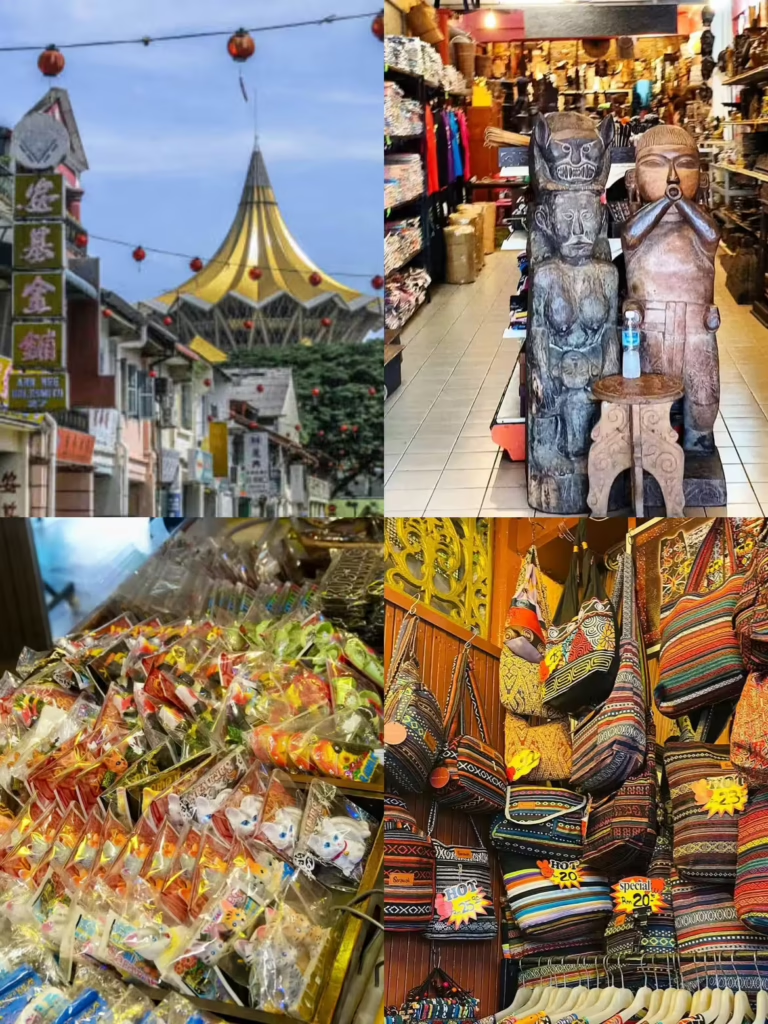
Image Credits: Trip.com
Main Bazaar is Kuching’s oldest street, running along the waterfront below the old town, and it’s a row of 19th-century shophouses now filled with handicrafts. Tribal carvings, beadwork, rattan baskets, batik and a great deal of Sarawak pepper.
It’s the best souvenir stretch in the city, and prices are reasonable if you’re willing to have a conversation. Shopkeepers here tend to know exactly what they’re selling and where it came from, so ask. If you’re taking something home, Sarawak black pepper and a tin of kek lapis travel better than a carved hornbill.
Carpenter Street
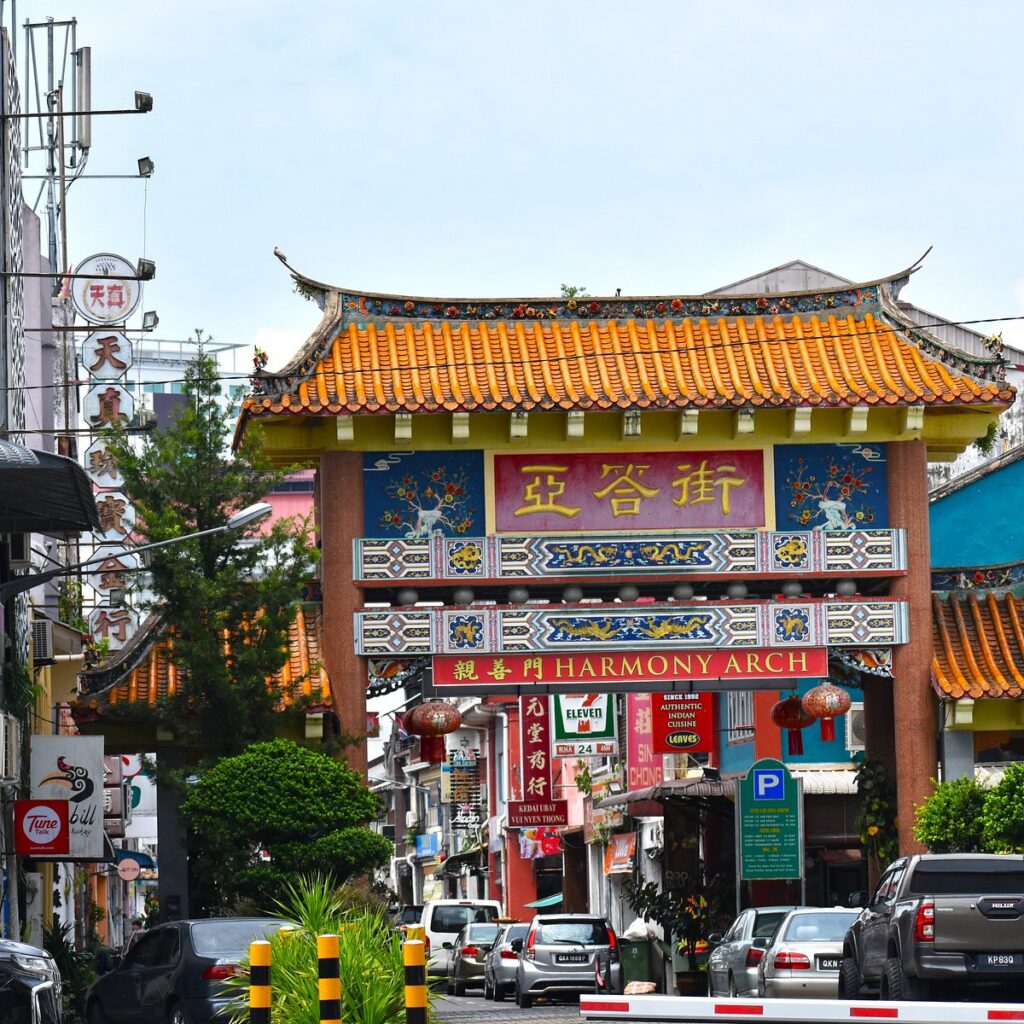
Image Credits: Tripadvisor
Carpenter Street is the heart of Kuching’s Chinatown and the most atmospheric lane in town. It’s narrow, lined with two-storey shophouses in faded pastel, and packed with old kopitiams, temples and a growing set of small cafes behind wooden doors.
Hong San Si Temple anchors one end, all red and gold and incense smoke. Between the temples you’ll find coffee roasters, a shop selling nothing but bird’s nest, and murals down the side alleys. Some of the businesses here have been run by the same families for generations. It’s a slow morning wander with a coffee stop, and the best photography in the old town.
India Street
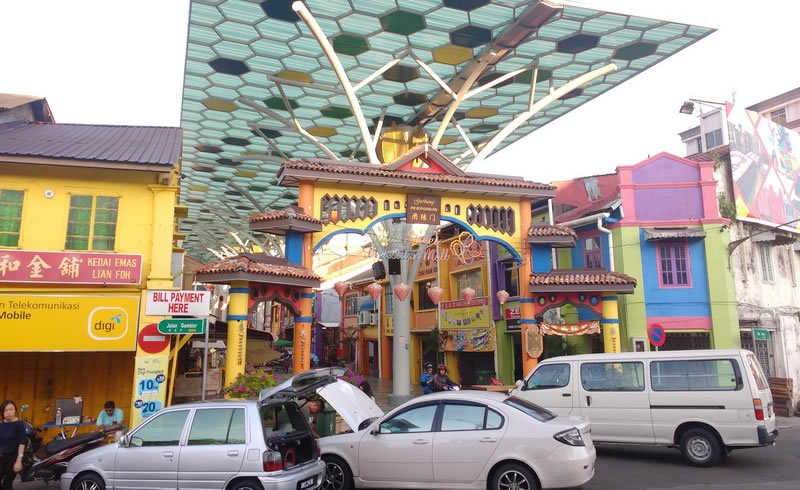
Image Credits: kuchingborneo
India Street, or Jalan India, is a covered pedestrian lane a block back from the waterfront. It’s the busiest and loudest stretch of the old town, and the most fun. Textile merchants stack bolts of fabric to the ceiling. Spice shops perfume the whole alley, and someone is usually pressing shirts at a stall in the middle of the walkway.
Halfway down, an easily missed alley between the textile and spice shops opens onto the old Indian Mosque, built in 1871 and the oldest in Kuching. It’s small, pastel green, gold-domed and hemmed in on all sides. Finding it feels like a minor achievement.
One warning: the newer floating mosque on the river carries the same Masjid India name, so say which one you mean to a driver. Come for cheap clothes, spices and snacks, and for a slice of the city that isn’t posed for visitors.
Jalan Padungan
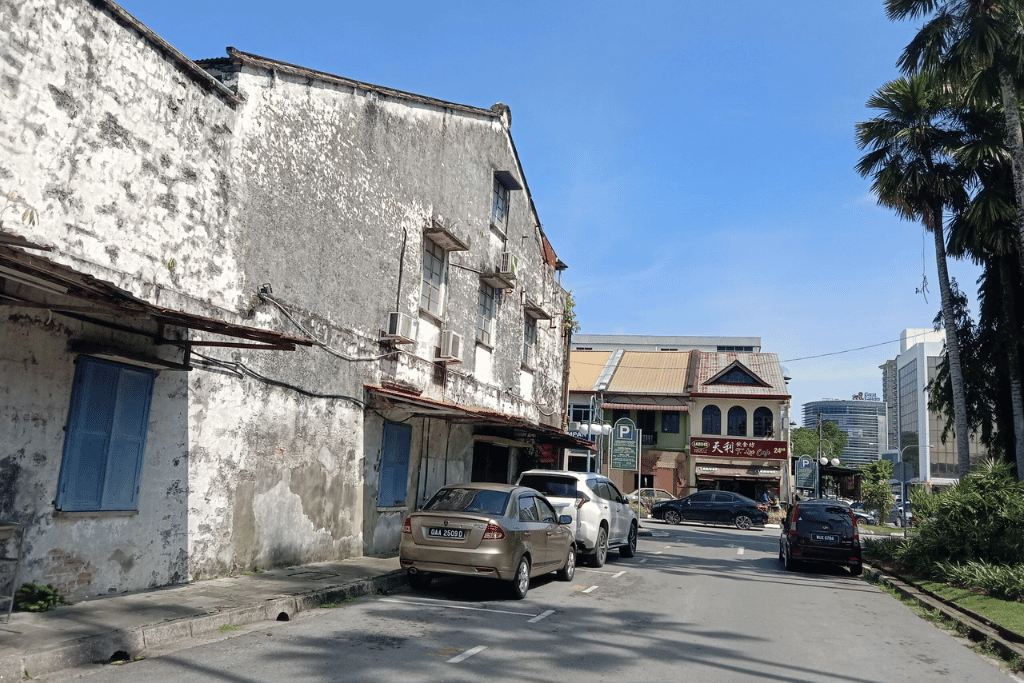
Image Credits: Sarawak Tribune
Padungan is Kuching’s other Chinatown, a ten-minute walk east of the old town, and it’s where the city eats and drinks after dark. Long rows of shophouses, ceremonial gates at either end, red lanterns strung overhead and one of the famous cat statues at the junction.
By day it’s coffee shops and old-school noodle houses. By night the bars and dessert places open and the street stays busy until late, which in Kuching means about midnight. The murals through the back lanes here are some of the best in the city. This is where dinner and the hour after it happen, and it’s the closest thing Kuching has to a night out.
Tua Pek Kong Temple
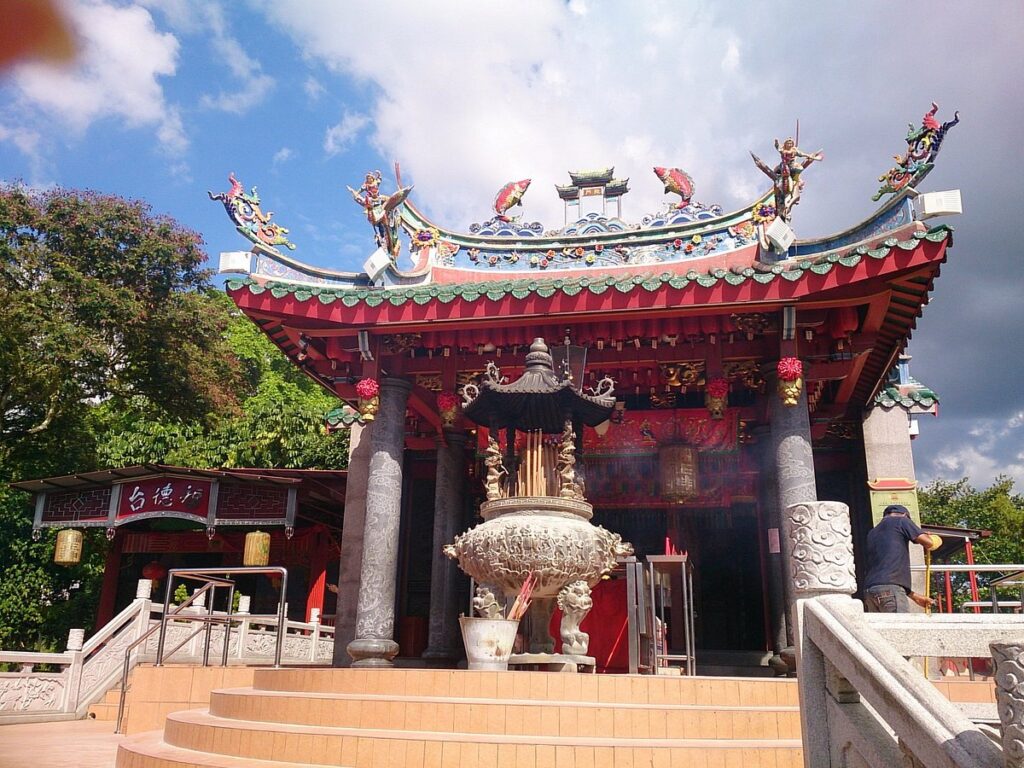
Image Credits: Tripadvisor
Tua Pek Kong is the oldest Chinese temple in Kuching, sitting on a small rise where the waterfront meets Padungan. The building is officially dated to 1876, though locals trace the temple’s beginnings to 1843. It’s still an active, busy temple rather than a preserved one.
Go for the detail: dragons on the roof ridge, coils of incense hanging from the ceiling, red candles burning down at the altar. It takes fifteen minutes and it’s free. Slot it into a waterfront walk, dress modestly, and ask before photographing anyone praying.
The Astana and the Square Tower
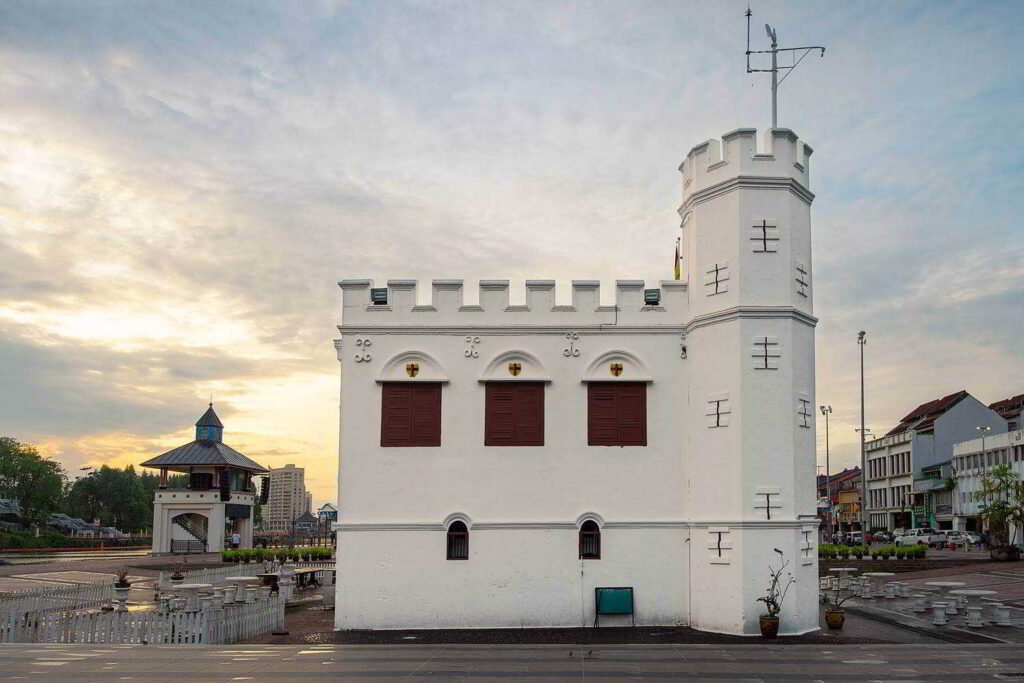
Image Credits: Sarawak Tourism Board
Two Brooke-era landmarks bookend the river. The Astana is the low white palace with the shingled roof on the north bank, built by Charles Brooke in 1870 as a wedding gift and now the Governor’s residence. You can’t go inside, but the gardens and the riverfront view of it are the point.
The Square Tower sits opposite on the waterfront and once served as a prison. It’s small, free to look at, and floodlit at night. Give them ten minutes each as part of the waterfront circuit rather than a trip of their own.
The Old Courthouse
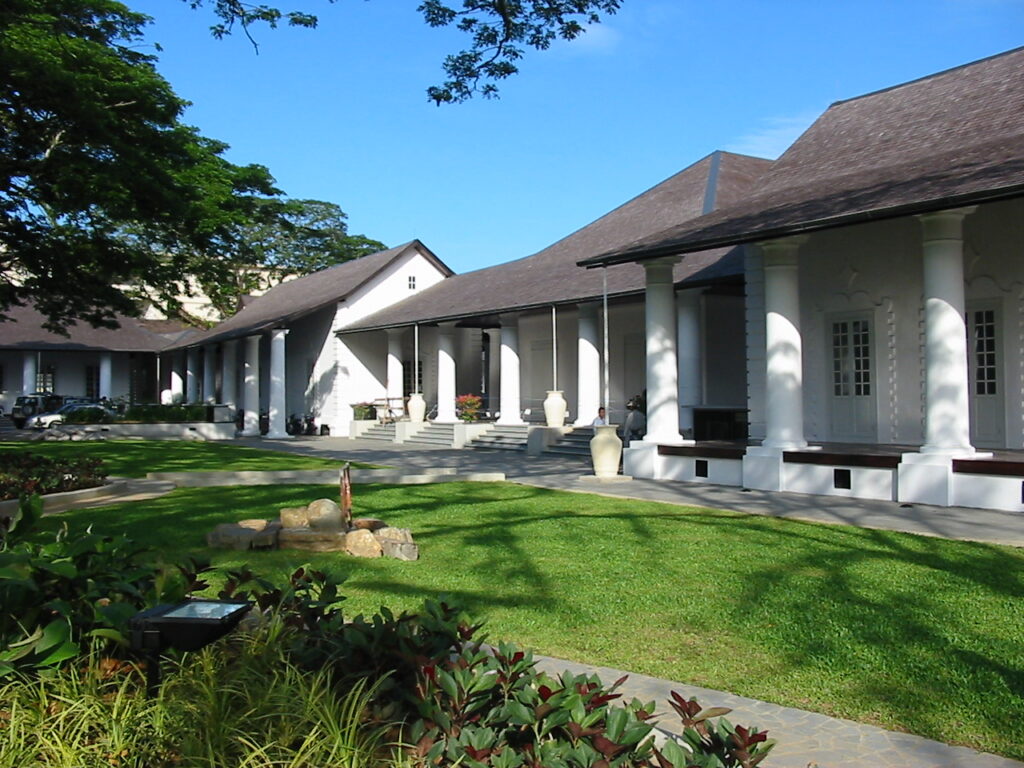
Image Credits: Sarawak Tourism Board
The Old Courthouse is the handsome white complex a block back from the waterfront, built between 1868 and 1874, and it’s the Brooke-era building you can actually walk into. The colonial-baroque clock tower went up in 1883 and the Charles Brooke Memorial, a granite obelisk, followed in 1924 in the square out front.
Look up at the belian ironwood roofs and the Roman-style columns, then wander the inner courtyard. It now runs as the Sarawak Tourism Complex, with the Visitors Information Centre, the Ranee Museum, and cafes under the arches.
One properly useful thing: the National Parks Booking Office sits in here, which is where you sort a Bako permit or a park lodge in person rather than wrestling with the website. Worth a stop on your first afternoon for that reason alone.
Brooke Dockyard Industrial Heritage Museum
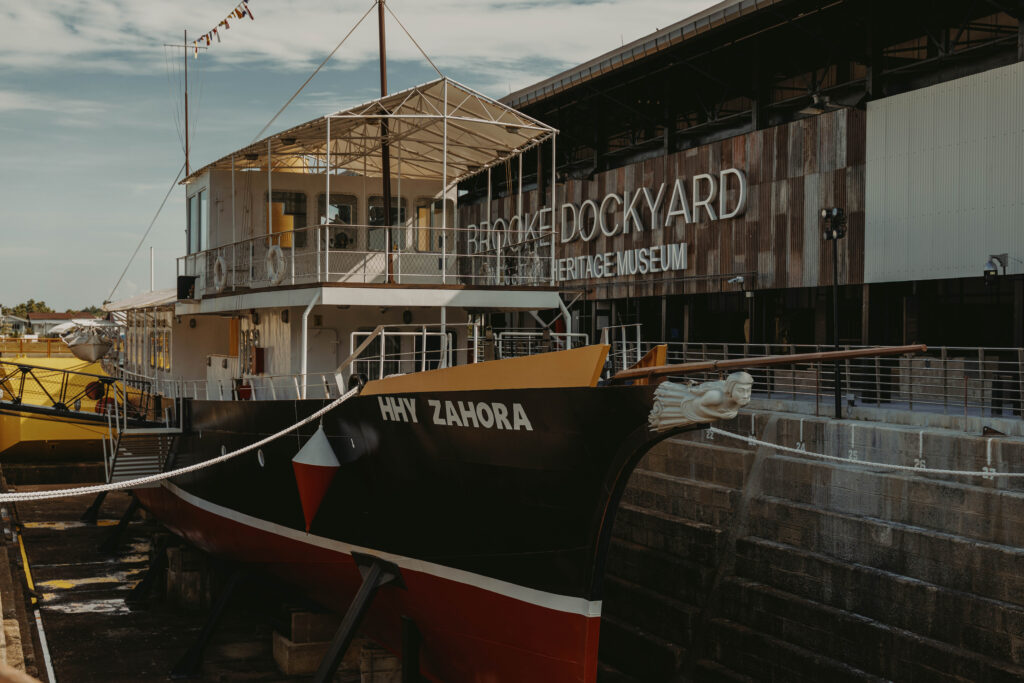
Image Credits: Sarawak Museum Department
This one is brand new and almost nobody has it on their list yet. The Brooke Dockyard opened in 1912 as the first dry dock in Malaya and Borneo, built to service the Rajah’s vessels, and in April 2026 the site reopened as an industrial heritage museum.
Inside are the original dockyard machines, left where they stood, and themed galleries with names like “Great Gears and Engines” and “Men of Steel”. The centrepiece is a replica of His Highness’s Yacht Zahora, the vessel that carried the Brooke administration up and down these rivers.
It’s on Jalan P Ramlee, it opens 9 AM to 4:45 PM on weekdays and 9:30 AM to 4:30 PM at weekends, and entry is free. Go if you like machines, ships, or getting somewhere before the guidebooks do.
The Floating Mosque
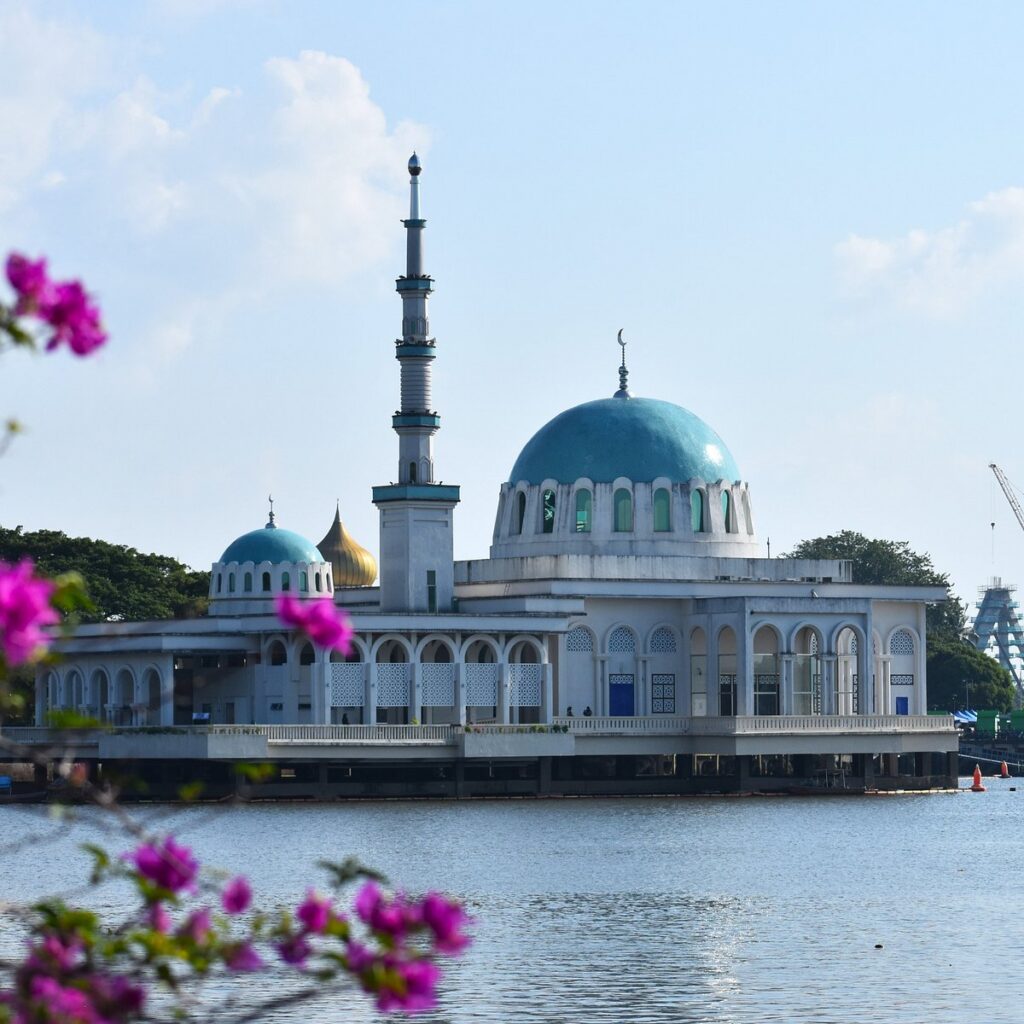
Image Credits: Tripadvisor
Masjid India Bandar Kuching sits out over the Sarawak River on the north bank, and it’s the one that stops people mid-walk. White walls, a blue-and-gold dome and a single minaret, with the water on three sides and the hills behind it.
It opened in 2019 and holds about 1,600 worshippers, built to replace the cramped 19th-century Indian Mosque that had served the community off India Street for generations. Confusingly, both carry the Masjid India name, so don’t expect the old one when a driver takes you here.
Non-Muslim visitors can look from the outside freely, and it is at its best around sunset, when the dome catches the light and the river goes still. Free, and five minutes from the waterfront by tambang.
Sarawak Cultural Village
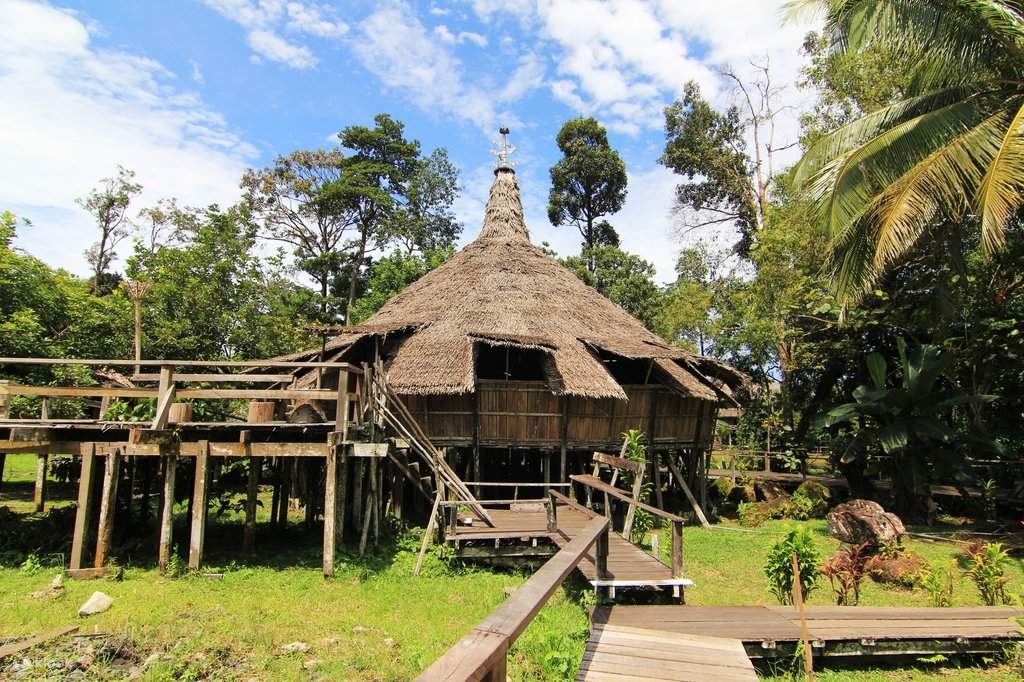
Image Credits: Klook
Sarawak counts 27 recognised ethnic groups, and this 17-acre living museum at the foot of Mount Santubong is the fastest way to understand the difference between them. Seven traditional dwellings are built at full scale, from the Iban longhouse to the Melanau tall house to the Penan hut. Each is staffed by people who’ll show you the crafts and let you try the blowpipe.
The cultural performance is the highlight, with dance, music and costume from each group in a 45-minute show. Performances run at 11:30 AM and 4 PM, and the village opens 9 AM to 5 PM. Time your arrival around a show, because the place is much flatter without one.
It’s about 35 to 45 minutes from the city and you’ll need a car or a tour. Entry is 135 MYR (~S$42) for foreign adults and 85 MYR (~S$27) for children aged 2 to 12, which makes it the most expensive ticket in this guide. In late June it hosts the Rainforest World Music Festival.
Best for families and first-timers who want the cultural context in one hit. If you’re travelling on a budget, the Borneo Cultures Museum covers similar ground for a third of the price.
Kuching’s Cat Statues and the Cat Museum
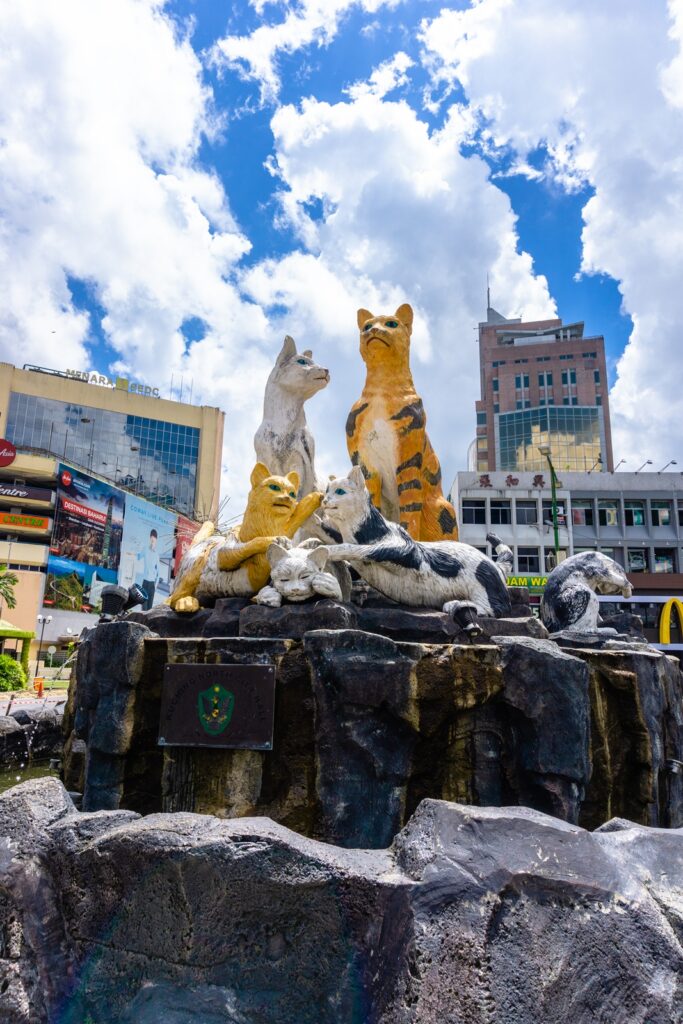
Image Credits: Sarawak Tourism Board
The name Kuching is widely linked to the Malay word for cat, and the city has run with it completely. There are cat statues at major junctions, cat murals down the back lanes, cat-shaped street lights and a great deal of cat merchandise.
The big white cat family at the Padungan junction is the one everyone photographs. The “I Love Kuching” mural of a girl holding a cat is the other.
Then there’s the Cat Museum itself, up at Bukit Siol in Petra Jaya, billed as the world’s first, with more than 4,000 cat-related objects across four galleries. It is exactly as odd as it sounds. Entry is about 3 MYR (~S$1) for adults, cash only, and it opens 9 AM to 4:30 PM.
Best for kids and anyone who finds the premise funny. If you’re short on time, do the street statues and skip the museum.
The Street Murals
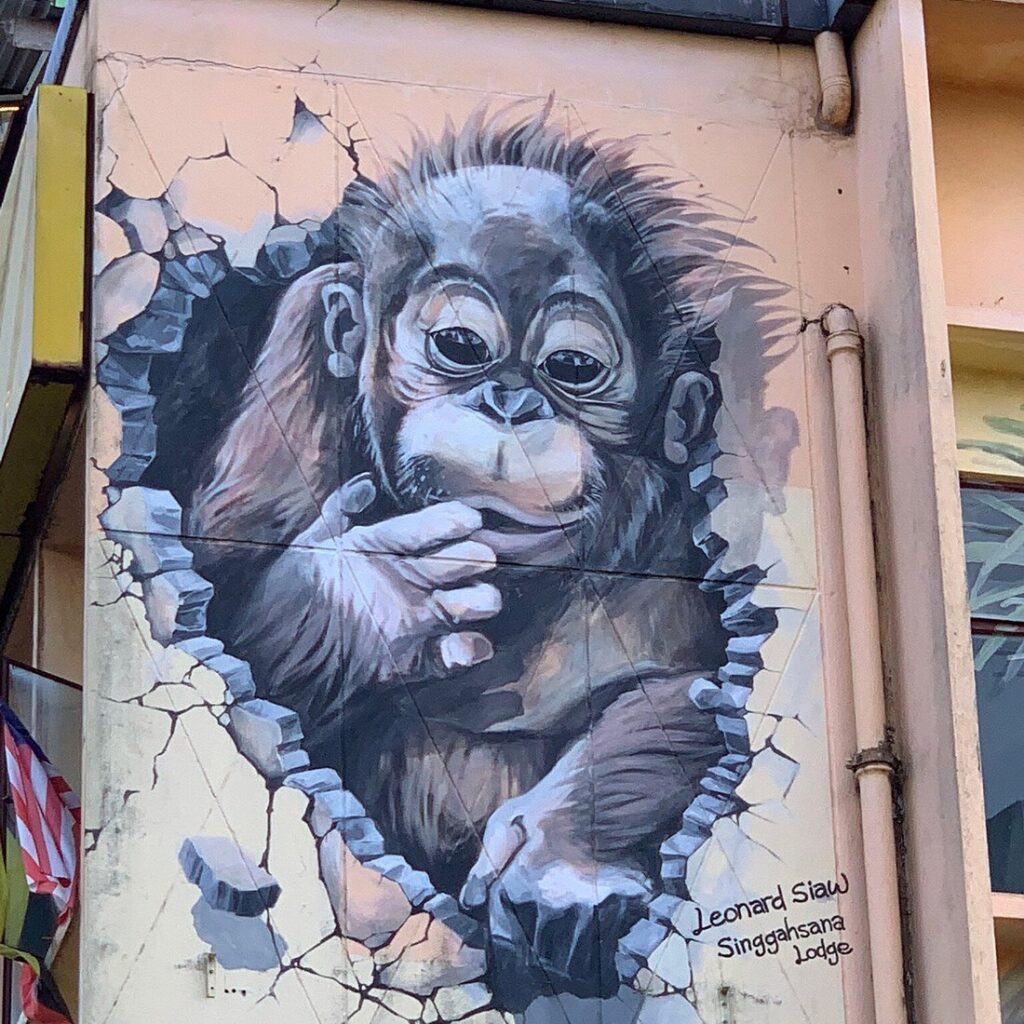
Image Credits: Tripadvisor
Kuching’s murals are better than they have any right to be, and they’re mapped to the history of each street rather than sprinkled at random. You’ll find weavers and fabric painted near the old textile quarter, metalworkers where the tin trade sat, river scenes near the waterfront.
The densest concentrations are through the lanes off Carpenter Street and behind Jalan Padungan. An hour of aimless walking turns up most of them. It’s a free thing to do between meals and the best excuse to walk the old town’s side alleys.
Kubah National Park
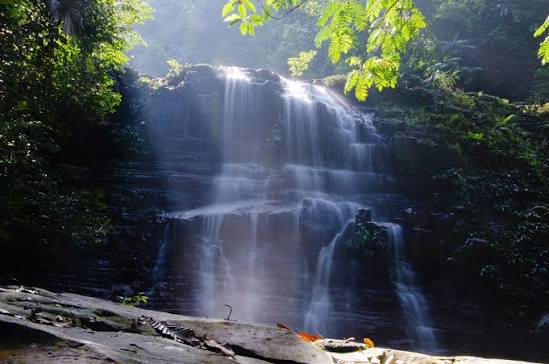
Image Credits: Wikipedia
Kubah is the easy jungle option, about 40 minutes west of the city, and it’s the one to do if Bako’s boat logistics feel like too much. It’s a rainforest reserve on a sandstone ridge, best known for waterfalls, a palm collection and a frog population that makes an extraordinary racket after dark.
The Waterfall Trail is the popular walk, running a couple of hours return to a swimmable cascade. It’s humid, root-tangled work and worth doing early.
Entry is 20 MYR (~S$6) for foreigners. Note the timing rules: entry closes at 11 AM and hikers are asked to be out by 3 PM, so this is a morning plan or nothing. It suits hikers with a spare morning, and anyone who wants rainforest without the boat trip.
Satok Weekend Market
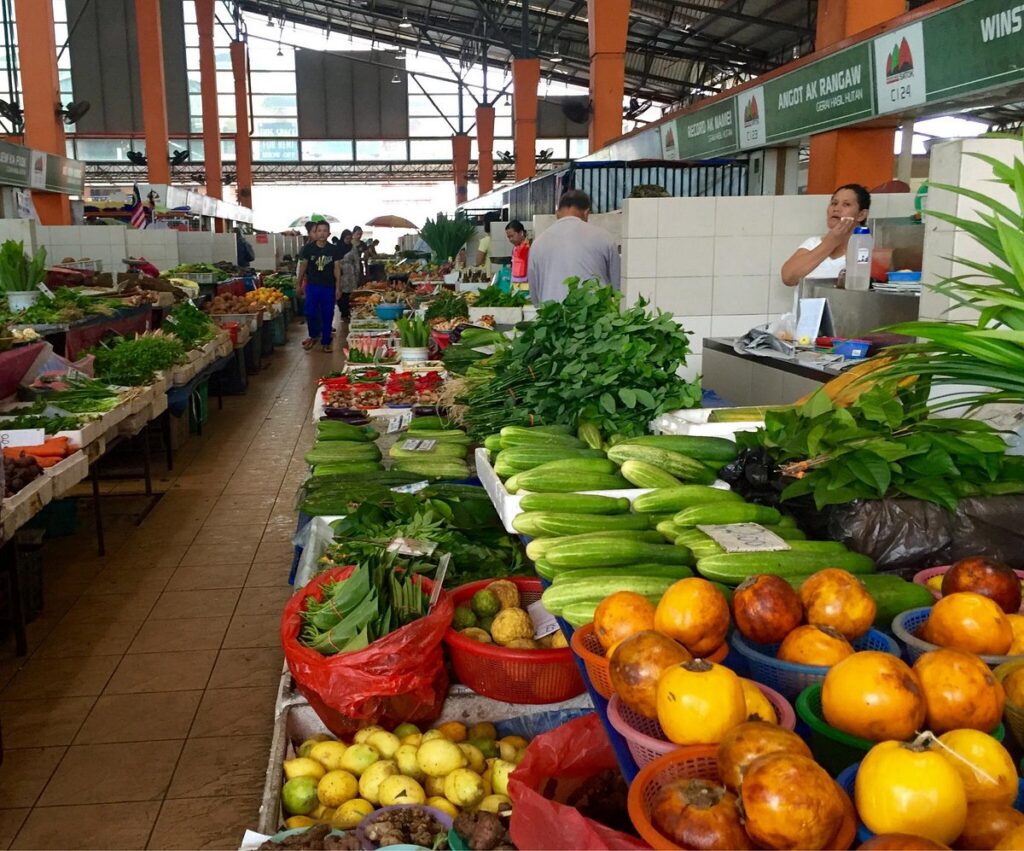
Image Credits: Tripadvisor
Satok is the big weekend market, running Saturday and Sunday, and it’s where the city actually shops. It’s now under a proper covered structure, split into wet and dry halves, with jungle produce you won’t see in a Singapore wet market.
Look for midin fern in bundles, wild honey, dabai (a black olive-like fruit eaten warm), Sarawak pepper by the sack, and stall after stall of kek lapis. In durian season the fruit section is the main event, and this is the best place in the city to try Sarawak’s own varieties.
Go in the morning when the food stalls are all running. It’s cash territory. Make it a Saturday or Sunday morning. It’s easily the best market in Kuching.
Chinese History Museum
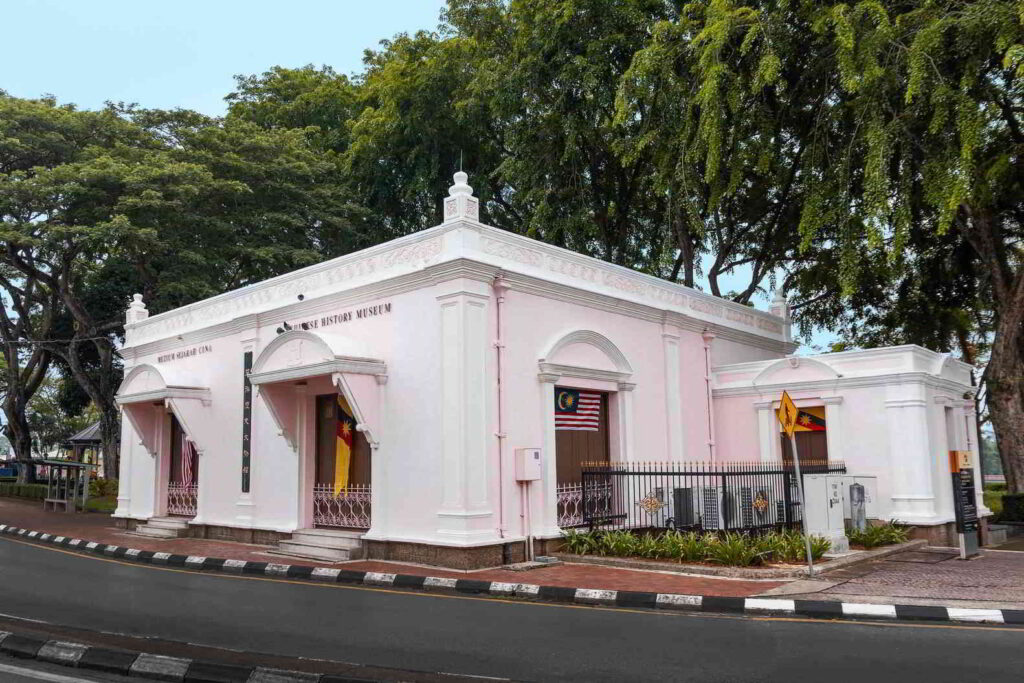
Image Credits: Sarawak Tourism Board
This small free museum sits on the waterfront in the old Chinese Court building. It covers the story of the Chinese communities who settled Sarawak, broken down by dialect group.
It’s one room, well laid out, and takes about half an hour. Entry is free, but note it opens weekdays only, 9 AM to 4:45 PM, and closes on public holidays. It fills a gap before dinner, and it’s useful context if you’re eating your way through Chinatown.
A Sarawak River Cruise
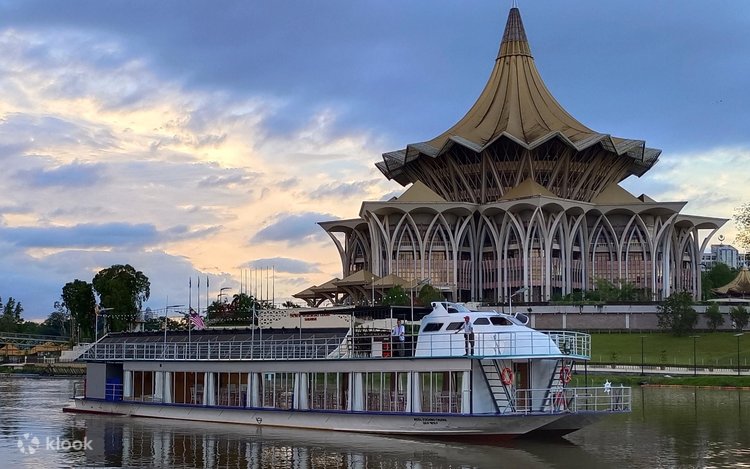
Image Credits: Klook
The evening cruise runs about 90 minutes up and down the Sarawak River, departing from the waterfront jetty around 5:30 PM with boarding from 5 PM. You get commentary on the buildings, a short cultural dance on deck, and light refreshments including a slice of kek lapis.
The real draw is watching the light change on the water while the city switches its lights on. Tickets run about 70 MYR (~S$22) for adults and 35 MYR (~S$11) for children aged 5 to 12.
Best for a first evening, and a soft option for older travellers. If you only want the view and not the commentary, the tambang costs a fraction of it.
What to Do in Kuching at Night
Kuching is not a late city, and the evening plan is food, the river and a walk. That’s not a complaint once you’ve adjusted to it.
The Waterfront Light and Water Show
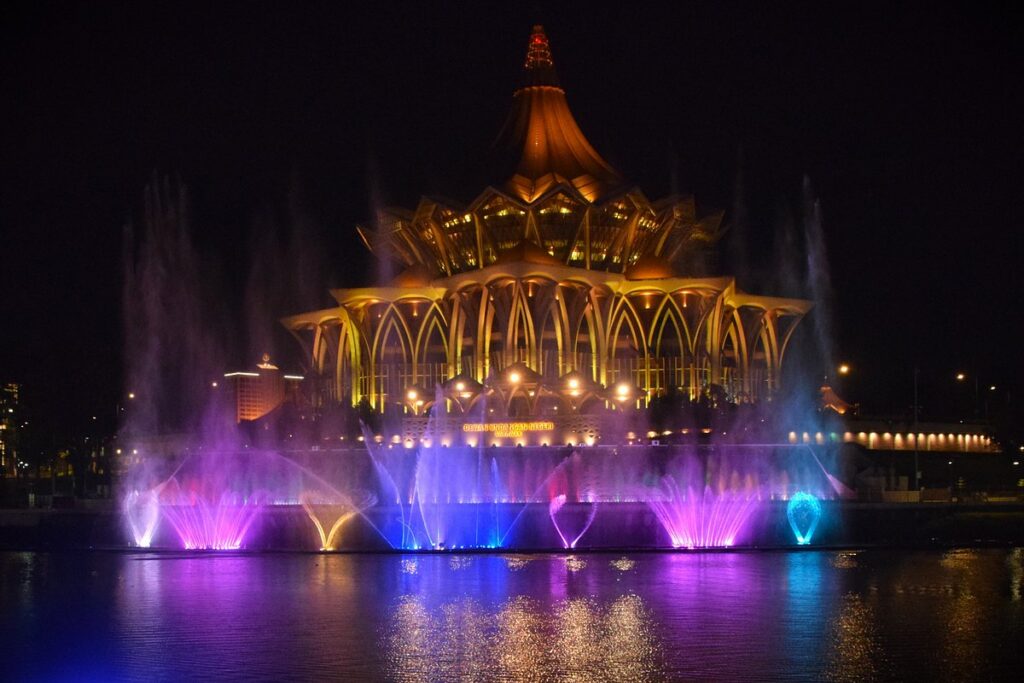
Image Credits: Tripadvisor
Most evenings a music, light and fountain show plays on the river in front of the State Assembly building, and the whole promenade turns out for it. Jets of water are lit in colour and choreographed to music, with the golden Assembly roof as a backdrop.
It’s free and lasts about 15 minutes, and the food stalls along the promenade get busy right before and after. Showtimes move around and it’s called off in heavy rain, so ask at your hotel before you walk down. Grab a satay skewer and a spot on the railing.
Top Spot Food Court
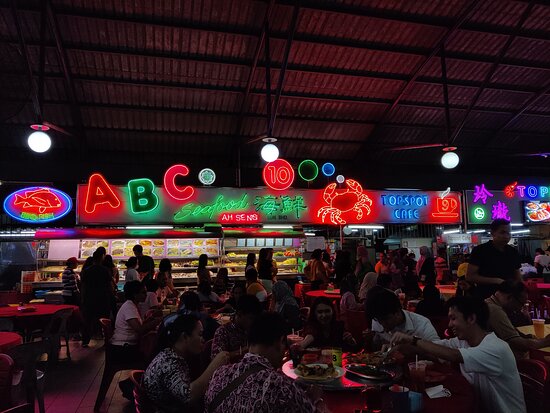
Image Credits: Tripadvisor
Top Spot is the Kuching seafood institution and it’s on the roof of a multi-storey car park on Jalan Bukit Mata, just off Padungan. Follow the giant lit-up lobster sign, take the lift up, and you emerge into about 40 open-air stalls under one roof.
The system: pick a stall, pick your fish or prawns from the ice, agree the weight, then order the sides. Butter prawns, midin fried with garlic or belacan, ikan terubok masin and steamed river fish are the things to get. Seafood is sold by weight at whatever the stall sets that night, so confirm the price before you commit, because that’s where bills run away from people.
It’s busiest between 7 PM and 9 PM, which is also when it’s most fun. Best for a group dinner and the one meal to build an evening around.
Jalan Padungan After Dark
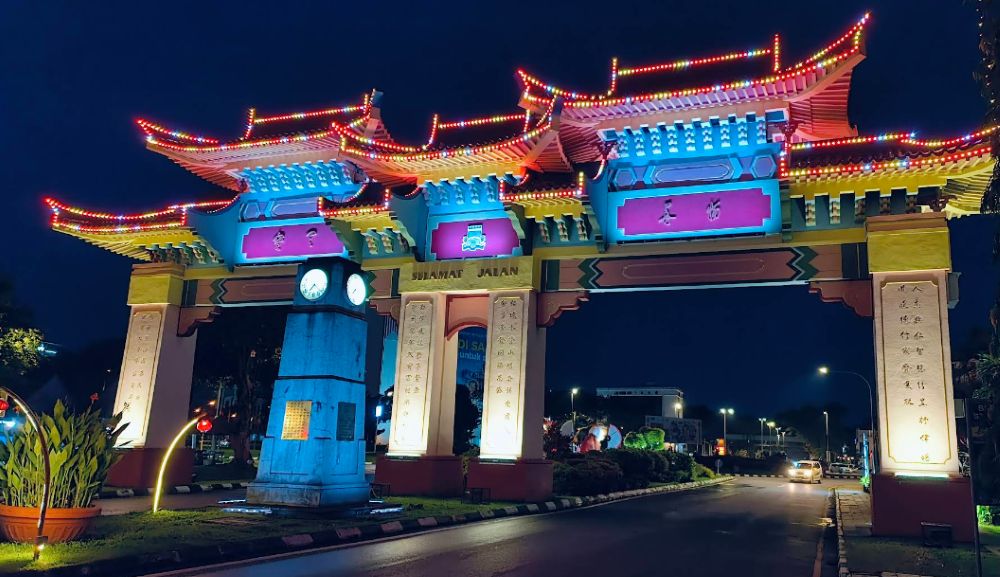
Image Credits: KuchingBorneo
Padungan is where the drinking happens, such as it is. The shophouse bars along the street run to craft beer, cocktails and a lot of outdoor seating, and there are dessert shops and late kopitiams for anyone not drinking.
It’s relaxed and pretty rather than lively, with lanterns overhead and the cat statue lit up at the junction. Best for an unhurried drink after dinner, and the closest Kuching gets to a bar street.
Siniawan Old Town Night Market
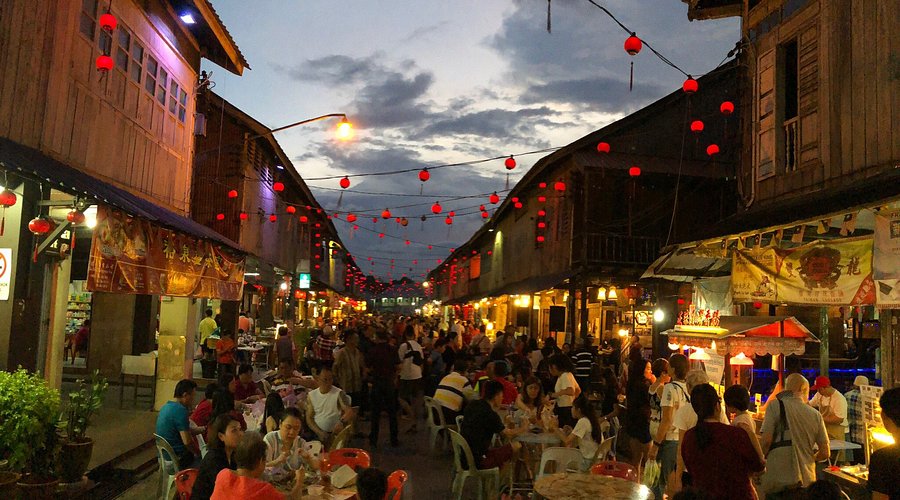
Image Credits: Tripadvisor
Siniawan is a single street of restored wooden shophouses about half an hour from the city, and on Friday, Saturday and Sunday nights it becomes one long lantern-lit food market. Tables run down the middle of the road and the whole street eats together.
Pork satay is the thing everyone queues for, alongside grilled fish, Foochow noodles and bamboo-cooked rice. There’s usually live music at one end.
It takes a car or a Grab each way and only runs those three nights, and the drive out passes through kampung country and rice fields. Go on a Friday or Saturday. It’s the best-looking meal you’ll eat in Sarawak.
A Night Walk Across Darul Hana Bridge
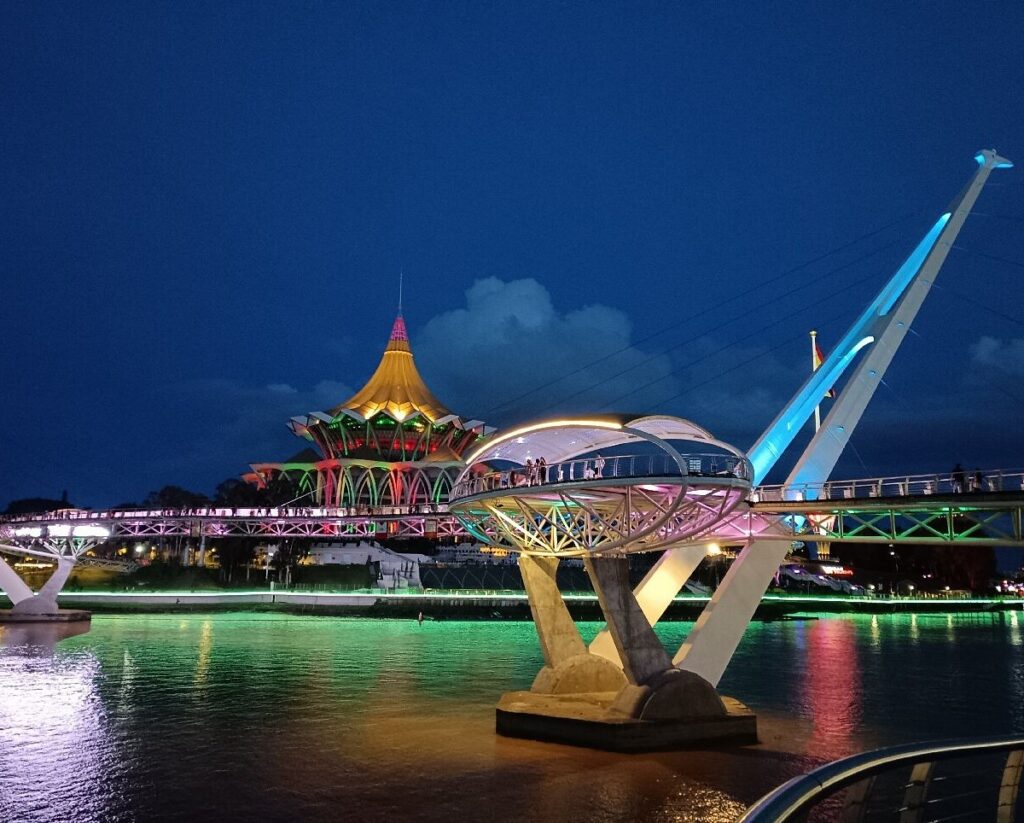
Image Credits: Tripadvisor
The bridge is a different thing after dark. The deck lights cycle through colours, the Assembly building is floodlit gold and the river holds all of it as reflection.
It’s a fifteen-minute stroll from the waterfront and it costs nothing. Best for the walk back to your hotel after dinner, and the best free view in the city at night.
Where to Eat in Kuching
Kuching is the best eating city in Malaysian Borneo, and Sarawak’s food is properly distinct from the peninsula’s. Several of these dishes exist nowhere else. Most of the great stuff is breakfast, so set an alarm.
Sarawak Laksa
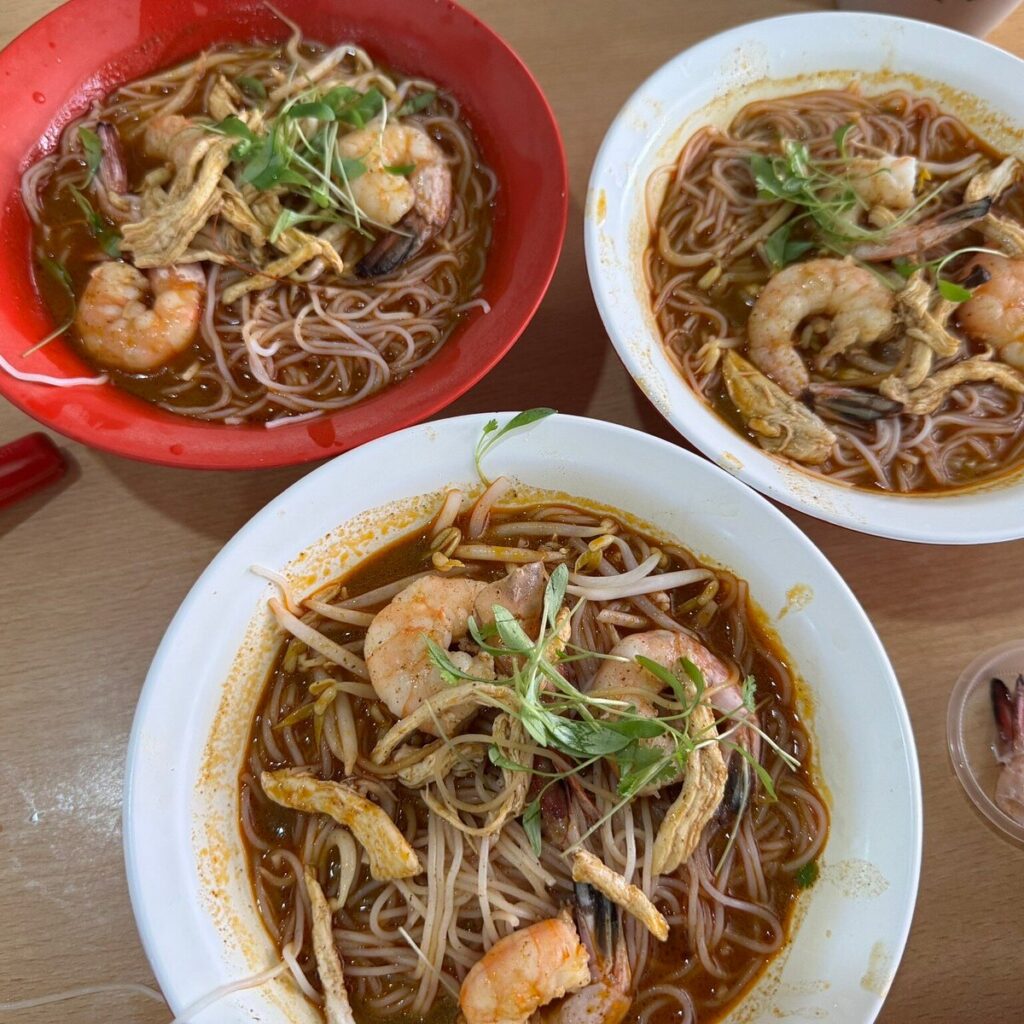
Image Credits: Tripadvisor
Sarawak laksa is the dish to try first and it’s nothing like curry laksa. The broth is built on sambal, coconut milk, tamarind and shrimp paste, giving a thin, sour, deeply prawny soup rather than a rich yellow one. It comes with rice vermicelli, shredded chicken, prawns, omelette strips and bean sprouts, with a dab of sambal on the side.
A bowl runs about 10 to 14 MYR (~S$3 to S$4), with the prawn-heavy “special” at the top of that range. The kopitiams that make it well open around 6:30 AM and sell out before lunch, so this is a breakfast dish whether you like it or not.
| Where to try | Area | What makes it |
|---|---|---|
| Chong Choon Cafe | Jalan Chan Chin Ann | Running since 1958; the version most locals send visitors to |
| Choon Hui Cafe | Jalan Ban Hock | The other benchmark, and Anthony Bourdain’s stop; 6:30 AM to 11 AM, closed Mondays, cash only |
| 126 Laksa | Jalan Chan Chin Ann | Halal and pork-free, so it’s the one to book if that matters |
Get there before 9 AM. Best for your first morning, and the single dish to eat if you eat only one.
Kolo Mee
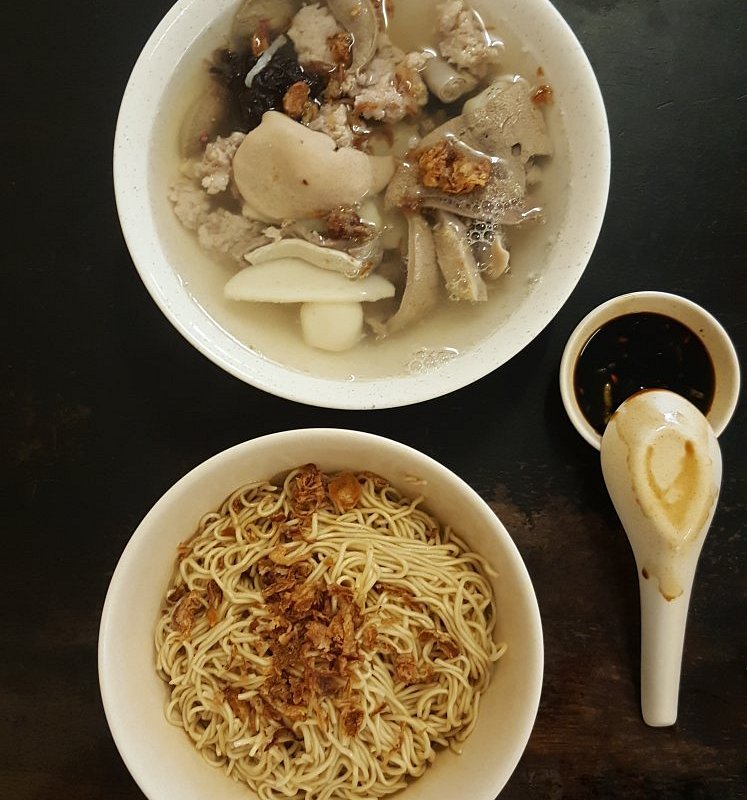
Image Credits: Tripadvisor
Kolo mee is Kuching’s other breakfast religion: springy egg noodles tossed dry in shallot oil and light seasoning, topped with char siu and minced pork. It’s simple and it lives or dies on the noodle texture and the oil.
Three versions exist. White is the original and the purist’s pick. Dark uses a soy-based sauce and eats saltier. Red, or kolo mee merah, is tossed with char siu sauce and is the sweetest of the three. A bowl runs about 6 to 12 MYR (~S$2 to S$4), depending on the toppings.
| Where to try | Area | What makes it | |
|---|---|---|---|
| Noodle Descendants | 188 Jalan Padungan | Family-run since 1957; dry noodles with black vinegar and pork soup. Expect a queue | |
| 126 Laksa | Jalan Chan Chin Ann | The halal option, with chicken char siu instead of pork | |
| Chong Choon Cafe | Jalan Chan Chin Ann | Order it alongside the laksa and try all three sauces | Treat it as a second breakfast, and order white first so you have a baseline. |
Kueh Chap
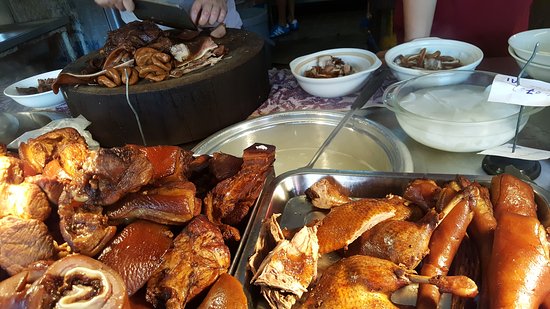
Image Credits: Tripadvisor
Kueh Chap is flat rice sheets in a dark, five-spiced braising broth, served with pork belly, tofu, egg and various offcuts. It’s soft, aromatic and comforting, and the sheets have a silky slipperiness that’s the whole appeal.
Order the standard version if you’re new to it and ask them to hold the innards. It’s about 8 to 12 MYR (~S$3 to S$4).
| Where to try | Area | What makes it |
|---|---|---|
| Lau Ya Keng Food Court | Carpenter Street | Open-air court behind the temple; also does good pork satay |
| Chong Choon Cafe | Jalan Chan Chin Ann | Handy if you’re already there for the laksa |
Best for a rainy morning. Note: this is a pork dish and not halal.
Midin and Umai
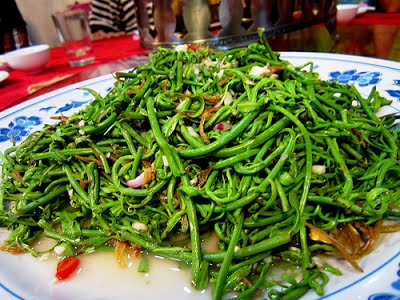
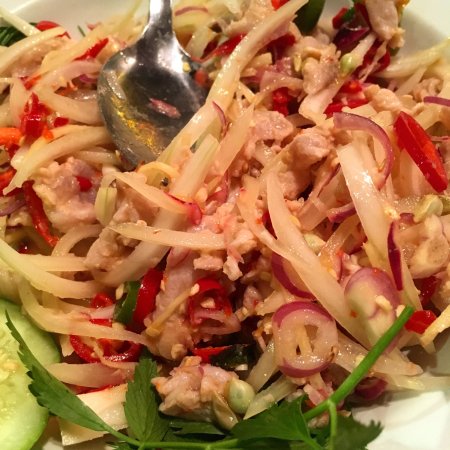
Image Credits: Sarawak Tourism Board | Tripadvisor
Midin is a wild jungle fern that grows only in this part of Borneo, and it’s the vegetable you should order at every dinner. Stir-fried hard with garlic or belacan, it stays crunchy in a way no other green manages. It wilts within a couple of days of picking, which is why you won’t find it at home.
Umai is the other only-here dish: raw fish tossed with lime, shallots, chilli and salt, somewhere between ceviche and a sashimi salad. It’s sharp, clean and much less fishy than it sounds.
| Where to try | Area | What makes it | |
|---|---|---|---|
| Lepau | Jalan Ban Hock | The serious Dayak restaurant in town; both dishes done properly | |
| Top Spot Food Court | Jalan Bukit Mata | Order midin with belacan alongside the seafood | These are the two dishes to point at when someone asks what Sarawak actually tastes like. |
Ayam Pansuh
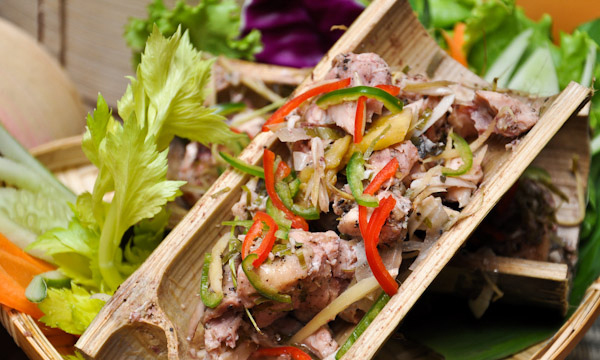
Image Credits: Sarawak Tourism Board
Ayam pansuh, or manok pansuh, is Dayak cooking at its best: chicken stuffed into a bamboo tube with lemongrass, ginger, garlic and tapioca leaves, then roasted slowly over a fire. The bamboo steams the bird in its own juices and leaves a light, fragrant broth at the bottom.
It’s mild rather than spicy, and it’s usually served with Bario highland rice. Give it a shot even if you’re not normally a chicken orderer.
| Where to try | Area | What makes it | |
|---|---|---|---|
| Lepau | Jalan Ban Hock | Award-winning Dayak kitchen, open 11 AM to 2 PM and 6 PM to 10 PM. Book ahead or expect a 30-minute wait | |
| Rumah asap smokehouses | Several around Kuching and Kota Samarahan | Open-air grill halls rather than one restaurant; order the bamboo dishes and Bario rice | It’s a proper sit-down dinner and the most distinctive meal in the city. |
Kek Lapis Sarawak
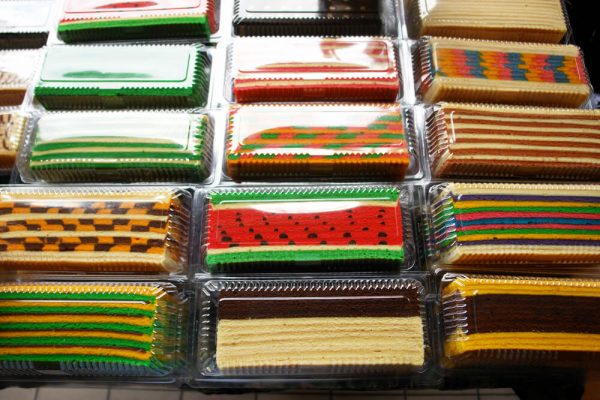
Image Credits: Sarawak Tourism Board
Kek Lapis is Sarawak’s layered cake, and it’s less a dessert than a craft. Each layer is baked and grilled separately, then assembled into geometric patterns, so a single cake can take hours. The flavours run from pandan and chocolate to cheese and blueberry.
Buy a small sampler box rather than one full cake, because they’re rich and there are dozens of designs. Slices are a couple of ringgit each, and whole cakes start around 35 MYR (~S$11). The intricate designs climb well past that, since the price tracks how many hours the layering took.
| Where to try | Area | What makes it | |
|---|---|---|---|
| Main Bazaar shops | Old town waterfront | The convenient option, with sampler boxes packed for travel | |
| Satok Weekend Market | Jalan Satok | The widest selection and the best prices, weekends only | It keeps well, and it’s the most Sarawak thing you can put in a suitcase. |
Gula Apong Ice Cream and Sarawak Coffee
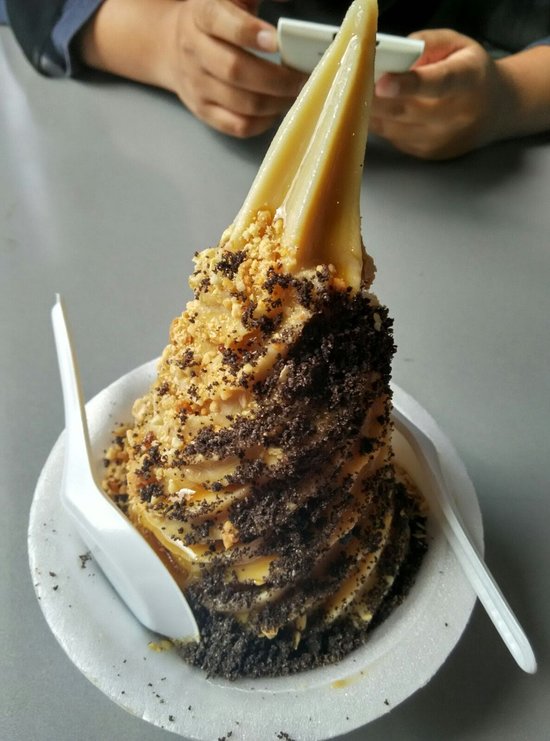
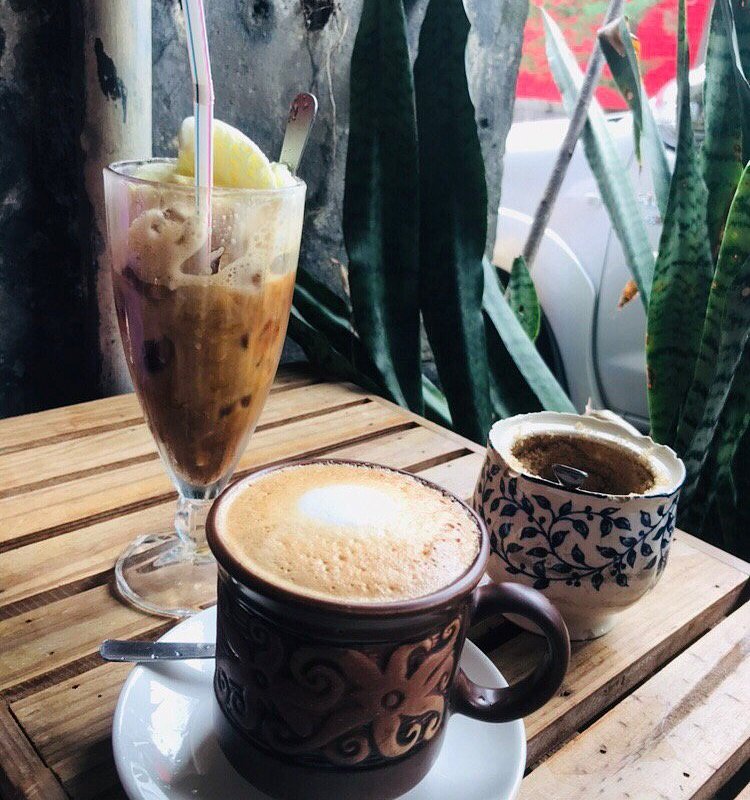
Image Credits: Tripadvisor
Gula apong is palm sugar tapped from the nipah mangrove, with a smoky, salted-caramel edge, and Kuching puts it on everything. Soft-serve is the standard delivery, usually from a stall along the waterfront for a few ringgit.
Sarawak also grows and roasts its own coffee, and the local kopitiam style is strong, dark and thick. Order a kopi peng if it’s hot out, which it will be.
| Where to try | Area | What makes it | |
|---|---|---|---|
| Black Bean Coffee & Tea Company | Jalan Ewe Hai, off Carpenter Street | Tiny roastery doing Sarawak-grown beans, going about 20 years. Closed Sundays | |
| Gula apong ice cream stalls | Jalan Padungan | The classic soft-serve stop, listed by Sarawak Tourism itself | |
| Waterfront stalls | Kuching Waterfront | Gula apong soft-serve, best eaten walking at sunset | It’s the afternoon break between the museum and dinner. |
The Local Food Courts
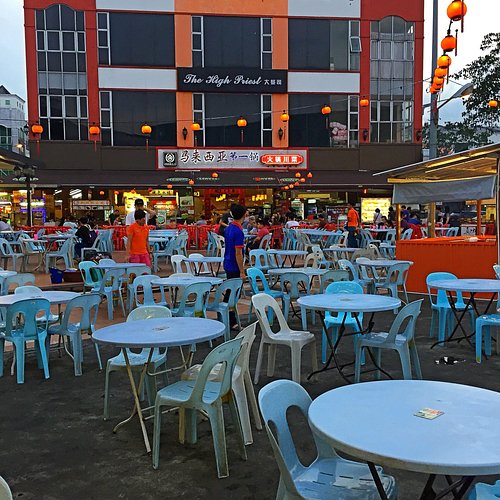
Image Credits: Tripadvisor
The kopitiams get the write-ups, but Kuching eats a lot of its meals in big open food courts, and two are worth knowing.
Premier 101 on Jalan Song is the largest of them, running 24 hours with dozens of stalls under one roof. It’s about ten minutes from the airport, which makes it a smart first or last stop. Graze across laksa, kolo mee, kuey teow and dim sum in one sitting, work out what you like, then go hunting for the best version over the next few days.
Saradise is the newer dining precinct off Jalan Wan Alwi, and it’s the one locals name when you ask where they actually go. Cafes, seafood, dessert shops and a lot of evening trade, with almost no tourists. Save it for your arrival evening or your last lunch. It’s the fastest way to taste-test the whole Sarawak repertoire.
Best Day Trips From Kuching
Kuching’s best days out are all within about an hour, which is what makes the city such an efficient base.
Fairy Cave
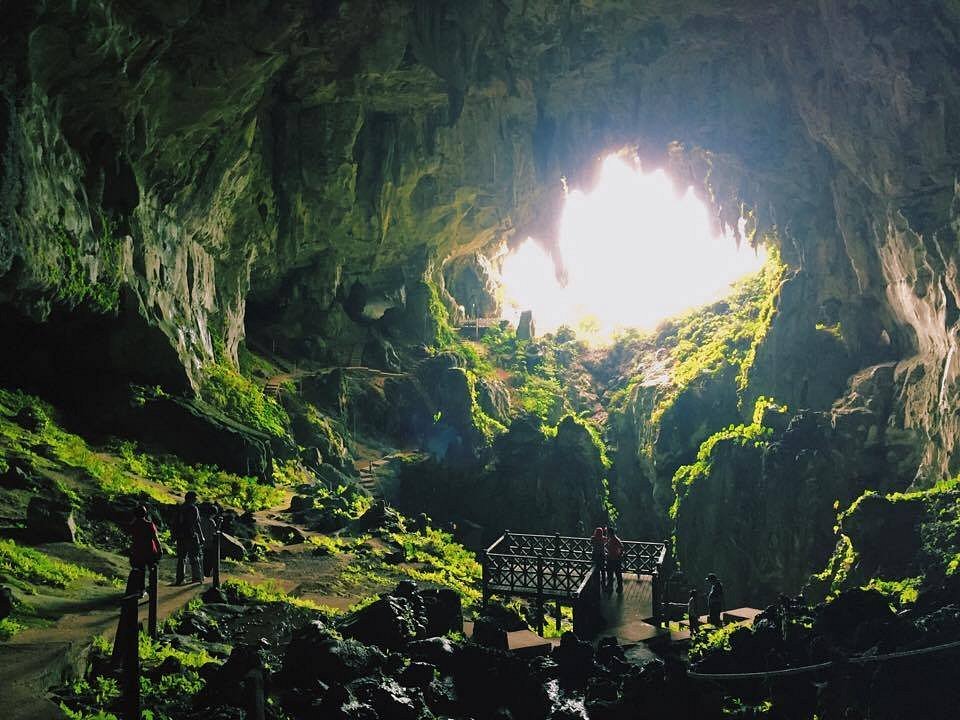
Image Credits: Tripadvisor
Fairy Cave sits near the old gold-mining town of Bau, about 40km west, and it’s the most impressive thing in the area. You climb a long flight of stairs up the cliff face to reach the mouth. Then you step into a chamber the size of a cathedral, with light shafting down through holes in the roof onto moss-covered rock.
Chinese shrines sit inside the cave, tucked into the formations, and locals have come here to pray for generations. The floor is uneven and the light is low in places, so wear proper shoes and bring a torch.
Entry is free. The staircase is the hard part and it’s seriously steep. Best for anyone reasonably mobile; skip it if stairs are an issue.
Wind Cave
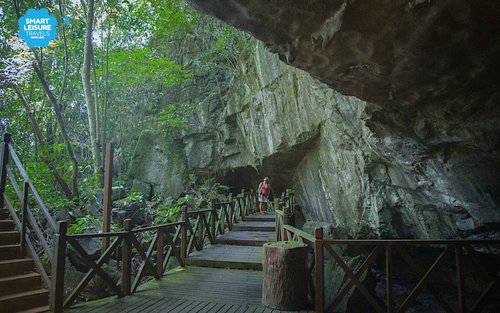
Image Credits: Klook
Wind Cave is a few minutes’ drive from Fairy Cave and it’s the opposite experience. Where Fairy Cave is vast and lit, Wind Cave is a series of low, dark tunnels you walk through on a boardwalk with a torch.
Bats hang in the ceiling and swiftlets nest in the higher chambers, so it’s noisier and smellier than you expect. It’s short, maybe 40 minutes, and it’s the better of the two for kids who like being slightly scared.
Entry is about 3 MYR (~S$1) for adults and 1.50 MYR (~S$0.50) for children, open 8:30 AM to 4:30 PM. Best for pairing with Fairy Cave as one half-day; nobody does just one.
Jong’s Crocodile Farm
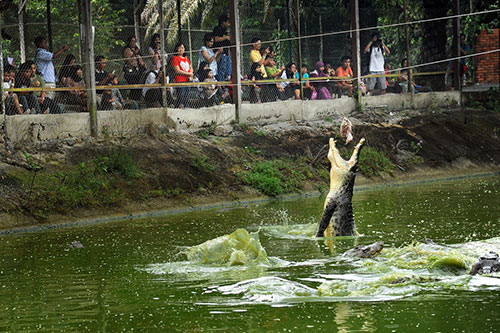
Image Credits: jongscrocodile.com
Jong’s sits about 29km out on the Kuching to Serian highway, roughly 20 minutes from the city. It holds over a thousand saltwater crocodiles, including some four-metre monsters. Feeding shows at 11 AM and 3 PM are the reason to time your visit.
It works more like a small zoo than a single-species farm, with sun bears, monitor lizards, civets, arapaima and an aviary. The enclosures are older-style and the standards won’t suit everyone, so go in knowing that.
It’s open 9 AM to 5 PM daily, and entry is around 30 MYR (~S$9) for overseas visitors. Best for families with younger kids.
Damai Beach and Mount Santubong
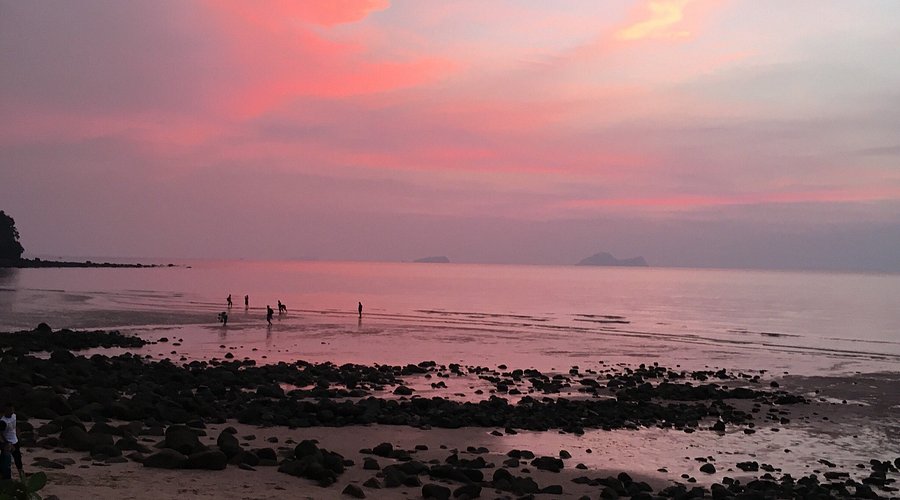
Image Credits: Tripadvisor
The Santubong peninsula is Kuching’s beach escape, about 40 minutes north, with Mount Santubong rising 810m straight out of the sea behind it. Damai Beach is the main stretch, with resorts, calm swimming and a very good sunset.
Sarawak Cultural Village sits on the same peninsula, so the two combine into one clean day. Serious hikers can attempt the Santubong summit trail, a six to ten hour return climb with knotted ropes and fixed ladders on the steepest sections. It is not a casual walk.
Best for a slow half-day paired with the Cultural Village, or a real hike if you want one.
Panchor Hot Spring
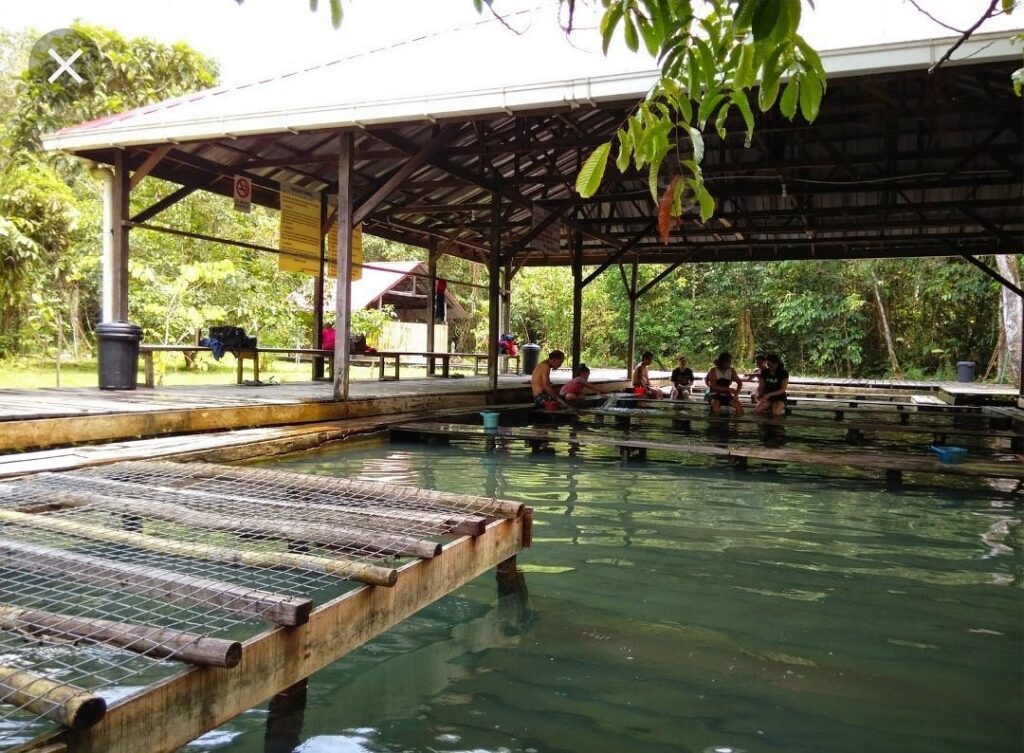
Image Credits: Tripadvisor
Panchor is the local secret, a rustic set of open-air hot pools about an hour out towards Serian, with several pools running from roughly 39°C to 42°C so you can pick your heat. It’s simple: concrete pools, trees overhead, birds, and locals who come regularly for their joints.
Entry is only a few ringgit and it opens early and closes late, so it works as a wind-down after a hike. Bring your own towel and expect basic facilities. Different sources quote different gate prices, so carry a bit more cash than you think you need.
Best for an unhurried afternoon and travellers who like finding the unpolished thing.
Satang Island
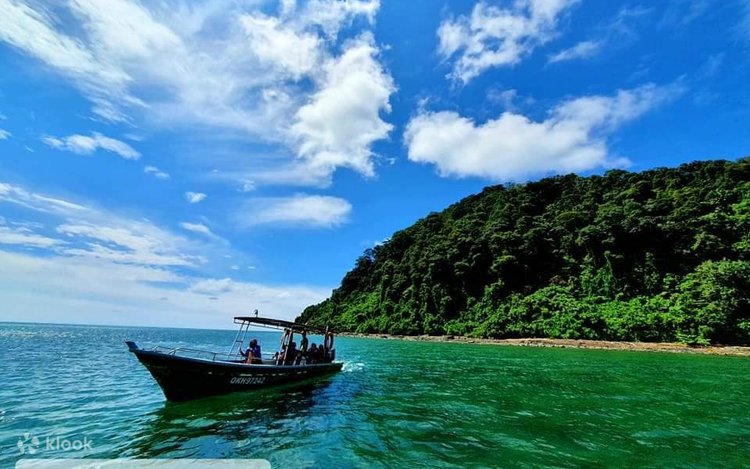
Image Credits: Klook
Satang Island sits in the Talang-Satang National Park, about a 30-minute boat ride from Damai Beach, and it’s Sarawak’s first marine protected area, gazetted in 1999. Green turtles come ashore to nest here, and day tours combine a turtle hatchery visit with snorkelling over the reef.
There’s no scheduled boat service, so you go with an organised tour or not at all.
Nesting season runs roughly May to September, with hatchling releases through the back half of it. Sightings depend entirely on the turtles, so treat it as a snorkelling trip that might come with turtles rather than the other way round.
Best for a clear-weather day between May and September, and the only marine day trip on this list.
Borneo Highlands
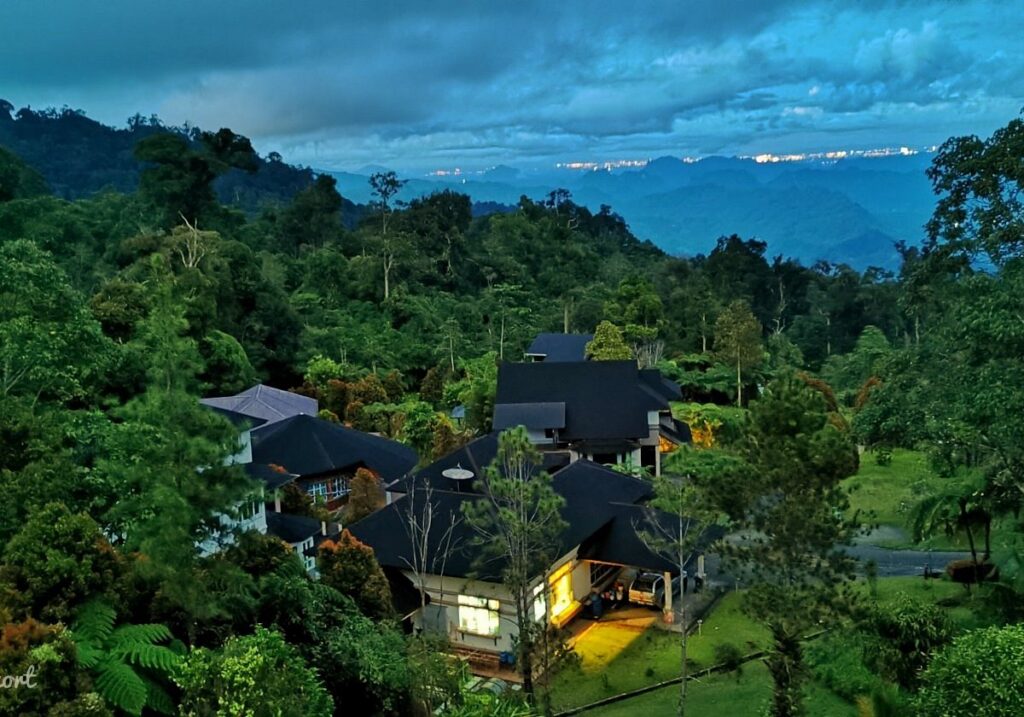
Image Credits: Tripadvisor
The Borneo Highlands sit on the Sarawak-Kalimantan border about an hour southwest of the city, roughly 60km out. At around 1,000m up, the temperature drops noticeably, and you can look down on a sea of cloud at dawn. There are homestays, a former golf resort, and walking trails through mossy forest.
The road up is winding and drivers are advised to be off it before dark. Go up in the afternoon, stay the night, and be out for sunrise.
Best for anyone who wants one cool night and a completely different landscape. It needs an overnight to be worth the drive.
A Sample 3-Day Kuching Itinerary
Day 1: Old town, river and seafood
Land, drop bags and go straight to a kopitiam for laksa if it’s still morning. Walk Main Bazaar, Carpenter Street and India Street, then duck into the Chinese History Museum when the heat peaks.
Late afternoon, cross Darul Hana Bridge to Fort Margherita and take a tambang back. Sunset on the waterfront, then dinner at Top Spot.
Day 2: Bako National Park
Out early to Kampung Bako jetty, boat across, and give the park the whole day. Do the Telok Paku or Telok Delima trail for proboscis monkeys, eat at the park canteen, and take an afternoon boat back.
Back in the city, keep dinner easy on Jalan Padungan and get an early night.
Day 3: Orangutans, museum and cake
Semenggoh for the 9 AM feeding, then back to town for the Borneo Cultures Museum. Give it two hours and don’t rush the top floors.
Late lunch of kolo mee, kek lapis shopping on Main Bazaar, and the airport is only 15 minutes away when it’s time.
Swap in the Bau caves for Bako if you’d rather have a half-day and a slower pace, or add Sarawak Cultural Village on a fourth day.
Things to Do in Kuching With Kids
Kuching handles families well. The wildlife does most of the heavy lifting, and the city is small enough that nobody spends two hours in a car.
Borneo Happy Farm
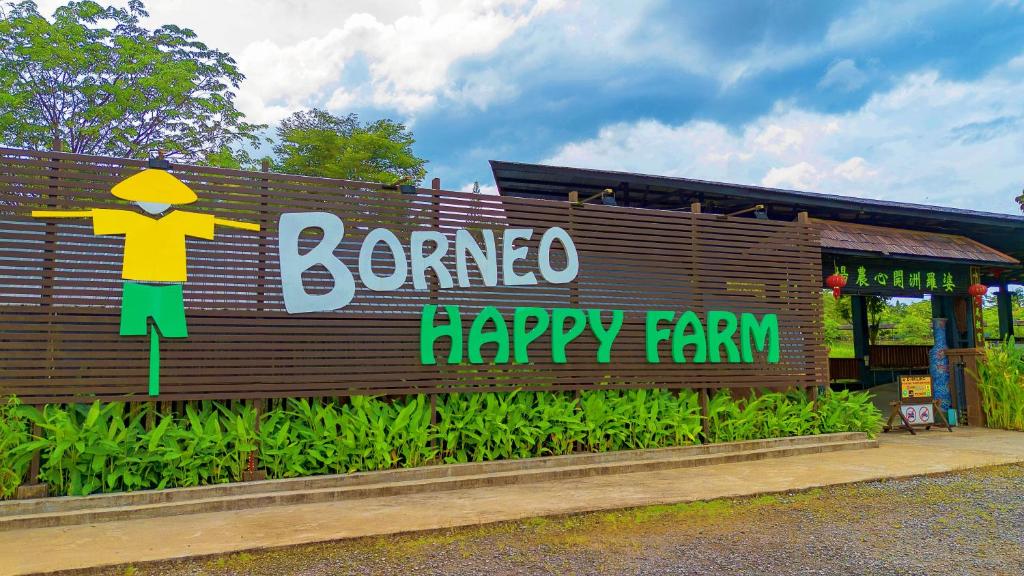
Image Credits: Booking.com
A working farm-resort out towards Bau with animal enclosures, a zip line, pony rides and feeding sessions, built squarely for kids. Expect guinea pigs, arowana ponds, monitor lizards, buffalo and a lot of running around.
It opens Wednesday to Sunday and on public holidays, 8:30 AM to 5 PM, with the ticket counter closing at 3:30 PM. Plan a half-day and check the weather, since a good chunk of it is outdoors. Admission is priced differently for Malaysians and overseas visitors, so check the rate before you go.
Everything Else That Works With Kids
The rest of the family wins are spots covered above, filtered for what actually holds a child’s attention.
| Spot | What wins them over | Time |
|---|---|---|
| Jong’s Crocodile Farm | Feeding shows at 11 AM and 3 PM, with sun bears and arapaima between them | Half a day |
| Semenggoh Wildlife Centre | Orangutans at the 9 AM feeding, though they’re semi-wild and may not show | Half a day |
| Wind Cave | Dark tunnels, a torch each and a ceiling full of bats. Short and mildly spooky | About 40 minutes |
| Cat Museum | Thousands of cat objects for about 3 MYR (~S$1). A hit with under-10s | About an hour |
| Waterfront light and water show | Free, 15 minutes, coloured fountains and a satay stall afterwards | An evening hour |
One honest warning on Semenggoh: the orangutans are semi-wild and don’t always turn up. Frame it to children as a maybe rather than a promise, and the morning still works as a rainforest walk.
Best for ages roughly 4 to 12. Bring insect repellent, water and a change of clothes for everyone.
Free and Cheap Things to Do
Kuching is inexpensive even by Malaysian standards, and a surprising amount of the good stuff costs nothing.
- Kuching Waterfront and the nightly light and water show: free
- Darul Hana Bridge, day or night: free
- Street murals around Carpenter Street and Padungan: free
- Tua Pek Kong Temple and the old town temples: free
- Chinese History Museum: free
- Cat statues at Padungan junction and around the city: free
- Fairy Cave in Bau: free
- Tambang river crossing: a couple of ringgit
- Cat Museum: about 3 MYR (~S$1)
- Semenggoh Wildlife Centre: 10 MYR (~S$3), the best value ticket in Sarawak
Getting Around Kuching
Grab works well in Kuching and it’s how most visitors get around. City hops cost a few ringgit and even the longer runs out to Semenggoh or the Bako jetty stay reasonable. Coverage thins out in the evening and in the villages, so book your return before you need it.
The old town is walkable end to end. Main Bazaar, Carpenter Street, India Street and the waterfront all sit within a fifteen-minute radius, and Padungan is a ten-minute walk beyond that.
Renting a car makes sense if you’re doing Bau, Santubong and the Highlands, since those trips add up in Grab fares and drivers are scarce on the return leg. Roads are quiet and well signposted by regional standards.
Public buses exist but run infrequently and aren’t worth the planning for a short trip.
Where to Stay in Kuching
The waterfront and old town: for first-timers
Staying along or just behind the waterfront puts you in walking distance of the food, the temples, the museum and the bridge. Hotels here run from budget guesthouses in restored shophouses to the bigger river-view chains, and it’s the right call for a two or three-night trip.
Jalan Padungan: for eating and drinking
Padungan puts dinner and the bar street on your doorstep, with Top Spot a short walk away. It’s slightly removed from the waterfront but still easily walkable, and the boutique hotels here tend to be better value.
Damai and Santubong: for a beach finish
The Santubong peninsula has the resorts, the beach and the mountain, about 40 minutes from town. It’s the wrong base for sightseeing and the right one for tacking a slow two nights onto the end of a trip.
Paying in Kuching: Cards, Cash and Ringgit
Kuching runs on Malaysian ringgit, and this is more of a cash city than Kuala Lumpur or Penang. Hotels, malls, the bigger restaurants and the museum ticket desks take cards, but the kopitiams, the Bako jetty, the markets, the caves and most stalls do not.
Paying in ringgit rather than Singapore dollars at a marked-up rate is the whole game here.
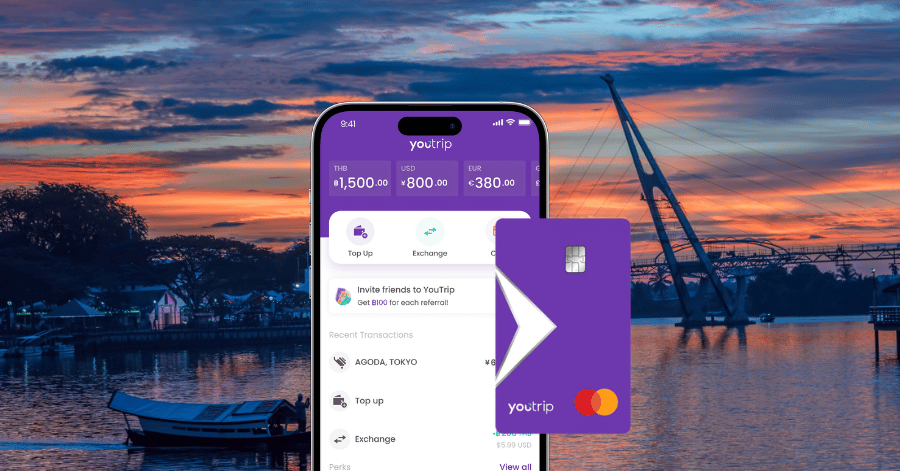
1. Tap your YouTrip card. YouTrip runs on Mastercard contactless, so anywhere with a contactless terminal (hotels, malls, Top Spot, the cafes on Carpenter Street), just tap and you spend at the Mastercard wholesale rate with 0% foreign transaction fees. That’s instead of the 3% to 3.5% FX markup a typical credit card adds to every overseas spend.
Set up the Malaysian Ringgit wallet in-app and you can lock in your rate before you fly.
2. Cash, withdrawn from a Malaysian ATM. Bako’s jetty, Satok market, the Cat Museum and most hawker stalls are cash-only, so you’ll want ringgit on you. Withdraw from a Maybank, CIMB or Public Bank ATM in the city rather than changing money at home. With YouTrip, your first S$400 of overseas ATM withdrawals each calendar month is free, then a flat 2% after that, and it resets on the 1st.
Full breakdown in our Malaysia ATM withdrawal guide. Some ATM operators add their own on-screen fee, so check before you confirm.
3. Touch ‘n Go eWallet. TNG is a Malaysian e-wallet, useful for some parking and smaller merchants. You can top up from your YouTrip card, but note that TNG charges a foreign-card convenience fee of up to 2.6% on top-ups using non-Malaysian cards.
Full setup walkthrough in our Touch ‘n Go eWallet guide for Singaporeans.
A money changer doesn’t show you a fee. It bakes a markup of a few percent into the rate instead, so the ATM route plus the wholesale card rate usually comes out ahead.
👉 Bottom line: tap YouTrip where cards work, pull a little ringgit free on your first S$400 each month, and carry more cash here than you would in KL. For rate context before you go, see our SGD to MYR rate guide.
FAQ
Yes. It’s the easiest place in Southeast Asia to see orangutans and proboscis monkeys without a long expedition. The old town is walkable and full of good cheap food, and it’s a 1h 30min flight from Singapore. The trade-off is very little nightlife and a lot of short drives to reach the main sights.
Three days and two nights covers it. That’s a full day at Bako National Park, a morning at Semenggoh Wildlife Centre, and a day and a half for the old town, the museum and the food. Add a fourth day for the Bau caves or Sarawak Cultural Village.
Kuching is famous for its wildlife access, particularly the orangutans at Semenggoh and the proboscis monkeys at Bako National Park. It’s also known for Sarawak laksa and kolo mee, its Brooke-era colonial architecture, and its cat theme, since the name is widely linked to the Malay word for cat.
The most popular are trekking and wildlife spotting at Bako National Park, watching the orangutan feeding at Semenggoh, and a tambang boat ride across the Sarawak River. The Borneo Cultures Museum and a seafood dinner at Top Spot round it out. The Bau caves and the Siniawan night market make good half-day trips.
Start with Sarawak laksa at a kopitiam before 9 AM, then walk Main Bazaar, Carpenter Street and India Street. Take shelter in the Borneo Cultures Museum through the hottest part of the afternoon. Cross Darul Hana Bridge to Fort Margherita, ride a tambang back, watch the sunset from the waterfront and eat at Top Spot.
No. It’s one of the cheaper city breaks from Singapore. A bowl of laksa runs about 10 to 14 MYR (~S$3 to S$4), most museum tickets sit under 50 MYR (~S$16), and Grab rides across town cost a few ringgit. Sarawak Cultural Village at 135 MYR (~S$42) is the one properly pricey ticket.
Not for the city, where Grab and walking cover everything. A rental car is worth it if you plan to do the Bau caves, Santubong and the Borneo Highlands, since those runs are long and return drivers can be scarce.
No, and the centre is upfront about it. The orangutans are semi-wild and only come to the feeding platforms when forest food is scarce. Your chances are best from around April to November, and lowest during the heavy fruiting season from roughly February to April.
The city named after a cat
Kuching won’t give you a skyline or a nightlife scene, and it isn’t trying to. It gives you orangutans before lunch, a river you cross in a wooden boat for two ringgit, and a bowl of laksa worth setting an alarm for. Slot in Bako, Semenggoh and a couple of long breakfasts, and three days sorts itself out.
Not a YouTrooper yet? Sign up with YouTrip and use code YTBLOG5 for S$5 to start. Lock in multiple currencies, spend in 150+ countries with no foreign transaction fees, and join the community on Telegram and the YouTrip Community Group.
Related Articles:
17 Best Things to Do in Langkawi
Penang Travel Guide: Best Things to Do, Food & 3-Day Itinerary
18 Best Things To Do In Ipoh: Caves, Food & More
15 Things to Do in Malacca: 2-Day Singapore Guide
20 Things to Do in Kuala Lumpur: 48-Hour KL Itinerary