




Quieter and cheaper than Phuket, Krabi is limestone cliffs, island days and easy beaches
Krabi is the Andaman coast at its most relaxed: a province of limestone karsts, mangrove rivers and island beaches that most people reach by longtail boat. It’s Phuket’s calmer, cheaper neighbour, and it’s built for slow days. This guide sorts the 18 things actually worth your time, prices them in S$, and shows you how to pay in baht without the FX sting.
| Quick Planner | Krabi at a glance |
|---|---|
| ⏱️ Time needed | 3 to 4 days covers the mainland plus one or two island days |
| ✈️ Getting there | Direct Changi to Krabi (KBV) on Scoot, about 1 hour 50 minutes |
| 📅 Best time to go | November to April (dry season); May to October is greener and cheaper |
| 🛥️ Getting around | Songthaews and Grab on land; longtail and speedboats to the islands |
| 🌙 After dark | Ao Nang’s beach-road bars, Krabi Town Walking Street, night markets |
| 💳 Pay with | Tap your YouTrip card (0% FX); withdraw baht from an ATM for cash-only spots |
Here’s the shortlist before we go deep:
| Spot | Type | Cost (~S$) | Best for |
|---|---|---|---|
| 4 Islands Tour | Island day trip | From ~S$25 | The signature Krabi day out |
| Phi Phi Islands & Maya Bay | Island day trip | From ~S$47 | The famous islands, from Krabi |
| Hong Islands | Island day trip | From ~S$47 | A quieter lagoon day |
| Railay Beach & Phra Nang | Beach | Free | Cliffs, caves, best beach in Krabi |
| Emerald Pool & Blue Pool | Nature | ~S$16 | A jungle swim inland |
| Tiger Cave Temple | Landmark | Free | 1,260 steps, 360° views |
| Khao Ngon Nak (Dragon Crest) | Viewpoint hike | Free | The island coast from above |
| Railay rock climbing | Adventure | From ~S$39 | Asia’s most famous crag |
| Krabi Town Walking Street | Market | Free | Weekend street food |
Table of Contents
- What Is Krabi Famous For?
- How Many Days Do You Need in Krabi?
- Krabi’s Best Island-Hopping Day Trips
- Railay and Krabi’s Best Beaches
- Emerald Pool, Hot Springs and Krabi’s Nature
- Temples, Viewpoints and Rock Climbing
- Krabi Town, Markets and Nightlife
- Is 2 Days in Krabi Enough? A Sample Itinerary
- Best Time to Visit Krabi
- Getting Around Krabi
- Paying in Krabi: Cards, Cash and ATMs
- Krabi FAQs
What Is Krabi Famous For?
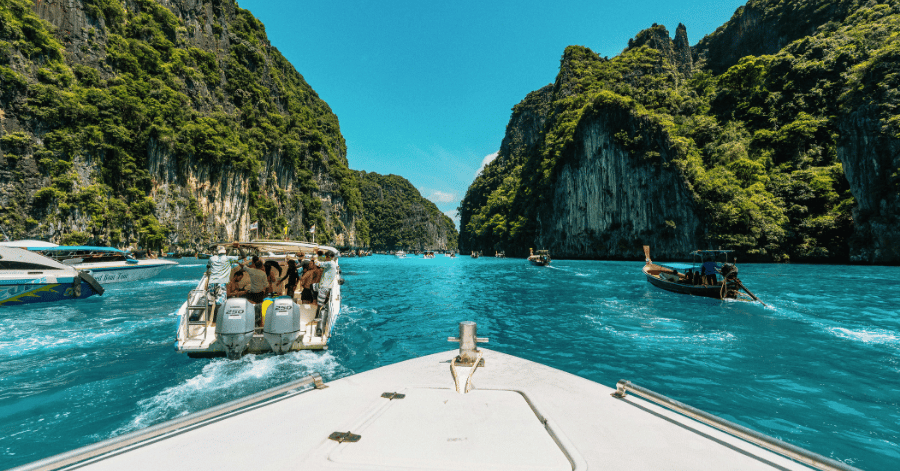
Krabi is famous for its limestone cliffs, its island-hopping and Railay, a cliff-ringed peninsula you can only reach by boat. It’s the launchpad for the Andaman’s easiest island days (the 4 Islands, Phi Phi, the Hong Islands), the home of some of Asia’s best rock climbing, and a quieter, cheaper base than Phuket for the same turquoise water.
Inland, it’s greener than people expect: jungle waterfalls, a spring-fed Emerald Pool, hot springs and a temple with 1,260 steps to the top. Most of the province still moves at longtail-boat pace, which is the whole appeal.
It’s also an easy escape from Singapore. The direct Changi to Krabi flight on Scoot is about 1 hour 50 minutes, short enough for a long weekend and varied enough to fill a week.
📖 Related Guide: Weighing Krabi against its louder neighbour? Our Phuket things-to-do guide covers the bigger island a short hop across the Andaman.
How Many Days Do You Need in Krabi?
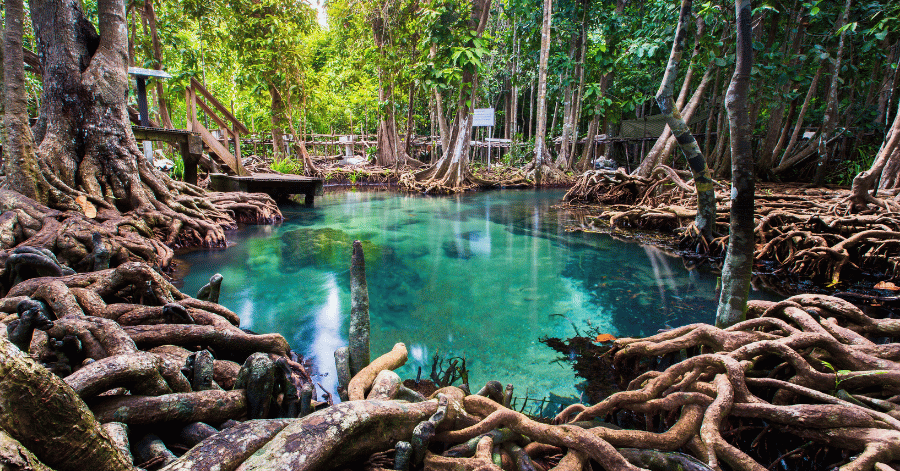
Three days is the sweet spot for a first trip. Two days is enough for one island day and a Railay afternoon, but you’ll feel rushed. A third day frees you for a second island run or the inland waterfalls and temples, and a fourth lets you slow right down.
- 2 days: One island day trip (the 4 Islands or Phi Phi) plus a sunset afternoon at Railay or Ao Nang.
- 3 days: Add a second island day or an inland run to the Emerald Pool and Tiger Cave Temple, and a Krabi Town night market.
- 4 days: Add rock climbing at Railay, a viewpoint hike, and a slow beach day with nowhere to be.
Krabi spreads out more than it looks on a map, and a lot of your time goes into boats and transfers between Ao Nang, Railay and the piers. Base yourself in Ao Nang (the main beach hub) or Railay itself, and you’ll lose less of the day to getting around.
📖 Related Guide: Tacking on the capital? Our Bangkok travel guide maps an easy add-on leg after the beach.
Krabi’s Best Island-Hopping Day Trips
Island-hopping is the reason most people come to Krabi, and it’s worth building your trip around at least one. Boats leave from Ao Nang and Nopparat Thara piers; go early to beat the crowds and the afternoon chop, and pick a longtail over a speedboat if you’d rather potter than race.
The 4 Islands Tour
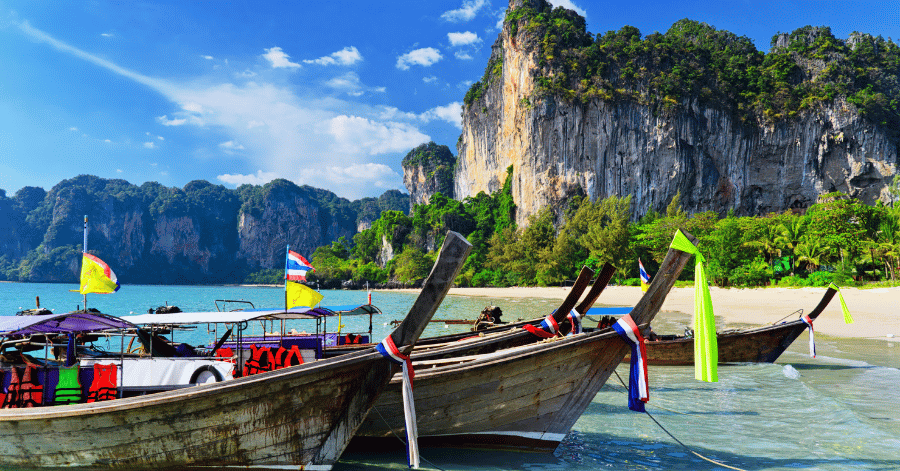
The signature Krabi day out, and the best-value one. The classic route strings together four spots close to Ao Nang: Phra Nang Cave Beach, Chicken Island (Ko Kai), Tup Island and Poda Island, with snorkelling stops along the way. At low tide, a sandbar surfaces to link Chicken, Tup and Mor islands, so you can walk between them.
Longtail boats keep it slow and cheap; speedboats cover more ground with less time on the water. For first-timers, it’s the easiest way to see the postcard beaches without blowing a whole day’s budget on one trip.
- 💰 Longtail group tour from around 650 THB (~S$25); speedboat from around 1,200 THB (~S$47); national park fee around 200 THB (~S$8), usually paid separately in cash
- 💡 Book a longtail for the atmosphere. It’s slower and gets choppy, but it’s half the price and far less crowded than the speedboat convoys.
Phi Phi Islands and Maya Bay
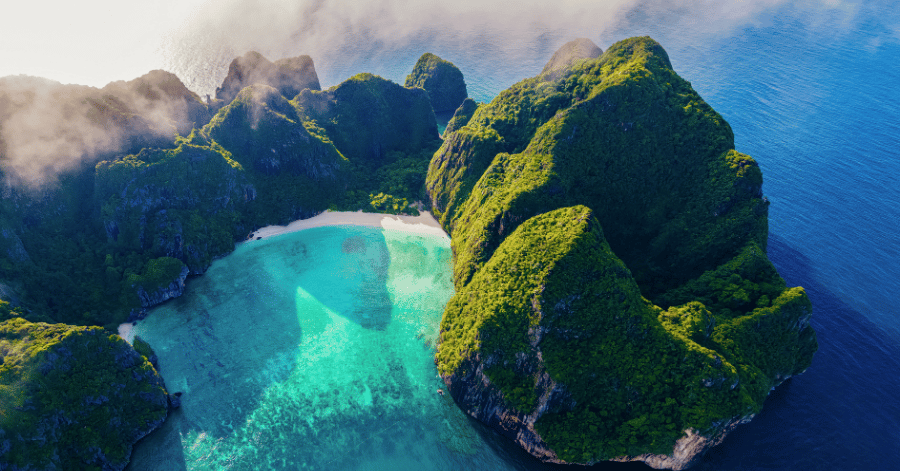
The famous one, and an easy day trip from Krabi rather than a Phuket-only affair. The Phi Phi Islands sit about 45 minutes to an hour out by speedboat, and the headline stop is Maya Bay, the cliff-ringed cove from The Beach.
It reopened after a long closure to let the reef recover, so there are rules now: you wade knee-deep from the back beach rather than swim in the bay, and it’s busiest mid-morning. Maya Bay also shuts to landings each year over the August–September monsoon (reopening 1 October), so check your dates. Tours still cruise past by boat when landings are paused, and most fold in snorkelling at Pileh Lagoon and Monkey Beach.
- 💰 Group speedboat day tour from around 1,200 THB (~S$47); Maya Bay national park entry around 400 THB (~S$16), usually paid in cash on the day
- 💡 Take the earliest boat you can. By late morning the bay is shoulder-to-shoulder with day boats from both Krabi and Phuket.
- Best for travellers who want the shot everyone comes for and don’t mind sharing it with the crowds.
Hong Islands
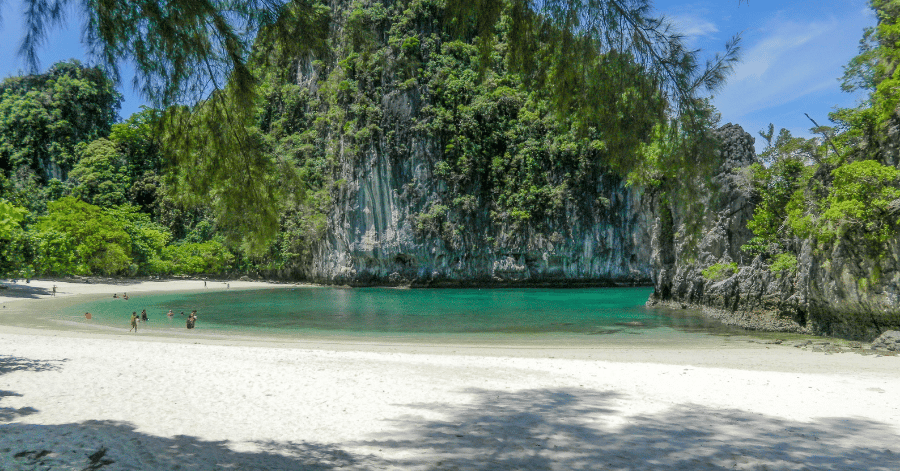
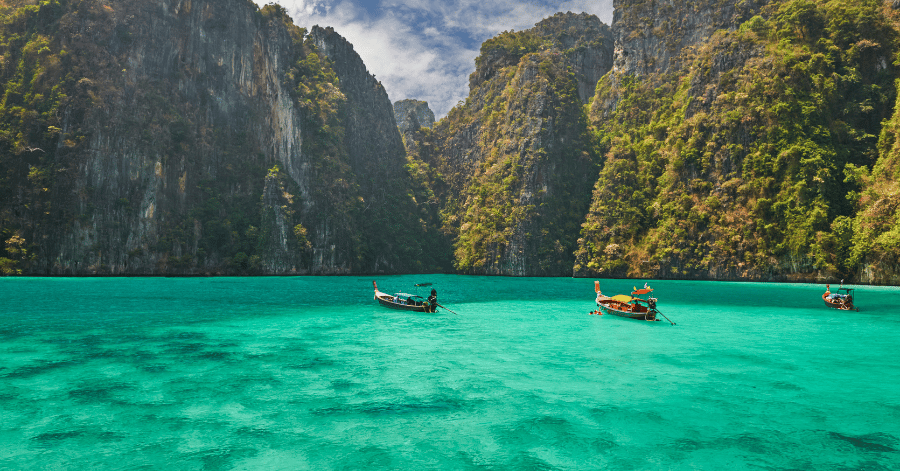
The calmer, prettier alternative to Phi Phi. The Hong Islands (Koh Hong) are a cluster inside Than Bok Khorani National Park, built around a hidden emerald lagoon you enter through a gap in the cliffs, plus a viewpoint that looks down over the whole archipelago. There’s less pressure here than on the Phi Phi run and the water is just as clear.
- 💰 Group speedboat day tour from around 1,200 THB (~S$47); national park fee around 300 THB (~S$12)
- 💡 The Hong Island viewpoint is a short, steep climb but the payoff (the lagoon and islands from above) is the best free view on any island day. It’s the one to pick for a second island day when you want calm and scenery over the big-name crowds.
📖 Related Guide: Planning the spend before you fly? Our SGD to THB rate guide covers where the baht rate is heading and how to get the best of it.
Railay and Krabi’s Best Beaches
Krabi’s beaches are its headline act, and the best of them are backed by the cliffs that make the province famous. Some you drive to; the best you reach only by boat.
Railay Beach and Phra Nang Cave Beach
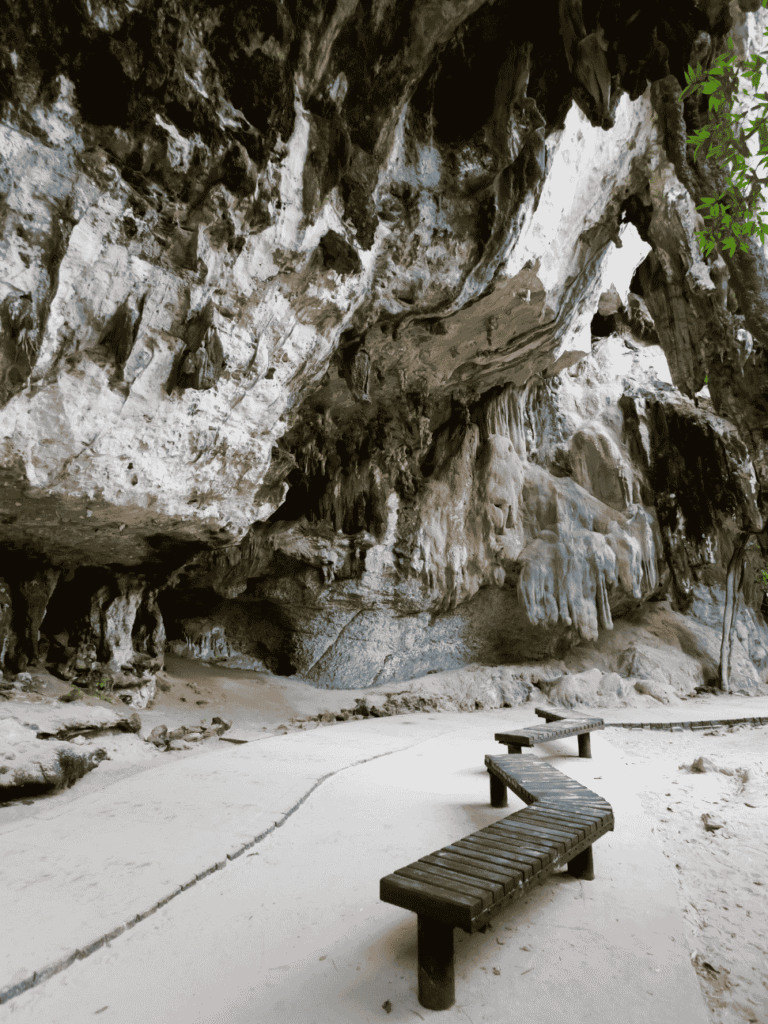
The best beaches in Krabi, and the reason many people come. Railay is a peninsula cut off from the mainland by limestone cliffs, so there’s no road in: a 10-to-15-minute longtail from Ao Nang is the only way.
West Railay is the wide, sunset-facing swimming beach. A short walk across the neck brings you to Phra Nang Cave Beach, a dramatic cove under an overhang, with rock climbers working the walls above and longtails selling drinks and pad thai off the back of the boat.
- 💰 Longtail from Ao Nang around 100 THB (~S$4) each way, more after dark or for a private boat; boats leave when they fill up (usually 8 people)
- 💡 Day-trip it or stay over. Railay empties out beautifully once the day boats leave in the late afternoon.
Tonsai Beach
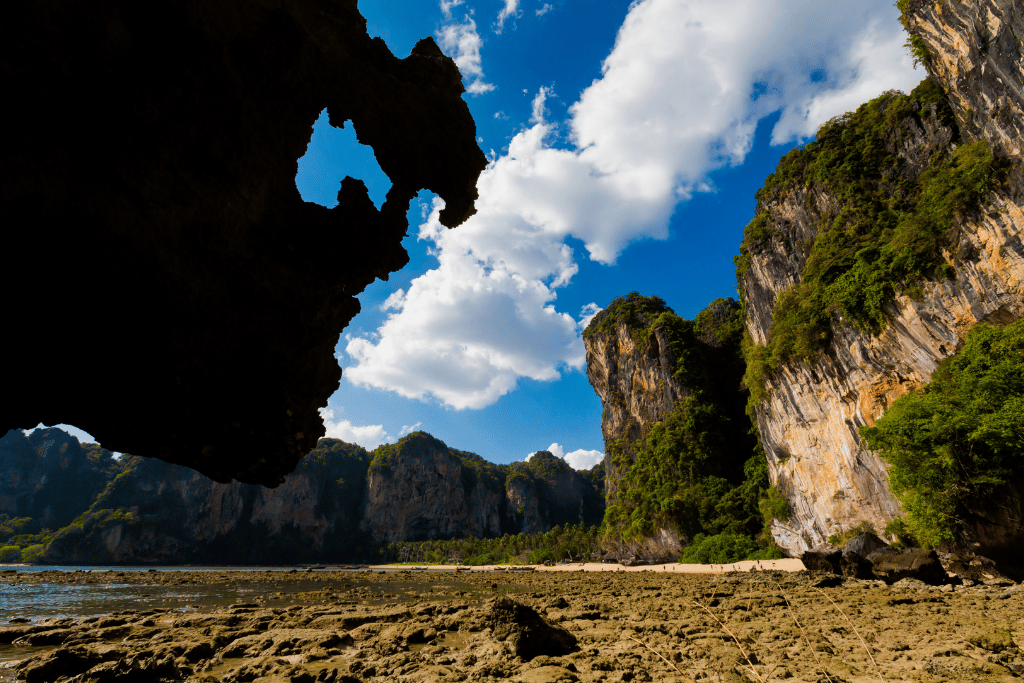
Railay’s scruffier, cheaper neighbour, and the climbers’ hangout. Tonsai sits just around the headland from West Railay, reachable by a short boat or a rocky low-tide scramble, and it trades polish for a laid-back, backpacker feel: cheap bungalows, reggae bars and some of the area’s hardest climbing routes. The beach itself is rockier than Railay, so it’s more about the vibe than the sand.
- Best for climbers, backpackers and anyone who finds Railay a touch too resort-y.
Ao Nang Beach
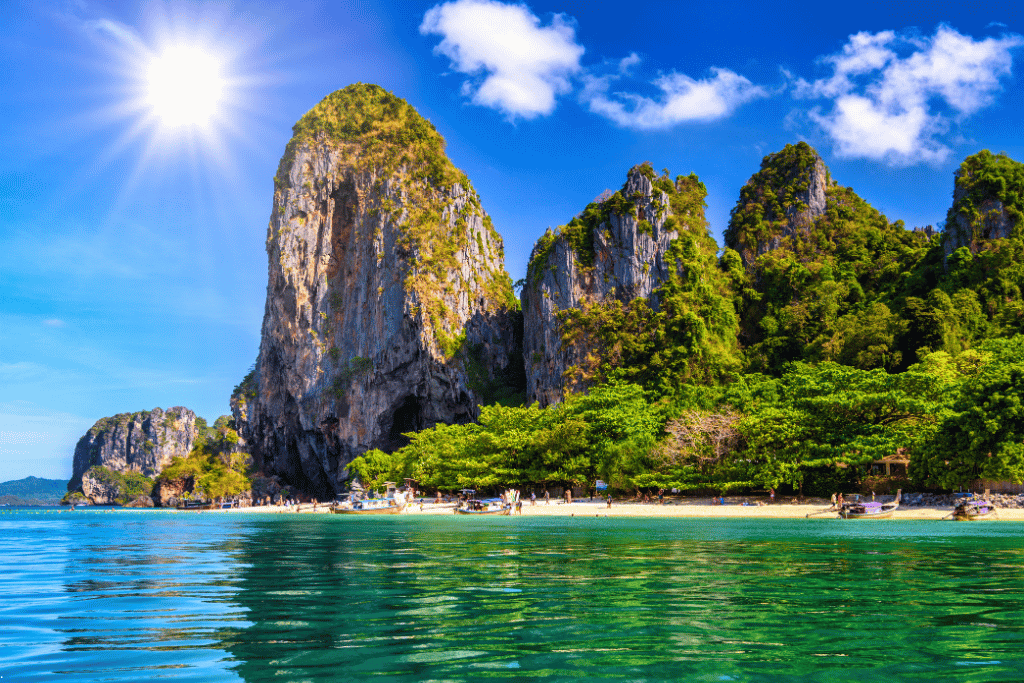
The convenient home base, not the prettiest beach. Ao Nang is the main tourist strip: a walkable beachfront lined with restaurants, dive shops, bars and hotels, with the pier for island boats at one end. The beach is fine for a stroll and a sunset drink rather than a swim, but you’re within a few minutes of everything, which is why most people stay here.
- 💡 Use Ao Nang as your logistics base and beach elsewhere. It’s where the boats, food and nightlife are.
- Best for first-time visitors who want convenience and easy transport over a picture-perfect beach.
Nopparat Thara Beach
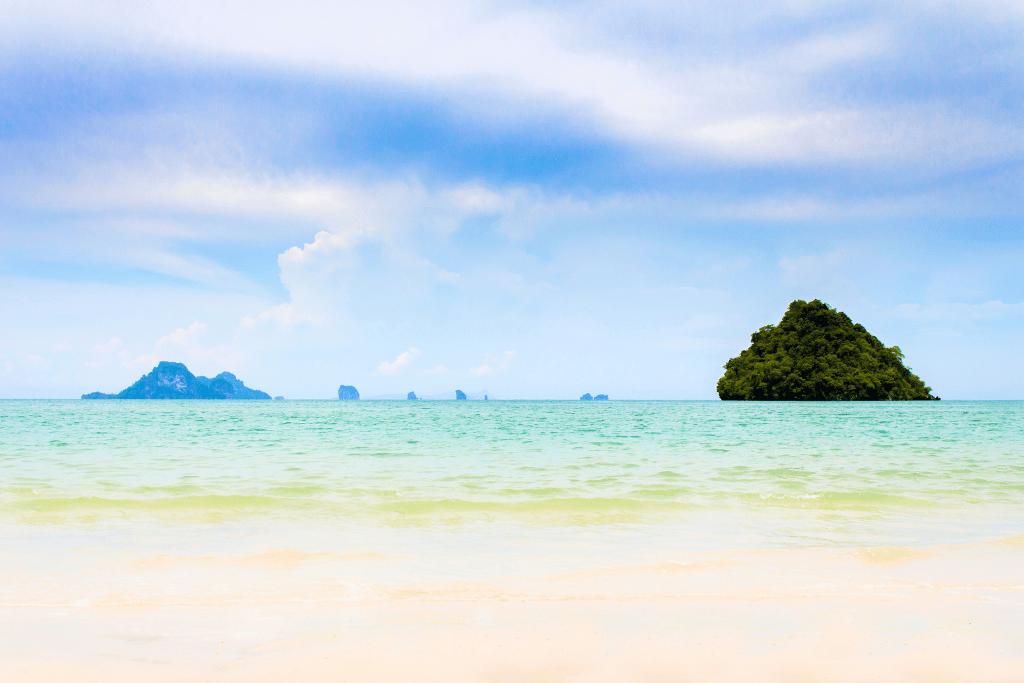
The long, local, low-key beach next door to Ao Nang. Nopparat Thara stretches for a couple of kilometres just northwest of the main strip, lined with casuarina trees and far quieter than Ao Nang. It has a national-park section, and the main pier for larger island boats sits at its western end. Locals picnic here at weekends, and it’s a proper swimming beach at high tide: a slower, cheaper stretch a short songthaew ride from the Ao Nang crowds.
📖 Related Guide: Sorting your cover for the water sports first? Our travel insurance Singapore guide compares plans for island trips and diving.
Emerald Pool, Hot Springs and Krabi’s Nature
Krabi’s interior is greener and wilder than its beaches let on, and it makes a good change of pace on a longer trip. These inland spots cluster in the province’s southeast, so pair them in one day with your own transport or a tour.
Emerald Pool and Blue Pool
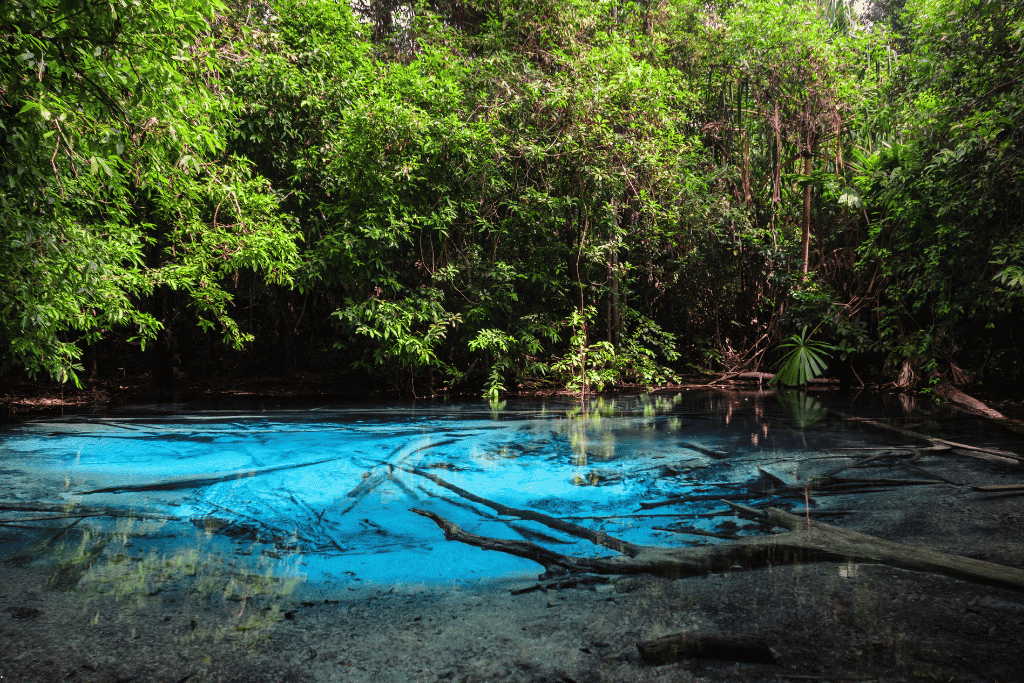
A spring-fed jungle swim, and Krabi’s best inland day. The Emerald Pool (Sa Morakot) sits inside the Thung Teao Forest reserve, a clear, warm, green-tinged natural pool you reach on a short walk through the jungle. A separate trail leads to the Blue Pool, a vivid sapphire spring you can look at but not swim in (the mineral content makes it unstable). It’s about an hour’s drive from Ao Nang, so it works best folded into an inland day.
- 📍 Thung Teao Forest, Khlong Thom (around 1 hour from Ao Nang)
- 🕘 Daily, roughly 8:30 AM to 4:30 PM; it sits in a national park, so it can close on heavy-rain days, and the Blue Pool trail is seasonal
- 💰 Foreign-visitor entry around 400 THB (~S$16), cash at the gate; covers the Emerald Pool, Blue Pool and hot spring trails
- 💡 Go early. The pool is calm and clear in the morning and gets busy and churned up by midday tour groups.
- Best for travellers on a three-day-plus trip who want a break from the beach and don’t mind the drive.
Krabi Hot Springs
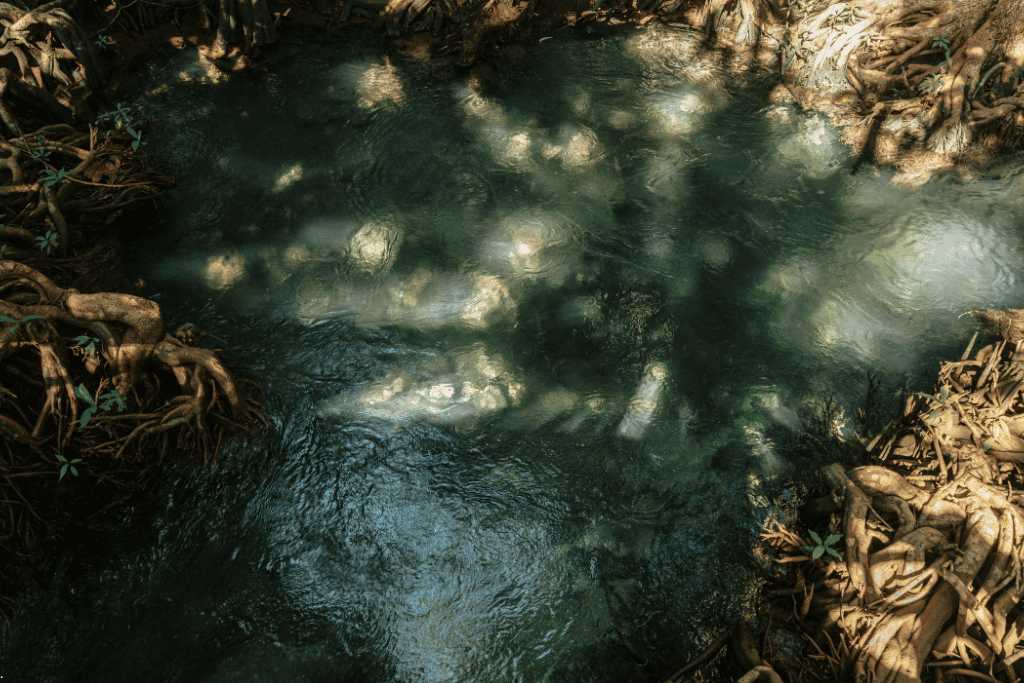
A natural hot-spring soak in the jungle, usually paired with the Emerald Pool. The Krabi Hot Springs are a series of smooth, worn limestone pools fed by thermal water at around 35 to 40°C, set in the forest a short drive from the Emerald Pool. You soak in the warm pools, then cool off in the stream running alongside. It’s low-key and can get busy, but it’s a genuinely relaxing stop.
- 📍 Khlong Thom, near the Emerald Pool
- 💰 Entry around 200 THB (~S$8) for foreign adults, or 100 THB if you buy it with an Emerald Pool national-park ticket; cash
- 💡 Bring water shoes; the rocks are smooth and slippery. Combine it with the Emerald Pool in a single half-day.
Ao Thalane Sea-Kayaking
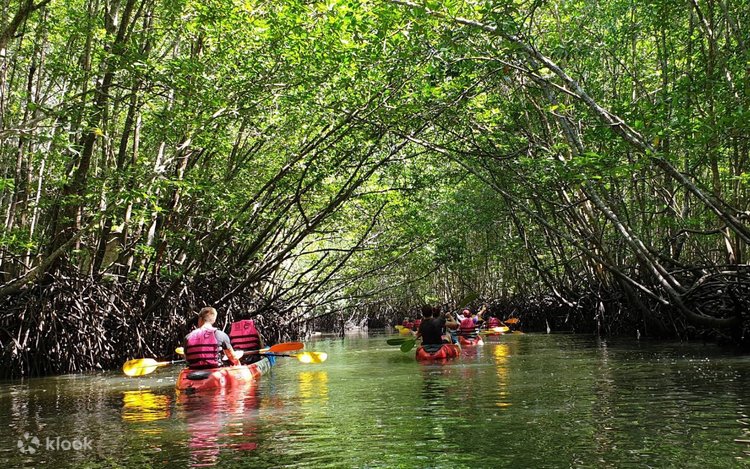
Image Credits: Klook
Kayaking through mangroves and hidden lagoons under the cliffs. Ao Thalane is a calm bay northeast of Ao Nang where you paddle sea-kayaks through mangrove channels and past limestone karsts, spotting monkeys, mudskippers and, if you time the tide, tunnels through the rock into hidden lagoons. It’s gentle, quiet and doable for beginners.
- 💰 Half-day guided kayaking from around 850 THB (~S$33), with transfer and guide
- 💡 Book an afternoon or evening slot to catch the light, and check whether your tour times the high tide for the cave lagoons.
📖 Related Guide: Staying connected on the trails and boats? Our best travel eSIM guide compares data plans from around S$1.
Temples, Viewpoints and Rock Climbing
Beyond the beaches, Krabi rewards anyone willing to climb a bit, whether that’s a temple staircase, a jungle ridge or an actual cliff. These three are the province’s best efforts-for-a-view.
Tiger Cave Temple (Wat Tham Suea)
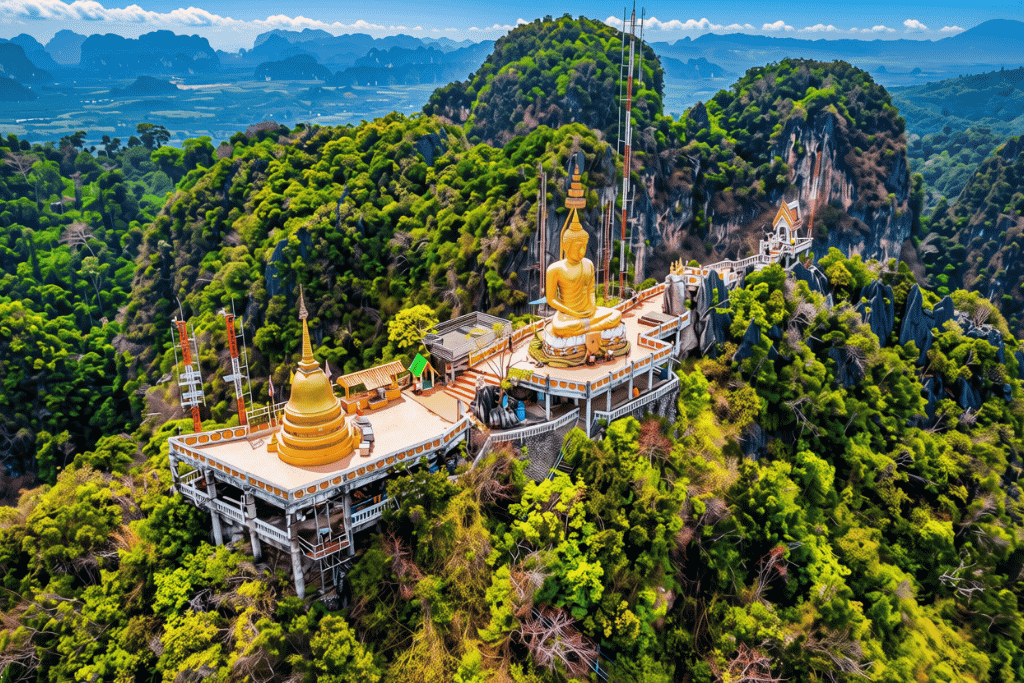
Krabi’s most famous climb, and the best panorama on the mainland. Wat Tham Suea is a working temple complex northeast of Krabi Town, and the draw is the staircase: 1,260 steep concrete steps up a limestone karst to a golden Buddha and a 360-degree view over the province’s cliffs and coast. It’s a genuine leg-burner (allow 40 minutes to an hour up), so start early before the heat.
- 📍 Around 10km northeast of Krabi Town
- 🕘 Daily; climb early morning or late afternoon to dodge the midday sun
- 💰 Free (donations welcome); dress modestly, shoulders and knees covered
- 💡 Bring more water than you think you need. There’s a drinks stall at the bottom, nothing at the top.
- Best for anyone reasonably fit who wants one big view and a real sense of achievement.
Khao Ngon Nak (Dragon Crest)
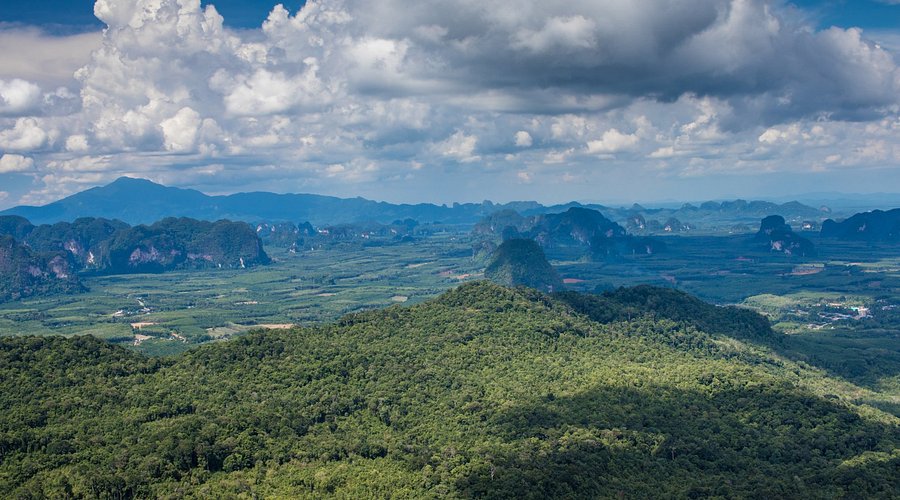
Image Credits: Tripadvisor
The hikers’ viewpoint, and a tougher, more rewarding climb than it looks. The Khao Ngon Nak trail (Dragon Crest) near Tubkaek Beach is a well-marked jungle path that climbs to a rocky ridge jutting out over the coast, with the Andaman Islands laid out below. It’s a proper hike (roughly two to three hours return) on dirt and roots rather than steps, so wear grippy shoes.
- 📍 Tubkaek, about 30 to 40 minutes north of Ao Nang
- 🕘 Daily, best started early morning before the heat builds
- 💰 Free
- 💡 The final rock ledge is the money shot, but it’s exposed. Go steady near the edge and skip it in the wet if the rock’s slick.
- Best for active travellers who’d rather earn a quiet viewpoint than share a busy one.
Railay Rock Climbing

Image Credits: Krabi Tourism
The reason climbers fly to Krabi from all over the world. Railay’s limestone cliffs are among the most famous climbing spots in Asia, with hundreds of bolted routes rising straight off the beach, from absolute-beginner walls at Phra Nang to serious overhangs at Tonsai. Local schools run half-day taster sessions with all the gear and an instructor, so you can try it even if you’ve never touched rock.
- 💰 Half-day beginner course around 1,000 to 1,500 THB (~S$39 to S$58); full day around 1,800 to 2,600 THB (~S$70 to S$101), gear included
- 💡 Book a morning session. The afternoon sun hits the west-facing walls, and the rock gets uncomfortably hot to touch.
📖 Related Guide: Chasing viewpoints and temples elsewhere too? Our Da Nang things-to-do guide breaks down Vietnam’s easiest beach-and-mountain city.
Krabi Town, Markets and Nightlife
Krabi’s nights are low-key by Thai-island standards, and that’s the point. The action splits between Ao Nang’s beach-road bars and the more local scene in Krabi Town, half an hour inland.
Krabi Town Weekend Walking Street
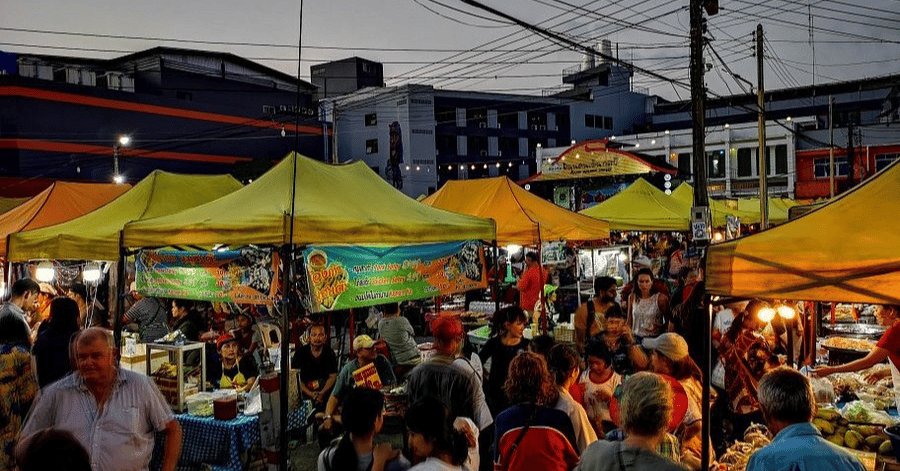
The most local night out in the province, and the best cheap feed. The Krabi Town weekend walking street takes over a lane in the town centre on Friday, Saturday and Sunday evenings. Hawker stalls plate up pad thai, grilled seafood, mango sticky rice and southern-Thai curries, and there’s usually a stage with live music. Prices are local, not tourist, and there’s a proper hometown feel.
- 📍 Krabi Town centre (near Maharaj Road)
- 🕘 Friday to Sunday, roughly 5 PM to 10 PM
- 💡 Come hungry and graze. This is where you eat well for a few dollars, a world away from Ao Nang’s marked-up strip.
Ao Nang Beachfront Bars
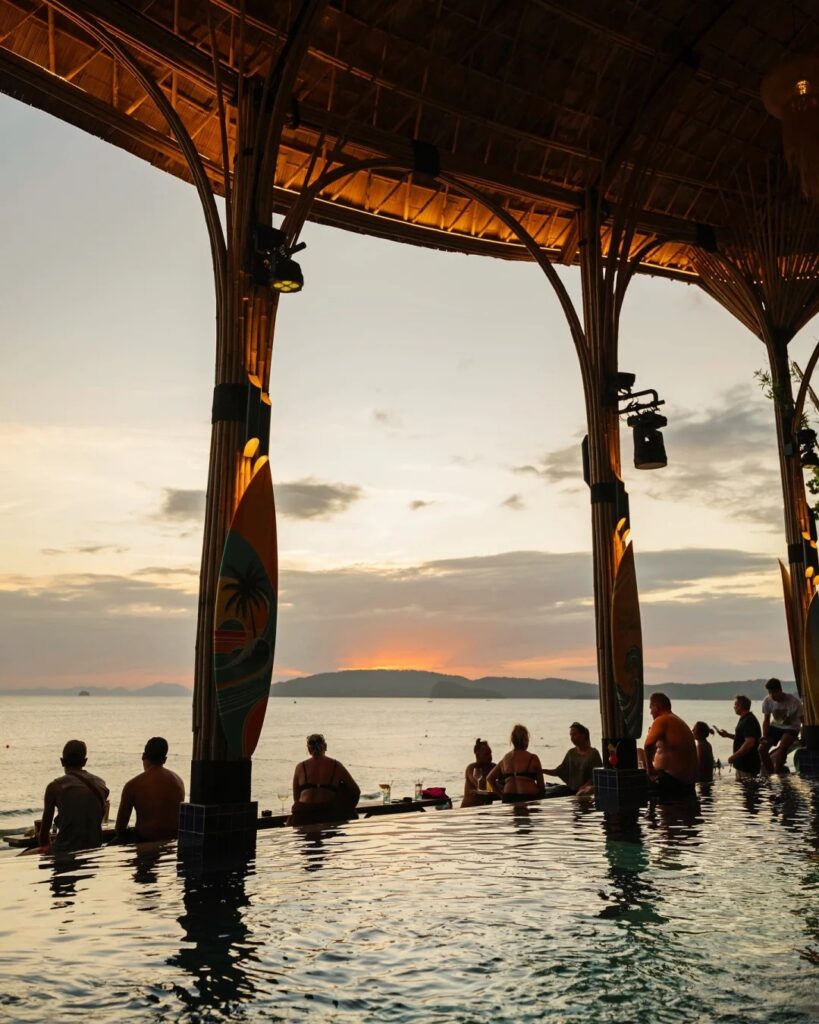
Image Credits: mengtutrip888 on rednote
The easy, walkable night out where most visitors stay. The strip along Ao Nang beach road and the Ao Nang Center Point area is lined with open-air bars, live-music spots and a small night market, running from sunset drinks to late without ever getting rowdy. It’s relaxed rather than wild, more sundowner-and-seafood than club.
- 💡 Grab a beachfront table for sunset, then wander the Center Point lanes for cheaper eats and a beer afterwards. It’s the easy evening out for couples and families staying steps from the hotel.
Wat Kaew Korawaram
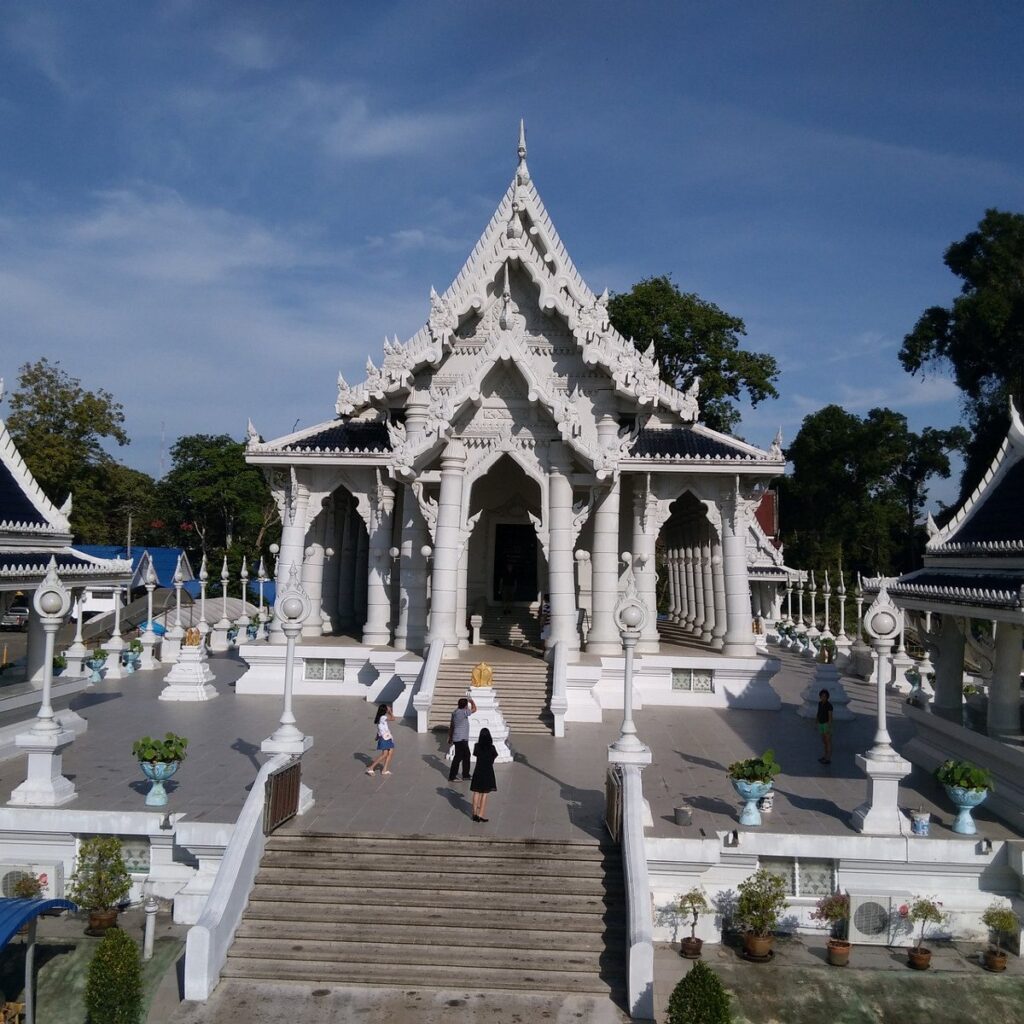
Image Credits: Tripadvisor
A serene white temple in the middle of Krabi Town, worth a daytime detour before the market. Wat Kaew Korawaram sits atop a short flight of steps in the town centre, a gleaming white-and-gold hall you can visit in the same trip as the Walking Street. It’s calm, free and a quick reminder that there’s a working town behind the beaches.
- 📍 Central Krabi Town
- 💰 Free; dress modestly
📖 Related Guide: Charging everything back at the hotel each night? Our Thailand power plug guide covers sockets, voltage and adapters.
Is 2 Days in Krabi Enough? A Sample Itinerary
Two days is enough for the headline experiences if you don’t try to cram in two island trips. Three days is more comfortable and adds the inland run.
- Day 1 — Islands: An early longtail or speedboat on the 4 Islands tour, back by mid-afternoon, then a longtail across to Railay for sunset and dinner.
- Day 2 — Inland and views: The Emerald Pool and Krabi Hot Springs in the morning, Tiger Cave Temple in the cooler late afternoon, then the Krabi Town Walking Street for dinner (weekends) or Ao Nang’s beach road.
- Day 3 (if you have it) — Your pick: A second island day to the Hong Islands, a Railay climbing session, or the Dragon Crest hike before a slow last afternoon.
Stretch it to four days, and you can add the second island trip and a viewpoint hike without rushing anything. Fewer than two full days and you’re choosing between the islands and everything else.
📖 Related Guide: Adding a city leg after the beach? Our Bangkok BTS guide sorts the capital’s Skytrain if you fly on to Bangkok.
Best Time to Visit Krabi
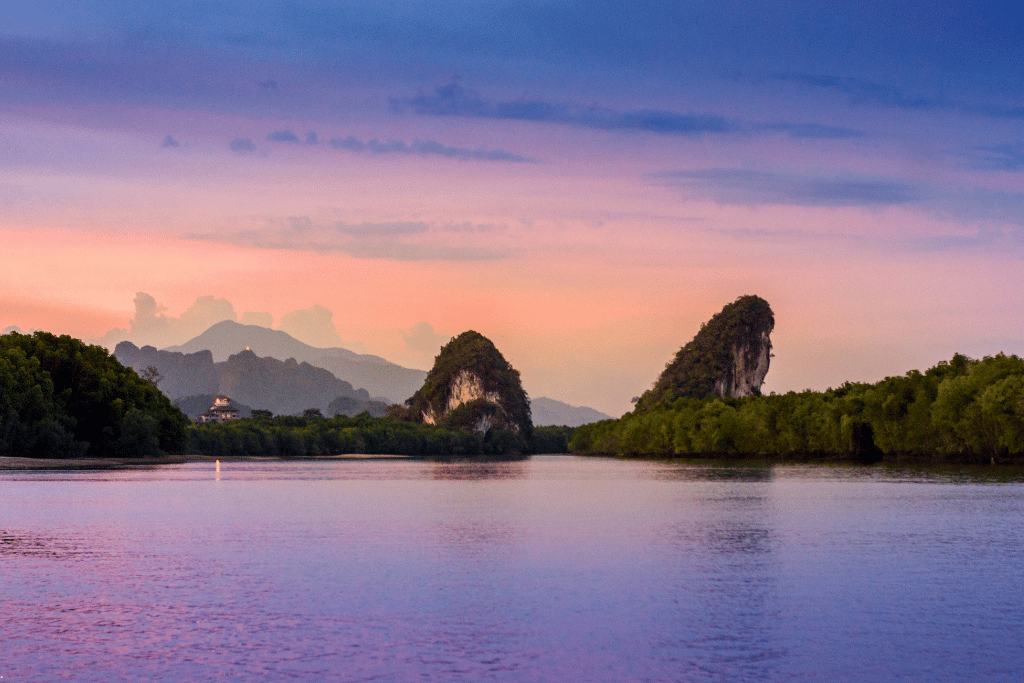
November to April is the dry season and the best time to visit, with calm seas, sunshine and reliable island-hopping. It’s also peak season, so prices and crowds are highest around December and January.
- Dry season (Nov–Apr): Best weather and sea conditions, easiest boat days, peak prices and crowds. Book island tours and hotels ahead over the year-end.
- Green season (May–Oct): Warm, much cheaper and far quieter, with short, heavy afternoon downpours rather than all-day rain. Some island tours pause in rough weather, and the waterfalls run full.
- Shoulder months: Late April to May and October to November sit between the two, often with decent weather and lower prices before the year-end rush.
📖 Related Guide: Pairing Krabi with a Bangkok city leg? Our Bangkok Rabbit Card guide sorts the tap-and-go transit card before you go.
Getting Around Krabi
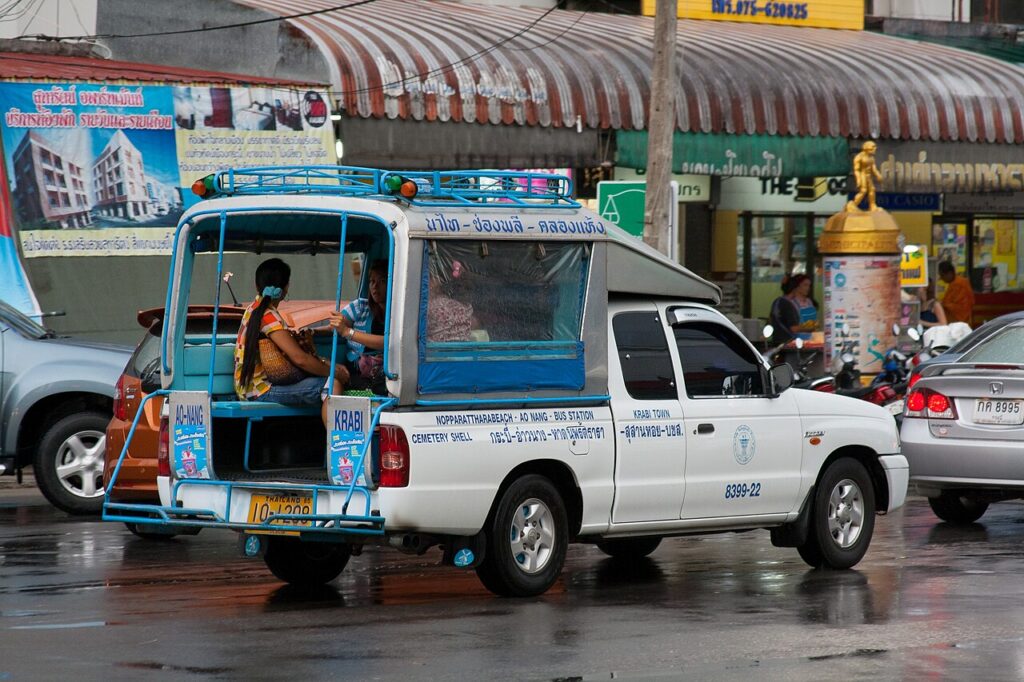
Image Credits: Wikimedia Commons
Krabi has no metro and spread-out sights, so plan your transport before you arrive. Land travel runs on shared songthaews and ride-hailing; the islands run on boats.
- Songthaews: Shared pick-up trucks with bench seats run set routes between Krabi Town, Ao Nang and Nopparat Thara for around 50 to 60 THB (~S$2) on the through route, less for short hops. The cheapest way to cover the mainland, if not the fastest.
- Grab and Bolt: The ride-hailing apps work in and around Ao Nang and Krabi Town for a no-haggle door-to-door option; cars can be limited at peak times, so allow a wait. Link a card in-app, and you never touch cash. Savings tip: Link your YouTrip card for zero FX fees and competitive wholesale exchange rates.
- Longtail and speedboats: Railay, the beaches and the islands are boat-only. Longtails from Ao Nang leave when they fill (around 8 people) for a fixed per-seat fare; island tours run as day packages from the piers.
- From the airport: Krabi International (KBV) is about 25 minutes from Krabi Town and 30 to 45 minutes from Ao Nang. Pre-booked transfers and shared airport minivans are the easy options; agree the fare before you set off with anything else.
📖 Related Guide: Pulling cash the smart way on arrival? Our Thailand ATM withdrawal guide covers fees, limits and the best machines to use.
Paying in Krabi: Cards, Cash and ATMs
Krabi takes cards in more places every year, but the small stuff still runs on cash. The smart setup is a fee-free card for spending and a little baht for markets, boats and street food.
Cards and QR work at hotels, dive shops, tour desks and mid-to-upper restaurants. Longtail boats, night markets, songthaews, street stalls and small cafés are still cash, so carry some baht and tap for everything else.
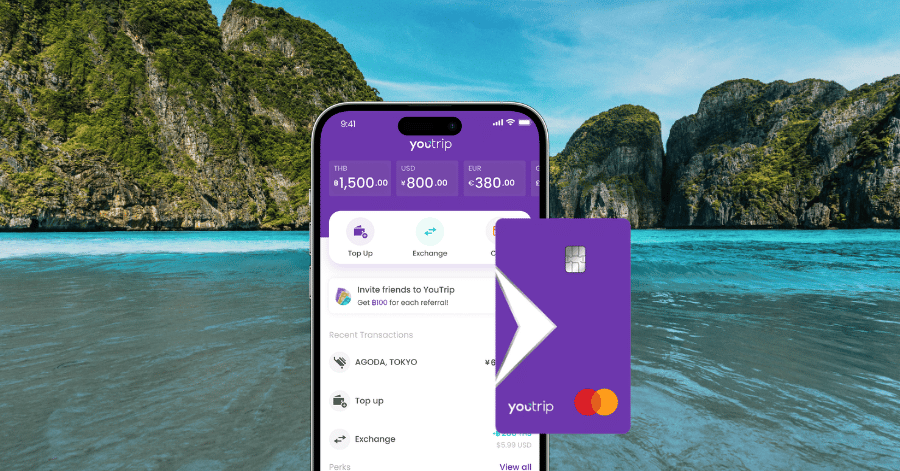
Here’s where the card matters. Thai baht is one of the currencies you can hold and lock in the YouTrip app, so you can fix your rate before you fly, then tap with 0% foreign transaction fee on every baht transaction, billed straight to your SGD wallet. A typical credit card adds around 3% to 3.5% on every overseas swipe, which quietly stacks up across a week of tours, dinners and dive trips.
For cash, withdraw baht from an ATM once you land rather than changing money at a counter back home. With YouTrip, the first S$400 of overseas ATM withdrawals each calendar month is free, then a flat 2% after that, and the allowance resets on the 1st. A money changer looks fee-free but bakes a markup of a few percent into the rate it quotes you, so the ATM-on-arrival route nearly always comes out ahead.
One Thailand-specific catch: local ATMs charge a fixed foreign-card fee of around 250 THB (~S$10) per withdrawal on top of anything else, and some machines go up to 350 THB (~S$14), so take out a larger sum less often. AEON ATMs charge a lower fee, around 150 THB (~S$6).
If a screen offers to charge you in SGD instead of baht, always choose baht to dodge the dynamic-currency-conversion markup (the poor exchange rate the machine sets when it “helpfully” bills you in your home currency).
👉 Bottom line: tap your YouTrip card for anything that takes card, pull a bit of baht from an ATM for the cash-only spots, and skip the money changer entirely. For deeper detail, see our best multi-currency card guide and the exchange money in Singapore or overseas guide.
Krabi FAQs
Krabi is best known for its limestone cliffs, its island-hopping and Railay, a cliff-backed peninsula reachable only by boat. It’s the gateway to the 4 Islands, Phi Phi and the Hong Islands, home to some of Asia’s best rock climbing, and a quieter, cheaper alternative to Phuket for the same Andaman scenery. Inland, it’s known for the Emerald Pool, hot springs and the Tiger Cave Temple.
Yes, three days is enough for the highlights: one island day trip, an inland day for the Emerald Pool and Tiger Cave Temple, and a third for a second island run, a climb or a Railay beach day. Two days works if you focus on the islands and Railay, but three lets you add the mainland without rushing.
Krabi is quieter, cheaper and more about dramatic scenery, cliffs and laid-back beaches; Phuket has more nightlife, more to do off the beach and more flights from Singapore. Many travellers do both, since they share the same Andaman island-hopping (including Phi Phi) and sit a short ferry or road transfer apart.
Two days is enough for the headline experiences if you don’t try to fit in two island trips. Spend one day island-hopping the 4 Islands and an afternoon at Railay, then a second on the inland run to the Emerald Pool and Tiger Cave Temple. For a second island day or a climbing session, give yourself three.
Yes. Krabi packs island-hopping, some of Asia’s best rock climbing, jungle swims and easy beaches into a province that’s a short flight from Singapore and cheaper than Phuket. It’s calmer and less built-up, which is exactly the appeal for anyone after scenery and slow days over nightlife.
Yes, Krabi suits families well. The calm, shallow water at Nopparat Thara Beach is easy for young swimmers, the Ao Thalane mangrove paddle is gentle enough for beginners, and the spring-fed Emerald Pool is a warm, safe jungle swim. The 4 Islands tour and the Hong Islands lagoon are the big boat days, though a full-day speedboat can be a lot for very young kids, so a shorter longtail outing often suits them better.
Plenty of Krabi’s best costs nothing beyond getting there. The beaches (Railay, Ao Nang, Nopparat Thara and Tonsai), the Tiger Cave Temple climb, the Khao Ngon Nak (Dragon Crest) hike and Wat Kaew Korawaram in Krabi Town are all free. The weekend Walking Street is free to wander, and you only pay for what you eat. The main costs sit with the boat fares and the national parks, like the Emerald Pool and Hong Islands.
Mid-range travellers can expect roughly S$70 to S$130 a day excluding flights, covering a comfortable hotel, an island tour, meals and getting around. Island day trips run from about S$25 to S$60, most beaches, temples and viewpoints are free, or a few dollars, and night-market meals cost a few dollars. Year-end peak season pushes hotels and tours noticeably higher.
Krabi rewards the traveller who slows down and takes the boat
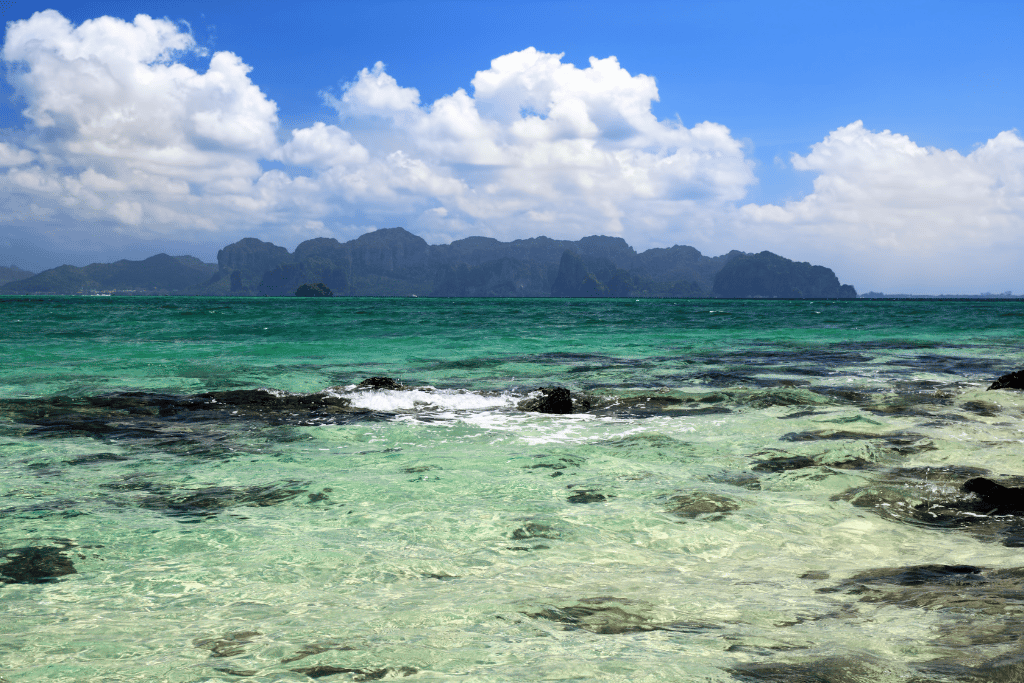
One island day, a Railay sunset, an inland swim and a night market: three or four days and Krabi gives you the Andaman without the Phuket price tag or the crowds. Sort the paying once, and the rest is just turning up and taking the longtail.
Not a YouTrooper yet? Sign up with code YTBLOG5 for a free YouTrip card and S$5 in credit. Lock in your rate across 12 currencies and spend in 150+ countries with no foreign transaction fees. Check out the latest YouTrip Perks, join our Telegram for deals, and swap tips in our Community Group.