




Not many people you know have been to Kyrgyzstan, and that’s exactly the point
Snow leopard mountains, a lake that almost never freezes and yurt stays for less than a hawker meal back home — Kyrgyzstan barely registers on the average Singaporean’s travel radar. It should. Here’s what to know before you go: safety, visa rules, costs, then where to actually go.
Kyrgyzstan 2026 At A Glance
| Highlights | Details |
|---|---|
| Capital | Bishkek |
| Currency | Kyrgyzstani som (KGS) |
| How to Pay | YouTrip card for competitive exchange rates and zero FX fees |
| Language | Kyrgyz and Russian, both official |
| Religion | Around 90% Muslim, mostly Sunni |
| Visa for Singaporeans | Not required, up to 30 days in any 60-day window |
| Best time to visit | June to September |
| Pronunciation | roughly “keer-gee-stahn” |
| Flag | 🇰🇬 Red field, gold sun with 40 rays over a stylised yurt roof |
Table of Contents
- Where Is Kyrgyzstan?
- Is Kyrgyzstan Safe to Visit?
- Do Singaporeans Need a Visa for Kyrgyzstan?
- How to Get to Kyrgyzstan from Singapore
- Is Kyrgyzstan Rich or Poor? What’s It Famous For?
- How Much Does Kyrgyzstan Cost?
- Is Kyrgyzstan an Islamic Country?
- Best Places to Visit in Kyrgyzstan
- Beyond the North: Osh and Nomadic Kyrgyzstan
- What to Eat in Kyrgyzstan
- Is 7 Days Enough for Kyrgyzstan?
- Getting Around and Paying in Kyrgyzstan
- Practical Things Singaporeans Ask About
- FAQs
- Kyrgyzstan Won’t Stay Quiet Forever
The headline spots, at a glance:
| Spot | Region | Why Go | Best For |
|---|---|---|---|
| Bishkek | Capital | Soviet squares, Osh Bazaar, Central Mosque | First-timers |
| Lake Issyk-Kul | North | Alpine lake that almost never freezes | Slow travel, lake towns |
| Jeti-Ögüz & Skazka Canyon | Issyk-Kul region | Red sandstone rock formations | Day-trippers, photographers |
| Karakol | East | Dungan Mosque, hiking base, noodle soup | Hikers, food explorers |
| Ala Archa National Park | Near Bishkek | Glacier valley, snow leopard territory | Half-day nature escape |
| Altyn-Arashan | Remote mountains | Yurt stays, natural hot springs | Off-grid travellers |
| Osh & Sulaiman-Too | South | Ancient bazaar, sacred mountain | History and culture |
Where Is Kyrgyzstan?
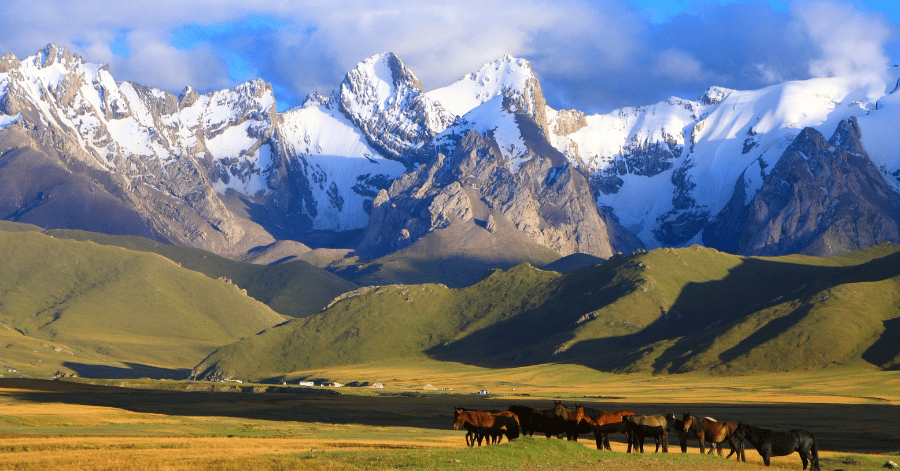
Kyrgyzstan is a small, landlocked country in Central Asia, wedged between Kazakhstan to the north, China to the east, Tajikistan to the south and Uzbekistan to the west. Over 90% of it is mountainous, part of the Tian Shan range that also runs through China and Kazakhstan. That’s why most of the best places to visit here are a lake, a valley or a peak.
It’s easy to mix up with its much bigger neighbour Kazakhstan. Kazakhstan is the world’s largest landlocked country, flatter, steppe-heavy and centred on the futuristic capital Astana. Kyrgyzstan is a fraction of the size, mountainous almost everywhere, and built around Soviet-era Bishkek and the mountain towns beyond it. If Kazakhstan is Central Asia’s wide-open steppe trip, Kyrgyzstan is its hiking trip.
📖 Related Guide: Sorting out the region’s geography? Our Kazakhstan things-to-do guide covers the country next door in more detail.
Is Kyrgyzstan Safe to Visit?
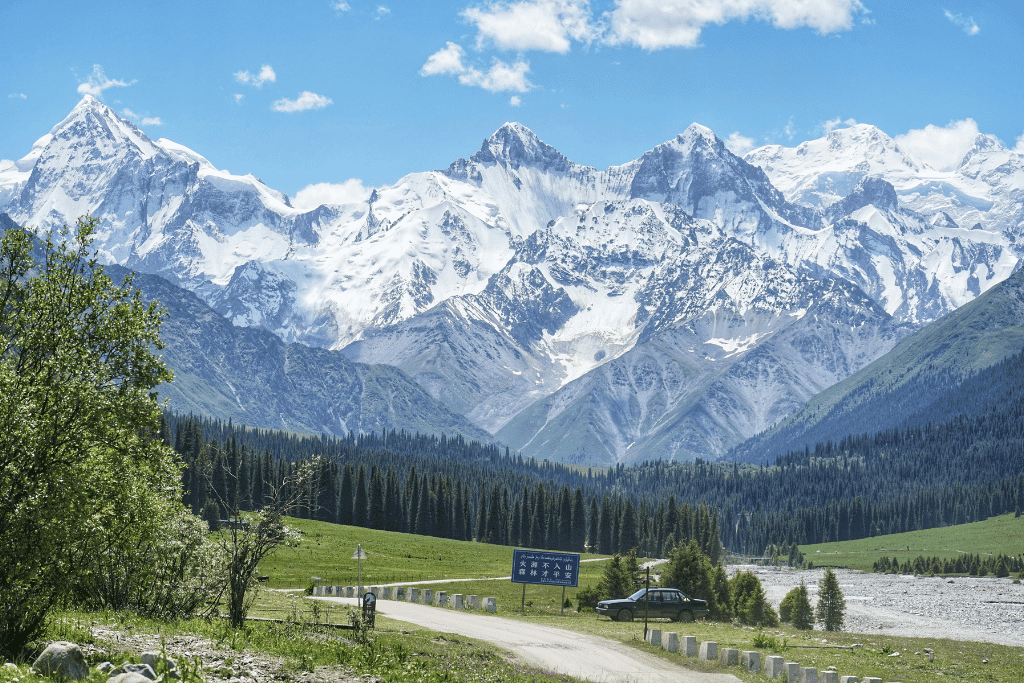
Yes, Kyrgyzstan is generally safe to visit, and travellers consistently describe the Kyrgyz people as some of the friendliest they’ve met anywhere. Petty crime and street hassle are rare outside the odd tourist-priced taxi, and the country’s biggest practical risks are altitude, rough roads and remoteness rather than personal safety.
Singapore’s Ministry of Foreign Affairs does flag two things worth knowing before you go. There’s no Singapore diplomatic presence in Kyrgyzstan, which limits how much consular help you can get in an emergency, and travellers heading near the Kyrgyz Republic-Tajikistan border are advised to stay alert given periodic border tension. Neither is a reason to skip the trip, but both are reasons to e-register with MFA before you fly and to buy proper travel insurance.
Is It Safe for Solo Travellers and Students?
Solo travel in Kyrgyzstan is common and well-supported, especially around the backpacker circuit linking Bishkek, Karakol and the Issyk-Kul villages.
Homestays and guesthouses are used to hosting solo guests, and locals repeatedly go out of their way to help lost or confused travellers, sometimes to the point of inviting them home for dinner.
The usual solo-travel precautions still apply. Confirm any transport or tour arrangements with a legitimate operator, keep your embassy registration up to date, and lean on your guesthouse host for local advice once you’re outside the capital.
Do Singaporeans Need a Visa for Kyrgyzstan?
No, Singapore passport holders don’t need a visa for tourism in Kyrgyzstan. Singaporeans can enter visa-free and stay for up to 30 calendar days within any rolling 60-day period, per Singapore’s Ministry of Foreign Affairs. This exemption covers tourism only, not employment, study or other activities that need separate authorisation.
Entry Requirements and the Arrival Card
Beyond the visa waiver, entry is straightforward. Keep your passport valid for the length of your stay, and be ready to show proof of onward travel if immigration asks, which happens occasionally at Manas International Airport. Kyrgyzstan doesn’t require a paper arrival card for short tourist stays, though rules can shift, so it’s worth a final check with MFA or your airline shortly before you fly.
📖 Related Guide: Need cover for the trip? Our best travel insurance in Singapore guide compares plans built for longer, further-flung itineraries like this one.
How to Get to Kyrgyzstan from Singapore
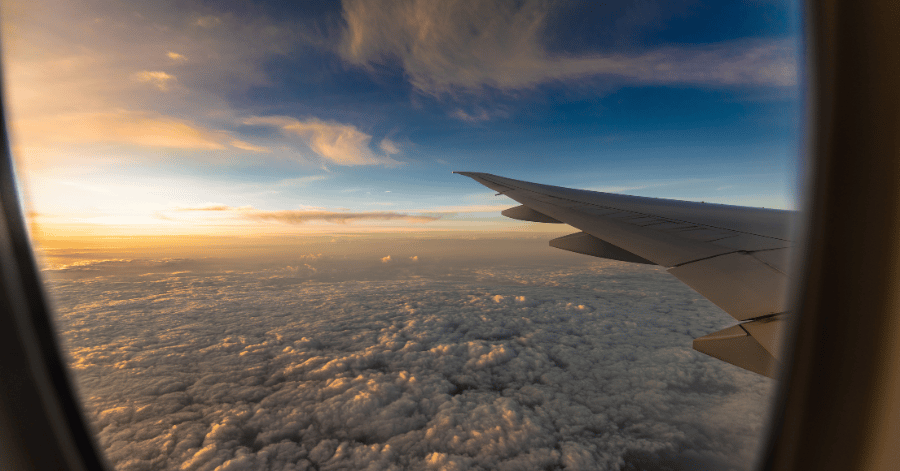
There’s no direct flight between Singapore and Kyrgyzstan, so every route involves at least one stop. Expect to connect through a major hub like Istanbul, Dubai or Almaty, landing at Bishkek’s Manas International Airport (airport code BSZ, formerly FRU). Total travel time typically runs from around 12 hours upward depending on the layover, and can stretch well past that on cheaper multi-stop routes.
Booking the Route
Turkish Airlines via Istanbul and connections through Almaty in neighbouring Kazakhstan tend to be the most reliable options, alongside Gulf carriers via Dubai or Doha. Fares and routings change often on a thin market like this one, so it’s worth comparing a few booking sites rather than assuming the first result is the cheapest. If Osh in the south is your entry point instead, most routings still connect through Bishkek or a regional hub first.
📖 Related Guide: Staying connected the moment you land? Our best travel eSIM guide covers getting data working from S$1.
Is Kyrgyzstan Rich or Poor? What’s It Famous For?
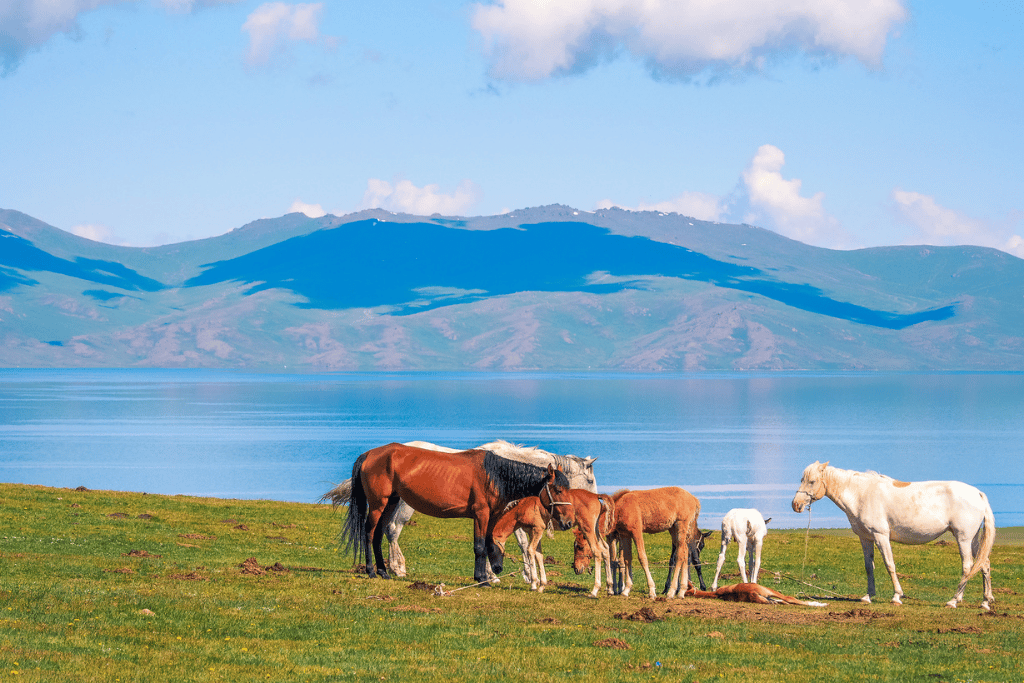
Kyrgyzstan is one of the poorer countries in Central Asia by income, but that’s exactly what keeps it cheap and unspoiled for visitors. It’s a mountainous, resource-light economy still finding its feet after the Soviet Union’s collapse in 1991. Average local wages sit well below Singapore’s, which is why a trip here costs a fraction of a similar one in Switzerland or New Zealand.
What Kyrgyzstan is actually famous for: nomadic horse culture, its living eagle-hunting tradition, Lake Issyk-Kul (one of the world’s largest and deepest mountain lakes), and being one of the few places left where you can watch a semi-nomadic lifestyle still being lived rather than performed for tourists. Locals sometimes call it the “Switzerland of Central Asia,” with scenery to match and a fraction of the price tag.
📖 Related Guide: Chasing the real Switzerland instead? Our best time to visit Switzerland guide covers the original, at a very different price point.
How Much Does Kyrgyzstan Cost?
Kyrgyzstan is cheap by Singapore standards, noticeably more so than Kazakhstan or Uzbekistan. 100 USD (~S$128) goes a long way here: it can cover a full day of activities, a decent meal budget and local transport, with room to spare, especially outside Bishkek’s handful of pricier restaurants.
Real prices travellers have paid recently, for a sense of scale:
| Item | Local Price | ~S$ |
|---|---|---|
| Street snack (samsa, pirozhki) | around 50–150 KGS | ~S$0.75–S$2.20 |
| Canteen meal (plov, lagman) | around 200–350 KGS | ~S$3–S$5.15 |
| Beshbarmak or Manti at a sit-down restaurant | around 300–600 KGS | ~S$4.40–S$8.80 |
| 1 hour horse riding | around 500–800 KGS | ~S$7.35–S$11.75 |
| Natural hot spring soak (30 min) | around 200–250 KGS | ~S$3–S$3.70 |
| Yurt stay, per person, with breakfast and dinner | around 2,200–2,300 KGS | ~S$32–S$34 |
| Private driver, Karakol to Altyn-Arashan (one way) | around 4,000 KGS | ~S$59 |
| Sunset boat cruise on Lake Issyk-Kul (shared, ~1 hour) | around 1,200–1,700 KGS per person | ~S$18–S$25 |
These are real prices travellers have paid recently, not an official price list, so treat them as a ballpark rather than a quote. Kyrgyzstan runs largely on cash outside Bishkek and Karakol’s main streets, so budget for that reality rather than counting on cards. The section below on getting around covers the smartest way to handle both.
📖 Related Guide: Want the fuller picture on how exchange rates actually work? Our wholesale exchange rates explainer breaks down the rate banks use versus what you’re usually offered.
Is Kyrgyzstan an Islamic Country?
Kyrgyzstan is a majority-Muslim country, with around 90% of the population identifying as Muslim, mostly Sunni, according to the CIA World Factbook. It’s constitutionally secular, though, not an Islamic state, and daily life reflects a blend of Islamic, nomadic and Soviet-era secular influences rather than strict religious observance.
You’ll see this play out visibly: mosques like Bishkek’s Imam Sarakhsi Central Mosque sit near Soviet monuments and Orthodox churches, and alcohol, secular dress and mixed nightlife are all common in the bigger cities.
Karakol even has a Chinese-Muslim (Dungan) community with mosques built in Chinese architectural style, a mix you won’t find paired like this anywhere else in Central Asia.
Best Places to Visit in Kyrgyzstan
Most Kyrgyzstan trips trace the same rough arc: Bishkek, then east around Lake Issyk-Kul to Karakol, with side trips into the mountains along the way. A smaller number of travellers push south to Osh. These are the stops worth building a route around.
Bishkek
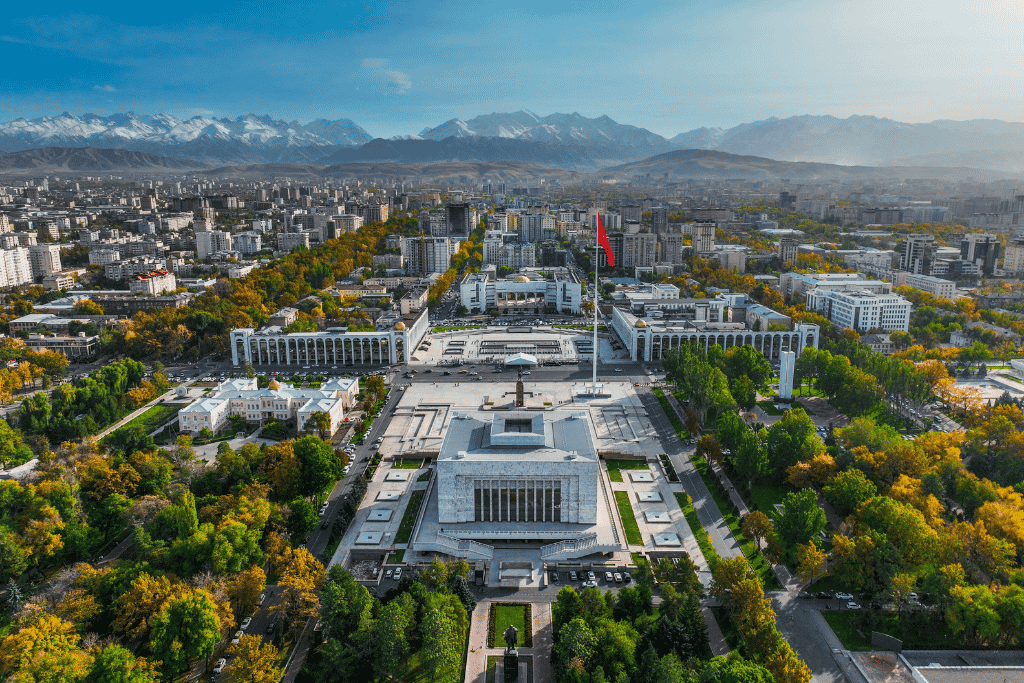
Bishkek is a green, walkable Soviet-era capital that makes a relaxed, low-key first stop rather than a headline destination in itself. Ala-Too Square is the city’s centrepiece, home to a changing-of-the-guard ceremony and the Manas monument, a tribute to the legendary hero on Kyrgyzstan’s flag. A short walk away, the Imam Sarakhsi Central Mosque (a gift from Turkey) is one of the largest in Central Asia.
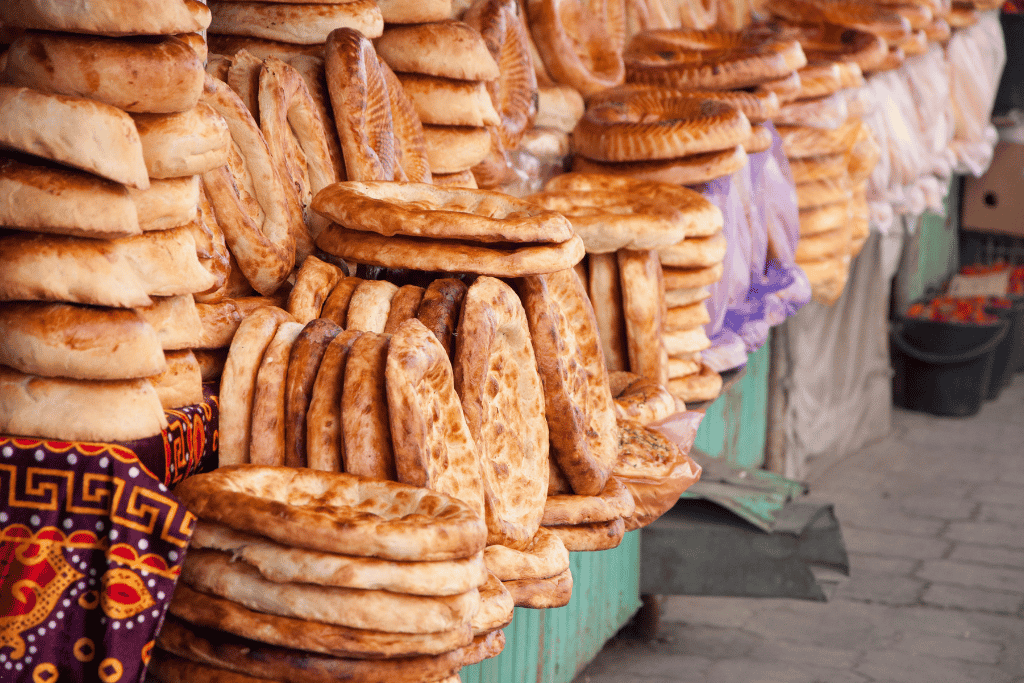
For food and atmosphere, head to Osh Bazaar, Bishkek’s sprawling local market. Stallholders sell dried horse and yak meat, kurut (dried milk balls) and smoked cheese alongside fresh produce. Or book a table at Supara, a traditional yurt-style restaurant that doubles as an introduction to Kyrgyz cuisine. Best for easing into the trip: give Bishkek a day, not three.
Ala Archa National Park
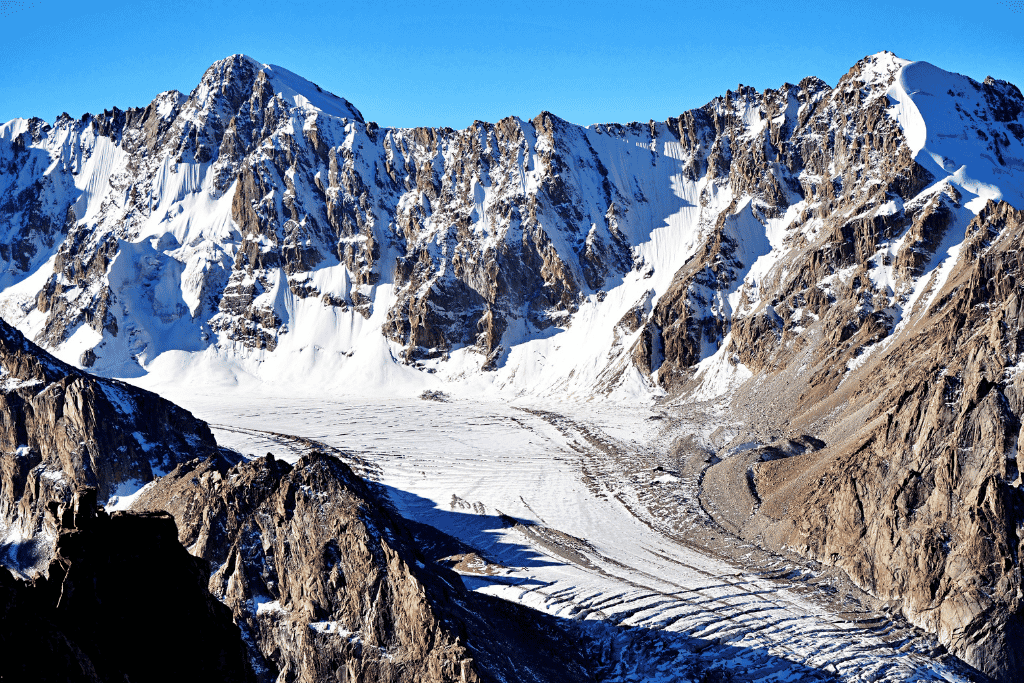
Ala Archa is a glacier-carved mountain valley about 40 minutes from Bishkek, and the easiest big hike near the capital. Trails range from an easy afternoon walk to multi-day treks, and the park is genuine snow leopard habitat, though sightings are (unsurprisingly) rare.
It’s a straightforward half-day or full-day trip with no need for a tour, just a taxi or shared van from Bishkek and a pair of decent shoes.
Burana Tower
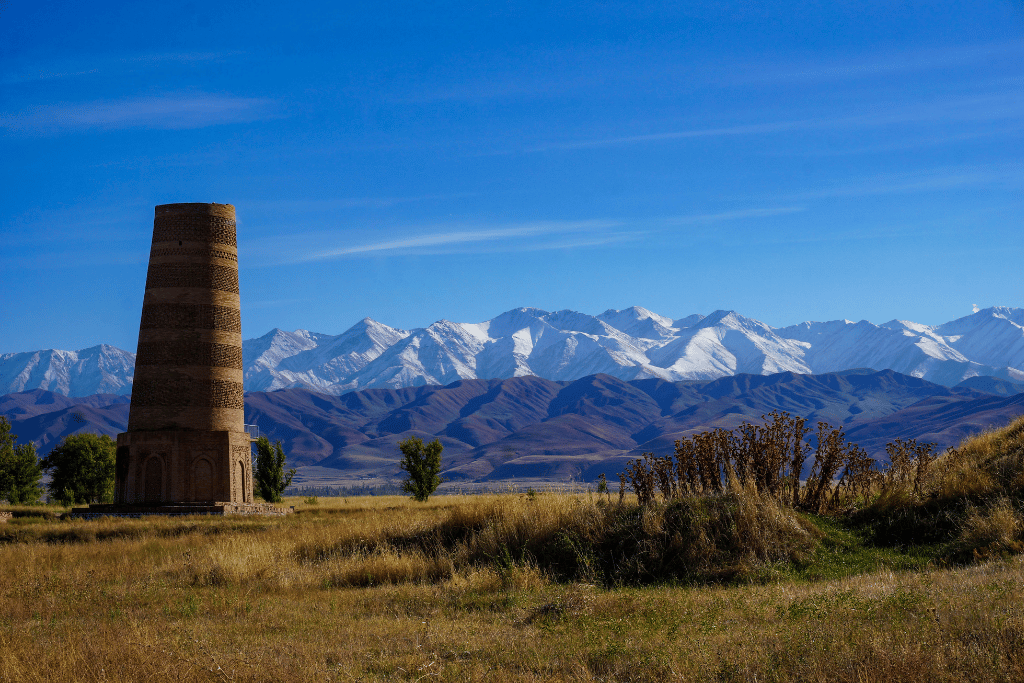
Burana Tower is an 11th-century minaret, all that remains of Balasagun, once a major Silk Road city. At around 25m tall today (down from its original height after earthquake damage), it’s a modest but properly ancient stop on the way east out of Bishkek, surrounded by open fields and scattered stone Balbal statues.
It’s a short detour rather than a destination in itself, best paired with the drive toward Lake Issyk-Kul.
Lake Issyk-Kul and Cholpon-Ata
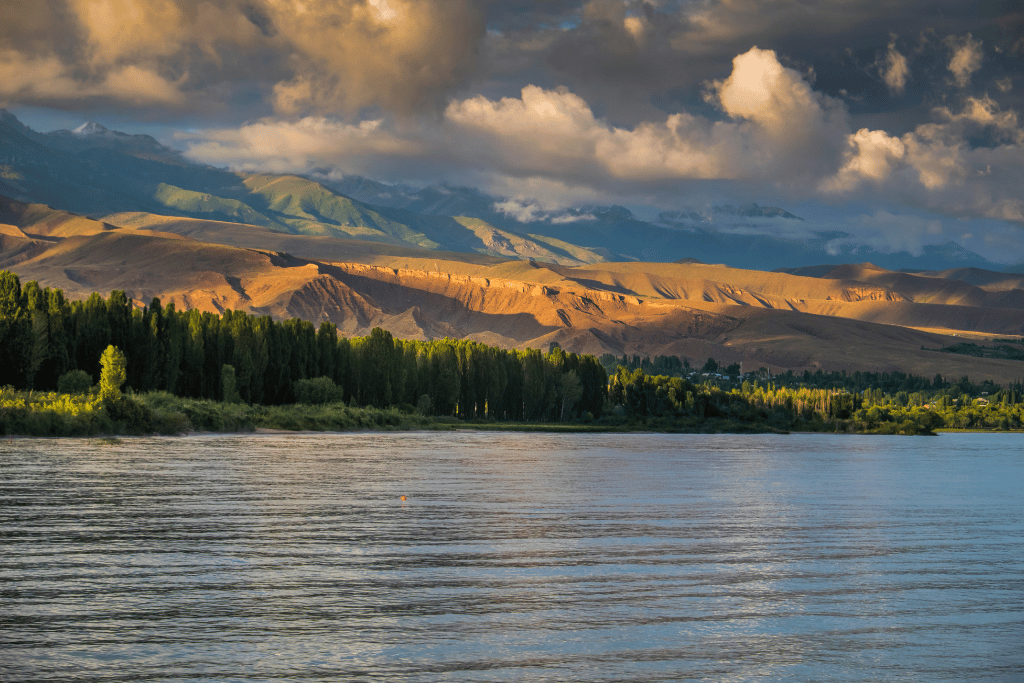
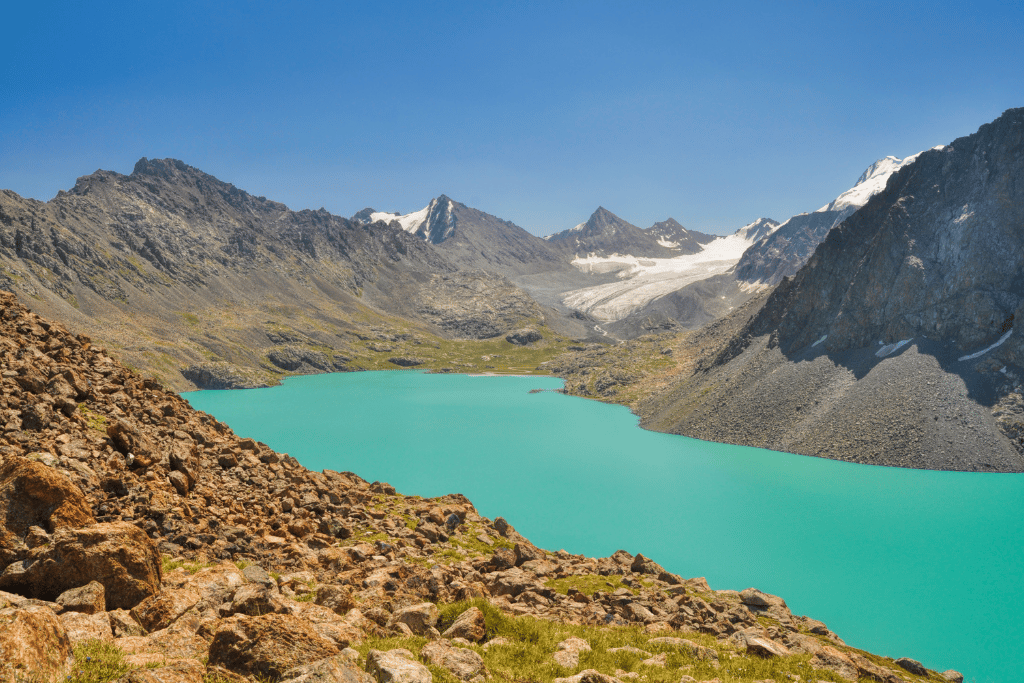
Lake Issyk-Kul is Kyrgyzstan’s biggest natural landmark: a vast alpine lake ringed by snow-capped peaks that never freezes, even in winter, thanks to its depth and mineral content. Its name literally translates to “warm lake.” The resort town of Cholpon-Ata on the north shore is the easiest base, with Soviet-era sanatoriums slowly being converted into guesthouses and simple beachfront stays.
Summer is when it comes alive, with boat rides, lakeside restaurants and locals treating the shore much like a beach holiday. It’s the natural stop between Bishkek and Karakol rather than a detour.
📖 Related Guide: Another under-the-radar Silk Road stretch worth knowing about is our Xi’an travel guide, covering the eastern end of the same ancient trade route.
Jeti-Ögüz Canyon and Skazka Canyon
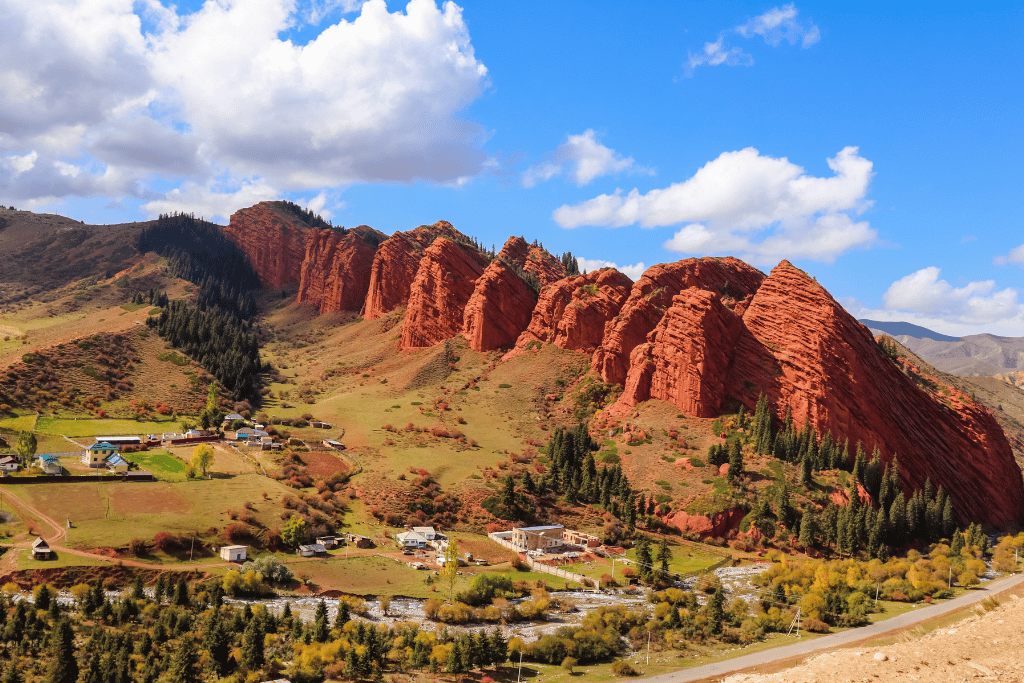
Jeti-Ögüz (“Seven Bulls”) is a striking run of red sandstone cliffs on Issyk-Kul’s southern shore, named for a local legend and easily one of the most photographed spots in the country.
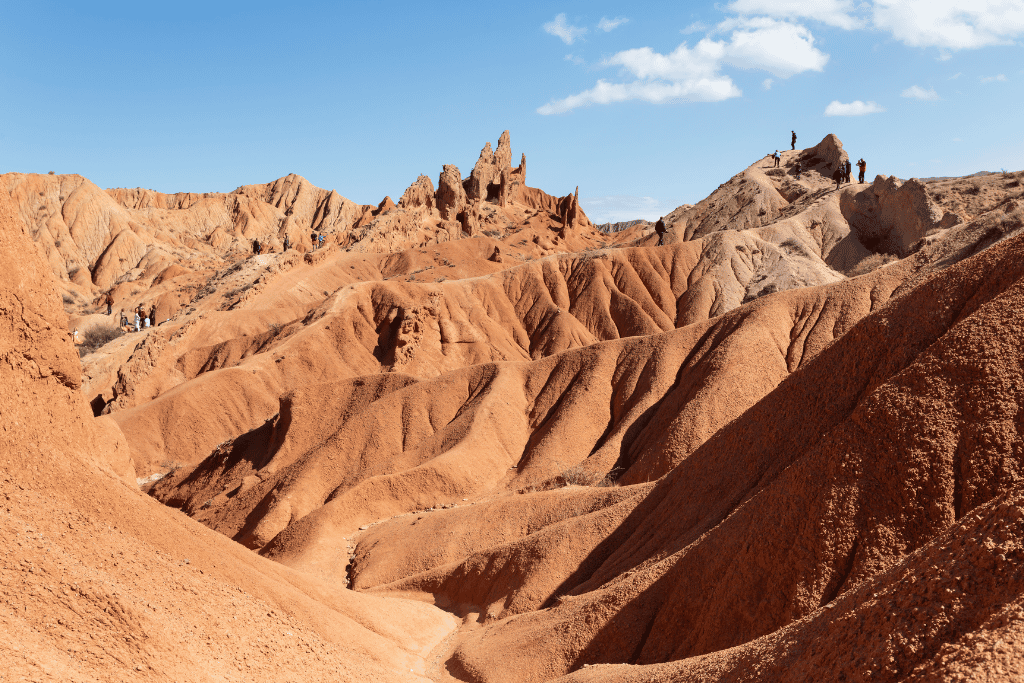
A short drive away, Skazka Canyon, or “Fairy Tale Canyon,” is a smaller-scale maze of wind-carved red rock formations that locals compare to a dragon’s back.
Both are easy half-day stops with short, well-marked walking trails, no serious hiking gear required.
Karakol
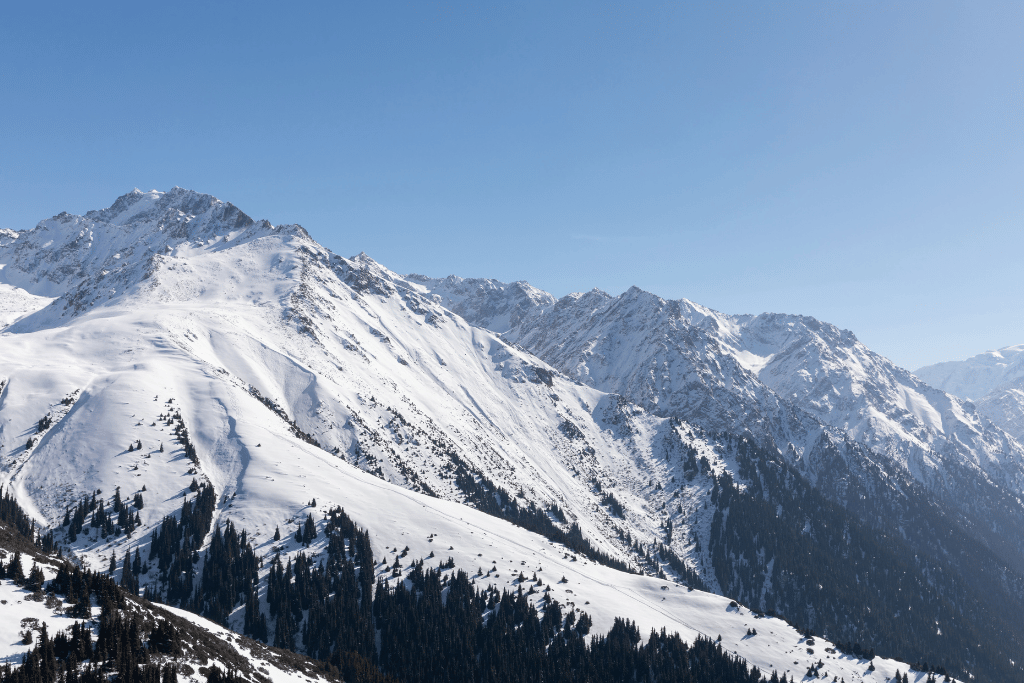
Karakol, on Issyk-Kul’s eastern tip, is the main base for hiking, skiing and trekking further into the Tian Shan mountains, and has a distinct cultural mix thanks to its Dungan (Chinese-Muslim) community.
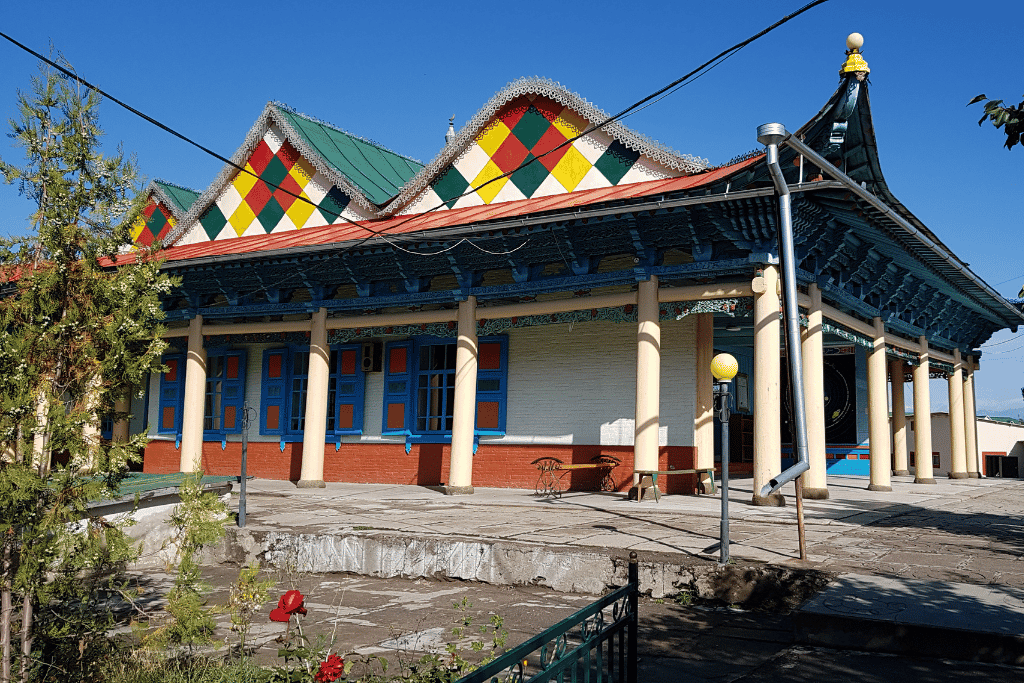
The Dungan Mosque, built entirely without nails using Chinese architectural techniques, is one of the more unusual religious buildings you’ll find anywhere in Central Asia.
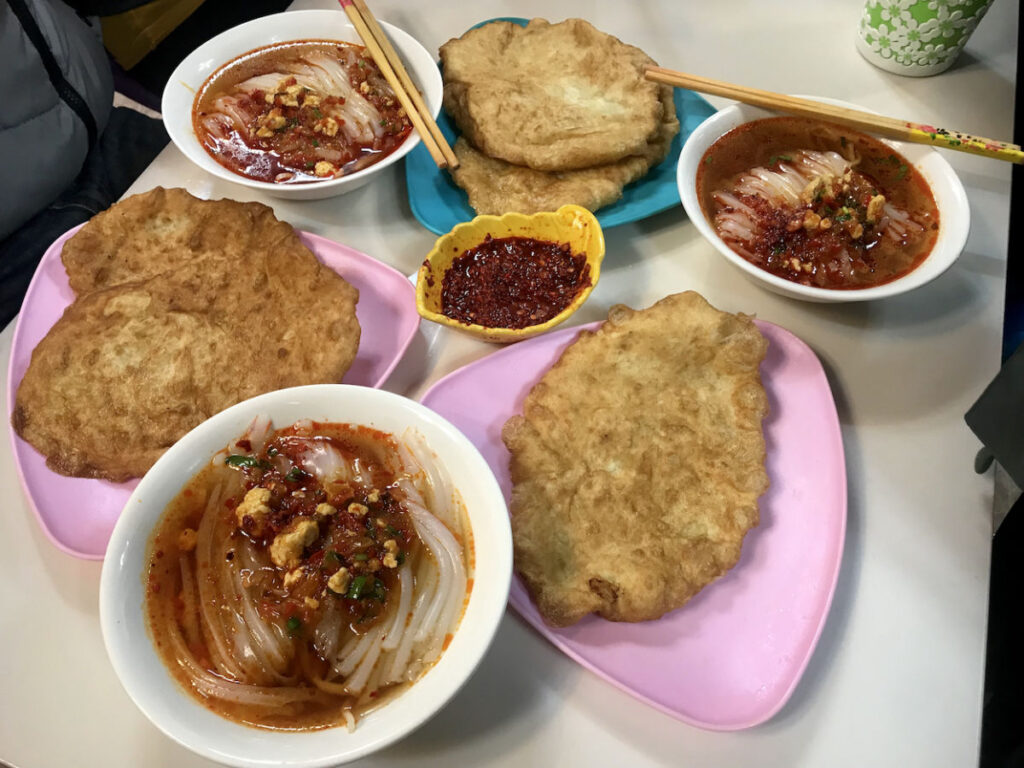
Image Credits: Matador Network
For food, order Ashlan-Fu, a spicy cold noodle soup that’s a Dungan speciality and, according to locals, a reliable hangover cure. It’s sold cheaply at the local market and in small family-run restaurants around town. Best for anyone planning multi-day hikes or a ski trip in winter: Karakol is where you base yourself.
Altyn-Arashan Valley
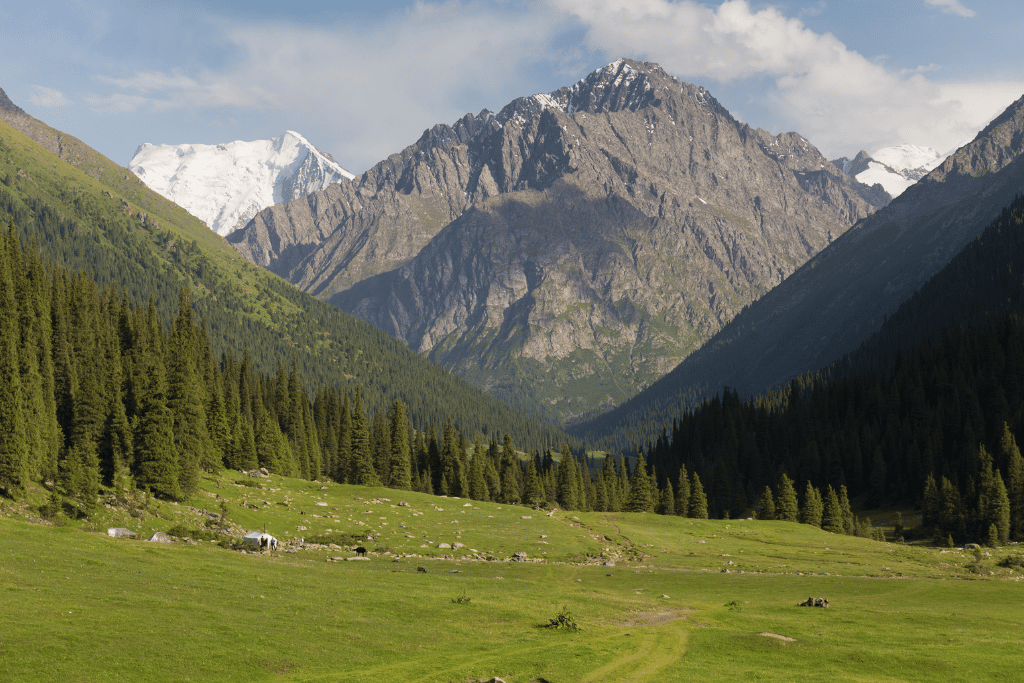
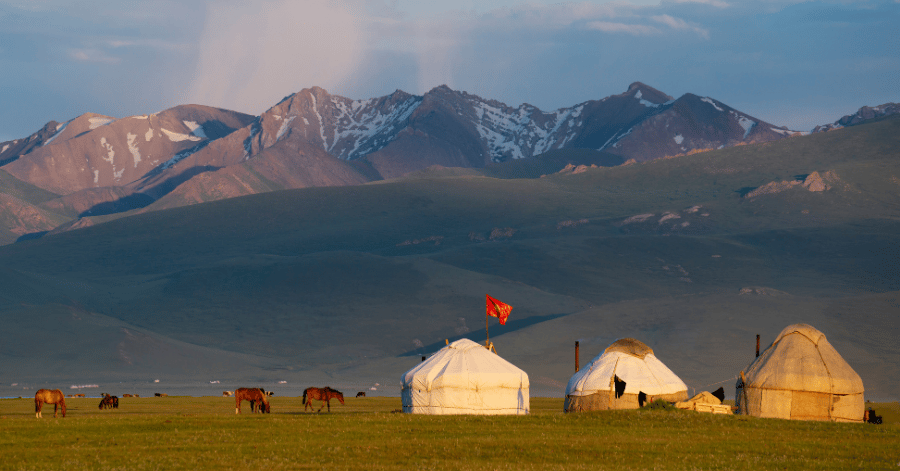
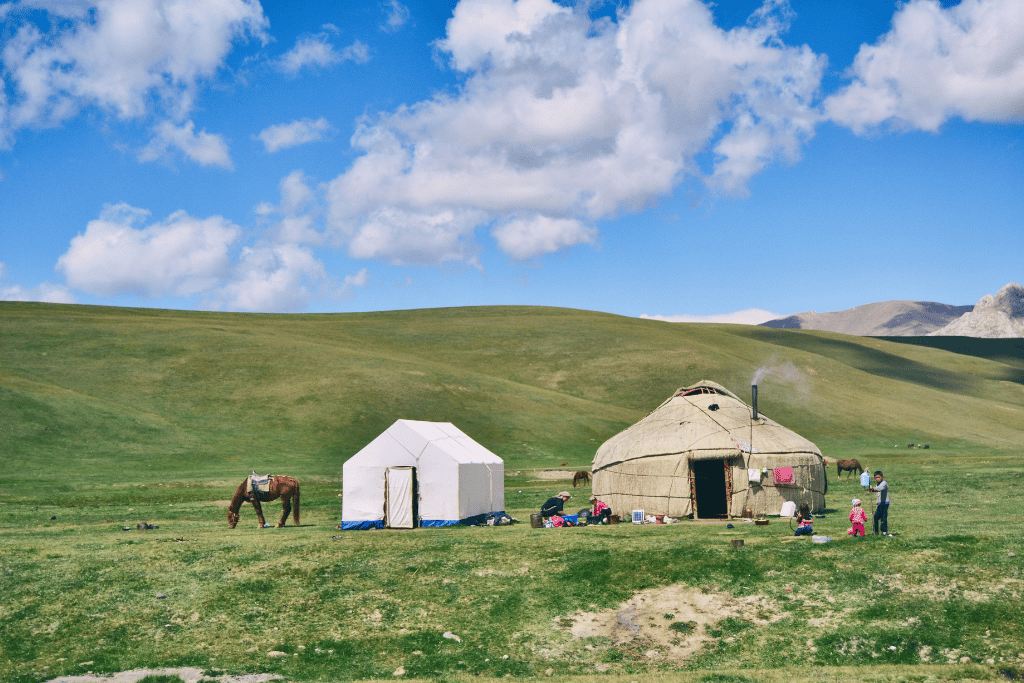
Altyn-Arashan is a remote mountain valley reached by a rough, bone-rattling 4×4 track from Karakol, and the most atmospheric place in the country to spend a night. Guesthouses here are modern-style yurts, and the valley’s natural hot springs are the reward after a bumpy ride in and a day of hiking.
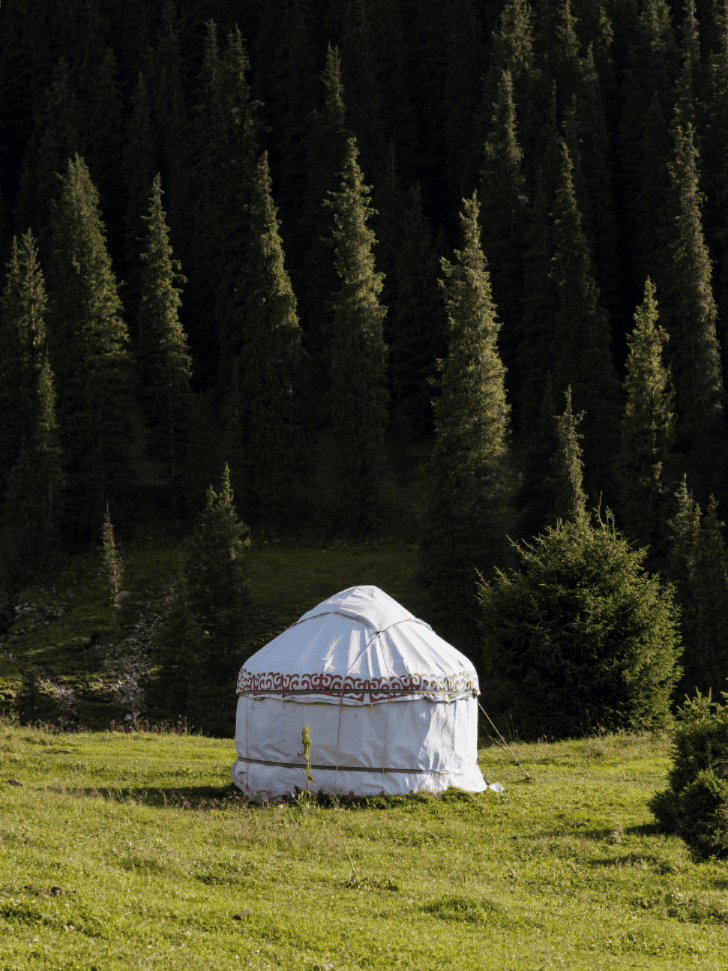
It’s basic by design: shared washrooms, generator power only in the evenings, no phone signal. In return, you get horses grazing outside your yurt door and some of the clearest stargazing you’ll find anywhere. Best for travellers who want one genuinely off-grid night, not a full trip built around roughing it.
Beyond the North: Osh and Nomadic Kyrgyzstan
The north (Bishkek, Issyk-Kul, Karakol) is where most first trips stay, but the south and a couple of living-culture experiences reward travellers with extra time.
Arslanbob Walnut Forest
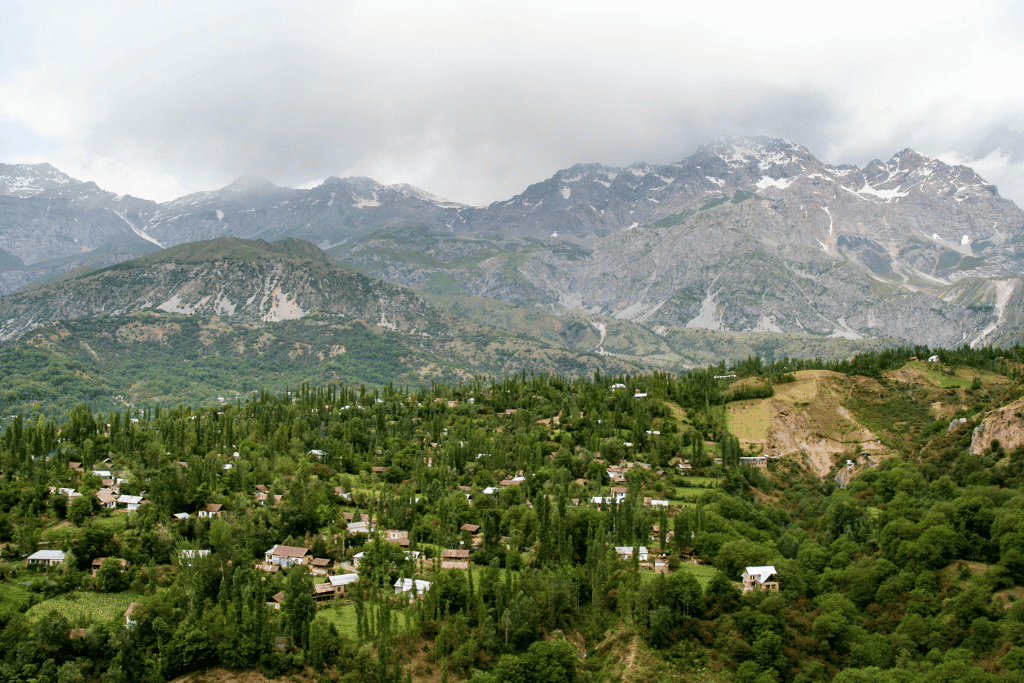
Arslanbob, in the country’s south, sits inside the largest natural walnut forest on Earth, spanning around 11,000 hectares. It’s a small, little-visited mountain village where harvest season (September and October) brings the whole community out into the trees, and hiking trails lead to waterfalls, lakes and caves in the surrounding hills.
It’s a detour for travellers with extra time rather than a first-trip essential, but it’s one of the quietest, least touristy stops on this list.
Osh and Sulaiman-Too
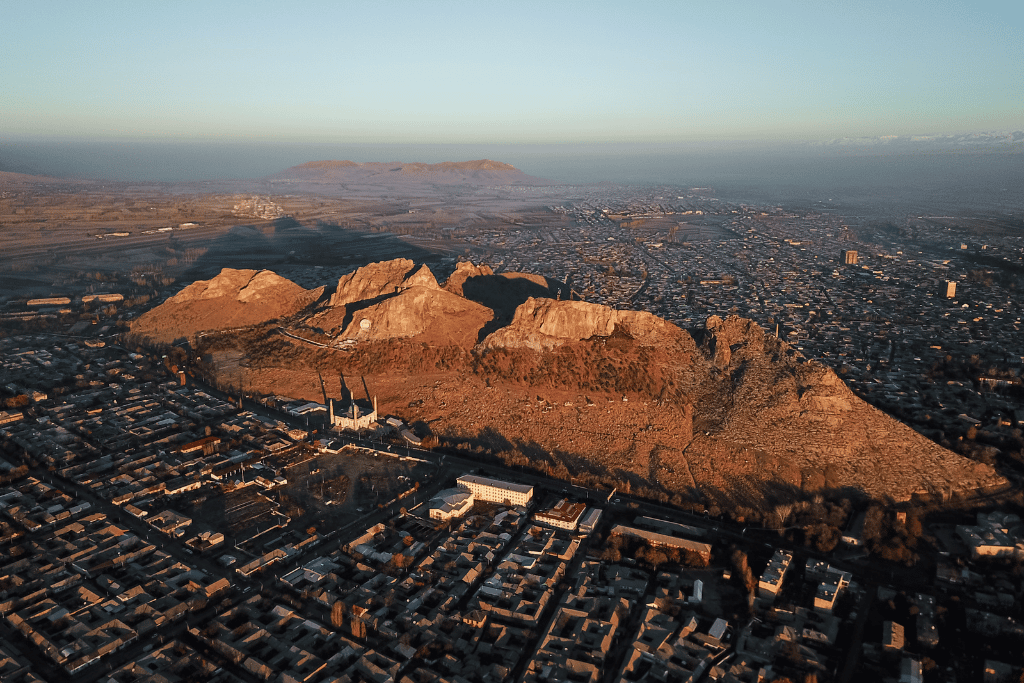
Osh, Kyrgyzstan’s southern hub, is one of Central Asia’s oldest cities, said to date back some 3,000 years, with artefacts found from the 5th century BC, and feels noticeably more Central Asian and less Russian-influenced than Bishkek.
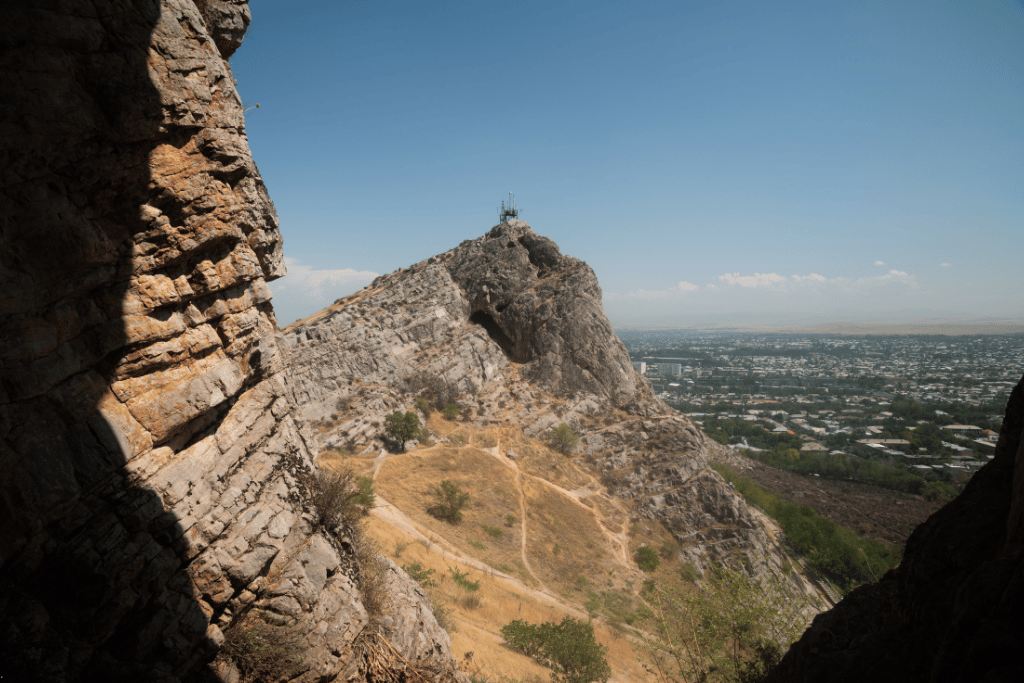
Its centuries-old bazaar is one of the region’s best, and Sulaiman-Too, a rocky sacred mountain rising straight out of the city and a UNESCO World Heritage Site, has drawn pilgrims for over 1,500 years.
Osh sits close to the Uzbek border, making it a natural add-on if you’re extending into a wider Central Asia trip. Best for travellers with a week or more who want the south as well as the north.
Watch a Golden Eagle Hunter at Work
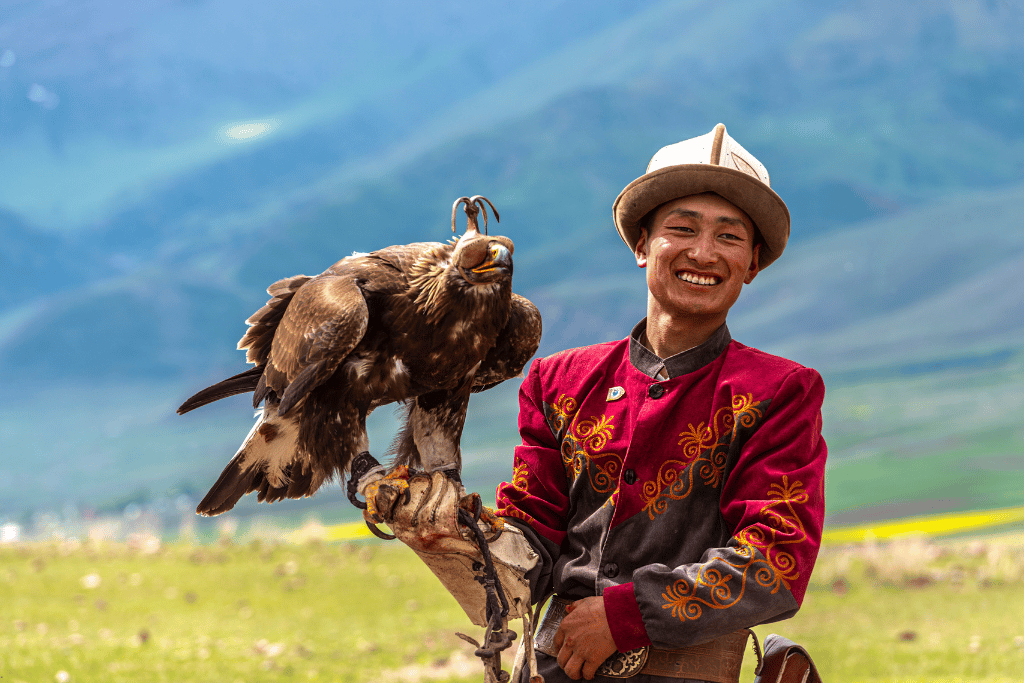
Eagle hunting (berkutchi) is a centuries-old Kyrgyz and wider Central Asian tradition, where hunters train golden eagles to hunt across the steppe. It’s mostly kept alive today through demonstrations near Bishkek and Issyk-Kul, and at seasonal nomad festivals, rather than as daily practice.
It’s a rare, photogenic slice of living nomadic culture, and one of the few activities on this list that’s more about a tradition than a place.
What to Eat in Kyrgyzstan
Kyrgyz food is nomadic cooking built for cold winters and long distances: heavy on meat and dairy, light on vegetables. A handful of dishes turn up everywhere, from Bishkek restaurants to roadside stops on the way to Issyk-Kul, and each has a place locals actually rate rather than just a tourist menu translation.
Beshbarmak
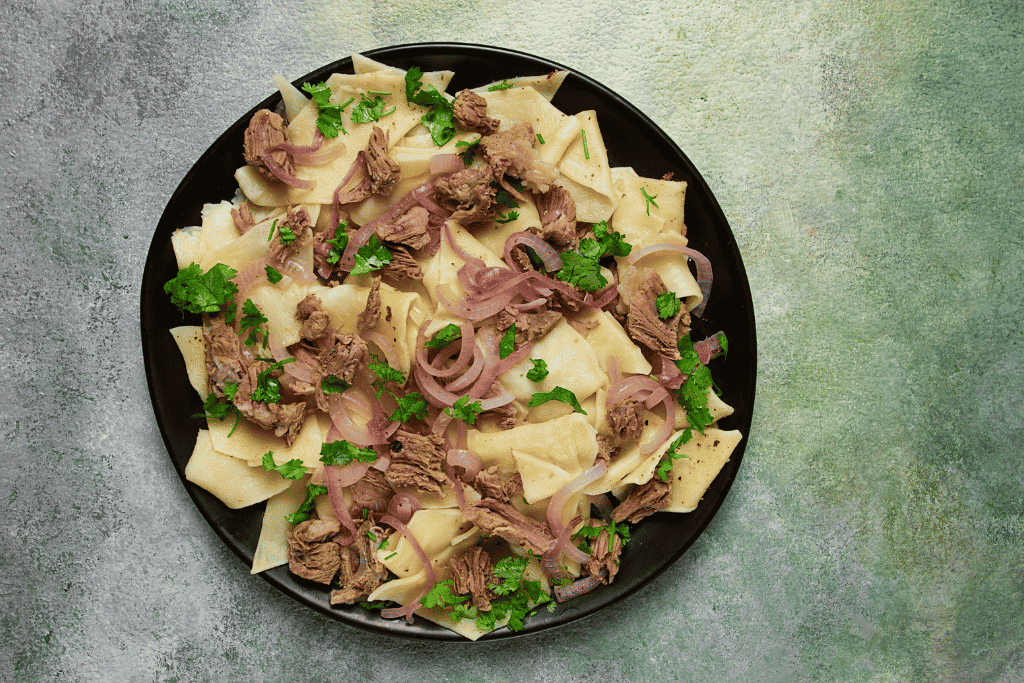
Beshbarmak is the national dish and the one to order first: boiled meat (horse, lamb or beef) served over wide, flat noodles with an onion broth, traditionally eaten by hand (“five fingers” is the literal translation). It’s the dish every other Kyrgyz meal gets measured against.
| Where to try | Area | Notes |
|---|---|---|
| Cafe Faiza | Zhibek Zholu, Bishkek | Everyday local pick, long queues at peak times, come before 1 PM or after 4 PM |
| Supara Ethno-Complex | Kok-Jar, just outside Bishkek | Fuller cultural experience with yurt-style dining, pricier, book ahead |
Lagman
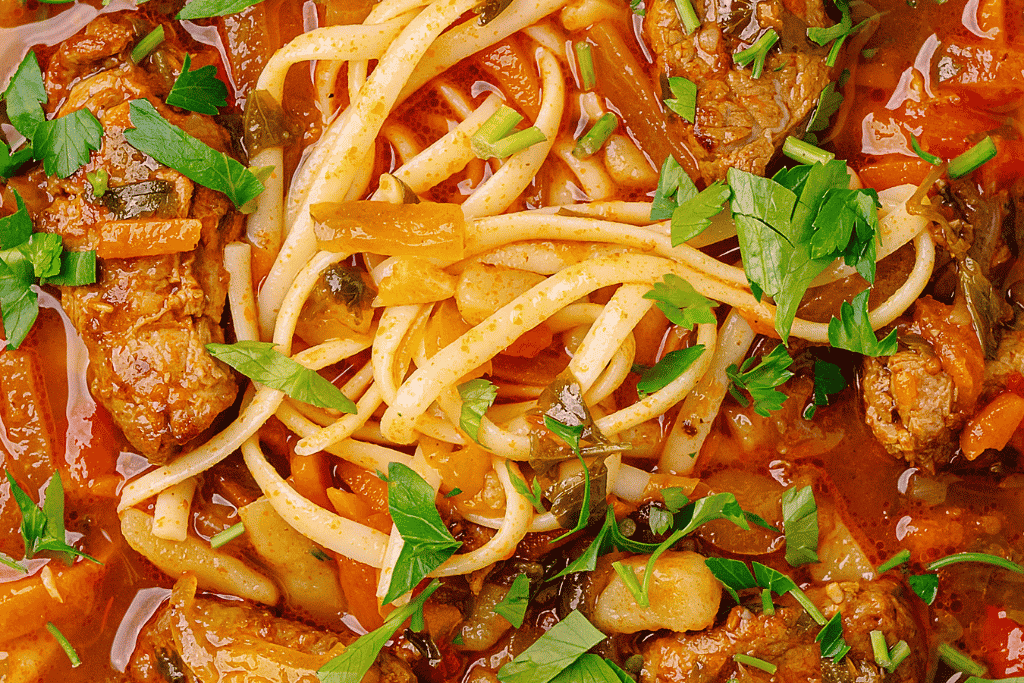
Lagman is a bowl of hand-pulled noodles in a spiced meat-and-vegetable broth, with roots in Dungan (Chinese-Muslim) cooking rather than Kyrgyz nomad cuisine. It’s the one dish where Karakol, not Bishkek, has the edge.
| Where to try | Area | Notes |
|---|---|---|
| Cafe Zarina | Karakol | Known locally for its Bozu Lagman, open daily 9 AM–11 PM |
Manty
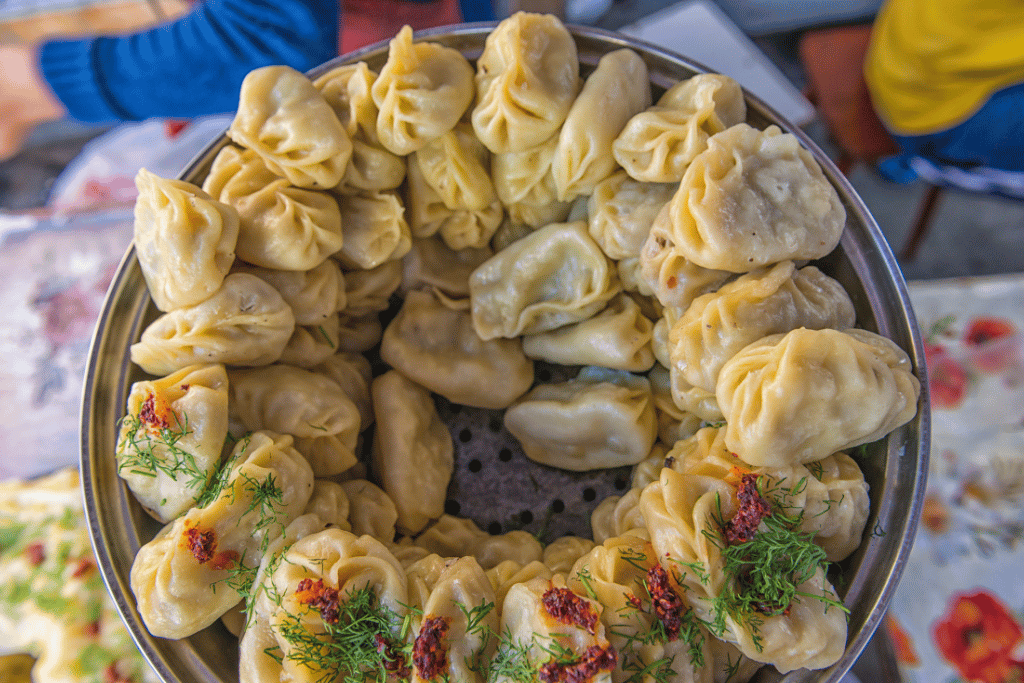
Manty are steamed dumplings filled with spiced minced meat and onion, usually served with sour cream, and about as safe and filling an order as exists in Kyrgyzstan.
| Where to try | Area | Notes |
|---|---|---|
| Cafe Faiza | Zhibek Zholu, Bishkek | Same spot as the beshbarmak pick, order both at once |
| Navat | Bishkek (multiple locations) | Wider menu if you’re eating with a group that wants variety |
Shorpo
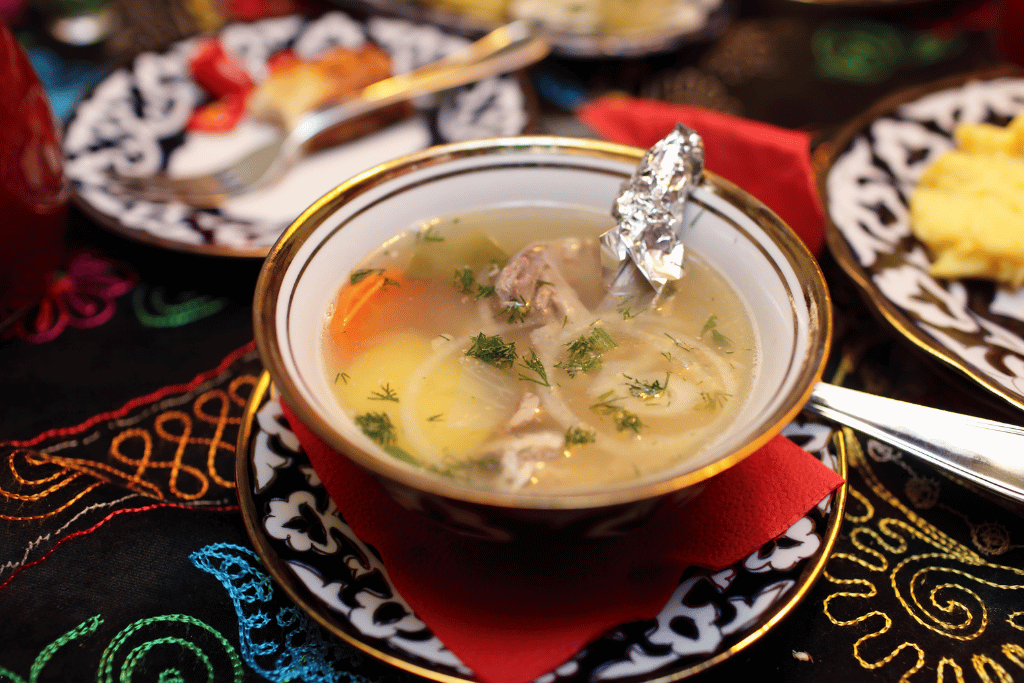
Shorpo is a rich, fatty meat-and-vegetable soup, and usually the broth beshbarmak gets served alongside rather than a dish you order on its own.
| Where to try | Area | Notes |
|---|---|---|
| Cafe Faiza | Zhibek Zholu, Bishkek | On the same menu as the beshbarmak and manty, order it as a starter |
Ashlan-Fu
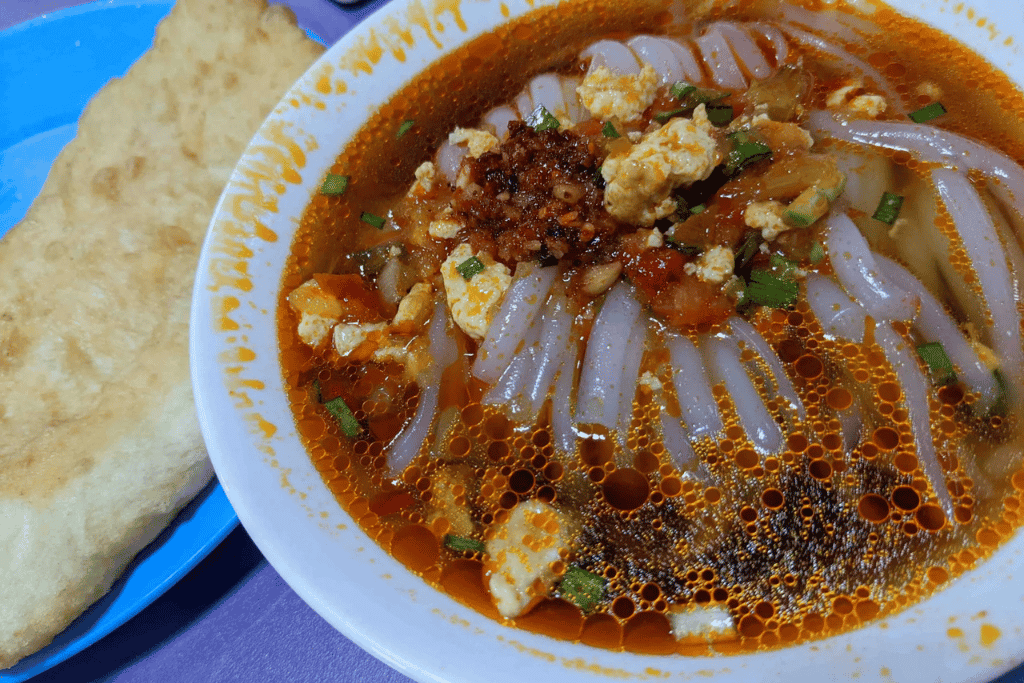
Image Credits: Destination Karakol
Ashlan-fu is Karakol’s own Dungan speciality: a cold, spicy noodle soup that doubles as the local hangover cure. It’s a street-food dish more than a restaurant one, and the best version has a name attached to it.
| Where to try | Area | Notes |
|---|---|---|
| Ashlan-Fu Saida | Ashlan-Fu Alley, Bugu Bazaar, Karakol | Widely rated the best in town, sells around 600 bowls a day for pocket change, expect to queue and share a table at midday |
Kymyz
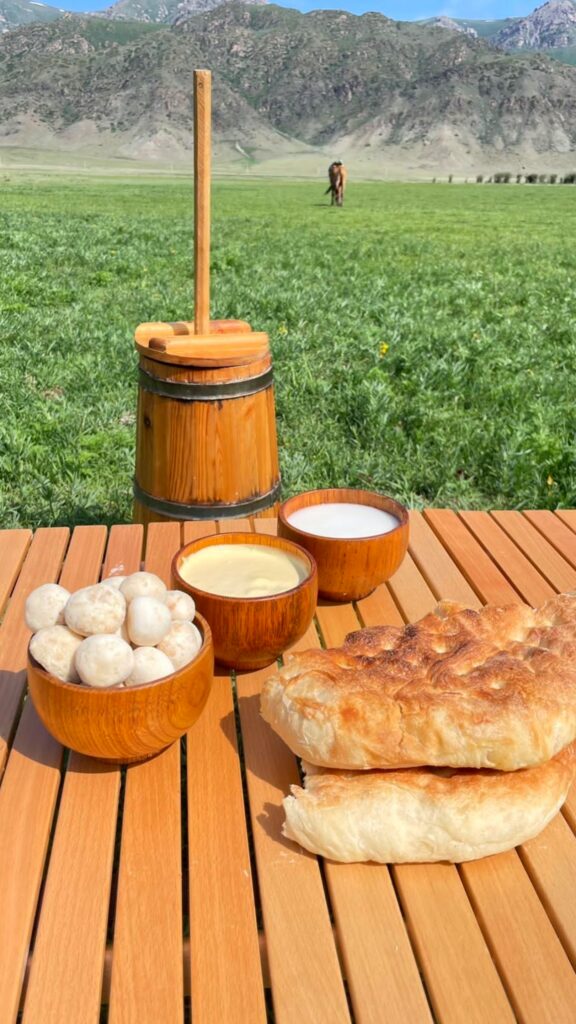
Kymyz is fermented mare’s milk, sour and fizzy, and a genuine point of local pride rather than a novelty. Worth one polite sip if you’re offered a bowl, even if it’s not for everyone.
| Where to try | Area | Notes |
|---|---|---|
| Osh Bazaar (dairy section) | Bishkek | Go between 8–10 AM when stalls are fully stocked, vendors usually let you taste before buying |
Is 7 Days Enough for Kyrgyzstan?
Yes, seven days is enough for a solid first trip to Kyrgyzstan, covering Bishkek and the Issyk-Kul loop out to Karakol at a comfortable pace. It’s tight if you also want to push south to Osh or spend real time trekking, both of which are worth an extra three to five days.
A Simple 7-Day Route
A straightforward version looks like this:
- Days 1 to 2: Bishkek and Ala Archa National Park
- Day 3: Travel to Cholpon-Ata on Lake Issyk-Kul
- Days 4 to 6: Based in Karakol, with day trips to Jeti-Ögüz and Skazka Canyon, plus a night in Altyn-Arashan if your schedule allows
- Day 7: Travel back to Bishkek for your flight out
Build in a buffer day if you can. The mountain roads run slower than they look on a map.
Getting Around and Paying in Kyrgyzstan
Getting around Kyrgyzstan splits cleanly by city and countryside. In Bishkek, Yandex Go (the regional Uber equivalent) is cheap, reliable and the easiest way to get around without speaking Russian or Kyrgyz. Between towns, most travellers use a mix of shared marshrutkas (minivans), hired drivers and, for the more remote valleys, 4x4s.
Roads thin out fast once you leave the capital, and mountain routes can be slow going, so budget more travel time than a map suggests, especially heading to spots like Altyn-Arashan.
Cash Outside the Capital, Cards Inside It
Bishkek and Karakol’s main strips take cards at hotels, bigger restaurants and supermarkets, but markets, small eateries, homestays and rural guesthouses are cash-only. The safe move is withdrawing what you’ll need in som before heading out of the bigger towns, since ATMs get scarce fast once you’re in the mountains.
The YouTrip Way to Pay
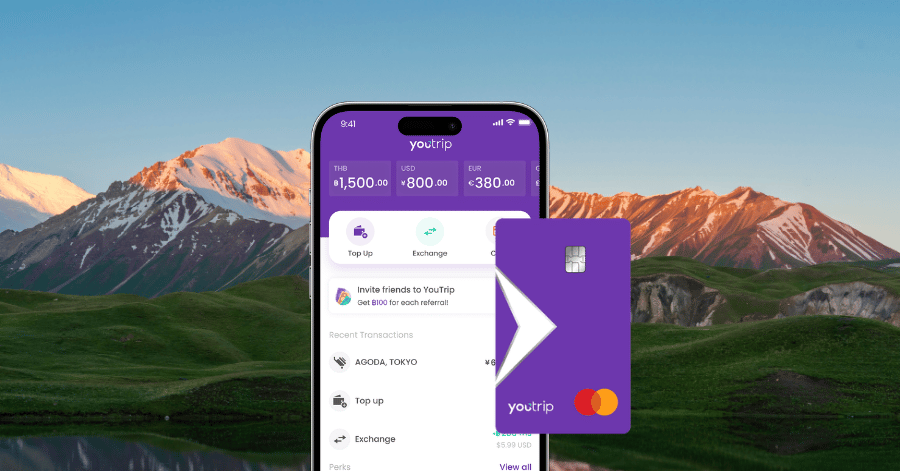
This is where a multi-currency card earns its keep. Tap your YouTrip card for hotels, restaurants and shops in Bishkek and Karakol with no foreign transaction fee, billed at the Mastercard wholesale rate with no hidden markup, versus a typical credit card quietly adding 3% to 3.5% in FX fees on every overseas tap.
For the cash-only stretches, withdraw your som from a city ATM with YouTrip before heading out. Your first S$400 of overseas ATM withdrawals each calendar month is free, then it’s a flat 2% after that, which comfortably beats a money changer baking a markup of a few percent into the rate it quotes you, wider still on a less-common currency like the som.
Bottom line: tap the card in Bishkek and Karakol, pull a cash buffer from an ATM before heading into the mountains, and skip exchange counters entirely. For more, see our best multi-currency card in Singapore guide and our explainer on how YouTrip’s exchange rates work.
📖 Related Guide: Comparing this against another cash-heavy, ATM-reliant destination? Our Turkey ATM withdrawal guide covers the same withdraw-smart approach.
Practical Things Singaporeans Ask About
A few extra details worth knowing before you fly.
- Language: Kyrgyz and Russian are both official, and Russian is widely spoken and useful for travel. English is limited outside guesthouses and younger city crowds, so a translation app earns its keep once you’re off the main routes.
- SIM and internet: Bishkek and Karakol have decent 4G coverage; expect it to drop out fast in remote valleys and at altitude, and treat any overnight stay in the mountains as a digital detox by default.
- Altitude: Much of Kyrgyzstan sits well above sea level, and spots like Altyn-Arashan and the high mountain lakes can bring on mild altitude symptoms (headaches, breathlessness) even for otherwise fit travellers. Pace yourself on the first day at elevation and drink more water than usual.
- Western chains: Don’t expect familiar fast-food or coffee chains outside Bishkek, where options are still limited. Part of the appeal is that local food is the only real option most places you go.
FAQs
No. Singapore passport holders can enter Kyrgyzstan visa-free for up to 30 calendar days within any rolling 60-day period, for tourism purposes only.
Kyrgyzstan is a secular republic where around 90% of the population is Muslim, mostly Sunni. It’s not governed as an Islamic state, and daily life is a mix of Islamic, nomadic and Soviet-era secular influences.
Kyrgyzstan uses the Kyrgyzstani som (KGS). At recent rates, roughly 68 KGS equals S$1, though this moves daily and should be checked before converting any significant amount.
Yes, Kyrgyzstan is generally considered safe, with low rates of crime against tourists and a reputation for hospitality. The main practical risks are rough mountain roads, remoteness and altitude rather than personal safety, and Singapore has no local embassy, so e-registering with MFA before you travel is worth doing.
Seven days comfortably covers Bishkek and a loop around Lake Issyk-Kul to Karakol. Add three to five more days if you also want to reach Osh in the south or spend serious time trekking.
Kyrgyzstan Won’t Stay Quiet Forever
Between the visa-free entry, the prices and the fact that almost nobody you know has been, Kyrgyzstan is one of the last places in Asia that still feels properly undiscovered. Give it a week, build the route around Bishkek, Issyk-Kul and Karakol, and go before it’s on everyone’s list.
Not a YouTrooper yet? Singapore’s go-to multi-currency wallet helps you save with great FX rates and zero fees. Skip the money changer and get a free YouTrip card + S$5 YouTrip credits with code YTBLOG5.
Then, head over to our YouTrip Perks page for exclusive offers and promotions, we promise you won’t regret it. Join our Telegram (@YouTripSG) and Community Group (@YouTripSquad) for travel tips, event invites, and more!
Happy travels!