


Ready to escape to an island paradise? Say annyeong to our 4-Day Jeju Island itinerary!
Ready to escape to an island paradise? Whether you’re a nature lover, foodie, or culture seeker, this 4-day Jeju Island itinerary is your one-stop guide for the top things to do in Jeju – the “Hawaii of South Korea.”
From iconic hikes and volcanic landscapes to vibrant markets and black pork BBQ, we’ve packed in over 30 must-visit attractions to make your Jeju trip unforgettable. Bookmark this guide, because this is how you conquer Jeju like a pro.
💜 Stay Up To Date:
– Seoul to Jeju: Flights vs Ferries Compared
– Best Things To Do In Busan
– Best Things To Do In Seoul
Jeju Island At A Glance
| Quick Answer | Detail |
|---|---|
| Days needed | 3 days minimum, 4–5 to cover all four regions without rushing |
| Best time | April–June and September–November; skip wet, humid July–August |
| Don’t miss | Seongsan sunrise peak, black pork BBQ, the Aewol café coast, a waterfall |
| Getting around | Rent a car (you’ll need an International Driving Permit); buses are slow |
| Known for | Black pork, abalone, tangerines, the haenyeo sea women, volcanic scenery |
| Paying | Cards accepted almost everywhere; carry some cash for markets |
Table of Contents
- Is Jeju Island Worth Visiting?
- When to Visit Jeju Island
- Jeju’s Proposed Tourism Fees
- Getting Around Jeju Island
- 4-Day Jeju Itinerary by Region
- Day 1: North Jeju & Jeju City
- Day 2: South Jeju & Hallasan
- Day 3: East Jeju
- Day 4: West Jeju
- Things to Do in Jeju with Kids
- Jeju at Night or on a Rainy Day
- Where to Stay in Jeju Island
- Jeju Island Travel Tips
- Jeju Island FAQs
Is Jeju Island worth visiting in 2026?
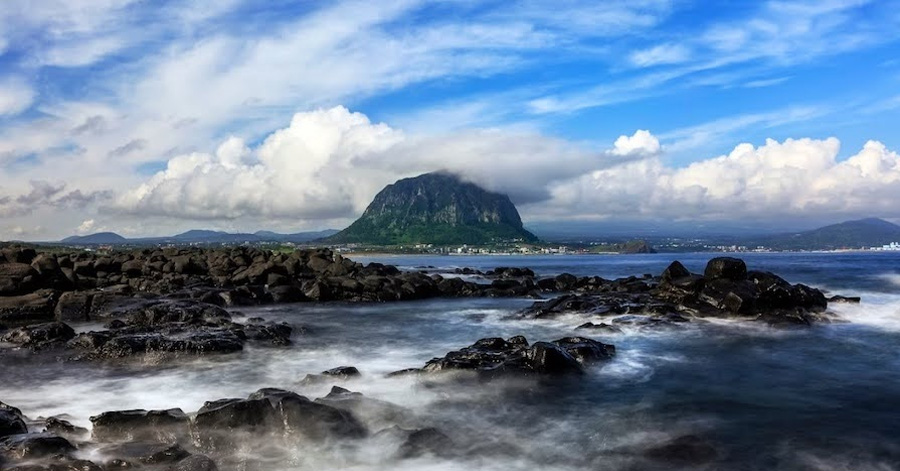
Image Credits: Qantas
Absolutely. Jeju remains one of South Korea’s most iconic holiday destinations. With its unique UNESCO-listed lava tubes, Hallasan (South Korea’s highest mountain), stunning coastlines, and rich local culture, Jeju is a must-visit for any Korea itinerary.
But with all good things, they need to be protected. While the influx of tourists has helped the tourism sector, it has also resulted in a huge overload of garbage and sewage — a huge bane for such a pristine island. This is why the local Jeju authorities are looking to impose tourism fees.
When to Visit Jeju (and Which Months to Avoid)
The best months to visit Jeju are spring (April–June) and autumn (September–November). Spring brings canola fields and cherry blossoms; autumn brings clear skies and cool, comfortable hiking weather.
The stretch to avoid is peak summer. July and August are hot, humid and fall in Korea’s monsoon season, so you can lose days to rain — and it’s the busiest, priciest time to go. Winter (December–February) is quiet and cheap, but Hallasan can be icy and some ferries to nearby islets pause in rough weather.
| Season | Months | What to expect |
|---|---|---|
| Spring | Apr–Jun | Blossoms, canola fields, mild — the sweet spot |
| Summer | Jul–Aug | Hot, humid, monsoon rain, busiest and priciest |
| Autumn | Sep–Nov | Clear skies, cool hiking weather, fewer crowds |
| Winter | Dec–Feb | Quiet and cheap; icy trails, some ferries paused |
Whatever the season, Jeju’s weather turns fast, so pack a light rain layer even in spring. For the wider Korea trip, our Korea weather guide breaks it down month by month, and the cherry blossom forecast maps when the island usually blooms.
Breakdown of Jeju Island’s proposed tourism fees
| Proposed Fees | Amount |
|---|---|
| Daily fee | 8,170 KRW (~S$6.90) per visitor |
| Accommodation fee | 1,500 KRW (~S$1.27) per night for tourists |
| Car rental | 1,500 KRW (~S$1.27) per night for tourists |
| Minivan rental | 10,000 KRW (~S$8.50) per day |
| Bus rental | 5% of the rental fee |
For a 4-day trip with accommodation and car rental, you can expect to pay around 38,000 KRW (~S$32.20) in sustainability fees.
While still affordable, this small contribution would go toward environmental protection, waste management, and infrastructure upkeep across Jeju Island.
❗️ Pro tip: These fees are still only a proposal and are not in effect as of 2026 — Jeju has debated versions of this since 2012 and none have passed. You won’t be charged on your trip, but it’s smart to stay updated before you fly.
Getting around Jeju: Car vs Public Transport
🚙 By Car
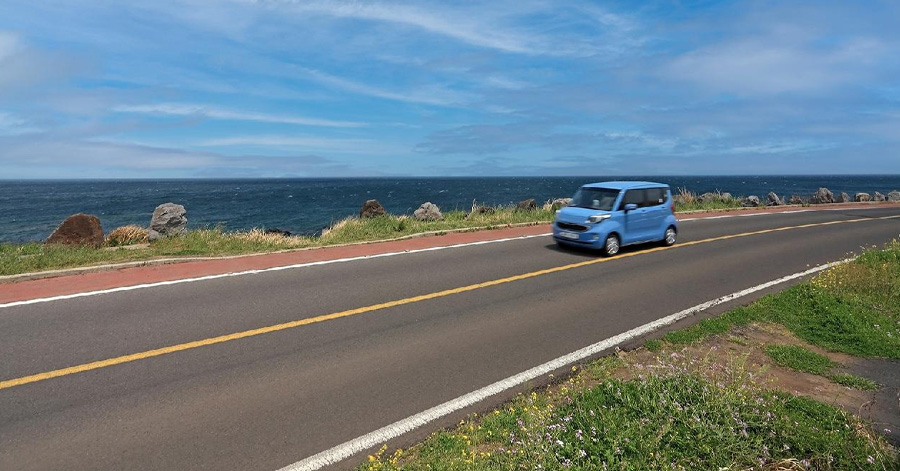
Image Credits: Visit Jeju
- Most flexible way to explore Jeju
- Popular rental: LOTTE Rent-a-Car at Jeju Airport — see our full Jeju car rental guide for prices and pick-up tips
- Navigation: Use Naver Maps or Kakao Maps (Google Maps doesn’t do driving directions in Korea)
- Must-have: International Driving Permit (IDP), arranged in Singapore before you fly
🚎 By Public Transport
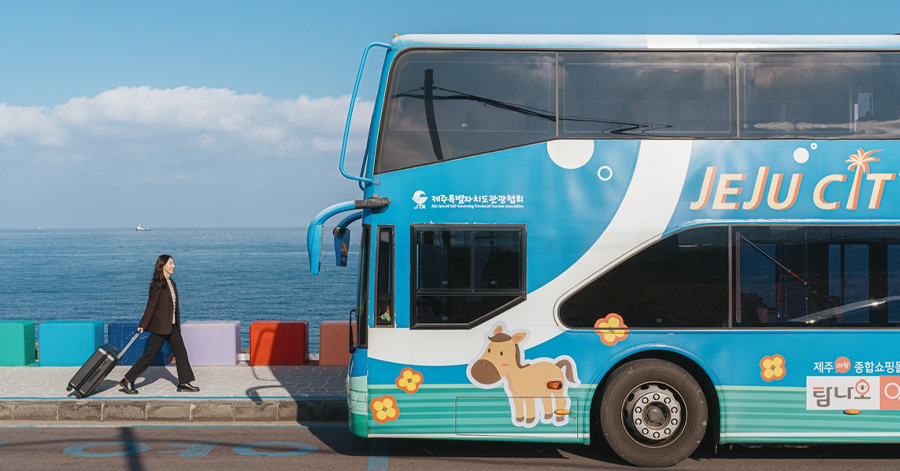
Image Credits: Visit Jeju
- Jeju has a well-connected and affordable bus network
- Use the T-money Card (like Korea’s EZ-Link)
- Bus fares usually cost S$1 to S$2
- Use Jeju City Tour Bus for hop-on, hop-off flexibility
- Apps: Naver/Kakao Maps are essential for real-time routes
- Refer to the official Jeju bus routes and schedules here
🚕 Bonus: Taxis
- Use Kakao T
- Note: You’ll need a physical debit or credit card on hand, as linking your card in the app requires a Korean ID
- Pro Tip: Pay with your YouTrip Card for the best KRW rates!
4-Day Jeju Itinerary: Best Things to Do by Region
For more content like this, follow us @YouTripSG on TikTok and Instagram!
🍊 Day 1: North Jeju & Jeju City
- Dodu Rainbow Coastal Road
- Ollae Guksu
- Gyulhangi Experience Farm
- Majungmul Samgyetang
- Dongmun Traditional Market
🏔️ Day 2: South Jeju & Hallasan
[Bonus Attractions]
- Cheonjiyeon Waterfall
- Jeongbang Waterfall
- Cheonjeyeon Waterfall
- Jusangjeolli Cliffs
- Yakcheonsa Temple
🌋 Day 3: East Jeju & Volcanic Landscapes
- Seongsan Ilchulbong (Sunrise Peak)
- Seopjikoji
- Udo Island
- Haenyeo Diving Show
- Myeongjin Jeonbok Abalone
- Oleun (Orrrn Cafe)
- Manjanggul Lava Tube Cave
[Bonus Attractions]
- Woljeongri Beach (Coastal Cafes)
- Hamdeok Beach
- Sungsan Ranch (Horse Riding)
- Sehwa Beach (Surfing or Paddleboarding)
🌊 Day 4: West Jeju & Coastal Cafes
[Bonus Attractions]
Day 1: North Jeju
Dodu Rainbow Coastal Road
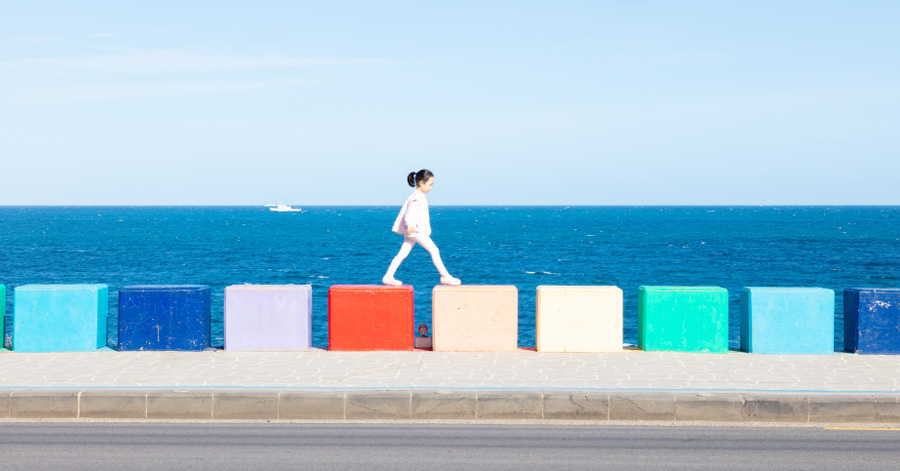
Image Credits: VISITKOREA
You may think that the Coastal Road is a vast and long highway, but don’t be fooled (or intimidated) by its name! Dodu Rainbow Coastal Road is a popular tourist attraction that features Insta-worthy rainbow blocks and statues set against the backdrop of the gorgeous sea.
Spend some time taking a nice stroll along the road, and don’t forget to stop for a quick perk-me-up at one of the many cafes in the area.
- Address: Dodu 1(il)-Dong, Jeju-si, Jeju-do, South Korea
- Opening Hours: 24 hours
Ollae Guksu
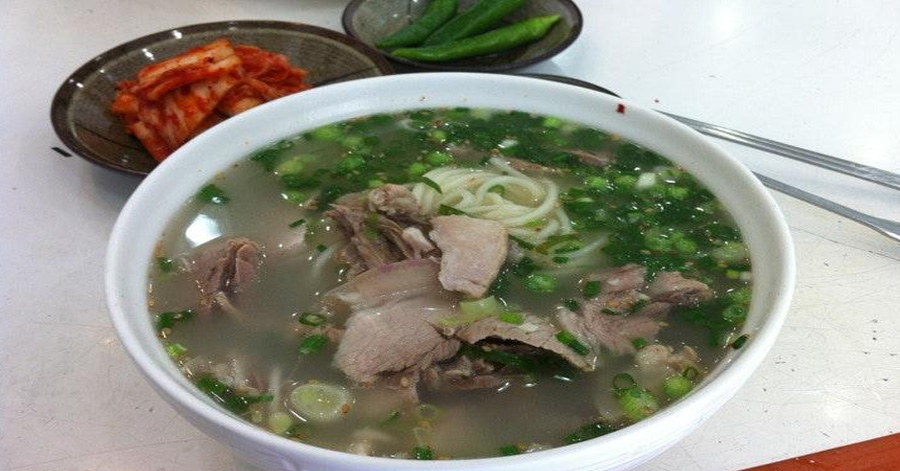
Image Credits: Restaurant Guru
A humble eatery beloved by locals and visitors alike, there’s no better way to start off your Jeju adventure with a bowl of piping hot pork noodle soup at Ollae Guksu. A Jeju speciality made with rich broth and handmade noodles, it’s perfect for a hearty breakfast or light lunch.
We love that it’s a popular local spot, giving you a glimpse into what an authentic Jeju experience would look like.
Do note that there’s a restaurant policy that requires every customer to order their own bowl of noodles — no sharing is allowed!
- Address: 24 Gwiarang-gil, 특별자치도, Jeju-si, Jeju-do, South Korea
- Opening Hours: 8:30 AM – 3 PM; closed on Sundays
- Prices: From 8,000 KRW (~S$6.80)
Gyulhangi Experience Farm
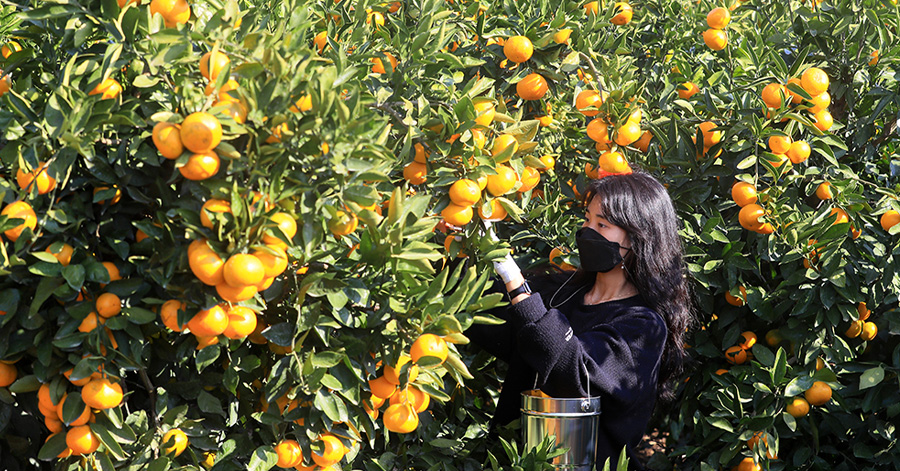
Image Credits: Korea.net
When in Jeju, a hallabong-picking experience is a must. Hallabongs are special tangerines that grow near Hallasan Mountain and have almost become synonymous with the island. While you’re likely to find a variety of hallabong farms peppered around the island, we’d recommend the Gyulhangi Experience Farm, which is close to the airport.
Expect warm hospitality from the ajummas who run the farm, and some of the sweetest pickings at an affordable price. It costs approximately 7,000 KRW (~S$5.90) for 1KG of tangerines with no time limit.
After the experience, you’ll also be treated to a variety of tangerine snacks, which we think is great value for money!
- Address: 160 노형동 Jeju-si, Jeju-do, South Korea
- Opening Hours: 9 AM – 5 PM, daily
Majungmul Samgyetang (마중물삼계탕)
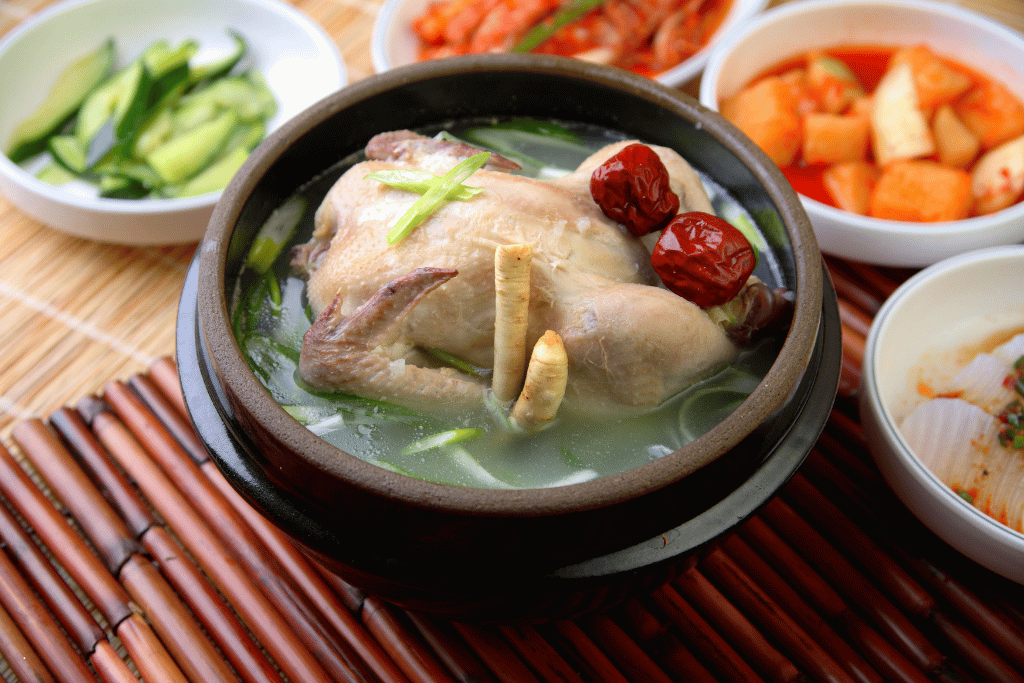
When in South Korea, we always recommend scarfing down as much Samgyetang (ginseng chicken soup) as you can! This local favourite is slow-cooked for hours, resulting in tender chicken and a deeply nourishing broth. It’s particularly popular during colder months.
Not to be missed are the samgyetang (duh) and the kimchi jjigae for a delicious and authentic Korean feast.
- Address: 788-15 삼도1동 Jeju-si, Jeju-do, South Korea
- Operating Hours: 10:30 AM – 9:30 PM, daily
Dongmun Traditional Market
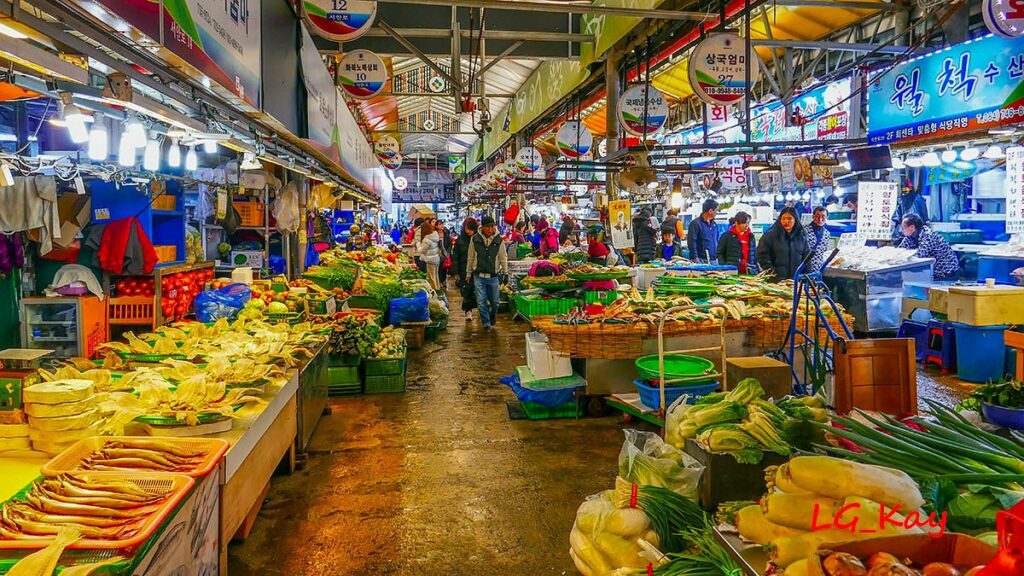
Image Credits: Tripadvisor
As Jeju’s oldest market, Dongmun Traditional Market is a lively hub of street food, fresh seafood, souvenirs, and local crafts. It’s the best place to taste authentic snacks like tteokbokki, grilled squid, and mandarin chocolates.
The market lights up at night, making it a great evening stop.
- Address: 20 Gwandeok-ro 14-gil, Jeju-si
- Operating Hours: 8 AM – 9 PM, daily
- Prices: Free entry; food items start from 2,000 KRW (~S$1.70)
Day 2: South Jeju
Hallasan National Park
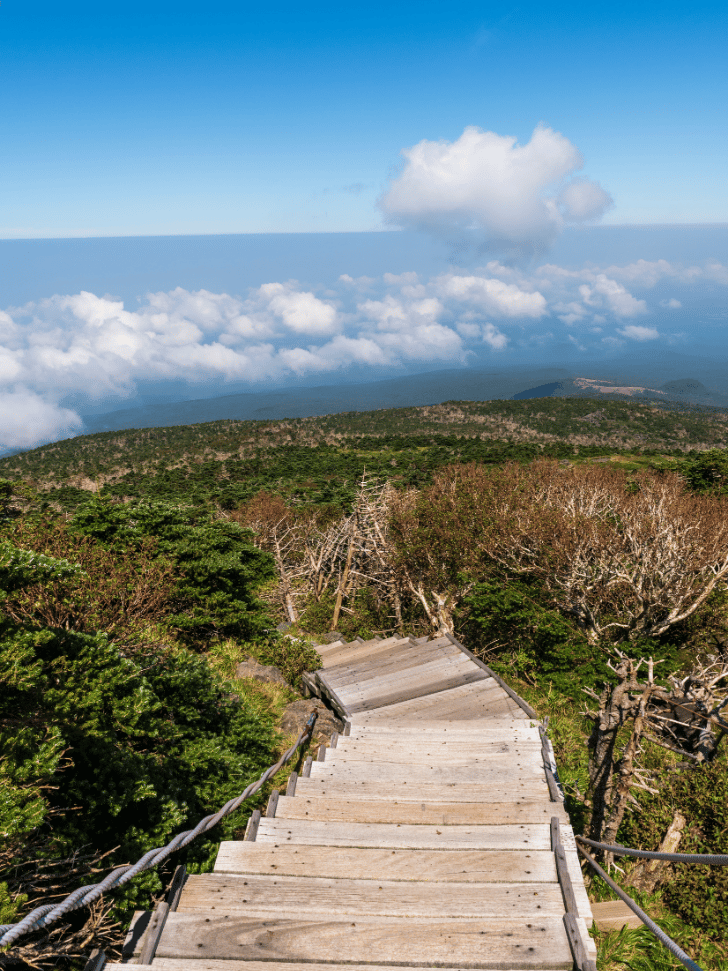
Make sure you’re all rested, as you’ll be up bright and early for a hike up to the iconic Hallasan Mountain. Located within Hallasan National Park, Hallasan Mountain is actually a dormant volcano!
While there are four trails for you to choose from, we would highly recommend summiting for stunning views of the island. For something that’s a little more manageable but is sure to work up a sweat, take on the Seongpanak Trail. This is about 7-9 hours long and is about 9.6KM one-way.
A local favourite is to take the Gwaneumsa trail back down (this is the tougher trail), which gives you a chance to enjoy the fantastic views of Gwaneumsa while descending.
❗ Reservations are required for summit hikes via Seongpanak and Gwaneumsa — they’re free but book ahead, as daily spots are capped. Shorter trails like Eoseungsaengak need no reservation.
- Address: South Korea, Jeju-do, Jeju-si, 특별자치도, 1100로 2070-61
- Opening Hours: 5 AM – 6 PM (entry times vary by trail and season)
Seogwipo Olle Market
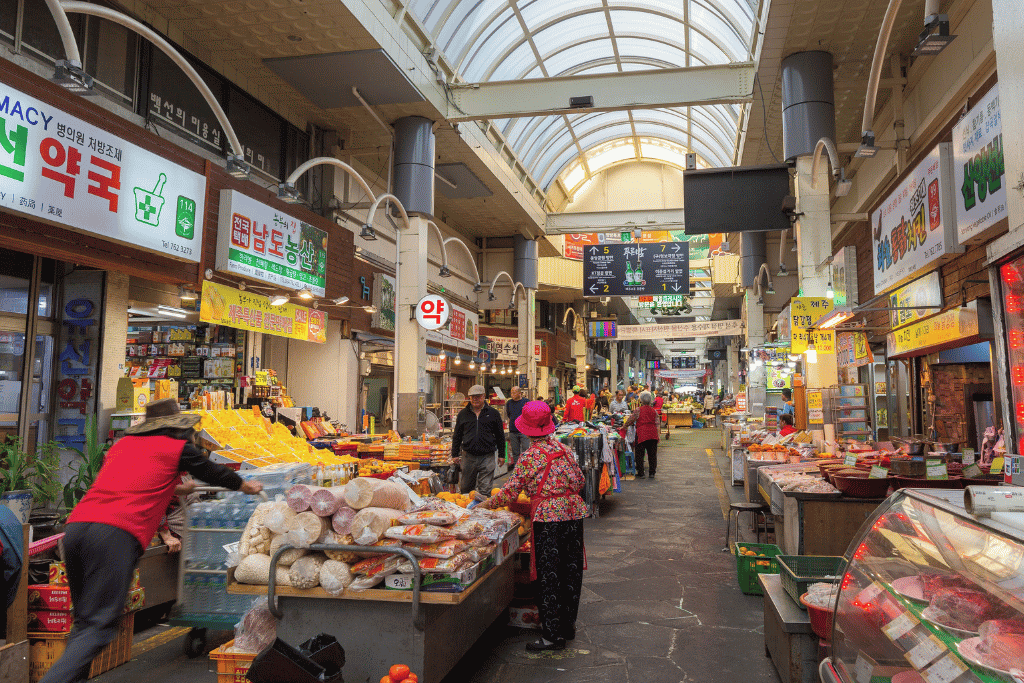
Image Credits: Expedia
After a long day of hiking, you have the option to check out one of the most iconic indoor markets in Jeju. Established in the 1960s, Seogwipo Olle Market is a popular tourist spot that sells a variety of fresh seasonal produce, seafood, and other household products.
From fresh strawberries to delicious kimchi rolls, you’ll definitely be spoilt for choice by the food options available, which is key in ensuring that you’re all loaded up after your morning workout!
- Address: 18 Jungang-ro 62beon-gil, 특별자치도 Seogwipo-si, Jeju-do, South Korea
- Opening Hours: 7 AM – 9 PM, daily
- Prices: Free entry; food starting from 3,000 KRW (~S$2.50)
Black Pork BBQ (흑돼지 bbq)
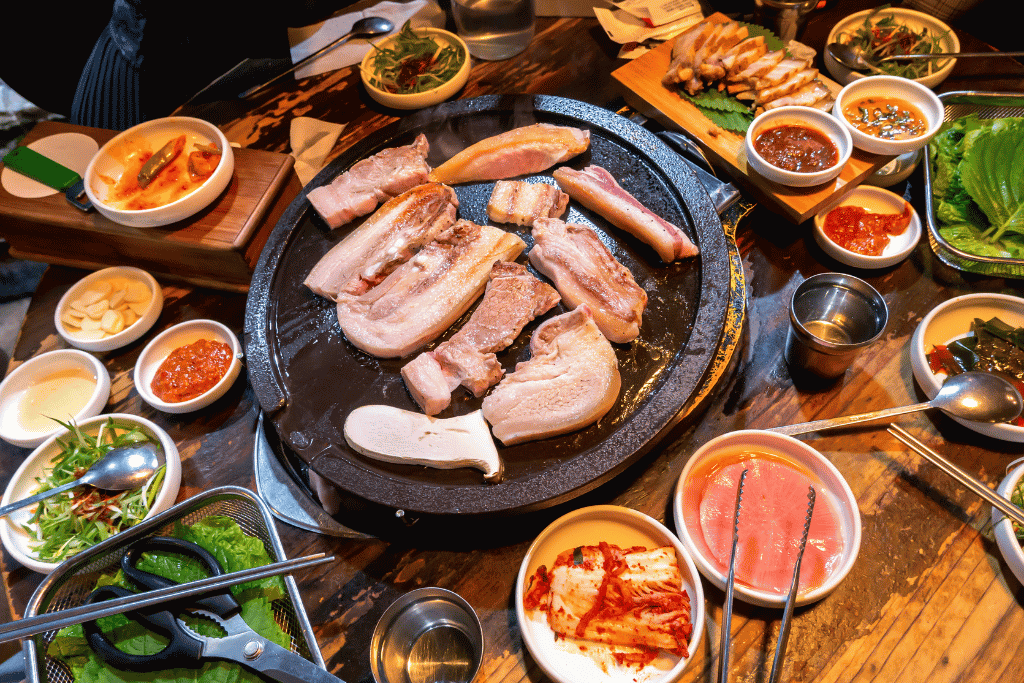
We know it’s a pretty tall order to do another round of food after visiting the Seogwipo Olle Market, but hear us out: You’re only here for a short amount of time. This is why we’ve made sure you clocked in enough steps so that you can work up an appetite!
Jeju’s black pork is prized for its unique flavour and juicy texture. Enjoy it grilled over charcoal at this speciality restaurant where it’s served with side dishes like kimchi, ssamjang, and fresh greens for wrapping. The local ritual is dipping it in meljeot, a salty anchovy sauce you won’t find elsewhere in Korea. Don’t miss the pork belly cut — it’s a crowd favourite.
- Address: 7 Taepyeong-ro 353beon-gil, 특별자치도 Seogwipo-si, 제주 South Korea
- Opening Hours: 4:30 PM – 10:30 PM, daily
- Prices: From 20,000 KRW (~S$17) per portion; budget around 30,000 KRW (~S$25) per person for a full spread
[Bonus Stops]
| Spot | What to expect | Location & cost |
|---|---|---|
| Cheonjiyeon Waterfall | A serene, multi-tier waterfall tucked into a wooded valley, reached on an easy paved walk and lit up in the evenings. The cool, shaded pool below makes a nice reset after a morning on Hallasan. | 📍 Namseongjung-ro, Seogwipo · From 2,000 KRW (~S$1.70) |
| Jeongbang Waterfall | One of the few waterfalls in Asia that drops straight into the sea, plunging over a coastal cliff onto the rocks below. You come for the sound and the sea spray as much as the view. | 📍 Donghong-dong, Seogwipo · From 2,000 KRW (~S$1.70) |
| Cheonjeyeon Waterfall | A calm, three-tiered falls linked by the pretty Seonimgyo “Seven Nymphs” bridge, and the greenest of Seogwipo’s trio. It runs fullest in the wetter months, so time it after some rain. | 📍 Saekdal-dong, Seogwipo · From 2,500 KRW (~S$2.10) |
| Jusangjeolli Cliffs | A wall of hexagonal basalt columns dropping into the surf, formed as lava cooled into what looks like a giant stone organ. A boardwalk runs along the top and 15 minutes is plenty, handily near the Jungmun resort area. | 📍 Jungmun, Seogwipo · From 2,000 KRW (~S$1.70) |
| Yakcheonsa Temple | One of the largest Buddhist temples in East Asia, a vast wooden hall set among citrus-tree grounds and, usually, very few tourists. Free to enter and a calm contrast to the busy coast. | 📍 293-28, Ieodo-ro, Seogwipo · Free entry |
Day 3: East Jeju
Seongsan Ilchulbong (Sunrise Peak)
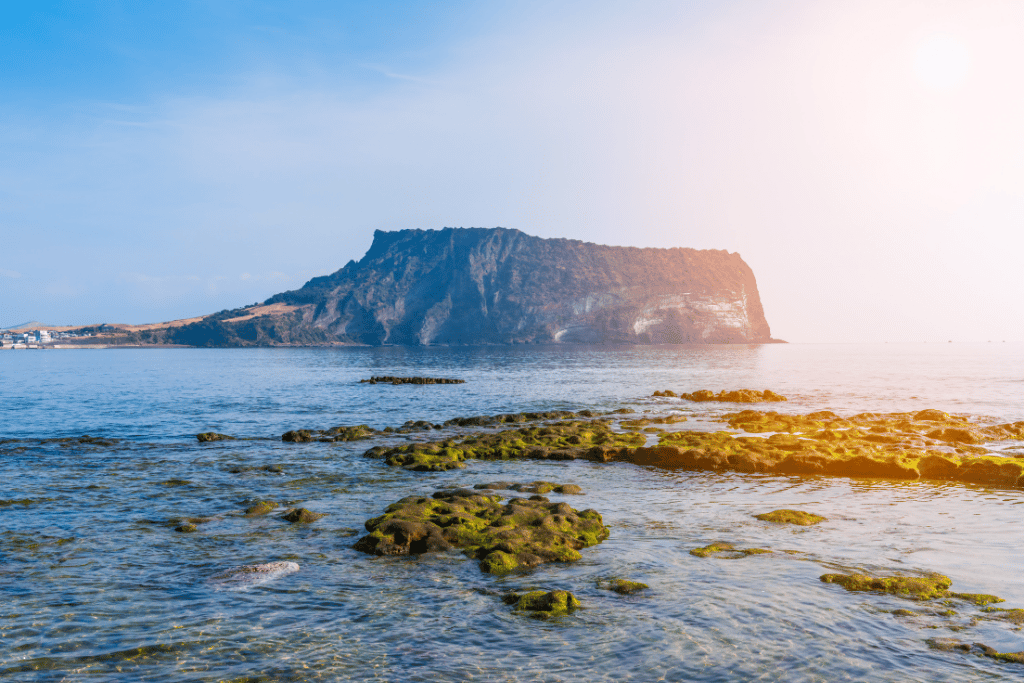
This UNESCO World Heritage site is an extinct volcanic crater known for its sunrise views. The 20–30 minute uphill climb rewards you with panoramic views of the coast and nearby Udo Island. Seongsan Ilchulbong is a must-do in Jeju and best visited early in the morning. We weren’t kidding when we said it’ll be an action-packed few days!
Need a quick snack? Head to the iconic Seogwipoan Bakery to grab some sustenance, so that you can have a little picnic with a side of mesmerising views!
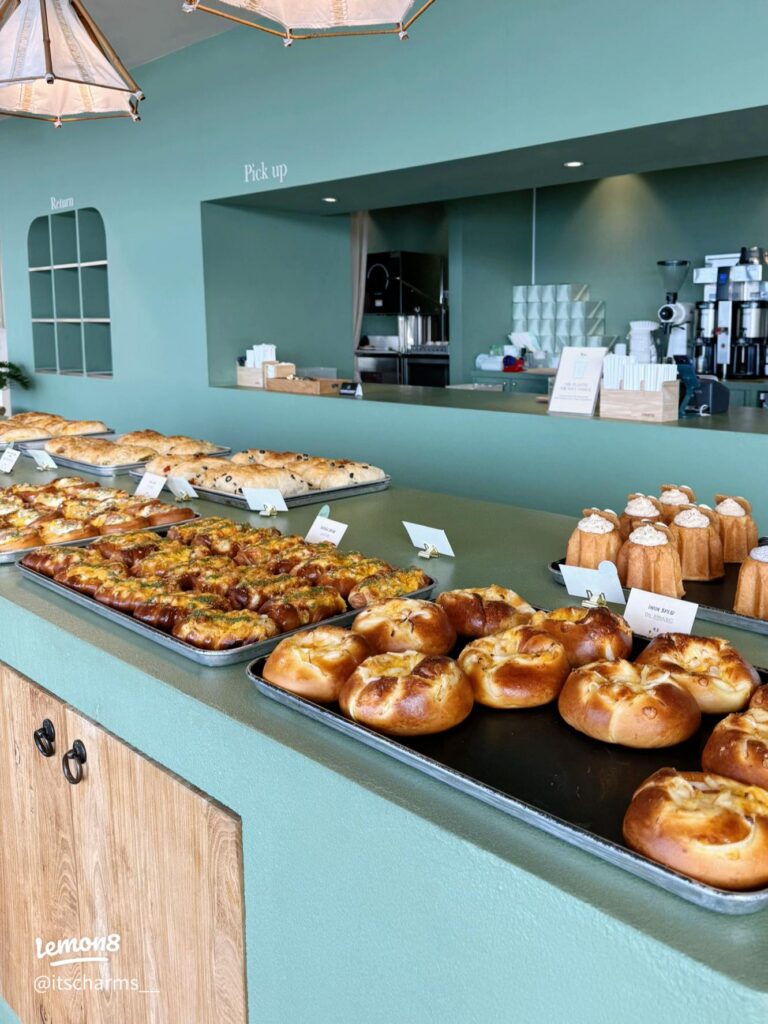
Image Credits: @itscharms_ on Lemon8
- Address: 78 Seongsan-ri, Seongsan-eup, Seogwipo-si, Jeju-do, South Korea
- Opening Hours: 7 AM – 8 PM, daily
- Prices: Starting from 5,000 KRW (~S$4.20)
Seopjikoji
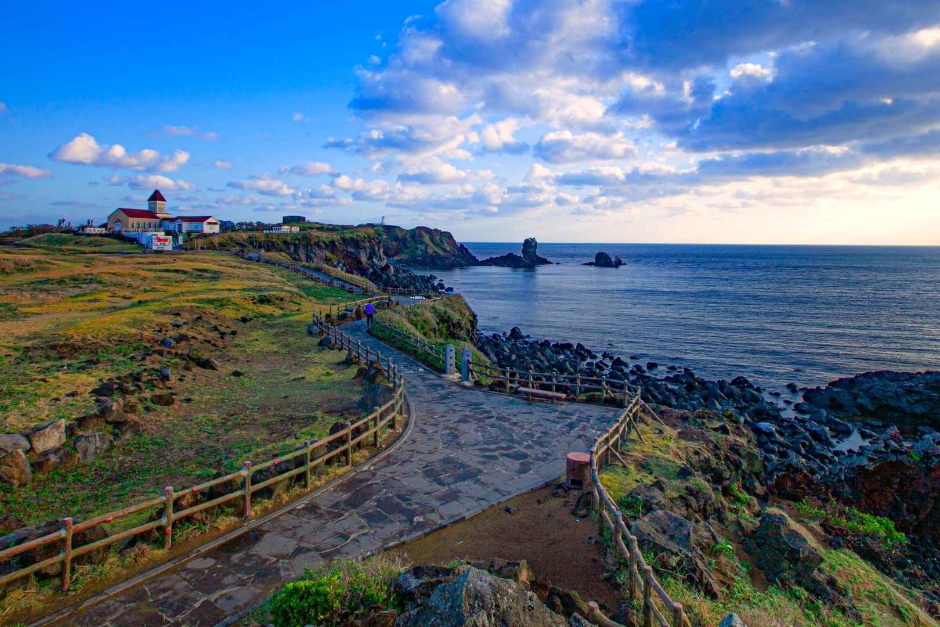
Image Credits: Visit Korea
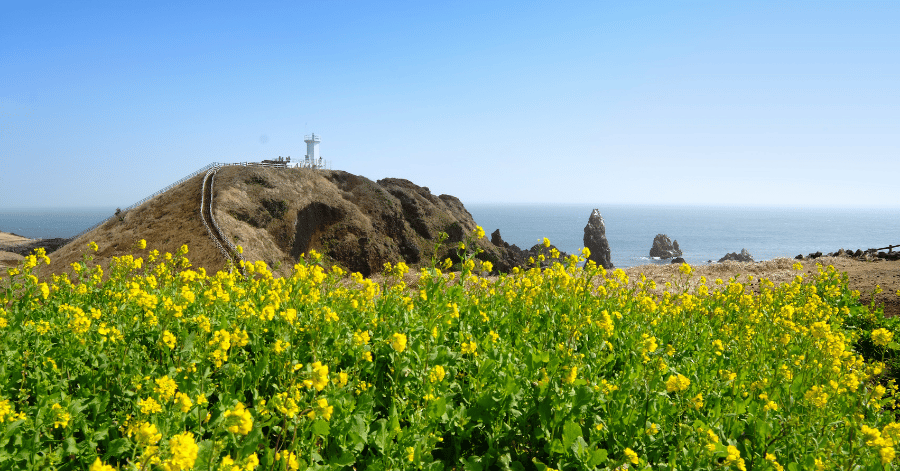
Just a short drive from Seongsan is Seopjikoji, a grassy coastal cape with dramatic cliffs, a white lighthouse and easy walking paths — plus views straight back to Sunrise Peak. K-drama fans might recognise it as a filming location for shows like All In. It’s flat, free and makes a lovely golden-hour stroll, so pair it with Seongsan since they’re only minutes apart.
- Address: Seopjikoji-ro, Goseong-ri, Seongsan-eup, Seogwipo-si, Jeju-do, South Korea
- Opening Hours: 24 hours (best in daylight)
- Prices: Free
Udo Island
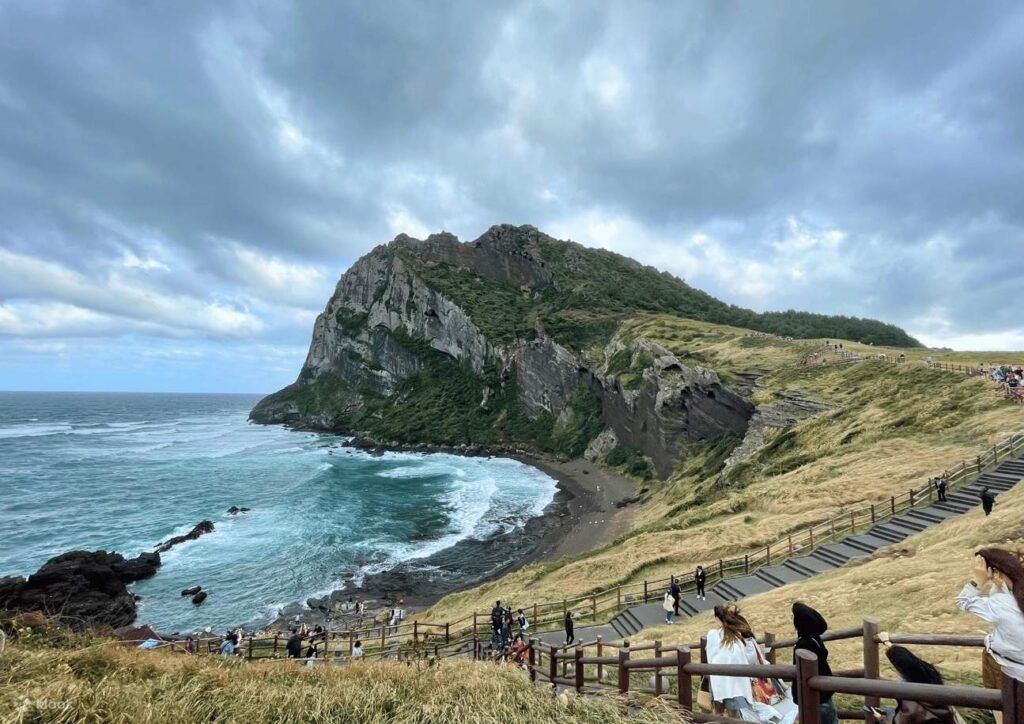
Image Credits: Klook
For a change of pace, hop on the ferry from Seongsan Port (about 15 minutes) to Udo, a tiny island ringed by a flat coastal loop. Rent an electric scooter, a bike or take the island bus, and make your way past white- and black-sand beaches. Udo’s famous peanut ice cream is your well-earned reward. Set aside half a day including the ferry there and back.
- Address: Udo-myeon, Jeju-si, Jeju-do, South Korea (ferry from Seongsan Port)
- Opening Hours: Ferries run through the day — check the last return before you go
- Prices: Ferry around 9,000 to 10,500 KRW (~S$7.60 to S$8.90) return
Haenyeo Diving Show
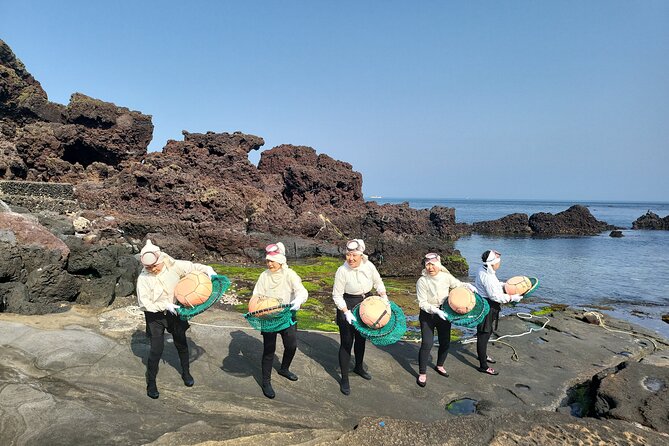
Image Credits: Tripadvisor
No Jeju trip is complete without seeing the haenyeo — the island’s famous women divers who free-dive without oxygen tanks for abalone and conch. It’s a tradition so special that UNESCO added it to its cultural heritage list in 2016. There’s a live diving demonstration on the shore right beside Seongsan Ilchulbong, so time your visit to catch it.
- Address: Seongsan Ilchulbong, Seongsan-eup, Seogwipo-si, Jeju-do, South Korea
- Opening Hours: Usually around 1:30 PM & 3 PM, weather permitting — confirm on the day
- Prices: Free to watch
Myeongjin Jeonbok Abalone
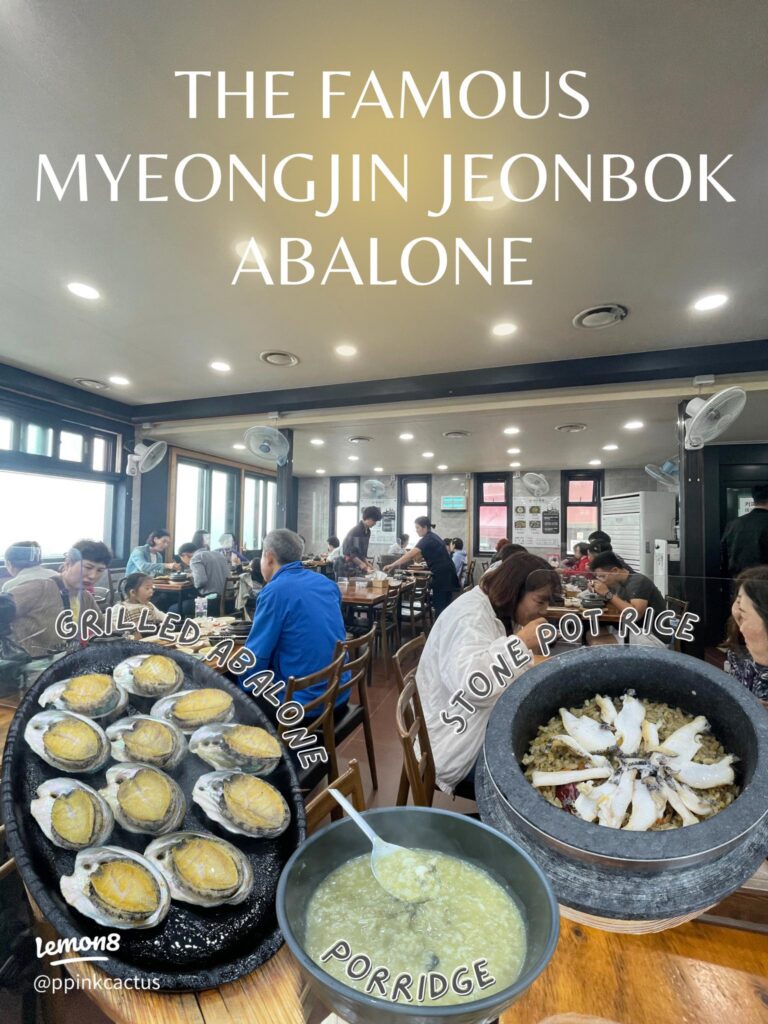
Image Credits: @ppinkcactus on Lemon8
Myeongjin Jeonbok Abalone specialises in fresh abalone dishes — from porridge to grilled and hotpot versions. With ocean views and premium ingredients, it’s a top spot for seafood lovers. Arrive early to avoid lunch crowds.
- Address: 1282 Haemajihaean-ro, Gujwa-eup, Jeju-si, Jeju-do, South Korea
- Opening Hours: 9:30 AM – 9 PM, daily
- Prices: From 12,000 KRW (~S$10.20)
Oleun (Orrrn Cafe) 오른
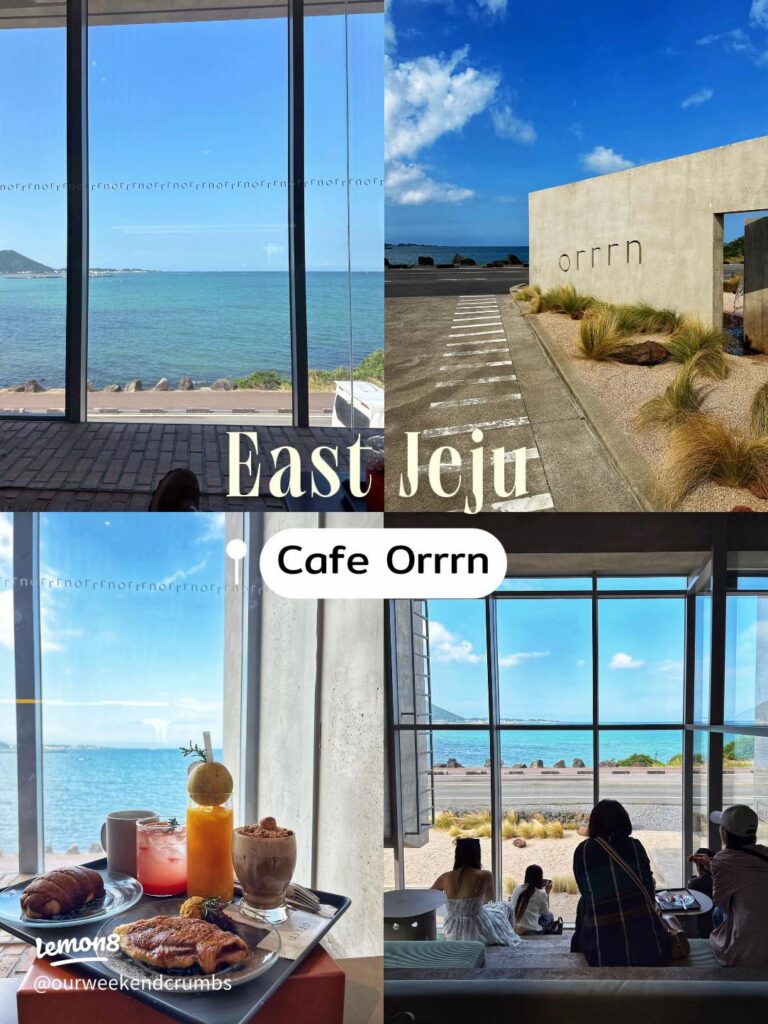
Image Credits: @ourweekendcrumbs on Lemon8
Located near the sea, Oleun cafe is a sleek and minimalist café known for its peanut cream latte and floor-to-ceiling windows with sweeping ocean views. It’s an ideal rest stop for a midday coffee or dessert break. The aesthetic interior is a magnet for design lovers.
- Address: 394 Ojo-ri, Seongsan-eup, 특별자치도, Seogwipo-si, Jeju-do, South Korea
- Opening Hours: 10:30 AM – 8 PM, daily
- Prices: Starting from 6,500 KRW (~S$5.50)
Manjanggul Lava Tube Cave
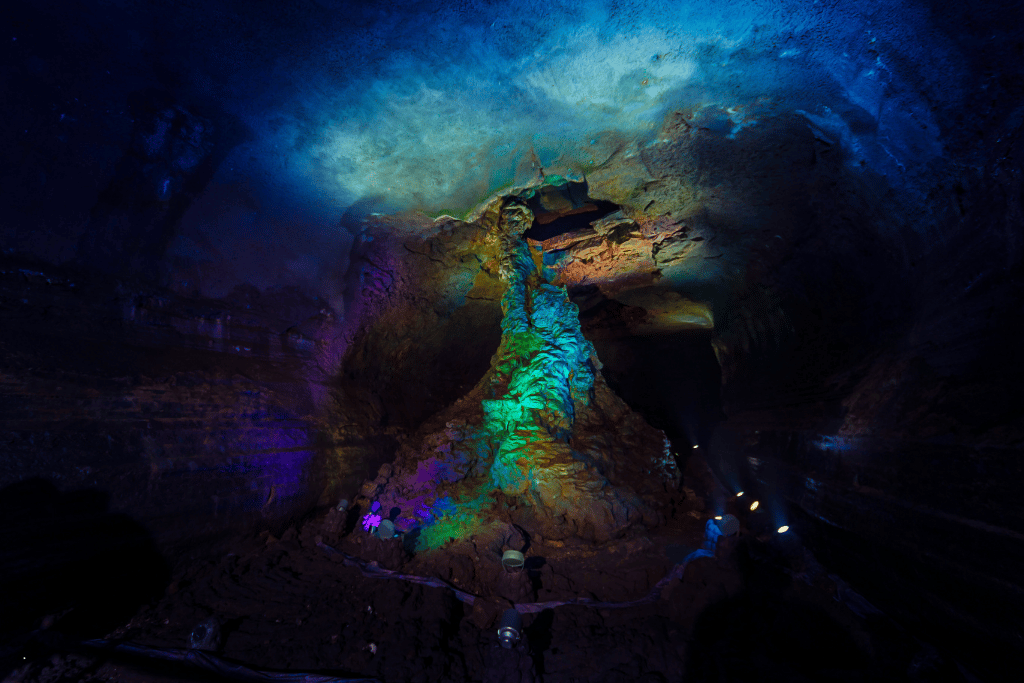
Good news: after more than two years of safety works, Manjanggul Lava Tube Cave reopened in 2026. Explore one of the world’s longest lava tubes — a UNESCO-listed cave formed by ancient volcanic eruptions. The accessible section spans 1km and ends at a towering 7.6m lava column, the largest known in the world. Wear sturdy shoes and bring a light jacket; the floor can be slippery, and it stays cold inside year-round.
- Address: 182 Manjanggul-gil, Gujwa-eup, Jeju-si, Jeju-do, South Korea
- Opening Hours: 9 AM – 6 PM, daily | Last entry: 5:10 PM (closed on the first Wednesday of every month). Confirm hours before you go, as it only recently reopened.
- Prices: From 4,000 KRW (~S$3.40)
[Bonus Stops]
| Spot | What to expect | Location & cost |
|---|---|---|
| Woljeongri Beach | A laid-back east-coast beach known less for swimming than for its string of design cafés facing the water. Grab a coffee, watch the windsurfers and slow down for an hour. | Free entry · great for café hopping |
| Hamdeok Beach | White sand and shallow, turquoise water backed by a little arched bridge and cafés right on the shore. It’s calm and swimmable, one of Jeju’s easiest beaches for families. | 📍 Hamdeok-ri, Jocheon-eup · Free entry |
| Jeju Horse Riding (Sungsan Ranch) | Jeju was once Korea’s royal horse pasture, and that tradition lives on in easy trail rides across the island’s green hills. The short, guided routes suit beginners and kids. | From 15,000 KRW (~S$12.70) |
| Surfing at Sehwa Beach | The east coast’s mellow surf spot, with gentle beginner waves and board rentals right on the sand. Lessons are easy to arrange, and the crowd is relaxed. | Board rentals from 30,000 KRW (~S$25.40) |
Day 4: West Jeju
Ujin Haejangguk
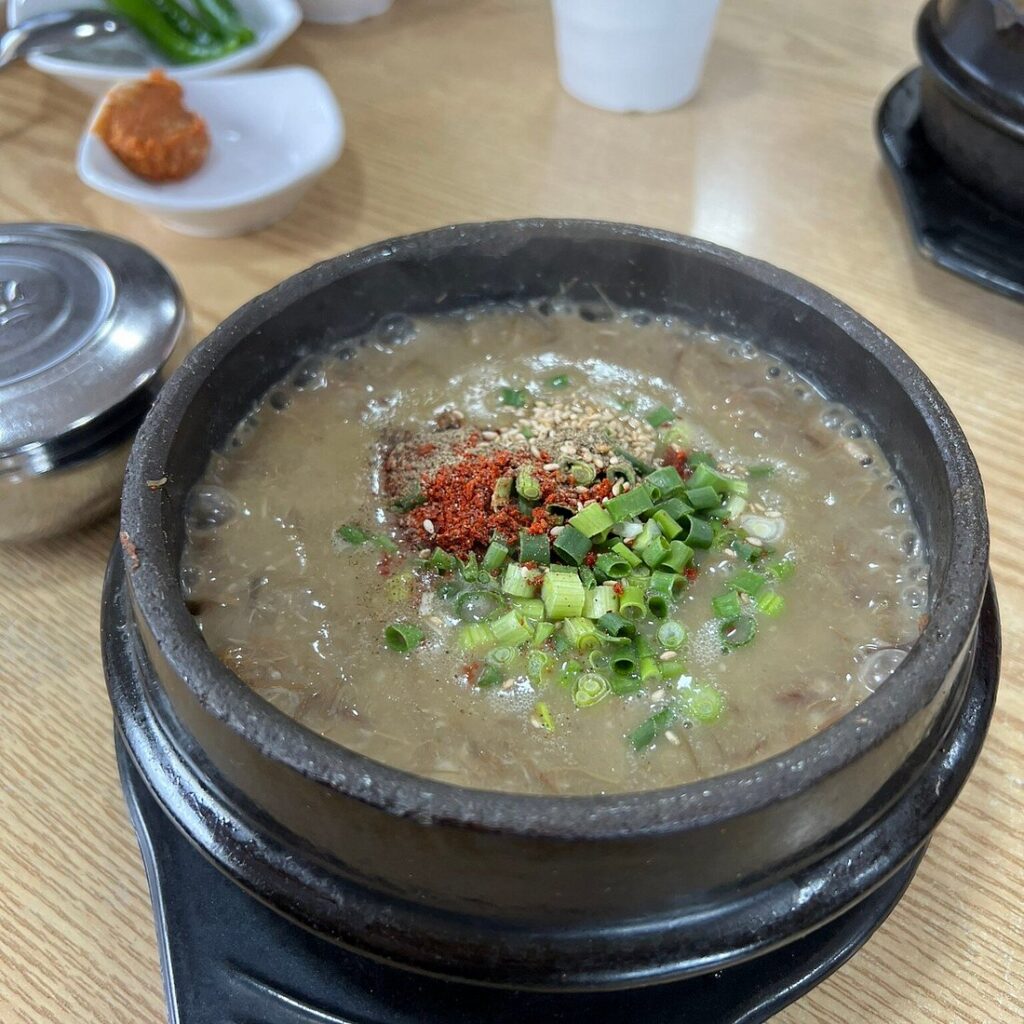
Image Credits: Tripadvisor
You don’t need to be nursing a hangover to enjoy this meal, but after having a taste, you can understand why it’s so popular. Ujin Haejangguk is hailed as one of the must-visit restaurants, with snaking long lines as a testament to its deliciousness.
Ujin serves a rich, meaty broth loaded with vegetables and tender pork. For the ultimate experience, order the works — spicy beef congee, mung bean pancakes, and all the banchan you can stomach.
Fair warning: be prepared to queue!
- Address: 11 Seosa-ro, 특별자치도 Jeju-si, Jeju-do, South Korea
- Opening Hours: 6 AM – 10 PM, daily
- Prices: From 10,000 KRW (~S$8.50)
Innisfree Jeju House
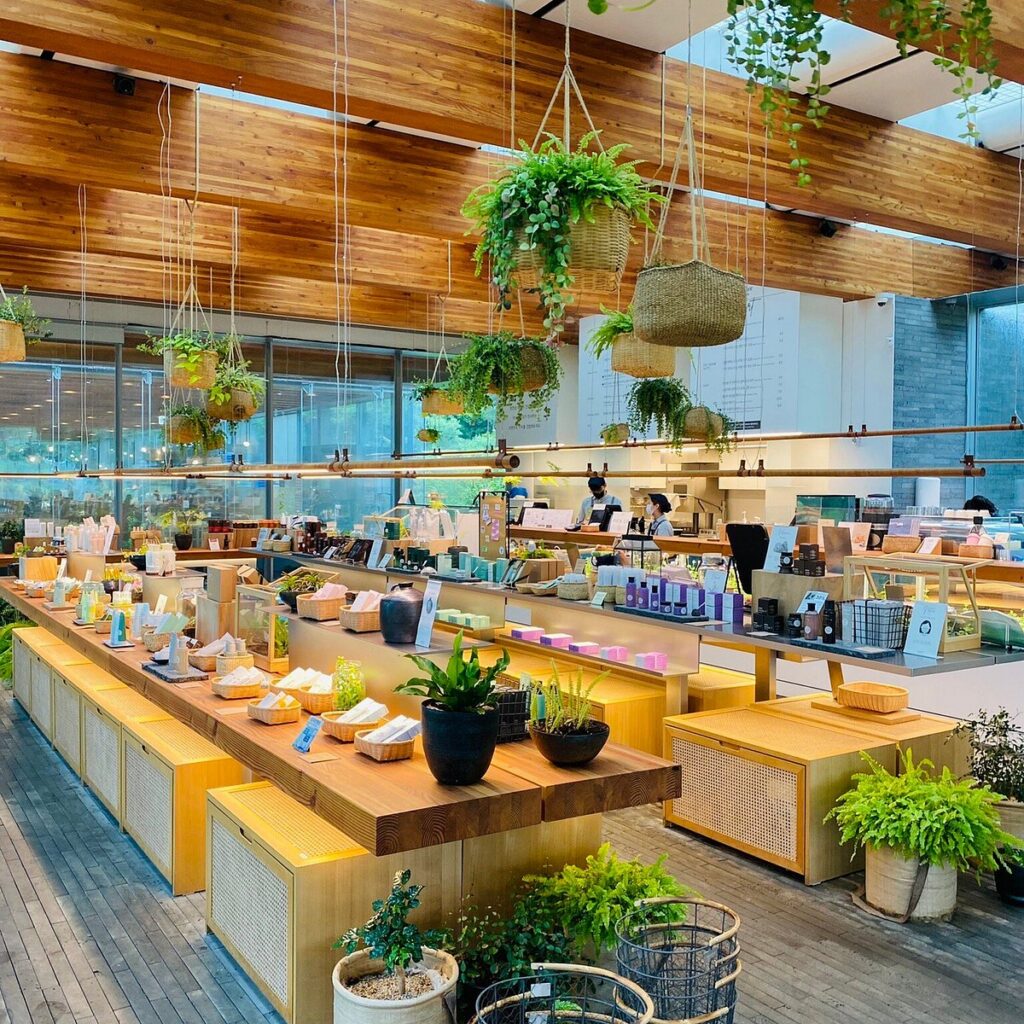
Image Credits: Tripadvisor
After your meal, make your way to the Innisfree Jeju House! This eco-conscious flagship store lets you explore DIY soap making, tea tasting, and skincare sampling — all made with Jeju’s natural ingredients. It’s surrounded by green tea fields and walking paths, making it a tranquil retreat. Perfect for a souvenir stop.
- Address: 23 Sinhwayeoksa-ro, Andeok-myeon, Seogwipo-si, Jeju-do, South Korea
- Opening Hours: 9 AM – 6 PM, daily
- Prices: From 5,000 KRW (~S$4.20)
Osulloc Tea Museum
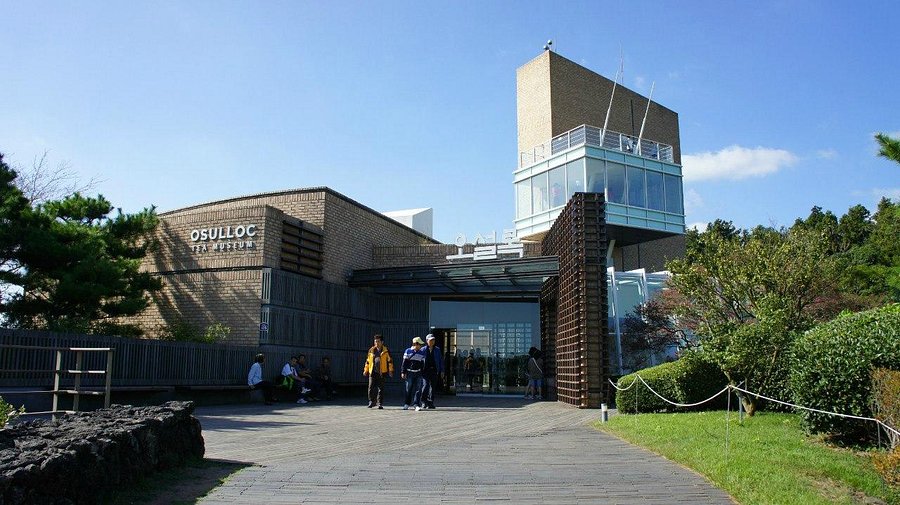
Image Credits: Tripadvisor
If you’re a tea fan, this one’s for you. A short stroll away from Innisfree Jeju House is the iconic Osulloc Tea Museum. This museum showcases Korea’s tea culture and the history of Jeju’s green tea.
Enjoy matcha desserts in the tearoom and stroll through the lush tea gardens. The architecture blends seamlessly into the natural surroundings. Entry to the museum is free.
- Address: 15 Sinhwayeoksa-ro, 특별자치도, Seogwipo-si, Jeju-do, South Korea
- Opening Hours: 9 AM – 6 PM, daily
- Prices: Free entry; tea sets from 6,000 KRW (~S$5.10)
Jeju Dongnum Soy Sauce Crab 제주동문간장게장
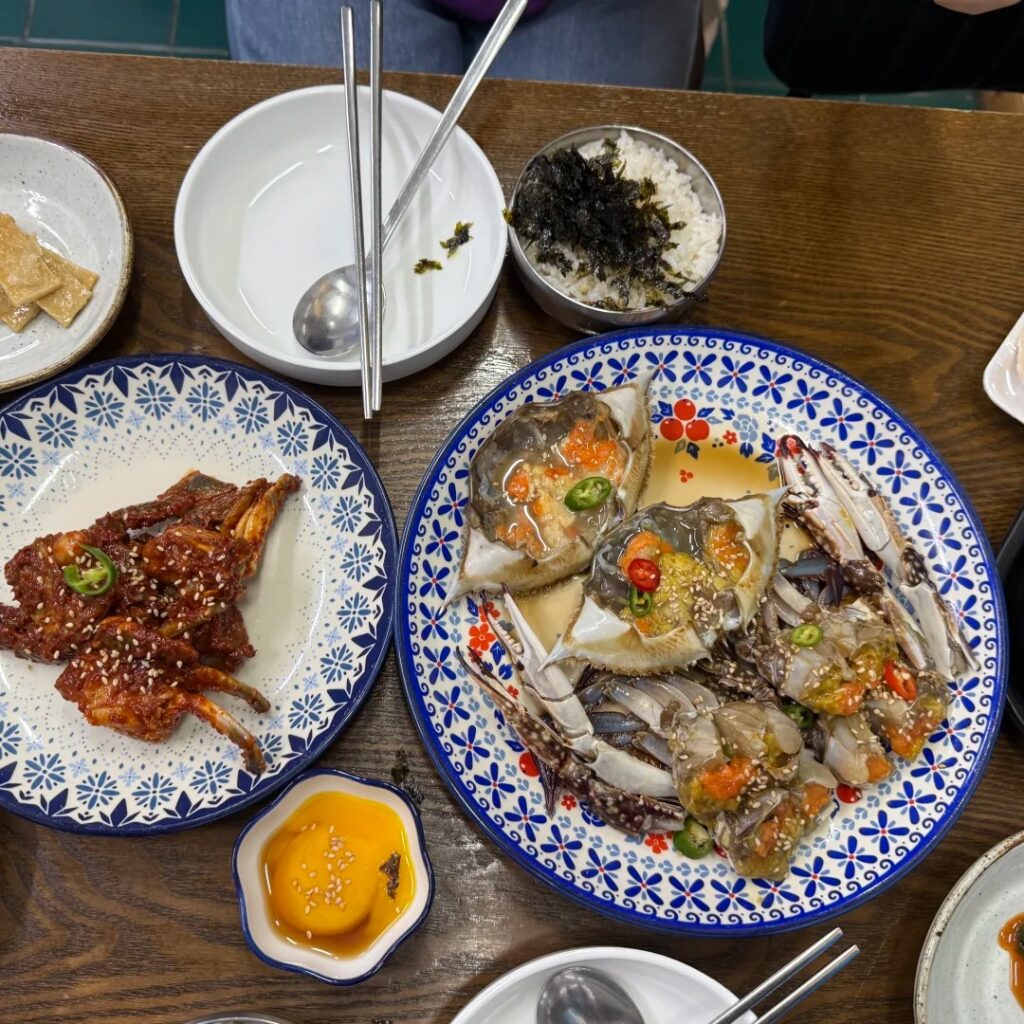
Image Credits: 924567791 on rednote
And in true Singaporean fashion, the best way to end a trip is with a meal fit for a king! We absolutely love Jeju Dongnum Soy Sauce Crab for its fresh, sweet and umami-packed meal.
Also known as ganjang gejang, raw marinated crab is a traditional dish that’s marinated in a mild soy-sauce-based brine and tastes good on its own and on a warm bed of rice. This local shop is not too touristy and is known for its true-blue local vibes.
- Address: 1135-2 일도1동 Jeju-si, Jeju-do, South Korea
- Opening Hours: Tues – Sun; 11 AM – 3 PM, 5 PM – 8 PM
- Prices: From 25,000 KRW (~S$21.20)
[Bonus Stops]
| Spot | What to expect | Location & cost |
|---|---|---|
| Aewol Coastal Road & Handam Walk | Best for morning bike rides and café-hopping. The flat Handam Coastal Walk (about 1.7km) traces the black-rock shore past Aewol’s clifftop cafés — try Haejigae for ocean views and cream cheese mochi. | From 6,500 KRW (~S$5.50) a coffee |
| Spirited Garden | A bonsai garden built by hand over decades, with miniature trees, koi ponds and volcanic rockeries laid out like a living painting. Peaceful and photogenic, a nice change of pace from beaches and hikes. | Entry: 12,000 KRW (~S$10.20) |
| Hyeopjae Beach & Biyangdo Island | The west coast’s headline beach: shallow, turquoise and backed by pine woods, with Biyangdo islet on the horizon. Calm and wide rather than a surf spot, easy to pair with the neighbouring Hallim Park. | Free entry |
Jeju with Kids
Travelling with little ones? Jeju is easy — short walks, gentle beaches and a run of parks that break up the sightseeing.
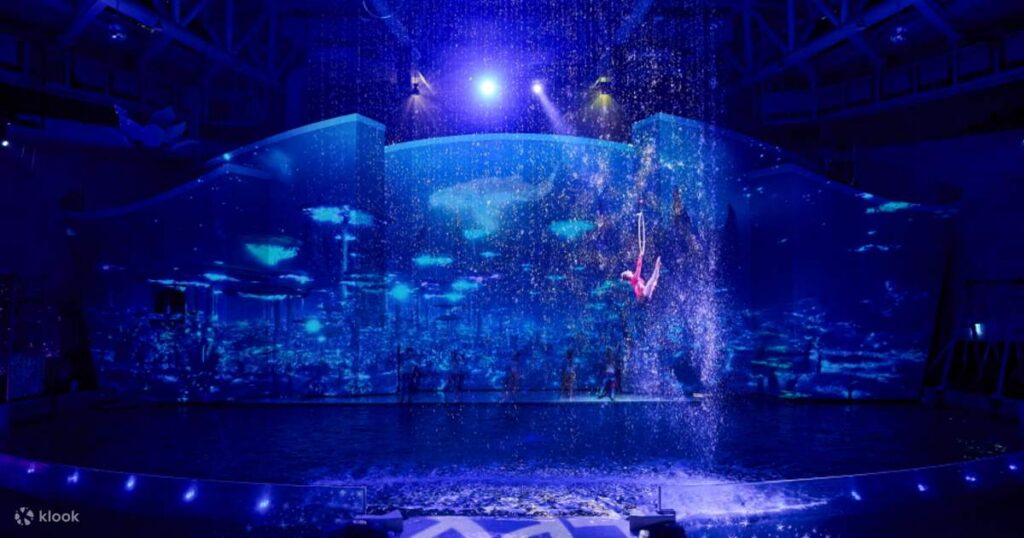
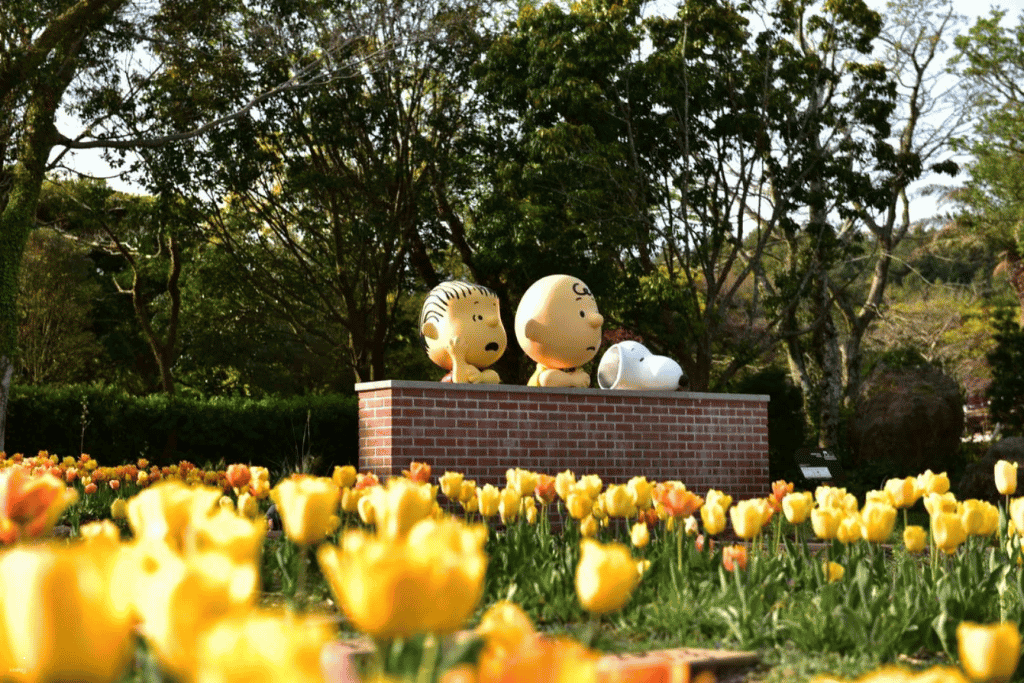
Image Credits: Klook; Pelago
- Jeju 9.81 Park: Gravity-powered go-karts (no engines, no fuel) plus AR games and a café with views. A single race starts around 18,000 KRW (~S$15).
- Aquaplanet Jeju: One of Asia’s largest aquariums, near Seongsan, with a haenyeo diving show in the main tank. Adult tickets are around 45,000 KRW (~S$38), cheaper if booked online.
- Snoopy Garden: Peanuts-themed indoor exhibits paired with big outdoor gardens. Adults around 19,000 KRW (~S$16).
The tangerine-picking farm, horse riding and the shallow beaches at Hyeopjae and Hamdeok are all easy wins for families too.
What to Do at Night or on a Rainy Day
Jeju is quiet after dark compared to Seoul, so evenings revolve around food and markets. The Dongmun night market is the main event, with street food and tangerine chocolate late into the evening, followed by black pork and a drink by the coast.
Rainy day? You’ve still got options. The Manjanggul lava tube stays open rain or shine, Osulloc and the Innisfree house are happily indoors, and a soak at a local jjimjilbang (Korean bathhouse) is the classic Jeju reset.
Where to stay in Jeju
- Luxury: Grand Hyatt Jeju (Jeju City)
- Mid-Range: Hotel Nanta Jeju (near Hallasan)
- Budget: Yeha Guesthouse (backpackers’ favourite)
- Unique: Book a Hanok stay for a traditional Korean experience
Travel Tips: Maximise your Jeju experience
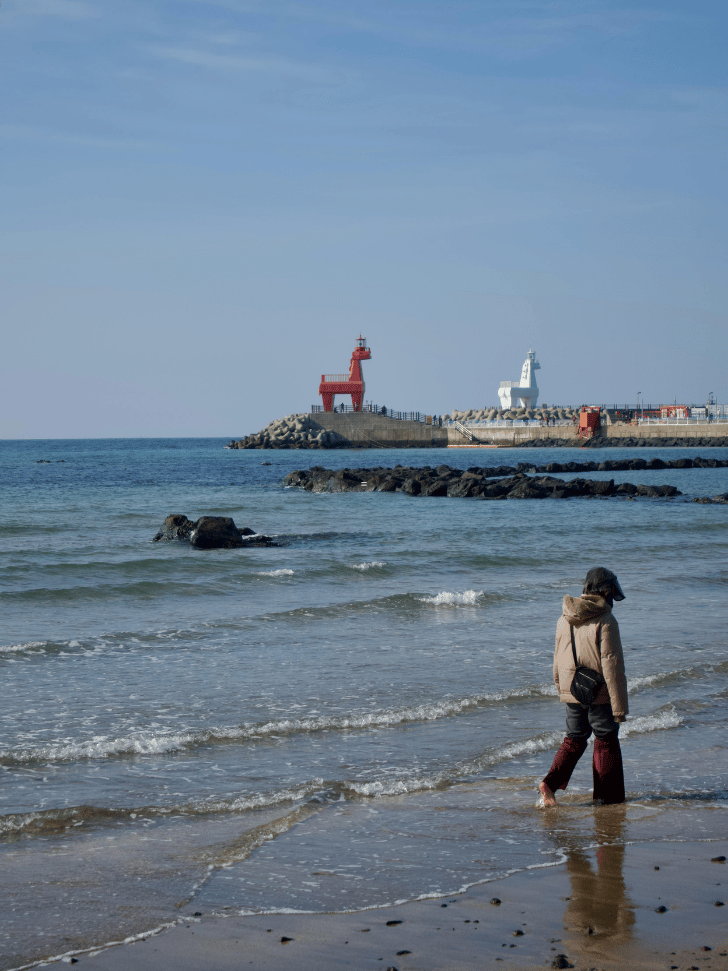
- 📱 Download KakaoMap, Naver Map, and Kakao T for taxis
- 💳 Bring a T-money card for buses
- 📷 Plan for sunrise hikes — they’re iconic here!
- 📆 Visit during spring (March–May) or autumn (Sept–Nov) for the best weather
- 🍜 Try at least one Jeju seafood hotpot, even if you’re not a fan – it might change your mind
- 🌿 Respect nature — Jeju is big on eco-tourism
FAQs
Three days is the realistic minimum and covers the east and south highlights. Four to five days is ideal, giving you one region a day (north, south, east and west) with time for the food and beaches rather than a rushed loop.
Yes. Three days works well if you rent a car and focus on the east (Seongsan, Manjanggul) and south (Hallasan or the waterfalls), then squeeze in an Aewol café stop on the way back. You’ll skip a few things, but you’ll see the island’s best.
Volcanic landscapes and food. Jeju is famous for Seongsan Ilchulbong sunrise peak, Hallasan and its lava tubes, plus black pork BBQ, fresh abalone, tangerines and the haenyeo — the island’s free-diving sea women, a UNESCO-recognised tradition.
July and August. They’re hot, humid and fall in Korea’s monsoon season, so rain can wash out days, and it’s the busiest, priciest stretch. Aim for April to June or September to November instead.
Not essential, but strongly recommended. Sights are spread around the coast and buses are slow and infrequent outside the city. A rental car (with an International Driving Permit) turns a full day of waiting into an easy loop.
Don’t Just Dream Of Paradise, Live It!
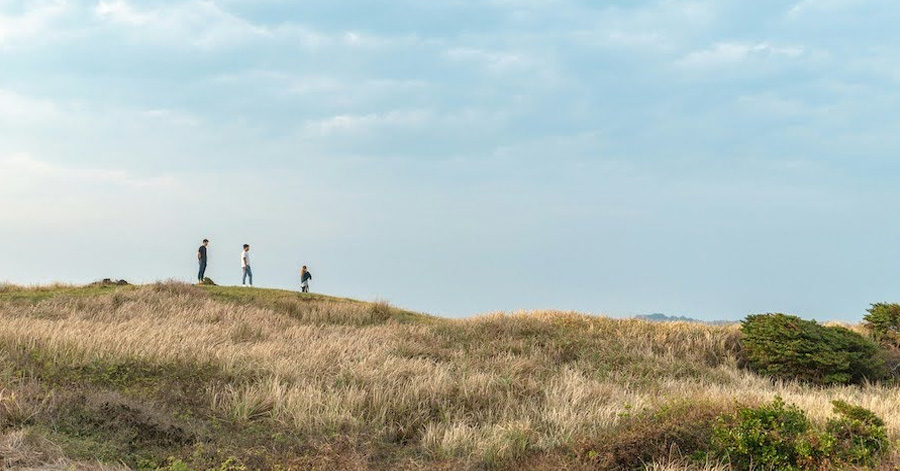
Jeju is not just a destination — it’s a vibe. From tangerine farms and lava caves to coastal drives and black pork BBQ, there’s something on the island for every kind of traveller. So if you’re asking, “What are the best things to do in Jeju?” — now you have your answer.
Don’t forget to bring your YouTrip card along and save big with the best KRW rates all day! Tap it for anything cards-accepted (0% foreign transaction fee, billed at the Mastercard wholesale rate), and for the cash you need, withdraw won from an ATM when you land — your first S$400 each month is free, then a flat 2% after. For more, see our South Korea ATM withdrawal guide and how to use YouTrip in Korea.
Singapore’s go-to multi-currency wallet helps you save with great FX rates and zero fees. Skip the money changer and get a free YouTrip card + S$5 YouTrip credits with code YTBLOG5.
Then, head over to our YouTrip Perks page for exclusive offers and promotions — we promise you won’t regret it. Join our Telegram (@YouTripSG) and Community Group (@YouTripSquad) for travel tips, event invites, and more!
Happy travels!