


A cool-climate volcano city that travellers keep overlooking
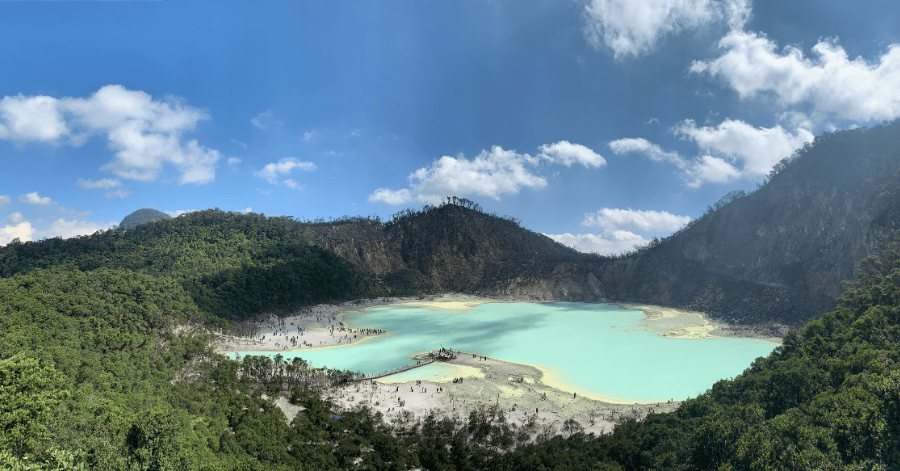
Bandung sits about 768 m above sea level in the hills of West Java, which makes it the rare Indonesian city where you’ll want a jacket at night. Locals call it Paris van Java. You come for craters, tea fields, colonial streets and some of the best cheap food in the country.
There’s no direct flight from Singapore, though. Getting there runs through Jakarta, and that takes a bit of planning.
TL;DR: Best Things to Do in Bandung (Quick Picks)
| Bandung Highlight | Best For | Cost |
|---|---|---|
| Kawah Putih | A turquoise sulfur crater lake | From 90,000 IDR (~S$6) |
| Tangkuban Perahu | Peering into an active volcano | 200,000 IDR (~S$14) weekdays |
| Rengganis Suspension Bridge | Southeast Asia’s longest at 370 m | From 70,000 IDR (~S$5) |
| Braga Street | Art deco buildings and cafes | Free to wander |
| Saung Angklung Udjo | A bamboo orchestra performance | 110,000 IDR (~S$8) weekdays |
| Rancabali tea plantations | Endless green and cool air | Free to drive through |
| Trans Studio Bandung | A rainy-day indoor theme park | From 180,000 IDR (~S$13) |
| Factory outlets on Jalan Riau | Cheap branded clothing | Free to browse |
Table of Contents
- How to Get to Bandung From Singapore
- Best Things to Do in Bandung City
- Best Day Trips From Bandung
- What to Eat in Bandung
- Things to Do in Bandung at Night
- Where to Shop in Bandung
- Best Time to Visit Bandung
- Where to Stay in Bandung
- Getting Around Bandung
- Paying in Bandung: Cash, Cards and YouTrip
- FAQs
How to Get to Bandung From Singapore
As of August 2026, there are no direct flights from Singapore to Bandung. The quickest option is to fly to Jakarta, then take the Whoosh high-speed train, which gets you to Bandung in under an hour.
The lack of direct flights is due to the closure of Bandung’s Husein Sastranegara Airport (BDO) to commercial jet flights in October 2023. Its international routes to Singapore and Kuala Lumpur were moved to Kertajati Airport in Majalengka, which is around a two- to three-hour drive from Bandung — not exactly the most convenient option.
There’s good news, though: Indonesia’s transport ministry has approved Husein Sastranegara Airport to resume scheduled commercial flights from 17 September 2026. So far, the announced routes are domestic, meaning a direct Singapore–Bandung route has yet to be confirmed. If you’re planning a trip around this, be sure to check the latest flight schedules before booking.
Step 1: Fly to Jakarta
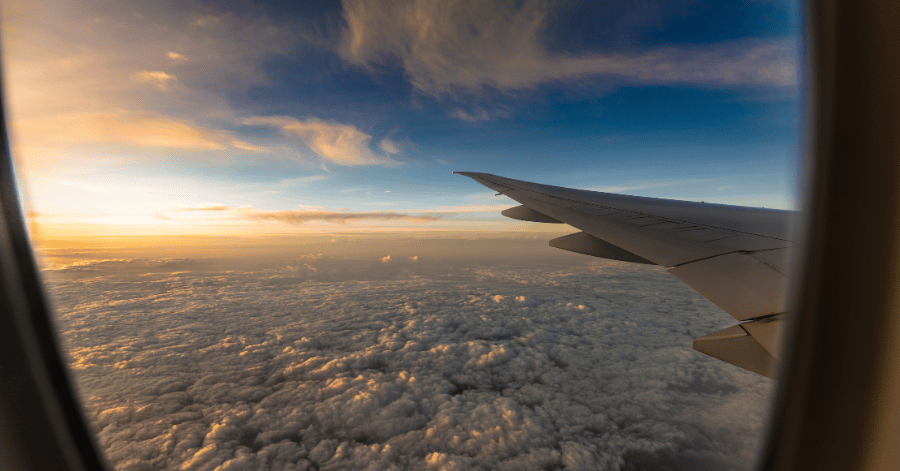
Fly into Soekarno-Hatta (CGK). It’s roughly 1 hour 50 minutes from Changi, and Singapore Airlines, Scoot, Garuda and Batik Air all run the route multiple times a day.
From CGK you need to reach Halim station in East Jakarta, where the Whoosh departs. Budget around 45 minutes to an hour by car, and more in peak traffic. Jakarta’s traffic is not a myth.
Damri runs a shuttle bus between the airport and Halim station for 80,000 IDR (~S$6), which takes about an hour and saves you negotiating a taxi on arrival.
Step 2: Take the Whoosh high-speed train
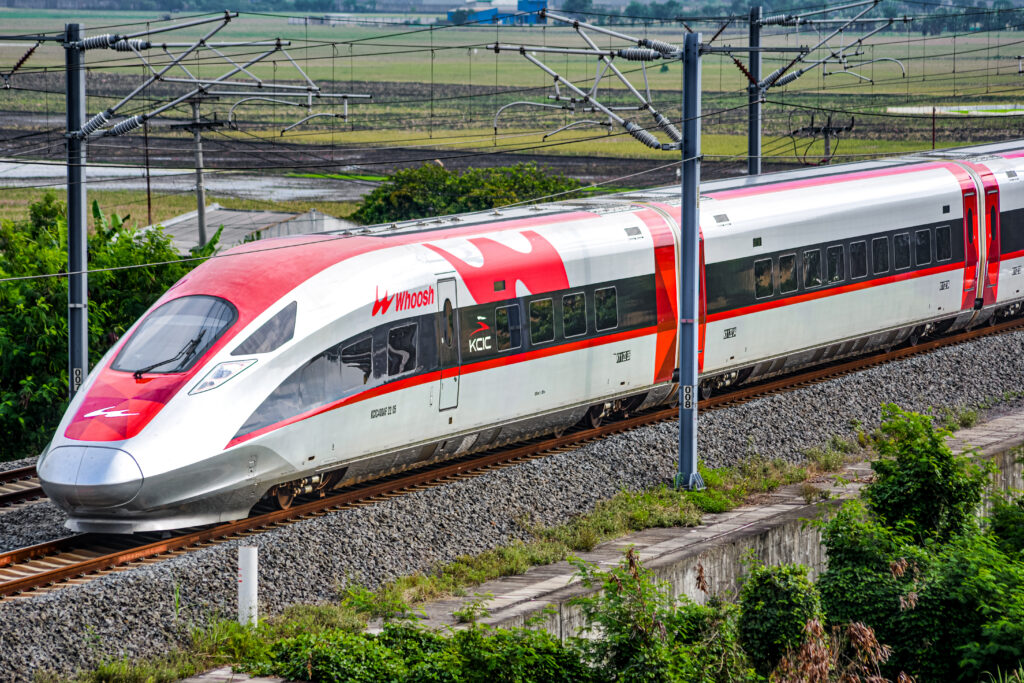
Image Credits: Wikipedia
Whoosh is Southeast Asia’s first high-speed rail, and it tops out at 350 km/h. It runs from Halim to Padalarang to Tegalluar, and the journey takes around 30 to 45 minutes.
Fares are dynamic. Premium economy costs roughly 150,000 to 250,000 IDR (~S$11 to S$18) depending on the day and departure time. Business is about 450,000 IDR (~S$32) and first class about 600,000 IDR (~S$43). Your ticket includes the feeder train from Padalarang into Bandung or Cimahi station, so don’t book that separately.
If you’d rather stretch the trip out, the older Panoramic train from Bandung back to Jakarta Gambir takes about three hours through the hills. It’s a genuinely lovely ride if you have the time.
Since you’re passing through Jakarta either way, it’s worth building a night or two in the capital into the trip.
📖 Related Guide: Routing through the capital? Our 22 best things to do in Jakarta covers what’s worth your time on either end of the train ride.
Best Things to Do in Bandung City
Bandung splits neatly in two: a walkable colonial city centre, and the volcanic highlands 30 to 50 km out. Start with the city, then give the craters a full day each.
Braga Street
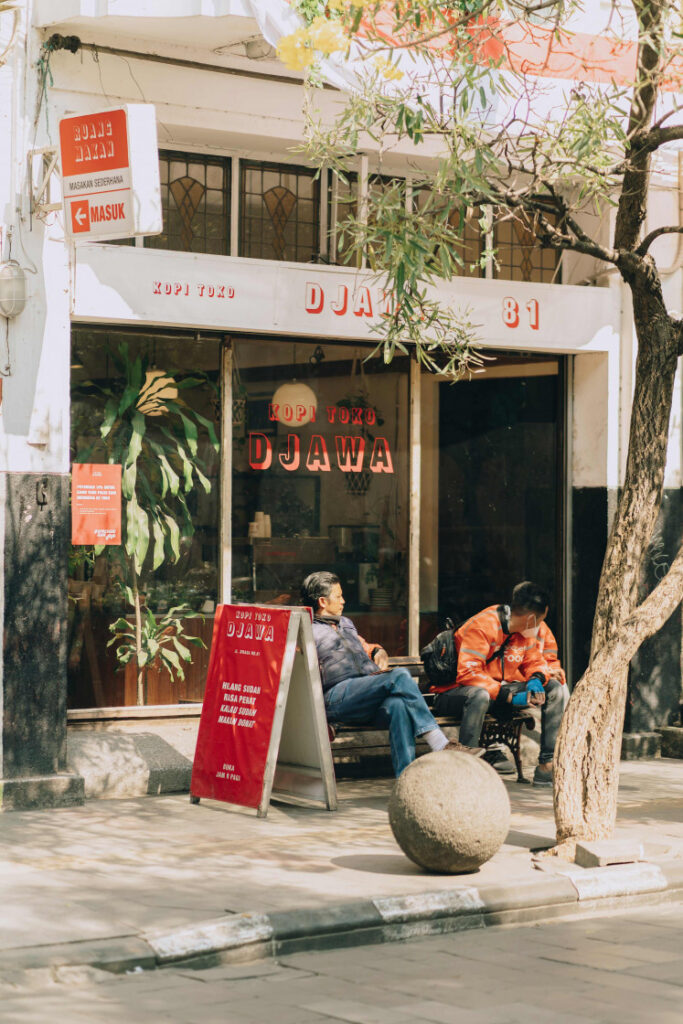
Image Credits: The Jakarta Post
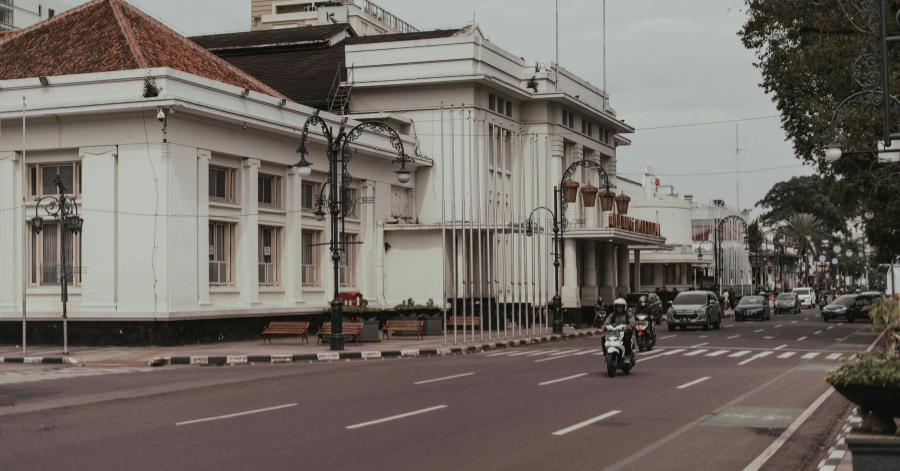
Braga is the old heart of Bandung, a short strip of art deco buildings that was the city’s entertainment district under Dutch rule. Today the ground floors are cafes, galleries and boutiques, and out on the pavement artists work at their easels with finished canvases propped against the railings.
The city runs a vehicle-free weekend programme here called Braga Beken, though it’s been suspended at times when traffic backs up, so don’t build a trip around it. Duck into the alleys off the main strip and you’ll find residential lanes and food stalls two blocks from the crowds.
Come on your first evening, once the lights are on and the buskers have set up.
Gedung Sate
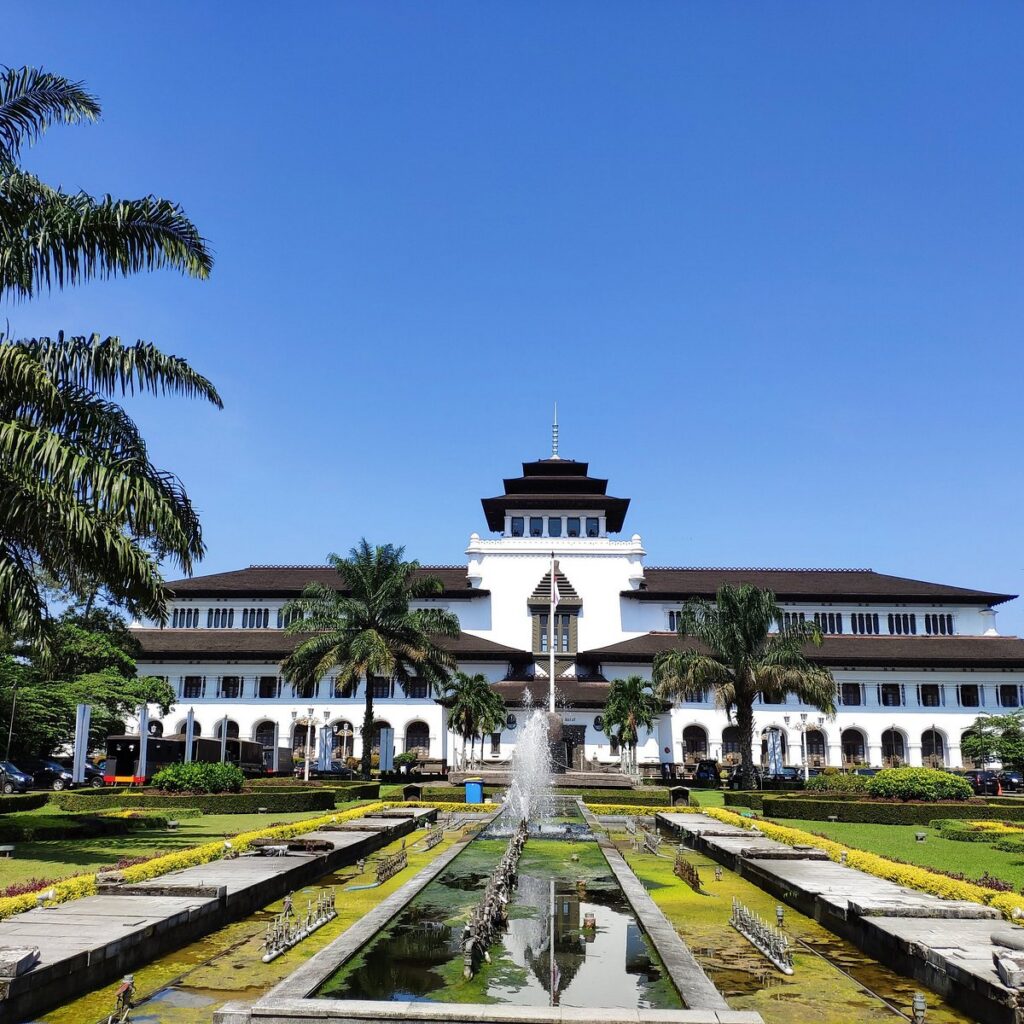
Image Credits: Tripadvisor
Built in 1920, Gedung Sate is Bandung’s most photographed building and still the office of the West Java governor. The name comes from the skewer-like ornament on its central tower, which does look like a stick of satay. The six spikes on it are said to stand for the six million guilders the building cost.
The offices are closed to the public, but there’s a museum on site and the gardens around it are kept immaculate. Half an hour covers the whole thing, so pair it with the Asian-African museum up the road.
Museum of the Asian-African Conference
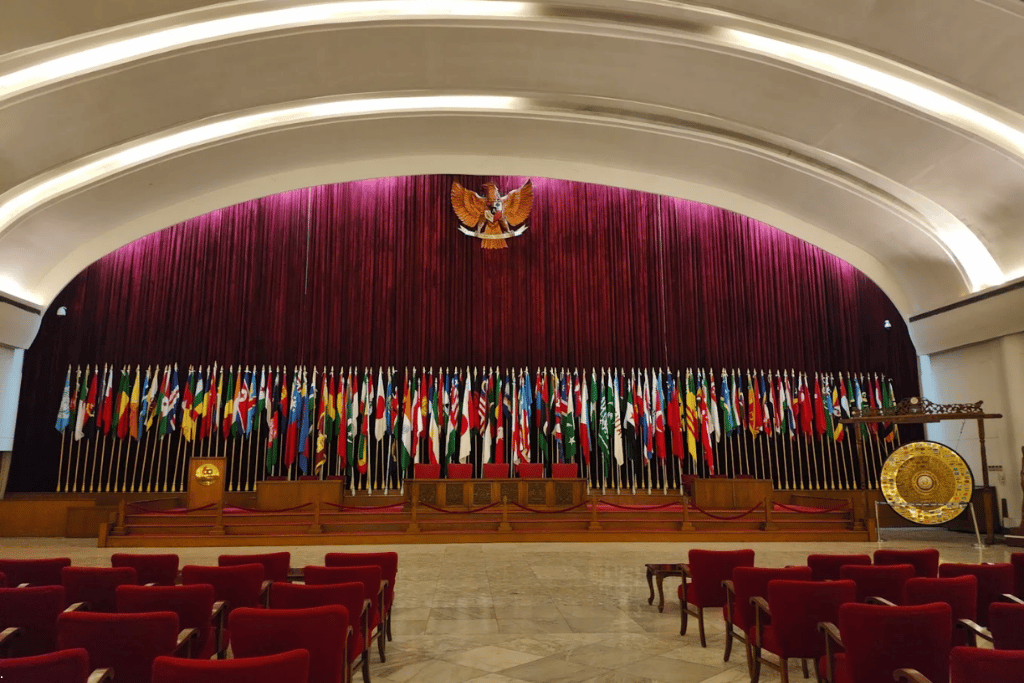
Image Credits: Eva Oh on Google Reviews
In April 1955, delegates from 29 countries met in Bandung to talk decolonisation and non-alignment. The museum at Gedung Merdeka on Jalan Asia Afrika tells that story, and it’s one of the more significant historical sites in Indonesia.
Entry is free, but you need to register first by scanning a QR code at the door. It’s closed Mondays, opens 8 AM to 4 PM Tuesday to Thursday, 2 PM to 4 PM on Fridays, and 9 AM to 4 PM at weekends.
Best for travellers who like their sightseeing with some substance. Skip it if you’re travelling with restless kids.
Alun-Alun Bandung and the Grand Mosque
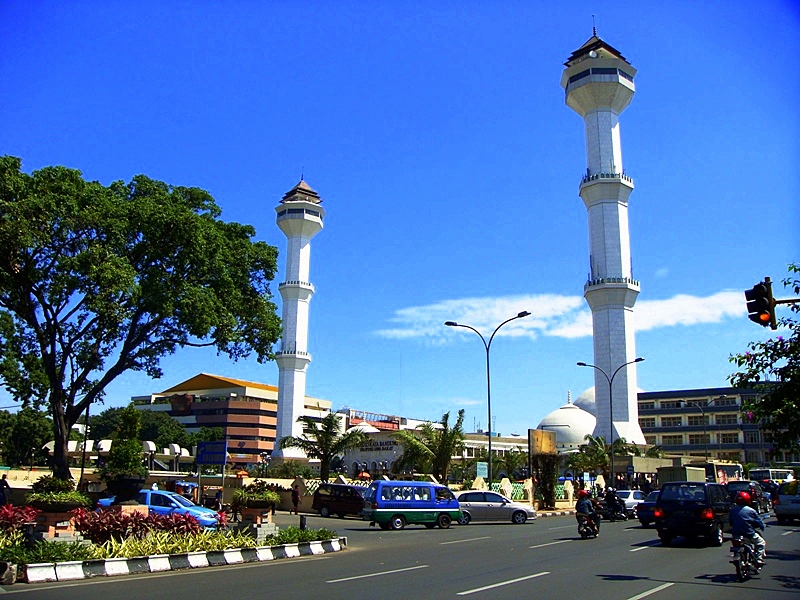
Image Credits: Wikipedia
The city’s main square sits right in front of Bandung’s Grand Mosque, carpeted with 1,200 sq m of synthetic turf that locals sprawl across all afternoon. The mosque’s twin minarets rise 81 m each, and there’s been a mosque on this site since 1812.
Entry is free, and the location is about as central as Bandung gets. Come here to sit for an hour and watch the city go by. Hop-on hop-off tourist buses start and finish along one side if you want an easy city loop.
Saung Angklung Udjo
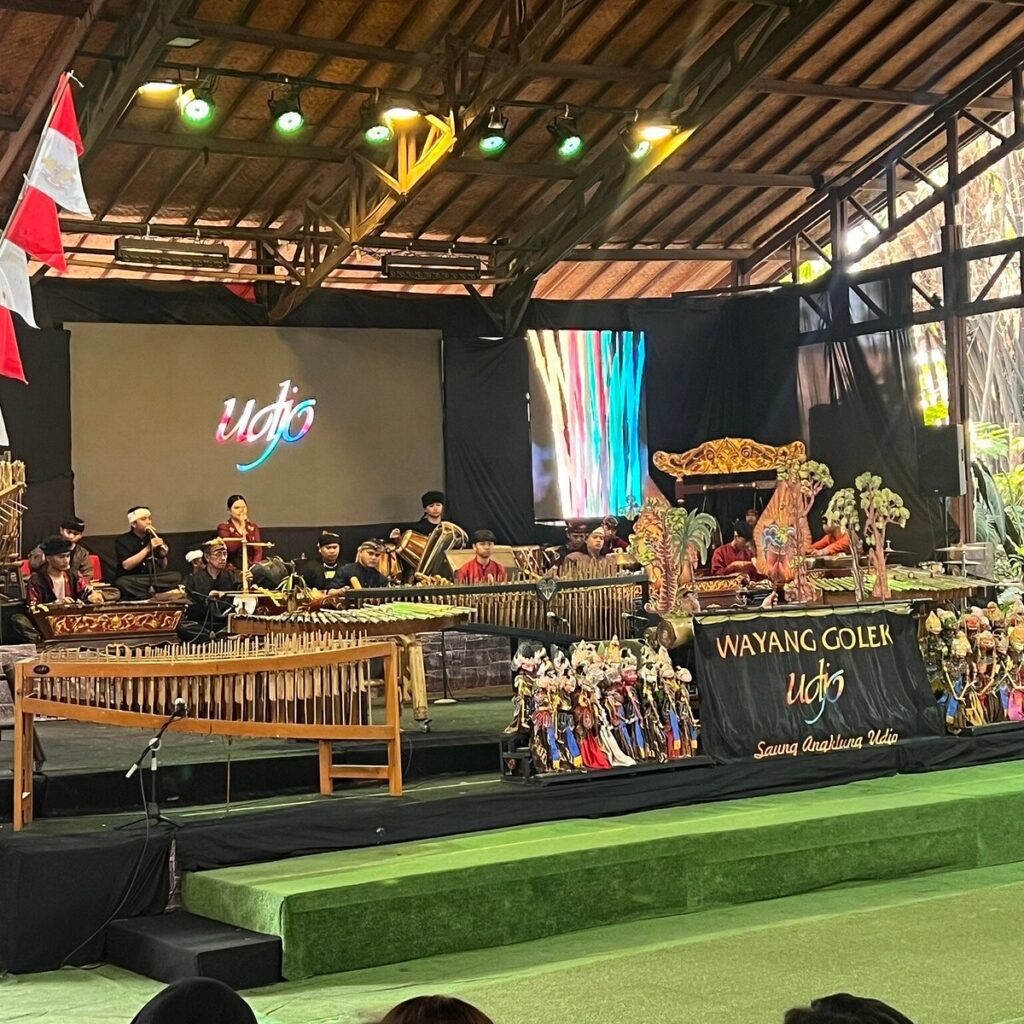
Image Credits: Tripadvisor
The angklung is a frame of tuned bamboo tubes you shake, and Saung Angklung Udjo is the cultural centre that keeps it alive. The daily show runs about 90 minutes and mixes angklung orchestra, wayang golek puppetry, mask dance and children’s performances.
The part that surprises people is the ending, where the audience is handed instruments and plays a song together. Foreign visitors pay around 110,000 IDR (~S$8) on weekdays and 120,000 IDR (~S$9) at weekends, with shows in the mid-to-late afternoon.
It works well with children, and it tends to win over people who normally avoid cultural shows.
Tebing Keraton and Taman Hutan Raya Djuanda
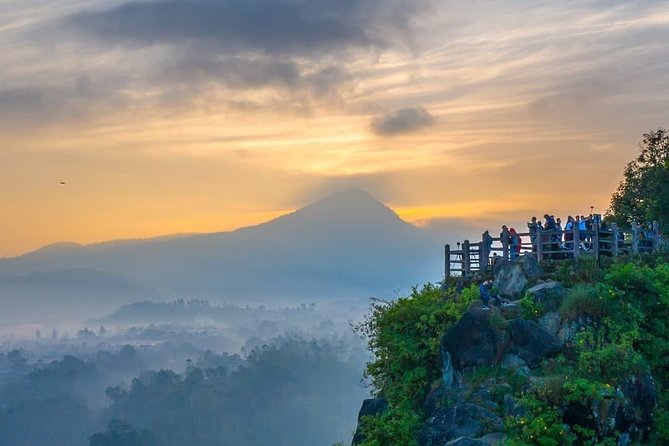
Image Credits: Tripadvisor
Tebing Keraton is a rock outcrop on the northern edge of the city with a view over a valley of tropical forest. On a good morning, the mist sits below you, and the whole thing looks like an ocean of cloud.
It’s inside Taman Hutan Raya Ir. H. Djuanda, a large forest park with walking trails and Dutch and Japanese-era caves. Foreign entry costs roughly 57,000 to 76,000 IDR (~S$4 to S$5) depending on the source, so bring cash and expect the gate price to be the final word.
The catch is timing. You want to be there before sunrise for the cloud layer, which means leaving central Bandung around 4 AM.
Trans Studio Bandung
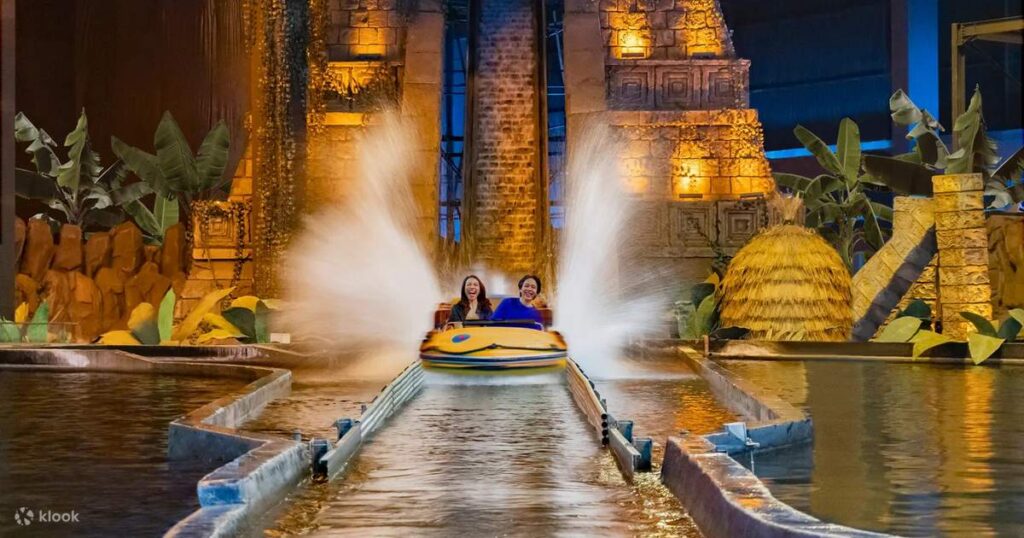
Image Credits: Klook
One of Southeast Asia’s largest indoor theme parks, spread across themed zones with a racing coaster, a giant pendulum swing and 4D theatres. Being entirely indoors is the real selling point in a city that rains most afternoons.
Tickets run 180,000 IDR (~S$13) Monday to Thursday, 200,000 IDR (~S$14) on Fridays, and 280,000 IDR (~S$20) at weekends and holidays. Promotional rates appear often, so check before you queue.
Best for a washout afternoon or a trip with kids. Adults travelling without them can comfortably skip it.
Bandung’s cafe scene
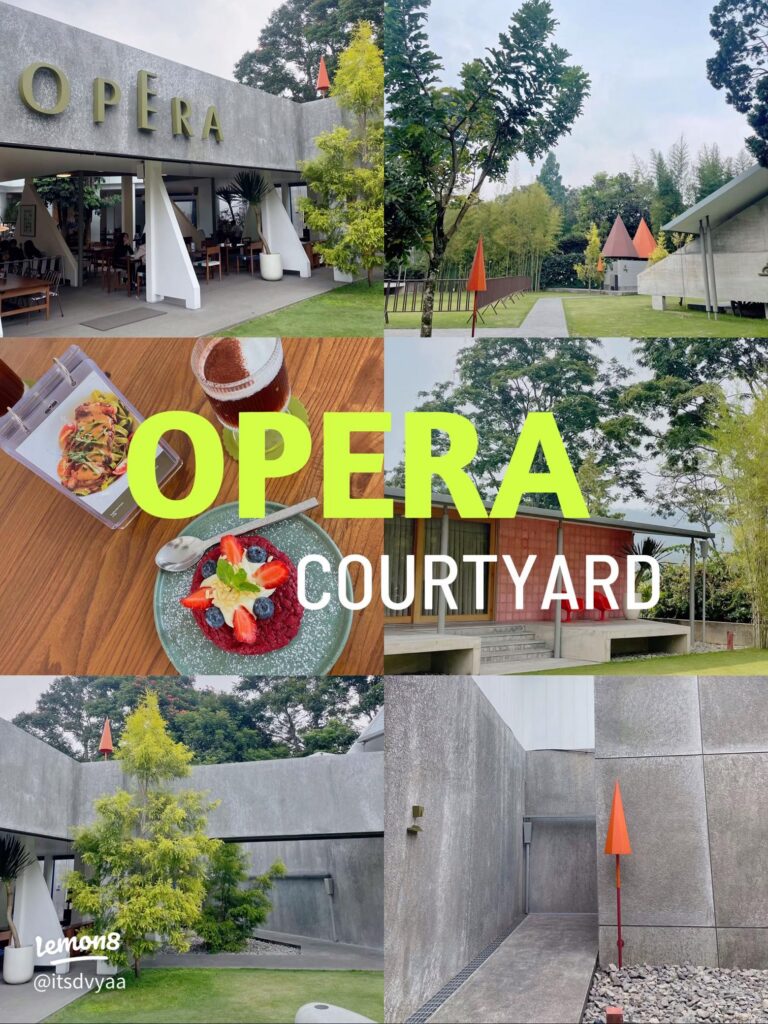
Image Credits: @itsdvyaa on Lemon8
Bandung takes coffee seriously, and the density of good cafes in Dago and around Braga is the thing most first-timers underestimate. The highlands south of the city grow Java Preanger arabica above 1,000 m, so the beans don’t travel far.
Tanatap does manual brews in a green, plant-filled space. Opera Courtyard is a cafe, restaurant and boutique in one artsy compound. Theo’s Wife Lois has built a following on bagels, which is not what you expect from a hill town in Java.
Best for a slow morning between crater trips. Weekday afternoons are calmer, as the Jakarta weekend crowd fills tables from Friday night.
📖 Related Guide: Doing more of Java? Our 17 best things to do in Yogyakarta maps the temples and volcanoes on the island’s other side.
Best Day Trips From Bandung
The volcanic highlands are the reason most people come. South towards Ciwidey you get craters, hot springs and tea. North towards Lembang you get a volcano and a cluster of family attractions.
Kawah Putih
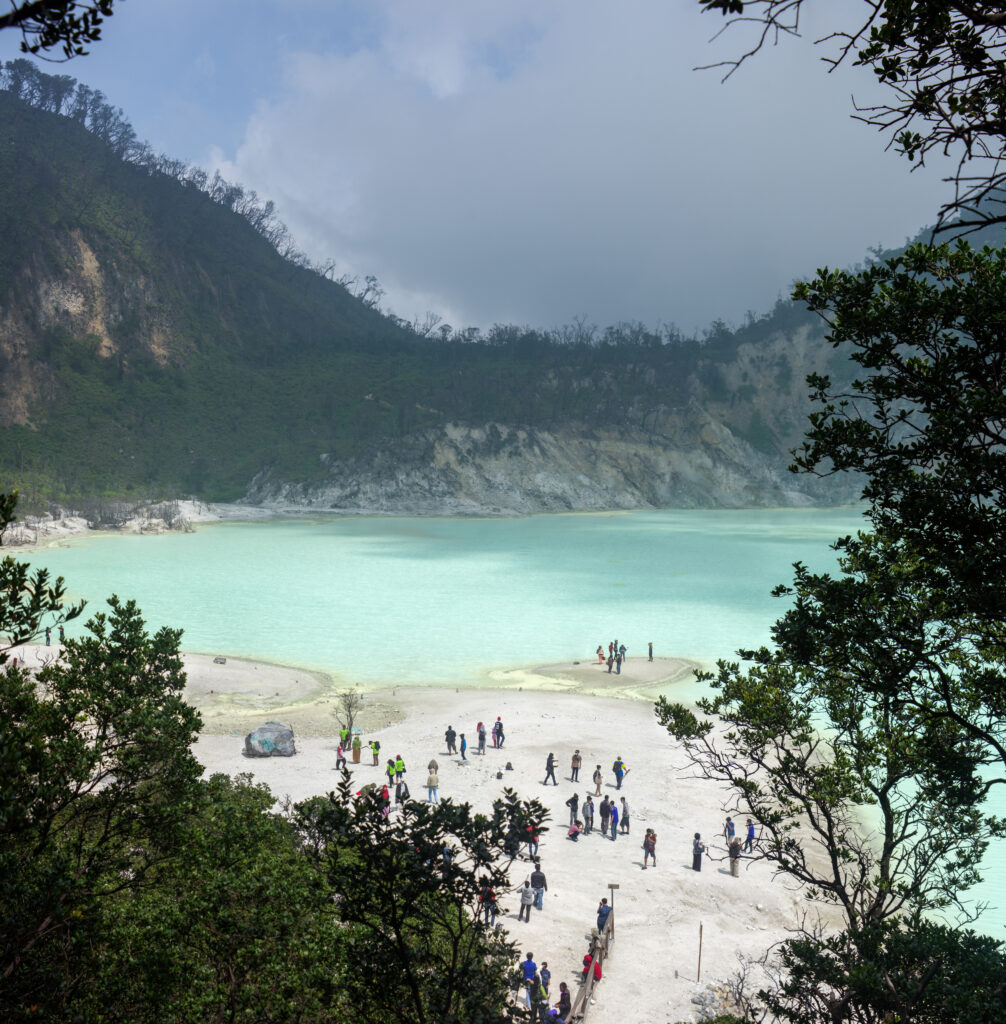
Image Credits: Wikipedia
Kawah Putih is a crater lake about 50 km south of Bandung, and it’s the image that sells Bandung. The water shifts between turquoise, green and milky white depending on sulfur levels and weather, ringed by pale, acid-bleached sand.
It sits at roughly 2,400 m, so it’s properly cold. Bring a jacket. Foreign entry is around 90,000 IDR (~S$6). That rises to about 122,000 IDR (~S$9) with the shuttle down to the lake shore, and the bamboo skywalk viewpoints cost a little extra.
The sulfur fumes are constant, and you’re advised not to linger too close to the water. Most people spend 30 to 45 minutes at the shore, which is about right. It opens from 8 AM to 5 PM with last entry at 4 PM.
Best for anyone who’ll get up early. By late morning the shore is busy, and the light is better before it is.
Rengganis Suspension Bridge
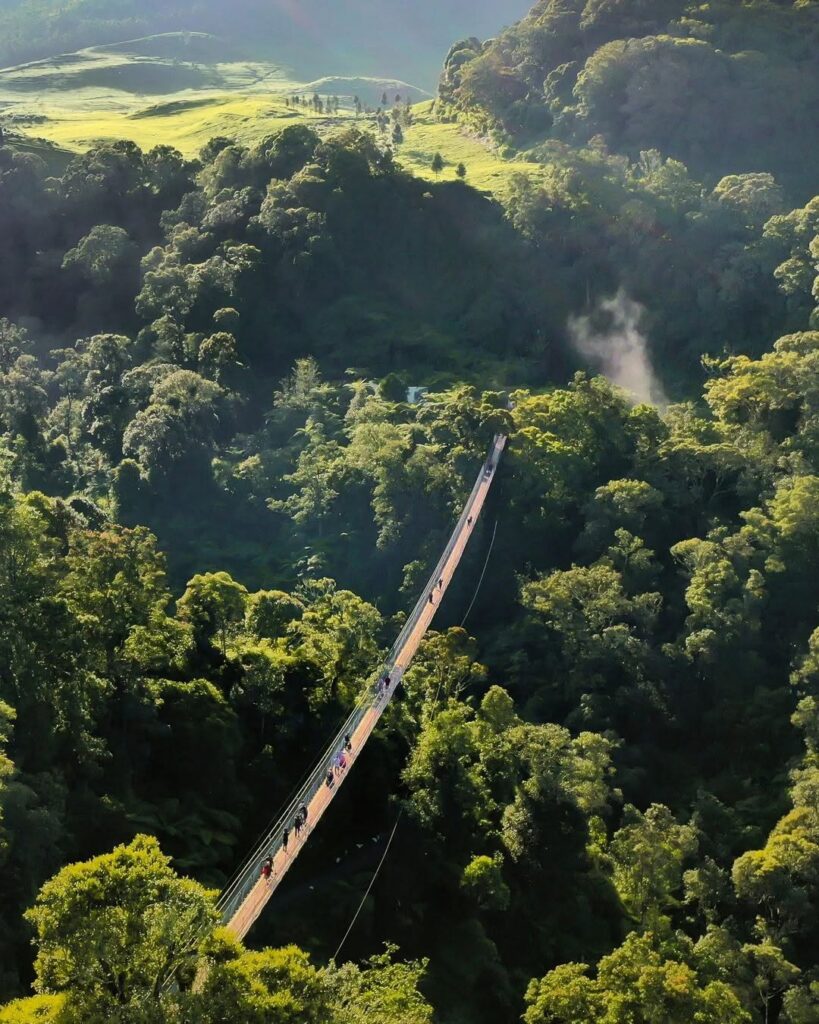
Image Credits: Indonesia.Travel on Facebook
At 370 m long and 75 m above the forest floor, this is the longest suspension bridge in Southeast Asia. It connects the entrance area to Kawah Rengganis, a hot spring crater, and it crosses over jungle and tea fields.
It sways, and it leans slightly to one side, which makes the walk more interesting than most bridges of its type. Tickets start around 70,000 to 75,000 IDR (~S$5) for the bridge and crater, with a VIP option near 100,000 IDR (~S$7) that bundles nearby attractions.
There’s a jungle path 75 m below for anyone who takes one look and decides against it. Nearby you’ll also find basket gondolas and a short zipline.
It sits in the same direction as Kawah Putih, so one day comfortably covers both.
Rancabali and Malabar tea plantations
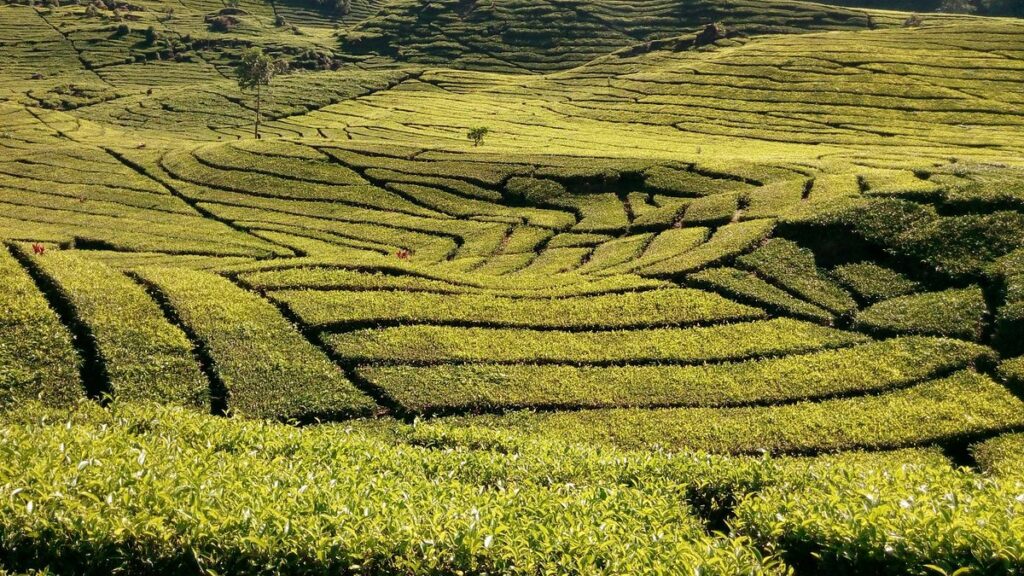
Image Credits: Tripadvisor
West Java grows around 70% of Indonesia’s tea. The plantations south of Bandung roll from horizon to horizon in a green that photographs badly and looks superb in person. Some of the oldest estates in the country are here.
You can drive through for free, and several estates run tours covering picking, processing and packing. Situ Patenggang, a lake in the middle of the tea country, makes a natural stop.
Best for the drive between Kawah Putih and the bridge. It’s the connective tissue of a Ciwidey day, not a destination on its own.
A village lunch in the tea country
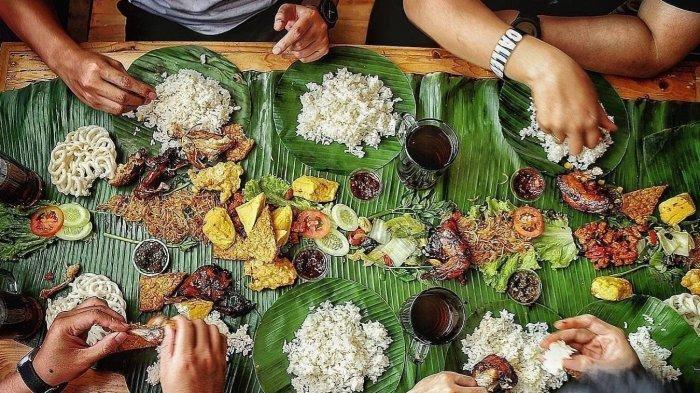
Image Credits: Kokikit News
Plenty of Ciwidey day tours finish with a meal in a village home rather than a restaurant, and it tends to be the part people talk about afterwards. You eat whatever the household cooked that morning: rice, chicken, eggplant, tempeh, and sambal pounded fresh while you wait.
Ngaliwet is the Sundanese custom of laying rice and side dishes along a run of banana leaves. Everyone sits side by side and eats with their hands, with no individual plates involved. Botram is the potluck version, where everyone turns up with a dish.
Operators around Mekarsari village often pair the meal with a look at how Java Preanger coffee gets processed. It’s usually an add-on rather than a default, so ask when you book, and flag any dietary needs early because sambal and dried fish turn up in most spreads.
Tangkuban Perahu
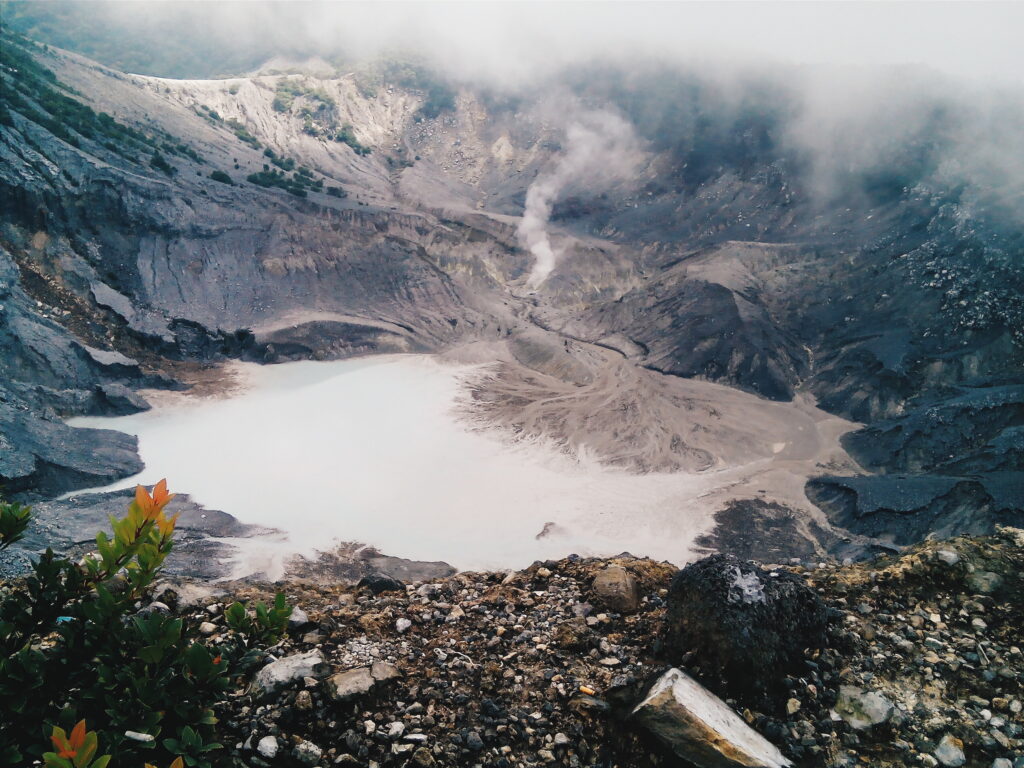
Image Credits: Wikipedia
An active stratovolcano about 30 km north, named for its resemblance to an upturned boat. You can drive almost to the rim, then walk to viewpoints looking straight down into Kawah Ratu, the main crater, with sulfur steam rising off the walls.
Nearby Kawah Domas has hot springs where you can boil eggs in the ground. Foreign entry is 200,000 IDR (~S$14) on weekdays and 300,000 IDR (~S$21) at weekends, which is a steep gap from the local rate and worth planning around.
Go on a weekday morning. Cloud rolls in by midday and you’ll be looking at a wall of white.
Best for people who want a volcano without a hike. The accessibility is the whole appeal, and also why it gets crowded.
Farmhouse Lembang
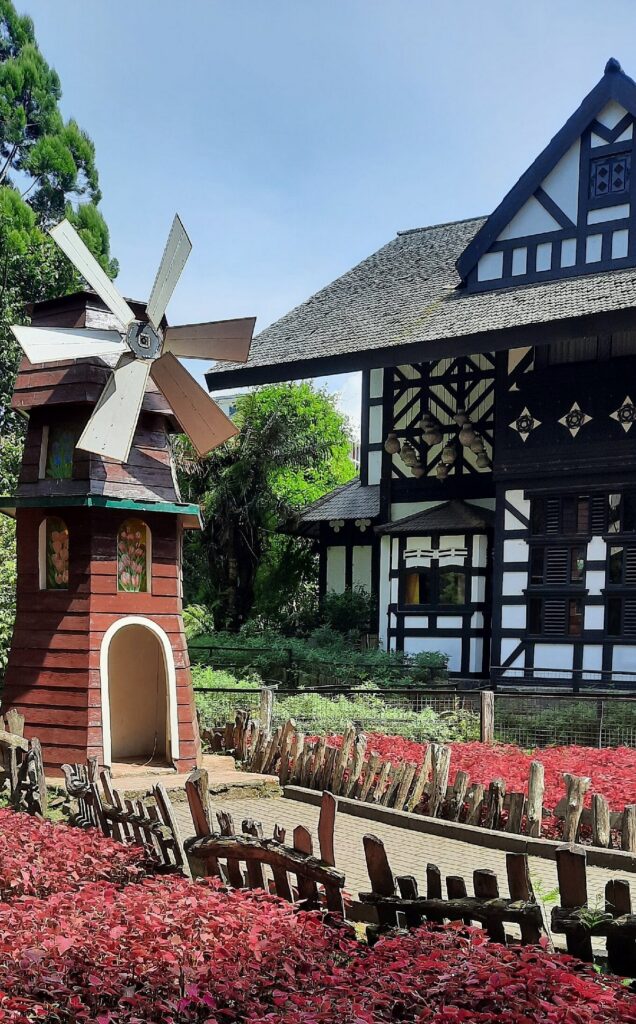
Image Credits: Tripadvisor
A European-style village set built around an alpine cottage aesthetic, complete with a hobbit house and a small petting area. It’s unapologetically a photo spot, and it’s one of the most-visited attractions in Lembang.
Entry is around 35,000 IDR (~S$3) and includes a free milk drink. It’s open 9 AM to 6 PM.
Whether you love it or find it deeply strange depends on your tolerance for theme-park Europe in the Javanese highlands. Locals love it.
Floating Market Lembang
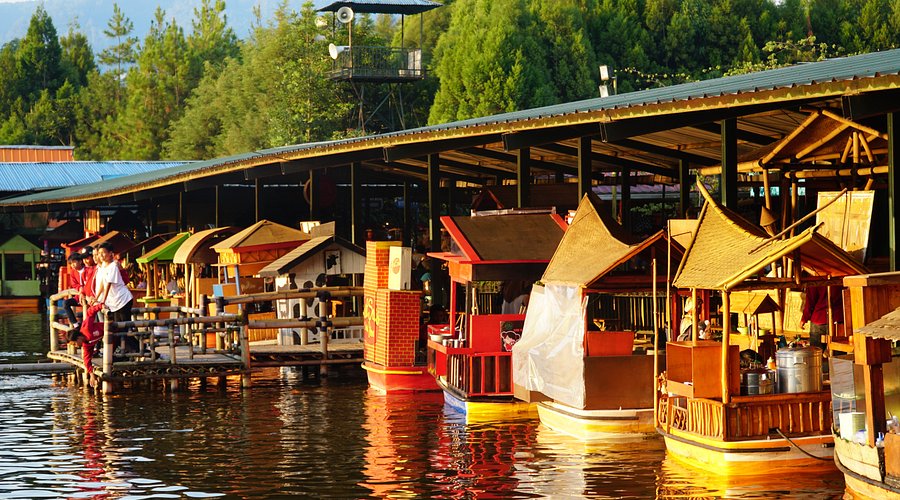
Image Credits: Tripadvisor
Vendors sell food from boats on a man-made lake, and you pay in tokens you swap for cash at the entrance. Beyond the market, there’s paddle boating, a mini train and a petting zoo, all in cool mountain air.
Entry runs about 34,500 IDR (~S$2.50), redeemable against a coffee. Open 9 AM to 6 PM.
Best for families with young children. Solo travellers and couples will get through it in an hour.
Dusun Bambu
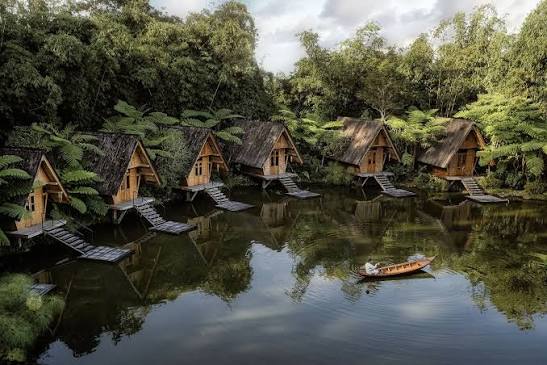
Image Credits: Dusun bambu
An eco-park in the hills above Lembang built around bamboo architecture, with landscaped gardens, a lake you can canoe on, and forest walking paths. Entry is modest at around 20,000 to 30,000 IDR (~S$2).
The reason to come is Lutung Kasarung, a restaurant where you eat Sundanese food inside giant suspended bird’s-nest pods in the trees. Meals run roughly 50,000 to 200,000 IDR (~S$4 to S$14) per person, and you can book a pod without ordering a full meal.
It works best as a lunch that doubles as an activity, and the pods need booking ahead at weekends.
📖 Related Guide: Weighing up Indonesia’s other islands? Our 39 best things to do in Bali covers the beaches and temples end of the country.
What to Eat in Bandung
Bandung is a Sundanese food country, and its street food travelled: batagor and siomay are Bandung exports that turned up on menus across Indonesia. Expect fried snacks, peanut sauce, chilli and a lot of tofu.
Batagor
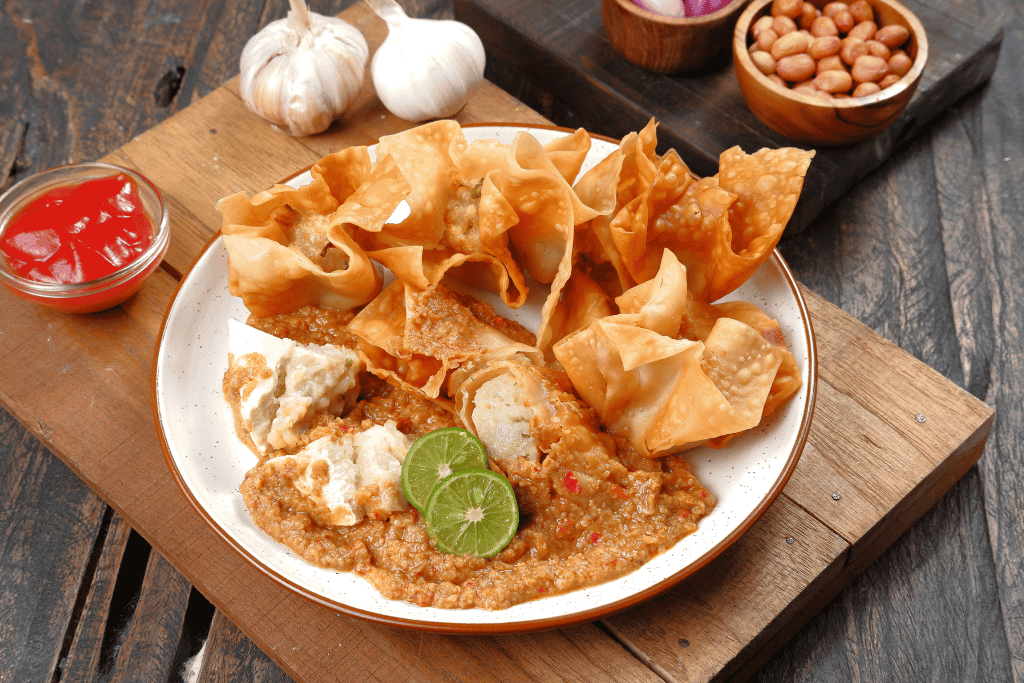
Fried fish-and-tofu dumplings drowned in peanut sauce, with a squeeze of lime. The name is a compression of bakso tahu goreng, and Bandung claims the original.
| Where to Try | Address | What to Order | Price |
|---|---|---|---|
| Batagor Riri | Jl. Burangrang No. 41 | Classic batagor, four pieces | From ~10,000 IDR (~S$0.70) per piece |
| Batagor Siomay Kingsley | Jl. Veteran No. 25 | Batagor and siomay mixed plate | From ~30,000 IDR (~S$2) |
Batagor Riri has been going since 1985 and is the name locals give first. The peanut sauce divides people, so order a small portion before you commit.
Siomay
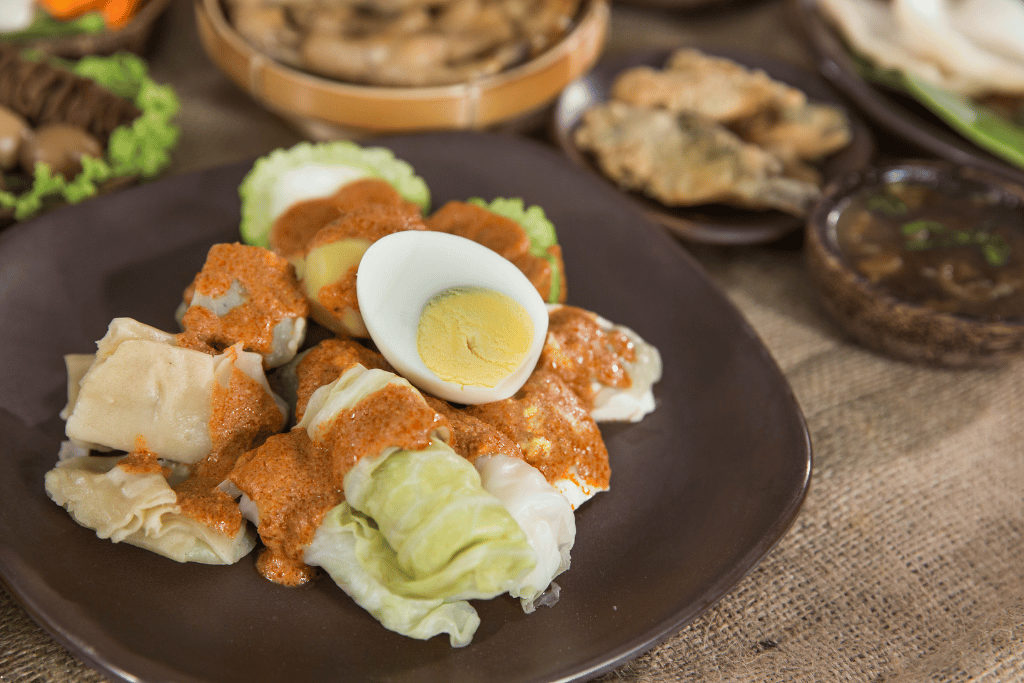
Steamed fish dumplings served with cabbage, potato, boiled egg and bitter gourd, all under the same peanut sauce. Lighter than batagor because nothing’s fried.
| Where to Try | Address | What to Order | Price |
|---|---|---|---|
| Batagor Siomay Kingsley | Jl. Veteran No. 25 | Full siomay platter | From ~30,000 IDR (~S$2) |
| Siomay Tahu Ikan Pak Ade | Jl. Ternate | Siomay cooked over firewood | From ~25,000 IDR (~S$2) |
Pak Ade still cooks over firewood, which gives the dumplings a smokiness you won’t get elsewhere.
Mie Kocok
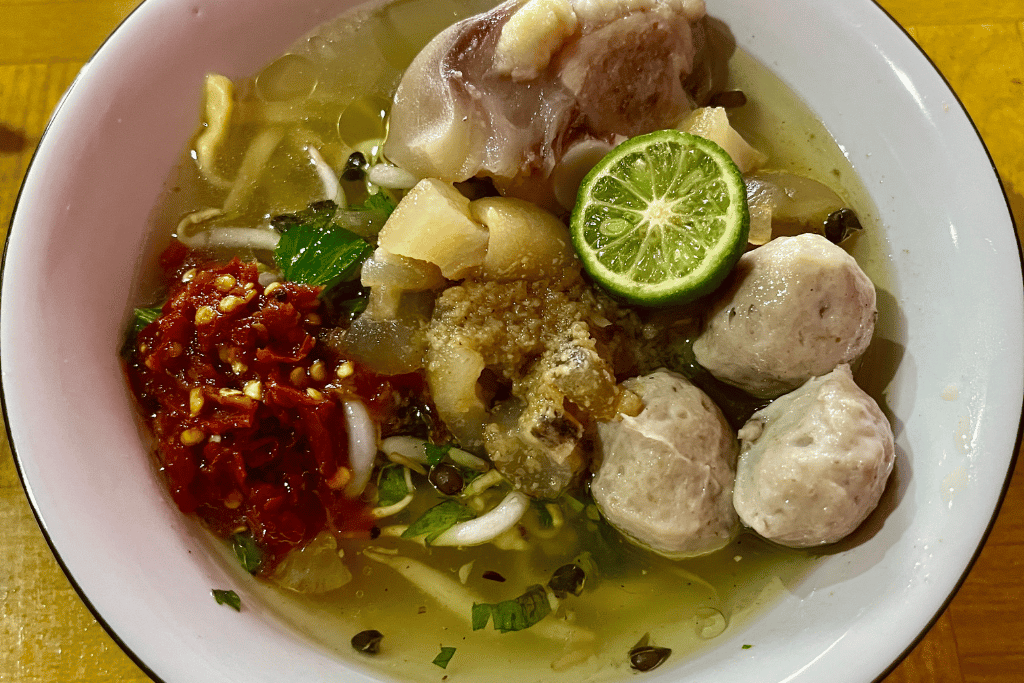
A beef noodle soup with a rich broth and kikil, the soft tendon from cow’s trotters. Kocok means shaken, after the perforated basket the noodles are cooked in. It’s the Bandung breakfast most visitors miss.
| Where to Try | Address | What to Order | Price |
|---|---|---|---|
| Mie Kocok Mang Dadeng | Jl. K.H. Ahmad Dahlan No. 67 | Mie kocok with extra kikil | 35,000 to 50,000 IDR (~S$2.50 to S$4) |
Mang Dadeng has been serving this since 1953 and opens 9 AM to 10 PM. If the tendon isn’t for you, ask for it with meatballs instead.
Seblak
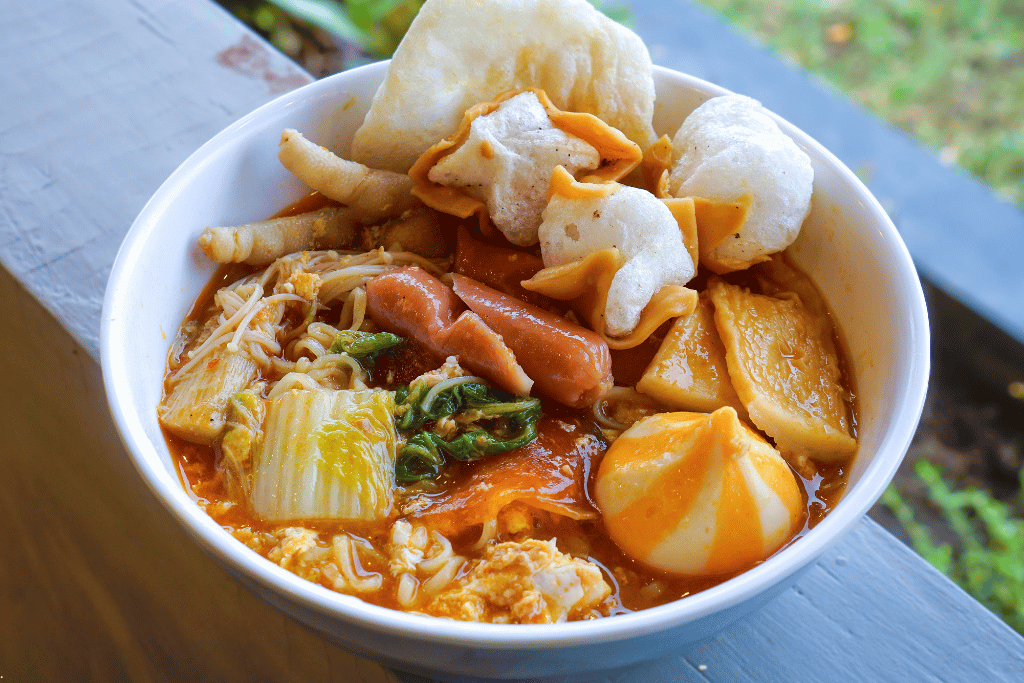
A wet, fiercely spicy dish built on softened crackers, with garlic and kencur (aromatic ginger) driving the flavour. Toppings range from egg and vegetables to chicken feet and beef bone.
| Where to Try | Address | What to Order | Price |
|---|---|---|---|
| Seblak Teh Ida | Jl. Braga Gg. Apandi No. 30 | Seblak with egg and cireng | From ~20,000 IDR (~S$1.50) |
| Seblak Teh Sani | Jl. Cijerah 2 blok 18 | Seblak, mild level first, 50+ toppings | From ~20,000 IDR (~S$1.50) |
Seblak Teh Ida is tucked in an alley off Braga and opens Tuesday to Sunday, 10 AM to 8 PM. Teh Sani, out in Cijerah, opens daily 11:30 AM to 9 PM and lets you build a bowl from more than 50 toppings. Ask them to dial the chilli down unless you’re confident.
Surabi
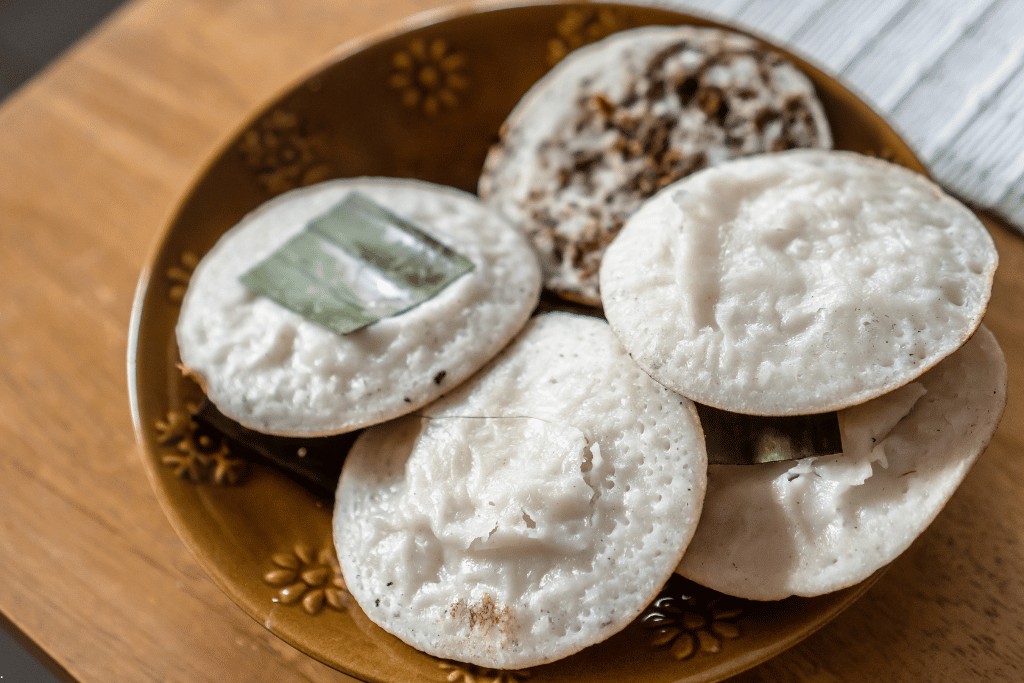
A rice-flour pancake loosened with coconut milk and cooked in a clay pot over charcoal. The traditional savoury version comes topped with oncom, a fermented cake in the tempeh family, and the sweet one with palm sugar syrup.
| Where to Try | Address | What to Order | Price |
|---|---|---|---|
| Surabi Enhaii | Jl. Setiabudi | Oncom surabi, or sweet with palm sugar | 10,000 to 40,000 IDR (~S$0.70 to S$3) |
Surabi Enhaii only opens late afternoon, around 4 PM to 5 PM, and the queues are part of the deal.
Nasi Timbel and Sundanese Rice
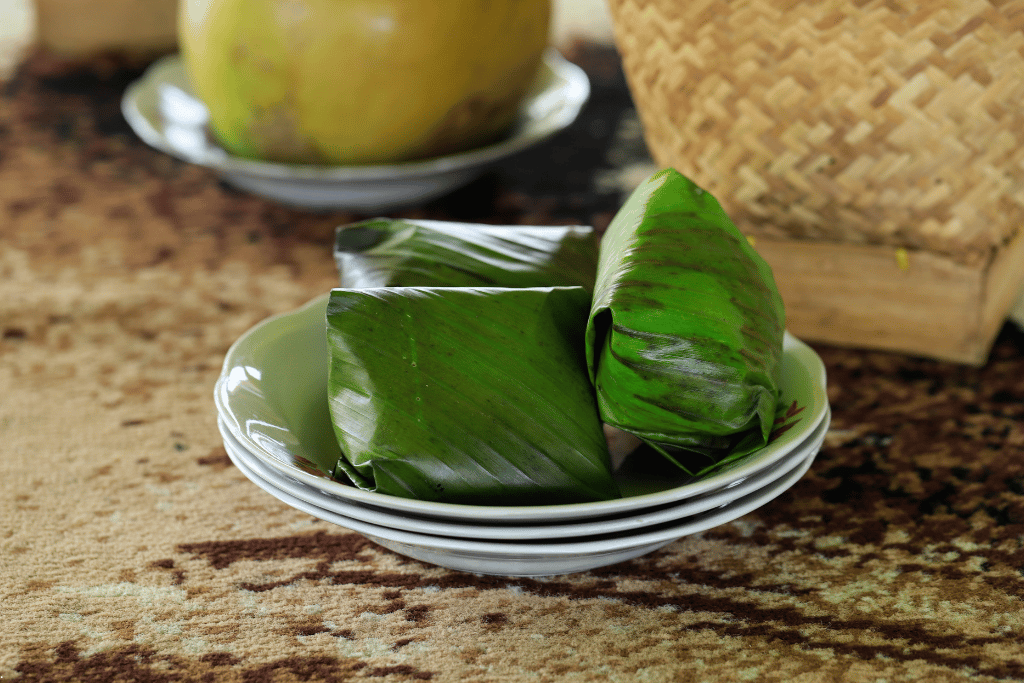
Rice steamed and wrapped in banana leaf, served with fried chicken, tofu, tempeh, raw vegetables and sambal dadak, a chilli sauce pounded fresh to order. This is the full Sundanese meal.
| Where to Try | Address | What to Order | Price |
|---|---|---|---|
| Warung Nasi Ibu Imas | Jl. Balonggede (four branches) | Nasi timbel set with fried chicken | Fried chicken from 20,000 IDR (~S$1.50) |
Ibu Imas is the legendary name for this, open 7 AM to midnight. Order the karedok leunca on the side and don’t underestimate the sambal.
Pisang Bolen
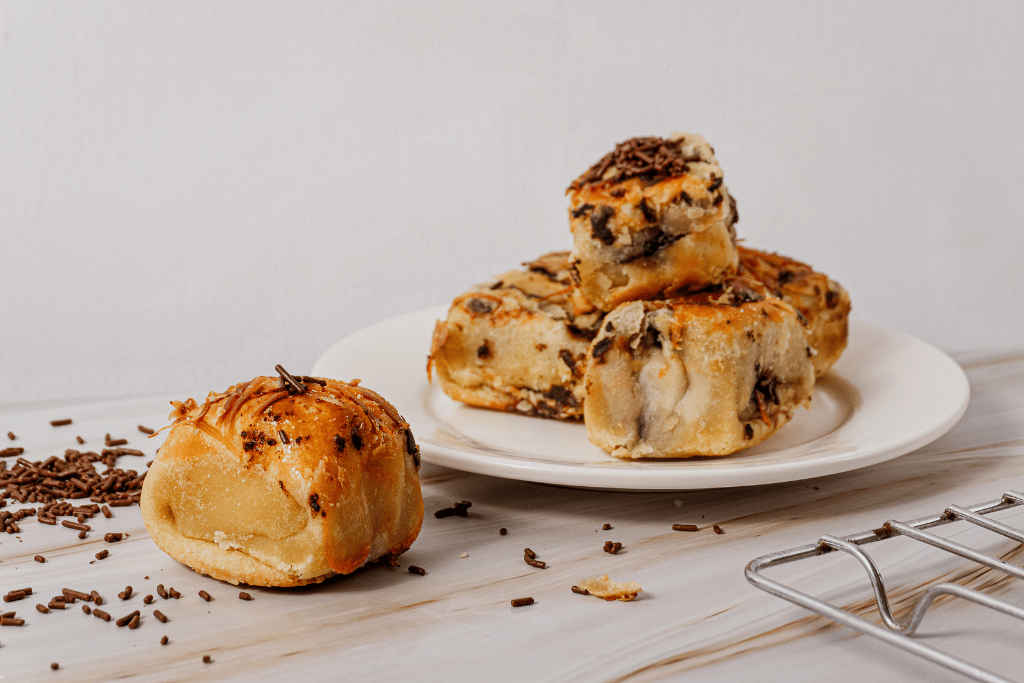
A flaky pastry folded around banana and melted chocolate, and the thing Indonesian visitors carry home by the boxful. Kartika Sari invented it in 1974, and Bandung has been arguing about who makes it best ever since.
| Where to Try | Address | What to Order | Price |
|---|---|---|---|
| Kartika Sari | Jl. H. Akbar No. 4, Pasir Kaliki | Pisang bolen, banana and chocolate, box of 6 | 50,000 IDR (~S$4) |
| Prima Rasa | Jl. Kemuning No. 20 | Pisang bolen and the steamed brownies | Varies by filling |
Kartika Sari is the original, and its chocolate-cheese version is 75,000 IDR (~S$5). Prima Rasa, going since 1986, is the local counter-pick, and the Kemuning branch opens at 6 AM if you’re catching an early train out.
📖 Related Guide: Want Indonesian food closer to home? Our 3-day Batam itinerary is the ferry-ride version of the same flavours.
Things to Do in Bandung at Night
Bandung after dark is low-key, and that’s the appeal. The cool air makes wandering pleasant in a way it rarely is at sea level in Indonesia.
Sudirman Street Day and Night Market
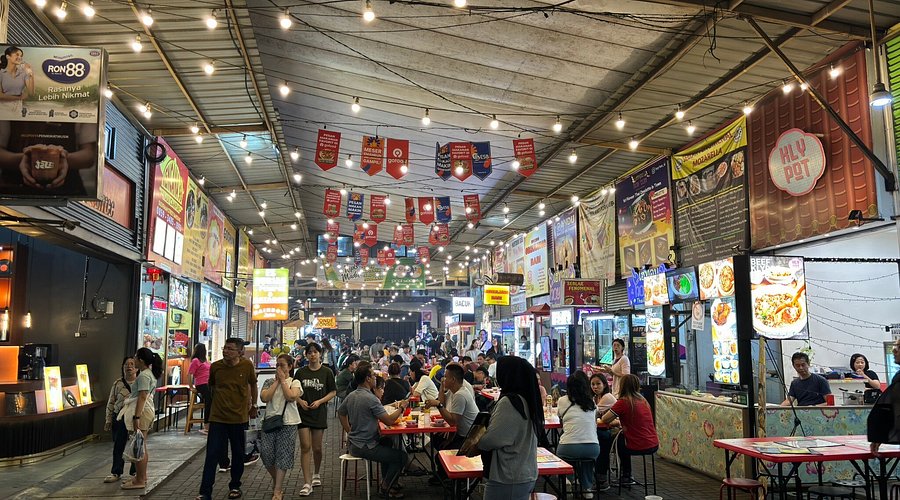
Image Credits: Tripadvisor
A covered food street on Jalan Jenderal Sudirman that only really opens at night, about a ten-minute walk from the main square. Stalls run until around 11 PM under strings of lights, with live music most evenings.
It’s cleaner and better organised than most Indonesian street-food strips, with proper seating rather than plastic stools on a kerb. It’s also one of the few places in the city with a lot of pork on the menu, from satay to nasi campur.
Best for a first night, when you want twenty options in one place. Parking is tight and Sunday evenings get packed.
City lights from Punclut
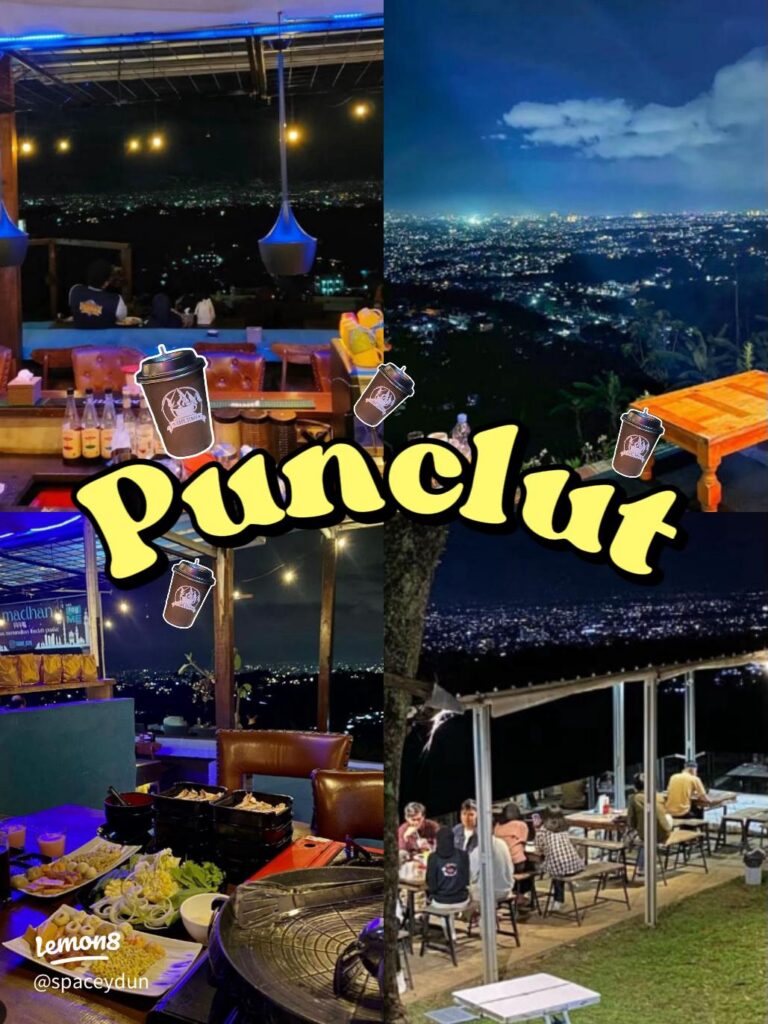
Image Credits: @spaceydun on Lemon8
Punclut, on the ridge above Ciumbuleuit, is where Bandung goes to look at itself. A row of hillside cafes and restaurants sits facing the valley, and after dark the whole city spreads out below in a grid of lights.
Lereng Anteng is the best-known of them, serving coffee and traditional snacks on terraced seating. The Valley, on the Dago slopes, does the same with a fuller restaurant menu.
It’s cool enough up here for a jacket, and the drive up is winding and slow. Go for sunset and stay through dusk rather than arriving late.
Late suppers on Braga
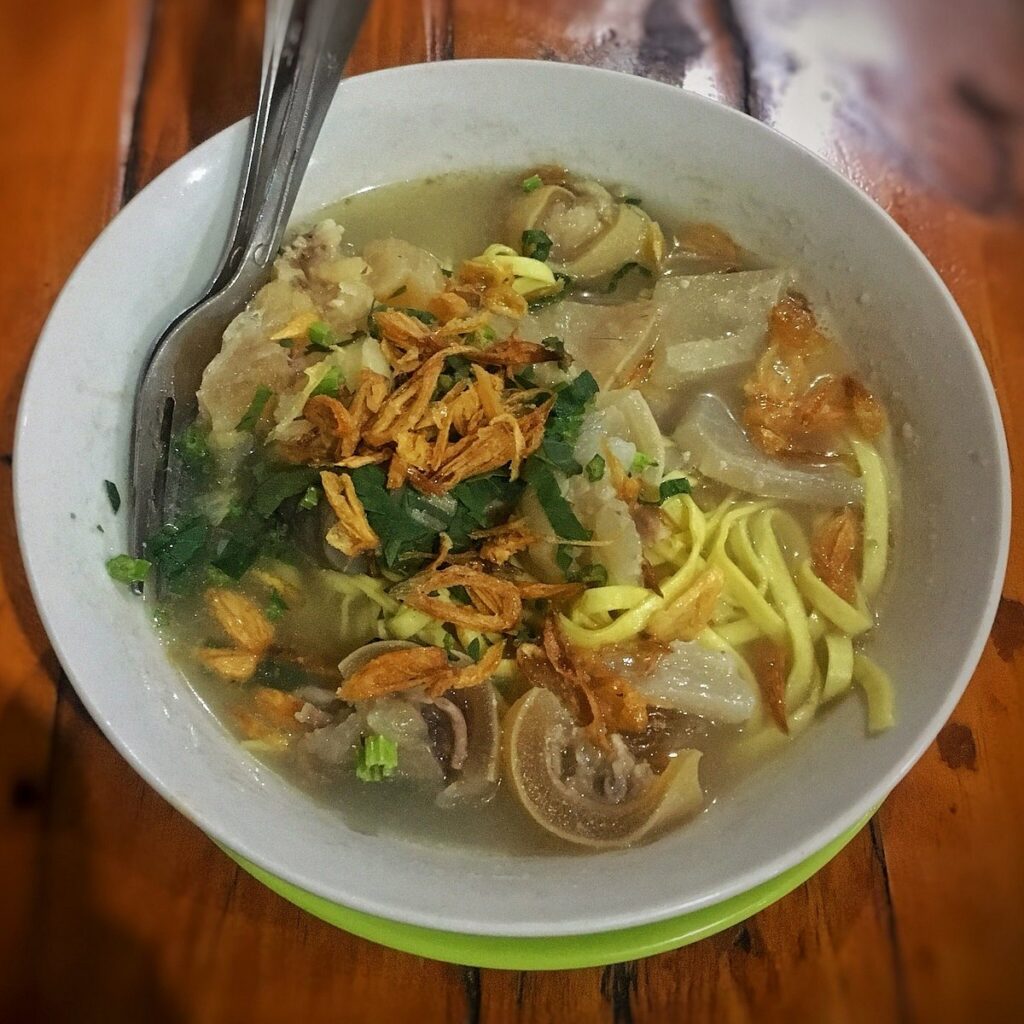
Image Credits: Tripadvisor
Braga is a different street after 7 PM. Buskers set up, food carts appear, pavement artists work under the streetlights, and the art deco facades light up along the whole strip.
For an actual meal, the city keeps late hours. Mie Kocok Mang Dadeng serves until 10 PM, and Warung Nasi Ibu Imas stays open to midnight. A proper Sundanese supper is easy to find long after the sights close.
Best for a relaxed night. Bandung is not a nightlife city, and anyone hunting clubs will be disappointed.
📖 Related Guide: Building a long-weekend shortlist? Our 18 short trips from Singapore stack Bandung against the other close-range options.
Where to Shop in Bandung
Bandung built its reputation on textiles, and factory outlets are still the main draw. Prices are low, and the hunting is half the fun.
Factory outlets on Jalan Riau
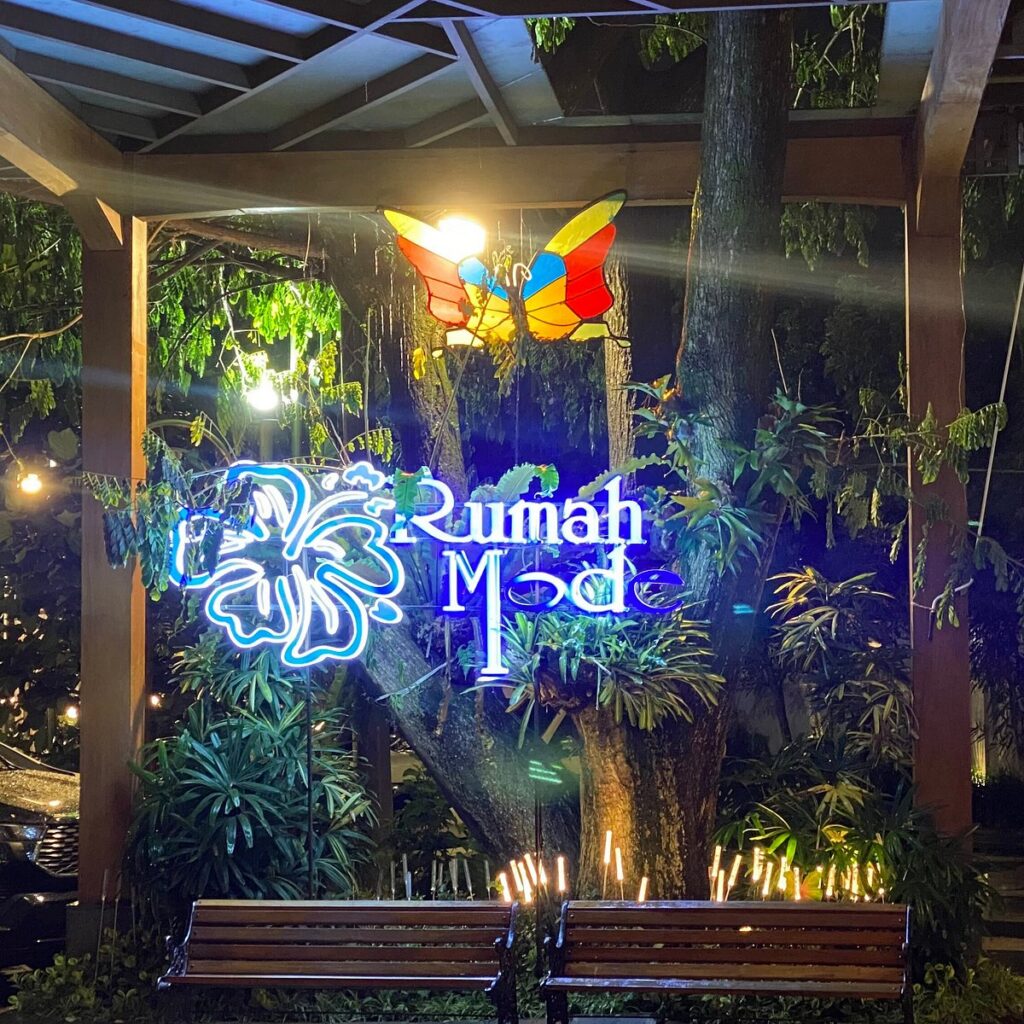
Image Credits: Tripadvisor
Jalan L.L.R.E. Martadinata, still called Jalan Riau by everyone, is lined with factory outlets selling branded and export-surplus clothing. Over on Jalan Setiabudi, Rumah Mode is the best-known single outlet, laid out as a garden complex with a cafe and food court rather than a shopfront.
Quality varies wildly, so check seams and sizing before you buy. There are no fitting rooms in some outlets.
Paris Van Java
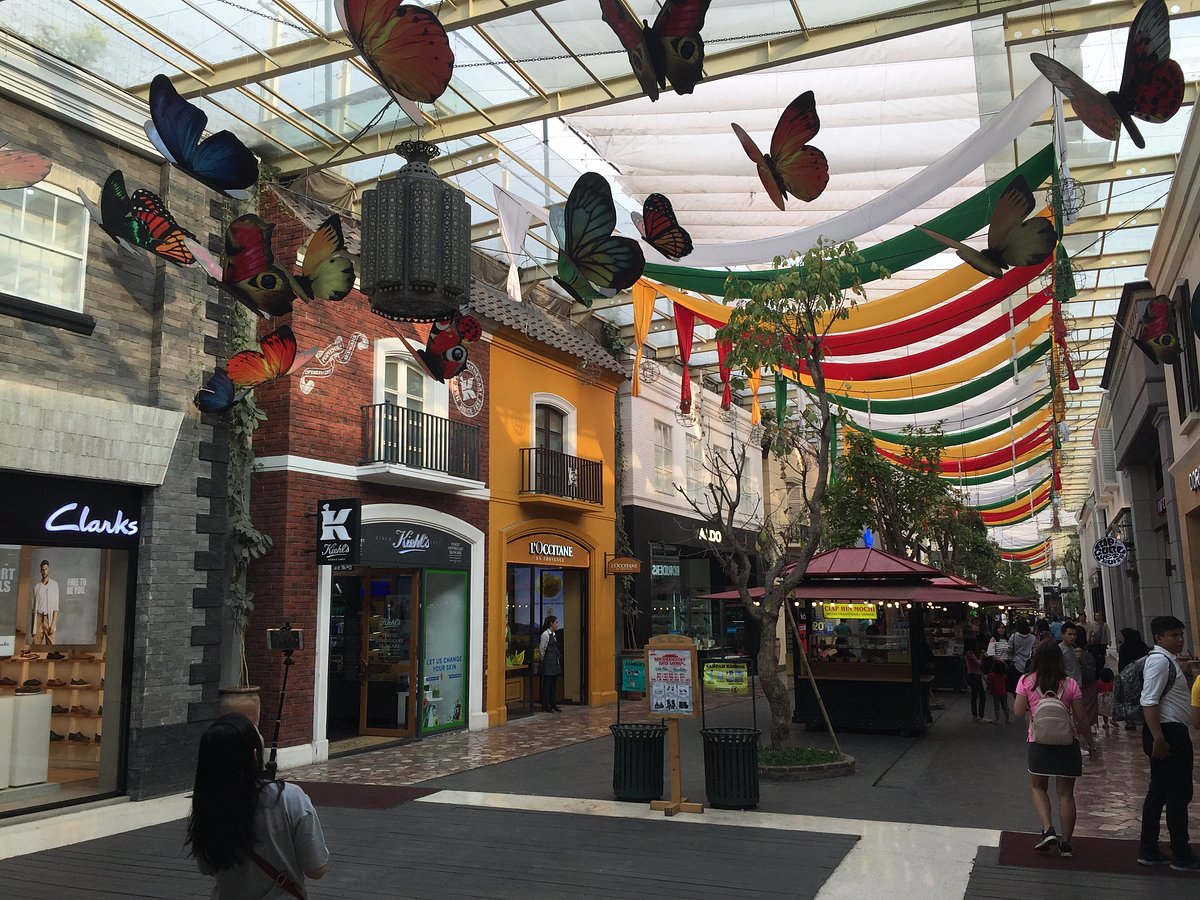
Image Credits: Tripadvisor
An open-air lifestyle mall rather than a conventional indoor one, which suits a city this cool. Tree-lined walkways connect local and international brands, and the restaurant count is high enough to make it a dinner destination on its own.
It’s on Jalan Sukajadi and opens 10 AM to 10 PM daily. Evenings are the best time, when the lighting comes on, and the crowd shifts from shoppers to diners.
Cihampelas Walk and Jalan Cihampelas
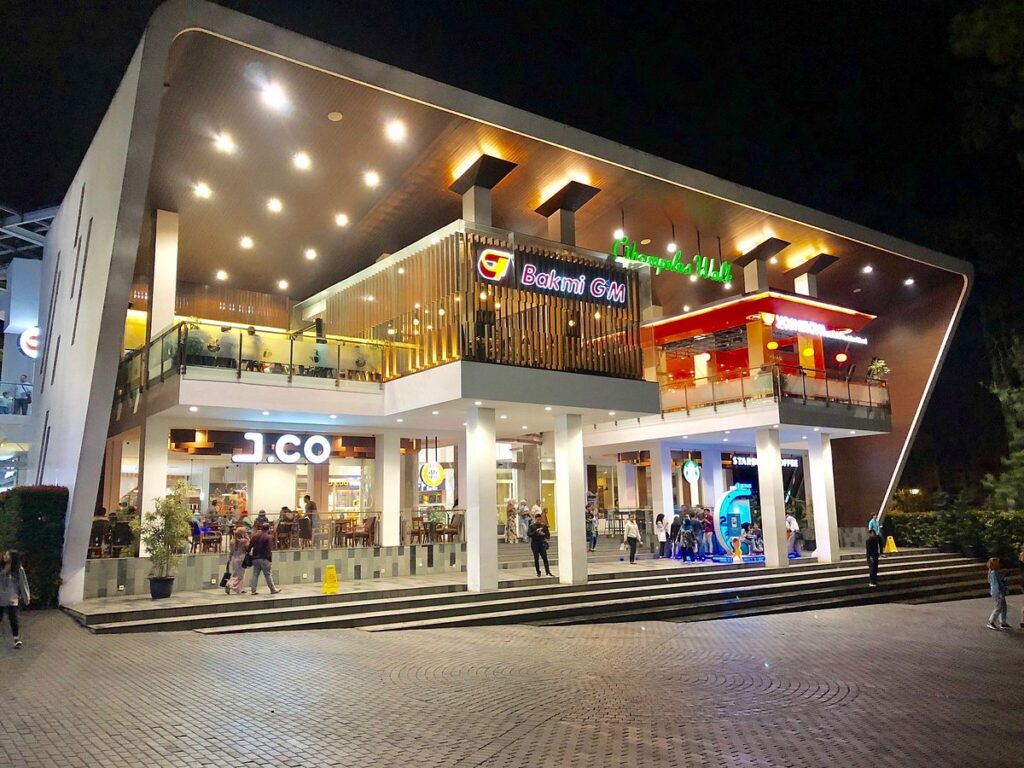
Image Credits: Tripadvisor
Jalan Cihampelas is Bandung’s original jeans street, still stacked with denim shops behind theatrical shopfronts. Cihampelas Walk, the mall at one end, is the tidier modern version, open 10 AM to 10 PM with restaurants running later.
Bargain on the street and pay fixed prices in the mall. It’s a solid rainy-afternoon fallback either way.
📖 Related Guide: Packing for Indonesia? Our Indonesia power plug and socket guide saves you from buying an adapter at the airport.
Best Time to Visit Bandung
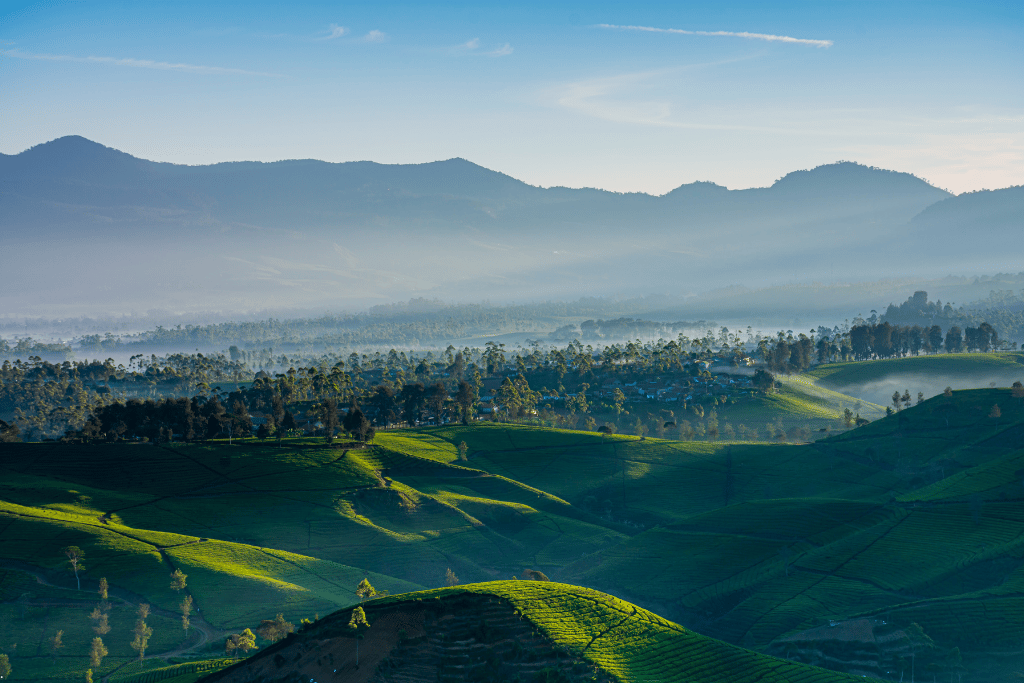
The dry season, roughly June to September, is the best window. Crater views are clearest, the tea fields are open, and the roads south to Ciwidey are less prone to landslides.
Bandung’s altitude keeps it cooler than most of Java year-round, with an annual average around 24°C. Days sit in the high twenties and nights drop into the high teens. At Kawah Putih and Tangkuban Perahu it’s colder still, so pack a light jacket whatever the month.
The wet season from November to March brings heavy afternoon rain. Mornings are often fine, so plan crater trips early and leave malls, museums and Trans Studio for the afternoon.
One thing to plan around: Bandung is Jakarta’s weekend escape. From Friday evening to Sunday, the roads north to Lembang clog badly, and attraction prices rise. A Tuesday to Thursday trip is a different city.
📖 Related Guide: Timing an Indonesian trip generally? Our month-by-month guide to the best time to visit Bali breaks down the same wet and dry pattern.
Where to Stay in Bandung
Base yourself in the centre if it’s your first trip. Around Braga and Jalan Asia Afrika you can walk to the square, the mosque, the museum and most of the good cafes.
Dago, on rising ground to the north, is quieter and greener with a lot of the better cafes and views back over the city. It’s a short ride from the centre and suits a slower trip.
For a proper highland stay, Lembang and the hills above it have cabins and resorts among tea plantations and pine forest. It’s cold at night, often misty at dawn, and about an hour from the city centre. Reaching some of these places involves rough access roads, so check what transfer the property provides.
📖 Related Guide: Sorting the trip admin? Our 8 travel insurance plans compared for Singapore covers what’s worth having for volcano country.
Getting Around Bandung
Grab and Gojek are the default, and both are cheap and reliable in the city. Gojek’s motorbike option is the fastest way through Bandung’s traffic, which is heavier than the city’s size suggests.
For the highlands, hiring a car with a driver for the day is the practical choice. Kawah Putih, the Rengganis bridge and the tea plantations sit far apart on winding roads, and stringing them together with ride-hailing gets expensive and slow. Rates are typically negotiated for a full day.
Angkot minivans run fixed routes for a few thousand rupiah, though the routes are unmarked and hard to decode without local help. Bandros, the open-top tourist bus, is easier to use: 20,000 IDR (~S$1.50) for one route or 40,000 IDR (~S$3) for all of them. It operates 8 AM to 4 PM daily, with extra evening departures on Fridays and Saturdays.
You’ll need mobile data for all of it, since ride-hailing, maps and payment apps all depend on it.
📖 Related Guide: Sorting connectivity before you fly? Our guide to the best travel eSIMs for Singapore covers the cheapest way to stay online in Indonesia.
Paying in Bandung: Cash, Cards and YouTrip
Bandung still runs largely on cash. Malls, chain cafes and hotels take cards, but warungs, street food, crater entry gates, angkots and parking attendants are cash-only.
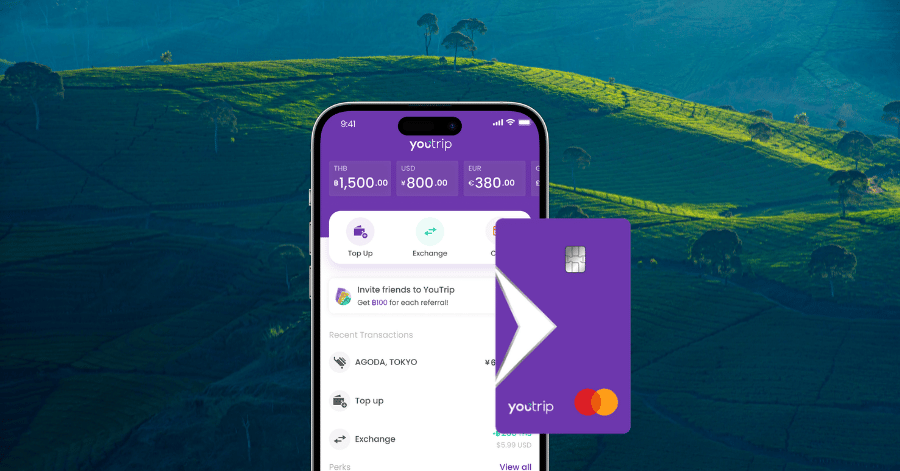
Withdraw rupiah from a bank ATM once you land. Changing money before you fly quietly costs you more. With YouTrip, your first S$400 of overseas ATM withdrawals each calendar month is free, then it’s a flat 2% after that, and the allowance resets on the 1st. Some Indonesian ATM operators add their own on-screen fee, so check the prompt before confirming.
Money changers don’t charge a visible fee. They bake a markup into the rate they quote you, typically a few percent on major currencies and wider on less-traded ones, which is why the ATM route wins.
For everything that does take plastic, tap the YouTrip card. There’s no foreign transaction fee, and every rupiah transaction converts from SGD at the Mastercard wholesale rate. A credit card will usually add 3.25% to 3.5% in FX charges on the same spend, which adds up fast across a weekend of mall meals and hotel bills.
Draw enough cash for a full highland day before you leave the city. ATMs thin out fast once you’re south of Ciwidey, and no crater gate takes a card.
For deeper detail, see our Indonesia ATM withdrawal guide and the best SGD to IDR rate guide.
FAQs
Yes, particularly if you’ve done Bali and Jakarta and want something cooler and less polished. You get an active volcano, a turquoise crater lake, tea country and a serious coffee scene within an hour of the city. The trade-off is that you can’t fly there directly from Singapore.
Three days is the sweet spot. One for the city, one for the Ciwidey craters to the south, and one for Lembang and Tangkuban Perahu to the north. Two days works if you pick one highland direction and skip the other.
Its cool highland climate, Dutch colonial architecture, volcanic craters like Kawah Putih and Tangkuban Perahu, factory-outlet shopping, and Sundanese street food such as batagor, siomay and seblak. It’s nicknamed Paris van Java.
Not as of August 2026. Bandung’s Husein Sastranegara Airport stopped taking commercial jets in October 2023, and its Singapore and Kuala Lumpur routes moved to Kertajati, two to three hours away. The airport is set to resume scheduled commercial flights from 17 September 2026, though announced routes so far are domestic.
No. Singapore passport holders get 30 days visa-free for tourism, non-extendable. You’ll need six months’ passport validity, proof of onward travel, and the free All Indonesia digital arrival card, submitted online within 72 hours before you arrive.
Day one: Braga Street, Gedung Sate, the Asian-African Museum and an afternoon at Saung Angklung Udjo. Day two: south to Kawah Putih, the Rengganis Suspension Bridge and the Rancabali tea plantations. Day three: north to Tangkuban Perahu, then Lembang for Dusun Bambu or the Floating Market.
Stay in the city and skip the highlands, because a single crater trip eats the whole day. Walk Braga Street and Jalan Asia Afrika in the morning, take in Gedung Sate and the Asian-African Museum, then catch the late-afternoon show at Saung Angklung Udjo. Finish with supper at Sudirman Street night market.
Yes, and it’s one of the easier Indonesian cities for it. Lembang is built for families, with Farmhouse, the Floating Market and Dusun Bambu all within a short drive of each other. Trans Studio covers a rainy afternoon indoors, and the audience-participation ending at Saung Angklung Udjo works well with children. Skip the 4 AM start for Tebing Keraton.
Cash for street food, crater tickets and transport, card for malls and hotels. Withdraw rupiah from a bank ATM on arrival with a no-foreign-fee card like YouTrip, and keep small notes for warungs and parking.
Selamat Jalan: Bandung Rewards the Detour
Bandung asks a little more of you than a direct flight, and it pays that back in cool air, crater views and food that costs almost nothing. Get the Jakarta connection sorted and the rest of the trip is easy.
Between crater entry fees, day-rate drivers and a week’s worth of cheap food, it’s the exchange rate that quietly decides how far the budget stretches.
Not a YouTrooper yet? Get a free YouTrip card + S$5 YouTrip credits with code YTBLOG5.
Then head over to our YouTrip Perks page for exclusive offers and promotions. Join our Telegram (@YouTripSG) and Community Group (@YouTripSquad) for travel tips, event invites and more.
Selamat jalan!
Related Articles:
Nusa Penida 2026: Ferry, Beaches & Is It Worth It?
How To Send Money To Indonesia From Singapore
YouTrip Exchange Rates: Everything You Need to Know