



Is Nusa Penida worth the hype, or just a hard day out?
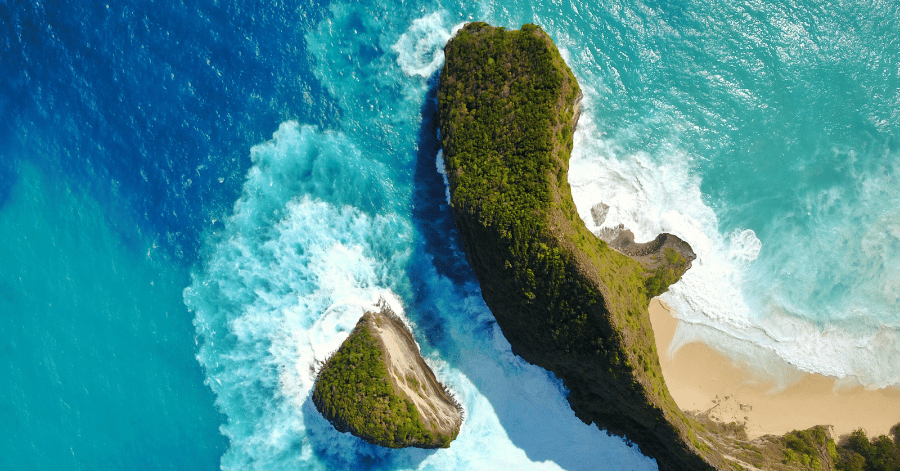
Short answer: it’s worth it, with caveats. Nusa Penida is the rugged island off Bali’s southeast coast that gave you the T-Rex cliff at Kelingking Beach and roughly half the Bali reels on your feed. The scenery genuinely lives up to the photos. What the photos leave out is the 30-minute boat crossing, the pot-holed roads, and the crowds at the famous viewpoints by mid-morning.
So this guide does the bit the postcards skip: how to get there from Bali, which beaches and viewpoints actually earn the bumpy drive, and whether to do it in a day or stay over. Plus how to handle money on an island where ATMs are scarce, and cash is king.
| Highlights | Details |
|---|---|
| Where | Nusa Penida, off Bali’s southeast coast (Klungkung Regency, Indonesia) |
| Getting there | Fast boat from Sanur, ~30–45 minutes each way |
| Best time to go | Apr–Oct (dry season); arrive early to beat the viewpoint crowds |
| How long you need | A long day trip covers the highlights; 2–3 nights to do it unhurried |
| Getting around | Private driver for the day, an organised tour, or a scooter if you ride well |
| Don’t miss | Kelingking Beach, Broken Beach, Diamond Beach, snorkelling at Manta Bay |
| Before you go | Pre-pay the 25,000 IDR (~S$2) island retribution fee online; it’s no longer sold on the dock |
| Pay smart | Tap YouTrip for 0% FX in rupiah; first S$400/month of ATM cash is free |
Nusa Penida At A Glance
| Experience | Best for | Rough cost | Time needed |
|---|---|---|---|
| Sanur fast boat (return) | Getting there | ~150,000–250,000 IDR (~S$11–18) each way | 30–45 min each way |
| West-coast loop | Kelingking, Broken Beach, Crystal Bay | Driver from ~700,000 IDR (~S$50)/day | Full day |
| East-coast loop | Diamond Beach, Atuh, Thousand Islands | Driver from ~700,000 IDR (~S$50)/day | Full day |
| Manta Bay snorkel tour | Swimming with manta rays | From ~250,000 IDR (~S$18) per person | Half day |
| Diamond Beach | Postcard white-sand cove | ~25,000 IDR (~S$2) entry | 1–2 hours |
| Scooter hire | Confident riders only | From ~70,000 IDR (~S$5)/day | All day |
Table Of Contents
- Is Nusa Penida Worth Visiting?
- How To Get To Nusa Penida From Bali
- How To Get Around Nusa Penida
- How Many Days Do You Need?
- Best Things To Do In Nusa Penida
- Where To Stay In Nusa Penida
- Is Nusa Penida Safe? What To Know Before You Go
- Nusa Penida vs Bali vs Nusa Lembongan
- What It Costs And Paying Like A Local
- FAQs
Is Nusa Penida Worth Visiting?
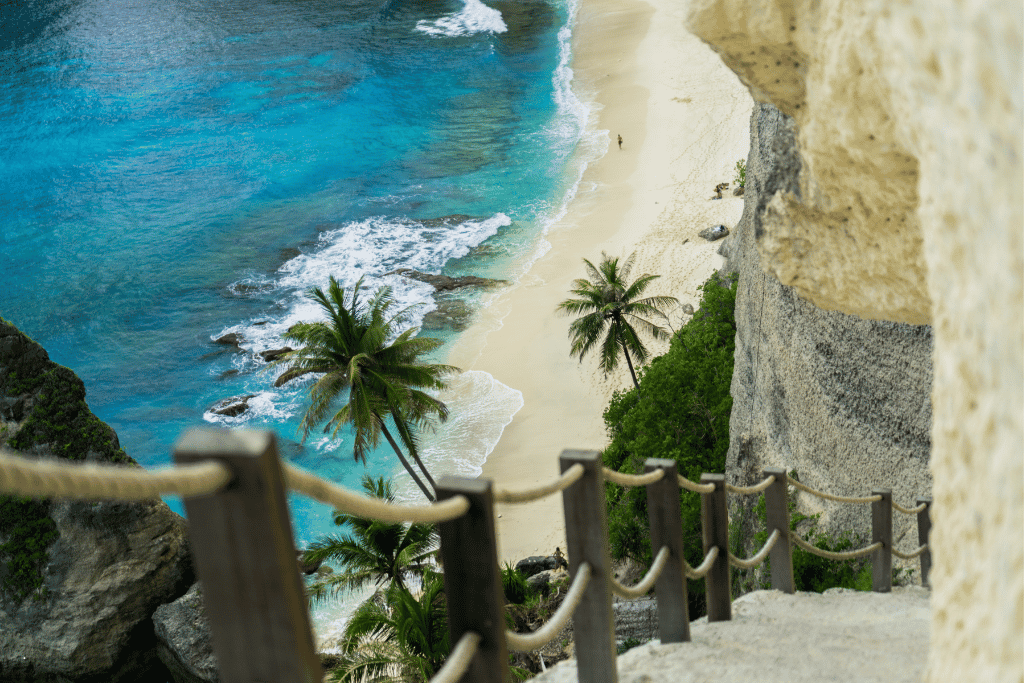
Yes, if you go in with the right expectations. Nusa Penida is raw and dramatic in a way mainland Bali mostly isn’t anymore: towering limestone cliffs, water in a blue you’ll struggle to describe, and beaches that feel properly remote. For scenery alone, it’s one of the best day-trips you can bolt onto a Bali week.
The honest flip side is that Penida is still rough around the edges. The roads are narrow and broken in patches, the marquee viewpoints get busy and queue-bound by late morning, and the boat ride can be choppy. None of that ruins the trip, but it does shape it. Start early, pick one side of the island per day, and you’ll get the version everyone raves about rather than the one people complain about.
It’s worth it most for travellers who like a bit of adventure with their views and don’t mind a bumpy ride to reach them. If your idea of a holiday is a flat, easy beach day with a cocktail in hand, mainland Bali or Nusa Lembongan will suit you better.
📖 Related Guide: Slotting Penida into a bigger trip? Our things to do in Bali guide maps the mainland highlights around your island days.
How To Get To Nusa Penida From Bali
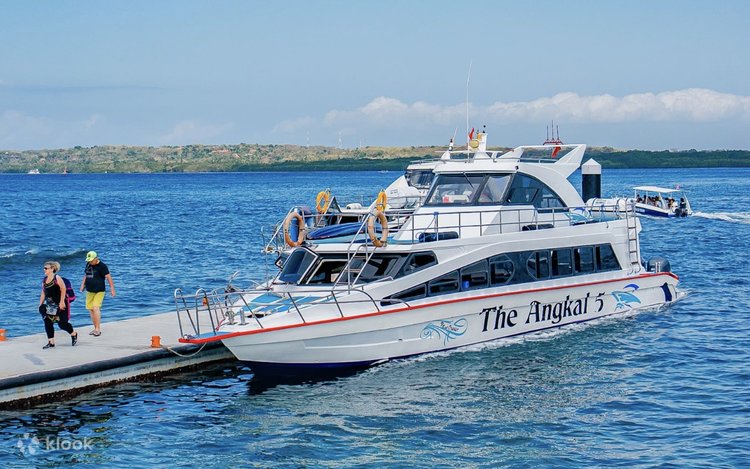
Image Credits: Klook
Nusa Penida is reached by fast boat, and almost everyone leaves from Sanur, on Bali’s southeast coast. The crossing takes roughly 30–45 minutes and costs around 150,000–250,000 IDR (~S$11–18) each way, with boats running through the day from early morning. Book a return with a set operator so you’re not stuck hunting for a seat back in the afternoon.
Sanur is the practical launch point because it’s close to the airport and south Bali. From Ngurah Rai Airport or the Kuta–Seminyak strip, it’s about a 20–40 minute drive to the harbour, traffic depending. From Ubud, budget around 60–90 minutes by car to Sanur before your boat, so an early start matters if you’re doing Penida as a day trip from there.
A few things smooth the day out. Buy the island retribution fee online before you sail (more on that below), aim for one of the first boats over, and don’t cut your return too fine. Boats are weather-dependent, and afternoon swells occasionally bunch up departures.
How To Get Around Nusa Penida
There’s no public transport on the island, and no taxis, Grab or Gojek either, so you sort transport on arrival. Three options, depending on how you travel.
- Private driver for the day — the easiest and most popular choice. Expect from around 700,000 IDR (~S$50) for a car and driver covering one loop (west or east). Split between four, it’s the relaxed, no-stress pick.
- Organised tour — book a west-coast or east-coast highlights tour, often bundled with the boat transfer and snorkelling. Good if you want zero planning, though you move on the group’s clock.
- Scooter hire — from about 70,000 IDR (~S$5) a day. Cheapest and most flexible, but only if you’re a confident rider. Penida’s roads are steep, broken in places and busy with tour traffic, so this isn’t the island to learn on.
Whichever you pick, the roads mean things take longer than the map suggests. Crossing from the west coast to the east beaches can take an hour or more. Distances are short, but the going is slow, which is exactly why you stick to one side of the island per day.
How Many Days Do You Need?
You can see Nusa Penida’s headline sights in one full day, and plenty of people do exactly that as a day trip from Bali. The catch is that a single day usually means picking the west loop or the east loop, plus a fair bit of time on boats and bumpy roads. It’s a long, early start.
Two to three nights is the sweet spot if you want the island unhurried. Stay over, and you can do the west coast one day, the east coast the next, fit in a snorkel trip, and catch the viewpoints early before the day-trippers arrive on the morning boats. The island is quietest and best at golden hour, which day-trippers never see.
The quick shape of it:
- One day: west loop (Kelingking, Broken Beach, Angel’s Billabong, Crystal Bay) or east loop (Diamond Beach, Atuh, Thousand Islands). Pick one.
- Two days: west loop plus east loop, at a comfortable pace.
- Three days: both loops plus a Manta Bay snorkel or dive day, with time to actually swim and slow down.
📖 Related Guide: Building the wider trip? Our Bali itinerary guide shows where an island day or two fits best.
Best Things To Do In Nusa Penida
The island’s sights split roughly by coast. The west holds the famous cliffs and the manta snorkelling; the east holds the white-sand coves and island viewpoints; and a cluster of quieter southwest spots reward anyone willing to hike. Knowing which is which is how you plan a sane day instead of criss-crossing the island on bad roads.
Kelingking Beach
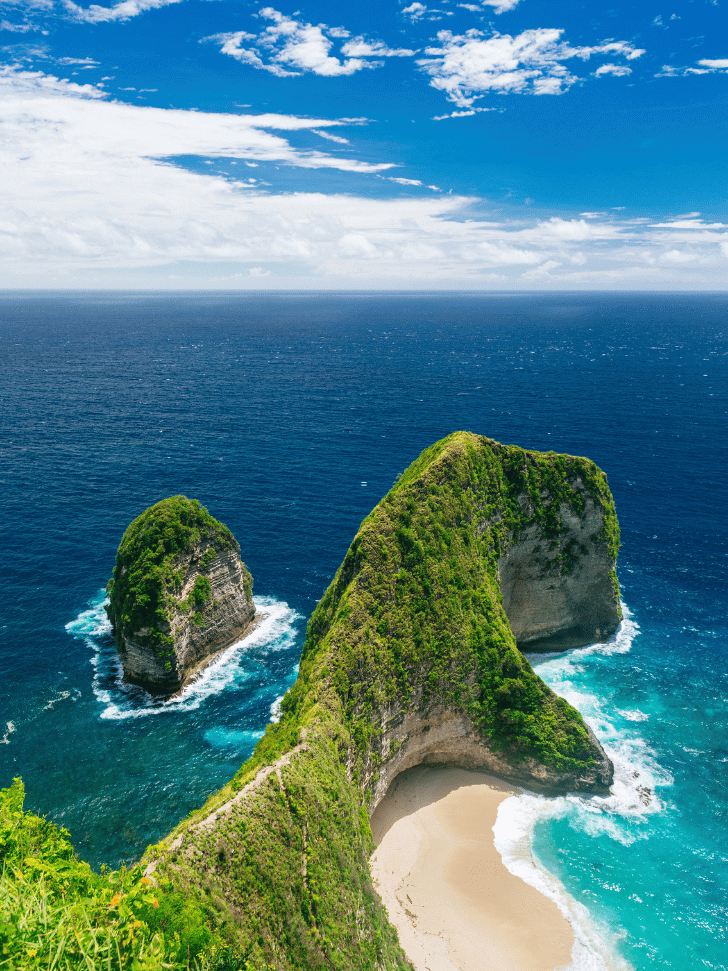
This is the one you’ve seen: a headland shaped uncannily like a T-Rex, with a white-sand cove far below and water in an impossible blue. The viewpoint up top is the easy, jaw-dropping part.
The climb down is another matter. It’s steep, unshaded and tiring, edging down the cliff on rickety timber steps and railings. From experience, though, the descent isn’t the worst of it.
It’s the climb back up that gets you, in full heat, stopping every few minutes with jelly legs and nowhere to hide from the sun. Plenty of people happily take in the view from the top and skip the trek instead. Either way, come early, because this is the island’s busiest spot by late morning.
Broken Beach (Pasih Uug)
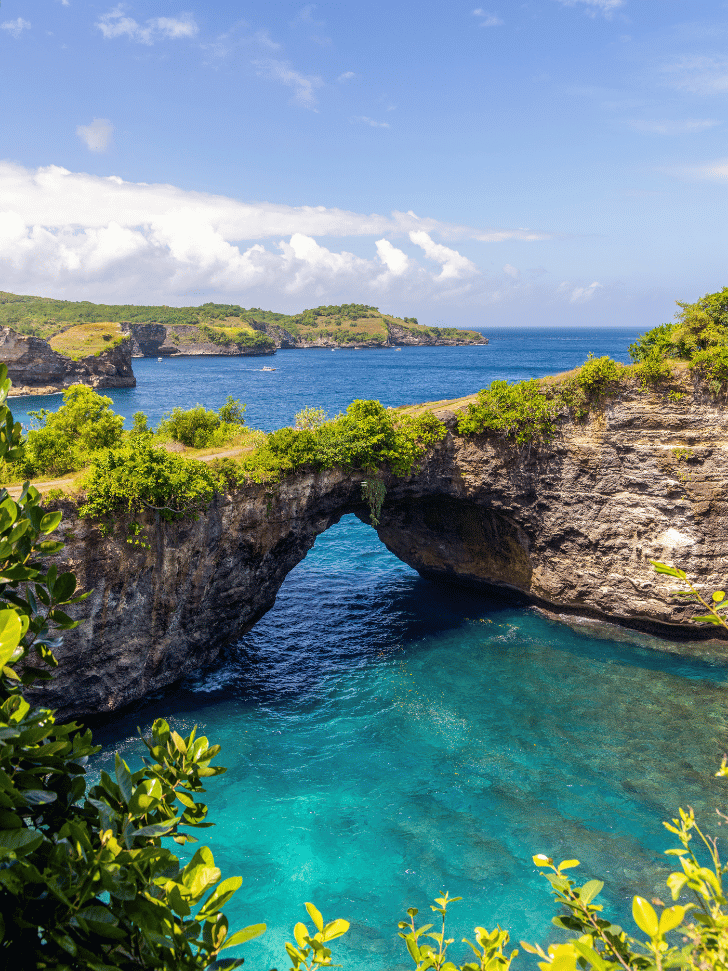
A near-perfect circular cove ringed by cliffs, with a natural rock archway at the base that lets the sea wash in and out like a giant flooded sinkhole. You follow a flat path around the rim rather than climb down, so it’s an easy 10-minute loop and a welcome breather after Kelingking.
The light is best mid-morning, when it hits the water trapped inside the cove. It sits right beside Angel’s Billabong, so the two are always done together.
Angel’s Billabong
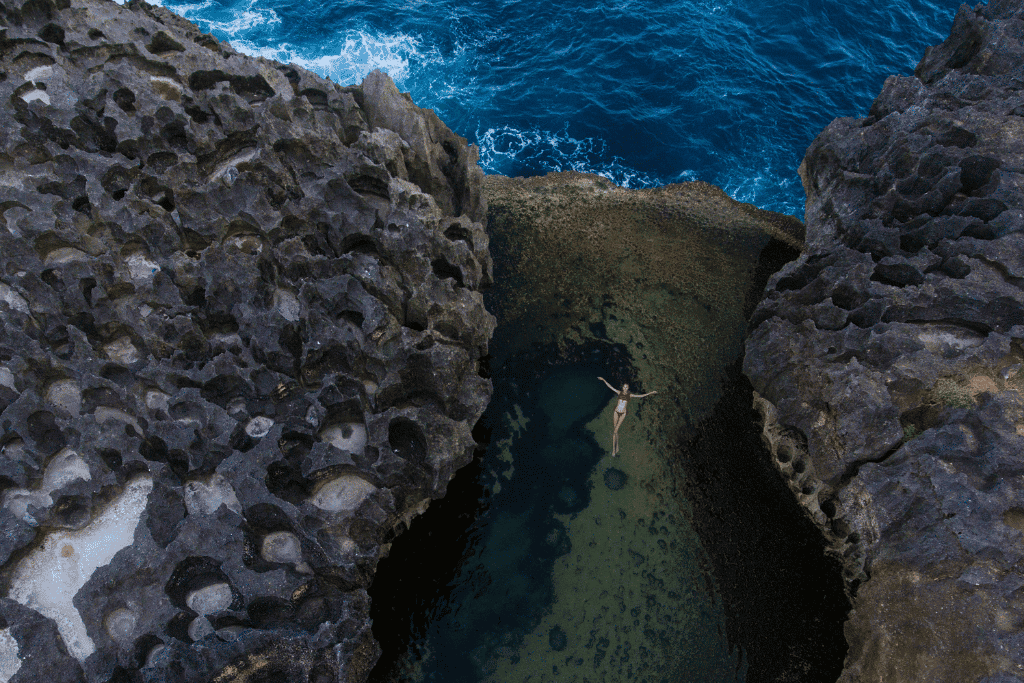
A natural infinity pool carved into the flat rock shelf beside Broken Beach, where clear water collects and glows emerald at low tide. Time it right and it’s one of the island’s prettiest spots for a careful dip and a photo.
But the swimming here turns dangerous fast when swells push over the edge, and people have been swept off the rocks into the sea. Go at low tide, check the sea state first, and stay out if the waves are washing over the lip.
Crystal Bay
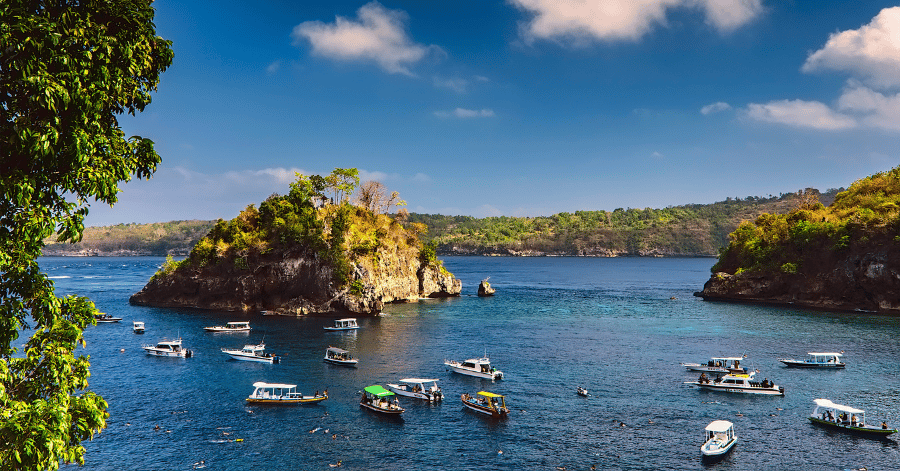
The west coast’s easygoing swimming and snorkelling beach, with calmer, clear water and actual sand to sit on, backed by palms and a few warungs. It’s the island’s best sunset spot and a gentle counterpoint to the cliff-edge viewpoints, with a small parking fee to reach it.
It’s also the main jumping-off point for snorkel boats and for divers hoping to spot mola mola (giant sunfish) in season, roughly July to October. If you just want one beach where you can actually relax and swim, this is the one.
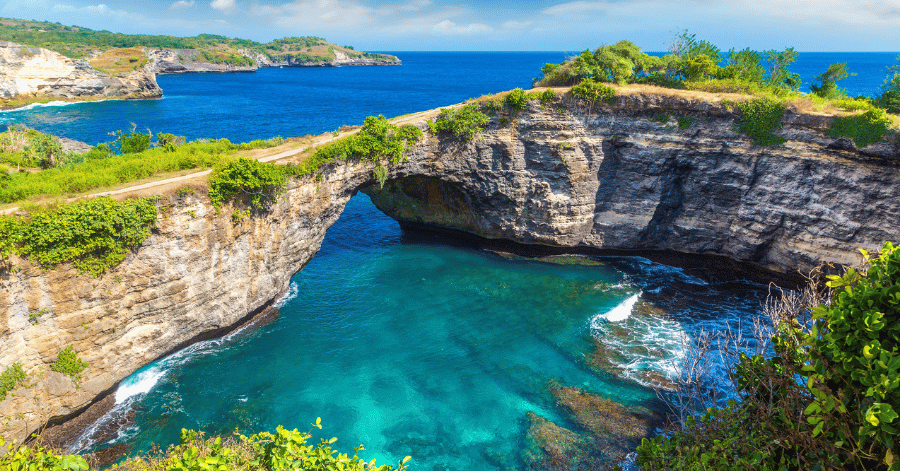
Banah Cliff
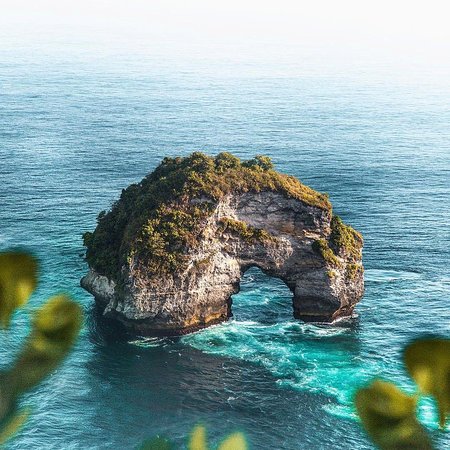
Image Credits: Tripadvisor
A quieter clifftop lookout on the southwest coast, where a natural rock arch and a lone sea stack rise out of deep blue water. There’s no climb involved here, just park up and walk to the edge. That makes it an easy win if you’re already out west and want big coastal views without the Kelingking crowds. The access road is rough like most of the island, so build in time for the bumpy drive.
Diamond Beach
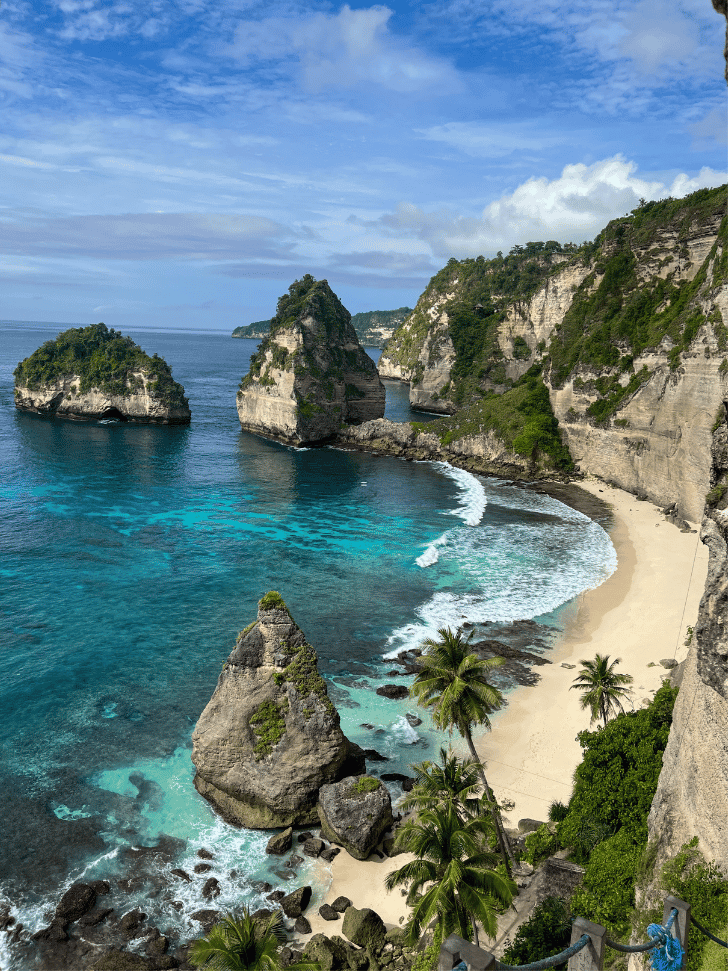
The east coast’s showstopper: a white-sand cove framed by tall limestone pillars, reached by a carved stairway of over 160 steps cut into the cliff. It’s steep but far better maintained than it used to be, with a rope to help on the final stretch down to the sand. Allow 15 to 20 minutes each way.
Entry is around 25,000 IDR (~S$2). The water is often too rough to swim, so for most people it’s about the descent, the photos and the view rather than a proper dip. It faces east, so come early for the light, then pair it with the neighbouring Atuh Beach right alongside.
Atuh Beach
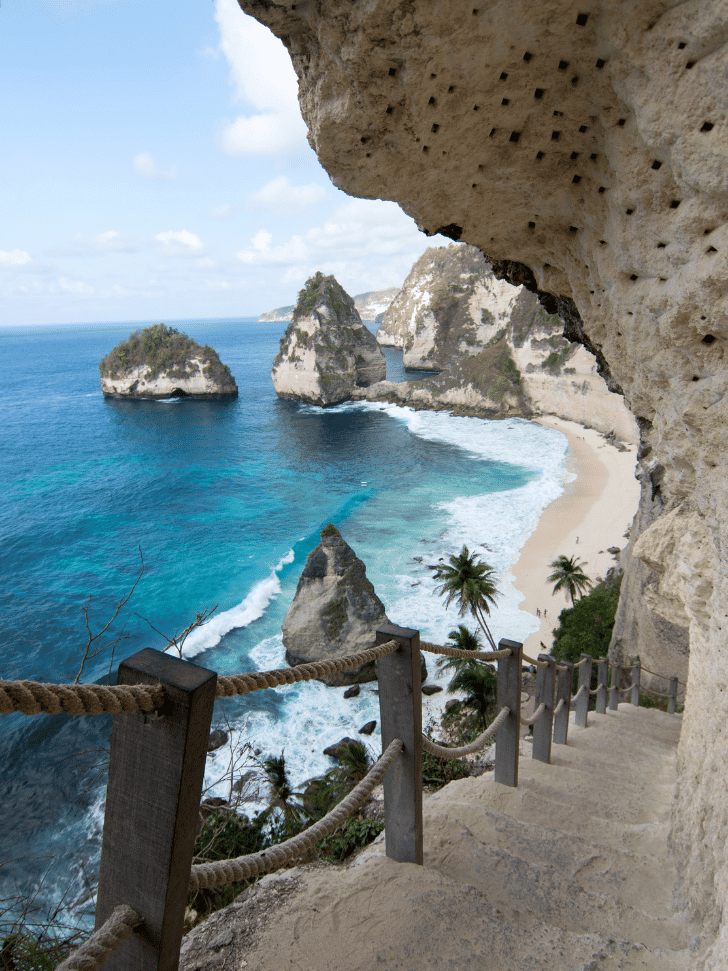
Diamond Beach’s quieter twin, tucked into the same dramatic bay beneath towering cliffs, with rock pinnacles standing offshore. There’s more room to actually swim here on calmer days, plus a few simple warungs up top for a coconut with the view.
The walk down is more manageable than Diamond’s stairway, so this is the easier of the two if the climb is putting you off. Doing both back-to-back is the obvious move once you’ve made the trip east.
Suwehan Beach
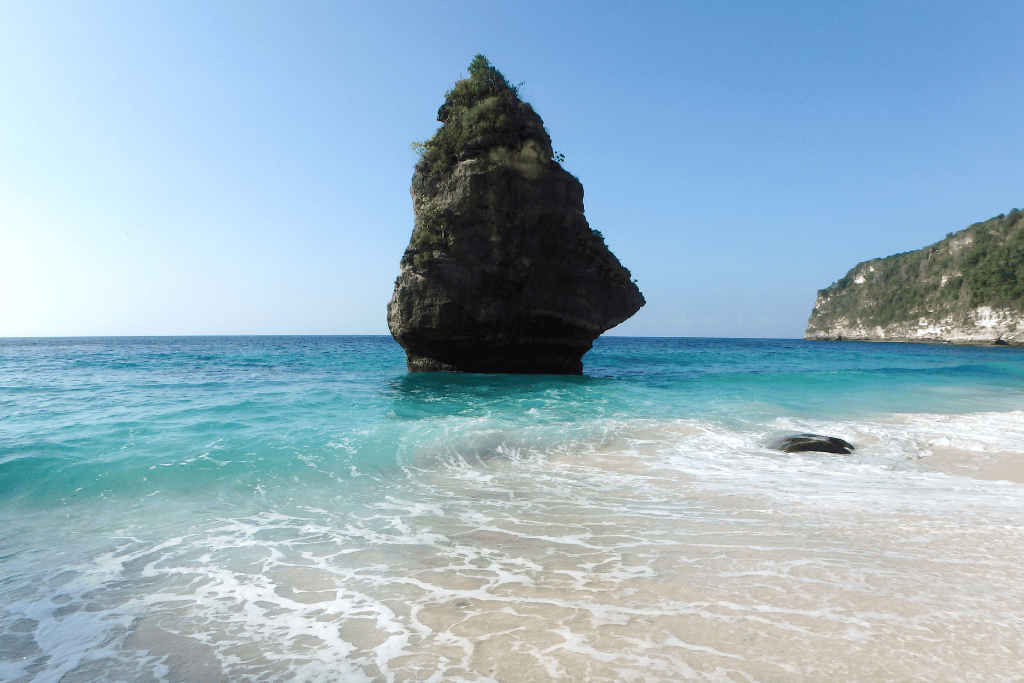
One of Penida’s most remote white-sand beaches, on the southeast coast, marked by a distinctive pointed “Love Rock” standing just offshore. Getting down means a long, steep stairway and a final scramble, and the climb back up is a proper workout in the heat.
Go for the near-empty sand and the photos rather than easy swimming, and only attempt it in dry, stable conditions. This one’s for travellers who like earning their beach.
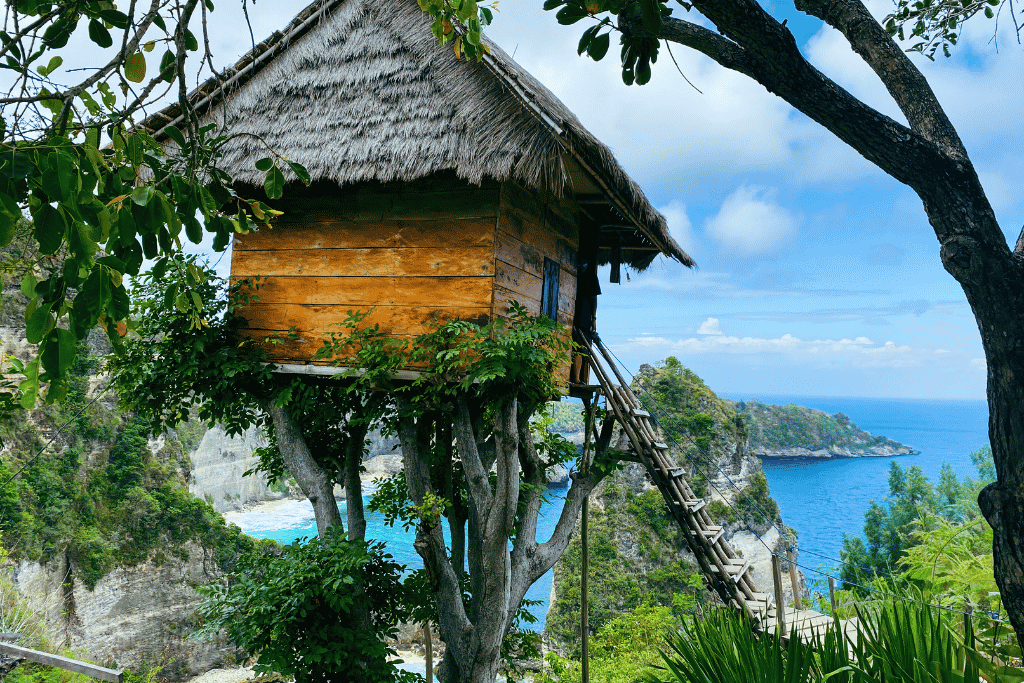
Thousand Islands Viewpoint and the Tree House

Image Credits: 630311791 on rednote
A lookout over a cluster of jagged green islets scattered along the east coast, with the much-photographed Rumah Pohon tree house perched right on the cliff edge nearby. It faces east, so it’s a stellar sunrise spot if you’re staying over and can beat the day boats.
There’s a small fee from around 10,000 IDR (~S$1) to reach the viewpoint, plus a separate paid, timed slot if you want the photo standing on the tree house itself. The queue moves quickly because each turn is kept short, so it’s worth the wait for the shot.
Goa Giri Putri Cave Temple
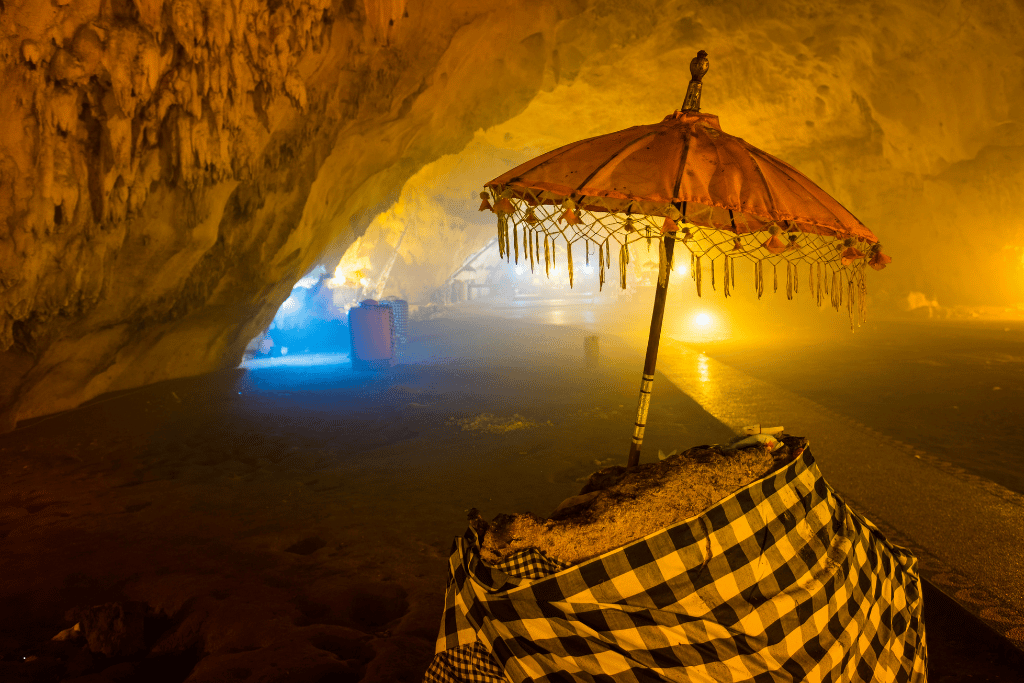
On the island’s northeast side, Goa Giri Putri is a working Hindu temple hidden inside a vast limestone cave. You squeeze through a narrow crevice in the rock barely wider than your shoulders. It opens into a huge cavern running a few hundred metres deep, cool and dim and a real surprise after the tight entrance.
There’s no fixed fee, though a donation of around 50,000 IDR (~S$4) is usual, and a sarong is required at the door. It’s a quieter, more cultural stop between the viewpoints, and a good one when you need a break from cliffs and stairs.
Teletubbies Hills
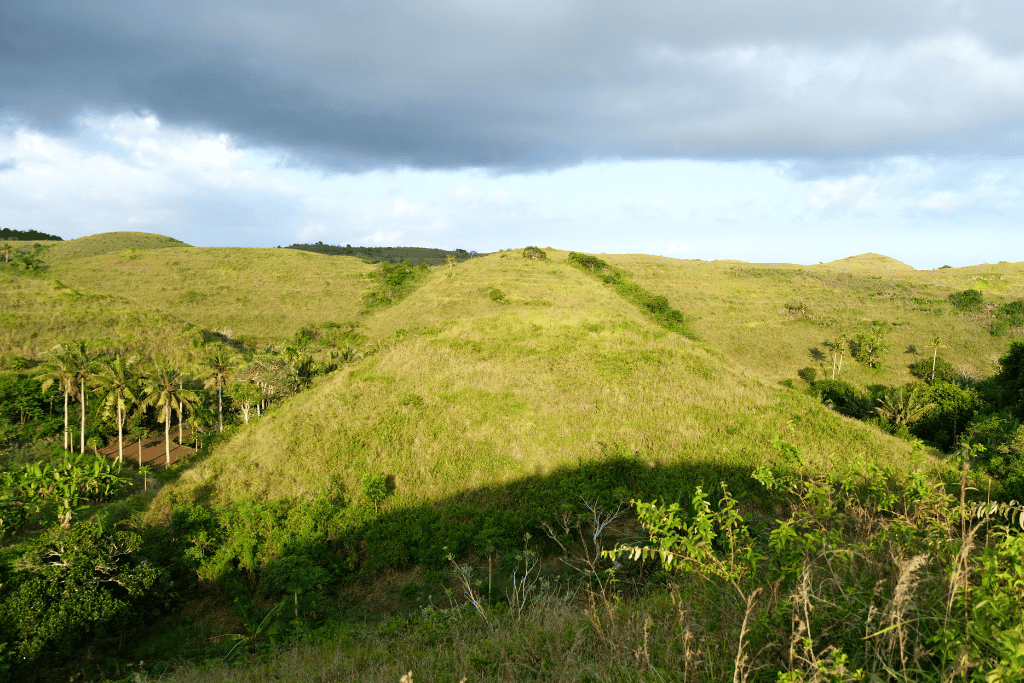
Officially Bukit Teletubbies, these rolling green mounds on the southeast of the island earned their nickname from the children’s show. They’re at their most photogenic in and just after the wet season, when the grass is lush; by the dry months they fade to a scrubby brown.
It’s an easy, low-key detour with wide-open views and no climb, free to visit, and a nice change of pace from all the cliffs. Pair it with Goa Giri Putri or the east-coast beaches on the same loop.
Snorkelling at Manta Bay
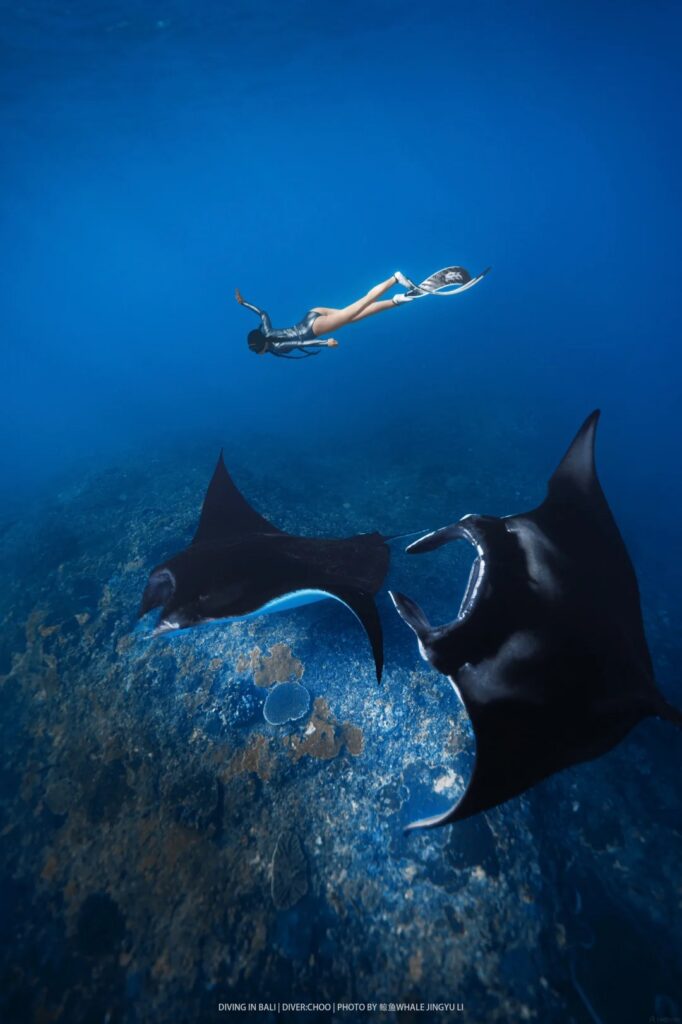
Image Credits: Whale_jingyu on rednote
Manta Bay (or Manta Point) is where boat tours stop to snorkel with manta rays, and floating beside one of these giants is a genuine bucket-list moment. Sightings aren’t guaranteed, but the odds are good (operators often cite around an 80% success rate in decent conditions). The water here gets choppy, so confirm the sea state with your operator and skip it if you’re prone to seasickness.
Most shared snorkel tours run a four-stop circuit, pairing Manta Bay with Crystal Bay, Gamat Bay and Toyapakeh for calmer reef snorkelling. They usually leave early morning and cost from about 250,000 IDR (~S$18) per person in a shared boat.
Diving Nusa Penida
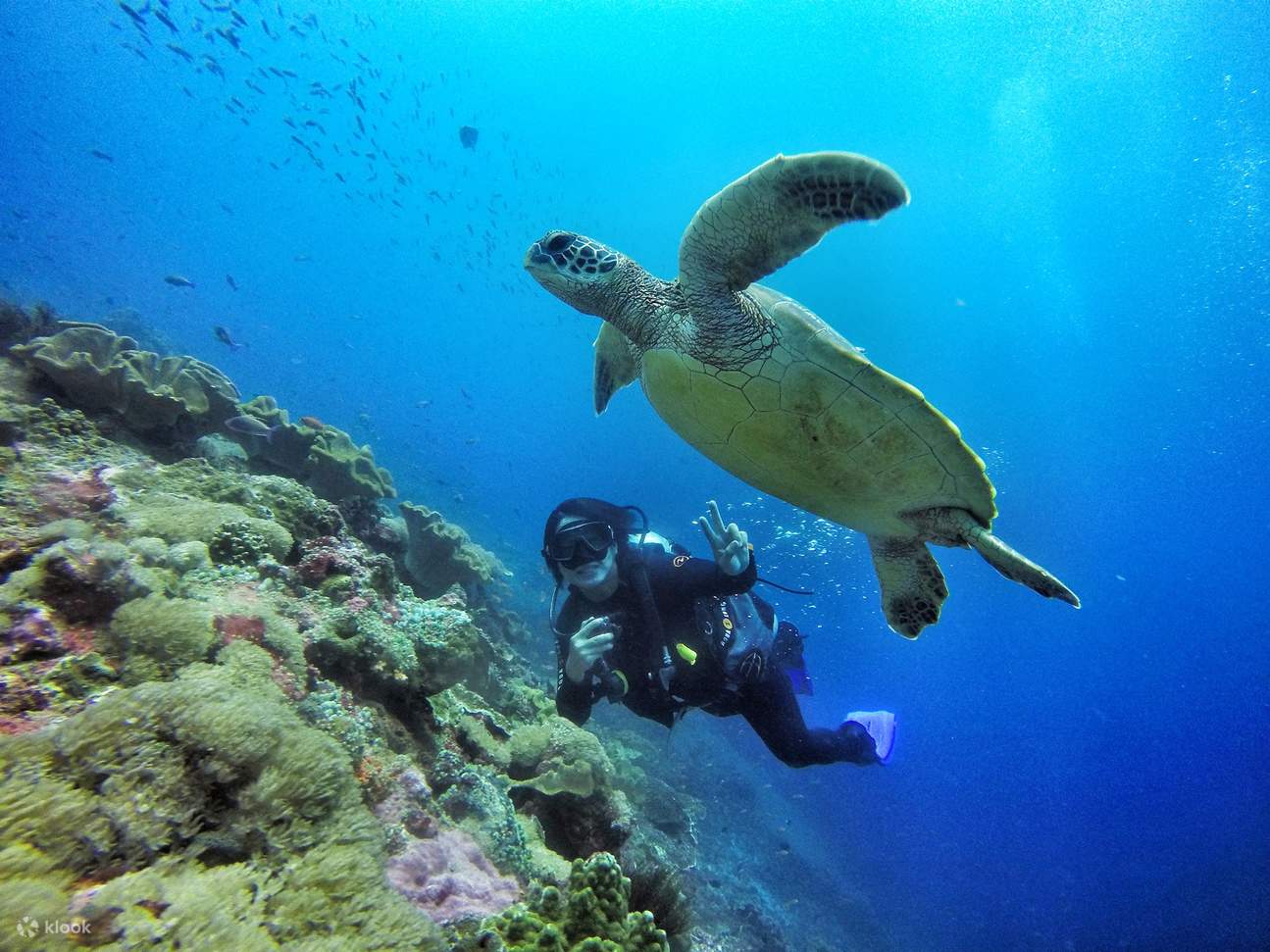
Image Credits: Klook
The waters around Penida are some of Bali’s best for diving, known for manta rays year-round. In the cooler season (roughly July to October), divers also come for the rare mola mola sunfish at sites like Crystal Bay. Currents here can be strong, so most dive operators want you reasonably experienced, or they’ll match the site to your level.
Peguyangan Waterfall (Closed For Now)
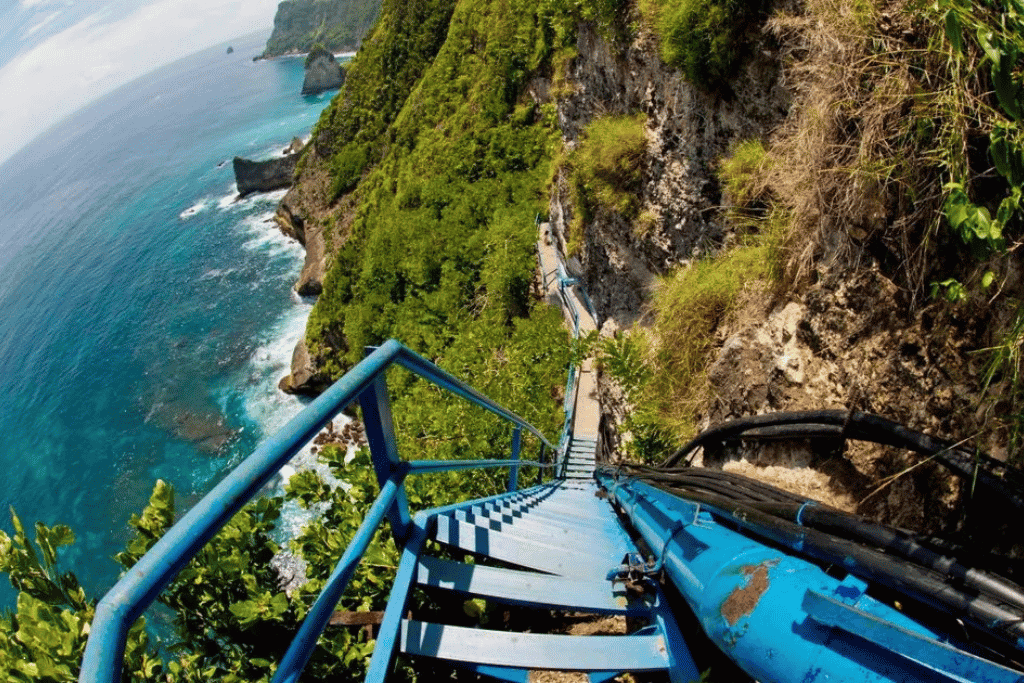
Image Credits: Visit Bali
Worth flagging, because plenty of guides still list it as open. Peguyangan’s famous blue staircase and the clifftop temple at the bottom have been shut since a January 2025 landslide damaged the rock ledge. There’s been no safe access since, and no official reopening date as of 2026. Check locally in case that changes. For now, Tembeling and Seganing are the accessible picks for an off-the-loop adventure.
Tembeling Forest and Natural Pool
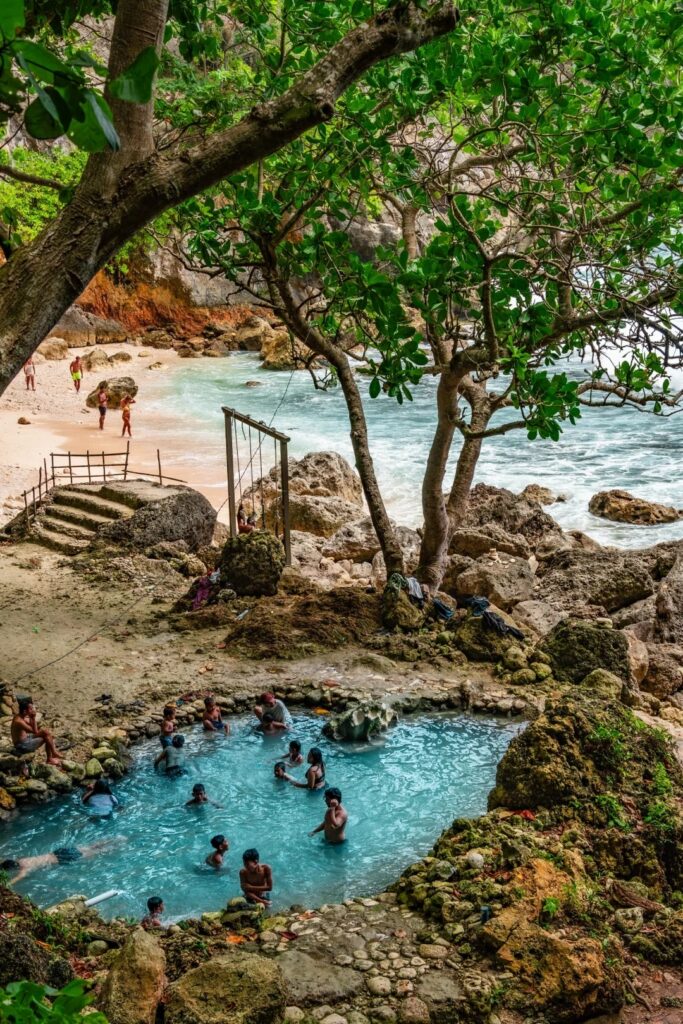
Image Credits: 9568320735 on rednote
In the island’s southwest, Tembeling is a stretch of untouched jungle that drops down to a natural freshwater pool and a pair of secluded seaside spots. The track in is steep and rough, so most people pay a local rider a small fee to run them down and back up by motorbike rather than walk it.
The reward is a quiet swim in the spring-fed pool and a slice of the island the tour buses skip entirely. Bring cash and go earlier in the day, before the light drops in the gorge.
Seganing Waterfall
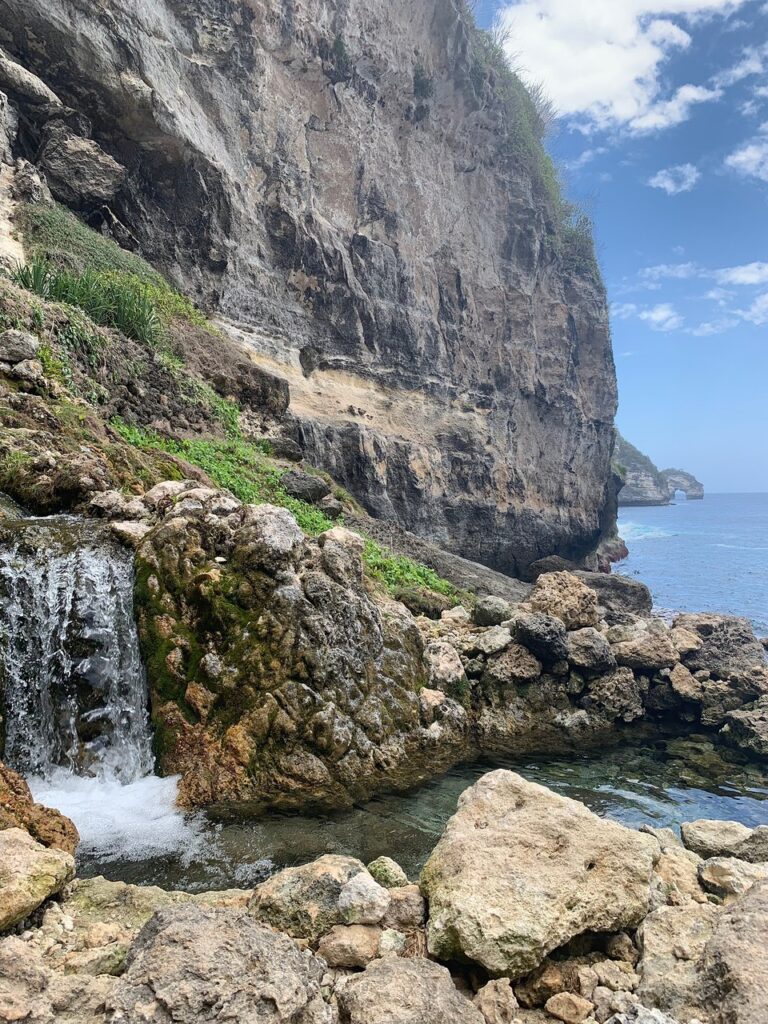
Image Credits: Bali.com
Seganing (sometimes called Sebuluh) tumbles down the southwest cliffs into the sea, with a small natural pool at the base right where the freshwater meets the waves. The way down is a steep, uneven path with only a partial bamboo railing between you and the drop, so it sits firmly in adventurous-hike territory.
Those who make it get one of Penida’s most secluded swim spots, with barely another soul around. It’s a modest waterfall rather than a thundering one, so come for the setting and the solitude, not the scale.
Where To Stay In Nusa Penida
Where you sleep shapes your days here, because the rough roads make crossing the island slow. Three bases cover most trips:
- Toya Pakeh, Ped and Sampalan (north coast) — the practical default. This stretch near the main harbours has the most restaurants, shops and ATMs, and puts both loops within reach. Ped leans backpacker and lively; Sampalan is the island’s main town.
- Crystal Bay (west) — the pick for a beachy base, near the manta snorkelling and Kelingking, with good swimming and the island’s best sunsets. Quieter, but thinner on dining and a longer haul to the east beaches.
- The Atuh and Diamond Beach side (east) — remote and scenic, ideal if you want the east coast at sunrise before the day-trippers. The trade-off is a long, bumpy drive from the boats and few amenities nearby.
Roughly, budget guesthouses and homestays go from around S$15–45 a night, mid-range bungalows and pool villas run about S$55–170, and cliffside villas with infinity pools start near S$150 and climb well past S$350. ⚠️ Rates swing hard with season, so check live prices before booking.
Note: Infrastructure is still developing, so power and water can be less reliable than on the mainland, and rooms thin out fast in peak season, so book ahead. And if early viewpoint starts are the plan, stay central rather than far out east or west.
Prefer not to stay over at all? Doing Penida as a day trip from mainland Bali or quieter Nusa Lembongan is a perfectly good call.
Is Nusa Penida Safe? What To Know Before You Go
Nusa Penida is safe to visit, and serious crime against tourists is rare. The real risks here are about terrain and water, not safety in the usual sense, so a little caution goes a long way.
- The roads are the biggest one. They’re narrow, steep and broken in patches, with heavy tour traffic. If you’re not a confident scooter rider, hire a driver. Scooter spills are the most common way visitors get hurt here.
- The viewpoint climbs at Kelingking, Diamond Beach and Suwehan are steep, unshaded and tiring. Wear proper shoes, carry water, and there’s no shame in enjoying the famous ones from the top.
- The water can be deceptively dangerous. Angel’s Billabong and some coves have strong swells and currents; people have been swept off rocks. Only swim where it’s clearly calm, and heed local warnings.
- The boat crossing gets choppy in the afternoon. If you’re prone to seasickness, take the earlier, calmer boats and bring tablets.
Travel insurance that actually covers scooter riding and adventure activities is worth having for a trip like this, since a lot of standard policies exclude motorbikes.
📖 Related Guide: Sorting cover before you fly? Our travel insurance Singapore guide breaks down what to look for, including the scooter clause.
Nusa Penida vs Bali vs Nusa Lembongan
These three get muddled constantly, so here’s the quick untangle.
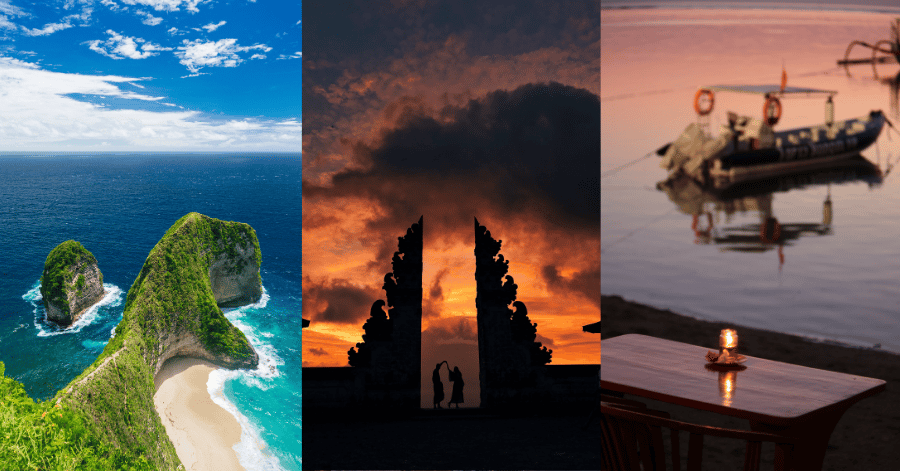
- Nusa Penida is the biggest and most dramatic of the three Nusa islands: epic cliffs, rough roads, big day-out energy.
- Nusa Lembongan is the smaller, mellower neighbour, with easygoing beaches, beach clubs and a more relaxed pace, linked to tiny Nusa Ceningan by a yellow bridge.
- Bali itself is the developed mainland with the temples, rice terraces, nightlife and the bulk of the hotels.
So which do you pick? It’s not really either-or. Most people base themselves on Bali and treat Penida as a one-day adventure for the headline scenery. If you want a calmer island stay with less driving, Lembongan is the easier, gentler choice. Penida wins purely on drama; Lembongan wins on ease.
The good news for a Bali trip from Singapore: you don’t have to choose. Give Penida a long day for the cliffs, and either add a Lembongan night or keep the rest of your trip on the mainland.
📖 Related Guide: Timing the wider trip? Our best time to visit Bali guide maps the weather and crowds across the year, islands included.
What It Costs And Paying Like A Local
Nusa Penida is cheap once you’re there, but it runs heavily on cash. ATMs are scarce and sometimes empty, card acceptance is patchy outside the nicer villas and tour operators, and entry fees, drivers, scooters and warungs all want rupiah in hand. The smart move is to sort cash and cards before you sail.
Here’s where the money goes on a typical day:
| What | Rough cost |
|---|---|
| Sanur fast boat (each way) | 150,000–250,000 IDR (~S$11–18) |
| Island retribution fee (per adult) | 25,000 IDR (~S$2), pre-paid online |
| Private driver for the day | from ~700,000 IDR (~S$50) |
| Scooter hire | from ~70,000 IDR (~S$5)/day |
| Beach/viewpoint entry fees | ~10,000–25,000 IDR (~S$1–2) each |
| Manta Bay snorkel tour | from ~250,000 IDR (~S$18) per person |
One 2026 change to note: the island’s tourist retribution fee of 25,000 IDR (~S$2) per adult must now be bought online before you arrive, rather than paid in cash on the dock. The online-only system is new (rolled out early 2026), so confirm the current process before you sail. This is separate from Bali’s own 150,000 IDR (~S$11) tourist levy, paid once per visit via the official Love Bali app.
On the money side, the same two rules that save you on mainland Bali apply on Penida:
For card spend, tap your YouTrip card wherever Mastercard is accepted (the better villas, dive shops and tour operators) and you’ll pay in rupiah at the Mastercard wholesale rate with 0% FX, instead of a credit card quietly adding 3–3.5% on every overseas swipe. Here’s how YouTrip’s exchange rates work if you want the mechanics.
For cash, withdraw rupiah from an ATM in Sanur or south Bali before you board, since on-island machines are unreliable. Your first S$400 of overseas ATM withdrawals each calendar month is free with YouTrip, then a flat 2%. Decline the “convert to SGD” option if a machine offers it, and skip the airport money changer, which bakes a markup into the rate.
👉 Bottom line: carry enough rupiah cash for the island before you leave Bali, tap YouTrip where cards are taken, and don’t rely on finding a working ATM on Penida.
📖 Related Guide: Budgeting the rupiah? Our SGD to IDR rate guide and Indonesia ATM withdrawal guide cover the day’s cash before you go.
FAQs
Yes, for the scenery, as long as you expect a rugged day out rather than an easy beach holiday. The cliffs and beaches really do match the photos, but the roads are rough and the famous viewpoints get crowded by late morning. Start early, pick one side of the island per day, and it lives up to the hype.
The fast boat from Sanur takes about 30–45 minutes each way, with departures through the day from early morning. Tickets run roughly 150,000–250,000 IDR (~S$11–18) each way. Book a return with a set operator so you have a guaranteed seat back.
One full day covers the headline sights if you pick either the west or east loop. Two to three nights lets you do both coasts, fit in a snorkel trip, and catch the viewpoints early before the day-trippers arrive, which is when the island is at its best.
Yes. Crime against visitors is rare; the real risks are the steep broken roads, the tiring cliff climbs, and strong currents at spots like Angel’s Billabong. Hire a driver unless you’re a confident scooter rider, only swim where it’s clearly calm, and take travel insurance that covers scooters.
Avoid renting a scooter if you’re not an experienced rider, swimming at Angel’s Billabong when swells are washing over the rocks, and leaving the island retribution fee until you arrive (it’s online-only now). Don’t try to cram both the west and east loops into a single day, and don’t rely on finding a working ATM on the island.
It’s not better or worse, just different. Nusa Penida wins on dramatic, wild scenery, while mainland Bali has the temples, rice terraces, dining and easy beaches. Most travellers base themselves on Bali and visit Penida as a day trip for the cliffs, which gets you the best of both.
Yes. The island has guesthouses, homestays and a growing crop of cliffside villas, mostly clustered near the harbours on the northwest coast. Infrastructure is still developing, so book ahead, and stay central if you want early starts at the viewpoints.
Yes, anywhere Mastercard is accepted, such as the better villas, dive shops and tour operators, charging in rupiah at the wholesale rate with 0% FX. The island runs mostly on cash, though, so withdraw rupiah before you sail, free on your first S$400 each month with YouTrip, then 2%.
Worth The Bumpy Ride
Catch the early boat, give one coast a full day, and let YouTrip handle the rupiah. Do that, and Nusa Penida delivers every cliff-edge view your feed promised, minus the day-tripper crush.
Not a YouTrooper yet? Singapore’s go-to multi-currency wallet helps you save with great FX rates and zero fees. Skip the money changer and get a free YouTrip card + S$5 YouTrip credits with code YTBLOG5.
Then head over to our YouTrip Perks page for exclusive travel offers, and join our Telegram (@YouTripSG) and Community Group (@YouTripSquad) for tips, deals and event invites.