



TL;DR: December to April for postcard views, May to October for cheaper deals
Nearly every guide tells you the same thing: go to the Maldives in the dry season and skip the wet one. That’s not wrong, but it skips the part that actually decides your trip. The Maldives bills you in US dollars, the “quiet” months can mean paying half the price, and a rainy week here still gives you warm seas and empty beaches. This guide walks through how each month really feels, what it costs, and when the cheap season is a smart move rather than a gamble.
| Quick answer | |
|---|---|
| Best overall | December to April (dry, calm seas, clear water) |
| Cheapest | June to October (green season, lowest resort rates) |
| Best for diving and snorkelling | December to April for visibility; May to November for manta rays |
| Best for honeymoons | December to April, outside the SG school-holiday peak |
| Worst month for rain | The June to October window, with September among the wettest |
| How long to stay | 4 to 7 nights on one or two islands |
Temperature and rainfall figures are long-term averages. Weather shifts year to year, so check the forecast before you book.
Table of Contents
- When Is the Best Time to Visit the Maldives?
- Maldives Weather Month by Month
- The Best and Worst Months to Visit the Maldives
- What Is the Cheapest Month to Visit the Maldives?
- Which Side of the Maldives Is Better: North or South?
- Best Time for Diving, Snorkelling and Marine Life
- Best Time for Honeymoons and Families
- Getting There From Singapore and Paying Once You Land
- Pairing the Maldives With Sri Lanka, Dubai or Bali
- FAQs
- Ready When You Are
When Is the Best Time to Visit the Maldives?
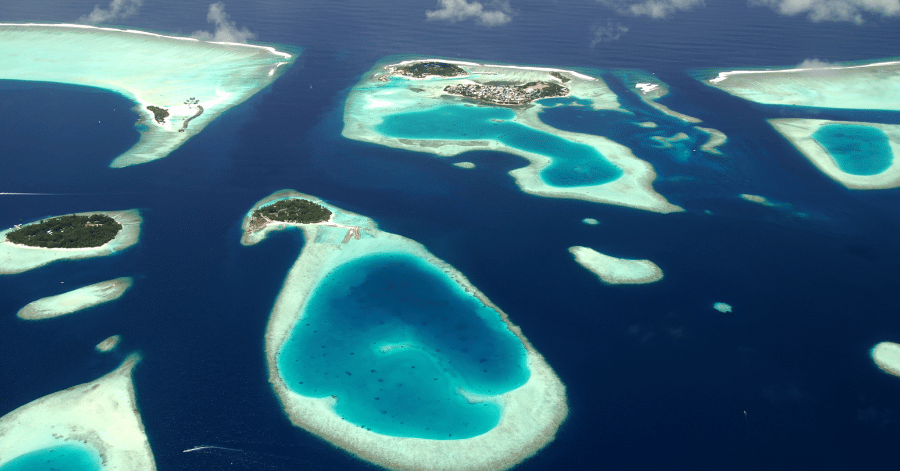
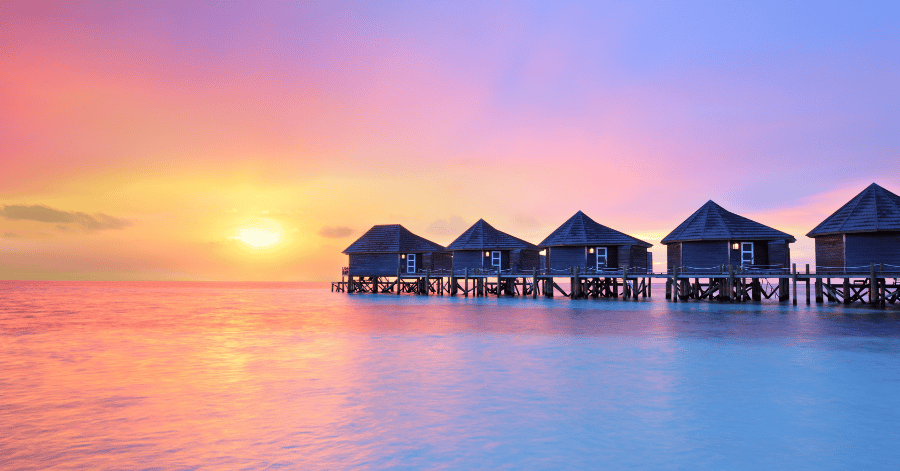
The best time to visit the Maldives is December to April, the dry season, when the rain clears out and the lagoons settle into the flat, glass-clear blue you’ve seen on every postcard. Skies stay open, sunsets land without a cloud in the way, and visibility underwater stretches for tens of metres. If you only get one shot at the trip, this is the safe bet.
The Maldives runs on two monsoons rather than four seasons.
- The dry north-east monsoon, known locally as iruvai, runs roughly December to April and brings the calm, sunny weather.
- The wet south-west monsoon, hulhangu, runs roughly May to November, with more rain, more wind and choppier seas.
Temperatures barely move all year, with highs around 30 to 31°C by day and lows around 25 to 26°C at night. What changes isn’t the heat, it’s the water and the sky.
One quirk to sort out up front: the season dates online are a mess. Some sites say the dry season is November to April, others December to April, and a few even flip the whole thing around. This guide treats December to April as dry and May to November as wet, which lines up with how the monsoons actually work. If you see conflicting dates elsewhere, that’s why.
📖 Related Guide: Planning your whole year of trips around the weather? Our best time to visit Japan guide breaks down another bucket-list favourite month by month.
Maldives Weather Month by Month
Weather in the Maldives is less about temperature and more about rain, wind and how clear the water is. The table below covers the whole year, followed by a season-by-season breakdown of what to actually expect.
| Month | Avg temp | Rain | Sea and conditions | Crowds | Price band |
|---|---|---|---|---|---|
| January | ~28°C | Low | Calm, clear water | High | $$$ |
| February | ~28°C | Low | Calm, best visibility | High | $$$ |
| March | ~29°C | Low | Calm, warm, clear | High | $$$ |
| April | ~30°C | Low to moderate | Calm but humid, short showers late | High | $$$ |
| May | ~29°C | Moderate | Wetter, greener, quieter | Medium | $$ |
| June | ~28°C | High | Breezy, good for surf | Low | $ |
| July | ~28°C | High | Mixed sun and rain, lively seas | Low to medium | $ |
| August | ~28°C | High | Tropical showers, fewer crowds | Medium | $$ |
| September | ~28°C | High | Among the wettest, rougher seas | Low | $ |
| October | ~28°C | Moderate to high | Rain easing, water clearing | Low | $ |
| November | ~28°C | Moderate | Dry season returning, calmer | Medium | $$ |
| December | ~28°C | Low | Clear and festive, peak demand | Very high | $$$$ |
Price bands are indicative only and swing hugely by resort and how far ahead you book.
January to April: peak season, peak prices
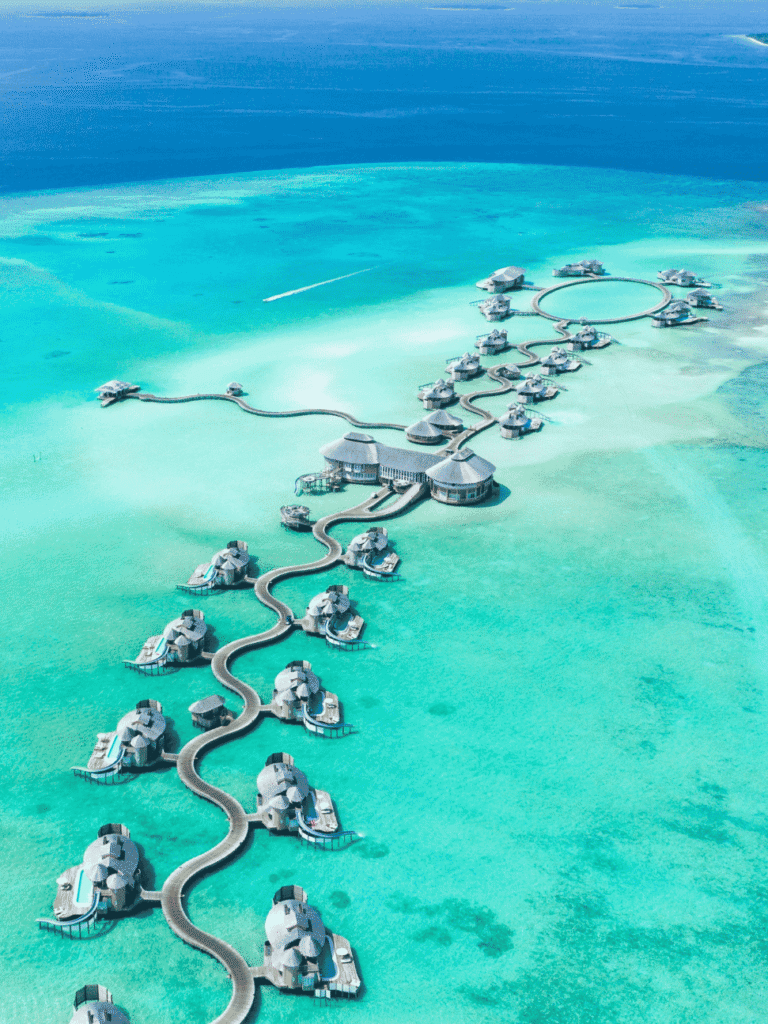
These four months are the Maldives at full tilt: barely a drop of rain, lagoons like glass, and visibility that opens up for tens of metres underwater. It’s why divers and honeymooners pile in, and why February and March, the most bankable months for sun, book out first.
Trouble is, everyone wants the same fortnight, so the best overwater villas go months ahead and rates sit at their yearly peak. By April the air turns thick and humid, and the first short showers start creeping in late in the month, the first sign the season’s about to flip.
May to July: the green season begins
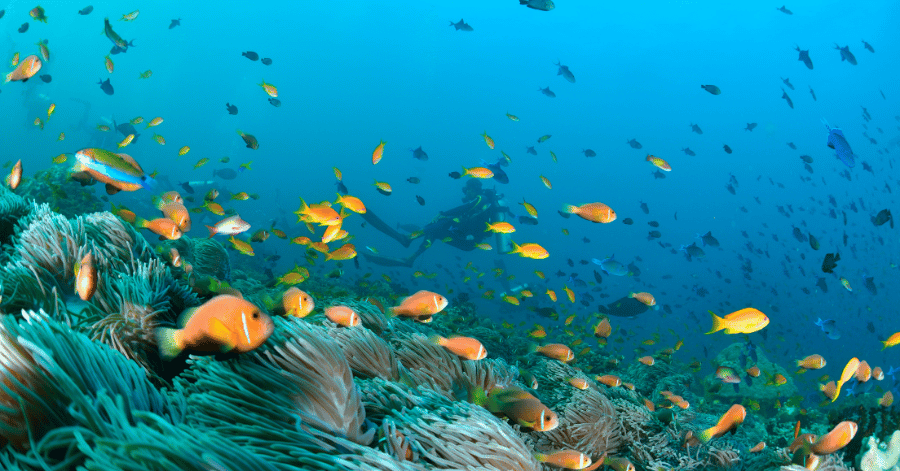
May flips the switch to the wet monsoon. The rain rarely settles in for the day, though; it tends to blow through in warm, heavy bursts, then clears to leave everything greener and dripping. Rates start sliding and the resorts empty out. June and July pick up the wind, which surfers love and sunbathers put up with. Mornings often open bright before the clouds stack up after lunch, so front-load your snorkelling and dives.
August to October: wettest, cheapest, quietest
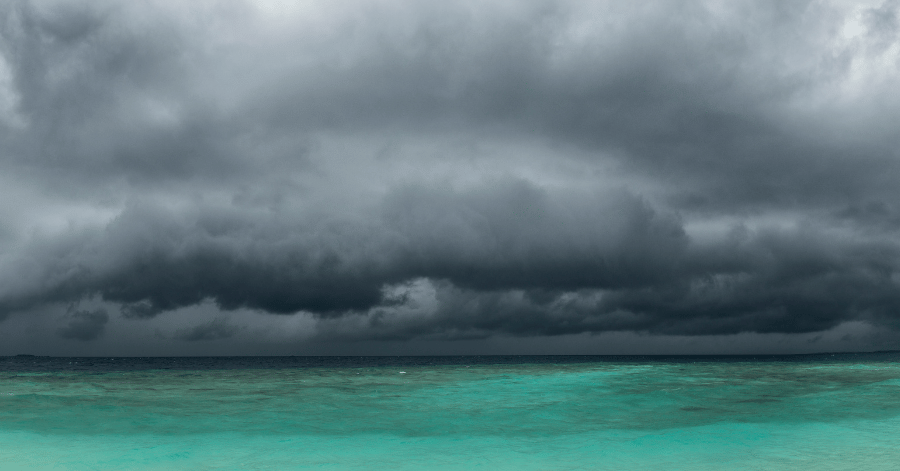
This is the value window, and it comes with the moodiest skies of the year: tall grey build-ups, the odd all-day downpour, and a sea that can turn choppy and steel-coloured. September brings the most consistent rain, then October slowly hands things back to the dry season. Crowds thin to almost nothing and rates bottom out. If you can shrug off a washed-out afternoon and you’re here for empty beaches and a smaller bill, this stretch pays you back.
November and December: the swing months
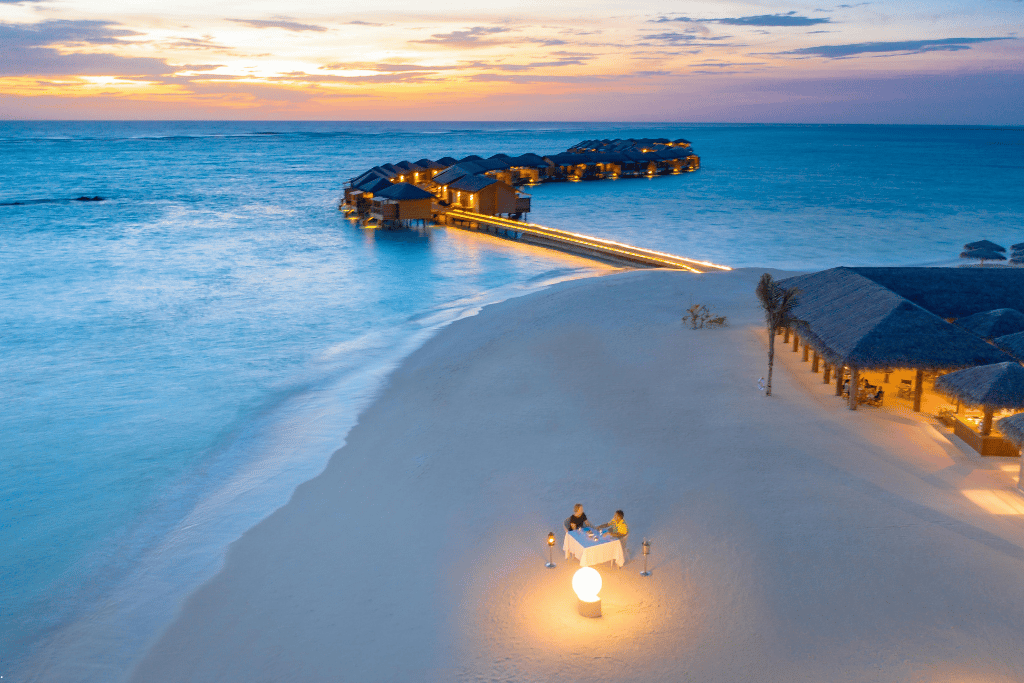
November is the sweet spot for anyone who wants mostly dry days without peak-season prices. The rain eases off, the sea settles, and rates haven’t spiked yet. Then December lands and demand goes vertical as the festive crowd flies in, pushing prices to their yearly high over Christmas and New Year. Book November for the balance of decent weather and lower prices, and save December for when you can plan far ahead and stomach the bill.
📖 Related Guide: Comparing tropical escapes across the region? Our best time to visit Taiwan guide does the same month-by-month breakdown for another nearby favourite.
The Best and Worst Months to Visit the Maldives
- The best months are February and March: dry, calm, clear, and reliably sunny.
- The weakest stretch for weather is the wet-season peak around August to October, with September typically one of the wettest months and the seas at their roughest. If your trip lives or dies on guaranteed beach days, that’s the window to sidestep.
But “worst for weather” and “worst for your trip” aren’t the same thing, and this is where the internet lags behind reality. A wave of travel creators now actively recommend the June to August window, and they have a point. You get warm water, dramatic skies, half-empty islands and rates that can be a fraction of what you’d pay at peak.
Rain in the Maldives tends to pass in a couple of hours, not settle in for a week, and the sea stays bathwater-warm regardless. If you’re flexible and you’d rather have the island to yourself than a flawless tan, the “bad” months can be the best value going. Just know you’re gambling on the weather, so go in with realistic expectations and a resort with enough indoor comforts for a rained-out afternoon.
📖 Related Guide: Want another shoulder-season play? Our best time to visit Macau guide breaks down where the cheap months are actually worth it.
What Is the Cheapest Month to Visit the Maldives?
The cheapest months to visit the Maldives fall in the green season, roughly June to October, with September usually the lowest of all. Resorts drop rates to fill rooms, and the savings against the December peak can be significant, often in the range of 20% to 50% depending on the property and how far ahead you book.
The discount isn’t the whole picture, though. Maldives resorts bill in US dollars. Room rates, seaplane transfers, spa treatments and dinners are all quoted and charged in USD, then a stack of extras piles on top.
Most resorts add a service charge of around 10%, then a 17% Tourism Goods and Services Tax on top, plus a Green Tax of 12 USD (~S$16) per person per night at larger resorts, or 6 USD (~S$8) at smaller guesthouses. On a week for two, those extras alone run into the hundreds, and none of them care which month you visit.
Two choices cut the bill more than any calendar trick. Where you stay is the biggest one: a guesthouse on a local, inhabited island costs a fraction of a private-island resort. Just pack modestly and go easy on the alcohol, since local islands follow local rules outside the resort bubble. And if you do book a resort, an all-inclusive package often beats paying à la carte, because meals and drinks on an isolated island get expensive fast.
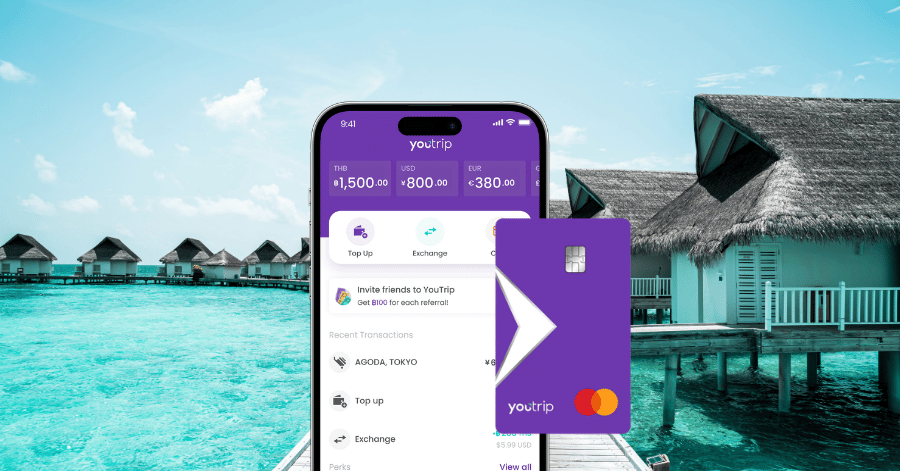
Because everything runs in USD, the exchange rate you get quietly decides how good your “deal” really is. Pay with a regular bank or credit card and you’re often hit with a foreign transaction fee of around 3%, plus a marked-up rate. That can wipe out a chunk of the green-season discount right at checkout.
This is where a multi-currency card comes in. USD is one of the currencies you can hold and lock in your YouTrip wallet. Top up when the SGD to USD rate looks good, settle your resort bill at that locked rate later, and pay with no foreign transaction fees. Lock a strong rate in advance and the discount you booked is the discount you actually pay.
📖 Related Guide: Wondering where the SGD to USD rate is headed? Our SGD to USD guide breaks down the forecast and the smartest way to convert.
Which Side of the Maldives Is Better: North or South?
Neither side is flatly “better”, but they don’t get the same weather, and that’s the useful part. The Maldives stretches more than 800km from north to south, and the far south sits almost on the equator, so conditions genuinely shift along its length. As a rule, the northern atolls are drier and the southern atolls catch more rain, with the north getting roughly a quarter less rainfall a year than the deep south.
Which side suits you comes down to three things: the weather odds, how far you’re willing to travel, and what you’ve come to see underwater.
The Northern Atolls
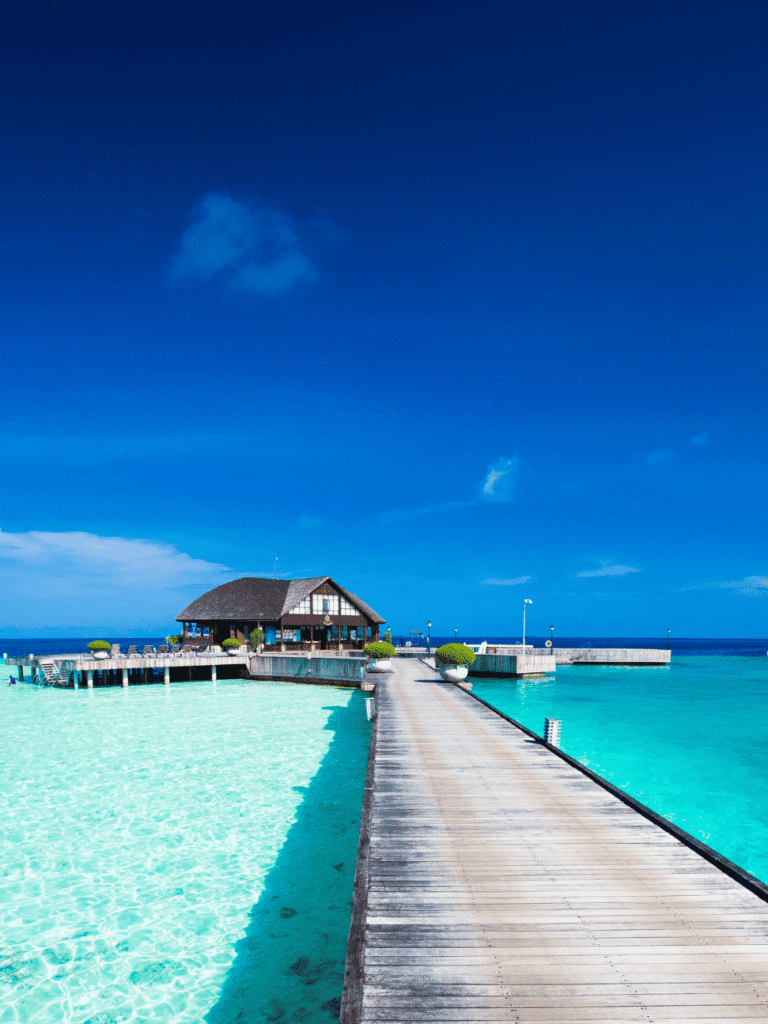
Image Credits: Tripadvisor
The north covers the atolls above and around Malé, including Baa, Raa and Lhaviyani, plus the dense resort belt of North and South Malé. This is the Maldives most first-timers picture, and it’s the easy option. The resorts sit closest to the airport, so transfers are shorter and cheaper, and there are resorts at every budget, from entry-level to over-the-top.
It’s also the drier half, which makes it the safer bet if your dates fall in the green season. The headline draw is Baa Atoll’s Hanifaru Bay, a UNESCO Biosphere Reserve where manta rays gather in large numbers to feed through the wet months. The one catch is wind: the south-west monsoon blows harder up here, so the sea can turn choppy even when the rain holds off.
Best for first-timers, honeymooners and anyone who wants reliable weather and simple logistics.
The Southern Atolls
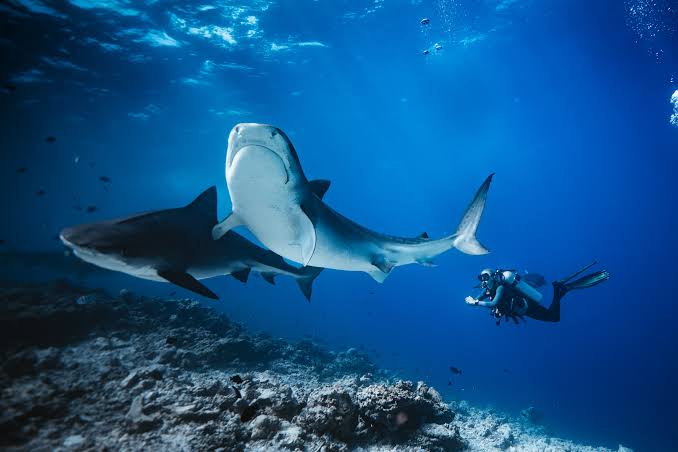
Image Credits: Hotel Ataraxis Fuvahmulah
The far south, the “deep south” of Laamu, Huvadhoo, Fuvahmulah and Addu, is a different trip entirely. There are far fewer resorts and far fewer people, so it trades convenience for real seclusion. Reaching it costs you time and money: you fly from Malé to a domestic airport, then transfer by boat. The best diving window runs roughly December to May, with February and March the sweet spot.
What pulls divers this far is the marine life. Fuvahmulah, a single island rising straight out of deep ocean, holds one of the world’s largest resident populations of tiger sharks, divable year-round, alongside threshers and hammerheads. Addu, the southernmost atoll, delivers year-round mantas, turtles and long visibility. If big pelagics are the point of your trip, the south beats anywhere up north.
Best for divers and repeat visitors chasing seclusion and big-animal encounters over easy logistics.
In the dry season the weather gap between the two narrows, so you can pick on price, house reef and what you want to see. In the green season, lean north.
📖 Related Guide: If a nearer island escape is more your speed, our Tioman Island guide covers a snorkelling favourite just off the Malaysian coast.
Best Time for Diving, Snorkelling and Marine Life
For the clearest water and best all-round diving, come in the dry season, December to April, when visibility is at its peak and the seas are calm. But the marine life you’re chasing has its own calendar, and that can override the weather.
Manta rays
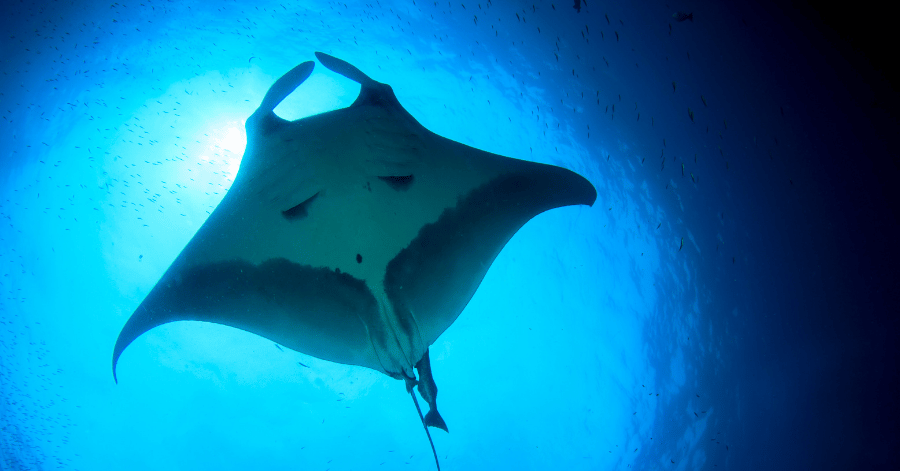
Manta rays are the Maldives’ signature encounter, and the wet season is when they turn up in force. In Baa Atoll’s Hanifaru Bay, plankton blooms pull them into the shallows to feed, sometimes dozens at once. They barrel-roll and loop in slow motion just beneath the surface while snorkellers hang overhead, wingtips passing close enough to touch.
The season runs roughly May to November, with the biggest gatherings from August to October. If mantas are what you came for, the “off” season is your season.
Whale sharks
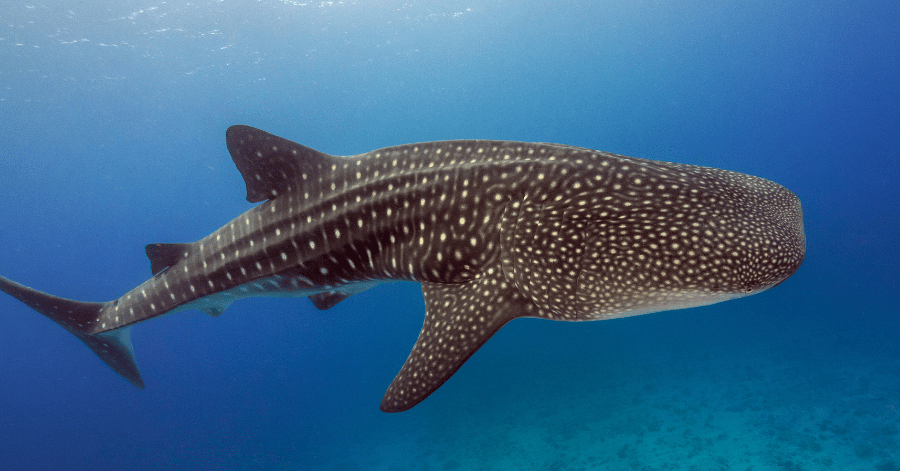
Whale sharks, the world’s biggest fish and harmless plankton-eaters, cruise Maldivian waters year-round, and South Ari Atoll near the island of Dhigurah is the one reliable place to find them. Because they’re around all year, you can plan a whale-shark trip in either season and build the rest of your timing around weather and price.
Bioluminescence and sunset dolphins

The Maldives’ glowing “Sea of Stars”, most associated with Vaadhoo in Raa Atoll, comes from plankton that flash electric blue when the water is disturbed. Every wave and footstep leaves a trail of cold light along the shoreline.
It can appear at any time of year and is never guaranteed, though the warmer, plankton-rich months from around June to October are the window most often cited. Whenever you go, dark nights around the new moon give you the best odds, in the first few hours after dark. Treat a sighting as a bonus rather than a reason to book.

Spinner dolphins, on the other hand, are around all year and put on acrobatic sunset shows most evenings. The calm, clear dry season from December to April just makes the cruise out to find them a smoother ride.
Surfing
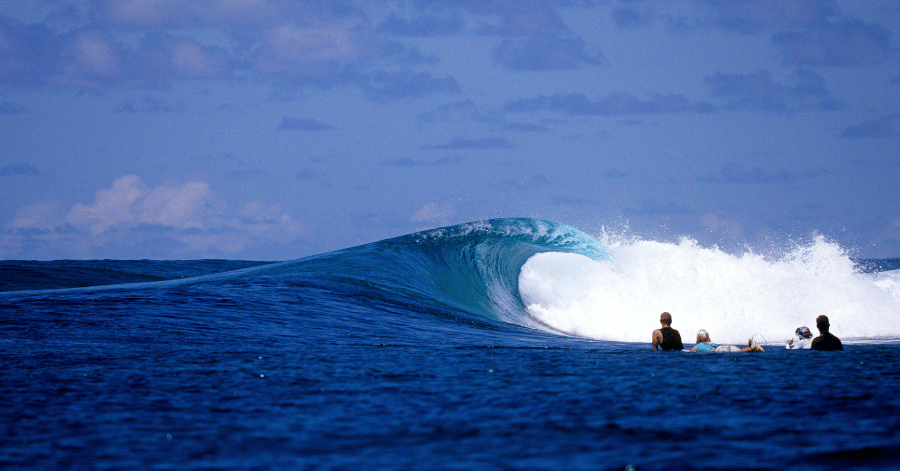
The Maldives has a genuine surf scene, and it peaks in the exact months sunbathers avoid. The May to October swell window, strongest around June to August, is when the breaks come alive. It’s the clearest example of the wet season being the right season for the right traveller.
📖 Related Guide: Chasing that same clear-water snorkelling closer to home? Our Redang Island guide covers one of the region’s best reef escapes.
Best Time for Honeymoons and Families
For a honeymoon, the dry season from December to April brings the version of the Maldives people daydream about: flat, glassy lagoons, long unbroken sunsets, and warm, still nights out on the overwater deck. Just mind the Christmas and New Year peak, which is both the busiest and the priciest window of the year. Aim for January to early March and you get near-identical weather without the festive surcharge.
For a family trip from Singapore, the calculation is different because you’re often locked to the school holidays. That mostly means the June break and the year-end break in late November and December. The June window lands squarely in the green season, so you’ll trade some weather certainty for lower rates and quieter resorts, which is a fair deal with kids in tow.
The year-end break overlaps the festive peak, so book early and expect to pay for it. Whichever window you’re tied to, look for a resort with a kids’ club and a house reef you can snorkel straight off the beach.
📖 Related Guide: Weighing up a family beach trip elsewhere? Our things to do in Bali guide covers another family-friendly favourite within easy reach of Singapore.
Getting There From Singapore and Paying Once You Land
Singapore is one of the easier launch pads for the Maldives. Singapore Airlines and Scoot both fly direct from Changi to Velana International Airport in Malé, with a flight time of around four and a half hours. That’s a short-enough hop to make even a long weekend tempting.
The catch is the second leg. Most resorts sit on their own islands, reached by speedboat or seaplane, and seaplanes only fly in daylight hours. If your flight lands in the evening, you may not be able to transfer until the next morning, which can mean an unplanned overnight in Malé. Check your resort’s transfer type and cut-off times before you book flights, and aim to land by mid-afternoon if you’re headed somewhere seaplane-only.
On paying: resorts run almost entirely on card, and they bill in US dollars, so a card with no foreign transaction fee saves you real money across a multi-night stay. Keep a little USD cash on hand too, for tips and for any trips to a local island, where small vendors may prefer it.
If you do want cash, withdraw it from an ATM in Malé rather than changing money before you fly. With YouTrip, the first S$400 you withdraw from overseas ATMs each calendar month is free, then a flat 2% after that, and you’re drawing at the wholesale rate instead of a money changer’s marked-up one. Tap the YouTrip card for everything else, with no FX fee on the spend and USD locked in your wallet if you topped up ahead of time.
📖 Related Guide: Not sure which card to travel with? Our best multi-currency cards in Singapore guide compares the top options for overseas spending.
Pairing the Maldives With Sri Lanka, Dubai or Bali
Because the Maldives is a flight away from several other bucket-list spots, plenty of Singapore travellers bolt on a second destination. The trick is picking a pairing whose best season overlaps.
- Sri Lanka is the classic combo, a short hop away, and its west coast and hill country shine from December to March, lining up neatly with the Maldives’ dry season.
- Dubai works almost any time thanks to its indoor everything, but November to March is the comfortable window before the desert heat peaks, again matching Maldives’ best months.
- Bali runs on its own dry season from roughly April to October, so it pairs more naturally with a green-season Maldives trip than a peak-season one.
Match the seasons and you get two great legs instead of one great and one soggy.
📖 Related Guide: Adding a Sri Lanka leg? Our SGD to LKR guide covers the rate and the smartest way to spend there.
FAQs
February and March are the best months, with dry skies, calm seas and the clearest water of the year. The weakest weather falls around August to October, with September typically one of the wettest months and the roughest seas. That said, the wet months from June to August offer the lowest prices and the fewest crowds, so “worst” depends on whether you’re optimising for weather or value.
The cheapest months fall in the green season, roughly June to October, with September usually the lowest. Resort rates can be 20% to 50% below the December peak. Just remember that resorts bill in US dollars, so the exchange rate and card fees you pay at checkout affect the real cost as much as the room rate does.
The off-season, also called the green or low season, runs roughly May to November during the wet south-west monsoon. It brings more rain and wind but also warm seas, lush scenery, far fewer crowds and the year’s lowest prices. It’s also prime time for manta rays and surfing.
Both have their draws, but the northern atolls tend to be drier while the southern atolls catch more rain, especially in the wet season. If you’re travelling in the green season and want to reduce your rain risk, lean towards a northern-atoll resort. In the dry season the difference is minor.
They’re built for different trips. The Maldives is a switch-off beach-and-water escape built around a single resort island. Sri Lanka is an active, varied trip with hill country, wildlife safaris, tea plantations and culture. Many Singapore travellers pair the two, since their best seasons overlap from December to March.
Four to seven nights suits most trips. Factor in the transfer time from Malé to your resort, which can eat a chunk of your arrival and departure days, especially for seaplane-only islands.
Ready When You Are
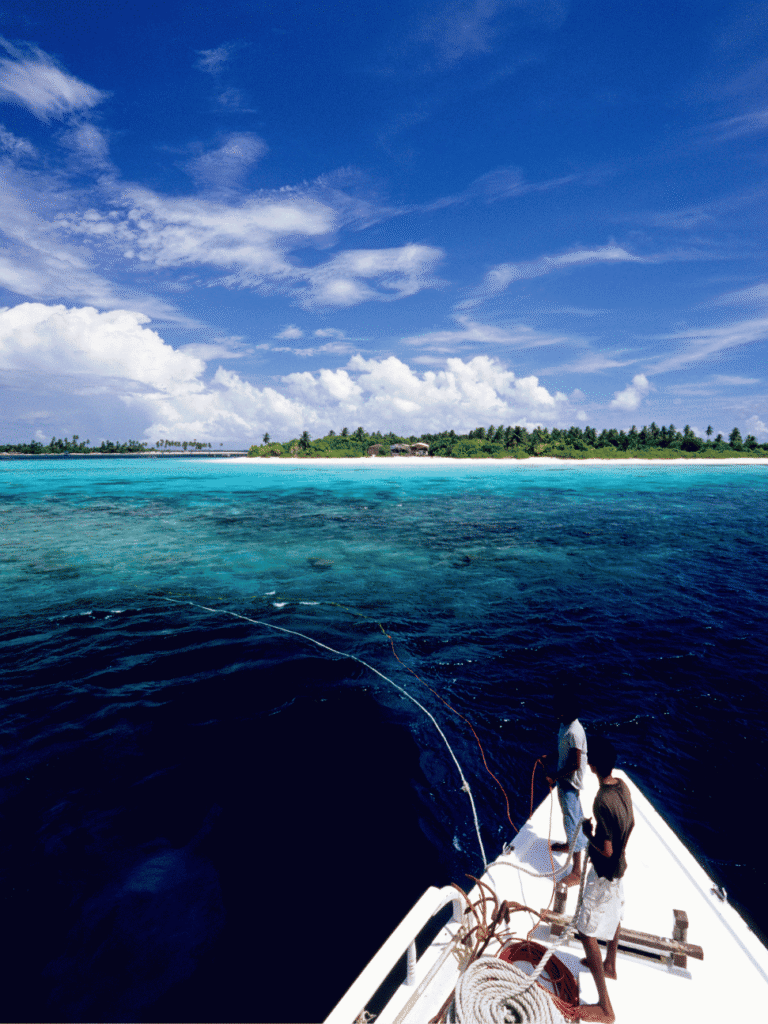
Pick December to April for the flawless, no-rain trip, or take the green season for the version that leaves more in your account. Either way, the islands hold up their end, and the money side is the part you can actually control.
Wherever you land, spending smart abroad starts before you fly. With YouTrip, you can hold and lock in USD ahead of your trip, spend with no foreign transaction fees in 150+ currencies, and skip the marked-up rates that quietly inflate a holiday bill.
Not a YouTrooper yet? Sign up for YouTrip and use promo code YTBLOG5 for S$5 in your wallet to start. Then check out the YouTrip Perks page for the latest travel deals, and join the community on Telegram for rate alerts and giveaways.
For deeper detail before you go, see our guide to getting the best exchange rate in Singapore and, if Dubai’s on the itinerary, our SGD to AED guide.