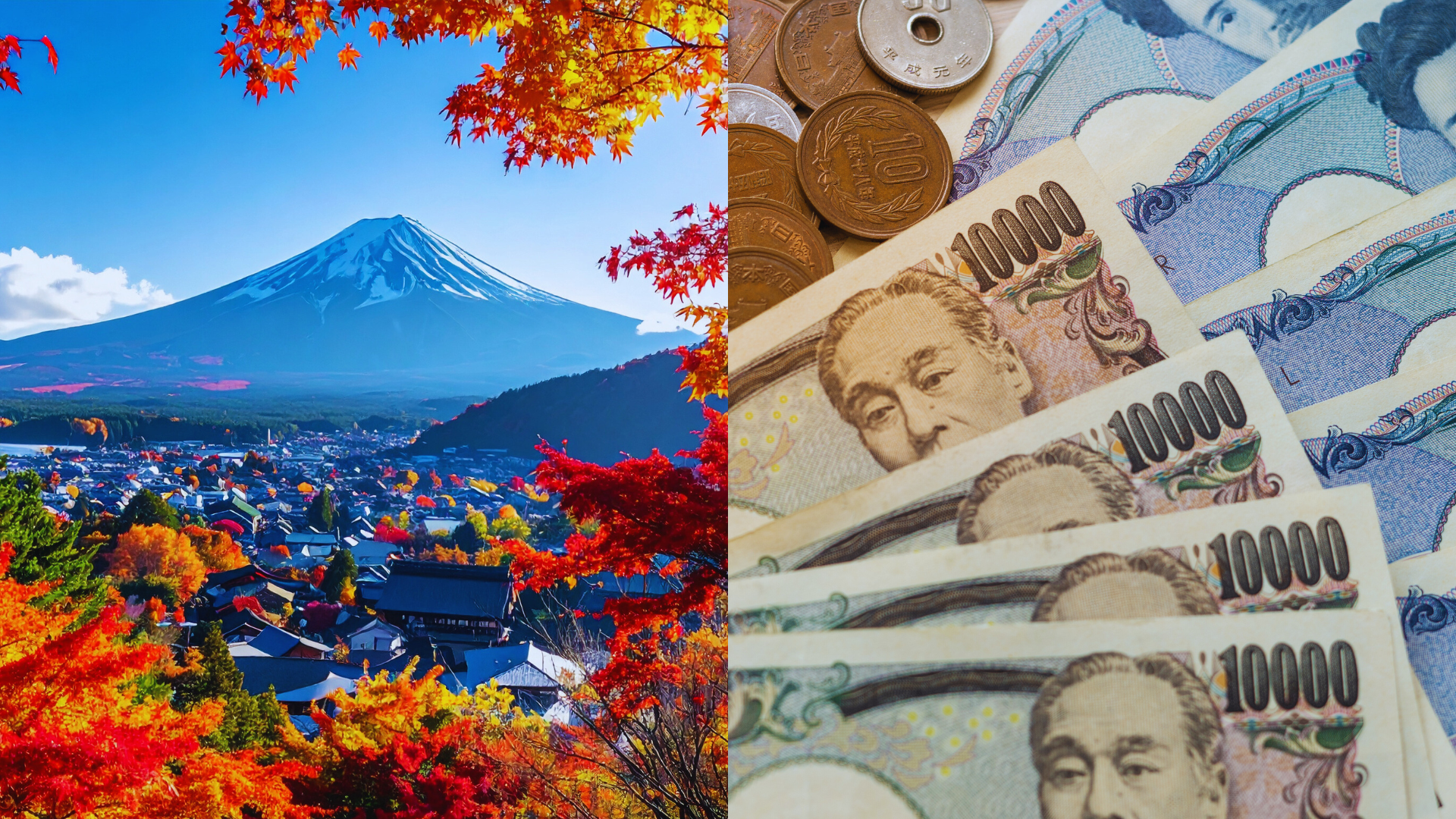



The short answer is spring or autumn, but the right month depends on what you flew all this way to see
Japan runs four very distinct seasons across a country that stretches from snowbound Hokkaido to subtropical Okinawa. So the “best time” to visit isn’t one answer, it’s a question of what you’re chasing: blossoms, autumn colour, powder, beaches, or the lowest airfare out of Australia. Here’s the month-by-month read.
| Highlights | Details |
|---|---|
| Best overall | April–May and October–November: mild, sunny, peak scenery |
| Cherry blossoms | Late March to early April (Tokyo peaked ~28 Mar, Kyoto ~30 Mar in 2026) |
| Autumn leaves | Mid-October to late November |
| Snow + skiing | January to February: Hokkaido and the Japan Sea coast |
| Beaches (Okinawa) | July to September |
| Cheapest from Australia | Deep winter outside the ski/New Year peak, and June’s rainy season |
| Dates to avoid | Golden Week (29 Apr–6 May), Obon (mid-Aug), New Year |
| Pay smart | JPY is a YouTrip wallet currency: pre-load AUD to yen, lock the rate, 0% FX |
Table Of Contents
- When Is The Best Time To Visit Japan?
- Japan’s Seasons At A Glance
- Best Time To Visit Japan: Month By Month
- Cheapest Time To Visit Japan From Australia
- Best Time For Cherry Blossoms
- Best Time For Autumn Foliage
- When To Visit Japan And Avoid The Crowds
- Best Time For Skiing And Snow
- Best Time For Beaches And Okinawa
- Rainy Season And Typhoons: Months To Watch
- Pairing Japan With Another Country
- Paying In Japan: Getting Your Yen Right
- FAQs
When Is The Best Time To Visit Japan?
The best time to visit Japan is spring (late March to May) or autumn (October to November), when the weather is mild, and the scenery is at its peak. If you can travel any time, aim for April, May, October or November, and dodge the big domestic holidays.
Well, that’s the standard advice, and it’s not wrong. The catch is that those same months are when the famous spots get packed and prices climb. So the better question is what you actually want out of the trip:
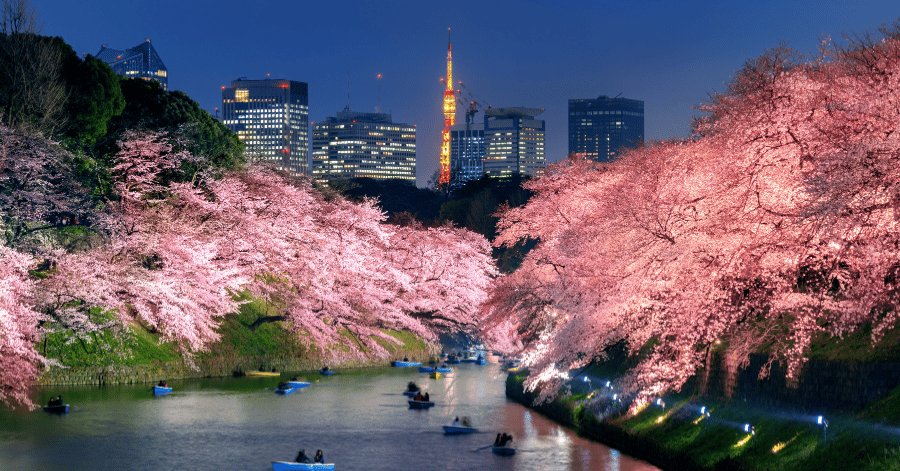
- Cherry blossoms → late March to early April
- Autumn colour → mid-October to late November
- Snow and skiing → January to February
- Beaches and islands → July to September
- Lowest cost and thinnest crowds → deep winter or June’s rainy season
Pick your priority, then build the dates around it. The rest of this guide breaks each one down.
Japan’s Seasons At A Glance
Japan’s four seasons each give you a completely different trip. Here’s how each one feels before we get into the month-by-month.
- 🌸 Spring (March–May): Comfortable temperatures, cherry blossoms, and the country at its prettiest. Also the most popular, so book early. Golden Week (late April to early May) is the one stretch to plan around.
- ☀️ Summer (June–August): Hot and humid, with a rainy season in June and early July. The trade-off: festivals, fireworks, beach weather in Okinawa, and the only window to climb Mt Fuji.
- 🍂 Autumn (September–November): Arguably the sweet spot. Cooler, clear days and fiery red-and-gold foliage from mid-October. September still carries typhoon risk, but by November the weather settles.
- ❄️ Winter (December–February): Cold but often clear and sunny on the Pacific side, with world-class powder snow up north. Gardens look bare, days are short, but it’s the cheapest season outside New Year.
Best Time To Visit Japan: Month By Month
Every month in Japan has its own pull. Here’s what each one is actually like, so you can match your dates to what you’re after.
| Month | Weather | What’s on | Crowds + cost |
|---|---|---|---|
| January | Cold, dry, sunny on Pacific coast | New Year shrine visits, peak powder snow | Quiet after the first week; ski areas pricey |
| February | Cold, best powder of the year | Sapporo Snow Festival, drift ice in Hokkaido | Low domestic travel, good value (ex-ski towns) |
| March | Warming up, plum then cherry blossoms begin | First sakura in the south late month | Rising late-month with blossom season |
| April | Mild and sunny, peak cherry blossoms | Sakura nationwide, gardens at their best | Busy; very busy from late April (Golden Week) |
| May | Warm, lush, around 20°C | Post-blossom calm, fresh greenery | Golden Week jams early May, then eases |
| June | Rainy season, humid | Hydrangeas, atmospheric temples in the rain | Low crowds, cheaper, Hokkaido stays drier |
| July | Hot, humid, rain clears mid-month | Summer festivals, fireworks, Mt Fuji opens | Beaches busy in Okinawa; school holidays late month |
| August | Hottest and most humid | Fireworks, festivals, Okinawa beaches | Obon (mid-Aug) is a domestic travel peak to avoid |
| September | Hot, easing late; typhoon risk | Autumn starts up north and at altitude | Quieter after August crowds clear |
| October | Mild, clear, comfortable | Autumn colour begins, harvest season | Pleasant and not yet packed |
| November | Cool, crisp, peak foliage | Autumn leaves at their best nationwide | Busy at famous leaf spots, quiet elsewhere |
| December | Cold, dry, sunny on Pacific coast | Winter illuminations, early ski season | Low until New Year, then a sharp spike |
A quick rule of thumb: April, May, October and November give you the best balance of weather and sights, while February, June and early December are the value picks if you don’t mind cold or rain.
Cheapest Time To Visit Japan From Australia

The cheapest time to visit Japan from Australia is deep winter outside the New Year and ski peaks (roughly mid-January to early March), and June’s rainy season. Fares and hotels both soften when the crowds thin.
Two things decide what a Japan trip costs you: the flight over, and what you spend once you’re there. They don’t always move together.
- Airfares spike around Australian school holidays (the December–January summer break and the July break), Easter, and Japan’s Golden Week and New Year. They ease in the shoulder weeks between.
- On-the-ground costs (hotels, domestic transport) climb during cherry blossom season, autumn foliage, and ski-town winter, then drop in June and the post-Golden-Week lull.
The genuinely cheap stretches are when both dip together: late January to early March away from the ski resorts, June into early July, and the quiet weeks in early December before the New Year rush.
One thing to watch if you’re flying from Australia: the Japanese ski season (December to February) overlaps almost perfectly with the Aussie summer school holidays, so flights to Sapporo and Tokyo over December–January are some of the priciest of the year. If powder isn’t your goal, push a few weeks later into February.
Whichever month you pick, the biggest saving isn’t the airfare, it’s not quietly losing 3% of every yen you spend to your bank’s foreign transaction fees. We compared the real overseas cost across the major Australian cards if you want the full breakdown. More on getting your yen right below.
Best Time For Cherry Blossoms
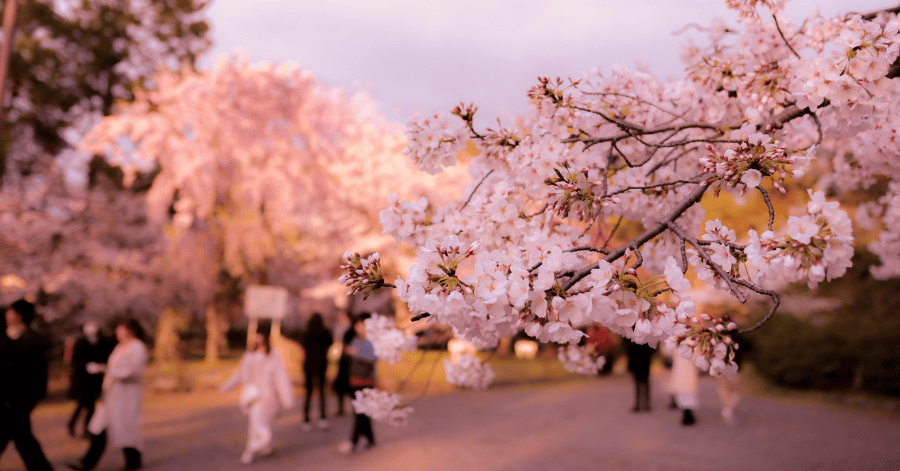
The best time to see cherry blossoms in Japan is late March to early April, when the sakura front sweeps from the warm south up towards the north. In 2026, Tokyo peaked around 28 March and Kyoto around 30 March, with the prime nationwide window landing late March to the first week of April.
The bloom moves with the latitude, so timing depends on where you’re headed:
- Kyushu and Shikoku (south): late March
- Tokyo, Kyoto, Osaka (central): late March to early April
- Tohoku and Hokkaido (north): mid-April into early May
Blossoms only hold full bloom for about a week, and a single rainy day can strip the petals, so build in a buffer rather than booking one fixed day. Forecasts from the Japan Meteorological Corporation start landing in December and update through the season, so check them before locking flights.
Here’s the insider move: if you want the blossoms without the crush, head north to the Tohoku region, where the trees bloom later than the headline spots in Tokyo and Kyoto and the crowds are a fraction of the size. You get the same pink canopy, minus the queue for the photo.
For the headline cities themselves, our guides to the best things to do in Tokyo and Osaka map out where to base yourself.
Best Time For Autumn Foliage
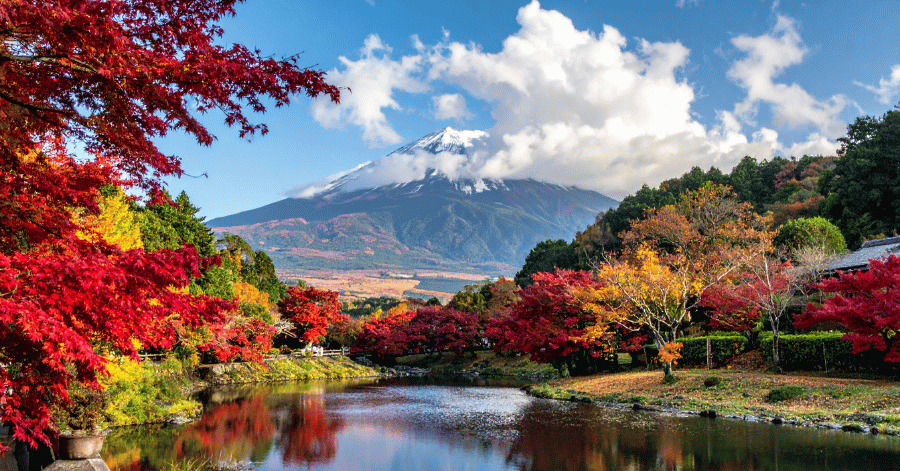
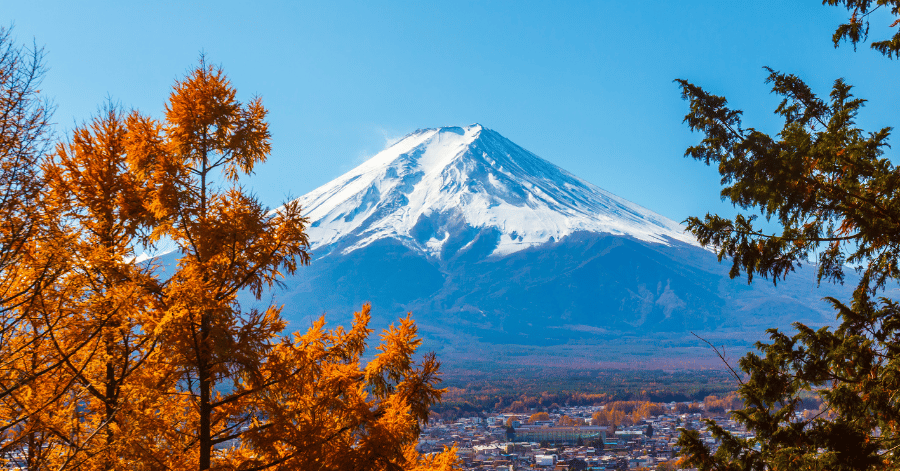
The best time for autumn foliage in Japan is mid-October to late November, when the maples and ginkgos turn vivid red, orange and gold. Like the blossoms in reverse, the colour starts in the north and at high altitude, then works its way south.
- Hokkaido and the mountains: late September to mid-October
- Tokyo, Kyoto and central Japan: mid to late November
- Southern regions: late November into early December
November is hard to beat: mild, dry and clear, with light domestic travel except around the famous leaf-viewing spots. Kyoto’s temple gardens are the classic backdrop, but they’re also the busiest, so arrive early or look to quieter mountain valleys for the same colour without the coach tours.
When To Visit Japan And Avoid The Crowds
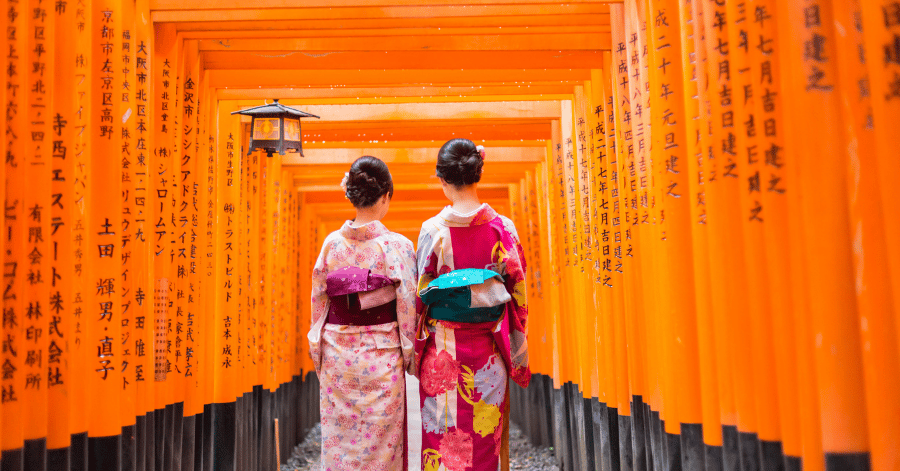
To avoid the worst crowds in Japan, steer clear of three domestic holiday periods when the entire country travels at once: Golden Week, Obon, and New Year. Prices surge, trains book out, and popular sights overflow.
The dates to plan around:
- New Year (roughly 29 Dec–4 Jan): shops and attractions close, and domestic travel spikes around the holiday itself.
- Golden Week (29 April–6 May in 2026): a cluster of four national holidays that’s the single busiest travel stretch of the year. Book accommodation and reserved train seats well ahead, or avoid it entirely.
- Obon (around 13–16 August): a Buddhist holiday when locals return to their hometowns. Trains, flights and highway traffic peak from roughly 8 to 16 August.
Even within the good months, the famous spots fill up by mid-morning. The fix is simple: go early. Get to Kyoto’s Fushimi Inari Shrine around 7:30 AM and the Arashiyama bamboo grove by 7:15 AM, and you’ll have them close to empty before the day-trippers arrive. By 8 AM, both are shoulder to shoulder.
Best Time For Skiing And Snow
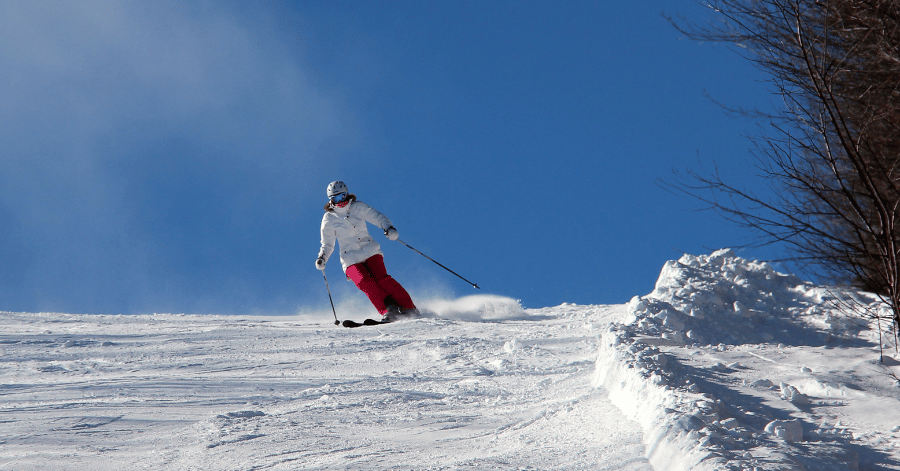
The best time for skiing and snow in Japan is January to February, when the powder is deepest and most reliable along the Japan Sea coast and in Hokkaido. The broader ski season runs from December into early May at higher resorts, but mid-winter is when the famous light, dry “Japow” is at its best.
Beyond the slopes, winter is when Japan looks its most cinematic:
- Sapporo Snow Festival, Hokkaido: giant snow and ice sculptures across the city, held in early February (4–11 February in 2026).
- Drift ice off Hokkaido’s northern coast, viewable on icebreaker cruises in February.
- Snow monkeys bathing in the hot springs at Jigokudani, near Nagano.
- Shirakawa-go, where the thatched farmhouses sit under deep snow.
Just remember half of Australia has the same idea, thanks to the summer-holiday overlap, so flights and resort beds in Niseko and Hakuba sell out months ahead.
Best Time For Beaches And Okinawa
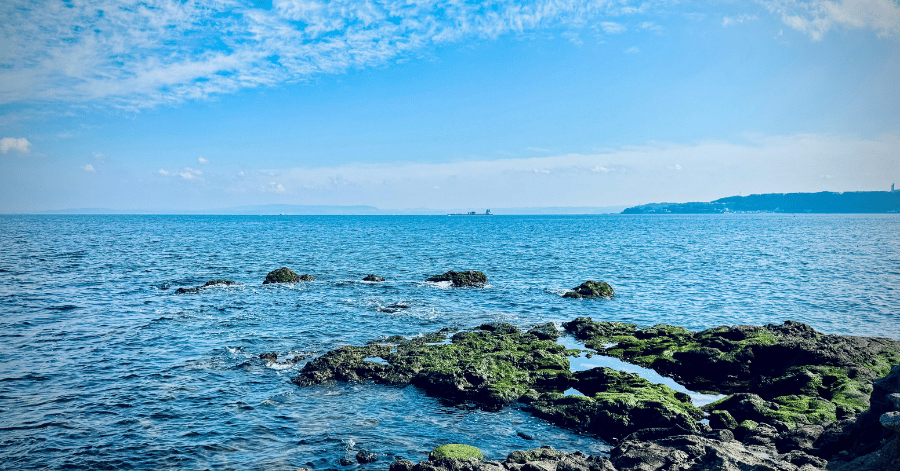
The best time for beaches in Japan is July to September, when Okinawa and the southern islands hit peak beach weather with warm seas and long sunny days. While mainland Japan swelters in humidity, Okinawa’s subtropical islands are where the summer heat actually pays off.
Okinawa’s rainy season runs earlier than the mainland’s, from around mid-May to late June, so July onwards is the clear window for diving, snorkelling and white-sand beaches. The trade-off is that this overlaps with the late-summer typhoon season, so keep your itinerary flexible and watch the forecast in August and September.
Rainy Season And Typhoons: Months To Watch
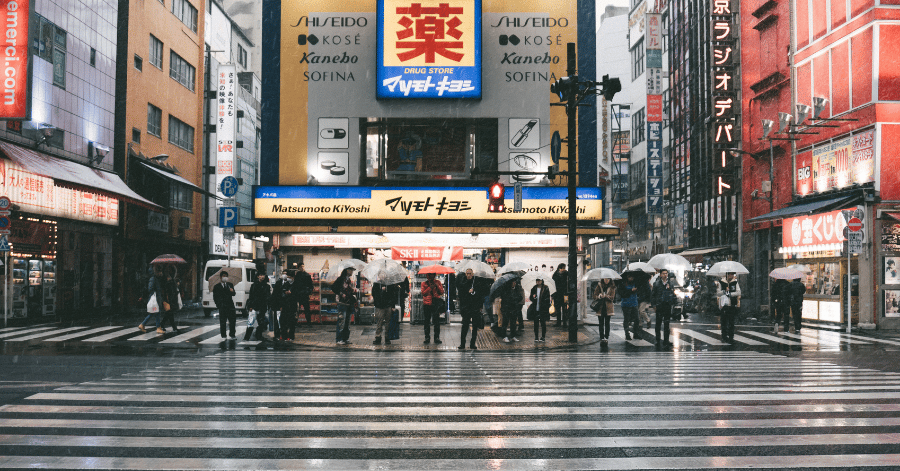
Japan’s rainy season (tsuyu) runs from early June to mid-July across most of the country, followed by a hot, humid peak and a typhoon season from August into September. None of these are exactly deal-breakers, but they’re worth knowing before you book.
- June to mid-July: frequent cloudy and rainy days on the main islands. Hokkaido is barely affected and stays a good bet. Temples and gardens can look beautifully atmospheric in the drizzle.
- July to August: hot and very humid once the rain clears. Great for festivals and fireworks, tiring for all-day sightseeing.
- August to September: peak typhoon season. Around three typhoons reach Japan’s main islands in a typical year, mostly in this stretch, each bringing a day or two of heavy rain and wind before clear skies return.
If you’re travelling during this stretch, build in flexibility and don’t pin everything to a single outdoor day.
Pairing Japan With Another Country
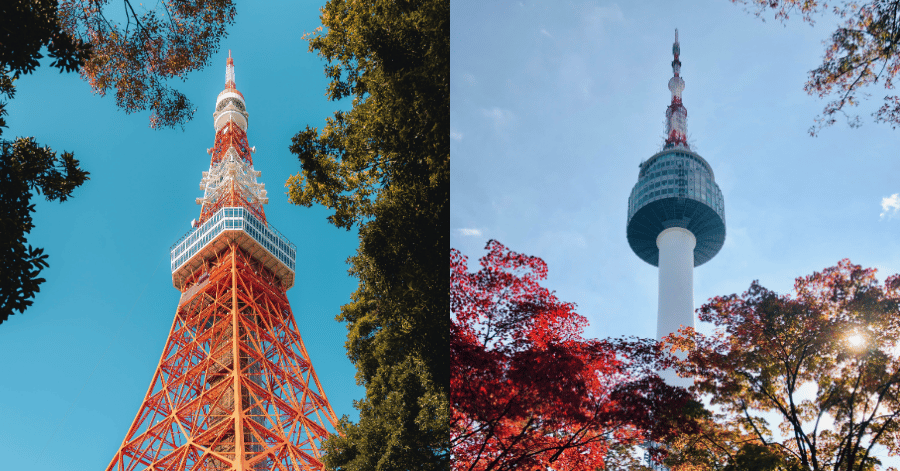
If you’re flying all the way from Australia, it’s worth tacking on a nearby country to make the long haul count. The best month to go can come down to the second stop as much as Japan itself.
- Japan + South Korea: spring and autumn work for both; Seoul’s cherry blossoms run a touch behind Tokyo’s.
- Japan + Singapore or Thailand: handy as a stopover on the way up; both are warm year-round, so let Japan’s season lead.
- Japan + Bali or Southeast Asia: pair Japan’s spring or autumn with the Southeast Asian dry season for the best of both.
Hop a few borders and you’ll quickly want one card that handles every currency, instead of juggling cash or copping an FX fee at each stop. JPY, plus a stack of other currencies, all sits in one app.
Paying In Japan: Getting Your Yen Right
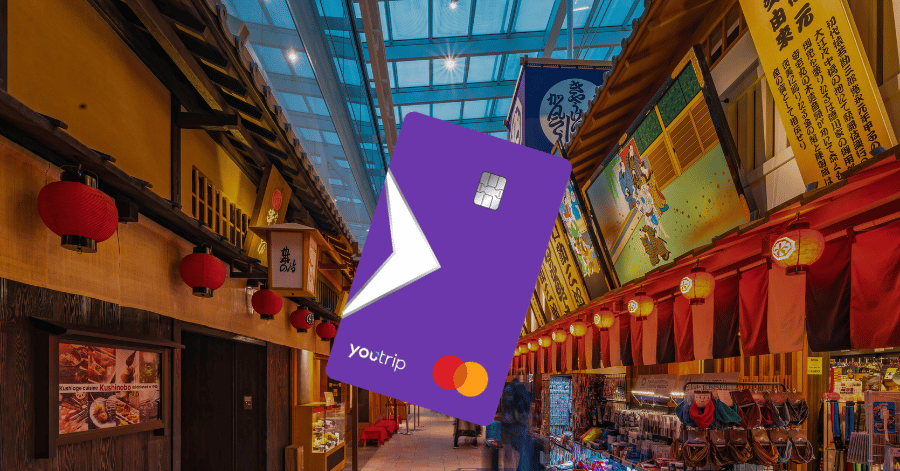
Japan is no longer the cash-only country it once was. Cards and IC cards (Suica, Pasmo, ICOCA) are accepted almost everywhere in the cities now, though you’ll still want a little cash for smaller restaurants, temples and rural spots.
Here’s the catch for Australian travellers: most Aussie bank and credit cards add a foreign transaction fee of around 3% every time you spend in yen, plus a margin baked into the exchange rate. On a two-week trip, that quietly adds up to real money.
That’s where a multi-currency card like YouTrip comes in. JPY is one of YouTrip’s wallet currencies, so you can pre-load Australian dollars into yen in the app before you fly and lock in the rate, or just tap and let it auto-convert at the wholesale (mid-market) rate. Either way, there’s no FX markup and no foreign transaction fee.
For the cash you do need, skip changing money before you go (changers bake a markup of a few percent into the rate) and withdraw yen from an ATM when you land. In Japan, the ATMs at 7-Eleven and Japan Post offices reliably accept foreign cards, even in smaller towns. With YouTrip, your first A$1,500 of overseas ATM withdrawals each calendar month is free, then a flat 2% applies (some ATM operators add their own on-screen fee, so check before you confirm). The full breakdown of YouTrip’s ATM fees and limits has the detail.
The simple setup for Japan:
- Tap your YouTrip card for everything cards-accepted: restaurants, shops, convenience stores, attractions. Wholesale rate, 0% FX fee.
- Top up your Suica or IC card from your YouTrip balance for trains and vending machines.
- Withdraw a little yen from a 7-Eleven or Japan Post ATM on arrival, using your free monthly allowance, for the cash-only spots.
👉 New YouTrip users also get 2% cashback on overseas spending for their first five months (capped at A$40 a month), which softens the cost of a card-heavy trip. For the full rundown, see our guide on whether YouTrip can be used in Japan.
FAQs
April and November are the two standout months. April brings the cherry blossoms and mild spring weather, while November is peak autumn colour, with clear, comfortable days and lighter crowds. Both sit in Japan’s spring and autumn sweet spots for weather and scenery.
Deep winter outside the ski and New Year peaks (mid-January to early March) and June’s rainy season are the cheapest. Airfares ease outside the Australian school holidays and Japan’s Golden Week, and hotels are cheaper when domestic crowds thin out.
There’s no truly bad time, but the trickiest stretches are Golden Week (late April to early May), Obon (mid-August) and New Year, when crowds and prices peak. June’s rain and August’s heat and humidity can also be uncomfortable for all-day sightseeing.
Both are excellent. Spring gives you cherry blossoms but bigger crowds and Golden Week; autumn gives you red foliage, clearer skies and slightly lighter travel. Autumn (October to November) edges it for reliable weather and value.
The official Mt Fuji climbing season runs from early July to 10 September. In 2026, all trails charge a mandatory 4,000 JPY (~A$35) entry fee and ask climbers to reserve and pay ahead (only limited same-day slots remain on the main Yoshida Trail). A mountain hut booking is essential if you want to reach the summit for sunrise.
Some, but less than you’d think. Cities run heavily on cards and IC cards now, but smaller restaurants, temples and rural areas can still be cash-only. Withdraw yen from a 7-Eleven or Japan Post ATM on arrival rather than changing money at home.
Pick Your Month, Then Go
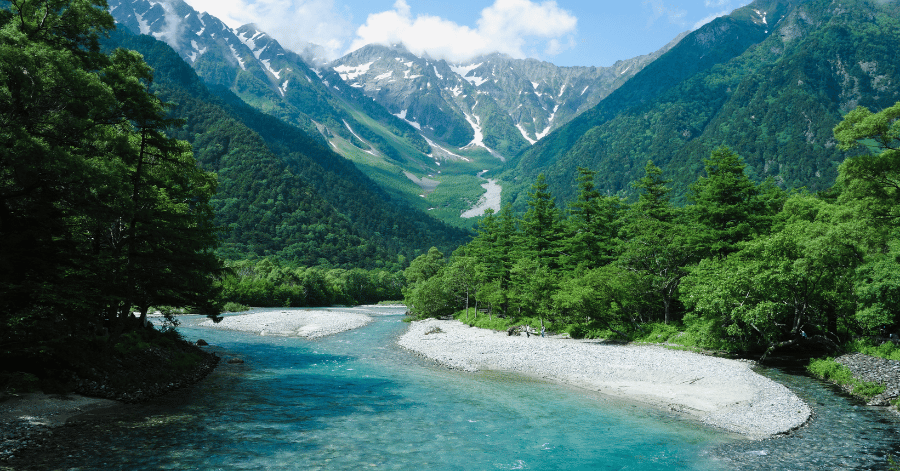
There’s no single best time to visit Japan, only the best time for the trip you want. Chase the blossoms in late March, the powder in February, the beaches in July, or the cheap and quiet in June. Just sidestep Golden Week and Obon, and you’re set.
Not a YouTrooper yet? YouTrip is the multi-currency card that lets Aussies spend overseas at wholesale exchange rates with zero FX fees, and JPY is one of its wallet currencies, so it’s built for a trip like this. Sign up for a free YouTrip card and you’ll get 2% cashback on your overseas spending for the first five months (capped at A$40/month).
Then check the YouTrip Perks page for cashback and discounts at travel merchants before you book.
Mata ne, and enjoy Japan! 🇯🇵
Related Articles:
- 33 Best Things to Do in Tokyo for Australians
- Things to Do in Osaka: The Ultimate Guide for Australian Travellers
- CommBank Travel Card vs YouTrip: Which Is Better for Australian Travellers?
- YouTrip vs Travelex: Honest AU Travel Card Verdict
- YouTrip vs Qantas Pay: Which Is Better for Australian Travellers?